
WASHINGTON — In a landmark ruling Monday, the U.S. Supreme Court dramatically broadened presidential authority, siding with President Donald Trump’s ability to dismiss the leaders of independent federal agencies — with one notable exception involving the Federal Reserve.
The court’s six conservative justices formed the majority in a decision that effectively dismantles a 91-year-old ruling known as Humphrey’s Executor, which had long shielded agency board members from removal without cause. That precedent was designed to help keep agency decision-making free from political interference.
“We hold that such protection from removal is contrary to the separation of powers enshrined in the Constitution,” Chief Justice John Roberts wrote on behalf of the court.
The case centered on former Federal Trade Commission member Rebecca Slaughter, who was dismissed by Trump despite a federal law requiring that such firings be based on specific cause. The ruling’s reach extends beyond the FTC, applying to agencies such as the National Labor Relations Board, the Merit Systems Protection Board, and the Consumer Product Safety Commission — all of which have also seen Trump remove board members.
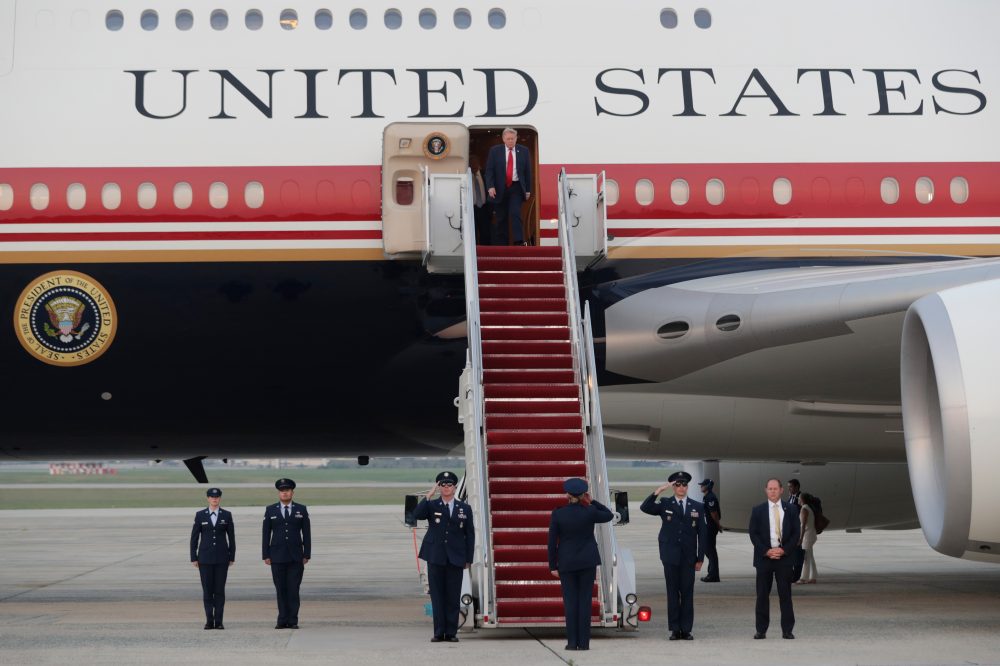
Trump celebrated the outcome in a post on Truth Social. “It is such an Honor to be the sitting President who won this Historic and Unprecedented Ruling, one of the most important ever given with respect to Presidential Powers,” he wrote.
Prior to Monday’s ruling, the court had already signaled its direction by allowing Slaughter and other removed board members to be kept out of their positions while their legal fights continued — a move the court’s liberal justices opposed.
No previous president had attempted to seize control of the wide range of agencies that oversee areas including nuclear energy, product safety, and labor relations. During oral arguments in Slaughter’s case last December, the six conservative justices — three of whom were appointed by Trump — appeared more focused on crafting a lasting legal standard than on simply delivering a win for the current administration.
Justice Sonia Sotomayor read her dissent aloud from the bench, warning that the ruling could result in “submission, instability, and even oppression.”
“The president, to be sure, emerges with more power than ever before. That power was given to him by six justices on this court, not the people or the Constitution,” Sotomayor said.
The one area where the court drew a line was the Federal Reserve. In a 5-4 vote, the justices blocked Trump’s attempt to immediately remove Fed Governor Lisa Cook. Roberts joined Justice Brett Kavanaugh and the three liberal justices in that majority.
Allowing Cook’s ouster at this stage, Roberts wrote, “would allow the President to remove a member of the Federal Reserve at any time, for any reason, without any notice before, and without any judicial check after. That would turn for-cause protection into little more than at-will employment.”
Roberts did note in a footnote, however, that nothing prevents Trump from making another attempt to remove Cook, as long as she is given proper notice and an opportunity to respond.
Trump indicated he intends to do exactly that, posting on Truth Social that “we will take appropriate action immediately to make sure that someone who has committed wrongdoing will not be making vital decisions concerning the Welfare of the United States of America!”
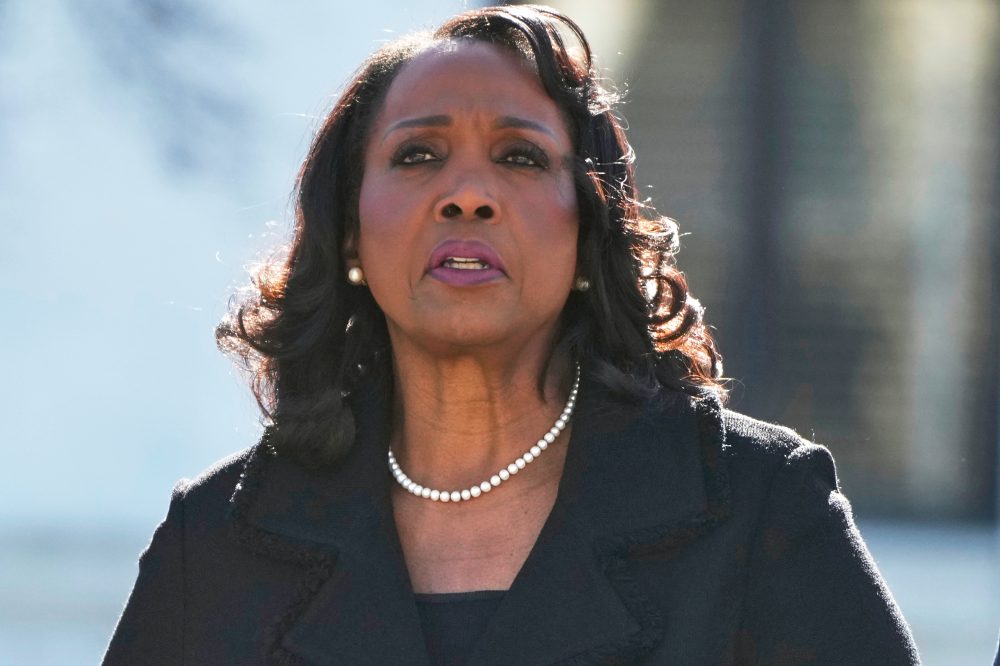
Cook, who was nominated to the Fed’s Board of Governors by former President Joe Biden, may remain in her role at least while her lawsuit challenging the firing continues. The Trump administration is currently appealing a lower-court decision that ruled in her favor.
Cook is the first Black woman to serve as a Federal Reserve governor. Trump’s critics argue that his real motivation for trying to remove her is a desire to gain influence over U.S. interest rate policy. If successful, Trump could replace Cook with his own pick and secure a majority on the Fed’s board — a prospect that has drawn close attention from Wall Street and raised concerns about potential ripple effects throughout financial markets and the broader economy.
Cook addressed the situation in a public statement: “It was an attempt to remove me on a manufactured pretext because I refused to bow to political pressure and continued to set interest rates based only on what would best serve the American people. That is the most fundamental obligation of a Federal Reserve governor.”
She also said her case was “never about mortgage documents signed years before I became a Federal Reserve governor.”
The allegations against Cook stem from claims that she listed two properties — one in Michigan and one in Georgia — as “primary residences” on mortgage applications filed in June and July 2021, before she joined the Fed. Declaring a property as a primary residence can result in a lower mortgage rate and a smaller required down payment compared to designating it as a rental or second home.
Solicitor General D. John Sauer argued in January that those applications represent “gross negligence at best” and provide sufficient grounds for her dismissal. He also contended that courts should not be second-guessing the president’s decision and that Cook has no right to a hearing. Cook has denied any wrongdoing and has not been charged with any crime.
Trump has pushed for significant interest rate cuts, arguing they would allow the government to borrow at lower costs and help Americans afford major purchases like homes and cars. He has downplayed concerns that cutting rates too fast could fuel inflation.
Meanwhile, the Federal Reserve has held its benchmark rate steady so far this year. A growing number of policymakers have begun expressing concern about persistent inflation, with some suggesting rates could be raised or left unchanged through the end of the year.
While Cook’s case was being reviewed by the Supreme Court, tensions between the Trump administration and the Fed escalated sharply. The Justice Department launched a criminal investigation into former Fed Chairman Jerome Powell and issued subpoenas to the central bank. That investigation was closed in late April, clearing the way for the confirmation of Kevin Warsh as Powell’s successor as chairman. Powell has remained on the board as a governor.