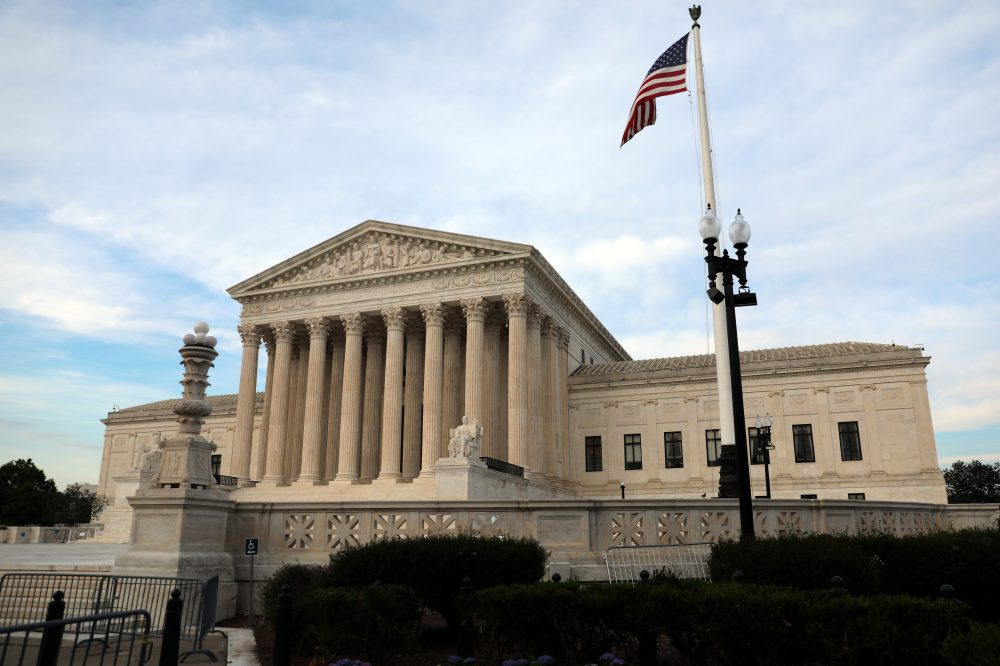

The U.S. Supreme Court on Monday turned away a $300 million defamation lawsuit that prominent attorney Alan Dershowitz had filed against CNN over how the network covered statements he made while defending President Donald Trump during his 2020 impeachment proceedings.
The court’s majority chose not to hear the case, issuing a short order without explanation. However, Justices Neil Gorsuch and Clarence Thomas disagreed with that decision, arguing the court should take a fresh look at the legal standards that apply when public figures bring defamation claims.
Dershowitz argued that CNN aired only a fragment of a comment he made during Trump’s impeachment defense, which he said twisted his meaning and made him appear as though he had “lost his mind,” according to court documents.
CNN pushed back, arguing that several other news organizations had interpreted his remarks in a similar fashion, and that Dershowitz was unable to demonstrate the network intentionally misrepresented what he said.
As part of his appeal, Dershowitz asked the high court to reconsider the landmark First Amendment ruling known as New York Times Co. v. Sullivan — a foundational case that set a high bar for public figures seeking to win libel cases by requiring them to prove an outlet knowingly published false information or acted with reckless disregard for the truth.
Dershowitz, a retired Harvard Law School professor and legal commentator, served on Trump’s defense team during the Senate impeachment trial, which centered on allegations that Trump sought political favors from Ukraine in exchange for U.S. military assistance. Trump was ultimately acquitted by the Senate.
At one point during the proceedings, Dershowitz responded to a question by stating, “the only thing that would make a quid pro quo unlawful is if the quo were somehow illegal.” He added that providing arms to Ukraine does not constitute an illegal act.
He claimed CNN only broadcast a separate portion of his remarks, made moments later, in which he said: “Every public official that I know believes that his election is in the public interest and, mostly, they are right, your election is in the public interest, and if the president does something which he believes will help him get elected in the public interest, that cannot be the kind of quid pro quo that results in impeachment.”
Dershowitz contended that by airing only that segment, CNN made it appear he was arguing a president could sidestep impeachment for unlawful actions as long as reelection was the motivation — a notion his original lawsuit described as “preposterous and foolish on its face.”
CNN denied the characterization, saying it did broadcast his complete remarks during live coverage and gave him two additional opportunities to clarify his position on air.
Lower courts had already dismissed the lawsuit, ruling that Dershowitz failed to demonstrate CNN acted with “actual malice” — the standard established under New York Times Co. v. Sullivan that public figures must meet in order to prevail in defamation cases.