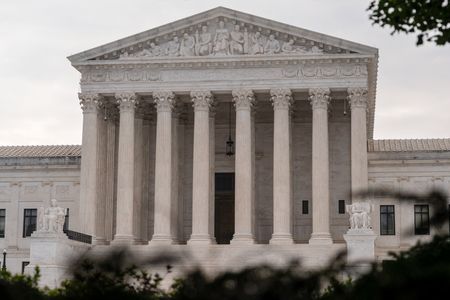

A landmark U.S. Supreme Court decision handed down Monday backing President Donald Trump’s removal of a Democratic member of the Federal Trade Commission is expected to have wide-reaching consequences for a number of other legal battles involving officials Trump dismissed from federal agencies.
CONSUMER PRODUCT SAFETY COMMISSION
Trump previously dismissed three Democratic commissioners from the nation’s top federal product safety watchdog agency. Those commissioners are protected under law from being removed unless there is evidence of “neglect of duty or malfeasance in office.” A federal judge had ruled Trump broke that law and ordered the commissioners returned to their posts, but the Supreme Court put that ruling on hold while an appeal moves forward.
The legal language protecting those commissioners is nearly the same as the wording at issue in the FTC case. The court’s conservative majority ruled Monday that requiring cause — such as “inefficiency, neglect of duty, or malfeasance in office” — to remove an FTC commissioner was unconstitutional, overturning a 1935 precedent. The Trump administration’s appeal in the consumer safety case remains pending, and the commission currently has only one member — a Republican — leaving it largely unable to carry out its normal functions.
LABOR BOARDS
Legal experts say the Supreme Court’s reasoning in the FTC case likely applies equally to members of federal boards that oversee labor relations in both the public and private sectors.
The laws protecting members of the Merit Systems Protection Board and the National Labor Relations Board from being fired without cause use the same or nearly identical language to the FTC law struck down Monday. A federal appeals court in Washington, D.C. ruled in December that those protections were invalid, and the dismissed board members have since taken their cases to the Supreme Court.
Monday’s ruling emphasized that officials who carry out federal laws must answer to the president. The former labor board officials have contended they function more like judges — deciding individual cases — rather than policy architects. They may still press that argument if the Supreme Court agrees to hear their cases, though Monday’s decision appeared to cast doubt on whether officials with so-called “quasi-judicial” roles are protected from being fired at will.
EQUAL EMPLOYMENT OPPORTUNITY COMMISSION
In another unprecedented move, Trump removed two commissioners from the EEOC, the agency responsible for enforcing workplace discrimination laws. One of those commissioners filed a lawsuit, which was put on hold while the Supreme Court considered the FTC case.
The firings left the five-member panel without the minimum three members needed to conduct official business for much of last year, until the U.S. Senate confirmed a Trump nominee in October.
Unlike many other agency members, EEOC commissioners have no explicit legal protection against removal. The commissioner who sued argued those protections are implied because the agency was designed to operate independently from the White House. But experts say that argument faces steep challenges in light of Monday’s ruling, which declared that “subordinates who exercise the President’s power are subject to removal by him.”
PRIVACY AND CIVIL LIBERTIES OVERSIGHT BOARD
Trump also targeted a lesser-known five-member panel responsible for reviewing U.S. surveillance programs for potential privacy and civil rights concerns. He removed all three Democratic members, leaving a lone Republican whose term ended in January of this year.
Like the EEOC, this surveillance board’s governing law includes no explicit removal protections for its members. Attorneys for the fired members could argue that the board’s national security role — including its regular access to classified documents — sets it apart from other agencies and warrants special protections.
In a separate ruling issued Monday, the Supreme Court upheld removal protections for members of the Federal Reserve’s governing board, pointing to the central bank’s unique constitutional and historical standing. Legal experts said that any effort to carve out exceptions to the FTC ruling will likely lean on that Fed decision as a model.