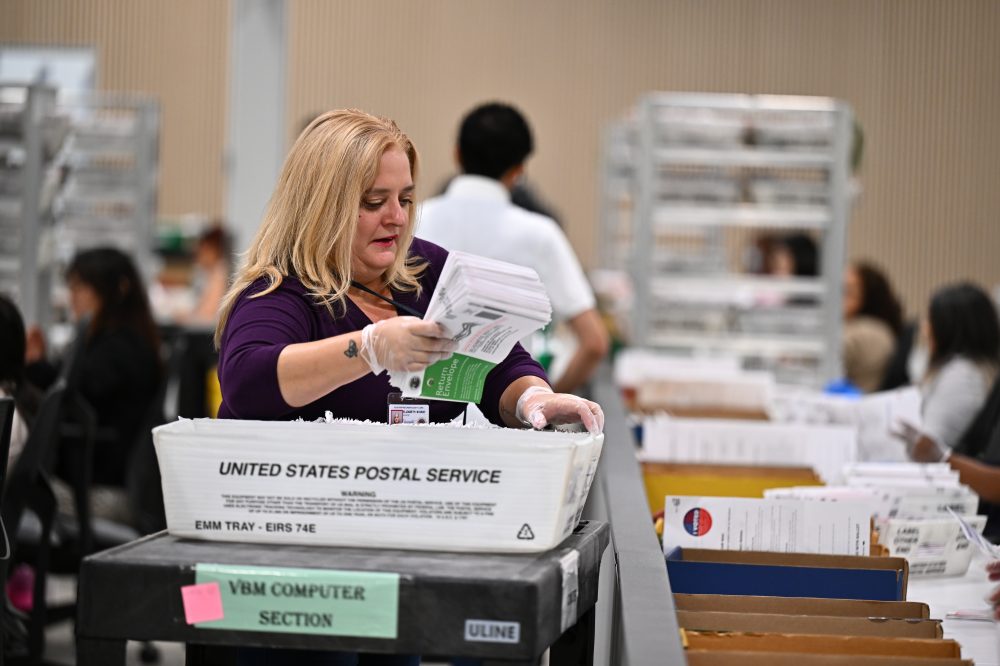

States that allow mail-in ballots to be tallied after Election Day breathed a collective sigh of relief Monday following a U.S. Supreme Court decision that rejected a Republican push to eliminate that practice.
The ruling sided with the state of Mississippi over the Republican National Committee, providing immediate protection to 14 states that have grace periods allowing regular mail ballots to be counted after Election Day. The decision also prevented what many expected would be a last-minute rush to overhaul voting procedures just months before the upcoming midterm elections.
At least one state, Ohio, had already changed its law ahead of time in anticipation of the court ruling differently. An additional 15 states maintain similar grace periods specifically for military and overseas voters.
Washington’s Secretary of State Steve Hobbs welcomed the outcome, saying the ruling ensures “the thousands of voters whose ballots are postmarked on time but received after Election Day still have their voices heard.”
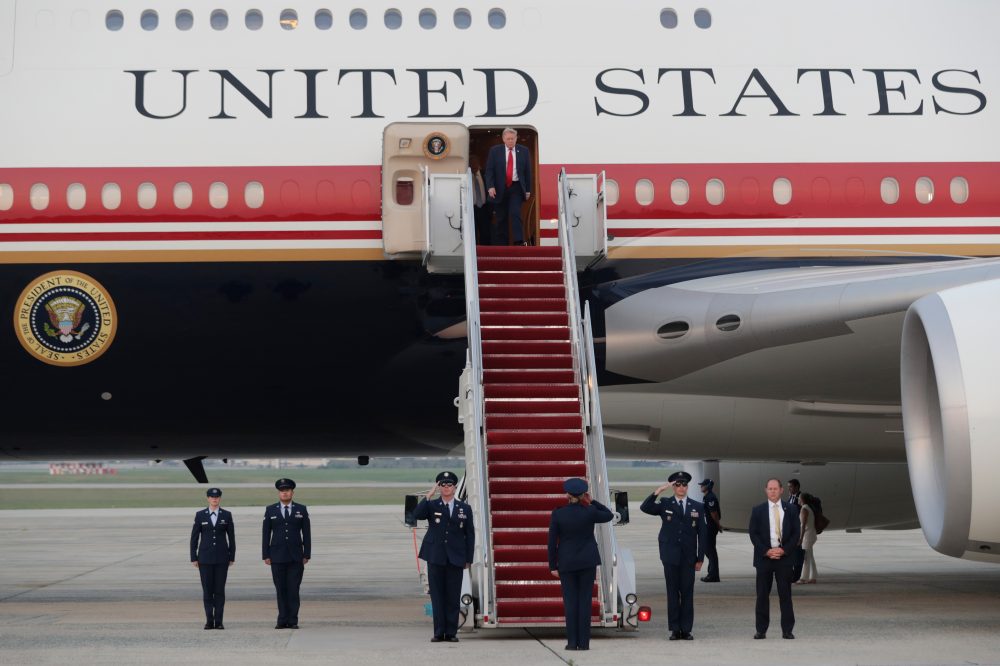
Mail ballots — also referred to as absentee ballots — have long been a target of conspiracy theories pushed by President Donald Trump, who has repeatedly and without evidence blamed them for his defeat in the 2020 presidential election. The RNC and the Libertarian Party brought the lawsuit seeking to strike down a Mississippi law that allows mail ballots postmarked by Election Day to be counted if they arrive within five days after the election, arguing the law violated federal statute.
Justice Amy Coney Barrett, who was appointed by Trump, authored the majority opinion declaring the practice lawful.
“Nothing in the federal election-day statutes requires ballots to be received by Election Day,” she wrote, noting that the court deliberately confined itself to that narrow question and did not make broader pronouncements about absentee voting or the division of authority between Congress and the states over election rules.
In Illinois, where mail-in ballots made up as much as a quarter of the vote in this year’s primary, the state elections board had set aside $300,000 for a television and radio advertising campaign to alert voters about potential changes to the mail ballot deadline. Spokesman Matt Dietrich confirmed that campaign will now be scrapped following the court’s ruling. Illinois permits mail ballots to be counted if postmarked by Election Day and received within 14 days.
“Anytime you have a change in the administration of elections that affects voters, it is a big challenge to us to make sure that voters understand what that change is,” Dietrich said.
California, which has a seven-day grace period, has frequently been singled out by Trump and other Republicans who criticize the state’s extended ballot-counting timeline and have used it to fuel claims of voter fraud.
California’s Secretary of State Shirley Weber described Monday’s ruling as “a win for voters, for the rule of law, and for the future of our democracy.”
Beyond California, Illinois, and Mississippi, the other states that count regular mail ballots arriving after Election Day include Alaska, Maryland, Massachusetts, Nevada, New Jersey, New York, Oregon, Texas, Virginia, Washington, and West Virginia.
Research shows that mail voting is a widely used option among both Republican and Democratic voters across all 50 states.
While the RNC — not the Trump administration directly — was the party to the lawsuit, the national committee of a sitting president’s party typically works in alignment with the president’s political agenda. Trump has also effectively assumed control of the RNC, the Republican Party’s primary fundraising and political arm.
Trump called Monday’s ruling “a tremendous loss” and used it as an opportunity to press for passage of his sweeping election legislation, which has stalled in Congress despite Republicans holding majorities in both chambers.
In a post on Truth Social, the president declared it “more important than ever to pass THE SAVE AMERICA ACT” — his name for a bill that would require voters nationwide to prove U.S. citizenship when registering, present specific photo identification at the polls, and restrict who is eligible to vote by mail. RNC Chairman Joe Gruters issued a statement echoing Trump’s position, saying the ruling made passing the congressional proposal even more necessary.
Lower federal courts have already blocked several Trump administration attempts to impose new restrictions on mail voting and establish a national voter registration list, among other proposed changes. Judges in those cases have consistently ruled that the Constitution places authority over election rules with Congress and the states, not the executive branch.
Although Barrett’s majority opinion was deliberately narrow, focusing only on the mail ballot deadline question, some Democrats expressed hope that the ruling signals the high court may be skeptical of broader presidential claims of power over elections if such cases come before it.
Massachusetts Secretary of State Bill Galvin said he was relieved and saw the decision as a possible signal that other cases could favor Democrats. However, he accused the president and the RNC of attempting to suppress voter participation and expressed concern over the close 5-4 vote in the case.
“What’s troubling was that so many of the other justices were willing to sacrifice the rights of voters,” said Galvin, a Democrat.
Perhaps no state had more riding on the outcome than Alaska, where Native and rural communities spread across a vast and remote landscape depend on the state’s grace period to ensure their ballots are counted. In many areas, aircraft are the only practical means of transporting ballots from polling locations to counting facilities.
Jacqueline De León, a senior staff attorney with the Native American Rights Fund, was among the legal team that submitted a brief to the Supreme Court on behalf of Alaska Native and Native American groups. The brief outlined the particular difficulties faced by these communities, many of which can only be reached by air or water and depend entirely on air mail service.
“For many Native communities, voting by mail is shaped by long distances to election offices, no home mail delivery, unreliable postal service, lack of access to transportation, and the realities of living in rural and remote areas,” she said. “Ballots cast by election deadlines should not be discarded simply because substandard service or weather delays cause them to arrive after Election Day.”