
WASHINGTON — As the nation prepares to mark the 250th anniversary of American independence, President Donald Trump’s six so-called “Freedom Trucks” have fanned out across the country, from Washington State on the West Coast to North Carolina on the East Coast. Inside each truck, an AI-generated version of George Washington greets visitors with the words, “Thy rights are a gift from God,” under a ceiling bearing the phrase, “In God We Trust.”
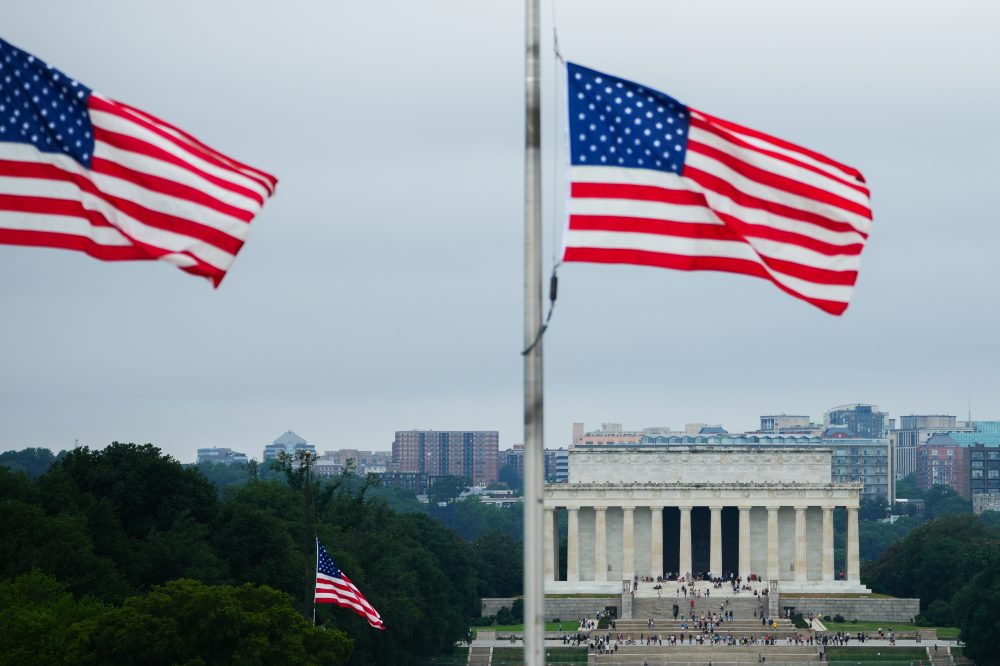
The convoy of mobile museum trucks, deployed on the eve of the July 4th holiday commemorating the 1776 Declaration of Independence, is billed as a yearlong patriotic tribute to the American Revolution. Freedom 250 spokesperson Rachel Reisner described the effort as “sparking a unifying movement across all 50 states that celebrates the American spirit and showcases our nation at its best.”
However, the trucks have not been without controversy. In Massachusetts last month, local media reported that residents in one community objected to a scheduled Freedom Truck stop, prompting its cancellation. Detractors argue the exhibits present an overly religious interpretation of American history while sidestepping difficult chapters such as slavery and racial injustice.
Questions about funding have also emerged. The Institute of Museum and Library Services, an independent federal agency, provided a $14 million grant for the six trucks, which was paired with $10 million from Freedom 250. On March 3, a group of U.S. Senate Democrats sent a letter to Interior Secretary Doug Burgum questioning why government money was directed to what they called “a private entity that is unaccountable to the American people,” and whether those funds were being mixed with private donations “potentially raised from foreign sources.” According to Senate aides, no response has been received.
At the same time, House Democrats have been looking into whether congressional funds designated for “America 250” events have been redirected toward the White House’s Freedom 250 celebration.
At a House hearing, Democratic Representative Jared Huffman of California criticized the initiative, saying, “The soaring achievement of our secular enlightenment-based founding is obscured by a gauzy Christian nationalist fiction.”
Republicans pushed back on that characterization. Republican Bruce Westerman of Arkansas pointed to the Declaration of Independence’s preamble, which reads: “We hold these truths to be self-evident, that all men are created equal, that they are endowed by their Creator with certain unalienable Rights.”
In May, the group Public Employees for Environmental Responsibility filed a lawsuit against the U.S. Interior Department after the agency declined to respond to a Freedom of Information Act request seeking documents about Freedom 250’s funding and operations. Among the concerns raised were reports that federal employees were being used to promote a private organization, that funds were being directed toward a partisan agenda, and that access to Trump was being sold.
PEER senior counsel Aaron Lloyd told Reuters, “All these decisions on what events, what money to spend, the money comes in, where it goes out, it’s all in a black box. I want the government documents that explain what money went where.”
The White House did not directly address questions about the religious content in the truck exhibits. Spokesman Davis Ingle said in an emailed statement that “2026 will feature a renewal of patriotism and national pride.”
On May 17, one of the Freedom Trucks — its exterior painted with a depiction of the iconic “Washington Crossing the Delaware” painting — was parked near the U.S. Capitol as part of a daylong event called “Rededicate 250: A National Jubilee of Prayer, Praise & Thanksgiving.” A White House website also promotes a Freedom 250 “America Prays” page, encouraging visitors to set aside an hour each week to pray for the country, with pray.com listed as a participating organization.
The content inside the Freedom Trucks was developed by Hillsdale College, a private conservative Christian liberal arts institution, and PragerU, which is not an accredited university but rather a producer of what it calls “edu-tainment” content promoting Judeo-Christian values. PragerU has released videos including one examining how elections can be stolen, pointing to mail-in ballots — echoing claims that have been widely debunked — as well as a video questioning LGBTQ Pride Month celebrations. PragerU did not respond to requests for comment about its financial arrangements with Freedom 250.
Some historians have raised doubts about the religious framing of the anniversary events. Kate Carte, a history professor at Southern Methodist University who specializes in early American history, noted that both Protestant British loyalists and American “patriots” during the Revolution believed they were acting in accordance with their faith. But she stressed in a telephone interview that “the conflict between Britain and the colonies really had nothing to do with religion.” She also noted that America’s Founding Fathers “were very aware that religion could be really divisive” and chose not to establish a national religion as a result.
According to a 2023-2024 Pew Research Center study, 62% of U.S. adults identify as Christians, with evangelical Protestants making up 23% — the largest single group. About 29% of American adults have no religious affiliation, including atheists, agnostics, and 19% who describe themselves as “nothing in particular.”
Religion is not the only flashpoint surrounding the country’s semiquincentennial. The Trump administration has also faced legal challenges over its moves to remove interpretive exhibits from national parks, including material related to slavery and climate change.
Those who remember the U.S. bicentennial in 1976 describe it as a far less divisive event. Alan Spears, senior director of cultural resources at the National Parks Conservation Association, said that 50 years ago, public conversations about the contributions of Indigenous people, African Americans, and women were far less prominent. “The 1980s changed that,” Spears said, noting that the country moved away from presenting history as mainly “guys on horseback with swords.”