
WASHINGTON — People with disabilities have spent decades fighting for the right to attend school alongside their peers and live within their communities — and some advocates now fear those hard-won rights are being eroded under the current administration.
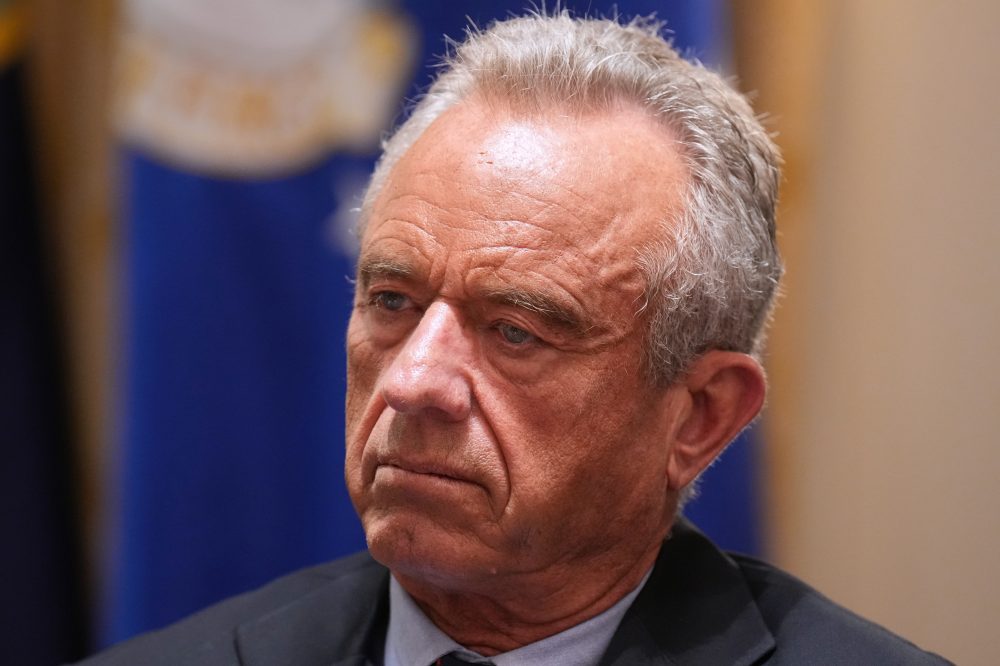
Last month, the Education Department announced it would transfer oversight of special education to the Department of Health and Human Services, which is led by Robert F. Kennedy Jr. Kennedy’s past statements questioning the nature of disabilities like autism have drawn strong criticism from advocates and lawmakers alike.
At the same time, following a White House effort to crack down on homelessness, the Department of Justice issued guidance that made it easier to institutionalize people with disabilities. Together, advocates say, these moves point toward a disturbing rollback of protections that have taken generations to build.
“It’s a direct, frontal assault on the rights of people with disabilities to live their lives the way that people who are nondisabled live their lives,” said Selene Almazan, legal director for the Council of Parent Attorneys and Advocates. “I can’t imagine that as a country, that would be something that we would agree we should go back to.”
Starting in the 1960s, a combination of legislation and court rulings steadily expanded protections for disabled people, giving them the right to attend school with non-disabled peers and to live and work within their communities. Prior to those changes, individuals with mental illnesses or developmental and intellectual disabilities were largely confined to institutions.
Disability advocates have long pushed back against what is called the “medical model,” which treats a person’s disability as a flaw in need of a cure. They favor a “social model” instead, in which differences are accommodated and supported, allowing people with and without disabilities to learn and work side by side.
Families and advocates say transferring special education to a health department represents a return to that rejected medical model. They have also expressed anger over Kennedy’s efforts to connect vaccines to autism — a claim contradicted by decades of scientific research — and his characterization of autism as a severely debilitating condition.
Kennedy made remarks last year suggesting that children with autism would never write a poem, hold a job, or pay taxes. He later clarified he was referring specifically to people with “severe autism” or those who are nonverbal. But the comments raised serious questions about his ability to oversee an agency designed to help students with disabilities build exactly those kinds of skills.
“Many of the things he said autistic people will never do, (special education) is in charge of making sure students with disabilities have the opportunity to do,” said Zoe Gross, director of advocacy at the Autistic Self Advocacy Network. “Will he execute that faithfully, or does he consider disabled students a lost cause until we find some medical cure?”
A landmark 1999 Supreme Court ruling — known as the Olmstead v. L.C. decision — determined that keeping disabled people in segregated settings when they could otherwise live in their communities with proper support was a form of discrimination. The ruling led to requirements that government agencies deliver disability services in the most integrated environment possible, including mainstream schools, homes, and workplaces.
However, a memo issued in June by the Justice Department’s Office of Legal Counsel reversed that guidance. The memo argued that neither the Americans with Disabilities Act nor Section 504 — two foundational disability rights laws — actually requires states to deliver services in mainstream settings. While the memo does not alter the law itself, it signals how federal agencies may choose to interpret and enforce civil rights protections, and it could encourage states or school districts to pull back support for disabled individuals in mainstream environments.
The White House has already acted on a similar philosophy. President Donald Trump signed an executive order on homelessness that endorsed civil commitment — a process by which courts can order individuals into involuntary hospitalization or treatment. Trump directed the Department of Health and Human Services to lower the barriers to institutionalizing people with mental illnesses.
In its own memo, the Justice Department acknowledged that its reading of the Olmstead decision is “out of step” with the commonly accepted interpretation. The DOJ noted that legal challenges would likely follow if a state began shifting services into institutional settings.
“It’s dark, and it’s awful,” said Claudia Center, legal director at Disability Rights Education and Defense Fund. “And I think it’s contrary to the majority view in our country. … It’s out of touch with where our society is.”
For families raising children with disabilities, the uncertainty has been deeply unsettling. Lindsey Althaus, a disability rights advocate in northwest Ohio, says community-based services have been essential for her family. Her 12-year-old son, Whitman, has autism and a neurological disorder called apraxia, a condition in which the brain has difficulty directing muscles to form words or perform motor tasks. With proper support, Whitman was able to spend much of his school day in a classroom that included students without disabilities.
Through a Medicaid waiver program, Althaus pays her mother to care for Whitman when she is unavailable. This arrangement allows him to spend time in the community with his grandmother while Althaus and her husband are working or away with their daughter.
Under the Justice Department’s new reading of Olmstead, states would have fewer obligations to fund and support those types of programs. Kennedy, in testimony before lawmakers earlier this year, also criticized similar programs as being prone to fraud.
“We want to be able to have him in the community,” Althaus said. “It’s just starting to feel like Whitman’s not going to be welcome anymore. We’re going back to this: You’re either perfect, or you’re not in the light.”
For many students with disabilities, school is where they receive most of their support services and where they are integrated with their peers. Magda Nakassis, whose 8-year-old son is autistic and nonverbal, said that before he entered public school in Maryland, his preschool years had largely been defined by being excluded from programs and activities.
Once in school, Nakassis said she found teachers and staff who understood her son’s needs and encouraged her to stop apologizing for them. A program at his school called Fantastic Friends teaches mainstream fifth graders about autism, and those students spend recess time with children in the autism program. Every year, Nakassis said, there is a waitlist of students who want to participate.
Nakassis said it has been painful to watch autism become a political issue. Every child in this country has a right to a public education, she said, and special education exists because some children simply need additional support. Her son’s right to learn is not a medical question, she argued — it is a matter of fairness and access in a society that too often pushes disabled people aside.
“There are lots of kids like him out there, and I sometimes wonder, ‘what did we use to do?’” Nakassis said. “I can’t believe it was better.”