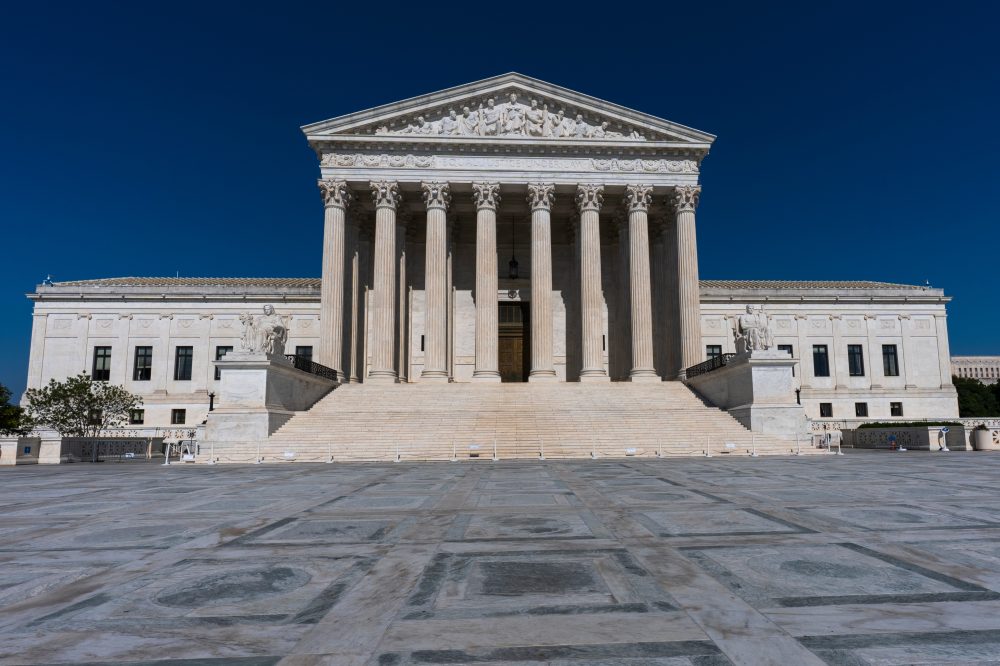

WASHINGTON — A fractured U.S. Supreme Court ruled Tuesday that children born in the United States are entitled to citizenship under the Fourteenth Amendment, regardless of whether their parents are in the country illegally or on a temporary basis — and the decision laid bare striking divisions among the justices.
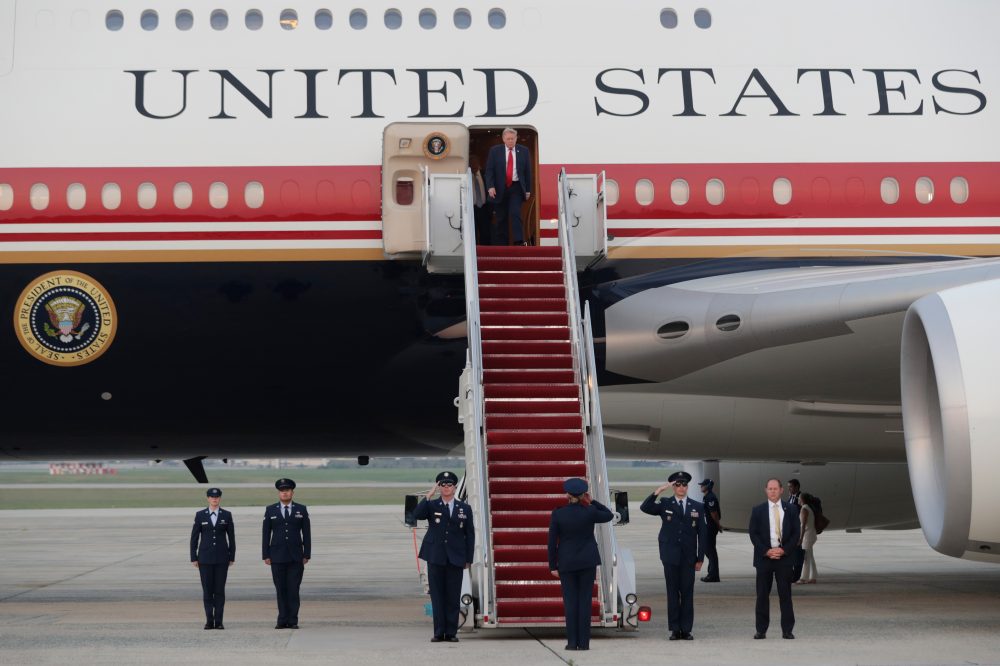
The ruling overturns an executive order President Donald Trump signed at the start of his second term, which declared that children born to parents who are in the U.S. unlawfully or temporarily would not be considered American citizens.
The court’s two Black justices found themselves on opposite sides of the debate, particularly when it came to interpreting the role of the post-Civil War Reconstruction era in defining American citizenship.
The majority opinion was authored by Chief Justice Roberts and joined by Justices Sonia Sotomayor, Elena Kagan, Amy Coney Barrett, and Ketanji Brown Jackson. Together, they concluded that being born on U.S. soil and being subject to U.S. law is sufficient to grant citizenship.
Writing for the majority, Chief Justice John Roberts grounded much of his opinion in the history of English common law, concluding that birthright citizenship has always been tied primarily to the place of birth — not to the immigration status or residence of a child’s parents.
“Citizenship, then and now, was the right to have rights — to freely participate in our political community. The Framers of the Fourteenth Amendment extended that promise to ‘every free-born person in this land,’” Roberts wrote, citing congressional debates over the amendment. “We keep that promise today.”
As he read the opinion from the bench, Roberts added: “We break no new ground today.”
Justice Clarence Thomas authored the primary dissent, arguing that American-born children are not automatically citizens. He contended that the majority overlooked historical evidence from the Reconstruction debates suggesting that citizenship required a deeper connection to the country — not simply being born within its borders.
“The Citizenship Clause was enacted for people who were born in this country and called it home. It was enacted for freed slaves such as Dred Scott, who had ‘a domicile’ here and therefore were entitled to sue as citizens,” Thomas wrote, framing Reconstruction as a targeted response meant to restore citizenship to a wrongfully excluded group — formerly enslaved Black Americans.
Thomas also wrote that in his view, Trump’s executive order does not violate the Constitution on its face. “The Order is consistent with the original meaning of the Citizenship Clause, at least insofar as it applies to children born to parents, here lawfully or unlawfully, who are not domiciled in the United States,” he wrote.
Justice Ketanji Brown Jackson agreed with the majority opinion but wrote separately to challenge Thomas’s dissent directly, arguing that he fundamentally misreads what the Reconstruction Amendments — the Thirteenth, Fourteenth, and Fifteenth Amendments — were designed to achieve.
“Despite his longstanding endorsement of a ‘colorblind’ Constitution, Justice Thomas now surprisingly suggests that the Citizenship Clause was a race-conscious remedial measure, relating only to ‘freed slaves such as Dred Scott’ — but that narrow vision of the Fourteenth Amendment bears little relationship to the history of its ratification,” Jackson wrote.
She went on to argue that “the Reconstruction Amendments were an anti-caste, anti-subordination reset for the Nation, not a mere spot treatment for the dark stain of slavery.”
Jackson also took aim at what she described as competing misunderstandings of the Constitution’s history: “The Court’s conception of a color-blind Constitution and the Government’s (and principal dissent’s) cramped, group-specific reading of the Citizenship Clause are two sides of the same coin, stemming from a basic misunderstanding of the relevant history.”
Justice Samuel Alito joined Thomas among the dissenters, with both arguing that birthplace alone is not sufficient for citizenship and that a child’s parents must have a deeper political allegiance or meaningful relationship to the United States.