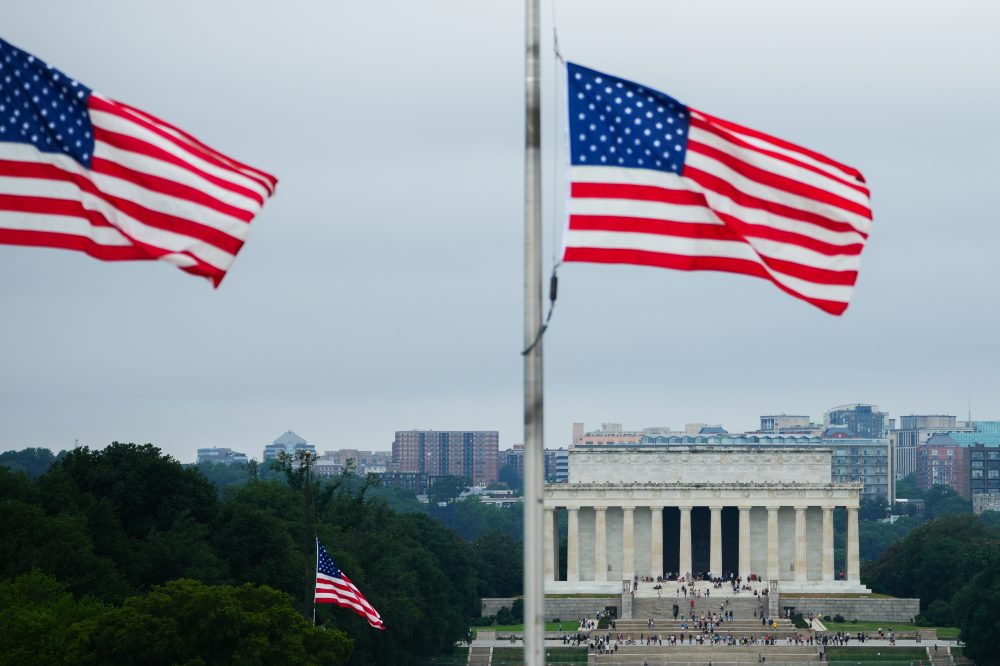

WASHINGTON — As the country marks its 250th birthday, the U.S. House of Representatives has temporarily shut down its work.
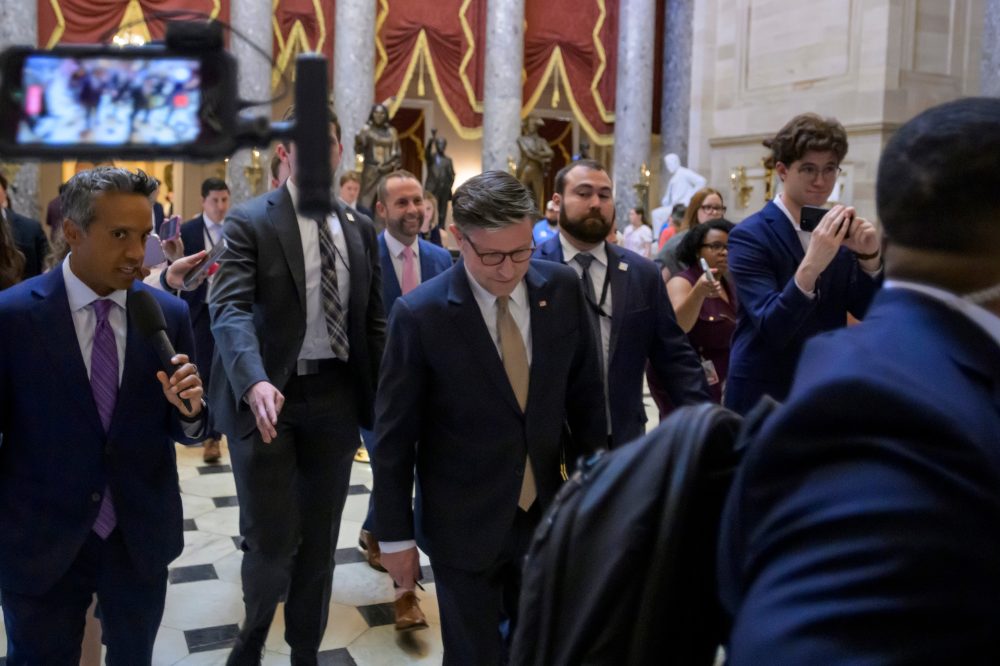
House leadership abruptly called off scheduled votes Tuesday and sent members home early for the holiday break, as Speaker Mike Johnson’s slim Republican majority once again found itself paralyzed by a rebellion within his own party.
At the center of the standoff is the annual defense spending bill — a measure that includes military pay raises and other critical provisions — which has been stalled by a group of Republican holdouts demanding that President Donald Trump’s top priority, the SAVE America Act, be attached to it. The SAVE America Act is a strict voter identification bill. Last week, the Senate similarly ground to a halt under pressure from Trump’s demands.
The scene at the emptied Capitol offers a telling picture of the current power dynamic in Washington, where a forceful executive branch is increasingly overshadowing a Congress that appears to be losing its footing.
This marks the second time in as many weeks that the House has simply walked away from its work.
“It’s a relatively bad time in Congress,” said Republican Rep. Dusty Johnson of South Dakota. “A lot of my colleagues have forgotten how to govern.”
The situation stands in stark contrast to one year ago this weekend, when Trump gathered Republican lawmakers outside the White House for a festive July Fourth event to sign what they called the “One, Big, Beautiful Bill” — a sweeping package of tax cuts and spending reductions.
That was a high point for Trump and the Republican majority, and for Speaker Johnson, who had faced doubts about whether he could push the bill through over Democratic opposition. Democrats had characterized the legislation as a tax giveaway funded by deep cuts to health care and food assistance programs.
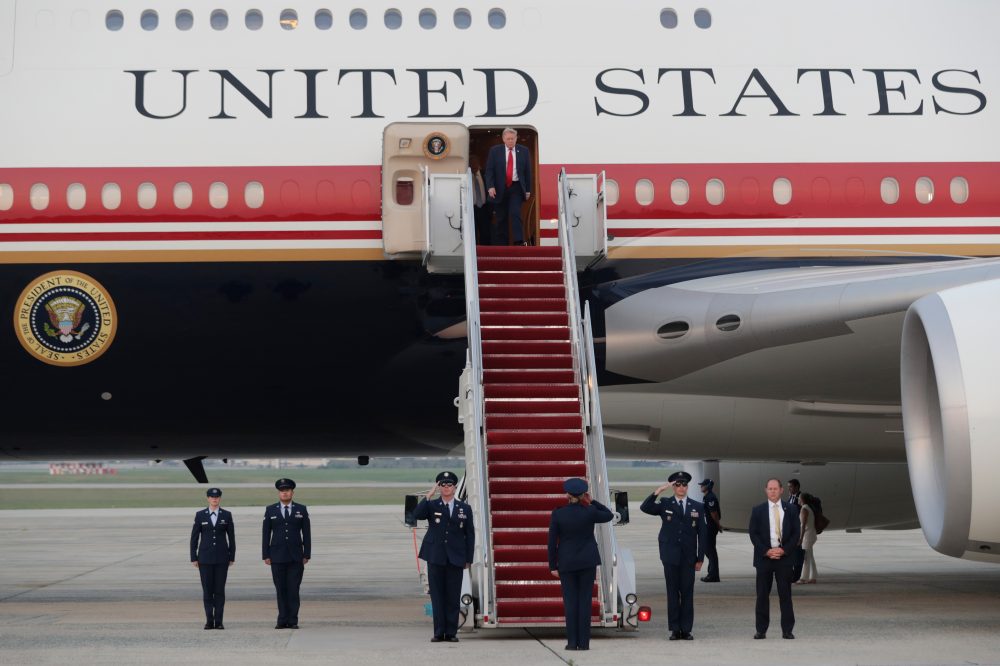
Johnson leaned so heavily on Trump’s influence to get the bill passed that he presented the president with a speaker’s gavel — a gesture that Democrats and others viewed as a troubling symbol of power shifting from the legislative branch to the executive.
“We’re not dealing with Speaker Mike Johnson,” said Democratic Rep. Pete Aguilar of California, the caucus chairman, in a recent interview. “Unfortunately, Speaker Donald Trump does not want us in this week.”
As Johnson works to stay in Trump’s good graces, the president’s demands have continued to escalate beyond what the speaker can consistently deliver.
Trump’s push for the SAVE America Act — a bill that lacks enough Senate support to pass on its own — has effectively frozen most other congressional business. The president has also refused to sign a widely supported bipartisan housing bill that passed both chambers, holding it hostage until the voter ID legislation moves forward. Trump has dismissed the housing bill as a “yawn.”
Johnson said he spent four hours at the White House last week and another two hours with the president this week trying to chart a path forward.
“I told him, ‘Mr. President, I don’t have any tattoos, but if I did, it’d say SAVE America on my shoulder,’ OK?” Johnson said over the weekend on Fox News. “We passed it three times in the House already. We’re going to pass it again.”
Despite that pledge, a House vote to advance the legislation collapsed Tuesday. Republicans led by Rep. Anna Paulina Luna of Florida argued that Johnson’s approach — attaching the voter ID bill to the defense legislation — was a losing strategy that the Senate would ultimately reject.
“That’s disappointing,” admitted Republican Majority Leader Steve Scalise of Louisiana, though he insisted the party would push forward. “We’re going to keep trying because we have to. We’re not done doing big things.”
The dysfunction is particularly notable given that the founders placed Congress first in the Constitution, ahead of the executive and judicial branches, as a reflection of its central role in American democracy.
As the legislative calendar shrinks, lawmakers will face questions from voters this fall about what Congress has actually accomplished.
House Democratic Leader Hakeem Jeffries placed the blame squarely on Republicans rather than Congress as a whole.
“Donald Trump is fighting with Senate Republicans, Senate Republicans are fighting with House Republicans, and House Republicans are fighting with each other,” said Jeffries, who stands to become House speaker if Democrats regain control in the fall. “It’s not the Congress that’s struggling. It’s House Republicans who are struggling.”
Jeffries said Democrats remain focused on fighting “to make life more affordable for the American people.”
Departing lawmakers expressed frustration as they headed home for an extended recess.
Rep. Kevin Kiley, who left the Republican Party earlier this year to become an independent, described the situation as “frustrating.”
“It’s just like déjà vu where many times now we run into some sort of obstacle,” he said, “then the solution is just to go home.”