
NEW YORK (AP) — The Trump administration announced Tuesday that it is halting federal dollars flowing to New York’s Medicaid Fraud Control Unit, a state agency tasked with rooting out and prosecuting wrongdoing in the government’s safety-net healthcare program.
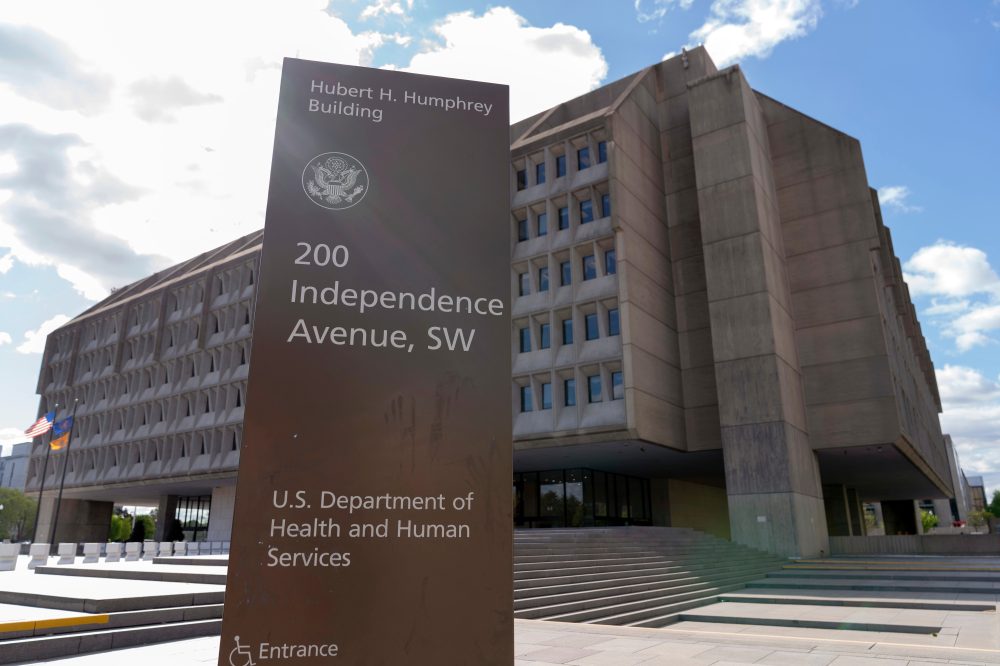
U.S. Department of Health and Human Services Inspector General Thomas March Bell sent a letter to New York officials accusing the state of failing to obtain enough criminal indictments. As a result, millions of dollars in funding will be frozen through at least September 30.
This marks the second time this year the Republican Trump administration has cut off funding to a state Medicaid fraud unit. The move is part of a broader push the administration has aggressively championed in the healthcare sector, which has included launching a new anti-fraud task force, conducting targeted investigations, withholding funding, and requiring healthcare providers to revalidate their credentials — actions that have touched all states but have been concentrated largely on those led by Democrats.
The funding suspension also follows an embarrassing admission by the administration that it had made a significant error in data it used to justify an earlier fraud investigation into New York’s Medicaid program — a mistake that critics said illustrated a pattern of acting before verifying the facts.
New York Attorney General Letitia James, a Democrat, quickly pledged to challenge Tuesday’s funding freeze.
“During my time as Attorney General, my office has recovered over $627 million for Medicaid and was recognized by this very administration for leading the nation in anti-fraud efforts,” she wrote. “We are considering all legal options to stop this outrageous action.”
Bell’s letter, addressed to James and New York Medicaid Fraud Control Unit Director Amy Held, argues that the unit is handling cases too slowly and producing too few indictments and convictions. The letter points out that compared to four other similarly sized units in different states, New York recorded the fewest criminal fraud convictions between 2023 and 2025.
The letter does acknowledge that New York deliberately chose to pursue “high impact, complex fraud cases” rather than smaller individual ones — but Bell argued that approach has not produced adequate results.
“Enough is enough,” Bell wrote. “The New York MFCU has failed to comply with the terms and conditions of its MFCU grant award.”
Bell indicated the freeze could be lifted before September 30 if New York demonstrates it has addressed the concerns that led to the suspension. If the state fails to do so, the funding cutoff will remain in place.
The attorney general’s office pushed back, saying in a statement that it has “long been recognized as a national leader in effectively investigating and prosecuting Medicaid fraud schemes” — including by the HHS inspector general’s own office. A 2025 report from that office noted New York was among four states accounting for half of all civil recoveries that year.
A spokesperson for the attorney general’s office noted that most of the unit’s criminal convictions involve company owners, executives, and corporations whose cases result in large recoveries for Medicaid.
“This administration’s unprecedented attack on New York is another political distraction,” James said.
The New York freeze follows a similar action taken against Hawaii. In early June, Bell informed Hawaii officials that Medicaid fraud funding would be cut off there as well, citing a three-year period without a single Medicaid fraud indictment or conviction in that state.
Joan Alker, executive director and co-founder of Georgetown University’s Center for Children and Families, said there is a deep irony in the federal government stripping money meant to fight fraud when fighting fraud is supposedly the administration’s goal.
“If you want to fight fraud, don’t take away money from states’ fraud control units,” she said. “I chalk this up to more political theater to distract voters from historic Medicaid cuts before the midterms.”
For months, the Trump administration has argued that states — particularly those led by Democrats — have been too slow to address fraud in social safety-net programs like Medicaid. It has demanded at least five states, four of them with Democratic governors, provide information on how they detect, prevent, and respond to Medicaid fraud.
The federal government has also withheld some Medicaid funding from Minnesota and California over fraud concerns. Minnesota Gov. Tim Walz, a Democrat and Kamala Harris’ 2024 running mate, accused the Trump administration of making cuts as political retribution.
The administration’s anti-fraud efforts have also extended to Medicare. Dr. Mehmet Oz, who heads the federal Centers for Medicare and Medicaid Services, announced a six-month pause on new enrollments for hospice and home care providers nationwide.