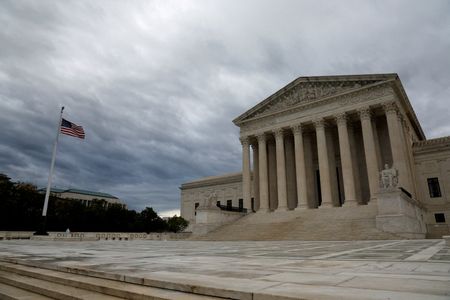

The U.S. Supreme Court closed out its nine-month term delivering substantial wins for conservatives across several major areas of law, while also drawing firm lines against some of President Donald Trump’s most ambitious policy goals.
The court, which holds a 6-3 conservative majority, took steps to strengthen executive authority over federal regulatory agencies — a long-sought Republican objective — but also moved to restrict presidential influence over monetary policy and trade.
Presidential Power
Trump brought three major cases before the court seeking to dramatically expand the reach of the presidency. He prevailed in one and lost two.
In one defeat, the court rejected Trump’s use of the International Emergency Economic Powers Act to establish a sweeping global tariff system. The justices ruled in February that the law — which does not use the word “tariff” — did not grant the president broad authority to impose import taxes, though they left open other possible legal avenues for tariffs.
The second loss came this week in a dispute involving the Federal Reserve. Trump had sought to remove Fed Governor Lisa Cook from her position after the board declined to lower interest rates at the pace he wanted. Administration officials accused Cook of mortgage fraud, though they offered little supporting evidence, in an attempt to justify firing her under the “for-cause” legal standard. The justices ruled that Cook could keep her job.
On the same day, however, the court handed conservatives a major victory by expanding presidential removal power over other regulatory agencies. The ruling overturned a 1935 precedent that had allowed Congress to shield certain agency leaders from being fired by the president at will. The case centered on Trump’s dismissal of Federal Trade Commissioner Rebecca Slaughter, a Democrat. The court ruled against her, invalidating tenure protections for agency heads and allowing the president to remove such appointees without cause.
Immigration
In three separate rulings decided along ideological lines, the court cleared a path for Trump to fulfill his campaign promise of stricter immigration enforcement and large-scale deportations.
The conservative majority allowed the administration to strip hundreds of thousands of Haitian and Syrian immigrants of a protected status that had shielded them from deportation while conditions in their home countries remained dangerous. The court also backed the government’s authority to physically block asylum seekers at the U.S.-Mexico border and made it easier to bar lawful immigrants accused of crimes from re-entering the country after traveling abroad.
However, the court dealt Trump a significant blow by rejecting his effort to end birthright citizenship — the longstanding principle that anyone born on U.S. soil is automatically a citizen. Trump had signed an executive order on his first day back in office that would have denied citizenship to hundreds of thousands of babies born each year to non-citizen parents on American soil.
In a 6-3 decision, Chief Justice John Roberts, appointed by Republican President George W. Bush, wrote that there was “scant evidence” supporting the Trump administration’s “dramatically revisionist view” of this foundational legal principle.
Voting and Elections
With Republicans fighting to hold onto control of Congress in November’s midterm elections, the court delivered major wins for the party on voting rights, along with mixed outcomes on election administration matters.
In April, the court rolled back large portions of the landmark 1965 Voting Rights Act, allowing states to redraw congressional district boundaries. Many Southern and Republican-controlled states have since moved to eliminate majority-minority districts — changes that election experts say could cost several Black members of Congress their seats.
The court also struck down limits on how much money political party committees can spend in coordination with individual candidates, overturning a 25-year-old precedent. Vice President JD Vance had challenged those restrictions during his 2022 Senate campaign, arguing they violated parties’ free speech rights. The justices agreed, handing Republicans another campaign finance victory.
On mail-in voting, Trump and Republicans came up short. The court ruled that states may count mailed ballots that were postmarked before Election Day even if they arrive after polls close. Trump has repeatedly and without evidence questioned the integrity of mail-in voting and has attempted to prevent mostly Democratic-controlled states from sending out mail ballots.
Social Issues
The court sided with conservative positions on LGBTQ rights and gun ownership in nearly every major case this term, occasionally drawing support from the court’s liberal justices.
On Tuesday, the conservative majority upheld laws in Idaho and West Virginia that prohibit transgender athletes from competing on girls’ sports teams at public schools. All three liberal justices joined the conservatives in finding that the state laws did not violate a civil rights statute prohibiting sex-based discrimination in education. The three liberals did, however, dissent from the majority’s conclusion that the laws also pass muster under the Constitution’s 14th Amendment equal protection guarantee.
In an 8-1 ruling in March, two of the court’s liberals joined conservatives in striking down a Colorado law that had barred psychotherapists from using conversion therapy intended to alter an LGBTQ minor’s sexual orientation or gender identity. The justices found the law violated free speech protections under the First Amendment.
Last week, the court struck down a Hawaii law that restricted carrying handguns in private businesses, ruling along ideological lines. Earlier in June, the court unanimously ruled that a ban on gun ownership by Americans who use marijuana went too far — a decision that brought together gun rights advocates on the right and civil libertarians on the left.