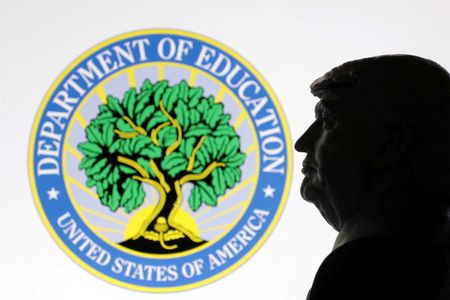

The U.S. Education Department announced Monday that it has finalized a new set of rules that would link schools’ ability to offer federal student loans directly to how much money their graduates go on to earn.
Under the new policy, called the Student Tuition and Transparency System, or STATS, along with an Earnings Accountability rule, undergraduate programs must show that their graduates bring home more income than a typical person who only completed high school. Graduate-level programs face a similar bar — their graduates must out-earn the average person holding only a bachelor’s degree.
The Education Department spelled out the consequences for programs that fall short: “If a program fails to show at least this modest financial return on investment for its graduates in two out of three consecutive award years, it will lose eligibility to participate in the federal Direct Loan program.”
The final rule is set to be published on July 1, with 2027 being the first year schools will actually be held to those earnings benchmarks.
The stakes could go even higher for repeat offenders. According to the department, “After three years of consistently failing the earnings premium measure, the Department could also terminate eligibility for Title IV of the Higher Education Act, including Pell Grant eligibility, for all of an institution’s low-earning outcome programs.”
The Wall Street Journal first reported the finalization of these lending requirements.
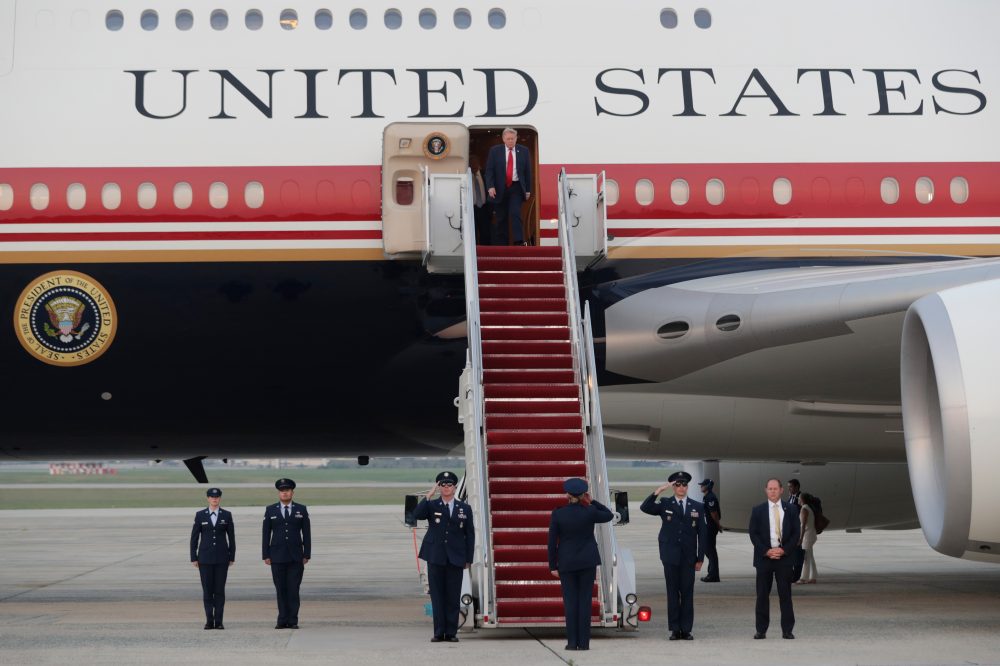
The new rules are part of a wider effort by President Donald Trump to apply pressure on colleges and universities. His administration has moved to freeze federal funding for higher education institutions over a range of disputes, including pro-Palestinian campus protests, transgender policies, climate initiatives, and diversity programs.
Trump has specifically claimed that pro-Palestinian demonstrations at universities were antisemitic and provided cover for extremist organizations. However, protesters — including some Jewish advocacy groups — argue the administration is incorrectly treating criticism of Israel’s military actions in Gaza and support for Palestinian rights as forms of antisemitism or extremism.
Civil liberties advocates have raised alarms about the impact on free speech, academic freedom, and due process, pointing to cases where colleges have scaled back programs, restricted protesters, and laid off employees. Federal judges have, in some instances, ordered the administration to unfreeze funds that had been withheld from universities.
The Trump administration has also dramatically reduced the Education Department’s workforce and shifted many of its responsibilities to other federal agencies.