
WASHINGTON — The U.S. Supreme Court handed President Donald Trump a significant legal defeat Monday, refusing to allow him to remove Federal Reserve Governor Lisa Cook from her position and reaffirming the central bank’s long-standing independence from political influence.
In a 5-4 decision, the justices blocked what would have been the first removal of a Fed official since Congress established the central bank back in 1913. Conservative Chief Justice John Roberts and fellow conservative Justice Brett Kavanaugh sided with the court’s three liberal justices to form the majority. Justices Clarence Thomas, Samuel Alito, Neil Gorsuch, and Amy Coney Barrett dissented.
Roberts, who wrote the majority opinion, said Trump “failed to afford Cook the procedural protections to which she was entitled by statute. Without such protections, she could not properly dispute the charges the president laid against her.”
Roberts further noted that Federal Reserve governors “do not serve at the president’s pleasure — they instead serve staggered 14 year terms, and may be removed only ‘for cause.’”
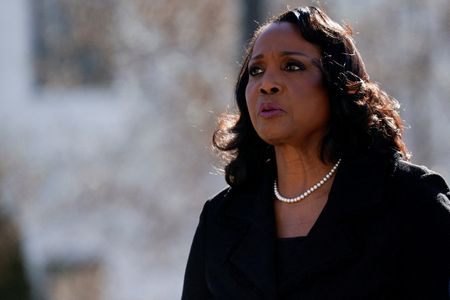
Cook, the first Black woman to serve as a Federal Reserve governor, responded to the ruling with a statement welcoming the decision and saying it confirms the Fed’s duty to operate free from political meddling.
“This was never about mortgage documents signed years before I became a Federal Reserve governor. It was an attempt to remove me on a manufactured pretext because I refused to bow to political pressure and continued to set interest rates based only on what would best serve the American people,” Cook said.
Trump had sought to fire Cook on August 25, 2025, posting a termination letter on social media. The letter cited mortgage fraud allegations brought forward by Federal Housing Finance Agency Director Bill Pulte, a Trump appointee, involving properties Cook owned in Ann Arbor, Michigan, and Atlanta. Cook denied those allegations. Pulte posted on social media Monday, “As I have repeatedly said, I believe Lisa Cook will be indicted for mortgage fraud.”
The justices denied a request from Trump’s Justice Department to lift a lower court order preventing Cook’s immediate removal while her legal challenge continues. U.S. District Judge Jia Cobb had ruled in September that Trump’s attempt to remove Cook without notice or a hearing likely violated her constitutional right to due process under the Fifth Amendment. The judge also determined the allegations likely did not meet the legal standard for removal under the Federal Reserve Act, since they involved conduct that occurred before Cook took the position. The U.S. Court of Appeals for the District of Columbia Circuit had also declined to put that order on hold.
Roberts addressed the standard for what could constitute sufficient “cause” to remove a Fed governor, saying the central bank’s history and independence point to a “substantial threshold.” He wrote that without such constraints, “any perceived or alleged misstep (past or present) could provide a ready pretext for a governor’s removal — a fact that he would surely know, and that would surely weigh on him as he decided what to say and how to vote. Nothing could be more corrosive of the independence that Congress sought to preserve.”
Roberts also clarified that while only the president — short of impeachment — can decide whether to remove a Fed board member, “that does not mean that he may make that decision for any reason, or no reason.” He noted that Congress could have given the president unrestricted removal power or shielded such decisions from court review, but has done neither.
The Federal Reserve Act, passed in 1913, includes provisions designed to protect the central bank from political pressure. It requires that governors only be removed “for cause,” though the law does not define that term or spell out removal procedures.
Cook’s term was set to run until 2038. She was appointed by Democratic former President Joe Biden in 2022. As a Fed governor, she participates in setting U.S. monetary policy alongside the rest of the central bank’s seven-member board and the heads of the 12 regional Fed banks.
Monday’s ruling came in the same session as a separate Supreme Court decision that went in Trump’s favor — the court backed his firing of Rebecca Slaughter, a Democratic member of the Federal Trade Commission, overturning a 1935 precedent that had protected leaders of certain regulatory agencies from being dismissed at will by the president.
The Fed has been a frequent target of Trump since he returned to the presidency in January 2025. He has repeatedly pressured the central bank to cut interest rates more aggressively and has publicly attacked former Fed Chair Jerome Powell, calling him a “numbskull,” a “major loser,” and “very incompetent.” The administration also launched a separate criminal investigation in January into Powell involving cost overruns during a renovation project at the Fed’s Washington headquarters — an inquiry Powell characterized as a pretext to gain influence over monetary policy. A judge blocked subpoenas in that investigation on March 13, and the probe was dropped on April 24.
May 15 marked the end of Powell’s eight-year term as Fed chair, though he remains on the Board of Governors. The U.S. Senate confirmed Trump’s nominee Kevin Warsh as Powell’s successor on May 13, and Warsh was sworn in on May 22. Justice Clarence Thomas administered the oath, with Justice Brett Kavanaugh in attendance. Warsh previously served on the Fed’s Board of Governors, and his father-in-law is wealthy Trump supporter Ron Lauder. The Justice Department dropped the Powell investigation after Republican Senator Thom Tillis called it a frivolous attack on the Fed’s independence and threatened to block Warsh’s confirmation until it ended.
Monday’s ruling follows a February 20 Supreme Court decision striking down most of Trump’s sweeping global tariffs — a ruling that prompted the president to call some justices “fools” and “lapdogs” for Democrats, saying he was “absolutely ashamed” of them.
The court signaled last year that it may treat the Federal Reserve differently from other independent agencies, noting in a May 2025 ruling that allowed Trump to remove two Democratic members of federal labor boards that the Fed has a unique structure and historical tradition.
Reuters previously reported that Pulte’s father and stepmother had claimed the same property tax status on two homes in two different states — the same practice Pulte accused Cook of — and that the property tax authority in Ann Arbor told Reuters that Cook had not violated rules for tax breaks on her home.