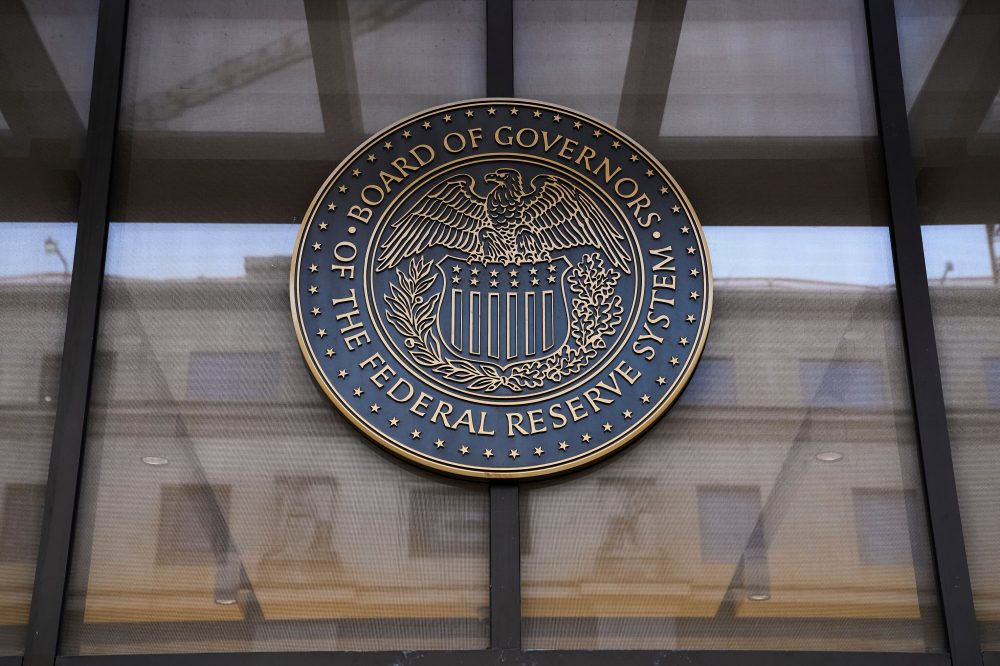

WASHINGTON — The U.S. Supreme Court ruled Monday that the Federal Reserve holds a special kind of independence from presidential control — a distinction shared by no other federal agency. However, the court stopped short of spelling out exactly how far that independence extends.
The ruling marks the latest chapter in an extraordinary standoff between the Fed and President Donald Trump. The outcome carries significant weight for global financial markets, which track the central bank’s interest rate decisions closely.
Trump has made no secret of his desire for the Fed to slash its key interest rate, which would reduce borrowing costs for homeowners, businesses, and the federal government. Last August, Trump moved to oust Fed Governor Lisa Cook, accusing her of mortgage fraud — an allegation she flatly denies. Cook was appointed by former President Joe Biden, and removing her would have allowed Trump to install a more favorable replacement.
In a 5-4 decision, the justices determined that the president does not have the authority to dismiss any of the seven members of the Fed’s board of governors without demonstrating a legitimate reason. This ruling stands in contrast to a separate 6-3 decision issued the same day, in which the court ruled that the president can fire the heads of other previously independent agencies — such as the Federal Trade Commission — at will.
Scott Alvarez, who previously served as the Fed’s top attorney, described the ruling’s significance plainly. “That’s a big deal,” he said. “That’s one of the things that makes the Fed independent.”
Despite offering some protection to the Fed, the ruling does not fully shield Cook from additional removal efforts. Trump posted on his Truth Social platform that “we will take appropriate action immediately” to remove her. For the time being, however, Cook retains her position while the legal fight continues in lower courts.
Chief Justice John Roberts wrote that the Fed carries a “unique historical status and role,” drawing a comparison to the First and Second Banks of the United States from the early 1800s, which were designed to operate “at a deliberate remove from the ordinary political process.” Roberts argued that allowing a president to fire a Fed governor for any reason would compromise that official’s ability to make independent decisions.
“Nothing could be more corrosive of the independence that Congress sought to preserve,” Roberts wrote in the court’s opinion.
Still, not everyone sees the ruling as a clear victory. Kathryn Judge, a law professor at Columbia University, pointed out that by stripping independence protections from other agencies while preserving them only for the Fed, the court has actually weakened the broader principle of nonpolitical governance.
“Fed independence lives on for another day, but is not as robust as it was prior to these decisions,” she said.
The court also declined to fully close the door on Trump’s bid to remove Cook. While Trump’s legal team acknowledged that any firing would need to be “for cause,” they argued the White House should be the one defining that standard — beyond judicial review. The Supreme Court pushed back on that position, suggesting “for cause” likely means serious misconduct unrelated to official duties, though without offering much elaboration.
Notably, the court also rejected the higher protection standard that Cook’s legal team had argued for — one that would have limited removal to cases of inefficiency, neglect of duty, or job-related misconduct. Since the alleged mortgage fraud reportedly took place before Cook joined the Fed, that standard would likely have ended the case in her favor.
The court additionally ruled that Cook must receive formal notice of any firing and an opportunity to respond — something that did not happen when Trump announced her dismissal via Truth Social last August. Roberts even included a footnote in his opinion noting that nothing prevents Trump from “trying again” to remove her, as long as proper procedures are followed.
Legal experts suggest Trump could attempt a streamlined process to fire Cook again and strengthen his position in the lower courts.
“That’s an area of vulnerability still for the Federal Reserve and for Lisa Cook,” Alvarez said.
The ongoing legal battle is expected to further clarify the limits of Federal Reserve independence going forward.
The stakes are high. The Fed holds enormous influence over the U.S. economy, using its control over short-term interest rates to either stimulate growth or cool inflation. When rates fall, borrowing becomes cheaper and economic activity tends to pick up. When rates rise, spending slows and inflation is brought under control — but jobs can be lost in the process.
Economists have long argued that central banks function better when insulated from political pressure, particularly when it comes to making unpopular decisions like raising interest rates. The lesson was reinforced during the inflation crisis of the 1970s and early 1980s, when former Fed Chair Arthur Burns was widely criticized for bowing to pressure from President Richard Nixon to keep rates low ahead of the 1972 election. Nixon feared higher rates would cost him votes; he won in a landslide, but inflation spiraled out of control.
Former Fed Chair Paul Volcker, appointed in 1979 by President Jimmy Carter, ultimately took the opposite approach — pushing the short-term rate to nearly 20%, compared to its current level of 3.6%. The resulting recession drove unemployment close to 11% and triggered widespread protests. But Volcker held firm, and by the mid-1980s inflation had returned to the low single digits. His resolve is now widely regarded as a defining example of why an independent central bank matters.
For investors, a politically independent Fed is also more predictable. A Fed subject to political whims would be harder to anticipate, potentially driving investors to demand higher returns on Treasury bonds — which would raise borrowing costs across the entire economy.