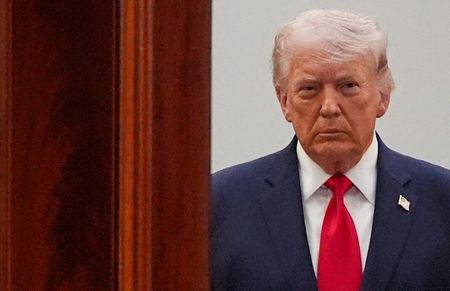
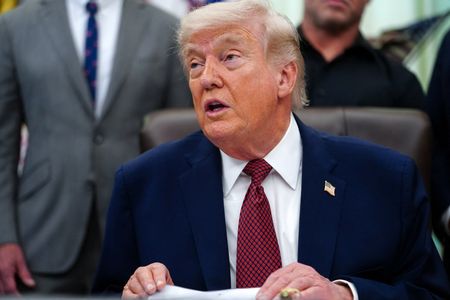
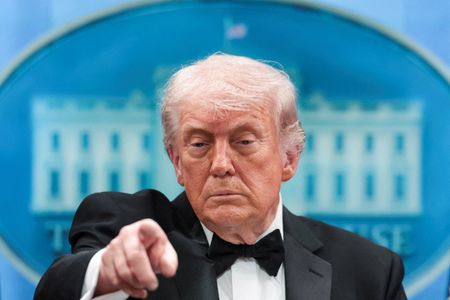
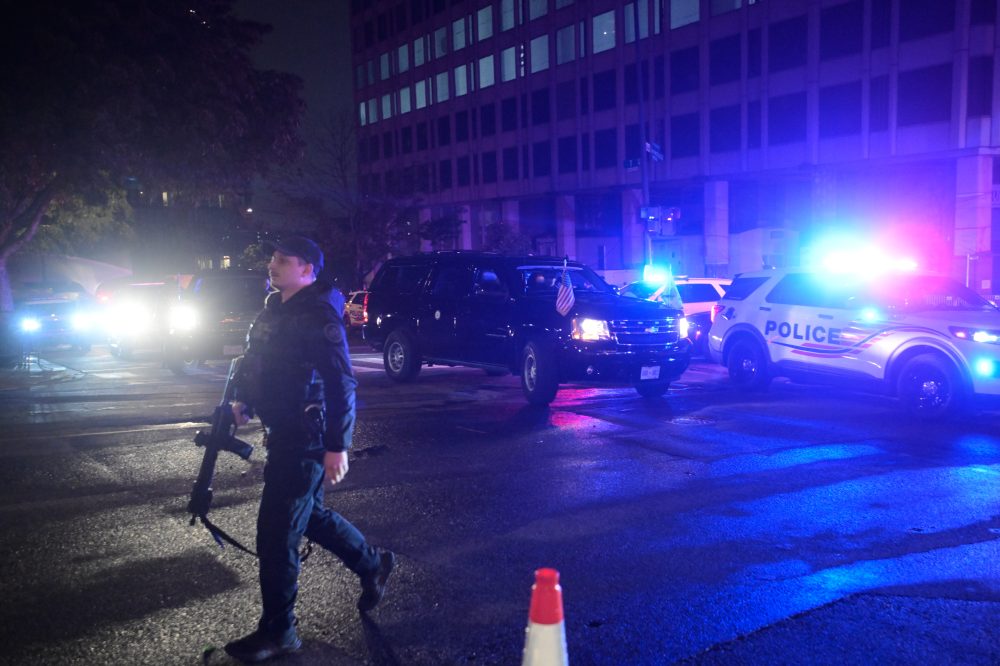
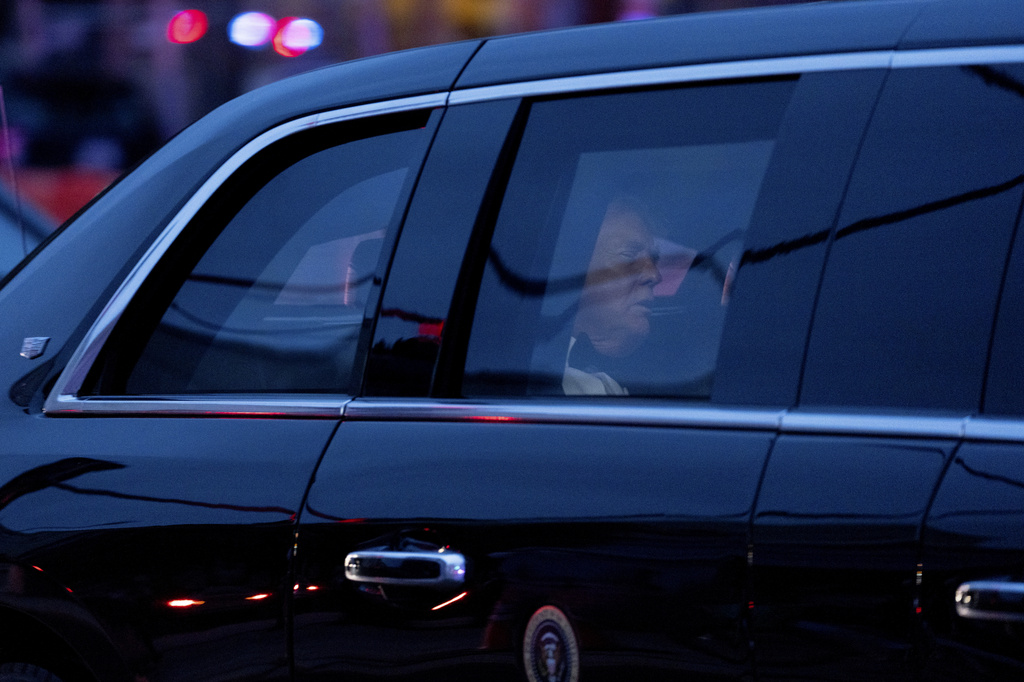
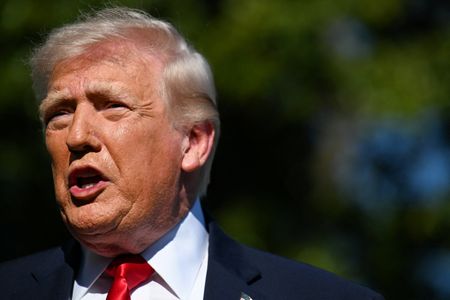
WASHINGTON – Former President Donald Trump made claims Tuesday on social media that Iran has reached out to the United States describing itself as being in a state of collapse and requesting American help to reopen the Strait of Hormuz.
Trump’s assertion came through a post on his Truth Social platform, though the method by which Iran supposedly delivered this message remains unclear. Iranian officials have not provided any immediate response to Trump’s statements.
“Iran has just informed us that they are in a ‘State of Collapse.’ They want us to ‘Open the Hormuz Strait,’ as soon as possible, as they try to figure out their leadership situation (Which I believe they will be able to do!)” Trump wrote on his social media platform.
When contacted for clarification about the Truth Social post, White House officials did not provide an immediate response.
According to a U.S. official who spoke with Reuters, Trump has expressed dissatisfaction with Iran’s most recent proposal regarding the resolution of the ongoing two-month conflict. This development has reduced optimism for ending the war that has caused disruptions to energy markets, contributed to rising inflation, and resulted in thousands of casualties.
WASHINGTON — The Southern Poverty Law Center pushed back against federal prosecutors Tuesday, arguing that government agencies were fully aware of the civil rights organization’s practice of paying sources within extremist organizations to gather intelligence on hate group activities.
The Alabama-based civil rights watchdog faces federal fraud and money laundering charges filed last week. Federal prosecutors allege the organization deceived contributors by channeling donation funds to informants who held leadership positions in the same white supremacist organizations the center publicly opposed.
In court documents filed in Alabama federal court, the organization’s legal team demanded that acting Attorney General Todd Blanche withdraw his claims that the government had “no information” regarding the informant network. The group also seeks to prevent Blanche from making additional similar public statements. Blanche made these assertions during a news conference and subsequent Fox News appearance when announcing the criminal charges.
The court filings outline three specific occasions where the SPLC claims intelligence from its source network was provided to law enforcement to help disrupt white supremacist activities. Defense attorneys say they shared evidence from at least one incident during an April meeting with federal prosecutors. After Blanche’s public statements claiming authorities were uninformed, the organization requested a correction, which the government refused to provide.
“The Department of Justice is well aware that the SPLC provided helpful information, through the use of its confidential informants, to law enforcement,” the organization stated in its filing. “The Department of Justice also knows that these confidential informants helped law enforcement put violent extremists in jail.”
Defense lawyers argue that Blanche’s public comments could influence potential jurors and undermine their client’s constitutional right to an impartial trial.
President Donald Trump has highlighted the prosecution, labeling the SPLC one of the “greatest political scams in American History” while linking it to his unfounded assertions about the 2020 election outcome. Opposition voices characterize the case as politically driven prosecution designed to target conservative adversaries through Justice Department resources.
The criminal indictment alleges the organization secretly supported racist movements while publicly claiming to combat them. Prosecutors cite an example where an SPLC-funded source helped organize the 2017 white nationalist “Unite the Right” demonstration in Charlottesville, Virginia, and participated under SPLC direction.
However, the organization’s court response reveals it provided a comprehensive 45-page “event alert” to federal investigators before the Charlottesville rally, containing intelligence gathered through the informant network, including details about participants’ weapons.
In a 2019 incident, the SPLC maintains that information from its source network helped prevent a planned assault in Las Vegas. The organization says it provided intelligence to law enforcement that resulted in FBI agents arresting an individual connected to Atomwaffen Division, a neo-Nazi organization. A 2020 Justice Department announcement indicated the suspect had discussed targeting a synagogue and an LGBTQ establishment. He received a two-year prison sentence.
In another case, the SPLC reports that intelligence from the informant network led to the conviction of an individual who concealed his white supremacist connections while seeking security clearance. The unnamed individual worked at Philadelphia’s Navy Yard in 2018 and was convicted and imprisoned following the tip.
SPLC attorneys say they presented evidence to prosecutors during an April 6 meeting demonstrating how informant intelligence was shared with law enforcement in that particular case.
Along with demanding a retraction, the SPLC filed a motion requesting grand jury records to verify that misleading information wasn’t used to obtain the indictment. The organization claims Justice Department misrepresentations “suggest that the grand jury was not merely misled by the government’s presentation of the law, but likely that it was actively weaponized to facilitate such charges.”
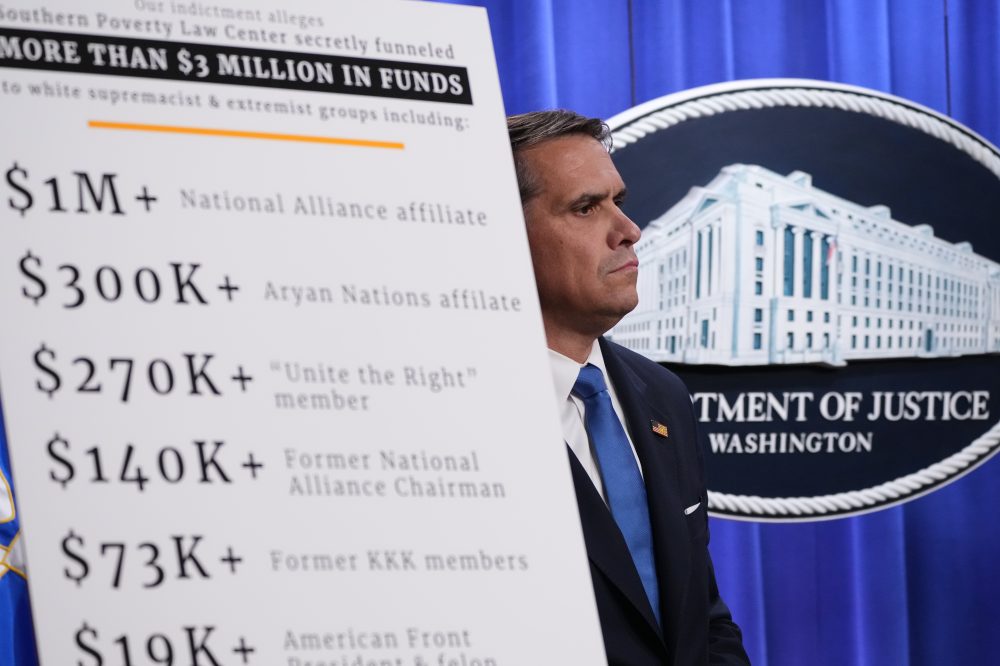
Prosecutors claim the SPLC directed over $3 million in donated funds to sources who served as leaders in the KKK, the neo-Nazi National Alliance, and other extremist organizations. The center faces charges of donor fraud and making false statements to establish bank accounts used for transferring money to informants.
During a news conference, Blanche stated the organization was “manufacturing the extremism it purports to oppose by paying sources to stoke racial hatred.” Justice Department representatives have indicated these charges represent the initial phase of a continuing investigation.
The organization faced additional examination following last year’s assassination of conservative activist Charlie Kirk, who established and directed Turning Point USA. The SPLC had described Kirk’s organization as “A Case Study of the Hard Right in 2024” in a publication titled “The Year in Hate and Extremism 2024.”
In a Tuesday statement, Bryan Fair, interim president and CEO of SPLC, emphasized that information shared with federal investigators has prevented loss of life.
“When threats and other unlawful activity were revealed, the SPLC immediately passed that information to law enforcement officials, local, state and federal and assisted in efforts to prevent violence and stop criminal activity,” Fair said.
Colorado state legislators have moved forward with initial approval of a proposal that would mandate all higher education institutions within the state to make abortion medication accessible to their student populations. The proposed legislation would encompass both publicly funded and privately operated colleges and universities throughout Colorado.
While the bill includes provisions allowing educational institutions to request exemptions based on legitimate religious objections, the final determination of what constitutes a valid religious basis would rest with state authorities. Currently, medication-induced abortions represent the predominant method used for pregnancy terminations across the United States.
National Public Radio’s A Martinez conducted an interview with Juliette Kayyem, who previously served with the Department of Homeland Security, regarding the challenges and requirements involved in presidential security during public appearances.
The conversation centered on the security protocols and operational limitations that arise when safeguarding President Trump at public gatherings, specifically referencing Saturday’s dinner event as an example of such security challenges.
The nation’s highest court examined arguments Tuesday concerning accountability for Monsanto, the company behind Roundup herbicide, and whether federal regulations should override state-level legal action regarding alleged health complications.
During oral arguments, Supreme Court justices seemed split on the question of whether federal oversight should block individual state lawsuits that claim the widely-used garden and agricultural chemical caused health problems for users.
The case centers on the legal principle of federal preemption, which can prevent state courts from hearing cases when federal law already governs an issue. Monsanto argues that federal pesticide regulations should shield the company from state liability claims.
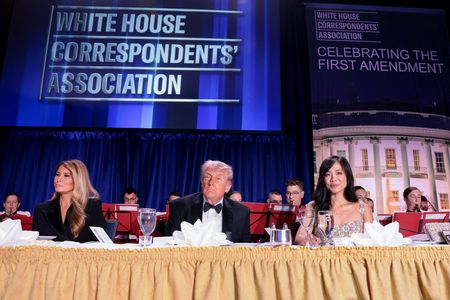
Members of Congress are expressing concerns about Secret Service security protocols after authorities prevented an assault targeting the White House Correspondents’ Association dinner.
The foiled attack has prompted some legislators to question current protection measures and renew calls for creating a dedicated ballroom within the White House complex for hosting such high-profile events.
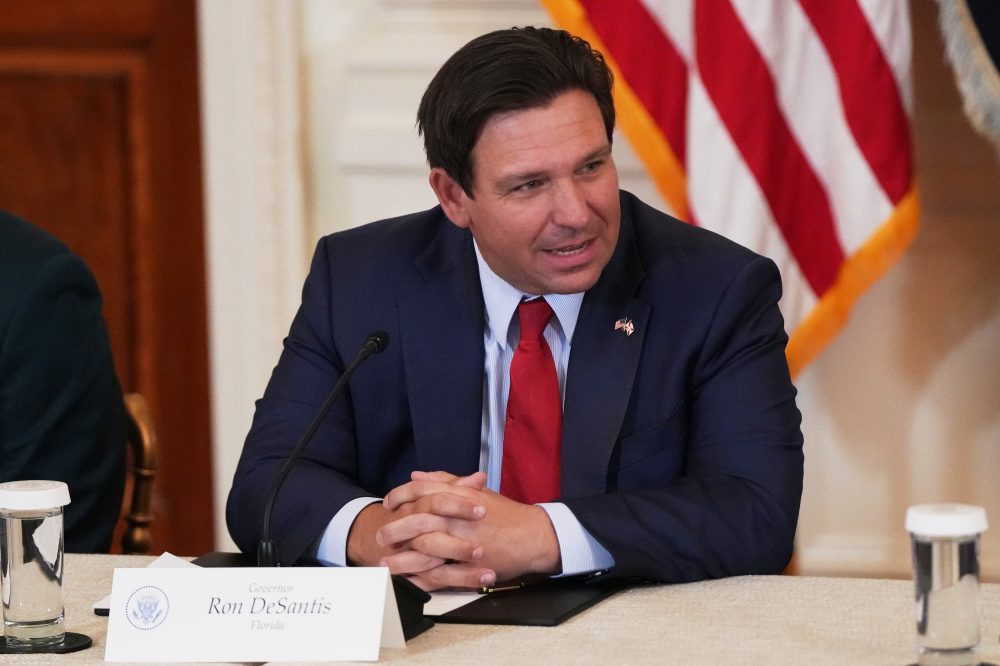
TALLAHASSEE, Fla. — Florida Governor Ron DeSantis, who was previously viewed as a rising star in Republican politics before Donald Trump’s successful return to the presidency, is making another bid for national attention through congressional redistricting efforts.
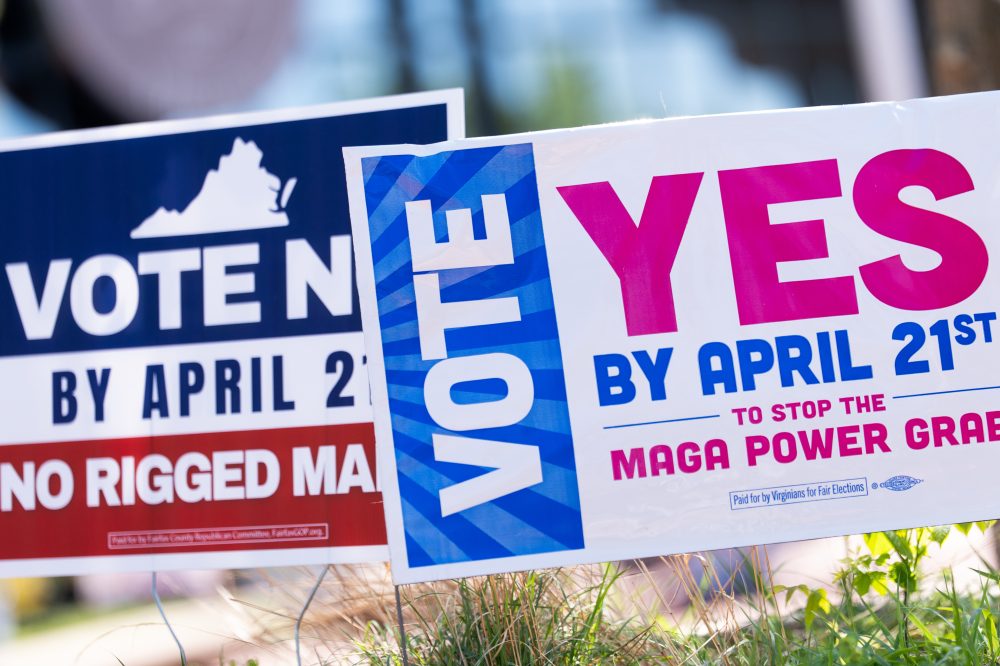
More than two years have passed since DeSantis concluded his presidential bid and backed Trump, and now the Florida governor is stepping back into the national arena. He’s urging state legislators to redraw the state’s congressional boundaries during a special session, part of a nationwide redistricting effort before this year’s midterm elections. DeSantis’ plan could help Republicans secure four additional House seats, matching potential Democratic gains from Virginia’s recent referendum.
As DeSantis approaches the end of his second gubernatorial term, this special legislative session beginning Tuesday represents one of his remaining chances to demonstrate his potential as a future party leader. However, the 47-year-old governor faces significant challenges ahead.
Several Republicans express concern that revised maps might backfire, potentially creating opportunities for Democrats to gain seats instead. Additionally, DeSantis is seeking enhanced artificial intelligence regulations and reduced vaccine mandates — two initiatives that have previously failed to advance in Tallahassee.
While Trump cannot constitutionally seek a third term in 2028, DeSantis’ path to party leadership remains unclear, as he would likely face competition from Vice President JD Vance or Secretary of State Marco Rubio in any Republican primary.
“The window for Ron looks reasonably narrow at this point,” stated Whit Ayres, who worked as DeSantis’ polling consultant during his initial 2018 gubernatorial campaign.
DeSantis appears to welcome this national confrontation. After House Minority Leader Hakeem Jeffries of New York challenged Florida Republicans to proceed with their special session last week, the governor responded with characteristic boldness reminiscent of his early presidential campaign days.
“I will pay for you to come down to Florida and campaign,” DeSantis told Jeffries. “I’ll put you up in the Florida governor’s mansion. We’ll take you fishing.”
On Monday, DeSantis revealed his proposed redistricting plan to Fox News before it had been widely shared with legislators. He claimed the 2020 census undercounted Florida’s population, necessitating boundary adjustments.
If legislators approve the governor’s map, it would restructure districts in Democratic strongholds surrounding Orlando and Tampa Bay, while concentrating Democratic voters into fewer South Florida districts. These modifications could threaten the seats of Representatives Jared Moskowitz and Debbie Wasserman Schultz, among others.
Current district maps produced a 20-8 Republican advantage in 2024. DeSantis’ proposal aims for a 24-4 split favoring Republicans.
DeSantis initially announced this special session in January, following months of Trump encouraging Republican-controlled states to redraw their congressional maps. This sparked an ongoing redistricting competition between parties seeking midterm election advantages.
New maps don’t guarantee the outcomes parties anticipate. Texas, for instance, based its revised boundaries largely on Trump’s 2024 performance, theoretically spreading the president’s supporters across additional districts to bring them into Republican control. However, Trump’s approval has declined since his reelection, particularly among Latino voters who play significant roles in the state.
Florida might encounter similar complications. Creating more Republican-majority districts with smaller margins could weaken their advantage and provide Democrats additional winning opportunities, particularly if anti-Trump sentiment emerges in this year’s elections.
“If Florida moves like it can, the Republicans will at least be even,” commented Karl Rove, former senior political advisor to President George W. Bush. If Republicans become too aggressive, “they may lose a seat or two.”
Brian Ballard, a prominent Florida lobbyist who has served as DeSantis’ primary fundraiser, emphasized that DeSantis orchestrated the 2021 map that expanded Republican advantages to current levels.
“He’s incredibly smart and capable,” Ballard noted. “And he doesn’t get enough credit for that map. He’s done this before.”
Nevertheless, DeSantis will challenge his legislative relationships, particularly in a state House that has shown increasing independence from the governor in recent sessions. House Speaker Daniel Perez and Senate President Ben Albritton have indicated for weeks they wouldn’t develop their own proposals and would only respond to DeSantis’ plan.
Albritton has distributed multiple memos to senators highlighting Florida’s constitutional redistricting limitations and requirements that it not be conducted as overtly partisan action. Perez, who established a redistricting committee last year, has expressed expectations that something will be accomplished while remaining cautious in public statements.
“We’re ready to have that conversation,” he recently informed WPLG in South Florida, before DeSantis unveiled his proposal.
Beyond redistricting, other agenda items present equal challenges. DeSantis seeks to mandate that technology companies ensure children cannot engage with chatbots without parental approval. He also wants to prevent AI from creating harmful content for minors. This proposal conflicts with Trump, who prefers federal government oversight of AI technology.
Regarding vaccines, DeSantis wants to establish conscience-based exemptions for public school vaccination requirements, similar to existing religious exemptions. This aligns him with anti-vaccine elements of Trump’s base that influenced the president’s selection of Robert F. Kennedy Jr. as health secretary.
Previous versions of DeSantis’ proposals have passed the state Senate but stalled in the state House, where Perez has expressed skepticism.
Ballard dismissed these concerns. What appears to some as strained relationships with certain Republican legislative leaders, he explained, simply reflects measuring DeSantis against his early tenure achievements.
“I mean, he went from batting a thousand to maybe batting .600,” Ballard said, referencing the governor’s Yale baseball background. “That isn’t failure.”
How this session will impact DeSantis’ relationship with Trump or the president’s supporters remains uncertain.
Trump became frustrated with DeSantis during their presidential primary competition, dubbing him “Ron DeSanctimonious” on the campaign trail. The governor initially provided conservative establishment figures and major donors an alternative to the then-former president.
However, Trump apparently forgave DeSantis when he withdrew from the race and endorsed Trump after his Iowa caucus victory. He even pledged to use DeSantis’ actual name.
More tension exists within the White House, though. Chief of Staff Susie Wiles, a Florida native, managed DeSantis’ narrow 2018 victory before the governor had a disagreement with her.
Wiles didn’t respond to comment requests. But Ayres said he’s confident she’s monitoring the situation.
“Donald Trump has a long memory, and Susie Wiles has a longer one,” he stated. “And that doesn’t bode well for Gov. DeSantis to be Donald Trump’s Republican successor.”
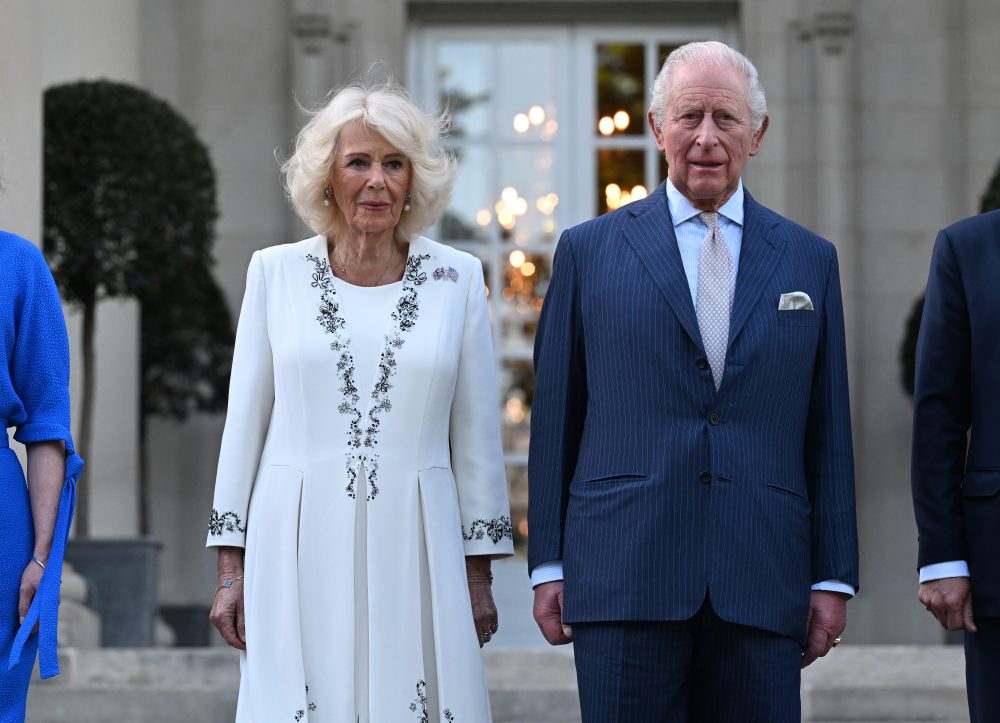
King Charles III is preparing for a landmark moment in Washington Tuesday, becoming the first British royal to speak before the United States Congress in more than three decades as he works to strengthen diplomatic ties between two historic allies.
The monarch will follow in the footsteps of his late mother, Queen Elizabeth II, who last addressed lawmakers in 1991 with remarks focused on shared democratic principles and common heritage between the nations. Charles is expected to echo similar themes during what will likely be his most significant public remarks of a four-day American tour celebrating the country’s upcoming 250th independence anniversary.
This rare congressional appearance places Charles among an exclusive group of world figures granted such an honor, joining the ranks of Pope Francis, former Czechoslovakian President Václav Havel, and wartime British Prime Minister Winston Churchill.
House Speaker Mike Johnson made history himself earlier this year as the first sitting House leader to address Britain’s Parliament. After attending a Washington garden party with the king Monday, Johnson assured Charles he would receive a warm congressional welcome.
The royal visit begins Tuesday morning with an Oval Office meeting between Charles, Queen Camilla, and President Donald Trump. Despite Trump’s sometimes unpredictable diplomatic style, the encounter may prove less contentious given the traditionally nonpartisan role of British royalty and Trump’s well-documented appreciation for the royal family. Trump will cap the day by hosting Charles at a formal White House state dinner.
However, the visit unfolds amid strained relations between Washington and London. Trump’s relationship with British Prime Minister Keir Starmer has deteriorated significantly as the president seeks international backing for military action in Iran. Trump has openly criticized Starmer’s reluctance to provide support, stating “this is not Winston Churchill that we’re dealing with.”
Economic tensions have also emerged, with Trump implementing tariffs on British goods and threatening additional trade penalties despite a recent Supreme Court decision limiting such unilateral actions. Just last week, Trump warned of imposing substantial tariffs unless Britain eliminates its digital services tax affecting American technology companies.
Trump’s broader foreign policy approach has challenged traditional Atlantic partnerships through attempts to acquire Greenland and repeated threats to withdraw from NATO. He has also targeted Canada, a Commonwealth nation, with both tariffs and public criticism.
The royal visit has drawn some controversy on Capitol Hill, with certain lawmakers calling for Charles to meet with Jeffrey Epstein victims during his stay. No such meetings are planned, despite ongoing scandal surrounding the convicted sex offender that has implicated the king’s brother, who was arrested in February on misconduct charges he denies.
California Representative Ro Khanna urged Charles over the weekend to address the Epstein matter during his congressional address.
House Democratic Leader Hakeem Jeffries criticized Republican policies Monday for damaging the Anglo-American relationship. “Hopefully, the king’s visit is going to go a long way toward repairing the damage that this administration has done to one of our most important allies in the world,” Jeffries said.
Charles and Camilla arrived in the nation’s capital Monday for tea with President Trump and First Lady Melania Trump. Their American tour continues later this week with scheduled visits to New York City and Virginia.
WASHINGTON — After the Supreme Court struck down his preferred import levies in February, President Donald Trump quickly implemented temporary trade taxes as replacements. However, these interim measures will end in under three months.
The current administration is now working urgently to establish more permanent import fees that will continue generating revenue for the federal treasury while maintaining the president’s protective trade barriers around America’s economy.
Beginning this week, the Office of the U.S. Trade Representative will commence hearings for two separate investigations expected to result in additional U.S. import taxes — fees paid by American importers and typically transferred to consumers through increased prices, adding to existing cost-of-living concerns.
While Trump’s latest import tax initiative will likely encounter legal opposition, it appears more legally sound than the version the Supreme Court overturned.
The first hearing, scheduled for Tuesday and Wednesday, will examine whether 60 nations — spanning from Nigeria to Norway and representing 99% of American imports — adequately prevent trade in goods produced through forced labor.
“For too long, American workers and firms have been forced to compete against foreign producers who may have an artificial cost advantage gained from the scourge of forced labor,” U.S. Trade Representative Jamieson Greer stated in March. The administration may impose new import taxes on violating countries.
The following week will feature hearings investigating whether 16 American trading partners — including China, the European Union and Japan — are manufacturing excess goods, reducing prices and disadvantaging U.S. producers. These nations under scrutiny represent 70% of U.S. imports, according to Tax Foundation analyst Erica York. This investigation could also trigger additional import fees.
Most significant economies, including China, the EU and Japan, appear on both investigation lists.
The administration has initiated these cases using Section 301 of the Trade Act of 1974, which permits import taxes and other penalties against nations engaging in “unjustifiable,” “unreasonable” or “discriminatory” trade practices.
Trade Representative Greer, who leads these investigations, has stated he will not predetermine their outcomes.
However, importers and foreign governments question whether the process will be impartial. Treasury Secretary Scott Bessent has already announced the government will replace original tariff income with new import taxes, including Section 301 levies, before investigations conclude. Trump himself has declared that new import fees “are going to get us more money.”
“If you believe the Treasury secretary and the president, then the cake is already baked,” said Scott Lincicome of the libertarian Cato Institute’s Center for Trade Policy Studies. “These investigations will result in tariffs that approximate what the Supreme Court overruled in February.”
On February 20, the Supreme Court determined Trump exceeded his authority by using the 1977 International Emergency Economic Powers Act (IEEPA) to impose substantial import taxes on nearly every global nation. Trump had utilized this act extensively to place taxes on imports. For instance, he threatened new fees on Canada over a Canadian television advertisement criticizing his trade policies.
He leveraged IEEPA tariff threats to pressure major trading partners — including the EU, Japan and South Korea — into accepting unfavorable trade deals. These levies generated significant income — $166 billion — before the Supreme Court ended them, ruling IEEPA couldn’t authorize import taxes. The federal government must now reimburse importers who paid those fees.
Trump had an immediate method to recover some lost income — previously projected at $1.6 trillion over ten years — at least temporarily. Section 122 of the Trade Act of 1974 permits presidents to impose global import taxes up to 15% for 150 days maximum.
The administration acted immediately. Two days following the Supreme Court ruling, it imposed 10% Section 122 import taxes. Trump indicated he would increase these to the 15% maximum but hasn’t.
These temporary measures expire July 24. Congress could extend them, but lawmakers show little interest in approving what essentially amounts to a major tax increase as November’s midterm elections approach, given voters’ existing anger over high prices partly attributable to import taxes.
Section 301 provides another avenue to recreate the protective effects of the rejected IEEPA levies. Section 301 import taxes have no size limitations and last four years with possible extensions.
Most importantly for the Trump administration after its Supreme Court loss, Section 301 import taxes survived legal challenges when the president used them during his first term against China over Beijing’s aggressive policies promoting domestic technology companies.
Future 301 import taxes will certainly face court challenges, but judges may uphold them.
“Even if it is a veiled — or less-than-veiled — attempt to reinitiate the IEEPA tariffs, he still has the cover of the process itself,” explained trade attorney Joyce Adetutu, a partner at Vinson & Elkins law firm.
Critics have highlighted the rapid pace of Trump’s current investigations. Implementing Section 301 import taxes against China during the president’s first term required nearly a year of investigation and public input. If current investigations produce new taxes in time to replace expiring Section 122 levies, the timeline will be less than half as long.
“It’s such a short timeframe,” said Kenya Davis, a partner at Boies Schiller Flexner law firm who has worked pro bono on human trafficking and forced labor issues. “It’s so condensed that it doesn’t make a lot of sense that they can do it that quickly.”
Importers preparing for renewed costly import taxes can find some reassurance knowing Trump’s Section 301 levies likely won’t be as unpredictable as his IEEPA fees, since he must follow established procedures before implementation.
“One of the reasons Trump used IEEPA is because it was just a complete blank slate” — or appeared to be before the Supreme Court ruling, Cato’s Lincicome explained, describing it as “a little tariff switch in the Oval Office that Trump could flip on and off anytime he wants; he wakes up in the morning and he doesn’t like a Canadian television commercial, he flips the switch … You really can’t do that with 301.”
The White House has rescinded President Donald Trump’s pick for National Park Service director, pulling the nomination of hospitality industry executive Scott Socha more than two months after submitting it to the Senate.
Officials provided no explanation for Monday’s withdrawal of Socha’s nomination.
Socha currently manages the parks and resorts operations for hospitality firm Delaware North.
Environmental advocates had opposed his February nomination, arguing he lacked the government experience necessary for the position.
Delaware North previously engaged in legal action against the National Park Service starting in 2015, ultimately reaching a $12 million settlement in 2019 while Trump was in his first presidential term.
The National Park Service remains under the leadership of Jessica Bowron, the agency’s comptroller serving in an acting director capacity.
The agency operates under the U.S. Interior Department’s jurisdiction.
The current administration has pursued changes to public spaces, museums and parks through measures that civil rights organizations have criticized as reversing years of social advancement.
Shortly after assuming office, Trump issued an executive directive addressing what he characterized as the proliferation of “anti-American ideology.”
The directive instructed the Interior Department to restore federal parks, monuments and memorials that had been “removed or changed in the last years to perpetuate a false revision of history.”
Following the executive order, the Interior Department announced a comprehensive review of all interpretive materials at national parks, including the informational plaques and displays that provide context about historical sites and events.
The Washington Post reported that federal officials have directed national parks to eliminate numerous signs and exhibits addressing slavery and the historical treatment of Native Americans by European settlers.
In one instance where National Park Service personnel removed a slavery display in January from a Philadelphia historical location where George Washington previously resided, a federal judge mandated the Trump administration restore the exhibit, which the agency subsequently did.
The Trump administration has dismissed every member of the National Science Board, eliminating the entire 22-person advisory panel in a sweeping action last Friday, according to former board members who spoke out Monday.
The independent advisory panel, created in 1950, serves to oversee the National Science Foundation and provide scientific guidance to both the president and Congress on matters involving science and engineering policy.
Board members received notice of their immediate dismissal on Friday, with no explanation provided for the mass termination, according to statements from former members Yolanda Gil and Keivan Stassun.
“Yes, all 22 current members of the National Science Board were terminated on Friday effective immediately. No reason was given,” stated Gil, who serves at the University of Southern California’s Information Sciences Institute.
The board consisted primarily of university professors, along with representatives from national laboratories, nonprofit organizations, and private industry, Gil explained to Reuters.
Stassun, a Vanderbilt University researcher, expressed his disappointment while confirming that Friday’s termination notice offered no justification for the dismissals.
“Seeing similar actions by the Administration across the federal government and especially with regards to scientific research, it seemed only a matter of time,” Stassun commented.
The board members had been serving six-year appointments before their abrupt removal.
Political analysts suggest this action fits a broader pattern by the Trump administration to restructure independent federal institutions by placing loyal appointees in key positions while removing voices that operate independently or critically.
When contacted for comment, the National Science Foundation referred all inquiries to the White House.
A White House representative indicated that the congressional authorities originally granted to the board upon its creation may require modernization, while emphasizing that the National Science Foundation’s operations “continue uninterrupted.”
The Trump administration announced Monday it is pulling back the nomination of hospitality industry executive Scott Socha to head the National Park Service, offering no explanation for the decision.
Socha’s nomination had been announced in February amid ongoing turmoil at the park service, which has experienced massive personnel reductions as part of the administration’s efforts to dramatically shrink government agencies.
The park service remains under temporary leadership by acting director Jessica Bowron, who also serves as the agency’s comptroller. Throughout Trump’s previous presidency, the agency operated without a Senate-confirmed leader, relying instead on a succession of interim directors.
Socha currently serves as president for parks and resorts at Delaware North, a Buffalo, New York-based company that holds service contracts with multiple national parks and bills itself as among the globe’s largest private entertainment and hospitality enterprises. When announcing his nomination, a White House representative called Socha “totally qualified” to implement Trump’s vision for America’s park system.
However, environmental advocacy organizations raised concerns about whether Socha’s business background provided adequate preparation for managing hundreds of national parks and monuments spanning from iconic sites like the Statue of Liberty to isolated locations across Utah’s desert regions.
The park service has lost thousands of workers through terminations and departures since Trump returned to office.
“It’s very unfortunate that our parks have gone more than a year without a permanent director at a time when they need strong, steady leadership the most,” said Emily Douce from the National Parks Conservation Association on Monday. She emphasized that the next director must “undo the damage.”
The administration’s budget proposal for the upcoming year calls for reducing park service staff to 9,200 workers, representing nearly a 30% decrease from 2025 employment levels.
Operating funds for the park service would face cuts exceeding $1 billion, dropping to $2.2 billion for the 2027 fiscal year beginning in October.
Congressional lawmakers previously blocked similar reduction proposals for 2026 after park advocates and former agency personnel warned such cuts would essentially dismantle the organization.
The administration has also drawn criticism for removing or planning to eliminate national park displays addressing slavery, climate change, and the suppression of Native American cultures. A federal judge ruled in February that an exhibit about nine enslaved individuals owned by George Washington must be reinstalled at his former Philadelphia residence after the Trump administration removed it.
Government officials justify these actions as eliminating “disparaging” content under Trump’s directive from last year. Critics argue the administration seeks to sanitize American historical narratives.
Under Interior Secretary Doug Burgum’s leadership, the park service has implemented a $100 fee for millions of international visitors to major destinations including Yellowstone and Grand Canyon. The agency has also added Trump’s photograph to annual passes for American citizens, prompting legal action from environmental groups claiming the practice violates federal law.
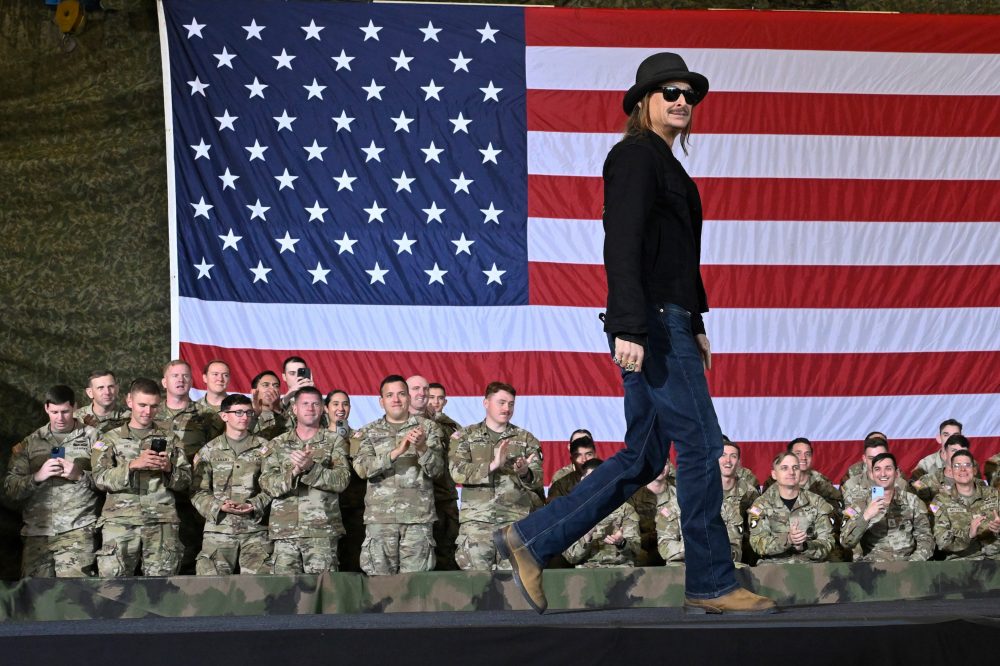
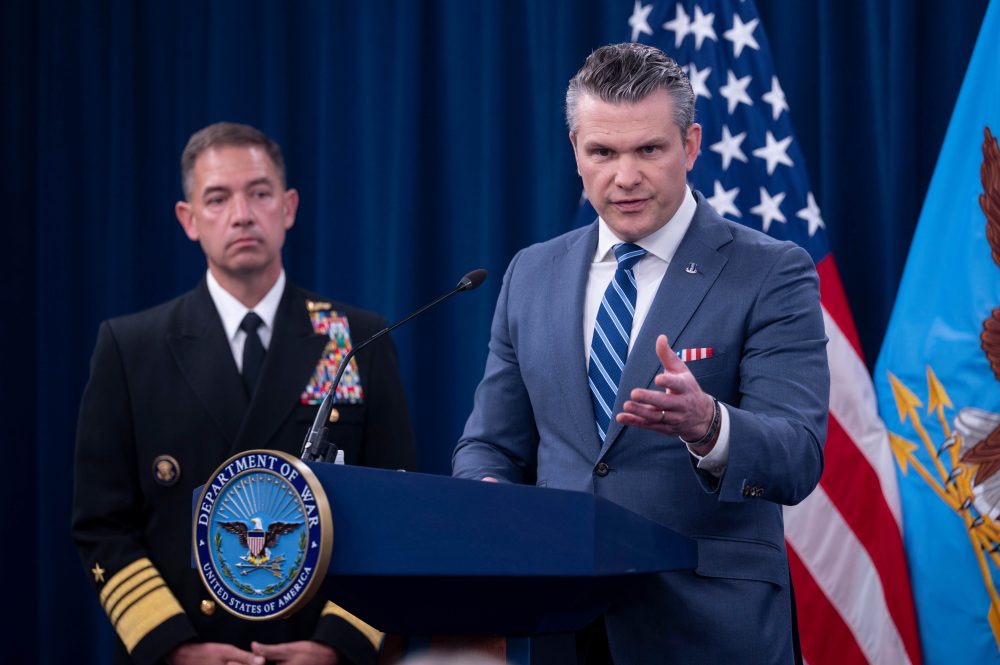
WASHINGTON — Entertainer Kid Rock and Defense Secretary Pete Hegseth took rides in Army Apache attack helicopters at a Virginia military installation Monday, according to a Pentagon official. The flights occurred just weeks after military aviators faced criticism for flying similar aircraft near the musician’s Tennessee property.
Pentagon spokesman Sean Parnell described the helicopter rides as part of a “community relations event” supporting Freedom 250, a White House program organizing activities for America’s upcoming 250th anniversary celebration.
“Robert ‘Kid Rock’ Ritchie participated in multiple troop touches with service members and filmed videos for Memorial Day, America’s 250th birthday, and for his Freedom 250 tour,” Parnell stated.
The controversy began in March when Army helicopter crews flew Apache aircraft near the residence of Kid Rock, a vocal supporter of President Donald Trump. Those same helicopters also passed over a “No Kings” demonstration protesting the Trump administration in Nashville, raising concerns about flight safety and proper authorization.
Military officials initially launched an investigation into the March incidents involving pilots from the 101st Airborne Division at Fort Campbell and suspended the crew members. However, Hegseth quickly stepped in to halt the inquiry.
Army leadership explained that the helicopters were conducting training exercises when they visited Kid Rock’s property and insisted their presence was unrelated to the nearby protest.
Flight tracking data shows Kid Rock’s private aircraft departed Nashville early Monday morning, touching down at Fort Belvoir in Virginia at 6:30 a.m.
Around 1 p.m., a U.S. Army AH-64 Apache helicopter lifted off, completed several circuits around the installation, and returned to base approximately 10 minutes later, according to the Military Air Tracking Alliance, an organization that monitors global military aviation activity using open-source intelligence.
The Apache used for Monday’s flights was among four such helicopters, along with two H-60 Blackhawk aircraft, that had traveled to the Virginia base from Fort Campbell over the weekend.
Drop Site News initially reported Monday’s helicopter activities in Virginia.
Operating an Army Apache helicopter costs approximately $7,000 per flight hour, an Army official revealed, speaking anonymously to discuss information not cleared for public disclosure.
California Governor Gavin Newsom’s office criticized the flights on social media, questioning, “Why are taxpayers paying to fly Kid Rock around on $100 million helicopters?”
Newsom frequently opposes Trump administration policies and is considered a possible Democratic presidential contender in 2028.
Colorado Democratic Representative Jason Crow, who previously served as an Army Ranger, also used social media to ask: “Why is Pete Hegseth spending your taxpayer dollars to give Kid Rock ‘joy rides’ on Apache helicopters?”
When questioned about expenses related to public events involving celebrities or military demonstrations, defense officials typically maintain that such activities satisfy routine pilot training needs and therefore don’t create additional taxpayer costs.
Kid Rock also addressed a small gathering of military personnel in the Pentagon’s media briefing room and answered several questions, according to someone familiar with the event who requested anonymity due to concerns about potential retaliation.
Flight tracking records indicate Kid Rock’s aircraft returned to Nashville shortly after 3 p.m. Monday.
Apache helicopters normally operate with two crew members who are both qualified pilots, though one typically concentrates on operating the weapons systems. Carrying a passenger requires removing one crew member, which means Hegseth and Kid Rock would have flown in separate aircraft.
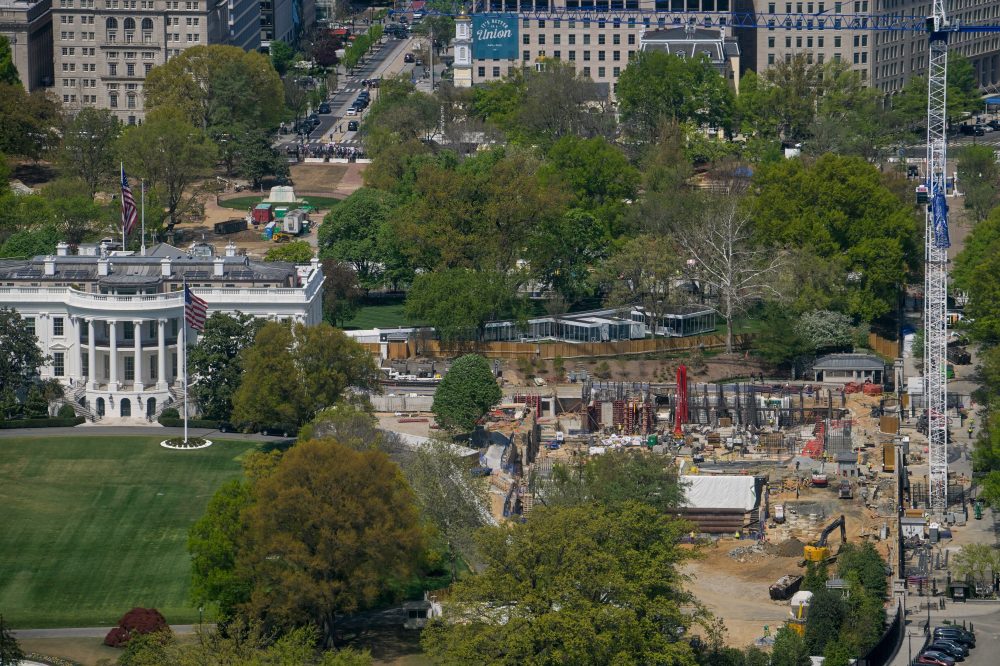
WASHINGTON — Congressional Republicans introduced legislation Monday seeking federal approval and funding for President Donald Trump’s planned White House ballroom, citing security concerns following Saturday’s shooting incident at the White House Correspondents’ Association dinner.
The proposed legislation would allocate $400 million in federal funds to cover construction costs and underlying security infrastructure. While Trump previously indicated private funding would finance the ballroom, Republican Senator Lindsey Graham of South Carolina, a bill co-sponsor, stated Monday that private contributions should be limited to “buying china and stuff like that.”
During a Monday press conference, Graham acknowledged some may view the ballroom as Trump’s “vanity project,” but emphasized its necessity for safe presidential events, avoiding less secure locations like the Washington Hilton where Saturday’s dinner occurred. According to FBI court documents, the individual who allegedly attempted to breach the event with weapons had booked a hotel room at the venue.
“It would be insane” to hold future dinners at that location, Graham declared, stating he would advise any president against it, despite Trump’s expressed interest in rescheduling the event.
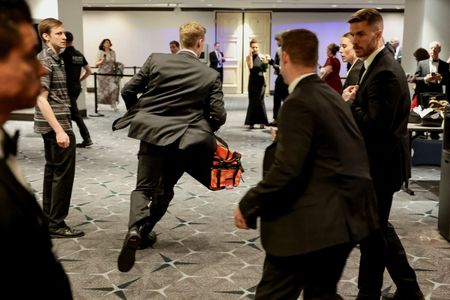
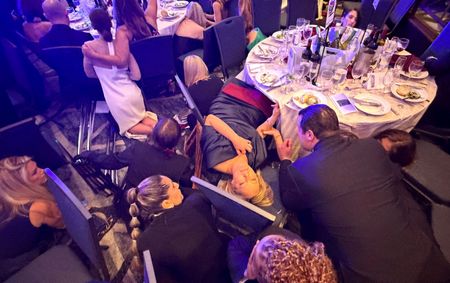
Cole Tomas Allen faced federal court proceedings Monday on charges of attempting to assassinate Trump following Saturday’s incident, during which gunfire erupted outside the ballroom. The president was quickly evacuated from the stage while thousands of attendees sought cover under tables.
Additional lawmakers announced plans to introduce their own ballroom authorization measures, including Representative Lauren Boebert of Colorado and Republican Senators Rand Paul of Kentucky and Tim Sheehy of Montana.
“It is an embarrassment to the strongest nation on earth that we cannot host gatherings in our nation’s capital, including ones attended by our president, without the threat of violence and attempted assassinations,” Sheehy wrote on social media platform X.
However, the initiative faces uncertain prospects for passage. Democrats have consistently opposed the ballroom construction since Trump began demolishing White House sections without congressional authorization, leading to ongoing legal challenges. House Democratic Leader Hakeem Jeffries told reporters the president should prioritize ending the Iran conflict, healthcare initiatives, and cost-of-living relief measures.
“These are the things that we should actually be focused on,” Jeffries stated.
Senate Democratic Leader Chuck Schumer criticized Trump’s desire to isolate himself in a “walled palace, literally.”
Schumer urged Republicans to instead advance spending legislation funding the U.S. Secret Service, which operates under the Homeland Security Department and has been shuttered for over two months. The House has not yet acted on two department funding bills previously passed by the Senate.
“If Republicans truly want to improve security, they should join Democrats in funding the Secret Service, not Donald Trump’s luxury ballroom,” Schumer said.
Republicans also leveraged the incident to advocate for Homeland Security funding, criticizing Democrats for blocking immigration enforcement agency funding since mid-February.
The dinner disruption follows two previous attempts on Trump’s life and occurs amid increasing death threats against congressional members from both parties in recent years.
Graham noted the extraordinary nature of current times.
“I’ve been up here a while now, and I’ve never felt the sense of threat that exists today,” he said.
Alabama Senator Katie Britt, who co-sponsored the legislation with Graham, emphasized the proposal extends beyond Trump’s presidency.
“This will not be done until the end of his term,” she explained. “This is about future presidents. This is about our nation having a place to gather.”
WASHINGTON — A federal appeals court has authorized the Defense Department to mandate journalist escorts on Pentagon property as the Trump administration contests a lower court ruling that blocked enforcement of its media access restrictions, according to a Monday decision.
The 2-1 decision from a three-judge panel of the U.S. Court of Appeals for the District of Columbia Circuit represents an interim ruling in The New York Times’ legal challenge to the Pentagon’s revised press credential requirements. The majority indicated the government would likely demonstrate the escort provision’s legal standing.
The appellate panel approved the government’s motion to halt an April 9 ruling by U.S. District Judge Paul Friedman, who determined the Defense Department had violated his previous directive to reinstate Pentagon access for journalists.
Circuit Judges Justin Walker, J. Michelle Childs and Bradley Garcia considered the matter, with Childs providing the lone dissenting voice in the 2-1 decision.
“Reporters can hardly verify sources, gather information, or speak candidly with Department personnel with an escort looming over their shoulders,” Childs wrote.
Judge Friedman had determined the Pentagon’s updated credential requirements infringed upon journalists’ constitutional free speech and due process protections. He stated Defense Secretary Pete Hegseth’s administration attempted to circumvent his March 20 decision by establishing new regulations that remove all reporters from the facility without escort supervision.
Defense Department spokesperson Sean Parnell expressed satisfaction with the panel’s determination and anticipation for presenting the complete case before the same judges. Through a social media statement, Parnell claimed unrestricted Pentagon access has resulted in “regular unauthorized disclosure of sensitive and classified national defense information.”
“Since implementing the current access policy, the Department has seen a meaningful reduction in these unauthorized disclosures, which when they occur can endanger the lives of service members, intelligence personnel, and our allies,” he wrote.
Theodore Boutrous, representing The Times, characterized the panel’s determination as “a narrow, preliminary one” that “casts no doubt” on the publication’s constitutional claims.
“We look forward to defending the full scope of the district court’s rulings in The Times’s favor in this appeal,” Boutrous said in a statement.
Republican President Donald Trump appointed Walker to the bench. Democratic President Joe Biden nominated Garcia and Childs. Democratic President Bill Clinton selected Friedman.
The nation’s highest court grappled Monday with a modern privacy dilemma as justices heard arguments about law enforcement’s use of so-called ‘geofence’ warrants to obtain location data from technology companies.
During Monday’s oral arguments, Supreme Court justices directed sharp questions toward attorneys representing both sides of the case. The typical ideological divisions between conservative and liberal justices appeared muddled, with members from both camps expressing concerns about different aspects of the legal issue.
The case centers on whether police need specific warrants to access digital location information that companies like Google collect from smartphones and other devices. These geofence warrants allow investigators to request data showing which devices were present in a particular area during a specific time period.
The legal battle highlights the ongoing tension between individual privacy rights in the digital age and law enforcement’s need for investigative tools to solve crimes. The court’s eventual ruling could significantly impact how police departments nationwide conduct investigations using location technology.
House Speaker Mike Johnson announced Monday that Republicans plan to alter legislation funding the Department of Homeland Security before bringing it to a vote, potentially creating delays in critical funding just days after a shooting incident at a Washington event where President Donald Trump was present.
The legislation, which received unanimous approval twice in the Senate, represents part of a Republican strategy to resolve the partial shutdown affecting homeland security operations that began in mid-February. Previous negotiations stalled over disagreements regarding reforms to Immigration and Customs Enforcement and Border Patrol operations, following deadly shootings of two American citizens earlier this year.
The proposed funding would cover all DHS operations except for ICE and Border Patrol agencies. House Republicans were anticipated to consider the measure this week, following a vote on separate $70 billion funding for the two immigration enforcement agencies that gained Senate approval last week. The House plans to vote Wednesday on the budget resolution containing funding directions for ICE and Border Patrol.
Funding urgency for the Secret Service has grown since Saturday’s shooting at the White House Correspondents’ Association Dinner, where prosecutors allege a gunman attempted to assassinate Trump. Homeland Security Secretary Markwayne Mullin has warned that current departmental funding, which also covers the Transportation Security Administration, will be exhausted in early May.
However, Johnson informed reporters that the Senate’s legislation funding DHS minus ICE and Border Patrol requires modifications.
“We have a modified version that I think is going to be much better for both chambers. It doesn’t change most of the substance. But it makes sure that we’re not going to orphan the primary agencies of DHS,” Johnson explained to reporters, though he declined to elaborate on specifics.
Conservative House Republicans have opposed the Senate legislation, arguing they prefer comprehensive funding for all DHS agencies, including ICE and Border Patrol.
Any altered legislation would require another Senate vote, where Democratic opposition could block the 60 votes typically needed for passage.
Senate Majority Leader John Thune, Johnson’s Senate counterpart, told reporters that both the DHS funding measure and the ICE and Border Patrol budget framework would ultimately ensure adequate financing for all homeland security functions.
“We did everything we can to ensure that everything is appropriately funded,” Thune stated. “Hopefully that will be enough to get the House in a comfortable position.”
The budget resolution scheduled for House consideration this week serves as a preliminary step toward separate ICE and Border Patrol funding legislation that would bypass Senate Democratic resistance using a procedural tool known as budget reconciliation. This funding would extend through Trump’s presidential term, ending in January 2029.
Last year, Republicans approved approximately $130 billion in ICE and Border Patrol funding, separate from their regular annual appropriations.
Federal immigration authorities have implemented new screening procedures that will examine applicants’ previous statements for what officials describe as extremist perspectives, prompting criticism from free speech advocates who fear constitutional violations.
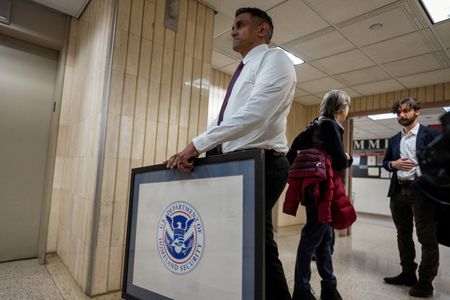
The Department of Homeland Security confirmed Monday that immigration officials will conduct enhanced reviews of green card and naturalization candidates whose past comments raise red flags about their beliefs and values.
This announcement followed weekend reporting by the New York Times revealing internal documents showing the Trump administration’s new guidelines could result in green card denials for immigrants who participate in pro-Palestinian demonstrations, voice criticism of Israel, or engage in flag desecration.
U.S. Citizenship and Immigration Services spokesperson Zach Kahler explained the agency’s position: “Certain behaviors and statements may raise serious concerns for USCIS personnel reviewing an applicant’s file, including espousing terrorist ideologies, expressing hatred for American values, advocating for the violent overthrow of the United States government, or providing material support to terrorist organizations.”
According to the Times report, federal training materials specifically highlight criticism of Israel as potentially problematic, pointing to social media content stating “Stop Israeli Terror in Palestine” alongside crossed-out Israeli flags as examples of concerning speech.
Immigration personnel received instructions to consider these expressions as “overwhelmingly negative” factors in their evaluations.
The policy has drawn sharp criticism from lawmakers and advocacy organizations who view it as government overreach.
Democratic Senator Chris Van Hollen challenged the approach on social media, writing: “Trump plans to deny legal residency in the U.S. based on whether he agrees with your speech. Since when did it become ‘anti-American’ to criticize the actions of a foreign government?”
Civil liberties organization Defending Rights and Dissent condemned the measures, stating: “This is an incredibly disturbing attack on free speech, with the government deciding who can enter the country based purely on their expression of political views.”
The current administration has intensified enforcement actions against pro-Palestinian activism through multiple channels, including deportation attempts against foreign demonstrators, funding threats to universities hosting protests, and increased monitoring of immigrants’ digital communications.
Last year, officials announced plans to screen immigration applications for what they termed “anti-Americanism” and antisemitism.
Administration officials maintain that pro-Palestinian movements promote antisemitic views and support extremist causes.
However, activists and some Jewish organizations argue that federal authorities incorrectly equate legitimate criticism of Israel’s Gaza military operations and Palestinian territory occupation with antisemitism, while treating Palestinian rights advocacy as extremist support.
One deportation case involved Tufts University graduate Rumeysa Ozturk, where authorities based their action solely on an editorial she co-wrote for the student newspaper criticizing the university’s response to Israel’s Gaza conflict.
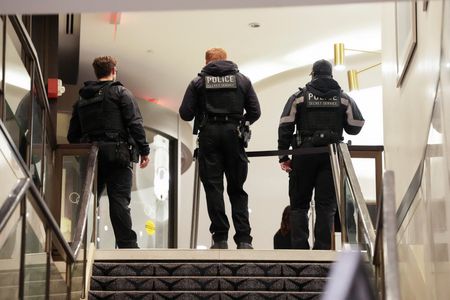
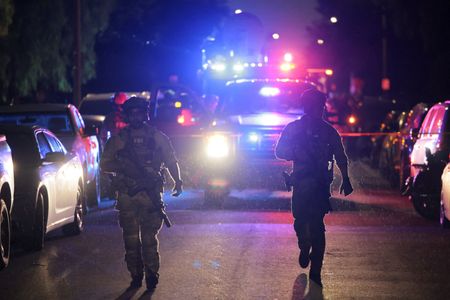
Questions about presidential security protocols have emerged following a shooting incident that took place during Saturday’s White House Correspondents’ Association Dinner in Washington.
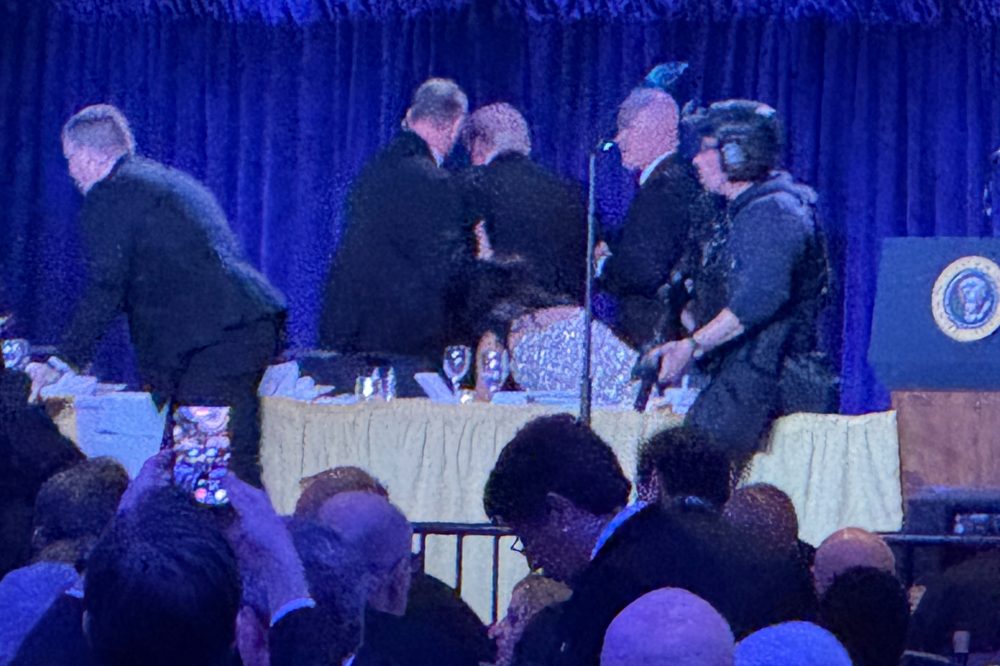
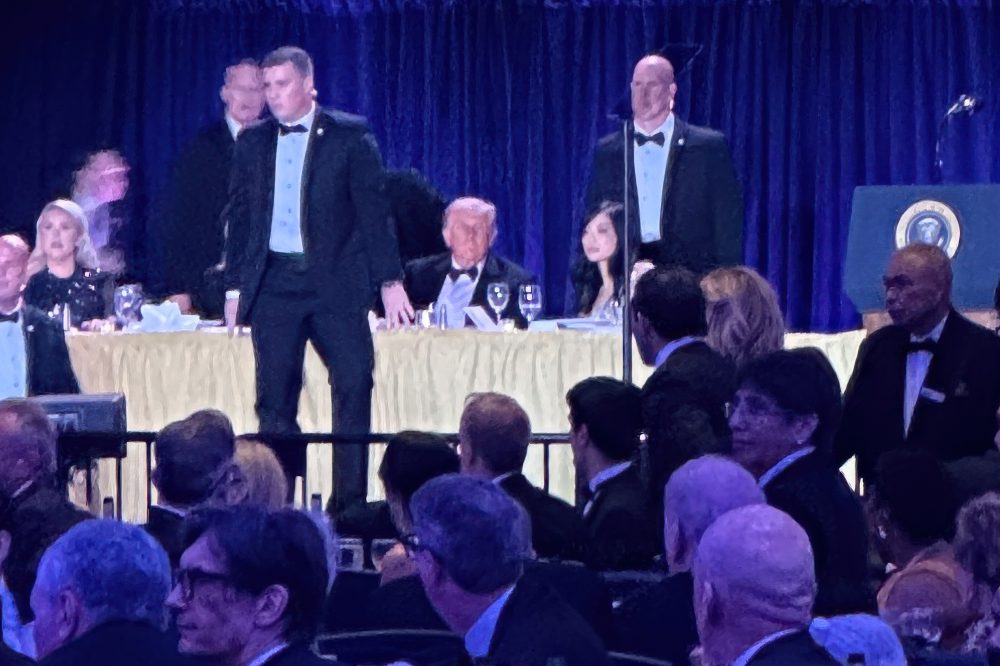
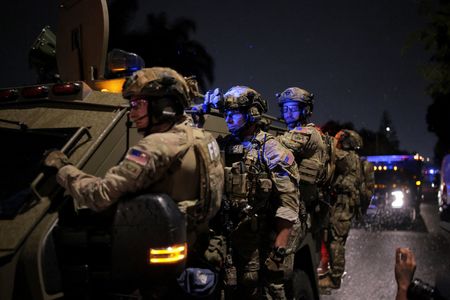
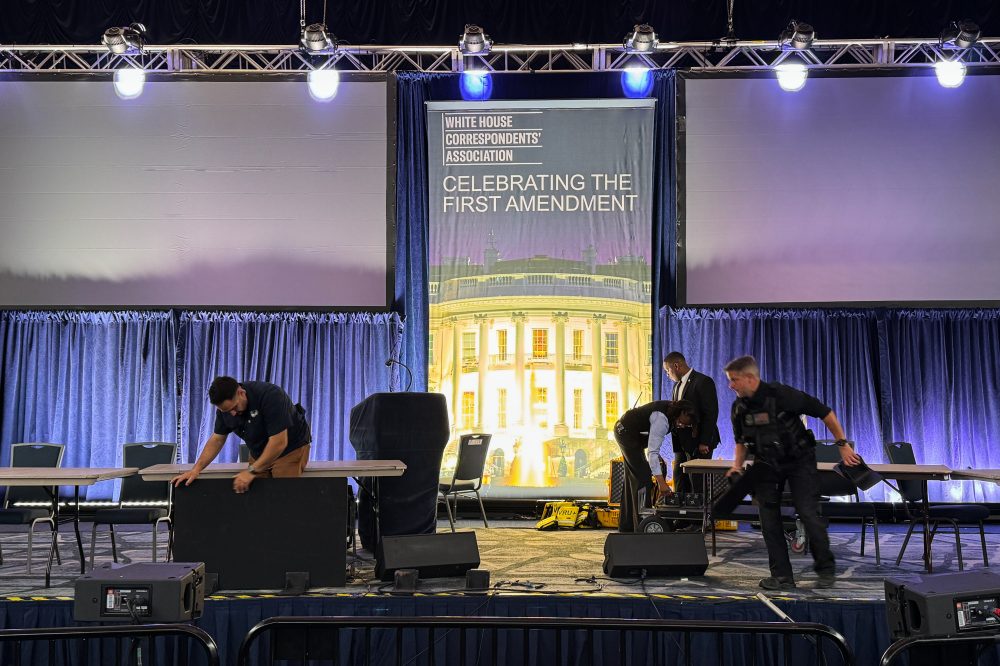
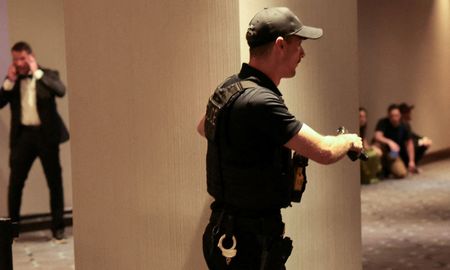
The incident occurred outside the ballroom where the annual event was being held on April 25, prompting an immediate response from Secret Service counter assault teams who took positions on the venue’s stage.
The shooting has sparked concerns among security experts and the public about the proximity the suspected shooter achieved to the president and whether current Secret Service protective measures proved adequate for the high-profile gathering.
Members of the Secret Service’s specialized counter assault unit were photographed maintaining their positions on stage following the security breach, highlighting the serious nature of the incident at one of Washington’s most prominent annual media events.
WASHINGTON — Supreme Court justices appeared split Monday during oral arguments over whether thousands of cancer-related lawsuits against Roundup’s manufacturer should be blocked from proceeding in state courts.
The high-stakes legal battle follows years of massive litigation resulting in billion-dollar jury awards against Bayer, the German conglomerate that acquired Monsanto, Roundup’s original producer.
Some justices appeared receptive to Bayer’s position that federal approval of Roundup’s labeling should shield the company from state-level legal challenges, given that EPA regulators have concluded the herbicide probably doesn’t cause cancer. However, other justices questioned whether such protection would inappropriately prevent states from adapting to new scientific findings.
The Trump administration is supporting Monsanto’s legal stance, creating tension with certain Make America Healthy Again advocates who favor stricter pesticide regulations.
At the center of Monday’s arguments was Missouri resident John Durnell’s lawsuit. Durnell claims he contracted non-Hodgkin’s lymphoma following two decades of applying Roundup as his neighborhood association’s designated “spray guy” for parks in his historic St. Louis area.
A jury determined the company had inadequately warned Durnell about potential cancer risks and granted him $1.25 million in damages. His case represents one among thousands of similar legal actions, some resulting in multibillion-dollar judgments.
Scientific opinion remains sharply divided regarding glyphosate, Roundup’s active component, and its cancer-causing potential. While the World Health Organization’s cancer research arm labeled the substance “probably carcinogenic” in 2015, the Environmental Protection Agency maintains it poses minimal cancer risk when properly used.
The EPA approved Roundup’s current labeling without cancer warnings, and Bayer contends it must comply with federal guidelines rather than varying state regulations that form the basis of Durnell’s and similar lawsuits.
Justice Ketanji Brown Jackson noted that EPA conducts labeling reviews every 15 years, potentially creating lengthy gaps given rapid scientific progress.
Chief Justice John Roberts questioned whether requiring companies to wait for EPA reviews would restrict state courts’ authority. “Throughout that long process, in response to information that suggests there is a risk that’s not on the label, the states cannot do anything?” he asked.
Attorneys representing Durnell maintain that federal regulations don’t prevent Bayer from adding cancer risk warnings to satisfy state legal requirements.
However, Justices Brett Kavanaugh and Elena Kagan expressed concerns that exposure to varying state legal standards could create corporate compliance challenges and weaken federal regulatory effectiveness. “Do you think it’s uniformity when each state can require different things?” Kavanaugh inquired.
While Bayer contests the cancer allegations, the company has allocated $16 billion for case settlements and proposed a comprehensive settlement this year. Simultaneously, it has lobbied state governments to enact legislation preventing new lawsuits, with several states agreeing.
Bayer has confronted over 100,000 Roundup-related claims, primarily from residential users. The company has eliminated glyphosate from Roundup products marketed to U.S. homeowners and gardeners. Bayer has indicated it may need to withdraw glyphosate from American agricultural markets if litigation continues.
The American Farm Bureau Federation warned in court filings that removing the herbicide would create “immediate, devastating risk to America’s food supply” during a period when agriculture already faces significant challenges.
Environmental advocacy groups argue Bayer seeks to avoid jury trials due to its poor performance in state courts.
The pesticide issue has created divisions between the current administration and supporters of Health Secretary Robert F. Kennedy’s MAHA movement, who also criticized an executive order promoting increased glyphosate production.
Kennedy has repeatedly stated his belief that glyphosate causes cancer, while acknowledging the executive order’s necessity for food security and national defense purposes.
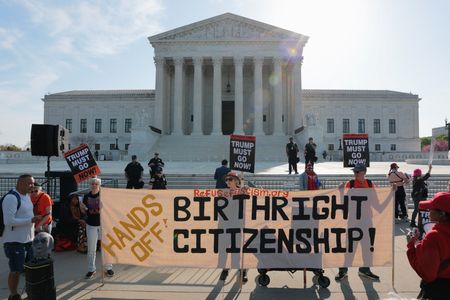
Dozens of MAHA activists and supporters demonstrated outside the Supreme Court Monday during what they termed a “People vs. Poison” protest against Monsanto’s efforts to avoid legal accountability.
The Supreme Court is anticipated to issue its ruling before the end of June.
WASHINGTON — Two additional energy companies will receive substantial payments from the Trump administration to abandon their offshore wind development projects, officials announced Monday.
The Interior Department revealed that Bluepoint Wind and Golden State Wind have reached agreements to terminate their offshore wind leases in return for compensation totaling approximately $900 million. Both firms have committed to avoiding future offshore wind ventures in American waters.
Bluepoint Wind had been developing an early-stage project in waters off New Jersey and New York, while Golden State Wind was planning a floating wind installation along California’s central coastline.
According to Interior officials, these arrangements mirror the recent agreement with French energy giant TotalEnergies, which received a $1 billion payment in March to abandon developments off North Carolina and New York. That company has redirected its investment toward fossil fuel initiatives.
These agreements emerge after federal courts blocked the administration’s attempts to halt offshore wind development. In December, a federal judge struck down Trump’s executive order stopping wind energy projects, ruling it violated the law. The judge sided with attorneys general from 17 states and Washington, D.C., who contested the directive.
Two weeks following that ruling, the administration directed five major East Coast wind projects to cease construction, citing national security issues. However, developers and states filed lawsuits, and federal judges permitted all five projects to continue, determining the government failed to demonstrate an immediate security threat requiring construction stoppage.
Democratic lawmakers and environmental organizations have raised concerns about the TotalEnergies agreement’s legality and potential negative impacts on America’s economy and environment.
Ocean Winds, a partnership between EDP Renewables and international energy company Engie, holds ownership stakes in both Bluepoint and Golden State projects. Bluepoint’s lease originally cost $765 million, while Golden State Wind can recover roughly $120 million in lease payments, Interior stated.
Interior Secretary Doug Burgum criticized the original lease agreements, claiming companies purchased projects that only remained economically feasible through substantial taxpayer subsidies when they submitted bids in 2022 under former President Joe Biden.
“Now that hardworking Americans are no longer footing the bill for expensive, unreliable, intermittent energy projects, companies are once again investing in affordable, reliable, secure energy infrastructure,” Burgum stated. “We welcome each of the projects’ willingness to actually support baseload power and lower utility bills for American families.”
Both wind projects were designed as major installations capable of supplying electricity to over 1 million households upon completion, supporting New Jersey, New York, and California’s renewable energy objectives.
Bluepoint Wind represents a collaboration between Ocean Winds and Global Infrastructure Partners, which is owned by investment firm BlackRock. Global Infrastructure Partners has pledged up to $765 million for a domestic liquefied natural gas facility. Interior plans to cancel the offshore wind lease and reimburse the company for its LNG project investment.
Golden State Wind operates as a joint venture between Ocean Winds and the Canada Pension Plan Investment Board. Under the new agreement, Golden State Wind can reclaim approximately $120 million in lease costs after investing an equivalent amount in oil and gas assets, infrastructure, or Gulf Coast projects.
Company representatives expressed gratitude for the administration’s collaborative approach.
Michael Brown, CEO of Ocean Winds North America, described the agreement as providing “clarity” for the company and its investors. “Our priority remains disciplined capital allocation and delivering reliable energy solutions that create long-term value for ratepayers, partners and shareholders,” Brown explained.
During his second presidential term, Trump has prioritized fossil fuel development, arguing it will reduce household energy costs, improve grid reliability, and maintain America’s competitive edge in artificial intelligence technology.
A suspect accused of planning an attack during the White House Correspondents’ Dinner made his initial court appearance Monday morning for his arraignment hearing.
The defendant is facing multiple serious charges, including attempted assassination of the president, according to court documents.
The arraignment marks the first formal court proceeding in the case following the alleged incident at the high-profile media event.
HARRISBURG, Pa. — An Arizona man who oversaw troubled voter registration operations in Pennsylvania during the lead-up to the 2024 presidential election received a one-month jail sentence Monday after entering guilty pleas to three misdemeanor charges.
Guillermo Sainz Gurrola, who lives in Phoenix, also received a $1,000 fine and probation terms for three counts of solicitation of registration. Prosecutors said he created illegal financial rewards for registration workers who achieved certain targets.
Six registration canvassers still face pending charges including forgery, unsworn falsification, tampering with public records, and violations of election and voter registration statutes, according to the attorney general’s office. One individual also faces identity theft allegations.
Defense lawyer Timothy M. Stengel chose not to comment but noted his client offered an apology during court proceedings. Officials had initially identified the defendant as Guillermo Sainz, though Stengel and court records show his full name as Guillermo Sainz Gurrola.
According to Stengel, Monday’s guilty plea covered registration activities in Lancaster, Berks and York counties.
Court documents reveal that Sainz Gurrola worked for Field+Media Corps and “instituted unlawful financial incentives and pressures in his push to meet company goals to maintain funding which in turn spurred some canvassers to create and submit fake forms to earn more money,” investigators stated in their affidavit.
Everybody Votes provided funding for Field+Media, working to boost voter registration in minority communities. The court filing noted that Everybody Votes cooperated completely with investigators and had contractual language forbidding payments based on registration numbers.
Sainz Gurrola supervised Pennsylvania activities between May and October 2024.
The probe started weeks before the general election after Lancaster County election officials identified potentially fraudulent voter registration documents. Investigators discovered the forms contained fake identities, suspicious penmanship, dubious signatures, wrong addresses and additional concerning elements.
During the final weeks of the presidential campaign, then-candidate Donald Trump highlighted the incident, claiming “cheating” had occurred with “2,600” votes. However, the Lancaster situation involved approximately 2,500 questionable voter registration documents, not actual ballots or cast votes.
Both President Donald Trump and First Lady Melania Trump demanded Monday that ABC terminate late-night host Jimmy Kimmel following his controversial comment describing the first lady as having “the glow of an expectant widow.”
Kimmel made the contentious remark during last Thursday’s episode of “Jimmy Kimmel Live” while performing a mock comedy routine supposedly for the White House Correspondents’ Association dinner. The actual dinner event was interrupted two days later when an armed individual carrying guns and knives attempted to breach the Washington ballroom where the Trumps and numerous political leaders were assembled.
“People like Kimmel shouldn’t have the opportunity to enter our homes each evening to spread hate,” Melania Trump wrote in a social media statement that her husband later repeated.
ABC has not yet responded to requests for comment.
The comedian has consistently made the president a target of his humor and intensified his approach following conflicts with the administration last autumn. ABC previously suspended Kimmel, with several network affiliates removing him from their programming after he made remarks about deceased conservative figure Charlie Kirk – actions that Trump’s FCC chairman Brendan Carr supported. The network and stations eventually reinstated Kimmel.
Wearing formal attire and positioned at a podium Thursday evening, Kimmel performed his satirical routine for the correspondents’ dinner with fabricated “cutaway” shots to the Trumps and other figures using existing video footage.
Addressing Melania in his fake “audience,” he stated: “Mrs. Trump, you have a glow like an expectant widow.”
“I appreciate that so many people are incensed by Kimmel’s despicable call to violence, and normally would not be responsive to anything that he said but, this is something far beyond the pale,” the president posted on his Truth Social platform. “Jimmy Kimmel should be immediately fired” by ABC and its parent company Walt Disney Co., he declared.
The first lady characterized Kimmel’s “hateful and violent rhetoric” as designed to create division in America. “A coward, Kimmel hides behind ABC because he knows the network will keep running cover to protect him,” Melania Trump posted. “Enough is enough. It is time for ABC to take a stand.”
White House press secretary Karoline Leavitt described it as part of broader rhetoric from Democrats and certain media figures that “has helped to legitimize this violence.”
“Who in their right mind says a wife would be glowing over the potential murder of her beloved husband?” Leavitt questioned. No evidence suggests Kimmel was making references to violence.
Kimmel’s routine also acknowledged Melania Trump’s Sunday birthday, commenting: “She’s planning to celebrate at home the same way she always does — looking out a window and whispering, ‘What have I done?’”
He additionally remarked: “Before we go any further, Melania, this is Donald. Donald, this is Melania. That was my impression of Jeffrey Epstein.”
Cole Tomas Allen, the California resident arrested for allegedly attempting to storm the correspondents’ dinner Saturday evening, faces charges of attempted presidential assassination.
Despite an unprecedented flow of real-time information from credible sources, conspiracy theories began circulating online within moments of Saturday night’s shooting incident.
The violence that erupted during the White House Correspondents’ Dinner with President Donald Trump in attendance unfolded before hundreds of the country’s top journalists and news executives, who immediately began providing comprehensive coverage from inside the venue.
The result was continuous, verified reporting from numerous trusted news organizations — far from any shortage of reliable information. Yet baseless conspiracy theories from across the political spectrum emerged rapidly, particularly claims suggesting the entire incident was orchestrated. Some theories ignored established facts entirely, while others twisted accurate information to support false conclusions.
University of Maryland professor Jen Golbeck, who researches conspiracy theories, explained that institutional distrust combined with difficulty distinguishing truth from falsehood creates ideal conditions for such speculation. However, she noted that conspiracy theories can gain traction even amid abundant factual reporting due to their appeal as entertainment.
“The thing about conspiracy theories that makes people enjoy them, even if they’re not politically extreme, is that you get to go looking for breadcrumbs,” she said. “It’s a way to feel smart and accepted when you come up with a nugget to contribute and people like it.”
While the immediate presence and coordinated reporting of hundreds of professional journalists prevented some false narratives from taking hold, many conspiracy theories still gained momentum online.
A widespread but baseless claim suggested the shooting was deliberately planned, either to divert attention from matters like the Iran conflict or to advance Trump’s White House ballroom renovation project. This theory gained traction partly because Trump referenced the incident as justification for his ballroom plans, and because the Justice Department is citing it in efforts to convince preservationists to abandon their legal challenge to the $400 million construction project.
Other unfounded speculation, lacking any credible support, implicated the Israeli government or military — a claim that often serves as an antisemitic stereotype. Additionally, press secretary Karoline Leavitt’s pre-dinner Fox News interview comment that “there will be some shots fired tonight in the room” — clearly referring metaphorically to Trump’s planned remarks — was misconstrued as advance knowledge of the actual shooting.
Many conspiracy theorists drew connections between Saturday’s incident and the July 2024 assassination attempt against Trump at his Butler, Pennsylvania rally, pointing to similarities like delays in removing the president from danger. Some cited footage showing Vice President JD Vance being evacuated first as supposed proof that Trump and Secret Service agents had prior knowledge of the attack.
University of Minnesota professor Emily Vraga, who specializes in political misinformation research, explained that increased information doesn’t always improve understanding, particularly during politically divisive periods when people selectively choose facts to construct their preferred narratives.
“We just can’t process that much information,” she explained. “And so when there is just this flood of information and it’s contradictory and ever-changing as new information comes in, that can actually reinforce this tendency to go to a simplified, understandable narrative. And that narrative can include conspiracy theories.”
She added, “Meaning doesn’t have to be tied to reality.”
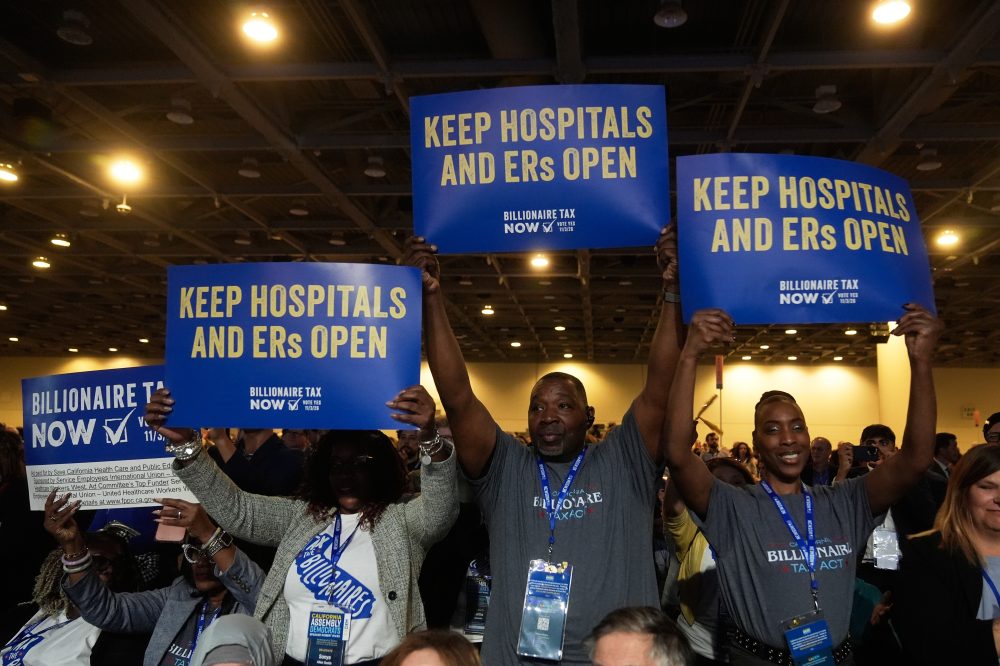
SACRAMENTO, Calif. — Labor union organizers announced Monday that their initiative to impose new taxes on California’s wealthiest residents has gathered enough voter signatures to advance to the November ballot.
The measure, championed by Service Employees International Union Healthcare Workers West, would establish a temporary 5% levy on individuals with assets exceeding $1 billion who maintained California residency as of January 1, 2026. Organizers project the initiative could raise $100 billion, with proceeds primarily designated to replace anticipated federal healthcare funding reductions for lower-income residents.
“California’s health is at stake,” said Liz Perlman, executive director of a chapter of the American Federation of State, County and Municipal Employees, a major labor union. “Hospitals are closing and people will die. Why? So billionaires can get another tax cut that they don’t need.”
While the California Secretary of State must still authenticate the signatures before officially certifying the ballot placement, supporters report gathering more than 1.5 million voter signatures — significantly exceeding the approximately 875,000 required threshold.
Should the initiative reach voters in November, political observers anticipate one of the state’s most expensive ballot campaigns and expect nationwide scrutiny as a gauge of public sentiment toward wealth taxation. Vermont Senator Bernie Sanders has already made campaign appearances in California promoting the proposal.
However, Democratic Governor Gavin Newsom and prominent Silicon Valley executives strongly oppose the measure, arguing it will prompt an exodus of the state’s highest earners. California derives nearly half its personal income tax collections from the top 1% of wage earners, and some wealthy residents have already acquired out-of-state properties as a precautionary measure.
“After playing with matches since October the SEIU has succeeded in lighting a ‘Tax the Rich’ wildfire by getting enough signatures,” said David Lesperance, a tax consultant who’s advised some of his wealthy clients who left California because of the proposal. “The many billionaire targets of their efforts have already responded by executing fire escape plans by relocating to other states.”
Brian Brokaw, a longtime Newsom adviser leading the opposition political committee, criticized the measure’s design and warned of severe budgetary consequences for the state.
“Enacting a so-called wealth tax in just one state wouldn’t target a small group — it would impact all 40 million Californians,” he said in a statement. “This proposal trades a short-term revenue bump for long-term losses.”
According to an Associated Press analysis of Forbes magazine’s 2025 global wealth rankings, at least 25 billionaires either reside in California or maintain substantial state connections. However, establishing their official residency status versus occasional visitor classification may become contentious, given that many own multiple properties across different states.
The initiative comes as President Donald Trump’s recent tax and spending legislation is projected to reduce nationwide Medicaid and federal food assistance funding by more than $1 trillion over the next decade.
The Trump administration has abruptly dismissed all members of the independent National Science Board, which provides oversight and guidance to the National Science Foundation.
Board members received termination notices via email on Friday from the Presidential Personnel Office, stating their positions were ended immediately on behalf of President Trump.
“I wasn’t entirely surprised, to be honest,” dismissed board member Keivan Stassun said in an email response. The Vanderbilt University researcher called the decision “enormously disappointing.”
Established in 1950, the National Science Board serves as an advisory body to both the president and Congress on matters of science and engineering policy. The board also approves significant funding decisions and helps chart the NSF’s direction.
The board normally consists of 25 presidential appointees who serve overlapping six-year terms. The terminated scientists come from universities and private industry, with expertise spanning astronomy, mathematics, chemistry, and aerospace engineering.
Senator Maria Cantwell, the ranking Democrat on the Senate Commerce, Science and Transportation Committee, condemned the action in a statement, calling it “a dangerous attack on the institutions and expertise that drive American innovation and discovery.”
Last year, the Trump administration proposed slashing the NSF’s $9 billion budget by more than half. While Congress preserved the foundation’s funding, similar dramatic cuts are being considered for the upcoming year.
Stassun suggested that eliminating the advisory board could make implementing such budget reductions easier. He warned the cuts could “eviscerate investments in fundamental research and in the training of the next generation of scientists and engineers for our nation.”
The science foundation has also been forced to relocate its headquarters to smaller facilities. The U.S. Department of Housing and Urban Development announced last year it would occupy the NSF’s former Alexandria, Virginia location.
The National Science Foundation referred comment requests to the White House, which has not responded to inquiries about the dismissals.
WASHINGTON – The nation’s highest court appeared ready Monday to give law enforcement the green light to use geofence warrants, a digital investigative method that tracks cellphone locations to identify potential criminal suspects near crime scenes.
During nearly two hours of oral arguments, the Supreme Court justices considered an appeal from Okello Chatrie, who admitted guilt in a bank robbery that occurred in a Richmond, Virginia suburb.
Law enforcement had been unable to track down Chatrie until they employed a geofence warrant – an advanced digital investigative technique that creates an electronic perimeter and identifies mobile devices present near the financial institution during the timeframe of the May 2019 robbery.
The court’s justices appeared skeptical of arguments presented by Chatrie’s attorney, Adam Unikowsky, who contended that these location-tracking warrants are overly broad and violate Fourth Amendment protections against unreasonable government searches.
Justice Sonia Sotomayor indicated the warrant used to identify Chatrie appeared appropriately specific rather than overly general. “This isn’t that. It identifies a place, a crime, a timeframe,” Sotomayor stated.
The Richmond-based federal appeals court confirmed Chatrie’s conviction in a split decision. However, a different federal appeals court in New Orleans reached the opposite conclusion, determining that geofence warrants “are general warrants categorically prohibited by the Fourth Amendment.”
This case represents another instance where the Supreme Court must determine how constitutional protections written in 1791 should apply to modern technology that the nation’s founding fathers could never have anticipated.
The justices appeared interested in crafting a narrow decision rather than sweeping changes. They might establish restrictions on the timeframes and geographic boundaries for such warrants, or potentially avoid determining whether the police actions in Chatrie’s situation even constituted a search requiring judicial approval.
Alternatively, the court could decide that if warrants are necessary, law enforcement may legally perform geofence investigations within constitutional bounds.
Even if Chatrie, who received nearly 12 years in prison, wins his appeal, it may not change his situation. The federal judge who determined the search violated his constitutional rights still permitted the evidence because the investigating officer had reasonable grounds to believe his actions were lawful.
WASHINGTON — A historic preservation organization is standing firm in its legal battle over President Donald Trump’s proposed $400 million White House ballroom project, rejecting calls from federal officials to abandon their lawsuit after Saturday’s shooting incident at the White House Correspondents’ Dinner.
Following the weekend security breach at the media event, Trump and conservative supporters have intensified their advocacy for the ballroom construction, claiming the incident demonstrates the challenges of protecting the president at large gatherings held away from the White House complex. They have urged the National Trust for Historic Preservation to abandon its legal challenge.
Justice Department leadership indicated they would petition the court to throw out the case “in light of last night’s extraordinary events” unless the Trust voluntarily withdrew their complaint.
However, Trust legal counsel Gregory Craig rejected this demand, informing the Justice Department that the core constitutional questions in the lawsuit remain unaffected by recent events.
“What Saturday’s awful event does not change is that the Constitution and multiple federal statutes require Congress to authorize construction of a ballroom on White House grounds, and that Congress has not done so,” Craig wrote.
The Justice Department has not yet responded to requests for comment on the matter.
The conservation organization filed their legal challenge in December, just one week after the White House completed tearing down the East Wing to clear space for Trump’s proposed ballroom, which he claims will accommodate 999 guests. While Trump maintains the construction is financed through private contributions, taxpayer funds are covering an underground bunker and enhanced security features.
The Trust’s legal filing contends that Trump exceeded his executive powers by proceeding with the construction without obtaining necessary approvals from essential federal departments and Congress.
A federal appellate court has permitted Trump to move forward with the work, issuing a ruling one day after a trial court judge maintained restrictions on above-ground building activities at the location. The appeals court has set a June 5 date for a hearing to examine the matter further.
For the first time in over ten years, crude oil extracted from beneath the Pacific Ocean is moving through a controversial pipeline crossing California state park property, after federal officials overruled state authorities and ordered drilling operations to resume near Santa Barbara, citing national security concerns.
California officials are calling the operation illegal trespassing and have asked a Santa Barbara County Superior Court judge during Monday’s hearing to force Sable Offshore Corp. to halt pipeline usage and remove the 4-mile system that winds through Gaviota State Park.
The Texas-based company’s pipeline network has remained dormant since a catastrophic 2015 rupture triggered one of the state’s most devastating oil disasters, coating 150 miles of coastline from Santa Barbara to Los Angeles with crude. The environmental catastrophe contaminated critical habitat for threatened whale and sea turtle populations, resulted in the deaths of numerous pelicans, seals and dolphins, and severely damaged local fishing operations.
On March 13, Energy Secretary Chris Wright activated a Korean War-era authority to mandate Sable resume operations, arguing that strengthening domestic energy production is crucial for reducing fuel costs during the ongoing Iran conflict, as the Islamic Republic continues disrupting a critical shipping route handling 20% of global oil transport. Wright emphasized that “more than 60% of the oil refined in California comes from overseas, with a significant share traveling through the Strait of Hormuz — presenting serious national security threats.”
This court case represents the newest development in an intensifying legal confrontation examining whether states can resist federal directives during wartime, as the Trump administration dismantles regulations it considers obstacles to expanded coastal drilling initiatives.
Before federal intervention, Sable remained unable to market any petroleum products due to mounting legal challenges targeting its operations, which encompass three offshore drilling platforms in federal waters, various pipeline systems, and the Las Flores Canyon Processing Facility.
Santa Barbara residents have mounted strong resistance to the project, drawing on memories of a 1969 oil disaster that helped launch the contemporary environmental movement after local communities were excluded from offshore drilling decisions.
“I think it’s an attack not only on our democracy but also the will of the people who live here,” said youth activist Ethan Maday, 15, of the federal intervention.
A state court judge previously ordered operations suspended until Sable demonstrated compliance with state requirements. Santa Barbara prosecutors have also brought felony charges against the company, alleging waterway contamination and wildlife harm during pipeline repairs.
Sable maintains it possesses all required permits.
The U.S. Energy Department projects Sable will boost California’s domestic oil output by 15%, replacing nearly 1.5 million barrels of imported crude monthly.
However, Sable’s heavy crude is expensive to process, according to Paasha Mahdavi, an associate professor at the University of California, Santa Barbara, who studies oil and gas impacts on governance and environmental policy. The projected 50,000 daily barrels represents a minimal contribution globally and won’t affect domestic fuel supplies or pricing, he explained.
California Attorney General Rob Bonta, who has initiated two lawsuits regarding the project, stated “the U.S. already produces significantly more oil and gas than we use — it’s a completely fabricated claim intended to curry favor with the oil industry.”
The energy department and Sable did not immediately respond to requests for comment on state officials’ claims.
Sable Chairman and CEO Jim Flores announced April 20 that the pipeline had already generated over 1 million barrels of oil.
“We are working tirelessly to provide American oil from American soil to consumers in California and the U.S. military,” he said.
The administration utilized the Defense Production Act to restart drilling operations. President Harry S. Truman signed this legislation during the Korean conflict, granting presidents extensive authority to mobilize resources during emergencies.
Twenty years ago, Presidents Bill Clinton and George W. Bush both employed it to ensure electricity and natural gas deliveries continued to California utilities during an energy shortage. Former President Joe Biden utilized it to increase essential supplies for U.S. solar manufacturers in climate change efforts.
“But it’s never been used so brazenly against a set of state regulations, not to mention state litigation,” Mahdavi said. “That’s what makes this unique and perhaps why they used it after the war started. Because under normal circumstances it really would not have made it past the courts.”
The trespassing lawsuit centers on property rights and federal overreach, both conservative principles, explained Stanford Law School professor Deborah Sivas. State authorities claim pipeline authorization for state property lapsed in 2016, which Sable contests.
“It’s not out in the ocean, in federal waters. This is actually on state property. We have a say on that — you can’t just override that,” Sivas said.
Sivas believes the administration’s interpretation of the 1950 law aims to facilitate its five-year strategy granting oil companies access to new offshore territories. Courts have historically hesitated to challenge federal emergency orders, particularly during conflicts, she noted.
“This broad expansion of the act, where they’re saying we’re just going to preempt all of state law, we’re going to use it to just crush state law and order what we want going forward — it’s anxiety producing,” Sivas said.
Weeks following Wright’s directive, the Trump administration exempted Gulf of Mexico oil and gas drilling from Endangered Species Act protections. Defense Secretary Pete Hegseth claimed environmental lawsuits — warning drilling could eliminate a rare whale species and damage marine ecosystems — threatened to undermine domestic energy supplies during the Iran conflict.
The administration also greenlit an ultra-deep water drilling initiative in the Gulf of Mexico, marking the company’s first new oil field development there since the nation’s worst offshore oil catastrophe in 2010.
This month, Santa Barbara County Superior Court Judge Donna Geck maintained an injunction she imposed last year after the California Coastal Commission imposed a record $18 million penalty on Sable for disregarding cease-and-desist orders over alleged permit violations.
Sable informed the court that Wright’s directive overrides all previous orders. The U.S. Department of Justice is also requesting the court modify or terminate a binding federal agreement signed after the 2015 spill that granted the state final authority over operation restart, the company stated.
Sable reports seeking hundreds of millions in financial damages and pursuing legal action “to curb state and county regulatory overreach.”
Geck again directed Sable to follow state and local regulations. In her decision, she noted that case law “strongly implies that the (Defense Production Act) order, by itself, does not permit the violation of applicable state regulatory law.”
Florida Governor Ron DeSantis has summoned state lawmakers to convene in a special session beginning Tuesday to consider an accelerated redistricting process that could potentially convert Democratic-held congressional seats to Republican control ahead of the midterm elections.
The Republican governor’s call for the emergency legislative session focuses on redrawing congressional district boundaries through an expedited timeline, which political analysts suggest could alter the balance of power in several House races currently favored by Democratic incumbents.
This redistricting initiative represents part of a broader national effort by GOP leaders to reshape electoral maps in advance of the upcoming midterm contests, with the potential to influence control of the U.S. House of Representatives.
COLUMBUS, Ohio — The nation’s highest court has rejected the final appeal attempt by two Ohio political figures convicted in one of the state’s largest corruption scandals involving $60 million in bribes.
On Monday, the U.S. Supreme Court declined to review the federal racketeering convictions of former Ohio House Speaker Larry Householder and former lobbyist Matt Borges. This decision maintains a May ruling from a three-judge panel at the 6th Circuit U.S. Court of Appeals in Cincinnati, which had previously rejected the pair’s appeal efforts.
Federal prosecutors successfully convicted both men in March 2023 following an extensive investigation and a trial lasting more than six weeks.
Householder, currently 66 years old, received a 20-year prison term for orchestrating an elaborate corruption network. The scheme involved illegal funding from FirstEnergy Corp., headquartered in Akron, to help elect political allies, consolidate power, and push through House Bill 6 — legislation providing a $1 billion rescue package for two nuclear power facilities connected to the utility company. The conspiracy also included efforts to protect the controversial bill from repeal attempts.
Borges, age 53 and a former Ohio Republican Party chairman, was sentenced to five years behind bars for his role in sabotaging efforts to overturn the legislation. Prison records show he was transferred to a Cincinnati halfway house in October and is scheduled for release on November 12.
Despite heightened anti-immigrant rhetoric in today’s political environment, Hispanic Americans are achieving unprecedented success in winning elected positions across the nation.
Communities nationwide are selecting record numbers of Hispanic candidates for local government roles, with many becoming the first Latino officials to serve in their positions. Political analysts say this surge stems from decades of community organizing combined with recent targeting of Latino populations by federal policies and conservative groups.
“That’s the difference now, is that there’s this extra incentive of an unrelenting attack on Latinos across the country,” said Anna Sampaio, an ethnic studies professor at Santa Clara University who specializes in race and gender politics.
Current data from the National Association of Latino Elected and Appointed Officials shows approximately 7,700 Hispanic elected leaders serving nationwide, representing an increase from 6,883 officials in 2020.
With an estimated population of 55 million people comprising 16% of Americans, Latinos represent the nation’s largest ethnic minority group. Despite their size, this community remains underrepresented in government positions relative to their population.
During President Donald Trump’s current term, Latino communities have faced aggressive immigration enforcement policies. Additional federal initiatives including English-only programs, anti-diversity measures, and social media content promoting Hispanic stereotypes have intensified feelings of being under attack.
This climate has prompted more Latino candidates to seek office as community advocates, leading to legislative proposals for ICE enforcement protections, blocking detention facility approvals, and opposing immigration enforcement funding.
In Lancaster, Pennsylvania, where Hispanic residents make up roughly 40% of the population, Jaime Arroyo recently became the city’s first Latino mayor. Arroyo assumed office in January after winning with 85% of voter support.
“I think being the first Latino to be in this role and the first person of color to be mayor of Lancaster City has been exciting,” Arroyo told The Associated Press, adding that he finds it “extremely exciting to lead and represent our community in this role.”
Arroyo believes diverse government representation has become crucial as national rhetoric and immigration policies harm Latino communities. He views the recent rise in Hispanic elected officials as the culmination of generations of Latino civil rights activism.
“We’re starting to see a lot of the fruits of that labor come to fruition,” Arroyo said. “There’s never a perfect time to serve your community, there’s the right time. And I think right now is the right time for a lot of Latinos to step up into these roles, especially with everything that is going on.”
Numerous other Latino candidates achieved historic victories when taking office earlier this year.
Rob Barron became Des Moines’ first Latino City Council representative on January 12. Antonio Pacheco was sworn in January 7 as Conyers, Georgia’s first Hispanic council member. In Ohio, Eileen Torres won as Lorain’s first Mexican American woman on city council, while Sabrina Gonzalez became the first Puerto Rican woman to serve there.
Michigan made history when Clara Martinez and Deyanira Nevarez Martinez joined Lansing City Council on January 1, creating the nation’s first city council with majority Latino membership.
Martinez said her election alongside Nevarez Martinez demonstrates “what people are truly open to despite the national rhetoric.”
“I think because of the rhetoric that we are having to face and some of the backlash on the national stage, I think that’s just fueled the fire for so many people,” she said.
Salt Lake City Council also achieved Latino majority representation with four of seven seats after Erika Carlsen, whose grandparents immigrated from Mexico, was sworn in January 5. Carlsen credits her success to current and previous generations who created opportunities for Latina leadership.
“I feel like I’m building on early generations of leadership,” Carlsen said. “That’s both an honor and responsibility to improve Salt Lake City for the people who live here.”
While federal representation remains limited, Carlsen emphasizes local representation’s significant impact potential.
“I think that it’s critically important that we continue to build on this momentum,” Carlsen said. “The majority of change that can happen starts locally, it doesn’t start in Washington but in City Hall, school boards and neighborhoods conversations. That’s the kind of momentum I’d love to see all across the United States.”
Carolina Welles, executive director of The First Ask, which supports first-time female candidates at state levels, explains Latino representation appears more prominent locally because these leaders can establish community trust more easily through proximity.
“They actually know what people care about,” Welles said. “They have a stake because they are facing similar things.”
Hispanic representation extends beyond local government into federal positions as well.
The current 119th Congress includes 56 Hispanic or Latino members, representing 10.35% of total membership according to Congressional Research Service data.
This marks significant growth from 40 years ago when the 99th Congress had only 14 Hispanic or Latino members, all male.
Seven Hispanic senators served at 2025’s beginning, though this decreased to six when Marco Rubio resigned to become Secretary of State, making him the first Latino in that position.
State-level Latina representation also reached record levels last year. Hispanic women held 214 state legislative seats, or 2.9%, according to the Center for American Women and Politics, increasing from 192 seats in 2024.
New Mexico Governor Michelle Lujan Grisham currently serves as the nation’s only active Latina governor. Only two Latinas have won gubernatorial elections in U.S. history, both in New Mexico.
In March, Gina Hinojosa secured the Democratic gubernatorial nomination in Texas, becoming the second Latina to win a major party nomination for governor there.
Professor Sampaio notes Latino elected officials experienced their largest growth during the Trump administration responding to attacks on fundamental rights. She expects this trend to continue as the current administration maintains pressure on immigrant communities.
“We’re likely to see more Latinos run for office at the local level, at the state level and even at the national level in response to the attack on simply their existence,” Sampaio said. “It is unwittingly both terrorizing the Latino community as well as mobilizing communities.”
The nation’s highest court on Monday refused to consider a legal challenge brought by Florida parents against their local school district regarding policies that allow students to change names and pronouns without parental notification.
The justices dismissed an appeal from January and Jeffrey Littlejohn, whose child identified as nonbinary while enrolled at Deerlake Middle School in Tallahassee. A federal appeals court had previously thrown out their case. This marks another similar rejection by the Supreme Court, following a comparable Massachusetts case turned away just last week.
The Littlejohns argued that school administrators violated their constitutional parental rights under the 14th Amendment’s due process clause by treating their child as nonbinary and concealing this information from them.
These types of legal battles over transgender student privacy protections are happening nationwide, with the Supreme Court having previously rejected similar challenges from Wisconsin and Maryland.
However, the court took a different stance in March regarding California, blocking state measures that would have restricted schools from sharing transgender students’ gender identity information with parents without the student’s approval.
In that California case, the court’s conservative majority ruled 6-3 that such policies likely infringed on due process rights and conflicted with Christian parents’ religious views about gender and sexuality.
The Supreme Court is also dealing with broader transgender rights restrictions pushed by former President Donald Trump’s administration and Republican-controlled states.
Last June, the court supported a Tennessee law prohibiting gender-affirming medical treatment for transgender youth. In January, the justices seemed inclined to uphold state bans preventing transgender athletes from competing on girls’ sports teams.
According to legal documents, the Littlejohns claimed that Deerlake Middle School officials established what they called a “covert gender affirmation plan” in 2020 for their 13-year-old after the student started questioning their gender identity. The parents had denied permission for their child to adopt a new name and use “they/them” pronouns.
The Leon County School Board had created guidance in 2018 for situations when students reveal they are transgender or gender non-conforming. Recognizing the risks of exposing such students, the policy required officials to obtain the student’s permission before contacting parents.
The family filed their federal lawsuit against the school board and specific officials in 2021. They contended that the board’s gender support guidelines and withholding of information violated their 14th Amendment parental rights, which the Supreme Court has historically recognized as fundamental to directing children’s care and upbringing.
A federal judge initially dismissed their case, and the 11th U.S. Circuit Court of Appeals in Atlanta confirmed that ruling in 2025. The appeals court determined that under Supreme Court legal standards, the parents’ type of claim requires that public officials’ rights violations must “shock the conscience” – which this situation did not.
The appellate court noted that school officials never compelled the Littlejohns’ child to take any specific actions.
“And perhaps most importantly, defendants did not act with intent to injure. To the contrary, they sought to help the child,” the court stated.
The school board has since revised its guidance following a 2021 Florida law strengthening parental rights. The updated policy now states that officials cannot withhold information from parents “unless a reasonably prudent person would believe that disclosure would result in abuse, abandonment or neglect.”
Following a shooting incident that took place during the White House Correspondents’ Association dinner in the nation’s capital, the administration moved swiftly to address the situation and shape public messaging.
The White House immediately issued statements commending the response of law enforcement officials and emphasized the need for national unity in the aftermath of the incident.
The administration’s rapid response appeared aimed at taking control of the developing story from its earliest stages.
Maryland Congressman Jamie Raskin provided his firsthand account of the shooting incident that occurred during Saturday’s White House Correspondents’ dinner.
NPR’s Steve Inskeep conducted an interview with Raskin, a Democrat who holds the position of ranking member on the House Judiciary Committee. In his congressional role, Raskin has oversight responsibilities for the Secret Service.
The Maryland representative shared details about what he witnessed during the frightening incident at the high-profile Washington event attended by journalists, politicians, and other dignitaries.
WASHINGTON — Following an armed attack during the White House Correspondents’ Dinner, federal security officials are conducting a comprehensive review of protection measures for President Donald Trump’s scheduled public appearances.
This latest incident represents the third violent encounter involving the president in less than 24 months, highlighting the ongoing challenge of balancing presidential accessibility with safety requirements for the commander-in-chief.
During Saturday’s event, an armed individual carrying firearms and bladed weapons attempted to breach the Washington hotel ballroom where Trump was preparing to address the White House Correspondents’ Association. This attack occurred just before a busy period of major public events on the president’s calendar, including commemorating America’s 250th birthday, overseeing World Cup hosting duties, and conducting political rallies supporting Republican candidates for the upcoming midterm elections.
According to a source with knowledge of the situation, the U.S. Secret Service has begun reassessing its security approach for these future events. The agency had already heightened its protective stance due to an unprecedented volume of threats against Trump, including two assassination attempts in 2024 and ongoing tensions from the U.S.-Iran conflict.
“I can’t imagine that there’s any profession that is more dangerous,” Trump commented about the presidency during Saturday evening’s remarks from the White House.
Within Secret Service operations, teams specializing in protective intelligence and threat evaluation are conducting fresh analyses of recent threats directed at Trump. Officials note that high-profile attacks often inspire copycat incidents, according to the source who requested anonymity when discussing confidential security matters.
Both the White House and Buckingham Palace confirmed that the planned state visit by King Charles and Queen Camilla on Monday will proceed without changes. However, coordination for major events scheduled further out may become increasingly complex, including a UFC match on the White House grounds for Trump’s 80th birthday celebration in June, World Cup competitions, and an IndyCar race route passing the executive mansion.
Critics, including lawmakers, event participants, and some presidential supporters, have questioned the security arrangements for the correspondents’ dinner, particularly how the attacker managed to book a hotel room and smuggle weapons past initial security checkpoints.
Texas Republican Representative Michael McCaul, former chairman of the House Homeland Security Committee, suggested revising security procedures for Trump and Vice President JD Vance.
“I think the Secret Service needs to reconsider having both the president and vice president together at something like that,” McCaul stated during an appearance on CNN’s “State of the Union.”
Kari Lake, Trump’s selection to head the U.S. Agency for Global Media and former Arizona gubernatorial candidate, criticized the lack of photo identification requirements when entering the hotel for the dinner. “I can’t believe how lax the security was,” Lake posted on social media platform X.
The Secret Service, responsible solely for protecting its assigned individuals rather than overall event security, quickly defended its response and received public support from Trump.
“Our multilayered protection works,” stated director Sean Curran on Saturday.
“Those guys did a good job last night. They did a really good job,” Trump confirmed during a Sunday interview with CBS News’ “60 Minutes.”
Garrett Graff, who wrote “Raven Rock: The Story of the U.S. Government’s Secret Plan to Save Itself — While the Rest of Us Die,” analyzed the multiple security layers surrounding Trump during the dinner, writing, “Seems like the system basically working as designed, amid the always necessary trade-offs of security in a free society.”
Former Secret Service Agent Thomas D. Quinn, instrumental in developing Secret Service counterassault units, wrote on X that “the Secret Service security plan for the WHCD worked and the assailant was stopped.” He added, “As long as we are a free people in a freedom loving Nation, the Secret Service responsibilities will continue to be immense.”
Ronald Kessler, author of “In the President’s Secret Service: Behind the Scenes with Agents in the Line of Fire and the Presidents They Protect,” predicted authorities will likely implement bulletproof barriers around Trump’s speaking locations, both indoor and outdoor venues, similar to measures taken after the Butler, Pennsylvania assassination attempt during the 2024 campaign.
Future event attendees will probably face more intensive screening procedures, Kessler noted, which could worsen already lengthy entry lines that sometimes require hours to clear. A preview of potential delays occurred last fall when Trump’s attendance at the U.S. Open tennis men’s final created extensive security queues.
These situations illustrate the complex security dilemmas surrounding presidential protection in a nation where citizens expect their leaders to maintain public visibility, conduct rallies, participate in events, and engage with crowds.
“Presidents don’t like to have too much protection,” Kessler explained. “I think, by their nature, they’re very outgoing. They want to meet people. They don’t want to be accused of being prisoners of the White House. And so, they’ll try to get around some of these improvements.”
The Secret Service assumed full-time presidential protection duties during Theodore Roosevelt’s presidency, following President William McKinley’s assassination in 1901. Roosevelt, however, found the constant security presence burdensome and would occasionally escape for unguarded hiking or horseback riding excursions in Washington’s Rock Creek Park, according to White House Historical Association records.
In 1981, security personnel recommended President Ronald Reagan use a covered garage exit from the Washington Hilton, the same location as Saturday’s shooting, Kessler recalled. Reagan’s staff worried about negative appearances, and the president was shot while using an exposed exit, though he survived the attack.
Following Saturday’s gunfire, Secret Service agents immediately encircled Trump, who appeared to stumble slightly while being evacuated. A separate team moved Vance so rapidly it appeared they might remove him while still seated in his dinner chair.
Trump acknowledged during Sunday’s “60 Minutes” interview that he “wasn’t making it easy” for the Secret Service by being “a little bit me.”
“I wanted to see what was happening,” the president explained Sunday. “And by that time we started to realize maybe it was a bad problem — different kind of a problem — bad one.”
“I probably made them act a little bit more slowly. I said: ‘Wait a minute, wait a minute. Lemme see. Wait a minute,’” Trump said. He described beginning to walk out but: “They said, ‘Please go down. Please go down on the floor.’ So I went down, and the first lady went down also.”
Trump offered extensive praise for the Secret Service and his protection team, and has urged the correspondents’ association to reschedule the dinner with enhanced security measures.
“And they’ll have bigger perimeter security,” he said. “It’ll be fine.”
The United States Supreme Court is weighing the constitutional boundaries of a controversial police investigation tool known as ‘geofence’ warrants that has sparked debate over privacy rights and law enforcement capabilities.
This investigative method enables law enforcement agencies to access massive databases maintained by technology companies to identify individuals whose devices were present in specific geographic areas during particular time periods, potentially linking them to criminal activity.
The legal challenge centers on whether this practice violates Fourth Amendment protections against unreasonable searches and seizures, as authorities can sweep up location data from numerous innocent people while searching for potential suspects.
Civil liberties advocates argue the technique represents an overreach of government surveillance powers, while law enforcement agencies defend it as a valuable tool for solving crimes in the digital age.
The Supreme Court’s eventual ruling could significantly impact how police departments nationwide conduct investigations using digital evidence and location tracking technology.
A man accused of carrying out a shooting at the White House Correspondents’ Association Dinner is scheduled to make his appearance before a federal judge to answer to criminal charges.
The incident occurred during the annual media event held at the Washington Hilton on Saturday night, forcing Secret Service personnel to quickly evacuate President Trump along with other government officials from the premises.
Law enforcement officers successfully apprehended a suspect following the shooting incident at the high-profile gathering.
Federal prosecutors plan to pursue multiple criminal charges against the accused individual, with assault on a federal officer using a dangerous weapon among the most serious allegations he will face in court.
The Biden administration has released an official statement regarding the shooting incident that occurred at the correspondents’ dinner, delivering a mixed message of commendation and criticism in their response.
Law enforcement agencies are continuing their comprehensive investigation into both the shooting incident and the individual suspected of carrying out the attack, with authorities working to piece together the full circumstances surrounding the event.
In separate news, King Charles has touched down on American soil to begin his official state visit to the United States, marking a significant diplomatic occasion between the two nations.
Students who worked with Cole Allen in Southern California are describing the man accused of opening fire at Saturday’s White House Correspondents’ Association dinner as exceptionally intelligent.
Allen has been identified as the gunman responsible for the shooting that disrupted the high-profile media event over the weekend. Despite the serious charges he now faces, those who knew him through his mentoring work paint a picture of someone with notable academic abilities.
Former mentees characterized Allen as “very smart” when reflecting on their interactions with him in Southern California, where he had been involved in educational guidance activities.
National Public Radio host Steve Inskeep conducted an interview with A.T. Smith, who previously held the position of deputy director at the Secret Service, discussing a shooting incident that took place during the White House Correspondents’ Association dinner.
Smith, drawing from his extensive background in presidential security operations, provided analysis and perspective on the security breach that occurred at the high-profile media event.
The nation’s highest court is weighing whether a controversial law enforcement tool violates Americans’ constitutional rights.
So-called ‘geofence’ warrants give investigators the ability to access massive location databases maintained by major technology companies. Officers use this information to identify individuals who may have been present in the vicinity of criminal activity.
The legal challenge centers on whether this investigative method infringes upon Fourth Amendment protections against unreasonable searches and seizures.
Law enforcement agencies argue the warrants are essential for solving crimes in the digital age, while privacy advocates contend the practice casts too wide a net and potentially implicates innocent people.
The Supreme Court’s decision could significantly impact how police conduct investigations involving location data from smartphones and other connected devices.
As the U.S. Supreme Court considers arguments regarding the Trump administration’s decision to eliminate deportation protections for Haitians and Syrians, immigrants from more than a dozen additional nations are closely monitoring the proceedings, particularly an estimated 200,000 individuals from El Salvador.
Numerous Salvadorans have established lives in the United States for a quarter-century through Temporary Protected Status, a program that permits eligible individuals already in the country to remain with employment authorization in periods lasting up to 18 months, provided the Homeland Security secretary determines return conditions remain dangerous. During her tenure, President Donald Trump’s former secretary, Kristi Noem, terminated TPS for all 12 nations that required renewal under her oversight.
Wednesday’s court proceedings will examine whether the administration appropriately evaluated circumstances in Haiti and Syria when terminating TPS and whether it demonstrated bias against non-white immigrants. These determinations impacted approximately 350,000 Haitians and 6,000 Syrians.
El Salvador’s leader, Nayib Bukele, holds a unique position as a U.S. partner among the heads of state from the 17 nations receiving TPS designation when Trump assumed office, encompassing 1.3 million individuals—a number that more than doubled during Joe Biden’s administration. Continuing TPS would maintain a steady flow of money transfers that individuals send to relatives in their home countries, though few expect Trump to provide assistance when renewal comes due September 9.
José Urías, who established a family, became father to two American children and created a company responsible for constructing over 150 homes throughout the Boston region, expressed he maintains optimism.
“It’s not guaranteed, but it’s not impossible either,” he stated during a conversation from his Boston residence.
Salvadorans holding TPS have maintained legal residence and employment in the United States since 2001 at minimum, when two devastating earthquakes struck the Central American nation and resulted in special designation. The overwhelming majority have children who were born on U.S. soil.
Numerous individuals have experienced job loss and worry about detention, family separation from their American relatives, and removal to a nation they hardly recognize.
“Our life is based here, I have lived more of my life here than in El Salvador,” stated Urías, 47. “It’s like living out your American Dream, and then suddenly — just like that — being told your time is up, as if to say, ‘We don’t need you anymore,’ and having someone try to cut away everything you’ve built.”
Following his border crossing from Mexico in 1994, he performed various jobs including furniture delivery, dishwashing, and restaurant cooking before launching his construction enterprise approximately 18 years ago.
Initially he began renovating homes, then progressed to constructing and marketing them. He provides employment for three individuals at a company that markets houses and collaborates with seven contractors who employ dozens of workers.
Urías wed a fellow Salvadoran TPS recipient. They share two sons living at home—a 19-year-old Babson College sophomore in Boston and a 13-year-old.
Two among his 13 siblings were born in the U.S. while the remaining family members possess permanent legal status along with his parents. The entire family resides in the U.S., and he explained that his two American sons will remain in the U.S. because it represents their homeland and where they will discover opportunities, regardless of whether the parents lose their TPS protections.
“You feel a sense of fulfillment, because I’ve been able to attain so many things I never imagined,” Urías stated in Spanish. “Obviously through struggle and sacrifice, and by adapting to the lifestyle here — to the local culture and the language.”
Congress established TPS in 1990 to halt deportations to nations experiencing natural disasters or civil unrest. When Trump entered office, Venezuelans represented the largest beneficiary group, followed by Haitians and Salvadorans.
Trump has terminated TPS for approximately 1 million individuals from nations including Venezuela, Honduras, Nicaragua and Afghanistan.
Trump and El Salvador’s Bukele share a militarized strategy for combating transnational organized crime and strong language regarding national security and law enforcement.
Secretary of State Marco Rubio traveled to El Salvador during his inaugural official trip, negotiating an agreement with Bukele for El Salvador to receive deportees of any nationality. Barely one month afterward, the U.S. transported hundreds of Venezuelans to a notorious maximum-security facility in El Salvador.
El Salvador has transformed from among the world’s most dangerous locations to one of the Americas’ safest nations since Bukele authorized mass detentions in 2022. During April 2025, the State Department elevated El Salvador’s travel advisory to its highest category, referencing decreased violent crimes and homicides.
During 2019, throughout the initial Trump presidency, Bukele requested Trump to continue TPS. It persisted due to pending litigation.
“We cannot rely solely on friendly relations,” stated José Palma, a Salvadoran TPS recipient and national coordinator at the National TPS Alliance, an advocacy organization that has challenged TPS termination for multiple countries in federal courts. “Nothing can be guaranteed with this administration in the United States at this moment.”
Bukele has not publicly sought TPS extension, despite the potential economic impact of its termination. Salvadorans in the U.S. transmitted $9.9 billion in remittances to El Salvador last year, accounting for 24% of the nation’s gross domestic product, according to El Salvador’s central bank.
“I don’t think that the fact that Bukele has really delivered on Trump’s priorities necessarily means that Trump will respond to TPS extension requests,” stated Rebecca Bill-Chavez, chief executive officer of the Washington-based think tank Inter-American Dialogue. “I don’t think there is any guarantee.”
Lorena Zepeda, 58, entered through the Mexican border in 1991, three years after her mother departed their homeland seeking U.S. employment that would enable her to send money to her six children. The sole employment Zepeda could secure in El Salvador involved sweeping school floors, prompting her to follow her mother’s example and reunite with her in Los Angeles.
She obtained her initial position cooking at a school and subsequently worked hotel front desk positions, elderly care, and currently serves as an organizer at the Central American Resource Center (CARECEN), among the largest immigrant-rights organizations in the U.S.
She married a Salvadoran TPS recipient who obtained green card status in February 2025. They have two children residing in their home—a 22-year-old son and college graduate and a 20-year-old daughter pursuing teacher education.
Zepeda, who has transmitted $200 to $400 monthly to sisters in El Salvador for over three decades, remains the sole family member without permanent U.S. status. She continues pursuing permanent residency, though the process has encountered delays because her asylum request was rejected and she faces a 1999 deportation order.
Should TPS conclude, she would be the only family member facing deportation risk. She indicated that neither of her children wishes to relocate to El Salvador.
“I feel quite sad,” Zepeda stated in Spanish. “Sadly, we know that I am not protected, but I have faith in God.”
Virginia’s highest court will examine arguments Monday regarding a GOP legal challenge to a newly approved congressional redistricting plan that voters endorsed last week, potentially delivering Democrats four extra seats in the U.S. House.
The Republican lawsuit argues that the Democrat-controlled General Assembly broke procedural rules when they put the constitutional amendment on the ballot to allow redistricting in the middle of the decade. Should the justices determine that legislators violated proper procedures, they might nullify the amendment and make last week’s statewide electoral decision void.
These Virginia court hearings represent another development in a nationwide redistricting fight between the two major parties as they compete for control in November’s election, which will decide if Republicans keep their slim House majority.
Former President Donald Trump encouraged Texas Republicans to redraw their districts for partisan gain last year, hoping to secure multiple House seats. This action triggered comparable efforts across the nation, culminating in Virginia voters endorsing their state’s revised map last week.
Florida comes next, where Republican Governor Ron DeSantis has put congressional redistricting on the schedule for a special legislative session starting Tuesday with the GOP-controlled state legislature.
During a Sunday appearance, Trump expressed support for Florida’s redistricting effort while condemning Virginia’s Democratic-backed amendment.
“It’s a very bad thing for our country. Very, very bad,” he told Fox News Channel’s “The Sunday Briefing.”
The partisan redistricting battle has resulted in roughly equal gains so far. Republican strategists believe they might capture up to nine additional seats through redrawn districts in Texas, Missouri, North Carolina and Ohio. Democratic analysts estimate they could secure as many as 10 extra seats through revised maps in California, Utah and Virginia. However, court battles continue in both Virginia and Missouri.
Virginia’s current House delegation includes six Democrats and five Republicans who won election from districts created by judicial order after a bipartisan redistricting commission couldn’t reach consensus following the 2020 census. The recently approved districts, which barely passed with voter support last Tuesday, might improve Democratic prospects in 10 congressional races.
The state Supreme Court must decide whether these districts should be thrown out due to flawed legislative procedures.
Since Virginia’s redistricting commission was created through a voter-approved constitutional change, legislators needed to propose another constitutional amendment to handle redistricting themselves. This process demanded approval of a resolution during two different legislative sessions, with a state election occurring between them, before placing the amendment before voters.
In January, Judge Jack Hurley Jr. of rural Tazewell County in southwestern Virginia determined that lawmakers didn’t follow proper procedures when adding the redistricting amendment to last fall’s special session. The Circuit Court judge also found that legislators failed to approve the amendment initially before voters began casting ballots in last year’s general election, and that the state didn’t publish the amendment three months before the election as legally mandated. Based on these findings, he declared the amendment invalid and void.
Virginia’s Supreme Court suspended Hurley’s ruling and permitted the redistricting vote to move forward before scheduling arguments on the matter. Republicans have initiated at least two more legal challenges that are also moving through the court system.
Former Michigan Congressman Donald W. Riegle has passed away at the age of 88, his family announced Sunday.
Riegle suffered cardiac arrest Friday at his San Diego residence, where he had been living, according to a statement from his relatives.
“The cornerstone of our family, Don was a kind, loving, courageous leader who taught us to stand up for justice, economic opportunity, and fairness for everyone,” the statement said.
The longtime legislator served Michigan in Congress for almost three decades, working alongside seven different presidents during his tenure. His family noted his dedication to advocating for workers’ rights and his leadership role in Senate efforts to block NAFTA, the trade agreement that eliminated numerous manufacturing jobs throughout Michigan. He also championed economic growth initiatives and healthcare coverage expansion in his home state.
Born in Flint, Michigan, Riegle won his first House seat in 1966 as a 28-year-old Republican candidate. During his time in the House, he opposed President Nixon’s Vietnam War strategies and eventually switched his party affiliation to Democrat in 1973. He successfully ran for Senate three years later and remained in that chamber until stepping down in 1994.
While leading the Senate Banking Committee, Riegle advocated for major changes to savings and loan industry regulations. He also played a key role in securing medical care for veterans suffering from Gulf War syndrome following the 1991 Persian Gulf conflict.
His career faced scrutiny during the Keating Five scandal in 1990, when Riegle and four Senate colleagues underwent Ethics Committee investigations regarding alleged pressure on federal regulators to favor savings and loan executive Charles Keating, who had donated to their campaigns. The committee cleared Riegle of any legal violations or rule violations but concluded his actions appeared inappropriate.
Following his Senate career, Riegle joined public relations company APCO Worldwide as chairman of government relations in 2001.
During his later years, he enjoyed time with grandchildren and extended family between residences in Michigan and California, his family reported. His spouse of 48 years, Lori Hansen Riegle, was present when he died, the statement noted.
Plans for memorial services have not yet been announced.
WASHINGTON – Federal law enforcement agencies are conducting a comprehensive review of security protocols following a shooting incident that occurred near Saturday night’s White House Correspondents’ Association dinner, where President Donald Trump and other high-ranking officials were in attendance.
According to five sources including former Secret Service personnel and senior federal officials who spoke with Reuters, agents successfully executed their protective strategy by preventing the armed suspect from reaching the Washington Hilton’s basement area where the president was scheduled to deliver remarks.
However, the incident has exposed potential security weaknesses, particularly given that dinner attendees could hear gunshots fired at a Secret Service agent. This concern comes despite enhanced security measures already implemented following two previous assassination attempts on Trump during his 2024 campaign.
The Secret Service has not yet responded to requests for comment regarding the incident.
Former law enforcement officials suggest the primary takeaway from Saturday’s events is the need to establish larger protective zones around the president during major public gatherings, even if such measures create inconvenience for the public.
Several federal officials pointed out that security perimeters at Trump’s campaign rallies typically extend much further than what was implemented Saturday evening.
While attendees were required to pass through metal detection equipment before entering the ballroom, only a valid ticket was needed to access the hotel property. According to someone directly involved in event planning, multiple individuals attempted entry using outdated tickets from the previous year.
The alleged gunman, identified as a California resident, reportedly bypassed basic security measures by registering as a hotel guest several days before the event, then rushed past security personnel while carrying multiple weapons.
Bill Gage, a former six-year veteran of the Secret Service Counter Assault Team who currently serves as executive protection director for SafeHaven Security Group, anticipates that post-incident analysis will emphasize extending metal detector placement to create expanded outer security zones.
“The Secret Service is going to have to find a way to better secure large hotels that may inconvenience the hotel goers and the hotel,” Gage stated.
Gage also emphasized the need for improved coordination when evacuating other administration officials.
Multiple law enforcement agencies, including the U.S. Marshals and Diplomatic Security Service, removed attendees following the shooting, demonstrating how the complicated network of agencies responsible for protecting various VIPs can result in apparently uncoordinated emergency responses.
Analysis of video and audio evidence by Reuters shows that while Trump was removed from the stage within 30 seconds of the final gunshot, Health and Human Services Secretary Robert F. Kennedy Jr. required at least 100 seconds to exit the venue, while Secretary of State Marco Rubio and Pentagon chief Pete Hegseth needed approximately 150 seconds to leave.
Don Mihalek, a former senior Secret Service agent with experience securing previous correspondents’ dinners at the Washington Hilton, acknowledged the ongoing security challenges posed by the expansive facility.
“I’m sure the service is going to go back and re-look at the set-up there, and probably push out the perimeter some more now, because of what happened,” Mihalek explained.
During an unscheduled press conference Saturday night, Trump characterized the Washington Hilton as “not a particularly secure building.”
The incident recalls the first assassination attempt against Trump at a Butler, Pennsylvania campaign rally in July 2024, where law enforcement faced criticism for inadequate security perimeter establishment that allowed a gunman clear sight lines to the then-candidate, resulting in an ear injury.
The suspected shooter expressed criticism of the event’s security measures in a written statement first published by the New York Post.
“Like, I expected security cameras at every bend, bugged hotel rooms, armed agents every 10 feet, metal detectors out the wazoo,” the California man wrote. “What I got (who knows, maybe they’re pranking me!) is nothing.”
Conservative commentators and officials, including acting Attorney General Todd Blanche, used social media platforms to argue that the incident demonstrates the necessity of proceeding with a proposed White House ballroom construction project.
A federal judge halted the ballroom construction in late March, ruling the project illegal without congressional authorization, though a federal appeals court subsequently suspended that order.
One federal official indicated expectations for a comprehensive security review covering both the president and his cabinet members, with potential procedural changes. A second official noted that cabinet member security had already been enhanced when the Iran conflict began in February.
President Donald Trump appeared before reporters Saturday evening with his formal attire still immaculate, speaking just one hour following what authorities describe as the most recent assassination attempt against him.
“When you’re impactful, they go after you,” Trump declared to an audience of Washington’s most prominent journalists.
Most attendees remained in their evening wear from the White House Correspondents’ Association dinner, an event that ended suddenly when an armed individual breached security barriers outside the venue, carrying several weapons.
“When you’re not impactful,” Trump continued, “they leave you alone.”
The president’s comments following an incident that sent approximately 2,600 attendees scrambling for cover while Secret Service agents evacuated Trump and other officials highlighted his tendency to reshape events into narratives portraying himself as an resilient leader who overcomes adversity while advancing his political agenda.
During this particular address, Trump promoted his disputed White House ballroom construction project, claiming it would provide better security than the Washington Hilton, the site where President Ronald Reagan survived an assassination attempt in 1981.
Acting Attorney General Todd Blanche announced via social media Sunday that the Justice Department would petition a court to dismiss litigation that has halted the ballroom’s development. Montana Republican Senator Tim Sheehy and Florida Republican Representative Randy Fine both indicated plans to propose legislation supporting Trump’s construction authorization, mirroring the president’s own messaging.
“We need the ballroom. That’s why Secret Service, that’s why the military are demanding it,” Trump stated Saturday evening, though he provided no documentation of such requests from security agencies.
Trump, currently experiencing his presidency’s lowest approval numbers amid an unpopular U.S.-Israeli conflict with Iran, has previously capitalized on similar dangerous situations.
During a July 2024 campaign event in Butler, Pennsylvania, a gunman wounded Trump with a high-powered rifle, bloodying his ear. His characteristic defiant response — shouting “Fight! Fight! Fight!” while raising his fist as agents escorted him away — created memorable imagery that energized his successful return to the presidency.
Another attack occurred in September 2024 when an armed individual positioned himself near Trump’s Florida golf course before law enforcement engaged and arrested the suspect.
“No one can turn danger into a political asset better than this president,” a White House official told Reuters, requesting anonymity when discussing Trump’s mindset.
Trump revealed he had planned to deliver harsh criticism of journalists during Saturday’s dinner speech. The president, who frequently labels media outlets as “fake news” and “the enemy of the people,” intended to confront reporters directly at his first presidential appearance at the event, known in Washington circles as the “nerd prom.”
“I was all set to really rip it,” he informed reporters during the White House briefing.
Those plans were disrupted by a California resident who officials say traveled across the country by train, registered at the Hilton before the dinner, then attempted to rush security toward the ballroom while armed with a shotgun, pistol, and knives. Law enforcement fired upon the suspect before subduing him. Reports indicate he had distributed a written statement expressing intentions to harm Trump and other administration members.
Following the dinner’s abrupt conclusion, Trump’s initial White House remarks struck a unifying tone.
“In light of this evening’s events, I ask that all Americans recommit with their hearts and resolve our differences peacefully,” the president said. Previously, he has supported and eventually pardoned individuals who stormed the U.S. Capitol on January 6, 2021, attempting to reverse Trump’s election defeat to Joe Biden.
Saturday night, Trump quickly shifted focus back to himself, ranking his presidency among America’s greatest. He drew comparisons to Abraham Lincoln and told reporters that his substantial import tax increases and military investments made him a greater target.
“We’ve changed this country, and there are a lot of people that are not happy about that,” Trump explained.
He emphasized the White House’s need for his proposed $400 million ballroom, for which he independently authorized demolition of the East Wing. Trump describes the planned facility as featuring enhanced security bunkers, “drone-proof” roofing, and bulletproof materials. With seating for 650 guests, it would lack sufficient space for events matching the White House Correspondents’ Association dinner’s scale.
Trump continued advocating Sunday morning through social media, writing, “This event would never have happened with the Militarily Top Secret Ballroom currently under construction at the White House. … Nothing should be allowed to interfere with its construction.”
Subsequently, he expressed hopes the attack would persuade Democrats to abandon immigration enforcement oversight demands and approve additional Department of Homeland Security funding. He connected the assassination attempt to what he characterized as successful operations against Venezuelan and Iranian leadership.
Saturday’s attack, he argued, validated his administration’s accomplishments.
WASHINGTON — The Trump administration is leveraging Saturday’s shooting incident at the White House Correspondents’ Dinner as ammunition in their fight to move forward with a controversial $400 million ballroom construction project at the White House.
Acting Attorney General Todd Blanche took to social media Sunday, declaring “It’s time to build the ballroom” while sharing correspondence that gave historic preservation advocates an ultimatum to abandon their legal challenge by Monday at 9 a.m.
Assistant Attorney General Brett Shumate penned the letter to the National Trust for Historic Preservation, which has been fighting the construction in court. Shumate threatened that if the organization refuses to withdraw its lawsuit, the government will petition a judge to dismiss the case based on Saturday’s security incident.
The letter described the Washington Hilton, where Saturday’s media dinner took place, as “demonstrably unsafe” for presidential events, citing the venue’s size as creating “extraordinary security challenges for the Secret Service.”
According to Shumate’s correspondence, the proposed White House ballroom “will ensure the safety and security of the President for decades to come and prevent future assassination attempts on the President at the Washington Hilton.”
Elliot Carter, who speaks for the National Trust for Historic Preservation, indicated Sunday that the organization would examine the letter with their attorneys before responding.
The historic preservation organization filed their legal challenge in December, just one week after the White House completed tearing down the East Wing to clear space for Trump’s ballroom project, designed to accommodate 999 guests. While Trump claims private donors are funding the project, taxpayer money is covering bunker construction and security enhancements.
Saturday evening’s dinner drew 2,300 attendees to the Hilton, one of the few Washington venues capable of hosting such a large gathering. The event features tightly packed round tables with limited space for movement. The dinner operates independently of the White House, organized by the White House Correspondents’ Association, a journalist organization.
Trump has consistently promoted his ballroom project at various events over recent months, frequently referencing the ongoing lawsuit or expressing his vision for the new space. During Saturday night’s news conference with formally dressed reporters who had rushed from the Hilton to the White House, Trump advocated for enhanced security measures and cited the incident as justification for his ballroom proposal.
Following the shooting, Trump, Blanche, and various administration allies have seized the moment to advocate for the project through social media and television appearances. Ohio Representative Jim Jordan expressed complete agreement with Trump regarding the massive White House construction, stating on Fox News that it “obviously would be much safer location for these type of events.”
South Carolina Senator Lindsey Graham posted on social media Sunday morning, supporting Trump’s position that the White House ballroom represents “a national security necessity” that would provide the Secret Service with “immense control over the security environment of future events with a very hardened facility.”
Some Democratic lawmakers have also voiced support. Pennsylvania Senator John Fetterman, who was present at Saturday’s dinner, posted on social media that the proposed White House venue should host “events exactly like these.” Speaking on CNN Sunday, Fetterman described attendees and Americans as being in a “vulnerable” situation during Saturday’s gathering, partly because numerous officials in the presidential succession line were present and could have been injured.
When asked whether the incident might generate increased support for the White House project, Fetterman replied, “I certainly hope so.”
Historical records show that even the White House grounds have experienced security breaches over the past century, despite being largely closed to public access.
Multiple documented cases exist of individuals climbing security barriers surrounding the White House. In 2014, a troubled Army veteran armed with a knife jumped the perimeter fence and ran into the White House, reaching the East Room before proceeding down a State Floor corridor deep inside the residence.
A Department of Homeland Security investigation into that incident identified inadequate training, poor personnel decisions, and communication breakdowns as contributing factors to the security failure, which ultimately resulted in the Secret Service director’s resignation.
In 1994, a pilot perished when he crashed a stolen small aircraft onto the South Lawn, striking a tree and damaging a first-floor section of the building. Additionally, in 2009, uninvited guests Tareq and Michaele Salahi infiltrated a state dinner, bypassing security checkpoints and meeting President Barack Obama in an incident that triggered security reviews.
Legal proceedings have continued since December while construction work progresses, though recent complications have emerged.
Trump demolished the East Wing last fall to make room for the extensive ballroom in that location. The National Trust for Historic Preservation’s lawsuit contends that Trump exceeded his authority by proceeding with the project without securing proper approval from essential federal agencies and Congress.
Earlier this month, a federal appeals court permitted Trump to continue building the $400 million project, issuing their decision one day after a lower court judge maintained restrictions on above-ground construction and set a June 5 hearing date for case review. U.S. District Judge Richard Leon’s order prohibited above-ground work on the 90,000-square-foot ballroom addition while permitting only underground construction of bunker facilities and other “national security facilities” at the location.
During a Fox News appearance Sunday, Trump predicted that his project would reach completion by the end of his current presidential term.
“In the year ’28 you’re going to have something, you’re going to have a ballroom, the top of the line, security,” Trump stated. “You’re not going to have problems.”
Washington D.C. reporters typically pursue breaking news stories, but Saturday evening brought the action directly to them when an armed attacker disrupted the White House Correspondents’ Association dinner, forcing hundreds of media professionals to shelter in place.
The incident occurred as President Donald Trump was scheduled to address the gathering, instantly transforming the formal event into a scene of confusion and fear as journalists and officials sought safety.
Following the initial panic, professional instincts kicked in as some of the country’s leading reporters and editors attempted to understand and document the unfolding situation around them.
Many attendees, dressed in formal evening wear, immediately dropped beneath their tables seeking protection. “We were under the table before we knew what was happening,” wrote Atlantic magazine reporters Missy Ryan, Matt Viser and Michael Scherer about their experience.
Once the immediate danger passed, journalists relied on their smartphones as makeshift reporting equipment to capture photos, record video, conduct interviews, and maintain communication with newsroom colleagues working remotely.
“For many people who have either been in a war zone or in the midst of a crisis, I don’t think there was any fear,” explained former CBS News president Susan Zirinsky, who attended the event. “It was get it, find it, shoot it, report it. But it was very frustrating not getting a signal out of the room.”
The venue’s poor cellular reception proved both challenging and beneficial for news coverage that night.
Associated Press photographer Alex Brandon leveraged the connectivity issues to capture some of the evening’s most significant images, including photos of suspect Cole Tomas Allen detained outside the ballroom with his shirt removed.
Brandon, attending as a guest without his professional equipment, immediately stood and aimed his phone camera at Trump after hearing gunshots, documenting the president being surrounded by Secret Service agents before being escorted away from the podium.
Recognizing the importance of his photos, Brandon needed to transmit them globally but faced no cellular service. He moved toward the ballroom exit and spotted someone on the ground under law enforcement supervision, immediately identifying this as the suspect and continuing to photograph.
“Frankly, it was muscle memory,” the experienced photographer explained. “The whole thing was muscle memory.”
CNN’s Wolf Blitzer encountered the shooter at close range while returning from a restroom break. A police officer tackled Blitzer to the ground and subsequently moved him into the men’s restroom for protection, as he later reported on air.
“I happened to be a few feet away from him as he was shooting and the first thing that went through my mind was, ‘Is he trying to shoot me?’” Blitzer said. “I don’t think he was trying to shoot me but I was very close to him as the shots were fired and it was very, very scary but I’m OK now.”
Washington Post reporter Maura Judkis, covering the social aspects of the event, observed how “most of the crowd immediately began to cover the story. Print journalists interviewed eyewitnesses. Television reporters shot selfie-style video, angled so that the now-empty dais was in the background. Non reporters reached for the wine on the tables, hoping to steady their nerves.”
After seeking cover under her table, Judkis messaged colleagues via Slack: “shots fired.” She later acknowledged she should have marked those reports as unconfirmed, questioning whether she actually heard gunshots or something else.
The rapid pace of breaking news presented the classic journalism challenge of balancing speed with accuracy. CNN’s Kaitlan Collins, broadcasting live, incorrectly reported that the suspect “is confirmed dead,” citing a security official from the education secretary’s detail seated nearby. The information proved false.
Earlier that day, many journalists’ primary concern was potential criticism from Trump, whose hostility toward the press through rhetoric, policy, and legal challenges has characterized his second presidency. This marked his first correspondents’ dinner attendance as president.
White House press secretary Karoline Leavitt’s preview comments to Fox News’ Jimmy Failla on the red carpet proved unfortunately prophetic. “It will be funny,” she said of Trump’s planned speech. “It will be entertaining. There will be some shots fired in the room.”
Trump never delivered his address. While both the president and correspondents have discussed rescheduling, logistical challenges following Saturday’s events make this uncertain.
Speaking at the White House after the incident concluded the evening early, Trump noted seeing “a tremendous amount of love and coming together” following the shooting.
“This was an event dedicated to the freedom of speech that was supposed to bring together members of both parties with members of the press and in a certain way it did,” he stated. “I saw a room that was totally united — in one way, it was a very beautiful thing to see.”
Trump commended CBS News’ Weijia Jiang, the correspondents’ association president who sat beside him Saturday night. Despite previous contentious interactions, Trump said she performed a “fantastic job” organizing the event and gave her the first question at his press conference.
Not everyone shared Trump’s conciliatory tone. Kari Lake, who oversees the U.S. Agency for Global Media and faces related legal challenges, posted on social media about confronting CNN’s Jake Tapper as he left the dinner. “These reporters have spent a decade spreading absolute lies about President Trump,” she wrote. “They share some of the blame for what happened tonight.”
CBS’ Zirinsky detected a new mutual respect in Trump’s comments, noting a shared experience between the president and press corps. CNN’s Brian Stelter observed in his Sunday newsletter that “Thousands of media and political elites now have gone through what countless millions of other Americans have experienced in their schools, offices, malls and churches.”
“I felt it,” Zirinsky said. “I may have been the only one. But I was literally sensing when I was listening to him at the White House that there was this shared experience and the relationship, is this a change? Is this the mark of a change of a relationship?”
WASHINGTON (AP) — On a dreary March day in 1981, President Ronald Reagan emerged from the Washington Hilton Hotel toward his waiting vehicle, vulnerable for just moments. Those brief seconds were enough for an assailant to take position and open fire.
The bullet struck Reagan in the torso, bringing him dangerously close to death. Four and a half decades later, another armed individual allegedly attempted to breach the identical hotel’s ballroom while the White House Correspondents’ Association dinner was underway Saturday evening. Law enforcement reports the individual discharged at least one round before being overpowered in a frenzied incident that required the emergency removal of President Donald Trump and senior administration personnel. The attacker never gained access to the ballroom nor came near the president.
The Hilton property has welcomed countless major gatherings with presidents and high-ranking officials since its opening in the 1960s. Though the two incidents share the same location and appear similar on first glance, significant differences reveal how dramatically security protocols have evolved since Reagan’s attempted assassination.
“Security is a lot more robust today than it was then,” said Stephen T. Colo, a former assistant director of the Secret Service. “But you still deal with the same tension involving politicians and the public’s access to them.”
The Washington Hilton Hotel and its expansive ballroom were intentionally constructed as an ideal location for presidential addresses and gatherings. To attract prominent speakers, especially presidents, designers created a special VIP entry along the hotel’s side and, one level beneath, a secure waiting area nicknamed the bunker.
During the ten years preceding Reagan’s shooting, presidents made more than one hundred visits to the hotel.
The 1981 attack began when Hinckley boarded a bus in Los Angeles, where he had been attempting to compose and market music, and traveled to Washington. His original plan involved continuing to New Haven, Connecticut, to take his own life in front of actress Jodie Foster, who had become his fixation.
While in the nation’s capital, he discovered Reagan was scheduled to address an audience at the Washington Hilton on March 30th afternoon, prompting him to alter his scheme. He decided to attempt killing the president as a way to gain the actress’s attention.
That afternoon outside the hotel, Hinkley positioned himself just 15 feet from Reagan as the president walked toward his limousine. Standing among a small gathering of spectators and reporters behind a rope barrier, the would-be killer drew his weapon and discharged six rounds in 1.7 seconds, injuring Reagan, White House press secretary Jim Brady, District of Columbia Police Officer Thomas Delahanty and Secret Service agent Tim McCarthy.
The bullet hit Reagan beneath his left armpit, coming to rest one inch from his heart. Reagan’s survival resulted from Secret Service agent Jerry Parr’s swift response and the medical team at George Washington University Hospital. A jury later found Hinckley not guilty by reason of insanity.
Following the shooting, the Secret Service implemented numerous security improvements. The most noticeable change involved establishing screening stations and metal detection equipment for White House visitors and public event attendees. Hinckley had bypassed both types of security measures to get so near the president.
The hotel constructed a fortress-style garage where the armored presidential vehicle could safely arrive and depart at the VIP entrance. The Secret Service and local law enforcement increased their personnel assignments for presidential appearances at the Hilton.
Despite these improvements, former agents noted that protecting the Hilton remains difficult and demonstrates the ongoing challenge between safeguarding politicians while maintaining public accessibility. The hotel contains numerous public spaces that would be difficult to close during events, including high-profile occasions like the correspondents’ dinner.
This explained why the primary security screening occurred near the ballroom rather than at the hotel lobby or entrance — steps that would disrupt hundreds of guests and hotel business. Within the ballroom, additional agents and heavily armed tactical personnel were positioned near the president.
Saturday’s suspect rushed through the checkpoint approaching the ballroom, based on video shared by Trump. The footage depicts officers and agents turning and aiming weapons at the individual as he fled. Officials reported the attacker was quickly restrained without injury. One officer sustained a shot to his bullet-resistant vest but avoided serious harm.
Acting U.S. Attorney General Todd Blanche stated Sunday that the gunman likely intended to target the president and administration members.
The suspect allegedly traveled by rail from California to Chicago, then continued to Washington, where he recently registered as a hotel guest, Blanche reported.
Law enforcement sources identified the suspect to The Associated Press as 31-year-old Cole Tomas Allen from Torrance, California. Allen transmitted writings to family members moments before the shooting, referring to himself as a “Friendly Federal Assassin,” criticizing Trump administration policies and indicating what investigators increasingly view as a politically motivated assault, according to another law enforcement official who requested anonymity due to the ongoing investigation.
The documents contained multiple Trump references without directly naming the president and suggested complaints about various administration decisions, the official stated.
Saturday evening’s White House Correspondents’ Association Dinner turned into a scene of panic when gunfire erupted at the Washington Hilton, forcing the immediate evacuation of top government officials.
NPR reporters who were present at the annual event provided firsthand accounts of the terrifying moments as attendees scrambled for safety. The journalists described diving under tables for protection and desperately trying to gather information as the situation developed.
The normally celebratory gathering, which brings together politicians, journalists, and celebrities, was abruptly transformed into an emergency evacuation as security protocols went into effect. Guests were seen fleeing the hotel after initially seeking shelter inside the venue.
The incident marks a dramatic disruption to one of Washington’s most high-profile annual events, which typically serves as a lighthearted evening where the press and political figures come together.
WASHINGTON — A traditional Washington gathering turned into chaos Saturday evening when an armed intruder attempted to storm the White House Correspondents’ Association dinner, forcing President Donald Trump and hundreds of guests to seek safety.
The annual event, known for its awkward mix of journalists and the officials they cover, became the scene of terror when gunfire erupted outside the hotel ballroom. Trump, who was attending his first correspondents’ dinner as president, was quickly evacuated along with Cabinet members as 2,300 attendees dove for cover.
The president later described the frightening moments when shots rang out. “I was hoping it was a tray,” Trump said, referring to his initial thought that a waiter had dropped dishes. “But it wasn’t.”
Entertainer Oz Pearlman was performing magic tricks for Trump on stage when the shooting began outside the ballroom, according to his account to The Associated Press, which had two dozen reporters present.
Trump had skipped these dinners during his previous presidency. Before Saturday’s incident, he appeared ready to deliver sharp criticism of media coverage. “I was really ready to rip it,” he commented afterward at the White House.
Before dinner service, guests had been discussing potential targets of Trump’s criticism and whether he would remain for journalism award presentations, including recognition for Wall Street Journal reporters who investigated Trump’s connections to Jeffrey Epstein.
The elegant evening featuring spring pea salad and prime chateaubriand quickly transformed into pandemonium when security personnel yelled “Shots fired.” Guests nearest the exits reacted first, ducking beneath tables and overturning place settings.
Representative Mike Lawler from New York described the confusion: “I heard a pop, but we didn’t know what the hell it was. And then you heard all sorts of things clatter. Then the Secret Service and every detail came flooding in and everybody went down. I took a knee… I didn’t go under the table.”
The disruption moved like a wave toward the front of the room. Trump initially appeared to watch the unfolding chaos before his security team swept him away.
According to Trump’s later account, his wife Melania immediately recognized the danger while he remained uncertain. She told him “that’s a bad noise,” he recalled.
Near the stage, gunshots blended into the general commotion. Armed Secret Service agents swarmed the platform as law enforcement and National Guard units converged on the hotel.
Vice President JD Vance was evacuated first from the stage. Trump and the first lady initially took shelter behind protective barriers before being escorted to a secure room. The president briefly lost his footing while being assisted to safety.
When ordered to get down, one administration official at a media table crawled underneath, leaving only her high heels visible.
Security teams extracted VIP attendees including Defense Secretary Pete Hegseth, Treasury Secretary Scott Bessent, and senior advisers Stephen Miller and Dan Scavino. Someone attempted to begin a “U.S.A” chant during Trump’s departure before others quieted them.
Erika Kirk, widow of conservative activist Charlie Kirk, was seen crying as she left the ballroom. Guests embraced each other while exiting, though it became clear no one inside the room suffered serious injuries.
Authorities identified the suspect as Cole Tomas Allen, 31, from Torrance, California. Police reported he carried a shotgun, handgun, and knives while charging through the lobby past security barriers. One officer sustained a gunshot wound to his bulletproof vest but was recovering. Allen was subdued and arrested without injury, though he was taken to a hospital for evaluation.
Some attendees immediately fled through surrounding corridors while staff directed others to emergency exits. Outside, guests walked several blocks to clear police-blocked streets as helicopters circled overhead.
Trump stayed at the Washington Hilton, which had been secured following the 1981 assassination attempt on President Reagan at the same location.
The president wanted to continue the dinner once security was restored. Hotel workers reset tables and staff adjusted his teleprompter, but Trump followed security recommendations and promised to reschedule within 30 days.
Later that evening at the White House, Trump reflected on the incident: “When you’re impactful they go after you. I’m not a basket case.”
Regarding the interrupted gala, he added: “I see so many tuxedos and beautiful dresses. It was a little different evening than we thought. But we’re going to do it again.”
WASHINGTON – During a Sunday television appearance, President Donald Trump disclosed that he maintains ongoing dialogue with both Russian President Vladimir Putin and Ukrainian President Volodymyr Zelenskyy as part of efforts to resolve the Ukraine conflict.
Speaking on Fox News’ “The Sunday Briefing,” Trump expressed confidence about progress on the matter, stating, “We’re working on the Russia situation, Russia and Ukraine, and hopefully we’re going to get it.”
When asked about the timing of his most recent communication with Putin, Trump declined to provide specifics but confirmed the conversations are taking place.
“I do have conversations with him, and I do have conversations with President Zelenskiy, and good conversations,” Trump stated, without revealing when these discussions with either leader occurred.
The president also addressed the personal animosity between the two foreign leaders, commenting, “The hatred between President Putin and President Zelenskiy is ridiculous. It’s crazy. And hate is a bad thing. Hate is a bad thing when you’re trying to settle something, but it’ll happen.”
Despite Trump’s earlier campaign promise to bring an end to the conflict that started with Russia’s full-scale assault on Ukraine in February 2022, the war remains ongoing more than a year into his second presidential term.
WASHINGTON – During a Sunday television appearance, President Donald Trump expressed openness to direct communication with Iran should they choose to pursue diplomatic negotiations.
Speaking on Fox News’ “The Sunday Briefing,” Trump emphasized the availability of direct communication channels. “If they want to talk, they can come to us, or they can call us. You know, there is a telephone. We have nice, secure lines,” the president stated during the broadcast.
The remarks follow recent diplomatic complications, including Trump’s decision on Saturday to call off a planned mission by his representatives Steve Witkoff and Jared Kushner to Pakistan. This cancellation represents another obstacle to potential peace discussions, particularly after Iranian Foreign Minister Abbas Araqchi had traveled to Islamabad but only met with Pakistani government officials.
Despite the absence of American diplomatic counterparts, Araqchi has returned to Pakistan for continued discussions.
WASHINGTON – During a television appearance Sunday, President Donald Trump confirmed that law enforcement successfully intercepted a suspected gunman who posed a threat to the White House Correspondents’ Dinner, preventing the individual from reaching the event venue.
Speaking on Fox News’ “The Sunday Briefing,” Trump stated that security personnel stopped the suspect well before they could gain access to the ballroom hosting the annual gathering of journalists and political figures.
The president emphasized that the suspected shooter never got close to the dinner’s location, highlighting the effectiveness of the security response to the potential threat.
A key Republican senator has withdrawn his opposition to President Trump’s Federal Reserve chair nominee following the conclusion of a Justice Department investigation into the current Fed leadership.
North Carolina Senator Thom Tillis announced Sunday that he will support Kevin Warsh’s confirmation after federal prosecutors closed their probe into Fed chair Jerome Powell. Tillis’s previous resistance had created a significant obstacle for the nomination in the Republican-led Senate Banking Committee, with Powell’s current term set to expire May 15.
“I am prepared to move on with the confirmation of Mr. Warsh. I think he’s going to be a great Fed chair,” Tillis stated during his appearance on NBC’s “Meet the Press.” His comments came just two days after the U.S. attorney for Washington D.C. announced the end of the investigation into Powell.
The federal inquiry centered on the Federal Reserve’s costly headquarters renovation project, which has ballooned to $2.5 billion from initial projections of $1.9 billion. Powell’s congressional testimony about the construction work last summer was part of the investigation’s scope.
Tillis expressed his belief that no criminal activity occurred, saying: “I believe that there will not be any wrongdoing. May we find a little stupid here in terms of somebody responsible for the project making a decision they shouldn’t? Maybe. But it doesn’t rise to a criminal prosecution. That was my problem to begin with because I feel like there were prosecutors in D.C. that thought this was going to be a lever to have Mr. Powell leave early.”
The senator, who previously opposed Trump’s major tax legislation and announced he won’t seek reelection in 2026, said he received guarantees from the Justice Department that the matter is fully resolved. He noted that any future investigation would require a criminal referral from the inspector general.
The Senate Banking Committee scheduled a Wednesday vote on Warsh’s nomination following Tillis’s announcement. However, the committee’s top Democrat, Massachusetts Senator Elizabeth Warren, criticized the move, stating that “no Republican claiming to care about Fed independence should support moving forward the nomination of Kevin Warsh, who proved in his nomination hearing to be nothing more than President Trump’s sock puppet.”
During last week’s confirmation hearing, Warsh assured senators he had made no commitments to the White House regarding interest rate cuts and vowed to act independently if confirmed. This came after Trump told CNBC he would be disappointed if Warsh didn’t immediately lower rates upon taking office.
Tillis had strongly criticized the investigation led by U.S. Attorney Jeanine Pirro, a Trump supporter, calling it a “vindictive prosecution” that threatened the Fed’s traditional independence from political influence. He told NBC that Justice Department assurances helped him “feel like they were not using DOJ as a weapon to threaten the independence of the Fed.”
When asked Saturday about Warsh’s prospects, Trump expressed optimism, saying “I imagine it’s smooth” and calling his nominee “fantastic.” The president also mentioned wanting to understand how the Fed building renovation costs escalated so dramatically.
Trump had visited the Federal Reserve building in July, claiming on camera that renovations would cost $3.1 billion. Powell, standing beside him, disputed that figure after reviewing Trump’s documentation.
The Powell investigation was one of several Justice Department probes targeting Trump’s political opponents. Prosecutors had difficulty establishing grounds for criminal charges, and other similar investigations into figures like New York Attorney General Letitia James and former FBI Director James Comey have also failed to produce results.
A federal judge recently dismissed Justice Department subpoenas in the Powell case, determining their purpose was “to harass and pressure Powell to resign” and clear the way for a new chair. A prosecutor acknowledged in closed court proceedings that no evidence of criminal activity had been found.
Pirro indicated Friday on social media that she would “not hesitate to restart a criminal investigation should the facts warrant doing so.”
Trump originally appointed Powell as Fed chair in 2017 and has consistently pressured the central bank to reduce short-term interest rates. Even after a new chair takes office, Powell could remain on the Fed’s board of governors until his term expires in January 2028, though he hasn’t announced his intentions.
Warsh, a financier and former Fed board member, received Trump’s nomination in January.
WASHINGTON — Following what he described as a third security threat against him in under two years, President Donald Trump adopted an unusually reflective tone while appealing for national reconciliation during a late Saturday press conference at the White House.
The incident unfolded just before Trump was set to speak at the White House Correspondents’ Association dinner, when an armed individual attempted to breach the security barrier at the Washington hotel venue. Law enforcement quickly apprehended the suspect, later identified as 31-year-old Cole Tomas Allen from Torrance, California, who was reportedly carrying firearms and bladed weapons.
“It’s always shocking when something like this happens. Happened to me, a little bit. And that never changes,” Trump remarked during the impromptu news briefing, displaying a notably subdued demeanor compared to his typical public appearances.
The president characterized his role as inherently risky, stating the presidency represents “a dangerous profession.” He observed that political violence has intensified both domestically and internationally, noting “No country is immune.”
Trump drew historical parallels to justify the threats against him, suggesting they reflect his administration’s effectiveness. “I’ve studied assassinations, and I must tell you the most impactful people — the people who do the most, take a look at Abraham Lincoln,” he explained. “The people that make the biggest impact, they’re the ones that they go after. They don’t go after the ones that don’t do much.”
Departing from his typically confrontational political style, Trump emphasized the need for Americans to bridge their divisions.
“We have to, we have to resolve our differences,” the president stated. “I will say, you had Republicans, Democrats, independents, conservatives, liberals and progressives. Those words are interchangeable, perhaps, but maybe they’re not. But yet everybody in that room, big crowd, record-setting crowd, there was a record-setting group of people, and there was a tremendous amount of love and coming together. I watched, I watched, and I was very, very impressed by that.”
However, by Sunday morning, Trump had shifted to promoting his controversial White House ballroom construction project on social media. He claimed the incident “would never have happened with the Militarily Top Secret Ballroom currently under construction at the White House. It cannot be built fast enough!” He also dismissed legal opposition to the project as the “ridiculous ballroom lawsuit.”
This pattern of initial calls for unity followed by a return to divisive rhetoric has emerged before. After surviving an assassination attempt during a Butler, Pennsylvania rally in 2024 that left him with an ear wound and killed a supporter, Trump initially delivered a unifying message at the Republican National Convention.
“The discord and division in our society must be healed. We must heal it quickly,” Trump said during his nomination acceptance speech. “As Americans, we are bound together by a single fate and a shared destiny. We rise together. Or we fall apart.”
Yet that same address eventually included his standard combative elements, featuring disputed claims about the 2020 election and harsh criticism of then-President Joe Biden.
A similar sequence occurred following a September 2024 incident at Trump’s West Palm Beach golf resort, where Secret Service agents engaged an armed individual. Trump’s golf partner Steve Witkoff initially described the president’s response as “courageous and stoic,” but Trump soon resumed attacking “radical” Democrats and “left-wing lunatics” while calling Ryan Routh, who received a life sentence for the attempt, a “sick” individual.
Saturday’s incident differed from previous threats as First Lady Melania Trump was present. The president described his wife as shaken but alert to the danger.
“I think she knew immediately,” Trump said. “She was saying ‘It’s a bad noise.’” He added, “It was a rather traumatic experience for her.”
Federal authorities continue investigating the incident and the suspect’s motivations.
A North Carolina Republican senator announced Sunday he will no longer obstruct the confirmation process for Federal Reserve chair nominee Kevin Warsh, following the Justice Department’s decision Friday to end its investigation into current Fed Chair Jerome Powell.
Senator Thom Tillis had previously threatened to prevent any Federal Reserve nomination from moving forward while the DOJ probe remained active, citing concerns about protecting the central bank’s independence from political interference.
“I am prepared to move on with the confirmation of Mr. Warsh,” Tillis stated during his appearance on NBC’s “Meet the Press.” “I think he’s going to be a great Fed chair.”
This development removes a significant obstacle for Warsh and opens the door for Senate confirmation before Powell’s leadership term expires on May 15.
Powell revealed in January that the Justice Department had launched a criminal probe into his oversight of a $2.5 billion renovation project involving two Federal Reserve buildings in Washington. In a strongly-worded video statement released on a Sunday evening, Powell characterized the investigation as intimidation and accused the Trump administration of attempting to coerce the Fed into reducing interest rates.
A federal judge ruled in March to halt the DOJ’s subpoenas, determining they were issued with the inappropriate goal of pressuring Powell to either cut rates or step down. U.S. Attorney Jeanine Pirro indicated she would challenge the ruling and as recently as last week publicly stated her intention to continue the investigation.
However, on Friday, Pirro announced on X that she was terminating the probe and would request the Fed’s inspector general, who has been conducting a separate review of the renovations for several months, to assume responsibility for the matter.
Tillis emphasized that his opposition was never directed at Warsh personally, describing the nominee’s qualifications as “impeccable” during Tuesday’s confirmation hearing.
Warsh previously served as a Fed governor between 2006 and 2011 and has outlined plans to reform the Fed’s monetary policy approach while enhancing coordination with the Treasury and other government agencies on non-monetary issues.
During his hearing before lawmakers, Warsh stated that Trump had not attempted to secure any commitment from him to reduce interest rates. He also expressed that tariffs were not a significant concern regarding inflation and suggested that Fed officials might be relying on inflation measurements that exaggerate pricing pressures.
With Tillis now backing the nomination, Senate Banking Committee Republicans possess the necessary majority to overcome unified Democratic resistance and send Warsh’s nomination to the full Senate, where Republican lawmakers are anticipated to confirm him.
The timeline remains challenging with approximately three weeks remaining before Powell’s chairmanship concludes, including one week when the Senate is scheduled for recess. The Senate has previously confirmed a Fed nominee in under three weeks on only one occasion.
Powell has indicated he would continue serving as interim chair if Warsh’s confirmation is not completed by May 15.
Following Warsh’s installation as Fed chair, Powell may continue as a governor under a term extending another year and a half.
“I have no intention of leaving the Board until the investigation is well and truly over, with transparency and finality,” Powell declared last month.
Pirro stated Friday that she might restart her investigation based on the inspector general’s conclusions. Democratic Senators Elizabeth Warren of Massachusetts and Dick Durbin of Illinois criticized that statement Friday as a threat of “future baseless investigations” targeting Powell or other Fed governors.
Federal authorities believe President Donald Trump was the intended target when a gunman opened fire at a security checkpoint during Saturday night’s White House Correspondents’ Association dinner in Washington.
Acting Attorney General Todd Blanche confirmed Sunday that the suspect appeared to be aiming for administration officials, specifically the president. The gunman discharged a shotgun at a Secret Service agent stationed at a checkpoint inside the Washington Hilton hotel before being subdued and taken into custody. Security personnel immediately evacuated Trump and First Lady Melania Trump from the venue.
“It does appear that he, he did, in fact, have set out to target folks that work in the administration, likely including the president,” Blanche stated during an appearance on NBC’s “Meet the Press.” The Acting Attorney General added that investigators believe the suspect made his way to Washington by rail, traveling from Los Angeles through Chicago.
Federal prosecutors plan to file charges Monday against the suspect, including assault on a federal officer, illegal discharge of a firearm, and attempted murder of a federal officer, according to Blanche. He noted that authorities have not yet determined whether the attack has any connection to Iran.
During a late-evening press conference at the White House, Trump expressed his belief that he was indeed the intended victim of the assault. The president reported that the wounded Secret Service officer was protected by body armor and remained in “good shape.”
Secret Service spokesperson Anthony Guglielmi later verified that the injured officer had been discharged from the hospital.
International leaders quickly denounced the attack while expressing gratitude that Trump and all attendees remained safe, showing support for the United States. NATO Secretary General Mark Rutte characterized the incident as an assault “on our free and open societies,” with multiple leaders emphasizing that violence has no role in democratic governance.
The British embassy issued a statement indicating that officials are reviewing whether the shooting might impact King Charles’ scheduled visit to Washington beginning Monday.
Law enforcement sources identified the gunman as Cole Tomas Allen, a 31-year-old California resident. Initial background information suggests Allen worked as an educator in Torrance, located near Los Angeles, based on social media profiles.
Washington’s interim Police Chief Jeffery Carroll revealed that Allen carried multiple weapons, including a shotgun, handgun, and several knives. The suspect was transported to a medical facility for evaluation, though Carroll stated it was premature to speculate about his motives. Preliminary findings indicate Allen may have been registered as a hotel guest.
The violent incident, which began around 8:35 p.m., has sparked renewed concerns about security protocols for senior government officials, particularly given the large gathering of high-ranking officials in the hotel’s main ballroom.
Investigators are focusing on how Allen managed to bring the shotgun into the hotel, which was hosting the prestigious annual dinner that serves as a major event on Washington’s social calendar.
The formal event drew numerous cabinet members and senior administration officials despite extensive security measures. This marked Trump’s first attendance at the correspondents’ dinner as president, having declined to participate in previous years.
The Washington Hilton holds historical significance as the location where President Ronald Reagan survived an assassination attempt in 1981, when he was shot outside the hotel.
Security footage that Trump later shared on Truth Social captured Allen rushing through a security checkpoint, briefly surprising security personnel before they responded with drawn weapons.
Security forces did not fire at the gunman, who managed to breach two checkpoints before being stopped.
“You know, he charged from 50 yards away, so he was very far away from the room. He was moving. He was really moving,” Trump commented after the dinner was cancelled.
Trump described Allen as what officials believe to be a “lone wolf” operator.
Video documentation shows Trump and his wife engaged in conversation at their head table when commotion from the rear of the ballroom – caused by gunfire – sent waves of alarm through the crowd.
Attendees began shouting “Get down, get down!” as approximately 2,600 guests in formal attire sought cover beneath tables while security personnel drew their weapons. Some agents pushed cabinet secretaries to the ground and shielded them while others established protective barriers.
Armed security personnel in tactical gear rushed the stage with rifles aimed toward the ballroom as Trump, Melania Trump, and Vice President JD Vance were evacuated. Cabinet members seated throughout the expansive room were escorted out individually by their security teams.
While most guests remained crouched below table level, some began chanting “USA, USA!”
According to a source, Trump remained backstage for approximately one hour after being removed from the stage. He later indicated he had been reluctant to leave the event, reminiscent of his defiant response after surviving an assassination attempt in Butler, Pennsylvania, in 2024.
In that previous incident, Trump sustained an ear injury from a 20-year-old shooter who was subsequently killed by security forces.
Approximately two months following the Butler shooting, Secret Service agents discovered an armed individual hiding in vegetation at Trump International Golf Club in West Palm Beach, Florida, while Trump was playing golf. Authorities classified this as an assassination attempt, and the perpetrator received a life sentence in February.
COLUMBUS, Ohio — While Vivek Ramaswamy appears to be cruising toward victory in Ohio’s Republican gubernatorial primary on May 5, the race has revealed some unexpected challenges for the former presidential candidate.
The biotech entrepreneur has leveraged his celebrity status from the 2024 presidential race, technology sector ties, and Trump’s backing to amass unprecedented campaign funds, which he’s now deploying in television advertisements targeting the November general election. Rather than focusing on his primary challenger, Ramaswamy has directed his campaign events and commercials toward attacking Democrat Amy Acton, Ohio’s former health department chief who will likely be his fall opponent.
Ramaswamy appears so confident about securing the Republican nomination that his team has essentially dismissed his primary rival up to this point.
“I believe this year we face the single greatest contrast between two candidates in the history of governor’s races in Ohio,” he told Republicans at a recent party fundraising dinner, referencing the general election. “We face the most consequential election for governor in the history of our state.”
However, the primary campaign has revealed some weak spots for the former White House hopeful.
The Cincinnati native is encountering increasing resistance from Republican voters frustrated by inflation, the chaotic handling of Jeffrey Epstein document releases, expanding data center demands, and Middle East conflicts. Ramaswamy has also drawn fire for policy proposals including merging Ohio’s university systems and increasing the minimum voting age to 25. Detractors argue these positions show the Harvard and Yale-educated tech mogul has lost touch with ordinary Ohio residents.
The attacks have turned personal, with some criticism rooted in ethnic and racial hostility toward Ramaswamy, whose parents immigrated from India.
Should Ramaswamy secure the nomination, his allies are less concerned about Republicans crossing party lines than about factors that might suppress conservative voter participation. Low turnout in November could potentially give Ohio its first Democratic governor in two decades.
“We have three opponents right now in this race,” Ramaswamy’s running mate, state Senate President Rob McColley, said in remarks to Republicans in rural Marion County that were shared by WGH Talk. “We have Amy Acton, we have the national political environment and then we have complacency. I would argue the third opponent is the most dangerous opponent we possibly have.”
Frustration among certain Ohio conservative voters has generated interest in Casey Putsch’s long-shot campaign.
Putsch, an engineer and car designer who brands himself “The Car Guy,” has gained followers through controversial YouTube content that mocks Ramaswamy and attacks national Republican leaders over Epstein file management, positions on power-hungry data facilities, and Middle East policy.
While his rallies draw small crowds and his campaign has collected just $123,000, Putsch has won support from some right-wing voters. Tyler Morris, who works in ambulance manufacturing in central Ohio, represents this constituency.
“When I hear people like Casey speak, he’s a guy like me,” Morris, 32, said as he was on his way to see Putsch speak at a Columbus park. “He’s just a guy that got pissed off one day. He’s not a politician. He’s like, do you know what — I want to speak for the average, everyday Ohioan.”
Morris explained he previously backed Trump but has since turned against the former president and refuses to support any Trump-endorsed candidate like Ramaswamy.
“I say I’m politically cynical, because it’s just like regardless of who I vote for, I feel like as an average Ohioan, it seems like things are just getting worse and worse for everyone,” he said.
Putsch’s campaign rhetoric has extended beyond appeals to working-class Ohioans. He has been criticized for promoting ethnic animosity toward Ramaswamy, frequently questioning the candidate’s Indian background and Hindu religious beliefs.
During his campaign launch, Putsch claimed Ramaswamy showed disdain for “American cultural values.” In one internet video, he demanded Ramaswamy “be destroyed.”
Following Putsch’s campaign announcement, Ramaswamy published an opinion column in The New York Times urging Republicans to reject white nationalist extremists within the party in favor of an American identity “based on ideals.”
“No matter your ancestry, if you wait your turn and obtain citizenship, you are every bit as American as a Mayflower descendant as long as you subscribe to the creed of the American founding and the culture that was born of it,” he wrote. “This is what makes American exceptionalism possible.”
The Cincinnati-born candidate later condemned racism and antisemitism within Trump’s “Make America Great Again” coalition during remarks at Turning Point USA’s AmericaFest, which angered some party members.
Following that speech, Ramaswamy’s social media accounts attracted increasingly vicious and racist comments. Putsch has also promoted racial slurs, including imagery showing Ramaswamy as an insect being exterminated and challenging him to “cowboys and Indians.”
In January, Ramaswamy withdrew from Instagram and X social media platforms.
“Leaders who depend on social media to gauge public opinion are looking through a broken mirror,” he wrote in a Wall Street Journal column.
Putsch ridiculed Ramaswamy’s withdrawal, writing on X that his opponent “can’t take the heat.”
Ohio Republican Party chairman Alex Triantafilou brushes off Putsch’s attacks as standard primary season tactics.
“The online right these days, it’s meaningless to the message of where we are as a party on the ground,” Triantafilou said.
He pointed to Ramaswamy’s national recognition, political abilities, and fundraising success — a record $50 million in total donations, though approximately half comes from Ramaswamy’s personal wealth.
“In every possible category of what we want in a candidate, he has it,” Triantafilou said.
Aaron Baer, who leads the Columbus-based Center for Christian Virtue, also dismisses Putsch’s criticism of Ramaswamy’s heritage, including challenges to Ramaswamy’s capacity to govern “a Christian state.”
“The bottom line is Vivek Ramaswamy, while he doesn’t share the Christian faith with me and millions of other Ohioans, he very much shares our values,” Baer said.
Ramaswamy has conducted what resembles a general election effort, attracting large audiences during stops in all 88 Ohio counties. His approach seems effective with voters like Pam Koch, a 70-year-old pharmacy employee who attended a Lincoln Reagan Day dinner featuring Ramaswamy as keynote speaker.
Koch identified herself as an anti-abortion Christian and said she attended “just to see where he stands, you know, spiritually and (on) everything that we value.” She left the event pleased with his presentation.
“I think he lines up with all of our values, so I’m excited about that,” she said.
Ron Eckles, a retired telecommunications worker, remains committed to Putsch, partially because of characteristics the candidate shares with Ramaswamy, including Ohio roots and entrepreneurial success. However, he views Putsch as superior on Second Amendment issues and appreciates that Putsch graduated from Ohio State University, while Ramaswamy attended Ivy League schools.
Law enforcement officials apprehended a gunman following a shooting incident that forced the immediate evacuation of President Trump and the First Lady from Saturday evening’s White House Correspondents’ dinner.
The shooting occurred at the hotel venue where the annual journalism event was taking place, prompting Secret Service agents to quickly remove the presidential couple from the premises as a security precaution.
The suspect is now in police custody following the incident that disrupted one of Washington’s most high-profile media gatherings.
Citizens in the Boston metropolitan area have established an organization dedicated to providing support for federal judges who are experiencing aggressive rhetoric and threats of violence.
The grassroots initiative represents a community response to the increasingly hostile environment that members of the federal judiciary are facing across the country.
The citizen-led effort aims to counter the climate of intimidation that has emerged around federal court proceedings and judicial decisions.
WASHINGTON — A man who attempted to force his way into the White House Correspondents’ Association dinner ballroom Saturday night had his sights set on Trump administration officials, according to acting Attorney General Todd Blanche.
During a Sunday appearance on NBC’s “Meet the Press,” Blanche revealed that authorities believe the individual made a cross-country journey by rail, starting in California, stopping in Chicago, and ultimately arriving in Washington. The suspect then registered as a hotel guest at the venue hosting one of the capital’s most prestigious annual gatherings.
The incident forced President Donald Trump to be quickly escorted from the stage when gunfire erupted. Law enforcement has the 31-year-old individual in custody, and he is now facing criminal charges.
WASHINGTON — Federal law enforcement officials believe an individual connected to an incident at the White House Correspondents’ Dinner had deliberately planned to target members of the Trump administration, according to Acting Attorney General Todd Blanche.
During an appearance on NBC’s “Meet the Press” on Sunday, Blanche revealed that investigators have determined the suspect had specific intentions. “It does appear that he, he did, in fact, have set out to target folks that work in the administration, likely including the President,” Blanche stated during the television interview.
The acting attorney general also disclosed that authorities believe the individual made a lengthy cross-country journey to reach the nation’s capital, traveling by rail from Los Angeles through Chicago before arriving in Washington, D.C.
WASHINGTON – Democratic lawmakers are experiencing internal disagreement about whether efforts to remove President Trump from office should become a central theme in their midterm election campaigns.
Following Trump’s recent controversial statements and social media posts, including comparisons of himself to religious figures and criticism of the pope, 84 House Democrats have endorsed legislation by Representative Jamie Raskin aimed at strengthening the 25th Amendment through a presidential assessment commission.
“I think the Raskin effort is matching where people (voters) are at,” said Representative Mark Pocan of Wisconsin, in an interview. “They can’t believe what Donald Trump’s saying.”
However, many Democratic colleagues express concern that emphasizing Trump’s removal could weaken their election messaging focused on economic affordability and potentially alienate voters who witnessed two previous impeachment attempts that resulted in Senate acquittals and Trump’s 2024 reelection.
Democrats have achieved notable success in recent special elections, and polling data shows 77% of registered voters hold Trump significantly responsible for increased gas prices following the U.S.-Israel military action against Iran. Surveys consistently indicate voters trust Democrats more on cost-of-living matters.
“I doubt, for instance, that Mary Peltola and Sherrod Brown are going to be talking a lot about impeaching Trump,” said Kyle Kondik, managing editor of “Sabato’s Crystal Ball” at the University of Virginia, referring to two Democrats running in red states Alaska and Ohio, respectively.
Republican strategist Alex Conant, formerly an aide to current Secretary of State Marco Rubio during his Senate tenure, believes GOP candidates would welcome Democrats focusing on Trump removal efforts. “They will say that Trump is focused on the economy and Democrats are focused on Donald Trump,” he said.
Representative Rosa DeLauro of Connecticut, despite acknowledging “there is something unbelievably wrong” with Trump, has declined to support Raskin’s proposal.
“Let’s get to what the needs are of the country. The economy, healthcare, grocery prices, that’s where I concentrate,” said DeLauro, who is seeking a 19th term in Congress.
Centrist Democrat Henry Cuellar of Texas emphasized district-specific concerns. “I think we need to focus on what’s important to our districts: the affordability, the ICE raids,” Cuellar told Reuters.
The Trump administration has deployed thousands of Immigration and Customs Enforcement officers nationwide for intensified deportation operations, potentially damaging Republican support among Hispanic communities. Cuellar represents a border district adjacent to Mexico.
“I don’t think we need to vote down impeachment again. It’s already happened. We know what’s going to happen in the Senate,” Cuellar said.
Progressive leader Senator Elizabeth Warren of Massachusetts has also distanced herself from Raskin’s initiative.
“It is appropriate to look at the 25th Amendment,” she said in an interview. “But it’s going to take Republicans standing up and doing that. The Democrats cannot do it by themselves.”
Constitutional procedures require the vice president and Cabinet members to jointly initiate any temporary presidential power removal under the 25th Amendment.
Some Democrats facing reelection pressure from younger progressive voters may need to embrace impeachment discussions. Representative John Larson of Connecticut, age 77, introduced 13 impeachment articles against Trump on April 6 while facing primary challenges from candidates over three decades younger.
Larson’s charges span from unauthorized war powers and alleged war crimes to violations of constitutional emoluments provisions preventing presidents from self-enrichment through their office.
House Speaker Mike Johnson issued an April 10 statement attacking Democratic motives: “Democrats are Once Again Gearing Up For Impeachment, and Other Than Trump Derangement Syndrome, They Can’t Articulate Why.”
Such criticism could influence voters in competitive states like Ohio, Alaska and North Carolina, where Democrats seek to defeat Republican incumbents by appealing to independent voters.
Former Senator Sherrod Brown, attempting to reclaim his Ohio seat lost in 2024 despite years of blue-collar support, has largely avoided Washington discussions about Trump removal. Instead, his campaign emphasizes affordability issues and argues workers face “a rigged system” affecting everyone from laborers to farmers, proposing utility rate caps rather than presidential removal.
Economic concerns and consumer prices top voter priority lists, even as Trump defends higher gasoline costs from the Iran conflict as beneficial investment. Trump’s 2024 campaign promised price reductions, yet March inflation reached 3.3% year-over-year, rising from February’s 2.4%.
Only 25% of respondents in a late March Reuters/Ipsos survey approved of Trump’s cost-of-living management.
Such polling data encourages Democratic midterm prospects, particularly given historical patterns favoring opposition parties in non-presidential elections.
Regardless of whether “impeachment” or “25th Amendment” language appears in campaign messaging, Democrats agree that connecting the Iran conflict with affordability concerns presents a winning strategy.
“I had 11 town halls with (constituents’) tremendous frustration around gas prices” during Congress’ spring break, Democratic Senator Ron Wyden of Oregon said in an interview. “What I’m focused on now is showing that we’re involved in concrete results.”
Most Americans want to preserve automatic citizenship for all children born on U.S. soil, new polling data reveals, while the nation’s highest court prepares to decide whether President Donald Trump can eliminate this constitutional right.
The nationwide Reuters/Ipsos survey, conducted between April 15-20, shows 64% of respondents want to maintain birthright citizenship, while 32% back Trump’s January 2025 executive order to end the longstanding practice.
The Supreme Court faces several high-stakes decisions in the coming weeks that could significantly impact Trump’s policy agenda and establish important precedents for the November 3 midterm elections. These cases span immigration law, transgender rights, and election procedures.
Trump’s directive to end birthright citizenship immediately faced legal challenges, and Supreme Court justices will likely announce their decision before June ends in what represents a major civil rights case and crucial test of the president’s strict immigration policies. During April 1 oral arguments, the court’s 6-3 conservative majority seemed hesitant to support Trump’s position.
Political party affiliation strongly influences opinions on birthright citizenship, the polling data indicates. Just 9% of Democratic voters want to eliminate the policy, while Republicans remain split with 62% favoring its removal and 36% supporting its continuation.
The Supreme Court typically releases major decisions during May and June as its yearly session concludes.
SPORTS PARTICIPATION RULES
Regarding cases from Idaho and West Virginia, the court appears ready to permit states to enact legislation limiting transgender athlete participation in women’s athletic competitions.
The polling found widespread approval for restricting transgender girls and women from participating in female school and collegiate sports, an issue that has become a significant political controversy.
Approximately 67% of those surveyed endorsed prohibiting transgender individuals from competing in women’s scholastic athletics. Republican support reached 92%, while Democratic backing stood at 44%.
The justices will also determine whether states may count mail-in ballots bearing Election Day postmarks but arriving several days afterward. Around 65% of poll participants endorsed counting such ballots when postmarked by the deadline despite late arrival.
Democratic support for this mail-in ballot approach reached 85%, compared to 51% among Republicans.
CONGRESSIONAL DISTRICT BOUNDARIES
An additional case will establish whether Louisiana’s congressional district map meets constitutional standards after being redrawn to increase Black-majority districts from one to two, enhancing African American voter representation.
A coalition of white voters seeks Supreme Court intervention to halt the map, claiming racial considerations played an excessive role in its creation.
Public opinion on this issue shows complexity. Roughly 75% of poll participants, including 65% of Black respondents, believe race shouldn’t influence congressional map drawing. However, about half of all respondents and six out of ten Black respondents think communities sharing common characteristics, including race, deserve representation within the same congressional district.
Recent years have seen the court deliver landmark rulings expanding firearm rights, eliminating race-based college admissions, and limiting federal agency authority. The conservative majority includes three justices Trump nominated during his initial presidency.
Supreme Court public perception has grown increasingly partisan over five years. March polling by Reuters/Ipsos found 70% of Republicans view the court positively, versus 27% of Democrats. December 2021 polling, conducted months before the court eliminated nationwide abortion rights in 2022, showed 66% Republican approval compared to 55% Democratic support.
The latest Reuters/Ipsos Supreme Court poll was conducted online with 4,557 U.S. adult participants and carries approximately a 2 percentage point margin of error.
The nation’s highest court is set to examine a controversial police investigation method that could reshape digital privacy protections for all Americans.
Law enforcement officers in Virginia employed geofencing technology to access Google’s location information, seeking to identify individuals who were in proximity to a bank robbery when it occurred. This investigative approach allows authorities to request data from tech companies about all devices present in a specific geographic area during a particular time frame.
The Supreme Court justices will now determine whether this practice violates constitutional protections against unreasonable searches and seizures. The case represents a significant test of how Fourth Amendment privacy rights apply to modern digital surveillance techniques.
The outcome could establish new boundaries for how police departments nationwide can use location data from technology companies during criminal investigations, potentially affecting millions of smartphone users whose movements are routinely tracked by various applications and services.
WASHINGTON – Security protocols for America’s top leaders are facing renewed criticism following Saturday evening’s shooting of a Secret Service agent at the White House Correspondents’ Association dinner, an incident that highlights ongoing vulnerabilities in protecting political figures during a period of heightened violence.
Numerous law enforcement personnel from multiple agencies were deployed to safeguard the high-profile annual event, which featured President Donald Trump as the main speaker this year.
Despite extensive security measures, an individual armed with a shotgun and additional weapons succeeded in reaching a location just one floor above the Washington ballroom where an unprecedented gathering of cabinet officials, senior legislators, and entertainment figures were attending the dinner.
The guest list included Vice President JD Vance, Secretary of State Marco Rubio, Defense Secretary Pete Hegseth, Attorney General Todd Blanche, Treasury Secretary Scott Bessent, Interior Secretary Doug Burgum, and numerous other administration officials, each accompanied by their respective security teams.
While it remains premature to determine whether security lapses or communication breakdowns occurred, the incident underscores persistent weak points in even the most robust protection systems, particularly given the two previous attempts on Trump’s life during his 2024 campaign.
According to Washington’s police chief, the suspect – who carried a shotgun, handgun, and knives – had been lodging at the Washington Hilton where the dinner was hosted.
At an unscheduled White House briefing following the event, Trump commended emergency responders and Secret Service personnel.
The president reflected on the inherent risks of his office, referencing past presidential assassinations while emphasizing that the gunman never came close to “breaching” the ballroom entrance.
“It’s not particularly a secure building,” Trump remarked about the hotel located roughly ten minutes from the White House. The same venue was the scene of the 1981 attempt on President Ronald Reagan’s life.
Although approximately 2,600 guests underwent metal detector screening before entering the basement ballroom, hotel access required only ticket presentation, and the facility remained open to regular guests. With protesters demonstrating outside the entrance, many opposing the administration’s conflict with Iran, attendees were expedited through security checkpoints.
Video evidence shows the gunman rushing through a corridor beyond a security station before shooting the agent and subsequently being subdued and arrested by authorities.
Dinner guests were still consuming their spring pea and burrata salad course when those seated toward the rear reported hearing several gunshots.
Secret Service personnel immediately evacuated Trump and Vance from the main table, while protection details for other officials and legislators seated among journalists and guests responded with varying approaches. Some agents navigated through the crowded ballroom, climbing over chairs and displacing table settings to reach their assigned protectees as confused attendees sought cover beneath tables.
Security teams for cabinet members, including Rubio, Bessent, and Burgum, forced their charges to the floor while creating protective barriers with their bodies. While most protected individuals were eventually removed from the venue, evacuation timing differed considerably, with some departing immediately while others remained for several minutes.
Trump, who survived a near-fatal 2024 assassination attempt when a bullet grazed his ear during a campaign appearance, reportedly wanted to resume the dinner program, according to White House sources.
He subsequently informed reporters that the Secret Service concluded continuing the event would not be feasible.
WASHINGTON – Strange banging sounds around 8:35 p.m. Saturday evening were the first warning signs that danger was approaching the 2026 White House Correspondents’ Association dinner at the Washington Hilton.
Conversations among the 2,600 formally dressed journalists and guests suddenly stopped. Moments later, ballroom doors burst open as the attendees were beginning their salad course and sipping wine. President Donald Trump sat at the head table alongside first lady Melania Trump, Vice President JD Vance, and other high-ranking officials.
Formally dressed servers rushed through the center walkway. Security personnel quickly escorted Vance and others from the platform. Undercover officers jumped up from their seats, forcing cabinet members to the ground and rolling them under nearby tables for protection.
Some officers pulled out their weapons while others appeared in full combat equipment, pointing rifles at the shocked crowd as most attendees dropped to the floor and sought cover under tables and chairs.
Initially, Trump and the first lady remained relatively still as pandemonium unfolded throughout the venue.
“I thought it was a tray going down,” Trump said during a White House news briefing several hours afterward.
However, this was far from a catering accident. Officials later revealed that an armed individual carrying multiple weapons had broken through a security barrier on the floor directly above the ballroom, at the identical hotel where John Hinckley Jr. shot President Reagan following an event in 1981.
Law enforcement identified the Saturday evening shooter as Cole Allen, a teacher from California who had been staying at the hotel. Allen reportedly discharged shotgun rounds that wounded a Secret Service agent before officers subdued him.
Inside the ballroom, Secret Service personnel quickly surrounded Trump. The president ducked down as agents helped him from his seat, occasionally looking toward the room’s center where other agents climbed over furniture to reach remaining officials.
Military-dressed personnel flooded the stage area. Secretary of State Marco Rubio was rapidly escorted to safety. Agents pushed Homeland Security Secretary Markwayne Mullin into an adjacent room and guided House Speaker Mike Johnson away while pulling on his formal jacket.
Some dinner guests started shouting, “USA! USA! USA!”
Following several tense minutes on the floor, approximately 2,600 journalists slowly stood up and immediately began working. Cell phones emerged from pockets. Cameras activated. Everyone attempted to understand the situation. Speculation spread rapidly. Reporters had difficulty accessing wireless internet. Many discovered that evening’s network password was “MOREWINE.”
Behind the scenes, Trump wanted to continue with the program, informing White House Correspondents’ Association leadership that he still planned to speak. The Secret Service persuaded Trump to return to the White House instead. The dinner was canceled, with the president promising to reschedule within 30 days.
Security locked the ballroom doors, causing the temperature to rise. Almost one hour following the shooting incident, Education Secretary Linda McMahon departed the hotel with her protection team.
Men loosened their formal neckties while women removed their dress shoes. Weijia Jiang, CBS News White House correspondent and White House Correspondents’ Association president, shortly requested that guests leave the Hilton.
Hotel bar patrons gathered near the exits as people departed, recording the scene with their mobile devices.
WASHINGTON — The California resident taken into custody following Saturday’s shooting incident at the White House correspondents’ dinner has been identified through social media profiles as an educated tutor and computer programming enthusiast.
Cole Tomas Allen, 31, of Torrance, California, appears to match the individual shown in custody photos shared by President Donald Trump on Saturday evening. Online profiles reveal Allen recently completed a master’s degree in computer science at California State University-Dominguez Hills, with a graduation photo from May 2025 showing him in academic regalia posted to LinkedIn.
Educational records show Allen previously obtained his undergraduate degree in mechanical engineering from the California Institute of Technology in Pasadena in 2017. During his time at Caltech, he participated in a Christian fellowship group and joined a campus organization that engaged in recreational Nerf gun activities.
A Los Angeles ABC affiliate featured Allen in a news segment during his final year of college, highlighting his work on assistive technology for seniors. The story showcased his development of an innovative emergency braking system designed for wheelchair users.
Federal election records indicate Allen made a $25 contribution to a Democratic political action committee supporting Kamala Harris’s 2024 presidential campaign.
According to his professional profile online, Allen spent the past six years employed with C2 Education, an organization providing college admissions guidance and standardized test preparation. The company recognized Allen as their educator of the month in a 2024 Facebook announcement. C2 Education has not yet responded to requests for comment.
Allen’s online presence also indicates involvement in video game development, including creating a chemistry-based game for the Steam gaming platform. Recent posts suggest he was developing a space-themed combat game featuring aerial combat mechanics.
An armed individual disrupted the White House Correspondents’ Association dinner at the Washington Hilton on Saturday evening, forcing the evacuation of President Donald Trump and his administration officials before law enforcement apprehended the suspect.
The incident began at approximately 8:35 p.m. Eastern Time when dinner attendees heard gunshots and immediately sought shelter, according to video evidence from the scene. Secret Service personnel quickly moved to protect the president and his cabinet members, escorting them from the ballroom.
Washington D.C. Mayor Muriel Bowser and interim Police Chief Jeffery Carroll later briefed reporters that a single assailant had attempted to breach a Secret Service security checkpoint in the hotel’s lobby area. The individual was carrying a shotgun, handgun, and several knives when he attempted to rush past the checkpoint, Carroll explained.
Secret Service agents intercepted the armed individual as he tried to advance through the security barrier. During the confrontation, law enforcement personnel engaged in gunfire with the suspect, though he was not hit by any bullets.
“We do know that law enforcement exchanged gunfire with the individual. … The suspect in this case, he was not struck by gunfire,” Carroll stated. “Law enforcement … they actually tackled him into the ground and handcuffed him.”
One Secret Service agent sustained injuries during the incident and was taken to a nearby medical facility for treatment. The suspect was also transported to a hospital for evaluation, according to the mayor.
At 9:17 p.m. Eastern Time, Trump issued his initial statement regarding the incident through his Truth Social platform, praising law enforcement for acting “quickly and bravely.” He confirmed that “the shooter has been apprehended” and initially suggested the dinner should proceed as planned.
However, approximately twenty minutes later, Trump posted another update indicating that law enforcement had requested all attendees leave the venue, and he was following their directive. He announced the event would be rescheduled “within 30 days.”
Trump held a press conference at the White House around 10:30 p.m. Eastern Time, joined by the FBI director and acting U.S. attorney general. Officials indicated preliminary findings suggested the perpetrator acted alone.
At 11:13 p.m. Eastern Time, U.S. Attorney for the District of Columbia Jeanine Pirro announced the suspect would face charges for using a firearm during a violent crime and assaulting a federal officer with a dangerous weapon.
WASHINGTON — Law enforcement officials revealed Saturday that the individual arrested following gunfire at the White House Correspondents’ Association dinner gained access to the venue because he was registered as a hotel guest, allowing him to bypass initial security checkpoints.
The annual gathering features extensive protection measures whenever the president participates, particularly given the location’s troubling past — nearly five decades ago, the same Washington Hilton hosted an assassination attempt against President Ronald Reagan. Authorities maintain their “multi-layered protection” functioned properly, though the episode will likely intensify scrutiny of presidential security protocols amid rising political violence nationwide.
Washington D.C. Metropolitan Police interim chief Jeffery Carroll explained to media Saturday night that investigators determined the individual had been lodging at the facility, which apparently enabled his entry during the event.
Hotel access became restricted starting at 2 p.m. Saturday ahead of the 8 p.m. dinner. Rain-soaked demonstrators assembled outside, primarily targeting their criticism toward media representatives attending the function.
Entry to the facility required proof of hotel registration, dinner tickets, invitations to associated receptions held before or after the main event, or White House Correspondents’ Association credentials showing connection to the dinner.
The 2,300 attendees gathering in the hotel’s massive underground ballroom underwent multiple additional screenings before entering, including ticket verification by association volunteers and hotel personnel, plus magnetometer screening operated by Secret Service and Transportation Security Administration staff.
Officials have not disclosed when the suspect registered at the hotel. Security footage that Trump posted on social media following the incident depicts the shooter rushing past security personnel who appeared to be dismantling metal detection equipment. After the president took his seat in the ballroom, no additional guests could enter the secured zone, explaining why crews were removing the devices.
“It shows that our multi-layered protection works,” stated Secret Service director Sean Curran. Carroll supported these remarks, noting the evening’s security blueprint was created by the Secret Service and “that security plan did work this evening.”
Additional protective measures operated within the ballroom during the dinner.
Secret Service established another protective zone around the president, including spacing that separated him and head table guests from other participants. Concealed armored panels were positioned beneath Trump’s seating area. Secret Service personnel stood guard before the stage and in side areas, alongside heavily equipped counter-assault teams prepared for threat response. Security details for numerous other prominent guests were also positioned throughout the ballroom.
A hotel representative referred security-related inquiries to the Secret Service.
The venue carries significant presidential history, with ordinary citizens regularly reserving rooms or gathering in the lobby bar to observe attendees at an event drawing Washington’s power brokers plus celebrities including George Clooney and Kim Kardashian, with hosts like Jimmy Kimmel and Trevor Noah.
Beyond its correspondents’ dinner fame, the hotel frequently accommodates major events in the nation’s capital, especially those featuring the president. The location witnessed Reagan’s shooting by John Hinckley Jr. on March 30, 1981.
Reagan was walking to his vehicle after delivering remarks when Hinckley fired a revolver, inflicting serious injuries. Hinckley thought the attack would gain attention from actress Jodie Foster.
Following that attack, the hotel implemented comprehensive security upgrades specifically for presidential visits, including a protected garage sized for the presidential limousine connecting to a private elevator and stairway leading to a dedicated suite reserved for presidential use.
The suite features a private restroom that the hotel customarily decorates with personalized towels for the president during their few annual visits.
Given the location’s extensive presidential connections, the Secret Service has traditionally used the annual gathering to train agents since the facility has undergone decades of agency analysis.
Since the 2017 Las Vegas mass shooting, numerous major hotels have strengthened security procedures, sometimes implementing regular room inspections or policies designed to identify unusual privacy requests. The timing of Saturday’s individual’s hotel registration remains unclear, as does whether such measures might have applied in this situation.
WASHINGTON — Former President Donald Trump remained safe and unharmed following a security scare that led to evacuations during the White House Correspondents’ Association’s yearly dinner event, according to reports.
High-ranking White House administration officials were quickly removed from the venue after authorities identified an undisclosed security concern during the gathering.
The incident prompted immediate security protocols, though specific details about the nature of the threat have not been released publicly.
WASHINGTON – An individual carrying several weapons and wearing body armor rushed toward a security checkpoint during Saturday’s White House Correspondents’ Dinner, injuring a law enforcement officer in the process, according to President Donald Trump.
The incident occurred on April 25th as the annual media event was taking place. Trump disclosed that the suspect was equipped with protective gear and armed with multiple weapons when the confrontation with security personnel took place.
Details about the extent of the officer’s injuries and the current status of the suspect have not been immediately released.
WASHINGTON — President Donald Trump remained unharmed Saturday evening after gunfire erupted outside the ballroom during the White House Correspondents’ Association annual dinner, forcing the evacuation of the president and other high-ranking officials. Law enforcement quickly apprehended the gunman, and no injuries were reported from the incident.
The shooting took place outside the dining hall where Trump and hundreds of guests had gathered for the traditional media event. The dinner has been canceled and organizers plan to reschedule within the coming month.
Federal Bureau of Investigation officials confirmed the suspect is now in custody, with the agency’s Washington field office leading the response to the shooting incident.
Trump announced through his Truth Social platform that he would deliver remarks from the White House later in the evening.
News organizations are continuing to gather comprehensive details about the shooting through witness interviews, official sources, and law enforcement briefings.
House Speaker Mike Johnson, who attended the dinner with his spouse Kelly, expressed gratitude for the rapid response by law enforcement and emergency personnel who “acted so quickly to bring the situation under control.”
“Praying for our country tonight,” Johnson, a Louisiana Republican, wrote on social media.
The House Republican caucus posted “FIGHT, FIGHT, FIGHT” on the X social platform, adding: “House Republicans unite in praying for those who were in harm’s way.”
Democratic House Leader Hakeem Jeffries expressed appreciation for the “swift law enforcement action to protect everyone” at the dinner while calling for an end to violence.
“The violence and chaos in America must end,” stated Jeffries, representing New York.
CBS News senior White House correspondent Weijia Jiang, who serves as president of the White House Correspondents’ Association, spoke to the packed room of media professionals after the president departed.
Jiang announced that the president would conduct a press conference at the White House shortly and had requested the dinner be rescheduled within 30 days. She noted that Trump wanted to continue the event but was required to follow security procedures.
Jiang, who was seated beside Trump on the main platform when the incident occurred, highlighted journalism’s public service mission, stating that “when there is an emergency, we run to the crisis, not away from it.”
“On a night when we are thinking about the freedoms in the First Amendment, we must also think about how fragile they are,” she remarked. “Thank God everybody is safe and thank you for coming together tonight. We’ll do this again.”
The FBI confirmed the gunman’s arrest and said its Washington field office is handling the investigation.
Washington’s Metropolitan Police Department issued a social media statement confirming officers were on scene working alongside federal law enforcement agencies.
“We will provide updated information once confirmed,” the department announced.
Guests were enjoying their spring pea and burrata appetizer course, with servers preparing to deliver the main course, when security personnel rushed into the ballroom shouting for everyone to take cover. Formally dressed journalists dropped to the floor near tables as wine spilled across white linens and glassware clattered in the scramble for safety.
Armed security forces burst through the ballroom entrance and rushed toward the head table where Trump was seated as attendees crouched beneath tables. During the chaos, someone in the room called out, “USA!”
Approximately 30 minutes after the security incident, Trump posted on Truth Social that a “shooter has been apprehended.”
Both Trump and Vice President JD Vance were unharmed during the incident.
Event organizers initially announced there would be an “announcement shortly, we will be resuming shortly” from the stage. Most guests remained locked inside the ballroom and were not permitted to exit.
One block from the White House, people heading to parties at the Renwick Museum found themselves stopped at police barriers as streets and walkways were cordoned off. Police vehicles raced through the area with sirens wailing while a helicopter circled overhead.
Typically, the Hilton hotel, which has hosted the dinner for many years, stays open to regular guests during the White House Correspondents Dinner. Security has traditionally focused on the ballroom area rather than the entire hotel, with minimal screening for those not attending the dinner.
In previous years, this arrangement has led to disruptions in the lobby and other public areas, including protests where security removed individuals who displayed banners or staged demonstrations.
The banquet facility, filled with hundreds of prominent media figures, celebrities and government leaders awaiting Trump’s address, was immediately cleared. National Guard members positioned themselves throughout the building as people were permitted to leave but not return. Security measures outside were extremely stringent.
Details about what transpired remained unclear. A law enforcement source verified there was a shooter but provided no additional information.
Former prosecutor and current media personality Jeanine Pirro shared a brief video from the hotel following the incident, stating: “I have been taken out of the ballroom after the sound of the shots fired. The Secret Service is now in charge of this building, this hotel. I just spoke to Mayor Muriel Bowser. She is on her way, and (Police) Chief Jeffery Carroll is on his way. He will be in charge as soon as he gets here.”
WASHINGTON — President Trump remained unharmed Saturday evening following a shooting incident that forced the evacuation of the White House Correspondents’ Dinner at the Washington Hilton, according to authorities. No casualties have been confirmed in the incident.
Federal agents and Secret Service personnel flooded the venue as attendees scrambled for cover beneath dining tables. Witnesses reported hearing someone shout “Out of the way, sir!” while others called out for people to take cover.
Multiple guests estimated they heard between five and eight gunshots during the chaos. The ballroom, packed with hundreds of high-profile media figures, entertainment personalities, and government leaders who were awaiting the president’s remarks, was quickly cleared by security forces.
National Guard troops positioned themselves throughout the hotel while authorities permitted departures but blocked anyone from returning to the building. Enhanced security measures were implemented around the entire perimeter.
Law enforcement sources verified that gunfire occurred, though additional details about the circumstances remain unavailable at this time.
The guest list included Trump, Vice President JD Vance, Defense Secretary Pete Hegseth, and Secretary of State Marco Rubio among other prominent figures.
The incident occurred during Trump’s first appearance at the annual media gathering since becoming president. The event traditionally highlights the complex dynamics between the White House and the press corps that covers it.
Trump had made his entrance to the hotel’s lower-level ballroom accompanied by “Hail to the Chief,” exchanging pleasantries with notable journalists at the head table and acknowledging White House Press Secretary Karoline Leavitt with an enthusiastic gesture.
This year’s program featured mentalist Oz Pearlman as the main entertainment, departing from the usual format of comedian performances that typically include presidential roasts.
The president’s participation had already generated discussion about journalistic ethics, particularly regarding whether reporters should socialize with their subjects. Media ethics specialist Kelly McBride from the Poynter Institute had criticized such events, stating: “What was once (a fairly long time ago) a well-intended night of fundraising and camaraderie among professional adversaries is now simply a bad look.”
Trump’s relationship with news organizations has been notably strained throughout his second term, involving legal battles with major outlets including The Times, The Wall Street Journal, and The Associated Press, along with implementing restrictions on Pentagon media access.
Prior to the dinner, nearly 500 former journalists had petitioned the White House Correspondents’ Association “to forcefully demonstrate opposition to President Trump’s efforts to trample freedom of the press.”
WHCA President Weijia Jiang of CBS News had defended the organization’s approach, telling C-SPAN: “I don’t think people realize how closely we are working with the White House. The relationship is important. It can be complicated. It can be intense. But it is robust.”
During her opening remarks, Jiang had referenced the tense atmosphere by thanking Leavitt “for everything your team does to work with us every day, whether you like it or not.”
CNN’s Manu Raju, arriving at the event, had emphasized his role as a journalist rather than an activist, saying: “I’m not an activist. My job is not to protest.”
Small groups of demonstrators had gathered outside the hotel before the incident, including one person wearing a prison costume with a Pete Hegseth mask and another displaying a “Journalism is dead” sign.
Various news organizations had invited administration officials as their guests, including Treasury Secretary Scott Bessent (New York Post), Interior Secretary Doug Burgum and Secretary of State Marco Rubio (NBC).
The Associated Press had extended an invitation to Taylor Budowich, a former deputy chief of staff whom the organization sued last year over reduced presidential access related to the Gulf of Mexico naming controversy.
“We maintain professional relationships with people across the political spectrum because we are nonpartisan by design — focused on reporting the facts in the public’s interest,” explained AP spokesman Patrick Maks.
The evening was also scheduled to recognize outstanding journalism, including coverage that had drawn Trump’s criticism, such as a Wall Street Journal report about a birthday message he allegedly sent to Jeffrey Epstein, which resulted in a presidential lawsuit.
WASHINGTON, April 25 – Secret Service agents swiftly evacuated President Donald Trump and First Lady Melania Trump from Saturday evening’s White House Correspondents’ Association dinner following an unexplained loud disturbance at the event venue.
Administration officials who were present at the gathering were also removed from the premises after the disruptive commotion occurred near the hotel ballroom hosting the annual dinner.
Approximately 2,600 people attending the event sought shelter while service staff rushed toward the front area of the dining room during the incident.
Before security personnel escorted her from the stage, Melania Trump was observed responding to activity in the audience and displayed visible concern on her face, as captured on CSPAN’s live broadcast coverage.
BOISE, Idaho — Dirk Kempthorne, who held prominent roles as Idaho’s governor and U.S. Interior Secretary, passed away Friday evening at age 74, according to a family statement released Saturday.
The former Republican leader died in Boise after battling colon cancer, which he was diagnosed with in the previous year, his family announced.
“Beyond his public service, he was a devoted husband, father, and grandfather whose greatest joy came from time spent with family and the people he met along the way,” his family said. “He had a rare gift for truly seeing others — remembering names, stories, and the small details that made each person feel known and valued.”
Kempthorne began his political career early, winning Boise’s mayoral race at just 34 years old and holding that office for seven years. He then claimed the U.S. Senate position left open by departing Senator Steve Symms. Instead of seeking another Senate term in 1998, he launched a gubernatorial campaign and overwhelmingly defeated his Democratic challenger with more than two-thirds of voter support.
President George W. Bush selected him to lead the Interior Department in 2006, where he remained through Bush’s final days in office. During his Washington tenure, he notably resided on a houseboat moored along the Potomac River. His Interior Department oversaw the 2008 designation of polar bears as a threatened species, though environmental advocates frequently criticized his approach as overly favorable to oil and gas companies.
Current Idaho Governor Brad Little praised Kempthorne’s legacy in a written tribute. “As Governor, Dirk left an enduring mark on our state,” Little stated. Working alongside his wife Patricia, Kempthorne “championed children and families, strengthened public education, and led transformational investments in our transportation system that will benefit Idahoans for generations.”
During a 2023 interview with the George W. Bush Presidential Center, Kempthorne shared details about his involvement in evacuating nearly 400 Americans and Afghan allies following the turbulent U.S. military withdrawal from Afghanistan in 2021. He and fellow organizers spent months raising funds and securing diplomatic support to arrange buses and charter an Airbus A340 for resettling evacuees in the United States and Canada.
When faced with additional people needing urgent evacuation after the flight reached capacity, Kempthorne described turning to prayer for guidance.
“That night, at a total loss for answers, alone, I knelt in prayer,” Kempthorne recalled. “I said, ‘Dear God, we cannot leave these people behind, please give a path forward.’”
He described receiving a vision of Mother Mary with infant Jesus, which inspired a solution: infants could travel on their parents’ laps rather than occupying separate seats. After confirming this arrangement with the airline, organizers successfully added 50 more passengers to the evacuation flight.
Kempthorne leaves behind his wife Patricia, along with their children Heather and Jeff and their respective families.
Financial disclosure documents released Saturday reveal that President Donald Trump invested a minimum of $51 million in various bond securities during the month of March, according to forms filed with the U.S. Office of Government Ethics.
The ethics filings show Trump completed 175 separate financial transactions throughout March. The disclosure forms provide value ranges rather than exact dollar amounts for each individual transaction.
The majority of Trump’s investments were in municipal bond securities issued by state governments, county authorities, school districts, and other government-affiliated entities or public-private partnerships.
Twenty-six of Trump’s largest investment moves fell within the $1 million to $5 million bracket and primarily consisted of municipal bonds and U.S. Treasury securities. However, the filings also show corporate bond purchases from Weyerhaeuser and General Motors, plus an investment in an exchange-traded fund that follows high-yield bond performance.
Trump’s corporate bond investments covered multiple industries including energy, technology, healthcare, and financial services. Companies represented in his portfolio included Constellation Energy, Occidental Petroleum, Broadcom, Nvidia, Meta Platforms, Microsoft, and major financial institutions Citigroup, Goldman Sachs, and JPMorgan Chase. Boeing was also among his corporate bond purchases.
When calculating the highest possible values across all asset categories, Trump’s total bond purchases could reach approximately $161 million.
WASHINGTON – President Donald Trump has scrapped a diplomatic mission to Pakistan that was set to include envoys Jared Kushner and Steve Witkoff, according to Fox News reporting on Saturday.
The planned journey was designed to facilitate peace negotiations with Iran, but Trump informed Fox News that he had decided to call off the trip.
The cancellation comes as tensions in the Middle East continue to draw international attention and diplomatic efforts.
WASHINGTON — A Virginia bank robber’s mobile device led to his downfall, but now his case could reshape how law enforcement uses digital surveillance nationwide.
Okello Chatrie successfully stole $195,000 from a credit union in suburban Richmond and initially escaped capture. However, investigators eventually tracked him down using an advanced digital surveillance method that creates an electronic perimeter to gather location data from mobile devices near crime scenes.
Police obtained a geofence warrant from Google, which revealed that Chatrie’s mobile phone was among several devices present near the financial institution when the theft occurred.
The nation’s highest court will now determine whether these digital tracking warrants breach Fourth Amendment protections against unlawful searches. This represents another instance where justices must interpret an 18th-century constitutional amendment in the context of modern technology that the founding fathers never could have envisioned.
Chatrie’s legal challenge is among two matters scheduled for Monday’s Supreme Court arguments. The second involves pharmaceutical giant Bayer’s attempt to halt thousands of state court cases claiming the company inadequately warned consumers about potential cancer risks linked to its Roundup herbicide.
These location-based warrants fundamentally reverse traditional investigative methods. Standard police procedure involves identifying a suspect first, then securing a warrant to examine their property or devices.
Geofence warrants operate differently — officers begin with only a crime location and no identified suspect. They work backward to determine who was present in that area.
Law enforcement officials praise these warrants for solving previously unsolved cases and crimes where security footage failed to capture clear images of perpetrators or vehicle identification.
Privacy advocates argue that geofence searches constitute broad fishing expeditions that inappropriately scrutinize innocent individuals’ private information simply because their phones were nearby during criminal activity. Legal scholars specializing in digital surveillance warned the court that approving this technique could “unleash a much broader wave of similar reverse searches.”
Federal investigators employed geofence warrants to identify Trump supporters who participated in the January 6, 2021 Capitol attack, and also used them while searching for whoever placed explosive devices outside both major political party headquarters the previous evening.
Law enforcement agencies also attribute these warrants with helping solve homicide cases across multiple states, including California, Georgia and North Carolina.
An academic organization focused on improving police-community relations urged the court to avoid extreme positions in Chatrie’s case.
The previous administration’s stance would permit police to employ geofence warrants and similar technologies “with no judicial supervision or constitutional safeguards,” according to the Policing Project at New York University School of Law. Meanwhile, Chatrie’s legal team wants the court to completely prohibit geofence warrants, which would hinder “legitimate law enforcement activities,” the organization stated.
In Chatrie’s situation, the geofence warrant revitalized a stagnant investigation. After establishing that Chatrie was near the Call Federal Credit Union in Midlothian during the May 2019 robbery, officers secured a home search warrant. They discovered approximately $100,000 in cash, including currency wrapped in bands bearing the bank teller’s signature.
He entered a guilty plea and received nearly 12 years imprisonment. Chatrie’s attorneys argued during appeals that all evidence should have been excluded from his case.
His legal team contested the warrant as a privacy violation because it enabled authorities to collect location information from people near the bank without any evidence connecting them to the crime. Government prosecutors maintained that Chatrie lacked privacy expectations since he voluntarily activated Google’s location tracking feature.
A federal judge determined the search violated Chatrie’s constitutional rights but permitted the evidence because the requesting officer reasonably believed his actions were lawful.
The Richmond federal appeals court confirmed the conviction through a divided decision. Separately, the New Orleans federal appeals court declared that geofence warrants “are general warrants categorically prohibited by the Fourth Amendment.”
During the Supreme Court’s most recent digital privacy case in 2018, justices voted 5-4 supporting a defendant whose movements were monitored by authorities for almost four months without a warrant through cellphone tower records analysis.
That case also examined whether the defendant possessed privacy expectations that would activate Fourth Amendment protections — an issue present in Chatrie’s appeal.
The Supreme Court has previously determined that information shared with outside parties cannot be deemed private.
However, Chief Justice John Roberts emphasized in his majority decision the remarkable computing capabilities of modern cellphones, noting “seismic shifts in digital technology” and “the exhaustive chronicle of location information casually collected by wireless carriers today.”
President Donald Trump’s planned participation in Saturday’s White House Correspondents’ Association dinner in Washington will mark his first attendance as commander-in-chief, spotlighting the strained dynamics between his administration and news media.
The gathering of reporters who regularly cover Trump and his team will provide intense scrutiny of the president’s behavior. Traditionally, attending presidents have emphasized free speech principles and First Amendment protections while delivering lighthearted commentary about individual members of the press.
The Republican leader skipped the event throughout his initial presidency and during his second term’s opening year. His previous appearances include a 2011 visit as an audience member while Democratic President Barack Obama delivered comedic remarks targeting the former New York property mogul, plus a 2015 attendance as a private individual.
Previous ceremonies typically showcased comedians who delivered satirical commentary about sitting presidents. This year’s organizers selected mentalist Oz Pearlman for featured entertainment instead.
Trump’s anticipated presence has reignited ongoing discussions about the dinner’s appropriateness, specifically questioning whether reporters should appear to mingle socially with their coverage subjects. The New York Times ceased participation over ten years ago citing these concerns.
“What was once (a fairly long time ago) a well-intended night of fundraising and camaraderie among professional adversaries is now simply a bad look,” wrote Kelly McBride, ethics expert at the Poynter Institute, a journalism think tank.
Trump’s second administration has demonstrated consistent hostility toward news organizations through public criticism of individual reporters, pursuing legal battles against outlets including the Times, The Wall Street Journal and The Associated Press, and limiting media access to Pentagon operations.
Nearly 500 former journalists submitted a petition on Friday urging the correspondents’ association “to forcefully demonstrate opposition to President Trump’s efforts to trample freedom of the press.”
“The White House Correspondents’ dinner reinforces the importance of the First Amendment in our democracy,” said the WHCA president, Weijia Jiang, a CBS News reporter. “As we mark America’s 250th birthday, our choice to gather as journalists, newsmakers and the president in the same room is a reminder of what a free press means to this country and why it must endure. Not for the media or the president, but for the people who depend on it.”
However, many attending journalists view the occasion as crucial for developing story leads and building professional relationships with government officials that could prove beneficial for future news gathering efforts.
News organizations typically bring sources as dinner guests. Observers will monitor whether administration representatives who have similarly criticized press coverage will participate, and their seating arrangements.
The Associated Press extended an invitation to Taylor Budowich, a former White House deputy chief of staff who departed last autumn for private employment. This invitation carries significance because Budowich, while developing White House communications strategies, faced legal action when the AP challenged the administration’s decision to restrict presidential access after the outlet refused to adopt Trump’s proposed renaming of the Gulf of Mexico.
“We maintain professional relationships with people across the political spectrum because we are nonpartisan by design — focused on reporting the facts in the public’s interest,” AP spokesman Patrick Maks said.
The correspondents’ organization will also present awards recognizing outstanding journalism. Recipients include coverage that angered Trump, such as a Journal investigation about a birthday greeting Trump previously sent to convicted sex offender Jeffrey Epstein, which prompted presidential litigation.
Federal immigration enforcement operations have experienced a notable decline following deadly incidents in Minneapolis that sparked significant changes in agency leadership and tactics.
During the height of enforcement activities, teams of masked federal agents were frequently visible throughout Minneapolis streets, while thousands of individuals faced weekly arrests across Texas, Florida and California.
Border Patrol commander Gregory Bovino described the approach as “turn and burn,” characterized by aggressive enforcement displays and agent teams targeting restaurant kitchens, transit stops and retail store parking areas.
Immigration and Customs Enforcement arrests reached their highest point in December with nearly 40,000 detentions nationwide, maintaining similar levels the following month, according to information shared with UC Berkeley’s Deportation Data Project and examined by The Associated Press.
The late January deaths of two American citizens, Renee Good and Alex Pretti, at the hands of immigration officers in Minneapolis, combined with mounting criticism of aggressive enforcement methods, triggered significant personnel changes within immigration leadership. Following these events, ICE arrests nationwide decreased by approximately 12% over subsequent weeks.
Public opinion surveys indicated widespread disapproval of the Minnesota enforcement operation’s intensity, potentially influencing the unexpected dismissal of Homeland Security Secretary Kristi Noem in early March.
Bovino, who prominently appeared at enforcement operations wearing tactical equipment and served as the administration’s enforcement spokesperson, was removed from his position after the Minneapolis fatalities. Border enforcement chief Tom Homan was subsequently deployed to the Minneapolis area to establish new enforcement protocols, announcing the reduction of immigration agents in Minnesota on February 4.
Associated Press examination of ICE detention records reveals the agency conducted an average of 7,369 weekly arrests nationally during the five weeks following Homan’s reduction announcement, representing the most current available data, compared to 8,347 weekly arrests in the preceding five-week period. These figures remained elevated compared to much of President Donald Trump’s second term’s initial year and significantly exceeded Biden administration levels.
Regional variations in enforcement activity were substantial across different areas.
Several states experienced notable increases in ICE arrests during the five-week period, including Kentucky, Indiana, North Carolina and Florida, with some locations recording their highest weekly totals since Trump’s second term began. Kentucky specifically saw weekly arrests more than double, reaching 86 by early March.
These regional increases were balanced by significant decreases in larger states, particularly Minnesota and Texas.
The current administration maintains its focus on apprehending the most dangerous criminals residing illegally in the United States, with the president characterizing targets as “the worst of the worst.”
While this characterization applies in certain instances, the actual situation presents greater complexity.
Numerous serious criminals entering ICE custody were already incarcerated, while many others detained possessed no criminal background.
Approximately 46% of individuals arrested by ICE during the five weeks preceding February 4 had no criminal charges or convictions, decreasing to 41% in the subsequent five weeks.
This percentage still exceeds the 35% weekly average since Trump resumed office. Additionally, several states saw increases rather than decreases in arrests of individuals without criminal records even after February 4.
Federal court documents filed nationwide provide an incomplete view of continued intensive deportation efforts, despite reduced overall activity.
Cases include a 21-year-old Honduran man without criminal history who petitioned for release after February 22 arrest during a suburban San Diego traffic stop. The father of three American citizen children aged 5, 3 and 10 months had been under ICE monitoring before tactical officers conducted the stop, according to court filings.
Another case involves a 33-year-old Venezuelan physician working in a medically underserved South Texas region, arrested this month alongside her five-year-old American citizen daughter while traveling to her husband’s asylum hearing.
Officials stated her arrest was for visa overstay violations.
Aaron Reichlin-Melnick, senior fellow with the American Immigration Council research and advocacy organization, observes indicators of policy shifts in reduced arrest and detention statistics but cautions against drawing premature conclusions about permanent changes.
“The Trump administration says: ‘We’re not slowing down,’ ‘Nothing has changed,’” regarding immigration enforcement, he explained. “But it’s very clear that they have pulled back from some of the tactics of Operation Metro Surge,” referencing the Minneapolis enforcement operation.
PORTSMOUTH, Va. — A group of nine House Republicans has pushed back against President Donald Trump’s efforts to shut down major offshore wind developments along the Atlantic coast, highlighting growing tensions within the party over clean energy policy.
The lawmakers sent correspondence to Trump administration officials seeking clarification on the decision to halt five large-scale wind projects currently under development.
“America’s energy policy should be grounded in facts, fiscal responsibility, and the national interest — not ideology or politics,” the representatives stated in their letter.
Among the signatories is Virginia Rep. Jen Kiggans, a Navy veteran and former helicopter pilot whose coastal constituency stands to benefit from an $11.5 billion wind development expected to generate 1,000 local jobs. Her position puts her at odds with Trump’s agenda while highlighting the complex political dynamics surrounding renewable energy as Republicans face potential House losses.
Kiggans’ political situation became more precarious following Tuesday’s approval of Virginia’s new congressional boundaries, which shifted her competitive district toward Democratic voters.
According to research from E2, a business organization focused on clean energy, Trump’s broader opposition to renewable projects led to the termination of nearly $35 billion worth of developments nationwide last year. The analysis found that Republican-represented areas suffered nearly double the investment losses compared to Democratic districts.
While federal court decisions have allowed the Virginia project and four others to resume, former congresswoman Elaine Luria, who is pursuing the Democratic nomination to challenge Kiggans in the 2nd Congressional District, argues the incumbent’s advocacy efforts have proven ineffective against Trump’s policies.
“Her advocacy did nothing,” Luria stated. Kiggans’ office did not provide responses to media inquiries.
Trump has framed energy policy as part of broader cultural battles, labeling Democratic clean energy initiatives as the “Green New Scam.” He regularly expresses opposition to what he calls “windmills,” describing them as “STUPID AND UGLY” in social media posts. His administration issued an executive order on his first day back in office to block wind developments, while maintaining that “smart countries” avoid wind power.
The president has also criticized solar installations, remarking at the White House last summer about large-scale projects: “You go around and you see all these things that are 3 miles long by 3 miles wide and you say what the hell is that.”
The administration reached an agreement to pay a French company $1 billion to abandon two offshore wind lease agreements and redirect investments toward oil and gas projects instead.
Despite her public support for renewable energy, Kiggans supported Republican legislation to eliminate clean energy tax incentives as part of Trump’s comprehensive tax and spending package. Democrats have used this vote in campaign messaging, with Luria arguing it contradicts Kiggans’ efforts to “sell herself as if she’s a moderate.”
“Kiggans voted for a bill to make energy more expensive,” Luria claimed.
Following the July passage of the legislation, Kiggans defended her decision in a social media post, writing that her vote “wasn’t about politics — it was about overall results.”
“I had ONE vote, and I voted YES on the One Big Beautiful Bill Act not because it was perfect but because it delivers permanent tax relief for families & small businesses, rebuilds our Navy & invests in national defense,” she explained.
University of Mary Washington political science professor Stephen Farnsworth noted that vulnerable Republicans face difficult choices as Trump pursues his agenda amid economic challenges worsened by conflict with Iran.
“Kiggans is not the only Republican being squeezed,” Farnsworth observed. While few lawmakers want to antagonize the president, he added, “in coastal Virginia politics, there’s not much upside to opposing wind.”
Similar tensions have emerged in New Jersey, where Rep. Tom Kean Jr. found himself caught between Trump’s opposition to the Gateway Tunnel project and his constituents’ transportation needs. The tunnel expansion would add rail capacity under the Hudson River to reduce congestion between New Jersey and New York City. After Trump attempted to block federal funding, a court mandated restoration of project money following legal action by Democratic officials from both states.
Despite Trump’s criticism of offshore turbines as unsightly, the Coastal Virginia Offshore Wind development sits approximately 27 miles offshore, making it barely visible from land. During a recent visit to the Portsmouth Marine Terminal where construction activities are coordinated, the turbines could not be seen on the horizon.
Dominion Energy, the project operator, announced that electricity generation began last month. The development, first unveiled in 2013, is projected to create 1,000 jobs and produce roughly $2 billion in regional economic impact.
Upon completion, the 176-turbine installation will have capacity to generate 2.6 gigawatts of electricity — sufficient to power more than 660,000 households — addressing Virginia’s increasing energy needs driven by expanding artificial intelligence data center operations.
“There’s an opportunity here for Hampton Roads to be a national leader in offshore wind,” said Andrew Nissman, representing the Hampton Roads Workforce Council, which has provided training for maritime workers on the project.
Nissman avoided commenting on the congressional race, stating, “as with any stop-and-start challenge, it’s important the project is moving forward.”
Dan Taylor, Southeast regional field manager for the BlueGreen Alliance, which represents labor unions and environmental organizations, criticized Kiggans despite the project’s current progress.
“Kiggans nearly cost her constituents this project by standing with an administration dead set on dismantling the offshore wind industry and voting to repeal critical clean energy tax credits last year,” Taylor said.
“Kiggans claims to prioritize jobs, lower energy costs for Virginians and reducing emissions,” Taylor continued. “Yet she voted to kill jobs, skyrocket energy costs to families and increase the emissions driving climate change.”
The Trump administration is making a bold claim to the U.S. Supreme Court: federal judges should have no power to review government decisions about immigration deportation protections.
This argument comes as the administration fights to eliminate humanitarian safeguards that currently protect more than 350,000 Haitians and 6,000 Syrians from being sent back to their home countries. Courts in New York and Washington, D.C. have blocked these efforts, noting that the U.S. government itself warns against any travel to Haiti or Syria due to widespread violence, crime, terrorism and kidnapping.
The Supreme Court is scheduled to hear arguments Wednesday on the administration’s appeal of those court decisions. The case centers on former Homeland Security Secretary Kristi Noem’s moves to end Temporary Protected Status, known as TPS, for people from both nations.
Eliminating TPS and similar humanitarian programs represents part of Trump’s comprehensive immigration enforcement campaign that began when he returned to the White House in January 2025.
While the Supreme Court agreed to hear the case, it declined the administration’s request to immediately strip TPS protections from Haitians and Syrians during the legal proceedings. However, the court allowed the administration to end similar protections for Venezuelans last year under comparable circumstances.
TPS was established under the Immigration Act of 1990 to provide temporary refuge for people from nations experiencing war, natural disasters or other catastrophic events. The designation permits these individuals to remain and work in the United States while conditions in their homeland remain dangerous.
The legal battle could impact 1.3 million immigrants from all 17 countries currently designated for TPS protection. The Trump administration has moved to eliminate protections for 13 of these nations.
Lower federal courts have consistently ruled against the administration’s TPS terminations, determining that officials failed to follow required procedures under immigration law to properly evaluate country conditions before ending designations.
The Justice Department challenges these findings and presents a sweeping argument that could prevent future court challenges entirely, claiming judges lack authority to review TPS decisions at all.
“The TPS statute unambiguously bars judicial review of claims that attack the secretary’s TPS determinations, including the procedures and analysis underlying those determinations,” the department stated in its Supreme Court brief.
This position reflects Trump’s broader philosophy of expanded presidential authority and restricted judicial oversight across various policy areas.
Ahilan Arulanantham, an attorney representing Syrian TPS recipients challenging the administration’s actions, emphasized the high stakes involved. “If the government is correct, then they can terminate TPS without conducting any country conditions review at all – they can do it for reasons that are completely arbitrary,” Arulanantham explained.
The administration’s overall approach doesn’t represent reasoned agency decision-making but rather a systematic campaign to eliminate TPS entirely, according to Arulanantham, who serves as co-director of UCLA School of Law’s Center for Immigration Law and Policy.
“This really is about a war on this congressional statute,” Arulanantham stated.
The Supreme Court, with its 6-3 conservative majority, has approved the Republican president’s requests to immediately implement various strict immigration measures while legal challenges proceed. For example, it has permitted Trump to deport immigrants to nations where they have no connections and allowed federal agents to target individuals for deportation based partly on their race or language.
Trump, who unsuccessfully attempted to revoke TPS protections during his first presidency, clearly indicated during his reelection campaign that he would pursue these efforts again. Notably, Trump promised to eliminate TPS for Haitian immigrants after making false and disparaging claims that they were consuming household pets in Ohio.
Noem, appointed by Trump, acted swiftly on TPS designations for various countries, including ending protection for hundreds of thousands of Venezuelans on February 1, 2025.
TPS recipients, many of whom have lived in the United States for years and could face separation from employment and family members, argue that forcing them to return to dangerous countries would be inhumane.
“Temporary Protected Status is, by definition, temporary. It was never intended to be a pathway to permanent status or legal residency, no matter how badly left-wing organizations want it to be,” White House spokesperson Abigail Jackson told Reuters.
Haitians initially received TPS in 2010 following a catastrophic earthquake during Barack Obama’s presidency, while Syrians gained protection in 2012 as their country descended into civil war. The U.S. government has repeatedly renewed these designations as crises continued in both nations.
Noem terminated TPS for Syria in September and for Haiti in November, claiming the designations conflicted with U.S. national interests partly due to challenges in screening and vetting migrants from these countries. These TPS decisions were not factors when Trump dismissed Noem in March.
Syrian and Haitian TPS holders filed class action lawsuits claiming the termination notices were pretexts for the administration’s plan to end existing designations. The lawsuits alleged that Noem failed to comply with TPS law requirements to consult other federal agencies about in-country conditions before revoking protective status.
According to the plaintiffs, the consultation consisted merely of a State Department official responding to a Homeland Security Department official’s email stating there were “no foreign policy concerns” with ending the designations.
The Justice Department has characterized court rulings favoring the plaintiffs as “an invitation for courts to referee interagency discussions, demand agency verbosity and gauge how much consultation is enough.”
However, this defense becomes irrelevant if the court accepts the Justice Department’s broader argument that the administration’s actions are immune from judicial scrutiny.
Citing a provision in the 1990 statute that prohibits judicial review “of any determination” regarding granting, extending or terminating TPS, the department argues this includes both final decisions and the reasoning behind them. In written arguments, it cautioned against “installing district courts as the ultimate foreign-policy superintendents of temporary status.”
The claim that courts cannot review the legality of certain presidential administration actions is familiar territory for Trump. His administration has presented this argument in numerous policy challenges, reflecting a broader effort to limit judicial authority.
The plaintiffs contend the administration’s stance would shield even illegal actions from review. They argue the statute permits courts to examine whether federal officials comply with required procedural steps.
They also reference a 2019 Supreme Court decision that prevented Trump from adding a citizenship question to the national census, which opponents characterized as a Republican attempt to discourage immigrant participation in the population count. The court determined that administration officials’ stated reasons for the question were pretextual and fabricated.
In the Haiti case, U.S. District Judge Ana Reyes concluded the administration’s action likely stemmed partly from “racial animus,” violating the Constitution’s Fifth Amendment equal protection guarantee.
Reyes cited statements from Trump and Noem, including the former homeland security secretary’s social media posts describing immigrants as killers and leeches.
“Plaintiffs charge that Secretary Noem preordained her termination decision and did so because of hostility to nonwhite immigrants. This seems substantially likely,” Reyes wrote.
The Justice Department denies any racial discrimination, noting that no statement by Trump or Noem explicitly mentions race. It argues the Supreme Court should apply precedents that defer to the administration on immigration, foreign policy and national security issues.
The Supreme Court is expected to issue its ruling by approximately the end of June.
A federal immigration appeals court has reversed a lower court ruling that would have protected a DACA recipient from deportation proceedings, potentially setting a precedent that could affect thousands of others in similar situations.
The Board of Immigration Appeals, which operates under the Justice Department’s authority, ruled in favor of Department of Homeland Security attorneys who challenged Immigration Judge Michael Pleters’ original decision to halt removal proceedings against Catalina “Xóchitl” Santiago, a recipient of Deferred Action for Childhood Arrivals protection.
The three-judge appellate panel’s decision overturns Judge Pleters’ ruling that would have terminated Santiago’s deportation case, effectively allowing the government to continue pursuing her removal from the United States despite her DACA status.
This ruling could have broader implications for other DACA recipients facing similar deportation proceedings, as it demonstrates the government’s willingness to challenge protective decisions made by immigration judges at the trial level.
WASHINGTON – For the first time in his presidency, Donald Trump will break his pattern of avoiding the White House Correspondents’ Association Dinner, attending Saturday’s black-tie gathering that celebrates press freedom.
The annual event has traditionally welcomed every sitting president since the WHCA’s founding, making Trump’s previous absences notable departures from presidential custom. His decision to skip the dinner during his first administration and again in 2025 had marked a significant break with tradition.
Trump’s attendance this year has generated considerable buzz throughout Washington’s political circles, especially considering his ongoing tensions with news organizations. His presidency has been marked by legal battles against media companies, frequent dismissals of reporting as “fake news,” and direct confrontations with individual journalists.
His administration has taken concrete steps to limit media access, including removing the Associated Press from the White House press pool and implementing new restrictions on Pentagon reporting. Despite these conflicts, Trump has simultaneously offered journalists unprecedented access through impromptu phone conversations and frequent impromptu press encounters.
The president’s planned appearance has divided members of the Washington press community.
“Trump’s entire presidency is, of course, an affront to a free press,” stated HuffPost Editor-in-Chief Whitney Snyder in explaining her publication’s decision to boycott Saturday’s event.
More than 350 current and former media professionals, including veteran broadcaster Dan Rather, along with organizations like the Society of Professional Journalists, have signed correspondence urging the WHCA to use the occasion to “forcefully demonstrate opposition to President Trump’s efforts to trample freedom of the press.”
The correspondence mentioned plans by some attendees to display pocket squares or pins bearing First Amendment text as symbols of constitutional speech protections.
WHCA leadership defends the dinner’s mission of promoting press freedom. “As we mark America’s 250th birthday, our choice to gather as journalists, newsmakers and the president in the same room is a reminder of what a free press means to this country and why it must endure,” explained WHCA President Weijia Jiang.
“Not for the media or the president, but for the people who depend on it.”
White House officials pointed to Trump’s March 2 social media statement explaining his change of heart, where he acknowledged previously avoiding the event because the press treated him “extraordinarily bad” but decided to accept this year’s invitation.
“In honor of our Nation’s 250th Birthday,” Trump posted, “and the fact that these ‘Correspondents’ now admit that I am truly one of the Greatest Presidents in the History of our Country, the G.O.A.T., according to many, it will be my Honor to accept their invitation, and work to make it the GREATEST, HOTTEST, and MOST SPECTACULAR DINNER, OF ANY KIND, EVER!”
The dinner carries particular significance in Trump’s political narrative. His 2011 attendance as a private citizen, when then-President Barack Obama delivered pointed jokes at Trump’s expense, has become legendary among political observers. Trump’s apparent discomfort during that roasting has fueled speculation that the experience motivated his 2016 presidential campaign, though Trump has rejected this interpretation.
Saturday’s program allocates approximately 40 minutes for Trump’s address, during which he will likely address the assembled media representatives and Washington’s political establishment.
His appearance comes amid escalating disputes with news organizations. Trump’s FCC Chairman Brendan Carr recently threatened investigations against ABC late-night host Jimmy Kimmel over broadcast comments and suggested stations could face penalties for airing his program.
Recent reports indicate the FBI launched an investigation into a New York Times journalist following her critical coverage of the bureau’s director, though the FBI disputes the accuracy of that reporting.
Trump has pursued and resolved legal disputes with ABC and CBS’s parent company regarding their coverage, while maintaining an active lawsuit against the Wall Street Journal over reporting about a birthday message to deceased financier Jeffrey Epstein that allegedly bore Trump’s signature. A federal judge recently dismissed that defamation case.
Ironically, the Journal’s reporting on that birthday card story is among the work being recognized at Saturday’s ceremony.
The evening begins with red carpet arrivals at 5 p.m. Eastern time, with Trump’s remarks scheduled for after 10 p.m.
WASHINGTON – As November’s midterm elections approach, Republican campaign strategists are shifting their electoral approach in response to President Donald Trump’s declining approval ratings and mounting challenges including elevated gas prices and the ongoing Iran conflict.
The revised strategy focuses on leveraging Trump’s ability to energize voters while avoiding making the 79-year-old president the central figure of congressional campaigns.
During a private gathering this week with senior conservative campaign leaders, Trump’s key political advisors – White House chief of staff Susie Wiles, political chief James Blair, and veteran pollster Tony Fabrizio – presented a framework emphasizing Republican tax reduction measures and anti-inflation initiatives, according to four sources with knowledge of the session.
However, party strategists are concerned that Trump’s weakening political standing could damage candidates in contested congressional districts. Republicans face significant challenges maintaining their House majority and increasingly risk losing Senate control.
Growing unease among GOP operatives suggests Trump’s presidency and political influence may be weakening, according to three sources plus an experienced Republican campaign consultant who requested anonymity to discuss confidential meetings and provide frank evaluations.
Trump remains locked in a stalemate with Iran, as both military actions and diplomatic initiatives have failed to achieve denuclearization of the Islamic Republic or reopen the Strait of Hormuz after two months of warfare. Climbing fuel costs – averaging nearly $4 per gallon nationally according to AAA – threaten to offset benefits from Republican tax policies included in the “One Big Beautiful Bill Act,” Trump’s second-term legislative centerpiece.
A Reuters/Ipsos survey shows just 36% of Americans approve of Trump’s presidential performance, marking his lowest rating this term. Many Americans, including some Republicans, express concerns about the president’s temperament and mental acuity following several public outbursts.
“[Democrats] are going to try to nationalize the election and say we’re a rubber stamp for Trump,” a Trumpworld political strategist told Reuters. “We have to break out of that and show race by race why we’re the better choice.”
Within the president’s political organization, confidence remains high regarding Trump’s messaging effectiveness. Republican National Committee national press secretary Kiersten Pels stated Trump would continue as “the most powerful driver” of conservative voter participation in midterms, noting candidates actively pursue his endorsement.
White House spokeswoman Olivia Wales described Trump as the “unequivocal leader of the Republican party and he is committed to maintaining Republicans’ majority in Congress.”
FOCUS SHIFTS TO LOCAL CONCERNS OVER TRUMP
Monday’s meeting at the Waldorf Astoria, formerly Trump’s upscale Washington hotel, began with coffee and pastries as Trump’s team required attendees to sign confidentiality agreements before predicting Republican victory in Virginia’s redistricting vote. Sources described an optimistic atmosphere.
Information from the meeting emerged quickly. Virginia voters subsequently approved new congressional maps drawn by Democrats to benefit their party in November.
“If the people framing this approach are confident about Virginia and they get beat in Virginia, you have to question, are they overconfident about the whole package?” one meeting attendee observed.
Some Republican insiders emphasize that months remain before elections, allowing significant changes before voting begins. Reduced Iranian hostilities could lower gas prices and broader inflation.
“The panic is people looking at things right now, but I think the key is to project where it could be over the summer, and it’s still very fluid,” said David McIntosh, president of the Trump-aligned Club for Growth.
Initially, Republicans planned promoting Trump as the party’s standard-bearer and the leader who, using his frequently repeated phrase, made the U.S. “the hottest country anywhere in the world.”
Wiles announced in December that Republicans would revolutionize traditional midterm tactics by placing Trump “on the ballot” instead of distancing themselves from the sitting president.
Sources indicate this approach now appears less appealing. Republicans will emphasize local concerns rather than presidential loyalty.
“The politics have changed,” said another meeting participant. “In January, nationalizing the race around him made some sense.
“Voters don’t feel the president is doing enough to make their lives cheaper, but they still believe Republicans want to do that,” the person said.
The Trumpworld strategist noted the Democratic Party’s low popularity provides Republicans an effective contrast for policy proposals.
Trump’s declining support could offer Democrats opportunities to link Republican candidates with presidential weaknesses, making some conservative campaign professionals question the White House’s political strategy.
After campaigning in 2024 against “stupid wars” while presenting himself as a “peace president,” Trump now oversees the largest U.S. military engagement since Iraq’s 2003 invasion.
Critics argue Trump’s administration inadequately considered Iranian responses to joint U.S.-Israeli attacks or massive economic consequences, including unprecedented global energy disruptions and worldwide financial recession threats.
Trump’s Tuesday decision to indefinitely extend an originally two-week ceasefire appeared as a withdrawal, with Tehran retaining Strait of Hormuz control and nuclear program commitment.
Aaron David Miller, former Middle East negotiator for both Democratic and Republican administrations, believes Iran considers itself advantaged with the crucial oil shipping route while better able to withstand economic hardship than Trump.
“The Iranians think Trump’s tolerance for an economic and political price is limited,” said Miller, an expert at the Carnegie Endowment for International Peace. “They’re prepared to wait him out.”
President Donald Trump will welcome hundreds of cryptocurrency investors to his Mar-a-Lago resort in Palm Beach, Florida, this Saturday for his second annual digital coin competition, even as his $TRUMP cryptocurrency has lost 96% of its value since reaching its highest point.
The exclusive gathering will bring together 297 of the largest $TRUMP token holders who entered the competition, attending what Trump has described as the world’s “most exclusive” cryptocurrency and business conference. The president will deliver the main speech, while the top 29 participants will join him for a private VIP reception with champagne.
The event highlights Trump’s continued blending of presidential responsibilities with his family’s expanding cryptocurrency business interests, creating what government ethics specialists describe as an unprecedented situation in modern politics. This convergence has become more notable as Trump’s personal digital asset wealth has grown substantially while he simultaneously influences national cryptocurrency regulations.
Although many individual investors who bought the token when it launched have watched their profits vanish, the Trump family and related organizations have maintained their earnings from the broader digital currency market.
A Reuters investigation revealed the family has collected over $1 billion from cryptocurrency asset transactions, including at least $336 million connected to meme-coin transactions in just the first six months of 2025, with potentially billions more in unrealized profits.
White House spokesperson Anna Kelly addressed the concerns, stating: “President Trump’s assets are in a trust managed by his children. There are no conflicts of interest.” Kelly emphasized that the president “only acts in the best interests of the American public.”
Similar ethical questions arose from last year’s meme coin competition at Trump’s golf facility near Washington, D.C., and a February conference at Mar-a-Lago organized by the president’s sons, Eric and Don Jr., for World Liberty Financial, the Trump family’s most profitable crypto enterprise. That event attracted prominent figures from both Washington and Wall Street.
Competition standings were determined not just by $TRUMP holdings but also by purchases of Trump-branded products including sneakers, watches, and fragrances between March 12 and April 14. Winners will receive Trump-branded prizes such as a commemorative poster, trading cards, a “Fight Fight Fight Red Beauty” watch, and fragrance.
The $TRUMP token currently trades near its lowest levels ever. When the competition ended earlier this month, $TRUMP closed at $2.81, a dramatic fall from its $75 peak shortly after its January 2025 introduction.
The 297 qualifying participants collectively hold approximately $29 million in $TRUMP tokens, according to cryptocurrency analytics company Nansen, significantly less than the $148 million Reuters reported they possessed for the first contest in May 2025.
“The contrast with last year’s launch is stark,” according to Nansen’s analysis prepared for Reuters. During the initial launch, investors accumulated and maintained their positions, helping drive a sustained price increase. “The 2026 contest generated a moment of activity, but not the same conviction we saw in 2025. Demand just isn’t sticking.”
Meme coins represent a category of cryptocurrency without practical utility or inherent value, drawing their worth from internet trends and viral cultural movements. Most display steep price patterns, typically rising rapidly in early stages before experiencing sharp declines.
Blockchain records show that cryptocurrency billionaire Justin Sun owns one of the largest $TRUMP wallets and claimed first place in the contest for the second year running.
Sun, recognized as one of the biggest known investors in World Liberty, filed a lawsuit against the company Tuesday, claiming it froze his investments. Investors have expressed frustration with the venture, describing it as lacking transparency, heavily controlled, and unresponsive to their concerns.
World Liberty co-founder and CEO Zach Witkoff, son of Trump administration special envoy Steve Witkoff, responded to the lawsuit through social media, calling it “meritless” and accusing Sun of “misconduct that required World Liberty to take action to protect itself and its users.”
The Department of Justice is pushing for new regulations that would permit federal officials to intervene when state bar associations investigate the professional conduct of DOJ attorneys, sparking concerns among legal ethics experts about government accountability.
The proposed changes would give the Justice Department authority to step into disciplinary proceedings conducted by state bar organizations, which traditionally serve as independent watchdogs over attorney conduct. Legal scholars and ethics advocates argue this move could significantly weaken external oversight of federal prosecutors and other government lawyers.
State bar associations have historically operated as autonomous bodies responsible for investigating complaints against attorneys and enforcing professional standards. The proposed rule change would alter this long-standing system by allowing federal interference in these proceedings.
Among the DOJ officials who have recently faced ethics complaints with state bar associations is former Attorney General Pam Bondi, highlighting the ongoing tension between federal legal officials and state oversight bodies.
Opponents of the proposed rule warn that it represents an attempt to insulate Justice Department lawyers from scrutiny at a time when independent oversight of government attorneys is increasingly important. They contend that state bar investigations provide a crucial check on potential misconduct by federal legal personnel.
The debate reflects broader questions about accountability and transparency within the federal justice system, as critics express worry that reducing external oversight could undermine public trust in government legal proceedings.
Federal authorities have approved firing squads as an authorized execution method as the Trump administration works to accelerate and expand capital punishment cases nationwide.
The Department of Justice announced the policy change, which adds firing squads to the list of acceptable methods for carrying out federal death sentences. This decision comes as part of the current administration’s broader effort to streamline and increase the pace of capital punishment proceedings.
The new authorization marks a notable development in federal execution practices, potentially affecting how death penalty cases are handled moving forward. The administration has made expanding capital punishment a key priority since taking office.
Mississippi Governor Tate Reeves announced Friday his intention to convene a special legislative session focused on judicial redistricting after the U.S. Supreme Court delivers its decision on a significant voting rights case with nationwide implications for minority political representation.
The high court heard arguments last fall in Louisiana v. Callais, a case that could potentially eliminate Section 2 of the Voting Rights Act, which has served as a key tool against racially discriminatory voting practices. Legal experts anticipate the court will issue its ruling before the current term concludes in June, with many observers believing the justices may strike down this provision based on oral arguments.
Should the Supreme Court eliminate Section 2, state and local officials would gain greater freedom to redraw electoral boundaries without facing challenges from minority voters who claim such maps weaken their political influence. Such a ruling could particularly benefit Republicans seeking additional House seats by removing Democratic-leaning districts with Black or Latino majorities, particularly across Southern states, though most redistricting changes would likely occur after this year’s midterm elections.
Reeves signed his special session proclamation Thursday, addressing a particular dispute over Mississippi Supreme Court judicial districts. A federal judge ruled last August that Mississippi must redraw its Supreme Court electoral boundaries, determining they violated Section 2 by diminishing Black voter influence.
In his official proclamation, Reeves stated that the absence of a Supreme Court decision has “deprived the Mississippi Legislature of its undisputed federally recognized right” to address the Section 2 violation.
Through social media, the governor expressed hope that the Supreme Court “will reaffirm the animating principle that all Americans are created equal.” He indicated the Legislature will begin its special session three weeks following the Supreme Court’s announcement in the Louisiana case.
State officials in California confirmed Friday that voters will decide this November on a ballot measure mandating citizenship verification during voter registration and identification requirements at polling locations.
The initiative emerges during heightened national discussions about election security and the qualifications voters should meet to participate in elections. Congressional Republicans, with encouragement from President Donald Trump, are advancing similar citizenship verification measures at the federal level.
Republican supporters of the California measure frame it as a reasonable step to bolster public trust in elections across a state where over 23 million residents are registered voters. Election officials verified that advocates collected enough petition signatures to secure ballot placement.
“We already show ID for everyday activities like flying, opening a bank account and picking up prescription medications. Thirty-six other states and many countries around the world already use voter ID,” said state Sen. Tony Strickland, a Republican from Huntington Beach.
“Californians deserve secure, transparent elections,” added Strickland, a proponent of the proposal.
Should voters approve the measure in the predominantly Democratic state, additional requirements would mandate that mail-in ballot voters provide the final four digits of government identification, such as Social Security numbers.
California ranks among 14 states plus Washington D.C. that currently do not mandate voter identification at polls or during registration.
Although California has occasionally faced scrutiny regarding vote count legitimacy, research demonstrates that voter fraud nationwide remains uncommon. While non-citizen voting has been documented, state investigations reveal such instances are infrequent and typically result from errors rather than deliberate attempts to influence elections.
The majority of California residents vote through mail-in ballots, and the state’s commitment to thorough vote counting has resulted in a reputation for extended tallying periods that can stretch for weeks or longer.
This push for enhanced voter registration and mail ballot restrictions arrives during a pivotal election year, as Californians will select their next governor while congressional control hangs in the balance.
Critics contend that such mandates create voting barriers, particularly affecting elderly citizens, individuals with disabilities, and those lacking driver’s licenses.
The president maintains his claims about the 2020 presidential election outcome and continues making unfounded assertions about widespread fraud. However, numerous judges, including Trump appointees, rejected these claims. His former attorney general and comprehensive Associated Press investigations found no evidence of widespread fraud capable of altering results. Extensive reviews, audits, and recounts in contested battleground states confirmed Democrat Joe Biden’s victory, including several conducted under Republican oversight.
A federal regulatory agency has taken legal action against New York State, claiming state officials exceeded their jurisdiction when they went after companies operating prediction markets.
The Commodity Futures Trading Commission filed the federal lawsuit on Friday in Manhattan, challenging New York Attorney General Letitia James’ recent legal action against Coinbase Financial Markets and Gemini Titan. The federal agency argues that James’ April 21st lawsuit wrongfully interferes with federal oversight of commodity derivatives markets, including prediction platforms.
According to the CFTC’s court filing, the state’s legal challenge “intrudes on the exclusive federal scheme Congress designed” for regulating these markets.
This marks the latest in a series of similar federal lawsuits, with the CFTC having already sued Arizona, Connecticut and Illinois on April 2nd over comparable disputes.
New York officials fired back at the federal action. In a joint response, Attorney General James and Governor Kathy Hochul, both Democrats, criticized the Trump administration for “prioritizing big corporations” instead of protecting consumers and New York residents.
“New York’s gambling laws are designed to protect consumers, whether they are placing bets in a prediction market or a casino,” the officials stated. “When gambling platforms, including prediction markets, violate our laws, we will not hesitate to hold them accountable. We look forward to continuing to defend our laws in court.”
Prediction platforms allow users to place wagers on various event outcomes, including sports competitions and political elections, using what are known as event contracts.
These betting markets have experienced tremendous growth in popularity after their real-time probability calculations proved more reliable than traditional polling methods in forecasting Donald Trump’s 2024 presidential election win.
James’ original lawsuit claimed that both Coinbase and Gemini should have secured proper licensing from the New York State Gaming Commission before operating their prediction platforms within state borders.
The attorney general characterized the companies’ event contracts as “quintessentially gambling” since participants cannot influence event outcomes and are essentially engaging in games of chance.
James also raised concerns about both companies allowing users aged 18 to 20 to access their platforms, which violates state regulations requiring mobile sports bettors to be at least 21 years old.
Gemini’s parent company, Gemini Space Station, operates under the leadership of billionaire brothers Tyler and Cameron Winklevoss, who serve as chief executive and president respectively.
Meanwhile, Kalshi, another prediction market operator, filed a preemptive lawsuit against New York’s gaming commission in October, seeking to prevent any potential prohibition on event contracts. That legal challenge continues to work its way through the courts.
WASHINGTON — The United States will end special exemptions that permit the purchase of Russian and Iranian oil currently in transit, Treasury Secretary Scott Bessent announced Friday.
Speaking to The Associated Press, Bessent made clear that extending the Iranian oil waiver is completely out of the question.
“Not the Iranians,” Bessent stated. “We have the blockade, and there’s no oil coming out.”
“And we think in the next two, three days, they’re going to have to start shuttering production, which will be very bad for their wells,” he added.
The announcement arrives during heightened global tensions surrounding the U.S.-Israeli conflict with Iran, which has disrupted worldwide energy markets through the shutdown of the Strait of Hormuz.
Originally, the United States granted the Russian oil waiver in March to help steady international energy markets when crude prices climbed beyond $100 per barrel.
The Treasury Department had extended this waiver just two days after Bessent previously indicated at the White House that he would not continue the sanctions relief.
During his interview with AP covering the war’s effects on global energy markets, the treasury secretary clarified his earlier position shift and definitively rejected any future sanctions relief for both nations.
Bessent explained that during recent World Bank and International Monetary Fund meetings, “More than 10 of the most vulnerable and poorest countries came to me and said, ‘Can you help?’”
“It was for those vulnerable and poor countries. But I wouldn’t imagine that we’d have another extension. I think the Russian oil on the water has been largely sucked up,” he said.
A federal appeals court delivered a significant ruling Friday, determining that current immigration statutes guarantee individuals the right to seek asylum protection at the border, effectively blocking presidential attempts to circumvent this process.
The court’s decision directly challenges President Trump’s previous declaration characterizing the border situation as an invasion, which he used as justification to halt asylum proceedings.
The ruling reinforces that existing federal immigration law provides clear pathways for asylum seekers to submit applications at border entry points, and that executive authority cannot override these established legal protections.
This decision represents a major legal setback for the administration’s border policies and could have far-reaching implications for how asylum cases are handled moving forward.
Texas officials received approval Friday from a federal appeals court to begin implementing a contentious state immigration law that grants local authorities power to arrest individuals suspected of crossing the border without authorization.
The New Orleans-based 5th U.S. Circuit Court of Appeals voted 10-7 to reverse a 2024 court order that had prevented implementation of the legislation, which the previous Biden administration had legally contested.
While President Trump’s team withdrew the federal challenge, opposition to the Texas measure designated as SB4 has continued from immigration advocacy organizations Las Americas Immigrant Advocacy Center and American Gateways, along with El Paso city officials.
Governor Greg Abbott signed the legislation into law in December 2023, establishing illegal border crossing or re-entry into Texas as a state offense. The measure grants state judges authority to order deportation of violators, with potential prison terms reaching 20 years for those who fail to comply.
Following a February 2024 preliminary injunction that blocked implementation, the matter reached the Supreme Court, which temporarily permitted enforcement before the 5th Circuit quickly suspended it again for additional consideration.
A three-judge panel from the 5th Circuit maintained the injunction in July 2025, determining the state legislation would conflict with federal immigration enforcement authority.
However, the complete appeals court, recognized as among the nation’s most conservative, decided to review the case again following pressure from Republican Texas Attorney General Ken Paxton.
In Friday’s decision, U.S. Circuit Judge Jerry Smith stated that immigration advocacy groups voluntarily choosing to expand their representation of affected immigrants did not establish their legal standing to contest the law.
“When enterprising plaintiffs repackage a generalized grievance as an ‘injury,’ courts should rightly exercise caution,” Smith wrote in an opinion joined by all but two of the court’s Republican-appointed judges.
Paxton celebrated the decision in a public statement. “Texas’s right to arrest illegals, protect our citizens, and enforce immigration law is fundamental,” he said.
Legal representatives for the challenging parties have not yet provided responses to requests for comment.
Seven judges issued dissenting opinions, including U.S. Circuit Judge Priscilla Richman, appointed by Republican President George W. Bush, who argued that a 2012 Supreme Court precedent established federal law’s supremacy over Texas legislation.
“Texas cannot enact its own immigration regime,” she wrote.
PORTLAND, Maine — Maine’s governor has rejected legislation on Friday that would have established the nation’s first statewide ban on large-scale data center construction.
The Democratic-led legislature had approved the measure, which would have halted construction of major data centers for over a year while establishing a special committee to help communities evaluate future developments. However, Governor Janet Mills blocked the legislation because it didn’t exempt a planned facility in Jay, where jobs are desperately needed following a mill closure.
While lawmakers in more than ten states have proposed similar construction freezes, Maine’s bill was the only one to successfully navigate through an entire legislative chamber. These proposals typically face strong pushback from development companies, business organizations, technology corporations, worker unions, and power companies.
Mills announced plans to establish a review committee through executive action to study data center impacts.
“I believe it necessary and important to examine and plan for the potential impacts of large-scale data centers in Maine, as the use of artificial intelligence becomes more widespread. Given the serious conversations about data centers here and around the country, I believe this work should commence without delay,” she said in a statement.
Several local governments and counties nationwide have implemented their own construction pauses, with opponents of state-level bans arguing that local officials should retain authority over these decisions within their communities.
The governor’s rejection sparked criticism from fellow Democrats, including the bill’s author and organizations advocating for cautious data center development. Representative Melanie Sachs, who introduced the legislation, stated that Mills is “resisting the will of a majority of Maine people” through her veto.
“While a veto might protect the proposed data center project in Jay, it poses significant potential consequences for all ratepayers, our electric grid, our environment, and our shared energy future. This decision is simply wrong,” Sachs said.
Community opposition to data center developments has grown rapidly even as high-ranking officials champion artificial intelligence and technology expansion. The Trump administration and numerous state leaders promote these facilities as crucial economic drivers and national security assets necessary for competing with China in the AI sector.
However, residents increasingly question the massive energy consumption of these facilities, while experts warn of potential power grid failures in mid-Atlantic regions within the coming years.
A groundbreaking decision by the Trump administration to move state-licensed medical marijuana into a lower-risk drug category has generated both praise and disappointment among criminal justice reform advocates who say it doesn’t go far enough for those behind bars.
Acting Attorney General Todd Blanche signed the executive order on Thursday, but the directive doesn’t change existing penalties for marijuana possession and sales, nor does it help those currently serving lengthy prison terms for cannabis-related crimes.
“While this is a victory, the fight is far from over,” said Jason Ortiz, director of strategic initiatives for the Last Prisoner Project, a nonprofit focused on cannabis criminal justice reform.
Those pushing for marijuana legalization and prison reform argue this directive, which stops short of full decriminalization, primarily helps cannabis researchers, cultivators and large marijuana companies. Meanwhile, thousands of people — disproportionately people of color — continue serving severe sentences for marijuana offenses or struggle with the lasting effects of having convictions on their records.
Reform advocates are now urging Congress and state legislators to take meaningful action to ensure those with marijuana convictions receive equitable treatment or complete pardons.
The order moves state-licensed medical marijuana from its current classification as a highly dangerous substance to a less restrictive category. This significant policy change, previously considered by Presidents Barack Obama and Joe Biden, removes cannabis from the same classification as heroin.
However, the order doesn’t make marijuana legal for medical or recreational purposes. Instead, it transfers licensed medical marijuana from Schedule I — designated for substances with no medical value and high abuse potential — to the more lenient Schedule III classification. This change will likely provide licensed medical marijuana businesses and researchers with substantial tax relief and fewer regulatory hurdles for standard operations.
Almost no federal inmates are incarcerated solely for marijuana possession, but many serve time for large-scale possession, trafficking charges, or a combination of both.
Hector Ruben McGurk, 66, has been serving a life sentence without parole since 2007 for transporting thousands of pounds of marijuana and money laundering. He’s currently held in Beaumont, Texas, more than 800 miles from his son’s home in El Paso. His imprisonment has taken a toll on his son, according to McGurk’s daughter-in-law, Ferna Anguiano, and the distance creates logistical challenges for family visits.
While the family sees the order as potentially hopeful, given their belief that McGurk’s sentence far exceeds his crimes, Anguiano doesn’t know how to advocate for his release.
“His release date is death,” Anguiano said. “I mean, we see all this stuff on the news — bigger cases, fatal cases — and people are going in and out of prison and coming out to their families.”
The family maintains contact through phone calls and a prison messaging system, but they worry about McGurk’s health and diabetes care. Having him return home would be a miracle for them.
“He deserves a second chance,” Anguiano said. “Yes, it was a poor decision he did in his lifetime. He was younger. But he is not a bad person. I think it’s fair to say he has served enough time for it.”
Drug policy experts say it’s unclear whether sentences would differ if marijuana had always been classified differently.
“In addition to schedule-specific penalties, there are marijuana-specific penalties that have nothing to do with the schedule,” said Cat Packer, director of drug markets and legal regulation at the nonprofit Drug Policy Alliance. “Even if marijuana were to be moved to Schedule V, those criminal penalties would still exist and there are mandatory minimums for simple possession.”
Reducing marijuana stigma has been a bipartisan concern for years. Obama reduced sentences for approximately 1,900 federal inmates, nearly all imprisoned for nonviolent drug crimes. Biden pardoned 6,500 people convicted of marijuana use and simple possession on federal property and in Washington, D.C. President Donald Trump’s administration has granted far fewer drug-related clemencies and lacks a comprehensive policy directing such actions.
“What many people on the right and the left would like is to move marijuana from this ‘just as bad as heroin’ category and to just sort of de-schedule it entirely,” said Marta Nelson, director of sentencing reform at the Vera Institute of Justice. “Regulate it like you do alcohol or tobacco.”
Research indicates Black Americans face arrest for marijuana possession at rates 3.7 to 4 times higher than white Americans, despite similar usage patterns across racial groups. While federal marijuana cases are relatively rare today, those serving federal drug sentences are predominantly Hispanic and Black, according to Justice Department and Bureau of Justice Statistics information.
This racial disparity in drug convictions echoes 2010 legislation Obama signed that reduced sentencing differences between crack cocaine and powder cocaine. Trump made those changes apply retroactively in 2018.
Since state medical marijuana license holders are mostly white, the tax benefits from rescheduling will likely advantage predominantly white businesses, Packer noted. Many equity programs won’t apply to these benefits.
“This is going to, in my mind, widen the gap, the financial disparities, the business disparities that currently exist between Black and brown, Latino and white owners in the cannabis industry because licenses were not distributed equitably,” Packer said.
Theoretically, Trump could issue broad pardons similar to those for January 6 participants, but Nelson considers this extremely unlikely.
“Having marijuana convictions on the record for things like mass immigration enforcement is helpful to the administration,” Nelson said.
A meaningful next step would involve Congress creating comprehensive legislation addressing existing marijuana convictions, record expungements, and industry regulations, she added.
The Last Prisoner Project and other organizations plan to restart discussions with federal lawmakers, including the Congressional Cannabis Caucus, which includes Democratic Rep. Ilhan Omar and Republican Rep. David Joyce. They’ll also continue pushing Trump to grant large-scale commutations and clemency.
Advocates hope Trump’s order will encourage every state to reconsider their marijuana classifications and penalties.
“It is imperative that every state review their situation, as a lot of their controlled substances at the state level are tied to the federal government,” Ortiz said. “We’re gonna see other states that are going to need a little help from the public to remind them what the right thing to do is.”