
As the U.S. Supreme Court considers arguments regarding the Trump administration’s decision to eliminate deportation protections for Haitians and Syrians, immigrants from more than a dozen additional nations are closely monitoring the proceedings, particularly an estimated 200,000 individuals from El Salvador.
Numerous Salvadorans have established lives in the United States for a quarter-century through Temporary Protected Status, a program that permits eligible individuals already in the country to remain with employment authorization in periods lasting up to 18 months, provided the Homeland Security secretary determines return conditions remain dangerous. During her tenure, President Donald Trump’s former secretary, Kristi Noem, terminated TPS for all 12 nations that required renewal under her oversight.
Wednesday’s court proceedings will examine whether the administration appropriately evaluated circumstances in Haiti and Syria when terminating TPS and whether it demonstrated bias against non-white immigrants. These determinations impacted approximately 350,000 Haitians and 6,000 Syrians.
El Salvador’s leader, Nayib Bukele, holds a unique position as a U.S. partner among the heads of state from the 17 nations receiving TPS designation when Trump assumed office, encompassing 1.3 million individuals—a number that more than doubled during Joe Biden’s administration. Continuing TPS would maintain a steady flow of money transfers that individuals send to relatives in their home countries, though few expect Trump to provide assistance when renewal comes due September 9.
José Urías, who established a family, became father to two American children and created a company responsible for constructing over 150 homes throughout the Boston region, expressed he maintains optimism.
“It’s not guaranteed, but it’s not impossible either,” he stated during a conversation from his Boston residence.
Salvadorans holding TPS have maintained legal residence and employment in the United States since 2001 at minimum, when two devastating earthquakes struck the Central American nation and resulted in special designation. The overwhelming majority have children who were born on U.S. soil.
Numerous individuals have experienced job loss and worry about detention, family separation from their American relatives, and removal to a nation they hardly recognize.
“Our life is based here, I have lived more of my life here than in El Salvador,” stated Urías, 47. “It’s like living out your American Dream, and then suddenly — just like that — being told your time is up, as if to say, ‘We don’t need you anymore,’ and having someone try to cut away everything you’ve built.”
Following his border crossing from Mexico in 1994, he performed various jobs including furniture delivery, dishwashing, and restaurant cooking before launching his construction enterprise approximately 18 years ago.
Initially he began renovating homes, then progressed to constructing and marketing them. He provides employment for three individuals at a company that markets houses and collaborates with seven contractors who employ dozens of workers.
Urías wed a fellow Salvadoran TPS recipient. They share two sons living at home—a 19-year-old Babson College sophomore in Boston and a 13-year-old.
Two among his 13 siblings were born in the U.S. while the remaining family members possess permanent legal status along with his parents. The entire family resides in the U.S., and he explained that his two American sons will remain in the U.S. because it represents their homeland and where they will discover opportunities, regardless of whether the parents lose their TPS protections.
“You feel a sense of fulfillment, because I’ve been able to attain so many things I never imagined,” Urías stated in Spanish. “Obviously through struggle and sacrifice, and by adapting to the lifestyle here — to the local culture and the language.”
Congress established TPS in 1990 to halt deportations to nations experiencing natural disasters or civil unrest. When Trump entered office, Venezuelans represented the largest beneficiary group, followed by Haitians and Salvadorans.
Trump has terminated TPS for approximately 1 million individuals from nations including Venezuela, Honduras, Nicaragua and Afghanistan.
Trump and El Salvador’s Bukele share a militarized strategy for combating transnational organized crime and strong language regarding national security and law enforcement.
Secretary of State Marco Rubio traveled to El Salvador during his inaugural official trip, negotiating an agreement with Bukele for El Salvador to receive deportees of any nationality. Barely one month afterward, the U.S. transported hundreds of Venezuelans to a notorious maximum-security facility in El Salvador.
El Salvador has transformed from among the world’s most dangerous locations to one of the Americas’ safest nations since Bukele authorized mass detentions in 2022. During April 2025, the State Department elevated El Salvador’s travel advisory to its highest category, referencing decreased violent crimes and homicides.
During 2019, throughout the initial Trump presidency, Bukele requested Trump to continue TPS. It persisted due to pending litigation.
“We cannot rely solely on friendly relations,” stated José Palma, a Salvadoran TPS recipient and national coordinator at the National TPS Alliance, an advocacy organization that has challenged TPS termination for multiple countries in federal courts. “Nothing can be guaranteed with this administration in the United States at this moment.”
Bukele has not publicly sought TPS extension, despite the potential economic impact of its termination. Salvadorans in the U.S. transmitted $9.9 billion in remittances to El Salvador last year, accounting for 24% of the nation’s gross domestic product, according to El Salvador’s central bank.
“I don’t think that the fact that Bukele has really delivered on Trump’s priorities necessarily means that Trump will respond to TPS extension requests,” stated Rebecca Bill-Chavez, chief executive officer of the Washington-based think tank Inter-American Dialogue. “I don’t think there is any guarantee.”
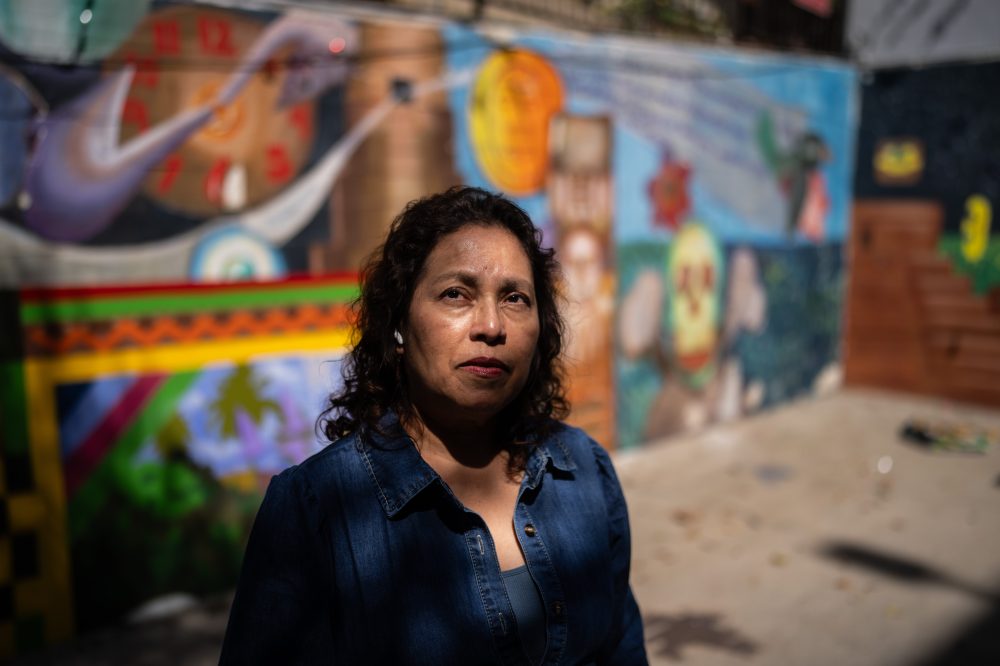
Lorena Zepeda, 58, entered through the Mexican border in 1991, three years after her mother departed their homeland seeking U.S. employment that would enable her to send money to her six children. The sole employment Zepeda could secure in El Salvador involved sweeping school floors, prompting her to follow her mother’s example and reunite with her in Los Angeles.
She obtained her initial position cooking at a school and subsequently worked hotel front desk positions, elderly care, and currently serves as an organizer at the Central American Resource Center (CARECEN), among the largest immigrant-rights organizations in the U.S.
She married a Salvadoran TPS recipient who obtained green card status in February 2025. They have two children residing in their home—a 22-year-old son and college graduate and a 20-year-old daughter pursuing teacher education.
Zepeda, who has transmitted $200 to $400 monthly to sisters in El Salvador for over three decades, remains the sole family member without permanent U.S. status. She continues pursuing permanent residency, though the process has encountered delays because her asylum request was rejected and she faces a 1999 deportation order.
Should TPS conclude, she would be the only family member facing deportation risk. She indicated that neither of her children wishes to relocate to El Salvador.
“I feel quite sad,” Zepeda stated in Spanish. “Sadly, we know that I am not protected, but I have faith in God.”