
For the first time in over ten years, crude oil extracted from beneath the Pacific Ocean is moving through a controversial pipeline crossing California state park property, after federal officials overruled state authorities and ordered drilling operations to resume near Santa Barbara, citing national security concerns.
California officials are calling the operation illegal trespassing and have asked a Santa Barbara County Superior Court judge during Monday’s hearing to force Sable Offshore Corp. to halt pipeline usage and remove the 4-mile system that winds through Gaviota State Park.
The Texas-based company’s pipeline network has remained dormant since a catastrophic 2015 rupture triggered one of the state’s most devastating oil disasters, coating 150 miles of coastline from Santa Barbara to Los Angeles with crude. The environmental catastrophe contaminated critical habitat for threatened whale and sea turtle populations, resulted in the deaths of numerous pelicans, seals and dolphins, and severely damaged local fishing operations.
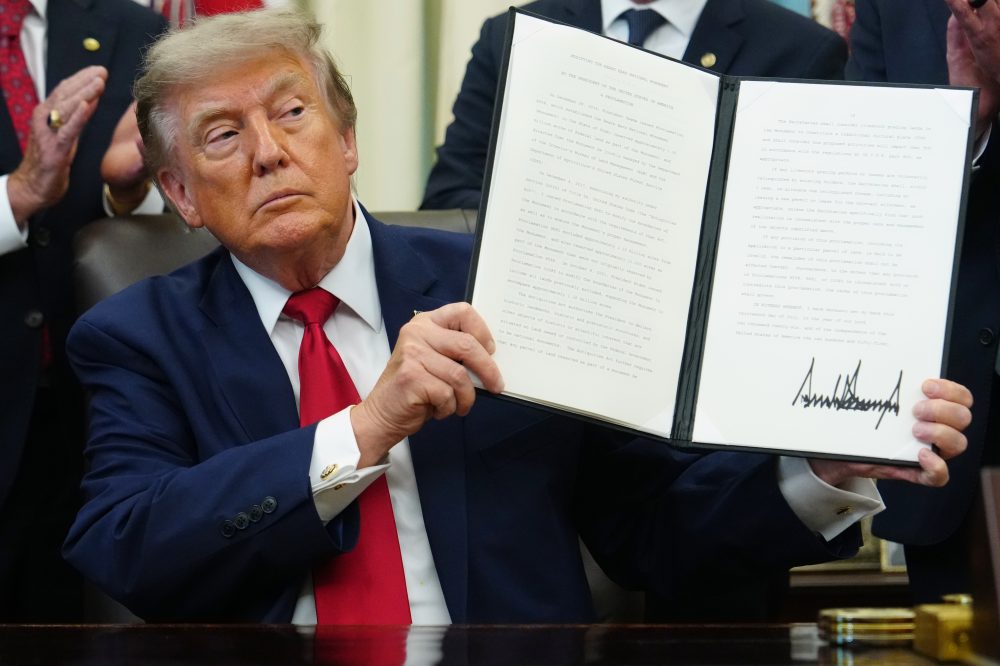
On March 13, Energy Secretary Chris Wright activated a Korean War-era authority to mandate Sable resume operations, arguing that strengthening domestic energy production is crucial for reducing fuel costs during the ongoing Iran conflict, as the Islamic Republic continues disrupting a critical shipping route handling 20% of global oil transport. Wright emphasized that “more than 60% of the oil refined in California comes from overseas, with a significant share traveling through the Strait of Hormuz — presenting serious national security threats.”
This court case represents the newest development in an intensifying legal confrontation examining whether states can resist federal directives during wartime, as the Trump administration dismantles regulations it considers obstacles to expanded coastal drilling initiatives.
Before federal intervention, Sable remained unable to market any petroleum products due to mounting legal challenges targeting its operations, which encompass three offshore drilling platforms in federal waters, various pipeline systems, and the Las Flores Canyon Processing Facility.
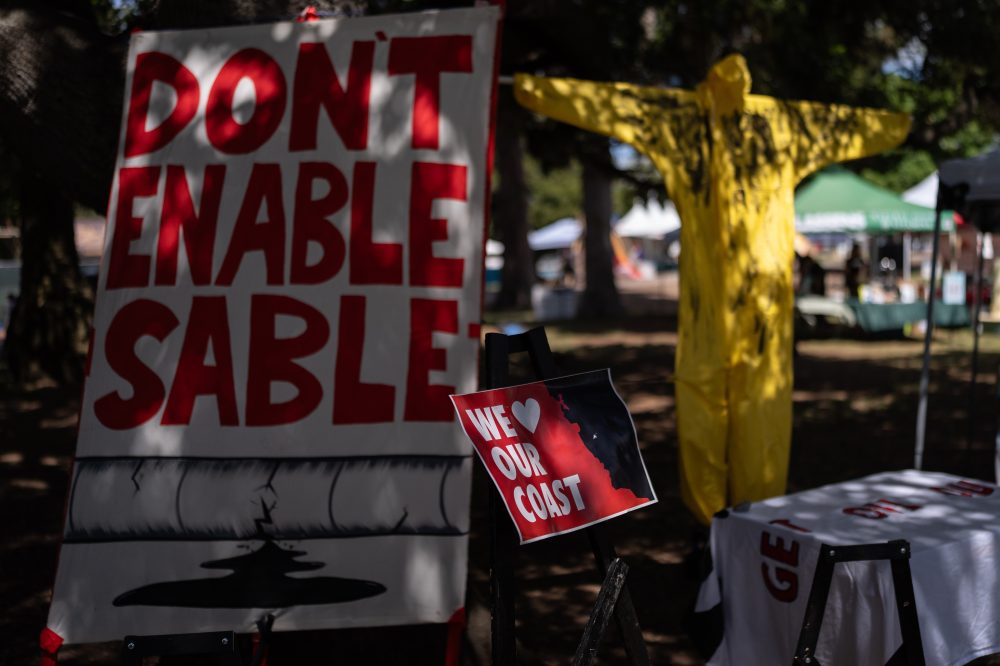
Santa Barbara residents have mounted strong resistance to the project, drawing on memories of a 1969 oil disaster that helped launch the contemporary environmental movement after local communities were excluded from offshore drilling decisions.
“I think it’s an attack not only on our democracy but also the will of the people who live here,” said youth activist Ethan Maday, 15, of the federal intervention.
A state court judge previously ordered operations suspended until Sable demonstrated compliance with state requirements. Santa Barbara prosecutors have also brought felony charges against the company, alleging waterway contamination and wildlife harm during pipeline repairs.
Sable maintains it possesses all required permits.
The U.S. Energy Department projects Sable will boost California’s domestic oil output by 15%, replacing nearly 1.5 million barrels of imported crude monthly.
However, Sable’s heavy crude is expensive to process, according to Paasha Mahdavi, an associate professor at the University of California, Santa Barbara, who studies oil and gas impacts on governance and environmental policy. The projected 50,000 daily barrels represents a minimal contribution globally and won’t affect domestic fuel supplies or pricing, he explained.
California Attorney General Rob Bonta, who has initiated two lawsuits regarding the project, stated “the U.S. already produces significantly more oil and gas than we use — it’s a completely fabricated claim intended to curry favor with the oil industry.”
The energy department and Sable did not immediately respond to requests for comment on state officials’ claims.
Sable Chairman and CEO Jim Flores announced April 20 that the pipeline had already generated over 1 million barrels of oil.
“We are working tirelessly to provide American oil from American soil to consumers in California and the U.S. military,” he said.
The administration utilized the Defense Production Act to restart drilling operations. President Harry S. Truman signed this legislation during the Korean conflict, granting presidents extensive authority to mobilize resources during emergencies.
Twenty years ago, Presidents Bill Clinton and George W. Bush both employed it to ensure electricity and natural gas deliveries continued to California utilities during an energy shortage. Former President Joe Biden utilized it to increase essential supplies for U.S. solar manufacturers in climate change efforts.
“But it’s never been used so brazenly against a set of state regulations, not to mention state litigation,” Mahdavi said. “That’s what makes this unique and perhaps why they used it after the war started. Because under normal circumstances it really would not have made it past the courts.”
The trespassing lawsuit centers on property rights and federal overreach, both conservative principles, explained Stanford Law School professor Deborah Sivas. State authorities claim pipeline authorization for state property lapsed in 2016, which Sable contests.
“It’s not out in the ocean, in federal waters. This is actually on state property. We have a say on that — you can’t just override that,” Sivas said.
Sivas believes the administration’s interpretation of the 1950 law aims to facilitate its five-year strategy granting oil companies access to new offshore territories. Courts have historically hesitated to challenge federal emergency orders, particularly during conflicts, she noted.
“This broad expansion of the act, where they’re saying we’re just going to preempt all of state law, we’re going to use it to just crush state law and order what we want going forward — it’s anxiety producing,” Sivas said.
Weeks following Wright’s directive, the Trump administration exempted Gulf of Mexico oil and gas drilling from Endangered Species Act protections. Defense Secretary Pete Hegseth claimed environmental lawsuits — warning drilling could eliminate a rare whale species and damage marine ecosystems — threatened to undermine domestic energy supplies during the Iran conflict.
The administration also greenlit an ultra-deep water drilling initiative in the Gulf of Mexico, marking the company’s first new oil field development there since the nation’s worst offshore oil catastrophe in 2010.
This month, Santa Barbara County Superior Court Judge Donna Geck maintained an injunction she imposed last year after the California Coastal Commission imposed a record $18 million penalty on Sable for disregarding cease-and-desist orders over alleged permit violations.
Sable informed the court that Wright’s directive overrides all previous orders. The U.S. Department of Justice is also requesting the court modify or terminate a binding federal agreement signed after the 2015 spill that granted the state final authority over operation restart, the company stated.
Sable reports seeking hundreds of millions in financial damages and pursuing legal action “to curb state and county regulatory overreach.”
Geck again directed Sable to follow state and local regulations. In her decision, she noted that case law “strongly implies that the (Defense Production Act) order, by itself, does not permit the violation of applicable state regulatory law.”