
Despite heightened anti-immigrant rhetoric in today’s political environment, Hispanic Americans are achieving unprecedented success in winning elected positions across the nation.
Communities nationwide are selecting record numbers of Hispanic candidates for local government roles, with many becoming the first Latino officials to serve in their positions. Political analysts say this surge stems from decades of community organizing combined with recent targeting of Latino populations by federal policies and conservative groups.
“That’s the difference now, is that there’s this extra incentive of an unrelenting attack on Latinos across the country,” said Anna Sampaio, an ethnic studies professor at Santa Clara University who specializes in race and gender politics.
Current data from the National Association of Latino Elected and Appointed Officials shows approximately 7,700 Hispanic elected leaders serving nationwide, representing an increase from 6,883 officials in 2020.
With an estimated population of 55 million people comprising 16% of Americans, Latinos represent the nation’s largest ethnic minority group. Despite their size, this community remains underrepresented in government positions relative to their population.
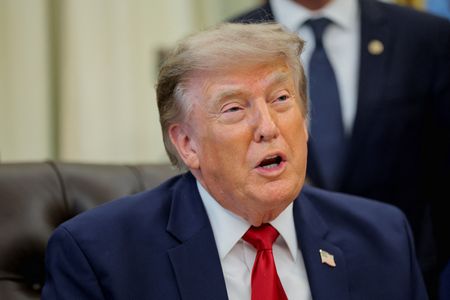
During President Donald Trump’s current term, Latino communities have faced aggressive immigration enforcement policies. Additional federal initiatives including English-only programs, anti-diversity measures, and social media content promoting Hispanic stereotypes have intensified feelings of being under attack.
This climate has prompted more Latino candidates to seek office as community advocates, leading to legislative proposals for ICE enforcement protections, blocking detention facility approvals, and opposing immigration enforcement funding.
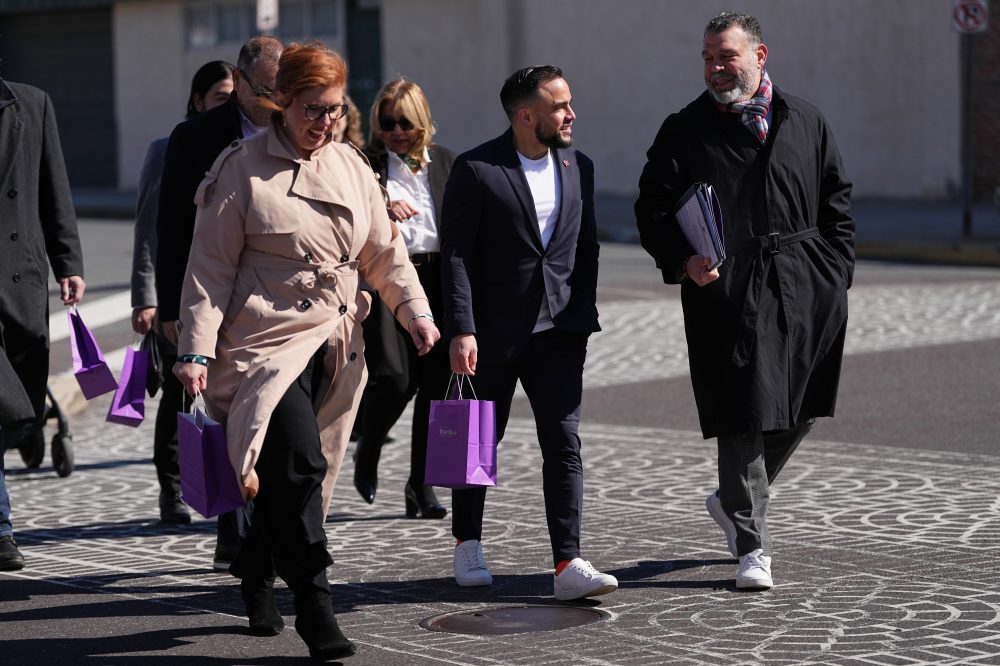
In Lancaster, Pennsylvania, where Hispanic residents make up roughly 40% of the population, Jaime Arroyo recently became the city’s first Latino mayor. Arroyo assumed office in January after winning with 85% of voter support.
“I think being the first Latino to be in this role and the first person of color to be mayor of Lancaster City has been exciting,” Arroyo told The Associated Press, adding that he finds it “extremely exciting to lead and represent our community in this role.”
Arroyo believes diverse government representation has become crucial as national rhetoric and immigration policies harm Latino communities. He views the recent rise in Hispanic elected officials as the culmination of generations of Latino civil rights activism.
“We’re starting to see a lot of the fruits of that labor come to fruition,” Arroyo said. “There’s never a perfect time to serve your community, there’s the right time. And I think right now is the right time for a lot of Latinos to step up into these roles, especially with everything that is going on.”
Numerous other Latino candidates achieved historic victories when taking office earlier this year.
Rob Barron became Des Moines’ first Latino City Council representative on January 12. Antonio Pacheco was sworn in January 7 as Conyers, Georgia’s first Hispanic council member. In Ohio, Eileen Torres won as Lorain’s first Mexican American woman on city council, while Sabrina Gonzalez became the first Puerto Rican woman to serve there.
Michigan made history when Clara Martinez and Deyanira Nevarez Martinez joined Lansing City Council on January 1, creating the nation’s first city council with majority Latino membership.
Martinez said her election alongside Nevarez Martinez demonstrates “what people are truly open to despite the national rhetoric.”
“I think because of the rhetoric that we are having to face and some of the backlash on the national stage, I think that’s just fueled the fire for so many people,” she said.
Salt Lake City Council also achieved Latino majority representation with four of seven seats after Erika Carlsen, whose grandparents immigrated from Mexico, was sworn in January 5. Carlsen credits her success to current and previous generations who created opportunities for Latina leadership.
“I feel like I’m building on early generations of leadership,” Carlsen said. “That’s both an honor and responsibility to improve Salt Lake City for the people who live here.”
While federal representation remains limited, Carlsen emphasizes local representation’s significant impact potential.
“I think that it’s critically important that we continue to build on this momentum,” Carlsen said. “The majority of change that can happen starts locally, it doesn’t start in Washington but in City Hall, school boards and neighborhoods conversations. That’s the kind of momentum I’d love to see all across the United States.”
Carolina Welles, executive director of The First Ask, which supports first-time female candidates at state levels, explains Latino representation appears more prominent locally because these leaders can establish community trust more easily through proximity.
“They actually know what people care about,” Welles said. “They have a stake because they are facing similar things.”
Hispanic representation extends beyond local government into federal positions as well.
The current 119th Congress includes 56 Hispanic or Latino members, representing 10.35% of total membership according to Congressional Research Service data.
This marks significant growth from 40 years ago when the 99th Congress had only 14 Hispanic or Latino members, all male.
Seven Hispanic senators served at 2025’s beginning, though this decreased to six when Marco Rubio resigned to become Secretary of State, making him the first Latino in that position.
State-level Latina representation also reached record levels last year. Hispanic women held 214 state legislative seats, or 2.9%, according to the Center for American Women and Politics, increasing from 192 seats in 2024.
New Mexico Governor Michelle Lujan Grisham currently serves as the nation’s only active Latina governor. Only two Latinas have won gubernatorial elections in U.S. history, both in New Mexico.
In March, Gina Hinojosa secured the Democratic gubernatorial nomination in Texas, becoming the second Latina to win a major party nomination for governor there.
Professor Sampaio notes Latino elected officials experienced their largest growth during the Trump administration responding to attacks on fundamental rights. She expects this trend to continue as the current administration maintains pressure on immigrant communities.
“We’re likely to see more Latinos run for office at the local level, at the state level and even at the national level in response to the attack on simply their existence,” Sampaio said. “It is unwittingly both terrorizing the Latino community as well as mobilizing communities.”