Category: Politics

  • Trump Administration Reduces Public Access to Immigration Enforcement Data

    Trump Administration Reduces Public Access to Immigration Enforcement Data

    WASHINGTON — While promoting aggressive immigration enforcement targets including deporting one million individuals and achieving zero border releases, the Trump administration has significantly decreased the availability of comprehensive, verified immigration data compared to previous administrations.

    This reduction in statistical transparency regarding one of Trump’s most controversial second-term policies has left researchers, legal advocates, attorneys and news organizations without crucial information needed to evaluate the Republican administration’s claims.

    “They aren’t publishing the data,” stated Mike Howell, director of the conservative Oversight Project, which advocates for increased deportations. According to Howell, the Department of Homeland Security has instead issued figures through press statements “that purport to be statistics with no statistical backup and the numbers have jumped all over the place.”

    As mass deportations take priority, enhanced restrictions and stepped-up enforcement have resulted in increased immigration arrests, detentions and removals.

    However, locating the data that previously tracked these developments has become challenging. This represents a continuation of earlier administration efforts to restrict government information access by eliminating federal databases or dismissing key oversight officials, including last year’s removal of the chief jobs data supervisor.

    The Office of Homeland Security Statistics handles publication of data from Homeland Security departments, including deportation numbers and nationalities of removed individuals, creating a complete overview of immigration patterns at borders and within the United States.

    Initially called the Office of Immigration Statistics, this office has monitored such information since 1872. Under its current structure, established during the Biden presidency, it began issuing monthly updates that enabled researchers to monitor developments nearly immediately.

    However, critical enforcement statistics on its website remain unchanged since early last year. A message where monthly updates appeared states the page “is delayed while it is under review.”

    “It’s the most timely data. It’s the most reliable data,” explained Austin Kocher, a Syracuse University research professor who monitors immigration data patterns, regarding the monthly updates. “It has the most omniscient view of immigration enforcement across the entire agency.”

    An interactive platform launched by U.S. Immigration and Customs Enforcement in December 2023 previously allowed users to examine arrest targets, their nationalities, criminal backgrounds and deportation statistics. ICE described it as a “new era in transparency.”

    Despite plans for quarterly updates, the most recent information dates to January 2025. The agency’s yearly report, usually published in December, remained unpublished as of mid-March.

    Additional agencies also release immigration-related data, with some continuing regular publication, including U.S. Customs and Border Protection statistics on border encounters and Department of Justice immigration court information.

    However, specialists indicate other data has slowed significantly.

    The State Department’s latest visa issuance information dates to August. Important statistics from U.S. Citizenship and Immigration Services have not been refreshed since October.

    The absent data previously helped researchers examine policy impacts. Attorneys could reference these figures in legal proceedings. Journalists utilized them as essential tools for government accountability regarding public statements and important trend reporting.

    “We’re all a little bit in the dark about exactly how immigration enforcement is operating at a time when it’s taking new and unprecedented forms,” noted Julia Gelatt, associate director of the U.S. Immigration Policy Program at the Migration Policy Institute.

    DHS did not respond to specific questions about discontinuing certain data releases.

    “This is the most transparent Administration in history, we release new data multiple times a week and upon reporter request,” the department stated.

    Numbers the administration has published are contradictory and cannot be verified.

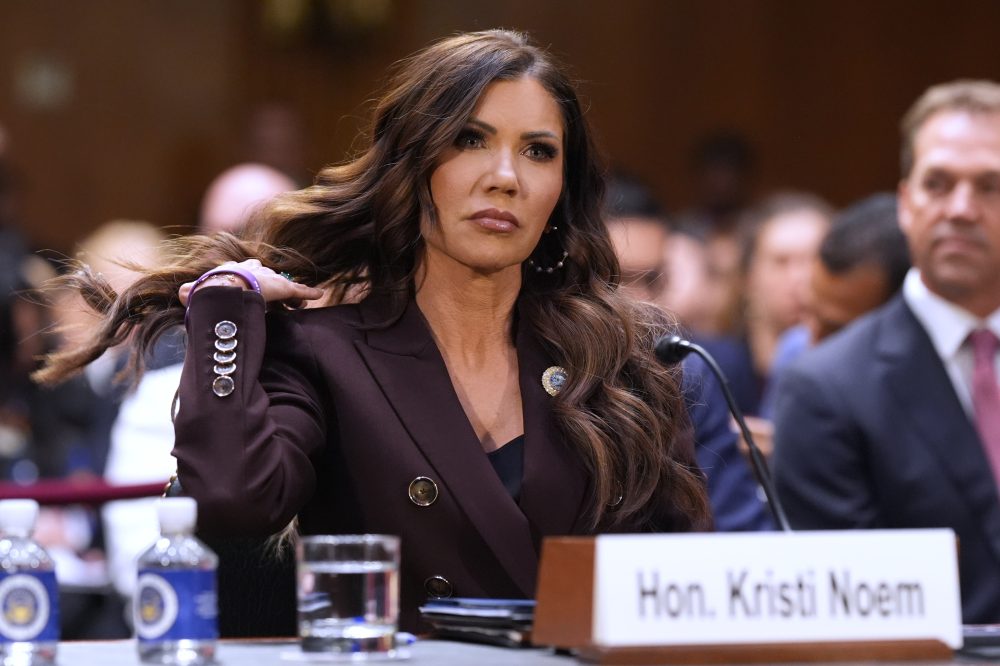
    In a January 20 news statement, DHS claimed it had deported over 675,000 individuals since Trump’s return to office. One day later, a second statement listed the number at 622,000. During March 4 congressional testimony, Homeland Security Secretary Kristi Noem cited 700,000.

    Meanwhile, ICE, a DHS agency, also publishes removal statistics as part of a comprehensive data release required by Congress. An Associated Press examination of these numbers showed approximately 400,000 removals during Trump’s first year.

    DHS has claimed 2.2 million people in the U.S. illegally have departed voluntarily, but the department has provided no methodology for this count. Specialists have questioned this figure’s origin, noting DHS has not historically monitored such departures.

    The department did not address questions about this data’s source.

    With primary data sources suspended, researchers, advocates and others must depend on information the administration is required to report or that emerges through legal proceedings.

    Publishing ICE detention statistics — including detention numbers, duration and criminal history — is congressionally mandated and typically released biweekly. However, these releases have experienced delays and data gets replaced with each new publication, complicating access for those requiring it.

    The University of California, Berkeley’s Deportation Data Project, a research program, successfully obtained data about ICE arrests through Freedom of Information Act litigation, including nationalities, conviction status and arrest locations.

    Graeme Blair, project co-director, said every administration has faced immigration enforcement transparency challenges, and given the Trump administration’s ambitious enforcement objectives, the team sought to secure and verify information the government might not publicly share.

    “Given the scale of what they were talking about doing, it seemed really important to be able to understand, to be able to double check those numbers,” he explained.

    However, limitations exist, he noted. The lawsuit-obtained data only extends through October 15. It does not include recent operations like the Minneapolis enforcement action, where federal immigration officers fatally shot two protesters, resulting in widespread demonstrations and enforcement tactic scrutiny.

    The data shortage represents one of few issues drawing bipartisan criticism.

    “We deserve to know the numbers, just like we deserve to know who’s in our country and who needs to leave,” Howell stated.

  • News Rating Firm Claims Trump Administration Targeting Its Business

    News Rating Firm Claims Trump Administration Targeting Its Business

    A news credibility rating service has taken the Trump administration to federal court, claiming government regulators are conducting a politically motivated campaign to destroy its business operations.

    NewsGuard Technologies operates with relatively little public attention, focusing on evaluating the trustworthiness of various news organizations. However, the company has now become another target in the current administration’s expanding conflicts with media entities.

    The legal battle has escalated with NewsGuard filing suit against the Federal Trade Commission and Chairman Andrew Ferguson to halt what it calls a vindictive government probe. Federal regulators claim the rating service works to silence conservative voices, while NewsGuard maintains it faces retaliation for refusing to bow to political pressure.

    The Trump administration’s media confrontations have multiplied since taking office in January 2025. Current legal battles include disputes with The Associated Press over Gulf of Mexico naming preferences, a settlement with CBS News regarding “60 Minutes” editorial practices, litigation against The Wall Street Journal concerning Trump-Epstein coverage, and ongoing conflicts with The New York Times over Pentagon reporting limitations.

    In documents filed last month at U.S. District Court in Washington D.C., NewsGuard alleges Trump’s FTC is “brazenly using its power not for any issue concerning trade or commerce but rather to censor speech simply because it disagreed with NewsGuard’s judgments about the reliability of news sources.”

    Federal trade officials dismiss these claims as “untethered from both law and fact.”

    Chairman Ferguson’s FTC mirrors the Federal Communications Commission under Brendan Carr – traditionally quiet agencies now actively pursuing Trump administration priorities, especially regarding media oversight. The FCC has initiated media company investigations and recently indicated plans to enforce “equal time” broadcasting regulations for political television appearances.

    Ferguson openly acknowledges his guidance source, stating in a July interview: “I am a law enforcer, and I will follow the law. But the policy priorities are set by the man the people chose to run this government.”

    Media Matters for America, a liberal advocacy organization, previously faced similar FTC scrutiny. A federal judge blocked that investigation last summer, ruling the inquiry into advertising boycott campaigns violated the group’s constitutional speech protections.

    Though NewsGuard lacks widespread name recognition, significant financial interests affect news organizations favored by the president. The venture launched in 2018 under founders Steven Brill, who created Court TV, and Gordon Crovitz, formerly with The Wall Street Journal. NewsGuard employs journalists to evaluate thousands of news websites and outlets, assigning credibility scores based on journalistic reliability and accuracy standards.

    Individual subscriptions cost $4.95 monthly, though most revenue comes from advertising consultants helping brands avoid problematic news sites, plus artificial intelligence companies seeking trustworthy information sources.

    The rating service drew hostility from Trump-supporting network Newsmax after assigning its website a score of 20 out of 100 points. NewsGuard explains “this website is unreliable because it severely violates basic journalism standards.” According to the lawsuit, Newsmax has repeatedly pressured Republican officials and regulators to silence NewsGuard’s operations.

    Newsmax spokesman Bill Daddi responded: “NewsGuard was started by Steve Brill to target conservative media and get ad agencies to deny them advertising revenue as a means of censorship. Brill is a Democratic Party activist and donor over many decades with a long history of advocating for liberal causes. He is not a respected journalist and in no way should be running a ratings service used by major ad agencies.”

    Brill counters that his sole political involvement was working for Republican John Lindsay during his New York City mayoral tenure in the late 1960s and early 1970s while attending college and law school. “I have been a journalist ever since,” Brill stated, emphasizing he has never contributed money to political candidates.

    The rating service defends its methodology using specific standards including accuracy verification, source diversity, news-opinion separation, and error correction practices. Addressing liberal bias allegations, NewsGuard points to instances where Fox News received higher ratings than former MSNBC programming.

    However, the conservative Media Research Center has published research suggesting NewsGuard favors liberal-leaning outlets in its scoring system. FTC court filings indicate the investigation began after congressional researchers linked the company’s services to “coordinated actions to demonize disfavored media entities.”

    Regulators have demanded extensive company records including internal communications, financial statements, and customer information dating to NewsGuard’s establishment. The company considers these demands financially burdensome and fears the government will use subscriber data to target clients.

    As part of approving the merger between major media buying companies Omnicom and IPG, the FTC banned the combined entity from utilizing news rating services. Officials claim this prevents advertising decisions based on political considerations, though NewsGuard reports losing business as a result.

    “The whole idea that any speaker has to justify to the government that it’s not biased is a really troubling thought,” Brill explained in an interview. “We have a constitutional right to be biased. It just so happens that we started the company on the core principle that we were going to be totally apolitical.”

    The FTC press office did not respond to requests for comment. In legal documents, the agency describes conducting a comprehensive investigation into potential antitrust violations involving advertiser boycotts, noting it has issued over a dozen similar information requests beyond NewsGuard’s case. Officials call the company’s accusations “completely meritless.”

    Regarding NewsGuard’s delayed legal response eight months after receiving the information order, FTC attorneys questioned the timing.

    “We tried to cooperate in the belief that the more that we told them what we do, the more likely it would be that they would decide that they didn’t have any case,” Brill explained. “We soon realized that they weren’t worried about the merits.”

    NewsGuard argues FTC actions “will continue until NewsGuard knuckles under.” When asked whether he believes the government seeks to eliminate his company entirely, Brill declined further comment.

  • Major Airlines Demand Congress End Shutdown, Pay TSA Workers

    Major Airlines Demand Congress End Shutdown, Pay TSA Workers

    WASHINGTON – Top executives from America’s largest airlines sent an urgent message to Congress on Sunday, demanding lawmakers quickly resolve a nearly month-long government shutdown that has left tens of thousands of airport security workers without paychecks.

    The 29-day partial shutdown has impacted 50,000 Transportation Security Administration employees who continue working despite not receiving pay, according to the airline leaders’ letter.

    Growing numbers of TSA workers have been calling out sick, creating significant disruptions at airports nationwide during what is typically a busy travel period for spring break vacations.

    “Too many travelers are having to wait in extraordinarily long – and painfully slow – lines at checkpoints,” wrote the chief executives of American Airlines, United Airlines, Delta Air Lines, Southwest Airlines, JetBlue Airways, Alaska Air and other carriers in their joint letter to lawmakers.

    The airline leaders demanded immediate action from Congress. “First, leaders should immediately come together to reach an agreement to fund the Department of Homeland Security. Then they need to act so this problem never happens again,” they stated.

    This marks the second major shutdown to impact air travel in recent months. A 43-day government closure last fall caused widespread flight disruptions and forced federal aviation officials to mandate a 10% reduction in flights at major airports.

    “Once again air travel is the political football amid another government shutdown,” the executives complained in their letter.

    The coalition of airline and cargo company leaders – including senior officials from FedEx, UPS and Atlas Air – pushed for new legislation that would guarantee payment for essential aviation workers during future government shutdowns.

    Congressional efforts to resolve the funding crisis have stalled, with senators from both political parties failing to reach agreement Thursday on competing proposals to restore TSA funding. The agency reported that more than 300 officers have resigned since the shutdown started.

    The Department of Homeland Security lost its funding on February 13 when Congress couldn’t agree on immigration enforcement changes that Democrats were seeking.

    The timing couldn’t be worse for airlines, which are anticipating their busiest spring travel season on record. Industry projections show 171 million passengers are expected to fly during the two-month period, representing a 4% increase from last year.

    Several major airports have already experienced severe delays. Houston Hobby and New Orleans airports reported security checkpoint waits exceeding two hours last week due to TSA staffing shortages, while Newark airport announced higher-than-normal delays on Saturday.

    “Americans – who live in your districts and home states – are tired of long lines at airports, travel delays and flight cancellations caused by shutdown after shutdown,” the airline executives wrote to lawmakers.

    Some airports have been forced to close security checkpoints, while others are raising funds to help unpaid TSA employees purchase food and basic necessities as they continue working without compensation.

  • Trump Faces Political Pressure Two Weeks Into Iran Conflict

    Trump Faces Political Pressure Two Weeks Into Iran Conflict

    WEST PALM BEACH, Fla. — President Donald Trump is confronting significant political challenges following two weeks of military operations against Iran by the United States and Israel.

    The president has become increasingly frustrated with media reporting while struggling to articulate to Americans his rationale for initiating the conflict or his strategy for concluding it. Public anxiety over U.S. military deaths, climbing fuel costs, and declining stock markets has left even some Trump allies questioning his approach, leading to a drop in his approval ratings.

    The conflict has unexpectedly benefited Russia, as Trump administration officials relaxed certain sanctions on Russian petroleum exports. This policy shift, coupled with higher global oil prices, has undermined years of efforts to limit President Vladimir Putin’s financial resources for his war in Ukraine.

    Democratic leaders, who were struggling politically after Trump’s 2024 electoral victory, have united in opposition to the president’s Iran strategy. They’re pointing to economic instability as evidence that Republicans have broken their campaign promises to reduce costs for American families ahead of November’s midterm elections.

    “I think Democrats are well-positioned for this November and the midterms,” said Kelly Dietrich, CEO of the National Democratic Training Committee, which trains party backers to run for office and staff campaigns.

    Dietrich criticized the administration’s approach, saying the past two weeks demonstrate failed long-term planning. “They’re flying by the seat of their pants, and rest of us are paying the price,” he said.

    Over the weekend, Trump spent time at his West Palm Beach golf course before hosting a private fundraising event for his MAGA Inc. super PAC at Mar-a-Lago. The previous weekend, he also played golf at another South Florida property just one day after attending the solemn ceremony for six American service members killed in the Iran conflict. Military casualties have continued to mount this week.

    The president has intensified his criticism of news media coverage, posting Saturday: “Media actually want us to lose the War.” His broadcast regulator subsequently threatened to revoke television licenses unless outlets “correct course.”

    Trump, who did not inform allies beyond Israel about his military plans for Iran, acknowledged for the first time that the U.S. would require international assistance to ensure oil tankers can navigate the Strait of Hormuz. Transportation through this critical waterway has been severely disrupted, causing chaos in global energy markets.

    Iranian officials have announced plans to continue targeting energy infrastructure and maintain their effective blockade of the strait as a bargaining chip against the United States and Israel. Twenty percent of globally traded petroleum passes through this waterway.

    “Many Countries, especially those who are affected by Iran’s attempted closure of the Hormuz Strait, will be sending War Ships, in conjunction with the United States of America, to keep the Strait open and safe,” Trump wrote on Saturday, later adding, “this should have always been a team effort.”

    However, uncertainty remains about whether this multinational effort is already underway or merely Trump’s hope for future cooperation. He also wrote: “Hopefully China, France, Japan, South Korea, the UK, and others, that are affected” will “send Ships to the area so that the Hormuz Strait will no longer” be threatened by Iran.

    The White House declined to elaborate on Trump’s statements. Britain’s defense ministry responded Saturday: “We are currently discussing with our allies and partners a range of options to ensure the security of shipping in the region” without providing specifics.

    At the war’s outset, Trump promised that American naval vessels would provide protection for tankers traveling through the waterway. This escort service has not yet begun. “It’ll happen soon. Very soon,” he stated while boarding Air Force One for Florida on Friday evening.

    These ongoing concerns about the strait contradict Trump’s recent declaration at a Kentucky campaign event that, “We’ve won.”

    “You know, you never like to say too early you won. We won,” he said. “We won the, in the first hour, it was over.”

    The Treasury Department announced a 30-day suspension of Russian sanctions this week, designed to release stranded Russian oil shipments and address supply shortages created by the Iran conflict.

    This decision comes despite expert analysis showing that rising oil prices from Persian Gulf production disruptions are helping Russia’s economy. Moscow depends heavily on petroleum revenue to fund its Ukrainian war effort, and sanctions had been increasingly effective.

    Several key American allies have condemned the sanctions relief as empowering Putin. Ukrainian President Volodymyr Zelenskyy called the policy change “not the right decision” and “certainly does not help peace” because it leads to a “strengthening of Russia’s position.”

    As midterm campaigns intensify, Trump addressed concerns Friday evening about voters facing high gasoline prices.

    “You’re going to see a very big decrease in the prices of gasoline, gas, anything having to do with energy, as soon as this is ended,” Trump said.

    Extended conflict duration will amplify questions about midterm election outcomes. Senator Rand Paul, a Kentucky Republican, warned on Fox News Channel this week that continued high fuel and oil prices could result in “a disastrous election” for the GOP.

    The Iran situation has also created divisions within Trump’s “Make America Great Again” coalition, splitting supporters who back the military action from others who point out Trump campaigned on ending wars.

    Prominent conservative voices, including Tucker Carlson and Megyn Kelly, have strongly criticized Trump. The president maintains that he created the MAGA movement and that supporters will follow his leadership on any issue.

    This political instability has some Democrats predicting midterm gains comparable to the 2018 “blue wave” election during Trump’s first presidency.

    “Democrats just have to keep reminding people that he made a promise to bring prices down, and they’re still going up,” Democratic strategist Brad Bannon said of Trump. “And now they’re going to go up even more because prices in gasoline can increase prices of everything else, including at the grocery store.”

  • FCC Chief Threatens TV Stations Over ‘Fake News’ After Trump Iran Coverage Criticism

    FCC Chief Threatens TV Stations Over ‘Fake News’ After Trump Iran Coverage Criticism

    Federal Communications Commission Chairman Brendan Carr escalated his ongoing battle with television broadcasters Saturday, warning stations they could face license revocation while amplifying President Donald Trump’s complaints about Iran war coverage.

    In a social media post on X, Carr declared that broadcasters distributing what he termed false information need to change their practices ahead of upcoming license renewal periods. His message included a screenshot from Trump’s earlier Truth Social post that criticized major news organizations including the New York Times and Wall Street Journal for what the president called poor reporting on the conflict involving the United States and Israel against Iran.

    “Broadcasters must operate in the public interest, and they will lose their licenses if they do not,” Carr stated in his warning.

    The FCC maintains authority over television and radio station licensing but does not have regulatory power over publications that operate solely through digital and print platforms, including the newspapers Trump mentioned in his criticism.

    This marks an expansion of Carr’s previous complaints, as Saturday represented the first instance where he connected his broadcasting concerns to coverage of military conflicts. The FCC chairman has consistently advocated for stricter enforcement of public interest requirements for stations that utilize public airwaves, claiming the commission has neglected this responsibility for many years.

    In his weekend statement, Carr referenced what he described as misleading information during the 2024 election cycle and declared that Americans have become distrustful of news media organizations.

    Trump has maintained a pattern of challenging news organizations when they publish content he views as unfavorable, previously advocating for the removal of broadcasting licenses from outlets he considers biased against him.

    The administration’s approach toward broadcasters has drawn opposition from Democratic officials and some Republican leaders, though Carr points to polling data showing declining public confidence in media as justification for his position.

  • Florida GOP Group Shuts Down University Chapter Over Antisemitic Behavior

    Florida GOP Group Shuts Down University Chapter Over Antisemitic Behavior

    The Florida Federation of College Republicans has shut down its University of Florida chapter after an internal probe revealed antisemitic behavior among members, the university announced Saturday.

    University officials said the state Republican federation conducted its own investigation which found a “pattern of conduct that violated its rules and values, including a recent antisemitic gesture.” Based on these findings, the federation requested that the university deactivate the campus chapter while they attempt to rebuild the organization under new leadership.

    In a statement posted on social media, the university emphasized its dedication to “preventing and addressing antisemitism and other forms of discrimination and harassment” that pose threats to campus life. School officials indicated they would assist in reestablishing the Republican chapter once it undergoes reorganization.

    The Florida Federation of College Republicans has not responded to requests for comment regarding the dissolution.

    This marks the second incident of antisemitic conduct involving conservative student organizations at Florida universities this month. Earlier in March, Florida International University announced that law enforcement was investigating reports of racist, antisemitic, and homophobic messages shared in an online group chat involving local Republican Party figures and conservative student activists.

    According to the Miami Herald, leaked WhatsApp conversations showed participants included notable local GOP officials and student leaders from FIU’s Turning Point USA chapter, a conservative youth organization founded by activist Charlie Kirk.

  • Energy Secretary Orders California Oil Operations Restart Using Defense Act

    Energy Secretary Orders California Oil Operations Restart Using Defense Act

    WASHINGTON — Energy Secretary Chris Wright has ordered a Houston-based energy company to resume offshore drilling operations in California waters that have been suspended since a major oil spill nearly a decade ago, utilizing emergency federal authority through the Defense Production Act.

    The directive targets Sable Offshore Corp.’s Santa Ynez operations near Santa Barbara, which Wright says are essential for preventing energy supply shortages. The complex encompasses three offshore drilling platforms in federal waters, connecting pipelines both offshore and onshore, plus the Las Flores Canyon Processing Facility. According to federal officials, the installation has the capacity to generate approximately 50,000 barrels daily and could substitute for roughly 1.5 million barrels of imported oil monthly.

    “The Trump Administration remains committed to putting all Americans and their energy security first,” Wright said in a statement. “Unfortunately, some state leaders have not adhered to those same principles, with potentially disastrous consequences not just for their residents, but also our national security. Today’s order will strengthen America’s oil supply and restore a pipeline system vital to our national security and defense, ensuring that West Coast military installations have the reliable energy critical to military readiness.”

    The action follows President Trump’s first-day executive order reversing his predecessor’s prohibition on new offshore drilling along America’s East and West coastlines. A federal judge had previously overturned former President Biden’s directive removing 625 million acres of federal waters from potential energy development.

    California Governor Gavin Newsom strongly criticized the federal intervention.

    “This is an attempt to illegally restart a pipeline whose operators are facing criminal charges and prohibited by multiple court orders from restarting,” Newsom said in a statement. “California will not stand by while the Trump administration attempts to sacrifice our coastal communities, our environment, and our $51 billion coastal economy. The Trump administration and Sable are defying multiple court orders, and we will see them back in court.”

    California filed a lawsuit against the federal government last month challenging Washington’s approval of Sable’s pipeline restart plans. Democratic Attorney General Rob Bonta argued that California maintains regulatory control over pipelines running through Santa Barbara and Kern counties, claiming federal officials “have no right to usurp California’s regulatory authority.”

  • DOJ Drops Case Against Army Vet Who Burned Flag Near White House in Protest

    DOJ Drops Case Against Army Vet Who Burned Flag Near White House in Protest

    Federal prosecutors have decided to drop criminal charges against a military veteran who ignited an American flag outside the White House last year in protest of then-President Donald Trump’s directive targeting flag burning.

    Jay Carey, age 55 from Arden, North Carolina, who reports military service spanning 1989 to 2012 with deployments to Iraq and Afghanistan, was taken into custody on August 25 following the flag burning incident in Lafayette Park, which falls under National Park Service jurisdiction. The arrest occurred on the same day Trump issued an executive directive instructing the Justice Department to pursue legal action against individuals who burn American flags.

    Prosecutors filed two misdemeanor counts against Carey that did not directly address flag burning itself: starting a fire in a prohibited location and creating flames that damaged property or park facilities. Carey entered a not guilty plea in September. The dismissal motion filed Friday offered no explanation for the decision, and the U.S. Attorney’s office for the District of Columbia has not responded to requests for comment.

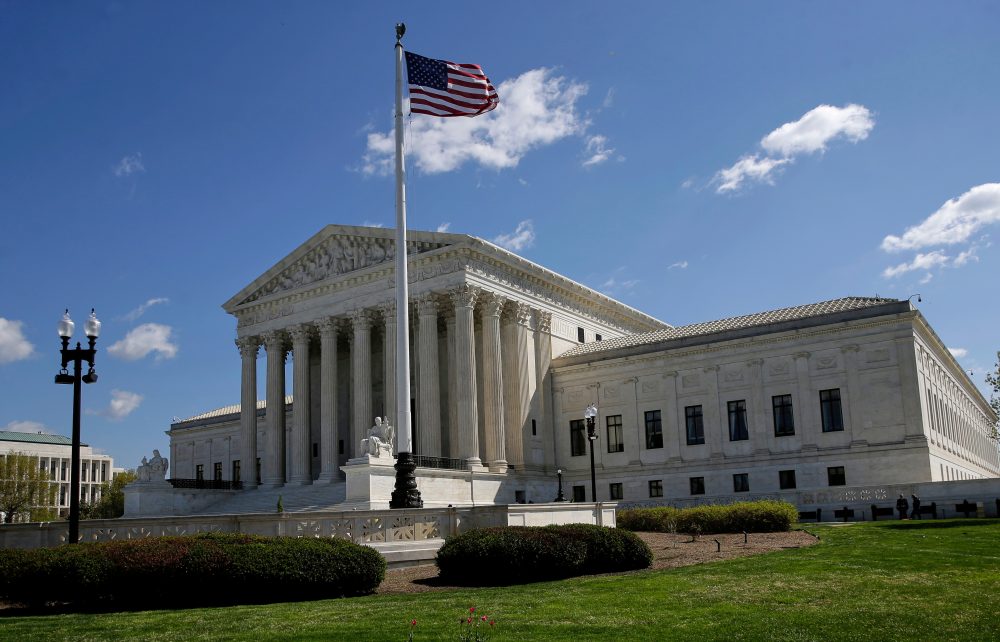
    The nation’s highest court has determined that flag burning constitutes protected political speech under the Constitution. Trump’s directive claimed flag burning could face prosecution when it “is likely to incite imminent lawless action” or represents “fighting words.”

    “I set out to demonstrate that the First Amendment is sacred and that no administration has the right to supersede our constitutional rights,” Carey stated through the Partnership for Civil Justice Fund. “I was targeted for federal prosecution because of that. I am glad to stand with all those who are fighting for our fundamental rights and hope that this victory can help the next person who takes a stand.”

    Speaking by phone Saturday, Carey said the outcome demonstrates that “the Constitution still matters.”

    Mara Verheyden-Hilliard, representing Carey and serving as co-founder of the fund, argued the prosecution was inappropriate from the start.

    “The government’s attempt to criminally punish a protestor based on expressive conduct targeted for prosecution by presidential order posed a grave threat to First Amendment freedoms,” Verheyden-Hilliard stated. “The government’s about-face is a critical vindication of those rights. This case also lays the groundwork for defending those across the country who are targeted for vindictive prosecution by the Trump Administration in an effort to silence and punish viewpoints it doesn’t like.”

  • Judge: Ohio Democrat Can Attend Kennedy Center Meeting But Can’t Vote

    Judge: Ohio Democrat Can Attend Kennedy Center Meeting But Can’t Vote

    WASHINGTON — A federal judge decided Saturday that Ohio Representative Joyce Beatty has the right to attend Monday’s Kennedy Center board meeting regarding President Trump’s proposal to shut down the performing arts venue for two years of renovations.

    However, U.S. District Judge Christopher Cooper stopped short of granting Beatty voting privileges during the session, even though she serves as an ex officio board member through her congressional role.

    Beatty filed the lawsuit to prevent the Trump administration from barring her participation in the meeting where board members will decide on the Republican president’s plan to close the facility during construction.

    Judge Cooper determined that board officials must provide Beatty with documentation regarding the closure and renovation proposals, stating that denying her this information would hinder her ability to fulfill her trustee responsibilities. The ruling also guarantees her speaking rights during the proceedings.

    “The Court finds, however, that Beatty has not carried her burden as to her right to vote, at least at this very early stage,” Cooper stated. He explained that permitting her participation and involvement in discussions means “the marginal harm to her from not voting is much less, as she will be able to lodge her objections on the record and have the opportunity to persuade her colleagues of her position.”

    Neither Beatty nor Kennedy Center representatives immediately responded to requests for comment following the decision.

    Following Thursday’s court proceedings, Beatty explained to reporters that her legal action was necessary to defend democratic principles and legal standards.

    “I want to know where your money — our money — is going,” she stated outside the courthouse.

    Beatty’s attorney, Nathaniel Zelinsky, argued that the White House has consistently attempted to silence opposition voices at similar gatherings.

    “We’re not asking for something unusual,” he argued before the judge. “It’s my friends on the other side you are asking you to deviate from the norm.”

    Cooper questioned Justice Department attorney William Jankowski about the administration’s reluctance to share meeting details with Beatty.

    “Why not just give her the information?” the judge inquired. “How is the government harmed?”

    Jankowski responded that the materials — potentially still being developed — would be distributed to Beatty and other attendees by Monday.

    “An action isn’t final until it’s final,” he informed Cooper.

    During his initial presidency, Trump largely ignored the Kennedy Center, abandoning tradition by avoiding all four annual honors ceremonies after some 2017 honorees threatened to boycott his attendance.

    Since returning to office in January 2025, Trump has demonstrated unprecedented involvement in the performing arts center’s management compared to previous presidents. He appointed loyal allies including Attorney General Pam Bondi and longtime associate Dan Scavino to replace board members he hadn’t selected, with the restructured board subsequently choosing him as chairman.

    Trump participated in selecting the 2025 Kennedy Center Honorees and hosted the ceremony. He has expressed dissatisfaction with the facility’s aesthetics and obtained $257 million in congressional funding for the Kennedy Center through a tax and spending measure he signed last summer. Richard Grenell, Trump’s appointee as the center’s president, has questioned the institution’s financial management. On Friday, Trump announced Grenell’s departure and replacement by Matt Floca, who oversees the Kennedy Center’s facilities management. These transitions are scheduled for confirmation at Monday’s board session.

    The venue has experienced difficulties since Trump increased his operational involvement. Multiple artists have withdrawn from scheduled performances and visitor numbers have declined.

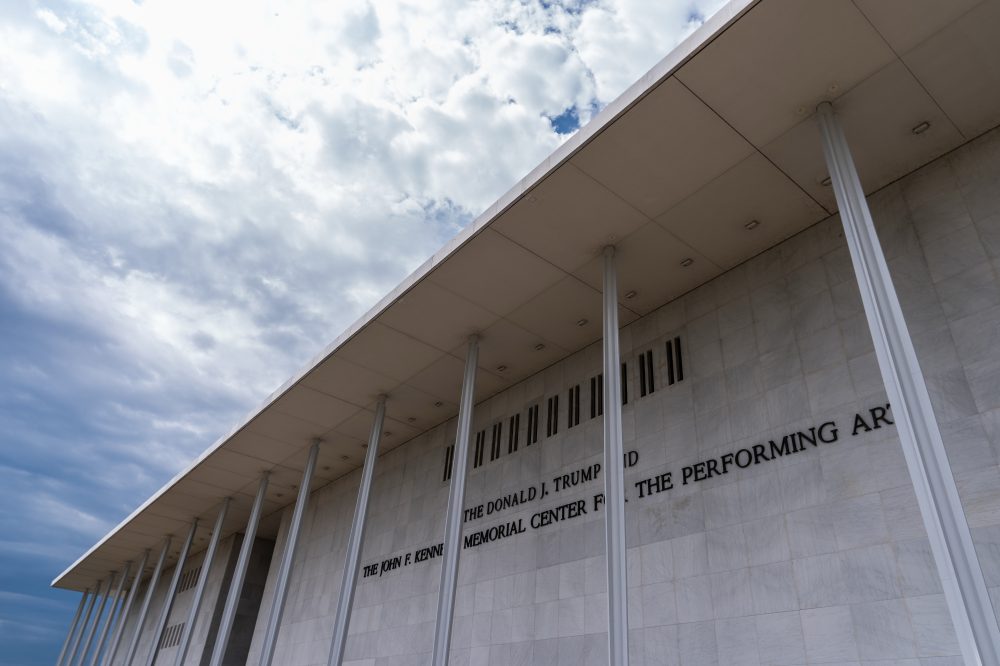
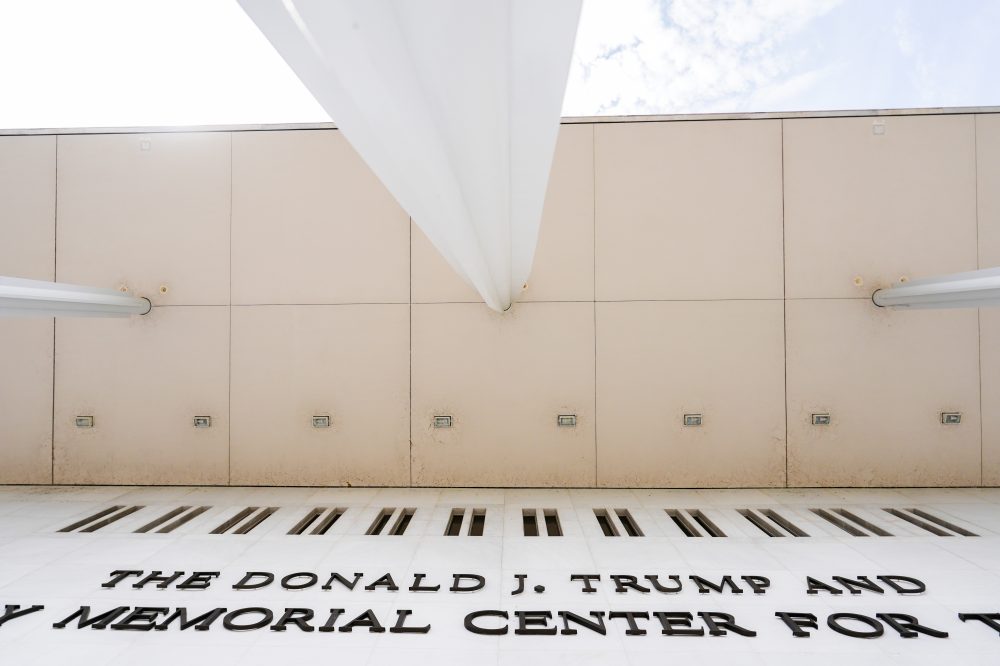
    Last December, the board approved adding Trump’s name alongside Kennedy’s on the building’s facade, with installation completed the next day, prompting criticism from Kennedy family members.

    In February, the president used social media to announce the Kennedy Center’s July 4 closure for two years of renovations, pending board authorization.

  • Ex-Senator Kyrsten Sinema Confirms Romance with Bodyguard Amid Lawsuit

    Ex-Senator Kyrsten Sinema Confirms Romance with Bodyguard Amid Lawsuit

    Former Arizona Senator Kyrsten Sinema has confirmed she engaged in a romantic relationship with one of her bodyguards while serving in Congress, according to court filings in a federal lawsuit.

    The legal battle is taking place in a North Carolina federal courthouse, where Heather Ammel is seeking monetary compensation from Sinema. Ammel claims the former lawmaker destroyed her marriage to Matthew Ammel.

    In her lawsuit, Heather Ammel describes having “a good and loving marriage” with “genuine love and affection” before Sinema’s interference. She alleges Sinema pursued her husband despite being aware of his marital status.

    Court documents show Sinema filed a sworn statement on March 7, confirming her connection with Matthew Ammel “became romantic and intimate” starting in late May 2024. She detailed that their relationship turned “physically intimate” over subsequent months across multiple states including California, New York, Colorado, Arizona and Washington, D.C. The couple’s separation occurred in November 2024.

    North Carolina remains among the few states permitting “alienation of affection” lawsuits, where betrayed spouses can pursue financial damages from third parties they hold responsible for destroying their marriages.

    Sinema’s legal team disputes Heather Ammel’s claims that the former senator made calls and sent digital messages to Matthew while he was in North Carolina with his family. Sinema’s lawyer Steven Epstein stated she only sent Matthew one message after he had secured separate housing “when the marriage was already over.”

    “Sinema’s conduct related to her romantic relationship with Mr. Ammel does not connect her to North Carolina in a meaningful way,” Epstein argued Thursday in his motion for dismissal. He added that no reasonable jury would find the single message “had any bearing on the destruction of marital love and affection.”

    According to the lawsuit, Sinema’s security chief brought Matthew Ammel onto the team following his military retirement in 2022. Early in 2024, Heather Ammel discovered romantic and explicit messages between her husband and Sinema on the Signal messaging platform. That summer, Matthew stopped wearing his wedding band and received a position on Sinema’s Senate staff while maintaining his bodyguard duties.

    The case initially appeared in North Carolina state court in late 2024 before transferring to federal jurisdiction in January.

    Sinema chose not to run for Senate reelection in 2024 after a controversial term where she abandoned the Democratic Party to serve as an independent. She currently works for a Washington-based legal and lobbying company.

  • Trump Announces International Naval Coalition to Secure Strait of Hormuz

    Trump Announces International Naval Coalition to Secure Strait of Hormuz

    President Donald Trump announced Saturday that an international coalition of naval forces will work with the United States to ensure the Strait of Hormuz remains accessible to maritime traffic.

    In a post on his Truth Social platform, Trump stated: “Many Countries, especially those who are affected by Iran’s attempted closure of the Hormuz Strait, will be sending War Ships, in conjunction with the United States of America, to keep the Strait open and safe.”

    The former president indicated he anticipates participation from China, France, Japan, South Korea, Britain and additional nations in deploying vessels to the strategic waterway.

    Trump also outlined aggressive military action, writing: “In the meantime, the United States will be bombing the hell out of the shoreline, and continually shooting Iranian Boats and Ships out of the water.”

    The White House has not yet responded to inquiries about whether any nations have formally committed to sending naval assets to the region. Trump’s announcement on Saturday did not include specifics about which countries have agreed to participate or timeline details for the proposed naval deployment.

  • Trump Disputes Reports of Extensive Damage to US Planes in Saudi Strike

    Trump Disputes Reports of Extensive Damage to US Planes in Saudi Strike

    Former President Donald Trump disputed media accounts on Saturday regarding the extent of damage inflicted on American military aircraft during a recent strike at a Saudi Arabian installation.

    In a Truth Social post, Trump stated that the majority of the refueling aircraft hit in the assault experienced minimal harm. “Four of the five had virtually no damage, and are already back in service. One had slightly more damage, but will be in the air shortly,” Trump posted on his social media platform.

    The former president’s comments came in response to news coverage from various American media organizations, including the Wall Street Journal. On Friday, the Journal had reported that Iranian attacks caused damage to five U.S. Air Force tanker aircraft stationed at Prince Sultan air base in Saudi Arabia. According to the newspaper’s account, no fatalities occurred in the incident and repair work was underway on the damaged planes.

  • Trump Administration Launches New Tariff Strategy After $1.6T Court Setback

    Trump Administration Launches New Tariff Strategy After $1.6T Court Setback

    WASHINGTON — Following a major Supreme Court setback that wiped out $1.6 trillion in anticipated tariff income, the Trump administration has launched an aggressive new strategy this week to recover those lost funds through alternative trade enforcement mechanisms.

    The White House had been relying on this tariff revenue to help balance the massive costs of its tax reduction programs. While policy experts believe recovering the lost income is achievable, they warn the process will be far more complicated and time-consuming than previous methods.

    “I wouldn’t bet against this administration being able to get back on paper the same effective tariff rate they had before,” stated Elena Patel, co-director of the Urban-Brookings Tax Policy Center. However, she noted the new strategy will “make it easier for people to contest the tariffs, which is going to put a big asterisk on the revenue until all that is settled.”

    On Wednesday, U.S. Trade Representative Jamieson Greer announced the administration would examine 16 nations — including the European Union — to determine whether their governments provide subsidies that create excessive manufacturing capacity, potentially harming American industry. This probe will encompass China, South Korea, and Japan as well.

    Additionally, Greer revealed a second inquiry targeting dozens of nations to assess whether their inability to prohibit products manufactured through forced labor constitutes unfair trade practices damaging to the United States. This second investigation will include the EU, China, Mexico, Canada, Australia, and Brazil.

    Both examinations fall under Section 301 of the 1974 Trade Act, which mandates the administration engage in consultations with targeted nations, conduct public hearings, and allow affected American industries to provide input. A hearing for the manufacturing capacity probe is scheduled for May 5, while the forced labor investigation hearing will take place April 28.

    This approach represents a significant departure from the emergency legislation President Donald Trump utilized during his first year, which enabled him to instantly impose tariffs on any nation at virtually any rate through executive orders.

    Immediately following the Supreme Court decision, Trump implemented a 10% tariff on all imports using different legal authority, though this measure can only remain in effect for 150 days. The president has indicated he would increase it to 15%, the legal maximum, but has not yet taken that step. Approximately two dozen states have already filed legal challenges against these new tariffs. The administration hopes to finish its Section 301 investigations before the temporary 10% duties expire.

    This initiative highlights how heavily the Trump White House depends on tariffs for revenue generation as the federal government confronts enormous annual budget shortfalls extending decades into the future. Earlier administrations typically employed tariffs more selectively to shield particular industries.

    Erica York, vice president of federal tax policy at the Tax Foundation, observed that the first investigation encompasses roughly 70% of imports, while the second would affect nearly all imports.

    “That breadth suggests the goal isn’t to address the issues at hand, but instead to recreate a sweeping tariff tool,” she explained.

    Trump views tariffs as a mechanism to compel foreign nations to essentially contribute to U.S. government expenses, despite recent economic research from institutions like the Federal Reserve Bank of New York and Harvard University economists showing that American businesses and consumers actually pay these duties. During last month’s state of the union address, Trump even promoted his tariffs as a potential substitute for income taxes, which would restore America’s tax system to late 19th century practices.

    Trump also seeks tariffs to help finance the tax cuts he extended through major legislation last year. The Congressional Budget Office’s latest nonpartisan projections estimate the tax cut legislation will add $4.7 trillion to national debt over ten years, while all of Trump’s duties, including those not overturned by the court, were expected to offset approximately $3 trillion — roughly two-thirds of that expense.

    The court’s February 20 decision prohibiting emergency tariffs removed about $1.6 trillion in projected revenue over the coming decade, according to CBO calculations.

    Several of Trump’s tariffs continue, including earlier duties on China and Canada imposed following previous 301 investigations. The administration has also implemented tariffs on specific items like steel, lumber, and automobiles. These remaining measures, combined with the temporary 10% tariff for part of this year, should generate approximately $668 billion over the next decade, Tax Foundation estimates suggest.

    “It’s going to take a really big patchwork of these other investigations to make up for the (lost) tariffs,” York stated.

    The administration’s approach is also noteworthy because it demonstrates an unusual dependence on tariffs for government revenue generation. Trump has also claimed the duties are designed to bring manufacturing back to the United States and has employed them to negotiate trade agreements.

    “What makes this really different,” explained Kent Smetters, executive director of the Penn Wharton Budget Model, “it is really the first time tariffs have been mainly used as a revenue raiser.”

    Patel contends that generating revenue could be accomplished more reliably and directly through Congressional action. Legislation like Section 301 traditionally serves to address specific trade policy issues with particular nations.

    “It’s not supposed to be there to raise revenue,” she noted. “If we want to raise revenue through tariffs, then Congress should impose a broad based tariff.”

  • Federal Voting Bill Could Make Casting Ballots Harder for Millions

    Federal Voting Bill Could Make Casting Ballots Harder for Millions

    A lifelong American citizen from New Hampshire discovered firsthand how new voting requirements can turn a simple civic duty into a stressful ordeal.

    Joshua Bogdan, 31, had never left the United States except for a brief school trip to Canada in seventh grade. Yet when he showed up to vote in Portsmouth’s local elections last fall, his driver’s license wasn’t enough.

    Poll workers informed him that New Hampshire’s recently implemented citizenship verification law required additional documentation since he had relocated and needed to re-register. Instead of his usual driver’s license, he would need either a passport or birth certificate.

    “I didn’t know that anything had officially changed walking in there,” Bogdan explained. “And then being told that I had to provide a passport that I’ve never had or a birth certificate that’s usually tucked away somewhere safe just to cast my vote — which I’ve done before — it was frustrating.”

    This scenario could become reality for voters nationwide if Congress approves the Safeguard American Voter Eligibility Act, known as the SAVE America Act. The legislation cleared the House last month along party lines and is scheduled for Senate consideration next week.

    While Republican supporters emphasize the bill’s photo identification requirements, the citizenship documentation mandate represents the most significant change. President Trump has endorsed these measures as common-sense safeguards, though noncitizen voting in federal elections is already illegal and extremely rare.

    The documentation requirements proved problematic when Kansas attempted similar measures a decade ago. Courts eventually struck down those rules after more than 30,000 eligible citizens were blocked from registering.

    Rebekah Caruthers, who leads the Fair Elections Center, warned the legislation could undermine democratic participation.

    “If this bill passes, it would deny millions of eligible Americans their fundamental freedom to vote,” she stated via email. “This includes millions of people who make up your communities, including married women, people of color and voters who live in rural areas.”

    The approved documents list appears extensive but contains numerous restrictions. Enhanced REAL ID licenses indicating citizenship are only available in five states: Michigan, Minnesota, New York, Vermont and Washington. Regular driver’s licenses typically don’t specify citizenship status, though some states like Ohio have recently added such indicators.

    Military identification cards require additional service records showing U.S. birth, but standard discharge documents don’t include birthplace information according to Pentagon officials.

    The legislation includes no transition period, meaning requirements would take effect immediately for this year’s midterm elections if enacted.

    University of Maryland researchers estimate 21.3 million eligible voters lack easy access to citizenship documents, including nearly 10% of Democrats, 7% of Republicans, and 14% of unaffiliated voters.

    Passports represent the most straightforward option, but only half of American adults possess current ones. Expired passports don’t qualify under the proposed law.

    Recent State Department changes eliminated passport processing at certain public libraries, though government facilities, post offices and county clerks continue providing services. Standard processing takes four to six weeks plus mailing time, with new passports costing $165 and renewals $130. Expedited service adds $60 to $82 in fees.

    Birth certificates offer a potentially faster alternative, but the law requires certified copies from government agencies, not hospital-issued documents given to new parents. Processing times vary dramatically by state, from three days to 12 weeks. New York currently has a four-month backlog.

    Women who changed names after marriage would likely need additional documentation to connect their birth certificates with current identification. Pew Research found approximately 80% of women in heterosexual marriages adopt their husband’s surname.

    The federal legislation provides no funding to help states implement or publicize these changes.

    Bogdan ultimately voted because he had recently retrieved his birth certificate to apply for a REAL ID. However, he noted poll workers seemed unfamiliar with exceptions for voters with previous registration history in the state.

    “Young voters like myself don’t always carry around our birth certificate, Social Security card, all that important stuff, because it’s not used ever or very often,” he observed. “And so all those young kids who are going to go out and try and vote will be held back from that.”

  • Georgia GOP Governor Race Shaken Up by Healthcare Mogul’s $30M Campaign Blitz

    Georgia GOP Governor Race Shaken Up by Healthcare Mogul’s $30M Campaign Blitz

    ATLANTA (AP) — Lieutenant Governor Burt Jones appeared destined to secure Georgia’s Republican gubernatorial nomination without much of a fight.

    Jones brought significant advantages to the table: his current position as lieutenant governor, substantial family wealth, and crucially, an endorsement from President Donald Trump.

    However, that sense of inevitability evaporated when healthcare mogul Rick Jackson made a surprise entrance into the contest in February, pouring over $30 million into television advertising. Jackson’s investment has already shattered spending records for any Georgia gubernatorial primary, and there are still more than two months remaining until the May 19 primary election.

    The advertising onslaught has forced Jones to lean heavily on Trump’s backing as his primary lifeline, while Jackson deliberately channels Trump’s persona. In a clear nod to Trump’s famous 2016 campaign launch down a golden escalator at Trump Tower, Jackson made his entrance by descending in a glass elevator at his corporate headquarters.

    Former state Republican Party executive director Jay Morgan described Jackson’s strategy as unprecedented in Georgia politics.

    “We’re on a different playing field,” he said. “It’s like going from Little League to major leagues.”

    Jackson’s entrance represents another test of Trump’s political influence in this crucial swing state. Trump’s track record as a kingmaker in Georgia has been mixed, having failed to unseat Governor Brian Kemp and other officials in 2022, and supporting Herschel Walker’s unsuccessful Senate campaign that same year.

    More recently, Trump helped propel Clay Fuller to the front of a competitive Republican field in the special congressional race to succeed Marjorie Taylor Greene. Fuller advanced to a runoff against a Democratic challenger.

    Among Georgia politicians in this election cycle, Jones may have the closest ties to Trump, making a potential defeat another demonstration of the limits of the president’s influence within the party.

    University of Georgia political scientist Charles Bullock noted the evolving value of Trump’s support.

    “The Trump endorsement is still valuable to get but can’t it be the be-all and end-all,” said Bullock. “I guess $50 million or whatever Rick Jackson is spending will be a real test of that.”

    The dynamic has completely transformed the race. Two other leading Republican contenders — Secretary of State Brad Raffensperger and Attorney General Chris Carr — have largely avoided the bitter exchanges between Jones and Jackson but find themselves fighting for media attention.

    Democratic candidates hope to end a Republican gubernatorial winning streak stretching back to 2002. The Democratic field includes former Atlanta Mayor Keisha Lance Bottoms and Geoff Duncan, a former Republican lieutenant governor.

    Trump has remained loyal to Jones, who faced potential criminal exposure for his efforts to help Trump challenge his 2020 election defeat.

    “Burt Jones has been here and been with you and been with me right from the beginning,” Trump said Feb. 19 at an event in Rome, Georgia.

    Jones has attempted to counter Jackson’s challenge by attacking his conservative credentials, highlighting his history of supporting Republicans other than Trump and alleging that his healthcare staffing business provided services to Planned Parenthood and gender-affirming care providers.

    Jackson fought back on Monday by filing a defamation lawsuit against Jones. Jones responded the following day with a barrage of attack advertisements.

    Jackson’s campaign entry followed a $19 million advertising assault from an anonymous dark money organization targeting Jones with allegations of using his office for personal financial gain. However, substantial evidence supporting the most serious accusations — that Jones leveraged his lieutenant governor position to benefit a major data center project partially owned by his family — remains limited.

    Jackson has consistently denied funding the advertisements that began running in November.

    On February 4, Jackson officially launched his campaign at the custom-built faux Italian office complex housing Jackson Healthcare in suburban Alpharetta. Jackson drew parallels between himself and Trump as a businessman motivated to enter politics, promising to become “Trump’s favorite governor.”

    “I saw a so-called front-runner who was as weak as can be and as lazy as the day is long,” Jackson said of Jones. “Really, he wants the title of governor, but not the job.”

    A lawsuit filed by Jackson has temporarily blocked a crucial funding source for Jones — his leadership committee. This unique Georgia fundraising mechanism allows Jones and select other entities to collect unlimited contributions. A federal judge declared the arrangement illegal since Jackson’s contributions from other donors remain subject to Georgia’s $8,400 contribution cap. Jones was prohibited from using committee funds during the primary campaign.

    The legal ruling could help Jackson maintain his financial edge over Jones. While Jones has increased his spending, political consultants suggest Jackson has already purchased so many television slots that he may crowd out his competitors.

    Jackson rose from foster care to become what he now describes as a billionaire. His wealth comes from Jackson Healthcare, which recruits medical professionals and provides them as highly qualified temporary workers. The state of Georgia ranks among his largest clients. His companies have received nearly $1 billion from state government in recent years, including contracts to supply medical workers during the pandemic.

    For more than ten years, he has wielded influence in Georgia politics as a major Republican donor and policy advocate. In the early 2010s, he funded unsuccessful efforts in Georgia and Florida to reform medical malpractice litigation. He unsuccessfully promoted privatizing Georgia’s foster care system but later successfully supported initiatives to expand assistance for foster children.

    Although Jackson has broadcast aggressive advertisements promising tax cuts, immigrant deportations, and blocking gender-affirming care for minors, some describe him as motivated by Christian faith and compassion for others.

    Republican operative Eric Tanenblatt, who has worked with Jackson, praised his character.

    “He’s a rock-solid conservative and just a terrific guy,” said Tanenblatt. “He’s obviously a successful business person, but also someone with just a genuinely kind heart.”

    Over the years, Jackson cultivated relationships with influential Republicans.

    He appointed former Florida Governor Jeb Bush to his company’s advisory board, and Jackson and his business contributed over $1 million to a political action committee supporting Bush’s unsuccessful 2016 presidential campaign. This history now fuels Jones’ attacks portraying Jackson as a “never Trumper.” Jones also criticizes donations to Nikki Haley, who challenged Trump unsuccessfully in 2024, and to former Wyoming Representative Liz Cheney’s PAC.

    Jackson has attempted to counter this narrative by contributing $1 million to Trump’s MAGA Inc. PAC on December 10. Jones supporters remain skeptical.

    Pro-Jones Republican activist Debbie Dooley dismissed Jackson’s Trump credentials colorfully.

    “My Chihuahua Izzy is closer to being MAGA than Rick Jackson is,” said Dooley.

    Regardless of questions about Jackson’s pro-Trump authenticity, his candidacy appears to have disrupted efforts by Republican officials to anoint Jones. Before Jackson entered the race, Georgia Republican Party Chairman Josh McKoon and the state’s two Republican National Committee members attempted to waive party rules against primary endorsements to support Jones. However, facing criticism from local party organizations, the national party has decided against involvement.

    RNC chairman Joe Gruters confirmed the party’s neutral stance during a February 19 WSB-AM interview.

    “We’re not spending any money in that race,” Gruters stated.

    Self-funding campaigns don’t guarantee electoral success. Republican Kelly Loeffler and her husband invested more than $34 million in her unsuccessful 2020 Georgia Senate campaign. According to Open Secrets, a spending watchdog group, only 10 of 65 candidates who spent over $1 million of personal funds seeking federal office in 2024 achieved victory.

    However, Jackson’s financial resources currently make his campaign message unavoidable.

    Morgan reflected on the transformed political landscape.

    “The landscape that we were looking at 30 days ago looks radically different today,” Morgan said.

  • Minneapolis Still Reeling From Major Immigration Operation’s Lasting Effects

    Minneapolis Still Reeling From Major Immigration Operation’s Lasting Effects

    Federal immigration agents are no longer a common sight on Minneapolis streets, but the city continues to struggle with the aftermath of a major enforcement operation that swept through the area earlier this year.

    While many residents still carry red whistles to alert others of immigration agent sightings, and parents continue watching school perimeters, the need for such vigilance has decreased. The community networks that once tracked federal agents remain in place but operate on a much smaller scale, as enforcement activities have largely shifted to surrounding areas.

    The streets that once witnessed chaotic scenes during President Trump’s immigration enforcement efforts have returned to a semblance of normalcy. However, city officials, educators, healthcare workers, advocates, and immigrant residents say this apparent calm masks the deep and lasting harm caused by Operation Metro Surge.

    The operation, which ran from December through February, deployed approximately 3,000 immigration agents throughout the region. Federal officials reported making around 4,000 arrests during the sweeps.

    Mayor Jacob Frey estimates that 400 federal immigration officers still remain in the city – more than twice the typical number. “The comprehensive assault we endured during Operation Metro Surge extended beyond just ICE agents,” Frey stated. “We’re witnessing additional forms of attacks.”

    The Democratic mayor outlined various impacts: children battling cancer who “can’t receive treatment” because their families refuse to leave their homes; Medicaid and Medicare transfers suspended by the Trump administration; and federal funding for shelters and affordable housing either cut or made dependent on cooperation with immigration enforcement.

    More than two dozen residents interviewed described a community attempting to heal. Some struggle with rent payments or purchasing food after losing employment or remaining too frightened to venture outside. Many reported experiencing collective trauma.

    The number of arrests made since border czar Tom Homan announced the operation’s conclusion remains unknown. The operation resulted in the fatal shooting of two American citizens, Renee Good and Alex Pretti, by federal agents.

    The Department of Homeland Security did not respond to requests for information. When questioned about Minneapolis immigration enforcement status, a White House representative mentioned “cooperation that did not exist before” between local and federal officials but provided no specifics.

    Frey calculated that economic harm from January’s immigration activities alone reached $203 million. Approximately 76,000 residents who were too scared to work or whose employers closed operations require rental assistance.

    “Lives were lost. Families were separated. Businesses shuttered,” Frey said, expressing his desire for federal compensation for the inflicted damage. “I’m not optimistic – but it would be appropriate for them to address some of the harm they created,” he added.

    Frey reported no recent communication with Trump administration officials.

    Dr. Lane Miller, an oncologist at Children’s Minnesota, a major pediatric healthcare system, described the operation’s impact on his patients as continuing to be “devastating.”

    He reported 50% appointment no-show rates for children with conditions including sickle cell disease and active cancer.

    “These immigrant families remain frozen with fear,” Miller explained. “We haven’t seen any improvement in our clinic regarding those families feeling safe to come here.”

    “We’re operating blindly with many of these patients,” Miller said.

    Miller described troubling cases, including a 14-year-old leukemia patient whose father and primary caregiver was detained by ICE five weeks earlier. When the boy finally received care, blood tests revealed he had stopped taking medication; the extended family members caring for him didn’t understand his treatment plan or ensure medication compliance.

    “Missing even individual doses two years into treatment can raise relapse risk,” Miller explained. “Relapses are significantly more difficult to treat.”

    Brenda Lewis, superintendent of Fridley Public Schools, oversees a district serving approximately 2,800 students, with 80% from immigrant or minority backgrounds. She now faces a $1 million budget shortfall she attributes to the operation.

    Nearly 100 students have disappeared from her schools. Some transferred to districts not targeted by ICE, others were deported with families, and many remain unaccounted for. Since Minnesota’s school funding depends on enrollment, each absent student represents roughly $10,000 in lost revenue. The district also lost $130,000 in nutrition funding since December.

    Lewis’ district has filed suit against the Trump administration to restore regulations designating schools as immigration safe zones. She now regularly advises superintendents nationwide who contact her with concerns about potential enforcement actions.

    “This isn’t what we prepared for as educators – and it seems these new challenges have no clear endpoint,” Lewis said.

    In Minneapolis’ Phillips neighborhood, which houses many immigrants, the visible crisis of early 2024 has transformed into something less apparent but equally pressing.

    Alexandria Gomez, a substitute teacher living in Phillips, started a rent assistance GoFundMe for neighbors that has collected over $730,000 since January. She personally delivers cash to families who trust no one else to bring it.

    One woman Gomez visits was considering returning to work when she saw ICE outside her building and retreated to her apartment.

    The 37-year-old Gomez worries about another operation in spring or summer. She points to numerous SUVs with tinted windows – vehicles typically used in immigration raids – recently delivered to the building ICE agents use for staging operations. Reuters confirmed witnessing delivery of six such vehicles on Wednesday.

    While Gomez notices some resident fatigue, she remains dedicated to her efforts.

    “This assault has created an entire city of people now deeply engaged in their communities and prepared to resist,” Gomez said.

  • Federal Immigration Agency Expands Surveillance Network Nationwide

    Federal immigration enforcement agencies have dramatically expanded their surveillance capabilities, creating an extensive monitoring network that tracks both undocumented immigrants and American citizens who oppose current immigration policies.

    The Department of Homeland Security, which supervises Immigration and Customs Enforcement and Border Patrol operations, has deployed an expansive array of monitoring technologies. These surveillance systems have been acquired as the department’s funding has significantly increased during the present administration.

    The comprehensive surveillance apparatus serves multiple purposes: tracking individuals slated for removal from the country, facilitating arrests of targeted persons, and monitoring U.S. citizens who voice opposition to the department’s enforcement strategies.

    This surveillance expansion represents a substantial shift in how federal agencies monitor both immigrant communities and American citizens engaged in policy criticism.

  • GOP Census Changes Could Transform How Legislative Districts Are Drawn

    A Republican initiative to modify census procedures could fundamentally transform how state legislative boundaries are established across the nation, potentially excluding children and adults who are not U.S. citizens from redistricting calculations.

    This proposed change represents a significant departure from current practices, where legislative districts are drawn based on total population counts that include all residents regardless of age or citizenship status.

    The shift would mark a dramatic change in redistricting methodology that has been used for decades to ensure equal representation in state legislatures. Currently, districts are mapped to include roughly equal numbers of all people living within geographic boundaries.

    If implemented, the new approach would base district lines solely on eligible voters or citizens, potentially altering the political landscape in states with large populations of children or non-citizen residents.

    The proposal comes as part of broader Republican efforts to reshape how population data is collected and utilized for political redistricting purposes at the state level.

  • Combat Veterans in Congress Wrestle with Iran Military Action Decisions

    Combat Veterans in Congress Wrestle with Iran Military Action Decisions

    WASHINGTON (AP) — Congressional members who experienced combat firsthand in Iraq and Afghanistan following September 11th are bringing their battlefield perspectives to bear as they evaluate President Donald Trump’s military actions against Iran, creating deeply personal stakes in the current war discussions.

    These veteran legislators describe conflicted emotions — feeling satisfaction that Iranian leadership responsible for targeting American troops for decades faces consequences, while simultaneously worrying that a new generation of service members might endure similar combat ordeals.

    Arizona Democratic Senator Ruben Gallego, whose unit experienced devastating casualties during the Iraq conflict, expressed this internal struggle: “Do I take gratification? You know there’s the Marine side of me: Yeah, of course. I know they killed a lot of American soldiers, American Marines. But do I also understand that I have a responsibility not to let my lust for revenge drive my country into another war?”

    The post-9/11 military experiences also influence Trump administration decision-makers, considering that key figures like Vice President JD Vance and Defense Secretary Pete Hegseth previously served in Iraq deployments.

    Gallego and fellow Capitol Hill veterans are drawing extensively on their combat backgrounds to evaluate the Iranian situation. These lawmakers display memorial bracelets bearing fallen comrades’ names, share accounts of attacks by Iranian-supported militant organizations, and recall their own combat wounds.

    Although initial Iran-related votes split largely along partisan lines — Republicans supporting Trump’s approach while Democrats cautioned against prolonged engagement — military veterans from both parties express serious concerns about entering this conflict.

    Arizona Republican Representative Eli Crane, a former Navy SEAL who enlisted immediately after the September 11th attacks, explained his position: “As somebody who knows a lot of friends that didn’t come home and a lot of Gold Star families, that’s why the week before the attack, I was actually one of the ones that was talking about caution and why we needed to avoid at all costs getting into another long, drawn-out Middle Eastern war.”

    Trump administration briefings somewhat eased Crane’s worries by suggesting the president doesn’t intend extended warfare. He opposed a war powers resolution that would have required congressional approval for continued Iranian strikes.

    However, Crane acknowledged military operations’ unpredictable nature: “I’ve been on military operations that did not go to plan many times, and so I understand the nature,” while urging the administration to proceed with “humility and caution.”

    Democratic lawmakers like Gallego feared such measured approaches came too late. They honored the six American military personnel killed in the Kuwait drone attack while expressing concern about additional casualties.

    “War is dirty, and mistakes happen,” Gallego observed. Extended conflicts increase chances of American military deaths, he noted, recalling Iraq experiences where friends died from seemingly random enemy fire.

    Nevertheless, numerous Republicans maintained that attacking Iran was essential to stop a regime that has spent decades training and equipping Middle Eastern militant organizations. House Foreign Affairs Committee Chairman Brian Mast led floor opposition to the war powers resolution.

    Mast, an Army explosive ordnance disposal specialist who lost both legs to an Afghan improvised explosive device, stated: “Me especially, many of my other colleagues, no one wants to see our military go into combat or war.”

    He continued: “But Iran’s terror, which has caused the deaths of thousands of Americans, it has to stop.”

    Significant questions face Congress as Iranian conflicts expand across the Middle East. Operations costs will likely reach billions, forcing the Trump administration to request substantial congressional funding soon. The war outbreak has also disrupted international partnerships and future American foreign policy directions.

    The specter of another extended conflict overshadows everything. Legislators say they must honor fallen colleagues by preventing such outcomes.

    Democratic Representative Pat Ryan, touching a bracelet inscribed with names of friends killed during his two Iraq Army tours, declared: “To me, it’s to speak out. It’s to say another generation should not go fight in an open-ended, ill-conceived regime change war in the Middle East.”

    Others recalled their wartime frustrations with Washington, particularly soldiers fighting with inadequately armored vehicles and insufficient personnel.

    Democratic Representative Jason Crow, who rose from Army private to captain through Iraq and Afghanistan deployments, reflected: “I know what it was like to be on the very end of the receiving line of the decisions made in Washington.”

    Crow said frontline troops often suffered “because people stopped asking tough questions. People stopped being held accountable. Congress stopped voting on it.”

    Illinois Democratic Senator Tammy Duckworth, who lost her legs when her Blackhawk helicopter was struck by a rocket-propelled grenade in Iraq while serving with the Illinois National Guard, said such experiences motivated her congressional candidacy.

    “I ran for Congress so that when the drums of war started beating once again, I’d be in a position to make sure that our elected officials fully considered the true cost of the war,” she explained. “Not just in dollars and cents but in human lives.”

  • Nevada Housing Crisis Shows America’s Affordability Struggle

    Nevada Housing Crisis Shows America’s Affordability Struggle

    LAS VEGAS (AP) — At 27, Brian Torres Suazo finds himself in a situation his parents never faced at his age. Despite earning union wages and having access to down payment help, homeownership remains an elusive goal for the Las Vegas resident.

    Torres Suazo anticipates living with roommates indefinitely, unable to break into the housing market due to persistently elevated prices in what was formerly an affordable city like Las Vegas.

    His situation reflects a broader national trend. Among voters already frustrated by inflation, housing expenses have emerged as a particularly contentious issue. Democratic leaders hope to harness this frustration to challenge Republican dominance in Washington, keeping economic issues front and center despite international conflicts capturing headlines.

    This political battle is playing out prominently in Nevada, a traditional battleground state that Donald Trump captured in 2024 and where competitive House races are now underway.

    “I would be paying more — a lot more — in mortgage than I am for rent right now,” said Torres Suazo, who works as a food runner on the Las Vegas Strip. He sometimes questions whether elected officials understand working people’s challenges. “It’d be nice if more people that knew what it’s like to work for a living could be in those rooms to make decisions,” he added.

    Surrounding the Strip, rows of desert developments feature angular-roofed homes in neutral tones. Unfinished streets wind through vacant lots awaiting future construction. Roadside advertisements promote properties ranging from $300,000 townhomes to million-dollar houses in premium suburban areas.

    While housing affordability has traditionally dominated political discussions in expensive markets like New York and San Francisco, the concern has now spread nationwide.

    The pandemic enabled remote workers to sell properties in costly metropolitan areas and relocate to Sun Belt destinations including Las Vegas, Phoenix, Dallas, and Charlotte, North Carolina, driving up local prices. Simultaneously, historically low interest rates triggered widespread refinancing, leaving current homeowners with mortgage payments that appear remarkably affordable by today’s standards.

    Las Vegas welcomed nearly 40 million visitors last year, with gamblers spending $14 billion at Clark County gaming establishments, according to tourism officials. This consistent influx of visitors and revenue continues attracting job-seekers hoping for employment opportunities and reasonable housing costs.

    Clark County’s population, encompassing Las Vegas, expanded 17% to reach 2.4 million residents between 2014 and 2024, far exceeding the nation’s 6% growth rate during the same timeframe.

    “If you ask locals who grew up here, some of them feel that housing is out of reach for them,” said Las Vegas real estate agent Tony Clifford. “You talk to somebody from out of state – Northwest, West, California – we’re still so cheap compared to them.”

    Property values and lending rates have declined from recent peaks across much of the nation, with real estate professionals describing Las Vegas as currently favoring buyers. Properties remain available longer, with more sellers accepting reduced offers or providing incentives like covering closing expenses. However, monthly housing payments remain significantly higher than pre-pandemic levels.

    Las Vegas resale property values increased 53% between December 2019 and the corresponding month last year, based on Case-Shiller data tracking previously sold homes, excluding new construction that represents over 25% of the local market.

    The city’s median home sale price jumped 65% from the first quarter of 2020 to the same period last year, hitting $393,000, according to Federal Reserve statistics. The figure dropped to $379,000 by the fourth quarter.

    Thirty-year mortgage rates nationwide followed similar patterns, reaching a low of 2.65% in 2021 before climbing to nearly 8% in 2023. Current rates have stabilized around 6%.

    Despite recent stabilization, both rates and prices exceed pre-pandemic levels. A median resale home purchased with current interest rates and 20% down would cost $2,300 monthly in December 2025, double the December 2019 amount.

    Investment firms control approximately 11% of single-family rental properties in Las Vegas, compared to roughly 3% nationally, according to Brookings Institution research.

    These corporate investors face increasing bipartisan criticism for purchasing and renting single-family homes, although economists generally question the effectiveness of restricting their activities. Both Trump and Nevada Attorney General Aaron Ford, the leading Democratic gubernatorial candidate, support limiting corporate home ownership.

    “People live in homes, not corporations,” Trump stated in a January social media post, urging Congress to prohibit large institutional investors from residential purchases. He has also advocated for Federal Reserve rate cuts and proposed extending mortgage terms to 50 years, privatizing Fannie Mae and Freddie Mac, and allowing homebuyers to use retirement or Education Savings Accounts for down payments.

    Ford’s housing proposal, unveiled last month, includes banning algorithmic rent pricing, addressing regulatory obstacles that prevent or delay construction, and pursuing federal land availability for development. The federal government controls 84% of Nevada’s land.

    Republican Governor Joe Lombardo, considered among the nation’s most politically vulnerable incumbent state leaders, has attempted to tackle the crisis by announcing $64 million in approved funding for twelve housing development projects, primarily in Las Vegas and Reno areas, plus homebuyer assistance programs.

    Democrats are centering their November campaign message on affordability concerns, contending that Trump has failed to deliver on promises to reduce costs despite Republican congressional control. They credit anxiety over living expenses for recent electoral successes in off-year contests, including gubernatorial races in New Jersey and Virginia plus various special elections.

    Multiple surveys, including a January AP-NORC poll, indicate many Americans believe Trump prioritizes incorrectly and neglects domestic cost issues.

    While economic concerns contributed significantly to Trump’s reelection, recent polling suggests most Americans haven’t experienced policy benefits yet and believe he’s insufficiently focused on affordability.

    A substantial portion of registered voters identify the economy as a primary national concern, with a recent New York Times survey finding approximately half believe Trump’s policies have made life “less affordable” for most Americans.

    Democratic strategist Paul Begala, who helped architect Bill Clinton’s 1992 campaign emphasizing domestic economic issues during international upheaval from the Gulf War and Soviet collapse, predicts the affordability issue will remain prominent in November despite foreign policy concerns over Iran.

    “Trump’s refusal to lower the cost of living, and his willingness to raise the cost of health care, electricity, hamburger, and now gas, is a two-edged sword that will cut down a large number of congressional Republicans,” Begala said.

    Housing presents complex political challenges. Established homeowners benefit from high prices that boost their paper wealth, a reality Trump has acknowledged repeatedly while assuring property owners he wants to maintain their values.

    However, those same prices become restrictive when homeowners want to relocate but find themselves priced out of larger homes or better neighborhoods.

    Michele Niemeyer feels stuck in her Strip-adjacent condo purchased for over $500,000. Her homeowners association fee recently increased to $686 monthly, straining her finances, while her unit’s value has dropped significantly. The neighborhoods previously within her budget when she bought the condo are now financially unreachable.

    “I want to move,” Niemeyer said. “I just don’t know where.”

  • Mississippi Holds Congressional Primary Elections Tuesday

    Mississippi Holds Congressional Primary Elections Tuesday

    Mississippi residents will head to polling stations Tuesday to select congressional candidates in statewide primary elections. The ballot includes the state’s junior Republican senator and all members of the U.S. House delegation seeking reelection, with nearly every incumbent facing opposition from one or both major parties.

    While Republicans maintain narrow control of both chambers in Washington, Mississippi’s outcomes are unlikely to determine overall congressional control in November. The state hasn’t seen any federal seat switch parties in more than a decade.

    Leading the ticket, Republican Senator Cindy Hyde-Smith confronts primary opposition as she seeks her second complete term. Physician and author Sarah Adlakha is challenging Hyde-Smith in the GOP primary. On the Democratic side, Scott Colom, who serves as district attorney for Clay, Lowndes, Noxubee and Oktibbeha counties, is among the candidates. Notably, Hyde-Smith prevented Colom’s federal judicial confirmation after President Biden nominated him to the federal bench in 2023.

    Hyde-Smith captured approximately 54% of votes in her two previous general election contests, both against former Agriculture Secretary Mike Espy. She ran unopposed in the 2020 Republican primary. Mississippi has experienced minimal Senate turnover, with just four senators representing the state since 1989, all Republicans.

    In the 2nd Congressional District, Representative Bennie Thompson, the state’s most senior current House member and only Democratic representative, confronts two primary opponents while pursuing an 18th term. Attorney Evan Turnage represents the latest wave of younger Democrats challenging established party incumbents. Turnage previously worked as an advisor to Democratic Senators Chuck Schumer of New York and Elizabeth Warren of Massachusetts.

    Thompson’s toughest primary battle as an incumbent occurred in 2006, when he secured roughly 64% against then-state Representative Chuck Espy, nephew of Mike Espy, whom Thompson replaced in Congress in 1993.

    On the Republican side, Ron Eller and Kevin Wilson are vying for the GOP nomination. Eller, a physician assistant, unsuccessfully challenged Thompson in the 2024 general election. Wilson serves as an Adams County supervisor.

    This expansive district runs along the Mississippi River, sharing borders with Arkansas and Louisiana, and covers approximately 40% of the state’s land area. It encompasses most of Jackson, the state capital. The district’s population is about 64% Black, the highest percentage statewide. Current district lines took effect in 2022. District voters backed Democrat Kamala Harris over Republican Donald Trump 60% to 39% in the 2024 presidential race.

    The Associated Press maintains strict standards for calling races, declaring winners only when trailing candidates cannot mathematically overcome the gap. If races remain undecided, the AP continues reporting developments while clearly stating no winner has been determined.

    Mississippi lacks automatic recount provisions and doesn’t allow candidate-requested recounts. Recounts occur solely through court orders. The AP may call races subject to potential recounts if the margin is too substantial for challenges to alter the outcome.

    Polling locations close at 7 p.m. local time, corresponding to 8 p.m. Eastern Time.

    The AP will report vote tallies and announce winners for both parties’ Senate primaries and competitive House primaries in the 1st, 2nd, and 4th Congressional Districts.

    Mississippi doesn’t require party registration, allowing any qualified voter to participate in either party’s primary. However, voters cannot participate in multiple party primaries, and those voting in one party’s primary cannot vote in another party’s April 7 runoff.

    Nearly 1.9 million active registered voters were recorded as of February 2.

    The 2024 Republican presidential and Senate primaries each attracted roughly 248,000 voters, representing about 13% of registered voters. Democratic primaries drew approximately 91,000 votes for president and 82,000 for Senate, equaling about 5% and 4% of registered voters respectively. Absentee ballots comprised roughly 6% of total votes cast in both parties’ 2024 primaries.

    Early voting totals show 13,473 ballots already cast in the 2026 primaries as of Friday.

    During 2024 primaries, the AP began reporting results at 8:07 p.m. Eastern Time, seven minutes after polls closed. Final updates came at 12:35 a.m. Eastern Time with approximately 95% of votes tallied.

    Counties handle absentee ballot reporting differently. Some provide separate absentee totals at the end of counting, while others integrate them with precinct results throughout the evening.

    Mississippi doesn’t offer in-person early voting.

    Tuesday’s primaries occur 238 days before the 2026 midterm elections.

  • Georgia Special Election Tuesday to Fill Marjorie Taylor Greene’s House Seat

    Georgia Special Election Tuesday to Fill Marjorie Taylor Greene’s House Seat

    WASHINGTON — Georgia’s 14th Congressional District takes center stage Tuesday as voters choose a successor to former Republican Representative Marjorie Taylor Greene, who stepped down in January after a public dispute with President Donald Trump.

    The outcome could further narrow Republicans’ thin House majority, particularly if Democrats manage an unlikely victory in a district where Trump secured 68% of the vote in 2024.

    Initially, 22 candidates threw their hats in the ring for the open House seat, though several withdrew, leaving 17 active campaigns. All contenders appear on a single ballot regardless of party membership. Should no candidate capture a majority, the top two finishers will face off in an April 7 runoff election.

    The Republican field includes 12 candidates, notably Clay Fuller, a state district attorney backed by Trump’s endorsement, and former state Senator Colton Moore.

    Three Democrats are seeking the position, with retired Army Brigadier General Shawn Harris leading the pack. Harris previously ran against Greene in 2024 and has outpaced all competitors in fundraising, collecting approximately $4.3 million with roughly $290,000 remaining as of February 18. Fuller trails in second place for campaign funds, holding about $238,000 after raising around $787,000 throughout his campaign.

    The northwestern Georgia district touches both Alabama and Tennessee borders, encompassing 10 counties. Paulding County contains the largest population, followed by a section of Cobb County. Major cities within the district include Rome, Dalton, Acworth, and portions of Kennesaw.

    During his 2024 challenge, Harris captured approximately 36% of district votes. His strongest performance came in Cobb County, where he earned about 49% compared to Greene’s 51%. Paulding County marked his second-best showing with roughly 41% support.

    Greene dominated district-wide with about 63% of votes, performing best in Murray County.

    While Trump’s backing should benefit Fuller, given Trump’s superior district performance compared to Greene, Harris might secure a runoff position if he matches his 2024 numbers. This scenario becomes more plausible with Democratic votes concentrated among just three candidates versus 12 Republican contenders.

    Additional special elections Tuesday include state Senate District 53 to replace Moore, plus state House Districts 94 and 130 for other vacant positions. Republicans maintain control of both legislative chambers, and these contests won’t alter their majorities.

    The Associated Press won’t project winners until determining no mathematical path exists for trailing candidates to overcome deficits. Until declaring a winner, the AP will report significant developments like candidate concessions while clearly stating no winner has been announced.

    Georgia lacks automatic recount procedures, but candidates may request recounts when margins equal 0.5% or less of total votes. The AP may still declare winners in recount-eligible races if leads appear insurmountable through recounts or legal challenges.

    Key election details include polls closing at 7 p.m. Eastern Time. The AP will report results and announce winners for the 14th Congressional District, state Senate District 53, and state House Districts 94 and 130.

    All registered voters may participate in their respective district’s special election. As of Thursday, approximately 521,000 registered voters live in the 14th Congressional District, with Georgia not requiring party registration.

    The 2024 general election saw roughly 378,000 votes cast in the 14th District, representing about 74% of registered voters. Approximately 76% of those votes were submitted before Election Day. By Friday, nearly 54,000 ballots had already been cast in the House special election.

    In 2024, the AP initially reported 14th District results at 7:10 p.m. Eastern, just 10 minutes after poll closure. By 11:24 p.m., about 99% of votes were tabulated. Final vote updates came from Cobb County at 4:46 a.m. Eastern, with roughly 99.9% counted.

    All 10 district counties typically release absentee results in their first vote updates. Four counties, including the two largest (Paulding and Cobb), usually include complete early in-person voting results initially. Since 2020, Democrats have favored early and mail voting, potentially giving Democratic candidates early leads in jurisdictions reporting these votes first, before Election Day ballots are counted.

    Following Tuesday’s elections, 238 days remain until the 2026 midterm elections.

  • Wisconsin Conservative Justice Steps Down, Liberals Could Gain Stronger Court Control

    Wisconsin Conservative Justice Steps Down, Liberals Could Gain Stronger Court Control

    MADISON, Wis. — Wisconsin Supreme Court Justice Annette Ziegler revealed Monday she will not pursue another 10-year term when her current position expires, creating another opening for liberal candidates to strengthen their control of the state’s highest court as major cases involving redistricting, labor laws, education funding, and other contentious issues loom ahead.

    The 62-year-old conservative justice, who first won election in 2007, represents the second right-leaning member in consecutive years to forgo reelection after liberals gained majority control of Wisconsin’s Supreme Court in 2023. Liberal justices maintained their advantage last year in an election that shattered national spending records and featured billionaire Elon Musk visiting Wisconsin to distribute $1 million payments to conservative voters.

    An upcoming election scheduled for April 7 will fill the vacancy left by conservative Justice Rebecca Bradley’s choice not to pursue another term. Liberal candidate Chris Taylor, an Appeals Court Judge, has collected more campaign funds than her conservative rival, Appeals Court Judge Maria Lazar, enabling Taylor to purchase additional television advertising in what has remained a relatively quiet contest since the court’s majority isn’t at stake.

    Liberal candidates are working to secure their fourth consecutive Supreme Court victory since 2020 and cement their dominance on the bench.

    Ziegler’s retirement announcement means voters will face another contested race next year. Should liberals prevail this year, their advantage would grow to 5-2, with the potential to reach 6-1 in 2027. If the conservative candidate succeeds this year, the liberal majority would stay at 4-3, and next year conservatives could at best maintain that 4-3 split.

    Ziegler regularly aligned with her conservative colleagues, including during 2020 when the court narrowly failed to overturn President Donald Trump’s electoral defeat that year. Ziegler found herself in the minority when a conservative swing justice joined with liberal members.

    Upcoming cases likely to reach the court include disputes over congressional district boundaries, the fate of legislation that essentially eliminated collective bargaining for most government employees, and efforts to boost public school spending.

    Since gaining court control, liberal justices have eliminated a state abortion prohibition and mandated new legislative maps, boosting Democratic hopes of winning a majority this November.

    Ziegler, who held the chief justice position from 2021 to 2025, previously worked as a circuit court judge in Washington County for a decade.

    “Now is the right time for me to step away to spend more time with my husband, kids and grandkids,” she said in a statement.

    “I am incredibly proud that in all my elections I had support from a broad spectrum of legal, civic, law enforcement and political leaders — both Democrats and Republicans — who believed in my commitment to fairness, ethics and the rule of law,” Ziegler said.

    The election to replace Ziegler is April 6, 2027.

  • AI Company Anthropic Files Federal Lawsuit Against Trump Pentagon Decision

    AI Company Anthropic Files Federal Lawsuit Against Trump Pentagon Decision

    A major artificial intelligence company has taken the Trump administration to federal court over a Pentagon ruling that blocks the firm from defense contracting work.

    Anthropic, the San Francisco-based creator of the Claude AI chatbot, filed dual federal lawsuits on Monday challenging the Defense Department’s classification of the company as a “supply chain risk.” One case was filed in California federal court, while the other was submitted to the federal appeals court in Washington, D.C.

    The legal battle emerged after Anthropic refused Pentagon demands for unrestricted military access to its AI technology. The company had attempted to limit two specific applications: mass surveillance of American citizens and fully autonomous weapon systems.

    “These actions are unprecedented and unlawful,” Anthropic’s lawsuit says. “The Constitution does not allow the government to wield its enormous power to punish a company for its protected speech. No federal statute authorizes the actions taken here. Anthropic turns to the judiciary as a last resort to vindicate its rights and halt the Executive’s unlawful campaign of retaliation.”

    Defense Secretary Pete Hegseth and other military leaders had publicly demanded that Anthropic accept “all lawful uses” of Claude technology and warned of consequences for non-compliance. The Defense Department declined to provide comment Monday, stating they do not discuss ongoing litigation.

    The Pentagon’s supply chain risk designation represents an unprecedented move – marking the first known instance of the federal government applying this label to an American company. This classification, typically reserved for foreign adversaries that might threaten national security systems, effectively bars Anthropic from defense contract work.

    President Trump has also directed federal agencies to cease using Claude technology, though he provided the Pentagon with a six-month timeline to phase out the system from classified military operations, including those involved in the Iran conflict.

    The lawsuits also target additional federal departments, including Treasury and State, after those agencies instructed their personnel to discontinue Anthropic’s services.

    While pursuing legal action, Anthropic has worked to reassure its broader customer base that the Trump administration’s penalties specifically impact only military contracting work with the Defense Department.

    This clarification carries significant financial implications for the privately-held company, which anticipates $14 billion in revenue this year primarily from business and government clients using Claude for programming and other non-military applications. The company reports over 500 customers paying at least $1 million annually for Claude access, contributing to Anthropic’s recent $380 billion valuation.

    In a Monday statement, Anthropic emphasized that “seeking judicial review does not change our longstanding commitment to harnessing AI to protect our national security, but this is a necessary step to protect our business, our customers, and our partners.”

  • Former President Trump Announces Monday Evening Press Conference

    Former President Trump Announces Monday Evening Press Conference

    Former President Donald Trump announced plans to conduct a media briefing on Monday evening, scheduled for approximately 5:30 p.m. Eastern Time.

    The former commander-in-chief revealed his intentions through a post on his Truth Social platform while currently in Florida. Trump indicated the press conference would take place prior to his departure back to the nation’s capital.

    The timing corresponds to 2130 GMT for international audiences following the proceedings.

  • Congressional Republicans Face Criticism for Anti-Muslim Comments

    Congressional Republicans Face Criticism for Anti-Muslim Comments

    WASHINGTON (AP) — Several Republican members of Congress have faced criticism this week for inflammatory statements targeting Muslim Americans, with Democratic leaders condemning the remarks while GOP leadership has offered limited response.

    The controversial comments have been building among Republican officials for months, frequently surfacing when criticizing New York Mayor Zohran Mamdani, who practices Islam. Recent violent incidents in Michigan and Virginia have intensified these statements from lawmakers.

    Alabama Senator Tommy Tuberville posted on Thursday that “The enemy is inside our gates” while responding to an image of Mamdani seated during an iftar meal at New York City Hall. The senator’s post placed this photo alongside an image from the September 11 attacks.

    Later that day, Tuberville reinforced his position, stating: “To be clear, I didn’t ‘suggest’ Islamists are the enemy. I said it plainly.”

    The inflammatory language escalated Friday when Republican legislators reacted to violent incidents in Michigan and Virginia by calling for complete immigration suspension. Several specifically targeted Muslim immigrants.

    Muslim Americans see parallels to the early 2000s period following 9/11, when the Afghanistan and Iraq conflicts sparked hostility toward Muslim communities nationwide, frequently resulting in discrimination and hate crimes.

    “When members of Congress speak, it’s not just words,” said Iman Awad, the national director for policy and advocacy for the Muslim American advocacy group Emgage Action. “It shapes public perception. It legitimizes prejudice.”

    Tennessee Representative Andy Ogles declared on social media that Muslims don’t belong in the United States. When faced with backlash, he maintained his stance, later posting that “paperwork doesn’t magically make you American” and claiming “Muslims are unable to assimilate; they all have to go back.”

    When questioned about Ogles’ statements Tuesday, House Speaker Mike Johnson revealed he had discussed “our tone and our message and what we say” with members. Johnson said Ogles used “different language than I would use,” while describing the underlying concern as “serious.”

    “There’s a lot of energy in the country, and a lot of popular sentiment that the demand to impose Sharia law in America is a serious problem,” Johnson said. “That’s what animates this.”

    Sharia represents a religious framework guiding many Muslims’ moral and spiritual behavior. Politicians frequently reference “Sharia law” to suggest Muslims seek to impose religious practices on American communities.

    Multiple Republicans cite a Muslim-focused planned community near Dallas as evidence of “Sharia law” implementation, though developers have rejected these claims and assert they face targeting due to their faith.

    Johnson’s refusal to condemn Ogles’ statements — or recent comments from Florida Representative Randy Fine claiming “the choice between dogs and Muslims is not a difficult one” — has emboldened additional anti-Muslim rhetoric. Following circulation of Mamdani’s iftar dinner photo, numerous Republicans posted critical responses.

    Democratic leaders widely denounced the GOP messaging. Senate Democratic leader Chuck Schumer labeled Tuberville’s post “mindless hate.”

    “Islamophobic hate like this is fundamentally un-American and we must confront and overcome it whenever it rears its ugly head,” Schumer said.

    Responding to Tuberville’s “the enemy is inside our gates” post, Mamdani stated: “Let there be as much outrage from politicians in Washington when kids go hungry as there is when I break bread with New Yorkers.”

    Federal authorities identified the man who drove his vehicle into Temple Israel in West Bloomfield Township, Michigan, this week as a naturalized citizen from Lebanon. Officials reported that he had lost four relatives in an Israeli airstrike in Lebanon the previous week, occurring at sunset during their Ramadan fast-breaking meal.

    At Old Dominion University in Virginia, Mohamed Bailor Jalloh fired shots in a classroom before ROTC students overpowered and killed him. Court records revealed his previous imprisonment for attempting to support the Islamic State, with his release occurring less than two years prior.

    Certain Republican legislators claimed validation for their positions. Others promoted new legislation. Minnesota Representative Tom Emmer, the House GOP whip, declared “the security of our nation hinges on our ability to denaturalize and deport terrorists.”

    West Virginia Representative Riley Moore announced plans to introduce legislation allowing denaturalization and deportation of any naturalized citizen who “commits an act of terrorism, plots to commit an act of terrorism, joins a terrorist organization or otherwise aids and abets terrorism against the American people.”

    Comparable rhetoric and policy proposals have emerged previously, generating controversy. Last year, protesters linked to Israel-Hamas war demonstrations faced arrest and government targeting, including former Columbia University graduate student Mahmoud Khalil, a Palestinian activist whom authorities have attempted to detain and deport.

    Middle Eastern conflicts generating domestic tensions represents a recurring pattern. During the Gaza war, both Muslim and Jewish communities have experienced faith-based discrimination and attacks.

    Mamdani described posts referencing the 9/11 attacks as concerning not only for their language but for “the actions that often accompany them.”

    “I think too of the smaller indignities, the indignities that many New Yorkers face, but that Muslims are expected to face in silence,” Mamdani said. “Of the exhaustion of having to explain yourself to those who are not interested in understanding. Of the men who introduce themselves by their given name only to be called Muhammad for years on end.”

    The notable silence from Republican leadership, including President Donald Trump, demonstrates a significant party transformation. Following the September 11, 2001 attacks, Republican President George W. Bush visited Washington D.C.’s Islamic Center to explicitly discourage Muslim discrimination.

    “America counts millions of Muslims amongst our citizens, and Muslims make an incredibly valuable contribution to our country,” Bush said during that visit, adding: “They need to be treated with respect. In our anger and emotion, our fellow Americans must treat each other with respect.”

    “Those who feel like they can intimidate our fellow citizens to take out their anger don’t represent the best of America, they represent the worst of humankind, and they should be ashamed of that kind of behavior,” Bush said.

  • Trump Asks Supreme Court to Override Immigration Rulings

    Trump Asks Supreme Court to Override Immigration Rulings

    WASHINGTON — Federal attorneys are urging the Supreme Court to overturn lower court decisions that have blocked the administration’s attempts to remove legal safeguards for migrants from several nations currently living in the United States, potentially putting thousands at risk of removal.

    In a Monday letter to the nation’s highest court, the Justice Department seeks sweeping authority to quickly eliminate temporary protections for people from various countries, including Haiti and Syria.

    Administration officials maintain the federal government possesses full discretion to terminate temporary protected status without judicial interference.

    However, multiple lower courts have rejected this position, with a Washington D.C. judge determining that “hostility to nonwhite immigrants” likely influenced decisions to revoke Haitian protections. An appellate court later affirmed this ruling.

    The Supreme Court has previously backed the administration’s stance, permitting the elimination of protections for hundreds of thousands of Venezuelans while legal challenges continued. This decision was among several victories for Trump through the Court’s expedited emergency procedures, enabling advancement of key policy priorities.

    The administration now seeks a definitive ruling preventing courts from challenging Department of Homeland Security actions within the broader mass deportation campaign.

    Solicitor General D. John Sauer accused lower court judges of showing “persistent disregard” for the Court’s previous emergency decisions, creating a pattern that appears “likely to repeat again and again unless and until this Court steps in.”

    Sauer challenged a decision maintaining Syrian immigrant protections last month and announced Monday his intention to contest another ruling affecting approximately 350,000 Haitians.

    More than 175 former judges have submitted arguments stating that emergency rulings don’t establish binding precedent and urging the court to permit standard appeals procedures to continue.

    Haiti’s protections began in 2010 following a devastating earthquake and have been renewed repeatedly. The nation continues experiencing severe gang violence that has forced hundreds of thousands from their homes.

    Homeland Security officials claim conditions have stabilized and reject claims that racial bias influenced their decisions. However, legal representatives for Haitian migrants warn that “people will almost certainly die” if the administration eliminates the program.

    The Homeland Security secretary can authorize temporary protected status when home country conditions are considered too dangerous for return due to natural disasters, political turmoil, or other threats. These designations last 18 months and don’t create paths to permanent residency.

    The Department of Homeland Security has also ended protections for approximately 600,000 Venezuelans, 6,100 Syrians, 60,000 individuals from Honduras, Nicaragua and Nepal, over 160,000 Ukrainians, and thousands from Afghanistan and Cameroon.

  • Trump AI Official Urges US Exit from Iran Conflict

    Trump AI Official Urges US Exit from Iran Conflict

    A senior official in President Trump’s administration has made an unusual public call for the United States to withdraw from its military engagement with Iran, suggesting the country should seek a negotiated end to the conflict.

    David Sacks, who serves as the White House’s artificial intelligence and cryptocurrency chief, made the remarks during a Friday appearance on the “All-In Podcast,” breaking from typical administration messaging on the Iran situation.

    “This is a good time to declare victory and get out,” Sacks stated during the podcast interview. He argued that American forces have successfully weakened Iran’s military strength, creating an opportunity for withdrawal.

    Sacks went further in advocating for diplomatic solutions, saying “I agree that we should try to find the off-ramp.” He emphasized the need to consider alternatives to continued military action.

    “If escalation doesn’t lead anywhere good, then you have to think about, well, how do you de-escalate? De-escalation, I think, involves reaching some sort of ceasefire agreement or some sort of negotiated settlement with Iran,” he explained.

    The conflict intensified following joint American and Israeli military operations against Iran on February 28. In response, Iran and its Lebanese ally Hezbollah have launched retaliatory strikes against Israel and other regional targets.

    The ongoing military tensions have created ripple effects beyond the battlefield, causing instability in international financial markets and driving up global oil prices.

    Casualty figures from the conflict paint a stark picture of the human cost. Iran’s United Nations representative reports that more than 1,300 people have died in Iran due to American and Israeli military strikes. Israeli officials say 12 of their citizens have been killed in Iranian attacks, while the U.S. military has confirmed seven American service members have lost their lives in the fighting.

  • Arizona Senate Leader Says He Handed Over 2020 Election Review Documents

    The president of Arizona’s state Senate reports that he has satisfied a court order issued last week demanding documents related to a controversial Republican examination of 2020 voting results in Maricopa County.

    The legislative leader stated he has turned over the requested materials connected to what has been characterized as a problematic audit of the presidential election results.

    The subpoena targeted records from the GOP-sponsored investigation that scrutinized ballots and voting procedures in Arizona’s most populous county following the 2020 presidential contest.

  • Delaware Capitol Police Prepares for National Accreditation Review

    Delaware Capitol Police Prepares for National Accreditation Review

    Delaware Capitol Police will welcome a team of evaluators from the Commission on Accreditation for Law Enforcement Agencies, Inc. (CALEA®) on March 30, 2026, according to an announcement made today by Chief William R. Thompson.

    The assessment team will examine every facet of the department’s policies, procedures, management practices, daily operations, and support systems as part of the accreditation process.

    This evaluation represents a voluntary effort by the Capitol Police to earn CALEA® accreditation, which stands as a nationally respected standard of excellence in public safety. To achieve this recognition, law enforcement agencies must demonstrate compliance with 193 strict and detailed standards that cover all aspects of police operations.

  • Former Nixon Aide Who Exposed Watergate Tapes Dies at 99

    Former Nixon Aide Who Exposed Watergate Tapes Dies at 99

    Alexander Butterfield, the former White House official whose bombshell testimony about secret recordings helped topple President Richard Nixon during the Watergate crisis, has passed away at 99 years old.

    Butterfield’s wife Kim and former Nixon White House counsel John Dean confirmed his death to news outlets. Dean praised Butterfield’s courage in revealing classified information.

    “He had the heavy responsibility of revealing something he was sworn to secrecy on, which is the installation of the Nixon taping system,” Dean said. “He stood up and told the truth.”

    Working as a deputy assistant to Nixon, Butterfield supervised a covert recording system linked to voice-activated devices installed in four separate locations, including Nixon’s Executive Office Building workspace and the Camp David presidential retreat.

    According to Butterfield’s later statements, only a small circle knew about the recording equipment: himself, Nixon, Chief of Staff H.R. Haldeman, one of Haldeman’s assistants, and several Secret Service personnel.

    “Everything was taped … as long as the president was in attendance,” Butterfield testified when questioned by Watergate investigators during a sworn preliminary interview.

    These recordings ultimately revealed Nixon’s involvement in covering up the 1972 break-in at Democratic Party offices in the Watergate complex. Rather than face House impeachment proceedings, Nixon stepped down on August 9, 1974, less than 30 days after the Supreme Court ordered him to turn over relevant recordings to prosecutors.

    Butterfield acknowledged his role in the president’s downfall. “I didn’t like to be the cause of that, but I felt that I was, in a lot of ways,” he reflected in a 2008 interview for the Nixon Presidential Library and Museum.

    A UCLA classmate of Haldeman’s, Butterfield had reached out to his friend seeking opportunities in the incoming Nixon White House. From 1969 to 1973, he worked under Haldeman as deputy assistant, serving as Cabinet secretary and helping manage White House operations.

    The Air Force veteran had already departed the White House to lead the Federal Aviation Administration when Senate investigators privately interviewed him on July 13, 1973, during their Watergate probe. A standard inquiry about potential recording systems arose from John Dean’s earlier testimony suggesting his Nixon conversation might have been captured.

    After Butterfield confirmed the taping system’s existence, he appeared before a public Senate Select Committee hearing. His July 16, 1973 revelation of comprehensive presidential recording capabilities shocked both Nixon supporters and critics, promising investigators valuable evidence about the break-in knowledge.

    Investigators’ efforts to obtain the recordings triggered a year-long court battle that concluded in July 1974 when the Supreme Court unanimously ordered Nixon to release them.

    The thousands of hours of recordings released over time—now managed by the National Archives—offer an unprecedented, often unfavorable glimpse of Nixon, revealing his temper, crude language, prejudiced attitudes, and candid views on domestic and foreign leaders.

    “I just thought, ‘When they hear those tapes …’ I mean, I knew what was on these tapes … they’re dynamite,” Butterfield told the Nixon Library. “I guess I didn’t foresee that the president might be put out of office or impeached, but I thought it would be a perilous few years for him. I guess I couldn’t conceive of (Nixon) being forced out of office. It had never happened before.”

    Butterfield believed President Gerald Ford dismissed him as FAA administrator in 1975 as part of a deal between Nixon and Ford staff members. He claimed White House contacts informed him he became a target following his Senate testimony.

    Following his FAA departure, Butterfield pursued business executive roles in California and completed a master’s degree at UC San Diego in 1994.

    Born Alexander Porter Butterfield on April 6, 1926, in Pensacola, Florida, he left UCLA to join the Navy, later earning his bachelor’s from the University of Maryland in 1956 and a master’s from George Washington University in 1967.

    He entered the Air Force in 1948, serving as an instructor near Las Vegas during the Korean War and later in Germany. In Washington, he assisted the defense secretary’s special assistant in 1965-1966 and served as senior military representative for Pacific Forces in Australia. He retired as a colonel after two decades of Air Force service.

    In his later years, Butterfield harshly criticized his former boss. While acknowledging Nixon’s foreign policy successes, he called Nixon “not an honest man” and “a crook,” believing Nixon knew about the Watergate break-in beforehand and orchestrated the subsequent cover-up.

    Butterfield admitted to “cheering … just cheering” when Nixon resigned, telling the Nixon Library that “justice had prevailed.”

    “I didn’t think that it would for a while,” he said. “This guy was the ringleader.”

  • Texas Mariachi Teen Musicians Detained by ICE Draw Political Support

    Texas Mariachi Teen Musicians Detained by ICE Draw Political Support

    McALLEN, Texas — Immigration enforcement officials have detained members of a Mexican family, including two teenage sons who performed with an award-winning high school mariachi ensemble, drawing criticism from politicians on both sides of the aisle who say the action goes too far.

    The Gámez-Cuéllar family was taken into custody on February 25th during what should have been a routine immigration check-in, according to family members and supporters who have started fundraising efforts online. The family includes brothers Antonio, 18, Joshua, 14, and a 12-year-old sibling, along with their parents.

    The two older boys had earned recognition as key performers in McAllen High School’s Mariachi Oro ensemble, a group that has achieved remarkable success including White House appearances, Carnegie Hall performances, and eight state championship titles.

    Antonio was freed from the Raymondville immigration detention facility on Monday afternoon, though he and his legal team declined to speak with media. His four family members remain held at a separate facility in Dilley, Texas, designed for families.

    Immigration and Customs Enforcement officials have not yet provided a response to media inquiries about the case.

    Politicians from different parties have expressed solidarity with the Mexican family, who had been seeking asylum through official U.S. immigration channels.

    “The Gamez-Cuellar family’s story breaks my heart. South Texans know better than anyone that we can secure our border and still treat people with dignity — these are not competing values,” said Rep. Monica de la Cruz, a Republican congresswoman representing McAllen.

    McAllen’s Republican mayor, Javier Villalobos, expressed his backing for the family while continuing his push for “responsible pathways for law abiding individuals who want to contribute to our economy, support their families, and become productive neighbors in McAllen.”

    Democratic Representative Joaquin Castro of Texas made the trip to visit the four detained family members at the Dilley facility on Monday. Castro has previously advocated at the same location for the release of 5-year-old Liam Conejo Ramos from Minnesota and his Ecuadorian father.

    New York Democratic Representative Adriano Espaillat, who leads the Congressional Hispanic Caucus, described the family’s detention as “outrageous.”

    “This family followed the rules, showed up to their immigration appointment in good faith, and is now being torn apart by ICE, with their 18-year-old son separated from his parents and younger brothers,” he said.

  • Federal Judge Blocks End to Somali Immigrant Protections

    Federal Judge Blocks End to Somali Immigrant Protections

    A federal judge in Massachusetts has temporarily blocked the Trump administration’s effort to end deportation protections for immigrants from Somalia, just days before the program was set to expire.

    U.S. District Judge Allison D. Burroughs issued the emergency ruling on Friday, stating that allowing Somalia’s Temporary Protected Status designation to end on Tuesday would have “weighty” consequences. Immigration advocates had rushed to court seeking the emergency halt after the Trump administration announced plans last month to terminate the program during an immigration enforcement operation in Minneapolis, home to a large Somali community.

    The judge’s decision highlighted the serious risks facing affected individuals, stating that “Over one thousand people will face ‘a myriad of grave risks,’ including detention and deportation, physical violence if removed to Somalia, and forced separation from family members.”

    Burroughs explained that issuing an administrative stay while postponing a final decision allows both legal teams time to submit detailed arguments on the emergency request.

    “While the stay is in effect, the termination shall be null, void, and of no legal effect,” the court order stated, emphasizing that individuals with TPS status or pending applications will continue to have access to work permits and protection from deportation and detention.

    The Department of Homeland Security responded with criticism of the ruling, calling it another instance of a judge appointed by former President Barack Obama blocking Trump from “restoring integrity” to America’s immigration system.

    “Temporary means temporary,” the department’s statement declared. “Country conditions in Somalia have improved to the point that it no longer meets the law’s requirement for Temporary Protected Status. Allowing Somali nationals to remain temporarily in the United States is contrary to our national interests. The Trump administration is putting Americans first.”

    Legal representatives for those challenging the termination expressed cautious optimism about the temporary victory. In their statement, they acknowledged that while the order is temporary and “many battles lie ahead,” they are “heartened by the interim protection today’s order affords all Somali people in the U.S. who have TPS or pending TPS applications.”

  • NTSB Board Member Terminated Amid Misconduct Claims, Vows Legal Fight

    NTSB Board Member Terminated Amid Misconduct Claims, Vows Legal Fight

    A National Transportation Safety Board official was terminated by the Trump administration following allegations of workplace misconduct, though Todd Inman strongly contests the accusations and pledges to pursue legal action.

    Inman disclosed on Sunday that his employment was terminated Friday without any explanation provided, despite his board appointment extending through 2027’s conclusion. The Trump White House defended the decision on Monday, stating the termination was warranted.

    White House spokesperson Kush Desai explained the administration’s position: “The White House lawfully removed Todd Inman from the NTSB after receiving highly concerning reports of inappropriate alcohol use on the job, harassment of staff, misuse of government resources, and failure to attend at least half of NTSB meetings. The Trump administration remains committed to maintaining safety and security for Americans in the air and on the ground.”

    Initially, Inman hadn’t considered litigation regarding his dismissal, but now states: “I look forward to defending my reputation through all legal means possible.”

    “I categorically deny the allegations made in the White House statement. It has become increasingly obvious this action was a political hit job,” declared Inman, a Republican who received his appointment in March 2024 under former President Joe Biden.

    Following Inman’s termination and Vice Chair Alvin Brown’s surprising removal in May – a Biden-appointed Democrat – the NTSB’s website currently shows just three active members. However, the U.S. Senate has recently approved American Airlines executive John DeLeeuw, who will join as the board’s fourth member. The agency examines significant aviation, rail, highway, and pipeline accidents while currently handling over 1,000 active investigations, ultimately issuing prevention recommendations in final reports.

    The NTSB has refused to provide commentary regarding Inman’s removal.

    Inman served as the primary board representative at the scene of last year’s devastating midair collision near Washington, D.C., which claimed 67 lives when a commercial aircraft struck a U.S. Army Black Hawk helicopter. He also supervised the preliminary investigation into November’s UPS cargo aircraft crash in Kentucky that resulted in 15 fatalities.

    Prior to recent events, dismissing independent agency board members was extraordinarily rare. Nevertheless, Trump has removed officials from the Federal Reserve Board, Surface Transportation Board, Equal Employment Opportunity Commission, and Nuclear Regulatory Commission to install his preferred candidates.

    The NTSB’s five-member structure traditionally includes three members from the president’s political party and two from the opposition. With Inman’s departure and DeLeeuw’s addition, the board now stands at an even 2-2 party split, allowing Trump to select a third Republican member.

    Both Brown and Robert Primus, who previously served on the U.S. Surface Transportation Board, were the sole Black board members leading their respective independent agencies when terminated last year. Each has contested their dismissals in federal court, with legal advocacy organization Democracy Forward filing discrimination complaints on their behalf.

  • Airport Security Lines Grow Longer as Federal Workers Miss Paychecks

    Airport Security Lines Grow Longer as Federal Workers Miss Paychecks

    Travelers across the nation are facing dramatically extended delays at airport security screening areas as the partial federal government shutdown continues. Transportation Security Administration personnel are working their shifts despite not receiving their regular paychecks during the ongoing budget impasse.

    The prolonged wait times at TSA checkpoints have become increasingly problematic at multiple airports throughout the country, creating frustration for passengers trying to reach their flights on schedule.

  • Ex-Missouri House Speaker Gets 21 Months for COVID Relief Fraud

    Ex-Missouri House Speaker Gets 21 Months for COVID Relief Fraud

    A former top Missouri lawmaker will spend nearly two years behind bars after admitting he fraudulently diverted hundreds of thousands of dollars in pandemic relief money for his own use.

    John Diehl, who once held the position of Republican House Speaker in Missouri, was handed a 21-month federal prison sentence on Monday following his guilty plea to wire fraud charges. The case centered on his misappropriation of approximately $380,000 in federal assistance designed to help businesses survive the economic impact of COVID-19.

    Between 2020 and 2022, Diehl obtained the federal loans for his legal practice through a program specifically created to assist companies with operational costs during the pandemic crisis. However, according to his September plea deal, he diverted these funds toward personal expenditures including membership fees at a country club, pool upkeep at his residence, mortgage payments, and car loans for luxury vehicles including a Tesla, Audi, and Jeep.

    Federal prosecutors revealed that Diehl channeled more than half of the fraudulent funds into his law firm’s retirement benefit program, where he served as the sole beneficiary. He also used portions of the money to settle a civil lawsuit stemming from his tenure as House Speaker.

    Diehl’s political career ended in scandal when he stepped down from his leadership role in 2015. His resignation came after The Kansas City Star published reports about inappropriate text communications he had sent to a college intern working at the state Capitol. Diehl publicly admitted at the time that sending those messages constituted “making a serious error in judgment.”

    His legal troubles continued in 2023 when Missouri’s Ethics Commission hit him with approximately $47,000 in penalties for campaign finance infractions, including accusations that he spent nearly $6,800 in campaign donations on personal items.

    Defense attorneys had urged the judge to avoid imposing jail time, emphasizing that Diehl had already repaid the entire amount to the Small Business Administration. However, federal prosecutors had sought a sentence ranging from 21 to 27 months behind bars.

    Along with the prison term, the court imposed a $50,000 monetary penalty on Monday.

    “Through his education and public office, Defendant had every privilege and opportunity, and to put it bluntly, he knew better than to engage in the charged fraud scheme,” Assistant U.S. Attorney Hal Goldsmith stated in court documents regarding Diehl’s case.

  • Texas Fugitive Shot by Police Had Worked Security for Congresswoman

    Texas Fugitive Shot by Police Had Worked Security for Congresswoman

    A fugitive fatally shot by Dallas SWAT officers this week had been working as part of the security team for U.S. Representative Jasmine Crockett while allegedly impersonating a law enforcement officer, according to a Friday report from CBS News Texas.

    The individual, who publicly identified himself as Mike King, had been operating under false identities while running a company that connected police officers with off-duty security assignments, sources told the news outlet. Law enforcement officials have not disclosed the person’s actual identity.

    Dallas police SWAT team members fatally shot the suspect Wednesday evening, according to department statements released earlier this week.

    According to CBS News Texas, the man faced charges for pretending to be a police officer and had falsely claimed law enforcement credentials while operating Off Duty Police Services, a digital platform that matches North Texas officers with private security opportunities.

    Neither Representative Crockett’s office nor the Dallas Police Department provided immediate responses to requests for comment on the matter.

    The news station reported obtaining photographs showing King positioned near Crockett, a Democratic representative, during various public appearances and campaign activities related to her recent bid for a U.S. Senate position.

    Investigators also discovered that he operated a vehicle designed to resemble an unmarked police car and had been using license plates that were stolen from vehicles parked outside a military recruitment facility, according to the report.

  • Trump Administration Plans Underground Visitor Screening Center at White House

    Trump Administration Plans Underground Visitor Screening Center at White House

    WASHINGTON (AP) — Federal officials have unveiled plans for a massive underground security facility at the White House designed to streamline visitor processing as part of ongoing renovations to the presidential complex.

    Blueprints and architectural drawings for the 33,000-square-foot subterranean center were disclosed Friday in preliminary documents for an upcoming April federal commission meeting that must approve construction projects on government property in the nation’s capital.

    The proposed security facility would be constructed underneath Sherman Park, positioned to the southeast of the White House complex and immediately south of the Treasury Department building.

    For years, Sherman Park served as the staging area where White House visitors and tour groups would queue for security processing before passing through temporary trailer-like screening stations and proceeding to the East Wing entrance. Last fall, President Donald Trump demolished the East Wing to make way for a new ballroom, forcing visitors to now gather near Lafayette Park on the opposite side of Pennsylvania Avenue.

    The proposed underground facility would feature seven separate processing lanes designed to speed up security checks and minimize waiting periods for guests. According to project timelines, construction work could commence as soon as August, with the White House targeting a July 2028 operational date — approximately six months before the end of Trump’s presidential term.

    Project documents indicate that the monument honoring Union General William Tecumseh Sherman, which stands at the heart of Sherman Park, would remain untouched during construction. The initiative represents a joint effort between the Executive Office of the President, the U.S. Secret Service, and the National Park Service, which oversees White House grounds management.

    The National Capital Planning Commission, the federal body responsible for reviewing government construction projects, has scheduled discussion of the proposal for its April 2 session, based on the preliminary meeting agenda distributed Friday.

    Commission members will also consider and vote on the Republican president’s separate proposal to construct a 90,000-square-foot structure, featuring an expansive ballroom, on the former East Wing site.

  • Nine Found Guilty in Texas ICE Facility Attack, Eight Face Terror Charges

    Nine Found Guilty in Texas ICE Facility Attack, Eight Face Terror Charges

    A federal jury in Texas has delivered guilty verdicts against nine individuals connected to an armed assault on a U.S. Immigration and Customs Enforcement detention facility last summer, according to the Justice Department.

    Eight of those convicted face terrorism-related charges, including providing material support to terrorists, participating in a riot, conspiracy to use and transport explosives, and deploying explosive devices during civil unrest, according to local news reports.

    The verdicts came after a 12-day federal trial examining the defendants’ roles in the July 4th incident in Alvarado, Texas, where a police officer was shot but survived.

    Federal authorities said the group wore dark “military-style” uniforms with masks and head coverings during their assault on the immigration facility. The Trump administration has identified the defendants as participants in the antifa movement, which President Donald Trump classified as a domestic terrorist organization last year.

    This marks the first instance where federal prosecutors have brought terrorism charges against individuals linked to antifa, a loosely organized far-left movement whose supporters typically oppose what they consider authoritarian or racist policies.

    Attorney General Pam Bondi indicated after the convictions that similar prosecutions will continue under the Trump administration.

    ICE Director Todd M. Lyons praised the jury’s decision, characterizing the summer incident as a violent act and “an abhorrent way for antifa terrorists to ‘protest.’”

    Those found guilty include Cameron Arnold, Zachary Evetts, Benjamin Song, Savanna Batten, Bradford Morris, Maricela Rueda, Elizabeth Soto, Ines Soto and Daniel Rolando Sanchez-Estrada.

    Most defense attorneys did not respond to requests for comment following the verdicts.

    Cody Cofer, representing lead defendant Arnold, criticized the prosecution’s approach, stating: “We are thankful that the jury could see through the Government’s fear mongering antifa ‘ambush’ narrative.”

    “We are afraid that our client’s guilty verdicts for Riot and related charges resulted from a compromise during deliberations or failure to consider our client’s individual conduct,” Cofer added.

    The defense attorney announced plans to file an appeal in the case.

  • Former White House Official Who Revealed Nixon’s Secret Tapes Dies at 99

    Former White House Official Who Revealed Nixon’s Secret Tapes Dies at 99

    Alexander Butterfield, the former White House official whose testimony about President Richard Nixon’s secret recording devices became pivotal evidence in the Watergate scandal, has passed away at 99 years old.

    Butterfield’s wife Kim confirmed his death to major news outlets. He died at his La Jolla, California residence, just one month before reaching his 100th birthday. No specific cause of death was provided.

    The former aide’s disclosure about Nixon’s covert audio recording system triggered a fierce legal fight over presidential executive privilege and ultimately provided crucial evidence that led to Nixon’s downfall.

    Butterfield previously expressed frustration about his historical legacy, telling journalist Alicia Shepard that he disliked being remembered solely as the person who revealed the tapes’ existence, as it suggested he had “eagerly and breathlessly” shared the information with congressional investigators.

    Born in Pensacola, Florida, and raised in California, Butterfield studied at UCLA before enlisting in the U.S. Air Force in 1948. He served as a combat pilot in Vietnam, leading a tactical reconnaissance squadron, and later worked as a military assistant to senior Pentagon officials, which gave him initial White House experience.

    After leaving military service, Butterfield joined Nixon’s White House team as deputy to Chief of Staff H.R. Haldeman, his former UCLA classmate. His responsibilities included maintaining presidential historical records, which involved supervising the installation of the voice-activated recording equipment.

    By the time the investigation into the June 17, 1972, Democratic headquarters break-in at the Watergate complex intensified, Butterfield had already moved on to lead the Federal Aviation Administration.

    As one of the few White House insiders aware of the recording system, Butterfield decided when facing Senate questioning that he would avoid lying while also not volunteering unnecessary information.

    During a private preliminary interview, a Republican committee attorney directly asked whether the White House maintained a recording system. Butterfield reluctantly confirmed its existence.

    PIVOTAL MOMENT

    Three days following his initial private testimony, on July 16, 1973, Butterfield testified publicly before the televised Senate Watergate Committee hearing. Fred Thompson, then serving as Republican counsel and later an actor and senator, posed the same crucial question.

    After a lengthy pause, Butterfield responded, “I was aware of listening devices, yes, sir.”

    This revelation shocked the nation because it meant concrete evidence existed of Nixon’s conversations, including exactly what he said, when he said it, and to whom.

    Butterfield explained that the recording equipment had been secretly capturing conversations and meetings in the Oval Office, Nixon’s Executive Office Building office, and the Cabinet room, plus four White House phone lines. He stated the recordings were intended for historical purposes.

    In a 1975 People magazine interview, Butterfield revealed that Nixon frequently forgot about the recording devices and ignored recommendations to destroy the tapes, never anticipating the Watergate investigation would escalate to the point of requiring their surrender.

    “I’m sure that he hates me as much as anyone can,” Butterfield said regarding his former boss, who died in 1994.

    He believed Nixon should have stepped down sooner, stating, “I don’t feel awful about the president’s resignation. Not at all.”

    THE SMOKING GUN

    A recording from six days after the Watergate break-in became Nixon’s ultimate downfall – the “smoking gun” that demonstrated his knowledge of the cover-up. The tape captured him approving a plan to halt the break-in investigation citing national security concerns.

    The Supreme Court eventually rejected the White House’s executive privilege claims and mandated Nixon surrender the subpoenaed recordings as his public and political support crumbled. Facing impeachment and Senate trial, he resigned on August 9, 1974.

    Since Butterfield had no involvement in the break-in or subsequent cover-up, he faced no criminal charges, though his friend Haldeman joined several other Nixon associates in prison.

    Butterfield became the subject of Bob Woodward’s 2015 book “The Last of the President’s Men.” The Washington Post reporter, who helped expose the Watergate story, received thousands of documents that Butterfield had secretly taken from Nixon administration offices.

    These materials and Butterfield’s interviews revealed what the former aide called a “cesspool” within the administration and depicted Nixon as peculiar, isolated, and bitter.

    Butterfield said he regularly faced hostility from Nixon supporters and told Time magazine that longtime Nixon secretary Rose Mary Woods, who claimed to have accidentally erased 18½ minutes of White House tapes, had called him a “son of a bitch” who had “destroyed the greatest leader this country ever had.”

    Butterfield served as an advisor for Oliver Stone’s 1995 movie “Nixon” and appeared in a small role as a White House staff member.

    His first marriage to Charlotte Maguire ended in divorce in 1985. He previously dated Audrey Geisel, widow of children’s author-illustrator Theodor Seuss Geisel, known as Dr. Seuss.

  • Fed Chair Powell May Stay on Board After Term Ends, Court Documents Reveal

    Fed Chair Powell May Stay on Board After Term Ends, Court Documents Reveal

    Federal Reserve Chairman Jerome Powell is contemplating remaining as a board member when his leadership role concludes in May, according to court documents made public Friday in Washington.

    The information emerged from legal filings connected to the Fed’s successful effort to prevent Justice Department subpoenas in a criminal probe examining Powell’s management of the central bank’s Washington headquarters renovation project. A federal district court judge sided with the Fed and blocked the subpoenas Friday.

    During a January 29th meeting with U.S. District Attorney Jeannine Pirro, Powell’s legal team indicated their client’s thinking, according to Justice Department lawyers opposing the Fed’s legal motion. The attorneys stated: “The Chair (Powell) feels like he would not leave the Board when his term as Chair expires, if he was still under investigation; and while he could not say the converse is true, it would be a different look to the Chair if he was not facing criminal investigation and the Chair would be free to make a decision that would focus on his family.”

    Powell’s lawyers also noted that President Donald Trump, who has pushed for lower interest rates, “does not have enough votes in the Senate to confirm a new Board Chair,” the documents showed.

    Trump has nominated former Fed Governor Kevin Warsh to replace Powell, though Warsh encounters confirmation hurdles.

    The 73-year-old Powell has not publicly announced his intentions regarding the conclusion of his chairmanship, but his potential continuation as a governor could prove significant. His position might serve as a crucial swing vote on the Fed’s seven-member governing panel.

    Historically, Fed chairs step down from their board positions when successors assume leadership, but concerns about Federal Reserve independence and Trump’s potential influence through additional appointments have fueled speculation that Powell might break this tradition.

    No precedent exists for how a former chair might operate while still participating in monetary policy discussions and votes, or how such an arrangement would affect relations with Warsh.

    Powell’s governor appointment runs through January 2028, extending beyond November’s midterm elections and into Trump’s final presidential year.

    The Federal Reserve declined to comment on the unsealed document contents.

    Justice Department attorneys characterized Powell’s lawyers’ remarks as “strongarming” the U.S. attorney by suggesting he would depart the board if the investigation ended.

    “By making this peculiar suggestion, the Board morphed the Subpoenas into the exact thing about which they complain,” by attempting to introduce politics into the matter, the legal filing argued.

  • Fed Hires Former Biden Special Counsel to Fight DOJ Subpoenas

    Fed Hires Former Biden Special Counsel to Fight DOJ Subpoenas

    The Federal Reserve Board has enlisted Robert Hur, the former special counsel who probed President Biden’s classified documents case, to help fight a Justice Department investigation targeting Fed Chair Jerome Powell, according to court documents made public Friday.

    The records became available after a Washington federal judge struck down Justice Department subpoenas in a criminal probe examining Powell’s oversight of historic building renovations at the central bank. The court determined the government “offered no evidence whatsoever that Powell committed any crime other than displeasing the President.”

    President Trump has repeatedly demanded the Federal Reserve lower interest rates and has publicly criticized Powell for moving too slowly on rate cuts. Powell has characterized the Justice Department’s probe as politically motivated.

    Hur, who holds conservative views, served as special counsel under Biden’s administration to examine his possession of classified materials discovered at his residence and office. While Hur chose not to file charges, he faced Democratic backlash for describing Biden as an “elderly man with a poor memory.”

    During Trump’s initial presidency, Hur held the position of Maryland’s chief federal prosecutor. He currently works as a partner with the King & Spalding law firm. Jeffrey Bucholtz, another firm partner who has previously represented the Federal Reserve in court cases, is also working on this subpoena matter.

    Neither Hur nor Bucholtz provided immediate responses to comment requests. A Federal Reserve Board of Governors representative refused to comment.

    King & Spalding and Hur are also defending Harvard University in legal battles with the Trump administration concerning the university’s federal funding and international student enrollment.

    Powell, whose legal team comes from Williams & Connolly, revealed in January that the Justice Department was examining a renovation project for historic structures at the Fed’s Washington headquarters. The subpoenas demanded details about the renovations and Powell’s July 2025 Senate Banking Committee appearance.

    The Fed’s governing board sought to dismiss the subpoenas, claiming in a February 24 court document that they were designed to “aid the president’s quest to seize for himself a power specifically denied to him by federal law.”

    Chief U.S. District Judge James Boasberg ruled in favor of the Fed’s Board of Governors Friday, stating there exists a “mountain of evidence” indicating the DOJ’s investigation aimed to force Powell to reduce rates or step down.

    Washington, D.C. U.S. Attorney Jeanine Pirro, whose office leads the investigation, announced plans to appeal the decision.

  • Federal Judge Blocks Trump’s Three-Person Team for NJ Prosecutor Office

    Federal Judge Blocks Trump’s Three-Person Team for NJ Prosecutor Office

    TRENTON, N.J. — A federal judge delivered a sharp rebuke to the Trump administration Monday, blocking three Justice Department officials from jointly overseeing New Jersey’s federal prosecutor office in what the court called an unconstitutional attempt to circumvent Senate approval.

    U.S. District Judge Matthew Brann issued a blistering 130-page decision that marks another chapter in the ongoing legal battle between federal courts and President Donald Trump regarding the appointment process for U.S. attorneys, who typically must receive Senate confirmation to remain in their roles.

    Last year, Judge Brann had already blocked Trump’s initial pick for U.S. attorney, former personal lawyer Alina Habba, ruling she had served beyond the legal time limit without Senate confirmation.

    Monday’s decision rejected Attorney General Pam Bondi’s unprecedented move to install three Justice Department officials — Philip Lamparello, Jordan Fox and Ari Fontecchio — to collectively run the office that Habba had previously overseen on a temporary basis.

    The judge determined that appointing this trio violated the Constitution’s Appointments Clause, which mandates Senate confirmation for such positions.

    Brann characterized the administration’s actions as representing an “enormous assertion of Presidential power.”

    “It is plain that President Trump and his top aides have chafed at the limits on their power set forth by law and the Constitution. To avoid these roadblocks, this administration frequently purports to have discovered enormous grants of executive power hidden in the vagaries and silences of the code,” Brann stated in his opinion.

    Habba, who continues working at the Justice Department as a senior adviser, dismissed the court’s decision as “ridiculous.”

    “Judges may continue to try and stop President Trump from carrying out what the American people voted for, but we will not be deterred,” she posted on social media. “The unconstitutionality of this complete overreach into the Executive Branch, time and time again, will not succeed.”

    Federal law typically mandates Senate confirmation for U.S. attorneys and permits individuals to serve without such approval only for restricted timeframes.

    However, under Trump’s administration, the Justice Department has attempted to keep unconfirmed prosecutors in place much longer through creative staffing arrangements that courts have subsequently deemed improper.

    In his ruling, Brann noted there are “at least three undisputedly legal methods” available to the Trump administration for filling the New Jersey position and ending the dispute.

    “With all these options remaining, why does the fate of thousands of criminal prosecutions in this District potentially rest on the legitimacy of an unprecedented and byzantine leadership structure?” he questioned. “The Government tells us: the President doesn’t like that he cannot simply appoint whomever he wants.”

    Using an occasionally sharp and critical tone, the judge accused the Trump administration of caring “far more about who is running” New Jersey’s federal prosecutor office than “whether it is running at all.”

    “I am not fooled by the Government’s superficial arguments,” he wrote elsewhere in the decision.

    Similar court rulings have found that individuals placed as chief federal prosecutors in Nevada, Los Angeles and northern New York were all serving illegally.

    Lindsey Halligan, who had pursued charges against two Trump opponents, stepped down from her role as acting U.S. attorney in Virginia following a November judicial determination that her appointment was unlawful. The court also ordered the dismissal of indictments she had filed against New York Attorney General Letitia James and former FBI Director James Comey.

    In certain situations, judges have used their legal authority to name U.S. attorneys to run prosecutor offices until the president’s nominees receive Senate confirmation. The Justice Department has responded by immediately dismissing these court-appointed officials.

  • Federal Judge Halts Trump’s College Race Data Collection Requirement

    Federal Judge Halts Trump’s College Race Data Collection Requirement

    A federal judge in Boston has put a temporary halt to the Trump administration’s mandate requiring colleges and universities to submit detailed race-related admissions information by next week.

    U.S. District Judge F. Dennis Saylor IV granted a temporary restraining order Friday following a lawsuit filed by 17 Democratic state attorneys general who challenged the new Education Department requirement.

    The contested mandate would have forced schools receiving federal student aid funding to provide detailed admissions data broken down by race and gender of their student populations. Federal officials intended to use this information to monitor whether institutions are following the Supreme Court’s 2023 decision that eliminated affirmative action in college admissions.

    Judge Saylor, nominated during the George W. Bush presidency, recognized that educational institutions across the country were facing a Wednesday deadline to submit the required information. He pushed back that deadline to March 25 to allow time for a full hearing on the states’ legal challenge and ensure an “orderly resolution of the issues.”

    The Education Department has not yet provided a response to requests for comment on the court’s decision.

    The disputed information would have been collected through the Integrated Postsecondary Education Data System surveys, a data collection program that the Education Department’s National Center for Education Statistics has operated since 1986 to gather university information on topics including financial data, admissions processes, and student outcomes.

    Trump ordered changes to the survey system in an August directive, citing insufficient data to determine whether race continues to influence admissions decisions following the Supreme Court ruling, particularly given what he called the “rampant use of ‘diversity statements’ and other overt and hidden racial proxies.”

    Education Secretary Linda McMahon subsequently announced that higher education institutions would be required to submit undergraduate applicant and enrollment data separated by race and gender categories.

    The Office of Management and Budget formalized these new data collection requirements in December, requesting information covering the 2025-2026 academic year plus the previous six years.

  • Federal Judge Restores Union Rights for 320,000 VA Workers

    Federal Judge Restores Union Rights for 320,000 VA Workers

    A federal judge in Rhode Island has ordered the restoration of collective bargaining rights for 320,000 Department of Veterans Affairs workers, dealing a significant blow to the Trump administration’s efforts to limit union activities across federal agencies.

    U.S. District Judge Melissa DuBose made the ruling Friday in Providence, determining that the VA improperly terminated its union agreement in August as payback against the American Federation of Government Employees for opposing Trump administration labor policies.

    The decision stands as one of the most important legal victories so far in multiple court challenges to Trump’s 2025 executive directive that eliminated collective bargaining rights for much of the federal workforce.

    Judge DuBose sided with AFGE, which represents over 800,000 federal employees nationwide, finding that the Veterans Affairs department acted out of retaliation rather than legitimate policy concerns.

    The VA had defended its actions by arguing that Trump correctly excluded the agency from union negotiations due to its national security responsibilities, specifically describing itself as “the primary backup” for military healthcare during wartime or national emergencies.

    However, DuBose concluded that the VA failed to demonstrate that national security considerations actually drove the decision to terminate the union agreement, and she restored the contract while the union’s broader lawsuit continues.

    “There is zero indication from the Defendants that the termination decision would have been made or implemented without the retaliatory motive,” DuBose wrote in her decision. The judge was appointed by former Democratic President Joe Biden.

    VA officials have not yet responded to requests for comment. The department manages an extensive system of hospitals and medical centers serving veterans and employs more than 400,000 people, ranking among the federal government’s largest agencies.

    AFGE President Everett Kelley stated that the VA targeted his union for retaliation because of its resistance to budget reductions and policy changes that the organization believes would negatively impact veteran services.

    “Today’s ruling holds this administration accountable and makes clear: no one can retaliate against workers for standing up for their rights,” Kelley said in a statement.

    Trump’s executive directive removed collective bargaining obligations from the VA and more than a dozen additional federal departments, including Justice, State, Defense, Treasury, and Health and Human Services.

    The presidential order targets agencies that Trump says “have as a primary function intelligence, counterintelligence, investigative, or national security work.” This represents a major expansion of existing limitations that previously applied only to workers with specific national security duties, such as federal law enforcement officers.

    At least three separate lawsuits have been filed challenging Trump’s directive, while unions have initiated numerous additional legal actions against individual agencies that have canceled their bargaining agreements. Last month, a federal appeals court in San Francisco denied a request by AFGE and other unions to halt Trump’s order while their case moves through the courts.

  • Kennedy Center President Richard Grenell Announces Resignation

    Kennedy Center President Richard Grenell Announces Resignation

    WASHINGTON — Richard Grenell, a veteran Republican foreign policy advisor who implemented sweeping reforms at the Kennedy Center that drove numerous performers away from the prestigious arts facility, is resigning from his position as president.

    Former President Donald Trump revealed the leadership transition on Friday following initial coverage by Axios. Trump named Matt Floca, who currently oversees the Kennedy Center’s facility management, as Grenell’s replacement. Sources familiar with the situation, speaking on condition of anonymity about plans not yet made public, indicate the transitions will be completed during a board meeting set for Monday at the White House.

    Grenell played a key role in Trump’s effort to completely transform the Kennedy Center after the Republican leader returned to the presidency. While Trump largely overlooked the venue during his initial presidency, he made it a centerpiece of his campaign against what he termed “woke” culture upon his return. Trump removed the Kennedy Center’s existing leadership and installed his own chosen board of trustees, who voted to rebrand the institution as the Trump Kennedy Center — a modification that experts and legislators argue requires congressional approval.

    In a recent development, Trump’s name was physically installed on the building’s famous exterior.

    The arts world responded with immediate and severe backlash, as major theatrical productions like “Hamilton” pulled their scheduled shows. Notable figures including actress Issa Rae and writer Louise Penny canceled their planned appearances, while advisors including musician Ben Folds and opera singer Renée Fleming stepped down from their roles.

  • Georgia Prosecutor Nathan Wade Questioned by State Senators Over Trump Case

    Georgia Prosecutor Nathan Wade Questioned by State Senators Over Trump Case

    ATLANTA — Georgia state senators on Friday questioned Nathan Wade, the former special prosecutor who handled the election interference case against President Donald Trump, focusing on his team’s communications with federal investigators. However, Wade’s frequent claims of not remembering specific details left lawmakers with few answers.

    Wade testified before a subcommittee of the Special Committee on Investigations, established by the Republican-controlled state Senate in January 2024 to investigate alleged misconduct by Fulton County District Attorney Fani Willis, a Democrat, regarding her Trump prosecution.

    Despite multiple hearings featuring various witnesses, including a contentious December appearance by Willis herself, the committee has revealed little new information. Republicans have also expanded their investigation to include Democrat Stacey Abrams, though no public action has been taken on that front.

    Willis secured an indictment against Trump and 18 co-defendants in August 2023, using Georgia’s anti-racketeering statute to allege their participation in a broad conspiracy to unlawfully reverse Trump’s narrow Georgia defeat. Four defendants subsequently entered guilty pleas through plea agreements.

    The committee’s founding resolution centered on Wade’s appointment as special prosecutor, describing his romantic involvement with Willis as a “clear conflict of interest and a fraud upon the taxpayers” of both the county and state. A December 2024 appeals court ruling removed Willis from the case due to an “appearance of impropriety” stemming from their relationship, and a new prosecutor dropped the charges last November.

    While senators questioned Wade about his appointment — including the timeline and selection process — his romantic relationship with Willis was not discussed. Wade’s opening statement suggested a prior agreement that personal relationships would remain off-limits.

    Senator Greg Dolezal primarily focused on Wade’s billing records, particularly entries suggesting contact with the U.S. House committee investigating the January 6, 2021 Capitol attack and meetings with Justice Department officials. Wade consistently claimed inability to recall timing of trips or calls, meeting participants, or discussion topics.

    Wade defended his team’s work, emphasizing that Willis led the investigation independently. “She led us, I led the team and we did the work,” Wade testified. “We didn’t get assistance, coordination, however you want to characterize it. No one held her hand and guided her through the process. This is her work.”

    Following the hearing, Dolezal acknowledged not obtaining all desired information. “Look, I wish Mr. Wade had a better memory,” he told reporters, while appreciating Wade’s appearance and responses “to the best of his recollection.”

    Dolezal expressed satisfaction with establishing that Wade’s team met with January 6 investigation personnel and contacted Justice Department officials, suggesting potential coordination in efforts to “get Trump.”

    Wade’s attorney Andrew Evans dismissed conspiracy theories as “absolute fiction,” accusing Republican senators of using the committee to distract from unfavorable issues as midterm elections approach.

    Four of the committee’s five Republicans, including Dolezal who is seeking lieutenant governor, are pursuing statewide offices in 2026. Bill Cowsert is running for attorney general, while Senators Blake Tillery and Steve Gooch are also seeking the Republican lieutenant governor nomination. Former committee member John Kennedy resigned to launch his own lieutenant governor campaign. Only Dolezal and Cowsert attended Friday’s subcommittee session.

    The subcommittee also heard from Fulton County Deputy District Attorney Jeff DiSantis, who handles media relations for Willis’ office. He answered questions about Wade’s hiring, which he said he learned about after the decision was made, and the district attorney’s office’s media monitoring services.

  • Trump May Suspend Century-Old Shipping Law as Iran War Drives Up Gas Prices

    Trump May Suspend Century-Old Shipping Law as Iran War Drives Up Gas Prices

    The ongoing conflict between the U.S., Israel and Iran has disrupted global energy markets and supply chains, prompting the Trump administration to explore suspending requirements under a maritime law that’s been in place for more than 100 years.

    Known as the Jones Act, this legislation mandates that cargo transported between American ports must travel aboard vessels flying U.S. flags. Originally enacted in 1920, the law was designed to safeguard America’s shipping industry, though critics have long argued it delays goods delivery and drives up costs, particularly for gasoline.

    White House officials confirmed this week they’re examining the possibility of temporarily waiving Jones Act provisions as part of broader efforts to address surging oil prices and shipping disruptions caused by the war.

    Officially called the Merchant Marine Act of 1920, this legislation was championed by Senator Wesley Jones from Washington state. Congress approved the measure to help restore America’s shipping capabilities after German submarines destroyed much of the nation’s merchant fleet during World War I.

    The Jones Act establishes that vessels transporting goods and passengers between domestic ports must be constructed in America and owned by U.S. citizens, essentially barring foreign-flagged ships from participating in domestic commerce. These ships must also employ American crews.

    According to the U.S. Maritime Administration, the law can be suspended for “interest of national defense” purposes through either the Homeland Security or Defense departments.

    The legislation was also designed to guarantee America maintained its own merchant fleet during wartime. Some U.S. shipping companies, national security experts and labor unions have championed the law, but eliminating foreign competition has increased domestic cargo transportation expenses.

    American-flagged vessels typically cost more to operate and construct compared to foreign alternatives. These elevated costs particularly impact states and territories dependent on maritime supply routes, including Hawaii and Puerto Rico.

    Since the Iran war began, oil prices have experienced dramatic spikes and volatility as tanker traffic through the crucial Strait of Hormuz has essentially stopped and major Middle Eastern oil producers have reduced output. Commercial vessels carrying everything from medications to computer components have also faced delays at sea or direct attacks.

    These disruptions are increasing costs for businesses and consumers globally. Crude oil now trades near $100 per barrel, climbing from approximately $70 before hostilities commenced. American drivers have already experienced pump price increases, with regular gasoline averaging around $3.63 per gallon on Friday according to AAA, representing a 69-cent jump from the previous month.

    These developments have nations seeking additional supply sources and alternative shipping pathways. When asked Friday about potentially suspending the 1920s-era Jones Act, President Donald Trump responded, “we’ll take a look at everything.”

    During a Fox News Radio interview, Trump described the Jones Act as a “restrictive act” while acknowledging it enjoys “tremendous support” in Congress. The president’s remarks followed White House press secretary Karoline Leavitt’s Thursday confirmation that the administration was exploring a temporary waiver to “ensure vital energy products and agricultural necessities are flowing freely to U.S. ports.”

    Neither official provided a specific timeframe for any decision.

    Numerous factors influence gasoline prices. Allowing foreign-flagged vessels access to domestic shipping routes might provide some relief by expanding transportation alternatives, but it wouldn’t represent a comprehensive solution.

    The Center for American Progress projects that waiving the Jones Act would reduce East Coast gasoline prices by approximately three cents while potentially increasing Gulf Coast costs. The research organization stated Friday that such action “would also sideline American shipbuilders and workers and allow the oil industry to continue to profit from high prices while reducing transport costs.”

    The United States has emerged as a leading crude oil producer, now exporting more petroleum than it imports. However, oil remains a globally traded commodity, and countries worldwide are pursuing additional measures to combat escalating prices.

    Thursday evening, the Treasury Department announced another step to release Russian oil from U.S. sanctions related to its Ukraine conflict, issuing a one-month waiver license. This follows last week’s decision granting India temporary authorization to purchase Russian oil.

    Earlier this week, the International Energy Agency committed to releasing 400 million barrels from member nations’ reserves, representing the largest emergency oil release in the organization’s history. While Trump previously questioned the need to access reserve oil, he confirmed Wednesday that the U.S. would withdraw 172 million barrels from its Strategic Petroleum Reserve over 120 days as part of the IEA initiative.

    Analysts maintain this release will serve as a short-term solution. New supply takes time to reach consumers, and refineries purchase crude oil in advance, meaning higher price impacts could intensify if the conflict continues. Even with additional reserve withdrawals, they may be working with more expensive supply for an extended period.

  • California Officials Investigate Alleged Illegal Ballot Signature Scheme

    California Officials Investigate Alleged Illegal Ballot Signature Scheme

    Election authorities in California announced Friday they are examining allegations that ballot petition workers in San Francisco broke the law by paying individuals to sign petitions with fabricated identities.

    A video that went viral on social media earlier this week captured a sign advertising “Sign petition for $5” with a queue of people lined up on the sidewalk. The footage shows a woman seated at a portable table who appears to be telling people what names and addresses to write on the petition forms. When asked by the person filming about the petition’s purpose, the woman simply responded, “Just sign it.”

    The California secretary of state’s office confirmed in a written statement that officials were “aware of, and investigating, the matter.”

    California’s ballot initiative process allows citizens to place measures before voters by collecting hundreds of thousands of valid signatures. While campaigns are permitted to compensate signature gatherers for each name they collect, this creates pressure to maximize the number of signatures obtained.

    The video revealed that at least one petition was connected to a technology industry-supported ballot measure designed to counter a proposed tax on billionaires. The initiative receives funding from Building a Better California, an organization established by prominent business figures including Google co-founder Sergey Brin, who contributed $20 million.

    Molly Weedn, speaking for the campaign, clarified that the signature collectors were not direct employees of their organization. She stated the campaign was working with authorities to disqualify any petitions containing fraudulent information.

    “Under no circumstance do we tolerate this type of activity,” Weedn declared. “Our campaign took immediate action and campaign attorneys reported to authorities.”

    Weedn added that election officials were contacted immediately after the video became public.

    The video also showed another ballot petition backed by Building a Better California, this one aimed at blocking new taxes on retirement savings. Nathan Click, representing that campaign, emphasized they “does not tolerate fraudulent activity in any signature-gathering process.”

    “As soon as we became aware of the activities in question, we demanded that our signature-gathering firm identify the petition circulator, reject any and all petitions submitted by this circulator,” Click stated.

    Multiple petitions were visible on the table, though it remains uncertain whether additional campaigns were involved.

    State election law prohibits offering monetary payments or other incentives in exchange for ballot measure signatures, according to the secretary of state’s office. All petition signatures undergo verification against voter registration databases, and those that fail to match are rejected.

    “It is also a crime to circulate, sign and/or file those signed petitions with an election official any initiative petition that is known to include forged names,” the office explained.

  • Federal Judge Forces Trump Administration to Keep Funding Consumer Protection Agency

    Federal Judge Forces Trump Administration to Keep Funding Consumer Protection Agency

    WASHINGTON – A federal court has mandated that the Trump administration must maintain financial support for the Consumer Financial Protection Bureau without time limits, after determining that senior officials improperly used questionable legal justification to halt funding.

    U.S. District Judge Edward Davila from California’s Northern District delivered the decision Friday, representing yet another judicial setback for President Trump’s approach to CFPB operations, which he has advocated for eliminating entirely. A Washington-based judge reached comparable findings in December.

    CFPB representatives have not yet provided statements regarding the court decision. The consumer protection organization focuses on tackling financial industry issues including exploitative lending practices, unreasonable charges, and the inclusion of medical debt in credit evaluations.

    During the administration’s initial period, agency operations were nearly completely halted while officials attempted widespread staff reductions.

    The Trump administration refused to provide agency funding in 2025. Officials claimed in November that legal guidelines prevented them from using Federal Reserve funds to support the CFPB as Congress originally intended, citing the Fed’s financial losses.

    Judge Davila determined that acting CFPB Director Russell Vought requested Justice Department legal guidance as part of a “transparent attempt” to eliminate the CFPB through misinterpretation of Federal Reserve finances and applicable laws – circumventing Congressional intentions to protect the CFPB “from this exact transparent display of partisanship.”

    The judge clarified that while the CFPB faces a preliminary injunction in separate litigation, Friday’s decision ensures ongoing agency funding indefinitely.

    Following court requirements, Vought, who simultaneously serves as Trump’s budget director, requested $145 million from the Federal Reserve in January to cover CFPB operational costs for one fiscal quarter, though he indicated his objection to the action.

    Administration officials have criticized the CFPB for politically motivated enforcement actions and hampering business freedom, allegations that agency defenders and employees dispute. They argue that dismantling the CFPB benefits politically connected donors and business interests.

    Consumer advocacy groups in San Jose, California initiated the legal action.

  • President Trump Issues Orders to Make Housing More Affordable

    President Trump Issues Orders to Make Housing More Affordable

    On Friday, President Donald Trump put his signature on two executive orders designed to make housing more affordable for Americans, according to White House officials.

    The first order focuses on removing regulatory obstacles that slow down the construction of new homes and drive up building costs. The second directive addresses mortgage regulations, aiming to reduce loan costs and streamline the home financing process, based on information sheets provided by the White House.

    The Associated Press was the first news organization to break the story about these housing-focused executive orders.

  • US Cuts Citizenship Renunciation Fee From $2,350 to $450

    US Cuts Citizenship Renunciation Fee From $2,350 to $450

    WASHINGTON — Federal officials have dramatically cut the cost for Americans seeking to formally abandon their U.S. citizenship, reducing the fee by roughly 80% to $450.

    Following extended court fights with multiple organizations advocating for Americans seeking to surrender their citizenship, the State Department released its final regulation Friday in the Federal Register, lowering the price from $2,350 to $450.

    The updated fee, which became effective Friday, had been pledged in 2023 but never put into practice. The price now matches what the State Department initially charged when it began requiring payment for formal citizenship renunciation in 2010.

    Giving up U.S. citizenship involves a complex and time-consuming procedure. Those seeking renunciation must confirm through numerous written and oral declarations to State Department consular officials that they fully comprehend the consequences of their decision before taking a formal renunciation oath. The department must then conduct its review.

    Officials increased the fee from $450 to $2,350 in 2015 to address administrative costs as citizenship renunciations increased significantly, partly due to new tax reporting rules for Americans living overseas that frustrated many expatriates.

    The steep price hike faced strong resistance from organizations like the France-based Association of Accidental Americans, which advocates for individuals primarily residing abroad whose American citizenship stems solely from being born on U.S. soil.

    The organization pursued multiple legal challenges questioning the fee’s constitutionality, including an ongoing case arguing that citizenship renunciation should be completely free.

    “The Association of Accidental Americans welcomes this decision, which acknowledges the necessity of making this fundamental right accessible to all,” its president, Fabien Lahagre, said in a statement. “This victory is the direct result of six years of relentless legal action and advocacy.”

    During court proceedings, the association reported that since the 2023 announcement about the fee reduction, at least 8,755 Americans had paid the complete $2,350 to renounce their citizenship. State Department officials have not released total figures for Americans who have renounced their citizenship.

  • Wisconsin State Rep Enters Guilty Plea in Legislative Feud Case

    Wisconsin State Rep Enters Guilty Plea in Legislative Feud Case

    A Wisconsin state representative has admitted guilt to misdemeanor disorderly conduct charges following a contentious dispute with Democratic colleagues over Hispanic heritage resolutions.

    State Rep. Sylvia Ortiz-Velez, a Milwaukee Democrat, entered her guilty plea on Friday in Milwaukee County court, according to online records. Judge Paul Malloy sentenced her to pay $300 in fines and provide a DNA sample. The charge could have resulted in up to 90 days behind bars.

    Following her sentencing, Ortiz-Velez released a statement saying she would pay the penalty and continue concentrating on constituent services rather than party disputes.

    “My voting choices caused a rift that has been ugly and bitter,” she said. “My constituents did not send me to Madison to litigate internal caucus disputes or be distracted by the personal feuds — they sent me there to deliver results.”

    Assembly Democratic Minority Leader Greta Neubauer’s office did not respond to requests for comment.

    The criminal complaint reveals the conflict originated in August when Assembly Democrats were developing resolutions to celebrate Hispanic heritage and honor Hispanic veterans for September’s Hispanic Heritage Month observance.

    Ortiz-Velez became upset, believing an unidentified colleague deliberately kept her out of the heritage resolution drafting process.

    Court documents indicate she had received an invitation to participate in June but declined, though she later wanted involvement in writing the language. She reached out to news organizations claiming intentional exclusion from the resolution work. She also expressed frustration to the resolution’s author about being left out of a separate measure honoring Hispanic veterans, noting her deceased husband’s status as a Hispanic veteran.

    Two additional unnamed legislators informed investigators that Ortiz-Velez threatened during separate phone calls to release “negative personal information” about the resolution author to media outlets and stated “they are going to do what I want them to do, or I’m going to x, y and z,” the complaint states.

    When pressed for clarification, she made remarks about the resolution author’s private life and other legislators. The complaint described these comments as “indecent and tended to disrupt the good public order” without providing additional details.

    Democratic leadership released a September statement claiming Ortiz-Velez had made comments about shooting three caucus members. This came one day after announcing her departure from the Democratic caucus.

    In conversations with Wisconsin Right Now and the Milwaukee Journal Sentinel, Ortiz-Velez rejected claims she threatened colleagues. However, the Legislature’s human resources department temporarily prohibited her Capitol access for one day. A representative for Assembly Republican Speaker Robin Vos stated she should not have faced the ban.

    Ortiz-Velez’s legal counsel, Michael Cernin, explained in a Friday phone interview that Assembly Democrats were already frustrated with his client before September due to her support for the 2025-27 state budget and new legislative maps created by Democratic Gov. Tony Evers in 2024. Democrats opposed the spending plan partly because they believed it inadequately funded public education and argued the state Supreme Court should have created the new legislative boundaries.

    According to Cernin, Rep. Priscilla Prado, another Milwaukee Democrat, prevented Ortiz-Velez from participating in the Hispanic resolutions. Two unnamed lawmakers in the complaint alleged to investigators that Ortiz-Velez threatened to reveal unfavorable aspects of Prado’s personal life to media outlets.

    “It’s incredibly petty, and Sylvia didn’t want any part of this,” Cernin said. “Sylvia truly wanted to spare Prado any sort of embarrassment on this.”

    Prado’s Capitol office did not respond to Friday afternoon requests for comment.

  • Federal Judge Blocks DOJ Subpoenas in Fed Chair Powell Investigation

    Federal Judge Blocks DOJ Subpoenas in Fed Chair Powell Investigation

    A federal judge delivered a crushing defeat to the Justice Department on Friday, throwing out subpoenas targeting Federal Reserve Chair Jerome Powell and condemning the investigation as baseless harassment.

    The probe centers on Powell’s congressional testimony last June regarding a $2.5 billion Federal Reserve building renovation project. The controversy has created political ripple effects in Washington, stalling Senate confirmation proceedings for Kevin Warsh, whom President Trump has nominated to succeed Powell when his tenure expires on May 15.

    Judge James Boasberg issued a scathing rebuke of the government’s case, stating they have “produced essentially zero evidence to suspect Chair Powell of a crime.” The judge characterized the justifications for the subpoenas as so “thin and unsubstantiated” that they appeared designed solely to pressure Powell into cutting interest rates, which Trump has repeatedly advocated.

    “There is abundant evidence that the subpoenas’ dominant (if not sole) purpose is to harass and pressure Powell either to yield to the President or to resign and make way for a Fed Chair who will,” Boasberg wrote in his decision.

    The court’s decision prevents U.S. Attorney Jeanine Pirro, who authorized the subpoenas, from accessing Federal Reserve documents related to the building renovation. Pirro responded angrily to the ruling during a press conference, announcing plans to appeal.

    Pirro criticized what she termed an “activist judge” for quashing the subpoenas, claiming the decision has “neutered the grand jury’s ability to investigate crime” and leaves Powell “bathed in immunity.”

    “This is wrong and it is without legal authority,” she declared.

    The investigation became public knowledge when Powell took the unusual step of announcing it in a video statement on January 11. This revelation prompted Senator Thom Tillis, a North Carolina Republican who serves on the Banking Committee, to halt consideration of Warsh’s nomination until the probe is abandoned.

    Following Friday’s ruling, Tillis said the court decision validated his concerns about the investigation’s merit, calling it “weak and frivolous.” The senator has maintained his position of blocking all Federal Reserve nominations, including Warsh’s appointment as the next Fed chair, until authorities drop their criminal investigation of Powell.

    “We all know how this is going to end and the D.C. U.S. Attorney’s Office should save itself further embarrassment and move on,” Tillis stated Friday. “Appealing the ruling will only delay the confirmation of Kevin Warsh as the next Fed Chair.”

  • Trump Issues Executive Order Targeting Fake ‘Made in America’ Product Claims

    Trump Issues Executive Order Targeting Fake ‘Made in America’ Product Claims

    President Donald Trump issued an executive order Friday targeting companies that deceive consumers with false ‘Made in America’ product labeling, according to White House officials.

    The directive instructs the Federal Trade Commission chairman to make enforcement against deceptive origin labeling a top priority, focusing on manufacturers and retailers who illegally misrepresent where their products are actually made.

    Under the new order, all federal agencies responsible for monitoring country-of-origin labeling must work alongside the FTC to develop updated regulations and provide uniform guidance on enforcement.

    The action reflects the current administration’s focus on promoting domestic manufacturing and ensuring companies provide truthful information about how much of their products contain foreign versus American-made components.

    Additionally, the executive order mandates that agencies handling federal procurement contracts must regularly check claims about American origins for products purchased by the government, White House officials announced.

    Companies found violating these requirements will be reported to the Department of Justice for potential prosecution, the order specifies.

  • Federal Judge Halts DOJ Subpoenas Targeting Fed Chair Powell in Criminal Probe

    Federal Judge Halts DOJ Subpoenas Targeting Fed Chair Powell in Criminal Probe

    A federal judge has halted the Justice Department’s criminal investigation into Federal Reserve Chair Jerome Powell, ruling Friday that subpoenas targeting the Fed leader should be blocked.

    Chief U.S. District Judge James Boasberg determined that prosecutors failed to provide adequate evidence of criminal wrongdoing in their investigation of Powell’s oversight of historic building renovations at Federal Reserve facilities.

    The criminal probe, led by U.S. Attorney for the District of Columbia Jeanine Pirro, centers on renovation projects at Fed headquarters buildings in Washington. Powell first revealed the existence of the Justice Department investigation on January 11.

    In his ruling, Judge Boasberg stated that a “mountain of evidence” indicated the investigation’s true purpose was to force the Fed chair to reduce interest rates or step down from his position.

    “The Government has produced essentially zero evidence to suspect Chair Powell of a crime; indeed, its justifications are so thin and unsubstantiated that the Court can only conclude that they are pretextual,” Boasberg wrote in his decision.

    Powell has consistently characterized the investigation as an attack on Federal Reserve independence and part of former President Trump’s efforts to influence monetary policy decisions.

    The Fed’s Board of Governors had filed a motion to block the subpoenas, which demanded details about the renovation projects and Powell’s scheduled July 2025 testimony to the Senate Banking Committee.

    Prosecutor Pirro, who was appointed during the Trump administration, announced plans to challenge the judge’s decision. She told reporters that the ruling “has neutered the grand jury’s ability to investigate crime; as a result Jerome Powell today is now bathed in immunity.” Pirro maintained that her suspicions of legal violations justify continuing the case.

    The investigation has created political complications on Capitol Hill. Republican Senator Thom Tillis has threatened to block any Federal Reserve nominations through his Banking Committee position as long as the probe continues, potentially stalling confirmation of Trump’s choice to replace Powell when his leadership term concludes in mid-May.

  • Trump Admin Mixes Hollywood Clips with Iran War Footage in Social Media Videos

    Trump Admin Mixes Hollywood Clips with Iran War Footage in Social Media Videos

    The Trump administration has sparked controversy by creating promotional videos that blend actual combat footage from the Iran war with clips from blockbuster films, popular video games, and professional sports highlights.

    These rapid-fire montages feature snippets from beloved entertainment franchises including “Braveheart,” “Superman,” “Top Gun,” “Breaking Bad,” and “Iron Man,” interwoven with declassified military imagery. One particularly striking video includes SpongeBob SquarePants asking “You wanna see me do it again?” between scenes of American airstrikes destroying buildings and vehicles. The administration captioned one explosive compilation “Courtesy of the Red, White and Blue,” referencing Toby Keith’s patriotic anthem.

    The White House social media team has incorporated cultural references that appeal to younger male audiences, drawing from gaming titles like Call of Duty, Grand Theft Auto, Mortal Kombat and Halo. Additional videos showcase NFL and college football hits alongside MLB home runs, with the sound of cracking bats mixed between explosion audio.

    These productions feature intense soundtracks including Childish Gambino’s “Bonfire,” Miami XO’s “Bazooka” and AC/DC’s “Thunderstruck.” One White House post labeled the content “JUSTICE THE AMERICAN WAY,” adding flag and fire emojis.

    The strategy appears designed to make warfare more cinematic and potentially boost public support for military action.

    While politicians have long used popular music and cultural references in campaigns dating back to Bill Clinton’s use of Fleetwood Mac in 1992, no previous administration has created content explicitly connecting entertainment violence with actual battlefield footage to promote military engagement.

    This “gamification” of warfare has drawn sharp criticism from multiple sources.

    Actor Ben Stiller, whose 2008 film “Tropic Thunder” appeared in the videos, posted on X that he had “no interest in being part of your propaganda machine. War is not a movie.” Voice actor Steve Downes, who portrays the Halo video game character Master Chief, called the videos “disgusting and juvenile war porn.” Both demanded their content be removed, saying it was used without authorization. The NFL and MLB declined to comment on their footage being included.

    Cardinal Blase J. Cupich, Chicago’s archbishop, issued strong condemnation of the administration’s approach, saying it sickened him to see real warfare with genuine casualties treated like gaming entertainment.

    “Our government is treating the suffering of the Iranian people as a backdrop for our own entertainment, as if it’s just another piece of content to be swiped through while we’re waiting in line at the grocery store,” Cupich stated over the weekend. “But, in the end, we lose our humanity when we are thrilled by the destructive power of our military.”

    When asked about accommodating artists who objected to unauthorized use of their work, the White House declined to respond directly.

    “America’s heroic warfighters are meeting or surpassing all of their goals under Operation Epic Fury,” White House spokeswoman Anna Kelly responded. “The legacy media wants us to apologize for highlighting the United States Military’s incredible success, but the White House will continue showcasing the many examples of Iran’s ballistic missiles, production facilities, and dreams of owning a nuclear weapon being destroyed in real time.”

    This isn’t the administration’s first venture into gaming culture. Previous posts have depicted Trump as the Master Chief character and as a Minecraft figure with the caption “America’s most pro-gamer president.”

    Zia Haque, who directs the Baker Institute for Peace and Conflict Studies at Juniata College in Pennsylvania, views this as psychological warfare adapted for the digital era. “We live in a digital age, and I see this as a use of the space to propagate the message across the board,” he explained.

    Some analysts suggest these videos might serve as military recruitment tools targeting gamers. The Pentagon has pursued gamer recruitment since 2002 with the release of “America’s Army” and continues sending recruiters to gaming conventions and esports events.

    Trump’s core supporters include many young white men who consume gaming content, sports, and popular culture heavily, making them a natural audience for such material.

    Retired Navy Commander Ray Deptula, who served 24 years before recently leaving the service, understands the appeal. He admits action movies motivated his own military service, so he recognizes why these videos might attract recruits.

    However, Deptula warns of a significant disconnect.

    “That’s not what your life is going to be like,” said Deptula, who authored the novel “A Dog Before a Soldier” about Revolutionary War military service. “Your life is going to be about hard work and humility.”

    Jeff Fromm, who co-wrote “Marketing to Gen Z,” questions whether these videos will prove effective long-term.

    Generation Z values organizational transparency and ethics highly, and Fromm doubts the current administration scores well in those areas among younger audiences.

    Sometimes the entertainment-military crossover appears unintentional. Trump recently posted on Truth Social about defense contractors agreeing to “quadruple Production of the ‘Exquisite Class’ Weaponry.” While policy experts were confused, Final Fantasy XIV players recognized terminology from their game’s most powerful weapons. However, the president likely wasn’t advocating for production of the game’s Exquisite Wrathgrinder.

  • California Congressman Abandons GOP, Will Serve as Independent

    California Congressman Abandons GOP, Will Serve as Independent

    WASHINGTON — California Representative Kevin Kiley announced Monday he is abandoning his Republican Party membership and will continue serving in Congress as an independent, effective immediately.

    The congressman, now in his second term, is confronting a difficult reelection campaign after California’s congressional map was redrawn. Last Friday, he declared his intention to seek reelection in a district that favors Democrats, choosing not to include any party designation alongside his name on the ballot.

    On Monday, Kiley informed reporters he had requested the House clerk update the chamber’s official records to show his new independent status, while noting he plans to continue working with the Republican caucus to keep his committee positions.

    “So I will be the sole independent member of the House of Representatives,” Kiley told Politico.

    Following Kiley’s departure from the GOP, Republicans now hold a 217-214 advantage in the House, with one independent member. The most recent independent House member was Michigan’s Justin Amash, who left the Republican Party in 2019.

    Kiley had been weighing several choices after his district’s borders underwent major changes last year. In recent weeks, he considered whether to challenge Republican colleague Tom McClintock in a safely Republican area or try his luck in a Democratic-favored district centered around Sacramento. He chose the second option and will compete in California’s 6th Congressional District.

    Kiley’s situation illustrates how the redistricting battles that started in Texas, encouraged by President Donald Trump, and prompted Democratic retaliation in California, have forced some sitting lawmakers to fight to keep their political futures alive.

  • Trump Issues Two Executive Orders to Tackle Housing Affordability Crisis

    Trump Issues Two Executive Orders to Tackle Housing Affordability Crisis

    WASHINGTON — President Donald Trump put his signature on two executive orders Friday, demonstrating his administration’s focus on tackling housing affordability challenges that resonate with voters as November’s midterm elections approach.

    The first directive instructs federal agencies to cut housing-related regulatory obstacles and establish incentive programs encouraging best practices among state and local authorities, with the objective of simplifying the home construction process for builders. The second order targets mortgage-related regulatory requirements and aims to help smaller community banks expand their home lending capabilities.

    A draft version of the order stated, “Layers of unnecessary regulatory barriers, slow permitting processes, and onerous mandates at all levels of government have delayed construction, restricted development, and driven up the costs of new housing. These constraints have made housing less affordable for many Americans.”

    These executive directives — exclusively obtained by The Associated Press — demonstrate the Trump administration’s renewed policy focus on promoting homeownership opportunities. Housing costs have become a critical political issue affecting both Republican and Democratic lawmakers, who are working to develop legislation showing their responsiveness to concerns that first-time home purchases have become increasingly difficult for middle-income families.

    The Senate approved comprehensive bipartisan housing legislation Thursday, which aims to modify policies for increased construction while limiting institutional ownership in residential development. The bill’s future in the House remains uncertain, though the White House expressed support for the measure in a March 2 statement.

    Questions remain about how rapidly federal initiatives can stimulate new construction or substantially lower mortgage expenses, given that primary regulatory challenges in housing development stem from state and local policy decisions, while mortgage rates respond to financial market fluctuations.

    Years of construction shortages have maintained elevated prices, while mortgage rates that surged following the pandemic have prevented many renters from purchasing homes and discouraged current owners from selling their properties.

    Trump’s first executive order directs federal agencies to develop incentive programs accelerating permitting timelines for state and local authorities, including reducing “green” building requirements, minimizing design and construction mandates, and facilitating innovative building techniques.

    The directive focuses significantly on federal environmental regulations, instructing the EPA and Army secretary to examine and revise stormwater, wetlands, and other water-related permitting standards to lower costs and improve home insurability.

    The Commerce, Housing and Urban Development, and Transportation departments, alongside the Federal Housing Finance Agency, must eliminate regulations and modify programs that hinder residential development. Various federal agencies will also work to remove environmental and energy efficiency rules that might increase expenses and limit home construction.

    White House officials indicated that Biden-era energy efficiency requirements in HUD and Agriculture department guidelines could increase housing construction costs by up to $9,000. These officials spoke anonymously to detail the orders before signing, noting that additional federal regulations would impose even greater costs on participants.

    The Advisory Council on Historic Preservation will simplify its historic review guidance, while the federal government will work to align its New Markets Tax Credit program with Opportunity Zone tax incentives established during Trump’s initial presidency.

    The order avoids changing state and local zoning regulations, as the administration prioritizes preserving suburban housing rather than increasing housing density.

    White House officials explained that federal agencies can include housing regulation best practices as criteria for awarding discretionary grants to state and local governments. One best practice example would require local governments to approve building permits within 60 days. The administration views this order as providing long-term benefits for homebuilders and purchasers.

    The second directive seeks to simplify mortgage procedures, instructing the Consumer Financial Protection Bureau to modify mortgage guidelines enabling smaller banks to increase lending activities. The CFPB will update Home Mortgage Disclosure Act requirements to reduce regulatory burdens for mortgage acquisition, among other instructions.

    The administration believes these mortgage regulation changes will increase the number of financial institutions competing to offer home loans, thereby reducing borrowing costs for buyers. The White House asserts that these modifications will maintain mortgage market financial safety and stability.

    White House officials anticipate that prospective homebuyers could experience the effects of mortgage regulation changes within months.

    Elevated home prices have become a significant concern for voters under 40 heading into this fall’s midterm elections.

    According to the National Association of Realtors, the median price for existing homes sold in February reached $398,000. This figure represents nearly five times the median household income, compared to the historical benchmark of homes costing approximately three times household income.

    The National Association of Realtors reported that the average 30-year mortgage rate in February was 6.05%, declining from 6.84% the previous year.

    While reduced borrowing costs have improved monthly payment affordability, rates remain significantly higher than the sub-3% averages experienced in 2020 and 2021 when the economy struggled with coronavirus pandemic impacts.

    Trump has primarily addressed home affordability challenges by directing government-controlled mortgage companies Fannie Mae and Freddie Mac to purchase $200 billion in mortgage bonds.

    He has also advocated for restricting financial institutions’ ability to purchase homes and implementing credit card interest rate caps, arguing both measures would facilitate home purchases.

    However, the president has previously opposed dramatically increasing construction, suggesting such action could reduce home prices and existing owners’ net worth. This position requires him to balance maintaining price growth while expanding ownership opportunities for current renters.

    “People that own their homes, we’re going to keep them wealthy,” Trump stated during his January Cabinet meeting. “We’re going to keep those prices up. We’re not going to destroy the value of their homes so that somebody that didn’t work very hard can buy a home.”

  • Government Shutdown Creates Massive Airport Security Delays During Spring Break

    Government Shutdown Creates Massive Airport Security Delays During Spring Break

    Extended security checkpoint delays stretching several hours at multiple American airports this week underscore potential complications when government funding lapses during peak spring vacation travel periods.

    Houston’s Hobby Airport experienced the most severe disruptions, with security screening waits consistently exceeding three hours throughout Sunday and Monday. Travelers at other major hubs, including New Orleans and Atlanta facilities, also endured delays surpassing one hour.

    The influx of millions of spring break travelers would challenge even fully operational airport systems. Combined with personnel shortages typically associated with government funding interruptions, certain airports are experiencing increased strain. However, the majority of aviation facilities have not encountered substantially extended security queues.

    As Transportation Security Administration personnel continue working without compensation during this partial funding lapse, absenteeism becomes increasingly likely as employees seek additional employment to cover essential expenses such as fuel, childcare, and other financial obligations. Many workers may still be recovering financially from the 43-day funding interruption last fall, which marked the longest such period in U.S. history.

    Johnny Jones, secretary-treasurer of the TSA union’s bargaining unit, indicated workers will miss their initial complete paychecks this weekend following the shutdown’s February 14 start date. He described workforce morale as having “taken a severe hit.”

    “Over the last 15 months, TSA officers have went through three government shutdowns,” he told The Associated Press.

    Jones, who serves as both union official and TSA agent, explained that recovering financially from the 43-day shutdown required months.

    “I refilled my water buckets and now I’m starting to empty them again. Some people were not so fortunate to be able to refill their water buckets,” he said.

    This ongoing shutdown exclusively impacts the Department of Homeland Security. Congressional Democrats have withheld department funding due to objections regarding immigration enforcement methods. Democratic representatives state DHS funding will remain blocked until new limitations are implemented on federal immigration activities following the fatal shootings of Alex Pretti and Renee Good in Minneapolis earlier this year.

    Both TSA leadership and the Airlines for America trade organization immediately attributed extended security delays to Democratic lawmakers.

    “This chaos is a direct result of Democrats and their refusal to fund DHS. These political stunts force patriotic TSA officers, who protect our skies from serious threats, to work without pay,” said Lauren Bis, Deputy Assistant Secretary for Public Affairs, Department of Homeland Security. “These frontline heroes received only partial paychecks earlier this month and now face their first full missed paycheck, leading to financial hardship, absences, and crippling staffing shortages.”

    Chris Sununu, president and CEO of the airlines trade group, renewed his appeal for Congress to resolve the shutdown.

    “More than 2.7 million people cleared through TSA yesterday, but too many had to wait in extraordinarily long—and painfully slow—lines at checkpoints,” Sununu said in a written statement Monday. “It’s unacceptable to have wait times of 2 or 3 hours. And it’s unacceptable that TSA officers will have $0 in their paychecks this week.”

    However, House Homeland Security Committee Democrats dismissed responsibility for TSA personnel working without compensation.

    “FACTS: Democrats introduced a clean bill to fully fund TSA with no conditions. Republicans blocked it,” the Homeland Democrats group said on X. “Republicans would rather disrupt our travel than rein in ICE. It’s shameful.”

    The nation’s most extensive security delays have occurred at Houston’s William P. Hobby Airport, where waiting periods have exceeded three hours. Sunday footage from New Orleans displayed security queues extending beyond the terminal into a parking structure, with peak wait times reaching 77 minutes.

    Conditions at both locations had improved by Monday afternoon, though Hobby airport continued reporting two-hour security waits while officials advised travelers to arrive three to four hours before departure times. New Orleans wait times dropped to 10 minutes by late afternoon.

    Additional complications may emerge when security shifts operate with insufficient screening personnel during busy periods.

    Neither Houston airport authorities nor TSA responded to Monday inquiries regarding why Hobby airport experiences such pronounced delays during the shutdown. While Hobby remains smaller than George Bush Intercontinental Airport, which processes approximately three-quarters of Houston’s air passengers, Hobby still accommodated nearly 15 million travelers in 2024.

  • Secretary of State Rubio Vows No Tolerance for Nations Using Americans as Hostages

    Secretary of State Rubio Vows No Tolerance for Nations Using Americans as Hostages

    Secretary of State Marco Rubio delivered a strong message Monday that America will not accept nations using detained Americans as political bargaining chips, speaking at a ceremony dedicated to those wrongfully held overseas.

    During the annual ceremony at the State Department raising the flag for American hostages and wrongful detainees, Rubio emphasized Washington’s commitment to bringing citizens home while warning foreign governments they will face consequences for such practices.

    The Monday event pays tribute to Americans detained in foreign countries and honors families fighting for their loved ones’ freedom. This year’s ceremony took place on March 9, marking the 19th anniversary of Robert Levinson’s vanishing in Iran.

    “I wish it was on a happier occasion, although we do have things to celebrate in terms of Americans that have been returned,” Rubio stated. “But also we remember those who have not returned.”

    Levinson, a former FBI agent who vanished in Iran during 2007, was honored specifically during the flag-raising ceremony. His sons Dan and Doug Levinson were present as the flag was raised in dedication to their family.

    FBI Deputy Director Christopher Raia emphasized how personally meaningful Levinson’s case remains for the agency. Levinson dedicated almost 30 years to American law enforcement, spending 22 of those years as an FBI special agent.

    “Our evidence suggests that Bob died in captivity in Iran, and he is the longest held American hostage in US history,” Raia explained, adding that the FBI actively pursues any leads connected to his vanishing.

    “Today, unfortunately, marks 19 years since his abduction,” Raia continued. “The urgency to uncover the facts of Bob’s disappearance has never been greater.”

    Adam Boehler, serving as the U.S. special envoy for hostage affairs, reported that the current administration has ramped up operations to bring home Americans held in foreign countries. Boehler revealed that 175 detainees have gained freedom in recent years, with more than 100 being American citizens.

    “We’ve brought 175 people home – over 100 Americans, others – allies in Israel, other places,” Boehler announced. “But we’re not going to stop. We’re not going to stop until all Americans are home.”

    Boehler acknowledged President Donald Trump for prioritizing this issue as a key policy focus. He noted that Washington has started formally labeling nations that hold Americans for political advantage.

    “Secretary Rubio… made it a clear priority,” Boehler explained. “In fact, he let Iran know that they are a State Sponsor of Wrongful Detention.”

    Rubio connected the wrongful detention issue to America’s wider policy approach toward Tehran during his remarks. He characterized Iran as the globe’s most consistent state supporter of hostage-taking activities.

    “The United States is currently engaged in an operation targeting one – the world’s leading hostage-taker, the world’s leading sponsor of terrorism – the regime in Iran,” Rubio declared.

    He outlined the current U.S. military efforts as focused on eliminating Iran’s capacity to endanger regional stability through missile systems, drone technology, and maritime operations.

    “The goals of this mission are clear,” Rubio explained. “It is to destroy the ability of this regime to launch missiles, both by destroying their missiles and their launchers; destroy the factories that make these missiles; and destroy their navy.”

    Rubio also commended the efforts of various U.S. agencies working on hostage recovery operations, including the FBI, State Department, and National Security Council.

    “Our mission is forward-looking,” Rubio concluded. “We believe in homecomings, we work for homecomings, and under the President’s leadership, we will not stop until every single unjustly detained American is brought home.”

  • Airport Security Workers Go Without Pay While Passenger Fees Continue

    Transportation Security Administration employees faced empty paychecks on Friday as the partial government shutdown stretched past the one-month mark, leaving airport security workers without their first full paycheck during the funding crisis.

    The situation has created a stark contrast at airports nationwide, where travelers continue paying mandatory security fees with every ticket purchase while the very workers providing those security services labor without compensation.

    At Ronald Reagan Washington National Airport in Arlington, Virginia, passengers and staff moved through terminals on Friday as TSA officers continued their duties despite the financial hardship caused by the Department of Homeland Security funding lapse.

    The ongoing shutdown has meant that while security fee revenue keeps flowing from airline passengers, the federal workers responsible for airport security operations have been left waiting for their paychecks as the political standoff drags on.

  • GOP Lawmakers Face Backlash Over Anti-Muslim Posts as Hate Incidents Surge

    GOP Lawmakers Face Backlash Over Anti-Muslim Posts as Hate Incidents Surge

    WASHINGTON – Multiple Republican lawmakers are facing intense criticism for social media posts that many view as targeting Muslim Americans, amid new data showing anti-Islamic incidents have reached unprecedented levels nationwide.

    Alabama Senator Tommy Tuberville sparked outrage Thursday with a post on X that placed a photo of the September 11 attacks next to an image of New York Mayor Zohran Mamdani hosting a Ramadan iftar dinner at City Hall on March 8. The post included text reading “less than 25 years ago” and “The enemy is inside the gates.”

    The controversial post targeted Mamdani, who made history as New York’s first Muslim mayor. Tuberville, who has a track record of anti-Muslim statements both online and in Senate proceedings, did not respond to requests for comment and later reinforced his position in additional social media posts.

    The Council on American-Islamic Relations (CAIR) took the unprecedented step of adding Tuberville to its registry of anti-Muslim extremists – the first time the organization has placed a sitting U.S. senator on such a list.

    The incidents occur as CAIR released new research this week showing Islamophobic events in 2025 have hit an all-time high. The rise in religious hatred extends beyond the Muslim community, with antisemitic attacks also climbing, including Thursday’s incident where a driver crashed a truck into a Detroit-area synagogue.

    Tennessee Representative Andy Ogles generated widespread condemnation earlier this week with his X post stating, “Muslims don’t belong in American society. Pluralism is a lie.”

    Rather than backing down, Ogles intensified his rhetoric, writing: “Muslims are unable to assimilate; they all have to go back.” He attached this message to coverage of federal terrorism charges against two individuals accused of detonating an improvised explosive device at an anti-Islam demonstration outside Mamdani’s residence. Officials say the suspects claimed inspiration from ISIS.

    Ogles has repeatedly attacked Mamdani personally, calling him “little muhammad” and demanding he face “DEPORTATION” and “denaturalization proceedings” following his Democratic primary victory for New York City mayor.

    Democratic lawmakers have responded with two censure motions against Ogles during the current congressional session. Michigan Representative Shri Thanedar filed the latest censure resolution Thursday, seeking Ogles’ removal from the House Homeland Security Committee.

    “Congressman Ogles’ disgusting and bigoted words have no place anywhere in our country, let alone from a member of Congress. His words incite hatred against millions of Muslim Americans,” Thanedar stated.

    House Speaker Mike Johnson declined to condemn Ogles’ statements when questioned by reporters earlier this week.

    “The language that people use, it’s different language than what I would use, but I think that’s a serious issue,” Johnson said, referencing concerns about Islamic law being imposed in America.

    Islamic law, or sharia, represents a collection of legal and moral guidelines interpreted differently across the Muslim faith. The concept of implementing sharia law in the United States lacks broad support among American Muslims and their community leaders.

    CAIR Government Affairs Director Robert McCaw responded: “Ironically, the only people trying to impose their religion on America are those politicians who seek to ban Muslims from our nation, who try to force public school teachers to read the Bible to their students, and who demand that our nation go to war in the Middle East to fulfill their end times prophecies.”

    Georgia Representative Andrew Clyde used the same Mamdani photograph as Tuberville in his Thursday X post, claiming Democrats “whine” about church-state separation regarding Christian imagery in government but “when it’s Islam, they welcome it.”

    Texas Representative Chip Roy shared a Capitol building image with text reading “Protect America. Ban Sharia.”

    Roy and fellow Texas Republican Keith Self established the Sharia Free Caucus, comprising nearly 50 legislators committed to prohibiting Islamic law and advancing bills like the “Preserving a Sharia-Free America Act.” Tuberville authored the Senate version of this legislation, which would block immigration benefits and authorize deportation for immigrants who promote implementing sharia in ways that conflict with U.S. law or constitutional protections.

    Clyde, Ogles, Roy and Self did not respond to comment requests.

    New York Senate Minority Leader Chuck Schumer characterized Tuberville’s statements as “mindless hate.” The 2020 U.S. Religion Census counted approximately 4.5 million Muslim Americans.

    “Muslim Americans are cops, doctors, nurses, teachers, bankers, bricklayers, mothers, fathers, neighbors, mayors, and more,” Schumer posted on X.

  • Salisbury City Council Schedules Emergency Meeting for Monday

    Salisbury City Council Schedules Emergency Meeting for Monday

    Salisbury officials have announced an emergency City Council meeting set to occur immediately following their standard work session on Monday, March 16, 2026.

    The special legislative gathering will be held at the Council Chambers inside the Government Office Building at 125 N. Division Street, according to a notice issued by Deputy City Clerk Hannah Long on March 13, 2026.

    City officials have indicated they may modify the meeting agenda if needed based on developing situations. The council also maintains the option to enter closed-door discussions as allowed under Maryland’s Annotated Code section 3-305(b).

    The notice did not specify what issues will be addressed during the emergency session.

  • Federal Immigration Agency Swaps Contractors at Nation’s Biggest Detention Center

    Federal Immigration Agency Swaps Contractors at Nation’s Biggest Detention Center

    Federal immigration officials announced Friday they are firing the company operating the nation’s biggest immigration detention center and bringing in a new firm with more expertise to enhance healthcare and other services.

    The management change at Camp East Montana in El Paso, Texas, follows mounting criticism about conditions that people held there have characterized as cruel and inhumane since the facility was rapidly built and opened last year.

    Housing nearly 3,000 detainees across six sprawling tent complexes on average, the facility has faced growing evidence supporting allegations of overcrowding, inadequate medical treatment, poor nutrition and psychological trauma. The camp also recently experienced a measles outbreak, prompting several Democratic lawmakers to demand its closure.

    People detained there report difficulty accessing medications and healthcare, dramatic weight loss due to insufficient food, and fear of security personnel who reportedly use excessive force. Emergency services received at least 130 calls during the camp’s initial five months of operation, including responses to two deaths, multiple suicide attempts, altercations and medical crises, according to Associated Press reporting last week.

    The dismissed primary contractor, Acquisition Logistics, LLC, had secured a contract last year valued at up to $1.3 billion to construct and operate the facility at Fort Bliss Army base. The company had never previously managed an ICE detention center, had no history of winning federal contracts exceeding $16 million, and operated without a working website.

    ICE has chosen Amentum Services, Inc., which had been working as a subcontractor at Camp East Montana, to become the new primary contractor, according to a federal announcement published Wednesday and confirmed by an agency representative who declined to be identified. The Washington Post first reported the contractor change on Wednesday.

    The agency representative would not explain what led to ending Acquisition Logistics’ agreement, which government records indicate was scheduled to continue until September 30, 2027, and has already cost taxpayers nearly $600 million.

    ICE stated it recently finished inspecting conditions at Camp East Montana, though those findings remain confidential. Acquisition Logistics and its president and CEO Ken Wagner did not respond to requests for comment.

    Immigration officials said Amentum, recognized for its work supporting military and intelligence operations, was the best choice to assume control and enhance facility operations.

    “Amentum’s size, maturity and pedigree make them the right partner at the right time,” the spokesperson said. “We will work closely with them in their implementation of higher standards of medical care, more thorough case processing and intake procedures, and delivery of performance requirements according to well-defined accountability measures.”

    Representative Veronica Escobar, an El Paso Democrat representing the area where the camp operates, welcomed Friday’s news that Acquisition Logistics had been removed. She renewed her demands for the facility’s permanent shutdown and called for investigations into the contractors for “the fraud they’ve perpetrated on the American taxpayer.”

    “Whether the new contractor is an improvement remains to be seen, and I remain deeply concerned about the chronic substandard conditions that exist at Camp East Montana,” said Escobar, who has visited the facility seven times.

    Headquartered in Chantilly, Virginia, Amentum’s parent organization describes itself as a “global advanced engineering and technology solutions provider” working with U.S. government agencies and other clients. The company has previously delivered services for ICE and other Department of Homeland Security components.

    The federal contracting announcement indicated ICE was pursuing a sole-source agreement with Amentum to operate Camp East Montana, including providing secure accommodations, medical services and transportation. The document suggested a 180-day contract duration, leaving uncertain what would occur at Camp East Montana afterward.

    “The contractor must demonstrate the capacity for rapid operational transition and sustained adherence to all regulatory and performance requirements, thereby safeguarding public safety and supporting national enforcement priorities,” the notice said.

    The announcement cited the “proprietary nature” of the facility’s systems as justification for why only Amentum could maintain continuous operations there.

    The center was designed for brief stays before detainees are transferred elsewhere, with ICE data showing an average nine-day detention period. However, some individuals have remained for weeks or months while contesting their detention or facing administrative delays related to their deportation cases.

    This contractor change occurs as ICE prepares to operate warehouse-style facilities nationwide designed to house significantly more detainees than Camp East Montana, with some proposed locations planned for up to 8,500 people. Escobar urged ICE to cancel plans for these warehouses, including one proposed near El Paso, saying they would “serve only as tools for the administration’s inhumanity.”

  • Defense Secretary Supports Trump Ally’s CNN Takeover Amid Media Criticism

    Defense Secretary Supports Trump Ally’s CNN Takeover Amid Media Criticism

    Defense Secretary Pete Hegseth voiced his support Friday for a media deal that would place CNN under the control of a Trump administration ally, while launching harsh criticism against news outlets’ coverage of the ongoing Iran conflict.

    Speaking during a Pentagon briefing, Hegseth expressed enthusiasm for David Ellison’s potential takeover of the news network through Paramount’s massive $110 billion acquisition of CNN’s parent company, Warner Bros.

    “The sooner David Ellison takes over that network, the better,” declared Hegseth, who previously worked as a Fox News host and served in combat roles before joining the Pentagon leadership.

    The Defense Secretary’s remarks came on the 14th day of the Iran war, as he took aim at CNN’s reporting about Iran’s blockade of the Strait of Hormuz. The shipping disruption has caused oil prices to surge and created volatility in financial markets, while polling data indicates Americans have little appetite for the conflict due to fears of rising gas costs.

    Under Hegseth’s leadership, the Pentagon has implemented new restrictions on media access, prompting approximately 30 prominent news organizations to surrender their press credentials. Major outlets including Fox News, the Washington Post, and Reuters have stepped back, while defense officials have welcomed alternative media sources.

    CNN defended its journalism when questioned about the Pentagon’s complaints. “We stand by our reporting,” a network spokesperson stated. Paramount representatives declined to provide comment on the matter.

    The controversy centers around CNN’s Thursday report claiming Pentagon and National Security Council officials badly misjudged Iran’s determination to shut down the crucial waterway, according to sources with knowledge of the situation.

    David Ellison, whose father is tech billionaire Larry Ellison, maintains strong connections to President Trump’s inner circle and is spearheading the Warner Bros acquisition. His media empire expanded in 2025 when he gained control of Paramount following its merger with Skydance Media, which included CBS News.

    Federal regulators must sign off on the Paramount-Warner Bros transaction, though the Federal Communications Commission leadership indicated this month they would not oppose the deal.

    However, legislators across party lines have expressed worry that such media consolidation could limit consumer options and increase costs. Additional concerns focus on potential threats to editorial freedom and press independence, despite First Amendment constitutional protections.

    While Hegseth has recently reopened Pentagon briefings to traditional media outlets covering Iran operations, he has primarily fielded questions from non-mainstream reporters during the past two weeks.

    Friday’s briefing featured extensive criticism of war reporting from the Defense Secretary. He also targeted ABC News for covering an FBI warning about possible Iranian drone retaliation strikes in California following U.S. military action. ABC News had not responded to requests for comment by press time.

    “We’re used to bad reporting. We’re used to ill-informed reporting, and so it doesn’t change how we operate, but we engage with it to prove that it’s not true,” Hegseth stated. He dismissed CNN’s Strait of Hormuz coverage as “fake news,” “patently ridiculous” and “a fundamentally unserious report.”

  • Gov. Meyer Signs Proclamation Marking 125th Anniversary of Delaware Libraries

    Gov. Meyer Signs Proclamation Marking 125th Anniversary of Delaware Libraries

    In a ceremony held at his Legislative Hall office on Thursday, Governor Meyer officially proclaimed March 12, 2026 as ‘Delaware Libraries Day’ to commemorate the 125th anniversary of library services throughout the First State.

    The signing event brought together cabinet members, state legislators, library advocates, students, and library personnel from across Delaware to witness the historic proclamation.

    The milestone celebration comes as Delaware’s library system works toward an ambitious objective: ensuring every resident in the state holds an active library card. This initiative aims to expand access to educational resources, technology, and community programming offered through the state’s library network.

    The proclamation recognizes more than a century of library services that have provided Delaware residents with access to books, digital resources, educational programs, and community gathering spaces since the late 1800s.

  • Rehoboth Beach Officials Address Charter Change Misinformation

    Rehoboth Beach Officials Address Charter Change Misinformation

    City officials in Rehoboth Beach are working to set the record straight about proposed charter modifications after incorrect information began spreading through social media and private messages.

    According to a statement from the city, false claims have been circulating suggesting that property taxes will increase under the proposed charter changes. Officials emphasize this information is completely inaccurate.

    The actual proposal would modify how the tax ceiling is calculated, switching from a set dollar figure to a percentage based on property values, without raising current tax rates. City leaders explain this adjustment is designed to ensure that future hotels and commercial developments pay appropriate amounts for municipal services like police protection as their property assessments increase over time.

    The statement makes clear that no tax hikes are included in the current budget plans. However, city officials indicated they will present the complete legislative text for the charter revisions during their April 9th meeting agenda.

    The clarification comes as Rehoboth Beach anticipates continued growth and development in the coming years.

  • Trump Threatens Legislative Halt Until GOP Passes Strict Voting Restrictions

    Trump Threatens Legislative Halt Until GOP Passes Strict Voting Restrictions

    WASHINGTON — During a Republican Party retreat at his Florida golf resort on Monday, President Donald Trump issued an ultimatum to lawmakers: he will refuse to sign any legislation until Congress approves comprehensive voting restrictions that would eliminate most mail-in ballot options across the country.

    Speaking to House Republicans at their annual gathering, Trump argued that electoral victories are impossible without stricter voting regulations to combat fraud, despite mail-in voting’s widespread popularity and existing federal requirements that voters in national elections must be U.S. citizens. Evidence of non-citizen voting attempts remains extremely limited.

    The president is advocating for an expanded version of the SAVE America Act, which has already received House approval, and is urging the Senate to override filibuster procedures to deliver the legislation to his desk. According to voting rights experts, the current bill could prevent approximately 20 million Americans from casting ballots due to lack of readily available birth certificates or similar documentation, with Trump’s proposed mail-in voting ban potentially affecting millions more.

    “I’m not going to sign anything until this is approved,” Trump declared, identifying it as his top legislative priority.

    “It’ll guarantee the midterms,” he added. “If you don’t get it, big trouble.”

    Trump’s push for federal election oversight has raised concerns among voting rights advocates, as his administration seeks expanded authority over elections that traditionally fall under state jurisdiction according to constitutional provisions.

    These developments occur as Republicans maintain narrow congressional control while facing challenging prospects in upcoming fall elections. Lawmakers are juggling competing priorities, including urgent funding needs for the Department of Homeland Security as federal workers miss paychecks during ongoing congressional disputes over immigration enforcement operations.

    Democratic opposition to Trump’s election control efforts remains strong, with Senate Democratic leader Chuck Schumer warning that Trump’s demands would create legislative paralysis.

    “This is what he does — he’s a thug, he’s a bully,” Schumer of New York stated.

    House Speaker Mike Johnson, maintaining close ties with Trump, joined the president on stage alongside other GOP leaders showing support for the proposed legislation.

    However, Senate Majority Leader John Thune has expressed skepticism about using the “talking filibuster” approach to advance the voting bill, as Trump and supporters suggest.

    “We can’t find a piece of legislation in history that’s been passed that way,” Thune explained to reporters.

    Trump has indicated willingness to wait up to six months for the bill’s approval before considering other legislative matters.

    The president maintains his position that the 2020 election results were illegitimate, with his Justice Department investigating these claims. Federal investigators have taken the unusual step of confiscating ballots and election materials in Georgia and Arizona.

    Trump envisions Congress expanding the Safeguarding American Voter Eligibility, or SAVE America Act, into a comprehensive package he describes as the “best of Trump.”

    The House-approved version currently mandates voters present citizenship proof through passports or birth certificates during registration, plus photo identification when voting, similar to existing requirements in numerous states.

    Trump’s primary addition would prohibit mail-in voting nationwide, with limited exceptions for disabled voters, military personnel, and other specific circumstances.

    While Trump considers mail-in ballots inherently fraudulent, voting advocacy groups have consistently promoted the practice as expanding voter access and participation.

    The president also proposes including two unrelated transgender rights provisions — prohibiting individuals born male from participating in women’s athletics and restricting gender reassignment procedures for certain minors.

    Trump additionally mentioned potentially incorporating an unrelated foreign surveillance measure, known as FISA, which requires congressional reauthorization and typically generates political controversy.

    “Let’s go for the gold,” he told House Republicans at his Doral resort.

    A coalition supporting Trump has promoted various SAVE America Act versions, with citizenship verification requirements representing a long-standing objective of the president’s MAGA movement. Trump also cautioned House GOP members that their current bill version falls short of expectations. “We’re not going to sign a watered-down version,” he emphasized.

    Republican senators plan to address advancement strategies during private meetings this week. Currently, no consensus exists, with some favoring the talking filibuster approach while others strongly oppose it.

    Thune has cautioned that allowing unlimited Senate debate, as the talking filibuster proposal would require, could also permit endless amendments that might alter the bill in ways that could fracture Republican unity.

    Other senators argue the time has arrived to force action and overcome Democratic opposition to the legislation.

  • Trump Acknowledges Vance Had Different Views on Iran War Strategy

    Trump Acknowledges Vance Had Different Views on Iran War Strategy

    DORAL, Fla. — President Donald Trump acknowledged Monday that Vice President JD Vance held different philosophical perspectives on military engagement in Iran, though he minimized suggestions of any major rift between the two leaders.

    During a press conference at his Doral golf club in Florida, Trump characterized Vance as being “philosophically a little bit different than me” regarding the Iran conflict, noting that his vice president was “maybe less enthusiastic about going” with the military strikes.

    However, Trump defended his decision to proceed with airstrikes alongside Israeli forces, stating his belief that military action was unavoidable. “I felt it was something we had to do,” Trump told reporters. “I didn’t feel we had a choice.”

    The Iran military operation has created divisions within Republican ranks as the party faces a difficult election cycle, with some GOP members questioning how the intervention aligns with the isolationist “America First” philosophy that has defined the Trump movement.

    Vance has been a leading advocate of that non-interventionist approach throughout his rapid political ascent from bestselling author to senator and eventually vice president. As a potential 2028 presidential candidate, he’s positioned to continue Trump’s political legacy.

    The former Marine has consistently championed Trump’s preference for addressing domestic issues rather than overseas military involvement. In a 2023 Wall Street Journal opinion piece that has received renewed scrutiny following the Iran strikes, Vance expressed support for Trump because “I know he won’t recklessly send Americans to fight overseas.”

    Before the strikes commenced, Vance assured The Washington Post there was “no chance” America would get pulled into an extended conflict similar to the Iraq War.

    The administration has since offered mixed signals about the operation’s duration. While Trump previously stated the war could continue “as long as necessary,” he referred to it Monday as a “short-term excursion” amid growing economic concerns.

    Despite any private reservations Trump suggested, Vance has publicly backed the president since military action began. In a Fox News appearance with Jesse Watters, Vance distinguished the Iran operation from previous conflicts in Iraq and Afghanistan.

    “If you think back to Afghanistan, 20 years of mission creep, 20 years (of) not having a clear objective and 20 years (of) the United States trying to bring liberal democracy to Afghanistan,” Vance explained. “Iraq was a little bit shorter, but we were still in that country for nearly a decade with no clear mission, no clear definition.”

    “What’s so different about this, Jesse,” Vance continued, “is that the president has clearly defined what he wants to accomplish.”

    Monday evening found Vance at Dover Air Force Base for the ceremonial transfer of Sgt. Benjamin Pennington, the seventh American service member killed in the Iran conflict.

    Iran policy expert Behnam Ben Taleblu from the Foundation for Defense Democracies noted that Trump has maintained consistent hardline positions toward Tehran throughout his White House tenure and beyond.

    During his initial presidency, Trump withdrew from the Obama-era Iran nuclear agreement despite strong European opposition. He later celebrated delivering “American justice” through a drone strike that killed Iranian General Qassem Soleimani, while criticizing Democrats who questioned his decision to act without congressional consultation.

    The Soleimani assassination, targeting the Quds Force leader who ranked among Iran’s most influential figures, represented the most aggressive U.S. military action in the Middle East in years and dramatically escalated tensions with Tehran.

    Trump’s antagonistic stance toward Iran’s religious leadership traces back to his real estate career in New York, when he publicly advocated military intervention during the Iran hostage crisis.

    “There’s this narrative with Trump on Iran that Bibi’s in his ear,” Taleblu said, referencing Israeli Prime Minister Benjamin Netanyahu. “Or that Vance is in his ear. But Trump has had a fundamental view and personal interest on Iran for years.”

    Trump concluded Monday’s remarks by dismissing speculation about disagreements with his vice president. “We get along very well on this,” Trump said.

  • Trump Says US Ready to Protect Ships in Persian Gulf if Necessary

    Trump Says US Ready to Protect Ships in Persian Gulf if Necessary

    WASHINGTON, March 13 – Former President Donald Trump indicated during a Friday Fox News Radio appearance that America stands ready to provide naval protection for ships traveling through the strategically important Strait of Hormuz if circumstances demand such action.

    During his conversation on “The Brian Kilmeade Show,” Trump addressed questions about potential assistance for oil tankers navigating the critical waterway. “We would do it if we needed to. But, you know, hopefully things are going to go very well. We’re going to see what happens,” Trump stated, though he provided no additional specifics about such operations.

    The former president also made pointed remarks about Iran, declaring: “We’re going to be hitting them very hard over the next week.”

    Trump’s statements emerge during a period of escalating energy costs, with crude oil trading near $100 per barrel on Friday. The price surge coincides with the ongoing U.S.-Israel conflict now in its second week, creating additional pressure on global oil and gas markets.

  • Oregon Federal Judge Restricts Tear Gas Use at Portland ICE Protests

    Oregon Federal Judge Restricts Tear Gas Use at Portland ICE Protests

    PORTLAND, Ore. — Federal agents in Portland will face new restrictions on their use of chemical weapons during protests outside the Immigration and Customs Enforcement facility, following a court ruling issued Monday by U.S. District Judge Michael Simon.

    The decision comes as a result of legal action brought by the ACLU of Oregon representing demonstrators and freelance journalists who claim they were targeted with excessive force by federal officers.

    During a three-day court proceeding, several plaintiffs took the stand to describe their experiences with chemical and projectile weapons deployed by federal agents. Among those testifying were a protester known for donning a chicken outfit, an elderly married couple in their eighties, and two freelance journalists.

    The legal challenge names the Department of Homeland Security among its defendants and contends that federal officers’ deployment of such weapons constitutes retaliation that violates protesters’ constitutional free speech rights.

    In his written decision, Judge Simon noted the extensive video evidence presented in court. “Plaintiffs provided numerous videos, which were received in evidence and unambiguously show DHS officers spraying OC Spray directly into the faces of peaceful and nonviolent protesters engaged in, at most, passive resistance and discharging tear gas and firing pepper-ball munitions into crowds of peaceful and nonviolent protestors,” Simon wrote, using the term OC Spray to refer to pepper spray.

    The judge further criticized federal agents’ actions, stating: “Defendants’ conduct — physically harming protestors and journalists without prior dispersal warnings — is objectively chilling.”

    The Department of Homeland Security has not yet responded to requests for comment regarding the ruling. In earlier statements, the agency maintained that federal officers operated within their training protocols and applied only the minimum force required.

    This marks the second recent court order restricting federal agents’ use of chemical weapons at the ICE facility. Judge Simon had previously imposed a temporary restraining order with similar limitations, and another federal judge overseeing a separate case filed by residents of nearby affordable housing also issued restrictions.

    The aggressive crowd control methods employed by federal officers have drawn scrutiny as demonstrations continue across the nation in response to the Trump administration’s immigration enforcement initiatives.

    Under Monday’s court order, federal agents are prohibited from deploying chemical or projectile weapons like pepper balls and tear gas unless an individual presents an immediate threat of physical violence. The ruling also bars officers from aiming such weapons at a person’s head, neck, or torso “unless the officer is legally justified in using deadly force against that person.”

    The order further prohibits the indiscriminate use of pepper spray that could impact bystanders, limiting its use to situations involving violent illegal behavior, active resistance to arrest, or “as reasonably necessary in a defensive capacity.” Judge Simon clarified that actions such as trespassing, refusing to relocate, or ignoring dispersal orders constitute passive rather than active resistance.

    The judge also approved provisional class certification, expanding the order’s protection to include all individuals who have peacefully demonstrated or covered protests at the ICE building in recent months.

    The preliminary injunction will stay in place as the legal case moves forward.

  • Tennessee Legislature Rejects Bill Criminalizing Women for Abortions

    Tennessee Legislature Rejects Bill Criminalizing Women for Abortions

    Tennessee legislators have rejected a controversial proposal that would have made women who obtain abortions subject to criminal charges. The failed legislation represented an unprecedented approach that no other state has adopted, even among those that have implemented strict abortion restrictions or outright bans.

    The proposed bill created significant disagreement within pro-life communities throughout Tennessee and nationwide. Supporters of the criminal liability measure argued it was necessary to provide additional protection for unborn children. However, opponents within the pro-life movement expressed concerns that such legislation could damage their broader cause, emphasizing that many women seeking abortions face external pressure and difficult circumstances when making these decisions.

  • Trump Family Crypto Company Offers Special Access for $5M Investment

    Trump Family Crypto Company Offers Special Access for $5M Investment

    A cryptocurrency company co-founded by President Trump and his sons is providing exclusive access to company executives for investors willing to commit $5 million worth of tokens for a six-month period.

    World Liberty Financial describes this arrangement on its website as “guaranteed direct access” to select team members in exchange for voting privileges. The company’s documentation identifies Trump’s sons Eric, Donald Jr., and Barron as part of the “Supporting Team,” though the company states Trump himself and other family members are excluded from the access program.

    Token holders concluded voting on Thursday, with the company reporting 99% approval from 1,786 ballots cast, according to World Liberty’s website. Reuters was unable to verify these numbers independently or determine how many individual token holders participated.

    The arrangement, first published on the company’s website February 25, establishes a premium class of token holders, seemingly contradicting earlier public commitments to democratize financial access.

    World Liberty refers to investors who lock up $5 million in tokens as “Super Nodes,” representing the highest tier outlined in their proposal.

    Company spokesperson David Wachsman explained that “Super Nodes” receive “preferential access to the World Liberty Financial business development team and executives – not to specific founders – to discuss partnership opportunities.” However, the original February proposal promised “Super Nodes” would receive “guaranteed direct access to the WLFI team” for “partnership discussions.”

    When asked about the difference between “guaranteed” and “preferential” access, Wachsman avoided addressing the distinction directly, stating only: “Super Nodes grant access to World Liberty Financial’s business development team.”

    A “Meet our team” section on World Liberty’s website previously featured Eric Trump, Donald Trump Jr., and Barron Trump among others. After Reuters inquired about the proposal, this entire section disappeared from the website.

    Wachsman claimed the website undergoes constant “upgrades” and insisted “any recent changes” were unconnected to Reuters’ investigation.

    Partnership discussions will be handled by World Liberty’s business development and compliance teams, Wachsman stated separately. “WLFI does not arrange or facilitate access to any individuals outside of those teams as part of the Super Node program,” he said. “Being a Super Node doesn’t guarantee a partnership. It means being taken seriously in a process with rigorous standards behind it.”

    According to the company’s website, this offer aims to “incentivize more significant participation in governance” of the crypto venture, which generated over $460 million for President Trump’s family in just the first half of 2025, based on Reuters’ analysis. Token holders must “stake” their WLFI tokens – locking them from trading for 180 days – before gaining voting rights on company governance issues. Participants in at least two votes receive a 2% yield paid in WLFI tokens.

    “Super Nodes” must stake 50 million WLFI tokens, valued at approximately $5 million according to crypto data site CoinGecko.

    Congressional opposition members, government ethics specialists, and academics have highlighted concerns about the president’s family profiting enormously from cryptocurrency while he reduces regulatory oversight of crypto companies. Trump now leads a government whose decisions directly impact World Liberty – including the company’s current application for a U.S. banking license under Trump’s administration. Trump’s Special Envoy Steve Witkoff and his sons also founded World Liberty and appeared on the company’s team listing. Wachsman confirmed the Super Node program excludes access to Witkoff family members as well.

    World Liberty’s business structure directs 75% of all new token sales to President Trump’s family, meaning $5 million token purchasers effectively send $3.75 million to the Trumps. Previous terms allocated 12.5% of new token sales to the Witkoffs (effectively $625,000), though current terms specify only an unspecified portion of a 25% stake.

    White House Counsel David Warrington responded to Reuters: “The President has no involvement in business deals that would implicate his constitutional responsibilities. President Trump performs his constitutional duties in an ethically sound manner and to suggest so otherwise is either ill-informed or malicious.” Warrington added that Steve Witkoff “like all Administration officials, takes seriously his compliance with the government ethics rules. As Special Envoy for Peace Missions, he has not and does not participate in any official matters that could impact his financial interests. He has also divested from World Liberty Financial, notwithstanding his ability and willingness to recuse.”

    The access provided through these new “staking” measures represents a shift from World Liberty’s original public messaging, according to a review of the company’s statements. When launched one month before the 2024 presidential election, executives promised to bring cryptocurrency to ordinary people – teachers, dentists, and firefighters – through a mobile application and token holder governance.

    Previously, WLFI token holders could vote on changes to the company’s underlying code, with each token providing one vote. They could also express approval or disapproval of the venture’s “directions and plans,” according to World Liberty’s “Gold Paper” venture summary.

    With the measure’s passage, voting rights now belong exclusively to holders of staked tokens – either previously purchased or newly acquired tokens locked from use for six months.

  • Illinois Senate Candidates Push to Abolish ICE Amid Immigration Crackdown

    Illinois Senate Candidates Push to Abolish ICE Amid Immigration Crackdown

    CHICAGO – Three Democratic frontrunners competing for Illinois’ vacant Senate position have pledged to significantly overhaul or completely dismantle U.S. Immigration and Customs Enforcement, demonstrating how immigration enforcement has become a central campaign issue following controversial federal operations that resulted in civilian casualties in Minnesota this year.

    Taking a firm position against President Trump’s immigration enforcement approach has proven successful in other races. In New Jersey, Analilia Mejia secured victory in a competitive Democratic congressional primary by promising to eliminate ICE, the federal agency deploying armed officers across American cities to meet Trump’s deportation objectives. While such positions might pose challenges in general elections, the risk appears minimal in Illinois, a Democratic stronghold where no Republican has claimed statewide victory since 2014.

    Senator Dick Durbin, 81, who is stepping down, has served as a prominent figure in the Senate’s progressive faction for years, consistently advocating for immigrant protections and championing legislation to provide citizenship pathways for childhood arrivals. The candidates seeking to succeed Durbin have embraced immigration reform, particularly targeting ICE, as Trump’s approval ratings on immigration have dropped from 50% last year to 39% by late February, according to Reuters/Ipsos surveys.

    Congressman Raja Krishnamoorthi advocates to “abolish Trump’s ICE.” Lieutenant Governor Juliana Stratton, who participated in protests during Chicago deportation operations last fall, supports completely eliminating the agency. Representative Robin Kelly has proposed the most extensive changes, suggesting the Department of Homeland Security, ICE’s parent agency, should be “dismantled,” and calling for the impeachment of outgoing secretary Kristi Noem.

    “Given that the policy differences are relatively minor, the differentiation is the edge in which you’re bringing the opposition,” said Ruth Bloch Rubin, an associate professor of political science at the University of Chicago.

    The primary victor will compete against one of six Republican candidates, though political experts consider the seat safely Democratic. Krishnamoorthi, a centrist first elected to Congress in 2016, held a 22-point lead over Stratton in Emerson College’s January survey and had accumulated over $30 million compared to Stratton’s $4 million and Kelly’s $3.3 million by February’s end, according to Federal Election Commission data.

    Recent polling shows Stratton gaining ground after Governor JB Pritzker donated $5 million to her campaign via his family’s political action committee, funding advertisements featuring endorsers including Senator Tammy Duckworth using profanity directed at Trump.

    Some political experts worry that hardline anti-ICE positions could harm Democrats in national contests. Trump secured the presidency in 2024 promising comprehensive immigration enforcement, and in 2020, Republicans successfully weaponized progressive “defund the police” messaging against Democratic congressional candidates.

    However, Durbin’s history of supporting immigration reform and Chicago’s substantial, politically engaged immigrant population have made this a significant Illinois issue for years. The topic gained additional prominence since 2022, when Texas Governor Greg Abbott began transporting thousands of immigrants from the Mexican border to Chicago, straining municipal resources.

    Last summer, the Trump administration deployed additional federal immigration agents to the city and attempted National Guard activation, which federal district court blocked. During the chaotic, extended operation, agents used tear gas in residential areas, detained protesters, and shot two individuals, fatally wounding Silverio Villegas Gonzalez, a Mexican father of two. Pritzker, considered a potential 2028 presidential candidate, characterized the surge as an “occupation” and established a commission to investigate alleged agent misconduct.

    Stratton, whose 10-year-old daughter’s Chicago school was locked down twice due to nearby ICE operations, joined her community’s rapid response network and participated in demonstrations against Trump’s policies. “It’s not even about immigration. It’s to instill fear, and it’s a part of his authoritarian agenda,” Stratton said. She argued that congressional Democrats’ failure to restrain Trump’s immigration tactics should prevent her opponents from advancing to the Senate.

    Following federal agents’ fatal shooting of U.S. citizens Renee Good and Alex Pretti in Minneapolis, both Kelly and Krishnamoorthi opposed legislation funding additional Homeland Security resources and supported Senate Democrats in forcing a month-long partial department shutdown. “You can’t wear masks. You have to have cameras on. You can’t just kidnap people off the street. You can’t just go to people’s homes without a warrant. We need to dismantle and rebuild,” Kelly said.

    Krishnamoorthi, born in New Delhi and raised in Peoria, Illinois, describes his opposition to Trump’s immigration policies as deeply personal. His vocal criticism has drawn attacks, including after ICE agents prevented him from inspecting an immigration facility in suburban Chicago that became a site of daily confrontations between protesters and federal agents. A Florida city council member subsequently called for mass deportation of Indian immigrants and labeled Krishnamoorthi a “foreign occupier.”

    “I’m a racial, religious and ethnic minority and an immigrant with 29 letters in my name. I care deeply about making sure that nobody gets otherized, whoever they are, including immigrants. And I want immigrants to feel like this is home, that this is where they belong,” he said.

    Stratton has criticized Krishnamoorthi’s campaign for receiving Republican donor contributions, including from Shyam Sankar, chief technology officer of Palantir, a Homeland Security contractor. In January, the campaign announced Krishnamoorthi had donated $29,300 in Sankar contributions received since 2015 to Illinois immigrant advocacy organizations.

  • Democrats: New Trump Import Taxes Could Cost Families $2,500 Annually

    Democrats: New Trump Import Taxes Could Cost Families $2,500 Annually

    WASHINGTON — The Trump administration is working to recover federal revenue following a Supreme Court decision last month that invalidated major tariff policies, but congressional Democrats warn the replacement measures will significantly burden American families.

    A Democratic study released Friday projects that new import taxes will impose an average cost of $2,512 on U.S. households in 2026, representing a 44% increase from the $1,745 tariff burden families faced last year. This financial pressure comes as Americans already grapple with elevated living costs and rising energy prices amid the Iran conflict.

    “Despite a Supreme Court ruling that much of Trump’s tariff agenda is illegal, the Trump administration refuses to provide relief for families,” said Sen. Maggie Hassan of New Hampshire, the top Democrat on the Joint Economic Committee. “As American families continue to struggle with high costs, the President keeps choosing to institute new tariffs that will push prices even higher.”

    White House spokesman Kush Desai dismissed the analysis as “phony,” stating “President Trump will continue using tariffs to renegotiate broken trade deals, lower drug prices, and secure trillions in investments for the American people.”

    The president had previously used the 1977 International Emergency Economic Powers Act to establish substantial tariffs on nearly all global trading partners last year.

    However, the Supreme Court determined on February 20 that this legislation did not authorize presidential tariff authority. The ruling requires the government to issue refunds totaling approximately $175 billion to importers who paid the now-illegal IEEPA tariffs.

    The administration has quickly implemented replacement tariffs, with Treasury Secretary Scott Bessent stating that new levies “will result in virtually unchanged tariff revenue in 2026.”

    Trump has already announced a 10% tariff under Section 122 of the Trade Act of 1974, with potential increases to 15%. These measures are limited to 150 days without congressional approval, and legal challenges are already underway against the Section 122 tariffs.

    A more durable approach involves Section 301 of the same 1974 trade legislation, which permits presidential tariffs and sanctions against nations engaging in “unjustifiable,” “unreasonable” or “discriminatory” trade practices. Trump previously used Section 301 for Chinese import tariffs during his first term, which survived court challenges.

    This Wednesday, U.S. Trade Representative Jamieson Greer announced an extensive Section 301 investigation examining whether 16 trading partners, including China and the European Union, are overproducing goods and flooding global markets at the expense of American manufacturers.

    “The United States will no longer sacrifice its industrial base to other countries that may be exporting their problems with excess capacity and production to us,” Greer stated. Industry experts anticipate this investigation will lead to substantial new tariffs.

    “The fact that they launched 301 investigations is not surprising,” said trade lawyer Ryan Majerus, a partner at King & Spalding and former U.S. trade official. “We all knew that’s what they were going to pivot to. The challenge is that this is way more sprawling than anyone expected.” He noted the broad scope targeting multiple countries and the expansive nature of investigating excess industrial capacity and overproduction.

    The administration is developing another Section 301 investigation focused on prohibiting imported goods produced through forced labor. Greer indicated Wednesday that additional Section 301 probes might address digital services taxes, pharmaceutical pricing, and ocean pollution.

    Officials are also expected to expand use of Section 232 of the Trade Expansion Act of 1962, allowing presidential tariffs on goods considered national security threats following Commerce Department investigations. Current Section 232 tariffs already cover steel, aluminum, automobiles, auto parts, and other products.

    The Joint Economic Committee Democrats’ report indicates new tariffs will increase household financial burdens this year, partly because tariff revenue collection will occur year-round, unlike 2025 when Trump needed time to implement tariffs and occasionally suspended them.

    The Democratic analysis assumes American households will bear 100% of tariff costs. They reference a Congressional Budget Office report finding that importers typically pass 70% of tariff costs to consumers. However, tariffs also enable domestic producers to raise prices due to reduced import competition and increased demand for their tariff-free products. The CBO concludes that combined costs from importers and higher domestic prices effectively mean consumers pay the entire U.S. tariff bill.

    The administration’s renewed tariff strategy coincides with the Iran war driving up gasoline and commodity prices ahead of November’s midterm elections, while voters already express frustration over high costs.

    “If the affordability and other political issues really start to become cumbersome, that certainly can impact all this,” Majerus said. “What the world’s going to look like two months from now is going to be very different from what it is now.”

  • TSA Workers Continue Airport Security Duties Despite Missing Paychecks

    TSA Workers Continue Airport Security Duties Despite Missing Paychecks

    Federal airport security screeners across the nation have been reporting to work without receiving paychecks since February 14th as the ongoing partial federal government shutdown persists.

    A Morning Edition investigation recently examined the current state of airport security checkpoints by visiting three different airports to observe firsthand how the financial strain on Transportation Security Administration workers is impacting daily operations.

    The unpaid TSA personnel continue to staff security lines and conduct passenger screenings despite the financial hardship caused by the extended government shutdown.

  • NC Leaders Hope New DHS Chief Will Unlock Delayed FEMA Disaster Aid

    NC Leaders Hope New DHS Chief Will Unlock Delayed FEMA Disaster Aid

    Officials across North Carolina are expressing optimism that a change in leadership at the Department of Homeland Security could unlock disaster recovery funds that have been stuck in bureaucratic limbo.

    The FEMA assistance had been stalled during Kristi Noem’s time overseeing the department, leaving communities waiting for critical recovery resources. State leaders believe the transition to new leadership could break the logjam and allow the federal aid to flow to areas that need it.

    The delayed funding represents a significant concern for North Carolina communities still working to recover from previous disasters and prepare for future emergencies.

  • Single Mother Faces Loss of Food Benefits Under New Federal Requirements

    A single mother raising two teenagers in Minnesota faces the possibility of losing her family’s food assistance benefits due to new federal policy changes affecting the Supplemental Nutrition Assistance Program.

    Mara, who is currently unemployed, relies on SNAP benefits to help feed her household. Her situation highlights concerns raised by policy analysts about upcoming modifications to the food assistance program.

    According to experts who study food policy, the new regulations fail to account for the unique difficulties encountered by single parents trying to support their families. These specialists contend that removing food aid will simply add more obstacles for households already facing financial hardship.

    The changes come as part of broader reforms to federal assistance programs, with officials arguing that new work requirements will encourage employment among recipients. However, critics suggest that such modifications may not consider the complex realities faced by parents like Mara who are caring for children while seeking employment.

    The impact of these policy shifts extends beyond individual families, with researchers noting that reduced access to food assistance could affect community stability and child welfare in areas where SNAP benefits provide crucial support for local economies.

  • Georgia Special Election Tests Trump’s Influence After Greene’s Departure

    Georgia Special Election Tests Trump’s Influence After Greene’s Departure

    Voters in Georgia are casting ballots Tuesday in a special congressional election to fill the seat vacated by controversial Republican Marjorie Taylor Greene, with the outcome serving as an early indicator of former President Donald Trump’s political influence in one of the state’s most conservative areas.

    Former district attorney Clay Fuller has received Trump’s backing for the position representing four counties in northwest Georgia. However, he faces competition from Colton Moore, a former state senator with far-right views who describes himself as “Trump’s #1 Defender” and is attempting to appeal directly to the former president’s most devoted supporters.

    The crowded field of 17 contenders makes it unlikely anyone will secure an outright majority in what’s anticipated to be a contest with limited voter participation, leading to a runoff scheduled for April 7 between the two highest vote-getters. Democratic candidate Shawn Harris is also competing and has been working to attract disenchanted Trump supporters.

    National political observers are paying close attention to this contest because it provides an early indication of Trump’s hold on his political base in a region that has served as a cornerstone of his Make America Great Again coalition. A decisive victory for Fuller would demonstrate Trump’s ongoing political clout, while a disappointing result might suggest his influence is diminishing among MAGA supporters.

    “This is an interesting case to see how powerful Trump’s hold over the party is in that particular district,” said Kerwin Swint, a political science professor at Kennesaw State University who lives in the district at stake.

    According to Swint’s analysis, the most probable scenario involves Harris leading the initial vote count without achieving a majority, while the dozen Republican contenders divide their party’s support between Fuller and Moore for the second runoff position. Swint noted that Harris would face steep odds in a runoff against any Republican candidate due to the district’s deeply conservative character.

    The 14th Congressional District of Georgia encompasses a predominantly working-class region stretching from Atlanta’s outer suburbs northward to the Tennessee state line. This area gained national prominence when Greene won decisively in 2020 and rapidly emerged as one of MAGA’s most vocal and recognizable figures nationwide.

    Following Greene’s departure in January after a bitter disagreement with Trump, district residents are now considering the Republican Party’s future direction and determining how much say the former president should have in selecting her replacement.

    Trump made a campaign appearance last month in Rome, a key city within the district, where he brought Fuller onto the stage to endorse him as his preferred candidate. Despite this backing, the race remains unpredictable, with some Trump supporters expressing their desire to make an independent choice.

    Moore maintains confidence in his ability to prevail without Trump’s official endorsement, pointing to his aggressive promotion of Trump’s unfounded assertions about the 2020 election being fraudulent and his attacks on perceived political opponents as evidence of his appeal to MAGA loyalists.

    During a recent interview, Moore claimed that substantial “DC swamp money” has poured into the district to support Fuller through television advertising and other means. He suggested that some “low-information voters” might support Fuller solely because of Trump’s endorsement.

    “But the activists, the people who are most likely to get out and vote, they know we were Trump’s number one defender in Georgia,” said Moore.

    The special election winner will hold the position until the end of 2026 but must immediately begin campaigning for the complete two-year term beginning in January 2027, starting with a May primary that could feature many of the same candidates competing once again.

    That subsequent race will be part of November’s general election, when voters will decide control of all 435 House seats and one-third of the Senate’s 100 positions.

    Tuesday’s election occurs just days after joint U.S. and Israeli military action against Iran, a development that some White House officials privately believe could create political challenges for Trump and Republicans when voters have indicated greater concern with domestic priorities such as cost of living and healthcare access.

  • White House Divided as Trump Seeks Exit Strategy from Iran Conflict

    White House Divided as Trump Seeks Exit Strategy from Iran Conflict

    WASHINGTON, March 13 – Internal White House divisions are influencing President Donald Trump’s contradictory public remarks about the Iran conflict, as administration officials debate how and when to end military operations while the war continues expanding throughout the Middle East.

    According to interviews with a Trump adviser and sources familiar with the discussions, some administration officials are cautioning Trump about potential political damage from rising fuel costs due to U.S.-Israeli military actions against Iran, while defense hawks are urging the president to continue the assault on the Islamic Republic.

    These revelations provide an unprecedented look into White House strategy discussions regarding the largest U.S. military engagement since the Iraq invasion of 2003.

    COMPETING VOICES AND MIXED SIGNALS

    The internal competition for Trump’s attention highlights the significant challenges facing the president, who returned to power last year pledging to end “foolish” military interventions, nearly two weeks after launching a war that has shaken global markets and disrupted international energy supplies.

    While influence battles are typical in Trump’s administration, this situation involves life-and-death decisions in one of the planet’s most unstable and economically vital regions.

    Moving away from the broad objectives he outlined when starting the war on February 28, Trump has recently portrayed the conflict as a focused operation with largely completed goals.

    However, his messaging remains confusing to many observers, including energy traders who have reacted erratically to his statements.

    During a rally-style event in Kentucky on Wednesday, he declared “we won” the war, then quickly changed course: “We don’t want to leave early, do we? We’ve got to finish the job.”

    Treasury Department officials and National Economic Council members have cautioned Trump that oil market disruptions and increased gasoline costs could rapidly diminish public war support, according to the adviser and two additional sources who requested anonymity to discuss private conversations.

    Political strategists, including Chief of Staff Susie Wiles and deputy chief James Blair, are making comparable arguments, emphasizing potential political consequences from higher fuel prices and encouraging Trump to define success narrowly while signaling the operation’s limited scope and near completion, sources indicated.

    Meanwhile, hawkish voices are advocating for sustained military pressure against Iran, including Republican senators like Lindsey Graham and Tom Cotton, plus media figures such as Mark Levin, according to informed sources.

    These voices contend the U.S. must stop Iran from acquiring nuclear capabilities and respond forcefully to attacks on American personnel and vessels.

    A third influence comes from Trump’s populist supporters and figures like strategist Steve Bannon and television personality Tucker Carlson, who have been urging him and senior staff to avoid another extended Middle Eastern engagement.

    “He is allowing the hawks to believe the campaign continues, wants markets to believe the war might end soon and his base to believe escalation will be limited,” the Trump adviser explained.

    When asked for response, White House press secretary Karoline Leavitt stated: “This story is based on gossip and speculation from anonymous sources who aren’t even in the room for any discussions with President Trump.

    “The President is known for being a good listener and seeking the opinions of many people, but ultimately everyone knows he’s the final decision maker and his own best messenger,” she continued. “The President’s entire team is focused on ensuring the objectives of Operation Epic Fury are fully achieved.”

    Other individuals mentioned regarding their roles in the discussions did not immediately respond to questions.

    SEARCHING FOR A WAY OUT

    When taking America into war, Trump provided minimal justification, and the administration’s stated objectives have varied from preventing an immediate Iranian attack to destroying its nuclear capabilities to overthrowing its government.

    While seeking an exit from an unpopular conflict, Trump is attempting to balance competing narratives that critics argue have complicated an already challenging situation, with Iran remaining defiant despite devastating U.S.-Israeli airstrikes.

    Senior political advisers and economic officials, whose pre-war warnings about potential economic disruption were largely dismissed, appear to have significantly influenced Trump’s efforts this week to calm nervous markets and control rising energy costs.

    His public pivot to minimizing the war’s impact, calling it a “short-term excursion,” and his claims that fuel price increases would be temporary seemed designed to ease fears about an indefinite conflict.

    Some top advisers have recommended he work toward ending the conflict in a way he can claim as a victory, at least militarily, sources said, even if much Iranian leadership survives along with nuclear program remnants the campaign was supposed to eliminate.

    Repeated U.S. and Israeli airstrikes have eliminated numerous top Iranian officials among approximately 2,000 total casualties – some as distant as Lebanon – destroyed much of its missile arsenal, sunk significant naval assets and weakened its ability to support regional proxy forces.

    However, military gains have been significantly undermined by Iran’s increased attacks on oil tankers and transportation infrastructure in the Gulf, pushing up energy prices.

    Trump has indicated he will determine when to conclude the campaign. He and his staff claim they are well ahead of the four- to six-week timeline Trump originally announced.

    The changing justifications for launching the conflict, which has spread to more than half a dozen countries, have made predicting future developments even more difficult.

    For their part, Iranian leaders will declare victory, analysts predict, simply for surviving the U.S.-Israeli assault, particularly after showing their capacity to retaliate and damage Israel, the U.S. and allied nations.

    VENEZUELA MISJUDGMENT

    The war’s ultimate direction will depend heavily on the Strait of Hormuz. Twenty percent of global oil shipments, which typically pass through the narrow channel, have nearly stopped. Iran has recently attacked tankers in Iraqi waters and other vessels near the strait, and new Supreme Leader Mojtaba Khamenei has promised to keep it closed.

    If Iran’s control over the waterway drives U.S. gasoline prices high enough, that could create political pressure on Trump to end military operations to help his Republican Party, which is protecting slim congressional majorities in November’s midterm elections.

    Trump has recently stopped promoting the idea that the war aims to overthrow Tehran’s government. U.S. intelligence suggests Iran’s leadership faces no immediate collapse risk, Reuters reported Wednesday.

    At least some confusion about the war’s direction appears connected to rapid U.S. military success in Venezuela.

    Since the war began, some aides have had difficulty persuading Trump that the Iran campaign would likely not proceed like the January 3 Venezuela operation that captured President Nicolas Maduro, according to another source familiar with administration thinking.

    That mission enabled Trump to pressure former Maduro supporters into giving him significant influence over the country’s massive oil reserves – without requiring extended U.S. military involvement.

    Iran, in contrast, has proven a much stronger, better-equipped opponent with an established religious and security structure.

    Experts have dismissed Trump aide claims that Iran was weeks away from producing nuclear weapons, despite the president’s June assertion that U.S.-Israeli bombing had “obliterated” its nuclear program.

    Most of Iran’s highly enriched uranium stockpile is believed buried by June strikes, meaning the material could potentially be recovered and refined to weapons grade. Iran has consistently denied pursuing nuclear weapons.

    If the war continues, American casualties increase and economic costs grow, some analysts suggest it could weaken support from Trump’s political base. However, despite criticism from some supporters opposing military interventions, members of his “Make America Great Again” movement have largely remained supportive regarding Iran.

    “The MAGA base is going to give the president wiggle room,” said Republican strategist Ford O’Connell.

  • New York Mayor Calls Out Senator’s Anti-Muslim Comments as ‘Bigotry’

    New York City’s mayor has publicly denounced Senator Tuberville’s recent anti-Muslim social media activity, calling it outright discrimination.

    Mayor Zohran Mamdani made his remarks during an iftar gathering on Thursday evening, an event organized to mark the end of the daily fast observed during the holy month of Ramadan. The dinner took place at the Museum of the City of New York on March 12.

    During his address to city employees and community members, Mamdani characterized the senator’s online statements targeting Muslims as acts of “bigotry” and “hatred.”

    The mayor’s sharp criticism comes amid ongoing national discussions about religious tolerance and the treatment of Muslim Americans in political discourse.

  • Senate Democrats Push Resolution to Block Trump Military Action Against Cuba

    Senate Democrats Push Resolution to Block Trump Military Action Against Cuba

    WASHINGTON — Three Democratic senators have introduced new legislation aimed at preventing President Donald Trump from launching military operations against Cuba without first obtaining approval from Congress, responding to the president’s recent remarks about a potential “takeover” of the island nation.

    The measure, submitted Thursday by Senators Tim Kaine, Ruben Gallego, and Adam Schiff, would mandate that the president withdraw U.S. forces from any military engagement with Cuba and may come up for a vote before the month concludes. This represents the latest effort by Democrats to use war powers legislation to challenge Trump’s foreign policy decisions, though GOP lawmakers have generally supported the administration’s approach.

    “Only Congress has the power to declare war under the Constitution, but he operates with the belief that the U.S. military is a palace guard, ordering military action in the Caribbean, Venezuela, and Iran without Congress’ authorization or any explanation for his actions to the American people,” Kaine stated.

    The president revealed earlier this week that Secretary of State Marco Rubio is currently in discussions with Cuban officials while the nation struggles with a severe energy shortage made worse by ongoing U.S. sanctions against the island.

    “It may be a friendly takeover, ⁠it may not be a friendly takeover,” Trump explained to journalists during a recent press briefing in Florida, noting that he and Rubio plan to pursue this objective following the conflict with Iran.

    Relations between Washington and Havana have remained strained for decades, but Trump’s willingness to employ military force against international adversaries has sparked concerns that Cuba might become the next target. Rubio, whose Cuban family relocated to America during the 1950s, has consistently advocated for taking a hardline stance against the Caribbean nation’s government.

    Speaking to fellow senators earlier this year, Rubio indicated the Trump administration would welcome Cuban leadership change but emphasized “that does not mean we are going to provoke it directly.” Congressional Republicans have largely endorsed the administration’s confrontational international approach.

    Nevertheless, Democratic lawmakers have repeatedly turned to war powers measures to spark discussions about Trump’s authority to deploy military forces overseas. While none of these efforts have succeeded in becoming law, the strategy has occasionally pushed the administration to clarify its intentions to lawmakers.

    Democratic leaders are also preparing to potentially call votes next week on multiple war powers resolutions concerning Iran, unless Republican colleagues agree to conduct public hearings about the ongoing conflict.

    “He ran on America First, but now it’s clear he’s become a puppet of the war hawks in his party,” Gallego commented.

  • $14B Taiwan Arms Deal Awaits Trump Approval After China Summit

    $14B Taiwan Arms Deal Awaits Trump Approval After China Summit

    A historic $14 billion military aid package for Taiwan sits on President Donald Trump’s desk awaiting final approval, with sources indicating the deal could move forward once Trump completes his scheduled visit to China later this month.

    The weapons package would mark the largest arms sale in history to the democratically-governed island, which continues to face mounting military threats from China.

    According to administration insiders who spoke with reporters, the deal is being kept confidential until after Trump’s March 31-April 2 diplomatic meetings with Chinese President Xi Jinping in Beijing. However, an announcement could come shortly after the president’s return to Washington.

    During February discussions, Xi Jinping urged Trump to approach Taiwan arms sales with “prudence,” as Beijing maintains its territorial claims over the island.

    Some foreign policy experts have expressed worry that Trump’s focus on securing favorable trade agreements with China might lead to reduced American military assistance for Taiwan. However, this pending arms approval indicates the administration intends to maintain or potentially expand its support.

    Such a move would likely provide reassurance to officials in Taipei.

    The military package primarily features PAC-3 and NASAMS air defense missile systems, according to one informed source.

    “As soon as the president gives the thumbs up, those are ready to be officially announced. Everything is done,” stated the source, who requested anonymity due to the sensitive nature of the discussions.

    An additional $6 billion worth of “asymmetric” defense equipment also awaits presidential approval and could be revealed in connected or follow-up announcements, the same source noted. However, they declined to detail what specific capabilities would be included.

    Trump’s National Security Strategy, released in recent months, identifies preventing Taiwan conflict as a Washington priority, “ideally by preserving military overmatch.”

    Despite this, Trump’s public statements, including February comments to media that he was “talking” with Xi about Taiwan weapons sales, have generated questions about whether he might reduce America’s traditional practice of supplying Taiwan with defensive capabilities – a commitment codified in federal law.

    Even so, Trump’s arms sale authorizations to Taiwan during his current term have already exceeded the total amount approved by former President Joe Biden across four years, including an $11 billion package approved in December covering various missiles, drones, artillery systems, and aircraft components.

    Foreign policy analysts note that American administrations spanning multiple decades have strategically scheduled Taiwan weapons approvals around delicate diplomatic engagements with Beijing.

    China’s foreign ministry responded to questions by stating that the government’s “opposition to U.S. arms sales to China’s Taiwan region is consistent and unequivocal.”

    Chinese officials regularly call on the United States to halt weapons sales to what Beijing considers its own territory.

    When asked for comment, a senior White House official acknowledged that additional weapons approvals were being processed.

    “Arms sales are working their way through the process. There is no change to our policy with respect to Taiwan,” the official stated.

    Two sources with knowledge of the situation in Taiwan reported that Washington has consistently provided assurances of continued support.

    However, the approaching summit has created some uncertainty.

    Beijing has been working to postpone American arms sales to Taiwan and attempting to improve diplomatic conditions before the summit, including by reducing military pressure on the island, another Taiwan source familiar with the matter explained.

    “We have confidence in Trump, though. Beijing has underestimated the strategic vision of the White House,” the source said.

    Taiwan’s defense ministry confirmed to reporters that its weapons procurement projects have finished “preliminary coordination” with American counterparts, and the U.S. Defense Security Cooperation Agency has shared information regarding items for purchase and delivery timelines.

    In January, Taiwan’s defense ministry announced that an arms agreement with the United States covering four categories was forthcoming, though officials said they could not provide specifics before presenting details to the U.S. Congress, which is the standard approval process for such sales.

    The State Department has expressed support for increased defense investment by the island. Raymond Greene, America’s senior diplomatic representative in Taiwan, said in January that the U.S. remained “fully committed to delivering critical systems as quickly as possible.”

  • Oregon Senate Blocks Bill Requiring Medical Care for Abortion Survivors

    Oregon Senate Blocks Bill Requiring Medical Care for Abortion Survivors

    Democratic senators in Oregon have blocked proposed legislation that would have required physicians to provide identical medical care to babies who survive abortion attempts as they would for any other newborn, according to Ashley Sadler from Oregon Right to Life.

    “Pro-abortion lawmakers in the Oregon Senate voted against bringing a bill to the floor that would require doctors to provide the same standards of care to babies born alive during failed abortions as newborns delivered under usual circumstances,” Sadler stated.

    Currently, 18 states across the country have enacted similar protective measures for infants who survive abortion procedures. Public opinion research shows that a majority of Americans support this type of legislation.

  • Ohio Sees Surge in Out-of-State Abortion Patients After Constitutional Change

    Ohio Sees Surge in Out-of-State Abortion Patients After Constitutional Change

    Ohio has witnessed a significant rise in women seeking abortion services from neighboring states after voters approved constitutional protections for the procedure. State health department data shows abortion procedures have climbed 15% since the constitutional amendment took effect.

    According to the Ohio Department of Health, out-of-state residents now account for one-fifth of all abortion procedures performed within Ohio’s borders. This trend reflects a growing pattern as states with restrictive abortion laws drive patients to seek care in more permissive jurisdictions.

    The shift comes as conservative-leaning states continue implementing stricter abortion regulations while more liberal states expand access to reproductive services, creating a patchwork of availability across the nation. Opponents of the constitutional change argue that financial incentives played a significant role in the push to guarantee abortion access in Ohio.

  • Judge Halts Indiana Abortion Ban After Religious Freedom Challenge

    Judge Halts Indiana Abortion Ban After Religious Freedom Challenge

    A Marion County Superior Court judge has temporarily suspended Indiana’s abortion ban after ruling on a lawsuit filed by plaintiffs who argue that access to abortion services is protected under their religious beliefs. Judge Christina Klineman granted the preliminary injunction in response to the challenge.

    The legal strategy being used in this case mirrors efforts being pursued across the country by the Satanic Temple, an organization that seeks to safeguard abortion access by framing it as a matter protected under First Amendment religious freedoms.

    Indiana Right to Life has responded to the ruling, stating that religious freedom protections “were never intended to equate taking the life of an unborn child with religious expression.”

  • Federal Government Reviews $2.5M Program Monitoring Voting Rights Violations

    Federal Government Reviews $2.5M Program Monitoring Voting Rights Violations

    Federal officials are conducting a cost analysis of a multimillion-dollar program designed to monitor racial discrimination at polling places across the country.

    The Office of Personnel Management announced Thursday that it’s working with the Justice Department to determine if the $2.5 million annual price tag for the election observer initiative is warranted and whether changes should be made to the program.

    According to OPM officials, the monitoring program only activates when the U.S. attorney general receives a “written meritorious complaint” alleging racial discrimination in voting processes.

    The federal oversight program was significantly reduced following a 2013 Supreme Court decision in a case involving Shelby County, Alabama. That ruling eliminated a key section of the Voting Rights Act that previously required states and local governments with histories of racial discrimination to obtain federal permission before modifying their election procedures.

    The landmark Voting Rights Act, passed in 1965, represented one of the most important legislative victories of the civil rights era.

    Earlier Thursday, CBS News reported that the White House is weighing whether to eliminate funding for the election monitoring program that works to safeguard minority voting rights.

    When asked for comment, White House officials directed inquiries to the Justice Department.

    A Justice Department representative told CBS News that the agency has no intention of discontinuing its separate election oversight program within the civil rights division.

    The OPM confirmed Thursday that federal election observers are currently deployed in three locations operating under court mandates: Union County, New Jersey; Pawtucket, Rhode Island; and two regions in Alaska.

    The United States is preparing for midterm elections this November. Republicans, led by President Donald Trump, maintain slim control of both the House and Senate.

    Trump has been urging GOP legislators to pursue stricter voting regulations in advance of the upcoming elections.

  • Georgia District Holds Special Election to Replace Marjorie Taylor Greene

    Georgia District Holds Special Election to Replace Marjorie Taylor Greene

    ATLANTA — Georgia voters in the state’s 14th Congressional District will head to the polls Tuesday to select a new representative following Marjorie Taylor Greene’s departure from Congress earlier this year after tensions with President Donald Trump escalated.

    The crowded field features 17 candidates, including prominent Republicans Clay Fuller and Colton Moore, along with Democrat Shawn Harris. Tuesday’s contest may only mark the beginning of a lengthy electoral process in the northwest Georgia district.

    Fuller, who serves as a district attorney and has received Trump’s backing, aims to secure victory without heading to an April 7 runoff election. A runoff becomes mandatory if no candidate captures more than half the vote in the district spanning 10 counties from Atlanta’s suburbs to the Tennessee border.

    “We need to win this thing on March 10 and send an America First warrior to fight for President Trump,” Fuller declared to supporters gathered in Rome, Georgia, on Feb. 19 during a Trump campaign event.

    However, achieving an outright victory may prove challenging given the large candidate pool of 12 Republicans, three Democrats, one Libertarian, and one independent, despite five Republican candidates dropping out of the race.

    The victorious candidate will complete Greene’s remaining term, but must campaign again to stay in office past January. Both parties have scheduled May 19 primaries for the full two-year term, with potential June 16 runoffs preceding November’s general election.

    Ten Republicans and Harris have already secured spots on November’s ballot for the full term. This group includes both Fuller and Moore, a former state legislator popular among far-right supporters who gained attention for his aggressive defense of Trump during Georgia’s election interference case.

    Harris, who operates a cattle farm and previously served as a general, campaigns on moderate positions and addressing local concerns. Nevertheless, Democratic victory appears unlikely in the 14th District, which the Cook Political Report identifies as Georgia’s most solidly Republican constituency.

    District voters rallied behind Greene’s conservative agenda in 2020 when she shifted her campaign there after abandoning her original bid in a more competitive Atlanta-area district.

    Greene became one of Congress’s most recognizable figures before departing in January. She maintained unwavering support for Trump following his 2020 loss to Joe Biden, amplifying his unsubstantiated claims about election fraud. During Trump’s 2024 campaign, she traveled nationwide as a surrogate speaker, frequently appearing at rallies wearing her signature red “Make America Great Again” cap.

    However, Greene’s relationship with Trump soured last year when he and fellow Republicans opposed her potential Senate or gubernatorial campaigns. Greene publicly criticized Trump’s international policies and his decision not to release Jeffrey Epstein-related documents. Trump eventually announced his willingness to back a primary opponent, prompting Greene to announce her resignation one week later.

    Electing another Republican would strengthen the party’s slim House majority. Republicans currently hold 218 seats compared to Democrats’ 214.

  • New Polling Shows Americans Split on Iran Military Action Along Party Lines

    New Polling Shows Americans Split on Iran Military Action Along Party Lines

    WASHINGTON — New polling data shows the American public remains sharply divided along partisan lines regarding U.S. military involvement in Iran, with recent surveys indicating more people oppose the action than support it.

    Survey results reveal widespread concern that the military engagement is putting America at greater risk, despite many viewing Iran as a security threat. These findings present potential challenges for Trump as he faces the prospect of an extended conflict that could bring substantial economic disruption. On Monday, the president sent mixed signals about how long the conflict might continue, hinting it could be nearing completion while simultaneously warning of additional military force if Iran interferes with international oil supplies.

    Rising and falling oil costs may already be causing voter anxiety. Weekend polling found approximately 70% of registered voters express significant worry that the conflict will drive up oil and gas prices, with most expecting the U.S. military response to continue for several months or longer.

    Survey data shows Republicans generally support the president’s approach, though there are signs of hesitation regarding any response involving American ground forces in Iran. Given Trump’s campaign promises to prioritize “America first” policies and end U.S. participation in prolonged overseas conflicts, the Iran situation could create particular political tension.

    The latest Quinnipiac Poll, conducted over the weekend, found 53% of registered voters disapprove of U.S. military action against Iran. Just 40% express support, while roughly 10% remain undecided.

    These findings align with rapid-response text polling from The Washington Post and CNN, both conducted immediately after the joint U.S.-Israel strikes commenced, which similarly showed more Americans rejecting than supporting the military response.

    However, a recent Fox News survey found public opinion more evenly split, with half of registered voters approving the U.S. military action and half disapproving.

    Multiple recent polls indicate most Americans believe the Trump administration has failed to clearly articulate the reasoning behind the military strikes, with disagreement over whether Iran actually presented an “imminent and direct threat” to America, as White House officials have claimed.

    In the Quinnipiac survey, 55% of voters said they didn’t believe Iran represented an “imminent military threat” to the U.S. prior to current military operations. Conversely, about 60% of registered voters in the Fox News poll characterized Iran as a “real national security threat,” while a recent AP-NORC poll found roughly half of U.S. adults deeply worried that Iran’s nuclear capabilities pose a direct danger to America.

    With oil prices fluctuating, the overwhelming majority of voters express significant concern about potential increases in oil and gasoline costs within the United States, the Quinnipiac poll shows. Only about 25% of voters report being minimally concerned or unconcerned about price increases.

    Democrats and independents show the highest levels of concern, though approximately half of Republicans also worry the conflict could increase gas prices.

    Trump stated Monday that the U.S. would escalate action against Iran if they attempted to disrupt global oil distribution.

    As the Iran conflict expands throughout the Middle East, many Americans fear Trump’s military choices have compromised U.S. security.

    Roughly half of voters in both Quinnipiac and Fox News polls indicated the U.S. military action in Iran makes America “less safe,” while only about 30% in each survey said it improved national security. The CNN poll discovered about half of U.S. adults believed the strikes would make Iran “more of a threat” to America, while only approximately 30% thought it would reduce the danger.

    About 60% of U.S. adults said they trust Trump “not much” or “not at all” to make appropriate decisions regarding U.S. military force in Iran, according to CNN polling. Republicans showed greater confidence than Democrats or independents.

    An AP-NORC poll conducted prior to the strikes found similar results, with 56% of U.S. adults trusting Trump “only a little” or “not at all” to make correct decisions about overseas military force deployment.

    Most voters worry about potential expansion of the conflict.

    Approximately 75% of voters reject the concept of deploying ground troops to Iran, according to the Quinnipiac poll conducted after six U.S. service member deaths were announced. A seventh service member death was reported Wednesday.

    The Trump administration has recognized the probability of American casualties and hasn’t eliminated the possibility of sending American soldiers to Iran. Defense Secretary Pete Hegseth stated last week it would be “foolishness” to expect U.S. officials to publicly declare “here’s exactly how far we’ll go.”

    Only about 20% in the Quinnipiac poll supported deploying troops to Iran. Even among Republican voters, more oppose than support ground troop deployment, 52% to 37%.

  • Trump Special Envoy Plans Israel Trip for Iran Strategy Talks

    Trump Special Envoy Plans Israel Trip for Iran Strategy Talks

    WASHINGTON – Steve Witkoff, who serves as a special envoy and key advisor to President Donald Trump, announced during a Tuesday television interview that he expects to make a trip to Israel in the coming week.

    Speaking with CNBC, Witkoff indicated the purpose of his anticipated visit would be to work with Israeli officials on coordinating strategic plans concerning Iran-related military operations.

  • Rehoboth Beach Commissioner Accuses Colleague of Harassment, Misconduct

    Rehoboth Beach Commissioner Accuses Colleague of Harassment, Misconduct

    A Rehoboth Beach city commissioner delivered sharp criticism against a fellow board member during a recent public meeting, alleging months of inappropriate behavior that has disrupted city operations.

    During the March 9 commissioners meeting, Susan Stewart made a formal statement targeting Commissioner Suzanne Goode’s conduct, describing what she characterized as documented misconduct spanning from September 2023 to the present.

    Stewart outlined her concerns in a prepared statement to the board:

    “I want to address something that is very troubling and I think the time has come that commissioners need to speak out about this. What I’m about to describe is documented, has been formally responded to by the city, and directly affects this body’s ability to serve our residents.”

    The allegations Stewart presented included claims that Goode had engaged in racially and sexually inappropriate characterizations of city personnel, made defamatory statements under Delaware law, and harassed staff and commissioners based on religious beliefs. Stewart also accused Goode of making disrespectful comments about disabled relatives of other commissioners.

    Additional accusations included unproven claims of corruption against the mayor and other commissioners, failure to fulfill elected duties, backing litigation against the city, and encouraging outside interference in municipal affairs.

    Stewart noted that despite multiple formal cease and desist notices from the city, the alleged behavior continued and intensified.

    “The City issued formal, multiple cease and desist letters, yet the conduct did not stop. It’s only escalated. That matters, because it tells us this is not inadvertent. It is deliberate,” Stewart stated.

    Stewart requested that the city create a website link providing easy access to Goode’s email records, emphasizing that such communications are already public under open records laws.

    “Because these communications are already public records subject to open records law, I am asking the City today to make Commissioner Goode’s full email record accessible by a link on our city website. This will not disclose anything private, it will simply make it easy for any resident who cares to see what’s happening to our City staff, come to their own conclusion. The public deserves to hear Suzanne in her own words,” Stewart explained.

    The commissioner also advocated for potential formal disciplinary action, urging her colleagues to take a stand.

    “I would like to see, in the future, consideration of formal reprimand. We keep sending letters requesting that Commissioner Goode modify her behavior. She’s either incapable or unwilling to do it. Policy decisions and differences are one thing. Repeated harassment, we some of it here today, so I am imploring other commissioners – I know it’s nice to be liked and not to stand out – we have a moral and legal obligation to protect the people that work for this City. And we need to stand up and we need to do it now,” Stewart concluded.

    The city will not be adding a direct link to Goode’s emails on its website at this time. However, residents interested in reviewing these communications can file a Freedom of Information Act request through the city’s official website.

    Contact information for inquiries: Brooke Thaler, Communications Department, 302-227-6181, ext. 522.

  • White House Slams CNN for Broadcasting Iranian Leader’s Statement

    White House Slams CNN for Broadcasting Iranian Leader’s Statement

    The White House launched a sharp attack against CNN Thursday following the network’s decision to broadcast segments of Iran’s new Supreme Leader’s public address, representing the administration’s second criticism of CNN’s Iran-related coverage within a three-day period.

    This confrontation highlights the delicate balance news organizations must strike when covering conflicts, particularly regarding their duty to report perspectives from nations the U.S. government considers adversaries. The situation also revealed contradictions, as Supreme Leader Ayatollah Mojtaba Khamenei’s message during his inaugural public address since taking over after his father’s death in an Israeli airstrike was readily accessible through multiple sources.

    In a social media post, the White House declared that “fake news CNN just aired four straight minutes of uninterrupted Iranian state TV, run by the same psychotic and murderous regime that prided itself on brutally slaughtering Americans for 47 years.”

    Earlier this week, White House communications director Steven Cheung criticized CNN anchor Erin Burnett’s conversation with Seyed Hossein Mousavian, a former Iranian nuclear negotiator. During the interview, Burnett inquired about Mousavian’s knowledge regarding Iran’s willingness to engage in discussions with the United States, to which he indicated limited interest.

    “Ever notice how CNN just regurgitates quotes and unverified information from Iranian terrorists?” Cheung posted on X. “Total disgrace. They have become the murderous Iranian Regime’s version of Pravda,” he added, making reference to the former Soviet Union’s official publication.

    While CNN remained silent on Cheung’s earlier criticism, the network issued a response to Thursday’s White House attack. CNN pointed out that it joined Sky News and Al Jazeera in broadcasting segments of the ayatollah’s live statement.

    “The world is watching with anticipation which direction this war will take,” CNN stated. “Purported remarks from Iran’s new supreme leader are a critical component in helping audiences understand where this conflict is heading and were aired for their obvious news value.”

    Multiple news organizations, including The Associated Press, distributed breaking news alerts about Khamenei’s statements. His promises to continue strikes against regional Arab nations and intentions to disrupt global oil supplies became major headlines. The New York Times prominently featured coverage of the address on its homepage immediately following the speech, later analyzing that the remarks “was an early indication of how the new supreme leader would approach the war, as well as how he would lead the country.”

    CNN has remained a frequent target of President Donald Trump’s criticism since his initial presidency. The network faces particular vulnerability currently due to Paramount Global’s pending acquisition of CNN’s parent company, Warner Bros. Discovery, which has sparked concerns about future editorial autonomy.

    The network presented a news anchor reading selected portions of Khamenei’s statement in Farsi alongside English translations, rather than broadcasting the complete address. Following the speech, correspondent Nick Paton Walsh provided analysis to anchor Kate Bolduan, emphasizing how the leader’s absence from public view — reportedly due to injuries from an air attack — carried as much significance as his words.

    “We were waiting to see the face of the man to have proof of his health and survival,” Walsh explained, “and they’ve not met that moment. Instead, a handwritten message, it seems, that mostly reiterates things we kind of already knew.”

    According to the Tech Transparency Project, numerous Iranian officials and organizations maintain verified profiles on X, the platform formerly known as Twitter and owned by Trump associate Elon Musk. CNBC reported Thursday that Khamenei operates one such account, and an X profile featuring his image shared his statement’s text in both Farsi and English.

    Despite his father’s death, an account displaying the former leader’s image remained active Thursday, primarily sharing content from his son. “The revenge we have in mind is not just because of the martyrdom of the illustrious Leader of the Revolution,” stated one Thursday post. “Every member of the nation martyred by the enemy is a separate case that demands we seek revenge.”

    Although X faces official restrictions in Iran, many citizens access the platform through virtual private networks. The platform did not immediately respond to Thursday inquiries.

    American journalists have a lengthy tradition of pursuing interviews with world leaders, including those considered U.S. adversaries. The most famous example remains “60 Minutes” correspondent Mike Wallace’s 1979 interview with Iran’s Ayatollah Ruhollah Khomeini during the American hostage crisis.

    Jane Ferguson, an experienced international correspondent and founder of journalism platform Noosphere, defended CNN’s decision to broadcast the Iranian leader’s newsworthy remarks as entirely appropriate. She argued that government officials should not critique news organizations’ editorial choices.

    “We’ve always faced this,” Ferguson noted regarding criticism when reporters engage with figures hostile to American interests. “This has been a bit of low-hanging fruit for awhile.”

    Rice University historian Douglas Brinkley argued that singling out CNN in this situation was unjustified. While he agreed that understanding adversarial leaders’ perspectives holds news value, he stressed the importance of journalistic caution.

    “You have to be leery of being used as a propaganda tool by the Iranian regime,” Brinkley observed. “On the other hand, knowing what the enemy is saying and looking for a sign of a peace offering or a nuance is important … It’s a difficult balance.”

  • Federal Government Files Lawsuit Against California’s Vehicle Emission Standards

    Federal Government Files Lawsuit Against California’s Vehicle Emission Standards

    SACRAMENTO, Calif. — Federal officials have escalated their conflict with California by filing a lawsuit Thursday challenging the state’s pioneering automotive emission regulations designed to reduce vehicle pollution.

    Former President Donald Trump has consistently opposed California’s initiatives to reduce exhaust emissions and promote electric vehicle usage. Last summer, he prevented the state from implementing its groundbreaking prohibition on new gasoline-powered vehicle sales starting in 2035. Trump has also frequently criticized California’s elevated fuel costs, which stem primarily from taxation and environmental policies.

    Governor Gavin Newsom’s administration strongly condemned the legal action, pointing out its timing coincides with rising fuel costs due to Middle Eastern conflicts and increased consumer interest in electric alternatives.

    “Gas prices are soaring nationwide because of Trump’s reckless choices, and now he’s attacking the Golden State for trying to give Californians more freedom and cheaper options,” stated Anthony Martinez, a spokesperson for Newsom.

    California drivers paid an average of $5.37 per gallon Thursday, data from the American Automobile Association shows. The national average stood at $3.60 per gallon. Statewide prices have increased approximately 56 cents per gallon, while national prices rose 35 cents since last week — roughly 20% higher since U.S. and Israeli strikes on Iran.

    “It’s ironic that they’re doing this just at the time when people are most worried about gas prices,” commented Dan Farber, who directs the Center for Law, Energy, and the Environment at UC Berkeley’s law school.

    Following Trump’s previous blocking of California’s strict electric vehicle requirements, the state immediately filed a counter-lawsuit. The California Air Resources Board maintained that existing emission standards addressing climate and health concerns would continue operating despite the blocked ambitious regulations.

    However, federal attorneys argue in their lawsuit that California lacks authority to implement even these moderate standards.

    “Oppressive, expensive electric vehicle mandates drive up costs for American consumers and violate federal law,” declared Attorney General Pam Bondi.

    California has historically received Environmental Protection Agency approval for stricter emission requirements than federal standards, partly due to severe air quality issues. Other states may adopt California’s regulations.

    Trump’s initial presidency saw the revocation of this special authority. The Biden administration restored California’s waiver privileges in 2022.

    The current administration has also announced intentions to roll back Biden-era fuel efficiency requirements for new vehicles.

  • GOP Plans Extended Senate Floor Debate on Voting Requirements Bill

    GOP Plans Extended Senate Floor Debate on Voting Requirements Bill

    WASHINGTON — Responding to demands from President Donald Trump, Senate Republicans are preparing to engage in an extended floor debate next week concerning legislation that would establish stringent citizenship verification requirements for voters, despite acknowledging the measure lacks sufficient support for enactment.

    Senate Majority Leader John Thune of South Dakota is organizing an extended speaking session on the Senate floor for an unspecified duration, though it will not constitute the formal “talking filibuster” that Trump has advocated for. The Republican strategy involves maintaining control of the floor for potentially days or weeks to apply pressure on Democratic colleagues.

    “I can guarantee that we are going to put Democrats on the record,” Thune declared from the Senate floor Thursday while announcing the strategy for the House-passed legislation.

    Trump has declared he will not approve any additional legislation until Congress passes this measure — officially titled the Safeguard American Voter Eligibility or SAVE America Act. The bill encounters complete Democratic resistance, meaning Senate approval would require Republicans to modify chamber rules and abolish the filibuster, a step many GOP senators refuse to take.

    The president has elevated this legislation as a key priority before the midterm elections, contending Republicans require it for electoral success — despite his party securing both the presidency and congressional control in 2024 without such measures. Current federal statutes already mandate that national election voters swear under oath, with potential prosecution consequences, that they possess U.S. citizenship.

    The proposed legislation would additionally mandate photo identification for ballot casting, a requirement already implemented in numerous states.

    Trump’s adamant stance on this bill, combined with energetic support from the Republican base, has created pressure for Thune. The GOP leader has consistently stated they lack the votes to eliminate the filibuster, which establishes a 60-vote requirement, or to implement the talking filibuster Trump has vigorously promoted.

    Even with adequate votes, a talking filibuster would not ensure passage. Advocates argue Democrats would eventually exhaust themselves speaking or permit the legislation to advance. However, Democrats would retain the right to propose unlimited amendments on any topic, compelling Republicans to cast difficult votes during an election year while further prolonging the process.

    “We can’t find a piece of legislation in history that’s been passed that way,” Thune stated this week.

    Positioned between Trump’s pressure and Democratic resistance, Republican senators have developed an alternative approach to control the floor themselves — preventing Democrats from obtaining a weeks-long platform for speeches. This strategy circumvents procedural complications, even though the process will likely conclude with an unsuccessful vote. Republicans also plan to examine several amendments addressing Trump’s priorities, including restrictions on mail-in voting.

    “Republicans are looking forward to this debate,” Thune stated.

    Like the talking filibuster approach, this plan carries risks — primarily that it may not appease Trump, who has insisted on passage and threatened to obstruct nearly all other Congressional business.

    Utah Senator Mike Lee, a Republican who has collaborated with Trump to advance the SAVE America Act and advocated for the talking filibuster, said Thursday the outcome remains uncertain.

    “I think he understands that we need to put in an aggressive effort here,” Lee commented regarding Trump. “And a lot of that is going to have to be determined in real time as we go about it.”

    Lee indicated Trump’s satisfaction with the process “will depend on whether in his view, we gave it everything we have.”

    Republican Senator Katie Britt of Alabama stated the objective is determining how to bring it to the floor and “actually achieve a result.”

    “We’re working through what that means and what we need to be prepared to do,” Britt explained.

    Democrats unanimously reject the legislation, contending it would prevent approximately 20 million American voters lacking readily available birth certificates or similar documentation from exercising their voting rights.

    Senator Alex Padilla, the top Democrat on the Senate Rules Committee, announced his party is organizing “to bring our arguments — and the facts — to the floor as well.”

    He suggested it would be more precise to call it the “Save Trump’s Ass Act,” because he argued the only method Republicans can attempt to maintain power in November’s elections is by creating barriers for eligible voters.

    Padilla characterized the SAVE America Act as “not a voter ID bill. It is a voter suppression bill. It is a voter purging bill.”

  • First Week of U.S.-Iran Conflict Cost America Over $11 Billion

    First Week of U.S.-Iran Conflict Cost America Over $11 Billion

    NEW YORK (AP) — We’ve all wondered at some point: “What else could I have purchased with that money instead?”

    Military conflicts raise the same question on a much larger scale.

    During the opening seven days of the Trump administration’s military engagement with Iran, America spent over $11.3 billion — a sum that could have purchased countless alternatives. When numbers reach such astronomical heights, they become difficult to comprehend. The Associated Press has calculated what this enormous expenditure could have bought when divided into smaller, more relatable purchases.

    Associated Press correspondent Lisa Mascaro from Washington provided additional reporting. Additional graphics covering the U.S.-Iran military engagement are available online, where this breakdown will also appear.

  • Rehoboth Beach Approves $570K in Nonprofit Funding for FY 2027 Budget

    Rehoboth Beach Approves $570K in Nonprofit Funding for FY 2027 Budget

    Rehoboth Beach commissioners moved forward with their fiscal year 2027 budget planning during Monday’s fourth budget session, approving all nonprofit funding requests that came before them.

    The city is developing its budget for the fiscal year that starts April 1, 2026, and Monday’s March 9 meeting centered on allocating funds to community organizations.

    Commissioners gave their approval to funding requests from five local nonprofits, with the largest allocation going to the Rehoboth Beach Volunteer Fire Company at $300,000. The Rehoboth Beach Public Library and CAMP Rehoboth each received approval for $75,000 in funding.

    Both Rehoboth Beach Main Street and the Rehoboth Beach Historical Society were approved for $60,000 each, though the historical society had initially requested $52,000.

    City officials also examined potential changes to building permit extension fees for projects extending past 12 months. While no new policies were introduced, commissioners reviewed updated fee proposals based on recommendations from previous budget discussions. This matter will be addressed again in future meetings as the city continues evaluating the most effective renewal structure.

    Commissioners additionally addressed personnel matters, including whether to implement merit increases or merit bonuses for city employees, and discussed the Paid Family Leave Tax.

    The city will hold its final budget approval session on March 20, 2026.

  • DOJ Ethics Office Files Misconduct Charges Against Justice Official Ed Martin

    DOJ Ethics Office Files Misconduct Charges Against Justice Official Ed Martin

    WASHINGTON — A Justice Department official is facing professional misconduct allegations after threatening a prestigious law school over its diversity programs, according to ethics charges filed in the nation’s capital.

    Ed Martin, currently serving as the Justice Department’s pardon attorney, stands accused of sending a threatening communication to Georgetown Law School’s dean while he held the position of interim U.S. Attorney for Washington, D.C. The Office of Disciplinary Counsel filed the charges last Friday.

    According to the ethics filing, Martin threatened that his office would refuse to hire Georgetown law students unless the institution dismantled its diversity, equity and inclusion initiatives. The allegations claim Martin violated his professional oath and constitutional protections for free speech and due process.
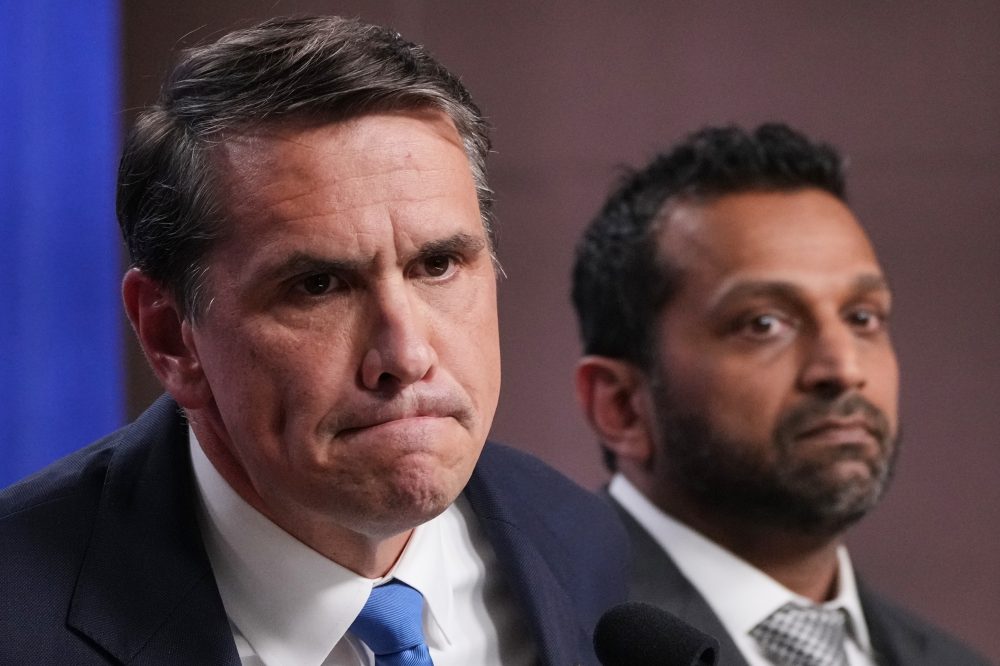
    Hamilton Fox, the Disciplinary Counsel who brought the charges, has requested a D.C. Court of Appeals panel determine appropriate disciplinary action. Martin has been given 20 days to submit a written response to the accusations. Neither Martin nor his legal representative responded to requests for comment.
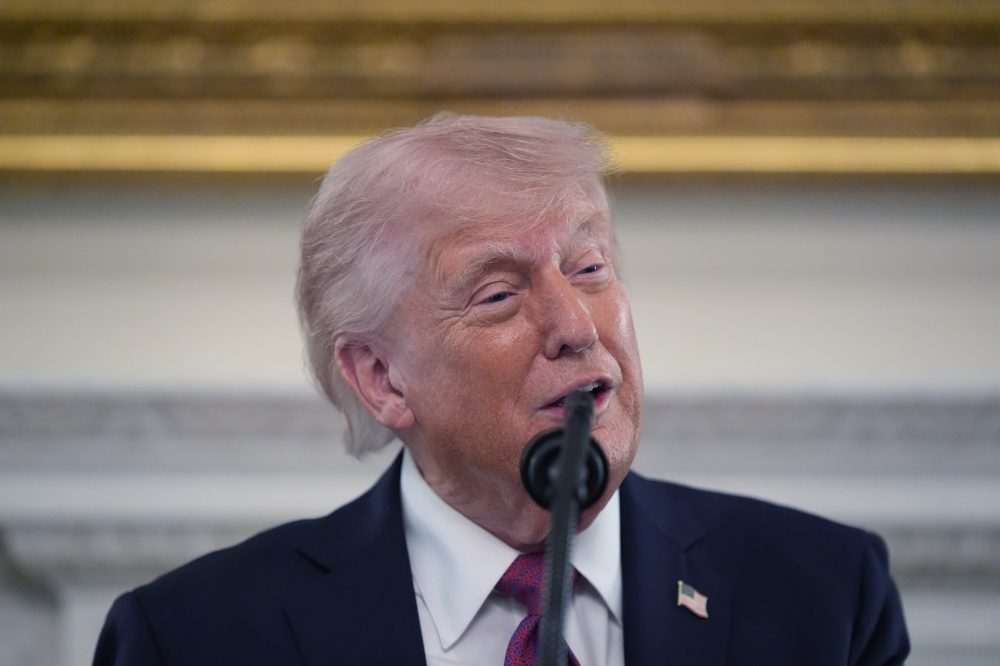
    The controversy stems from Martin’s February communication to Georgetown Law Dean William Treanor, in which he claimed a whistleblower reported that the school “continues to promote and teach DEI.” Martin’s action aligned with a Trump administration executive order targeting federal DEI programs.

    “This is unacceptable,” Martin stated in his correspondence, threatening to block all Georgetown students from consideration for employment opportunities, internships, or fellowships until the matter was addressed.

    Dean Treanor pushed back against Martin’s demands, citing First Amendment protections. “Given the First Amendment’s protection of a university’s freedom to determine its own curriculum and how to deliver it, the constitutional violation behind this threat is clear, as is the attack on the University’s mission as a Jesuit and Catholic institution,” Treanor responded.

    When Martin discovered the ethics investigation last year, he attempted to contact D.C. Court of Appeals judges directly, criticizing Fox’s “uneven behavior” and requesting a “face-to-face meeting with all of you to discuss this matter and find a way forward,” according to the disciplinary filing.

    Deputy Attorney General Todd Blanche defended Martin, characterizing the complaint as originating from “a blatantly Democrat-run political organization.” The Justice Department issued a statement claiming the charges represent “a partisan organization’s agenda” targeting Trump administration officials while overlooking ethical violations by attorneys who served under Democratic administrations.

    “Let us not forget that DC-barred members of Biden’s special counsel were found to have acted against President Trump without legal authority and in clear violation of the Constitution, yet the bar did nothing,” the department stated.

    Martin, a conservative activist without prosecutorial background, was selected by President Trump in January to head the country’s largest U.S. Attorney’s office. He had previously played a prominent role in Trump’s “Stop the Steal” movement following the 2020 election.

    Trump eventually withdrew Martin’s nomination for permanent appointment after a Republican senator opposed his confirmation due to Martin’s vocal support for January 6, 2021 Capitol protesters. In May, Trump nominated Fox News personality Jeanine Pirro to take over the U.S. Attorney position.

    While Martin continues in his role as pardon attorney, he was recently stripped of his leadership position in the Justice Department’s “Weaponization Working Group,” which examines federal prosecutions of Trump.

  • Pritzker’s Senate Pick Tests Governor’s Clout Ahead of 2028 Presidential Rumors

    Pritzker’s Senate Pick Tests Governor’s Clout Ahead of 2028 Presidential Rumors

    CHICAGO — An unusual opportunity for Illinois voters to choose a new U.S. senator has ignited a fierce contest among the state’s top three Democratic contenders.

    However, the Democratic primary to succeed retiring Senator Dick Durbin has transformed into a crucial political evaluation for another name appearing on Tuesday’s ballot: Governor JB Pritzker.

    The wealthy governor is endorsing Lieutenant Governor Juliana Stratton against two seasoned House representatives — Raja Krishnamoorthi and Robin Kelly. Pritzker has invested millions in Stratton’s campaign, joined her at senior center visits, and even featured in a profanity-laden television commercial targeting Trump. Yet Pritzker’s prominent involvement has generated complications, including pushback from influential Black Democratic leaders, doubts about the potential 2028 presidential hopeful’s sway, and voter concerns regarding his use of personal fortune.

    “Money should not have to be a factor into tipping the scales in the political arena,” stated Maria Pike, a Chicago anti-violence activist. Despite being a strong Pritzker supporter, she feels uncomfortable with the millions the governor, who faces no opposition in his own primary, has directed toward electing Stratton. She plans to vote for Kelly.

    Sixteen contenders have entered the race following Durbin’s retirement announcement after three decades as senator, where he serves as the Senate’s second-ranking Democrat.

    The Democratic primary victor among ten candidates is expected to secure victory in the solidly blue state this November. Illinois hasn’t elected a Republican senator since 2016, when Mark Kirk lost to Democrat Tammy Duckworth.

    The leading candidates include 52-year-old Krishnamoorthi, a five-term congressman who launched the first television advertisements in July. Krishnamoorthi demonstrates exceptional fundraising ability, collecting over $30 million from approximately mid-2025 through last month.

    He avoided direct comments about Pritzker’s involvement.

    “At the end of the day, voters will make their decision. They don’t want anyone else to decide for them,” Krishnamoorthi stated. “We’re on a good path. We just have to run down it as fast as we can.”

    Among all 2026 Senate contenders nationwide this election cycle, Krishnamoorthi ranked second in fundraising behind only Georgia Democrat Jon Ossoff, based on Federal Election Commission records.

    Kelly raised approximately $3.3 million during the same period, while Stratton collected about $4 million, both significantly trailing Krishnamoorthi.

    However, Pritzker contributed $5 million to a super PAC primarily focused on supporting Stratton’s election in December.

    While governors and prominent politicians commonly endorse candidates, primary involvement often generates divisions. Pritzker, inheritor of the Hyatt Hotels fortune, holds a unique position due to his wealth. He has served as the state party’s financial backbone for years, supporting numerous candidates both within Illinois and nationally.

    Yet no previous endorsement has been so directly connected to his personal career trajectory.

    Pritzker selected Stratton as his running mate in 2017, just months into her single legislative term. When discussing her major achievements, she highlights her support for Pritzker’s initiatives, including Illinois’ minimum wage increase.

    Stratton adopted an aggressive debate strategy, criticizing Krishnamoorthi’s voting history and funding sources so intensely that he joked about needing “body armor” during a televised January forum.

    Her debut television advertisement features voters and Senator Duckworth directing profanity at Trump. While Stratton and Pritzker don’t use the expletive, they appear together smiling.

    “It captured what so many people are feeling right now. Why are we playing around that these are normal times?” Stratton explained. “People are looking for fire.”

    She maintains that Pritzker’s backing presents no disadvantages.

    Others disagree with this assessment.

    The Congressional Black Caucus, which includes Kelly as a member, recently criticized his support.

    “Governor Pritzker’s effort to tip the scales in Illinois’ U.S. Senate race is beyond frustrating,” stated Representative Yvette Clarke of New York, the caucus leader. “A sitting governor shouldn’t be heavy-handing the race. Quite frankly, his behavior in this race won’t soon be forgotten by any of us.”

    Kelly, 69, clarified she didn’t request the statement.

    “They see what’s going and they feel like, a very qualified woman that’s running, is already there,” she said. “Just because you don’t have the most money, doesn’t mean that you haven’t done the most.”

    She referenced outgoing Governor Tim Walz, who hasn’t endorsed any candidate in Minnesota’s Senate race, where Lieutenant Governor Peggy Flanagan and Representative Angie Craig compete for the Democratic nomination.

    Kelly won her first election in 2013, campaigning on gun control messaging that connected with her district encompassing Chicago’s South Side, suburban areas, and rural regions. Through her people-over-profits platform, she has established herself as a progressive voice, including denouncing Israel’s Gaza operations as genocide.

    Chicago resident Kiyonna Mosely, 49, expressed trust in Pritzker but lacks familiarity with Stratton. She appreciates Kelly’s anti-gun violence record and finds her relatable.

    “She just kind of speaks my language when she is speaking, always straightforward,” Mosely said. “She’s experienced a lot of things I have, with being a Black woman.”

    Pritzker has justified his participation as proper. He said he understood the CBC’s position of “standing up for a friend of theirs.”

    “I’m working very hard to elect someone as our U.S. senator, a Black woman, who would be a member of the Congressional Black Caucus when she wins,” he told reporters last week in Springfield. “She has the best chance of being a great U.S. senator for us among the three Democrats in the running.”

    Some voters welcome his involvement.

    Pritzker receives credit for bringing governmental stability to Illinois, something voter Susan Stockman values. The 73-year-old retired suburban Chicago teacher plans to vote for Stratton partly because of Pritzker’s endorsement.

    “He’s done as great of a job as anybody can do,” she said. “I don’t think there’s any such thing as being too involved.”

    Tuesday’s election results will also indicate Pritzker’s political strength as his name surfaces in discussions about potential 2028 presidential candidates. Pritzker added over $25 million to his campaign treasury last year, generating speculation about broader political ambitions, though he remains evasive about presidential plans.

    Recently, Stratton has appeared more frequently at Pritzker’s official events. Thursday saw Pritzker campaigning for her through multiple senior living center visits on Chicago’s South Side. Already among Trump’s harshest critics, Pritzker told residents in one predominantly Black neighborhood that Stratton provides a fresh approach to challenging the president.

    “My partner in governance for seven years decided that it was time for her to go take this fight to Washington on my behalf,” he told residents.

    Candidates have also focused efforts on connecting with voters throughout the state. Stratton, 60, grew up in Chicago but claims her rural communities commission experience has established her recognition in downstate areas. Kelly emphasizes her Peoria connections, approximately 150 miles southwest of Chicago, where she attended college.

    Krishnamoorthi, born in India and raised in Peoria, says he has spent years cultivating support beyond his suburban Chicago district, engaging with residents on Medicare issues beginning in 2023 and securing endorsements from prominent downstate Democrats.

    This strategy appeals to 63-year-old Kimberly Beal, who resides in Kelly’s congressional district and attended Thursday’s Stratton event. She’s considering voting for Krishnamoorthi.

    “His boots on the group approach has been one I like,” she said. “He brings a no-nonsense appeal.”

  • Court Upholds Trump-Backed Missouri Redistricting Plan

    Court Upholds Trump-Backed Missouri Redistricting Plan

    JEFFERSON CITY, Mo. — A Missouri circuit court has upheld newly drawn congressional district boundaries endorsed by former President Donald Trump, designed to boost Republican chances of capturing another House seat in upcoming elections.

    Legal challengers argued the revised districts breached Missouri’s constitutional requirement for geographically compact boundaries. However, Jackson County Circuit Judge Adam Caine dismissed these arguments in his Thursday decision.

    While Republicans celebrated this legal win, additional court battles continue at the Missouri Supreme Court, where opponents argue that redrawing districts mid-decade violates the constitution. Critics have also gathered more than 300,000 petition signatures seeking to put the congressional map before voters statewide.

    Missouri represents one of multiple states where Trump has pushed for congressional boundary changes, seeking electoral advantages as Republicans work to maintain their slim House majority this November. Following Trump’s call for Texas redistricting, Democrats responded with their own map changes in California, sparking similar battles nationwide.

    The state’s current House delegation includes six Republicans and two Democrats under boundaries established in 2022 following the latest census. Initially, Republican legislators rejected proposals for a seven-seat Republican map, fearing it might spread the party too thin and create vulnerability during strong Democratic election cycles.

    However, White House pressure led Republicans to abandon these concerns last year, prioritizing partisan gains through district revision.

    The revised map, approved during September’s special legislative session, targets the Kansas City-area seat held by Democratic Representative Emanuel Cleaver. The plan shifts Kansas City portions into two neighboring Republican districts while extending Cleaver’s 5th Congressional District eastward into heavily Republican rural territory.

    Legal documents filed by challenging voters claimed the new boundaries “radically departs” from traditional patterns by dividing and elongating the 5th District, which previously centered more tightly around Kansas City.

    Republican Attorney General Catherine Hanaway’s legal team argued the updated map actually improves overall design. While acknowledging the 5th District’s reduced compactness, state lawyers maintained the statewide map achieves better compactness and reduces municipal splits across district lines. Judge Caine accepted this reasoning.

    The judge noted that challengers essentially argued against combining rural and urban voters within single districts. However, Caine referenced previous instances of such combinations, including maps used from 2012-2020 that merged Kansas City’s downtown core with eastern rural areas.

    “The decision of what municipalities to split is a political and policy determination that is properly left in the hands of the General Assembly and Missouri’s political processes,” Caine wrote.

    Organizations representing the challenging voters condemned the ruling but haven’t announced appeal plans.

    “If allowed to stand, it would represent a significant setback for fair representation in Missouri,” stated the American Civil Liberties Union and Campaign Legal Center jointly.