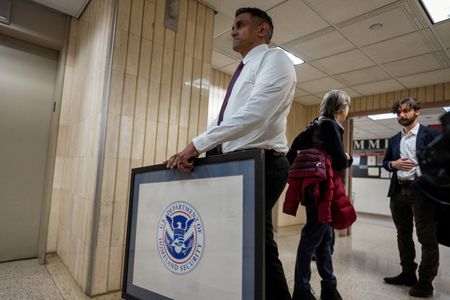

Federal immigration authorities have implemented new screening procedures that will examine applicants’ previous statements for what officials describe as extremist perspectives, prompting criticism from free speech advocates who fear constitutional violations.
The Department of Homeland Security confirmed Monday that immigration officials will conduct enhanced reviews of green card and naturalization candidates whose past comments raise red flags about their beliefs and values.
This announcement followed weekend reporting by the New York Times revealing internal documents showing the Trump administration’s new guidelines could result in green card denials for immigrants who participate in pro-Palestinian demonstrations, voice criticism of Israel, or engage in flag desecration.
U.S. Citizenship and Immigration Services spokesperson Zach Kahler explained the agency’s position: “Certain behaviors and statements may raise serious concerns for USCIS personnel reviewing an applicant’s file, including espousing terrorist ideologies, expressing hatred for American values, advocating for the violent overthrow of the United States government, or providing material support to terrorist organizations.”
“Such actions warrant closer scrutiny,” Kahler continued.
According to the Times report, federal training materials specifically highlight criticism of Israel as potentially problematic, pointing to social media content stating “Stop Israeli Terror in Palestine” alongside crossed-out Israeli flags as examples of concerning speech.
Immigration personnel received instructions to consider these expressions as “overwhelmingly negative” factors in their evaluations.
The policy has drawn sharp criticism from lawmakers and advocacy organizations who view it as government overreach.
Democratic Senator Chris Van Hollen challenged the approach on social media, writing: “Trump plans to deny legal residency in the U.S. based on whether he agrees with your speech. Since when did it become ‘anti-American’ to criticize the actions of a foreign government?”
Civil liberties organization Defending Rights and Dissent condemned the measures, stating: “This is an incredibly disturbing attack on free speech, with the government deciding who can enter the country based purely on their expression of political views.”
The current administration has intensified enforcement actions against pro-Palestinian activism through multiple channels, including deportation attempts against foreign demonstrators, funding threats to universities hosting protests, and increased monitoring of immigrants’ digital communications.
Last year, officials announced plans to screen immigration applications for what they termed “anti-Americanism” and antisemitism.
Administration officials maintain that pro-Palestinian movements promote antisemitic views and support extremist causes.
However, activists and some Jewish organizations argue that federal authorities incorrectly equate legitimate criticism of Israel’s Gaza military operations and Palestinian territory occupation with antisemitism, while treating Palestinian rights advocacy as extremist support.
One deportation case involved Tufts University graduate Rumeysa Ozturk, where authorities based their action solely on an editorial she co-wrote for the student newspaper criticizing the university’s response to Israel’s Gaza conflict.