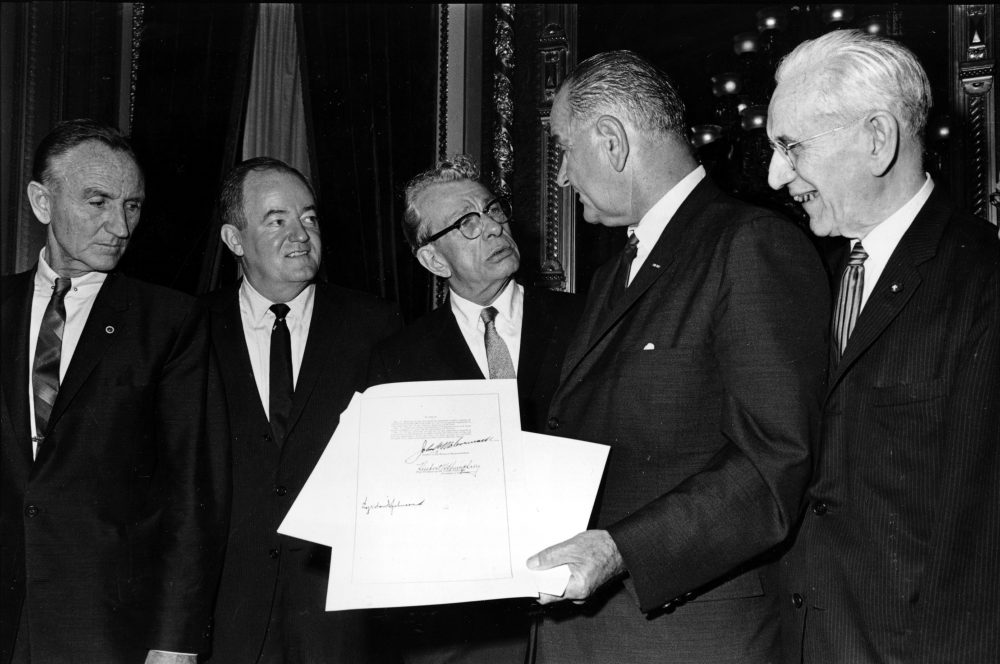
Lawmakers are moving forward with bipartisan legislation designed to protect disabled veterans from predatory companies following an investigative report by NPR.
The proposed bill would prohibit firms from utilizing automated dialing systems to collect personal information from veterans with disabilities. These companies have been charging veterans fees for assistance that federal officials say should be available without cost.
The legislation comes as a direct response to NPR’s investigation into what advocates are calling ‘claim sharks’ – businesses that target vulnerable disabled veterans through aggressive marketing tactics.
Under the proposed law, companies would be banned from using auto-dialing technology to harvest sensitive personal data from disabled veterans, a practice that has allowed these firms to profit from services the government provides free of charge.
The bipartisan nature of the bill suggests strong congressional support for cracking down on these exploitative business practices that have taken advantage of veterans seeking help with their disability claims.
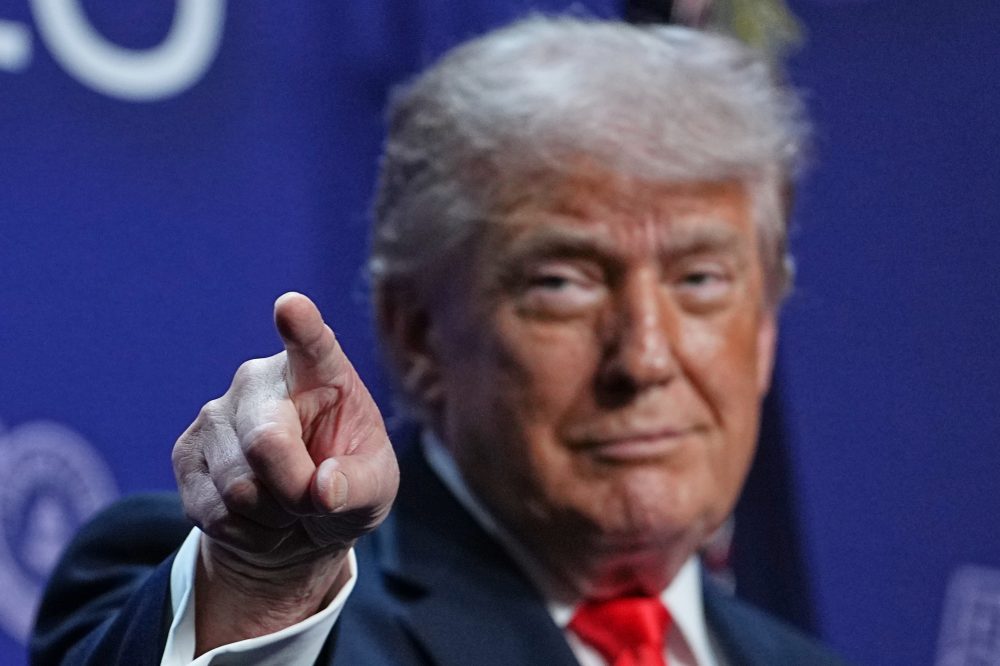
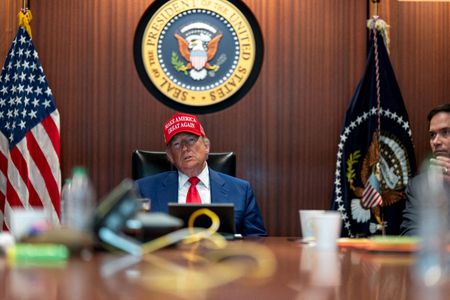
Former President Donald Trump has announced he is examining a fresh proposal from Iran, though details about the nature of the plan remain unclear.
In Louisiana, state legislators are working to redraw electoral district boundaries following a recent Supreme Court ruling that affected their previous maps. The redistricting process comes as lawmakers work to comply with the high court’s decision.
Political observers are also keeping a close eye on several competitive Senate races across the country that could significantly impact the balance of power in the upper chamber of Congress.
Residents of Selma, Alabama are sharing their perspectives on a recent Supreme Court ruling that significantly weakened core provisions of the Voting Rights Act.
The historic Alabama city holds special significance in voting rights history, as it was the site of the 1965 confrontation known as ‘Bloody Sunday’ that helped drive the creation of the landmark voting rights legislation.
Community members in Selma are now weighing in on how the high court’s decision has stripped away many of the law’s key safeguards that were born from their city’s pivotal role in the civil rights movement.
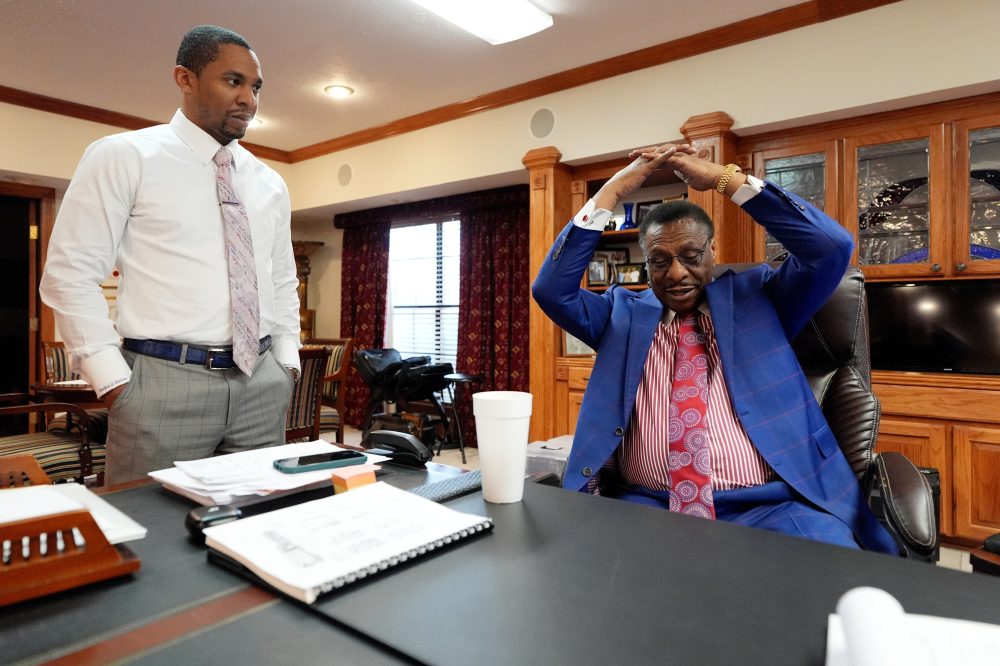
Standing near the Memphis museum that commemorates Dr. Martin Luther King Jr.’s assassination, Willie Simon expressed deep concerns about America’s political future following a major Supreme Court decision.
The ruling significantly weakened key protections in the Voting Rights Act, leaving Simon, who chairs the Shelby County Democratic Party in Tennessee, worried about the implications for minority voters and the nation’s democratic foundations.
“Not in the in-crowd group, they can just erase us,” Simon stated, describing what he sees as a dangerous precedent set by the court’s conservative justices.
The Supreme Court’s decision has removed important safeguards that previously required states to create congressional districts giving minority communities meaningful electoral influence. This change has intensified an already heated national battle over political map-drawing, with both major parties abandoning longstanding practices to gain competitive advantages.
Republican-controlled legislatures in multiple states are preparing new redistricting sessions this week aimed at eliminating House districts currently held by Democrats, with additional efforts planned in the coming months.
This development represents another escalation in the deterioration of American democratic norms that has accelerated over the past decade. Political discourse has grown increasingly hostile, incidents of political violence have risen, and efforts to undermine election integrity have persisted since the January 6th Capitol attack five years ago.
The traditional rules and customs that once helped manage the country’s deep divisions have been replaced by an all-out pursuit of political dominance.
“I’ve never subscribed to the idea we’re in a civil war, but the gerrymandering wars and the recent decision from the Supreme Court do not make the United States more united,” explained Matt Dallek, who studies politics at George Washington University. “It speeds up the hyperpartisan force and atmosphere that people feel on both sides.”
Former President Trump initiated the current redistricting battle last year by encouraging Republicans to redraw congressional boundaries to protect their House majority in upcoming midterm elections.
This represented an unusual departure from normal practice, as redistricting typically occurs only after the decennial census to reflect population changes. However, a 2019 Supreme Court ruling eliminated federal court oversight of partisan gerrymandering, creating an opportunity Trump chose to exploit.
When Republican states like Texas began altering their district boundaries, Democratic states such as California responded in kind. The conflict appeared headed toward a stalemate until the Supreme Court issued its anticipated decision in Louisiana v. Callais.
The ruling eliminated the final national barrier to extreme gerrymandering by weakening the Voting Rights Act provision requiring districts to be drawn so racial minorities can elect their preferred candidates in areas where voting patterns differ along racial lines.
This decision has unleashed new political possibilities.
Tennessee Republicans intend to eliminate their state’s sole Democratic congressional seat, which has a Black majority and centers on Memphis, by dividing it among more conservative suburban and rural white areas. Over a dozen other minority-majority districts, primarily in Southern states, face similar threats.
Louisiana has delayed its May 16th congressional primaries to allow time for redrawing two majority-Black Democratic seats that were previously protected. Alabama is seeking Supreme Court permission to redraw its two majority-Black districts.
“We should demand that State Legislatures do what the Supreme Court says must be done,” Trump posted on social media Sunday. “That is more important than administrative convenience.”
He predicted Republicans could gain 20 seats through redistricting efforts.
Democrats have responded with threats to target conservative strongholds in states like New York and Illinois, redistributing Republican voters into more liberal, urban districts.
With fewer legal or self-imposed restrictions, experts anticipate redistricting will become an ongoing competition to extract maximum political benefit from legislative maps.
“It’s hard to know where it ends,” said UCLA law professor Rick Hasen.
Political strategists have enthusiastically shared hypothetical maps showing California’s 54 House seats all drawn for Democrats, or Southern states with minimal Democratic representation. Most observers agree the eventual result will make it nearly impossible for Democrats to win House seats in Republican-controlled states, regardless of substantial Democratic voter populations, and vice versa.
This outcome contradicts American democratic principles, according to Jonathan Cervas, a Carnegie Mellon political scientist who has redrawn maps for courts reviewing redistricting cases. He noted the nation’s system “was founded on this idea that it’s majority rule with minority rights.”
“There is no more rule of law in redistricting,” Cervas observed. “There have to be some constraints, somewhere. Otherwise we don’t really have elections.”
Drawing legislative boundaries represents politicians’ most effective method for manipulating election outcomes. They can create virtually guaranteed victories by including enough of their supporters while limiting opposition voters’ ability to win that seat or adjacent districts.
This strategy has existed since the nation’s founding. Democratic gerrymandering helped maintain House control during the Reagan presidency. Following 2010 midterm victories, Republican state legislature majorities enabled the GOP to secure House control even during President Obama’s 2012 reelection.
However, this didn’t prevent the 2018 “blue wave” during Trump’s presidency, when Democrats reclaimed the House. This demonstrated that even aggressive partisan maps may suppress political shifts temporarily but eventually fail as public sentiment changes.
“When you try to get every last ounce of blood from the stone you can end up shooting yourself in the foot,” noted Michael Li from the liberal Brennan Center for Justice in New York.
Political alliances also evolve, and previously reliable voters can change allegiances. This has occurred during the Trump era, with Democrats gaining support among wealthy and suburban voters while Republicans have attracted more Black and Latino voters.
While Republicans cannot fully utilize the Supreme Court ruling’s impact until after November’s midterm elections, Democrats will struggle to identify enough seats to offset those losses.
Sean Trende, a political analyst who has created maps for Republicans, agreed the court decision will likely trigger unchecked partisan gerrymandering. He noted the difficulty of finding neutral parties to restrain politicians who draw boundaries for their own benefit.
The approaching conflict, Trende suggested, represents more of a polarization symptom than its underlying cause.
“All our institutions are broken. We don’t speak a common political language,” Trende explained. “This is what you get.”
MONTGOMERY, Ala. (AP) — GOP leaders in Alabama and Tennessee are calling emergency legislative sessions this week to redraw congressional boundaries following a recent U.S. Supreme Court decision that diminished key protections under the Voting Rights Act.
Alabama’s Republican Governor Kay Ivey has ordered state lawmakers to return to the capital beginning Monday to establish backup plans for emergency primary elections, hoping the nation’s highest court will permit the state to implement different congressional maps before November’s general election. GOP legislative leaders stated this strategy would “give our state a fighting chance to send seven Republican members to Congress.” Currently, Alabama’s seven-person congressional delegation includes two Democratic representatives.
Meanwhile in Tennessee, GOP Governor Bill Lee announced a special legislative session beginning Tuesday, where the Republican-dominated state legislature will work to dismantle the state’s sole Democratic-controlled House district, which encompasses Memphis, a city with a majority-Black population.
The high court’s decision eliminated a majority-Black congressional district in Louisiana, ruling that racial considerations played too significant a role in creating the district boundaries. This verdict has sent shockwaves through state capitols throughout the South, with Republican officials exploring opportunities to implement new district lines for either the 2026 midterm elections or by 2028 at the latest.
Former President Donald Trump promoted this latest wave of redistricting efforts through a social media message posted Sunday, claiming his party could secure 20 additional House seats.
“We should demand that State Legislatures do what the Supreme Court says must be done,” Trump wrote. “That is more important than administrative convenience.”
Florida enacted new districts on the same day as the Supreme Court ruling, while Louisiana quickly delayed its May 16 congressional primary, triggering legal challenges from Democrats and civil rights organizations. Louisiana’s Republican leadership began developing plans for redistricting that could eliminate one or both congressional districts currently held by Black representatives. South Carolina’s governor has indicated his state might also revisit its congressional boundaries.
Georgia Democratic Senator Raphael Warnock characterized the court’s decision and the subsequent redistricting rush as efforts to reverse progress made during the Civil Rights Movement.
“They said we’re going to allow partisan politicians to gerrymander you, so that even when you show up, your voice won’t have as much impact because we’ll play with the lines,” he stated Sunday while speaking at Ebenezer Baptist Church, where Martin Luther King Jr. previously served as pastor. “That isn’t a new method. That’s an old method. That’s a Jim Crow method.”
The Supreme Court’s ruling has intensified an already fierce nationwide redistricting fight by giving Republican officials in certain states additional justification for redrawing electoral boundaries.
Federal judges had previously mandated that Alabama utilize a court-approved map featuring a second district with significant Black voter representation. The same judges ordered Alabama to continue using this new map through the 2030 Census. Alabama is challenging that ruling and hopes the court will allow the state to return to a 2023 map created by state legislators, given the Louisiana decision.
“As I continue saying, Alabama knows our state, our people and our districts best,” Ivey stated.
Tennessee’s actions follow an intensive lobbying effort by Trump and fellow Republicans to restructure the state’s 9th Congressional District. Republicans have long been prevented by the Voting Rights Act from pursuing their goal of distributing the district’s Democratic voters among surrounding conservative districts to make it competitive, but the law may no longer present such obstacles.
“We owe it to Tennesseans to ensure our congressional districts accurately reflect the will of Tennessee voters,” Lee announced Friday. Trump encouraged this move, posting on social media Thursday that Lee had committed to working diligently to secure Republicans one additional seat.
Tennessee’s candidate filing deadline passed in March, with the primary election set for August 6. Democrats pointed out that in 2022, the state Supreme Court prevented additional redistricting because it occurred too close to an election. They believe the court represents their strongest option this time as well.
“We cannot keep doing things like this and calling ourselves a democracy,” Democratic State Senator Ramesh Akbari declared during a press conference held outside Memphis’s Civil Rights Museum.
Alabama Democrats also strongly condemned the decision to attempt map changes before upcoming elections.
“This special session is a blatant power grab by Republican leadership in Montgomery to eliminate seats held by Black Democrats,” said former Senator Doug Jones, who is running for Alabama governor as a Democrat.
Louisiana has postponed its May 16 congressional primary to provide lawmakers time to approve new U.S. House districts, though this decision faces court challenges.
Trump pressured Texas Republicans last year to redraw U.S. House districts for partisan advantage. California Democrats responded with similar actions, prompting other states to join the redistricting battle. Legislative bodies, commissions, or courts have implemented new House districts across eight states.
WASHINGTON — President Donald Trump’s commitment to reducing American military forces stationed in Germany is drawing fresh attention to the United States’ military role across Europe.
Between 80,000 and 100,000 American service members are typically stationed across the European continent, including more than 36,000 based in Germany. Following the Pentagon’s Friday announcement of plans to withdraw 5,000 German-based troops, Trump indicated the following day he intends to go “a lot further” with reductions.
America’s European military footprint dates back to World War II, when U.S. forces helped stabilize and reconstruct Europe, continuing through the Cold War era as a defense against Soviet expansion. In recent years, these deployments have become crucial for supporting operations across the Arctic, Africa and Middle East, including ongoing tensions with Iran.
However, Trump has departed from decades of bipartisan agreement, openly criticizing NATO allies in Europe and acting on previous threats to scale back America’s security commitment to the region. The latest announcement follows rising tensions with German Chancellor Friedrich Merz, who recently claimed the U.S. was being “humiliated” by Iran while questioning Washington’s strategic clarity.
The U.S. European Command, established in 1947 and called EUCOM, represents one of 11 combat commands under the Defense Department, spanning approximately 50 nations and territories.
Beyond Germany’s 36,000-plus troops, Italy houses over 12,000 American service members while the United Kingdom hosts another 10,000, based on December Pentagon data.
Pentagon officials have provided limited information regarding which specific troops or operations would face cuts under Friday’s announced reduction.
American forces in Europe expanded after Russia began its comprehensive invasion of Ukraine four years ago. NATO partners including Germany have anticipated for more than a year that these additional troops would be among the first to depart.
Beyond serving as a deterrent against Russia, America’s European military presence enables Washington to project influence worldwide.
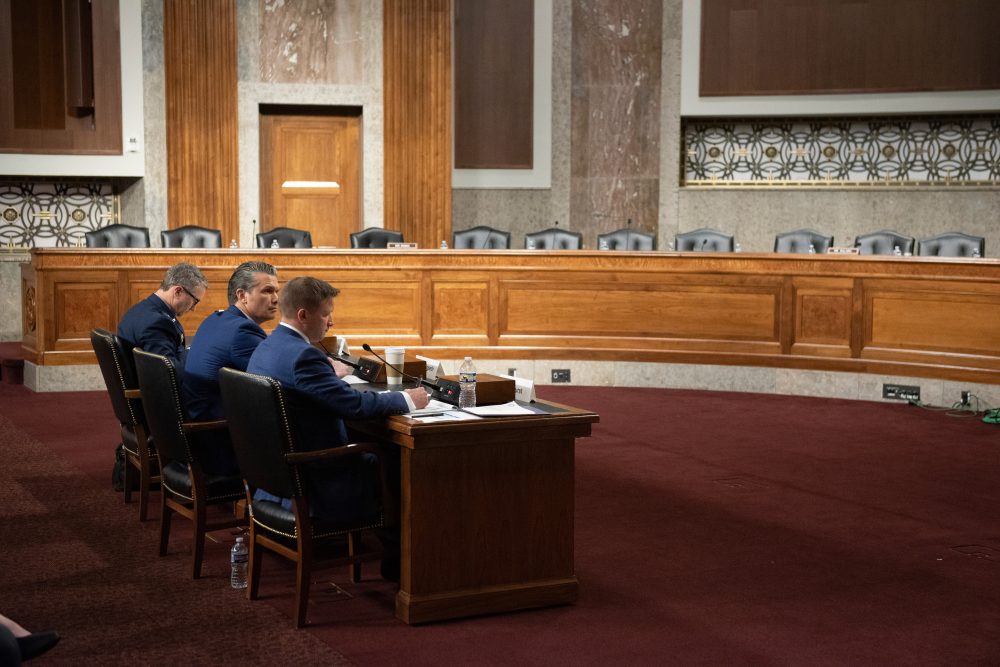
U.S. Gen. Alexus Grynkewich, who leads both American and NATO forces in Europe, emphasized the advantages of maintaining a substantial continental presence during March testimony before the Senate Armed Services Committee.
“It is having capabilities in Europe, munitions in Europe that allow us to help U.S. Africa Command to target terrorists in Africa, or to help U.S. Central Command as they execute Operation Epic Fury,” he explained to legislators, referencing the Iran conflict. “The distances are shorter, it’s less expensive and it’s much easier to project power.”
Germany houses headquarters for both U.S. European and Africa commands, along with Ramstein Air Base and Landstuhl medical facility, where wounded soldiers from Iraq and Afghanistan conflicts received treatment. American nuclear weapons are also positioned within German territory.
Approximately 100 U.S. nuclear weapons are deployed at European installations for aircraft delivery, according to March estimates from the Federation of American Scientists. The organization’s analysis indicates these weapons are located at facilities in Belgium, Germany, Italy, the Netherlands and Turkey, with possible placement at a United Kingdom base.
Before Trump’s Saturday remarks to media, Republican leaders from both congressional armed services committees voiced opposition to the Pentagon’s strategy, cautioning that premature European reductions would signal “the wrong message to Vladimir Putin” as Russia’s leader continues his Ukrainian campaign.
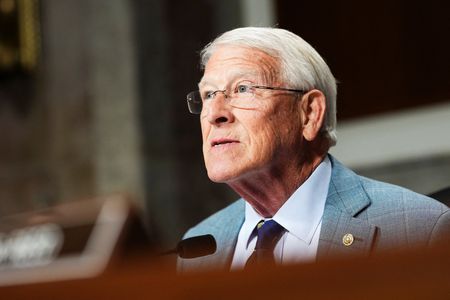
Mississippi Senator Roger Wicker and Alabama Representative Mike Rogers advocated for relocating troops to Eastern European installations rather than complete withdrawal.
The legislators also noted that allies have made “substantial investments to host U.S. troops.”
Wicker and Rogers revealed that following Friday’s announcement, the Pentagon has also chosen to halt the planned German deployment of a U.S. Army long-range fires battalion, which operates ground-based missile systems.
Within its January National Defense Strategy — a comprehensive document outlining approaches from Chinese deterrence to cyber defense to disrupting Iran’s nuclear programs — the administration declared Europe must increase its own defense efforts.
While “we are and will remain engaged in Europe, we must — and will — prioritize defending the U.S. Homeland and deterring China,” the strategy stated.
The document acknowledged that Europe’s economic influence, though relatively declining globally, remains substantial, noting Germany’s economy alone “dwarfs that of Russia.”
“Fortunately, our NATO allies are substantially more powerful than Russia — it is not even close,” the strategy observed, highlighting recent NATO commitments to increase national defense spending to 5% of GDP collectively, an initiative championed by Trump.
Germany has worked to modernize its historically underfunded military, known as the Bundeswehr, since Russia’s 2022 Ukrainian invasion. That year, officials established a 100 billion euro ($117 billion) special fund for Bundeswehr enhancement, with most resources dedicated to acquiring new equipment.
In late 2024, Merz’s administration revealed intentions to expand military personnel to 260,000, up from approximately 180,000 currently. During 2001, when Germany maintained conscription, total numbers reached 300,000 — over one-third being conscripts.
Berlin indicates it will require around 200,000 reservists, more than doubling present figures.
Defense Minister Boris Pistorius, speaking with German news agency dpa after Friday’s Pentagon announcement, recognized Europe’s need for greater security responsibility while noting Bundeswehr expansion, accelerated military procurement, and infrastructure development.
Former New York City Mayor Rudolph Giuliani is receiving hospital treatment in critical but stable condition, according to a statement from his representative released Sunday.
Ted Goodman, serving as Giuliani’s spokesperson, declined to reveal what medical issue led to the 81-year-old’s hospitalization or provide details about the duration of his stay.
“Mayor Giuliani is a fighter who has faced every challenge in his life with unwavering strength, and he’s fighting with that same level of strength as we speak,” Goodman stated through social media. The spokesperson emphasized that Giuliani “remains in critical but stable condition.”
Just Friday evening, Giuliani broadcast his web-based program “America’s Mayor Live” from Palm Beach, Florida.
During the opening of that broadcast, viewers could hear him coughing, and his voice appeared more hoarse than normal. He told his audience: “My voice is a little under the weather, so I won’t be able to speak as loudly as I usually do, but I’ll get closer to the microphone.”
Giuliani earned the nickname “America’s mayor” following his response to the September 11, 2001 terrorist attacks while leading New York City.
He subsequently worked as Trump’s personal legal counsel and became a prominent supporter of Trump’s claims regarding irregularities in the 2020 presidential election, which Joe Biden won. Trump and his supporters filed numerous legal challenges alleging misconduct, but these cases were unsuccessful, and multiple recounts and examinations of voting results found no evidence of substantial fraud or mistakes.
“Our fabulous Rudy Giuliani, a True Warrior, and the Best Mayor in the History of New York City, BY FAR, has been hospitalized, and is in critical condition,” Trump posted Sunday on his social media platform. “What a tragedy that he was treated so badly by the Radical Left Lunatics, Democrats ALL — AND HE WAS RIGHT ABOUT EVERYTHING! They cheated on the Elections, fabricated hundreds of stories, did anything possible to destroy our Nation, and now, look at Rudy. So sad!”
A pair of former Georgia election officials successfully obtained a $148 million defamation award against Giuliani. During their efforts to collect this judgment, the former federal prosecutor was held in contempt and faced potential trial regarding ownership of his possessions. He eventually reached an agreement allowing him to retain his residences and personal items, including treasured World Series championship rings, in return for undisclosed payments and an agreement to cease making negative statements about the former election officials.
In September, Giuliani required hospitalization following a motor vehicle accident in New Hampshire that resulted in a broken vertebra and additional injuries.
Giuliani won election as New York’s mayor in 1993 following his career as one of America’s most prominent prosecutors, pursuing organized crime figures and corrupt financial industry professionals.
He launched a campaign for the U.S. Senate in 2000 but withdrew from the race against Hillary Rodham Clinton following a prostate cancer diagnosis.
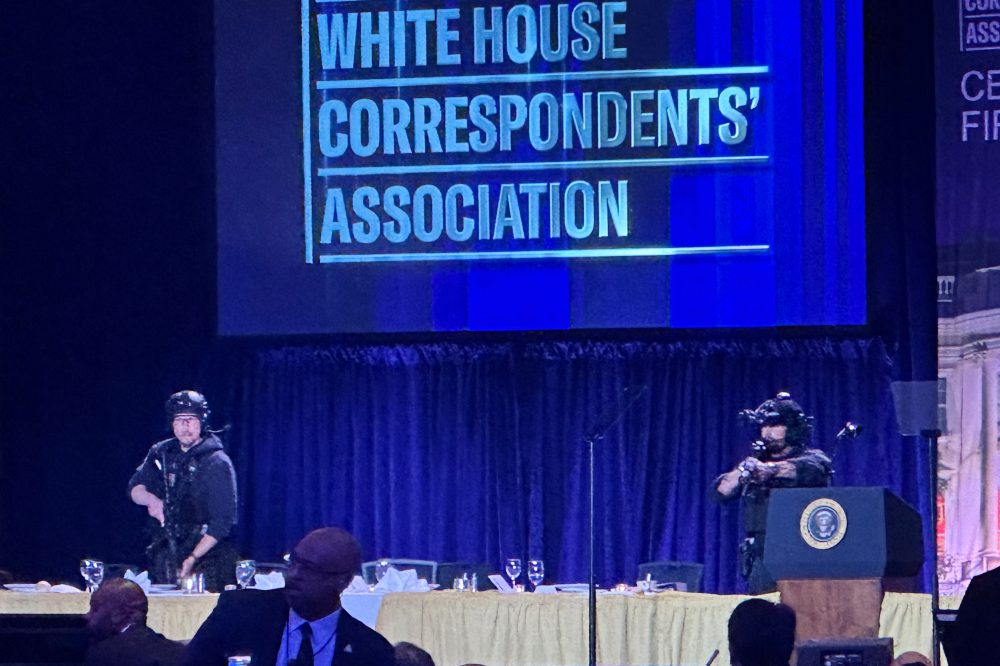
Federal authorities have discovered crucial physical evidence that directly connects a suspect to an attack during the White House Correspondents’ Dinner, according to a top prosecutor.
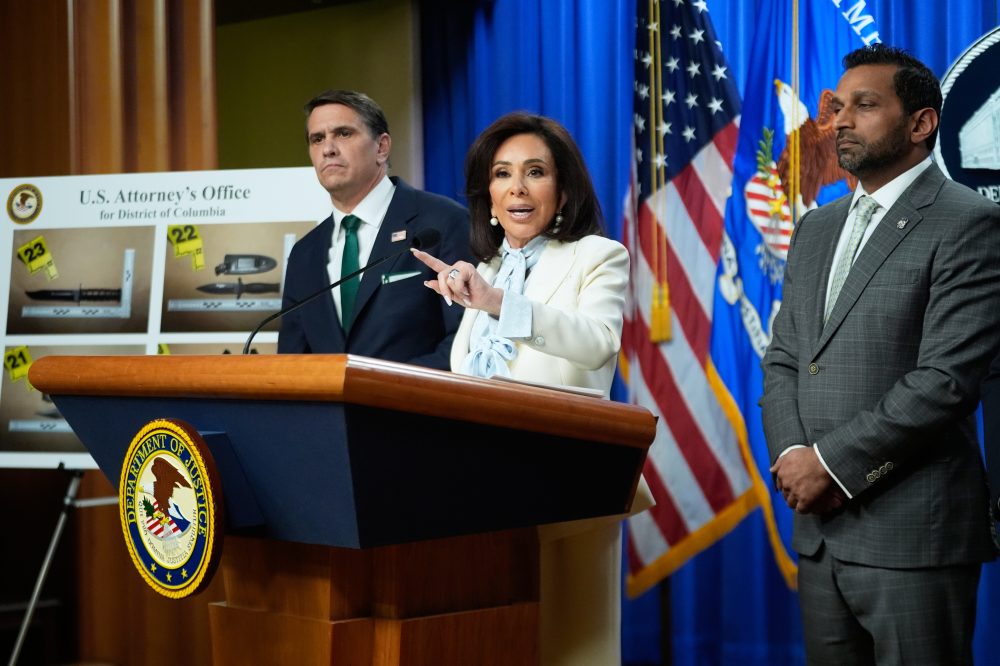
A projectile recovered from a Secret Service agent’s protective vest has provided investigators with concrete proof linking Cole Tomas Allen to the incident, U.S. Attorney for the District of Columbia Jeanine Pirro revealed during a CNN interview on Sunday.
Pirro stated that the recovered projectile “definitively” establishes Allen’s connection to the attack on the federal agent.
The discovery of this physical evidence represents a significant development in the ongoing investigation into the incident that occurred during the high-profile Washington D.C. event.
Federal investigators have confirmed that a Secret Service agent was wounded by pellets fired from the weapon of a man who tried to attack the White House Correspondents’ Association dinner with plans to assassinate President Donald Trump.
District of Columbia U.S. Attorney Jeanine Pirro revealed Sunday that forensic analysis proved the agent was struck by gunfire from Cole Tomas Allen’s shotgun during the April 25 incident at a Washington hotel. Previously, Pirro had only stated there was no indication of friendly fire hitting the officer.
“We now can establish that a pellet that came from the buckshot from the defendant’s Mossberg pump-action shotgun was intertwined with the fiber of the vest of the Secret Service officer,” Pirro explained during an appearance on CNN’s “State of the Union.” “It is definitively his bullet.”
Allen continues to be held in custody awaiting trial, while the wounded agent recovered from injuries. Allen sustained wounds during the confrontation but was not shot.
Earlier this week, Pirro released surveillance footage on social media that captured the moment when Allen allegedly rushed through security carrying firearms and knives, attempting to reach the ballroom filled with media members, government officials and other attendees. Uncertainty had surrounded which weapon fired the shot that injured the officer as Allen charged toward the event.
Defense attorneys for Allen did not respond to requests for comment Sunday.
The 31-year-old California resident from Torrance faces charges of attempted presidential assassination along with two additional weapons violations, including firing a gun during a violent crime. If found guilty on the assassination charge alone, Allen could receive a life sentence.
Court records show Allen worked part-time as a tutor for a test preparation business and developed video games as a hobby.
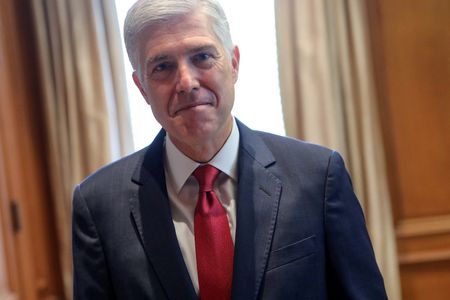
Supreme Court Justice Neil Gorsuch voiced concerns Sunday about ongoing leaks from the nation’s highest court, emphasizing that justices require space for honest deliberations away from public scrutiny.
During an appearance on Fox News Sunday, the conservative justice addressed recent unauthorized disclosures of internal court documents, including memos leaked to The New York Times last month regarding a 2016 decision that blocked former President Barack Obama’s Clean Power Plan.
“We want some transparency, but we also have to leave room for candid conversations and deliberations with one another,” said Gorsuch, who joined the court in 2017 after being nominated by former President Donald Trump.
The justice acknowledged the court provides transparency through publicly available audio recordings of oral arguments, but stressed the importance of private discussions among the nine members.
“But do we need time to actually talk quietly with one another, to find those places where we can reach agreement? Yeah, we do,” Gorsuch explained.
The leaked documents published by The New York Times focused on the court’s emergency docket, sometimes referred to as the “shadow” docket, which has been used frequently to grant quick rulings while cases proceed through lower courts.
The most significant leak in recent memory occurred in 2022 when Politico obtained and published a draft opinion weeks before the court officially released its decision overturning Roe v. Wade, the 1973 ruling that had established nationwide abortion rights.
When asked about how leaks affect public trust in the institution, Gorsuch pointed to the court’s published opinions as the definitive record of justices’ reasoning.
“Everything that I think about a case is there, on the printed page for anybody to read if they so choose,” he stated.
Unlike the court’s regular cases, which include detailed written opinions after months of deliberation, emergency docket decisions often come quickly with minimal explanation.
Gorsuch made these remarks while promoting his upcoming children’s book titled “Heroes of 1776: The Story of the Declaration of Independence,” which will be released Tuesday in conjunction with upcoming celebrations marking 250 years of American independence.
The conservative majority on the court, which includes Gorsuch, continues to shift American jurisprudence rightward. Just last week, the conservative justices weakened a crucial section of the Voting Rights Act, making it more difficult for minority groups to challenge electoral districts they believe are racially discriminatory.
The federal prosecutor who abandoned a criminal investigation into Federal Reserve Chairman Jerome Powell announced Sunday that the outcome of an internal Fed watchdog review will determine whether the matter continues or closes permanently.
U.S. Attorney Jeanine Pirro, who was appointed during the Trump administration, initiated the criminal probe against Powell in January but abandoned it last month following a federal judge’s decision to block Justice Department subpoenas related to the case.
During an appearance on CNN’s “State of the Union” program Sunday, Pirro discussed the Federal Reserve Office of Inspector General’s review of renovation cost overruns at the central bank’s Washington headquarters, stating: “If there’s something there, great – and if there isn’t, I’ll go home.”
Powell, who frequently faced criticism from Trump, had condemned the criminal probe as an attack on the Federal Reserve’s independence. Judge James Boasberg determined that prosecutors improperly issued subpoenas, ruling that a “mountain of evidence” indicated the investigation was designed to pressure Powell into cutting interest rates quickly or stepping down from his position.
After ending the criminal investigation, Pirro requested that the Inspector General review the cost overruns. The Inspector General had already begun examining the renovation project following Powell’s request for a review last year.
“The only way to find out what happened is through the Inspector General,” Pirro stated.
However, Pirro indicated her office plans to continue legal challenges, saying “we continue to litigate the issue, and we will litigate the issue” and “we’re going to make a motion to vacate the order” issued by Boasberg to establish precedent regarding investigations.
Since returning to office in January 2025, Trump has consistently pressured the Federal Reserve to reduce interest rates more aggressively and extensively than the central bank has implemented, despite ongoing inflation concerns.
The criminal investigation had threatened Senate confirmation of Kevin Warsh, Trump’s choice to succeed Powell when his leadership term concludes on May 15. Republican Senator Thom Tillis, who opposed the probe, had blocked Warsh’s confirmation until the investigation ended.
Pirro’s decision to end the probe and defer to the Inspector General has cleared the path for Warsh’s nomination to advance, with approval by the Republican-majority Senate appearing highly likely.
Also appearing on CNN’s “State of the Union,” Tillis praised Pirro’s statements and said her choice to pause further action while the internal watchdog conducts its review represents “the way this process is supposed to work.”
Should the Inspector General discover evidence of criminal conduct, Tillis said, “then we’ll talk about it. But I think this is a nice way of just ramping it down.”
Tillis also remarked that “at the end of the day, there was no crime committed – and prosecutors that I’ve spoken with all agree.”
During last Wednesday’s Federal Open Market Committee meeting, Powell announced he would remain as a Fed governor following the conclusion of his chairman term.
“I’m encouraged by recent developments, and I’m watching the remaining steps in this process carefully,” Powell commented.
The Trump administration has effectively stopped the development of wind energy projects across the United States, invoking national security justifications, according to a Financial Times report published Sunday.
The Pentagon is currently blocking approval for approximately 165 wind energy developments on privately-owned land, the Financial Times stated, referencing information from the American Clean Power Association and sources familiar with the situation.
The stalled developments encompass a range of projects at different stages – some were on the verge of receiving final approval, others were in active negotiations, and some would typically not fall under Pentagon review, the Financial Times noted.
Reuters was unable to immediately confirm these details.
Neither the American Clean Power Association nor the Pentagon provided immediate responses to Reuters’ requests for comment.
Beginning in August 2025, companies developing wind energy have encountered various obstacles, including unexpected silence from Pentagon officials, meeting cancellations without opportunities to reschedule, and notifications that their applications would no longer be reviewed, the Financial Times reported, citing individuals with direct knowledge of the circumstances.
According to the publication, correspondence sent to developers in early April indicated the Pentagon was conducting a comprehensive review of its procedures for assessing how energy projects might affect national security.
The current administration has previously been subject to legal challenges following similar suspensions of wind projects, where officials referenced newly classified national security threats related to radar system interference.
Wind energy companies have experienced ongoing disruptions during Trump’s presidency, as the president has publicly criticized wind turbines as unsightly, costly and ineffective.
Federal prosecutors have obtained physical evidence confirming that a Secret Service agent was wounded during what authorities describe as an assassination attempt targeting President Donald Trump at last weekend’s White House Correspondents’ Association dinner, according to U.S. Attorney Jeanine Pirro.
Speaking on CNN Sunday, Pirro disclosed that investigators discovered concrete proof of the shooting. “We now can establish that a pellet that came from the buckshot from the defendant’s Mossberg pump-action shotgun was intertwined with the fiber of the vest of the Secret Service officer,” Pirro stated during her television appearance.
The revelation provides the first detailed evidence about injuries sustained during the alleged attack on the president at the high-profile media event.
The White House confirms that President Trump is currently examining a fresh proposal from Iran designed to bring an end to ongoing military conflict between the nations.
In a separate development, the United States Supreme Court has issued a ruling that diminishes the strength of the historic Voting Rights Act of 1965, reducing key protections that have been in place for nearly six decades.
These two significant political developments come as the administration continues to navigate complex foreign policy challenges while domestic voting rights advocates express concern over the court’s latest decision.
WASHINGTON — President Donald Trump announced that the Pentagon will soon disclose previously classified UFO documents his administration has discovered, sparking both excitement and doubt as he teases potential revelations about extraterrestrial life.
The president began generating interest in extraterrestrial matters back in February when he instructed federal agencies to make public their files concerning alien life and UFOs. He has since maintained anticipation with enticing updates, promising the release of government documents never previously shared with the public.
“We’re going to be releasing a lot of things that we haven’t,” Trump stated Wednesday during a White House ceremony honoring NASA astronauts. “I think some of it’s going to be very interesting to people.”
The president has enjoyed positioning himself as the leader who reveals government secrets. During his first week back in office, he authorized the publication of files concerning the killings of President John F. Kennedy, Sen. Robert F. Kennedy and Martin Luther King Jr. Those releases contained little new information beyond what was already public knowledge.
Leading up to that disclosure, Trump declared “the American people deserve transparency and truth.” Now, as he focuses on aerial phenomena, the president has adopted a similar approach, hinting that answers to long-standing questions might be forthcoming. His February social media announcement called for openness regarding “alien and extraterrestrial life, unidentified aerial phenomena (UAP), and unidentified flying objects (UFOs).”
“The first releases will begin very, very soon,” he informed supporters in April during a Turning Point USA gathering in Phoenix. “So you can go out and see if that phenomena is correct. You’ll figure it out.”
Prior to Trump’s order, the Pentagon had already been engaged for years in declassifying and publishing government files about UFOs, now commonly called unexplained anomalous phenomena, or UAP.
Due to national security considerations, Congress established an office in 2022 to examine UAP and declassify as much information as possible. The office’s initial 2024 report documented hundreds of additional UAP incidents but discovered no proof that the U.S. government had ever verified a sighting of extraterrestrial technology. A follow-up report addressing more recent observations is anticipated shortly.
This agency, the All-domain Anomaly Resolution Office, is currently collaborating with the White House to publish “never-before-seen UAP information,” according to a Pentagon announcement.
However, the office’s former director dismissed Trump’s commitments as empty rhetoric, calling them a “shiny object” meant to divert Americans’ attention from the conflict with Iran. Sean Kirkpatrick, a physicist and former intelligence professional who headed the office until 2023, stated he has reviewed the government’s files and believes no shocking discoveries await.
“Readers should not get their hopes up that there’s going to be some document with photos, interviewing the aliens when they came down,” he explained. “Because that just doesn’t exist.”
Videos claiming to display alien technology typically have ordinary explanations, he noted. Contemporary infrared cameras employed by the U.S. military frequently capture jet engines and other heated objects in extended thermal blooms, which, Kirkpatrick explained, accounts for viral footage of fast-moving, capsule-shaped objects.
In Congress, these types of recordings have attracted attention from a small group of Trump-supporting Republicans who maintain the Pentagon is concealing secrets.
The Task Force on the Declassification of Federal Secrets has been pursuing its own inquiry into reports of unexplained aircraft near U.S. military facilities, which the committee claims threaten national security and military personnel.
Last autumn, the task force received testimony from active and former service members who described UAP encounters. In one instance, a senior Navy officer reported that while off California’s coast in 2023, he observed a glowing “Tic Tac” shaped object rise from the ocean and connect with three similar objects. They departed instantly, he testified.
Trump’s focus on this subject has motivated congressional Republicans, including Florida Rep. Anna Paulina Luna, an Air Force veteran who co-leads the task force. Luna has condemned what she terms “less than adequate” openness from the Pentagon.
In a March correspondence to Defense Secretary Pete Hegseth, Luna requested dozens of UAP videos identified by whistleblowers and given titles such as “Spherical UAP in clouds.” Her deadline for Hegseth passed without any videos being provided.
Trump’s involvement in the UFO discussion earned praise from Luna, who told podcaster Joe Rogan last year that she has witnessed evidence of “interdimensional beings.” The Pentagon “can’t hide from our docs request anymore!” Luna posted on social media following Trump’s directive.
Trump seems doubtful about extraterrestrial life’s existence. Speaking to the Turning Point USA audience in Phoenix, he remarked, “I figured this was a good crowd because I know you people, you’re really into that. I don’t know if I am.”
His reasoning for making this announcement at that particular event, held at a megachurch, remains unclear. The previous day, Trump had appeared in Las Vegas, near Area 51, a classified Cold War testing facility that has inspired UFO conspiracy theories.
Vice President JD Vance has characterized himself as “obsessed” with UFO documents. In March, he mentioned trying to find time to examine Area 51 since assuming office.
“I’ve still got three more years as vice president,” Vance told conservative podcaster Benny Johnson. “I will get to the bottom of the UFO files.” Referencing his Christian beliefs, Vance suggested that sightings attributed to aliens are actually manifestations of spiritual demons.
Even before Trump addressed this topic, extraterrestrial interest was already growing.
Hollywood has renewed its focus with an upcoming Steven Spielberg film, “Disclosure Day.” Former President Barack Obama created excitement in February when he stated on a podcast that aliens exist. He subsequently clarified that while he had seen no proof, “the odds are good there’s life out there.”
Trump isn’t the first president attracted to UFO mysteries. President Bill Clinton has mentioned ordering an examination of the Roswell Incident — something crashed in 1947 at a New Mexico ranch and authorities later claimed the debris came from a high-altitude weather balloon — around its 50th anniversary in 1997. Presidents Jimmy Carter and Ronald Reagan both claimed UFO sightings before entering the White House.
The U.S. government has been examining UFO reports since the 1940s, partly to assess whether they represent advanced technology from rival nations or “evidence of off-world technology,” according to the Defense Department’s 2024 report.
In online UFO communities, some view Trump’s commitment as progress; others expect it will lead nowhere. For dedicated followers of the subject, promises of major revelations have consistently failed to meet expectations, said Greg Eghigian, a Pennsylvania State University professor who authored a book about UFO sighting history.
“There is almost no satisfaction that is possible for many of the really die-hard folks,” he observed. “So in a sense, I think disappointment can almost be guaranteed to be expected no matter what comes out of this.”
Supreme Court Justice Clarence Thomas will achieve a historic milestone this week, securing his position as the second longest-serving justice in the nation’s history. The 77-year-old conservative has wielded considerable influence in steering the high court toward more conservative positions throughout his decades-long tenure.
Thomas joined the Supreme Court in October 1991 after President George H.W. Bush appointed him at just 43 years old to fill the seat left by liberal icon Thurgood Marshall. Marshall had broken barriers as the court’s first Black justice, while Thomas became the second following a heated Senate confirmation process.
According to the Supreme Court Historical Society, Thomas will surpass Justice Stephen J. Field’s tenure record on Monday, who served from 1863 to 1897. By Thursday, he’ll move ahead of his former colleague Justice John Paul Stevens, who sat on the bench from 1975 to 2010.
Should Thomas continue serving until May 20, 2028, he would break the all-time record currently held by Justice William O. Douglas, who served from 1939 to 1975.
Thomas has made an indelible mark on American jurisprudence, though his role has transformed significantly over the years.
“He began his time on the court often in dissent, and he stood his ground,” explained Haley Proctor, a Notre Dame law professor who previously clerked for Thomas.
“The justice’s influence on the law has been profound,” Proctor noted. “And that is a consequence, not only of his many years on the court, but also of his persistence.”
Thomas has been instrumental in helping the court’s current 6-3 conservative majority, established in 2020, take bold action. In June 2022, he authored a groundbreaking decision that expanded Second Amendment gun rights and joined his conservative colleagues in dismantling Roe v. Wade, the 1973 ruling that had protected abortion access nationwide.
His judicial philosophy has consistently favored broad religious freedom protections, opposed same-sex marriage, challenged affirmative action programs in education and employment, supported capital punishment and expansive executive authority, and reduced campaign finance regulations.
“Justice Thomas is the most radically conservative justice to serve on the Supreme Court in modern times,” stated Erwin Chemerinsky, dean of UC Berkeley School of Law. “I say this because in addition to being conservative he has taken positions that would dramatically change the law that the court never has accepted.”
Chemerinsky highlighted Thomas’s desire to overturn precedents protecting access to contraceptives and striking down laws criminalizing gay relationships. He also noted the justice’s opposition to press freedom protections and his criticism of requirements that states provide public defenders for indigent criminal defendants.
“In some areas, he succeeded in changing the law, such as the Second Amendment, overruling Roe v. Wade and ending affirmative action,” Chemerinsky observed. “But in most places his calls for a radical change in a conservative direction have not gained support from a majority of the court.”
Thomas has consistently supported former President Donald Trump’s policies when lower courts have blocked them. When the Supreme Court dealt Trump a rare defeat in February by rejecting his comprehensive tariff program, Thomas joined two other conservative justices in dissent, earning praise from the former president.
Ken Masugi, a scholar at the conservative Claremont Institute, noted that Thomas inspires deep loyalty among those who work with him, particularly former law clerks who have gone on to become federal judges. Masugi worked under Thomas at the Equal Employment Opportunity Commission before his Supreme Court appointment.
“One notices that his clerks are incredibly loyal to him, even the ones who disagree with him,” Masugi said. “That’s proof of the influence he has on the people within the court.”
Thomas was serving as a federal appeals court judge when Bush nominated him for the lifetime Supreme Court position. The Senate narrowly confirmed him 52-48 after a contentious battle that included sexual harassment allegations from law professor Anita Hill, a former EEOC colleague. Thomas denied the accusations.
Future President Joe Biden, then a Democratic senator, chaired the Senate Judiciary Committee during those hearings, which Thomas condemned as “a high-tech lynching for uppity Blacks.” He told senators: “It is a message that unless you kowtow to an old order … you will be lynched, destroyed, caricatured by a committee of the U.S. Senate rather than hung from a tree.”
Thomas continues to speak forcefully in public appearances. During an April 15 event at the University of Texas, he characterized progressivism as a political movement that threatens America’s foundational principles.
Thomas argued that progressivism “seeks to replace the basic premises of the Declaration of Independence, and hence our form of government. It holds that our rights and our dignities come not from God, but from government. It requires of the people a subservience and weakness incompatible with a Constitution premised on the transcendent origin of our rights.”
American University law professor Stephen Wermiel observed, “I understand that he’s a very gregarious guy and that people at the court like him, but he does often come across as sort of an angry, bitter justice. There are times when you feel like he’s still not over the Anita Hill episode, and still has a kind of simmering anger about that.”
While Bush’s other Supreme Court nominee, Justice David Souter, disappointed conservatives by moving leftward, Thomas became a conservative favorite, though sometimes overshadowed by his contemporary Justice Antonin Scalia, who died in 2016.
During his first complete term in 1992, Thomas joined a dissenting opinion arguing that states should decide abortion policy and that Roe v. Wade should be overturned. This marked the beginning of his willingness to challenge established precedents.
In 1995, Thomas authored a concurring opinion criticizing affirmative action initiatives, arguing they perpetuate beliefs that racial minorities need assistance to compete successfully.
These once-minority positions have now become Supreme Court law.
“If Thomas believes there were bad precedents set in the past, he doesn’t feel any fidelity to them,” explained Ralph Rossum, a Claremont McKenna College professor who authored a book about Thomas.
Thomas has also modified one notable habit. For nearly three decades, he rarely asked questions during oral arguments. This changed when the court shifted to telephone hearings during the 2020 COVID pandemic, and he has remained an active questioner since then.
At 77, with his 78th birthday approaching on June 23, Thomas has shown no signs of retirement plans. Trump, who could make a fourth Supreme Court appointment if any vacancy occurs, has expressed hope that Thomas and fellow conservative Justice Samuel Alito, 76, will continue serving.
“It’s hard for me to imagine that becoming the longest-serving justice is not of some importance to him,” Wermiel suggested.
Thomas has previously hinted at a lengthy tenure. During a 2019 appearance at Pepperdine University in California, when asked about potential retirement remarks in 20 years, Thomas responded simply.
“But I’m not retiring,” Thomas told the interviewer, who followed up: “Not in 20 years?”
A recent Supreme Court decision has opened the door for more aggressive political map-drawing that could further reduce the already historically low number of competitive congressional races this fall.
The court’s Wednesday ruling comes during an unprecedented national battle over congressional redistricting and may herald a new phase of blatant partisan gerrymandering that creates even fewer contested elections, diminishing voter influence, according to political experts.
The scarcity of contested races means House control will probably be decided in November’s midterm elections by less than 10% of Americans, with winners in most districts virtually guaranteed before any votes are counted, a Reuters analysis revealed.
According to the analysis, just 32 of the House’s 435 seats are presently viewed as competitive. These districts received ratings as toss-ups or leaning Democratic or Republican from three prominent independent forecasters: Cook Political Report, the University of Virginia’s Crystal Ball and Inside Elections.
The remaining districts are essentially unwinnable for the opposing party. Cook rates 375 seats—over 85% of the House—as either “Solid Republican” or “Solid Democrat,” indicating analysts don’t anticipate serious challenges. Cook labels another 28 races as “likely” Republican or Democratic, meaning they’re currently non-competitive but could shift under different circumstances.
This election cycle features the smallest number of competitive House contests at this point since at least 2008, based on archived Cook ratings.
Democrats require only three additional seats to secure a House majority, granting them authority to obstruct President Donald Trump’s legislative priorities and launch investigations into his administration.
The diminishing House battleground stems from multiple causes, including heightened political polarization. However, the strategic use of congressional redistricting, or gerrymandering—which intensified after Trump began urging Republicans to create new maps last year—represents a crucial factor that will only accelerate following the Supreme Court’s decision, experts indicate.
“We are now in a cycle of gerrymandering wars,” stated Justin Levitt, a Loyola Law School professor who operates the All About Redistricting website. “What used to be a cold war has gotten very hot.”
The court weakened a federal Voting Rights Act provision that previously prevented state legislatures from eliminating districts with predominantly racial minority populations. Political analysts anticipate Republican-controlled states will target a dozen or more Democratic-held majority-Black and majority-Latino seats that formerly had stronger protections.
“I think it gets worse before it gets better,” Levitt commented. “And I think there’s plenty of room for it to get worse.”
The shortage of competitive districts can impact Congress significantly, explained Matthew Klein, a House analyst with Cook. When House candidates only need to attract their base supporters to win rather than moderates or opposing party members, they’re more inclined to embrace extreme positions instead of seeking middle ground.
“If you look at Congress and how it acted 20 years ago, 30 years ago, even farther back, you see a Congress that is both less acrimonious and also more productive,” he noted. “There used to be bills that passed with huge majorities on major issues. We just don’t really see that anymore.”
While gerrymandering has existed throughout American democracy, the practice has intensified recently as both legal and institutional safeguards have disappeared. In 2019, the Supreme Court determined that although partisan gerrymandering might be undemocratic, federal courts couldn’t regulate it.
Last year, Trump successfully convinced Texas Republicans to abandon their existing map and create a new one targeting five Democratic incumbents, sparking a nationwide competition that expanded to nearly a dozen additional states. This action destroyed the traditional practice of limiting most redistricting to each decade’s beginning, following completion of the U.S. Census population count.
Wednesday’s Supreme Court ruling has provided lawmakers even greater freedom to draw districts favoring their party. These developments have occurred alongside technological improvements, enabling mapmakers to identify Democratic and Republican voters down to individual census blocks.
“If there are no guardrails, there are no guardrails,” Levitt observed. “I think the constraint is now realpolitik and imagination, not, ‘We just don’t do that.’”
Gerrymandering isn’t solely responsible for the lack of competitive districts. Voters have become more geographically separated, with rural areas becoming more conservative while suburban regions shifted left.
Just as House members have grown more polarized, voters have followed suit. Split-ticket voting, where voters select candidates from different parties for various offices, was once relatively common but has largely disappeared.
In 2000, 86 House members were elected from districts that voted for the opposing party’s presidential candidate, according to research by Kyle Kondik, Crystal Ball’s managing editor. In 2024, that figure dropped to 16.
Secretary of State Marco Rubio is planning a diplomatic visit to the Vatican and Italy this week, according to reports from two major Italian newspapers, as tensions simmer between President Donald Trump and Pope Leo following recent social media clashes.
Italian publications La Repubblica and Corriere della Sera reported Sunday that while it remains unclear if Rubio will have a direct audience with the pontiff, the Catholic Secretary of State is expected to sit down with Cardinal Pietro Parolin, who serves as the Vatican’s top diplomatic representative.
This upcoming visit follows Rubio’s previous encounter with Pope Leo in May 2025, when he and Vice President JD Vance attended the first American pope’s inaugural Mass at St. Peter’s Square and participated in a private audience with the religious leader the following day.
Pope Leo, who initially kept a relatively quiet presence on the world stage during his early papal months, has recently become more vocal in condemning the U.S.-Israeli military campaign against Iran and has strongly opposed the Trump administration’s strict immigration stance.
In April, Trump took to social media multiple times to criticize the pope, at one point describing Leo as “terrible.”
Neither the State Department, Vatican communications office, nor Italian government representatives immediately provided comments when asked about these travel reports.
According to the newspaper accounts, Rubio’s itinerary will also include discussions with Italy’s foreign and defense ministers, with the diplomatic mission focused on reducing friction between the two nations after Trump’s harsh public criticism of Italian Prime Minister Giorgia Meloni last month, despite her being among his strongest European supporters.
La Repubblica noted that while the visit’s agenda remains fluid, a potential meeting with Meloni has not been ruled out, and Corriere reported that scheduling details are still being finalized.
This diplomatic outreach occurs just days after the Pentagon’s Friday announcement of a 5,000-troop reduction from Germany, America’s largest European military installation, as disagreements over the Iran conflict and trade disputes continue to strain U.S.-European relationships.
Italy hosts one of Europe’s largest American military contingents, with nearly 13,000 active-duty personnel stationed across six bases as of late 2025.
WEST PALM BEACH, Florida – Former President Donald Trump suggested on Saturday that the United States might consider launching military strikes against Iran once again.
The former president made these remarks while addressing members of the media in West Palm Beach, Florida, responding to questions from reporters about potential military action.
Trump’s comments came during a May 2nd press interaction, though he did not elaborate on specific circumstances that might trigger such military intervention.
BOSTON – Legal counsel for the individual charged with attempting to kill President Donald Trump during the White House Correspondents’ Dinner has filed a motion requesting a federal judge lift his client’s suicide watch status at a Washington detention facility.
Cole Tomas Allen is accused of breaching a security perimeter and discharging a shotgun near the high-profile media event on April 25.
Upon his arrival at the detention center on April 27, Allen was placed in what officials term a “safe cell,” which court documents describe as a cushioned room requiring round-the-clock confinement and mandating the wearing of “a vest akin to a strait jacket.”
His conditions were later modified to “suicide precautions,” which continue to prohibit Allen from making telephone calls, receiving visitors other than his attorneys, or leaving his cell except for legal meetings or bathing under supervision, court filings indicate. Although a medical professional recommended Friday that these restrictions be lifted, they remained active during a recent visit from one of his court-appointed attorneys.
The defense filing argues that Allen’s current conditions “amounts to punishment” and prevents him from accessing resources including a facility tablet “which would permit him to communicate with loved ones outside of the jail.”
Federal prosecutors have charged Allen with attempted assassination, firing a weapon during a violent crime, and unlawfully moving firearms and ammunition between states. Allen has yet to formally respond to the charges.
In a recent NPR interview, Emily Feng sat down with historian Peter Canellos to examine the Supreme Court’s latest ruling on voting rights matters. The conversation focused particularly on the role Justice Samuel Alito played in shaping the court’s decision.
Canellos provided historical context and analysis of how the ruling may impact voting rights protections across the country. The interview explored Justice Alito’s judicial philosophy and his approach to interpreting voting rights legislation.
A pharmaceutical manufacturer has turned to the nation’s highest court for help after losing the ability to ship abortion medication through the mail.
On Saturday, Danco Laboratories submitted an emergency request to the U.S. Supreme Court, asking justices to halt an appeals court decision that suspended postal delivery of mifepristone, a medication used to terminate pregnancies.
The company is seeking to overturn the temporary restriction that prevents patients from receiving the abortion drug via mail order services.
Senior Republican legislators voiced opposition on Saturday to the Pentagon’s announcement that it would remove 5,000 American military personnel from Germany, a key NATO partner.
Senator Roger Wicker of Mississippi and Representative Mike Rogers of Alabama released a joint statement expressing their displeasure with the military drawdown decision. Both lawmakers serve as chairmen of their respective Armed Services Committees in the Senate and House.
“We are very concerned by the decision to withdraw a U.S. brigade from Germany,” the Republican leaders stated in their joint announcement.
The lawmakers issued their response one day following the Pentagon’s official announcement of the troop reduction, which military officials said would take between six months to one year to fully implement.
The decision follows recent diplomatic friction between President Donald Trump and German Chancellor Friedrich Merz. Earlier this week, Merz criticized American strategy regarding Iran negotiations, stating that Iranians were “humiliating the U.S. in talks to end the two-month-old war” and questioning Washington’s exit strategy approach.
According to Wicker and Rogers, any major adjustments to American military positioning in Europe requires proper consultation with both Congressional oversight committees and allied nations.
“We expect the Department to engage with its oversight committees in the days and weeks ahead on this decision and its implications for U.S. deterrence and transatlantic security,” the legislators declared in their statement.
The lawmakers warned that reducing American forces in Europe too quickly could send problematic messages to Russian President Vladimir Putin and weaken regional security. They noted that even if NATO member countries increase their defense budgets to 5% of their GDP, developing adequate military capabilities to handle conventional deterrence independently will require significant time.
The statement emphasized that premature cuts to U.S. forces in Europe “risks undermining deterrence and sending the wrong signal to Vladimir Putin.”
JACKSON, Miss. — Edward Blackmon Jr. was just 16 when police arrested him during a voting rights demonstration in his Mississippi community. Officers packed him and his fellow students into a former chicken transport truck, leaving them in sweltering heat before confining them to an overcrowded jail cell without beds for three days.
That experience shaped Blackmon’s future as a civil rights attorney and among the first Black legislators elected in Mississippi following Reconstruction.
Blackmon belonged to a generation of Black Americans throughout the South who battled in courts and on streets to tear down voting obstacles and secure political representation in an area marked by slavery’s legacy.
This week, the U.S. Supreme Court significantly weakened one of their greatest achievements — the Voting Rights Act. The court’s conservative justices ruled that states cannot use racial demographics as a primary factor in creating congressional districts, potentially reshaping how political influence is allocated and creating additional hurdles for minority candidates.
The majority decision characterized racism as historical. Critics viewed the ruling as evidence of its return — “a defibrillator to the heart of Jim Crow,” according to one Louisiana official.
Bradford Blackmon, Edward’s son and a 37-year-old Mississippi state senator, explained that district boundaries “shapes who has a real chance before anyone ever votes.”
“It’s just sad that we made progress and then they are always trying to roll it back when it shows that minorities are making more progress than I would guess that those in charge think that they’re allowed to make,” he stated.
The elder Blackmon, now 78, expressed acceptance that his generation’s battle continues.
“It’s just another cycle — an ongoing struggle without a foreseeable ending,” he commented.
The Supreme Court case examined Louisiana’s congressional map and established new limits on using the Voting Rights Act to challenge district boundaries that could diminish Black voters’ influence.
Many Black Americans viewed the ruling as devastating to a cornerstone of the Civil Rights Movement. Prior to the 1965 Voting Rights Act, Black voters in the Deep South lacked guaranteed equal ballot access. Within one year of enactment, over 250,000 Black Americans gained voting rights. By 2024, approximately 22 million Black voters were registered across the nation, according to Census Bureau data.
The country now faces the dismantling of nearly 100 years of organizing, peaceful resistance, and personal sacrifice by citizens who elevated Black political influence to levels not seen since Reconstruction. Movement veterans — individuals who suffered alongside John Lewis during the 1965 Selma march known as Bloody Sunday or demonstrated with Rev. Martin Luther King Jr. — are witnessing their hard-earned victories being stripped from future generations.
“I’m the first generation of Americans born with equal rights,” said Jonathan Jackson, a Democratic congressman from Illinois and 60-year-old son of civil rights leader Rev. Jesse Jackson. Jackson described the possibility of his children having fewer protections as “surreal and devastating.”
Charles Mauldin, who endured police beatings as a teenager on Bloody Sunday, believes the ruling reflects an unresolved conflict.
“I’m disappointed but not surprised,” said the 78-year-old Birmingham, Alabama resident. “They’ve been chipping away at the 1965 Voting Rights Act for the last 60 years.”
In Louisiana, younger Black politicians warn the Supreme Court decision could alter not only election winners but whether candidates can compete effectively, especially in local races that typically lead to higher offices.
Davante Lewis, a 34-year-old Democrat serving on the state utility regulatory board, anticipates districts being redrawn to disadvantage candidates like himself.
“They can target my communities … to ensure that I can’t get to an elected office,” said Lewis, who was among the plaintiffs in the original Louisiana redistricting case that reached the Supreme Court.
Jamie Davis, a Black farmer from northeast Louisiana running for U.S. Senate as a Democrat, worries the decision will discourage already skeptical voters.
“I want to be optimistic, but how can you be optimistic when voter turnout in the past election cycles has been really low,” Davis commented.
Tennessee expects new redistricting efforts following the ruling. State Rep. Justin Pearson, who represents Memphis and seeks a congressional seat, said Voting Rights Act supporters are “shocked and devastated that they’re having to relitigate the same fights that they fought 60 years ago.”
However, Pearson predicted attempts to reduce Black representation might “reinvigorate a civil rights movement in the South that demands equal representation, that demands fairness, that demands justice and equality.”
Those supporting the Supreme Court decision argue it promotes race-neutral redistricting, claiming political boundaries should not be drawn primarily on racial considerations.
Mississippi state Rep. Bryant Clark contends this perspective overlooks how race and party affiliation intersect in his state. With most Black voters supporting Democrats and most white voters backing Republicans, he argues the distinctions often blur.
“It’s just a roundabout way to basically legalize racially discriminatory redistricting in the state,” Clark explained.
His father, Robert Clark Jr., became Mississippi’s first Black legislator elected since Reconstruction in 1967.
Given that Black residents comprise roughly 38% of Mississippi’s population, Edward Blackmon Jr. noted current maps enable Black voters to elect representatives in certain districts while preserving Republican control elsewhere in the state.
He argued lawmakers have little motivation to alter this arrangement since redistributing Black voters across more districts would reduce conservative reliability and require candidates to appeal to diverse constituencies.
“Where do you think the population goes? They don’t just disappear,” Blackmon questioned. “What incumbent wants that type of district right now?”
Blackmon grew up in Canton during the height of Jim Crow segregation.
Black students attended segregated schools, and during cotton harvest season, classes ended early when makeshift trucks arrived to transport students to fields for hours of labor.
At home, he witnessed these inequalities in subtler forms.
His father, a World War II veteran who left the sharecropping farm where Blackmon’s grandfather labored, struggled to find stable employment in Mississippi after military service and civil rights involvement. He eventually relocated to New York for work — joining many Black veterans who faced barriers to jobs and opportunities available to white counterparts.
Blackmon recalls sitting nearby as his father and community leaders gathered on their porch, discussing plans for establishing a local NAACP chapter late into the evening.
“It was embedded in my memory and experience that it was worth the struggle,” he reflected.
The Voting Rights Act’s passage did not immediately transform these conditions. In communities like Canton, federal officials established voter registration stations on downtown streets, allowing Black residents to register without facing harassment from local authorities.
Subsequently, Blackmon and fellow attorneys utilized the law to challenge at-large election systems that prevented Black communities from choosing their preferred candidates. Cities and counties faced court orders to create single-member districts.
When these districts continued diluting Black voting power, activists returned to court.
“Without the Voting Rights Act, Mississippi would look so much different than it looks now,” Blackmon concluded.
WASHINGTON — President Donald Trump expressed openness to federal government ownership of Spirit Airlines, provided the arrangement could be framed as a profitable venture for what has become a growing collection of taxpayer-funded business investments.
However, the low-cost airline shut down operations Saturday following failed negotiations with an administration that increasingly views government as an active investor shaping America’s economic direction.
Despite Trump’s frequent criticism of Democrats and political rivals as communists — contrary to the free-market principles that helped establish America as a global superpower — he has embraced government ownership of certain production assets since returning to office.
Trump identifies opportunities in preserving established American brands like Intel while potentially generating profits for the federal treasury. The Republican president considers these investments essential for economic security and representative of his negotiation expertise, abandoning traditional GOP principles that government should avoid choosing market winners and losers.
Regarding Spirit, a financially struggling discount airline facing increased fuel expenses due to the Iran conflict, Trump informed reporters Friday that government would purchase company shares “only if it’s a good deal.” His opposition to a bailout stemmed from financial concerns rather than ideological objections.
“If we can help them, we will,” Trump stated. “But we have to come first.” Trump has not yet commented on the carrier’s closure.
He drew parallels to his earlier decision to acquire Intel shares. Trump has closely monitored the semiconductor company’s stock performance. “I’m very proud of that Company in that I am responsible for making the United States of America over 30 Billion Dollars in the last 90 days on that stock alone,” Trump wrote on social media recently.
Communist ideology maintains significant influence in nations like China, Vietnam, North Korea and Cuba, where governments play central roles in delivering goods and services. The philosophy has evolved from requiring government ownership of all property to systems where government might own or control major corporations.
In America, significant government intervention in private enterprise has been uncommon except during economic downturns. Trump advisors argue his interventions are essential to compete with China’s industrial strength, though the president has frequently connected corporate America to his administration.
He has utilized tariffs to encourage foreign investment and claimed control over spending decisions. The government maintains a “golden share” restricting Japan’s Nippon Steel’s actions after purchasing U.S. Steel. His administration negotiated an agreement taking a portion of computer chip sales to China by Nvidia and AMD.
During Trump’s tenure, the government has invested in rare earth minerals company MP Materials to challenge China’s dominance of metallic elements required for smartphones, automobiles and other technologies. Additional agreements include stakes in Lithium America, Trilogy Metals and Vulcan Elements, plus favorable financing for Westinghouse and ReElement Technologies.
The administration chose not to end government control of mortgage companies Fannie Mae and Freddie Mac. Trump claims they have increased in value because he retained ownership rather than privatizing the companies during his first presidency. “If I would have sold it, I would have felt like a schmuck,” he remarked Friday.
He maintains regular contact with CEOs through frequent phone conversations while demanding their support for his policies. He has instructed Walmart not to increase prices due to his tariffs and indicated he would favorably “remember” companies that decline seeking refunds after the Supreme Court declared his tariffs illegal.
Critics view Trump’s desire to fund and maintain ownership stakes in private businesses as reflecting an unchecked ego.
“This is entirely a reflection of a transactional-minded president who wants unilateral control of the economy,” stated Tad DeHaven, a policy analyst at the Cato Institute, a libertarian research organization. “At the end of the day, it is about power, it is about leverage and it is about control.”
Others recognize logic in competing against Chinese manufacturers that can operate without profit concerns, undermining factories in other developed nations and threatening America’s position as a military and technological leader.
The Intel investment represented “a strategic move, necessitated by the growth of China as an economic peer and rival,” said Sujai Shivakumar at the Center for Strategic and International Studies, a Washington research institute.
“The key point is that we should not sacrifice our national economic and industrial framework in the name of ‘free markets’ or other ideologies,” he explained. “Pragmatism, in various forms of industrial and innovation policy, have always been a feature of our economic system since the very beginning of our republic.”
Throughout the 2024 campaign, Trump characterized Democrat Joe Biden’s administration as communist and socialist.
“We will cast out the communists,” Trump declared during an April 13, 2024, Pennsylvania speech. “We will liberate our country from these tyrants and villains once and for all.”
Biden frequently emphasized his faith in free markets to benefit the middle class and believed raising corporate tax rates would achieve that goal. “I’m a capitalist,” he said during his final State of the Union address, stating he supported company profits. “That’s great — just pay your fair share in taxes,” he added.
The Biden administration provided loans and grants to semiconductor manufacturers and sought to maximize government’s role as a purchaser of American products. However, a crucial distinction was that investments were based on Congressional legislation.
Trump’s independent approach offers more flexibility, his White House contends, noting that funding for his investments comes from previously Congressional-approved sources.
Trump specifically converted loans and grants from Biden’s 2022 CHIPS and Science Act into an $11.1 billion Intel stock purchase. During his 2025 Congressional address, Trump called the CHIPS Act a “horrible, horrible thing” and suggested Republican majorities recover funding to reduce the budget deficit.
With Spirit Airlines in Chapter 11 bankruptcy, his administration had considered a $500 million agreement that would have provided government ownership in the Florida-based discount airline. Other budget carriers have expressed interest in similar arrangements.
This possibility prompted objections from Republicans including Senators Ted Cruz of Texas and Tom Cotton of Arkansas. Trump told Oval Office reporters he wanted to preserve Spirit Airlines jobs and that “when the prices of oil goes down, we’ll sell it for a profit.”
Government investment can help balance competition for American companies facing subsidized foreign competitors, said Monica Gorman, a managing director at Crowell Global Advisors who led manufacturing and industrial policy in the Biden White House.
However, Gorman questioned whether the Trump administration fully understood the risks of “making some bad bets.” She emphasized the importance of establishing formal processes through legislation rather than depending on Trump’s preferences.
“Congress really needs to step in and design a legislative framework for U.S. industrial policy that governs equity stakes as well as other mechanisms such as loans and grants,” she stated. “All of these are important tools in the U.S. industrial policy toolkit, but we need more guidance on when and how to use them.”
COLUMBUS, Ohio — Dr. Amy Acton, the Democratic candidate running without primary opposition for Ohio governor, confronts significant hurdles as she heads into the general election campaign.
The physician hopes to become the first Democrat to capture the governor’s mansion in two decades in a state where Republicans have gained political dominance. Her likely Republican challenger, Vivek Ramaswamy, brings national recognition and substantial personal wealth to fund his campaign efforts.
However, Acton’s greatest challenge may stem from her role during the COVID-19 health crisis.
As Ohio’s health department director when the coronavirus reached America in early 2020, Acton witnessed firsthand the devastating impact of deaths, public fear, and widespread disruption. Her aggressive governmental response to combat the virus made her a recognizable figure across Ohio.
Now, six years after those events, the emergency measures Acton implemented under Republican Governor Mike DeWine’s direction — including school shutdowns, business closures, sports event cancellations, and the postponement of the 2020 primary election — have resurfaced as major talking points for Republican critics targeting her gubernatorial bid.
At political gatherings, Ramaswamy has criticized Acton for promoting what he calls harmful “COVID ideology.” Acton’s team believes voters will reject such attacks.
Campaign spokesperson Addie Bullock stated: “Dr. Acton is proud of the work she did alongside Governor DeWine to put public health over politics, save lives and keep Ohioans safe. It is unfortunate that Vivek Ramaswamy wants to play politics on this issue.”
Dressed in her signature white physician’s coat, Acton became a familiar presence during the daily coronavirus updates with DeWine that captivated audiences statewide. She consistently delivered measured explanations about infection patterns, rising hospital admissions and fatalities, while offering practical guidance for residents.
“Ohio, don the mask, don your cape,” Acton urged at the time, encouraging citizens to embrace heroic actions.
The psychological wounds from the pandemic period remain unhealed throughout Ohio and beyond. The crisis fundamentally altered American perspectives on vaccination, government intervention in personal affairs, and confidence in public health authorities.
This underlying distrust, persisting despite reduced virus concerns, has become an unexpected element in the gubernatorial contest.
Ramaswamy, leading the Republican field, has launched advertisements exploiting continued resentment over Acton’s election directive issued for DeWine. Republican gatherings across Ohio now respond to Acton’s name with vocal disapproval.
“Are we choosing freedom or are we choosing Fauci?” questioned Zac Haines, a Republican state Senate candidate referencing former infectious disease specialist Anthony Fauci while energizing a recent Ramaswamy fundraiser audience. “Are we choosing liberty or are we choosing lockdowns?”
Among Democratic supporters, Acton maintains her status as a beloved figure who sparked the 2020 Dr. Amy Acton Fan Club, complete with lawn signs, collectible bobbleheads, and proposals for a commemorative state holiday.
During current campaign appearances, she appears cautious when referencing her tenure as Ohio’s top health official, occasionally avoiding direct mention of COVID-19 or coronavirus terminology.
“I had the honor and the privilege, the privilege, of serving in a very tough moment,” she addressed Democratic supporters in southwestern Ohio during March. “I’m proud of Ohioans, because together we flattened that curve, we saved a lot of lives.”
Federal Centers for Disease Control and Prevention statistics show Ohio achieved the 22nd-lowest per capita coronavirus death rate among all states during the pandemic’s initial year.
Acton, who departed her position in mid-2020, rarely discusses the aftermath of the restrictions: DeWine’s political backlash over business shutdowns and health requirements, Republican legislative efforts to curtail gubernatorial authority, and armed demonstrators who gathered outside her residence.
Speaking at a recent Columbus States Forum symposium designed to bridge political divides within the “Make America Healthy Again” movement, Acton highlighted her experience serving or advising five different governors.
“So I’ll work with anyone who wants to solve a problem rather than make one,” she declared, “which is what Ohioans are longing for.”
Despite endorsing Ramaswamy, DeWine criticized his campaign’s advertisement attacking Acton for postponing the 2020 primary.
“I told her to issue the health order,” he clarified. “The decision was mine.”
Both Ramaswamy and other prominent Republicans in this year’s elections maintain connections to Ohio’s pandemic management.
Leading Roivant Sciences, the biotech research firm he established in 2014, Ramaswamy “worked with the lieutenant governor as an adviser on COVID-19” throughout 2020, according to his 2021 editorial. The lieutenant governor then, Republican Jon Husted, currently serves as a U.S. senator seeking reelection and regularly joined Acton and DeWine during Ohio’s daily virus briefings.
A Roivant affiliate, Genevant Sciences, played a “fundamental role” according to a March announcement detailing a $2.2 billion settlement with Moderna regarding unauthorized use of Genevant’s and Arbutus Biopharma’s vaccine patents.
Throughout the pandemic, Ramaswamy, whose spouse practices medicine, endorsed vaccinations. He received immunization himself and promoted mask usage, though he maintained he never supported government mandates for either.
Ramaswamy’s company Datavant even advocated for a national COVID database enabling the small population segment developing natural coronavirus immunity to “get back to normal life” while others remained “segregated.”
Since launching his 2024 presidential campaign, Ramaswamy has worked to separate himself from that period. In early 2023, he left the Roivant board and removed references to his “COVID-19 Response Team” service from his Wikipedia profile, calling it a factual correction since the group never convened.
His campaign directed Roivant-related questions to the company, which failed to respond to email inquiries.
In discussions, Ramaswamy explained that both his COVID registry support and conversations with Husted focused on “getting the economy going again.” While describing his virus stance as “nuanced,” he pledged to challenge Acton regarding decisions to close Ohio businesses and schools and postpone the 2020 primary, ultimately conducted through mail voting.
“As a decision maker, you have to weigh the costs and benefits of your actions,” he stated. “You can’t be unmoored from the data.”
A federal appeals court has delivered the most significant blow to abortion access since Roe v. Wade was overturned, prohibiting the distribution of mifepristone abortion pills through mail services nationwide.
The 5th U.S. Circuit Court of Appeals in New Orleans issued the unanimous decision Friday, representing a major win for anti-abortion advocates who have worked to limit access to abortion medications prescribed through online consultations, which they believe circumvent state-level abortion prohibitions.
The decision, anticipated to reach the U.S. Supreme Court on appeal, mandates that mifepristone must be dispensed only through face-to-face visits at medical facilities, effectively overturning Food and Drug Administration guidelines.
Louisiana’s Attorney General Liz Murrill initiated legal action against the FDA last month, frustrated by insufficient federal measures against medication-based abortions. She argued that current FDA guidelines weakened Louisiana’s complete abortion prohibition.
Judge Kyle Duncan, a Trump appointee, stated in the decision: “The regulation creates an effective way for an out-of-state prescriber to place the drug in the hands of Louisianans in defiance of Louisiana law.”
While FDA representatives indicated the agency is reassessing mifepristone’s safety protocols, the appeals court observed no established deadline for completing this evaluation.
The Friday decision takes immediate effect during ongoing litigation and impacts every state, including those without abortion limitations.
Federal courts rarely overturn FDA scientific determinations, making the long-term implications for medication distribution uncertain.
Republican Murrill hailed the decision as a “victory for life,” while other abortion opponents praised the reversal of Biden administration policies that eliminated previous requirements for in-person physician consultations.
Neither FDA officials nor Justice Department representatives provided immediate responses to comment requests.
Danco Laboratories, which manufactures mifepristone and faces the lawsuit, requested the appeals court delay implementation for one week to allow time for Supreme Court intervention.
Approved in 2000, mifepristone provides a safe and effective method for ending early pregnancies. Healthcare providers typically combine it with misoprostol, a second medication unaffected by this ruling but less effective when used alone.
Research indicates that medication accounts for most U.S. abortions, with approximately 25% of procedures prescribed through telehealth services. Healthcare professionals suggest telehealth availability explains why abortion numbers haven’t decreased since the 2022 Roe reversal.
Consequently, abortion medications and out-of-state prescribing physicians have become primary targets for abortion opponents.
Several Democratic-controlled states have enacted protective legislation for providers who prescribe through telehealth and ship medications to states with prohibitions. These “shield laws” face testing through Louisiana and Texas court cases.
Dr. Angel Foster, who operates a telehealth service in a state with protective laws, consulted legal experts about the ruling’s impact on The Massachusetts Medication Abortion Project.
“We will do everything in our power to continue providing care to people in all 50 states,” she stated.
This case may elevate abortion as a central midterm election issue as Democrats seek House control while Republicans defend their slim majority.
Recent voting patterns suggest abortion-access supporters maintain political advantage. Following Roe’s overturn, abortion appeared on ballots in 17 states, with voters supporting abortion rights in 14 instances.
Fatima Goss Graves, who leads the National Women’s Law Center and supports abortion rights, criticized the ruling as “deeply out of step with both the public and fact-based science.”
Anti-abortion advocates criticized Trump following the ruling, expressing disappointment that he hadn’t personally blocked pill distribution.
Under Trump’s administration, the FDA approved an additional generic mifepristone version last year, disappointing some Republican allies.
Marjorie Dannenfelser, president of Susan B. Anthony Pro-Life America, said: “It’s shameful that the Trump administration’s inaction has forced pro-life states to take their battle to the federal courts,” while also praising the decision.
After enduring 28 years of wrongful imprisonment, an exonerated Louisiana man successfully won election to serve as New Orleans court clerk, only to see state legislators vote to eliminate the very position he had been chosen to fill.
The case highlights the ongoing challenges faced by those who have been cleared of crimes they never committed, even after achieving what appeared to be a significant personal and professional victory through the democratic process.
The U.S. Air Force has completed work on converting a donated Boeing 747 from Qatar into a temporary presidential aircraft, with plans to have the modified jet operational for President Trump by this summer.
Military officials say the extensive modifications and testing phase for the former Qatari aircraft has been finished, preparing it to serve as an interim Air Force One while other presidential aircraft undergo maintenance or upgrades.
The converted 747 represents a unique addition to the presidential fleet, having been gifted by Qatar specifically for this temporary role in transporting the nation’s chief executive.
WASHINGTON – After more than two months of military action against Iran, President Donald Trump confronts the possibility that an extended stalemate could create an even larger crisis than what existed before hostilities began.
Despite both nations expressing confidence in their positions, the gap between them remains vast, offering no clear path toward resolution. Iran recently submitted a new negotiation proposal, which Trump swiftly rejected on Friday.
The continuing deadlock presents serious political challenges for Trump and the Republican Party.
A prolonged conflict threatens to maintain global economic disruption, including elevated gasoline costs for Americans, adding pressure on Trump as his approval numbers decline and potentially damaging Republican chances in November’s congressional midterm elections.
OBJECTIVES REMAIN UNACHIEVED
The ongoing situation underscores a fundamental issue: the military campaign has not accomplished many of Trump’s declared objectives.
Although successive American and Israeli military strikes significantly damaged Iran’s armed forces, Trump’s frequently changing war aims – ranging from government overthrow to eliminating Iran’s nuclear weapons capability – have not been realized.
Concerns about an extended stalemate intensified after Trump canceled his negotiators’ planned visit to Islamabad last weekend and rejected Iran’s ceasefire offer, which has been in effect since April 8.
Iran’s proposal involved postponing nuclear program discussions until the conflict officially ends and an agreement is reached regarding the Strait of Hormuz reopening. Trump rejected this approach, insisting nuclear issues must be addressed immediately.
Hope briefly emerged Friday when Iran’s state news agency IRNA announced Tehran had submitted a revised proposal through Pakistani intermediaries, causing global oil prices to drop after sharp increases following Iran’s effective closure of the strait. Trump expressed dissatisfaction with the offer to reporters, though he acknowledged ongoing telephone communications.
Failing to regain control of the crucial oil shipping corridor would significantly damage Trump’s presidential legacy.
“He’d be remembered as the U.S. president who made the world less safe,” said Laura Blumenfeld, a Middle East expert at Johns Hopkins University in Washington.
White House spokeswoman Olivia Wales stated that Iran’s “desperation” is growing due to military and economic pressure, and Trump “holds all the cards and has all the time he needs to make the best deal.”
POTENTIAL FOR RENEWED FIGHTING
With unclear next steps and no apparent conclusion, Trump has privately discussed implementing an extended naval blockade against Iran, potentially lasting months, designed to further restrict oil exports and compel a nuclear disarmament agreement, according to a White House official speaking anonymously.
Simultaneously, he has kept military options available. U.S. Central Command has developed plans for a “short and powerful” strike series and for securing portions of the strait to restore shipping access, Axios reported Thursday.
European diplomats indicated their governments, whose relationships with Trump have been strained by the conflict, anticipate the current Iranian situation will continue.
“It’s hard to see how this will end soon,” said one diplomat, requesting anonymity.
Iran maintains its defiant stance.
The country has wielded significant influence against America and its allies, creating an unprecedented energy crisis by restricting shipping through the strait, which previously carried one-fifth of global oil supplies.
Experts believe Iran will gain confidence knowing this capability will remain available even after the conflict ends.
“Iran has realized that, even in a weakened state, it can shut off the Strait at will,” said Jon Alterman of the Center for Strategic and International Studies in Washington. “That knowledge leaves Iran stronger than it was before the war.”
NUCLEAR MATERIALS PERSIST
Trump – who campaigned on avoiding foreign military entanglements – has also failed to accomplish his primary stated objective when attacking Iran on February 28: eliminating its nuclear weapons potential.
Intelligence suggests highly enriched uranium stockpiles remain buried following American and Israeli airstrikes last June and could be retrieved and processed into weapons-grade material. Iran maintains it wants American recognition of its uranium enrichment rights for claimed peaceful purposes.
Wales, the White House spokeswoman, claimed Trump had “met or surpassed” all military goals, including action “to ensure that Iran can never have a nuclear weapon.”
Another declared war objective – stopping Iranian support for proxy organizations including Lebanon’s Hezbollah, Yemen’s Houthis and Palestinian Hamas – also remains unaccomplished.
Defense Secretary Pete Hegseth denied in congressional testimony that the conflict had become a “quagmire,” despite Trump’s initial prediction of a four-to-six week duration.
Future peace negotiations appear unlikely to produce rapid results given the substantial disagreements.
While Trump has insisted on accepting only comprehensive solutions to Iran’s threat, he has occasionally indicated interest in finding an exit strategy from the unpopular conflict.
At Trump aides’ request, intelligence agencies are examining how Iran might respond if he declared victory unilaterally and withdrew forces, according to U.S. officials speaking to Reuters.
Independent analysts suggest Tehran would view such action as its own strategic victory for surviving the military campaign.
Meanwhile, European and Gulf Arab diplomats worry Trump might eventually accept an inadequate agreement allowing a weakened Iran to remain threatening.
FROZEN CONFLICT POSSIBILITY
With negotiations stalled, some experts suggest the conflict could become a frozen dispute resisting permanent resolution. This scenario could prevent Trump from significantly reducing Middle Eastern military presence.
America is already experiencing new strategic consequences.
These include damaged relationships with traditional European allies, who were not consulted before Trump initiated hostilities.
He has severely criticized NATO partners for not deploying naval forces to help reopen the strait, and recently discussed potentially reducing troop levels in Germany, Spain and Italy.
Trump must also manage a more hardline Iranian leadership, controlled by the Islamic Revolutionary Guard Corps, which assumed power after American-Israeli strikes eliminated several officials, including Supreme Leader Ayatollah Ali Khamenei.
The president’s early conflict appeal for Iranians to overthrow their government has been ignored.
Domestically, Trump faces pressure to end a war that has driven his approval rating to his term’s lowest point – 34%, according to Reuters/Ipsos polling – and pushed gasoline prices above $4 per gallon before midterm elections where Republicans risk losing congressional control.
A second White House spokeswoman, Taylor Rogers, said Trump remained committed to maintaining his party’s congressional majority and that elevated gasoline prices represented only “short-term disruptions” that would improve as the conflict diminishes.
However, Iranians are aware of Trump’s domestic challenges and may be willing to wait, though questions remain about how long they can prevent economic collapse.
“Iran isn’t fractured or folding, it’s playing for time,” Sina Toossi, a senior fellow at the Center for International Policy think tank in Washington, wrote on X.
Federal judges nationwide have been sounding warnings about the Trump administration’s repeated failure to comply with their legal directives across hundreds of immigration cases, according to a comprehensive Associated Press investigation.
The AP’s examination of court documents reveals that Trump administration officials have compiled an unprecedented pattern of court order violations across numerous lawsuits that began during the opening weeks of President Donald Trump’s second term in office.
Beginning in February 2025, federal district judges have determined that the Republican administration violated court orders in no fewer than 31 separate lawsuits covering diverse policy areas such as federal funding reductions, widespread government layoffs, deportation procedures, and immigration enforcement policies.
These court order violations come on top of more than 250 documented cases of non-compliance that judges have recently identified in individual immigration proceedings, ranging from failure to return personal belongings to detaining immigrants beyond court-mandated release deadlines.
While Trump administration officials ultimately complied in approximately one-third of the 31 major cases, constitutional law experts warn that this pattern of disregarding judicial orders undermines the nation’s system of governmental checks and balances.
Georgetown University constitutional law professor David Super emphasized the gravity of the situation, stating: “The federal government should be the institution most devoted to the rule of law in this country. When it ceases to feel itself bound, respect for the rule of law is likely to break down across the country.”
The administration has already encountered more than 700 legal challenges since taking office.
The Associated Press conducted its research by analyzing hundreds of pages of court filings from cases identified by nonpartisan government oversight organizations. Additional cases were discovered through media coverage verification and subsequent court record examination.
While previous administrations have also faced court order violation findings from district judges, legal academics and former federal judges indicate they can remember only a handful of such instances during complete four-year presidential terms under recent presidents, including Trump’s first administration and the presidencies of Joe Biden and Barack Obama.
White House spokesperson Abigail Jackson defended the administration’s actions, claiming that district court judges were issuing “unlawful” decisions against Trump officials.
“President Trump’s entire Administration is lawfully implementing the America First agenda he was elected to enact,” Jackson stated in her written response.
Justice Department lawyers have consistently challenged allegations of government non-compliance through court filings. Their defense strategies have included disputing terminology interpretations, referencing supportive appellate court decisions, and arguing that their actions fell beyond the jurisdiction of specific court orders, among other legal tactics.
Beyond courtroom proceedings, Trump and White House officials have publicly criticized federal judges, with Vice President JD Vance even suggesting that the president might disregard judicial orders entirely.
The entities claiming harm from the administration’s failure to follow court directives represent a broad spectrum, including immigrants, nonprofit organizations, and media professionals.
Specific instances of non-compliance identified by judges include the White House’s defiance of court rulings when it sent dozens of alleged gang members to a high-security El Salvador prison, withheld billions in foreign assistance funding, and failed to reinstate Voice of America programming. These three cases occurred during the administration’s initial months, though judges have continued identifying violations through April, including two additional cases that month.
In 15 of the 31 lawsuits examined by the AP, either appellate courts or the Supreme Court permitted the administration’s core policy, restricted the district court’s ability to address or penalize the non-compliance, or implemented both measures.
Will Chamberlain, senior legal counsel with the conservative advocacy organization The Article III Project, argues these higher court decisions demonstrate that lower court judges are exceeding their authority.
Trump officials are “generally complying, appealing and winning,” Chamberlain explained. “If they were defying orders left and right, they’d be losing them.”
However, critics contend that higher courts are overlooking non-compliance issues.
Supreme Court Associate Justice Sonia Sotomayor wrote in a June dissent, joined by the court’s two other liberal justices: “This is not the first time the Court closes its eyes to noncompliance, nor, I fear, will it be the last. Yet each time this Court rewards noncompliance with discretionary relief, it further erodes respect for courts and for the rule of law.”
Federal judges across the country are expressing frustration with what they describe as an unprecedented pattern of Trump administration officials disregarding court rulings during the president’s second term.
The issue came to a head last December when a federal judge struck down the administration’s policy of detaining immigrants indefinitely without bail hearings. Despite the ruling, a senior Justice Department official declared the decision non-binding, and officials continued refusing release opportunities for detainees nationwide.
By February, District Judge Sunshine Sykes had reached her breaking point. The Biden-appointed judge accused Trump officials of attempting “to erode any semblance of separation of powers,” stating they could “only do so in a world where the Constitution does not exist.”
This immigration case represents part of a much larger trend, according to an Associated Press analysis of court documents. During the administration’s first 15 months, federal district judges determined officials violated their orders in no fewer than 31 policy-related cases covering mass layoffs, deportations, budget reductions, and immigration procedures.
This violation rate equals roughly one out of every eight cases where courts have issued temporary blocks against administration actions. The White House’s aggressive policy implementation has triggered more than 700 lawsuits to date.
Beyond these 31 policy cases, judges have identified over 250 additional instances of non-compliance in individual immigration petitions, including failures to return personal property and keeping immigrants detained beyond court-mandated release dates.
Legal experts and former federal judges say they can remember only a handful of similar violations across entire four-year terms of previous administrations, including Trump’s first presidency. They note that past administrations typically expressed regret when confronted by judges, while the current Justice Department has adopted a confrontational stance.
“What the court system is experiencing in the last year and a half is just qualitatively completely different from anything that’s preceded it,” stated Ryan Goodman, a New York University law professor who monitors federal courts and tracks Trump administration litigation.
While Trump officials eventually complied in approximately one-third of the 31 cases, legal scholars warn their approach to court orders creates serious risks.
“The federal government should be the institution most devoted to the rule of law in this country,” explained David Super, a Georgetown University constitutional law expert. “When it ceases to feel itself bound, respect for the rule of law is likely to break down across the country.”
The AP investigation revealed that higher courts, including the Supreme Court, reversed district court decisions and supported the White House in nearly half of the 31 cases. Critics argue these reversals are encouraging the administration to disregard judicial orders.
White House spokesperson Abigail Jackson said higher courts had reversed “unlawful district court rulings.” The administration will “continue to comply with lawful court rulings,” she stated in a written response.
“President Trump’s entire Administration is lawfully implementing the America First agenda he was elected to enact,” the statement declared.
Additional violations identified by judges include the administration deporting dozens of alleged gang members to a dangerous El Salvador prison, withholding billions in foreign assistance, and failing to reinstate Voice of America programming. These three incidents occurred during the administration’s initial months, but judges have continued finding violations, including two cases in April.
“The danger is that this gets normalized,” warned JoAnna Suriani, an attorney with the nonpartisan organization Protect Democracy, which monitors non-compliance cases and participates in administration litigation.
Last October, U.S. District Judge William Smith, appointed by George W. Bush, quickly determined Homeland Security officials were defying his directive. Smith had prevented them from making billions in state disaster relief funding dependent on cooperation with presidential immigration objectives.
DHS responded by maintaining the immigration requirement on certain grants while making it conditional on a higher court overturning Smith’s injunction. The judge labeled the action “ham-handed” and accused DHS of attempting to “bully the states.”
In litigation over refugee admission suspensions, U.S. District Judge Jamal Whitehead, a Biden appointee, accused the Justice Department last May of “hallucinating new text” in an appellate ruling and “rewriting” it to achieve the government’s desired result.
In four additional cases reviewed by the AP, judges criticized the administration’s response to their orders without making explicit non-compliance findings.
Among judges who confirmed violations, 22 were Democratic appointees and 7 were Republican appointees.
Former federal judges Jeremy Fogel and Liam O’Grady said judges are losing confidence in Justice Department integrity.
This is making them “more aggressive in accusing the government of bad faith,” explained O’Grady, who along with Fogel now works with the nonpartisan democracy organization Keep Our Republic.
Fogel noted judicial frustration is mounting.
“They make orders and the orders don’t get complied with and then they have to inquire why the orders are not being complied with, and that’s where it gets very mushy and very political,” he said.
In Eureka, California, school administrator Lisa Claussen worries about student mental health impacts if a judge doesn’t find the Education Department violated a court order regarding federal grants.
Grant funding enabled the school district in the economically disadvantaged Northern California coastal community to employ more than a dozen psychologists and social workers helping students with substance abuse and suicide prevention.
Trump administration Education officials informed California and other state schools last year they were terminating the grants, opposing diversity considerations in grant allocation.
U.S. District Judge Kymberly Evanson permanently blocked the action in December, but California and 15 additional states claim the administration is circumventing her injunction through new regulations, including an initial six-month funding limitation.
Education Department lawyers said they wanted to evaluate school progress on performance objectives before releasing additional funding. They added in court documents that the judge’s order didn’t prohibit the six-month restriction.
Evanson, a Biden nominee, hasn’t yet decided.
Without one-year funding guarantees, Eureka City Schools and other districts report they’ve already issued layoff notices to mental health staff or eliminated positions entirely.
“We have many kids who don’t trust adults for very good reason and to be able to just swipe this grant like they’re doing…” Claussen said during a phone conversation, her voice fading. “We didn’t do anything wrong.”
In court documents, Justice Department attorneys have typically disputed government non-compliance allegations. They’ve debated word meanings, referenced favorable appellate decisions, and claimed they were operating beyond court order scope, among other legal strategies.
Outside courtrooms, Trump and White House officials have criticized federal judges. Vice President JD Vance has even suggested the president might disregard court orders.
Will Chamberlain, senior attorney with the conservative legal advocacy organization The Article III Project, said many judges finding violations are ignoring laws that clearly prevent their rulings.
Trump officials are “generally complying, appealing and winning,” he stated. “If they were defying orders left and right, they’d be losing them.”
In March, a federal appeals court determined Sykes, the California judge, had likely overstepped her authority in mandating bond hearings nationwide and blocked her February ruling.
This outcome wasn’t uncommon.
In 15 of the 31 lawsuits the AP examined, an appellate court or Supreme Court either permitted the administration’s underlying policy, restricted the district court’s ability to address or penalize non-compliance, or both.
Supreme Court Associate Justice Sonia Sotomayor criticized her colleagues following one such decision.
“This is not the first time the Court closes its eyes to noncompliance, nor, I fear, will it be the last,” she wrote in a June dissent joined by the court’s two other liberal justices. “Yet each time this Court rewards noncompliance with discretionary relief, it further erodes respect for courts and for the rule of law.”
Federal emergency officials have started contacting disaster response workers who lost their positions in January to offer them new employment opportunities, according to court documents filed Friday evening. The reversal comes after unions, scientific organizations, and local governments challenged the Trump administration’s controversial staffing decisions in federal court.
U.S. Attorney Craig H. Missakian notified the U.S. District Court in San Francisco that FEMA has “initiated contact to offer new appointments” to temporary employees whose employment ended during the first three weeks of January.
This development follows months of confusion surrounding the fate of FEMA’s temporary disaster response workers, who comprise approximately half of the agency’s total workforce. The announcement also comes after news emerged earlier this week that FEMA had brought back 14 workers who spent eight months on paid administrative leave after they publicly criticized policies at FEMA and the Department of Homeland Security.
These recent moves suggest that current Homeland Security Secretary Markwayne Mullin is shifting away from the more aggressive personnel policies implemented by former DHS leader Kristi Noem before her dismissal. The changes also spark questions about whether officials are concerned about the agency’s readiness for the upcoming Atlantic hurricane season and major events such as the FIFA World Cup.
FEMA officials declined to provide immediate comment Friday regarding the court filing or specify how many workers received return offers. However, on Thursday an agency representative stated that while FEMA doesn’t discuss specific personnel matters, the organization is “addressing outstanding personnel actions to ensure workforce stability and a strong, deployable surge force for upcoming national events and potential disasters.”
The affected workers belong to FEMA’s Cadre of On-Call Response/Recovery Employees, known as CORE, who typically serve two- to four-year terms that have historically been renewed regularly. This flexible system enables the agency to expand and contract its workforce based on operational needs. Approximately 10,000 CORE employees work for the agency, with current and former staff members telling the Associated Press that workers often remain in these temporary roles for decades or until retirement.
FEMA suddenly ceased renewing certain CORE contracts when they expired at the beginning of 2026, while extending others for just 90-day periods. The agency halted these non-renewals in late January, just before a major winter storm affected several states. At that point, 159 CORE workers had lost their positions, according to testimony from FEMA’s interim director, Karen S. Evans.
The American Federation of Government Employees led a legal challenge against the administration’s non-renewal decisions, claiming they were part of a broader strategy to reduce FEMA’s workforce by 50 percent and violated FEMA’s congressional responsibility to maintain national disaster readiness.
In her sworn statement, Evans rejected claims of any “blanket” CORE elimination plan and argued that the non-renewals “do not threaten FEMA’s ability to perform its statutory mandate.”
The impact of FEMA’s latest decision on the ongoing legal case remains uncertain. Attorneys representing the plaintiffs stated Friday evening they would respond “after proper factual investigation.” Legal representatives for the plaintiffs are set to question former DHS Deputy Chief of Staff Joseph Guy next week as part of their investigation into the decision-making process behind the CORE dismissals.
One FEMA worker, speaking anonymously due to lack of authorization to discuss the matter publicly, confirmed knowing of at least two CORE employees who have already received callbacks.
FEMA leadership also announced this week that CORE workers whose contracts expire between January and May and previously received 90-day extensions “may be reappointed for up to one year,” along with those whose agreements end after May, according to internal correspondence reviewed by the Associated Press. “Eligible” FEMA reservists will receive two-year renewals, the communication indicated. Approximately 7,000 reservists in the agency’s emergency response workforce face contract expirations on May 2.
“Our readiness directly impacts our ability to help Americans in need,” the internal message stated, “and every employee plays a critical role in meeting these challenges.”
A federal magistrate judge in Minnesota has determined that military attorneys can legally prosecute civilian defendants in criminal cases that have no connection to military matters.
U.S. Magistrate Judge Shannon Elkins delivered the ruling Friday in Minneapolis during a high-profile case that drew national scrutiny. The decision involved Paul Johnson, a Minnesota man facing charges for allegedly attacking a Customs and Border Protection officer this past January.
The incident occurred during an intensified immigration enforcement operation under the Trump administration in Minnesota. To support these efforts, the Defense Department deployed Judge Advocate General’s Corps attorneys to work alongside the local U.S. Attorney’s Office, similar to deployments that had already taken place in Washington, D.C., and Tennessee.
Johnson’s defense team contended that using JAG attorneys to handle civilian prosecutions without military connections violated the Posse Comitatus Act, an 1878 federal statute that typically prohibits military involvement in civilian law enforcement activities. They also cited Defense Department regulations in their challenge.
The defense motion to remove the military prosecutor from the case attracted significant attention, including support from eleven former JAG officers who filed a legal brief stating the “government has crossed a perilous line.”
However, Judge Elkins ruled in favor of the government, determining that Congress had established exceptions to the Posse Comitatus Act through separate legislation. These exceptions grant the attorney general authority to designate JAG lawyers as special assistant U.S. attorneys for civilian prosecutions.
“If Congress passes statutes giving the Department of Justice the authority to appoint active military personnel as SAUSAs to prosecute civilians, that is the law,” Elkins stated in her written decision.
The judge acknowledged that Defense Department guidelines consider it “ill-advised” for JAG attorneys to handle civilian cases without military connections, but noted these internal regulations do not provide legal grounds to remove the military lawyer from Johnson’s prosecution.
Johnson’s attorney Kevin Riach announced plans to challenge the ruling through an appeal. The U.S. Attorney’s Office in Minnesota has not provided comment on the decision.
The U.S. Air Force announced Friday evening that a Boeing 747 aircraft gifted by Qatar has completed its modification and testing phase and will be available for President Donald Trump’s use as a temporary presidential aircraft this summer.
According to the Air Force’s news release, the aircraft is currently receiving its patriotic red, white and blue paint job.
Defense Secretary Pete Hegseth approved accepting the luxury aircraft one year ago, despite ethical and legal questions surrounding the acceptance of such an expensive gift from a foreign government, along with security and cyber intelligence worries. Trump has justified accepting the gift as a cost-saving measure for taxpayers.
Trump has stated he will not continue using the aircraft after his presidency concludes. He indicated the plane would be donated to a future presidential library, following the precedent set when President Ronald Reagan’s Boeing 707 was retired and placed on museum display.
According to Air Force officials, the former Qatari aircraft will function as a temporary solution while Boeing prepares to deliver two new aircraft, which are now scheduled for completion in 2028.
The current presidential aircraft have been in service for almost 40 years, and Trump is anxious to replace them. Throughout his first presidency, he showcased a model of a new jumbo jet in the Oval Office, featuring an updated paint design that mirrored the red, white and dark blue colors of his personal aircraft.
Boeing has been working to retrofit 747s that were originally constructed for a Russian airline that no longer exists. However, the program has experienced almost ten years of setbacks due to various problems, including a key subcontractor’s bankruptcy and challenges in finding and keeping qualified personnel who could obtain high-level security clearances.
The replacement aircraft won’t be completed until close to the conclusion of Trump’s term, and his patience has worn thin. He has called the situation “a total mess,” and has expressed frustration that Air Force One doesn’t match the quality of aircraft used by some Arab leaders.
The Qatari aircraft, valued at $400 million, has been characterized as a “palace in the sky,” featuring luxurious amenities and premium finishes.
However, security remains the top priority for presidential transportation. The existing Air Force One aircraft were constructed from the ground up during the final years of the Cold War. They feature nuclear blast protection and include various security systems, such as anti-missile defense technology and an onboard surgical suite. They also have air-to-air refueling equipment for emergency situations, though this capability has never been utilized with a president aboard.
The specific security enhancements added to the former Qatari aircraft remain undisclosed. The Air Force has not revealed the modification costs, though legislators indicated last year that expenses could exceed $1 billion.
Air Force officials reported they leased a 747-8 freighter from Atlas Air from October through February to allow pilots to train on the newest model variant. The U.S. has also acquired two aircraft from German airline Lufthansa for training purposes and spare parts. Boeing ceased 747 production in 2023.
Former President Donald Trump announced his backing of Kentucky Representative Andy Barr on Friday for the Republican nomination to succeed retiring Senate Minority Leader Mitch McConnell in the U.S. Senate.
“Andy Barr has my Complete and Total Endorsement to be the next United States Senator from Kentucky,” Trump declared on his Truth Social platform.
The congressman will compete against former state Attorney General Daniel Cameron and businessman Nate Morris in the Republican primary scheduled for May 19th.
Trump’s backing was highly sought after by all three GOP contenders in Kentucky, a deeply conservative state where the former president secured 64% of votes in the 2024 election. Both Barr and Morris have featured Trump prominently in their television advertisements, while Morris has also gained financial backing from conservative supporter Elon Musk.
Notably absent from the Republican campaign rhetoric has been any significant discussion of McConnell, highlighting how the party has shifted under Trump’s influence.
Interestingly, all three candidates have personal ties to McConnell. Cameron previously served as a staff member for the senator, Barr has described McConnell as his mentor, and Morris once worked as an intern in McConnell’s office. While Trump previously lauded McConnell as a political partner, he has become increasingly critical of the seven-term senator in recent years.
On the Democratic side, the primary features former state legislator Charles Booker and ex-Marine pilot Amy McGrath. Booker defeated McGrath in a close 2020 Democratic primary before going on to challenge McConnell in the general election.
Kentucky Democrats have not secured a U.S. Senate victory since 1992.
A federal appeals court has significantly limited reproductive healthcare access nationwide by prohibiting the postal delivery of mifepristone, a medication commonly used for abortion procedures.
The court decision impacts what has become one of the most frequently used methods for terminating pregnancies in the United States. The ruling prevents the medication from being sent through the mail system, creating new barriers for patients seeking abortion care.
Mifepristone is widely prescribed as part of a two-drug regimen for medication abortions, which account for a substantial portion of abortion procedures performed across the country.
Agriculture Secretary Brooke Rollins recently claimed that a dramatic reduction in food stamp recipients stems from cracking down on fraudulent claims and economic improvements. However, food policy researchers are challenging this explanation, pointing instead to recent congressional legislation that tightened program requirements.
The data shows a significant decline in participation numbers, but the underlying causes tell a different story than what officials suggest.
During a recent statement, Rollins explained: “As of just a couple of days ago, we now have moved 4.3 million Americans off of the food stamp program. A lot of that is fraud. A lot of it is people taking the program that shouldn’t have been. And a lot of it is just a better economy. We’ve had wage growth that has outpaced inflation for the first time since early 2021. This is a really big day. So people don’t need food stamps.”
Government statistics confirm that SNAP participation dropped by approximately 4.3 million individuals between January 2025 and January 2026. However, academic researchers studying food insecurity point to legislative changes as the main factor driving this reduction.
The spending reduction legislation passed by Republicans last summer is expected to slash $186 billion from SNAP funding over a decade, representing a 20% decrease according to Congressional Budget Office projections.
“What we’ve seen in terms of the data is that the trend in participation declines seems to be related to the program being harder to access,” explained Roger Figueroa, a Cornell University assistant professor specializing in food insecurity research from a public health angle.
Research indicates that fraudulent activity within SNAP represents a minimal portion of overall cases, far too small to explain such a substantial participant reduction.
According to the most recent available statistics from fiscal year 2023, authorities disqualified 41,476 individuals for fraudulent activity. This figure encompasses both applicants who provided incorrect information and those who illegally traded benefits for cash or ineligible items. Among the total 42,176,946 participants, fraud cases represented less than one percent.
“I don’t see any evidence supporting a significant reduction in fraud as a driver of what we’re seeing as far as declining SNAP participation,” stated Caitlin Caspi, a University of Connecticut associate professor who researches food insecurity issues.
When asked to provide supporting data for Rollins’ fraud-related claims, USDA officials referred reporters to coverage from the New York Post and Foundation for Government Accountability regarding broad-based categorical eligibility policies. This policy allows SNAP applicants in most states to qualify if they receive non-cash benefits from federal Temporary Assistance for Needy Families programs or similar state initiatives.
Critics have targeted this eligibility approach for giving states excessive flexibility in determining qualification standards by eliminating asset limits, raising gross income thresholds, or implementing both changes. While the current administration aims to eliminate this policy, it remains legally permissible for now.
Economic performance in 2025 showed mixed results after initial challenges. The gross domestic product contracted during the first quarter for the first time in three years, but recovered during the latter half. Growth slowed in the fourth quarter but picked up momentum in early 2026, expanding at a moderate 2% rate from January through March following recovery from a record 43-day government shutdown.
Despite overall economic strength, food costs continue climbing. Prices increased 3.1% throughout 2025 and are projected to rise another 2.9% in 2026. For families experiencing persistent financial difficulties, broader economic improvements typically provide little relief.
“We have a persistent poverty problem in this country,” noted Kate Bauer, a University of Michigan associate professor of nutritional sciences. “And we have huge economic disparities. And most people, even in good economic times, are not able to pull their families out of poverty.”
While wage increases of 3.4% did exceed inflation rates of 3.3% in March, this wasn’t the first occurrence since 2021 as Rollins suggested. Additionally, higher-income Americans saw greater benefits in 2025 compared to lower-income families, who faced weaker income growth and continued high prices. Employment growth remained slow and unemployment rates increased.
“We’re not seeing a linear kind of drop-off,” Caspi observed. “We are not seeing, if you look at the unemployment rates, things that might be an indicator that a strong economy was driving this change. We don’t see, for example, a pattern of decline in unemployment that would match the pattern of decline in SNAP participation.”
Researchers identify the 940-page “One Big Beautiful Bill Act,” also called H.R. 1, as containing the primary factors behind reduced SNAP enrollment. The legislation imposed work requirements on certain adults who previously qualified for exemptions.
SNAP includes two categories of work requirements for eligibility. Standard rules cover most individuals aged 16-59, while able-bodied adults without dependents must meet more demanding criteria that H.R. 1 made even stricter, unless they qualify for specific exemptions. Participants can satisfy these enhanced requirements by working or joining work programs for at least 80 hours monthly, with payment not required.
Previously, able-bodied adults over 54 without dependents were exempt from enhanced requirements. This age threshold has been raised to 64. The legislation also lowered the age of dependent children that qualifies someone for exemption from 18 to 14. Homeless individuals, veterans, and former foster children 24 or younger also lost their exempt status.
“Families have lots of really complicated situations and you can’t just say to people, in 10 days or in one month, go find 80 hours a week of work when you don’t have the skills and those jobs aren’t available in your community,” Bauer explained.
SNAP eligibility covers U.S. citizens and certain lawful immigrants, though H.R. 1 removed qualification for groups including refugees and asylum seekers.
When Trump began his second presidential term in January 2025, approximately 42.83 million people participated in SNAP. This number fell nearly 10% by January 2026 to roughly 38.55 million. Most of this decline occurred during the year’s second half, following Trump’s signing of H.R. 1 in July. Participation decreased by only 743,572 people from January through June 2025, but dropped by about 3.47 million from July 2025 through January 2026.
Congressional Budget Office analysts had predicted this sharp reduction, estimating in an August 2025 report that specific provisions would “reduce participation in SNAP by roughly 2.4 million people in an average month over the 2025-2034 period.”
“It shouldn’t be surprising that we are seeing this decline and it shouldn’t be a leap in logic to think that these declines are attributable to H.R. 1.,” Caspi concluded.
A federal appeals court has significantly limited nationwide abortion access by prohibiting the mail distribution of mifepristone, one of the most widely used abortion medications.
The New Orleans-based 5th U.S. Circuit Court of Appeals panel mandated that the abortion medication can only be dispensed through in-person visits to medical facilities.
The court’s decision stated: “Every abortion facilitated by FDA’s action cancels Louisiana’s ban on medical abortions and undermines its policy that ‘every unborn child is human being from the moment of conception and is, therefore, a legal person.’”
Historically, federal judges have typically respected the Food and Drug Administration’s expertise regarding medication safety and regulatory standards.
Under the Trump administration, FDA officials have indicated they are conducting a fresh safety evaluation of mifepristone following presidential directives.
The court noted that the FDA “could not say when that review might be complete and admitted it was still collecting data.”
Louisiana’s attorney general, along with a woman claiming she was pressured into using abortion medication, filed court documents seeking to reverse FDA regulations back to when the pills required in-person prescription and distribution.
Last month, a Louisiana federal judge determined that current regulations conflicted with the state’s abortion restrictions but declined to immediately overturn the rules.
Following the Supreme Court’s 2022 decision eliminating Roe v. Wade protections and enabling state abortion bans, mail-order prescriptions have emerged as a primary method for providing abortions, including in states with prohibitions.
“This is going to affect patients’ access to abortion and miscarriage care in every state in the nation,” said Julia Kaye, an ACLU lawyer. “When telemedicine is restricted, rural communities, people with low incomes, people with disabilities, survivors of intimate partner violence and communities of color suffer the most.”
The ruling is anticipated to prompt an appeal to the Supreme Court.
While the conservative-dominated Supreme Court eliminated constitutional abortion protections in 2022, it unanimously maintained mifepristone access two years afterward.
However, that 2024 ruling avoided addressing fundamental issues by determining that the anti-abortion physicians who brought the lawsuit lacked proper legal standing to pursue the case.
BATON ROUGE, La. — Days before a wrongfully convicted man was scheduled to begin his new role as an elected court official, Louisiana’s Republican leadership has dissolved the position entirely.
Governor Jeff Landry signed legislation on Thursday that wipes out the Orleans Parish criminal court clerk office, according to Trey Williams, a spokesperson for Louisiana’s Secretary of State.
The GOP maintains this move represents a streamlining initiative designed to boost efficiency within the local court system while reducing expenses. However, Democratic officials characterize the action as excessive governmental interference that undermines the voting choices of a primarily Black community.
Calvin Duncan, who endured almost three decades of imprisonment for a murder he never committed, secured a decisive victory for the criminal court clerk role last November. He defeated the sitting officeholder with more than two-thirds of voter support and was scheduled to begin his duties this coming Monday. Duncan has petitioned a federal court to permit him to assume office as originally planned.
“It’s a sad thing to see the state government repeating what happened to Black public officials during Reconstruction,” Duncan said. “They will do what they do, and I will do whatever I have to do to vindicate the voters of New Orleans and make sure that what happened to me never happens to anybody else.”
Governor Landry has not responded to media inquiries seeking comment.
The 63-year-old Democrat, whose murder conviction was thrown out in 2021 when evidence surfaced showing police officers had provided false testimony, has pledged to reform the judicial system that wronged him. Duncan’s name appears on the National Registry of Exonerations.
Duncan and his allies believe he’s being singled out by Louisiana’s most influential Republican politicians, including some who continue to question his innocence despite his official exoneration.
“We’re doing something because powerful people don’t like him,” Rep. Mandie Landry, a New Orleans Democrat, told fellow legislators during an April committee session. The representative, who shares no family connection with the governor, called the Republican initiative “atrocious” and expressed concern about potential impacts on other elected offices statewide.
Republican supporters argue the new law merges Orleans Parish’s separate civil and criminal court clerk operations, bringing the parish in line with every other Louisiana parish that operates a single clerk’s office. The civil clerk position will continue and take on the criminal clerk’s responsibilities.
Dissolving the clerk role will save the state approximately $27,000 and the city $233,000, according to legislative auditor estimates, though the analysis notes that future consolidation costs remain “unknown.” The legislation also transfers roughly $1.17 million in state spending to parish responsibility. The civil and criminal clerk offices currently operate from different locations with separate case management systems.
In a statement to The Associated Press, the governor said eliminating Duncan’s elected position focused on enhancing governmental efficiency and “cleaning up a system in Orleans Parish that has been plagued by dysfunction and corruption for years.”
This consolidation represents part of a wider Republican initiative during the current legislative session to restructure New Orleans’ judicial system, including proposals to eliminate several other elected judicial positions within the parish. Those additional positions, however, would be phased out later, allowing current officials to complete their terms.
The legislation’s Republican sponsor, Sen. Jay Morris, whose district lies several hours away from New Orleans, stated his objective was implementing the clerk merger before Duncan assumes office, preventing him from beginning a four-year term. Morris has acknowledged anticipating legal challenges to the new law but believes it passes constitutional scrutiny.
“It’s unfortunate for Mr. Duncan, I concede that,” Morris told lawmakers in April. “He seems very nice, but we don’t make policy around here for just one person.”
While discussions have centered on Duncan, many observers express concerns about how this change might effectively nullify voter choices — a particularly sensitive issue in a heavily Republican state that has championed efforts to weaken the Voting Rights Act. Orleans Parish serves as a Democratic stronghold with a majority Black voting population.
“Mr. Duncan was elected by 68% of the vote in a city that’s majority African American. This is the will of the people, and what your bill attempts to do is usurp the will of the people,” Rep. Edmond Jordan, a Democrat, told Morris.
Even before the legislation reached the governor for signature, Duncan anticipated the outcome. Prior to the final decision, Duncan’s supporters organized a symbolic inauguration ceremony. Hundreds of people assembled on the Orleans Parish criminal courthouse steps to demonstrate support for the exoneree.
Duncan informed legislators that during his campaign last year, he encountered many individuals who typically avoid participating in elections: “Now, this bill tells people exactly what they had believed — that their vote doesn’t count.”
A Manhattan federal judge issued an emergency ruling Friday preventing the Trump administration from deporting roughly 3,000 Yemeni refugees, temporarily extending their protective status that was scheduled to expire Monday.
Judge Dale E. Ho granted the temporary extension while litigation challenging the deportation proceeds. In his emergency decision, Ho emphasized that those receiving this protection are law-abiding individuals whom federal officials previously determined would face safety risks if returned to Yemen during its ongoing armed conflict.
The Trump administration has eliminated Temporary Protected Status for individuals from nine nations, including Haiti, Venezuela and Ethiopia, as part of its broader immigration enforcement efforts. Without Ho’s intervention, protections for Yemeni refugees would have ended Monday, according to U.S. Citizenship and Immigration Services.
Those holding Temporary Protected Status can legally remain in the United States, cannot be deported, and may obtain work permits and travel documents.
Ho sharply criticized former Homeland Security Secretary Kristi Noem in his decision, stating that Congress established specific procedures for modifying or ending Temporary Protected Status, which she failed to follow.
The judge specifically condemned a December social media post where Noem stated she had met with President Donald Trump and was recommending a comprehensive travel ban “on every damn country that’s been flooding our nation with killers, leeches, and entitlement junkies.”
On February 13, Noem announced through a news release that Yemen’s Temporary Protected Status would end, declaring that allowing them to remain was “contrary to our national interest.”
“TPS holders from Yemen are not ‘killers, leeches, and entitlement junkies,’” Ho stated at the beginning of his conclusion in the 36-page ruling.
The judge highlighted specific cases among the 2,810 Yemenis with current TPS status and 425 applicants, including a 33-year-old pregnant Detroit woman expecting to deliver this month whose unborn child has a heart defect untreatable in Yemen, and a 50-year-old former human rights advocate in Brooklyn who faces targeting by Houthi-aligned militias in Yemen.
“Temporary means temporary and the final word will not be from activist judges legislating from the bench,” the U.S. Department of Homeland Security responded in a statement.
“Allowing TPS Yemen beneficiaries to remain temporarily in the United States is contrary to our national interest,” the department continued, stressing that the Trump administration is “returning TPS to its original temporary intent.”
Razeen Zaman, director of immigrant rights at the Asian American Legal Defense and Education Fund, praised Ho’s decision, stating that “the court has made clear that humanitarian statutes like TPS cannot be used as a deportation pipeline.”
Zaman noted in a statement that Homeland Security had acknowledged the danger of returning Yemeni refugees to their homeland “but terminated their protection anyway.”
Zaman said Ho’s decision “affirms that protection must be based on facts and conditions on the ground, not on the political appetite to end it.”
Noem made her announcement to terminate Yemen’s Temporary Protected Status in February. The Department of Homeland Security stated Friday that she had assessed conditions in Yemen and consulted with government agencies before concluding that Yemen no longer satisfied the legal criteria for temporary status.
The Asian American Legal Defense and Education Fund shared statements from several lawsuit participants in its press release celebrating Ho’s decision.
One plaintiff, using a pseudonym for safety reasons, wrote that those fighting to maintain protections for Yemenis were “doctors, engineers, and pilots like myself, and also drivers, deli workers, and countless other people who contribute meaningfully every day, supporting not just our own families but the broader fabric of society.”
He continued that their presence “represents resilience, skill, and dedication — values that strengthen the nation as a whole.”
Another plaintiff, also using a pseudonym, called Ho’s ruling “a lifeline for my family.” She added: “It is the moment we finally breathed a sigh of relief after months of existential anxiety.”
Yemen first received Temporary Protected Status designation in 2015, approximately one year after the country’s civil conflict commenced.
As the warfare continued, both the Obama and Biden administrations renewed the designation repeatedly, most recently in 2024, when officials calculated that 2,300 Yemenis were eligible to reregister for protected status and that 1,700 Yemenis qualified for the first time.
Ho referenced additional recent court decisions that have allowed individuals fleeing other nations under various circumstances to remain in the United States.
A longtime champion of civil rights is expressing confusion and concern following the Supreme Court’s latest decision regarding voting rights protections.
Leslie McLemore, who has dedicated decades to advancing civil rights causes, is weighing in on how the high court’s recent ruling on the Voting Rights Act could affect African American political participation throughout Southern states.
The activist describes the court’s decision as puzzling, raising questions about the future of voting protections that have been cornerstones of civil rights progress.
McLemore’s perspective comes as communities across the region grapple with understanding what changes the Supreme Court ruling might bring to electoral processes and minority representation in government.
A Justice Department panel established by President Donald Trump has released findings claiming Christians faced widespread bias during Joe Biden’s presidency, pointing to incidents involving education policies, tax regulations, and prosecutions of abortion clinic protesters.
The Task Force to Eradicate Anti-Christian Bias released its 200-page findings on Thursday, drawing immediate pushback from progressive organizations who characterized the document as political advocacy masquerading as legitimate investigation.
According to the task force, which included multiple Cabinet officials, conflicts arose “When Christian beliefs about morality and human nature conflicted with the Biden Administration’s views, religious rights often suffered.”
While the panel stopped short of claiming Biden’s team suppressed churches or worship services directly, it argued his administration took aggressive stances against faith-based advocates promoting conservative positions on abortion access, gender policies, educational content, and vaccination exemptions.
The document states: “The Biden Administration generally tolerated religious beliefs that were privately held but zealously pursued actions to limit Christians’ ability to act in accordance with their faith.”
Georgetown University’s Center on Faith and Justice executive director Jim Simpson dismissed the findings as “advocacy dressed up as investigation.” Simpson argued the report incorrectly treats policy disputes as “evidence of anti-Christian bias rather than the normal functioning of a pluralistic democracy.” He also questioned framing Christians, who comprise nearly two-thirds of Americans, as “a persecuted minority despite being the country’s largest and most politically influential religious group.”
The task force highlighted Justice Department prosecutions of anti-abortion demonstrators who illegally blocked clinic access, suggesting these cases received harsher treatment than threats against pregnancy resource centers, which are frequently operated by Christian organizations encouraging women to avoid abortions. The report referenced a group convicted in federal court and imprisoned after invading a Washington abortion facility, whom Trump pardoned in 2025.
One controversial section accused Biden of “replacing Easter” with Transgender Day of Visibility, which occurs annually on March 31st and happened to coincide with Easter in 2024. The report called this a “profound lack of consideration for the Christian faith,” though Biden actually issued proclamations recognizing both observances.
The document criticized the Biden administration for displaying Pride flags at U.S. embassies, including at the Vatican, despite varying Christian perspectives on LGBTQ+ matters, with some progressive congregations embracing Pride symbols while conservative denominations typically oppose same-sex marriage and transgender rights.
Melissa Rogers, who directed the White House Office of Faith-Based and Neighborhood Partnerships under Biden, contrasted the presidents’ Easter communications. “President Biden spent Easter and Orthodox Easter wishing Christians worldwide joyful Resurrection Sundays, not by pretending to be Jesus, by tweeting profanities, and by attacking the pope,” she stated.
Rogers emphasized Biden’s Catholic faith and noted his administration regularly collaborated with Christian and other religious leaders on various issues, from sanctuary security to immigration to COVID-19 clinic support.
The report criticized a Biden-era Justice Department memorandum addressing potential violence and threats against school boards. Though these discussions never resulted in federal action, then-Attorney General Merrick Garland defended the initiative as violence prevention, not policy debate suppression. The task force didn’t explicitly explain how this constituted anti-Christian bias, though many school board meetings during that period featured conservative Christians and others opposing policies and curricula regarding gender and race topics.
Additional criticisms included federal agencies denying Christians exemptions from COVID-19 vaccination requirements and regulators instructing a Catholic hospital in Oklahoma to extinguish its chapel candle due to fire hazards near oxygen equipment. The hospital ultimately retained the candle after installing barriers and warning signs.
The report also highlighted what it characterized as disproportionate fines against two Christian universities by Biden’s Department of Education: Grand Canyon University for allegedly misleading students about program costs, and Liberty University for failing to properly disclose crime statistics. The Trump administration has cleared Grand Canyon University and eliminated its fine.
Amanda Tyler, executive director of the Baptist Joint Committee for Religious Liberty, criticized the report for presenting “cherry-picked anecdotes” that don’t demonstrate systematic persecution. “To the extent that the government ever did overreach or violate the law in any of these examples, the courts of law, not a partisan political report, provide the right venue to settle any legal disputes,” she said. “Focusing government resources on this narrow issue while ignoring or discounting the much more widespread instances of anti-religious discrimination against other faith groups in the U.S. further harms religious freedom for all.”
The findings emerge as another Trump-created entity, the Religious Liberty Commission, prepares its own report featuring similar complaints heard during its hearings.
A political earthquake in Maine has delivered a sharp rebuke to Democratic Party leadership nationwide.
Governor Janet Mills withdrew from her U.S. Senate race on Thursday after failing to build adequate financial support or voter excitement to challenge Graham Platner, an oyster farmer with no previous political experience. The development represents a significant blow to Senate Democratic leader Chuck Schumer, who had personally recruited Mills for the party’s long-standing effort to unseat Republican Senator Susan Collins.
The rapid political downfall of a sitting two-term governor at the hands of a complete political outsider underscores a growing trend emerging at a crucial time — Democratic voters are turning away from their party’s established figures and embracing untested alternatives, even as confidence builds around potential November midterm gains.
Democratic voters appear nearly as frustrated with their own party’s aging, entrenched leadership as they are with President Donald Trump.
“Rank-and-file Democrats don’t want the Democratic Party as we know it,” said Ezra Levin, co-founder of the Democratic resistance group Indivisible. “Rank-and-file Democrats want fighters.”
Progressive leaders including Vermont Senator Bernie Sanders, along with local Indivisible chapters, had already thrown their support behind Platner, who now appears virtually guaranteed to secure the Democratic nomination in what many consider one of the party’s top Senate pickup opportunities nationwide.
Speaking Friday, Platner vowed to maintain his criticism of party leadership, including Schumer, despite acknowledging a private conversation between the two the previous evening.
“The fact that we’ve been able to do all of this without the help of the establishment, it puts us in such an amazing position,” Platner said on MS NOW’s “Morning Joe.” “My criticisms of the party leadership, my criticisms of the party, they have not changed, and I’ve been very vocal about that since the beginning. But we will absolutely take the help that we can get.”
Republicans are celebrating the development, while some moderate Democratic strategists express concern that this anti-establishment movement could damage the party’s chances of regaining Congressional control in November.
“Chuck Schumer has officially lost the first battle in his proxy war with Bernie Sanders,” said Bernadette Breslin, spokesperson for the Senate Republicans’ campaign arm. “As Sanders hits the campaign trail to prop up progressives in messy Democrat primaries in Michigan and Minnesota, Schumer’s chances of getting his preferred candidates through look grim.”
The Maine situation is not an isolated incident.
Similar anti-establishment battles are unfolding in major Senate contests throughout Michigan, Minnesota and Iowa, alongside House races in multiple states.
Sanders, who identifies as a democratic socialist, continues supporting Platner and other critics of Democratic Party national leadership. The Vermont senator plans to campaign this weekend in Detroit alongside Michigan Senate candidate Abdul El-Sayed, who faces a three-way primary battle against Representative Haley Stevens and state Senator Mallory McMorrow.
“There’s a desire to turn the page on the old guard,” Sanders’ political adviser Faiz Shakir said. “It’s not even just the Democratic electorate. There’s a populist mood in this country. You’d have to be blind not to see it.”
McMorrow has been actively emphasizing to voters that she would oppose Schumer as Democrats’ Senate leader if given the opportunity.
“Frankly, I was the first person in this country to say no,” McMorrow said in a video she posted Thursday on social media. “It is a different moment. This is no longer a Republican Party we’re dealing with, it is a MAGA party that has been taken over by Trump loyalists. … You need to respond in a very different way.”
Experienced Democratic strategists like Lis Smith, who advises candidates nationally, connected this anti-establishment movement to the party’s devastating 2024 losses, when President Joe Biden was compelled to end his reelection campaign and Vice President Kamala Harris subsequently lost to Trump.
“After 2024, voters are sick of the gerontocracy, sick of the status quo, and Chuck Schumer has completely misread that,” Smith said.
Behind closed doors, Schumer’s supporters minimize the significance of the anti-establishment pushback.
The Senate Democratic leader’s preferred candidates in North Carolina, Ohio and Alaska have not encountered the same difficulties Mills experienced in Maine. These four states constitute the party’s most viable pathway to a chamber majority, which currently consists of 53 Republicans, 45 Democrats and two independents who align with Democrats.
Mills, at 78, would have become the oldest freshman senator in history and had committed to serving just one term if elected. Platner is only 41 years old.
Schumer’s team refuses to apologize for supporting Mills over Platner.
“Leader Schumer’s North Star is taking back the Senate,” Schumer spokesperson Allison Biasotti said. “When no one thought a Senate majority was possible just a year ago, he made it a reality by recruiting great candidates across the country and laying out an agenda for lower costs and better lives for Americans.”
Members of the Democratic Party’s moderate faction are expressing anxiety.
Matt Bennett, co-founder of the center-left organization Third Way, stated that Platner’s rise in Maine “without a doubt” will complicate Democratic efforts to defeat Collins in November. He cautioned that similar outcomes could occur elsewhere if Democratic primary voters continue supporting anti-establishment candidates.
“Our message is if you would like to beat Donald Trump’s Republicans, you better nominate people who can win,” Bennett said.
Following a Supreme Court ruling that eliminated a predominantly Black congressional district in Louisiana, Republican leaders across multiple states are launching efforts to redraw electoral boundaries, escalating nationwide redistricting conflicts.
Louisiana postponed its May 16 congressional primary to give legislators time to create new U.S. House districts. Former President Donald Trump is pushing additional states to pursue redistricting changes before November’s midterm elections, which will decide Republican control of the narrowly divided House.
Trump previously encouraged Texas Republicans to redesign House districts for partisan advantage. California Democrats followed suit with similar actions. Additional states subsequently entered the redistricting fight, with lawmakers, commissions, or courts establishing new House districts across eight states.
This number may increase following the Supreme Court’s ruling that substantially diminished a key section of the federal Voting Rights Act.
Here’s how various states are reacting to the Supreme Court decision:
LOUISIANA Current House composition: two Democrats, four Republicans
Early voting was scheduled to start Saturday for Louisiana’s primaries. However, Republican Governor Jeff Landry acted swiftly Thursday to delay the congressional primary while permitting other office elections to proceed.
A federal lawsuit filed Thursday on behalf of a Democratic congressional candidate and voter requested court intervention to stop Landry’s directive and maintain the original House primary schedule. The lawsuit noted that thousands of absentee ballots had already been distributed and many returned completed.
Additionally, a three-judge federal court panel that handled the case appealed to the Supreme Court issued Thursday orders suspending Louisiana’s congressional primary.
Republican legislative leaders in both chambers indicated readiness to enact new U.S. House districts and establish a fresh primary date before their session concludes in one month.
ALABAMA Current House composition: two Democrats, five Republicans
Alabama officials Thursday submitted an emergency Supreme Court motion requesting expedited review of a pending redistricting appeal.
A 2023 federal court mandated creation of a new near-majority Black district in Alabama, leading to election of a second Black U.S. House representative. Alabama must use this new map through the 2030 census under court order.
A Supreme Court appeal claims the map constitutes illegal racial gerrymandering, similar to arguments made regarding Louisiana.
The state seeks removal of an injunction preventing use of the 2023 Republican-controlled Legislature map that excluded the new district.
State primaries are scheduled for May 19. Republican Governor Kay Ivey stated Wednesday that the state cannot “hold a special session at this time” for redistricting.
FLORIDA Current House composition: eight Democrats, 20 Republicans
Within hours of the Supreme Court decision, Florida’s Republican-controlled Legislature passed new U.S. House districts potentially helping the GOP secure up to four additional November seats.
Republican Governor Ron DeSantis convened a special legislative session before knowing the Supreme Court’s Louisiana ruling timing. However, DeSantis expressed certainty about the court’s eventual decision. The new map modifies a southeastern Florida district that DeSantis claimed was designed to elect a Black representative for federal Voting Rights Act compliance.
A 2010 Florida constitutional amendment approved by voters prevents districts from being drawn to reduce racial or language minorities’ ability to choose their representatives. DeSantis considers this amendment unconstitutional under federal law. Courts are expected to resolve this issue.
TENNESSEE Current House composition: one Democrat, eight Republicans
The Tennessee General Assembly recently concluded its annual session. Nevertheless, pressure is mounting to recall lawmakers for congressional district revisions.
Trump posted on social media Thursday about speaking with Republican Governor Bill Lee, who Trump said would work diligently for a new map potentially helping Republicans gain another seat. Democrats currently hold just one seat – a Memphis-centered district with a Black majority.
Tennessee House Speaker Cameron Sexton, a Republican, confirmed ongoing discussions with the White House and others while examining the court’s ruling.
The state’s candidate filing period ended in March. Primary elections are set for August 6.
MISSISSIPPI Current House composition: one Democrat, three Republicans
Mississippi conducted its U.S. House primaries in March. The Supreme Court decision may impact other office elections.
Republican Governor Tate Reeves previously announced plans to call a special legislative session for redrawing state Supreme Court voting districts, beginning 21 days after the U.S. Supreme Court’s Louisiana ruling. This timeline places the special session start around May 20.
A federal judge last year required Mississippi to redesign its Supreme Court voting districts after determining they violated the Voting Rights Act by weakening Black voter influence. Mississippi lawmakers awaited the Louisiana decision before proceeding, but their legislative session ended in April.
Reeves stated in his proclamation that the Supreme Court decision would guide lawmakers on whether “race-conscious redistricting” violates the U.S. Constitution.
GEORGIA Current House composition: five Democrats, nine Republicans
Early voting began April 27 and continues for several weeks before Georgia’s May 19 primary elections.
Republican Governor Brian Kemp said it’s too late for Georgia officials to modify congressional districts for this year’s elections since voting has already started. However, he indicated the Supreme Court decision’s reasoning “requires Georgia to adopt new electoral maps before the 2028 election cycle.”
President Donald Trump has selected Dr. Nicole Saphier, a radiologist and former Fox News contributor, as his new nominee for U.S. Surgeon General following the collapse of his previous candidate’s confirmation process.
The nomination comes after Dr. Casey Means withdrew from consideration when it became apparent she lacked sufficient Senate committee support to move forward with her confirmation.
Saphier works as director of breast imaging at Memorial Sloan Kettering Monmouth and holds credentials including a medical degree from Ross University School of Medicine in Barbados and fellowships from the Mayo Clinic. She has received endorsement from medical organizations, with American College of Radiology President Dr. Dana Smetherman describing her Thursday as a “tireless advocate for women’s health.”
The radiologist has expressed support for various elements of Health Secretary Robert F. Kennedy Jr.’s Make America Healthy Again initiative, particularly efforts to eliminate food additives, reduce consumption of ultraprocessed foods, and promote physical activity.
However, Saphier has demonstrated stronger support for vaccination programs compared to Kennedy and has occasionally criticized the Trump administration’s health policy management as “embarrassing.”
Should the Senate confirm her appointment, Saphier would gain authority to issue public health advisories and warnings. The surgeon general position traditionally serves as a platform for advocating vaccination policies, though it doesn’t establish vaccine requirements.
Means, the failed previous nominee who graduated from Stanford University but didn’t complete her surgical residency in Oregon and maintains an inactive medical license, faced intense questioning from senators across party lines regarding her qualifications and vaccination positions. She attributed her unsuccessful nomination to what she called a “yearlong smear campaign.”
Saphier joins several Fox News personalities Trump has recruited for his administration. His initial surgeon general selection, Dr. Janette Nesheiwat, also worked as a network contributor before her nomination collapsed amid questions about her academic background.
Beyond her medical practice, Saphier hosts a podcast called “Wellness Unmasked with Dr. Nicole Saphier” and has authored books. She actually used the phrase “Make America Healthy Again” years before Kennedy adopted it, featuring it as the title of her 2020 book that criticized government healthcare management and the Affordable Care Act.
As a mother of three sons, Saphier frequently discusses her decision to continue an unexpected pregnancy at age 17 and advocates for increased support for mothers making similar choices.
Like Means, Saphier has raised questions about certain aspects of childhood vaccination schedules, specifically questioning the universal hepatitis B vaccine given at birth – a long-standing recommendation the Trump administration has attempted to modify.
She shares Kennedy’s opposition to COVID-19 vaccination mandates in schools, stating on her September podcast that such requirements were “a complete disaster” and contributed to declining vaccination confidence.
While supporting immunization generally, Saphier argues patients should retain autonomy over medical decisions. In March, she commended acting CDC Director Dr. Jay Bhattacharya for encouraging Americans to receive measles vaccinations.
“The more vaccine confusion we create, the more preventable disease we will see,” she stated in September, urging the administration to establish clearer policies “because it’s really upsetting.”
Despite generally supporting the Trump administration, Saphier has publicly criticized several health-related missteps. Last summer, she condemned the administration’s initial MAHA report, which referenced hundreds of studies, including some that didn’t exist.
“There were a lot of flaws in this report,” she said on her podcast. “In fact, it was pretty embarrassing.”
She also called Kennedy’s dismissal of his first CDC director, Susan Monarez, after less than a month “a mess.”
“When we keep hearing radical transparency and we’re going to regain trust, I can tell you these shenanigans are taking us farther away from that mission,” Saphier said on her podcast.
In correspondence with the Associated Press last year, Saphier characterized Trump’s advice discouraging pregnant women from taking Tylenol due to unproven autism connections as overly simplistic. She emphasized that Trump’s message failed to acknowledge that untreated fever or severe pain can also create serious risks for mothers and babies.
Following Means’ confirmation hearings earlier this year, Saphier expressed confidence that Means would perform well as surgeon general but wished she were “a little bit less involved with MAHA.”
“I’d really like to see a little bit more reaching across the aisle when it comes to public health,” Saphier said. “That doesn’t mean it has to be some Democratic nominee for surgeon general, maybe just someone a little less aligned with the MAHA movement who, I don’t know, finished their residency and has an active medical license.”
Some prominent MAHA supporters have expressed skepticism about Saphier. Turning Point USA podcaster and anti-pesticide activist Alex Clark posted Friday that Saphier “gets an F when it comes to all things MAHA.”
WASHINGTON — President Donald Trump announced Friday that his administration continues to evaluate a potential government-funded rescue of Spirit Airlines.
Speaking to reporters before departing the White House for Florida, Trump provided few specifics about the proposal but indicated an announcement could come within the next day or two.
“We’re looking at it. If we could do it, we’ll do it. But only if it’s a good deal,” Trump stated.
The president expressed interest in preserving employment at the budget carrier and revealed his administration has presented Spirit with “a final proposal.”
“We’re looking at Spirit and if we can help them, we will. But we have to come first,” he explained.
Trump drew comparisons to his administration’s previous arrangement that made the federal government a significant shareholder in Intel, the semiconductor company, though he noted this situation was “a different kind of a thing.”
The president initially suggested this taxpayer-funded acquisition concept the previous week, proposing the government could eventually sell the airline at a profit once fuel prices decline following the Iran conflict.
According to court proceedings, a Spirit representative informed a U.S. Bankruptcy Court seven days ago that the airline was engaged in serious negotiations with federal officials regarding a financing arrangement that could help the company emerge from Chapter 11 bankruptcy.
The potential rescue has garnered support from labor organizations representing Spirit’s cockpit crews and cabin staff, who contend that the low-cost airline’s failure would eliminate jobs and drive up ticket prices for consumers.
However, legislators from both major political parties have voiced opposition, expressing concern about using public funds and questioning whether federal intervention would essentially rescue a company with poor recovery prospects.
The airline known for its distinctive bright yellow aircraft has faced financial difficulties for an extended period. Spirit entered bankruptcy proceedings in November 2024 and filed again in August 2025.
As the Iran conflict continues to inflate jet fuel expenses across the aviation industry, Spirit’s creditors recently questioned the company’s operational viability, suggesting the airline might need to liquidate its assets and cease operations entirely.
A federal jury in Miami delivered guilty verdicts Friday against former Republican Representative David Rivera and political consultant Esther Nuhfer for their roles in an undisclosed $50 million influence campaign benefiting Venezuela’s government during Donald Trump’s first presidency.
The convictions encompass multiple charges, including violations of foreign agent registration requirements and conspiracy to launder money while working for former Venezuelan President Nicolás Maduro’s administration.
Rivera maintained his stoic demeanor as jurors announced their decision, mirroring his behavior throughout the proceedings.
Despite previously being released on bail, Rivera was immediately detained after Judge Melissa Damian determined he presented an escape risk due to his substantial financial resources, potential lengthy imprisonment, and pending federal charges in Washington, D.C., connected to similar foreign lobbying violations.
The seven-week proceedings provided an unusual window into Miami’s position as a hub for international influence operations targeting U.S. Latin American policy, emphasizing the city’s status as a center for both corruption and anti-Communist activism within its substantial exile community.
Testimony came from notable figures including Rubio, Texas Representative Pete Sessions, and a prominent Washington lobbyist — all expressing surprise upon discovering Rivera’s consulting agreement with a domestic subsidiary of Venezuela’s national oil corporation, PDVSA.
According to an 11-count federal indictment made public in 2022, Rivera was recruited by then-Foreign Minister Delcy Rodríguez — currently Venezuela’s acting president — to leverage his Republican congressional relationships to persuade Trump’s first administration to soften its aggressive position and reduce devastating economic sanctions against Venezuela.
Federal prosecutors contended that Rivera and Nuhfer manipulated prominent contacts, including Rubio and Sessions, treating them like “pawns on a chess board” in their influence campaign. Their objective was normalizing diplomatic ties with Trump’s team while the Maduro administration faced severe human rights allegations.
“As long as the money kept coming in, they didn’t care from where,” prosecutor Roger Cruz told jurors during final arguments regarding the defendants.
However, the pair maintained their “massive secret” and failed to report their lobbying activities as legally required, fearing disclosure would destroy Rivera’s political reputation as an anti-Communist leader, Cruz explained.
To conceal his activities, federal authorities claim Rivera established an encrypted messaging group named MIA — representing Miami — with his primary connection to Maduro’s government: Venezuelan media mogul Raúl Gorrín, who later faced U.S. bribery charges for corrupting top Venezuelan officials.
Group participants employed coded language for their operations: Maduro became the “bus driver,” Sessions was “Sombrero,” Rodríguez was “The Lady in Red,” and millions of dollars were “melons,” based on text message evidence shown to jurors.
“It was all about La Luz,” Cruz stated, referencing the Spanish term for light, which Rivera’s group repeatedly used when discussing payments from Caracas.
Defense lawyers for Rivera and Nuhfer argued their clients operated honestly and believed disclosure wasn’t necessary. They claimed the three-month, $50 million agreement with Rivera’s individual consulting business exclusively focused on encouraging oil corporation ExxonMobil to return to Venezuela — commercial activity typically excluded from Foreign Agents Registration Act requirements.
They maintained Rivera’s discussions with Rubio and Sessions were completely separate from his consulting work, occurring after the contract ended and aimed at promoting Venezuelan leadership change that would improve U.S. relations.
“He was working every possible angle to get Nicolás Maduro out,” defense attorney Ed Shohat argued in closing statements. “There was not a word in the chats about normalizing relations.”
Nuhfer’s lawyer, David Oscar Markus, compared the prosecution’s case to Salem’s 17th-century witch trials, suggesting prosecutors assumed malicious intent based on weak evidence.
“My client does not have a dark heart,” he declared.
Federal prosecutors maintained Rivera exploited his contract with New York-based PDV USA to disguise illegal lobbying activities.
After exposure, the defendants attempted concealing their work by falsifying document dates and creating fraudulent agreements, including one justifying a $3.75 million wire transfer to a South Florida business managing Gorrín’s luxury yacht.
Their political activities included arranging Rodríguez meetings in New York, Caracas, Washington and Dallas. During this effort, they involved Sessions, who later attempted facilitating a meeting between Rodríguez and ExxonMobil’s CEO, who had succeeded Trump’s former secretary of state, Rex Tillerson. Following a private Caracas meeting with Maduro, Sessions also agreed to deliver correspondence from the Venezuelan president to Trump.
The outreach effort collapsed rapidly. Within six months of assuming office, Trump imposed sanctions on Maduro and branded him a “dictator,” initiating a “maximum pressure” strategy to remove the president.
Nevertheless, nearly ten years later, Rodríguez has become the second Trump administration’s reliable partner following the U.S. military’s removal of Maduro.
Prior to his 2010 congressional election, Rivera served as a senior Florida state legislator. During that period, he lived with Rubio in Tallahassee, who later became Florida House speaker.
Rivera’s past includes various controversies, such as accusations of secretly financing a Democratic spoiler candidate in a 2012 congressional election. Federal prosecutors dismissed that case last year after an appeals court overturned a substantial fine from a lower court. Rivera also faced investigation — though no charges — for alleged campaign finance violations and a $1 million gambling company contract while serving in Florida’s legislature.
President Donald Trump announced Friday that he held a conversation with Ali al-Zaidi, Iraq’s newly nominated prime minister, during which he pledged America’s complete backing for the incoming leader.
Speaking to members of the press prior to his departure from the White House for Florida, Trump expressed enthusiasm about the development. “With our help, he won, and we want him to do very well. And I told him that the United States is with him all the way. It was a great victory, the new head of Iraq is somebody that we support, very strongly,” the president stated.
Earlier this week on Monday, Iraq’s Coordination Framework, which represents an alliance of Shiite political groups, announced Zaidi as their selection for the prime ministerial position, according to a statement from the coalition.
The United States continues its efforts to strengthen diplomatic relationships with Baghdad as the region faces persistent tensions and ongoing security challenges.
WASHINGTON – President Donald Trump announced Friday his administration will impose 25% tariffs on automobiles and trucks imported from European Union countries, citing alleged violations of existing trade agreements.
The president made the announcement through a social media post, stating the new tariffs will take effect next week. “Based on the fact the European Union is not complying with our fully agreed to Trade Deal, next week I will be increasing Tariffs charged to the European Union for Cars and Trucks coming into the United States,” Trump wrote in his post.
The president also clarified that European automakers could avoid the tariffs by manufacturing their vehicles domestically. “It is fully understood and agreed that, if they produce Cars and Trucks in U.S.A. Plants, there will be NO TARIFF,” Trump added in his social media statement.
The announcement comes amid ongoing trade tensions between the United States and European Union partners.
For over ten years, Melani Candia has successfully renewed her immigration status every two years, allowing her to remain in the United States with her spouse and pets while working as a special education teacher in Florida.
However, this cycle brought unprecedented delays in processing Deferred Action for Childhood Arrivals applications, causing Candia to lose her employment and live in constant worry about detention in the nation she has considered home since age 6.
“Fear has become my new baseline” as an immigrant in America, Candia explained. “But now, having a new level of vulnerability, it was a very quick increase in the fear.”
Processing delays for the Obama administration program, which provides temporary protection and work permits for individuals brought to America as children, have reached levels not witnessed since 2016’s major technical problems.
Hundreds of thousands of program participants, commonly called “Dreamers,” have experienced months-long waits only to watch their deadlines expire without decisions. This creates a precarious situation where employment authorization vanishes, driver’s licenses often become invalid, and their ability to remain in the country faces jeopardy.
“It’s not just anecdotal; it’s happening at a larger scale than we’ve ever seen before,” stated Greisa Martinez Rosas, executive director of United We Dream, an immigrant youth-led network.
Officials have not released statistics showing how many individuals recently missed renewal deadlines despite submitting applications 120 to 150 days early, as U.S. Citizenship and Immigration Services suggests.
“Under the leadership of President Trump, USCIS is safeguarding the American people by more thoroughly screening and vetting all aliens, which can lengthen processing times,” agency spokesperson Zach Kahler explained in a statement.
The DACA program provides qualified individuals with two-year renewable permits for living and working in America. While it doesn’t grant legal status, it offers deportation protection.
Between October 2025 and February 2026’s end, median renewal waiting periods reached approximately 70 days, compared to roughly 15 days in fiscal year 2025, according to USCIS data. This represents the longest median processing time since 2016’s 79-day average, with 2020 data excluded due to pandemic disruptions.
The Department of Homeland Security blamed 2016’s delays on technical problems during the transition to fully electronic DACA renewal processing.
By late April 2026, USCIS reported most renewal applications were completed within approximately 122 days, marking a two-week increase from earlier monthly estimates.
Congressional representatives and advocacy organizations report some applicants recently waiting six months or longer—about 183 days or more.
“The delays that people are concerned about used to be sort of a matter of weeks at a time,” U.S. Sen. Alex Padilla, D-Calif., said during an interview. “Now it’s from a few months to many, many months.”
Padilla joins dozens of legislators who have written to federal agencies questioning extended wait times and whether individuals missing renewal deadlines face arrest or deportation targeting.
More than five months after submitting her DACA renewal application, Elsa Sanchez continues awaiting a response. When her deadline passed in early April, her healthcare IT company placed her on leave, leaving the single mother of a college freshman without income.
This uncertainty affects everything from travel plans to household spending decisions on items like shampoo and cleaning supplies.
“I’m like, ‘I don’t know, maybe I can cut down on that. Maybe I don’t need this,’” she explained. “Because I’m saving every penny.”
Sanchez experienced similar delays about ten years ago, but current fears intensify amid President Donald Trump’s mass deportation initiatives.
Since DACA’s 2012 launch, the program has endured numerous legal challenges, including two Supreme Court cases. While the government continues approving renewals, a 2025 federal court ruling halted first-time application processing and potentially opens another Supreme Court review.
During 2025’s first eleven months, over 250 DACA recipients faced arrest and 86 experienced deportation, according to then-Homeland Security Secretary Kristi Noem. She indicated most arrestees had “criminal histories” without specifying crime types or distinguishing between arrests, charges, or convictions. Separate DHS responses to Democratic congressional inquiries reported conflicting figures of 270 arrests and 174 removals in 2025’s first nine months.
DACA eligibility partly depends on lacking felony convictions, significant misdemeanors, or three misdemeanor offenses. Previously, individuals facing status issues received warnings and opportunities to contest decisions before immigration officers initiated detention and deportation proceedings.
“Any illegal alien who is a DACA recipient may be subject to arrest and deportation for a number of reasons —including if they committed a crime,” he stated.
U.S. Immigration and Customs Enforcement didn’t respond to questions about targeting DACA beneficiaries after missed renewal deadlines.
Federal lawmakers have recently documented cases of ICE arrests following DACA lapses.
Protection may have weakened further following last week’s Board of Immigration Appeals precedent decision determining DACA status alone cannot prevent deportation.
Experts suggest extended wait times might relate to restarting biometric appointments paused during the pandemic. Some applicants may miss deadlines by not submitting applications within recommended timeframes.
Immigration attorney and DACA recipient Maria Fernanda Madrigal submitted her renewal application approximately six weeks before her deadline, previously sufficient processing time. She also waited for her employer’s DACA workshop to waive the $550-plus renewal fee.
Earlier this month, Madrigal’s DACA expired and the mother of three lost her position.
“My first concern was my cases, to be honest, because I knew I was going to have to hand off everything, and my team is already overworked,” Madrigal said.
Immigration lawyers report USCIS has suspended renewal processing for individuals from dozens of countries the agency labeled “high-risk” in recent policy memorandums following presidential proclamations. The National Immigration Law Center estimates 3,000 to 4,000 people could be affected.
“This process that has no timeline is leading to people from certain countries experiencing a pause. And we don’t know how long that pause will be in place,” explained Ignacia Rodriguez Kmec, National Immigration Law Center attorney.
Candia checks her renewal status daily, most fearing detention in poor ICE facility conditions while also considering what returning to Bolivia after 25-plus years would mean.
“If God forbid that happened, it would break my heart because I’ve been in this country since I was 6,” she said. “My entire life is here.”
The White House is claiming that military hostilities with Iran have concluded due to a ceasefire implemented in April, a position that would exempt the administration from seeking congressional authorization as a Friday deadline approaches.
This stance builds upon testimony given by Defense Secretary Pete Hegseth before the Senate on Thursday, where he stated that the ceasefire had effectively halted the conflict. Using this logic, the White House argues it hasn’t triggered the 60-day requirement under a 1973 statute that mandates congressional approval for extended military operations.
Despite the ongoing ceasefire extension, Iran continues controlling the Strait of Hormuz while U.S. naval forces maintain a blockade preventing Iranian oil vessels from reaching international waters.
Republican lawmakers who previously expressed concerns about Trump’s Iranian military engagement had highlighted May 1 as a crucial date for congressional intervention. However, that deadline appears likely to pass without GOP action as legislators continue supporting the administration’s position.
The War Powers Resolution of 1973 requires Congress to either declare war or approve military force within 60 days — with Friday marking that deadline — or within 90 days if the president requests additional time. Congress has made no effort to enforce this provision, having left Washington on Thursday following the Senate’s sixth rejection of Democratic efforts to end the conflict.
The administration has demonstrated no willingness to pursue congressional authorization, maintaining that the legal deadlines are irrelevant since Iranian hostilities effectively ceased when the April ceasefire took effect.
Senate Majority Leader John Thune of South Dakota stated Thursday that he has no plans to schedule votes authorizing Iranian military action or otherwise intervening in the matter.
A senior administration official, speaking anonymously about the government’s stance, declared that regarding the 1973 law, “the hostilities that began on Saturday, Feb. 28 have terminated.” The official noted that American and Iranian forces haven’t engaged in combat since the two-week ceasefire beginning April 7.
WASHINGTON — House Speaker Mike Johnson has expressed his wish to lead what he calls a “normal Congress,” but the Republican-controlled chamber he oversees continues to operate in anything but ordinary fashion.
Marathon overnight sessions have become commonplace. Extended periods pass with no legislative activity on the House floor. Bills get drafted hastily in private meetings. Votes get called with little warning. Major legislative efforts collapse spectacularly. Yet occasionally, as occurred this week, the House manages surprising victories when bills actually get approved.
“Sometimes it’s an ugly process, sometimes it’s a long process,” Johnson remarked following House approval of bipartisan legislation funding a significant portion of the Department of Homeland Security, bringing an end to the agency’s longest shutdown on record. “But we got it done.”
The GOP majority, facing challenging odds to maintain their narrow House control in this election cycle, frequently appears to still be finding their footing, despite regaining power in 2022, as they prepare to seek voter approval for another term this November.
The week’s procedural stumbles — including a five-hour delay while Johnson met privately to rescue his legislative agenda, followed by an unexpected vote tally occurring close to 11 p.m. — would traditionally have been viewed as politically and procedurally shocking. Today, such chaos represents just typical Wednesday business.
Two weeks prior, what began as a standard House Rules Committee session transformed into a late-night venue for unveiling a hastily crafted 14-page measure modifying surveillance legislation, specifically the Foreign Intelligence Surveillance Act, before being expedited to the floor for a 2 a.m. vote that ultimately failed.
“House Republicans have shown again that they can’t govern,” stated California Rep. Ted Lieu, who serves in Democratic leadership.
“They routinely pass bills to the Senate that are way too extreme, then it ends up that we have all these floor session days where we’re just doing nothing,” he explained.
Johnson, who assumed leadership following Kevin McCarthy’s removal more than two years ago, currently manages one of the narrowest House majorities in recent memory, providing him virtually no margin for error when attempting to advance legislation through party-line votes without Democratic support.
The speaker must balance not only former President Donald Trump’s legislative priorities but also accommodate the diverse factions comprising his majority, ranging from the conservative House Freedom Caucus to the remaining pragmatic GOP conservatives.
Johnson’s own leadership tenure remains uncertain, given Republicans’ track record of forcing previous speakers, including McCarthy, John Boehner, and Newt Gingrich, into early departures.
Last year, the Louisiana congressman successfully guided passage of his party’s primary legislative accomplishment, a comprehensive package of tax reductions and safety net program cuts that Trump ultimately signed. During that effort, he commented on the challenges of achieving legislative success.
“I do so deeply desire to have just a normal Congress,” the speaker stated in July.
“But it doesn’t happen anymore,” he continued. “Our way is to plow through and get it done.”
Looking toward fall elections, Johnson and fellow Republican legislators have outlined an agenda featuring promises of another GOP-exclusive budget package similar to the tax legislation, which they could advance through both chambers without requiring Democratic support.
Budget Committee Chairman Jodey Arrington, R-Texas, indicated Thursday that he anticipates “the centerpiece” of that package “will be supporting our troops” through more than $100 billion in funding for military operations against Iran, plus resources to replenish defense supplies and address other Pentagon requirements.
Despite this week’s House turbulence, Arrington described what they’re terming budget reconciliation 3.0 as the “next order of business.”
However, GOP legislators might determine it’s preferable to avoid the difficult work of crafting legislation, along with the dramatic disruptions typically accompanying such efforts, and instead focus on campaigning to attract voters.
Rep. Richard Hudson, R-N.C., who chairs the National Republican Congressional Committee, the House GOP’s campaign organization, admitted that attempting to pass legislation with such a narrow majority “can be rough. It’s ugly.”
“I’d be fine with letting us go home and campaign,” Hudson acknowledged. “But we’ve got a lot of important work still to do.”
Some of Johnson’s most vocal critics among conservative Republican lawmakers directed their frustration over the disorganized process not toward Johnson’s leadership but toward their GOP colleagues in the Senate, who frequently dismiss House legislative efforts.
“Yeah, sometimes, it gets a little tense,” said Texas Republican Rep. Chip Roy. “But we’re still getting stuff done. We’re sending it over to the Senate. So we look forward to them doing their job.”
WASHINGTON (AP) — During his Senate confirmation hearing, Homeland Security Secretary Markwayne Mullin told lawmakers his objective for executing President Donald Trump’s large-scale deportation plan was to keep his agency out of newspaper headlines.
To a certain extent, he’s succeeded. The days of viral social media footage showing former Border Patrol commander Greg Bovino confronting demonstrators have ended. While his predecessor Kristi Noem made her inaugural secretary trip to New York City for Immigration and Customs Enforcement arrests, Mullin traveled to North Carolina to assess hurricane recovery operations.
The Republican administration seems to be adjusting its strategy for a signature policy that helped return Trump to office, shifting away from confrontational, highly visible enforcement methods toward more discreet operations. However, officials maintain they haven’t abandoned their ambitious deportation targets despite this tactical change.
“Clearly they’ve stepped back from the, for want of a better word, the Bovinoist tactics of before,” said Mark Krikorian, the president of the Center for Immigration Studies, which advocates for immigration restrictions. “But it’s not clear this means they’re actually stepping back from immigration.”
Last year, the Trump administration initiated multiple immigration enforcement campaigns primarily in cities controlled by Democrats, resulting in increased arrests through large-scale operations. These crackdowns generated confrontations between demonstrators and enforcement personnel and resulted in the fatal shootings of two American citizens in Minneapolis.
Following these incidents, the president’s strict anti-immigration policies have become less popular among voters, and no new major city-focused operations have been announced, prompting questions about the administration’s approach.
“We’re still enforcing immigration laws. We’re still deporting illegals that shouldn’t be here. We’re still going after the worst of the worst — but we’re doing it in a more quiet way,” Mullin said in an interview April 16 with CNBC.
ICE apprehensions have declined in recent months, with immigration detention numbers falling from approximately 72,000 in January to 58,000 this week, according to Associated Press data.
However, demonstrating ongoing commitment, ICE budget documents indicate plans to remove 1 million individuals during this fiscal year and next, compared to approximately 442,000 people last year. The agency also has substantial funding for its operations, with Congress allocating more than $170 billion to the Department of Homeland Security for Trump’s immigration initiatives last year.
The administration targets detention capacity for roughly 100,000 people this fiscal year, more than doubling last year’s average daily ICE detention population. Officials have already increased detention space by acquiring 11 warehouses nationwide.
“They are working really on building a juggernaut of a system,” said Doris Meissner, who headed the U.S. Immigration and Naturalization Service, a predecessor to ICE, during President Bill Clinton’s Democratic administration and is now a senior fellow at the Migration Policy Institute.
White House spokesperson Abigail Jackson said there had been no change to Trump’s strategy.
“President Trump’s highest priority has always been the deportation of illegal alien criminals who endanger American communities,” Jackson said.
ICE did not respond to repeated requests for comment.
Immigration advocates anticipate the Trump administration will focus more intensively on removing protections for migrants with temporary legal authorization to stay in the U.S. while their cases undergo review.
Demonstrating this approach, green card approvals by U.S. Citizenship and Immigration Services fell by half during a year under the Trump administration, according to Cato Institute analysis, which supports U.S. immigration. Humanitarian visas for refugees and asylum seekers experienced the largest decreases.
USCIS spokesman Zach Kahler attributed the decline to enhanced applicant screening by the administration.
The Trump administration has also sought to eliminate Temporary Protected Status from hundreds of thousands of individuals, with a crucial case about potential executive overreach being considered by the Supreme Court this week.
Advocates view this as messaging designed to intimidate immigrant communities while making more people subject to deportation. This approach also allows the department to function without the public attention generated by workplace raids or residential arrests.
Over the past year, ICE has concentrated on establishing partnerships with jurisdictions nationwide, enabling local and state police to perform expanded immigration enforcement duties, from verifying immigration status of jail inmates to conducting immigration checks during regular traffic stops.
These partnerships, called 287g agreements, have expanded from 135 in 20 states before Trump’s presidency to over 1,400 in 41 states and territories currently.
Several states, particularly Florida and Texas, have mandated various forms of local law enforcement cooperation with ICE.
Meissner from MPI said Trump’s border czar, Tom Homan, will likely emphasize further discussions about municipal and state cooperation with ICE.
“At the end of the day, some of this may very well succeed in increasing the numbers,” Meissner said.
Conservative supporters of increased deportations argue the only effective way to reduce illegal immigration is making employment so difficult for migrants that they voluntarily depart.
The Trump administration has implemented measures to complicate life for undocumented individuals, including restricting public housing eligibility by immigration status, sharing Medicaid data with ICE, and requiring undocumented individuals to register with federal authorities.
Krikorian from the Center for Immigration Studies suggested the Social Security Administration could notify employers when employee names don’t match Social Security numbers. Authorities could conduct regular audits of I-9 employment eligibility forms that companies must complete for new employees. Banks could be required to collect citizenship information from customers.
Regardless of future strategy, the administration faces significant pressure to maintain its objectives.
“The numbers are too low,” said Mike Howell, part of the Mass Deportation Coalition, which launched a playbook for how the administration can actually get to a million deportations a year by using tactics such as worksite enforcement.
“The deportation numbers are just too low,” Howell said, “and they need to be much higher, and they can be much higher.”
Pro-choice advocates in Indiana are taking their fight against the state’s abortion restrictions directly to the highest court using an unconventional legal approach. The challengers are invoking Indiana’s Religious Freedom Restoration Act, claiming the abortion ban interferes with their faith-based convictions that support access to the procedure.
This unique legal strategy represents a creative approach that could influence similar litigation across the country. The Indiana Supreme Court has agreed to fast-track the case, allowing the challengers to bypass lower court proceedings. Oral arguments are scheduled to take place in September.
Federal agencies have maintained a busy schedule this week, prompting a new quiz to test how closely Americans have been following current events.
The weekly challenge asks readers to fill in the blank regarding which target the Trump administration focused on during recent days. According to the quiz creators, those who have been keeping up with the news deserve recognition for their attention to detail.
This week’s government activities have encompassed a wide range of developments, from building renovations to legal proceedings and the creation of special commemorative products. The quiz format encourages civic engagement by rewarding those who stay informed about federal operations and policy decisions.
Activists across the country organized May Day demonstrations on Thursday, urging Americans to participate in widespread boycotts as a form of protest against current federal policies.
The coordinated effort encouraged people to skip work, avoid shopping, and stay home from school as part of what organizers called a statement against Trump administration initiatives. Demonstrators gathered in cities including Washington, D.C., where crowds marched toward the White House.
According to protest leaders, the demonstrations aimed to challenge what they view as excessive influence by wealthy individuals in government decision-making. The movement adopted messaging around rejecting what activists termed a “billionaire takeover” of federal institutions.
The May Day protests represented a continuation of ongoing political activism, with organizers hoping the economic boycott would amplify their message about democratic governance and corporate influence in politics.
Congressional Republicans are expressing their continued support for President Donald Trump’s approach to handling the delicate ceasefire agreement with Iran.
GOP lawmakers indicated they plan to follow Trump’s lead on the matter as tensions remain high during this critical diplomatic period.
The backing from Republican members of Congress comes at a time when the ceasefire with Iran remains unstable and requires careful navigation of international relations.
Defense officials, including Secretary of Defense Pete Hegseth and Chairman of the Joint Chiefs of Staff Air Force Gen. Danial Caine, recently appeared before the Senate Armed Services Committee to discuss the Department of Defense budget amid these ongoing tensions.
Defense Secretary Pete Hegseth underwent his initial congressional testimony following the commencement of military operations against Iran under the Trump administration, encountering sharp criticism from Democratic lawmakers.
During the House Armed Services Committee session focused on the Department of Defense’s Fiscal Year 2027 budget, Hegseth confronted intense scrutiny from doubtful Democratic representatives who challenged the administration’s military strategy and decision-making process.
The April 29, 2026 Capitol Hill hearing marked Hegseth’s debut appearance before Congress since hostilities with Iran escalated, setting the stage for what proved to be a contentious exchange between the Defense Secretary and skeptical committee members.
Federal authorities made public on Thursday surveillance footage capturing what they describe as an armed individual’s attempt to breach the White House Correspondents’ Association dinner with the alleged intent to assassinate President Donald Trump.
The released video evidence shows the suspect, who investigators say was carrying firearms and bladed weapons, making his attempt to infiltrate the prestigious Washington media event.
Court documents from the Department of Justice include images of Cole Tomas Allen inside his Washington hotel room on Saturday, April 25, 2026, where he can be seen photographing himself with his mobile device in front of a mirror.
The footage represents key evidence in the federal case against the suspect, who authorities allege planned and attempted to carry out violence against the president at one of Washington’s most prominent annual gatherings of journalists and political figures.
WASHINGTON — Congressional Republicans are allowing a critical Friday deadline to expire without taking action on President Trump’s military involvement in Iran, despite previous assurances they would step in by the May 1 cutoff date.
The War Powers Resolution from 1973 requires lawmakers to either declare war or approve military force within 60 days of engagement — with Friday marking that deadline — or within 90 days if the president requests additional time. However, Congress has made no effort to enforce this mandate, departing for a weeklong break Thursday following the Senate’s sixth rejection of a Democratic proposal to end the military action.
The Trump White House has demonstrated no interest in seeking legislative approval whatsoever. Administration officials contend the legal deadlines don’t apply since military operations in Iran essentially concluded when a ceasefire took effect in early April.
Senate Majority Leader John Thune of South Dakota stated Thursday he has no plans for a vote authorizing Iranian military action or other intervention.
“I’m listening carefully to what the members of our conference are saying, and at this point I don’t see that,” Thune said.
This hesitation to challenge Trump on military matters comes during a politically challenging period for Republicans, as public dissatisfaction grows regarding both the conflict and rising gasoline costs. Nevertheless, most GOP legislators express support for Trump’s wartime decisions or indicate willingness to allow him additional time given the delicate ceasefire situation.
North Dakota Republican Senator Kevin Cramer indicated he would support war authorization if Trump requested it. However, he questioned whether the War Powers Resolution, enacted during the Vietnam era to restore congressional authority, is even constitutionally valid.
“Our founders created a really strong executive, like it or not like it,” Cramer said.
However, some Republican senators have expressed desire for eventual congressional involvement. Alaska’s Lisa Murkowski announced during Thursday floor remarks that she plans to introduce limited military force authorization when the Senate reconvenes after recess if the administration hasn’t presented what she termed a “credible plan.”
“I do not believe we should engage in open-ended military action without clear accountability,” Murkowski said. “Congress has a role.”
Several GOP senators have maintained for weeks that Congress should exercise its war authority at some point. Maine’s Susan Collins, one such senator, joined Democrats for the first time Thursday in voting to end the military action. Her statement emphasized wanting a clear strategy for conflict resolution.
“The president’s authority as commander-in-chief is not without limits,” Collins said, noting the 60-day deadline is “not a suggestion, it is a requirement.”
Beyond Collins and Murkowski, Republican Senators John Curtis of Utah, Thom Tillis of North Carolina, and Josh Hawley of Missouri have recently expressed interest in eventual voting.
Curtis stated he wouldn’t support continued war funding until Congress authorizes it.
“It is time for decision-making from both the administration and from Congress — and that can happen in league with one another, not in conflict,” Curtis said.
Thune recommended increased White House communication with legislators through briefings and hearings to maintain Capitol Hill support.
“Obviously, getting readouts from our military leadership on a somewhat regular basis I think will be helpful in terms of shaping the views of our members about how comfortable they are with everything that’s happening there, and the direction headed forward,” Thune said.
The 1973 War Powers Resolution mandates presidents have 60 calendar days after congressional notification of U.S. military engagement to either conclude operations or obtain legislative approval. The White House may request a 30-day extension for safe troop withdrawal, requiring congressional notification.
While Friday marks the 60-day expiration, Defense Secretary Pete Hegseth testified Thursday, “We are in a ceasefire right now, which our understanding means, the 60-day clock pauses or stops.”
A senior administration official, speaking anonymously about the administration’s stance, claimed that for war powers purposes, “the hostilities that began on Saturday, Feb. 28 have terminated.” The official noted no military exchanges between U.S. and Iranian forces since the two-week ceasefire beginning April 7.
The administration maintains this position despite Iran’s continued control of the Strait of Hormuz and ongoing U.S. Navy blockade preventing Iranian oil tankers from reaching open waters.
Democrats dismissed suggestions that May 1 isn’t the actual deadline. “I do not believe the statute would support that,” Virginia Senator Tim Kaine told Hegseth during hearings.
California Senator Adam Schiff argued that military operations continue with warships and other assets despite halted bombing during the ceasefire.
“Ceasing to use some forces while using others does not somehow stop the clock,” Schiff said.
The development didn’t surprise at least one House Democrat with military oversight responsibilities.
Representative Adam Smith, ranking Democrat on the House Armed Services Committee, told The Associated Press: “Is the expectation that the Trump administration is going to follow the law? I do not have that expectation.”
TALLAHASSEE, Fla. — Florida Democrats who anticipated making electoral gains this cycle now face the prospect of surrendering as many as four congressional seats following new district boundaries approved by the state’s Republican-dominated legislature.
The redistricting plan could flip up to four House seats from Democratic to Republican control, despite Democrats’ hopes of capitalizing on shifting political winds in the state.
Governor Ron DeSantis defended the redistricting effort, stating it accurately represents Florida’s demographic changes and political preferences. Democratic leaders denounced the move as a calculated power play supported by former President Trump, who has encouraged similar redistricting efforts nationwide.
The new boundaries employ classic gerrymandering strategies known as “packing and cracking.” These techniques either concentrate similar voters into fewer districts to limit their broader influence, or spread them across multiple districts to weaken their electoral impact in any single race.
Analysis from political experts across party lines shows 24 districts where Trump secured double-digit victories in 2020 under the revised map. Republican victories in all these districts would represent a four-seat pickup for the party.
Legal challenges to the new map appear inevitable, but here’s how the boundary changes impact current Democratic strongholds across Florida.
The Tampa Bay region, encompassing Pinellas and Hillsborough counties, previously served as a crucial swing area in national elections. Voters around Tampa and St. Petersburg historically functioned as political barometers for presidential races.
The existing configuration divides the metro area between Republican Anna Paulina Luna’s conservative-leaning district and Democrat Kathy Castor’s liberal-leaning seat. The revised map creates three districts with Republican advantages, while adding more conservative rural territory to Castor’s constituency.
Castor condemned the new boundaries as “blatantly illegal” due to Florida’s constitutional prohibition against partisan gerrymandering. However, she pledged: “No matter how new districts are drawn, I will keep fighting for Tampa Bay families.”
Luna, a priority Democratic target this November, gained additional Republican-friendly precincts, though Washington Democrats maintain the seat remains winnable given Trump’s declining approval ratings.
Currently, Democrats Darren Soto and Maxwell Frost hold adjacent Orlando-area districts, with Frost representing the urban core while Soto covers Kissimmee and extends across much of Osceola County.
The new map consolidates Orlando’s metropolitan center into one overwhelmingly Democratic district. Simultaneously, other Orlando neighborhoods join a more expansive, Republican-leaning district stretching across greater distances.
Frost criticized the design for connecting urban residents with voters living two hours away. “That’s how hard DeSantis map-makers had to work to dilute the impact of voters in Orange County and make this district red,” he posted on social media.
Soto, who is Puerto Rican and currently represents a significant Puerto Rican population, directed sharp criticism at the governor.
“DeSantis declared war against Florida’s 1.3M Puerto Ricans,” he wrote online. “We are American citizens, our people served and died for this country, and we vote.”
The redistricting plan eliminates a predominantly Black South Florida district previously held by Sheila Cherfilus-McCormick before her recent resignation amid a House ethics investigation regarding campaign fund usage. This district was originally created to satisfy Voting Rights Act requirements that the Supreme Court significantly weakened this week.
DeSantis characterized the district as an extreme example of racial gerrymandering, noting its inland core with two extensions reaching toward coastal Democratic communities.
Under the new plan, this district essentially disappears, with its territory distributed among several other districts.
Representatives Lois Frankel and Jared Moskowitz currently hold neighboring districts spanning portions of Palm Beach and Broward counties, both with slight Democratic advantages.
The revised map establishes a more solidly Democratic district centered on West Palm Beach, combining some of Frankel’s constituents with those previously represented by Cherfilus-McCormick. Moskowitz faces greater challenges, as his current territory gets divided among three districts.
Parkland, Moskowitz’s hometown, will join a more Republican district extending across the state to Naples. Already a top Republican target before redistricting, Moskowitz has not announced which district he will choose for his reelection campaign.
Representatives Debbie Wasserman-Schultz, former Democratic National Committee chair, and Frederica Wilson currently serve adjacent districts south of the Frankel-Moskowitz area.
Wasserman-Schultz represents north Broward, including her home in Weston, plus Hollywood, Pembroke Pines, and part of Miramar. Wilson, residing in Miami Gardens, holds the second-most Democratic district on the current map, covering south Broward and sections of Miami-Dade.
The new configuration creates just one concentrated Democratic district in Miami-Dade, positioning Wilson to retain her seat there. A heavily Democratic Broward district sits between that Miami-Dade constituency and Frankel’s Palm Beach County base. Wasserman-Schultz doesn’t live in that Broward section, forcing her to choose between running there or competing in one of the more Republican districts Moskowitz is also considering.
Wasserman-Schultz labeled the redistricting “a nakedly partisan scheme” that “breaks state law.”
In potentially positive news for national Democrats, the South Florida changes didn’t significantly strengthen Republican Representatives María Elvira Salazar of Coral Gables or Carlos Giménez, another Miami-Dade legislator. Democrats plan to continue targeting both seats in this year’s midterm elections.
Alaska’s Republican Governor Mike Dunleavy rejected comprehensive election reform legislation on Thursday, expressing concerns about implementation challenges and potential legal issues.
The comprehensive reform package represented over ten years of development and aimed to modernize Alaska’s voting system by enabling voters to monitor their ballots throughout the counting process.
Additional provisions in the legislation included expanding valid forms of voter identification, updating voter registration maintenance procedures, adjusting mail-in ballot deadlines, and establishing a liaison role for rural communities. Alaska covers more territory than any other state while having the nation’s lowest population density.
The state will conduct elections this year for governor, lieutenant governor, congressional representation, and state legislative positions.
Both chambers of Alaska’s legislature had approved the measure with support from Republicans and Democrats alike.
While acknowledging merit in certain aspects of the proposal, Dunleavy stated in his official response that the legislation presented unspecified legal complications. He warned the complete package would create substantial administrative challenges and could potentially compromise Alaska’s electoral integrity.
“The Division of Elections warns such changes would be extremely difficult, if not impossible, to implement securely and reliably in advance of the 2026 elections,” Dunleavy stated in correspondence to the Senate president.
The Senate Rules Committee had sponsored the legislation. Committee chair Bill Wielechowski, a Democrat, has not yet provided a response regarding the veto.
Republican Senate Minority Leader Mike Cronk characterized the proposal as solid foundational legislation that would improve electoral processes for Alaska residents.
The Constitution grants individual states authority over conducting federal elections within their borders.
Development of Alaska’s reform bill began before recent efforts by various states responding to claims from former President Donald Trump and other prominent Republicans alleging insufficient measures against voter fraud, despite state reviews and academic research consistently showing such fraud occurs infrequently.
WASHINGTON — The White House is claiming that military operations against Iran have concluded thanks to a ceasefire implemented in early April, a position that would let the administration bypass congressional authorization requirements.
This stance builds upon arguments presented by Defense Secretary Pete Hegseth during Senate testimony Thursday, where he stated the ceasefire essentially put the conflict on hold. Using this logic, the administration contends it hasn’t reached the threshold established by the 1973 War Powers Resolution requiring formal congressional consent for military operations lasting more than 60 days.
An unnamed senior administration official explained the government’s position, stating that “the hostilities that began on Saturday, Feb. 28 have terminated.” The official noted that American forces and Iranian military units haven’t engaged in combat since the two-week truce started on April 7.
Despite the extended ceasefire, Iran continues controlling the Strait of Hormuz while U.S. naval forces maintain a blockade preventing Iranian oil vessels from reaching international waters.
The War Powers Resolution, designed to limit presidential military authority, required President Donald Trump to obtain congressional approval or end combat operations by Friday. The legislation also permits administrations to extend this timeframe by an additional 30 days.
Democratic lawmakers have demanded formal authorization for the Iranian conflict, with the 60-day milestone expected to become a crucial decision point for Republican legislators who supported initial action against Tehran while demanding congressional involvement for extended operations.
“That deadline is not a suggestion; it is a requirement,” stated Sen. Susan Collins, R-Maine, who supported Thursday’s measure to halt Iranian military action without congressional approval. She emphasized that “further military action against Iran must have a clear mission, achievable goals, and a defined strategy for bringing the conflict to a close.”
Richard Goldberg, former National Security Council director for countering Iranian weapons of mass destruction during Trump’s initial presidency, recommended transitioning to a fresh operation potentially named “Epic Passage,” serving as a follow-up to Operation Epic Fury.
This new mission would “inherently be a mission of self-defense focused on reopening the strait while reserving the right to offensive action in support of restoring freedom of navigation,” according to Goldberg, currently a senior adviser at the Foundation for Defense of Democracies, a Washington-based hawkish policy institute.
“That to me solves it all,” Goldberg added.
During Senate Armed Services Committee hearings Thursday, Hegseth testified it was the administration’s “understanding” that the 60-day timeline was suspended during the bilateral ceasefire period.
Katherine Yon Ebright, counsel at the Brennan Center’s Liberty and National Security Program and war powers specialist, described this interpretation as a “sizeable extension of previous legal gamesmanship” concerning the 1973 legislation.
“To be very, very clear and unambiguous, nothing in the text or design of the War Powers Resolution suggests that the 60-day clock can be paused or terminated,” she explained.
Previous administrations have contended their military actions were either insufficient in intensity or too sporadic to fall under War Powers Resolution requirements. However, Trump’s Iranian conflict wouldn’t qualify for such exemptions, Ebright noted, urging lawmakers to challenge the administration’s reasoning.
The Federal Emergency Management Agency has brought back to work more than a dozen employees who were suspended last August following their participation in a public letter that criticized agency leadership and policies.
The return to work was verified Thursday by a U.S. lawmaker and the nonprofit organization that published the critical letter on its website.
According to Stand Up for Science, the nonprofit group involved, “all signers who are placed on administrative leave have been given the return to work order.”
The suspensions last year raised questions about the Trump administration’s tolerance for internal criticism, particularly as the president placed loyalists in key positions across federal agencies following his return to office in early 2025.
Senator Andy Kim, a Democrat who pushed for the workers’ reinstatement, confirmed he had discussed the matter with the new Department of Homeland Security secretary.
NBC News first broke the story, referencing email communications between DHS and the senator. Media reports also quoted some of the returning employees, including one who described feeling “vindicated.”
The controversial letter, sent to Congress last year by current and former disaster response agency staff, expressed alarm that inexperienced leadership appointments under the Trump administration could result in emergency response failures comparable to Hurricane Katrina.
The correspondence specifically targeted policies and decisions made under former DHS Secretary Kristi Noem’s leadership.
Since Trump’s return to the presidency, FEMA has experienced substantial workforce reductions. Trump dismissed Noem in early March and selected Markwayne Mullin to lead the Department of Homeland Security.
A FEMA representative stated the agency is “addressing outstanding personnel actions to ensure workforce stability.”
“As we approach the 2026 hurricane season and the FIFA World Cup, FEMA is taking targeted steps to stabilize our workforce and strengthen readiness,” the spokesperson explained to news organizations.
A gunfire incident at the White House Correspondents’ Dinner has sparked fresh conversations about political violence, protection of the president, and how security vulnerabilities are viewed by both allies and opponents of America. The event forced the emergency removal of President Donald Trump, the first lady, Vice President JD Vance, Cabinet officials, and other high-ranking government members, and is now being analyzed both as a narrowly avoided security catastrophe and as a significant moment at one of Washington’s most prominent gatherings of political and media leadership.
Dr. Dan Diker, president of the Jerusalem Center for Security and Foreign Affairs, shared his perspective with The Media Line, stating: “America can learn something from Israel’s secret service, otherwise known as the Shabak—Shin Bet. This is a reminder to the [US] Secret Service that they can never be too careful.” Diker characterized the event as “the third assassination attempt that the president has faced, unprecedented in presidential history in the United States.”
While acknowledging the ongoing investigation, Diker emphasized caution in drawing conclusions. “I don’t want to speculate because all the information is not yet available,” he explained. “The investigation is ongoing. But the timing is rather notable of this particular attempt. And it was a very serious event.” He noted that the individual involved was “heavily armed” and suggested the situation warrants a comprehensive examination of security measures surrounding American political figures.
Diker highlighted how the attack’s occurrence during a prominent media gathering in a democratic society carries particular significance. He observed that open societies face unique risks because diverse political expression can coexist with extreme and violent language. “Democratic societies, of course, are free and transparent,” he noted. “And that type of culture, inviting freedom of expression, also has a risky side to it.”
Drawing attention to America’s constitutional protections, Diker explained: “Certainly, in the United States, the First Amendment to the Constitution is the guarantee of free speech. Sometimes when you have an era in which free speech is brought to the levels of incitement to murder, … it’s protected speech in the United States … unless it’s known to lead directly to an act of terror, then it’s illegal.”
According to Diker, the challenge extends beyond securing individual events to understanding how political atmosphere relates to physical threats. “Here in the United States, particularly, you always run the risk that violent speech can lead to violent acts,” he said. “All of this is under investigation. But just the larger point here is that the risk that the United States takes as being the most outstanding example of guaranteed freedom of expression is that it can end up in very unfortunate situations like this.”
The shooting has already triggered internal security assessments and conversations regarding protective measures for major public gatherings involving senior leadership. Officials are also evaluating the response itself, including how quickly the venue was secured and evacuation procedures were executed, as part of a comprehensive review of readiness and coordination.
Diker anticipated that U.S. agencies might seek consultation with Israeli counterparts following this incident. “There are lessons learned from these types of events that would really ratchet up the security protocols for public figures,” he said. “I definitely think that there will be changes in protocols. And I would be very unsurprised if the government would be consulting Israel on exactly how to strengthen those protocols.”
He positioned this potential collaboration within existing security cooperation between the nations. “The United States police departments have turned to Israel to learn advanced policing techniques. And here, I would be very unsurprised if this would be happening on the level of the FBI and Israel’s national security services.”
Mike Evans, founder of the Friends of Zion Heritage Center, expressed confidence in the protective response surrounding the president. “I wasn’t concerned about the president,” Evans told The Media Line. “I know the Secret Service would handle it all. Obviously, it was very uncomfortable to see that again after several terrorist attacks, but I know the president, and I know he’s very strong.”
Evans noted that the incident had particular impact among pro-Israel and evangelical communities, where many view President Trump as a strong Israel supporter. “Israel, the Israeli people are tremendous supporters of Donald Trump,” he said. “They know he’s the greatest president in Israel’s history, and I think it’ll work in reverse. When Donald Trump is faced with a crisis, he gets more focused, and I think the Iranians will find that he’s not weak at all, and by the way, it’ll make the American people unite more behind him.”
Following his return to the White House, President Trump addressed the incident and announced the dinner would be rescheduled. He stressed that officials remained safe and conveyed a message of normalcy despite the disruption.
Diker viewed this decision as carrying strategic importance. “The president actually mirrored, it appears, the Israeli approach to these types of violent assaults,” he said. “The Israelis, if we remember, always clear the scene of any terror attack very quickly and return to normal life very quickly. And this is an expression of strength, resilience, and power.”
“The message that President Donald Trump conveyed in having a press conference immediately after, within 30 minutes of the event, is to say, ‘I’m going to speak directly to American people’,” Diker explained. “I am fine. We are fine. We’re continuing business as usual.”
Evans echoed this sentiment, also referencing Israel’s approach. “This is the strength of Israel,” he said. “They don’t give in to the fear. They force themselves to go on with their lives.” He described the announcement that officials were safe and the event would be rescheduled as “very important” because “the objective of the terror is to instill terror and fear and break the will of the individual and of the nation.”
Both experts viewed the attack as involving more than just physical security concerns, but also matters of perception. Diker noted that foreign adversaries monitor such incidents carefully, particularly during periods of heightened tension involving the United States, Israel, and Iran. “The cognitive effect of an assassination attempt has to be taken into account as a component in the ongoing war,” he said.
“When something like this happens, especially repeatedly, it conveys a message on the face of it that America is exposed,” Diker explained. “These types of attacks always deepen this divide between the perception of power and the perception of weakness.” However, he added that the outcome also enabled the United States to demonstrate control. “On the other hand, no one was hurt. The attempted killer was apprehended.”
Evans framed the incident within what he characterized as a broader ideological battle over leadership and public confidence. “There’s many different types of attempts at destroying leadership,” he said. “You have assassination attempts … but then there’s other attempts at destruction. There are attempts to destroy the reputation of a leader.”
He also connected instances of political violence to the information landscape. “He who defines the terms controls the debate,” Evans said. He cautioned that public opinion is being influenced by misinformation and ideological messaging. “Probably 80% of the information in social media is false information, and it’s an AI war,” he said.
Evans offered straightforward advice to supporters who felt unsettled. “I would say don’t worry about it,” he said. “This is what happens in the lives of great men.” He drew comparisons between the risks President Trump faces and historical attacks on American leaders, suggesting that leadership inherently involves exposure to personal risk. “The greater the president, the greater the attempt by individual [assassins],” he said. “So, we have incredible security. Everything will be fine. But this is the price they have to pay for leadership.”
The shooting has generated multiple interpretations. Security professionals see it as raising questions about access control, screening procedures, and protection of senior officials at events combining political leadership, media attention, and large public gatherings. Pro-Israel voices have used it as an opportunity to discuss deterrence, resilience, and whether America should embrace more of the defensive mindset developed by Israel under constant threat.
Diker emphasized that the most crucial response is preventing the incident from appearing as weakness. “There has to be absolutely no tolerance,” he said. He maintained that the U.S. must continue demonstrating strength against its enemies “to deter any future attacks.”
For Evans, the solution involves maintaining continuity and moral conviction. “It doesn’t make any difference if you’re Donald Trump or Benjamin Netanyahu,” he said. “If you’re going to be a leader and make the tough decisions, don’t expect to have a whole lot of friends. It’s a very lonely job at the top because you’re making decisions based upon moral clarity.”
The national passenger railroad is exploring plans to install secure storage containers on trains across its network, a move that would significantly expand where firearms can be transported by rail passengers, according to sources familiar with the discussions.
This policy consideration has been under review since the beginning of the year, following pressure from Trump administration representatives to reduce current weapon transport limitations, two individuals with knowledge of the plan told The Associated Press. These sources requested anonymity as they lack authorization to discuss the matter publicly.
The railway company has not dropped the idea even after Saturday’s incident involving a suspect who allegedly used Amtrak service to travel from California to the nation’s capital while carrying weapons with the intention of harming President Donald Trump and other government officials during Saturday’s White House Correspondents’ Association dinner.
Cole Tomas Allen was taken into custody after law enforcement says he attempted to breach security barriers near the hotel venue hosting the event, leading to gunfire being exchanged with Secret Service personnel. A Secret Service agent wearing protective armor was struck in the vest but survived the encounter.
Law enforcement reports Allen carried a shotgun and semi-automatic handgun during his rail journey from Torrance, California to Washington. Amtrak has not disclosed whether he complied with current regulations, which require passengers to declare firearms and permit the company to secure them with checked luggage. Allen’s legal representative states he lacks a criminal history and maintains presumption of innocence.
The railway’s potential rule modification, which could enter testing phases shortly, involves installing secure containers throughout its fleet to permit passengers nationwide to transport weapons, rather than limiting such transport to trains equipped with locked baggage compartments, according to AP sources.
This modification would affect over 1,500 daily train services – including routes serving approximately 750,000 daily passengers along Amtrak’s Northeast Corridor – compared to current restrictions limiting firearms to several dozen primarily long-distance services with secured baggage areas.
John Feinblatt, who leads Everytown for Gun Safety, expressed concerns about reduced safety measures.
“Just days after a man took an Amtrak train to Washington with a shotgun and pistol and tried to assassinate the president and other federal officials, the Trump Administration is trying to open the floodgates for firearms on every Amtrak route, while also moving to hollow out the agency responsible for enforcing gun laws and preventing gun trafficking,” he said. “This will only make Americans less safe and Congress must step in before the next tragedy.”
Representatives from Amtrak and the Transportation Department have not provided immediate responses regarding the firearms policy discussions.
Present regulations require passengers to declare firearm possession and store them unloaded in rigid containers. Weapons must comply with specific size and weight standards and are restricted to checked baggage, mirroring airline firearm transport procedures.
The potential modification would maintain weapon security requirements aboard trains, with only conductors holding access keys, according to the two AP sources. The strategy involves equipping every train with secure storage containers.
Questions remain about how Amtrak would verify legal firearm possession and whether destination jurisdictions would permit such transport. Certain locations, including New York City, impose carrying restrictions and may require permits, while other areas maintain more permissive regulations.
Despite existing Amtrak firearm policies, some passengers may already carry weapons aboard trains. Unlike airports with passenger and luggage screening, train travelers face no security checks, and Amtrak does not conduct criminal background verification through passenger name searches. This applies to busy terminals like Washington’s Union Station and small unstaffed stations nationwide where trains collect passengers during overnight hours.
At remote unstaffed locations, passengers frequently board and trains depart before conductors make contact or scan tickets, creating several minutes before weapons could be secured under the proposed system.
Security researcher Sheldon Jacobson, whose work influenced TSA PreCheck development, suggests railways should enhance passenger screening by gathering more ticket purchase information and conducting background verification. However, he notes enforcement challenges when no screening mechanism exists.
“The initial condition is that there’s almost 400 million guns in this country,” he said. “Then work from there as opposed to trying to create a utopian environment where there’s not guns and we’re going to keep it that way.”
Rail transportation presents lower risks than air travel, making extensive passenger screening systems at every station economically unfeasible compared to TSA airport procedures, Jacobson explained. He acknowledged this assessment could shift following any major passenger train incident.
“You have to weigh the risks and rewards. And you have to say, where are we going to put our money to get the greatest risk reduction for the greatest benefit with the least inconvenience to people?” he said.
Labor organizations have advocated for enhanced passenger rail worker protections for nearly ten years, following incidents such as the 2017 conductor shooting by an angry passenger at Naperville, Illinois station.
Two Congressional proposals would provide rail employees protections similar to airline crew members by establishing federal crimes for interfering with or assaulting rail workers during duty performance. Unions have achieved some success with state-level legislation.
Following September 11th attacks, Amtrak and numerous ground transportation companies prohibited weapons on trains and buses, though none implemented comprehensive passenger firearm detection or screening systems. In 2010, Congressional legislation mandated that Amtrak and other companies permit firearm transport when properly checked.
The Federal Emergency Management Agency has taken steps to resolve workforce problems that created worry and confusion among its employees, bringing back staff who were suspended for publicly criticizing agency decisions and extending work agreements for others facing contract expiration.
Fourteen FEMA workers who put their names on a public criticism letter last August warning about the country’s disaster readiness have returned to their jobs after spending eight months on paid suspension, sources within FEMA confirmed.
These employees were part of more than 190 current and former FEMA staff members who signed the document, but they were the only active workers who publicly identified themselves. The letter, dubbed the “Katrina Declaration,” criticized several policy choices made during President Donald Trump’s administration that the writers believed could lead to a disaster similar to Hurricane Katrina’s aftermath.
“I feel pretty vindicated, and like we did the right thing,” said Abby McIlraith, a FEMA emergency management specialist who was among those brought back to work. The workers received notification emails Wednesday telling them an investigation had concluded and directing them to report back to duty Thursday, she explained. NBC News first broke the story of their return.
FEMA management also informed certain staff members this week about plans to extend employment contracts for some temporary workers, according to documents reviewed by The Associated Press, following months of uncertainty about these positions’ future.
These moves signal that Homeland Security Secretary Markwayne Mullin is shifting away from the stricter policies implemented by his predecessor, Kristi Noem, who was dismissed from her DHS leadership role.
Mullin quickly overturned Noem’s requirement that her office approve any DHS spending exceeding $100,000 and has authorized the release of more than $1 billion in delayed FEMA grants and reimbursements to states, tribes and territories since taking office last month.
A FEMA representative told The Associated Press that while the agency doesn’t discuss individual personnel matters, it is implementing “targeted steps to stabilize our workforce and strengthen readiness” in preparation for the 2026 Atlantic hurricane season and the FIFA World Cup, both starting in June.
“Under new leadership, FEMA is addressing outstanding personnel actions to ensure workforce stability and a strong, deployable surge force for upcoming national events and potential disasters,” the representative stated.
The $100,000 spending approval requirement was among several policies criticized in the protest letter, which was made public on August 25 of last year. Additional concerns included DHS’s decision to transfer some FEMA workers to Immigration and Customs Enforcement, the failure to name a qualified FEMA administrator as required by law, and reductions to mitigation programs, preparedness training and FEMA staffing.
The letter also demanded that FEMA be removed from DHS oversight and returned to Cabinet-level status.
Just one day after the letter became public, the 14 staff members were placed on indefinite paid suspension. They returned to work briefly in early December only to be suspended again after a single day. A DHS representative at that time blamed “bureaucrats acting outside of their authority” for the temporary reinstatement.
McIlraith, 24, said that experience made her somewhat cautious about whether their return would be permanent this time. Still, she was back at her FEMA office in Maryland on Thursday, waiting to regain access to her work equipment. She described her time away as “a waste of taxpayer dollars.”
When questioned by Democratic Sen. Andy Kim of New Jersey about the suspended workers’ situation during his Senate confirmation hearing last month, Mullin stated that whistleblower retaliation is illegal and promised to operate “within the law.”
The potential contract extensions announced this week will affect some members of FEMA’s Cadre of On-Call Response/Recovery Employees, or CORE, which comprises roughly half of the agency’s workforce. More than 10,000 CORE employees work under limited-term assignments lasting two to four years, a structure that allows the agency to expand and contract its capabilities as circumstances require.
FEMA suddenly stopped renewing some CORE employee contracts at the beginning of 2026 as they came due, while extending others for only 90 days. A current lawsuit challenges the dismissal of hundreds of CORE staff between that time and late January, when FEMA halted the non-renewals.
A message sent to some employees this week stated that COREs whose contracts expire between January and May 2026 and were previously given 90-day extensions “may be reappointed for up to one year,” along with those whose agreements end after May.
The message also indicated that “eligible” FEMA reservists will receive two-year renewals. The agency’s 7,000 reservists in the emergency response workforce have contracts ending May 2.
“Our readiness directly impacts our ability to help Americans in need,” the message stated, “and every employee plays a critical role in meeting these challenges.”
While FEMA hasn’t confirmed whether it will rehire CORE workers whose contracts weren’t renewed, a FEMA employee with knowledge of the situation told The Associated Press that at least one CORE has been recalled. The employee asked for anonymity because they weren’t authorized to speak with media.
McIlraith said her concerns about FEMA’s future remain as the agency continues functioning without a permanent administrator and recovers from the record-length DHS shutdown that concluded Thursday.
Trump signed legislation Thursday that funds all DHS operations except immigration enforcement. The bill will restore FEMA’s declining disaster fund with more than $26 billion.
The president has frequently criticized FEMA and has even suggested eliminating it entirely. Next week, the Trump-appointed FEMA Review Council will deliver its highly anticipated and overdue recommendation report. It is expected to suggest major changes to the agency.
WASHINGTON — In a unanimous decision Thursday, the U.S. Senate enacted new regulations prohibiting its members and staff from participating in prediction market gambling, citing concerns about potential misuse of privileged information.
The bipartisan rule change took effect immediately after passing by voice vote, addressing growing worries about lawmakers who have access to confidential details potentially wagering on future events. The action follows recent criminal charges filed against a U.S. special forces member accused of leveraging classified intelligence to place bets on Venezuela’s former president Nicolas Maduro’s January capture, while legislators express mounting unease about public gambling on potential conflict with Iran.
Republican Senator Bernie Moreno of Ohio, who authored the original proposal, stated: “United States senators have no business engaging in speculative activities like prediction markets while collecting a taxpayer-funded paycheck, period.” Democratic Senator Alex Padilla of California successfully added an amendment extending the prohibition to congressional staff members.
Senate Minority Leader Chuck Schumer praised the decision as obvious common sense and urged both the House of Representatives and Trump administration to implement similar restrictions. “We must never allow Congress to turn into a casino where members representing the public can gamble on wars or economic crises or elections,” Schumer declared. “That would destroy the very principle of representative government.”
Republican Senator Todd Young of Indiana and Democratic Senator Elissa Slotkin of Michigan have proposed broader legislation that would prohibit all federal officials and government workers from using insider knowledge for prediction market gambling. Young called Thursday’s action “a good first step” while pushing for consideration of their comprehensive bill.
Major prediction market platforms like Polymarket and competitor Kalshi face increased examination as their operations expand. Polymarket has drawn particular criticism for facilitating offshore transactions that fall outside U.S. regulatory oversight.
The Associated Press revealed earlier this month that newly created Polymarket accounts placed remarkably precise, strategically timed wagers on potential U.S.-Iran ceasefire agreements for April 7, generating hundreds of thousands in profits. Following the AP’s investigation, the White House issued warnings to staff against using confidential information for prediction market trading.
The current administration has supported the expanding prediction market sector in legal battles against states attempting to prohibit these platforms. Donald Trump Jr. serves as an advisor to both Polymarket and Kalshi, while his father’s Truth Social platform is developing Truth Predict, a cryptocurrency-based prediction market.
President Trump recently commented on the trend, saying: “The whole world, unfortunately, has become somewhat of a casino, and you look at what’s going on all over the world and Europe and every place, they’re doing these betting things.”
President Donald Trump authorized a significant new cross-border oil pipeline on Thursday that would transport Canadian crude oil into the United States for processing and export.
The Bridger Pipeline Expansion, measuring three feet in diameter, is designed to transport as much as 550,000 barrels of oil daily from the Montana-Canada border through eastern Montana and Wyoming, where it would connect to existing pipeline infrastructure.
Before construction can begin, the project must secure additional environmental permits from state and federal agencies. Company representatives anticipate breaking ground next year, though environmental advocates are working to block the development due to concerns about potential ruptures and oil spills.
When operating at full capacity, the 650-mile pipeline would transport roughly two-thirds the volume of the well-known Keystone XL pipeline, which President Joe Biden terminated on his first day in office in 2021 due to climate change considerations.
“Slightly different from the last administration. They wouldn’t sign a pipeline deal. And we have pipelines going up,” Trump remarked following his approval of the cross-border permit for the Bridger Pipeline Expansion.
During his initial presidency, Trump had approved the Keystone XL project in 2020 despite opposition from Native American tribes concerned about spill risks and environmental organizations worried about fossil fuel impacts on climate change.
Biden’s decision to revoke the Keystone XL permit disappointed Canadian leaders, including Prime Minister Justin Trudeau, particularly after Alberta had invested over $1 billion in the venture.
Dubbed “Keystone Light” by some, the Bridger Pipeline Expansion would not traverse any Native American tribal lands. According to Bridger Pipeline LLC, more than 70% of the route would utilize existing pipeline corridors, with 80% crossing private property.
The Casper, Wyoming-headquartered company manages over 3,700 miles of oil gathering and transmission pipelines across North Dakota and Montana’s Williston Basin and Wyoming’s Powder River Basin.
As a subsidiary of True Companies, Bridger Pipeline could potentially avoid future administrative reversals by completing construction before Trump’s term concludes. The company aims to begin construction in fall 2027 and complete the project by late 2028 or early 2029, according to Bridger spokesperson Bill Salvin.
Trump’s current term concludes on January 20, 2029.
True Company subsidiaries have been involved in several significant pipeline incidents, including a 2015 spill of more than 50,000 gallons of crude into the Yellowstone River that contaminated a Montana community’s water supply, a 45,000-gallon diesel leak in Wyoming in 2022, and a 2016 incident that released over 600,000 gallons of crude in North Dakota, polluting the Little Missouri River and a tributary.
True subsidiaries agreed to a $12.5 million civil penalty to resolve federal litigation related to the North Dakota and Montana incidents.
Salvin explained that the company has implemented an artificial intelligence-powered leak detection system for faster problem identification. The project also includes plans to drill 30 to 40 feet below major waterways like the Yellowstone and Missouri rivers to minimize accident risks. The 2015 incident involved a pipeline built in a shallow riverbed trench.
“We designed the pipeline with integrity and safety in mind. We have emergency response plans should something happen where oil happens to get out of the line, which is fairly rare,” Salvin stated.
Opposition groups include the Montana Environmental Information Center and WildEarth Guardians.
“The biggest concern we see right now is the concern inherent in all pipeline projects which is the risk of spills,” said attorney Jenny Harbine with environmental law firm Earthjustice. “Pipelines rupture and leak. It’s just a fact of pipelines.”
WASHINGTON — Federal lawmakers have temporarily extended a controversial surveillance program until June 12, preventing its Friday expiration while negotiations continue over long-term reforms.
Both chambers of Congress approved the brief extension Thursday, sending it to President Donald Trump for his signature. This stopgap measure comes after the House had already passed a three-year renewal, but lawmakers need additional time to hammer out a final deal.
“I don’t like kicking the can down the road. Not my jam. But that’s where we are,” Senate Majority Leader John Thune, R-S.D., stated.
For weeks, Trump and intelligence leaders have pushed lawmakers to reauthorize a crucial section of the Foreign Intelligence Surveillance Act. This provision enables agencies including the CIA, National Security Agency and FBI to gather communications from overseas targets without obtaining warrants.
However, talks have hit roadblocks due to worries that the program inadvertently captures Americans’ communications. Those opposed to the current system want warrant requirements when accessing such communications.
The Senate passed Thursday’s temporary extension through unanimous consent. The House approved it with bipartisan backing in a 261-111 vote, with numerous Democrats supporting the Republican majority.
“I won’t oppose this short extension, but only because it is my fervent hope and determination it will give us the time to work together across the aisle to implement meaningful reforms,” stated Rep. Jamie Raskin, the ranking Democrat on the House Judiciary Committee.
Several House Republicans voiced opposition before the vote. Kentucky Rep. Thomas Massie has been among GOP members demanding warrant requirements.
“A short term infringement of the Constitution is still an infringement of the Constitution,” Massie declared on the House floor.
Thune indicated Thursday that the June extension would provide Congress time to collaborate with the White House on program modifications.
“We’ll get to work in earnest and try to find something you actually are able to do a long term extension of the authorization with,” Thune explained.
Worries about surveillance without warrants have complicated efforts by Republican leadership to secure long-term renewal. Earlier this month, lawmakers approved a brief extension through April 30 following a chaotic late-night session.
House GOP leaders appeared to gain momentum Wednesday, overcoming a procedural obstacle for three-year renewal after convincing several Republican holdouts. The measure subsequently passed with bipartisan backing.
However, House leaders attached separate legislation prohibiting a central bank digital currency to secure additional votes. Senate leaders indicated that provision would not advance in their chamber.
Thune said he informed Johnson Wednesday that “what they sent us, we weren’t going to be able to process over here.”
Federal health officials announced Thursday they are withholding an additional $91 million in Medicaid payments to Minnesota, escalating concerns over potential fraud in the state’s federally-funded social programs.
Dr. Mehmet Oz, who leads the Centers for Medicare and Medicaid Services, linked the decision to Tuesday’s federal raids conducted at childcare facilities and learning centers throughout the Minneapolis-St. Paul region that receive Medicaid dollars.
“Minnesota state-run programs have raised serious red flags,” Oz stated in a social media video announcement.
Minnesota Governor Tim Walz responded by characterizing the move as political payback from the Trump administration targeting his state.
This latest funding freeze follows an earlier action in February when Vice President JD Vance informed Walz that CMS was temporarily blocking $243 million due to fraud allegations that have plagued the Democratic governor’s tenure. Minnesota filed a lawsuit challenging that decision, expressing concerns about potential healthcare cuts for low-income residents. A federal judge refused to issue a restraining order blocking the action.
The newly frozen $91 million comes on top of the funds already blocked from earlier this year.
According to Oz, $76 million of the latest amount relates to 14 service categories deemed highly susceptible to fraudulent activity. The remaining $14 million involves program oversight issues, including payments made to ineligible recipients, potentially including individuals without legal immigration status.
A December video posted by conservative social media personality Nick Shirley alleged that members of Minnesota’s substantial Somali population were operating fraudulent childcare operations to obtain federal subsidies. The video gained attention from administration officials and conservative groups, despite state investigators dismissing the claims. Oz referenced this video in Thursday’s announcement.
Walz, who served as the 2024 Democratic vice presidential candidate, announced in January he would not seek a third gubernatorial term, pledging instead to focus his efforts on combating fraud.
“While Minnesota is working to stop fraud, the Trump Administration is working to exploit it,” Walz stated. “This is a transparent effort to cut funding for the same working people and rural Minnesota hospitals they’ve had in their crosshairs for months. Minnesota will not stand for this continued campaign of retribution.”
However, Oz defended the action as necessary to safeguard taxpayer funds.
“This isn’t about punishment, it’s about partnership and accountability,” Oz explained. “We’re offering Minnesota the support they need to fix these problems. But at the same time, we cannot and will not pay claims that don’t meet federal standards. So we’re asking for additional documentation to verify these charges.”
The Minnesota Department of Human Services, which oversees the state’s Medicaid program, stood by its fraud prevention efforts, stating it has taken “aggressive action” for over a year to eliminate fraud and recover improper payments.
“We have been reporting to our federal partners and the public about those efforts,” said Commissioner Shireen Gandhi. “We are disappointed to learn that CMS will extend deferrals of needed funds for another quarter. Nonetheless, the department will continue to fight against the criminals who target Medicaid programs.”
While CMS approved Minnesota’s corrective action plan in March, none of the previously withheld $243 million has been released.
The announcement follows last week’s directive from Oz requiring all states to outline their plans for revalidating certain Medicaid providers as part of the Trump administration’s expanded anti-fraud initiative.
President Trump has withdrawn his nomination of Dr. Casey Means for U.S. Surgeon General and announced a replacement candidate after her confirmation process encountered significant roadblocks in the Senate.
The president announced he is now nominating Dr. Nicole Saphier, who previously worked as a medical contributor for Fox News Channel, to serve as the nation’s top public health official.
Dr. Means’ nomination had become stalled in the Senate as lawmakers raised concerns about her professional background and her positions regarding vaccination policies.
The surgeon general serves as the leading spokesperson for public health matters in the United States and advises the president on health-related issues affecting Americans nationwide.
WASHINGTON, D.C. – Federal lawmakers have given overwhelming approval to expand food stamp purchasing options, allowing recipients to buy hot rotisserie chicken with their benefits for the first time.
The U.S. House of Representatives backed the measure by a decisive 384-35 margin during Farm Bill amendment discussions. Representative Rick Crawford, an Arkansas Republican, sponsored the bipartisan proposal that removes current restrictions on heated rotisserie chicken purchases.
Under existing Supplemental Nutrition Assistance Program rules, beneficiaries can only purchase rotisserie chicken when it’s sold cold, creating an unusual limitation that the new provision aims to eliminate.
The amendment represents a practical change to SNAP guidelines that could make grocery shopping more convenient for millions of Americans who rely on food assistance benefits.
President Trump revealed Wednesday that the United States is examining potential cuts to its military forces stationed in Germany following a diplomatic dispute with German Chancellor Friedrich Merz over Iran policy.
The president stated that America is “studying and reviewing the possible reduction of Troops in Germany,” noting that a determination will be reached “over the next short period of time.”
This development comes after a war of words between the two leaders sparked by Merz’s critique of American strategy following failed negotiations in Islamabad. During remarks to students in Marsberg on Monday, Merz suggested that Iran had diplomatically outmaneuvered the United States.
“The Iranians are obviously very skilled at negotiating, or rather, very skilful at not negotiating, letting the Americans travel to Islamabad and then leave again without any result,” he said.
“An entire nation is being humiliated by the Iranian leadership, especially by these so-called Revolutionary Guards. And so I hope that this ends as quickly as possible.”
Trump fired back through a Truth Social message on Tuesday, dismissing Merz’s remarks and focusing on Iran’s nuclear program.
“The Chancellor of Germany, Friedrich Merz, thinks it’s OK for Iran to have a Nuclear Weapon,” Trump wrote. “He doesn’t know what he’s talking about! If Iran had a Nuclear Weapon, the whole World would be held hostage.
“I am doing something with Iran, right now, that other Nations, or Presidents, should have done long ago. No wonder Germany is doing so poorly, both Economically, and otherwise!”
Currently, between 35,000 and 38,000 American service members are deployed in Germany, representing the biggest US military footprint in Europe. These forces manage key installations, assist NATO missions, counter regional dangers, and serve as a hub for American military coordination throughout Europe, the Middle East, and surrounding areas.
DOVER — Delaware Governor Matt Meyer has selected Commissioner Candace E. Holmes to fill a judicial position on the Kent County Family Court bench.
The governor highlighted Holmes’ extensive background in family law matters and her dedication to serving the state’s children and families in making the announcement.
“Commissioner Holmes brings with her deep experience in family law and a strong commitment to Delaware’s children and families,” Governor Meyer stated. “Her record reflects a thoughtful, steady approach to some of the most complex and sensitive cases before our courts.”
The nomination will require confirmation before Holmes can take the bench in her new role as a family court judge.
AUSTIN, Texas — A satirical news publication’s attempt to acquire Alex Jones’ conspiracy theory platform has hit another legal roadblock after a Texas court temporarily suspended the proposed transaction Thursday.
The Onion had planned to transform the Infowars brand, which Jones used to spread misinformation, into comedy websites. However, the acquisition remains uncertain as Infowars undergoes liquidation proceedings to satisfy defamation judgments exceeding $1 billion owed to families affected by the 2012 Sandy Hook Elementary School tragedy. Jones had falsely claimed the shooting was staged.
Under the proposed arrangement, The Onion would receive interim rights to utilize Infowars’ brand names, creative content rights, and other intellectual assets while Texas court-appointed officials oversee the liquidation process.
Thursday’s scheduled court session to consider approving The Onion’s proposal became merely a status update after the Texas Third Court of Appeals granted an emergency request from Jones’ legal team to freeze any transfer of Infowars properties. The presiding judge rescheduled the matter for May 28.
Legal representatives for the Sandy Hook families had petitioned the Texas Supreme Court to reverse the appeals court decision prior to Thursday’s proceedings.
Ben Collins, who leads The Onion, expressed frustration on social media before the hearing. “This newly insane, unprecedented legal stalling does nothing but delay our deal with the receiver to take control of InfoWars,” Collins stated. “We now expect new traps in Alex Jones’ amoral war to deny paying the Sandy Hook families, but we’re freshly surprised by the U.S. legal system’s appetite to put up with it.”
Meanwhile, Jones celebrated the development in social media videos posted Wednesday evening, claiming The Onion’s acquisition attempt violated legal procedures partly because he maintains active appeals in his case.
“I said days ago there’s no way the Third Circuit Court of Appeals in Texas doesn’t overturn this — you know they’re all Democrats — because it’s so outrageous what you’ve done,” Jones stated.
BOISE, Idaho — A group of six transgender individuals from Idaho have filed a federal lawsuit challenging what they call an unconstitutional bathroom restriction that will become the nation’s most severe when it takes effect this July.
The new Idaho statute makes it a criminal act for individuals to knowingly use restrooms, locker rooms, or changing facilities that don’t align with their birth-assigned gender — including those in privately-owned establishments. First-time violations carry misdemeanor charges with potential jail time of up to one year, while subsequent offenses become felonies punishable by as much as five years imprisonment.
Legal representatives from the American Civil Liberties Union and Lambda Legal argue the statute forces their clients to choose between isolation at home or facing potential harassment, violence, or criminal charges when accessing public facilities.
“I’ve been enjoying life as a man and using the men’s restrooms hasn’t been a big deal,” plaintiff Diego Fable explained in a statement. “But this law would force me to use the women’s facilities, and doing so would only invite suspicion, questions, and raised eyebrows. I would have to face tough choices every time I leave my home: Do I know the restroom situation when I go out to eat with my friends? Do I know the restrooms available when I go to public parks to go birding? What do I do while I’m at work all day?”
Republican Senator Ben Toews, who helped sponsor the legislation, stated in March that the measure aims to safeguard women and children. He proposed that transgender individuals could seek out single-occupancy, gender-neutral facilities as an alternative.
However, the legal filing reveals that Fable’s workplace, neighborhood grocery stores, and various restaurants, conference venues, and gas stations only offer multi-user gendered restrooms. The lawsuit notes that others view Fable as male, creating concerns about potential violence if he enters women’s facilities as the new statute requires.
“Ultimately, complying with this law would be extremely isolating,” Fable stated. “The only safe option truly available is to just stay home –- or leave the state entirely, leaving my treasured friends and community behind.”
Fellow plaintiffs share comparable worries. Peter Poe, a bearded transgender man, believes using women’s restrooms would create disruption. Amelia Milette, a transgender woman whose work involves visiting client offices that typically lack gender-neutral options, said she plans to restrict her food and drink intake to minimize public restroom needs if the law proceeds.
Currently, at least 19 states including Idaho have enacted restrictions preventing transgender people from using bathrooms and changing areas matching their gender identity in educational settings and sometimes other public locations. According to the Movement Advancement Project, an LGBTQ+ advocacy group that monitors such legislation, three additional states — Florida, Kansas and Utah — have criminalized bathroom law violations under certain conditions.
Idaho’s statute stands apart by extending broadly to private enterprises, covering any “place of public accommodation” that serves the general public. The law includes nine specific exemptions for circumstances such as janitorial duties, emergency response, child assistance, or cases involving “dire need” for restroom access.
The legal challenge argues the restriction will inflict emotional damage, worsen gender dysphoria, and potentially cause health issues including kidney and urinary tract problems from restroom avoidance. Plaintiffs claim the statute is unnecessarily unclear, creates sex-based and transgender discrimination, and infringes upon constitutional privacy rights by compelling disclosure of transgender identity.
“This law is a dangerous and discriminatory effort to push transgender people out of public life,” declared Barbara Schwabauer, senior staff attorney with the ACLU’s LGBTQ & HIV Rights Project.
Schwabauer indicated they would seek complete blocking of the law’s implementation. “If you cannot use the restroom at work, you cannot go to work. If you cannot use the restroom at school, you cannot go to school,” she explained.
The lawsuit names Attorney General Raúl Labrador and several county prosecutors as defendants.
“We look forward to defending the law,” Labrador’s office responded in an email to The Associated Press.
A new Harvard CAPS Harris survey reveals a significant generational divide in American attitudes toward the Israel-Hamas conflict, with younger voters showing notably less backing for Israel compared to older generations.
The poll, conducted from April 23-26 among 2,745 registered voters, found that 74% of Americans overall favor Israel over Hamas. However, this support varies dramatically by age group, with only 54% of 18-24 year-olds siding with Israel, while 89% of those 65 and older express support.
Political party affiliation also influenced responses, with 86% of Republicans supporting Israel compared to 66% of Democrats and 68% of independents. Among the 25-34 age bracket, 60% backed Israel, still well below the national average.
When rating regional players, 41% of voters viewed Israel positively versus 36% unfavorably. In sharp contrast, Hamas received just 9% favorable ratings with 59% viewing it negatively. Iran fared slightly better at 12% favorable and 65% unfavorable, while the Palestinian Authority earned 16% positive and 44% negative ratings.
The survey revealed that 76% of Americans classify Hamas and similar border groups as terrorist organizations. This view was shared by 70% of Democrats, 83% of Republicans, and 75% of independents. Among the youngest voters (18-24), 60% held this view, compared to 90% of seniors.
Respondents differed on what motivates these groups. Forty-three percent believed they seek to destroy Israel, 23% thought they want territorial expansion, and 34% said they’re fighting for rights. Democrats were more likely to see these groups as rights-seekers, with 48% holding this view, particularly among voters under 44.
The Middle East conflict has captured significant American attention, with 67% closely following the war involving Israel, the United States, and Iran. One in five respondents ranked it as their primary concern after domestic issues.
Regarding Iran specifically, 65% consider it a national security threat to America, and 67% blame Iranian leadership for regional instability, terrorism, and warfare. Nearly three-quarters (74%) believe preventing Iran from acquiring nuclear weapons serves U.S. interests.
Americans showed more caution regarding military intervention. Fifty-two percent endorsed strikes against Iran, while 54% deemed such action justifiable. Opinion was split on continuing the conflict, with 43% wanting immediate cessation and 34% supporting continuation.
The poll carries a margin of error of 1.87 percentage points with 95% confidence.
WASHINGTON — Following the recent White House meeting with Britain’s King Charles III and Queen Camilla, President Donald Trump announced Thursday his decision to eliminate specific tariffs on Scotch whisky imports.
Taking to social media, Trump declared: “The King and Queen got me to do something that nobody else was able to do, without hardly even asking!”
According to Trump’s announcement, the decision addresses longstanding requests from various stakeholders, particularly concerning the wooden barrels used for aging both Scotch whisky and bourbon.
The president has previously leveraged alcoholic beverages in his tariff strategy. He previously threatened European wine imports with a potential 200% tariff that would have significantly impacted French and Italian wine producers, though this threat was never implemented.
International partners have countered with their own tariff proposals targeting American bourbon and similar products.
During his previous term, the Trump administration chose to exclude cork from tariff measures, providing significant relief to Portugal, which dominates the global wine cork supply market.
The Distilled Spirits Council’s president and CEO, Chris Swonger, views Trump’s announcement as eliminating the 10% duty on British whisky imports.
“We applaud President Trump for working to restore a proven zero‑for‑zero model of fair, reciprocal trade between our two nations,” Swonger stated. “This action strengthens transatlantic ties, brings much‑needed certainty to our industry and allows spirits producers on both sides of the Atlantic to grow, invest and support jobs at a critical time.”
President Donald Trump announced Thursday his intention to eliminate tariffs and trade barriers that have hindered collaboration between Scotland and Kentucky in the whiskey and bourbon sectors.
In a Thursday post on his Truth Social platform, Trump indicated the policy change would address longstanding trade issues. “People have wanted to do this for a long time, in that there had been great Inter-Country Trade, especially having to do with the Wooden Barrels used,” Trump wrote.
The announcement comes as trade relations between the United States and United Kingdom operate under a 2025 agreement that permits Washington to establish a 10% baseline tariff on most British imports.
The proposed changes would specifically target restrictions that have limited Scotland’s ability to collaborate with Kentucky’s bourbon industry, potentially opening new opportunities for cross-Atlantic partnerships in whiskey production and related industries.
WASHINGTON — President Donald Trump plans to sign an executive order Thursday establishing a federal website designed to help American workers locate and evaluate private retirement savings options, targeting millions of employees whose companies don’t provide such benefits.
The directive seeks to expand access to retirement accounts ahead of next year’s launch of a federal matching program for low- and middle-income earners, a White House official confirmed while requesting anonymity before the formal announcement.
The matching benefit, called the Saver’s Match, stems from 2022 legislation enacted during Democratic President Joe Biden’s administration. Beginning in January, the program will provide matching funds up to $1,000 annually for employees earning under $35,000.
Trump’s directive targets approximately 50 million Americans lacking employer-sponsored retirement benefits. The Republican president will instruct the Treasury Department to create TrumpIRA.gov, a platform where employees can evaluate private-sector retirement options.
The initiative doesn’t establish a new federal retirement program but instead connects workers with existing private company plans.
News outlet Semafor initially disclosed details of the executive order.
During his February State of the Union speech, Trump addressed this concept, highlighting that roughly half of Americans lack access to workplace retirement plans with employer matching.
“To remedy this gross disparity, I’m announcing that next year my administration will give these often-forgotten American workers — great people, the people that built our country — access to the same type of retirement plan offered to every federal worker,” Trump stated.
The Saver’s Match initiative will provide maximum matching benefits of $1,000 for individual tax filers and $2,000 for married couples filing together. Reduced matching amounts will be available for single filers earning below $46,000 annually. The program covers contributions to 401(k) accounts, traditional IRAs, and Roth IRAs.
WASHINGTON (AP) — Congressional lawmakers voted Thursday to provide funding for most Department of Homeland Security operations following weeks of political gridlock, bringing the historic agency shutdown to a close with bipartisan legislation now heading to President Donald Trump.
White House officials had issued warnings that temporary funding measures Trump had used to maintain Transportation Security Administration operations and other critical agency functions were nearing depletion, raising concerns about potential airport service interruptions.
The Department of Homeland Security had operated without standard funding authorization since February 14, creating financial difficulties for agency employees, although much of Trump’s immigration policy priorities at the center of the funding dispute continue to receive separate financial support.
“It is about damn time,” said Rep. Rosa DeLauro of Connecticut, the top Democrat on the House Appropriations Committee, who proposed the bill more than two months ago.
Lawmakers approved the legislation through a swift voice vote rather than conducting a formal recorded vote.
House Speaker Mike Johnson’s narrow Republican majority has faced repeated legislative obstacles, with party members engaged in internal disagreements across multiple policy areas, including this homeland security funding debate. Despite the Senate’s unanimous approval of the bipartisan measure one month earlier, the legislation remained stalled in the House chamber.
Maryland election officials have rolled out a new smartphone application designed to help residents navigate the voting process more easily.
The Maryland State Board of Elections has officially introduced “Go Vote Maryland!” – a mobile app that serves as a comprehensive voter resource tool for state residents.
The application represents the state’s effort to modernize voter outreach and provide citizens with digital access to election information and services.
Election officials hope the new mobile platform will make it more convenient for Maryland voters to stay informed about upcoming elections and access the resources they need to participate in the democratic process.
WASHINGTON (AP) — Following months of political stalemate, lawmakers in the House of Representatives passed legislation Thursday to restore funding to most Department of Homeland Security operations, sending the bipartisan measure to President Donald Trump’s desk and bringing closure to an unprecedented agency shutdown.
The administration had cautioned that emergency funding Trump had utilized to maintain operations for the Transportation Security Administration and other critical personnel was nearing depletion, raising concerns about potential airport service interruptions.
The Department of Homeland Security has operated without standard appropriations since February 14, creating financial strain for employees. However, much of Trump’s immigration enforcement priorities at the center of the funding dispute continue to receive separate financial support.
“It is about damn time,” declared Rep. Rosa DeLauro of Connecticut, the leading Democrat on the House Appropriations Committee, who had introduced the legislation over two months earlier.
Lawmakers quickly approved the legislation through a voice vote, bypassing the need for an official recorded vote.
House Speaker Mike Johnson’s slim Republican majority has faced repeated setbacks, with internal party conflicts hampering progress on multiple legislative priorities, including the homeland security appropriations. Despite the Senate’s unanimous approval of the bipartisan package four weeks ago, the legislation remained stalled in the House chamber.
WASHINGTON — President Donald Trump announced Thursday he is withdrawing Casey Means’ nomination for surgeon general and will instead nominate Fox News Channel contributor Nicole Saphier after Means faced significant Senate opposition over her vaccine views and medical background.
Trump praised Saphier in a Thursday social media announcement, calling her “a STAR physician who has spent her career guiding women facing breast cancer through their diagnosis and treatment.”
Means encountered intense questioning from senators across party lines regarding her positions on vaccines and other health issues during a difficult confirmation hearing, raising serious concerns about whether she could gather sufficient support for confirmation.
Before announcing the switch, Trump defended Means on social media Thursday morning, calling her “a strong MAHA Warrior” while attacking what he termed “intransigence and political games” from Louisiana Republican Senator Bill Cassidy, who had pressed Means hard on vaccine issues during her hearing.
The decision to pull Means’ nomination represents a significant setback for Health Secretary Robert F. Kennedy Jr. and his movement, which had strongly backed Means for the surgeon general position despite her unconventional medical background and past controversial statements regarding vaccines and health policy.
The nomination collapse followed heated confrontations between Means and senators from both parties that cast doubt on her ability to secure enough committee votes to advance. Her nomination had been stuck since her late February confirmation hearing, despite efforts by Kennedy’s Make America Great Again movement supporters who flooded Republican Senators Lisa Murkowski of Alaska and Susan Collins of Maine with phone calls, though both had expressed concerns about the selection.
Trump’s original nomination of Means last May was aimed at installing a Kennedy ally as the country’s chief medical officer. Means, a Stanford-trained doctor who became disillusioned with traditional healthcare and transitioned to writing and business ventures, advocates for principles central to the MAHA movement, arguing that Americans receive excessive medical treatment and that dietary and lifestyle modifications should be prioritized in combating chronic diseases nationwide.
WASHINGTON, April 30 – House Republicans have announced plans to hold a vote Thursday afternoon on legislation that would provide funding for the Department of Homeland Security and its key agencies.
The funding measure, which has already received approval from the Senate, would allocate resources to critical security organizations including the Secret Service, the Transportation Security Administration, and the U.S. Coast Guard.
The vote is scheduled to take place during the early afternoon hours on Thursday, according to the Republican-controlled chamber’s leadership.
CHICAGO – A state-appointed panel in Illinois is urging local district attorneys to examine potential wrongdoing by federal immigration officers following last year’s intensive enforcement operations in the Chicago region.
The Illinois Accountability Commission, headed by former U.S. District Judge Rubén Castillo, released findings Thursday that detailed what the group characterized as systematic “unjustified and excessive force” and “indiscriminate use of chemical agents” by federal personnel.
After collecting witness statements and examining extensive court documents and news coverage, the commission called for additional scrutiny by Cook County State’s Attorney Eileen O’Neill Burke along with other local law enforcement officials and federal agencies capable of gathering more evidence.
The enforcement initiative, known as Operation Midway Blitz under the Trump administration, resulted in thousands of detentions and violent clashes between federal immigration officers and demonstrators. According to body camera recordings, agents fired shots at two individuals – killing one – while threatening to shoot additional people. Officers used tear gas, pepper projectiles and rubber bullets against protesters gathered outside an immigration detention facility in Broadview, Illinois, and throughout various Chicago communities.
The White House has not yet provided a response to requests for comment.
At Thursday’s press briefing, Judge Castillo referenced the shooting incident involving Marimar Martinez, an American citizen who teaches at a Montessori school in Oak Park, by Border Patrol Agent Charles Exum. “You would think that she was shot by some gang member on the South Side of Chicago. And she was. But guess what? That gang was Customs and Border Patrol. And the person who sent that gang to Illinois and to Chicago? Someone living on Pennsylvania Avenue in the White House,” Castillo said. Martinez recovered from her injuries and initially faced federal criminal charges in one of many cases that were subsequently dismissed.
WASHINGTON — The California man facing charges for allegedly attempting to assassinate President Donald Trump at the White House Correspondents’ Association dinner has consented to staying behind bars while his case proceeds through the courts.
Cole Thomas Allen made no plea entry during his Thursday court appearance, just days after law enforcement says he charged past security screening at the Washington Hilton carrying firearms and knives, disrupting one of Washington D.C.’s most prominent annual gatherings.
Saturday evening’s incident left Allen wounded, though he was not struck by gunfire. A Secret Service officer sustained a gunshot wound but survived thanks to protective body armor, according to officials. Federal prosecutors indicate Allen discharged his shotgun at least one time while a Secret Service agent returned fire with five rounds. Authorities have not definitively stated whether Allen’s weapon caused the officer’s injury.
Court documents filed Wednesday seeking Allen’s continued incarceration reveal that he photographed himself in his hotel room moments before the attack, equipped with ammunition pouches, a gun holster, and a knife in its sheath. In communications that prosecutors say illuminate his intentions, Allen described himself as a “Friendly Federal Assassin” and made indirect references to complaints about various Trump administration policies.
Defense attorneys reversed course during the hearing before U.S. Magistrate Moxila Upadhyaya, agreeing to keep Allen incarcerated after previously advocating for his release in earlier filings.
Wednesday’s defense filing stated that the prosecution’s argument “is based upon inferences drawn about Mr. Allen’s intent that raise more questions than answers” and emphasized that Allen’s written statements never specifically named Trump. The defense team indicated they may seek Allen’s pre-trial release at a later date.
“The government’s evidence of the charged offense –- the attempted assassination of the president –- is thus built entirely upon speculation, even under the most generous reading of its theory,” defense lawyers wrote.
Allen’s legal team claimed that some remarks from acting Attorney General Todd Blanche “indicate that the recovered ballistics evidence is inconsistent with aspects of the government’s theory, evidence collected by the government and/or statements made by witnesses.”
The Justice Department countered that evidence demonstrates Allen fired his shotgun at least once toward the Secret Service agent. Crime scene investigators found at least one fragment matching a buckshot pellet, according to prosecutors.
“The government is aware of no physical evidence, digital video evidence, or witness statements that are inconsistent with the theory that your client fired his shotgun in the direction” of the officer or that the officer “was indeed shot once in the chest while wearing a ballistic vest,” prosecutors wrote.
Monday’s charges against Allen include the assassination attempt plus two additional weapons violations, including firing a gun during a violent crime. The assassination charge alone carries a potential life sentence upon conviction.
The 31-year-old Allen hails from Torrance, California, and works as an educated tutor while developing video games as a hobby.
WASHINGTON – White House economic adviser Kevin Hassett announced Thursday that the administration is actively discussing ways to rapidly boost domestic oil production as the Iran conflict threatens global energy supplies.
Speaking to reporters at the White House, Hassett revealed ongoing discussions with energy companies about expediting production increases. “We’ve been in constant communication with the oil companies, and have been considering measures that we could take here in the U.S. to increase U.S. production really soon,” Hassett stated.
The economic adviser indicated that regulatory barriers may be slowing potential production increases. “There are things, regulations that are holding up, like how quickly stuff could come through … and we’re studying those, how we can change those, and we’ve been talking to oil companies about that,” he explained.
The administration’s focus on domestic energy production comes as officials seek to minimize the economic impact of supply disruptions caused by the ongoing conflict involving Iran.
LENEXA, Kan. — A prominent religious leader who oversees the country’s biggest United Methodist congregation announced Thursday his bid for the Democratic U.S. Senate nomination in Kansas, dramatically reshaping the political landscape in a traditionally red state where the GOP’s narrow congressional control appears increasingly vulnerable.
Rev. Adam Hamilton joins the contest as a potentially powerful contender, though questions remain about whether any of the eight other lesser-known Democratic hopefuls will exit the August 4th primary race. The Democratic nominee will challenge sitting Republican Senator Roger Marshall, who closely allied himself with former President Donald Trump during his initial 2020 Senate campaign.
At 61 years old, Hamilton commands a nationwide audience among mainstream Protestant denominations and has grown his Church of the Resurrection congregation to approximately 22,000 members over three and a half decades in the Kansas City region — providing him with an established network for recruiting campaign workers and financial supporters.
Hamilton initially contemplated an independent campaign, informing his parishioners he could help heal partisan rifts during these deeply divided political times, though many Democratic leaders worried such a move would divide opposition votes against Marshall and boost the Republican’s chances for reelection.
“Every week, it seemed there was another news story in the last year where I would find myself shaking my head and thinking, we have to do better,” the minister, who describes himself as a fifth-generation Kansas native, shared with his congregation.
Although Democrats and Republicans have alternated control of the Kansas governor’s mansion over six decades, Republicans have maintained an unbroken streak in U.S. Senate contests dating back to 1932. Despite a competitive Democratic challenge in 2020, Marshall secured victory by more than 11 points, even while Democrat Joe Biden defeated Trump nationally and Democrats gained congressional majorities.
Hamilton’s campaign bears similarities to Texas Democratic candidate James Talarico, a Presbyterian seminary student who frequently discusses how his religious beliefs shape his policy positions, though Hamilton brings significantly more life experience at a generation older.
Among other Democratic candidates, state Senator Patrick Schmidt stands out as the most recognizable name, having mounted an unsuccessful congressional campaign in 2022.
Hamilton, a resident of Stillwell near the Kansas City metropolitan area, has consistently demonstrated an ability to build large followings. After completing his education at Oral Roberts University in Tulsa and Southern Methodist University in Dallas, his denomination selected the 25-year-old to establish a new church in suburban Kansas City specifically targeting non-churchgoers.
The congregation began meeting in a modest funeral home chapel and has since expanded to nine locations. The primary campus spans 76 acres in an upscale suburb and resembles a small college campus. Their annual Christmas Eve collection, dedicated to missionary activities, sometimes exceeds $2 million.
“I’ve raised a lot money over the years and I’m not afraid to do that,” Hamilton stated before his official announcement.
Hamilton has authored numerous published works and his video-based educational content is widely used in Sunday school programs nationwide. In 2013, he delivered remarks at the National Prayer Service.
His campaign launch occurs during what appears to be a difficult midterm election cycle for Republicans. Public opinion surveys indicate most Americans believe U.S. military actions against Iran have been excessive and voters express growing concern about Trump’s inability to tackle cost-of-living challenges.
Hamilton’s Johnson County home base represents the state’s most populated area, housing 643,000 residents — more than 20% of all Kansans. Previously a Republican stronghold, the county has shifted toward Democratic candidates, rejecting Trump in both recent presidential elections.
This demographic change explains how a state with a heavily Republican legislature maintains a Democratic governor.
Hamilton’s political positioning remains crucial, as he must attract disenchanted Republicans and independent voters — the same coalition that powered Democrat Laura Kelly’s 2018 gubernatorial victory and narrow 2022 reelection.
His congregation includes roughly equal numbers of Republicans, Democrats and Independents, and Hamilton characterizes himself as “a liberal conservative and a conservative liberal.”
While Hamilton lacks elected office experience, his extensive record of sermons, podcasts and social media content provides insight into his viewpoints.
During increased federal law enforcement activity in Minneapolis, Hamilton referenced Old Testament scripture instructing Israelites to treat foreigners with love and justice.
Regarding abortion rights, the father of two who married his high school girlfriend revealed during a recent listening tour that he opposed a state constitutional amendment that would have enabled stricter abortion limitations or complete bans in Kansas.
“I didn’t think that our state legislators should be the ethicists and the spiritual guides for all of the women of the state of Kansas,” he explained while emotionally recounting his counseling of sexual assault survivors and his mother’s consideration of abortion when she became pregnant with him as a teenager. “I feel both of these things at the same time.”
His church also exerted financial influence before the United Methodist Church conference overturned long-standing anti-LGBTQ policies. “We’ve lost a thousand people over the years because this was our commitment, and so I want to say that I will take that commitment with me to Washington D.C.,” he declared during his listening tour.
Hamilton indicated that if elected, he would continue his pastoral duties while reducing his preaching schedule to approximately 12 to 18 services annually.
“Can you imagine a future,” he asked, “where Republicans and Democrats and Independents work together to actually solve problems?”
COLUMBIA, S.C. — Former South Carolina Governor Mark Sanford has withdrawn from his congressional campaign just one month after announcing his candidacy, choosing instead to launch a nonprofit organization dedicated to tackling the nation’s debt crisis.
The 65-year-old Republican, whose political career was severely damaged by a highly publicized extramarital affair in 2009, informed The Associated Press on Thursday that he was closing down his campaign for South Carolina’s 1st Congressional District seat.
“What I hope to do is to indeed build a grassroots organization — start small, but I have a fair size circle of friends and folks with whom I have some degree of influence and contacts,” Sanford explained to the AP. He also mentioned that with his first grandchild expected soon, he recognized during his campaign launch that he wanted more time with his family.
Sanford had jumped into an already crowded Republican primary field on the final day for candidate registration, facing multiple opponents who had been preparing their campaigns for months.
This wasn’t Sanford’s first time as a political underdog. When he initially ran for Congress in 1994, he was virtually unknown but managed to secure second place in the GOP primary before winning the runoff. After serving six years in the House, he successfully navigated another competitive primary to become governor, defeating the state’s last Democratic governor.
However, Sanford’s gubernatorial tenure became synonymous with scandal when he vanished for several days in 2009, claiming he was hiking the Appalachian Trail while actually visiting his mistress in Argentina. His wife, staff, and family were left unaware of his whereabouts during his absence.
Despite facing impeachment proceedings and widespread calls for his resignation, Sanford refused to step down and completed his gubernatorial term. His then-wife Jenny Sanford left the governor’s mansion in Columbia, took their four children to their Charleston-area beach house, and eventually divorced him.
Sanford staged a political comeback in 2013, winning a special election to reclaim his former House seat by defeating 15 primary opponents through multiple rounds of voting. He secured two additional full terms before losing in 2018 to a Republican challenger endorsed by then-President Donald Trump.
Following that defeat, Sanford attempted another comeback by challenging Trump for the 2020 Republican presidential nomination, positioning himself as a fiscally conservative alternative to Trump’s divisive messaging. However, he abandoned that effort just before the New Hampshire primary.
During his recent campaign activities, including appearances at county Republican gatherings and candidate debates, Sanford reported receiving “a warm reception” from voters. Nevertheless, he concluded that working outside of Congress would give him greater freedom to focus exclusively on debt-related matters.
“There are no guarantees with life, but I think that this has a better chance of elevating that issue, if I worked earnestly on it, than I was going to with the course that I was on with the campaign,” Sanford stated.
For his new South Carolina-based organization, Sanford plans to utilize over $1.3 million remaining in his federal campaign account from his 2019 departure from Congress. Using these funds, he said, demonstrates his commitment to stepping away from personal political ambitions.
When asked about permanently leaving politics, Sanford remained characteristically unpredictable.
“Look, if there’s ever a guy who would say, ‘Never say never,’ it’s me,” Sanford remarked. “But I think, realistically, yeah, and it’s recognition of that being the case.”
The Post and Courier of Charleston first broke the story of Sanford’s campaign withdrawal.
BATON ROUGE, La. — Louisiana has called off its May congressional primary elections following a Wednesday Supreme Court decision that invalidated a majority-Black congressional district, state leadership announced Thursday.
Republican Governor Jeff Landry and GOP Attorney General Liz Murrill announced in a combined statement that the high court’s Wednesday decision prevents the state from conducting primaries using existing district boundaries. Early voting was set to commence Saturday ahead of the May 16 primary date.
“The State is currently enjoined from carrying out congressional elections under the current map,” Landry and Murrill said in the statement posted to social media. “We are working together with the Legislature and the Secretary of State’s office to develop a path forward.”
Democratic officials criticized the election postponement.
“This is going to cause mass confusion among voters — Democrats, Republicans, white, Black, everybody,” said Louisiana state Sen. Royce Duplessis, a Democrat who represents the New Orleans area. “What they’re effectively doing is changing the rules of the game in the middle of the game. It’s rigging the system.”
Louisiana’s current U.S. House delegation includes four Republicans and two Democrats. A redrawn map might allow Republicans to gain at least one additional seat during November’s midterm elections — contributing to GOP advances elsewhere in an unprecedented national redistricting fight.
Congressional districts are normally redrawn once per decade following each census. However, former President Donald Trump last year encouraged Texas Republicans to redraw House districts to benefit the GOP in midterm races. California Democrats responded similarly, and redistricting efforts subsequently spread to other states.
Wednesday saw Florida become the newest state to redraw its U.S. House districts, approving a new map supported by Republican Governor Ron DeSantis that might allow the GOP to capture several more seats.
The Florida decision happened just hours after the U.S. Supreme Court’s conservative majority released a decision that substantially reduced minority safeguards under the federal Voting Rights Act. The court determined that Louisiana officials placed excessive emphasis on race when creating a congressional district currently represented by Democrat Cleo Fields.
Following the 2020 census, Louisiana officials created House district boundaries that preserved one Black-majority district and five predominantly white districts, in a state where approximately one-third of residents are Black.
A federal judge subsequently invalidated the map for Voting Rights Act violations. The following year, the Supreme Court determined that Alabama must establish its own second majority-Black congressional district.
Louisiana’s legislature and governor then approved a new House map establishing a second Black-majority district. However, this map faced court challenges as well, resulting in the latest Supreme Court decision.
PORTLAND, Maine — Maine Governor Janet Mills announced Thursday she is ending her campaign for the United States Senate, withdrawing from the Democratic primary scheduled for June 9 in what had become a closely watched contest.
Mills cited inadequate campaign funding as the primary reason for her decision to step aside from the race that was seen as crucial for Democrats hoping to gain Senate control.
“While I have the drive and passion, commitment and experience, and above all else – the fight – to continue on, I very simply do not have the one thing that political campaigns unfortunately require today: the financial resources,” Mills stated in her announcement. “That is why today I have made the incredibly difficult decision to suspend my campaign for the United States Senate.”
The two-term governor and veteran Maine political figure had been viewed as a premier Democratic candidate for 2026 when she launched her Senate campaign last year. Mills received support from Senate Minority Leader Chuck Schumer and several progressive advocacy organizations in their effort to defeat Republican Senator Susan Collins and potentially shift Senate control to Democrats.
However, Mills found herself unable to match the momentum generated by newcomer Graham Platner, her primary challenger. Platner has sustained significant support despite facing scrutiny over previous online statements and a tattoo widely associated with Nazi imagery.
In her withdrawal statement, Mills refrained from backing Platner but pledged to continue protecting constitutional principles and democratic values during her remaining time as governor.
Following Mills’ announcement, Schumer and Democratic Senatorial Campaign Committee Chair Senator Kirsten Gillibrand of New York indicated they would collaborate with Platner in the effort to unseat Collins.
“Our North Star is winning a Democratic Senate majority, and over the past year, Senate Democrats have carved out multiple paths to do that,” they said in a joint statement.
The Mills-Platner primary battle exemplified larger Democratic Party discussions about the most effective strategies for defeating Republican candidates and regaining influence in Washington under President Donald Trump’s administration, where Republicans hold the presidency and both congressional chambers.
Platner has earned endorsements from Vermont Senator Bernie Sanders, who serves as an independent but aligns with Democrats, along with Democratic Senators Elizabeth Warren of Massachusetts, Ruben Gallego of Arizona, and Martin Heinrich of New Mexico.
Mills had attempted to position herself as the strongest candidate to challenge Trump, frequently referencing her confrontational stance toward the former president, including her declaration that she would “see him in court” regarding Maine’s legal battles with the Trump administration over federal funding and transgender athlete policies.
Despite these efforts, Mills’ messaging often seemed overshadowed by Platner’s growing appeal among voters. His campaign events have drawn thousands of attendees as he promoted his populist platform and maintained a heavy advertising presence.
The age factor also emerged as a campaign issue, with some Democrats advocating for younger leadership within the party. Mills, at 78, is significantly older than the 41-year-old Platner, while Collins is 73.
Political analysts had initially expected Platner, rather than Mills, might be the candidate forced to exit the race.
Platner has faced persistent questions regarding a skull-and-crossbones tattoo on his chest that resembles Nazi symbolism, which he says he obtained during a drinking incident while on military leave in Croatia. He reports the tattoo has been modified to eliminate the problematic imagery. He has also addressed criticism over controversial statements in past online posts, which he has since rejected.
However, Platner’s openness about addressing these past issues appears to have strengthened his standing with voters.
Former President Donald Trump launched a public rebuke against German Chancellor Friedrich Merz on Thursday, urging the European leader to prioritize ending the Russia-Ukraine conflict rather than meddling in efforts to address Iran’s nuclear capabilities.
The confrontation between Trump and Merz has escalated in recent days over Iran-related matters. Earlier this week, Trump dismissed Merz’s understanding of the situation after the German chancellor claimed that Iranian forces were embarrassing the United States during negotiations to conclude the two-month conflict.
Trump delivered his sharp response through a post on his Truth Social platform.
“The Chancellor of Germany should spend more time on ending the war with Russia/Ukraine (Where he has been totally ineffective!), and fixing his broken Country, especially Immigration and Energy, and less time on interfering with those that are getting rid of the Iran Nuclear threat, thereby making the World, including Germany, a safer place!” Trump stated.
PORTLAND, Maine — Maine Governor Janet Mills announced Thursday she is ending her campaign for the United States Senate, withdrawing from the race just weeks ahead of the June 9 Democratic primary in what had become a contentious battle highlighting divisions within the party about electoral strategy.
“While I have the drive and passion, commitment and experience, and above all else – the fight – to continue on, I very simply do not have the one thing that political campaigns unfortunately require today: the financial resources,” Mills stated in her announcement. “That is why today I have made the incredibly difficult decision to suspend my campaign for the United States Senate.”
The two-term governor and veteran Maine political figure had been considered among the Democratic Party’s strongest potential candidates for 2026 when she launched her campaign last year. Mills enjoyed endorsements from Senate Minority Leader Chuck Schumer and several progressive organizations eager to challenge Republican Senator Susan Collins and potentially shift control of the narrowly divided Senate.
However, Mills found herself unable to match the campaign energy generated by political newcomer Graham Platner, her rival in the upcoming Democratic primary. Platner has sustained significant support from voters despite facing scrutiny over previous online statements and a tattoo that has been identified as a Nazi symbol.
In her withdrawal statement, Mills chose not to back Platner’s candidacy, instead pledging to continue protecting constitutional principles and democratic values during her remaining time as governor.
Senate leadership quickly pivoted to support the remaining candidate, with Schumer and Democratic Senatorial Campaign Committee Chair Senator Kirsten Gillibrand of New York announcing their commitment to working with Platner against Collins.
“Our North Star is winning a Democratic Senate majority, and over the past year, Senate Democrats have carved out multiple paths to do that,” they said in a joint statement.
The Mills-Platner primary battle exemplified larger Democratic Party discussions about the most effective approaches to challenging Republican incumbents and regaining influence in Washington under President Donald Trump’s administration, where Republicans control both the executive branch and Congress.
Platner has secured backing from Vermont Senator Bernie Sanders, who caucuses with Democrats, along with Democratic Senators Elizabeth Warren of Massachusetts, Ruben Gallego of Arizona, and Martin Heinrich of New Mexico.
Throughout her campaign, Mills emphasized her readiness to confront Trump, frequently referencing her past declaration that she would “see him in court” — alluding to Maine’s legal challenges against the Trump administration regarding federal funding disputes and transgender athlete participation policies.
Despite these efforts, Mills’ messaging often seemed overshadowed by Platner’s growing campaign momentum. His rallies have drawn thousands of attendees as he promoted his populist platform and maintained a heavy advertising presence across media outlets.
Generational differences also emerged as a campaign factor, with some Democrats advocating for younger leadership within the party. Mills is 78 years old, compared to Platner’s 41 years, while incumbent Senator Collins is 73.
Political analysts had initially expected Platner, rather than Mills, might be the candidate forced to exit the race.
Platner has faced persistent questions about a skull-and-crossbones tattoo identified as Nazi imagery, which he says he received on his chest during a drinking episode while on military leave in Croatia. He has stated the tattoo has been modified to eliminate that symbolism. He has also addressed criticism over provocative statements in previous online posts, which he has since renounced.
However, Platner’s openness in discussing these past errors appears to have contributed to his positive public reception.
ALEXANDRIA, Virginia — James Comey, who previously served as FBI Director, made his way to a federal courthouse in Virginia Wednesday, one day following criminal charges filed against him for what authorities describe as threatening President Donald Trump through social media.
The former law enforcement chief surrendered on two criminal counts: threatening a president’s life and sending threatening communications across state boundaries. During his brief courtroom appearance, Comey remained silent while his legal representative, Patrick Fitzgerald, indicated plans to challenge what he termed vindictive prosecution designed to retaliate against his client’s constitutional rights.
Federal Magistrate Judge William Fitzpatrick from Virginia’s Eastern District allowed Comey’s release without imposing restrictions. The case will move to North Carolina, where a federal grand jury issued the charges Tuesday. Family members of Comey arrived at the courthouse before proceedings commenced.
Comey maintains his innocence and plans to contest the allegations through legal channels.
These charges represent continued legal pressure from Trump’s Justice Department against Comey, who faced unsuccessful prosecution previously in an unrelated matter. This development reflects an intensified effort to pursue criminal cases against individuals viewed as Trump’s political opponents. Trump specifically named Comey in social media posts last year demanding criminal prosecution of his rivals.
During Wednesday’s hearing, Comey remained attentive as Judge Fitzpatrick announced the charges, which could result in up to five years imprisonment.
CONTROVERSIAL SOCIAL MEDIA POST
The criminal allegations center on Comey’s Instagram post from last May displaying seashells positioned on sand to create “86 47.”
Restaurant industry slang uses “86” to mean removing or ejecting someone, while “47” potentially references Trump as America’s 47th president.
Federal prosecutors contend any reasonable person receiving this message would understand it as threatening Trump.
Speaking to media Wednesday, Trump characterized “86” as a “mob term.”
“People think of it as something having to do with disappearing, but the mob uses that term to say when they want to kill somebody,” Trump told reporters at the White House.
When questioned about whether the post endangered his safety, Trump replied, “Probably. I don’t know.”
Comey removed the post quickly after publication, explaining he intended it as political commentary and didn’t realize the numbers could suggest violence.
This marks Comey’s second criminal case under Trump’s current administration, following a dismissed congressional perjury case.
ONGOING POLITICAL CONFLICT
Trump has consistently criticized Comey regarding his supervision of FBI investigations into alleged connections between Trump’s 2016 campaign and Russian representatives.
Acting Attorney General Todd Blanche has rapidly implemented Trump’s demands for criminal prosecutions. His predecessor, Pam Bondi, lost her position partly for insufficient progress on these cases.
Since Blanche assumed leadership this month, the Justice Department has filed charges against the Southern Poverty Law Center, restored firing squad and electrocution for federal executions, published criticism of previous anti-abortion activist prosecutions, and indicted an assistant to Dr. Anthony Fauci, former National Institute of Allergy and Infectious Diseases director, for allegedly hiding COVID-19 research documents.
CONSTITUTIONAL CONCERNS
Legal experts have broadly criticized Comey’s prosecution, arguing it violates First Amendment free speech protections. Supreme Court precedent establishes strict requirements for threat prosecutions, demanding proof defendants knew or should have understood their communications would be perceived as death or injury threats.
“It is shocking that this indictment was even brought, and there really is no explanation for it other than it is part of a retaliatory campaign against Comey,” said Thomas Berry, a constitutional lawyer at the libertarian Cato Institute. “There is no chance he will ever be convicted.”
Blanche refused Tuesday to reveal prosecutorial evidence against Comey but indicated the government would demonstrate intent through documents, witness statements, and Comey’s behavior.
Legal scholars highlighted Comey’s own disclaimers about the post following controversy and the unclear meaning of “86” in this situation. First Amendment protections extend to political expression using violent or threatening language.
“The bar is high because under the First Amendment, we don’t criminalize speech. Words are not crimes, except under a very limited number of circumstances,” said Jared Carter, a professor with the Cornell Law School First Amendment Clinic.
Pentagon chief Pete Hegseth returns to Capitol Hill Thursday for another round of intense questioning from lawmakers, as senators prepare to challenge or defend his management of the ongoing Iran conflict.
The Defense Secretary endured nearly six hours of contentious questioning Wednesday before the House Armed Services Committee, where both Democratic and Republican lawmakers pressed him on the financial burden of the war, casualty figures, and depleting supplies of essential military equipment.
Thursday’s Senate Armed Services Committee session will include discussion of the Trump administration’s proposed 2027 defense budget, seeking to increase military spending to an unprecedented $1.5 trillion. Hegseth will appear alongside Joint Chiefs Chairman Gen. Dan Caine to advocate for expanded drone capabilities, enhanced missile defense infrastructure, and additional naval vessels.
In other developments, a federal appeals court Wednesday declined to reconsider an $83 million defamation judgment against President Trump involving magazine columnist E. Jean Carroll. The 2nd U.S. Circuit Court of Appeals refused to hold an “en banc” hearing months after Trump challenged a separate $5 million verdict in favor of Carroll at the Supreme Court level.
Carroll’s legal representative, Roberta Kaplan, expressed her client’s desire to conclude the litigation that began in 2019. “She is eager for this case, originally filed in 2019, to be over so that she can finally obtain justice,” Kaplan stated.
Meanwhile, Senate Democrats criticized the Trump administration’s environmental policies during Wednesday hearings, condemning proposed cuts that would slash the EPA’s budget by half. Administrator Lee Zeldin defended the reductions during his third budget hearing this week, having already overseen staff reductions to historically low levels.
Zeldin has dismantled major climate initiatives, advanced what he describes as America’s most significant deregulation effort, and terminated billions in Biden-era environmental justice funding to eliminate what he calls “EPA’s radical diversity, equity, and inclusion programs.”
Oil markets reacted sharply Thursday as Brent crude briefly exceeded $126 per barrel amid stalled U.S.-Iran negotiations. The uncertainty surrounding Strait of Hormuz reopening and potential war resolution drove June Brent crude up 3.3% to $121.90, while U.S. benchmark crude rose 1.3% to $108.28. Before the conflict began in late February, Brent traded around $70 per barrel.
Federal Reserve Chairman Jerome Powell announced Wednesday his intention to remain on the Fed board following the end of his chairmanship next month, citing concerns about Trump administration attacks on central bank independence. “I worry these attacks are battering this institution and putting at risk the things that really matter to the public,” Powell said during a press conference after the Fed maintained current interest rates.
Powell’s decision to stay as a governor until potentially January 2028 prevents Trump from appointing another ally to the seven-member board. The Senate Banking Committee has already approved Trump nominee Kevin Warsh as Powell’s replacement on a party-line vote.
Returning to Thursday’s Senate hearing, Hegseth and Caine will likely face additional scrutiny regarding European troop deployments after President Trump threatened Wednesday to reduce U.S. military presence in Germany during his dispute with Chancellor Friedrich Merz over Iran war strategy.
WASHINGTON — When President Lyndon B. Johnson signed groundbreaking civil rights legislation in August 1965, he understood its historic importance and chose to hold the ceremony at the U.S. Capitol rather than the White House.
The signing took place on August 6, 1965, just five months following the violent confrontation known as “Bloody Sunday” in Selma, Alabama, which had galvanized support for what became the Voting Rights Act.
For more than sixty years, this legislation has stood as one of America’s most influential laws, blocking discriminatory practices against minority voters and enabling the election of thousands of Black and Hispanic officials across all government levels.
However, the U.S. Supreme Court delivered a devastating blow to the law’s protections on Wednesday, dismantling another crucial component that had safeguarded against racial bias in voting and political representation. This latest ruling follows the court’s 2013 decision that already weakened other essential aspects of the legislation, subsequently triggering restrictive voting measures across multiple states. Civil rights organizations now express deep concern about the future impact on minority communities.
“It means that you have entire communities that can go without having representation,” said Cliff Albright, a co-founder of the group Black Voters Matter. “It is literally throwing us back to the Jim Crow era unapologetically, and that’s not exaggeration.”
Kareem Crayton, vice president of the Brennan Center for Justice’s Washington office, said the court’s steady work to erode the Voting Rights Act, culminating in Wednesday’s decision, amounted to “burying it without the funeral.”
The high court’s decision emerged from a Louisiana congressional redistricting dispute involving a newly drawn district that resulted in the state gaining its second Black congressional representative.
The court determined this map violated constitutional principles because racial considerations influenced the boundary drawing process. Justice Samuel Alito authored the majority opinion for the court’s conservative wing, arguing that Section 2 of the Voting Rights Act was intended solely to prevent deliberate discrimination.
In her dissenting opinion, Justice Elena Kagan argued that requiring proof of intentional discrimination creates “an almost insurmountable barrier for challenges to any voting rights issues to prove discrimination.”
Legal experts specializing in voting rights warn this decision reduces the Voting Rights Act to a mere shadow of its former strength and opens pathways for political map-drawers across all levels of government — from school boards to state legislatures to Congress — to weaken minority political influence.
“We’re witnessing the evisceration of America’s greatest legislative landmark at the hands of a far right Supreme Court,” Democratic U.S. Rep. Ritchie Torres of New York said.
Maria Teresa Kumar, president of Voto Latino, said the decision will allow more aggressive “cracking and packing” of populations to dilute their votes, “not just in congressional districts but also in state legislatures, county commissions, school boards and city councils.”
The law’s transformative impact over the decades cannot be questioned, according to voting rights specialists.
Sherrilyn Ifill, a law professor at Howard University and the former president of the NAACP Legal Defense Fund, noted that approximately 1,500 Black elected officials served nationwide in 1970, compared to more than 10,000 today.
“And it isn’t because of the goodness of people’s hearts,” she said.
This progress resulted directly from Black communities, civil rights activists and attorneys having legal mechanisms through the Voting Rights Act to challenge attempts to weaken Black and Hispanic voting power. The majority of Section 2 lawsuits have focused on representation in local government positions.
The impact extends beyond mere statistics.
Reduced representation, particularly in state legislatures and Congress, will result in minority communities losing influence on critical issues including healthcare, education and essential infrastructure improvements, according to Sophia Lin Lakin, deputy director of the American Civil Liberties Union’s Voting Rights Project.
“States can now point to partisan objectives to justify maps that strip voters of color of representation, and federal courts will have little basis to intervene,” she said.
Johnson’s historic legislation from 61 years ago underwent various amendments over time, but the most significant change occurred in 2013 with the Supreme Court’s Shelby County v. Holder ruling. That decision effectively eliminated the provision requiring certain states and local jurisdictions to obtain federal approval before implementing voting-related changes.
This 2013 ruling enabled predominantly Republican states to enact numerous restrictive election laws, particularly following former President Donald Trump’s unfounded claims of widespread fraud in his 2020 election loss to Democrat Joe Biden.
In an unexpected 2023 ruling, the Supreme Court had upheld Section 2 in an Alabama redistricting case, but Wednesday’s decision essentially overturned that precedent.
The immediate concern now centers on the consequences for minority representatives and their constituents.
In Louisiana, the ruling places Democratic Rep. Cleo Fields in a precarious position. Fields has experienced redistricting challenges before, serving two terms in the 1990s before the state redrew his congressional district.
“I’ve been down this road before, you know, 33 years ago,” he said.
Shomari Figures, who secured the Alabama seat created following the court’s 2023 decision, explained that while the ruling doesn’t immediately affect Alabama’s current congressional districts, it significantly increases the difficulty of proving future racial discrimination in redistricting cases.
“It will lead to states, primarily in the South, launching immediate efforts to redraw districts in ways that will dilute the impact of Black voters and drastically reduce the number of realistic opportunities to elect Black members to Congress,” he said.
Shalela Dowdy, an Alabama resident who served as a plaintiff in the lawsuit that led to the creation of Figures’ district, expressed concern that the decision could result in rolling back the 2023 district, which provided Black voters with stronger representation.
“Putting it in the hands of the states on this level is dangerous,” Dowdy said. “There’s just been a history of the states not doing the right thing based off their state population.”