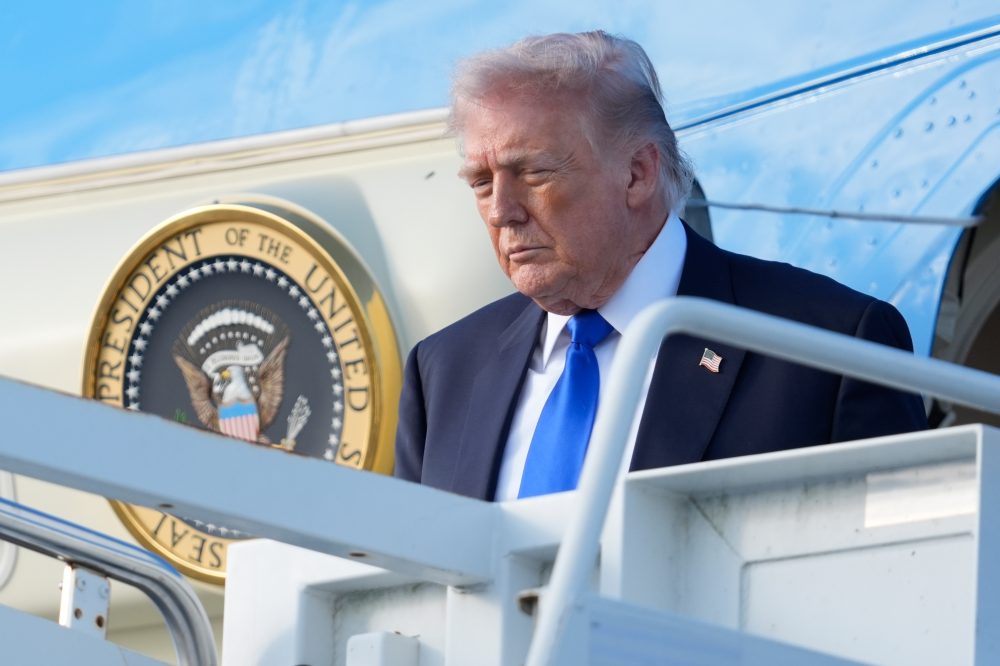

President Donald Trump’s planned participation in Saturday’s White House Correspondents’ Association dinner in Washington will mark his first attendance as commander-in-chief, spotlighting the strained dynamics between his administration and news media.
The gathering of reporters who regularly cover Trump and his team will provide intense scrutiny of the president’s behavior. Traditionally, attending presidents have emphasized free speech principles and First Amendment protections while delivering lighthearted commentary about individual members of the press.
The Republican leader skipped the event throughout his initial presidency and during his second term’s opening year. His previous appearances include a 2011 visit as an audience member while Democratic President Barack Obama delivered comedic remarks targeting the former New York property mogul, plus a 2015 attendance as a private individual.
Previous ceremonies typically showcased comedians who delivered satirical commentary about sitting presidents. This year’s organizers selected mentalist Oz Pearlman for featured entertainment instead.
Trump’s anticipated presence has reignited ongoing discussions about the dinner’s appropriateness, specifically questioning whether reporters should appear to mingle socially with their coverage subjects. The New York Times ceased participation over ten years ago citing these concerns.
“What was once (a fairly long time ago) a well-intended night of fundraising and camaraderie among professional adversaries is now simply a bad look,” wrote Kelly McBride, ethics expert at the Poynter Institute, a journalism think tank.
Trump’s second administration has demonstrated consistent hostility toward news organizations through public criticism of individual reporters, pursuing legal battles against outlets including the Times, The Wall Street Journal and The Associated Press, and limiting media access to Pentagon operations.
Nearly 500 former journalists submitted a petition on Friday urging the correspondents’ association “to forcefully demonstrate opposition to President Trump’s efforts to trample freedom of the press.”
“The White House Correspondents’ dinner reinforces the importance of the First Amendment in our democracy,” said the WHCA president, Weijia Jiang, a CBS News reporter. “As we mark America’s 250th birthday, our choice to gather as journalists, newsmakers and the president in the same room is a reminder of what a free press means to this country and why it must endure. Not for the media or the president, but for the people who depend on it.”
However, many attending journalists view the occasion as crucial for developing story leads and building professional relationships with government officials that could prove beneficial for future news gathering efforts.
News organizations typically bring sources as dinner guests. Observers will monitor whether administration representatives who have similarly criticized press coverage will participate, and their seating arrangements.
The Associated Press extended an invitation to Taylor Budowich, a former White House deputy chief of staff who departed last autumn for private employment. This invitation carries significance because Budowich, while developing White House communications strategies, faced legal action when the AP challenged the administration’s decision to restrict presidential access after the outlet refused to adopt Trump’s proposed renaming of the Gulf of Mexico.
“We maintain professional relationships with people across the political spectrum because we are nonpartisan by design — focused on reporting the facts in the public’s interest,” AP spokesman Patrick Maks said.
The correspondents’ organization will also present awards recognizing outstanding journalism. Recipients include coverage that angered Trump, such as a Journal investigation about a birthday greeting Trump previously sent to convicted sex offender Jeffrey Epstein, which prompted presidential litigation.