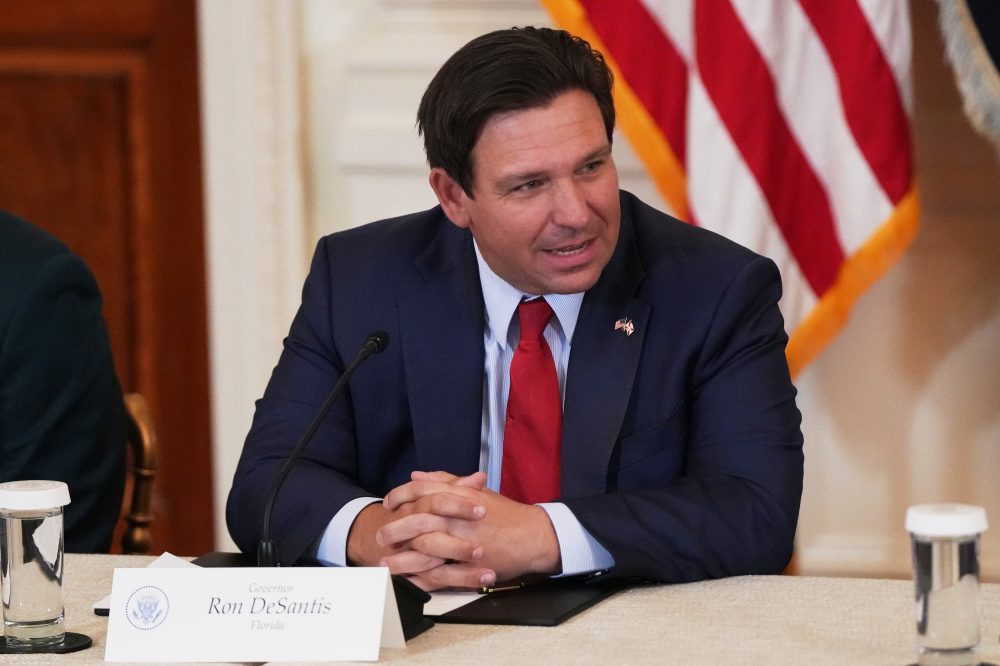

TALLAHASSEE, Fla. — Florida Governor Ron DeSantis, who was previously viewed as a rising star in Republican politics before Donald Trump’s successful return to the presidency, is making another bid for national attention through congressional redistricting efforts.
More than two years have passed since DeSantis concluded his presidential bid and backed Trump, and now the Florida governor is stepping back into the national arena. He’s urging state legislators to redraw the state’s congressional boundaries during a special session, part of a nationwide redistricting effort before this year’s midterm elections. DeSantis’ plan could help Republicans secure four additional House seats, matching potential Democratic gains from Virginia’s recent referendum.
As DeSantis approaches the end of his second gubernatorial term, this special legislative session beginning Tuesday represents one of his remaining chances to demonstrate his potential as a future party leader. However, the 47-year-old governor faces significant challenges ahead.
Several Republicans express concern that revised maps might backfire, potentially creating opportunities for Democrats to gain seats instead. Additionally, DeSantis is seeking enhanced artificial intelligence regulations and reduced vaccine mandates — two initiatives that have previously failed to advance in Tallahassee.
While Trump cannot constitutionally seek a third term in 2028, DeSantis’ path to party leadership remains unclear, as he would likely face competition from Vice President JD Vance or Secretary of State Marco Rubio in any Republican primary.
“The window for Ron looks reasonably narrow at this point,” stated Whit Ayres, who worked as DeSantis’ polling consultant during his initial 2018 gubernatorial campaign.
DeSantis appears to welcome this national confrontation. After House Minority Leader Hakeem Jeffries of New York challenged Florida Republicans to proceed with their special session last week, the governor responded with characteristic boldness reminiscent of his early presidential campaign days.
“I will pay for you to come down to Florida and campaign,” DeSantis told Jeffries. “I’ll put you up in the Florida governor’s mansion. We’ll take you fishing.”
On Monday, DeSantis revealed his proposed redistricting plan to Fox News before it had been widely shared with legislators. He claimed the 2020 census undercounted Florida’s population, necessitating boundary adjustments.
If legislators approve the governor’s map, it would restructure districts in Democratic strongholds surrounding Orlando and Tampa Bay, while concentrating Democratic voters into fewer South Florida districts. These modifications could threaten the seats of Representatives Jared Moskowitz and Debbie Wasserman Schultz, among others.
Current district maps produced a 20-8 Republican advantage in 2024. DeSantis’ proposal aims for a 24-4 split favoring Republicans.
DeSantis initially announced this special session in January, following months of Trump encouraging Republican-controlled states to redraw their congressional maps. This sparked an ongoing redistricting competition between parties seeking midterm election advantages.
New maps don’t guarantee the outcomes parties anticipate. Texas, for instance, based its revised boundaries largely on Trump’s 2024 performance, theoretically spreading the president’s supporters across additional districts to bring them into Republican control. However, Trump’s approval has declined since his reelection, particularly among Latino voters who play significant roles in the state.
Florida might encounter similar complications. Creating more Republican-majority districts with smaller margins could weaken their advantage and provide Democrats additional winning opportunities, particularly if anti-Trump sentiment emerges in this year’s elections.
“If Florida moves like it can, the Republicans will at least be even,” commented Karl Rove, former senior political advisor to President George W. Bush. If Republicans become too aggressive, “they may lose a seat or two.”
Brian Ballard, a prominent Florida lobbyist who has served as DeSantis’ primary fundraiser, emphasized that DeSantis orchestrated the 2021 map that expanded Republican advantages to current levels.
“He’s incredibly smart and capable,” Ballard noted. “And he doesn’t get enough credit for that map. He’s done this before.”
Nevertheless, DeSantis will challenge his legislative relationships, particularly in a state House that has shown increasing independence from the governor in recent sessions. House Speaker Daniel Perez and Senate President Ben Albritton have indicated for weeks they wouldn’t develop their own proposals and would only respond to DeSantis’ plan.
Albritton has distributed multiple memos to senators highlighting Florida’s constitutional redistricting limitations and requirements that it not be conducted as overtly partisan action. Perez, who established a redistricting committee last year, has expressed expectations that something will be accomplished while remaining cautious in public statements.
“We’re ready to have that conversation,” he recently informed WPLG in South Florida, before DeSantis unveiled his proposal.
Beyond redistricting, other agenda items present equal challenges. DeSantis seeks to mandate that technology companies ensure children cannot engage with chatbots without parental approval. He also wants to prevent AI from creating harmful content for minors. This proposal conflicts with Trump, who prefers federal government oversight of AI technology.
Regarding vaccines, DeSantis wants to establish conscience-based exemptions for public school vaccination requirements, similar to existing religious exemptions. This aligns him with anti-vaccine elements of Trump’s base that influenced the president’s selection of Robert F. Kennedy Jr. as health secretary.
Previous versions of DeSantis’ proposals have passed the state Senate but stalled in the state House, where Perez has expressed skepticism.
Ballard dismissed these concerns. What appears to some as strained relationships with certain Republican legislative leaders, he explained, simply reflects measuring DeSantis against his early tenure achievements.
“I mean, he went from batting a thousand to maybe batting .600,” Ballard said, referencing the governor’s Yale baseball background. “That isn’t failure.”
How this session will impact DeSantis’ relationship with Trump or the president’s supporters remains uncertain.
Trump became frustrated with DeSantis during their presidential primary competition, dubbing him “Ron DeSanctimonious” on the campaign trail. The governor initially provided conservative establishment figures and major donors an alternative to the then-former president.
However, Trump apparently forgave DeSantis when he withdrew from the race and endorsed Trump after his Iowa caucus victory. He even pledged to use DeSantis’ actual name.
More tension exists within the White House, though. Chief of Staff Susie Wiles, a Florida native, managed DeSantis’ narrow 2018 victory before the governor had a disagreement with her.
Wiles didn’t respond to comment requests. But Ayres said he’s confident she’s monitoring the situation.
“Donald Trump has a long memory, and Susie Wiles has a longer one,” he stated. “And that doesn’t bode well for Gov. DeSantis to be Donald Trump’s Republican successor.”