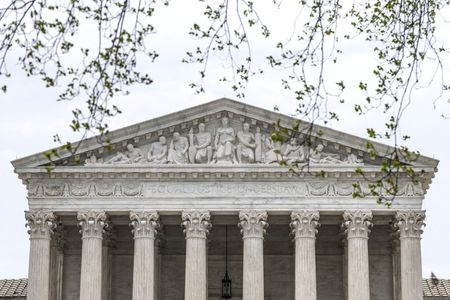

The Trump administration is making a bold claim to the U.S. Supreme Court: federal judges should have no power to review government decisions about immigration deportation protections.
This argument comes as the administration fights to eliminate humanitarian safeguards that currently protect more than 350,000 Haitians and 6,000 Syrians from being sent back to their home countries. Courts in New York and Washington, D.C. have blocked these efforts, noting that the U.S. government itself warns against any travel to Haiti or Syria due to widespread violence, crime, terrorism and kidnapping.
The Supreme Court is scheduled to hear arguments Wednesday on the administration’s appeal of those court decisions. The case centers on former Homeland Security Secretary Kristi Noem’s moves to end Temporary Protected Status, known as TPS, for people from both nations.
Eliminating TPS and similar humanitarian programs represents part of Trump’s comprehensive immigration enforcement campaign that began when he returned to the White House in January 2025.
While the Supreme Court agreed to hear the case, it declined the administration’s request to immediately strip TPS protections from Haitians and Syrians during the legal proceedings. However, the court allowed the administration to end similar protections for Venezuelans last year under comparable circumstances.
TPS was established under the Immigration Act of 1990 to provide temporary refuge for people from nations experiencing war, natural disasters or other catastrophic events. The designation permits these individuals to remain and work in the United States while conditions in their homeland remain dangerous.
The legal battle could impact 1.3 million immigrants from all 17 countries currently designated for TPS protection. The Trump administration has moved to eliminate protections for 13 of these nations.
Lower federal courts have consistently ruled against the administration’s TPS terminations, determining that officials failed to follow required procedures under immigration law to properly evaluate country conditions before ending designations.
The Justice Department challenges these findings and presents a sweeping argument that could prevent future court challenges entirely, claiming judges lack authority to review TPS decisions at all.
“The TPS statute unambiguously bars judicial review of claims that attack the secretary’s TPS determinations, including the procedures and analysis underlying those determinations,” the department stated in its Supreme Court brief.
This position reflects Trump’s broader philosophy of expanded presidential authority and restricted judicial oversight across various policy areas.
Ahilan Arulanantham, an attorney representing Syrian TPS recipients challenging the administration’s actions, emphasized the high stakes involved. “If the government is correct, then they can terminate TPS without conducting any country conditions review at all – they can do it for reasons that are completely arbitrary,” Arulanantham explained.
The administration’s overall approach doesn’t represent reasoned agency decision-making but rather a systematic campaign to eliminate TPS entirely, according to Arulanantham, who serves as co-director of UCLA School of Law’s Center for Immigration Law and Policy.
“This really is about a war on this congressional statute,” Arulanantham stated.
The Supreme Court, with its 6-3 conservative majority, has approved the Republican president’s requests to immediately implement various strict immigration measures while legal challenges proceed. For example, it has permitted Trump to deport immigrants to nations where they have no connections and allowed federal agents to target individuals for deportation based partly on their race or language.
Trump, who unsuccessfully attempted to revoke TPS protections during his first presidency, clearly indicated during his reelection campaign that he would pursue these efforts again. Notably, Trump promised to eliminate TPS for Haitian immigrants after making false and disparaging claims that they were consuming household pets in Ohio.
Noem, appointed by Trump, acted swiftly on TPS designations for various countries, including ending protection for hundreds of thousands of Venezuelans on February 1, 2025.
TPS recipients, many of whom have lived in the United States for years and could face separation from employment and family members, argue that forcing them to return to dangerous countries would be inhumane.
“Temporary Protected Status is, by definition, temporary. It was never intended to be a pathway to permanent status or legal residency, no matter how badly left-wing organizations want it to be,” White House spokesperson Abigail Jackson told Reuters.
Haitians initially received TPS in 2010 following a catastrophic earthquake during Barack Obama’s presidency, while Syrians gained protection in 2012 as their country descended into civil war. The U.S. government has repeatedly renewed these designations as crises continued in both nations.
Noem terminated TPS for Syria in September and for Haiti in November, claiming the designations conflicted with U.S. national interests partly due to challenges in screening and vetting migrants from these countries. These TPS decisions were not factors when Trump dismissed Noem in March.
Syrian and Haitian TPS holders filed class action lawsuits claiming the termination notices were pretexts for the administration’s plan to end existing designations. The lawsuits alleged that Noem failed to comply with TPS law requirements to consult other federal agencies about in-country conditions before revoking protective status.
According to the plaintiffs, the consultation consisted merely of a State Department official responding to a Homeland Security Department official’s email stating there were “no foreign policy concerns” with ending the designations.
The Justice Department has characterized court rulings favoring the plaintiffs as “an invitation for courts to referee interagency discussions, demand agency verbosity and gauge how much consultation is enough.”
However, this defense becomes irrelevant if the court accepts the Justice Department’s broader argument that the administration’s actions are immune from judicial scrutiny.
Citing a provision in the 1990 statute that prohibits judicial review “of any determination” regarding granting, extending or terminating TPS, the department argues this includes both final decisions and the reasoning behind them. In written arguments, it cautioned against “installing district courts as the ultimate foreign-policy superintendents of temporary status.”
The claim that courts cannot review the legality of certain presidential administration actions is familiar territory for Trump. His administration has presented this argument in numerous policy challenges, reflecting a broader effort to limit judicial authority.
The plaintiffs contend the administration’s stance would shield even illegal actions from review. They argue the statute permits courts to examine whether federal officials comply with required procedural steps.
They also reference a 2019 Supreme Court decision that prevented Trump from adding a citizenship question to the national census, which opponents characterized as a Republican attempt to discourage immigrant participation in the population count. The court determined that administration officials’ stated reasons for the question were pretextual and fabricated.
In the Haiti case, U.S. District Judge Ana Reyes concluded the administration’s action likely stemmed partly from “racial animus,” violating the Constitution’s Fifth Amendment equal protection guarantee.
Reyes cited statements from Trump and Noem, including the former homeland security secretary’s social media posts describing immigrants as killers and leeches.
“Plaintiffs charge that Secretary Noem preordained her termination decision and did so because of hostility to nonwhite immigrants. This seems substantially likely,” Reyes wrote.
The Justice Department denies any racial discrimination, noting that no statement by Trump or Noem explicitly mentions race. It argues the Supreme Court should apply precedents that defer to the administration on immigration, foreign policy and national security issues.
The Supreme Court is expected to issue its ruling by approximately the end of June.