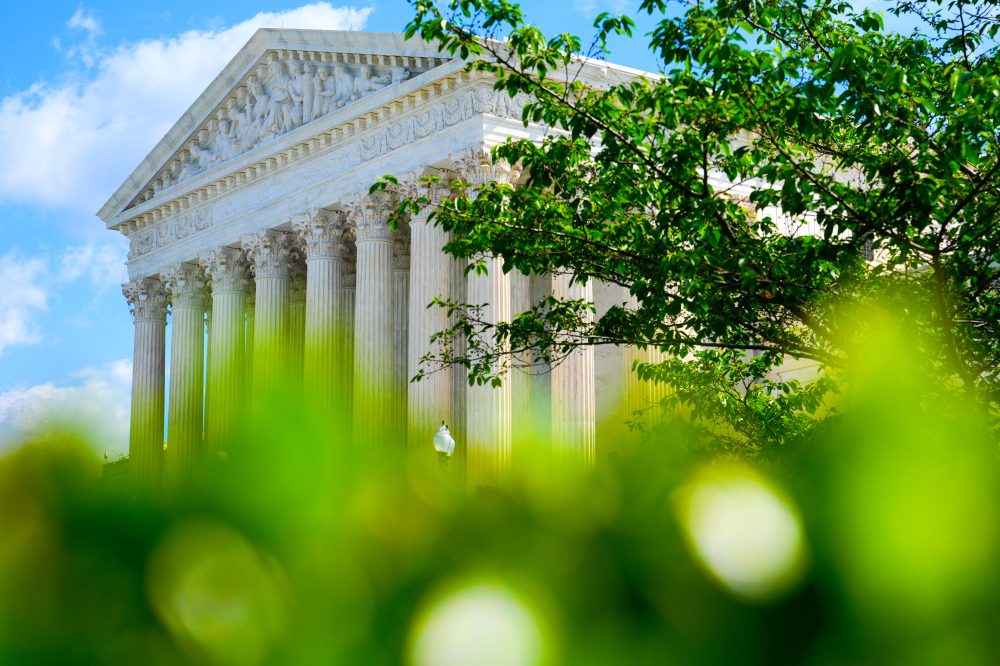

WASHINGTON – The nation’s highest court appeared ready Monday to give law enforcement the green light to use geofence warrants, a digital investigative method that tracks cellphone locations to identify potential criminal suspects near crime scenes.
During nearly two hours of oral arguments, the Supreme Court justices considered an appeal from Okello Chatrie, who admitted guilt in a bank robbery that occurred in a Richmond, Virginia suburb.
Law enforcement had been unable to track down Chatrie until they employed a geofence warrant – an advanced digital investigative technique that creates an electronic perimeter and identifies mobile devices present near the financial institution during the timeframe of the May 2019 robbery.
The court’s justices appeared skeptical of arguments presented by Chatrie’s attorney, Adam Unikowsky, who contended that these location-tracking warrants are overly broad and violate Fourth Amendment protections against unreasonable government searches.
Justice Sonia Sotomayor indicated the warrant used to identify Chatrie appeared appropriately specific rather than overly general. “This isn’t that. It identifies a place, a crime, a timeframe,” Sotomayor stated.
The Richmond-based federal appeals court confirmed Chatrie’s conviction in a split decision. However, a different federal appeals court in New Orleans reached the opposite conclusion, determining that geofence warrants “are general warrants categorically prohibited by the Fourth Amendment.”
This case represents another instance where the Supreme Court must determine how constitutional protections written in 1791 should apply to modern technology that the nation’s founding fathers could never have anticipated.
The justices appeared interested in crafting a narrow decision rather than sweeping changes. They might establish restrictions on the timeframes and geographic boundaries for such warrants, or potentially avoid determining whether the police actions in Chatrie’s situation even constituted a search requiring judicial approval.
Alternatively, the court could decide that if warrants are necessary, law enforcement may legally perform geofence investigations within constitutional bounds.
Even if Chatrie, who received nearly 12 years in prison, wins his appeal, it may not change his situation. The federal judge who determined the search violated his constitutional rights still permitted the evidence because the investigating officer had reasonable grounds to believe his actions were lawful.