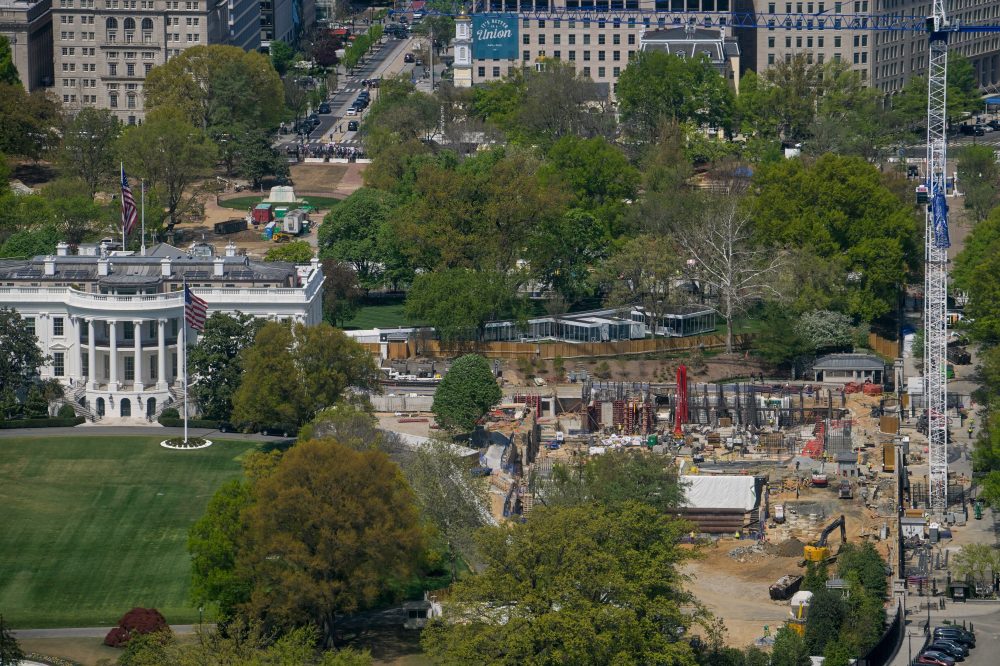

WASHINGTON — A historic preservation organization is standing firm in its legal battle over President Donald Trump’s proposed $400 million White House ballroom project, rejecting calls from federal officials to abandon their lawsuit after Saturday’s shooting incident at the White House Correspondents’ Dinner.
Following the weekend security breach at the media event, Trump and conservative supporters have intensified their advocacy for the ballroom construction, claiming the incident demonstrates the challenges of protecting the president at large gatherings held away from the White House complex. They have urged the National Trust for Historic Preservation to abandon its legal challenge.
Justice Department leadership indicated they would petition the court to throw out the case “in light of last night’s extraordinary events” unless the Trust voluntarily withdrew their complaint.
However, Trust legal counsel Gregory Craig rejected this demand, informing the Justice Department that the core constitutional questions in the lawsuit remain unaffected by recent events.
“What Saturday’s awful event does not change is that the Constitution and multiple federal statutes require Congress to authorize construction of a ballroom on White House grounds, and that Congress has not done so,” Craig wrote.
The Justice Department has not yet responded to requests for comment on the matter.
The conservation organization filed their legal challenge in December, just one week after the White House completed tearing down the East Wing to clear space for Trump’s proposed ballroom, which he claims will accommodate 999 guests. While Trump maintains the construction is financed through private contributions, taxpayer funds are covering an underground bunker and enhanced security features.
The Trust’s legal filing contends that Trump exceeded his executive powers by proceeding with the construction without obtaining necessary approvals from essential federal departments and Congress.
A federal appellate court has permitted Trump to move forward with the work, issuing a ruling one day after a trial court judge maintained restrictions on above-ground building activities at the location. The appeals court has set a June 5 date for a hearing to examine the matter further.