
House Speaker Mike Johnson announced Monday that Republicans plan to alter legislation funding the Department of Homeland Security before bringing it to a vote, potentially creating delays in critical funding just days after a shooting incident at a Washington event where President Donald Trump was present.
The legislation, which received unanimous approval twice in the Senate, represents part of a Republican strategy to resolve the partial shutdown affecting homeland security operations that began in mid-February. Previous negotiations stalled over disagreements regarding reforms to Immigration and Customs Enforcement and Border Patrol operations, following deadly shootings of two American citizens earlier this year.
The proposed funding would cover all DHS operations except for ICE and Border Patrol agencies. House Republicans were anticipated to consider the measure this week, following a vote on separate $70 billion funding for the two immigration enforcement agencies that gained Senate approval last week. The House plans to vote Wednesday on the budget resolution containing funding directions for ICE and Border Patrol.
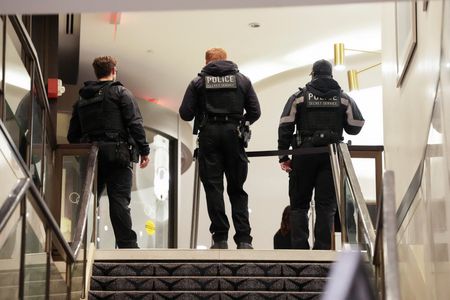
Funding urgency for the Secret Service has grown since Saturday’s shooting at the White House Correspondents’ Association Dinner, where prosecutors allege a gunman attempted to assassinate Trump. Homeland Security Secretary Markwayne Mullin has warned that current departmental funding, which also covers the Transportation Security Administration, will be exhausted in early May.
However, Johnson informed reporters that the Senate’s legislation funding DHS minus ICE and Border Patrol requires modifications.
“We have a modified version that I think is going to be much better for both chambers. It doesn’t change most of the substance. But it makes sure that we’re not going to orphan the primary agencies of DHS,” Johnson explained to reporters, though he declined to elaborate on specifics.
Conservative House Republicans have opposed the Senate legislation, arguing they prefer comprehensive funding for all DHS agencies, including ICE and Border Patrol.
Any altered legislation would require another Senate vote, where Democratic opposition could block the 60 votes typically needed for passage.
Senate Majority Leader John Thune, Johnson’s Senate counterpart, told reporters that both the DHS funding measure and the ICE and Border Patrol budget framework would ultimately ensure adequate financing for all homeland security functions.
“We did everything we can to ensure that everything is appropriately funded,” Thune stated. “Hopefully that will be enough to get the House in a comfortable position.”
The budget resolution scheduled for House consideration this week serves as a preliminary step toward separate ICE and Border Patrol funding legislation that would bypass Senate Democratic resistance using a procedural tool known as budget reconciliation. This funding would extend through Trump’s presidential term, ending in January 2029.
Last year, Republicans approved approximately $130 billion in ICE and Border Patrol funding, separate from their regular annual appropriations.