Security screeners at airports across the nation are reporting to work despite not receiving their regular paychecks as the partial government shutdown continues. Transportation Security Administration personnel remain on duty as essential workers during the federal funding lapse.
A nationwide assessment examined passenger security checkpoint conditions at half a dozen major airports spanning five metropolitan areas to gauge whether the unpaid work situation is affecting screening operations and traveler wait times.
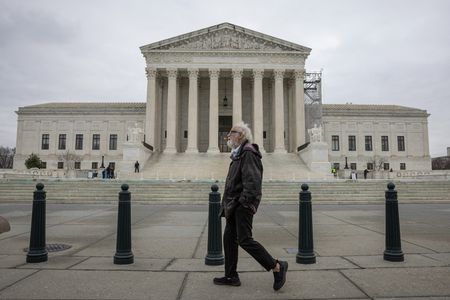
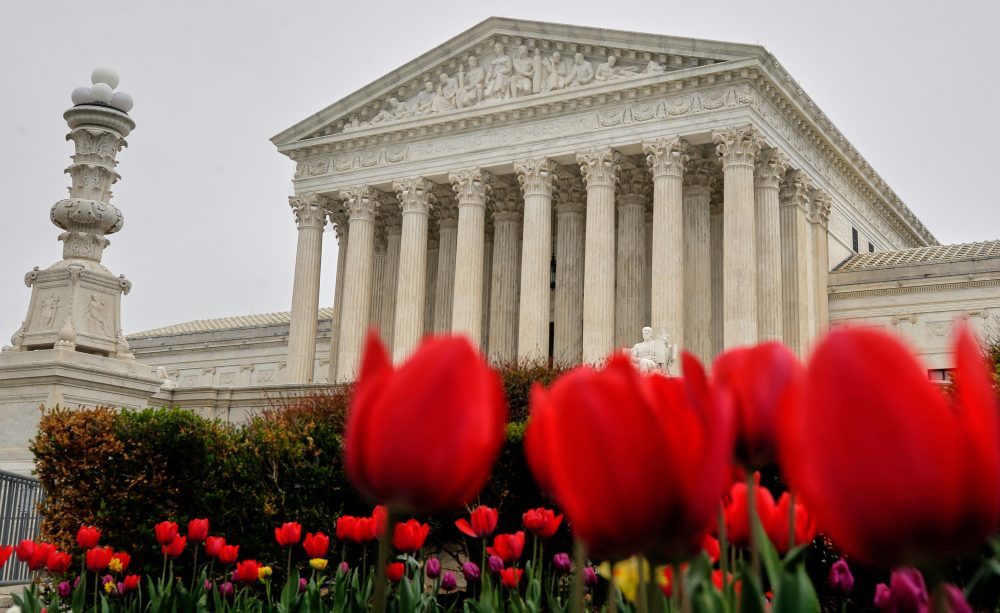
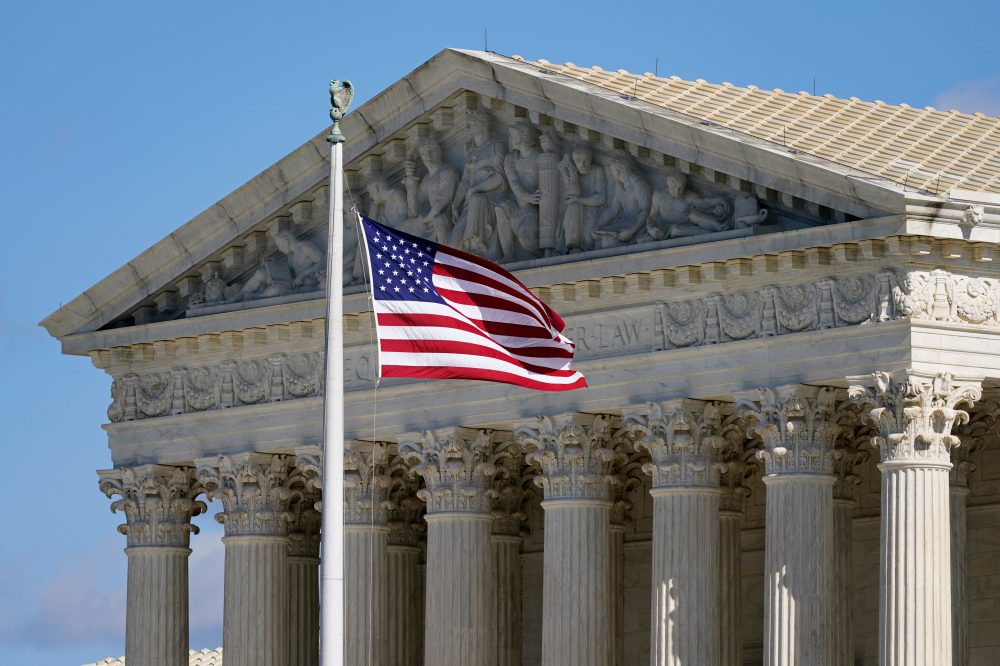
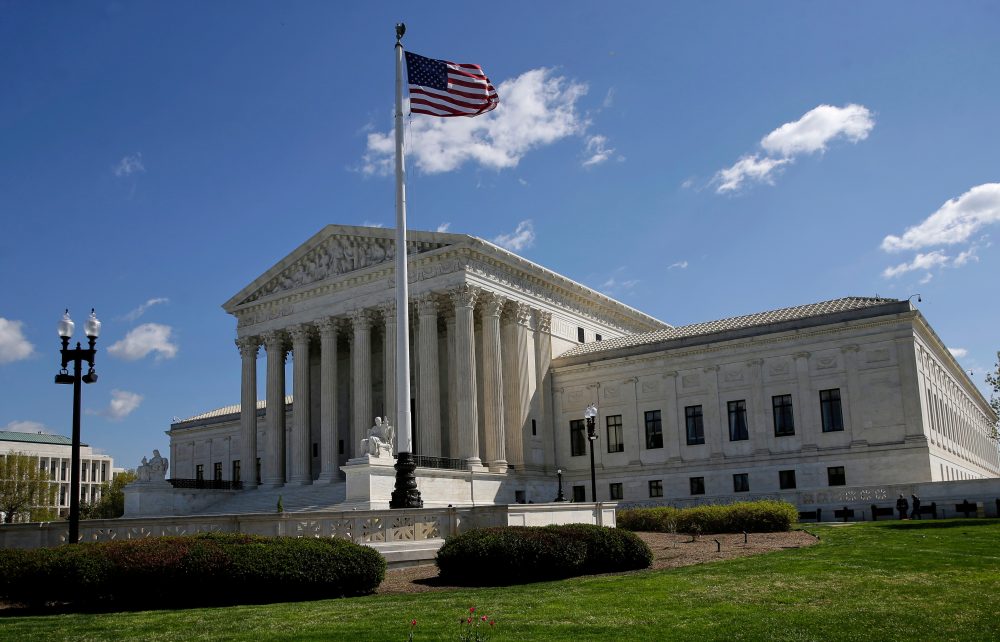
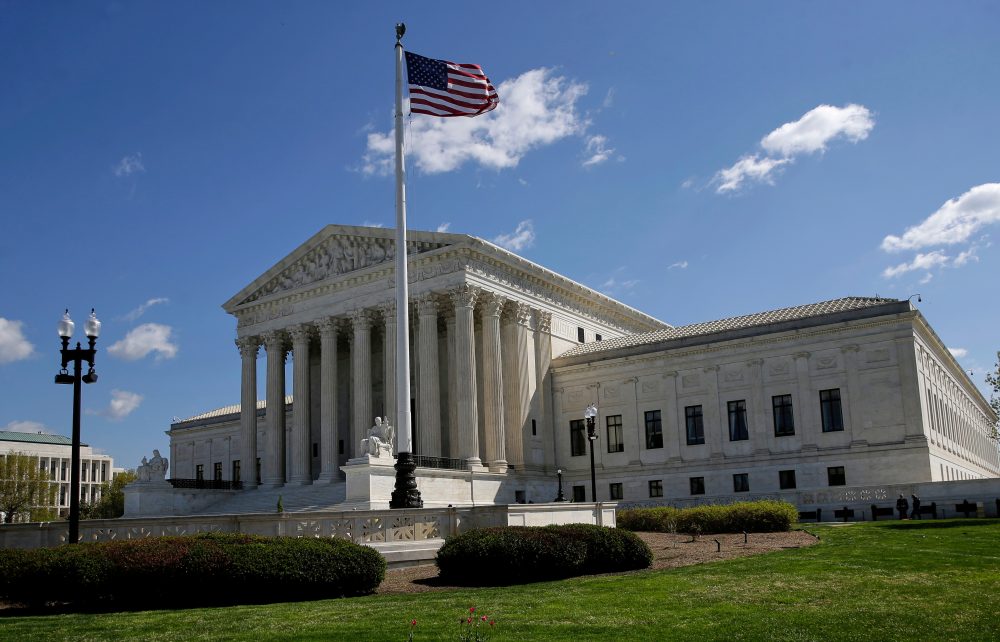
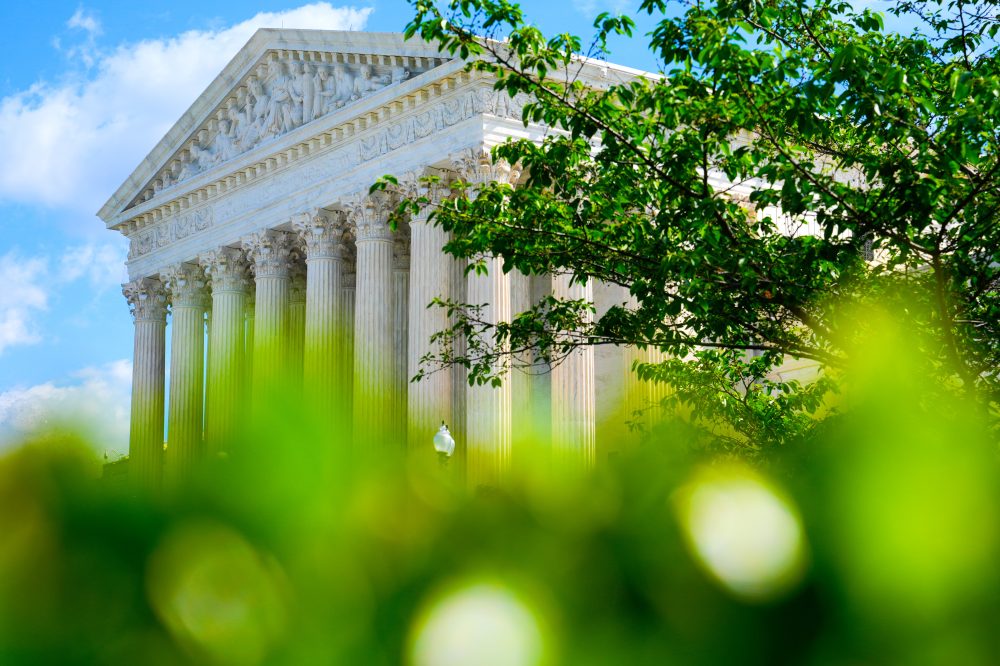
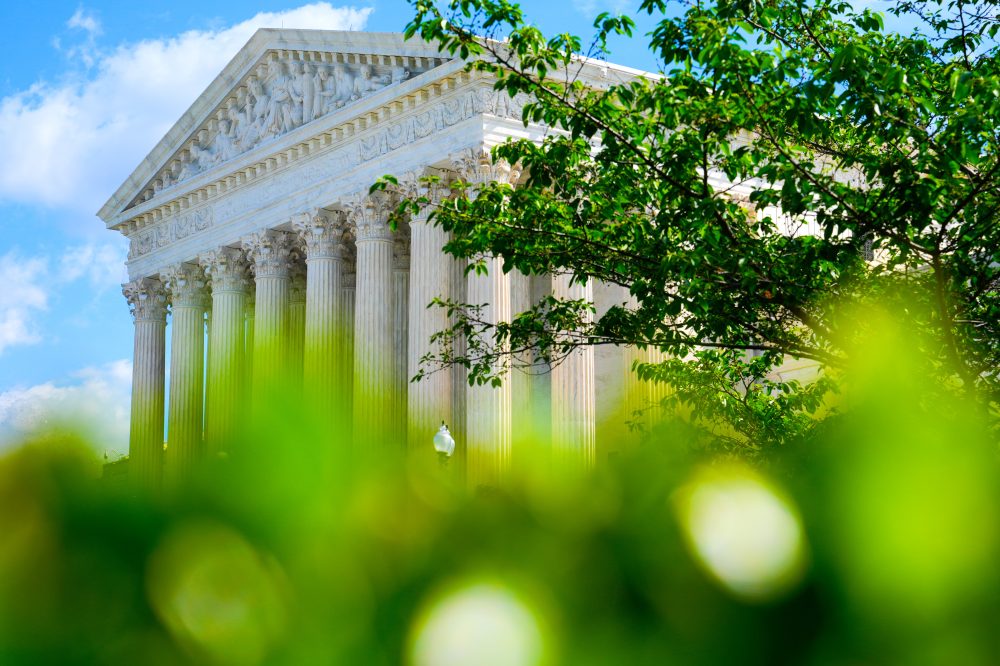
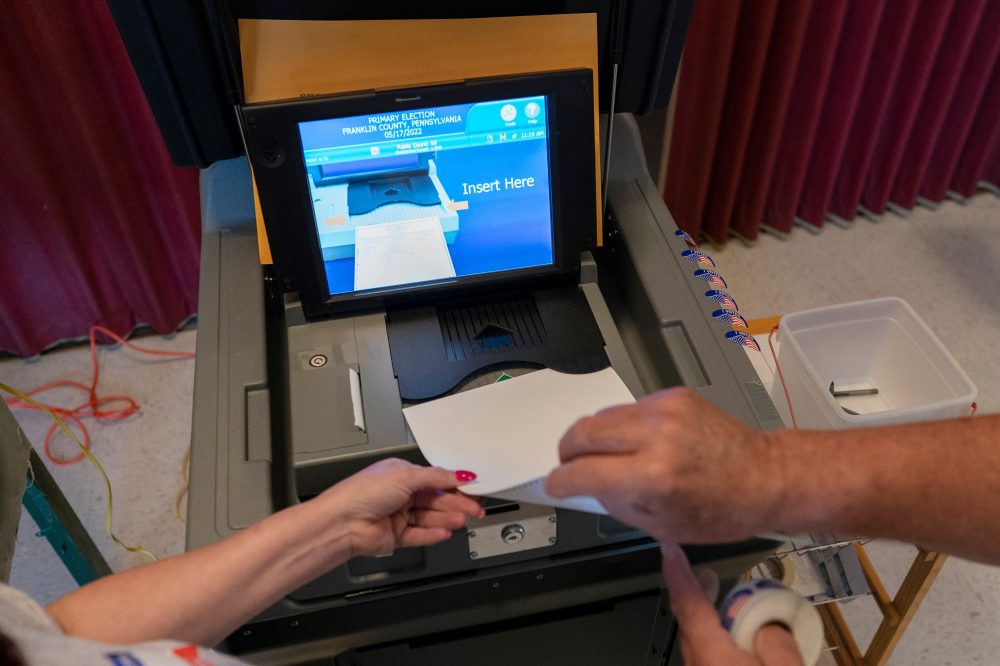
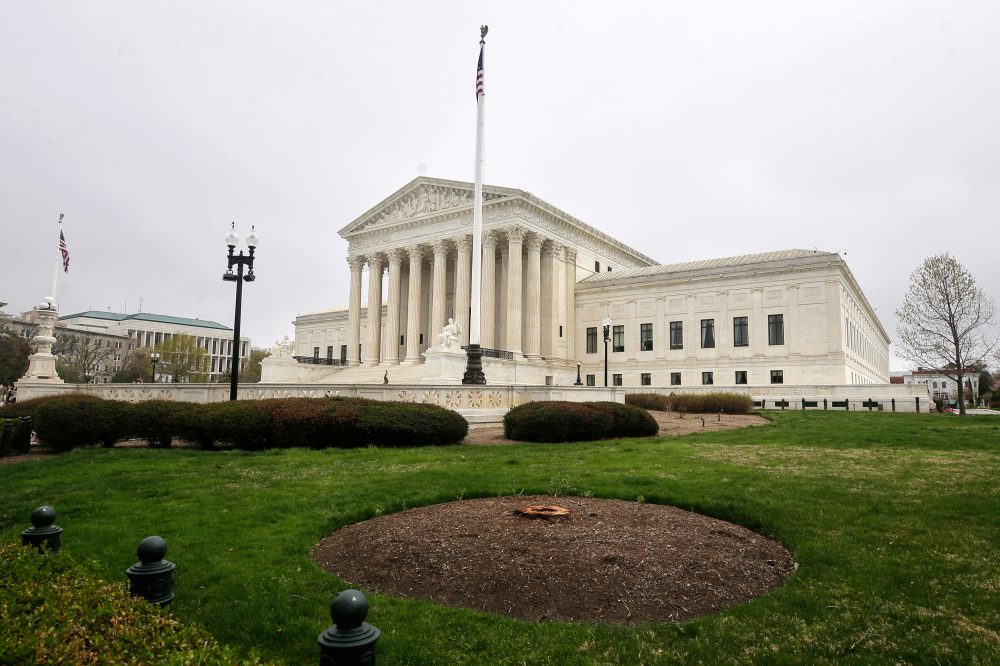
WASHINGTON — On Monday, the nation’s highest court examined arguments in a Mississippi dispute centered on whether states may tally mail-in ballots that reach election offices after Election Day, an issue President Donald Trump has frequently criticized.
The decision could influence voting procedures across 14 states plus the District of Columbia that currently permit grace periods for mailed ballots, as long as they bear Election Day postmarks. Another 15 states with extended deadlines for military and overseas ballots may also face changes.
Justices are expected to issue their decision by late June, providing sufficient time to guide ballot processing for the 2026 midterm elections.
Election administrators from states and major cities warned the court in written arguments that requiring states to alter their procedures mere months before an election could create “confusion and disenfranchisement,” particularly in areas that have maintained flexible deadlines for many years.
States including California, Texas, New York and Illinois currently permit post-Election Day receipt deadlines. Alaska, with its remote geography and unpredictable weather conditions, also accepts ballots that arrive late.
Legal representatives for Republican and Libertarian parties, along with Trump’s administration, are urging the justices to uphold an appeals court decision that invalidated Mississippi’s statute permitting ballot counting for up to five business days after the election, provided ballots carry Election Day postmarks.
This legal challenge forms part of Trump’s wider criticism of mail-in voting systems, which he claims facilitate fraud, despite substantial evidence contradicting this assertion and extensive successful implementation across multiple states.
The Republican president issued an executive order on elections last year designed to mandate that votes be “cast and received” by Election Day. However, ongoing legal challenges have prevented its enforcement.
Meanwhile, four Republican-controlled states — Ohio, Kansas, North Dakota and Utah — removed their grace periods last year, data from the National Conference of State Legislatures and Voting Rights Lab shows.
The central question before the Supreme Court involves whether federal statutes establish a uniform Election Day requiring both voter submission and official receipt of ballots.
When the 5th U.S. Circuit Court of Appeals eliminated Mississippi’s grace period, Judge Andrew Oldham determined that the state’s late-arrival ballot provision conflicted with federal requirements.
Oldham, along with fellow judges James Ho and Stuart Kyle Duncan who supported the unanimous decision, received their appointments from Trump during his initial presidency.
WASHINGTON — A fresh survey indicates that the majority of Asian American, Native Hawaiian and Pacific Islander residents view President Donald Trump’s immigration and border policies negatively during his current administration, based on findings from an AAPI Data/AP-NORC poll.
The research reveals that roughly 60% of AAPI respondents believe Trump has damaged immigration and border security either significantly or moderately, according to data from AAPI Data and The Associated Press-NORC Center for Public Affairs Research. This compares to approximately 40% of all U.S. adults who expressed similar views in a January AP-NORC study. Additionally, around two-thirds of AAPI participants — a group that tends to lean more Democratic than the general population — believe Trump has overstepped boundaries regarding the deportation of undocumented immigrants, versus about half of Americans overall.
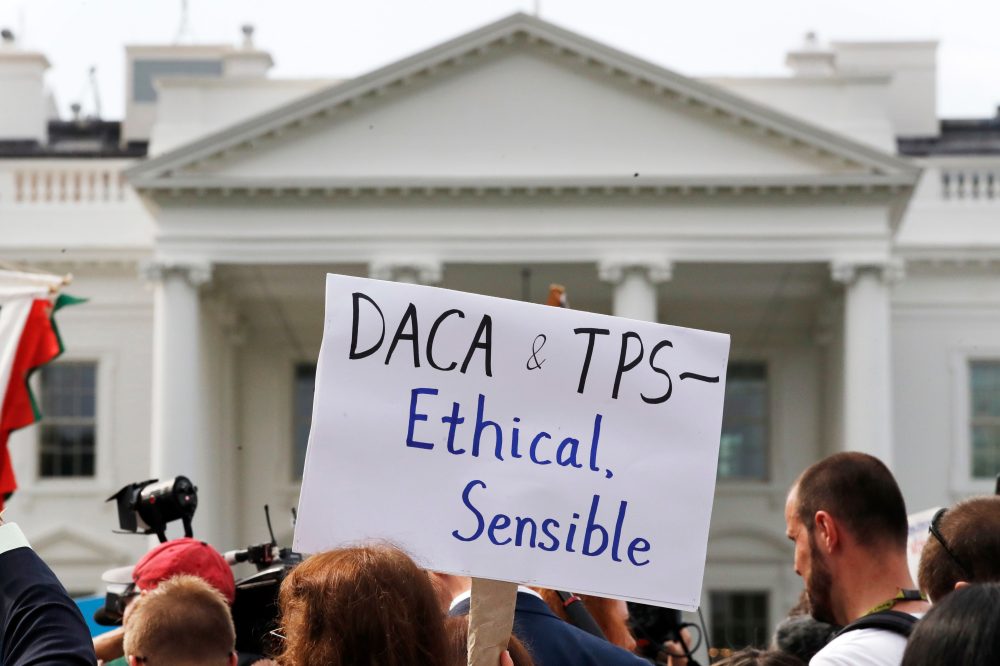
Since taking office, the Trump administration has implemented extensive immigration reforms, with particularly intense activity over the last two months. In January, Trump halted immigrant visa processing for people from 75 nations. While border apprehensions at the U.S.-Mexico boundary have dropped significantly, Immigration and Customs Enforcement arrests and detentions have skyrocketed. December 2024 saw daily detentions averaging just below 40,000, while last month that figure jumped to approximately 70,000.
The polling took place following January incidents where ICE agents fatally shot two American citizens and detained a Hmong American man wearing only underwear in frigid weather conditions.
These enforcement actions have personal significance for Jeff Ugai, a Hawaii resident. His home island of Kauai witnessed nearly four dozen arrests during November immigration operations.
“It seems like the current administration’s efforts have been more almost about cruelty than they have about actually establishing an immigration system that makes sense to this country,” said Ugai, 39, who is a Democrat.
The poll demonstrates that AAPI adults, representing one of America’s most rapidly expanding demographic groups, generally oppose Trump’s aggressive immigration strategies. A previous AAPI Data/AP-NORC study from last fall showed growing dissatisfaction with Trump’s immigration policies compared to earlier in the year.
“We’re also seeing opposition to policies that may not involve violence or violations of due process, but still involve things like banning immigrants from entire countries where there is a history of visa overstays or deporting immigrants who are married to U.S. citizens,” said Karthick Ramakrishnan, founder and executive director of AAPI Data.
Current polling shows approximately 40% of AAPI adults consider deporting undocumented immigrants a low government priority, up from about one-third shortly after Trump assumed office. Roughly one-third now view such deportations as a moderate priority, while only about 20% classify them as high priority.
Fran Peace, 75, from Oroville, California, continues to view deportation of undocumented immigrants as urgent. However, the Japanese American retiree opposes targeting individuals based on appearance or accents. She also supports creating pathways to citizenship for long-term residents without criminal records.
“I don’t think you should just have to go back automatically, but the laws don’t say that,” Peace said. “If you’re illegal you go back. But I think there should be some concession made for the people that have been here a long time.”
Among AAPI adults, 73% hold somewhat or very negative views of U.S. Immigration and Customs Enforcement.
AAPI Republicans express considerably less hostility toward the agency compared to AAPI adults generally, with only about one-third reporting negative opinions of ICE. However, just about 25% of Republicans overall held unfavorable ICE views in a February AP-NORC survey.
Strong resistance exists toward multiple strict immigration measures, with approximately 60% opposing large-scale enforcement raids in immigrant-heavy neighborhoods, and about 70% rejecting policies allowing immigration agents to mask their faces during arrests.
Banning face coverings would function like body cameras, “helping keep people accountable,” Ugai said.
AAPI adults show mixed opinions on whether undocumented immigrants significantly impact social services and public safety. About 40% of AAPI respondents consider undocumented immigrants a major threat to welfare and safety net programs. A comparable percentage view this as a minor concern. Only about 25% see no risk whatsoever.
Regarding criminal activity by undocumented immigrants, roughly one-third of AAPI adults perceive this as a major threat, while about half consider it a minor risk. Just 15% say it poses no danger.
Peace attributes reduced crime like drug trafficking to Trump’s leadership, claiming the U.S. “practically had open borders” before his second term.
However, Daniel Kim, 65, from Las Cruces, New Mexico, believes immigrants present minimal criminal threats.
The Korean American Democrat previously volunteered at his church helping refugees with food and donations. He stopped attending his evangelical congregation due to leadership’s insistence on staying politically neutral.
“The church leadership just could not make the connection or could not find it in their hearts to think (about) the issues involved with the treatment of foreigners in our country,” Kim said.
The survey of 1,197 U.S. adults who are Asian American, Native Hawaiian and Pacific Islander was conducted Feb. 2-9, 2026, using a sample drawn from NORC’s probability-based Amplify AAPI Panel, designed to be representative of the Asian American, Native Hawaiian and Pacific Islander population. The margin of sampling error for all respondents is plus or minus 4.6 percentage points.
This poll is part of an ongoing project exploring the views of Asian Americans, Native Hawaiians and Pacific Islanders, which are usually not highlighted in other surveys because of small sample sizes and lack of linguistic representation.
MIAMI — A federal criminal trial begins Monday featuring an unusual witness: Secretary of State Marco Rubio will testify about his former roommate, a onetime Miami congressman now facing charges for allegedly conducting secret lobbying work for Venezuela’s government.
Federal prosecutors claim David Rivera operated as a covert agent for former Venezuelan President Nicolás Maduro, using his Republican political connections from his congressional years to influence the White House toward softening its tough stance against Venezuela’s socialist leadership.
According to the government’s case, Rivera — who once shared living quarters with Rubio in Florida — convinced Venezuela’s then-Foreign Minister Delcy Rodríguez, currently serving as Venezuela’s acting president, to grant him a massive $50 million lobbying agreement funded by the state petroleum company PDVSA. The prosecution alleges Rivera’s influence operation included assistance from Texas GOP Representative Pete Sessions and a person with ties to the Cali drug cartel, as they pursued White House and Exxon Mobil meetings on Maduro’s behalf.
This case provides an uncommon look at Miami’s controversial influence on U.S.-Latin American relations — a city long known as a destination for political exiles, financial misconduct, and anti-communist activism. It’s particularly noteworthy that Rubio, Miami’s highest-profile political figure, is scheduled to appear in court Tuesday to discuss his encounters with Rivera during the period when Rivera was allegedly assisting Maduro’s diplomatic efforts in Washington.
The proceedings will also examine Rodríguez’s role, as she reportedly depended on Rivera to arrange meetings across New York, Caracas, Washington and Dallas in an attempt to build American support for restored Venezuela relations — a campaign that initially failed but may now be possible under different circumstances following Maduro’s removal and his successor’s more moderate approach.
The 11-count federal indictment, made public in 2022, accuses Rivera and a co-defendant of money laundering and violating foreign agent registration requirements.
To conceal their activities, prosecutors say Rivera created an encrypted messaging group named MIA — representing Miami — with his primary Venezuelan government contact: media mogul Raúl Gorrín, who later faced U.S. charges for bribing Venezuelan officials.
Group participants allegedly used coded language for their discussions: Maduro became the “bus driver,” Sessions was “Sombrero,” and they referred to millions of dollars as “melons,” according to prosecutors.
The 60-year-old Rivera maintains his innocence. His legal team argues that his solo business, Interamerican Consulting, was contracted by a U.S. subsidiary of Venezuela’s government oil company — not PDVSA directly — eliminating any foreign agent registration obligation.
Defense lawyers claim his consulting focused on positioning Venezuelan-owned Citgo within America’s energy sector and was completely separate from his diplomatic mediation work, which involved collaborating with Maduro’s political opposition to promote leadership more favorable to U.S. interests.
However, civil lawsuit plaintiffs contend Rivera performed minimal promised services and used the contract to mask illegal lobbying activities. From approximately $20 million he collected, $3.75 million was directed to a South Florida business that serviced Gorrín’s luxury yacht.
Rubio’s anticipated testimony represents a rare occurrence — the last time a sitting Cabinet member testified in a criminal proceeding was Labor Secretary Raymond Donovan’s 1983 appearance at a organized crime trial.
Although Rubio faces no charges and the indictment contains no suggestions of senatorial misconduct, prosecutors indicate Rivera considered him crucial for White House access. For Rubio, prosecutors revealed during last week’s pre-trial proceedings, communication with Gorrín provided an unofficial channel to Caracas when U.S. intelligence had identified a potential assassination threat against him from Venezuelan socialist party leader Diosdado Cabello.
The indictment details a July 9, 2017 meeting between Rivera and Rubio at the senator’s Washington residence. Rivera allegedly informed Rubio about his collaboration with Gorrín, who had supposedly convinced Maduro to accept an agreement involving free and fair elections.
“Remember, U.S. should facilitate, not just support, a negotiated solution,” Rivera texted Rubio two days afterward as the senator prepared to meet with Trump, according to the indictment. “No vengeance, reconciliation.”
After a subsequent meeting involving Rubio, Rivera, Gorrín and others, Rivera commented in the chat that the bus driver — Maduro — would need to compensate him for arranging the Rubio meeting. Rivera indicated that without the senator’s backing, there would be “no turkey.”
The diplomatic initiative collapsed quickly. That same month, Trump imposed sanctions on Maduro and declared him a “dictator,” initiating a “maximum pressure” strategy to remove the Venezuelan leader. Rubio subsequently appeared on Venezuelan television to promote the White House position.
“For Nicolás Maduro, who I am sure is watching, the current path you are on will not end well for you,” Rubio stated in a July 31, 2017 ten-minute broadcast to Venezuelan citizens that aired on Gorrín’s television network.
The State Department has declined to provide comment.
Following the contract’s execution, Rivera and Gorrín organized a New York City meeting between Rodríguez, then serving as foreign minister and PDVSA board member, and Sessions, whose Dallas-area congressional district encompassed Exxon’s corporate headquarters.
Subsequently, Sessions attempted to facilitate a meeting for Rodríguez with Darren Woods, who had replaced Trump’s former Secretary of State Rex Tillerson as Exxon’s chief executive. Rodríguez sought to settle a prolonged investment disagreement and entice Exxon’s return to Venezuela to help restore the OPEC member’s deteriorating oil sector. The proposed meeting was unsuccessful as Exxon rejected the approach.
Nearly a year after assisting Rivera’s Exxon outreach, Sessions covertly visited Caracas for a Maduro meeting that Gorrín and Rivera had arranged, the indictment states. Sessions also agreed to deliver a letter from the Venezuelan president to Trump as part of this effort.
Rivera’s defense team sought testimony from both Maduro and White House chief of staff Susie Wiles. Maduro, through legal counsel, indicated he would exercise his constitutional right against self-incrimination if forced to testify, while prosecutors successfully blocked attempts to subpoena Wiles, who had been a registered lobbyist for Gorrín’s Globovision network during the same period the media owner was collaborating with Rivera.
Prior to his 2010 congressional election, Rivera held senior positions in Florida’s state legislature. During that period, he shared a Tallahassee residence with Rubio, who eventually became Florida House speaker.
Rivera has encountered previous controversies, including accusations that he covertly financed a Democratic candidate intended to split votes in a 2012 congressional election. Federal prosecutors dismissed that case last year after an appellate court overturned a substantial fine from a trial court. Rivera was also investigated — though never prosecuted — regarding campaign finance infractions and a $1 million gambling company contract during his Florida legislative service.
Rivera has rejected all allegations of misconduct and characterized both investigations as politically driven.
The Trump administration has placed a statue of explorer Christopher Columbus on White House property, marking another step in the president’s campaign to influence American historical narratives.
This installation represents part of what President Trump describes as his fight against “anti-American” ideology, which has included removing slavery exhibitions, rebuilding Confederate monuments, and implementing other changes that civil rights groups warn could undo years of social advancement.
In a Sunday letter to the Conference of Presidents of Major Italian American Organizations, Trump revealed the statue’s location, stating: “The statue is now residing on the north side of the Eisenhower Executive Office Building on the White House campus.” The president expressed gratitude to the organization for donating the monument to the federal government.
Following George Floyd’s death in 2020, numerous American cities removed Columbus monuments during widespread Black Lives Matter demonstrations. The Italian explorer’s Spanish-sponsored expeditions beginning in the 1490s opened the door for European colonization of the Americas.
Floyd’s death sparked global discussions about colonialism and slavery’s historical impact. Racial justice activists criticized heroic Columbus representations, arguing they minimized or overlooked his harsh treatment of Native American populations.
In his public letter Sunday, Trump praised Columbus as “the original American hero and one of the most gallant and visionary men to ever walk the face of the Earth.”
The White House statue recreates one that former President Ronald Reagan dedicated in Baltimore during 1984. Protesters dumped that original monument into the city’s harbor in 2020, prompting Trump to label them “anti-American rioters” in his correspondence.
Recently, the Interior Department announced that a statue of Caesar Rodney, who owned enslaved people and signed the Declaration of Independence, would return to display in Washington after Delaware protesters removed it in 2020 during racial justice demonstrations.
Officials also reinstalled a statue of Confederate General Albert Pike in Washington last year after protesters toppled it during 2020 demonstrations.
A Christopher Columbus statue now stands on federal property next to the White House, marking President Trump’s latest move to honor the disputed historical figure.
The marble sculpture sits on the grounds of the Eisenhower Executive Office Building and serves as a replacement for a statue that protesters hurled into Baltimore’s Inner Harbor during 2020 demonstrations against racial injustice.
Trump supports the conventional perspective of Columbus as the leader who launched European settlement in the Americas in 1492, helping establish today’s economic and political systems. However, modern critics view Columbus as a symbol of European domination over indigenous populations and their lands.
“In this White House, Christopher Columbus is a hero, and President Trump will ensure he’s honored as such for generations to come,” officials posted on the administration’s X account.
John Pica, who leads Italian American Organizations United and works as a Maryland lobbyist, expressed satisfaction with the statue’s new location. “We are delighted the statue has found a place where it can peacefully shine and be protected,” Pica said. His organization owns the sculpture and agreed to lend it to the federal government.
The artwork was sculpted by Will Hemsley, an artist who operates from Centreville on Maryland’s Eastern Shore.
Demonstrators knocked down the original Baltimore statue on July 4, 2020, and cast it into the Inner Harbor following nationwide outrage over George Floyd’s death in police custody. Similar Columbus monuments faced destruction across the country as protesters argued the explorer enabled the massacre and oppression of Native Americans.
Various organizations and government bodies have recently begun observing Indigenous Peoples Day instead of Columbus Day. In 2021, President Biden became the first sitting president to officially recognize Indigenous Peoples Day through a formal proclamation.
Trump has criticized this cultural shift, labeling those who question Columbus as “left-wing arsonists” who distort historical facts and manipulate American heritage. “I’m bringing Columbus Day back from the ashes,” he announced last April, while also claiming that “Democrats did everything possible to destroy Christopher Columbus, his reputation, and all of the Italians that love him so much.”
President Donald Trump declared Sunday that he will not support any funding agreement for the Department of Homeland Security unless Congressional Democrats first pass legislation mandating proof of citizenship for voter registration, according to a NewsNation interview.
Speaking to reporters, Trump stated he believes “no deal should be made on this until they approve Save America,” as quoted by a NewsNation journalist on X Sunday evening.
The legislation in question, known as the Save America Act, would require individuals to show proof of U.S. citizenship when registering to vote. The measure faces significant hurdles in the Senate, where it needs 60 votes to advance but Republicans control only 53 seats in the 100-member chamber.
The president also indicated his willingness to station Immigration and Customs Enforcement officers at airports indefinitely, telling NewsNation he’s ready to deploy ICE agents “for as long as it takes.” This follows Trump’s weekend announcement about placing ICE personnel in airports until Democratic legislators agree to approve DHS funding.
“Now that I did this, the Democrats want to make a deal. And I don’t think any deal should be made on this until they approve SAVE America,” Trump stated in the interview.
Supporters of the citizenship verification measure claim it would reduce voter fraud, backing Trump’s unsubstantiated assertions about widespread illegal voting by non-citizens in American elections.
Opposition voices, including Democrats and civil rights advocates, contend the legislation could prevent eligible American voters from participating in elections, particularly those who may not have immediate access to documents like passports or birth certificates.
Immigration and Customs Enforcement officers will begin operations at airports nationwide starting Monday, according to a presidential announcement.
The administration has confirmed plans to position ICE personnel at airport facilities, though specific details about the extent and objectives of these deployments have not been fully disclosed.
NPR correspondent Luke Garrett is working to gather additional information about what travelers can expect from this new enforcement initiative.
The timing and scope of the airport operations represent a significant shift in immigration enforcement strategy, though officials have not yet provided comprehensive details about how the deployments will affect airport operations or passenger experiences.
WEST PALM BEACH, Fla. — President Donald Trump is working through an increasingly frantic series of tactics as he seeks to resolve the ongoing crisis involving Iran’s blockade of the Strait of Hormuz. His approach has shifted from diplomatic negotiations to sanctions relief and now to direct threats against civilian infrastructure within Iran.
While Trump and his supporters maintain they were always ready for Iran to close the strategic waterway, the president’s inconsistent approach has drawn criticism that he lacks a coherent exit strategy after entering the conflict. His most recent move came Saturday in the form of an ultimatum to Iran: reopen the shipping lane within 48 hours or face the destruction of the nation’s electrical infrastructure.
Administration officials have characterized the threat as aggressive negotiating to force Iranian compliance. Critics view it as evidence of a president who underestimated the complexity of the situation.
“Trump has no plan to reopen the Strait of Hormuz, so he is threatening to attack Iran’s civil power plants,” said Sen. Ed Markey, D-Mass, adding: “This would be a war crime.”
“He’s lost control of the war and he is panicking,” said Sen. Chris Murphy, D-Conn., responding to Trump’s post.
Throughout approximately one week, Trump has continuously modified his strategy regarding the vital shipping route for international oil and natural gas. The president faces mounting pressure as rising fuel costs disrupt worldwide markets and burden American families ahead of crucial midterm elections.
Trump initially pursued diplomatic channels last weekend by proposing an international naval coalition to patrol the waterway.
When allies declined participation, Trump declared America could handle the situation independently. By Friday, he suggested other nations would need to assume responsibility as the U.S. considers withdrawal. Later that day, he implied the passage would somehow become accessible on its own.
“You can’t all of a sudden walk away after you’ve kind of created the event and expect other people to pick it up,” Sen. Thom Tillis, R-N.C. told ABC’s “This Week.”
The Treasury Department made another attempt Friday to address rising fuel costs by removing sanctions on certain Iranian oil exports for the first time in decades. This action reduced some of the economic pressure Washington typically employs against Tehran.
The objective was introducing additional millions of oil barrels to global markets. However, it remains unclear how significantly this would reduce consumer prices or how the government could prevent Iran from profiting from resumed sales.
The government previously removed sanctions temporarily on some Russian petroleum.
Trump’s weekend ultimatum from Florida represents a threat of extraordinary severity. His earlier communications primarily highlighted American military successes against Iran’s air force, naval forces, and weapons manufacturing. This latest threat targets the electrical system that supplies hospitals, residences, and other civilian facilities.
His social media message — containing 51 words, many in capital letters — appeared to lack the thorough legal review necessary to justify attacking civilian infrastructure, according to Geoffrey Corn, a military law professor at Texas Tech University and former Army lieutenant colonel who worked as a military attorney.
“It certainly has a feeling of ready, fire, aim,” Corn said of the Trump’s moving strategy.
“He overestimated his ability to control the events once he unleashed this torrent of violence.”
Such extensive attacks would likely constitute war crimes, Corn explained. Military commanders could face choosing between following orders to commit war crimes or refusing and risking criminal charges for insubordination.
International warfare regulations don’t specifically prohibit power plant attacks, but permit them only when analysis shows military benefits exceed civilian damage, according to legal experts. This represents a difficult standard because warfare laws fundamentally aim to distinguish between civilian and military objectives.
The administration has already encountered severe criticism after the U.S. was held responsible for a missile attack on an Iranian elementary school that resulted in over 165 deaths.
Trump offered minimal specifics about which facilities might be attacked and the methods involved. He established Monday as Iran’s deadline to reopen the strait or face American strikes on “various POWER PLANTS, STARTING WITH THE BIGGEST ONE FIRST!”
Trump’s advisors defended him Sunday, providing rationale for targeting Iran’s electrical network.
Mike Waltz, the U.S. ambassador to the United Nations, explained that Iran’s Revolutionary Guard operates much of the nation’s infrastructure and uses it to support military operations. He identified potential targets as including “gas-fired thermal power plants and other types of plants.”
During a Fox News appearance, Waltz said he wanted to address anticipated “hand-wringing” from international observers, describing the Revolutionary Guard as a terrorist group. “The president is not messing around,” he stated.
NATO’s secretary-general, Mark Rutte, who has maintained close ties with Trump, attempted to reduce tensions. He expressed understanding of Trump’s frustration and emphasized that over 20 nations are “coming together to implement his vision” of reopening the strait quickly.
Israel’s ambassador to Washington, Yechiel Leiter, advised against the comprehensive attack Trump threatened. “We want to leave everything in the country intact, so that the people who come after this regime are going to be able to rebuild and reconstitute,” he told CNN’s “State of the Union.”
Trump’s threat might backfire: Iranian officials stated they would completely seal the strait and attack American and Israeli infrastructure if the threat is executed.
WASHINGTON – The Senate moved closer to confirming President Donald Trump’s pick for Homeland Security Secretary on Sunday, with lawmakers voting 54-37 to end debate on Oklahoma Republican Senator Markwayne Mullin’s nomination.
A final confirmation vote is scheduled for Monday, and Mullin is widely expected to win approval. Once confirmed, he would take over from Secretary Kristi Noem, who was dismissed by Trump earlier this month on March 5.
The path to confirmation became virtually certain Thursday when the Senate Homeland Security and Governmental Affairs Committee approved sending Mullin’s nomination to the full Senate floor. The committee moved forward despite objections from its chairman, Kentucky Republican Senator Rand Paul.
Should the Senate confirm him as anticipated, Mullin would make history as just the second Native American to hold a cabinet-level position. The senator is a member of the Cherokee Nation.
RIVERSIDE, Calif. — A Republican sheriff campaigning for California’s top office has confiscated more than 500,000 ballots from a recent special election, claiming he’s looking into potential counting errors that county officials say don’t exist.
Riverside County Sheriff Chad Bianco announced the ballot seizure during a Friday press conference, describing his investigation as stemming from concerns raised by local residents about November’s redistricting special election results.
County election administrators have challenged Bianco’s assertions, while Democratic state Attorney General Rob Bonta has characterized the sheriff’s actions as an extraordinary attempt to damage public confidence in electoral processes.
The contested special election saw voters endorse a proposal to redraw congressional boundaries in ways that would benefit Democratic candidates in upcoming midterm races. The initiative succeeded countywide by more than 80,000 votes.
Operating in Riverside County — an inland region home to 2.5 million residents where he has won two sheriff elections — Bianco described his efforts as “a fact-finding mission.”
“This investigation is simple: Physically count the ballots and compare that result with the total votes reported,” he stated during Friday’s announcement.
Bianco represents one of two leading Republican contenders in a packed June primary featuring over six Democratic hopefuls. California’s electoral system places all candidates on a single primary ballot and advances the top two vote-getters to the November general election, regardless of party affiliation.
Prominent state Democrats express concern that their numerous candidates could divide support, potentially allowing Bianco and fellow Republican Steve Hilton to advance together — an unexpected development in the strongly Democratic state.
The sheriff insisted his investigation had “absolutely nothing to do” with his gubernatorial bid.
“I have a duty to investigate alleged crime in Riverside County,” he declared.
This action occurs amid ongoing disputes by President Donald Trump regarding 2020 election outcomes, with his administration recently confiscating ballots and documents from Georgia election offices. Several Republican officials have adopted similar rhetoric about voting procedures in their jurisdictions.
Over the past two months, Bonta has sent multiple letters to Bianco’s department arguing that his personnel lack proper qualifications to conduct ballot recounts. In correspondence, Bonta described the ballot confiscation as “unacceptable” and warned it “sets a dangerous precedent and will only sow distrust in our elections.”
According to the letters, Bianco used a February warrant to seize nearly 1,000 boxes containing ballots and election materials from the county’s election office. The sheriff cited discrepancies reported by citizen groups between handwritten ballot intake records and official vote totals submitted to state authorities.
Bianco claimed the alleged inconsistency involved approximately 45,800 votes — a figure county election officials have disputed in public meetings, maintaining that machine counts and final state submissions differed by only about 100 votes. Officials explained that handwritten logs, which weren’t used for official verification, were maintained by temporary workers during extended shifts who may have made recording errors.
The sheriff announced Friday that counting procedures, which had previously started and paused, would now continue under court-appointed special master oversight.
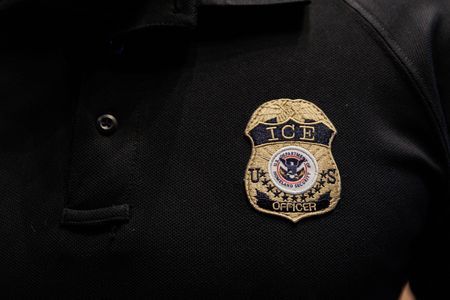
Immigration and Customs Enforcement personnel will be positioned at airports across the country to address mounting delays at security checkpoints, according to border czar Tom Homan.
The ICE officers will assist the Transportation Security Administration in managing increasingly lengthy lines while simultaneously carrying out immigration enforcement duties, Homan confirmed.
“ICE agents will help the Transportation Security Administration ‘move those lines’ while also enforcing immigration law,” Homan stated.
The deployment comes as airports nationwide experience significant bottlenecks at security screening areas, causing frustration for travelers and operational challenges for aviation facilities.
The dual-purpose mission will allow federal immigration officers to support airport operations while maintaining their primary enforcement responsibilities.
WASHINGTON — Immigration officers are being deployed to airports across the country under orders from President Donald Trump to address massive security line delays caused by a government funding standoff that has left airport screeners working without paychecks and passengers facing extensive wait times.
The president confirmed Sunday that he was moving forward with his plan to send ICE agents to assist the Transportation Security Administration starting Monday, following through on his weekend ultimatum to Democrats regarding Department of Homeland Security funding.
The partial government shutdown has left hundreds of thousands of DHS employees — including TSA agents, Secret Service personnel, and Coast Guard members — working without compensation after Congress failed to approve agency funding last month. Democratic lawmakers continue to demand significant reforms to federal immigration enforcement practices and show no indication of compromising.
Tom Homan, Trump’s White House border czar overseeing the airport initiative, has been conducting meetings with senators from both parties regarding the shutdown. While describing these discussions as “good conversations,” he acknowledged they were “not at a point yet where we’re in total agreement.”
The Senate held a rare weekend session and was expected to move forward with the confirmation of Sen. Markwayne Mullin, R-Okla., as Trump’s next homeland security secretary. Mullin’s confirmation vote could occur as early as Monday evening, as he positions himself as a stabilizing force following the controversial tenure of former DHS Secretary Kristi Noem.
During Sunday television interviews, Homan explained that the specific responsibilities and deployment numbers for Customs and Immigration Enforcement officers at airports would be determined through coordination with TSA and ICE leadership “to find out where we can fit in.”
“A plan by the end of today, where we’re sending — what airports we’re starting with and where we’re sending them. … So it’s a work in progress,” Homan stated. He emphasized that the focus would be “the large airports where there’s a long wait, like three hours.”
One possibility involves having immigration officers take over exit monitoring duties currently handled by TSA personnel, allowing those agents to return to screening operations.
“ICE agents are assigned at many airports across the country already. They do a lot of investigation, criminal investigation on smuggling at airports,” Homan explained, adding that “certainly, a highly trained ICE law enforcement officer can cover an exit and makes sure people don’t go through those exits, entering the airport through the exits. And stuff like that relieves that TSA officer to go to screening and to reduce those lines.”
Homan also suggested ICE agents could handle identification verification before passengers enter screening areas.
“We’re going to be a force multiplier,” he said.
However, Homan acknowledged limitations to the assistance immigration officers could provide. “I don’t see an ICE agent looking at an X-ray machine, because we’re not trained in that,” he noted.
Trump posted on social media Monday that “ICE will be going to airports to help our wonderful TSA Agents who have stayed on the job” despite the government shutdown, while continuing his criticism of Democratic opposition.
Airport travelers experienced significant delays Sunday as the crisis continued.
At Atlanta’s Hartsfield-Jackson International Airport, security lines stretched across the entire terminal.
“Everyone just seems to be accepting it for what it is,” said 43-year-old Blake Wilbanks, who arrived 2½ hours before his Salt Lake City departure after learning about the shutdown impacts.
“Hopeful I’m gonna make it,” he commented while standing in the lengthy security queue.
Conditions appeared even more problematic at New York’s John F. Kennedy International Airport, where large crowds of stressed travelers crowded toward security checkpoints while TSA staff used megaphones to prevent pushing among passengers.
Transportation Secretary Sean Duffy highlighted the unpredictability passengers now face regarding airport wait times.
“Do I have to come an hour and a half early? Do I have to come four hours early? They don’t know until the day of or the afternoon of their flight,” Duffy explained. “So if we can alleviate that, again, the president wants to take away that leverage point for Democrats and make travel easier for the American people.”
House Democratic leader Hakeem Jeffries of New York criticized the plan, stating “the last thing that the American people need are for untrained ICE agents to be deployed at airports all across the country” following concerns about immigration enforcement operations in Minnesota and other locations.
Homan appeared on CNN’s “State of the Union” and “Fox News Sunday,” while Duffy was interviewed on ABC’s “This Week” and Jeffries spoke on CNN.
WASHINGTON, March 22 – America possesses adequate financial resources to support its military operations against Iran, Treasury Secretary Scott Bessent declared Sunday, while confirming the administration’s pursuit of additional congressional funding to maintain future military preparedness.
During an appearance on NBC News’ “Meet the Press,” Bessent also dismissed any possibility of implementing tax increases to finance the military conflict.
The military’s appeal for $200 billion in extra funding for Iranian operations encounters significant congressional resistance, with both Democratic lawmakers and some Republican members challenging the necessity following substantial defense allocations approved last year.
Bessent supported the funding appeal while declining to verify the specific dollar amount.
President Donald Trump has yet to formally submit the request to both chambers of Congress, and his administration has indicated the figure remains subject to modification.
“We have plenty of money to fund this war,” Bessent stated. “This is supplemental. President Trump has built up the military, as he did in his first term, as he is now doing in his second term, and he wants to make sure that the military is well supplied going forward.”
Defense Secretary Pete Hegseth indicated last week that additional funding was necessary “to ensure that we’re properly funded for what’s been done, for what we may have to do in the future.”
Bessent characterized inquiries about potential tax hikes as “ridiculous” and confirmed such measures were “not at all” being considered.
Initial assessments indicate this conflict may become America’s costliest military engagement since the extended wars in Iraq and Afghanistan. Administration representatives informed legislators that the initial six days of Iranian operations exceeded $11 billion in expenses.
The Republican-controlled Congress has already authorized unprecedented military funding since Trump’s second term commenced in January 2025. Last month, he enacted the Fiscal 2026 Defense Appropriations Act, providing approximately $840 billion in military funding.
Additionally, last summer, despite Democratic opposition, the Republican-led Congress enacted comprehensive tax reduction and spending legislation that allocated $156 billion for defense purposes.
Bessent also justified the Trump administration’s recent decision to remove sanctions on Iranian and Russian petroleum. This approach, he contended, would enable nations beyond China — including Japan and South Korea — to acquire the oil, while preventing petroleum prices from reaching $150 per barrel and diminishing overall revenues for Iran and Russia.
According to his statement, Treasury analysis indicated that Russia’s maximum additional oil revenue would reach $2 billion.
While President Donald Trump remains the primary target for Democrats, several prominent party leaders are shifting their attention toward Vice President JD Vance as they prepare for the 2028 presidential race.
Kentucky Governor Andy Beshear made this strategy clear during a weekend visit to Butler County, Ohio — Vance’s birthplace — where he delivered sharp criticism of the vice president at a Democratic fundraising event Saturday evening.
Beshear attacked Vance’s well-known autobiography about his difficult childhood, claiming the vice president had turned his back on the very communities he once chronicled.
“His book ‘Hillbilly Elegy’ was really hillbilly hate,” Beshear told the fundraiser audience. “It is poverty tourism, because he ain’t from Appalachia.” The governor also described the memoir as having “trafficked in tired stereotypes.”
Beshear’s pointed remarks signal both his own potential White House ambitions and recognition of Vance’s position as Trump’s likely successor within the Republican movement.
Democratic strategist Lis Smith emphasized the importance of early opposition research against the 41-year-old vice president. “With every day that passes, we get closer to a day when Donald Trump is no longer president. And we need to prepare for that day,” Smith explained. “Right now, JD Vance is a clear front-runner for the 2028 nomination. And so we should begin defining him — not in 2027, not in 2028 — but today.”
Vance’s team dismissed Beshear’s comments through spokesperson Taylor Van Kirk, who responded: “Every time Andy Beshear attacks the vice president to try to get himself publicity, he ends up humiliating himself in the process, but maybe that’s something he’s into?”
California Representative Ro Khanna was among the earliest Democrats to concentrate on Vance, delivering speeches at the City Club of Cleveland and Yale University — where both he and Vance attended law school — that portrayed the vice president as more radical than Trump.
Pennsylvania Governor Josh Shapiro, considered another possible 2028 Democratic candidate, criticized Vance in November while arguing the current administration doesn’t support working Americans. “At least with Donald Trump, he’s transparent about that,” Shapiro stated. “JD Vance is a total phony.”
California Governor Gavin Newsom has adopted an especially aggressive approach, creating the social media nickname “JD ‘Just Dance’ Vance” and mocking his physical appearance by saying Vance “grew a beard and lost his spine.”
Smith, who managed Pete Buttigieg’s 2020 presidential campaign and continues working with the former Transportation Secretary, views these attacks as rehearsals for future campaigns. “There’s definitely value in taking on Vance to show Democrats, hey, this could be me on the debate stage against him,” she noted.
Vance grew up in Middletown, located in Butler County, and gained national recognition when “Hillbilly Elegy” was published in 2016. The book established his reputation as someone who could interpret Trump’s appeal among middle America, particularly working-class, rural white voters who helped secure Trump’s initial victory.
This background helped Vance win his 2022 Senate race and eventually the vice presidency. The same narrative will likely form the foundation of any future presidential campaign — making it a prime target for Democratic opposition.
Saturday’s fundraiser audience clearly responded negatively when Vance’s name was mentioned, erupting in boos.
“I don’t think he’s got the magic that everybody looks at with Trump,” said Theresa Vacheresse, a retired physician and business owner who attended the event. “I think when Trump is gone, the Democrats might have a chance. My god, I hope so.”
This early focus on a sitting vice president follows typical political patterns, especially for someone as young as Vance who’s viewed as a future nominee. Republicans similarly targeted Kamala Harris during her time under President Joe Biden to damage her political prospects.
Jamal Simmons, who served as Harris’ communications director in 2022 and 2023, explained the vulnerability of the vice presidential position. “The party is built to defend the president more than it is the vice president,” he observed. “The vice president’s kind of out there on their own, to defend themself, and find friends where they can.”
Republicans, including Vance, regularly connected Harris to challenging Democratic policies like immigration and border security during her tenure.
David Axelrod, former senior adviser to President Barack Obama, described the vice presidency’s challenges: “Being vice president is a very mixed blessing. You often don’t have the assets of the president, but you inherit all of the president’s record. The good, the bad, and the ugly.”
Beshear represents an unusual case as a Democratic governor leading a heavily Republican state, positioning himself as someone capable of reaching voters who have rejected his party.
He argued Democrats can “actually go and win back those voters that JD Vance is so condescending to” by concentrating on fundamental American concerns like affordable healthcare and public safety.
“We’ve gotta start talking to people and not at them,” Beshear said. “That’s how I won counties in eastern Kentucky that normally vote for Republicans by large margins — including Breathitt County. That’s the county JD Vance pretends to be from. Donald Trump won it by 59 points. I won it by 22 points the year earlier.”
The fundraiser attendees responded enthusiastically to Beshear’s presentation.
“I think he’s first-rate,” said Mark Kaplan, a Butler County resident. “What he’s got is compassion, empathy, charisma and intellect, but he’s also down-to-earth.”
President Donald Trump announced Sunday that Immigration and Customs Enforcement officers will be deployed to airports nationwide beginning Monday to support Transportation Security Administration workers.
In a Truth Social message posted Sunday, Trump stated: “On Monday, ICE will be going to airports to help our wonderful TSA Agents who have stayed on the job.”
The announcement comes after Trump issued an ultimatum to congressional Democrats on Saturday, warning he would send ICE personnel to airports on Monday unless lawmakers immediately approved funding for airport security measures.
JUNEAU, Alaska — In the remote Alaska Native community of Beaver, approximately 50 residents depend on aircraft to deliver everything from groceries to mail, with flights operating only on weekdays to connect them to the nearest city 40 minutes away.
Aviation serves as a lifeline throughout America’s largest state, where most settlements depend on air transportation for year-round connectivity. Aircraft also serve an essential function during elections, transporting voting materials and completed ballots to and from isolated polling locations like Beaver, while delivering mail-in ballots for thousands of Alaskans—including those in areas where polling places don’t exist.
The enormous distances and remote nature of numerous Alaskan communities create unique circumstances, which is why residents are closely watching Monday’s U.S. Supreme Court arguments with considerable concern.
Local officials fear that a Mississippi lawsuit questioning whether ballots arriving after Election Day should count in federal races might eliminate Alaska’s current policy of accepting delayed ballots. The state currently tallies ballots postmarked by Election Day that arrive within 10 days, extending to 15 days for overseas military voters during general elections.
“These processes have been in place for a long time just to ensure that our ballots are counted,” said Rhonda Pitka, a poll worker and first chief in Beaver, which sits along the Yukon River 110 miles (177 kilometers) north of Fairbanks.
Should the court mandate that all states receive ballots by Election Day, she explained, “They’ll be disenfranchising thousands of people — thousands of people in these rural communities. It’s just basically saying that their votes don’t count, and that’s a real shame.”
According to data from the National Conference of State Legislatures and the Voting Rights Lab, Alaska joins 13 other states in permitting all mailed ballots with Election Day postmarks to be counted when they arrive days or weeks afterward. Another 15 states offer similar extensions exclusively for military and overseas ballots.
However, Alaska’s terrain, climate conditions, and vast spaces between settlements—the state covers more than double the area of Texas, the country’s second-largest state—create higher stakes for voters. The state’s distinctive vote-counting method also makes the grace period crucial, according to advocates.
Alaska’s ranked-choice voting system for general elections requires workers in remote rural precincts to phone in voters’ initial preferences to regional election headquarters. Nevertheless, all physical ballots must eventually be transported by air to the state Division of Elections in Juneau, the capital, where races without clear winners undergo final tabulation.
Despite Alaska’s existing 10-day extension, some village ballots in 2022 went uncounted due to postal delays. These ballots reached Juneau too late for tabulation, arriving 15 days post-Election Day.
Should the Supreme Court determine that ballots arriving at election offices after Election Day cannot be counted, numerous Alaska voters could lose their voice. Approximately 50,000 Alaskans cast mail-in ballots during the 2024 presidential race.
“I think there’s probably no other state where this ruling could have a more detrimental impact than ours,” Alaska’s senior U.S. senator, Republican Lisa Murkowski said in an interview.
Murkowski interprets the case—a Republican National Committee challenge to Mississippi’s late-ballot acceptance policy—as an attempt to eliminate mail-in voting across the nation.
The RNC contends that such extensions illegally prolong federal elections, while Mississippi counters that no voting happens after Election Day—only the transport and counting of ballots already completed.
The Supreme Court hearing coincides with Senate debate over President Donald Trump-backed legislation requiring citizenship proof for voter registration and photo identification for ballot casting.
Combined, Murkowski believes these initiatives could discourage voter participation.
“I think we’re seeing a level of voter intimidation, I’ll just say it,” she said. “I feel very, very strongly that the effort that we should be making at the federal level is to do all that we can to make our elections accessible, fair and transparent for every lawful voter out there.”
Alaska’s remaining congressional representatives, Rep. Nick Begich and Sen. Dan Sullivan, both Trump-supporting Republicans seeking reelection, back the SAVE America Act currently before the Senate. However, they also emphasized ensuring that ballots properly submitted on or before Election Day receive counting.
“We’ll see what the courts choose to do on that issue, but I do think that we need to allow for time for ballots to come in from the rural parts of our state,” Begich said during a recent visit to Juneau.
A court document filed in the Mississippi case by Alaska Attorney General Stephen Cox and Solicitor General Jenna Lorence remained neutral but detailed geographic and logistical obstacles to conducting Alaska elections.
In Atqasuk, located on Alaska’s North Slope, poll workers tallied votes on election night in 2024, results they typically would report by telephone to election division officials. However, the filing noted they couldn’t establish contact and “chose what they saw as the next best solution — they placed the ballots and tally sheets into a secure package and mailed them to the Division, who did not receive them until nine days later.”
The document requests Supreme Court clarification, especially regarding the definition of ballots being received by Election Day.
While ballot casting timing is clear, “when certain ballots are actually ‘received’ is open to different interpretations, especially given the connectivity challenges for Alaska’s far-flung boroughs,” Cox and Lorence wrote.
Attorneys from the Native American Rights Fund and Great Lakes Indigenous Law Center argued in court filings that restricted postal service in rural regions means some ballots might not receive postmarks until reaching Anchorage or Juneau, a process requiring several days.
During the 2022 general election, between 55% and 78% of absentee ballots from state House districts stretching from the Aleutian Islands along the western coast to the expansive North Slope reached election offices after Election Day, they documented. Across the entire state, roughly 20% of all absentee ballots in that election arrived post-Election Day.
Mandating Election Day ballot receipt, they cautioned, would “disproportionately disenfranchise” Alaska Native voters. The attorneys represent the National Congress of American Indians, Native Vote Washington and the Alaska Federation of Natives.
Michelle Sparck, director of Get Out the Native Vote, a nonpartisan voting rights advocacy organization affiliated with the Alaska Federation of Natives, expresses concern about generating voter confusion and anxiety.
She views the Supreme Court case and the Republican SAVE Act as “a multipronged attempt to take control or wrest control of elections away from states.” Alaska, she noted, already presents sufficient natural obstacles for many voters.
“There is a minute record of election fraud — not at the rate that requires this heavy-handed response through the legislature and the Supreme Court,” she said.
Organizations nationwide are mobilizing to assist Transportation Security Administration workers who have gone without complete paychecks for over a month during the ongoing partial government shutdown impacting the Department of Homeland Security.
World Central Kitchen, an organization typically known for providing meals in conflict zones and disaster-stricken areas, began delivering food to airports in the Washington, D.C. region when many TSA workers missed their initial complete paycheck. This Thursday, Feeding San Diego started handing out 400 food packages containing pasta, beans, peanut butter, and fresh items like strawberries and potatoes to affected workers near the airport following a request from TSA and the San Diego County Regional Airport Authority.
Charitable organizations are intervening to provide assistance while coordinating closely with airports and local TSA facilities, as federal ethics regulations regarding gifts to government employees create challenges for shutdown-affected workers seeking direct aid.
Carissa Casares from Feeding San Diego explained that working with airport officials allows them to better customize their resources and response to meet TSA employees’ specific needs.
“We need to work directly with the people who have direct access to these employees and get this food to them at a time and location that is most convenient to them,” Casares said.
This Saturday will mark the 36th day that the Department of Homeland Security has remained closed after Democrats refused to fund Immigration and Customs Enforcement and Customs Border Protection without operational changes following the deaths of Alex Pretti and Renee Good in Minneapolis.
Over 120,000 DHS workers are continuing their duties without compensation, including approximately 50,000 Transportation Security Administration officers, as discussions between legislators and the White House regarding immigration enforcement limitations continue.
This funding gap occurs just months following a 43-day government closure, the nation’s longest on record, which created extensive lines at food distribution centers nationwide as more than 700,000 federal employees worked without wages.
For individuals wanting to provide assistance, simply approaching airports to give cash or gift cards directly to TSA officers isn’t possible, as they cannot accept gifts at screening areas, according to a DHS representative.
However, Aaron Barker, president of AFGE Local 554 in Georgia, explained that TSA officer unions operate under different restrictions and can receive donations for distribution to their members. Barker suggests donors locate their local union district through the AFGE website or contribute through their area labor council.
“For some people it can be life or death,” said Barker. “It’s just sad and terrible that this is happening.”
Union members have informed Barker they cannot afford utility payments or their children’s medical treatments. Some have received eviction warnings or experienced vehicle repossessions. They’re also struggling to purchase everyday necessities.
“People don’t think about the things they just naturally have in their home, like toothpaste, bathroom tissue, milk, detergent, dish liquid,” he said. “I’m sure those things are a necessity for every TSA officer.”
Still, no donation can match the effectiveness of ending the shutdown. “The first thing they want is their paycheck,” said Barker. “The money is the most immediate need.”
Operation Food Search is collaborating closely with TSA to safely provide food and establish a temporary pantry at St. Louis Lambert International Airport.
The Missouri hunger relief organization’s CEO noted this marks their first time distributing directly to TSA employees at their workplace.
“It removes their need to make an extra trip and drive here,” Kristen Wild said. “So we’re really excited that the airport allowed us to directly serve right there.”
They distributed slightly more than half of their 400 prepared food packages during a 2-hour window earlier this week, Wild reported. Each package held just under $20 worth of shelf-stable items including apple sauce, pasta, rice and beans. Regulations prevent federal employees from requesting or accepting gifts or monetary items exceeding $20 if connected to their government role.
Wild mentioned she believed the $20 restriction might be suspended since they were providing food through airport-approved methods.
“We didn’t know for sure,” Wild said. “But to play it safe we just kept it right under the $20 per bag amount so there would be no challenge to it.”
Seattle-Tacoma International Airport officials managed PETA donations and local food bank deliveries Friday afternoon while stocking their private pantry for off-duty TSA personnel.
They’ve also witnessed restaurant vendors, typically focused on serving travelers, stepping forward. Airport businesses have provided discounts and contributed through TSA to pay for complete shifts’ meals, according to airport spokesperson Perry Cooper.
“You know a lot of these people,” Cooper said. “You see faces and that throughout the day as you’re wandering through. And then to realize that some of these folks are here and they’re not getting paid, you know, really tugs at your heart to think what’s a way that we can help.”
The airport community’s assistance supplements approximately $6,000 they’ve collected in cash and gift cards plus an additional $10,000 in food and household items, Cooper reported. This includes contributions from the air traffic controllers’ labor union, whose positions remain unaffected by this partial shutdown but who recognize the stress of working without compensation from complete government closures.
More than 460 individuals collected fresh produce when local organization Food Lifeline delivered a truck load last Friday, Cooper stated. Most participants were TSA employees, Cooper noted, though some attendees might have been homeless individuals. Containers filled with pineapples and broccoli covered folding tables along the airport’s primary roadway.
Frequent flyers like Musie Hidad said he considers the TSA agents working without payment each time he passes through security.
“The work they are doing is serious and they aren’t getting paid for it,” said Hidad, an Amarillo, Texas, resident, who was traveling to Columbus, Ohio, for work. “My heart goes out to them.”
President Trump has issued a warning that Immigration and Customs Enforcement officers could be sent to handle security duties at airports nationwide if congressional Democrats refuse to approve funding legislation.
In a post on his Truth Social platform, Trump stated: “If the Democrats do not allow for Just and Proper Security at our Airports, and elsewhere throughout our Country, ICE will do the job far better than ever done before!” He continued in the same message: “I look forward to moving ICE in on Monday, and have already told them to, ‘GET READY.’ NO MORE WAITING, NO MORE GAMES!”
The president’s social media warning came just hours after tech billionaire Elon Musk announced he would pay the wages of airport security workers who have been operating without compensation since mid-February.
The Department of Homeland Security has remained shuttered for more than 30 days now. Democratic lawmakers refuse to authorize funding for the agency unless Republican colleagues abandon the administration’s widely-supported mass deportation initiatives.
Close to 600 immigrant children were detained at a Texas family holding center in recent months under inadequate conditions lacking proper food, healthcare and mental health support, with many staying well past legally mandated time limits, new court filings reveal.
The Dilley detention center, where 5-year-old Liam Conejo Ramos and his father were housed earlier this year, experienced disease outbreaks and extended lockdowns during December and January, according to attorney reports and facility inspections. The total population of children at Dilley has decreased in recent weeks.
Young Ramos, who was spotted wearing a blue bunny hat when Immigration and Customs Enforcement agents apprehended him in Minnesota, became a symbol of opposition to the Trump administration’s immigration enforcement policies. Fellow detainees organized demonstrations within Dilley’s fenced perimeter, displaying protest signs in the facility’s courtyard.
Approximately 85 children remained in custody at Dilley as of last week, but troubling circumstances persist, according to Mishan Wroe, directing attorney at the National Center for Youth Law, following her mid-March visit. A legal representative observed roughly 280 children during early February.
Court documents detailed heartbreaking individual situations, including a 13-year-old girl at Dilley who attempted suicide after personnel refused her prescribed antidepressants and rejected her plea to reunite with her mother, as documented by The Associated Press. Government records claimed there were “no placements on suicide watch,” the filing noted. The AP secured the girl’s Dilley release paperwork describing a “suicide attempt by cutting of wrist” and “self-harm.”
These documents were submitted as part of litigation initiated in 1985 that resulted in court-mandated oversight established in 1997 and ultimately created a 20-day custody limitation. The Trump administration is attempting to terminate the Flores agreement.
“For years, the Flores consent decree has been a tool of the left that is antithetical to the law and wastes valuable U.S. taxpayer funded resources,” the Department of Homeland Security said in a statement. “Being in detention is a choice.”
Legal representatives for detainees emphasized government statistics revealing extended detention periods for immigrant children, while also documenting contaminated food containing worms and inadequate access to healthcare and legal representation as reported by families and facility monitors.
“Dilley remains a hellhole,” said Leecia Welch, the chief legal director at Children’s Rights, who visits Dilley regularly to ensure compliance. “Although the number of children has decreased, the suffering remains the same.”
The facility has been modified to accommodate families, providing basic needs including sufficient food and water during detention, while the Trump administration works to expedite deportations, the DHS spokesperson noted.
Immigration and Customs Enforcement data revealed approximately 595 immigrant children were detained beyond the 20-day threshold during December and January, with some cases extending for months, according to the filing.
“Approximately 265 of these children were detained for more than 50 days and a shocking 55 children were detained more than 100 days,” the filing stated.
This represents an increase from earlier government disclosures showing 400 children held at Dilley past the 20-day limit between August and September of last year. DHS has not responded to requests for comment regarding this data.
Chief U.S. District Judge Dolly Gee of the Central District of California has scheduled a hearing on this case for later this month.
WASHINGTON — Former President Donald Trump announced Saturday his intention to deploy federal immigration enforcement agents at airports beginning Monday if Congressional Democrats refuse to approve funding for the Department of Homeland Security.
Through a series of social media messages, Trump initially issued the threat before confirming he had directed U.S. Immigration and Customs Enforcement officers to prepare for airport deployment amid the ongoing legislative impasse. His declaration comes during a partial government shutdown that has resulted in extended wait times at security checkpoints in major airports across the country.
The former Republican commander-in-chief indicated that ICE personnel would extend the administration’s immigration enforcement efforts to airport facilities, vowing to detain “all Illegal Immigrants.”
“I look forward to moving ICE in on Monday, and have already told them to, ‘GET READY.’ NO MORE WAITING, NO MORE GAMES!” Trump posted while vacationing in Florida over the weekend.
This action represents a calculated strategy to broaden immigration enforcement activities that have become a source of Congressional friction. Democratic lawmakers have refused to support DHS funding without reforms following a Minnesota enforcement operation that resulted in two protesters being fatally shot. Democrats are demanding enhanced identification requirements for federal law enforcement personnel, establishment of new conduct standards for these agencies, and increased reliance on court-issued warrants, among other reforms.
The Minnesota enforcement action was partially connected to suspected fraud cases involving Somali community members. Trump stated Saturday that ICE agents deployed to airports would prioritize apprehending Somali nationals present in the country without authorization. Continuing his criticism of Somalis, he claimed they have “totally destroyed” Minnesota.
“If the Democrats do not allow for Just and Proper Security at our Airports, and elsewhere throughout our Country, ICE will do the job far better than ever done before,” Trump declared.
Trump’s statements provided no specific details regarding ICE’s planned airport security role or how this would affect the Transportation Security Administration, which currently handles passenger and baggage screening for dangerous materials.
Most TSA personnel are classified as essential workers and remain on duty during the funding gap, though they are working without compensation. Absence rates have begun climbing at certain airports, and DHS reported that at least 376 employees have resigned since the partial shutdown started February 14.
During an unusual Saturday session, Senate Democrats’ motion to consider legislation reopening TSA and compensating unpaid workers was defeated. Republicans maintain they must fund the entire DHS rather than selective components. Senate efforts to advance comprehensive department funding legislation stalled Friday.
However, encouraging developments emerged as previously suspended negotiations between Democrats and the White House resumed in recent days. Saturday marked the third straight day of closed-door meetings between Republican and Democratic senators and White House representatives, with Senate Democratic leader Chuck Schumer of New York describing “productive conversations.”
Senate Majority Leader John Thune, R-S.D., pressed the bipartisan working group for swift action. He has repeatedly emphasized the need for Democratic and White House compromise as airport delays have increased.
“If that group that’s meeting can’t come up with a solution really quickly, things are going to get worse and worse,” Thune warned Saturday.
WASHINGTON — During an unusual Saturday legislative session, U.S. senators defeated a proposed amendment targeting transgender participation in women’s athletics, turning down one of President Donald Trump’s key demands as lawmakers deliberated comprehensive voting legislation.
The weekend Senate session focused on debating voting reforms that would establish stringent voter registration protocols and mandate photo identification at polling locations, aimed at preventing illegal voting by non-citizens.
While the House approved this legislation earlier in the year, Trump has since demanded lawmakers incorporate additional measures, including restrictions on transgender athletes and elimination of mail-in voting options.
Democratic opposition is anticipated to ultimately defeat the comprehensive package. Republican senators have acknowledged lacking sufficient support to eliminate the legislative filibuster, which requires 60 votes in the 100-member chamber, or devise alternative strategies to advance the bill. The GOP controls 53 Senate seats.
Nevertheless, Republicans brought the measure to the floor this week for extended discussion, as Trump has threatened to reject other legislation until the voting bill passes. Senate Majority Leader John Thune of South Dakota stated Saturday morning that Republicans “haven’t made any final decisions about how to conclude this.”
“What we are trying to do is ensure that we are having a fulsome debate,” Thune explained, adding they want to put everyone on record “one way or the other.”
The defeated amendment, which lost by a 49-41 margin, would have imposed financial penalties on educational institutions receiving federal funds if they allowed individuals born male to compete “in an athletic program or activity that is designated for women or girls.”
Trump has also pushed Congress to prohibit gender reassignment procedures for certain minors within the voting bill framework. Senate leadership has not indicated whether this proposal will receive a floor vote.
Additionally, Trump seeks to incorporate restrictions on mail-in balloting into the House-approved measure. The former president has long criticized mail voting and made it central to his attempts to challenge his 2020 election loss to Democrat Joe Biden. Such mail voting restrictions would likely encounter significant legislative resistance.
Former FBI Director Robert Mueller, the decorated law enforcement veteran who investigated Russian meddling in the 2016 presidential election, has passed away at age 81, according to reports from multiple news organizations Saturday.
News outlets including MS NOW and The New York Times confirmed Mueller’s death through a family statement, though no specific cause was provided. The Times had previously reported that Mueller was battling Parkinson’s disease.
A Vietnam War hero who received the Bronze Star and Purple Heart, Mueller stepped down as FBI director in 2013 after serving 12 years in the role. He was called back to government service four years later when Deputy Attorney General Rod Rosenstein appointed him as special counsel to investigate Russian election interference following President Trump’s dismissal of FBI Director James Comey.
Mueller’s extensive 22-month investigation resulted in charges against 34 individuals, including multiple Trump associates, Russian intelligence operatives, and three Russian organizations. The probe led to several guilty pleas and convictions, though Mueller chose not to pursue criminal charges against the sitting president, leaving many Democrats frustrated.
Former President Trump responded to news of Mueller’s death on his Truth Social platform Saturday, writing: “Good, I’m glad he’s dead. He can no longer hurt innocent people!”
Throughout his distinguished career, Mueller maintained a reserved, professional demeanor that contrasted sharply with Trump’s confrontational style. Colleagues sometimes referred to him as “Bobby Three Sticks” due to his full name, Robert Mueller III, though this nickname didn’t reflect his serious, methodical approach to law enforcement.
Mueller’s comprehensive investigation, documented in a 448-page report released in 2019, exposed what he and intelligence officials characterized as an extensive Russian operation involving cyberattacks and disinformation campaigns designed to create division in America, damage Hillary Clinton’s candidacy, and support Trump’s presidential bid. Russian officials denied any election interference.
During his 2019 testimony before Congress, Mueller stated: “First, our investigation found that the Russian government interfered in our election in sweeping and systematic fashion.”
He continued: “Second, the investigation did not establish that members of the Trump campaign conspired with the Russian government in its election interference activities. We did not address ‘collusion,’ which is not a legal term. Rather, we focused on whether the evidence was sufficient to charge any member of the campaign with taking part in a criminal conspiracy. It was not.”
When examining potential obstruction of justice charges against Trump, Mueller reviewed multiple incidents, including the president’s attempts to remove the special counsel and restrict the investigation’s scope, as well as efforts to conceal a 2016 Trump Tower meeting between campaign officials and Russian representatives. Notably, Mueller refrained from clearing the president of wrongdoing, contrary to Trump’s assertions.
“Based on Justice Department policy and principles of fairness, we decided we would not make a determination as to whether the president committed a crime,” Mueller explained to lawmakers.
“The president was not exculpated for the acts that he allegedly committed,” he emphasized.
The investigation revealed what Mueller’s report described as “numerous links” between Russian officials and Trump’s campaign team, noting that the campaign “expected it would benefit electorally from information stolen and released through Russian efforts,” referring to hacked Democratic Party communications.
Despite being a longtime Republican, Mueller endured constant criticism from Trump and his supporters who questioned his credibility and sought to undermine the investigation. Trump regularly used social media and public appearances to attack Mueller, calling the probe a politically motivated “rigged witch hunt” and claiming Mueller had gone “rogue.”
“It’s all a big hoax,” Trump declared in 2019.
Mueller firmly rejected this characterization during congressional testimony, responding: “Absolutely, it was not a hoax,” while pointing to the numerous criminal charges that resulted from his investigation.
Several high-profile Trump associates faced consequences from Mueller’s work. Campaign chairman Paul Manafort was found guilty in 2018 on eight financial crimes and admitted guilt to two additional charges, receiving a seven-and-a-half-year prison term. Political operative Roger Stone was convicted in 2019 on seven counts including lying to Congress and witness intimidation, earning a sentence of more than three years. National Security Advisor Michael Flynn pleaded guilty to lying to federal investigators. Trump later pardoned all three men.
President George W. Bush selected Mueller to head the FBI, and he assumed the position just one week before the September 11, 2001 terrorist attacks that killed approximately 3,000 Americans. President Obama subsequently extended Mueller’s tenure, making him the longest-serving FBI director since J. Edgar Hoover’s 48-year leadership.
Mueller earned recognition for transforming the FBI following congressional and independent commission findings that the bureau and CIA had failed to share crucial information that might have prevented the 9/11 attacks. He restructured the agency to prioritize national security alongside traditional law enforcement, increasing counterterrorism resources and enhancing collaboration with other federal agencies.
In 2004, Mueller demonstrated his principles when he and then-Deputy Attorney General James Comey threatened to resign over a Bush administration domestic surveillance program that the Justice Department considered unconstitutional. The two officials rushed to a Washington hospital to prevent White House staff from pressuring the hospitalized Attorney General John Ashcroft, who was recovering from gallbladder surgery, to approve the controversial program.
Comey later replaced Mueller as FBI director in 2013, only to be dismissed by Trump years later.
Born to a wealthy New York family, Mueller was raised near Philadelphia and graduated from Princeton University before earning a master’s degree at New York University. He served three years as a Marine Corps officer, commanding a rifle unit in Vietnam and earning military decorations including the Bronze Star and Purple Heart.
After obtaining his law degree from the University of Virginia, Mueller became a federal prosecutor and eventually led the Justice Department’s criminal division, overseeing major cases including the prosecution of crime boss John J. Gotti and the investigation into the Pan Am Flight 103 bombing over Scotland, before Bush selected him to direct the FBI.
Former Massachusetts Governor William Weld, who served as U.S. attorney in Boston before Mueller, told The New York Times in 2013: “He really hates the bad guys.”
Mueller is survived by his wife Ann and their two daughters.
Robert S. Mueller III, the former Federal Bureau of Investigation Director who became a household name for leading the special counsel investigation into Russian interference in the 2016 presidential election, has died at the age of 81.
The former law enforcement official’s passing comes after his family revealed to The New York Times last August that Mueller had received a Parkinson’s disease diagnosis.
Mueller served as FBI Director from 2001 to 2013, leading the bureau through the aftermath of the September 11 attacks and helping to reshape the agency’s focus on counterterrorism efforts. However, he gained widespread public recognition when he was appointed as special counsel in May 2017 to investigate potential ties between Russia and Donald Trump’s presidential campaign.
The Mueller investigation, which lasted nearly two years, resulted in charges against 34 individuals and three organizations, including several former Trump campaign officials and Russian operatives.
WASHINGTON — Robert S. Mueller III, the former FBI chief who reshaped America’s top law enforcement agency following the September 11 attacks and subsequently led the special counsel investigation into Russian interference in Donald Trump’s 2016 presidential campaign, passed away Friday evening. He was 81 years old.
Mueller’s family announced his passing in a Saturday statement, saying “With deep sadness, we are sharing the news that Bob passed away” on Friday night. “His family asks that their privacy be respected.”
During his time leading the FBI, Mueller immediately began restructuring the agency’s core mission to address 21st-century law enforcement challenges. He started his 12-year leadership role just seven days before the September 11 terrorist attacks, working under presidents from both major political parties after being appointed by Republican President George W. Bush.
The devastating attacks immediately transformed the bureau’s primary focus from investigating domestic crimes to preventing terrorist activities — a change that created an enormously challenging standard for Mueller and federal officials: stopping 99 out of 100 terrorist schemes wasn’t sufficient.
Years later, Mueller returned to public service as the Justice Department’s special counsel examining whether Trump’s campaign unlawfully collaborated with Russia to influence the 2016 election results.
Trump responded to news of Mueller’s death on social media, writing: “Robert Mueller just died. Good, I’m glad he’s dead.” The Republican former president continued, “He can no longer hurt innocent people!”
The FBI has not yet provided a response to requests for comment.
Mueller served as the FBI’s second-longest director in the agency’s history, trailing only J. Edgar Hoover. He remained in position until 2013 after accepting Democratic President Barack Obama’s invitation to extend his service beyond the standard 10-year term.
Following several years working in private legal practice, Deputy Attorney General Rod Rosenstein recruited Mueller back to government service to oversee the Trump-Russia investigation as special counsel.
Mueller’s serious expression and reserved personality reflected the gravity of his assignment, as his investigative team spent almost two years quietly pursuing one of the Justice Department’s most significant yet controversial inquiries. Throughout the investigation, he avoided press conferences and public events, staying silent despite criticism from Trump and his allies, which created an air of intrigue surrounding his work.
Mueller’s investigation resulted in criminal charges against six Trump associates, including his campaign manager and initial national security advisor.
His comprehensive 448-page report, published in April 2019, documented extensive communications between Trump’s campaign and Russian officials but stopped short of alleging criminal conspiracy. The report detailed concerning information about Trump’s attempts to control and potentially terminate the investigation, though Mueller chose not to determine whether Trump violated the law, partly due to Justice Department guidelines prohibiting charges against sitting presidents.
In what became the report’s most notable language, Mueller specifically stated: “If we had confidence after a thorough investigation of the facts that the president clearly did not commit obstruction of justice, we would so state. Based on the facts and the applicable legal standards, we are unable to reach that judgment.”
The ambiguous findings failed to deliver the decisive blow against the administration that Trump critics anticipated, and didn’t spark sustained Democratic efforts to impeach the president — although he later faced impeachment and acquittal on different charges involving Ukraine.
The uncertain conclusion allowed Attorney General William Barr to offer his own interpretation. Barr and his team concluded that Trump hadn’t obstructed justice, leading to private disagreements between Barr and Mueller over Barr’s four-page summary letter, which Mueller believed inadequately represented his report’s critical findings.
Mueller disappointed Democrats during a much-anticipated congressional hearing about his report, providing brief, single-word responses and appearing unsure during his testimony. He frequently seemed unclear about details from his investigation, delivering a far less commanding performance than many expected from someone with Mueller’s distinguished Washington reputation.
In subsequent months, Barr openly disagreed with the Russia investigation’s foundation, working to dismiss false-statement charges Mueller had filed against former national security advisor Michael Flynn, despite Flynn’s guilty plea.
Mueller’s role as special counsel represented the pinnacle of his government career.
His FBI leadership was shaped by the September 11 attacks and their consequences, as the bureau received extensive new surveillance and national security authority while working to confront al-Qaeda and disrupt terrorist plans before they could be executed.
This represented a new approach for an FBI traditionally focused on investigating crimes after they occurred.
When Mueller became FBI director, he told a group of attorneys in October 2012: “I had expected to focus on areas familiar to me as a prosecutor: drug cases, white-collar criminal cases and violent crime.”
Instead, “we had to focus on long-term, strategic change. We had to enhance our intelligence capabilities and upgrade our technology. We had to build upon strong partnerships and forge new friendships, both here at home and abroad.”
The FBI reassigned 2,000 of its 5,000 criminal program agents to national security work in response.
Looking back, the transformation proved successful, though Mueller acknowledged problems at the time. Near the end of his tenure, Mueller recalled “those days when we were under attack by the media and being clobbered by Congress; when the attorney general was not at all happy with me.”
Among the challenges: The Justice Department’s inspector general discovered the FBI violated legal procedures to obtain thousands of phone records for terrorism investigations.
Mueller established a policy preventing FBI participation in abusive interrogation methods against suspected terrorists, but this policy wasn’t properly communicated throughout the organization for nearly two years. Attempting to modernize the FBI’s operations, the bureau spent more than $600 million on two computer systems — one running 2½ years behind schedule and its predecessor only partially finished before being abandoned when consultants deemed it outdated and problematic.
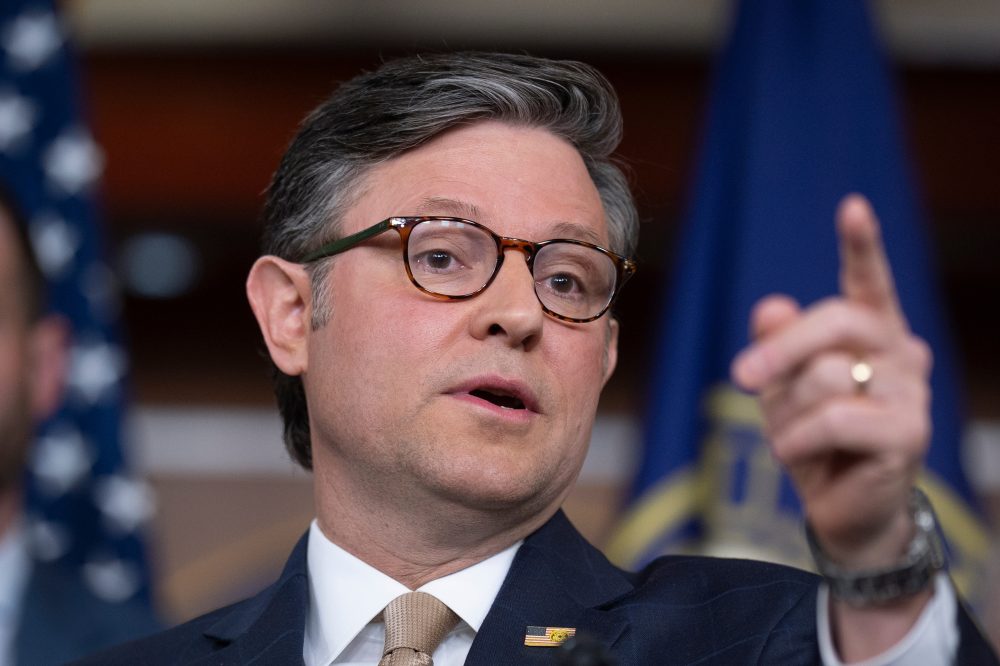
For the nation’s premier law enforcement organization, it was a challenging journey through difficult circumstances.
However, there were numerous achievements, including prevented terrorist attacks and high-profile criminal prosecutions like the case against fraudster Bernie Madoff. The Republican also maintained a nonpartisan reputation, nearly resigning during a dispute with the Bush administration over a surveillance program he and his successor, James Comey, considered illegal.
Mueller notably supported Comey, then deputy attorney general, during a dramatic 2004 hospital confrontation over federal surveillance regulations. The two officials positioned themselves beside the sick Attorney General John Ashcroft to prevent Bush administration officials from circumventing proper procedures to obtain Ashcroft’s approval for reauthorizing a secret warrantless surveillance program.
In an unusual demonstration of trust, Congress approved a two-year extension for Mueller to continue his position at the Obama administration’s request.
Mueller was born in New York City and raised in an affluent Philadelphia suburb.
He earned an undergraduate degree from Princeton University and a graduate degree in international relations from New York University. He then enlisted in the Marines, serving three years as an officer during the Vietnam War. He commanded a rifle unit and received a Bronze Star, Purple Heart, and two Navy Commendation Medals. After military service, Mueller obtained a law degree from the University of Virginia.
Mueller became a federal prosecutor and enjoyed handling criminal cases. He advanced rapidly through leadership positions in U.S. attorneys’ offices in San Francisco and Boston from 1976 to 1988. Later, as director of the Justice Department’s criminal division in Washington, he supervised numerous prominent prosecutions that achieved convictions against diverse targets including Panamanian leader Manuel Noriega and New York crime leader John Gotti.
In a surprising mid-career decision that astonished colleagues, Mueller left a position at a respected Boston law firm to join the homicide unit of the U.S. attorney’s office in Washington. There, he worked as a senior prosecutor handling numerous unsolved drug-related killings in a violence-plagued city.
Mueller was motivated by a lifelong dedication to the detailed work of developing successful criminal prosecutions. Even as FBI director, he would examine investigation specifics, including major cases and smaller ones, sometimes surprising agents who unexpectedly received calls from the director.
“The management books will tell you that as the head of an organization, you should focus on the vision,” Mueller once explained. But “for me there were and are today those areas where one needs to be substantially personally involved,” particularly regarding “the terrorist threat and the need to know and understand that threat to its roots.”
Two terrorist incidents happened near the end of Mueller’s leadership: the Boston Marathon bombing and the Fort Hood shooting in Texas. Both events deeply affected him, as he acknowledged in an interview two weeks before leaving office.
“You sit down with victims’ families, you see the pain they go through and you always wonder whether there isn’t something more” that could have been done, he said.
Federal Reserve Chairman Jerome Powell honored his predecessor Paul Volcker on Saturday, praising the former central bank leader’s courage to stand firm against political interference during his battle against inflation in the 1980s.
Powell’s tribute comes at a time when he himself is defending the Federal Reserve’s independence against pressure from the Trump administration to cut interest rates.
During the early 1980s, Volcker disregarded criticism and dramatically increased interest rates, which led to a recession but ultimately restored economic stability and controlled inflation.
“His actions remind us that independence and integrity are inseparable—we need independence to do what is right, and we need integrity to use that independence wisely,” Powell stated in a recorded message while receiving the Paul A. Volcker Public Integrity Award.
Throughout the previous year, Powell has navigated his own challenges regarding Federal Reserve autonomy, facing regular criticism from Trump who has demanded easier monetary policy and threatened to remove him from his position.
The Trump administration has also attempted to dismiss Fed Governor Lisa Cook on mortgage fraud allegations, which she is challenging in a case currently before the Supreme Court.
In January, the Department of Justice launched a criminal investigation into Powell’s oversight of renovations at the Federal Reserve’s Washington headquarters. Powell characterizes this probe as an effort to pressure him into implementing the president’s preferred policies.
This past Wednesday, Powell announced his intention to remain at the central bank until the investigation concludes, disrupting Trump’s plans to quickly install a new Fed chair who would be more receptive to demands for reduced interest rates. Powell’s leadership term expires on May 15, when Fed chairs typically step down.
A leading Republican has also promised to block Trump’s choice to succeed Powell, former Fed governor Kevin Warsh, while the Justice Department investigation continues.
“Ultimately, each of us will want to look back at the arc of our lives and know that we did what was the right thing,” Powell concluded. “As Paul Volcker showed throughout his career, in the end, our integrity is all we have.”
WASHINGTON – Robert Mueller, the former Federal Bureau of Investigation director who led the investigation into Russian meddling in the 2016 presidential race, has passed away, MS Now reported Saturday.
According to the news outlet, Mueller died Friday at the age of 81, with two sources familiar with the situation confirming the information.
Mueller gained national prominence for his role in examining alleged Russian interference during the 2016 election cycle.
ATLANTA (AP) — Airport travelers passing through one of the nation’s busiest transportation hubs shared a common message Saturday: it’s time to compensate Transportation Security Administration workers.
At Hartsfield-Jackson Atlanta International Airport, which handles millions of passengers annually, the ongoing government shutdown is creating bottlenecks at security screening areas where staff check travelers and their belongings for dangerous materials.
Concerned about potential delays that might cause them to miss their flights, numerous travelers are now showing up as much as four hours ahead of their scheduled departures.
Christian Childress, who works as a private flight attendant, has an inside view of the aviation industry. The Redwood City, California, man typically bypasses TSA security when on duty, but regularly goes through standard screening when taking commercial flights to reach his assignments. Saturday found him traveling to Nashville, Tennessee, for personal reasons.
Arriving nearly three hours before his 1:30 p.m. departure, Childress described the shutdown’s impact as inconsistent so far.
“Issue No. 1 should be paying the people who need to get paid and keeping our air travel system secure,” Childress said. “Then they can debate whatever they want to debate about homeland security.”
Transportation Security Administration workers have gone without paychecks since the Department of Homeland Security experienced a partial closure on February 14. Democratic lawmakers have refused to approve funding for the agency while other government departments continue operating normally, seeking modifications to immigration enforcement practices by federal agents after Alex Pretti and Renee Good were fatally shot in Minneapolis.
However, growing worries about extended airport delays are drawing increased public attention.
Senate lawmakers failed to move forward with a funding proposal Friday when Democrats withheld necessary support. Chuck Schumer, the Democratic leader in the Senate from New York, announced plans to present an alternative bill Saturday focused solely on TSA funding. This measure also faces likely defeat as Congress holds an unusual weekend session.
Several travelers expressed frustration with Democratic lawmakers’ approach to the shutdown.
“I don’t want to go between the Democrats and the Republicans, but I think the Democrats are holding everything up because they can’t get their way,” said Tyrone Williams, a retiree from Ellenwood, an Atlanta suburb. He was waiting in the screening line before his Saturday flight to Philadelphia.
President Donald Trump issued a warning Saturday, threatening to deploy federal immigration enforcement agents for airport security duties unless Democratic congressional members agree to fund the department.
Through a social media message, Trump stated Democrats must reach an immediate agreement or he “will move our brilliant and patriotic ICE Agents to the Airports where they will do Security like no one has ever seen before.”
The president indicated Immigration and Customs Enforcement personnel would detain “all Illegal Immigrants who have come into our Country” with particular attention to individuals from Somalia.
Trump provided no additional details, and officials have not confirmed whether any immediate plans exist to station ICE agents at airports.
Wait times at Atlanta’s security checkpoints reached as long as 90 minutes during early Saturday hours before improving to approximately 25 minutes by mid-morning on what typically represents one of the week’s lightest travel days. Personnel shortages have compelled airports to temporarily shut down screening areas, causing dramatic fluctuations in waiting periods in Atlanta and other major cities.
Jackie Donahue from Oldsmar, Florida, joined the checkpoint line at 11 a.m. for her 2:25 p.m. flight home to Tampa on Saturday. She expressed appreciation for TSA workers continuing their duties despite missing their pay.
“We need to thank the people that are here,” said Donahue, a nurse completing her return journey from a European river cruise.
Most TSA personnel are classified as essential workers and must continue their responsibilities without compensation during the government funding gap. The Department of Homeland Security has indicated approximately 50,000 TSA staff members would remain on duty throughout the shutdown. National data from Thursday showed about 10% of TSA officers were absent from work, with some locations reporting absence rates two to three times higher.
Labor representatives and government officials report TSA employees are experiencing significant financial strain. Airport security personnel have worked nearly half of the previous 171 days with politically-delayed paychecks — including 43 days during last fall’s record-breaking government shutdown, four days from an earlier brief funding interruption this year, and now 36 days into the current shutdown.
At least 376 officers have resigned since this shutdown started, according to official reports, worsening staff turnover at an agency already known for having among the federal government’s highest employee departure rates and lowest workplace satisfaction scores.
WASHINGTON – Tesla CEO Elon Musk announced Saturday that he’s willing to personally fund the salaries of Transportation Security Administration workers who are facing their second consecutive period without pay due to an ongoing federal budget standoff.
The funding dispute affecting the Department of Homeland Security, which oversees TSA operations, has now stretched into its fifth week. Airport security personnel are approaching another missed paycheck while still being required to report for duty, even as wait times at various airports extend for several hours.
“I would like to offer to pay the salaries of TSA personnel during this funding impasse that is negatively affecting the lives of so many Americans at airports throughout the country,” Musk wrote on his social media platform X.
Neither the Department of Homeland Security, TSA officials, nor Musk’s representatives provided immediate responses when contacted for additional details.
Travel industry officials and airlines warn that employee absences among the TSA’s approximately 50,000 airport security workers may rise again over the weekend.
Federal records show TSA employees receive an average yearly salary of $61,000. During this partial government shutdown, airports have organized food collection drives and are accepting charitable contributions to support affected security screening staff.
The timeline for resolving DHS funding remains unclear. Senate Majority Leader John Thune indicated Friday that lawmakers from both parties have made progress in addressing remaining disagreements about DHS funding, though no final agreement has been reached. Congressional Democrats agreed in February to approve funding for most government agencies while holding back DHS money following incidents in Minnesota where immigration officials killed two American citizens.
During last year’s government shutdown, President Donald Trump mentioned that a private benefactor contributed $130 million to address potential military payroll gaps. That shutdown extended for 43 days, making it the most prolonged in the nation’s history.
WASHINGTON – President Donald Trump issued a warning Saturday that he would station federal immigration enforcement officers at airports across the nation unless congressional Democrats immediately approve funding for airport security operations.
“I will move our brilliant and patriotic ICE Agents to the Airports where they will do Security like no one has ever seen before,” the president stated in a social media message.
The threat comes as Transportation Security Administration workers are scheduled to go without their second consecutive paycheck on March 27, as the partial government shutdown enters its 36th day. The impasse centers on disagreements over funding for the Department of Homeland Security, which oversees TSA operations.
In recent weeks, numerous TSA screeners have been calling out sick as their paychecks have stopped coming. This staffing shortage has created significant travel delays and disruptions at airports nationwide.
JERUSALEM (AP) — Israeli Prime Minister Benjamin Netanyahu faces a pivotal choice regarding the timing of his nation’s upcoming elections. However, with ongoing conflicts on several fronts showing no signs of resolution, adversaries in Iran and Lebanon may influence this crucial decision.
The consequences of this choice are enormous: Success would solidify his position as Israel’s most enduring prime minister while potentially silencing criticism about the October 7, 2023, Hamas assault that sparked over two years of regional warfare. Failure could make him the most prominent political victim of that devastating attack — Israel’s most lethal in history — which continues to haunt the nation and has already prompted numerous high-level departures from government positions.
Netanyahu’s administration is approaching the end of its four-year mandate and must conduct elections before October concludes. However, the prime minister retains authority to disband the current coalition earlier and schedule premature elections. Israeli administrations seldom complete their full terms.
With this deadline approaching, Netanyahu can select a date he believes offers the strongest opportunity for victory alongside his religious and nationalist allies.
Given that elections require three months advance scheduling, he could act immediately to arrange voting for late June, preceding summer holidays, or delay until autumn.
A brief campaign combined with decisive success against Iran might elevate Netanyahu’s public approval and encourage him to schedule early voting. He could highlight Israel’s military capabilities and strengthened relationships with U.S. President Donald Trump that enabled this conflict, while asserting he has transformed regional dynamics favorably for Israel following the October 7 incident.
However, three weeks into the current war, such an outcome appears increasingly doubtful.
Iran maintains daily missile attacks on Israel, disrupting daily life for millions of worried and weary citizens. Israel’s conflict with Hezbollah forces in Lebanon continues escalating, and with Iran interfering with Persian Gulf oil supplies and destabilizing global markets, Trump has provided no timeline for ending hostilities. Republican Party “America First” supporters have started criticizing Israel for pulling the United States into an unnecessary conflict.
Current Israeli polling data suggests that while citizens overwhelmingly back the war effort, Netanyahu and his governing coalition are not gaining politically.
Under these circumstances, Netanyahu has little reason to advance the election schedule, according to Yohanan Plesner, president of the Israel Democracy Institute, a Jerusalem research organization.
“It doesn’t seem like there’s any remarkable change in Israeli public opinion,” he said. “He’d rather buy more time and exhaust the full term that is available to him.”
Netanyahu retains several weeks to finalize his choice. Currently, he appears inclined toward autumn elections. During a recent press briefing, Netanyahu expressed hope that voting would occur in “September or October.”
This timeline would provide Netanyahu, known for his political resilience, additional months to restore his standing with voters.
Extended warfare could complicate this effort, increasing risks of more Israeli casualties while further demoralizing and exhausting citizens. Northern Israel has faced particularly intense Hezbollah bombardment recently, with residents from traditionally pro-Netanyahu areas expressing frustration over Israel’s inability to stop these attacks.
Internationally, prolonged fighting might increase tensions with Trump. It could also further damage Israel’s global reputation following the widely criticized Gaza campaign, for which the International Criminal Court has charged Netanyahu with war crimes — accusations he rejects.
Plesner suggests early September, just before the month-long holiday period, represents Netanyahu’s optimal election window.
Any later timing would place the vote near the October 7 anniversary, when Israelis will again confront memories of that devastating day.
WASHINGTON (AP) — As military action against Iran enters its fourth week, members of Congress are demanding President Donald Trump provide clear answers about how and when the conflict will conclude, despite the commander-in-chief launching operations without legislative approval.
The human and financial costs are mounting rapidly. American forces have suffered 13 fatalities and over 230 injuries since fighting began. The Pentagon is requesting an additional $200 billion in war funding from the White House. Meanwhile, allied nations face attacks, petroleum costs are surging, and thousands of additional American service members are heading to the Middle East without any clear conclusion in sight.
“The real question is: What ultimately are we trying to accomplish?” Sen. Thom Tillis, R-N.C., told The Associated Press.
“I generally support anything that takes out the mullahs,” he said. “But at the end of the day, there has to be a kind of strategic articulation of the strategy, what our objectives are.”
During remarks Friday evening, Trump indicated he was contemplating “winding down” the military campaign while simultaneously announcing additional aims and targets.
The Republican commander-in-chief’s choice to initiate the U.S.-Israel joint military campaign against Iran is challenging his own party’s support in Congress, where the GOP maintains control. While most Republicans continue backing Trump, they will soon confront more significant wartime decisions.
The War Powers Act permits presidential military action for 60 days without congressional authorization. Republican lawmakers have consistently defeated Democratic proposals aimed at stopping the military offensive.
However, legislators warn the administration must present a more detailed strategy or face congressional pushback, particularly as they’re being asked to authorize billions in additional expenditures.
Trump’s comment that hostilities will cease “when I feel it in my bones” has sparked concern among lawmakers.
“When he feels it in his bones? That’s crazy,” said Virginia Sen. Mark Warner, the top Democrat on the Senate Intelligence Committee.
The president’s Republican allies seem reluctant to openly oppose him, even as fighting continues. House Speaker Mike Johnson has predicted the military action will conclude swiftly.
“I do think the original mission is virtually accomplished now,” Johnson, R-La., told the AP and others at the Capitol this week.
“We were trying to take out the ballistic missiles, and their means of production, and neuter the navy, and those objectives have been met,” he said.
Johnson admitted that Iran’s continued capability to menace vessels in the Strait of Hormuz is “dragging it out a little bit,” particularly since U.S. partners have mostly declined the president’s appeals for assistance.
“As soon as we bring some calm to the situation, I think it’s all but done,” Johnson said.
However, the administration’s declared aims — eliminating Iran’s nuclear weapons capability and destroying its ballistic missile stockpiles, among other goals — have left legislators confused by their constantly changing and unclear nature.
“Regime change? Not likely. Get rid of the enriched uranium? Not without boots on the ground,” Warner said.
“If I’m advising the president, I would have said: Before you take on a war of choice, make the case clear to the American people what our goals are,” he said.
The Pentagon has informed the White House it needs an extra $200 billion for military operations, a massive sum that faces steep opposition. Senate Democratic leader Chuck Schumer of New York described the figure as “preposterous.”
Congress has already allocated more than $800 billion to the Defense Department this fiscal year, and Trump’s tax legislation provided the Pentagon with an extra $150 billion over multiple years for various improvements and initiatives.
Sen. Mazie Hirono, D-Hawaii, said the country has other priorities.
“How about not taking away funding for Medicaid, which will impact millions of people. How about making sure SNAP is funded,” she said, referring to the health care and food assistance programs that were cut as part of last year’s Republican tax reductions.
“These are things that we should be doing for the American people,” she said.
Numerous legislators have referenced President George W. Bush’s decision following the September 11, 2001, terrorist attacks to seek congressional approval for military force — a vote supporting his proposed military operations in Afghanistan and subsequently, Iraq.
Tillis noted that while Trump has authority under the War Powers Act to wage the military campaign, that flexibility will expire soon.
“When you get into the 45-day mark, you’ve got to start articulating one of two things — an authorization for the use of military force to sustain it beyond that or a very clear path on exit,” he said.
“Those are really the options the administration needs to be thinking about.”
LEBANON, N.J. — A political dynasty stretching back to America’s founding may not be sufficient to secure Tom Kean Jr.’s congressional future. The New Jersey Republican’s family has held public office since 1776, beginning with an ancestor who served as the state’s initial leader following independence.
The congressman’s lineage includes a great-grandfather who served in the Senate, a grandfather in the House, and a father who governed New Jersey. Despite this remarkable heritage, Kean Jr. finds himself fighting for political survival in what analysts consider one of the nation’s most contested races.
Democrats view Kean as highly vulnerable in their quest to reclaim House control, with his fate potentially signaling broader electoral trends nationwide. His 7th Congressional District encompasses picturesque suburban neighborhoods and rural communities that have consistently served as a political battleground.
The district’s recent electoral history demonstrates its competitive nature. Kean unseated Democratic incumbent Tom Malinowski in 2022, who had previously defeated Republican Leonard Lance during the 2018 midterm wave.
“I don’t think that Congressman Kean is taking anything for granted,” Lance observed. “He recognizes that this is a highly competitive district.”
Recent redistricting has made the area somewhat more favorable to Republicans. Kean hopes voters will credit him for supporting tax legislation that former President Trump enacted.
However, the congressman faces challenges from other Trump-era policies that proved unpopular locally. Federal plans to convert a nearby warehouse into an immigration detention center sparked lawsuits from Democrats and even Republican municipal officials last Friday. Additionally, Trump previously attempted to halt funding for a crucial rail tunnel project serving New York commuters.
Rather than holding traditional town halls that could become confrontational, Kean has maintained a cautious approach through virtual events. Yet distancing himself from Trump proves difficult in a district that includes the former president’s Bedminster golf course. Kean has publicly acknowledged Trump’s endorsement on social media.
Historical patterns suggest trouble for Kean’s party. Since Bill Clinton’s presidency over thirty years ago, the party controlling the White House typically loses House seats during midterm elections. This trend puts Republicans like Kean in defensive positions without a presidential race to boost turnout.
Democrats have identified 44 seats they hope to flip, including Kean’s, which would provide them with a House majority. Six Democratic candidates are competing in the June 2 primary to challenge him, already criticizing his positions on trade tariffs, transportation infrastructure, and immigration enforcement.
Regarding the detention facility controversy, Kean stated he is pursuing a “workable solution.”
“Career politician Tom Kean Jr. has come to represent everything that people hate about a broken and corrupt Washington,” declared Democratic Congressional Campaign Committee spokesperson Eli Lake.
Republican operatives remain optimistic about defying historical precedent.
“Voters trust Kean Jr. because they know his record, and they’re fired up to send him back to Washington,” said National Republican Campaign Committee spokesperson Maureen O’Toole.
Kean’s office declined interview requests for this story.
The congressman’s reelection strategy centers on property tax relief, a perpetual concern in New Jersey where rates rank among the nation’s highest. Trump’s major domestic legislation expanded the state and local tax deduction, commonly called SALT.
While some Republicans opposed the change as subsidizing expensive blue states, lawmakers in competitive districts made it a priority.
“Congressman Kean has proven himself an independent leader who delivers for his district,” said campaign consultant Harrison Neely. “He was a cornerstone of the coalition that fully restored the SALT deduction for middle-class families, providing meaningful tax relief.”
Previous legislation had limited deductions to $10,000, but new rules raised the ceiling to $40,000. This increase expires in 2030, reverting to the lower amount.
“Having the ability to write off your property taxes is a huge benefit for homeowners,” said Douglas Thomson, who leads the New Jersey Realtors.
The Gateway Tunnel project has created additional complications for Kean. This initiative would add rail capacity under the Hudson River to reduce commuter congestion.
Trump previously blocked federal funding, potentially harming commuters from communities Kean represents. A federal judge recently ordered funding restoration after Democratic leaders from New Jersey and New York filed legal challenges.
Greg Lalevee, business manager for International Union of Operating Engineers Local 825, praised Kean’s behind-the-scenes efforts.
“I don’t see him blasting out tweets,” he noted, unlike “somebody who’s just craving attention.”
The Kean family name carries significant recognition throughout the district. Tom Kean Sr. served as a moderate Republican governor and later chaired the 9/11 Commission.
Mark Oliver, a retired architect, suggested the elder Kean’s positions would align with today’s Democratic Party due to Republican shifts rightward.
While acknowledging the district’s Republican presence, noting “you see the Trump signs up on the farms,” Oliver plans supporting the eventual Democratic nominee because “rich people have so much power and so much influence that it’s got to be counterbalanced.”
Democrats fault Kean for avoiding in-person town halls.
During 2018’s midterm elections, Lance’s public events attracted Trump critics who sometimes overwhelmed the quiet congressman. Asked about resuming such meetings, Lance said he would.
“Each of us has to determine for himself how best to reach constituents,” he explained.
While congressional races dominate election headlines this November, state attorney general contests are quietly attracting massive financial backing from partisan organizations, corporate donors, and advocacy groups as these positions gain unprecedented influence in national politics.
Republican campaign organizations supporting these races achieved a fundraising milestone last year, collecting $29 million in preparation for the 2026 elections. Their Democratic rivals secured $28 million, representing double their typical fundraising totals during this phase of the electoral cycle.
Approximately 30 attorney general positions face voters this year. Contributions are streaming in from technology corporations, tobacco manufacturers, and other industries that may encounter legal challenges from state prosecutors. The funding includes substantial donations from legal practices, labor organizations, and ideological advocacy groups, highlighting the position’s elevated status in national policy discussions and as a pathway to higher elected office.
“Because we try to solve so many of our problems with lawsuits, the office of attorney general has become more important,” said James Tierney, a former Maine attorney general who and teaches about the position at Harvard.
A minimum of six sitting attorneys general are seeking gubernatorial positions this election cycle.
Ten current state governors previously held attorney general roles before ascending to their current positions, including three who won election in 2024.
During Kamala Harris’s 2024 presidential campaign, three potential vice presidential candidates under consideration — Andy Beshear of Kentucky, Roy Cooper of North Carolina and Josh Shapiro of Pennsylvania — had each served as attorney general before becoming governor. Harris herself previously held California’s top legal position.
Among Republicans, President Donald Trump’s attorney general, Pam Bondi, previously served in that capacity for Florida.
Adam Piper, executive director of the Republican Attorneys General Association, explained that the office’s political advancement opportunities attract increasing donor interest.
“The AGs used to be the underdogs in the races” for top-of-the-ballot offices, he said. “Now, they’re the favorite in them.”
Priority battlegrounds for party organizations include swing states where Democrats prevailed in 2022: Arizona, Michigan, Nevada and Wisconsin. Democratic strategists believe they have opportunities to capture seats in traditionally Republican territories like Georgia, Kansas and Ohio. Republicans are focusing on potential victories in Minnesota and New York.
In Texas, U.S. Representative Chip Roy — among numerous current and former congressional members from both parties pursuing attorney general positions recently — faces state Senator Mayes Middleton in a May 26 Republican runoff.
Current Texas Attorney General Ken Paxton is competing in a GOP Senate primary runoff against incumbent John Cornyn, also a former attorney general. Paxton gained national attention following his acquittal on corruption charges during an impeachment proceeding and for his aggressive investigations into gender-affirming medical care for minors and abortion cases extending beyond state boundaries.
Both Roy and Middleton have committed to preventing what they term the “Islamification” of Texas. During a recent debate, Middleton stated that as attorney general, he would investigate financier and liberal contributor George Soros, who features in various conservative conspiracy theories, “for the crimes I believe he’s committed.”
Roy outlined a primary advantage of transitioning from Congress to state office. “I’ll be one of one instead of one of 435 (members of the U.S. House) fighting for you,” he said.
The Republican nominee will compete against the Democratic runoff winner between state Senator Nathan Johnson and former Galveston Mayor Joe Jaworski. Democratic statewide victories in Texas remain unlikely.
Earlier this month, 24 Democratic officials — including 22 attorneys general and two governors from states with Republican attorneys general — filed suit against the Trump administration regarding the president’s tariff implementation efforts after the Supreme Court invalidated an earlier version of the trade penalties.
Following Trump’s return to office, Democratic officials have extensive litigation experience. According to the Progressive State Leaders Committee, affiliated with the Democratic Attorneys General Association, they have initiated over 80 lawsuits against the administration with favorable outcomes in most cases.
Sean Rankin, the association’s president, described his organization’s members as “the only lever to hold Trump accountable” given Republican control of Congress.
Arizona Attorney General Kris Mayes, who secured her position in 2022 by merely 280 votes, stated during an interview that legal challenges against federal policies — her office has participated in 38 — have preserved $1.5 billion for Arizona, maintaining funding for AmeriCorps, Head Start, and university programs.
“If you don’t have an attorney general who is willing to stand up to the federal government,” she said, “your state is going to get hurt.”
Mayes became the first attorney general to pursue criminal charges against Kalshi, the prediction market company, alleging illegal gambling operations.
Rodney Glassman, a Republican challenger preparing to face Mayes in November, has centered his campaign around ending Mayes’s legal challenges to federal policies. He characterized these filings as “clickbait” driven by partisan motivations during an interview.
“She has reorganized the office to go after Republicans,” Glassman said.
His fundraising strategy involves requesting $1 donations from supporters for each lawsuit Mayes has joined against the administration.
Glassman, competing against state Senate President Warren Peterson in the June 22 primary, pledged to halt criminal prosecutions Mayes has initiated against Trump associates including former chief of staff Mark Meadows and former New York City Mayor Rudy Giuliani for attempting to reverse the president’s 2020 election defeat in Arizona.
A Republican victory could advance Trump’s efforts to promote unfounded voter fraud claims in Arizona. Peterson, whose campaign declined interview requests, recently provided election documentation to federal investigators.
WASHINGTON – Transportation Security Administration employees nationwide are facing severe financial hardship as congressional funding disputes leave the Department of Homeland Security without resources for the fifth consecutive week, prompting airports to launch emergency assistance programs for unpaid security personnel.
The current funding freeze affects approximately 50,000 TSA workers who are still recovering financially from a previous 43-day government shutdown that occurred just months earlier. These security screeners, who earn roughly $61,000 per year on average, are now just six days from losing their second complete paycheck while being required to maintain their posts despite extended wait times at security checkpoints.
“The 43-day shutdown in the fall, a lot of TSA officers didn’t get paid for 50 days. So they’re not recovered from that and that was only two or three months ago,” explained Kimberly Kraynak-Lambert, trustee of Pittsburgh’s local chapter of the American Federation of Government Employees union, which represents government workers.
The financial strain has forced many TSA employees into desperate situations, according to Rebecca Wolf, president of AFGE Local 1127, who represents security officers at 47 airports throughout western states. Wolf reported that workers are taking additional employment with delivery services and rideshare companies to survive.
“Many have gone and applied for food stamps within their states,” Wolf stated. “I have a couple of officers in one of my states that they’re actually sleeping in their car and one has been evicted already.”
Airport authorities and union organizations have responded by establishing comprehensive support networks for struggling employees. Minneapolis-St. Paul and Phoenix airports are collecting donations including fuel gift cards, groceries, and essential items like infant supplies. Seattle-Tacoma International has established an on-site food pantry, while Dallas Fort Worth International supervisors deliver meals to security checkpoints twice weekly.
Atlanta’s Hartsfield-Jackson Airport has implemented a program providing one complimentary meal voucher per work shift, along with free parking and public transportation passes. Mayor Andre Dickens praised the workers in a statement, noting that TSA officers “continue to show up every day to protect millions of travelers, even as they face uncertainty at home.”
The Department of Homeland Security acknowledged the workers’ difficulties, with a spokesperson stating that “Democrats must reopen DHS now.” However, the timeline for resolving the funding dispute remains uncertain following February negotiations where Democrats agreed to fund most government operations while withholding DHS resources due to controversial incidents involving immigration enforcement in Minnesota.
Senate Majority Leader John Thune informed reporters Friday that bipartisan senators have made progress narrowing disagreements in DHS funding discussions, though no timeline for resolution was provided.
The situation has prompted strong criticism from union leadership. Everett Kelley, national president of the AFGE, condemned the circumstances, stating: “A Transportation Security Officer selling plasma to keep the lights on is unconscionable. Tens of thousands of families turning to food banks because Congress refuses to do its job is a national disgrace.”
The workforce crisis has already resulted in 366 TSA officers leaving their positions since the shutdown began, according to DHS figures. Officials warn that smaller airports may face closure due to insufficient security personnel. Workers attempting to defer payments using DHS-issued letters are finding creditors less accommodating than during previous shutdowns, according to Pittsburgh’s Kraynak-Lambert. Additionally, employees calling in sick must now provide medical documentation.
Cornell University School of Industrial and Labor Relations director Cathy Creighton predicted long-term consequences, warning: “We can expect TSA job shortages to continue and grow as a result of the shabby treatment these workers have endured.”
STANLEY, New Mexico – Law enforcement officials have conducted their first search of Jeffrey Epstein’s New Mexico ranch, seeking evidence of potential abuse at the Old West-style property while investigators examine the convicted sex offender’s connections to influential state politicians who continued accepting his campaign contributions after his criminal conviction.
A groundbreaking New Mexico state “truth commission” – the nation’s first of its kind – is investigating Epstein’s relationships with Democratic Party leaders, including two former governors and a state attorney general, along with institutional failures that may have enabled abuse at the ranch.
According to a 2020 letter from New Mexico’s Attorney General’s office and recently released Department of Justice documents, Zorro Ranch served as a central location in Epstein’s alleged child sex trafficking network that operated between the U.S. Virgin Islands, New York and Florida. Epstein typically spent approximately two months annually at the property.
Despite spending relatively modest amounts, Epstein established himself as a significant funding source in Democratic-controlled New Mexico. Campaign finance records show he contributed slightly more than $160,000 across five races from 2002 to 2014, frequently becoming the largest outside donor to campaigns, including after his 2008 sex offender conviction.
Reuters found no evidence that Epstein received anything in exchange for his political donations.
While Epstein’s connections to late former Governor Bill Richardson have been widely documented, the state’s former top law enforcement official, Gary King, also maintained contact with Epstein following his felony sex crime conviction, including a 2010 meeting. Unlike most U.S. politicians who severed ties with Epstein after his Florida conviction, some New Mexico officials continued their relationships.
“Once you know what’s happened, to continue to take campaign contributions is reprehensible,” stated U.S. Congresswoman Teresa Leger Fernandez during a March 8 Zorro Ranch protest, commenting on the relationships between Epstein and Richardson and King.
King’s campaign eventually returned a donation in 2014.
Leger Fernandez, who represents the high plains region 30 miles south of Santa Fe, is among those questioning why federal, state and local law enforcement never investigated sexual abuse complaints at the ranch and why federal authorities instructed state investigators to abandon a child trafficking investigation in 2019, yet never searched or seized the ranch before its 2023 sale.
King, now 71, stated he never visited Epstein’s ranch and never solicited campaign donations from the late financier after his Florida conviction.
“I personally told Mr. Epstein that the campaign would NOT accept contributions from him as a result of his admitted criminal activities,” King, who served as New Mexico’s attorney general from 2007 to 2015, said in a statement responding to Reuters questions about campaign solicitation letters sent to Epstein found in DOJ files. King said he was unaware the letters were sent to Epstein and they appeared to be standard mailings to previous donors.
In 1993, Epstein purchased 7,500 acres from three-time New Mexico Governor Bruce King and other members of his influential political family, according to county records. Gary King, Bruce King’s son, was among the parties involved in the sale. The younger King told Reuters that Epstein paid approximately $3.75 million for the land – fair market value at the time based on New Mexico State University research. Bruce King passed away in 2009.
Epstein developed what became locally known as “The Victoria’s Secret Ranch” due to rumors about lingerie models visiting the property, according to three local residents who spoke to Reuters.
As a skilled networker, Epstein brought scientists, politicians, billionaires and Hollywood celebrities to the ranch, where some made comments about “the girls,” according to emails in the Epstein files.
In 2006, Epstein contributed $15,000 to Gary King’s campaign. King told Reuters he didn’t return that money because he wasn’t aware of any wrongdoing reports against Epstein in 2006.
King recalled meeting Epstein only once, in 2010 at Santa Fe’s Jinja restaurant where they drank tea and Epstein offered condolences following King’s father’s death. A 2009 email to Epstein indicated all Zorro Ranch staff would attend Bruce King’s funeral service. King, who has chemistry training, said their meeting included brief discussion of Epstein’s interactions with the Santa Fe Institute, an influential scientific foundation.
When King ran for governor in 2014, Epstein donated $35,600 to the campaign, representing the largest outside contribution, records indicate. King returned the 2014 funds to Epstein companies three days after press reports on September 9 of that year, records show. Around the same time, Epstein arranged a September 8 jet charter for King to attend a Washington campaign breakfast, according to emails in the DOJ’s Epstein files. King’s campaign paid for the flight, state records confirm.
“If I had known of Mr. Epstein’s involvement at the time, I would have asked my staff to use another charter company to conduct the flight,” said King, who is retired from politics and now serves as president of the New Mexico Children’s Foundation charity.
As attorney general, King said he operated a comprehensive outreach program to combat crimes against children and human trafficking, and received no information about alleged crimes by Epstein. The New Mexico Department of Justice declined to comment.
Documents in the Epstein files reveal FBI agents visited the New Mexico ranch in February 2007, when King led New Mexico law enforcement, and questioned manager Brice Gordon about “masseuses” Epstein flew in or hired locally. Reuters was unable to contact Gordon. King said the U.S. Justice Department never informed his office of any investigation involving Epstein or his associates.
Reuters found no evidence King had knowledge of a federal probe into Epstein at that time.
Santa Fe Police Deputy Chief Ben Valdez stated in a statement his department had no record of any report concerning Epstein. The Santa Fe County Sheriff’s Office, which has jurisdiction over the ranch, said it was reviewing any allegations it may have received regarding Epstein. New Mexico State Police did not respond to a request for comment.
New Mexico Attorney General Raul Torrez reopened the state’s Epstein investigation in February.
The U.S. Department of Justice and FBI declined to comment.
A federal judge issued a forceful ruling this week demanding the restoration of Voice of America operations after the Trump administration significantly reduced the international news service over the past year.
However, the likelihood of full implementation remains uncertain as the government has already moved to challenge the decision.
On Thursday, federal officials filed an appeal against U.S. District Court Judge Royce C. Lamberth’s Tuesday directive requiring hundreds of VOA staff members on paid leave to return to their positions. Judge Lamberth determined on March 7 that Kari Lake, Trump’s appointee to lead the parent U.S. Agency for Global Media, lacked proper authorization to strip VOA down to minimal operations.
The international broadcasting service began during World War II, delivering news programming to nations without independent press traditions. Prior to Trump’s recent return to office, VOA transmitted content in 49 languages to approximately 362 million listeners worldwide.
The current administration argued that government-funded news operations, including Radio Free Europe/Radio Liberty, represented excessive government spending and sought programming that would better support the administration’s agenda. With dramatically reduced personnel, VOA now only serves Iran, Afghanistan, China, North Korea, and Kurdish-speaking regions.
In his ruling, Judge Lamberth stated that Lake had “repeatedly thumbed her nose” at legal requirements governing VOA’s operations.
Current VOA director Michael Abramowitz noted that lawmakers from both political parties recognize the importance of robust international broadcasting and have allocated sufficient funding for proper operations. “It is time for all parties to come together and work to rebuild and strengthen the agency,” he stated.
Quick resolution appears unlikely. White House spokeswoman Anna Kelly declared that “President Trump was elected to eliminate waste, fraud and abuse across the administration, including the Voice of America — and efforts to improve efficiency at USAGM have been a tremendous success. This will not be the final say on the matter.”
Patsy Widakuswara, who serves as VOA’s White House bureau chief and participated in the legal challenge, explained that “restoring the physical infrastructure is going to take a lot of money and some time but it can be done. What is more difficult is recovering from the trauma that our newsroom has gone through.”
Former VOA director David Ensor, who led the organization from 2010 to 2014, questioned whether the administration seeks genuine journalism or a propaganda outlet. “We don’t know — maybe no one does at the moment — what the future holds,” he remarked.
Recent administrative actions provide insight into the direction, despite congressional mandates for VOA to maintain objectivity and balance. This week brought news that Christopher Wallace, a Newsmax executive with 15 years of Fox News Channel experience, would become VOA’s new deputy director. Abramowitz learned of his new deputy’s appointment only when it was publicly announced.
Widakuswara declined to speculate about Wallace’s appointment’s implications. “I’m not going to pass judgment before seeing his work,” she said.
While Judge Lamberth directed more than 1,000 furloughed employees to resume work, many may have secured other employment or retired during their year-long absence. The judge also acknowledged his lack of authority to reinstate hundreds of terminated independent contractors.
Steve Herman, formerly VOA’s White House bureau chief and national correspondent, now serves as executive director of the Jordan Center for Journalism Advocacy and Innovation at the University of Mississippi. Despite the court victory, he doubts the Trump administration will oversee a return to previous operations.
“I’m a bit of a pessimist,” Herman admitted. “I think it’s going to be very difficult.”
Beyond opposing VOA’s restoration, Trump typically resists acknowledging setbacks. Last week, the White House nominated Sarah Rogers, undersecretary of state for public diplomacy, to head the U.S. Agency for Global Media, potentially increasing administrative control. Senate confirmation is required for her appointment.
“Is Marco Rubio’s State Department going to allow objective journalism in 49 languages?” Herman questioned. “I don’t think so. I would want that to happen, but that’s a fairy tale.”
February’s budget legislation allocated $200 million for VOA operations. Though this represents approximately 25% less than previous funding levels, it demonstrates bipartisan congressional support, according to Kate Neeper, VOA’s director of strategy and performance evaluation. Neeper joined Widakuswara as a plaintiff in the restoration lawsuit and has assisted colleagues with various challenges during the past year, including immigration matters.
“There is a lot of enthusiasm for going back to work,” she observed. “People are eager to show up on Monday.”
Ensor recalled the significant demand for VOA content in Iran during his tenure as an example of the organization’s impact. Research indicated that 25% to 33% of Iranian households accessed VOA programming weekly, primarily through satellite television. Though authorities occasionally seized satellite equipment, Iranians typically found quick replacements.
“I believe in Voice of America as a news organization and as a voice of America,” Ensor concluded. “It was important, and it can be again.”
SPRINGFIELD, Ill. — Chicago’s public transit system has taken legal action against the federal government, demanding the restoration of $2 billion in rail expansion funds that were suspended by the Trump administration in the fall.
The federal lawsuit, submitted Friday to U.S. District Court in Chicago, alleges the administration made an arbitrary decision to freeze transit construction funding as part of efforts to eliminate race and gender-based contracting requirements, which officials claim violate constitutional principles. The legal action names both the U.S. Department of Transportation and Federal Transportation Authority as defendants.
Federal transportation officials defended their position, stating they are working to eliminate what they called a “discriminatory” and “illegal” contracting system.
The Chicago legal challenge follows a similar lawsuit filed by New York City officials just days earlier, seeking to recover $60 million in suspended federal transit funding.
The funding freeze has particularly impacted a major 5.3-mile expansion of Chicago’s Red Line elevated rail system, which would add four stations and provide transit access to 100,000 additional residents in underserved and predominantly Black communities. The federal money was also supporting ongoing North Side improvements, including replacing rails that were more than a century old and constructing four new accessible stations.
“We are fully committed to the success of these projects, and we will take every step necessary to ensure that they move forward,” CTA Acting President Nora Leerhsen said in a statement. “The Red Line extension is a historic investment into the far South Side of Chicago that will transform public transit and create new economic opportunity for the communities it will serve.”
According to the lawsuit, the Trump administration implemented new regulations in September eliminating race and gender-based contracting preferences, but only applied these changes retroactively to grants in Chicago and New York. Grant funding was suspended on October 3, 2025, with the CTA submitting requested documentation several weeks afterward.
Transportation officials requested additional records in December, but after the CTA’s response, no further contact has occurred, according to the legal filing, which describes the government’s behavior as “unlawful many times over.”
The lawsuit argues the funding suspension unfairly punishes the CTA for adhering to regulations that were in effect at the time, while failing to “explain why grants to the hundreds of other projects nationwide” operating under identical rules continued receiving uninterrupted funding.
The Transportation Department stated in an email that it will continue opposing “discriminatory, illegal, and wasteful contracting practices.”
“The American people don’t care what race or gender construction workers, pipefitters, or electricians are,” the department said. “They just want these important projects built quickly and efficiently.”
A former high-ranking counterterrorism official who quit his position this week over his opposition to military action in Iran is now defending himself against federal leak allegations.
Joe Kent, who previously led the National Counterterrorism Center, publicly rejected claims Friday that he improperly disclosed classified materials to unauthorized parties.
According to the Associated Press, federal investigators are examining whether Kent shared sensitive information inappropriately. A source with knowledge of the situation indicated the probe began before Kent submitted his resignation on Tuesday, though further specifics remain unavailable.
Speaking during an appearance on SiriusXM’s “The Megyn Kelly Show,” Kent dismissed the accusations. “As for the leak allegations, I’m not concerned because I know I did nothing wrong,” Kent stated. He indicated his belief that he’s facing scrutiny due to his public criticism.
“I am concerned because we’ve all seen the FBI and the full weight of the government come down on individuals who speak out,” Kent added.
The Department of Justice has launched multiple investigations targeting individuals viewed as political opponents of President Donald Trump, including former FBI Director James Comey, though securing convictions has proven challenging for prosecutors.
Kent announced his departure from the government’s top counterterrorism position Tuesday, stating he “cannot in good conscience” back the Trump administration’s military campaign against Iran.
In a social media post on X, Kent wrote: “Iran posed no imminent threat to our nation, and it is clear that we started this war due to pressure from Israel and its powerful American lobby.”
President Trump subsequently criticized Kent to reporters, saying he had always considered the official “weak on security.” Trump added that if administration members don’t view Iran as dangerous, “we don’t want those people.” Additional Trump officials, including CIA Director John Ratcliffe, have worked to separate themselves from Kent and his conclusions about the conflict.
ATLANTA (AP) — County commissioners in Georgia’s most populous county won the right to turn down political party nominees for election board positions, according to a Friday ruling from a state appeals court that may reduce Republican challenges to election oversight in areas with Democratic majorities.
The Georgia Court of Appeals determined that although Fulton County’s elected officials must select two county election board members from candidates submitted by the local Republican Party, county commissioners retain the authority to decline those nominations and request alternative options.
Last year, the Democratic-controlled Fulton County Commission rejected Republican candidates Julie Adams and Jason Frazier, claiming their conduct rendered them unfit for service. Following a lawsuit from the county’s Republican Party, a lower court judge commanded commissioners to approve Adams and Frazier, later holding the board in contempt when they declined. Friday’s decision eliminates the county’s obligation to pay a daily contempt penalty of $10,000 that had been suspended during the appeal process.
Writing for the unanimous three-judge panel, Presiding Judge Anne Barnes stated that while commissioners must select from Republican nominees, they “were acting within their own lawful and discretionary authority when they declined to seat” the party’s selections. Barnes indicated the remedy would be for Republicans to provide new candidates.
The state Supreme Court could hear a Republican appeal, though justices aren’t required to accept the case. Legal counsel for the county Republican Party hasn’t yet responded to inquiries about potential further appeals.
Fulton County’s five-member election board consists of a chairperson chosen by commissioners plus two nominees from both the Republican and Democratic county parties, who must then receive commissioner approval. Candidates must reside in Fulton County, maintain voter registration, and cannot currently hold office or be running for public positions.
Adams has held her election board position since February 2024. She declined to certify primary election outcomes last year and filed an unsuccessful lawsuit against the election board seeking authorization for county officials to reject election certifications. Frazier has formally contested the voting eligibility of thousands of Fulton County residents. Both individuals play significant roles in a Republican movement that continues questioning Donald Trump’s 2020 Georgia defeat and advocating for election procedure modifications.
While Adams’ term ended in June, she continues serving until either she or a successor receives appointment to her position. The second Republican seat remains unfilled.
Frazier argued the decision grants excessive power to Democratic commissioners to compel Republicans to nominate candidates favored by Democrats.
“If this holds, the Dems on the Fulton County Board of Commissioners can essentially pick their Dem Board of Elections Members, The Chair AND THE REPUBLICANS!!!!!!!!!” Frazier posted on social media.
Fulton County Commissioner Dana Barrett, a Democrat who highlights her opposition to seating Adams and Frazier in her current campaign for Georgia secretary of state, celebrated the decision against appointing the “MAGA extremists.”
“The contempt charges, the fines, the threats of jail time — all overturned by today’s ruling,” Barrett stated. “This is a huge win for Georgia voters and a win for free, fair, and secure elections.”
Since most Georgia election boards follow Fulton County’s appointment structure, Friday’s decision could enable county commissions statewide to reject political party nominees they oppose. In metropolitan Atlanta, this might allow Democratic county commissioners to turn away Republican activists who claim Democratic counties mismanage elections, while potentially reducing Democratic representation on election boards in Republican-controlled areas.
A 2018 state Supreme Court decision had previously limited parties’ ability to automatically secure election board placements.
During 2024, Cherokee County, a heavily Republican Atlanta suburb, initially considered appointing just one Democrat to its five-member election board. After rejecting that approach, commissioners selected a Democrat unfamiliar to county Democratic Party leadership rather than the party’s official nominee.
The Treasury Department will assume control of student loans in default under a new federal agreement revealed Thursday. This transfer represents the latest move in President Donald Trump’s initiative to reorganize the Education Department by shifting its responsibilities to other agencies.
The comprehensive 17-page document details a major restructuring of federal student loan oversight, ending more than four decades of Education Department management in this area.
According to the plan, Treasury will ultimately handle all student loan operations. A future phase, though without a set timeline, indicates Treasury will take on “operational responsibility” for loans not in default “to the extent practicable.”
Recent Education Department statistics show approximately 9.2 million Americans have defaulted on their student loans.
For current borrowers, officials emphasize no immediate action is required during this transition period. Students will maintain their existing loan servicer relationships and continue making payments through current channels. Those with defaulted loans can access information about their federal student debt at myeddebt.ed.gov.
Treasury’s initial focus will be managing defaulted student loans, where borrowers have fallen months behind on payments. These defaulted accounts total roughly $180 billion, representing 11% of the government’s massive $1.7 trillion student loan portfolio.
This loan program transfer aligns with Trump’s broader strategy to disassemble the Education Department. While only Congress can officially eliminate the department, administration officials are systematically relocating departmental functions through various inter-agency agreements.
The complete transfer of all student loans to Treasury is anticipated, though no specific timeline exists for the second implementation phase.
Current suspension of involuntary debt collection on federal student loans continues. The Trump administration announced in February it would postpone plans to garnish wages from defaulted borrowers.
Typically, federal student loan borrowers face wage garnishment and tax refund seizure when they default on payments.
Borrowers with defaulted loans can reach out to their loan holder to explore rehabilitation program options.
JEFFERSON CITY, Mo. — Missouri voters may eventually decide the fate of new congressional boundaries endorsed by former President Donald Trump, but the ballot language they see won’t mention gerrymandering at all.
On Friday, a state judge mandated a revised, more neutral description of the redistricting proposal after Missouri’s GOP Secretary of State admitted he had written an unfair summary that would likely bias voters toward the new boundaries by labeling existing districts as “gerrymandered.”
The decision represents at least a partial win for critics of the revised map, who previously collected over 300,000 petition signatures to force a statewide vote. However, whether that referendum will actually take place this November remains uncertain.
Officials are still working to confirm if opponents collected sufficient valid signatures on their petitions. Meanwhile, the state’s highest court is reviewing a different challenge that seeks to throw out the new map entirely, arguing that mid-decade redistricting violates Missouri’s constitution.
State legislators passed the new congressional boundaries last September, making Missouri the second GOP-controlled state following Texas to answer Trump’s push for redrawn districts aimed at boosting Republican chances in this year’s midterm contests.
This sparked an uncommon back-and-forth redistricting fight that expanded to include Republican-controlled North Carolina and Ohio, plus Democratic-led California and Virginia. Florida’s Republican leadership plans to enter the congressional redistricting discussion during a special legislative session in April.
Missouri’s current U.S. House delegation includes six Republicans and two Democrats under boundaries drawn in 2022 following the latest census. The proposed map targets a Kansas City-area seat now held by Democratic Representative Emanuel Cleaver by splitting portions into two adjacent districts and extending the remaining area into heavily Republican rural regions.
Secretary of State Denny Hoskins, who backs the new boundaries, has until August 4 — the state’s primary election date — to decide if the referendum petition meets constitutional standards and contains enough verified signatures. Should it qualify, the new districts would be put on hold pending the voter decision.
Hoskins’ initial ballot summary would have asked voters whether to eliminate “Missouri’s existing gerrymandered congressional plan that protects incumbent politicians” and substitute new boundaries “that keep more cities and counties intact, are more compact, and better reflects statewide voting patterns.”
The opposition organization People Not Politicians, which organized the petition effort, filed a lawsuit claiming Hoskins’ language was prejudiced and would likely push people to support the new districts, which critics argue represent the actual gerrymander.
Legal representatives for Hoskins admitted during court hearings that characterizing Missouri’s current districts as gerrymandered and protecting incumbents was unfair. However, Hoskins maintained the remaining description of the proposed districts was appropriate.
Cole County Circuit Judge Brian Stumpe removed much of the original language but sided with Hoskins that accurately describing the new districts as more compact and keeping more counties and cities together was fair. He retained those elements in the revised version he ordered for use.
A representative for Hoskins refused to provide comment on the court’s decision.
Chuck Hatfield, legal counsel for People Not Politicians, called it “a solid victory, and important victory.” However, he noted the group still disagrees with some remaining language and would weigh whether to file an appeal.
WASHINGTON — A federal court has issued an injunction preventing the Trump administration from implementing new Pentagon regulations that curtailed media access, following a successful legal challenge by The New York Times arguing the restrictions violated constitutional protections.
U.S. District Judge Paul Friedman in the nation’s capital ruled in favor of the publication on Friday, determining that the Defense Department’s credentialing requirements unlawfully targeted journalists who refused to accept the updated guidelines and left the Pentagon facility.
The newspaper filed suit against the Pentagon and Defense Secretary Pete Hegseth last December, contending the new credentialing system infringed upon reporters’ First Amendment free speech protections and Fifth Amendment due process guarantees.
Currently, the Pentagon’s press pool consists primarily of conservative media organizations that accepted the new requirements. News outlets that declined to follow the updated protocols, including The Associated Press, have maintained their military coverage from outside the building.
Judge Friedman, appointed during the Clinton administration, determined the regulations “fail to provide fair notice of what routine, lawful journalistic practices will result in the denial, suspension, or revocation” of Pentagon media credentials. His ruling found the policy breached both First and Fifth Amendment constitutional protections.
“Those who drafted the First Amendment believed that the nation’s security requires a free press and an informed people and that such security is endangered by governmental suppression of political speech. That principle has preserved the nation’s security for almost 250 years. It must not be abandoned now,” the judge wrote.
New York Times legal counsel Theodore Boutrous released a statement calling the court decision “a powerful rejection of the Pentagon’s effort to impede freedom of the press and the reporting of vital information to the American people during a time of war.”
Pentagon officials had not provided immediate response to requests for comment regarding the judicial decision.
Defense Department representatives have defended their approach as implementing “common sense” regulations designed to safeguard military operations from potential national security breaches.
“The goal of that process is to prevent those who pose a security risk from having broad access to American military headquarters,” government attorneys wrote.
Legal representatives for The Times maintain the policy was crafted to suppress critical media coverage of President Donald Trump’s administration.
“The First Amendment flatly prohibits the government from granting itself the unbridled power to restrict speech because the mere existence of such arbitrary authority can lead to self-censorship,” they wrote.
Judge Friedman acknowledged in his ruling that “national security must be protected, the security of our troops must be protected, and war plans must be protected.”
“But especially in light of the country’s recent incursion into Venezuela and its ongoing war with Iran, it is more important than ever that the public have access to information from a variety of perspectives about what its government is doing — so that the public can support government policies, if it wants to support them; protest, if it wants to protest; and decide based on full, complete, and open information who they are going to vote for in the next election,” Friedman wrote.
The judge cited “undisputed evidence” demonstrating the policy was structured to eliminate “disfavored journalists” while favoring those who are “on board and willing to serve” the government, constituting clear viewpoint discrimination.
“In sum, the Policy on its face makes any newsgathering and reporting not blessed by the Department a potential basis for the denial, suspension, or revocation of a journalist’s (credentials),” he wrote. “It provides no way for journalists to know how they may do their jobs without losing their credentials.”
Pentagon officials requested a one-week delay of the ruling to pursue an appeal, which Judge Friedman denied.
The court has mandated the Pentagon restore press credentials for seven New York Times reporters. However, Friedman specified his decision to invalidate the contested policy elements applies to “all regulated parties.” The Pentagon has one week to submit written documentation of its compliance with the order.
Federal prosecutors filed a motion Friday to abandon criminal charges against two former Louisville, Kentucky police officers who were accused of creating false documentation for the search warrant that resulted in the deadly shooting of Breonna Taylor, a Black healthcare worker, in 2020.
Department of Justice attorneys stated in their court filing that they decided against continuing the prosecution after conducting an internal assessment prompted by a federal judge’s actions to reduce the most serious charges from felony level to misdemeanor level on two separate occasions. The dismissal requires judicial approval to become final.
Former Louisville Police Department detective Joshua Jaynes and ex-sergeant Kyle Meany faced allegations of violating Taylor’s constitutional rights by providing false and misleading information in the sworn statement used to authorize the search of Taylor’s residence.
This action represents another instance of Republican President Donald Trump’s administration reversing civil rights and police misconduct prosecutions initiated under Democratic President Joe Biden’s leadership, particularly those connected to widely publicized law enforcement killings. Taylor’s death in March 2020 sparked widespread street protests as part of broader demonstrations against racial injustice and police practices.
“Kyle is incredibly grateful for today’s filing. He is looking forward to putting this matter behind him and moving forward with his life,” Michael Denbow, a lawyer for Meany, said in a statement.
Legal representatives for Jaynes did not respond immediately to requests for comment.
Taylor lost her life in March 2020 during a failed police operation when officers investigating a man Taylor had formerly dated carried out a no-knock warrant at her residence. Her boyfriend, who possessed a legally registered firearm, opened fire on police, leading them to return fire 22 times into the dwelling.
Officers discovered no illegal substances in the residence. Taylor was not armed.
Jaynes and Meany were not among the officers who entered Taylor’s home. Federal charges alleged they submitted sworn documentation while aware they lacked proper legal grounds for the search.
Both defendants entered not guilty pleas.
Trump Justice Department political appointees had previously interfered in another federal civil rights prosecution related to Taylor’s death.
Justice Department attorneys requested just one day of imprisonment for a former Louisville officer who was found guilty on civil rights charges for shooting into Taylor’s home, although his gunfire did not hit Taylor. The judge imposed a 33-month prison term on the former officer.
The Trump administration also withdrew the Justice Department’s determination of systematic civil rights violations by Louisville police, a separate investigation prompted by Taylor’s killing. A federal judge approved the Trump DOJ’s motion to exit a proposed settlement agreement negotiated during the Biden administration.
Civil rights prosecutors have received notice that there will be stricter legal standards for pursuing law enforcement excessive force cases under the Trump administration, according to Reuters reporting.
A federal judge in Washington D.C. has temporarily halted a controversial Pentagon policy that would have allowed the Defense Department to revoke press credentials from journalists who seek information not cleared for public distribution.
U.S. District Judge Paul Friedman issued the ruling Friday following a constitutional challenge brought by the New York Times in federal court. The newspaper argued that policy modifications implemented by the Defense Department violated First Amendment free speech protections and constitutional due process guarantees.
The contested regulations, which took effect in October 2025 under Defense Secretary Pete Hegseth’s leadership, would permit officials to classify journalists as security threats and strip their press credentials if they attempted to obtain both classified and certain unclassified materials from military personnel without authorization.
Judge Friedman acknowledged in his decision the necessity of safeguarding military personnel and operational plans, but emphasized that public access to diverse governmental information perspectives was “more important than ever” given President Donald Trump’s recent “incursion” into Venezuela and conflict with Iran.
The policy changes prompted a mass exodus from Pentagon press coverage, with only one of the 56 news organizations in the Pentagon Press Association agreeing to acknowledge the new requirements, according to court documents. Journalists who refused to sign the acknowledgment were forced to surrender their press passes.
Following the departure of established reporters, the Pentagon created a replacement press corps featuring pro-Trump media outlets and personalities, which the Times cited as proof the policy targeted critical coverage rather than addressing legitimate security concerns.
While the regulations acknowledge that publishing sensitive materials “is generally protected by the First Amendment,” they specify that requesting such information could factor into officials’ assessments of whether a reporter presents a “security or safety risk.”
In their legal filing, Times attorneys argued the policy illegally curtailed fundamental newsgathering methods and provided the Pentagon with unlimited authority to revoke credentials, enabling the kind of “viewpoint-based” media restrictions prohibited by constitutional law.
Department of Justice attorneys defending the policy conceded it contained subjective elements but maintained that credentialing decisions remained guided by neutral, objective standards. Government lawyers also contended that encouraging military personnel to violate disclosure rules by sharing unauthorized information did not constitute legally protected speech.
Press freedom organizations condemned the policy as another assault on journalism by the Trump administration.
Seth Stern, advocacy director for the Freedom of the Press Foundation, applauded Friday’s court decision in a public statement, calling it “shocking” that government attorneys had characterized “journalists asking questions of the government” as criminal behavior.
The Associated Press is pursuing separate litigation against Trump administration officials following its removal from White House press access after the news organization continued using the established name “Gulf of Mexico” while acknowledging Trump’s executive directive for U.S. institutions to call it the Gulf of America.
The AP characterized the exclusion as illegal viewpoint discrimination, while administration officials argued they possessed broad authority over media access decisions in restricted government facilities.
Neither the Pentagon nor the New York Times provided immediate responses to requests for comment regarding the ruling. The government is expected to file an appeal.
WASHINGTON — Senate lawmakers failed to move forward with Department of Homeland Security funding legislation on Friday, as travelers across the nation face increasingly lengthy airport security waits.
The funding bill stalled when Democrats withheld necessary votes to advance the measure toward a final vote. New York Democratic Senator Chuck Schumer announced plans to introduce alternative legislation on Saturday that would specifically fund the Transportation Security Administration, the agency responsible for screening travelers and their belongings. However, this targeted approach is also expected to fail during the rare weekend legislative session.
Negotiations continued behind closed doors Friday, with White House border chief Tom Homan scheduled to hold a second straight day of meetings with senators from both parties. Democratic lawmakers are pushing for changes to how federal immigration agents operate, citing the fatal shootings of Alex Pretti and Renee Good in Minneapolis.
South Dakota Republican Senator John Thune, the Senate Majority Leader, expressed optimism about the White House discussions, saying he sees “deal space” emerging. However, he questioned whether Democrats genuinely want to reach an agreement that would increase Immigration and Customs Enforcement funding.
“This is a pox on everybody’s house,” Thune stated. “You’ve got people standing in lines at the airports. This needs to be fixed. It needs to get resolved and there are good-faith efforts being made finally on all the relevant issues.”
During Senate floor proceedings, Schumer emphasized the need to quickly restore TSA operations while rejecting Republican proposals to fund the entire Homeland Security Department. Democrats prefer to fund TSA separately while continuing discussions about Immigration and Customs Enforcement.
“Tomorrow, America will see the matter crystal clear: which senators want to open up TSA, pay TSA workers, and end the chaos at our airports, and which senators are going to block TSA funding yet again,” Schumer declared.
Most TSA personnel are classified as essential workers and must continue their duties during the funding gap, though they receive no compensation. Employee absence rates have begun rising at various airports, resulting in extended wait times for travelers.
Democratic demands for the funding package include multiple policy reforms, such as requiring ICE agents to obtain judicial warrants before forced home entries. They also want agents to display identification on uniforms and prohibit mask usage during operations.
“The American people have had enough of this rogue agency. We need to rein it in. And we are negotiating right now over how to do that,” said Senator Patty Murray, the top Democrat on the Senate Appropriations Committee.
The Trump administration reports it has already accepted several modifications, including broader deployment of body cameras with exceptions for covert operations, and restricted civil enforcement at sensitive locations like hospitals, schools, and religious facilities. Republicans point to Trump’s dismissal of Homeland Security Secretary Kristi Noem and Homan’s appointment to oversee Minneapolis operations as evidence of the administration’s commitment to reforming ICE practices.
Lawmakers are scheduled for an extended Easter recess lasting two weeks near month’s end. Thune has warned he may cancel the break if the dispute remains unresolved.
“I can’t see us taking a break if the government is still shut down,” Thune said.
WASHINGTON — Federal officials announced Friday they will establish 12 regional disaster response centers across the globe as part of a restructured approach to international humanitarian assistance.
The State Department’s newly created Bureau of Disaster and Humanitarian Response will operate from Washington headquarters with approximately 200 employees, according to Friday’s announcement. However, field operations will be managed through the dozen regional centers positioned throughout Latin America, Asia, Europe and Africa.
Relief organizations have widely condemned the Trump administration’s decision to eliminate USAID, the federal agency that served as America’s primary foreign aid platform for many years. The replacement bureau will focus exclusively on disaster relief and emergency assistance as a component of a broader foreign aid oversight office.
Foreign assistance funding has faced severe reductions under the current administration, especially programs addressing climate change and social justice initiatives. However, officials committed $2 billion to the U.N. Office for the Coordination of Humanitarian Affairs in late 2023, creating a channel for directing aid to targeted organizations and nations requiring assistance.
The dozen regional centers will operate from Miami; Bogota, Colombia; Guatemala City; Santo Domingo, Dominican Republic; Kyiv, Ukraine; Amman, Jordan; Addis Ababa, Ethiopia; Nairobi, Kenya; Dakar, Senegal; Bangkok; Dhaka, Bangladesh; and Manila, Philippines.
Rehoboth Beach officials have given final approval to a $50.1 million spending plan for the upcoming fiscal year that keeps taxes and fees unchanged while funding major infrastructure projects.
During their regular session on March 20, 2026, the Board of Commissioners unanimously passed the FY2027 budget, which encompasses spending across the city’s general operations, water system, and wastewater services.
The general operating budget accounts for $29.9 million of the total and maintains a balanced approach without raising property taxes, transfer taxes, or utility fees for residents and businesses.
City finances remain robust, with officials reporting an $875,000 operating surplus before capital expenditures, demonstrating that ongoing revenue streams adequately cover day-to-day expenses.
The municipality’s combined fund reserves have reached $77 million, including $19 million beyond what financial policies require as minimum balances. Last year’s budget concluded with a $1.21 million surplus, continuing a pattern of annual budget surpluses.
Infrastructure improvements will receive significant attention through a $13.6 million capital investment program targeting essential systems including water treatment, sewage processing, roadways, and emergency services.
The largest single project involves $4.5 million for the fourth phase of wastewater treatment plant improvements, while $2.4 million will address PFAS contamination treatment at Wells 7 and 8. Additional major expenditures include $1 million for pedestrian safety barriers, $550,000 for LED boardwalk lighting upgrades, and $550,000 for water line replacements.
City officials emphasized that all infrastructure spending will come from existing surpluses and reserve funds rather than issuing new municipal bonds or loans.
The community currently carries $63.2 million in total debt obligations across all municipal funds, with complete repayment scheduled by fiscal year 2043. Annual debt payments are expected to decrease substantially beginning in FY2029 as existing bonds reach maturity.
For wastewater system improvements and ocean outfall projects, Rehoboth Beach covers 58 percent of loan obligations while Sussex County handles the remaining portion.
Financial projections show the general fund maintaining positive operating margins through fiscal year 2030, with annual surpluses ranging from $861,000 to $1.19 million.
The five-year capital improvement plan from FY2027 through FY2031 allocates $18.3 million specifically for general fund projects addressing street maintenance, stormwater management, and public facility needs.
Beginning in FY2029, general fund debt service payments will drop by 13.5 percent as outstanding bond obligations mature, further strengthening the city’s long-term fiscal outlook.
Officials throughout western states are taking action to eliminate tributes to civil rights leader Cesar Chavez from public spaces including educational institutions, roadways, artwork and commemorative days dedicated to the prominent activist. The city of San Fernando, California has already removed a monument honoring him.
Governor Brian Kemp of Georgia announced Friday that his state will temporarily eliminate its gasoline tax as fuel costs continue climbing during the ongoing U.S.-Israeli conflict with Iran, now in its third week.
Starting immediately, Georgia motorists will see relief from the state’s 33.3 cents per gallon tax on gasoline and 37.3 cents per gallon tax on diesel fuel for the next two months. This marks the first instance of a U.S. state providing such relief since the conflict began on February 28.
Oil supplies from the Middle East have been severely disrupted by the war, prompting President Donald Trump to explore military intervention to protect oil tanker routes through the Strait of Hormuz, a critical shipping channel near Iran.
National gasoline prices reached $3.912 per gallon on Friday, representing the highest levels seen since October 2022 and a 31% increase from when the U.S.-Israeli war against Iran commenced.
A recent Reuters/Ipsos survey revealed that 55% of Americans report their household budgets have been impacted “somewhat” or more by rising fuel costs. Of those experiencing financial strain, 21% indicated the price increases have affected them “a great deal.”
When asked about escalating pump prices earlier this month, Trump dismissed concerns, telling Reuters he anticipated costs would drop “very rapidly” following the war’s conclusion.
According to Fox News, citing White House sources, the Trump administration is developing strategies to ease the financial burden Americans face when filling up their vehicles.
Jeffrey Epstein’s former legal counsel appeared before House lawmakers Thursday, denying any awareness of the disgraced financier’s criminal activities involving the sexual exploitation of women and minors.
Darren Indyke, who represented Epstein for years, told the House Oversight Committee during his Capitol Hill deposition that he had “no knowledge whatsoever” of his client’s illegal conduct. The attorney stated he “did not know” about Epstein’s pattern of sexual abuse.
During the questioning, Indyke also acknowledged that hard drives remain in the possession of Epstein’s estate, confirming their existence to congressional investigators.
The testimony comes as part of ongoing congressional scrutiny into Epstein’s criminal network and those who may have enabled his activities before his death in federal custody in 2019.
The Chicago Transit Authority initiated legal proceedings on Friday against the current administration following the October suspension of $3.1 billion designated for major subway system improvements in the Windy City.
Filed in federal court in Chicago, the lawsuit alleges the administration is trying to “hold hostage billions of dollars in federal grants for crucial infrastructure projects in the City of Chicago.”
According to the legal filing, the suspended grants received approval under former President Joe Biden’s administration and are essential for updating and expanding Chicago’s “L” train network, which includes both elevated and underground rail lines throughout the metropolitan area.
ATLANTA (AP) — Georgia has made history as the first state nationwide to halt its fuel taxes following a dramatic spike in gas prices linked to Middle East warfare.
Governor Brian Kemp, a Republican, enacted legislation on Friday that pauses Georgia’s gas tax of 33 cents per gallon and diesel tax of 37 cents per gallon for a two-month period. Drivers should begin seeing savings at the pump within days as wholesale price reductions work their way down to retail stations.
However, this response differs significantly from the 2022 gas price crisis, as other states show little interest in implementing similar measures. The reluctance stems largely from states having less available cash than during the post-pandemic period, when federal assistance and tax collections both experienced dramatic increases.
According to AAA, the national average for gasoline has jumped from $2.93 per gallon on February 20 to $3.91 per gallon on Friday. This surge prompted Georgia officials to tap into the state’s dwindling reserve funds for two months of consumer relief, though rising oil costs could potentially offset these savings.
“Return taxpayer money where it belongs, in the pockets of hardworking Georgians,” Kemp stated.
State officials project Georgia will sacrifice between $360 million and $400 million in fuel tax revenue, providing drivers with approximately $5 to $6 in savings per fill-up for standard passenger cars.
Since these taxes fund transportation infrastructure, Georgia plans to use accumulated budget surpluses to cover road and bridge projects. The fuel tax suspension accompanies additional tax relief measures, including state income tax refunds ranging from $250 to $500 per household for residents who submitted Georgia tax returns in both 2024 and 2025. These $1.2 billion in refunds will also draw from state reserves.
This financial assistance arrives during an election year as both major parties compete for control of the battleground state of Georgia. Since 2021, Republican initiatives have distributed income tax refunds, property tax relief, and multiple gas tax suspensions totaling over $9 billion.
During the 2022 crisis, which was influenced by the Ukraine conflict among other factors, several states including Connecticut, Florida, Maryland and New York implemented gas tax relief alongside Georgia, while Illinois and Kentucky postponed planned tax increases.
However, Florida Governor Ron DeSantis announced Thursday that he will not suspend his state’s 23.5-cent gas tax, stating there is no “simple fix.” Speaking at a Bradenton press conference, the Republican governor explained his position.
“My answer is just get the cost down internationally, and that means having stable energy markets, making sure we’re doing everything to get our stuff to market,” DeSantis explained. “But I don’t know that there’s going to be any simple fix.”
While Maryland Republicans advocate for a 30-day tax holiday, the state’s Democratic leadership opposes the proposal.
“Marylanders need real relief, not a 30-day gas tax suspension that would blow a $100 million hole in our transportation budget while we’re working to close Maryland’s budget shortfall,” stated Ammar Moussa, spokesman for Democratic Governor Wes Moore. “If Maryland Republicans are serious about lowering costs, they should pick up the phone and call Donald Trump and tell him to end this missionless war — instead of asking Maryland taxpayers to help pay for it.”
Connecticut’s Democratic Governor Ned Lamont suggested a gas tax suspension earlier this month, though the proposal has yet to gain traction.
Georgia Republican leaders avoided referencing President Trump or the ongoing conflict, instead framing their action as part of their cost-of-living agenda while countering Democratic efforts to exploit public frustration over rising prices.
“This isn’t an issue that we just discovered,” Kemp explained. “It’s one we’ve been taking action on for years, in a strategic and carefully planned way, to help hardworking Georgians.”
New Jersey officials have filed legal action against the Trump administration on Friday, challenging plans for a federal immigration detention facility within state borders.
The lawsuit mirrors similar action taken by Maryland officials last month, who sued the U.S. Department of Homeland Security to prevent construction of a comparable detention center in their state.
Governor Mikie Sherrill and Attorney General Jennifer Davenport filed the legal challenge against DHS and U.S. Immigration and Customs Enforcement, targeting federal plans to transform an empty warehouse into a major detention center capable of housing 1,500 individuals.
According to New Jersey officials, the Trump administration intends to proceed with the warehouse conversion and facility operations while ignoring state concerns regarding water systems, sewage infrastructure, and public safety issues.
State leaders also argue the federal plan fails to consider the location’s environmentally sensitive nature or evaluate whether the warehouse represents “an appropriate place” for such a detention operation.
The Department of Homeland Security has not yet provided a response to requests for comment on the lawsuit.
President Donald Trump, who returned to office last year as a Republican, campaigned on implementing a robust immigration enforcement strategy. During his administration’s first year, officials worked to increase immigration arrests, detentions, and deportations.
Moving into the second year, the Trump administration has allocated over $38 billion for detention center operations, a funding level designed to expand ICE’s overall detention capacity to 92,600 beds.
WASHINGTON — Federal prosecutors launched fresh legal action Friday against Harvard University, alleging the institution’s administrators inadequately responded to antisemitism problems on campus, providing justification for halting current funding and demanding repayment of previously distributed grants.
The legal filing, submitted to a Massachusetts federal courthouse, represents the latest development in an extended conflict between President Donald Trump’s administration and the prestigious academic institution.
“The United States cannot and will not tolerate these failures and brings this action to compel Harvard to comply” with federal civil rights law, Justice Department officials stated in their court filing, “and to recover billions of dollars of taxpayer subsidies awarded to a discriminatory institution.”
Harvard representatives have not yet provided a response to requests for comment.
This legal move follows what appears to be stalled negotiations in the extended dispute with the Trump administration that has pushed the limits of federal oversight over American higher education institutions. What initially started as a probe into campus antisemitism has grown into a comprehensive conflict as the Trump administration cut over $2.6 billion in research dollars, terminated federal agreements and tried to prevent Harvard from welcoming international students.
Through two separate court cases initiated by the institution, Harvard has argued it faces unfair punishment for declining to embrace the administration’s positions. A federal judge sided with the university in December, overturning the funding reductions and describing the antisemitism claims as a “smokescreen.”
Multiple reports have suggested the opposing parties have come close to reaching a settlement. During the previous year, the administration and university were said to be nearing an arrangement requiring Harvard to pay $500 million to restore federal funding access and conclude the investigations. Nearly twelve months later, Trump increased that amount to $1 billion, stating that Harvard has been “behaving very badly.”
Throughout his presidency, Trump has focused on elite academic institutions he views as dominated by progressive politics and antisemitism, suspending billions in research funding.
LOS ANGELES (AP) — California’s packed gubernatorial contest may have found its emerging frontrunner, judging by one key indicator: Democratic Congressman Eric Swalwell has become the preferred punching bag for nearly all his competitors.
As the June primary approaches in this wide-open battle, a wave of critical attacks directed at the House representative indicates that Swalwell’s main opponents believe he’s building steam in a campaign that’s been overshadowed by global conflicts, Washington chaos, and rising fuel costs.
According to his adversaries, Swalwell maintains a phantom position in Congress, may not actually reside in California, and supports Immigration and Customs Enforcement agents who conducted raids in Los Angeles that sparked violent demonstrations. Swalwell’s team refutes these allegations.
“When someone’s profile rises above the crowd, the other contenders grab their hammers and try to beat them down,” explained Democratic strategist Roger Salazar, who isn’t participating in this race.
Armed with prominent backing from Democratic Senator Adam Schiff and the powerful Service Employees International Union California — combined with positive poll numbers — competing campaigns have intensified their offensive moves to counter Swalwell’s apparent progress. In a contest that hasn’t yet grabbed public focus, major endorsements can shift voter preferences.
Born in Iowa, Swalwell won election in 2012 and serves a House district located east of San Francisco. He began a White House bid in April 2019 but ended it months later when he couldn’t gain traction with voters. His national recognition stems primarily from serving as a House manager during former President Donald Trump’s second impeachment proceedings in early 2021.
Billionaire hedge fund executive turned progressive advocate Tom Steyer, among the top Democratic contenders, released an online advertisement ridiculing Swalwell for absent congressional votes, showing the representative poolside while House roll calls proceeded. Steyer’s team also challenged Swalwell’s California residency. Steve Hilton, an ex-Fox News personality and leading Republican candidate, claims Swalwell should be disqualified due to residency concerns.
Through correspondence to the state’s top election official this month, Steyer’s operation contended that Swalwell maintained California residence “in name only” and requested an investigation into the congressman’s gubernatorial eligibility. State law mandates five years of residency for governor candidates, though the California Secretary of State’s Office considers this requirement unenforceable.
The office didn’t immediately respond to inquiries about the request’s status.
The California Post recently dispatched a journalist to Swalwell’s registered Bay Area address. The publication spoke with neighbors who claimed they’d never encountered Swalwell. However, Swalwell’s property owner submitted official documents to the secretary of state confirming the congressman and his spouse have leased the residence since 2017. “He resides at the property,” the paperwork stated.
Swalwell explained he gets numerous death threats and maintains address privacy for family protection, accusing Steyer and the news organization of endangering them. His campaign notes his housing situation mirrors other California House members. He keeps two homes, one in-state and another in Washington.
Swalwell was absent for September votes following his mother’s passing, but campaign spokesman Micah Beasley noted the congressman “has consistently appeared for significant or tight votes.”
“Tom Steyer has spent $100 MILLION lying about me,” Swalwell declared on social platform X.
Former Representative Katie Porter, another top Democratic candidate, has criticized Swalwell for what she characterizes as his immigration enforcement support.
“Eric Swalwell voted to thank ICE,” Porter stated in a supporter email. “ICE needs to be abolished, not thanked.”
Swalwell’s team verified he joined 75 Democrats supporting a GOP-backed resolution last year condemning an attack at a Colorado pro-Israeli hostage demonstration that killed one woman. The measure expressed “gratitude” toward law enforcement, including ICE.
His campaign emphasized he’s proposed ICE activity limitations, requiring agents to remove face coverings and show official credentials. “If anyone Rep. Swalwell has targeted more than Trump, it’s ICE,” Beasley stated.
With mail-in balloting starting in early May, candidates are competing for position in a race where tiny margins could determine results. This election represents the first gubernatorial contest since voters approved the state’s “top two” primary format over ten years ago without a clear favorite, drawing multiple Democrats into competition.
Democrats are openly worried their numerous candidates will damage each other and permit two Republicans to reach the November election. Even in this heavily Democratic state, an all-Republican general election remains possible under the unique top-two system, which places all candidates on a single ballot and advances the two highest vote-getters regardless of party affiliation.
Recent surveys by the nonpartisan Public Policy Institute of California showed the field had separated into two groups, with Swalwell, Hilton, Porter, Steyer and Republican Riverside County Sheriff Chad Bianco in tight competition, while other candidates lagged behind.
Swalwell confronts the same difficulty as fellow Democrats — distinguishing himself in a field where candidates largely align on many positions, including opposing Trump’s policies and reducing living costs in a state with among America’s highest housing expenses, taxes and utility rates.
Despite Swalwell securing the valuable SEIU endorsement, “there remains a small opening” for another Democratic candidate to surge ahead, said Democratic political consultant Elizabeth Ashford.
“There is energy behind Swalwell,” she noted. “I’m just uncertain it has reached the critical point of like, ‘Okay, this is the obvious leader.’”
The uncertainty surrounding the race to succeed outgoing Democratic Governor Gavin Newsom was highlighted by an unusual but not unheard-of choice by the influential California Federation of Labor Unions, which backed four competing Democrats — Swalwell, Steyer, Villaraigosa and Porter. Each maintains extensive labor collaboration history.
Federation President Lorena Gonzalez Fletcher said the race’s dynamics remain fluid.
“I believe you’ll continue seeing considerable fluctuation before things truly stabilize,” she added.
State senators in Delaware have advanced important legislation designed to strengthen civil rights safeguards for people living with disabilities, marking a major milestone in advocacy efforts.
The legislative action took place on March 20, 2026, according to an announcement from the Delaware Developmental Disabilities Council.
Emmanuel Jenkins, who serves as Community Relations Officer for the Delaware Developmental Disabilities Council, provided information about the legislative progress. Jenkins can be reached at 302-739-7192 or [email protected] for additional details.
The Dover-based announcement indicates that state lawmakers have made meaningful progress toward expanding protections for individuals with disabilities throughout Delaware.
This legislative development represents continued efforts by Delaware officials to address civil rights concerns and ensure equal treatment for all residents, particularly those in the disability community.
WASHINGTON — The Trump Administration delivered its policy recommendations to Congress on Friday, establishing a roadmap for how federal lawmakers should approach artificial intelligence regulation.
The administration’s guidance document presents six core principles for legislators to consider when crafting AI-related laws. These priorities encompass: safeguarding children while empowering parents, protecting and strengthening communities across America, upholding intellectual property laws, preventing censorship while defending free speech rights, fostering innovation to maintain America’s AI leadership, and preparing the workforce through education initiatives.
“The Trump Administration is committed to winning the AI race to usher in a new era of human flourishing, economic competitiveness, and national security for the American people,” the White House stated in its announcement. “Achieving these goals requires a commonsense national policy framework that both enables American industry to innovate and thrive and ensures that all Americans benefit from this technological revolution.”
Administration officials emphasized that robust federal oversight is essential to build public confidence in artificial intelligence applications affecting daily life.
Lawmakers across party lines, along with advocacy organizations focused on civil liberties and consumer protection, have called for increased AI regulation, citing insufficient oversight of this transformative technology. In December, President Trump issued an executive order preventing individual states from developing their own AI rules, contending that inconsistent state-by-state regulations would stifle industry growth.
DES MOINES, Iowa (AP) — Rev. Sarah Trone Garriott moves effortlessly between the pulpit and the campaign trail, equally at ease discussing faith and political issues.
Last Sunday, she delivered a powerful message at Grace Lutheran Church urging congregants to embrace strangers as Christ would. Just one day earlier, she was campaigning across rural Iowa, condemning cuts to Medicaid and their effects on healthcare accessibility for residents.
The Lutheran minister and state legislator represents one of three religious leaders in Iowa seeking Democratic nominations for U.S. House seats.
Following years where white Christian voters have heavily backed Republican Donald Trump, an unprecedented number of religious leaders are now pursuing political office under the Democratic banner. While James Talarico, a 36-year-old Presbyterian Church (U.S.A.) seminary student who recently secured his Texas primary victory for U.S. Senate, has captured widespread media coverage, he represents just one example of numerous progressive candidates with theological backgrounds this election cycle.
“Because there’s been the tendency to define Christianity as very conservative and with a Christian nationalist lens, I think you are seeing people on the Democratic side saying, ‘Wait a minute. There are different ways to think about how our faith informs our policy,’” said Melissa Deckman, CEO of the Public Religion Research Institute.
The Democratic Party now faces the complex task of developing sustainable faith-based messaging within a coalition that includes more religious diversity than Republicans while also accommodating a significant portion of non-religious voters.
Trone Garriott, who received ordination through the Evangelical Lutheran Church in America, has built extensive experience in interfaith collaboration, which she credits with strengthening her own Lutheran identity. This background shapes her campaign approach, allowing her to move naturally from a Friday evening Lenten fish fry at a Catholic parish to an Iftar meal at a nearby mosque.
Even with prominent politicians like former President Joe Biden, a devout Catholic Democrat, speaking openly about their beliefs, Trone Garriott believes many Democrats struggle to connect with certain religious communities due to discomfort in meaningful faith discussions.
“A lot of folks just don’t have the practice to do it in a way that doesn’t feel like it’s imposing oneself on others or being dismissive of other perspectives,” she said. “Folks tend to fall back into this, ‘Well, everyone’s basically the same.’ We’re different and those differences are important.”
However, Trone Garriott observes that Democrats are recognizing that minimizing religious distinctions isn’t effective. “That left a vacuum that the religious right has filled. And there are a lot of people now realizing that it is really important to speak about these issues from the perspective of faith and claim their faith,” she said.
Talarico, a Texas state legislator who gained national recognition following his appearance on Joe Rogan’s podcast last summer, exemplifies this approach.
“If we have to force people to put up a poster, to me that means that we have a dead religion,” he said of his opposition to a Texas bill requiring that public schools display the Ten Commandments.
Deckman notes that Talarico stands out among white Democrats for his ease in discussing Biblical teachings. However, this has also made him a target for conservative critics, especially regarding his theological justifications for supporting abortion access and LGBTQ+ rights.
“He would be one that I would say, ‘Wait a minute. You are misrepresenting the word of God,’” said Bob Vander Plaats, the politically influential president and CEO of the conservative Christian group The Family Leader. “The GOP has been vastly more consistent in their proximity to God’s word, versus using a verse here and there to try to back up a position.”
During the 2024 election, Trump again secured support from approximately 8 in 10 white evangelical Christian voters, according to AP VoteCast, a comprehensive survey of more than 120,000 voters, while the same percentage of Black Protestant voters chose Democrat Kamala Harris. Roughly 7 in 10 non-religious voters backed Harris.
Democratic Kentucky Gov. Andy Beshear attributes this lack of support from certain religious voters to the party’s messaging approach.
“We stopped talking about our why,” he said. “When that happens, I think you lose your authenticity. And sometimes that means that people stop believing that you are going to work as hard as you’re committed to doing.”
As speculation grows about a potential 2028 presidential run, Beshear, who serves as a deacon in his Disciples of Christ congregation, plans to share his motivations through his upcoming book, “Go and Do Likewise: How We Heal a Broken Country,” referencing the Biblical Parable of the Good Samaritan.
“My faith is is my authentic why. It’s what drives me to try to better this world,” he said.
The overwhelming Trump support among white Christians has prompted some to engage in self-reflection. “I put that on us as pastors, that maybe we haven’t done a great job of explaining the faith to people,” said Clint Twedt-Ball, a minister seeking office in Iowa’s 2nd Congressional District.
Black religious leaders running as Democrats isn’t unprecedented. U.S. Sen. Raphael Warnock, D-Ga., serves as a Baptist senior pastor and the late Rev. Jesse Jackson mounted two presidential campaigns. However, fewer examples exist of white clergy pursuing similar paths, despite possessing obvious transferable skills like public speaking that benefit campaigning.
Both Twedt-Ball, a third-generation United Methodist pastor and founder of the nonprofit Matthew 25, and Lindsay James, a PCUSA chaplain also running in Iowa’s 2nd district, cite the 2016 election as the turning point for their political engagement.
This movement of pastors entering politics extends beyond congressional campaigns.
Rae Huang, also a PCUSA minister and Democratic Socialists of America member, is challenging Los Angeles Mayor Karen Bass. Huang reports that her openness about being a pastor generates questions from voters.
“‘Are you somebody who is homophobic? Are you somebody who is gonna try and create a theocracy in our city?’ Because that’s all they’ve known,” she recalled. She views this as a chance to present voters with a positive theological vision. “Religion doesn’t have to be that space of oppression, that space where we have been suppressing voices rather than uplifting and liberating.”
Following his election as New York City’s first Muslim mayor, Zohran Mamdani discussed on comedian Trevor Noah’s podcast the significance of having imagination for change in politics — a concept Noah connected to religious faith.
“Religion is declining, but it’s declining in areas where people are particularly left-leaning or progressive,” Noah said. “One of the things that faith requires of you is the ability to believe that this current state that you’re in is not the end — there is a possibility that something can be greater.”
Mamdani, who isn’t clergy but speaks openly about his faith, concurred. “It’s often in houses of worship where New Yorkers still have that trust,” he said. “It’s by and large lost when it comes to politics.”
Huang, whom the Los Angeles Times suggested could be “L.A.’s Mamdani,” shares this perspective.
“We’re called and being invited to be prophetic, to be forward thinking, to actually grow our imagination,” she said. “The religious right has a hold over American culture. I think that’s changing. I think progressive Christianity is beginning to stand up.”
WASHINGTON — Defense Secretary Pete Hegseth’s integration of evangelical Christian beliefs into Pentagon operations has sparked fresh controversy as the United States engages in military conflict with Iran.
Since taking office, Hegseth has organized monthly Christian worship gatherings for Pentagon staff and incorporated biblical passages into departmental promotional materials. The defense chief frequently promotes the idea that America was established as a Christian nation and encourages military personnel to embrace faith, raising concerns about the armed forces’ traditionally secular approach and religious diversity.
The current military engagement with Iran, an Islamic republic, has amplified concerns about Hegseth’s religious messaging. During a Pentagon briefing, he described Iranian leadership as “desperate and scrambling,” then quoted Psalm 144: “Blessed be the Lord, my rock, who trains my hands for war and my fingers for battle.”
Hegseth has previously praised the medieval Crusades, writing in his 2020 publication “American Crusade” that supporters of Western civilization should “thank a crusader.” His body art includes Crusader symbols: the Jerusalem Cross and “Deus Vult” (“God wills it”), which he describes as “the rallying cry of Christian knights as they marched to Jerusalem.”
Matthew D. Taylor, a Georgetown visiting scholar specializing in religious extremism who has criticized Hegseth, expressed alarm about the current situation. “The U.S. voluntarily going to war against a Muslim country with the military under the leadership of Pete Hegseth is exactly the kind of scenario that people like me were warning about before the election and throughout his appointment process,” Taylor stated.
Taylor argued that Hegseth’s approach “can only inflame and reinforce the fears and deep animosity that the regime in Iran has towards the U.S.”
When questioned about whether Hegseth interprets the Iranian conflict through a religious lens, Pentagon officials referenced a CBS interview where he appeared to confirm this perspective. “We’re fighting religious fanatics who seek a nuclear capability in order for some religious Armageddon,” Hegseth said regarding Iranian leadership. “But from my perspective, I mean, obviously I’m a man of faith who encourages our troops to lean into their faith, rely on God.”
Many evangelical Christians have been shaped by apocalyptic literature and films depicting end-times scenarios, with some believing Middle Eastern conflicts involving Israel will trigger Christ’s return. Christian Zionist leader John Hagee, who heads Christians United for Israel, commented on the Iran war: “Prophetically, we’re right on cue.”
However, Hegseth’s denomination takes a different theological approach. Pastor Doug Wilson of the Communion of Reformed Evangelical Churches believes most biblical apocalyptic events have already occurred, setting the stage for gradual global Christianization before Christ’s return.
While Hegseth hasn’t explicitly connected the Iran conflict to Christian prophecy, viral claims emerged suggesting military leaders were telling troops the war fulfilled biblical end-times predictions. These allegations originated from Mikey Weinstein of the Military Religious Freedom Foundation, prompting 30 Democratic Congress members to request a Pentagon investigation.
Weinstein declined to provide documentation supporting his claims when interviewed, citing troops’ fears of retaliation. Three major religious watchdog organizations reported receiving no similar complaints, and the Pentagon refused to address the allegations.
Hegseth’s church network promotes traditional gender roles, prohibiting women from leadership positions and advocating for criminalizing homosexuality. He recently shared content from a pastor opposing women’s voting rights. Wilson, the denomination’s prominent leader, identifies as a Christian nationalist and spoke at the Pentagon in February at Hegseth’s invitation.
Both Wilson and Hegseth have questioned Muslim immigration policies. Wilson advocates restricting Muslim immigration to maintain America’s Christian majority, while Hegseth’s book expressed concern about Muslim population growth and the popularity of the name Muhammad in America.
As defense secretary, Hegseth has implemented policies reflecting his conservative Christian beliefs, including prohibiting transgender military service, reducing diversity programs, and examining women’s combat roles.
Christopher Newport University political scientist Youssef Chouhoud criticized these developments, stating: “The intrusion of Christian nationalist policy, not just Christian nationalist rhetoric … that is what’s troubling.”
Hegseth plans to overhaul the military chaplain system, which traditionally serves personnel of all faiths and those without religious beliefs. He eliminated the 2025 Army Spiritual Fitness Guide and aims to strengthen chaplains’ religious emphasis, which he claims has been weakened “in an atmosphere of political correctness and secular humanism.”
Retired Army Colonel and chaplain Rabbi Laurence Bazer warned this approach could alienate service members when military leadership draws exclusively from one religious tradition. “The U.S. military reflects the full diversity of this country — people of every faith step forward to serve,” Bazer stated. “That diversity is a strength worth protecting.”
While Election Day falls on November 3rd this year, voters in 14 states who mail their ballots have additional time for their votes to arrive and be tallied – anywhere from one day to several weeks after the election.
This extended timeframe faces a crucial test as the U.S. Supreme Court prepares to hear arguments Monday in a case that could eliminate these grace periods entirely. A ruling against these policies would force affected states to quickly adapt their procedures with just months remaining before absentee ballots go out for the upcoming midterm elections.
The decision’s impact could reach beyond the 14 states with standard ballot grace periods. According to data from the National Conference of State Legislatures and the Voting Rights Lab, 29 states currently permit late-arriving military and overseas ballots.
Election officials from states and major cities warned the court about “the risks of confusion and disenfranchisement” should mail ballot grace periods be suddenly eliminated in jurisdictions where voters have depended on them for years.
Stuart Holmes, who oversees elections for Washington’s Secretary of State office, noted that 127,000 ballots arrived after Election Day in 2024. He expects roughly that same number of ballots would face rejection if Mississippi loses its case. Washington allows the longest grace period nationwide at 21 days post-election.
Should the court rule that ballots become invalid even when postmarked by Election Day, “it might as well have never been received,” Holmes explained.
“There’s no way to resolve that issue,” Holmes said. “There’s no second chance.”
Counting ballots beyond Election Day has drawn criticism from President Donald Trump since his 2020 “STOP THE COUNT” efforts. Trump and supporters contend the practice delays outcomes and creates suspicion about vote totals. This challenge fits into Trump’s wider criticism of mail voting, which he claims encourages fraud despite contrary evidence and successful implementation across multiple states over many years.
The Republican National Committee and Mississippi’s Libertarian Party filed suit against Mississippi Secretary of State Michael Watson, also a Republican. They contend federal Election Day laws require voting to occur on a single day. Grace periods for mail ballot receipt – also used in Washington D.C. and three U.S. territories – break federal law, according to their argument.
“Election Day is Election Day for a reason,” Ohio state Sen. Theresa Gavarone, a Republican, stated during last year’s debate over her state’s prohibition of the practice. “Allowing ballots to be delivered days after the election does nothing but hurt the integrity and credibility of our elections.”
In court filings backing Mississippi, voting rights organizations, local election administrators and groups representing military and overseas voters defend states’ authority to establish their own voting procedures. The Constitution grants states power to determine the “times, places and manner” of elections.
Grace period advocates warned the court that upholding the 5th Circuit Court of Appeals’ decision striking down Mississippi’s law would create disorder and uncertainty in this year’s midterm contests.
“State legislatures have recognized this issue and set election deadlines that balance the interests of canvassing speed and ballot security depending on the specific needs of each individual state,” local election officials and governments informed the court.
These organizations said removing grace periods could impact ballot verification procedures, provisional ballot handling, and military and overseas ballot processing that typically occurs after Election Day.
Every state requires ballots to be cast or postmarked by Election Day. The 14 states with grace periods accept and tally mailed ballots for timeframes spanning from one day post-election in Texas to Washington state’s 21-day window. Mississippi’s challenged grace period lasts five days.
A November 2025 Brookings Institution analysis determined mail voting offers a practical, secure method to expand voter participation, finding approximately four fraud cases per 10 million mail ballots. About 30% of U.S. voters chose this option during the 2024 presidential race.
Anticipating the Mississippi case outcome, several states have already taken action.
According to the National Conference of State Legislatures and Voting Rights Lab, four states – Ohio, Kansas, North Dakota and Utah – removed grace periods last year. Minnesota reduced its ballot deadline from poll closing on Election Day to 5 p.m.
When signing Ohio’s legislation, Republican Gov. Mike DeWine – who had promised not to approve additional election restrictions promoted by fellow Republicans – said the Mississippi lawsuit compelled his decision.
“I believe that this four-day grace period is reasonable, and I think for many reasons it makes a lot of sense,” he stated then, acknowledging his preference to reject the bill.
However, DeWine said a ruling against Mississippi would endanger similar statutes in other states like Ohio, leaving insufficient time for adjustments.
For Adriane Mohlenkamp, Ohio’s former grace period offered reassurance against concerns that factors beyond her control might invalidate her ballot.
“I live in a rural part of the state and sometimes our mail has to go to a larger city and then come back,” explained Mohlenkamp, 48, a stay-at-home mother and volunteer in Athens who doesn’t align with either major party. “It gave me a safe feeling, because, even if I do my due diligence and return it in enough time, I can’t always anticipate what it does when it leaves my hands.”
Katy Owens Hubler, elections program director at the National Conference of State Legislatures, explained that in certain large states, distributing all mailed ballots and receiving them back within designated timeframes proves challenging.
She noted the postmark matter has grown more complex for states following recent U.S. Postal Service mail processing modifications.
An updated agency rule from December stated postmarks may not reflect the initial day the Postal Service receives mail, but instead when it reached a processing facility. These facilities may be more distant from some communities due to consolidations, a group of U.S. senators informed the postmaster earlier this year.
Responding to potential Postal Service processing delays, some states have suggested extending ballot deadlines – California by three days, Virginia by five hours and Kansas by one hour depending on county, per NCSL data.
Owens Hubler emphasized that notifying voters of any changes from the Supreme Court’s Mississippi case ruling must happen rapidly.
“It’s not ideal to do it in a big election year like this year,” she said. “Voters do adapt, but if there is a change from a postmarked-by to a received-by date, that needs to be communicated and signaled well in advance.”
A recent survey conducted by YouGov and St. Louis University reveals Missouri voters remain divided on abortion policy, with 47% expressing support for a proposed constitutional amendment that would prohibit abortion procedures except during the first trimester. The poll shows 40% of respondents oppose the measure, while 12% remain undecided.
Missouri has experienced significant back-and-forth movement on abortion policy in recent years. State lawmakers initially enacted a prohibition on the procedure, but voters later passed a constitutional amendment protecting abortion access. This autumn, Missouri residents will have another opportunity to weigh in on the issue through the ballot box.
WASHINGTON – The Federal Reserve faces an unprecedented situation as Chairman Jerome Powell weighs whether to remain on the central bank’s governing board beyond his leadership term, a decision that could dramatically influence how his potential successor Kevin Warsh operates and whether the Trump administration can restructure Fed operations.
Speaking publicly about the matter for the first time Wednesday, Powell indicated he won’t depart the Fed until a criminal investigation led by U.S. Attorney Jeanine Pirro reaches completion “well and truly over with transparency and finality.” He hasn’t made a final choice about staying in his governor position, which extends through 2028 and would overlap significantly with Warsh’s potential leadership period.
Financial experts believe it’s doubtful the Fed would function with “two popes” – referencing a historical Catholic Church division – and expect the current standoff between Powell’s Republican supporters and the Trump administration will resolve with the investigation ending, Warsh gaining Senate confirmation, and Powell stepping down.
Key GOP lawmakers including North Carolina Senator Thom Tillis have stated they won’t approve Warsh’s nomination until Pirro ends her investigation. This stance likely ensures Powell’s departure condition will be satisfied before a new Fed leader takes charge, according to Mark Spindel, chief investment officer at Potomac River Capital and Fed historian.
“If the legal issues are resolved and Tillis stands down, (and) Kevin is confirmed, I believe Jay will retire,” Spindel explained. “I think he would be respectful of the incoming chair” after the Pirro investigation concludes, with the confirmation delay protecting both Powell and sparing Warsh from managing an organization with his well-respected predecessor still present.
However, Powell’s potential extended stay as a board member presents a different scenario. Additional challenges facing the central bank remain active, including Trump’s Supreme Court case seeking Fed Governor Lisa Cook’s removal and Treasury Secretary Scott Bessent’s proposals for regional bank president residency requirements. Powell might choose to address these issues before vacating his position and allowing Trump another board appointment.
During Wednesday’s press conference following the Fed’s decision to maintain current interest rates, Powell stated he would determine his board future “based on what I think is best for the institution and for the people we serve.” This approach could place both Warsh and the Fed in unprecedented circumstances.
LH Meyer analyst Derek Tang noted in detailed research that Powell’s current “source of leverage … lies more in not having decided yet, to induce better behavior from Trump.”
Should genuine threats to Fed independence persist as Warsh assumes leadership, Tang suggested Powell might reasonably remain through November’s midterm elections, which could alter Congressional power dynamics, or even until his governor term expires in 2028 during Trump’s final presidential year.
Such a strategy carries risks, including potential departures of other Fed governors that would provide the administration additional appointment opportunities and greater influence despite Powell’s continued presence.
Without contemporary precedent for an ex-Fed chair’s role, Powell would risk appearing politically motivated while defending the Fed’s independence from political interference.
Vincent Reinhart, chief economist at BNY Investments and former Fed monetary affairs division head, characterized Powell remaining as “confrontational … to the new chair and to the White House and to the Senate who confirmed the new chair. Powell staying is basically the old guard announcing they’re going to the mattresses.”
The closest historical parallel occurred during the 1950s when departing Fed Chair Marriner Eccles stayed on the board at President Harry Truman’s request for post-war economic management, though Reinhart noted that situation differed significantly.
The informal tradition of Fed chairs leaving their governor seats reflects institutional design principles. While the Fed maintains independence in interest rate decisions, it’s not meant to be immune from electoral outcomes, with four-year leadership terms aligned with presidential cycles allowing each president to select a Fed chief. Governor terms follow separate 14-year schedules to shield them from political pressures.
Christopher Hodge, chief U.S. economist at Natixis CIB, suggested Powell’s continued board presence could “be a beneficial counterpoint if the Fed was being unduly influenced by political factors. … The administration has shown they’re going to try whatever tools are at hand” to influence the central bank, an approach unlikely to change under Warsh.
Nevertheless, Hodge expressed confidence in institutional protections and believes Warsh, once confirmed as Fed chief, “is going to be looking at how history views him.”
After Senate confirmation, “he’s outside the political touch of the president. He is going to use that independence to implement policy how he sees fit,” Hodge concluded.
A little-known federal immigration tribunal is wielding significant influence over national immigration policy while operating largely outside public view, according to a new analysis by NPR.
The Board of Immigration Appeals, which handles appeals from immigration courts across the country, has undergone dramatic changes under President Trump’s administration. Trump has dramatically reduced the board’s membership while appointing loyalists to fill key positions, according to the investigation.
This restructuring has resulted in reduced legal protections for immigrants navigating the deportation process, the analysis reveals. The board serves as the primary avenue for challenging decisions made in local immigration courts, including facilities like the one pictured in New York where federal agents were stationed on March 6, 2026.
The changes represent a significant shift in how immigration appeals are processed nationwide, potentially affecting thousands of cases as immigrants seek to challenge removal orders and other adverse decisions through the federal court system.
The U.S. Mint has received authorization to move forward with creating a special 24-karat gold commemorative coin featuring President Donald Trump’s image, following approval from a federal arts panel on Thursday.
The U.S. Commission of Fine Arts gave their final stamp of approval on the coin’s design, which will be part of the celebration for America’s 250th birthday on July 4th. Commission members, who are known supporters of the Republican president, unanimously backed the proposal.
With this approval now secured, mint officials can begin the production process for the commemorative piece. However, important specifications including the coin’s physical dimensions and official denomination have yet to be finalized and remain under ongoing review.
The special coin represents part of the broader national celebration planned for the country’s semiquincentennial milestone, marking two and a half centuries since America’s founding.
PORTLAND, Ore. — An Oregon federal judge determined Thursday that the federal government exceeded its authority when it declared transgender medical treatments for young people to be unsafe and ineffective without following required administrative processes.
Federal Judge Mustafa Kasubhai focused his decision on Health Secretary Robert F. Kennedy Jr.’s failure to follow established procedures when he issued the December declaration. That announcement also threatened to remove doctors from federal programs like Medicare and Medicaid if they continued providing such treatments.
The judge additionally rejected the government’s request to dismiss the lawsuit entirely.
Kasubhai delivered his decision after approximately six hours of courtroom proceedings and plans to issue a detailed written opinion later.
“Today’s win breaks through the noise and gives some needed clarity to patients, families, and providers,” stated New York Attorney General Letitia James, the Democrat who spearheaded the legal challenge. “Health care services for transgender young people remain legal, and the federal government cannot intimidate or punish the providers who offer them.”
The Department of Health and Human Services did not immediately provide a response when contacted for comment.
According to The New York Times, the judge addressed the wider democratic concerns raised by this case.
“The notion that ‘I will go forward and issue a declaration and see if we can get away with it’ is not a principle of governance that adheres to the overarching commitment to a democratic republic that requires the rule of law to be regarded and respected and honored as a sacred,” the judge stated.
This marks Kennedy’s second significant courtroom loss this week. On Monday, a Boston federal judge temporarily halted several of Kennedy’s vaccine policy modifications, finding he likely bypassed federal protocols when restructuring an important vaccine advisory panel and reducing childhood vaccination requirements without committee approval. Federal authorities have signaled their intention to challenge that decision.
Twenty states plus the District of Columbia filed suit against HHS, Kennedy, and the department’s inspector general in December, challenging the declaration as both inaccurate and illegal while seeking court intervention to prevent its implementation.
The legal challenge contends that the HHS declaration attempts to pressure healthcare providers into discontinuing gender-affirming treatments while bypassing mandatory policy-making procedures. The lawsuit argues that federal regulations require public notification and comment periods before implementing significant healthcare policy changes — steps that were allegedly skipped before the declaration’s release.
The HHS declaration drew its findings from a peer-reviewed departmental study conducted earlier this year that recommended emphasizing behavioral therapy over comprehensive gender-affirming care for youth with gender dysphoria.
That study challenged treatment guidelines from the World Professional Association for Transgender Health and expressed concern that teenagers might be too young to consent to life-altering treatments that could affect future fertility.
Leading medical organizations and transgender healthcare specialists have strongly denounced the report as factually flawed, while most prominent U.S. medical associations, including the American Medical Association, maintain their opposition to restricting transgender healthcare and services for minors.
WASHINGTON (AP) — Following the Supreme Court’s decision to overturn President Donald Trump’s international trade tariffs less than a week ago, New York Governor Kathy Hochul met with a business owner who had challenged the policy in court to hear about its economic impact on his company.
Victor Schwartz, who runs VOS Selections, explained to Hochul while touring his wine import facility that stocks products from 16 nations: “This is a heavy tax and you have to pay it up front.”
Hochul, who is running for reelection, describes the effects of Trump’s trade policies as the “centerpiece” of her campaign messaging. She has demanded the current administration provide New York residents with $13.5 billion in tariff reimbursements after the high court’s ruling. This week, she launched a television advertisement attacking her GOP opponent Bruce Blakeman for backing the trade measures and appearing at the White House ceremony where Trump announced them using a large display showing rates for different nations.
“This is a lethal issue for Republicans this November,” Hochul stated during an interview. “You can be sure we’re going to make sure people know who did this to them.”
Hochul’s strategy reflects a broader Democratic approach. Gubernatorial candidates from the party nationwide are placing tariff criticism at the heart of their voter outreach efforts. They’re wagering that amid an election cycle focused on various concerns from border security to Middle Eastern conflicts, increased expenses linked to trade policies will drive voter turnout.
“That picture of (Trump) with the tariff board is going to be front and center in every single one of our campaigns,” said Kentucky Governor Andy Beshear, who chairs the Democratic Governors Association this cycle.
White House representative Kush Desai responded that “what Democrats are really running against are President Trump’s Most-Favored-Nations deals to slash prescription drug prices by up to 90 percent, trillions in investments to bring manufacturing back to America, and new trade deals that level the playing field for American workers.”
“All of these historic victories were possible because of tariffs.”
The GOP faces a difficult electoral landscape as they address public concerns about rising costs — something Trump promised to address during his 2024 campaign — while dealing with the typical pattern of the incumbent president’s party losing seats in off-year elections.
While much attention has focused on congressional races, where Democrats need only a few additional seats to control the House, the party also seeks to expand its influence beyond the nation’s capital. They aim to retain governorships in Arizona, Michigan and Wisconsin while targeting Republican-controlled positions in Nevada, Georgia and Iowa.
During recent conversations, Democratic candidates in several of these states indicated that tariffs and broader affordability concerns will dominate their campaign messages.
Nevada’s Attorney General Aaron Ford previously filed legal action against the administration’s first wave of tariffs and is pursuing new litigation as Trump attempts to reinstate them. Competing for the Democratic nomination to face Republican Governor Joe Lombardo, Ford labeled the tariffs “illegal” and held them responsible for restaurant shutdowns and reduced tourism in his state.
“Tariffs are at the very top of the conversation because Nevadans every single day are feeling the impacts,” Ford explained.
Arizona’s Democratic Governor Katie Hobbs is campaigning for reelection in a state Trump carried by more than 5 percentage points in 2024, emphasizing cost-of-living issues. She condemned GOP Representatives Andy Biggs and David Schweikert, who are competing for their party’s nomination to challenge her, for “cheering on these reckless tariffs.” Both legislators opposed legislation last month that would have terminated the national emergency Trump declared to implement tariffs on Canada.
Hobbs noted that cost concerns extend beyond tariffs, mentioning Medicaid reductions, increasing healthcare expenses, and gasoline price jumps following the Iranian conflict.
“They’re being hit everywhere,” she observed.
Republicans generally dismiss the tariff attacks and attempt to redirect affordability concerns toward Democrats, particularly in expensive states under Democratic leadership. Blakeman, for example, released a statement claiming Hochul bears “sole responsibility for the affordability crisis in New York, with crushing electric bills, soaring insurance rates and the highest taxes in America.”
During an interview, Schweikert contended that “it was only a few years ago in a previous administration that the Democrats actually liked tariffs. So this seems to be if Trump’s for it, they’re against it.”
Trump continues pursuing his tariff agenda despite the setback. After describing the Supreme Court’s ruling as “unfortunate,” his administration is exploring alternative methods to restore the trade measures. The president has already implemented a 10% tariff through different authority, though this faces court challenges, and seeks to increase rates to 15%.
However, Trump’s forecast of a manufacturing boom from companies relocating production domestically to avoid tariffs hasn’t occurred. His second term’s first year saw 98,000 manufacturing jobs disappear. Tariff revenues have done little to address the federal deficit, which economists predict will grow over the coming decade.
Public opinion research indicates discomfort with Trump’s aggressive tariff implementation. A January AP-NORC survey conducted before the Supreme Court decision found approximately 60% of American adults believed Trump overreached in imposing new tariffs and exercising presidential authority.
Republicans now face the challenge of acknowledging public concerns while avoiding conflict with Trump, who maintains strong support among GOP voters.
Lombardo’s comments about tariffs during a local television appearance last year continue providing Democratic ammunition. The governor stated, “We need to maybe feel a little pain in the short term and hopefully in the long term it’s a huge benefit for us.”
“We’re feeling it,” Ford said regarding the pain, “and Nevadans are ready for new leadership.”
Drew Galang, Lombardo’s communications director, responded in a statement that “while the governor cannot control federal trade policy, he has prioritized policies to drive growth in Nevada — diversifying the state’s economy, cutting red tape, and attracting billions of dollars of business investments.”
The conflicting pressures on Lombardo appeared in correspondence he sent Trump last year, requesting the president remove tariffs on lithium. He argued that since “domestic processing is not yet a viable option, the current environment poses a serious risk to jobs in Nevada and across the country.”
Yet he avoided rejecting Trump’s broader tariff strategy, expressing “sincere appreciation for your efforts to return manufacturing jobs back to United States soil.”
Multiple independent research organizations have released findings showing America’s democratic institutions are deteriorating at an alarming rate under the current administration.
Three separate comprehensive analyses examining democratic freedoms and governmental structures all reached similar conclusions about the United States’ trajectory away from traditional democratic norms.
Researchers who conducted two of these investigations assert that President Trump’s ultimate objective involves establishing autocratic control over the nation’s governing systems.
The studies represent the latest in a series of academic and policy assessments tracking changes in American democratic practices and institutional stability.
These findings add to growing concerns among political scientists and democracy advocates about the current state of American governance and its future direction.
A Colombian journalist working for a Spanish-language media outlet in Nashville walked free Thursday after spending over two weeks in federal immigration custody, according to her legal representatives.
Estefany Maria Rodriguez Florez, who works for Nashville Noticias in Tennessee’s capital city, was taken into custody by U.S. Immigration and Customs Enforcement officers in early March. Her detention sparked immediate criticism from press freedom organizations, human rights groups, and immigration advocates.
The journalist has resided in the United States for five years and “frequently reports on stories critical of ICE,” according to her legal team. Federal immigration officials claim she violated the terms of her visa.
Following 16 days behind bars, Rodriguez Florez gained her freedom after posting a $10,000 bond, confirmed Mike Holley, an attorney with the Tennessee Immigrant and Refugee Rights Coalition who is handling the journalist’s habeas corpus case.
In his statement, Holley indicated that the reporter’s legal team is pursuing a court order that would prevent ICE from “mistreating her in a similar way in the future.”
The immigration enforcement agency has become central to President Donald Trump’s stricter immigration policies, which civil rights advocates claim undermine free speech protections and due process rights while fostering a dangerous climate. Trump maintains his administration’s approach is designed to reduce unauthorized immigration and strengthen national security.
ICE officials have stated that Rodriguez Florez will be afforded proper legal proceedings.
The journalist had been scheduled to meet with ICE’s Enforcement and Removal Operations division in mid-March, her attorneys revealed earlier this month during her detention. Immigration officials had previously postponed two scheduled appointments with her – first because of severe winter weather, then when an agent was unable to locate her appointment in the computer system.
According to her lawyers, Rodriguez Florez entered the United States using a tourist visa, subsequently applied for political asylum, later wed an American citizen, and currently holds valid work authorization. They note that she and her spouse have submitted paperwork requesting adjustment of her immigration status to permanent resident.
The Trump administration contends she lacked authorization to remain in the United States past 2021 under her tourist visa terms. Her legal proceedings will move forward.
WASHINGTON – President Donald Trump dismissed the possibility of sending additional military personnel to the Middle East on Thursday as the conflict with Iran enters its fourth week.
When questioned by a reporter about potential troop deployments to the region, Trump responded: “I’m not putting troops anywhere. If I were, I certainly wouldn’t tell you. But I’m not putting troops. We will do whatever is necessary.”
The president made these remarks during an Oval Office meeting with Japanese Prime Minister Sanae Takaichi at the White House.
His comments came one day after Reuters published a report suggesting the Trump administration was weighing the deployment of thousands of American service members to strengthen the Iran operation, according to a U.S. official and three sources with knowledge of the discussions.
The ongoing conflict, which began on February 28, has already claimed the lives of thirteen American military personnel following Iranian attacks on U.S. military installations.
A federal judge announced Thursday he will halt Health Secretary Robert F. Kennedy Jr.’s policy that would have dramatically limited access to gender-affirming medical treatments for young people.
U.S. District Judge Mustafa Kasubhai in Eugene, Oregon, stated during a court hearing that he would approve a summary judgment request filed by attorneys general from 19 states plus Washington D.C. The state officials argued Kennedy’s December declaration exceeded his legal powers and broke federal regulations.
Kennedy’s December policy statement indicated the Department of Health and Human Services could exclude healthcare facilities providing gender-affirming treatments to minors from Medicaid and Medicare programs, while also stopping the Children’s Health Insurance Program from covering such services.
Following extensive courtroom arguments on Thursday, Kasubhai made his decision and simultaneously rejected the Department of Health and Human Services’ attempt to have the case thrown out, court documents reveal.
New York Attorney General Letitia James, among the state officials who filed the legal challenge, released a statement saying the decision “gives some needed clarity to patients, families, and providers.”
“Health care services for transgender young people remain legal, and the federal government cannot intimidate or punish the providers who offer them,” James stated.
The Department of Health and Human Services has not yet provided a response to requests for comment.
The current administration has prioritized removing legal safeguards for transgender individuals, pursuing policies to exclude transgender service members from the military, prevent them from displaying their gender identity on official documents, and restrict federal employees from using restrooms that match their gender identity.
The coalition of states filed their lawsuit in December, shortly after Kennedy released his declaration claiming his department’s analysis determined that medical and surgical interventions for young people with gender dysphoria showed an “unfavorable risk-benefit profile.”
Kennedy’s declaration allows HHS’ Office of Inspector General to exclude medical facilities from federal healthcare programs, with three hospitals already being sent to the office for review, the states reported.
The legal challenge claimed Kennedy’s declaration constituted an improperly created regulation and represented an illegal attempt to remove states’ power to oversee medical practice.
HHS countered that Kennedy’s declaration simply expressed his viewpoint on the matter and did not directly exclude healthcare providers from Medicare and Medicaid programs. The department said the inspector general’s office would make such determinations following proper investigations.
Judge Kasubhai indicated Thursday he will provide written decisions and requested both parties submit legal briefs outlining how to prevent the declaration from taking effect moving forward.
WASHINGTON — Congressional Republicans are advancing legislation requiring strict citizenship verification for voting, using familiar comparisons to justify their position — pointing out that Americans must show photo identification to board aircraft or borrow library books, so voting should require the same standard.
During Senate floor discussions of the measure, which President Donald Trump has endorsed as crucial for upcoming midterm success, Republicans claim their Democratic colleagues are completely against identification requirements.
Majority Leader John Thune suggested that congressional Democrats stand alone in their opposition to voter ID mandates. “It kind of feels like the only Americans not to support voter ID requirements are Democrats here in Congress,” Thune stated, speculating they oppose it either due to partisan politics or because “Democrats believe that there are in fact people out there voting illegally and that it’s benefiting Democrats.”
However, Democratic lawmakers clarify they aren’t completely against identification verification at polling locations, despite historical reservations.
Senate Democratic Leader Chuck Schumer explained his party’s position when questioned about potential negotiations regarding the bill’s identification specifications. “Our objection as Democrats is not to a photo ID,” Schumer said this week. “Our objection is that it’s a voter suppression bill.”
Democratic senators, who are anticipated to prevent the bill’s passage, express greater concern about additional voter registration mandates within the Safeguard American Voter Eligibility Act, commonly called the SAVE America Act.
Since standard photo identification doesn’t verify citizenship status, prospective voters would need to appear personally at election offices carrying passports, birth certificates, or other authorized documents. The proposal would also grant the Homeland Security Department authority to examine state voter databases.
Schumer warned that citizens could arrive at polling places only to be informed, “You’re off the rolls.”
While indicating potential support for voter identification measures, Schumer avoided providing specific details.
When asked about possible negotiations with Republicans regarding voter ID requirements, Schumer replied: “You’d have to define it clearly and properly and easily.” He declined to expand on his statement.
For years, Democrats have maintained that mandatory polling place identification could prevent certain voters from participating, especially those with limited financial resources and educational opportunities. However, when they controlled the majority four years ago and introduced their own voting legislation, they didn’t propose eliminating existing state identification laws.
At that time, Democratic proposals focused on relaxing certain state ID requirements, allowing voters without identification to submit sworn identity statements or permitting alternative identification forms like utility bills.
According to Matt Weil from the Bipartisan Policy Center, Democrats generally accept voter identification concepts “as long as there are options.”
While illegal voting by non-citizens occurs infrequently, a Pew Research Center survey from August 2025 revealed approximately 80% of American adults support requiring government-issued photo identification for all voters.
Weil notes that Americans support voter ID requirements, “but there’s a lot of ambiguity. And it might not be the strict voter ID that Republicans are pushing in this bill.”
Republican lawmakers argue the issue shouldn’t remain unclear.
Wisconsin Senator Ron Johnson stated during this week’s floor debate that the SAVE America Act is “going to make it harder to cheat, because Americans do not want their legitimate vote canceled by a fraudulent one.”
The National Conference of State Legislatures reports that 36 states currently have identification requirements at polling locations. As of last year, NCSL data shows 23 states mandate photo identification while 13 accept non-photographic identification.
The SAVE America Act would mandate photo identification and could supersede various ID forms currently accepted across states — including hunting and fishing licenses or student identification cards. Mail-in voters would need to include photocopied identification with their ballots, potentially creating administrative challenges for states lacking systems to review and process such copies.
Virginia Senator Tim Kaine, a Democrat, endorses his state’s voter ID requirements, which are less stringent than the proposed federal bill. “We have voter ID laws, and most states do,” Kaine observes. “So why does there have to be a federal solution?”
Several Democrats have proposed creating a national identification card demonstrating citizenship proof that would be provided free to all citizens.
Maryland Senator Chris Van Hollen stated, “If there really were proof of an epidemic of noncitizen voting, we would need to look for ways to prevent that from happening. We would have to come up with some form of required ID to meet that problem.”
Two former FBI special agents have filed a federal lawsuit against agency Director Kash Patel, alleging they were wrongfully terminated due to their involvement in investigating former President Donald Trump’s attempts to reverse the 2020 election results.
The agents filed their complaint anonymously in Washington D.C. federal court on Thursday, stating that Patel dismissed them last fall following pressure from Trump and his allies who wanted them removed because of their investigative work. According to the lawsuit, Patel labeled agents involved in the election investigation as “corrupt actors” who “weaponized law enforcement” and dismissed them without providing a hearing or conducting an investigation.
Both agents were assigned to work on the probe that ultimately resulted in Trump’s 2023 indictment on charges related to allegedly leading a conspiracy to prevent the certification of his electoral loss to former President Joe Biden. The Justice Department later dropped these charges in 2024 following Trump’s reelection victory.
The legal action seeks to have the court restore the agents to their former positions and declare that their terminations violated their constitutional rights to free speech and due process.
An FBI representative refused to provide comment on the matter.
According to the lawsuit, both agents were stationed at the Washington field office and had received praise for their job performance throughout their careers with the bureau.
They were each tasked with working on the investigation into an alleged plot to overturn the 2020 election using fraudulent electors, an operation the FBI designated “Arctic Frost.” The agents stated in their filing that this assignment was outside their regular duties and neither played a significant role in the investigation.
During Trump’s 2024 campaign and following his electoral victory, he and his supporters promised to identify government workers they believed were politically hostile to Trump, with particular attention directed toward the FBI.
The lawsuit indicates that Trump referred to agents involved in Arctic Frost as “total Scum” and “Radical Left Lunatics” in his social media posts.
Both agents received termination notices between late October and early November 2025, according to the court filing. Each received a dismissal letter, and neither was informed that their firing was due to inadequate performance or wrongdoing.
The agents have been unable to find new employment, partly because their termination letters include language preventing them from working elsewhere in the Executive Branch. They have also faced repeated rejections from other organizations, in part due to concerns that hiring them could damage relationships with the Trump administration, the lawsuit states.
WASHINGTON — Senate Republicans are advancing legislation mandating strict citizenship verification for voting, framing their argument around a simple comparison: if Americans must present photo identification to board aircraft or borrow library books, the same standard should apply at polling places.
During ongoing Senate floor discussions, GOP lawmakers claim their Democratic colleagues completely reject identification requirements for elections. The legislation has received strong backing from President Donald Trump, who views it as crucial for upcoming midterm contests.
“It kind of feels like the only Americans not to support voter ID requirements are Democrats here in Congress,” stated Majority Leader John Thune. He suggested Democrats either resist the measure because Republicans proposed it, or “Democrats believe that there are in fact people out there voting illegally and that it’s benefiting Democrats.”
However, Democratic senators maintain they don’t categorically oppose identification verification at voting locations, despite historical reservations about such measures.
“Our objection as Democrats is not to a photo ID,” explained Senate Democratic Leader Chuck Schumer when questioned about potential negotiations regarding the bill’s identification mandates. “Our objection is that it’s a voter suppression bill.”
Democrats plan to block the legislation, citing greater concerns about new registration procedures outlined in the Safeguard American Voter Eligibility Act, commonly called the SAVE America Act.
Since standard photo identification doesn’t verify citizenship status, prospective voters would need to appear personally at election offices carrying passports, birth certificates, or other approved documents. The proposal would also grant the Homeland Security Department authority to examine state voting records.
“People could show up at the polls and be told, ‘You’re off the rolls,’” Schumer warned.
While indicating potential support for voter identification measures, Schumer avoided providing specific details about acceptable alternatives.
When pressed about possible Republican negotiations on voter ID, Schumer replied: “You’d have to define it clearly and properly and easily.” He declined to expand on his statement.
For years, Democrats have argued that mandatory polling place identification could prevent certain citizens from voting, especially those with limited financial resources and educational backgrounds. Nevertheless, they didn’t propose eliminating existing state ID requirements when crafting their own election legislation during their previous majority.
At that time, Democrats recommended relaxing certain state identification rules, allowing voters without proper ID to submit sworn affidavits confirming their identity, or accepting alternative documentation like utility statements.
According to Matt Weil from the Bipartisan Policy Center, Democrats generally support voter identification concepts “as long as there are options.”
While illegal voting by non-citizens occurs infrequently, a Pew Research Center survey from August 2025 revealed approximately 8 out of 10 American adults favor mandatory government-issued photo identification for all voters.
Americans endorse voter ID requirements, Weil notes, “but there’s a lot of ambiguity. And it might not be the strict voter ID that Republicans are pushing in this bill.”
Republican lawmakers argue the issue shouldn’t involve uncertainty.
The SAVE America Act “is going to make it harder to cheat, because Americans do not want their legitimate vote canceled by a fraudulent one,” declared Wisconsin Senator Ron Johnson during this week’s floor discussions.
The National Conference of State Legislatures reports that 36 states currently maintain some form of polling place identification requirement. As of last year, NCSL data shows 23 states mandate photo identification while 13 accept non-photographic alternatives.
The SAVE America Act would establish photo identification requirements and could supersede many currently accepted forms of ID nationwide — including hunting and fishing permits or student identification cards. The legislation would also mandate that mail-in voters include photocopied identification with their ballots, potentially creating administrative challenges for states lacking systems to review and process such documentation.
Virginia Senator Tim Kaine, a Democrat, expressed support for his state’s less restrictive voter ID requirements compared to the proposed federal standards. “We have voter ID laws, and most states do,” Kaine observed. “So why does there have to be a federal solution?”
Some Democratic lawmakers have proposed creating a national identification system that demonstrates citizenship proof while remaining free for all citizens.
“If there really were proof of an epidemic of noncitizen voting, we would need to look for ways to prevent that from happening,” said Maryland Senator Chris Van Hollen. “We would have to come up with some form of required ID to meet that problem.”
WASHINGTON — Federal arts officials have given the final go-ahead for a special 24-karat gold commemorative coin featuring President Donald Trump’s likeness as part of America’s upcoming 250th anniversary celebration on July 4th.
The U.S. Commission of Fine Arts unanimously approved the coin’s design during Thursday’s meeting, allowing the U.S. Mint to move forward with production. Commission members, all Trump appointees from earlier this year, voted without any opposition to the proposal.
U.S. Treasurer Brandon Beach expressed enthusiasm for the project in an official statement: “As we approach our 250th birthday, we are thrilled to prepare coins that represent the enduring spirit of our country and democracy, and there is no profile more emblematic for the front of such coins than that of our serving President, Donald J. Trump.”
This decision represents another departure from traditional presidential customs, as Trump continues placing his name and image on various historical markers. Previous examples include renaming the U.S. Institute of Peace, the Kennedy Center performing arts venue, and designating a new battleship class, among other commemorative actions.
While federal regulations typically prohibit featuring living presidents on U.S. currency, Treasury Secretary Scott Bessent has utilized special authorization powers to circumvent this restriction for the gold commemorative coin, according to Megan Sullivan, acting chief of the Office of Design Management at the Mint.
Sullivan unveiled the coin’s completed design during Thursday’s commission gathering and confirmed Trump had personally approved the final version. “It is my understanding that the secretary of the Treasury presented this design, as well as others, to the president and these were his selection,” Sullivan explained.
Neither the White House nor the Mint provided immediate responses to requests for additional information.
The coin’s front side showcases Trump wearing a suit and tie with a serious expression, his hands positioned on what appears to be a desk surface as he leans forward. The word “LIBERTY” curves across the top portion, with “1776-2026” displayed directly below. “IN GOD WE TRUST” appears at the bottom, flanked by thirteen stars arranged seven on one side and six on the other.
The back features a soaring bald eagle with “UNITED STATES OF AMERICA” positioned on the right and “E PLURIBUS UNUM” on the left side.
Commissioner Chamberlain Harris, who serves as a senior White House aide to Trump, praised the design’s appearance: “I know it’s a very strong and a very tough image of him, and I think it’s fitting to have a current sitting president who’s presiding over the country over the 250th year on a commemorative coin for said year.”
Production will involve a “very limited production run,” Sullivan noted, though exact quantities remain undetermined. The coin’s final size and denomination are still being decided, with some commissioners suggesting the largest possible dimensions given Trump’s preference for substantial items.
The Mint is considering dimensions larger than their standard 1-ounce gold coin, which measures approximately 1.3 inches across, Sullivan indicated. Their biggest coin reaches 3 inches in diameter, “so we’re looking somewhere in there,” she added.
Commissioner James McCrery II, who designed Trump’s proposed 90,000-square-foot White House ballroom addition approved by the commission in February, commented on sizing preferences: “I think the president likes big things.”
Harris, who works as special assistant to the president and deputy director of the Oval Office, agreed with McCrery’s assessment. “I think the larger the better. The largest of that circulation, I think, would be his preference,” Harris said regarding Trump’s likely preference.
WASHINGTON – James Comey, who previously served as FBI Director, has received a federal subpoena from prosecutors based in Miami, according to reports from CBS News and Axios on Thursday. The subpoena is connected to a Justice Department probe examining former government officials who had previously investigated or brought cases against Donald Trump.
According to Axios, this investigation has issued over 130 subpoenas since intensifying operations last year, with its focus on high-ranking officials from the administrations of Barack Obama and Joe Biden.
Neither the Justice Department nor representatives for Comey provided immediate responses to requests for comment. When contacted by CBS News, Comey’s legal team refused to provide a statement.
Reuters had previously reported in late 2023 that federal prosecutors were developing grand jury subpoenas to examine Obama administration intelligence officials responsible for creating an assessment concluding that Russia had interfered in Trump’s successful 2016 presidential campaign.
During his tenure, Comey led the FBI’s examination of potential coordination between Russia and Trump’s 2016 campaign team. Trump’s decision to terminate Comey led then-Deputy Attorney General Rod Rosenstein to name Robert Mueller as Special Counsel.
Mueller’s probe created significant challenges throughout much of Trump’s initial presidency. The investigation’s final conclusion determined there was insufficient evidence to establish a criminal conspiracy involving Trump’s campaign and Russian operatives.
Trump’s Justice Department has encountered various legal and court challenges while pursuing investigations targeting the president’s critics and opponents during his current term.
In November, a federal judge threw out criminal charges against both Comey and New York Attorney General Letitia James, both of whom had previously conducted investigations involving Trump.
WASHINGTON — Lawmakers from both parties gathered privately Thursday with White House border czar Tom Homan, marking a modest step forward in efforts to resolve the Department of Homeland Security shutdown that has stretched beyond a month.
The department’s funding expired on February 14 after Democrats refused to approve money for Immigration and Customs Enforcement and Customs and Border Protection without operational reforms following the deaths of Alex Pretti and Renee Good in Minneapolis.
Alabama Republican Senator Katie Britt indicated the administration will make another proposal, after which Congress will reassess the situation. Senior appropriations committee members from both parties attended the session and acknowledged significant differences remain, though they expressed optimism about continued dialogue.
The discussions occur amid mounting difficulties at airports nationwide, where lengthy security checkpoint delays are becoming common as unpaid Transportation Security Administration workers increasingly call in sick. Transportation Secretary Sean Duffy warned the situation will deteriorate without swift action.
“The AIRPORT LINES you’re seeing now are CHILD’S PLAY compared to what you will see next week if TSA misses another PAYCHECK!” Duffy posted on X.
Senate Majority Leader John Thune of South Dakota characterized Thursday’s session as meaningful progress.
“We’ve been encouraging this for a while, and glad to see both sides sit down,” Thune stated. “Having Homan up here being a part of that is, I think, a pretty big deal and a recognition that we need to get this resolved.”
With Congress scheduled for a two-week April recess, Thune cautioned that those plans could be canceled if negotiations don’t conclude by next week’s end.
“I can’t see us taking a break if the government is still shut down,” Thune remarked.
Washington Senator Patty Murray, the leading Democrat on the Senate Appropriations Committee, had previously emphasized the need for direct White House participation in negotiations.
“I’m glad the White House is here, but we’re still a long ways apart,” Murray said leaving the meeting.
Maine Senator Susan Collins, who chairs the Senate Appropriations Committee as a Republican, criticized expanding Democratic requirements.
“Unfortunately, the Democrats’ list of demands keeps growing and growing,” Collins noted. “But the group that was in there is operating in good faith, and I hope we’ll get together again very soon.”
Democratic lawmakers have outlined numerous policy modifications, including requiring judicial warrants before ICE agents can forcibly enter residences, mandating clear uniform identification without masks, implementing body camera requirements, establishing independent misconduct investigations, and banning enforcement activities at sensitive sites like schools, churches, and voting locations.
Most Homeland Security personnel are classified as essential and remain on duty during the shutdown, though more than 120,000 are working without compensation. This follows last fall’s 43-day shutdown that forced some federal employees to rely on food banks.
Democrats attempted Thursday to fund most Homeland Security agencies while excluding ICE and CBP, but Republicans rejected the partial approach.
Hawaii Senator Brian Schatz argued for funding TSA, the Federal Emergency Management Agency, and the Coast Guard separately since ICE negotiations remain stalled.
“All we are asking is release the hostages,” Schatz declared.
Oklahoma Senator James Lankford advocated for comprehensive ICE negotiations instead.
“We’re not going to just defund ICE and never turn it back on, so ICE agents quit because they’re not getting paid and it just drags on for a long time,” Lankford explained. “We need to actually resolve the differences.”
The Trump administration has revealed a comprehensive plan to relocate substantial oversight of the nation’s federal student loan program from the Education Department to the Treasury Department.
Officials outlined a three-stage transition process that will ultimately transfer management responsibilities for the majority of federal student loans to Treasury. The restructuring will also include relocating oversight of the Free Application for Federal Student Aid, commonly known as FAFSA.
This organizational shift represents another step in reducing the scope and responsibilities of the Education Department under the current administration’s policies.
The transition plan aims to consolidate financial operations under Treasury’s umbrella, potentially affecting millions of borrowers who rely on federal student aid programs to fund their higher education.
NEW YORK (AP) — Mayor Zohran Mamdani of New York City announced Thursday the establishment of a new community safety office, marking an initial move toward delivering on a significant campaign commitment to minimize police involvement in mental health crisis situations.
The mayor had originally proposed creating a $1 billion annual program that would send civilian responders rather than law enforcement to handle non-criminal emergency situations. However, his current plan is much more limited in scope, beginning operations with just two employees and no immediate changes to how the city handles 911 emergency calls.
The office will expand over time and eventually “ushering in a new era for our city’s crisis response,” Mamdani declared while signing the executive order at City Hall, surrounded by criminal justice reform advocates.
“Officers have to handle 200,000 mental health calls a year,” stated the Democratic mayor. “That is not a system that is working. Today marks the end of it.”
Initially, Mamdani explained his administration plans to increase funding and resources for B-HEARD, a current program that sends mental health professionals to respond to 911 calls involving people experiencing emotional crises.
B-HEARD began operating in 2021 as part of a nationwide trend toward similar programs. However, a recent audit revealed the initiative has struggled in New York due to insufficient funding and administrative support.
“We are going to find out,” Mamdani said Thursday, “what it looks like when someone is willing to invest, not just financially, but also politically in this method of response.”
Supporters of the mayor’s initiative argue that law enforcement officers frequently make situations worse when dealing with individuals in emotional crisis, who would receive better assistance from qualified mental health specialists.
Mamdani pointed to the recent fatal police shooting of Queens resident Jabez Chakraborty, whose relatives contacted 911 due to his erratic behavior, as a case that could have benefited from mental health worker intervention. Police officials stated that Chakraborty attacked officers with a knife.
Opponents of Mamdani’s approach claim he minimizes the complexities involved in the city’s extensive emergency dispatch operations while underestimating how many situations actually need police involvement.
During a City Council session Wednesday, Police Commissioner Jessica Tisch projected that roughly 2% of service calls would be transferred away from police jurisdiction. “You need to send the police when there’s a call for a violent person,” she explained.
Establishing a community safety department represented a central campaign commitment for Mamdani, who distinguished himself from other candidates by opposing any expansion of the police force.
The Office of Community Safety will also oversee current city initiatives including violence prevention programs using community mediators, hate crime response efforts, and support services for sexual assault survivors, among other programs.
Renita Francois will direct the office, bringing experience from her previous role managing former Mayor Bill de Blasio’s violence reduction efforts in public housing developments.
Mamdani made his announcement with supporters and elected officials present, who praised the initiative while asking New Yorkers to be patient during implementation.
“There will be some mistakes,” cautioned Public Advocate Jumaane Williams. “That happens in the police department, too.”
WASHINGTON – A federal arts commission consisting entirely of Donald Trump appointees gave unanimous approval Thursday for a commemorative gold coin that will feature the president’s likeness, marking another step in the administration’s efforts to honor Trump.
Opposition voices, including Democratic lawmakers and members of a separate federal arts committee, argued that placing a current president’s image on currency contradicts democratic principles, particularly as America marks its 250th anniversary and the end of monarchical British control.
During the Commission of Fine Arts meeting, where a U.S. Mint representative made the presentation, commissioners discussed the appropriate diameter for the 24-carat coin, with options reaching up to three inches.
Chamberlain Harris, a 26-year-old White House staff member whom Trump named to the commission this year, indicated the president would favor the maximum size option.
“The larger the better,” Harris stated just before the panel gave its full approval to the coin.
The U.S. Mint will now determine final specifications for the coin. Trump has already given his approval to the design, and expectations are that Treasury Secretary Scott Bessent, a Trump supporter, will authorize production.
The White House directed inquiries to the Treasury Department. Neither Treasury nor the U.S. Mint provided immediate responses to requests for comment.
The proposed coin will show Trump with a serious expression, leaning forward over a desk while looking ahead. The design draws from a photograph housed at Washington’s National Portrait Gallery.
“Monarchs and dictators put their faces on coins, not leaders of a democracy,” Democratic U.S. Senator Jeff Merkley stated to Reuters.
“Trump’s administration moving to put his face on a commemorative coin is his latest effort to distort the meaning of America’s 250th birthday.”
The administration has also put forward plans for a separate $1 coin bearing Trump’s image to commemorate America’s 1776 break from British rule.
Donald Scarinci, who serves on the bipartisan Citizens Coinage Advisory Committee – a different federal panel that declined to review the gold coin proposal last month – explained that the dollar coin would clearly violate existing law prohibiting any sitting or former president’s image on dollar coins until three years following their death.
However, a potential legal exception may exist for the gold coin since it would be a non-circulating collector’s item, unlike the dollar coin intended for general use.
Scarinci noted that federal law requires both his committee and the Commission of Fine Arts to approve coin designs.
“But we still fully expect them to plough ahead and mint both coins,” Scarinci said.
This gold coin initiative represents the administration’s newest attempt to attach Trump’s name and image to public institutions and American currency.
Since returning to the White House in January 2025, Trump has placed his name on major Washington buildings, a planned series of Navy vessels, an investment visa program for wealthy foreigners, a government prescription drug website, and federal children’s savings accounts.
Strong opposition emerged over renaming Washington’s main performance venue as the Donald J. Trump and John F. Kennedy Memorial Center for the Performing Arts.
Trump’s selected Kennedy Center board members voted Monday to shut down the facility for two years while undergoing renovations.
Along the Potomac River, the U.S. Institute of Peace, a congressionally-established government-funded research organization focused on preventing conflicts, was renamed the Donald J. Trump Institute of Peace by the State Department on December 3, three months before Trump initiated military action against Iran.
Federal health officials announced Thursday they have initiated conversations with drug manufacturers regarding legislation to implement President Donald Trump’s most-favored-nation pricing proposal.
Chris Klomp, chief counselor for the U.S. Department of Health and Human Services, stated the administration has started briefing pharmaceutical companies on the initiative. The plan would bring American prescription medication prices in line with costs seen in other developed nations worldwide.
The most-favored-nation approach represents the Trump administration’s effort to reduce prescription drug expenses for American consumers by matching international pricing standards.
WASHINGTON — Delaware has joined a coalition of 24 states filing a federal lawsuit against the Environmental Protection Agency, challenging the agency’s decision to eliminate a crucial scientific determination that served as the foundation for regulating greenhouse gas emissions nationwide.
The legal action, filed Thursday in the U.S. Court of Appeals for the District of Columbia Circuit, targets the EPA’s recent elimination of a 2009 scientific determination that classified carbon dioxide and other greenhouse gases as threats to public health and safety. This Obama-era determination provided the legal framework for virtually every climate regulation implemented under the Clean Air Act, affecting vehicles, power plants, and other sources of emissions contributing to global warming.
Eliminating this finding removes all emissions standards for automobiles and trucks and may lead to the dismantling of additional climate regulations affecting stationary facilities like power plants and oil and gas operations.
This marks the second significant legal challenge to the rule reversal, following an earlier lawsuit filed by environmental and public health organizations last month.
The coalition’s legal filing argues that the EPA’s decision to abandon the endangerment determination represents a failure of the agency’s fundamental duty to protect Americans.
“Rather than assisting Americans in confronting our current reality, the Trump administration has opted for denial, eliminating essential protections that form the cornerstone of federal climate change response,” stated New York Attorney General Letitia James, who spearheaded the lawsuit alongside top legal officials from Massachusetts, California, and Connecticut.
The legal challenge includes participation from 24 states, 10 municipalities, and five counties, all under Democratic leadership.
“Climate change represents a real threat that is already impacting our citizens and economic stability,” declared Massachusetts Attorney General Joy Campbell. “When federal authorities turn their backs on legal requirements and scientific evidence, ordinary citizens bear the burden.”
Campbell added that Massachusetts “has consistently pioneered efforts to shield our communities from greenhouse gas emission hazards and we take pride in stepping forward once more to champion this battle for our collective future.”
The U.S. Supreme Court established in a groundbreaking 2007 ruling that carbon dioxide and similar greenhouse gases qualify as “air pollutants” under Clean Air Act provisions. Following this high court decision in Massachusetts v. EPA, courts have consistently dismissed legal attempts to overturn the endangerment determination, including a 2023 ruling by the D.C. appeals court.
EPA representative Brigit Hirsch characterized the recent lawsuit as unrelated to “legal principles or substantive arguments.” She claimed the plaintiffs “are obviously driven by political motivations.”
Hirsch explained that the EPA “thoroughly examined and reassessed the legal basis” of the 2009 determination considering recent court rulings, including a 2022 Supreme Court decision that restricted how clean air legislation can be applied to reduce carbon dioxide emissions from power facilities.
Beyond New York, Massachusetts, California, and Connecticut, the legal action includes attorneys general from Arizona, Colorado, Delaware, Hawaii, Illinois, Maine, Maryland, Michigan, Minnesota, New Jersey, New Mexico, Nevada, North Carolina, Oregon, Rhode Island, Vermont, Virginia, Washington, and Wisconsin, plus the District of Columbia and U.S. Virgin Islands.
Pennsylvania’s Department of Environmental Protection has also joined, along with municipalities including Albuquerque, Boston, Chicago, Cleveland, Columbus, Denver, Los Angeles, New York, and San Francisco, plus five counties across California, Colorado, Texas, and Washington state.
Legal experts expect this dispute will ultimately reach the Supreme Court again, which now maintains a significantly more conservative composition than during its 2007 decision.
WASHINGTON — A longtime personal lawyer for Jeffrey Epstein appeared before a House committee Thursday, claiming he had no awareness of his deceased client’s sexual crimes against minors while they were occurring, adding his name to a growing list of Epstein associates making similar denials.
Darren Indyke, who served as Epstein’s legal counsel for approximately twenty years, stated in his opening remarks to the House Oversight Committee that he possessed “no knowledge whatsoever” regarding Epstein’s criminal behavior and would have terminated their professional relationship had he been aware of the trafficking activities involving women and underage victims.
Multiple individuals within Epstein’s circle, including former accountant Richard Kahn, major client Les Wexner, and former President Bill Clinton, have similarly testified under oath to the committee that they remained ignorant of Epstein’s abusive conduct.
Committee Democrats expressed their dissatisfaction during a recess in Indyke’s testimony, characterizing the attorney’s responses as overly “defensive” when faced with their inquiries.
Both Indyke and Kahn serve as administrators of Epstein’s estate, and congressional members had anticipated they might reveal important information about Epstein’s criminal activities that could lead to accountability measures. However, legislators have found it challenging to extract meaningful information about Epstein’s network of associates since his death in a New York detention facility in 2019 while awaiting trial on sex trafficking charges.
“Similar to every other witness we’ve heard from, they all maintain they possessed no prior knowledge before public disclosure that Mr. Epstein engaged in inappropriate behavior with young women,” stated Rep. James Comer, who leads the House Oversight Committee.
The Kentucky Republican noted that Indyke faced questions about why he maintained his professional relationship with Epstein after his 2008 conviction for soliciting prostitution from a minor. According to Comer, Indyke explained that Epstein portrayed the incident as an isolated error and expressed regret.
However, Democratic members accused both Indyke and Kahn of concealing Epstein’s activities. “What has become absolutely clear through these recent testimonies is that these individuals will continue to deceive us repeatedly,” declared Rep. Dave Min, a Democrat from California.
Both estate executors have consistently maintained their ignorance regarding Epstein’s crimes. In their roles managing his estate, they reached a settlement agreement earlier this year in a class action case filed by Epstein’s victims for up to $35 million, which alleged their assistance in “Epstein’s illegal conduct” for monetary benefit. The settlement included no admission of guilt.
Democratic committee members are advocating for additional document releases from Epstein’s estate. They reported that Indyke suggested he awaits further direction from the Republican-led committee regarding the provision of materials related to a legal case filed by prominent Epstein victim Virginia Giuffre against his former associate Ghislaine Maxwell, along with other business-related documentation.
However, Comer argued that the committee had already sought those materials from other sources and obtaining them through the estate would result in “overlapping information.”
Democratic representatives also pressed regarding an unverified allegation made against President Donald Trump by a woman in 2019 during the Epstein investigation. Rep. Robert Garcia, the ranking Democrat on the oversight panel, noted that Indyke refused to confirm whether this individual had reached any agreement with Epstein’s estate.
Trump has repeatedly rejected any misconduct allegations related to Epstein, and Comer argued that this questioning demonstrated Democrats’ obsession with the president despite the investigation failing to produce credible evidence implicating Trump.
“They have constructed a false story suggesting Donald Trump represents some kind of liability in this matter,” he commented.
The House investigation into Epstein began with bipartisan support but has devolved into an increasingly acrimonious political battle. Democrats walked out of a Wednesday evening briefing with Attorney General Pam Bondi, claiming she appeared on Capitol Hill solely to avoid her scheduled April 14 deposition.
Comer described the incident as a “low point in the Epstein investigation” and criticized the Democratic legislators for “acting like low-IQ fools.” He indicated plans to proceed with Bondi’s deposition but would consult with Republican committee members about their continued support.
Democratic lawmakers announced their intention to conduct a public hearing featuring Epstein’s survivors and others knowledgeable about his crimes, regardless of Republican participation.
WASHINGTON — A pair of former FBI agents have filed a federal lawsuit claiming their terminations last year were directly connected to their involvement in investigating former President Donald Trump’s attempts to challenge the 2020 election results.
The agents, referred to as John Doe 1 and John Doe 2 in court documents filed Thursday, allege they were dismissed exclusively due to their work on the election investigation called Arctic Frost. Their case represents the most recent legal challenge against a wave of personnel dismissals under FBI Director Kash Patel’s administration, targeting agents connected to Trump-related investigations or those viewed as conflicting with current leadership priorities.
According to the lawsuit, both agents received abrupt termination notices in November despite maintaining clean disciplinary histories and receiving outstanding performance evaluations. The agents claim no reasons were provided for their dismissals, which occurred shortly after Iowa Republican Senator Chuck Grassley published unredacted Justice Department materials that revealed one agent’s identity. Grassley and other Trump supporters have characterized Arctic Frost as politically driven.
Filed in Washington’s federal court, the legal action demands job reinstatement and a judicial ruling declaring the firings illegal.
FBI officials have refused to provide comment on the matter.
The lawsuit describes how one terminated agent received his dismissal notice while preparing to take his children trick-or-treating on Halloween at the FBI’s Washington field office where he was employed. Several days afterward, the second agent — described as either the sole case agent or most senior agent handling active local corruption investigations — received similar termination orders during a comparable meeting.
“In Arctic Frost, as in all other investigations to which they were assigned, Plaintiffs fully adhered to DOJ policies and procedures, including applicable statutory and regulatory requirements, and executed their law enforcement duties without bias or political motive,” the lawsuit says.
Court documents reveal one dismissed agent brought over two decades of FBI experience, focusing on white-collar crime, public corruption, and fraud investigations while earning a Medal of Excellence for outstanding work. The second agent completed FBI Academy training in 2018 and was handling public corruption cases at the time of his firing, having personally briefed Patel on specific investigations.
Both agents served in supporting capacities during the investigation into Trump’s post-2020 election activities aimed at maintaining power after losing to Democrat Joe Biden.
Attorney Margaret Donovan, representing the fired agents, stated that Patel broke his commitment not to terminate agents based on their case assignments. She described her clients as being “among the Bureau’s finest, and they deserve better.” Fellow attorney Elizabeth Tulis added: “These agents did exactly what they were trained to do: they accepted an assignment from their supervisors and carried it out professionally and apolitically.”
Additional lawsuits have emerged from agents dismissed after being photographed kneeling during 2020 racial justice demonstrations and from senior leadership, including a former acting FBI director, who were terminated last summer. The dismissals have accelerated, with Patel recently removing Washington field office agents who investigated Trump’s handling of classified materials at his Mar-a-Lago Florida property following his presidency.
During Thursday testimony before a House committee, Patel dismissed Democratic lawmakers’ concerns that firing counterintelligence specialists with Iran expertise could compromise national security amid ongoing U.S.-Iran tensions.
“There’s 36,000 people employed at this FBI. And I reject the notion wholeheartedly that the termination of those that were weaponizing law enforcement are the only ones that can do the mission,” Patel said.
WASHINGTON — Federal officials announced Thursday that the Treasury Department will assume control of a massive portion of student debt from the Education Department, marking the initial phase of the Trump administration’s plan to eliminate the federal education agency.
The Treasury will now oversee approximately $180 billion in student loans where borrowers have fallen into default status, representing 11% of the nation’s total $1.7 trillion student debt portfolio. Default occurs when borrowers haven’t made payments for over 270 days.
This transfer represents the first of three planned phases designed to eventually shift complete student loan oversight to Treasury. The second phase, which has no set timeline, would transfer “operational responsibility” for performing loans to Treasury “to the extent practicable,” according to the 17-page agreement.
Officials assured borrowers they won’t need to take any action during this transition. Students will continue working with their current loan servicers and making payments through existing channels.
The arrangement represents a dramatic restructuring of federal student loan operations, which have remained under Education Department control since the agency’s establishment more than four decades ago.
Trump administration officials defended the shift by claiming the Education Department lacks the capability to manage such an extensive loan program. They criticized the previous Biden administration for prioritizing loan forgiveness initiatives instead of helping borrowers resume regular payments. Current statistics show less than half of all borrowers are actively making payments, with nearly 25% in default.
This action advances President Trump’s pledge to eliminate the Education Department, which he characterizes as dominated by liberal ideology. While congressional approval is required to officially close the department, Trump’s team is systematically transferring its functions to other federal agencies through inter-departmental agreements.
The destination for the government’s substantial student loan portfolio had remained unclear. During her Senate confirmation process, Education Secretary Linda McMahon described Treasury as a “natural” home for student loans, though Trump later suggested the Small Business Administration would handle oversight.
Conservative groups have previously attempted to relocate federal student loans. During Trump’s initial presidency, his education secretary explored creating a semi-private banking entity to manage student debt. The Heritage Foundation’s Project 2025 blueprint similarly advocated for a new “government corporation with professional governance and management.”
While Treasury has often been considered for this role, student loans present unique complexities, raising questions about the agency’s technical capabilities. A 2015 trial run where Treasury attempted to collect payments from defaulted borrowers produced lower success rates than private collection companies used by the Education Department.
Currently, 9.2 million Americans are in default on federal student loans, according to recent Education Department figures. Default status severely damages credit ratings and allows the government to garnish wages and Social Security payments.
This operational overhaul comes at a critical time, with approximately 12 million Americans currently behind on federal student loan payments. The lending industry anticipates a potential wave of defaults as pandemic-era payment protections expire.
Earlier this year, Trump officials delayed plans to resume involuntary collections on defaulted loans, which could have resulted in wage garnishment for millions of Americans. The issue remains politically sensitive as affordability concerns dominate voter priorities.
MADISON, Wis. — Wisconsin Democrats are expressing growing confidence about their chances of seizing legislative control after a second top GOP leader announced Thursday he’s stepping away from politics this fall.
Senate Majority Leader Devin LeMahieu joined Assembly Speaker Robin Vos in declaring he won’t pursue reelection, marking the departure of Wisconsin’s two most powerful Republican lawmakers. The announcements follow the implementation of redrawn legislative districts that provide Democrats with better electoral opportunities.
LeMahieu, who has served since 2014 and led the Senate GOP caucus since 2020, stated his intention to step down after three terms. “The time has come for a new chapter in my life,” LeMahieu declared in his retirement statement, though he didn’t reveal his future plans. Vos, Wisconsin’s longest-tenured Assembly speaker, made a similar announcement last month.
The wave of Republican departures extends beyond legislative leadership. Multiple GOP lawmakers have opted against seeking reelection in what political observers expect will be a difficult cycle for the party nationwide.
Wisconsin Democratic Party Chair Devin Remiker characterized the leadership exodus as a cautionary tale for remaining Republicans. “All potential Republican candidates should take note: Both of your leaders have abandoned you,” Remiker stated.
The political landscape shifted dramatically after liberals secured a Wisconsin Supreme Court majority in 2023. By December of that year, the court struck down Republican-drawn legislative boundaries, paving the way for new maps signed by Democratic Governor Tony Evers in 2024.
Republicans had maintained legislative dominance since 2011, when then-Governor Scott Walker approved district lines that strengthened GOP majorities for over a decade. During that period, Wisconsin became a conservative policy laboratory, with Republicans eliminating collective bargaining rights for most government employees, reducing taxes, and implementing voter ID requirements.
Under the revised maps, Democrats need to gain just two Senate seats and five Assembly seats to claim majorities in their respective chambers.
Will Karcz, representing the Democratic Senate campaign committee, suggested LeMahieu’s departure reflects Republican pessimism about their electoral prospects. “There are no two ways about it: Senate Republicans see the writing on the wall,” Karcz observed, calling the Wisconsin Senate “the most flippable chamber in the country.”
The gubernatorial race is also wide open for the first time in 16 years due to Evers’ retirement decision. Republican Congressman Tom Tiffany, backed by President Donald Trump, appears positioned as the GOP nominee, while seven prominent Democrats are competing in the August primary.
Despite partisan tensions, Evers commended LeMahieu’s collaborative approach, praising his “patience and persistence” and ability to prioritize “doing the right thing” over politics.
Recent bipartisan achievements under LeMahieu’s leadership include expanding Medicaid coverage for new mothers, enhancing cancer screening coverage for women with dense breast tissue, funding PFAS chemical cleanup efforts, increasing state support for local governments, and securing the Milwaukee Brewers’ continued presence in Wisconsin.
However, LeMahieu’s tenure also saw setbacks, including the collapse of Wisconsin’s flagship land conservation program due to funding shortfalls and the failure of a bipartisan agreement to maintain the state’s public affairs television network.
Federal officials announced Thursday they are conducting investigations into 13 states, including Delaware, over requirements that health insurance plans provide abortion coverage.
These investigations represent the most recent chapter in an ongoing political battle over how to interpret the Weldon Amendment, a federal provision included annually in spending legislation since 2005. This amendment prohibits states from discriminating against healthcare organizations that refuse to provide, cover, or make referrals for abortion services.
During Joe Biden’s presidency, the Department of Health and Human Services’ civil rights division determined this provision did not apply to employers or healthcare plan sponsors. However, the current Trump administration has reversed this interpretation.
Federal officials now argue that states requiring abortion coverage may be breaking the law by failing to provide opt-out options for employers and healthcare plan issuers. The administration is requesting additional information from affected states through formal letters.
Paula M. Stannard, who heads the HHS civil rights office, explained the investigations aim “to address certain states’ alleged disregard of, or confusion about, compliance with the Weldon Amendment.”
“Under the Weldon Amendment, health care entities, such as health insurance issuers and health plans, are protected from state discrimination for not paying for, or providing coverage of, abortion contrary to conscience. Period,” Stannard said.
The targeted states include California, Colorado, Delaware, Illinois, Maine, Maryland, Massachusetts, Minnesota, New Jersey, New York, Oregon, Vermont and Washington. Vermont is the only state among them with a Republican governor.
The Weldon Amendment belongs to a category of legislation called conscience laws, designed to protect individuals and healthcare organizations from being forced to provide abortions or related services that conflict with their religious or moral beliefs.
Mary Ziegler, who teaches law at the University of California, Davis, noted that since the amendment’s passage in 2005, its interpretation has shifted based on “partisan swing” depending on which political party controls the White House.
Ziegler observed that Democrats might have a stronger legal position since the amendment’s text doesn’t specifically mention employers and plan sponsors among protected healthcare entities, though courts have not yet settled this question.
Elizabeth Sepper, a law professor at the University of Texas at Austin, pointed out that Project 2025, the Heritage Foundation’s comprehensive policy blueprint, recommended that a Trump administration should cut Medicaid funding from states found violating the Weldon Amendment.
“What we’re seeing here is the fulfillment of a promise to the religious right,” she said.
During Trump’s previous term in 2020, his administration attempted to cut federal healthcare funding from California over alleged Weldon Amendment violations, but the Biden administration reversed that decision upon taking office in 2021.
WASHINGTON — An ongoing Justice Department probe may inadvertently allow Federal Reserve Chair Jerome Powell to extend his tenure beyond his official term ending May 15, despite President Donald Trump’s months-long effort to oust him from the position.
Trump has selected former Fed official Kevin Warsh as Powell’s replacement, but Warsh’s Senate confirmation has stalled due to a DOJ inquiry examining Powell’s brief remarks to the Senate Banking Committee last June regarding the Federal Reserve’s building renovation project.
Republican Senator Thom Tillis of North Carolina has declared he will not support any Fed appointments until the investigation concludes. Combined with Democratic opposition on the committee, Tillis’s position has effectively prevented Warsh’s nomination from moving forward.
During a Wednesday press conference, Powell announced his intention to continue leading the Fed’s interest rate-setting panel beyond his term’s expiration if no replacement receives confirmation. He indicated he might extend his service even further while the investigation remains active.
“I have no intention of leaving the board until the investigation is well and truly over, with transparency and finality,” Powell stated to reporters.
While Powell’s chairmanship expires, his membership on the Fed’s seven-member governing board continues through January 2028. Unlike typical practice where departing chairs leave the board entirely, Powell could maintain his board position, preventing Trump from appointing another member to fill the seat.
When asked Wednesday whether he would resign after the investigation’s completion, Powell remained noncommittal.
“I have not made that decision yet,” he explained. “I will make that decision based on what I think is best for the institution and the people we serve.”
The situation presents an unexpected development considering Trump’s public criticism of Powell, while demonstrating the Federal Reserve’s success in defending its autonomy through legal and congressional channels.
The DOJ investigation suffered a significant setback recently when a federal judge dismissed two subpoenas issued by U.S. Attorney for the District of Columbia Jeannine Pirro, which sought Fed documents related to its $2.5 billion building renovation.
U.S. District Judge James Boasberg determined that the subpoenas were primarily intended “to harass and pressure Powell either to yield to the President or to resign and make way for a Fed Chair who will.”
Pirro announced plans to appeal the ruling last week, expressing indifference about any resulting delays in Warsh’s potential appointment.
“I don’t even know who he is,” Pirro commented about Warsh. “Politics is not the lane I’m in right now. … We are focused on the law.”
WASHINGTON – President Donald Trump dismissed the possibility of sending additional military personnel to the Middle East on Thursday as tensions with Iran continue.
When questioned by reporters about potential troop deployments to the region, Trump responded firmly: “I’m not putting troops anywhere. If I were, I certainly wouldn’t tell you. But I’m not putting troops. We will do whatever is necessary to keep the price.”
The president made these remarks during a White House Oval Office session with Japanese Prime Minister Sanae Takaichi on March 19.
Trump’s statement comes after Reuters revealed on Wednesday that his administration was weighing the possibility of sending thousands of American military personnel to strengthen operations related to Iran, according to a U.S. official and three sources with knowledge of the discussions.
WASHINGTON — Oklahoma Senator Markwayne Mullin has taken a significant step toward leading the Department of Homeland Security after a Senate committee Thursday approved his nomination by a narrow margin.
The committee’s 8-7 decision follows Wednesday’s heated confirmation hearing and clears the way for a full Senate vote that could happen as early as next week on President Donald Trump’s Cabinet pick.
In an unusual twist, Republican committee chairman Rand Paul of Kentucky voted against Mullin, while Pennsylvania Democrat John Fetterman supported the nomination. The vote occurs amid an ongoing 34-day funding crisis at the Department of Homeland Security as both parties clash over agency policies.
During his committee appearance, Mullin attempted to present himself as a stabilizing force following the turbulent leadership of Kristi Noem, Trump’s initial choice for the position. The Oklahoma lawmaker also expressed backing for Trump’s immigration agenda, which sits at the center of the current funding dispute that emerged after three American citizens died in encounters with federal officers.
The confirmation hearing became notably hostile, with Mullin clashing not only with Democratic members but also with Paul in exchanges that nearly derailed the proceedings.
Paul began the session with sharp criticism of Mullin’s qualifications to head the department, particularly focusing on an undisclosed congressional travel incident that Mullin described as involving classified information during his House service.
The Kentucky senator also referenced inflammatory remarks Mullin made during a previous political dispute, when he labeled Paul a “freaking snake” and appeared to justify a physical attack Paul suffered from a neighbor years earlier. That assault left Paul with several broken ribs and required multiple surgical procedures.
“I just wonder if someone who applauds violence against their political opponents is the right person to lead an agency that has struggled to accept limits to the proper use of force?” Paul questioned during the hearing.
Mullin stood firm against the criticism, responding: “For you to say I’m a liar, sir, that’s not accurate.”
Paul subsequently announced his opposition to confirming Mullin for the position.
Fetterman, known for breaking with Democratic Party positions, explained his support by citing his “rooted in a strong committed, constructive working relationship with Senator Mullin for our nation’s security.”
State government workers in Delaware will now have access to comprehensive artificial intelligence education through a newly implemented training program designed to promote ethical technology use across all departments.
The curriculum has been made available via the Delaware Learning Center, the state’s digital education platform, and focuses on teaching employees how to implement AI tools responsibly and effectively in their daily work.
This educational initiative represents Delaware’s commitment to ensuring that as artificial intelligence becomes more prevalent in government operations, state workers are properly equipped with the knowledge and guidelines necessary to use these technologies in ways that serve the public interest while maintaining ethical standards.
The training program addresses the growing need for government employees to understand both the capabilities and limitations of AI systems, helping them make informed decisions about when and how to incorporate these tools into their work processes.
WASHINGTON — Defense officials have submitted a massive $200 billion funding request to the White House to support ongoing military operations against Iran, a senior administration official has revealed.
The official, who requested anonymity when discussing confidential matters, confirmed that the Defense Department has forwarded this request for White House consideration.
This staggering amount represents additional funding beyond what the military already secured through President Donald Trump’s tax reform legislation passed last year.
While lawmakers on Capitol Hill are preparing for a new spending proposal, it remains uncertain whether the White House has officially sent the request to Congress for review. The level of congressional support for such spending remains unclear.
The Washington Post initially broke this story. During a Thursday news briefing, when reporters asked Defense Secretary Pete Hegseth about the specific dollar amount, he avoided confirming the exact figure while noting it could be subject to change. However, he acknowledged plans to approach Congress for proper funding.
“It takes money to kill bad guys,” Hegseth stated.
Wisconsin Governor Tony Evers has approved legislation extending the timeframe for mothers to surrender newborn children under the state’s Safe Haven law. The updated policy increases the window from three days to a full month following birth.
Under this expanded Safe Haven provision, mothers who feel unable to provide care for their newborns can bring them to designated facilities without facing legal consequences or interrogation. The law permits surrendering infants at numerous approved sites throughout the state.
This legislative change aims to assist women facing challenging pregnancy circumstances by providing additional time to make adoption decisions after giving birth. Wisconsin joins all other states in maintaining Safe Haven protections, though timeframes vary by jurisdiction.
Federal immigration enforcement agents have been collecting genetic material from individuals arrested while demonstrating against ICE activities, according to reports from detained protesters.
The DNA collection occurs after arrests are made during protests, with federal officers taking samples from those in custody. While this practice falls within legal boundaries, civil liberties experts are questioning the government’s intentions for storing and using this biological data.
The genetic sampling has sparked debate about privacy rights and government surveillance, particularly regarding protesters exercising their First Amendment rights. Legal analysts note that while DNA collection from arrestees is permitted under federal law, the implications for demonstrators raise constitutional concerns.
Immigration advocacy groups are monitoring the situation closely, expressing worry about potential intimidation tactics against those opposing federal immigration enforcement policies. The practice has been documented in multiple locations where protests against ICE operations have occurred.
WASHINGTON — President Donald Trump’s aggressive push to prioritize fossil fuels over renewable energy sources is facing a major test as the Iranian conflict drives oil prices higher and exposes Americans to greater energy supply risks.
Since taking office for his second term, Trump has systematically dismantled his predecessor’s climate initiatives while championing what he calls American energy dominance through increased oil and gas production. However, the current Middle East crisis is highlighting potential flaws in this fossil fuel-heavy strategy.
With crude oil climbing past $100 per barrel and gasoline approaching $4 per gallon, energy analysts argue that Trump’s rejection of alternative energy sources like wind and solar has made consumers more susceptible to international supply disruptions. The critical Strait of Hormuz shipping route remains largely inaccessible due to Iranian military actions targeting vessel traffic.
Peter Gleick, a climate scientist who co-founded the Pacific Institute focused on water sustainability issues, explained the immediate impact: “The biggest short-term losers of the war will be U.S. consumers of oil and gas, as energy prices rise.”
Tyson Slocum, who directs energy policy at the consumer advocacy organization Public Citizen, criticized the administration’s limited options. “It turns out fossil fuels have their own supply risks, and the administration has no answers,” he stated.
Slocum noted that despite Trump’s campaign pledge to slash energy costs in half, Americans have experienced rising electricity bills due to increased demand from data centers. “Now we are seeing higher gas prices, and nobody knows where it’s going,” he added.
When asked about the economic consequences, Trump characterized the conflict as a “very small price to pay” following years of Iranian aggression and expressed confidence that oil costs “will drop like a rock” after hostilities end.
Speaking to reporters Monday from the White House, Trump reiterated his commitment to domestic production: “Dig we must. That’s the Trump policy of lots of oil.”
The effects are already visible across the country as consumers face higher costs. AAA data shows the national gasoline average reached approximately $3.84 per gallon by Wednesday, a significant increase from the sub-$3 prices Trump highlighted during his recent State of the Union speech.
With midterm elections approaching and economic concerns topping voter priorities, these energy cost increases could create political challenges for Republicans.
“We’re always concerned when gas prices go up,” acknowledged Republican Senator Mike Rounds from South Dakota.
North Carolina GOP Senator Thom Tillis emphasized the broader implications: “Gas drives the affordability issue.”
Throughout his political career, Trump has consistently opposed renewable energy development, especially offshore wind projects, while promoting fossil fuel electricity generation. He frequently criticizes wind turbines as unsightly, costly, and harmful to wildlife, though federal data indicates that domestic cats pose a far greater threat to birds than turbines, followed by building strikes. Research from the National Audubon Society warns that rising global temperatures could threaten two-thirds of North American bird species with extinction.
During this second presidential term, Trump has doubled down on fossil fuel support through tax incentives and expedited drilling permits. Simultaneously, he has halted numerous clean energy initiatives and eliminated billions in renewable energy funding, dismissing such programs as the “Green New Scam.” Trump previously told the United Nations that climate change represents “the greatest con job ever perpetrated on the world, in my opinion.”
These policies represent a complete departure from President Joe Biden’s approach, which included extensive efforts to reduce emissions from power generation and other sectors while promoting electric vehicle adoption.
Biden’s administration had implemented a major regulation requiring coal plants to either install emission capture technology or cease operations. Congressional Democrats also authorized nearly $375 billion in clean energy investments, representing the largest climate-focused spending commitment by any nation in history.
Trump and Republican lawmakers quickly moved to reverse these measures, with the president going as far as overturning the scientific determination that climate change poses risks to public health and environmental safety.
Jason Bordoff, who founded Columbia University’s Center on Global Energy Policy, observed the administration’s stance: “You see an administration that has said, quite literally through reversal of the Endangerment Finding, we shouldn’t worry so much about climate change.”
Speaking on Bloomberg Green’s “Zero” podcast, Bordoff characterized the current U.S. approach: “We’re the largest oil and gas producer in the world, so why buy all this clean energy stuff like EVs and solar panels from China?”
To address mounting price pressures, Trump has authorized the release of millions of barrels from the Strategic Petroleum Reserve and temporarily suspended sanctions on Russian oil shipments currently in transit.
Administration officials are also exploring the possibility of deploying Navy vessels to protect oil tankers navigating the Strait of Hormuz. The U.S. is working to build an international coalition with nations dependent on Middle Eastern crude to secure the waterway, through which roughly one-fifth of global oil trade typically passes.
Despite these interventions, prices have remained elevated.
Gregory Brew, a senior analyst with the Eurasia Group, described the current situation: “We are currently experiencing what is the largest oil supply disruption in history.”
At a Cato Institute event, Brew predicted continued price volatility: “The Iranian strategy of applying pressure to the United States will continue to play out, and President Trump will continue to feel the pressure.”
Energy Secretary Chris Wright conceded that elevated prices will likely persist for several weeks but framed the situation as necessary sacrifice. He told ABC News Sunday that the world faces “short-term pain to solve a long-term problem” as the U.S. and Israel work to “defang” Iran.
“There’s no guarantees in wars at all,” Wright acknowledged. “This is short-term pain to get through to a much better place.”
United Nations Secretary-General António Guterres used the Middle Eastern crisis to advocate for accelerated renewable energy adoption, arguing it represents “the fastest path to energy security.”
“There are no price spikes for sunlight and no embargoes on the wind,” he stated.
OKLAHOMA CITY — The friendship between President Trump and his Homeland Security Secretary nominee, Senator Markwayne Mullin, began during one of the most frightening moments of the Oklahoma Republican’s life — when his teenage son sustained a devastating brain injury during a high school wrestling competition in 2020.
During his Senate confirmation hearing Wednesday, Mullin recounted how Trump took a personal interest in his family’s crisis, even inviting the senator and his injured son onstage at a political rally that year. The president asked 15-year-old Jim Mullin to sit with him and discuss his recovery process, while privately offering to arrange flights to medical experts and cover treatment costs.
“You know, someone loves your kids, you’re going to love that guy forever,” Mullin declared at a 2024 campaign event. “He’s a friend of yours.”
Now 48, Mullin is positioned to lead the Department of Homeland Security, taking over the sprawling agency after Kristi Noem was dismissed earlier this month amid growing criticism of immigration enforcement policies. Trump’s choice reflects his preference for personal loyalty and trusted relationships, particularly as he seeks to implement his signature mass deportation agenda.
During Wednesday’s confirmation proceedings, Mullin struggled with emotion as he described the aftermath of his son’s accident. The teenager awakened as a “different kid,” unable to perform simple tasks like touching his nose or solving basic math problems, while battling short-term memory issues.
“He was running in one of the toughest elections he had been in, and the guy was still that concerned about my son,” Mullin testified. “We were acquaintances before that. We’ve been friends ever since.”
According to Mike Stopp, Mullin’s former chief of staff, the senator maintains an unusual ability to challenge Trump while preserving their friendship. “He has no problem telling the president what he thinks,” Stopp noted. “They’re at that point in their relationship.”
Mullin entered politics in 2012 at age 34, transitioning from running a successful plumbing business to seeking an open House seat in Oklahoma’s expansive 2nd Congressional District, which spans from the Ozark foothills to the Texas border. His political awakening came partly from frustration with Affordable Care Act requirements that would have forced him to provide employee health coverage.
“Markwayne was fed up,” recalled Trebor Worthen, his campaign consultant at the time.
His blue-collar background and cattle ranching experience connected with voters across party lines in the rural district. Worthen, who spent a year crisscrossing the area with Mullin in a red diesel truck, observed: “Anybody who lives in Oklahoma or who has family in Oklahoma, you know somebody like Markwayne Mullin.”
After winning decisively, Mullin pledged to serve only three House terms but reversed course in 2018, admitting he “didn’t understand politics” when making the original commitment. Despite some backlash, he secured reelection and completed five House terms before moving to the Senate in 2023.
In Washington, Mullin built bipartisan relationships through early-morning workout sessions in the members-only House gymnasium. The former mixed martial arts competitor and college wrestler bonded with colleagues from both parties during these fitness gatherings, including former Massachusetts Democratic Representative Joe Kennedy III, current Director of National Intelligence Tulsi Gabbard, and Noem.
“What I like about him is he’s willing to not just share his views but to listen to yours, which really helps when you’re trying to get something done, especially in a bipartisan way,” said Democratic Representative Josh Gottheimer of New Jersey, who attended Mullin’s confirmation hearing in support.
Another surprising supporter present was Sean O’Brien, president of the International Brotherhood of Teamsters, who nearly came to blows with Mullin during a heated 2023 Senate hearing. O’Brien sat directly behind Mullin Wednesday as the nominee called him a “close friend” and said they had resolved their differences.
Since joining the Senate, Mullin has become one of Trump’s most vocal advocates on Capitol Hill, defending controversial cabinet selections like Noem and Defense Secretary Pete Hegseth. He frequently serves as a liaison between Senate Republican leadership and House colleagues.
Mullin backed Trump’s unsuccessful efforts to challenge the 2020 election results, maintaining his support even after personally confronting Capitol rioters on January 6th. He helped other Republicans barricade House chamber doors as lawmakers sheltered inside, later speaking through shattered glass to convince rioters to withdraw. He subsequently visited injured police officers from the attack.
“They weren’t cowards. They stood the line and took a beating,” Mullin told C-SPAN in 2021.
On immigration issues, Mullin has championed border wall construction and defended federal agents involved in controversial incidents, including fatal shootings of U.S. citizens in Minnesota. During a “Meet The Press” appearance last summer, he argued that American-born children of undocumented immigrants should face deportation alongside their parents.
Stopp noted that Mullin’s business experience includes employing visa holders and helping them navigate the citizenship process, something the senator took pride in accomplishing.
As a Cherokee Nation citizen, Mullin would make history as the first Native American DHS Secretary. This role would grant him oversight of federal immigration agent training, addressing ongoing concerns about agents improperly stopping tribal citizens or questioning tribal identification documents.
Patrice Kunesh, a former Biden administration Native Americans commissioner and Brookings Institution senior fellow, emphasized the importance of tribal consultation. “He should meet with tribal leaders and say, ‘Let me hear your concerns,’” she suggested, hoping Mullin would improve Immigration and Customs Enforcement training on recognizing tribal IDs.
“Direct consultation with tribal governments, tribal leaders, would be incredibly important,” Kunesh added.
WASHINGTON — President Donald Trump confronts what may be his presidency’s most challenging military decision: whether to deploy American ground forces into Iran to secure approximately 970 pounds of enriched uranium that Tehran could potentially weaponize for nuclear bombs.
While Trump has provided varying justifications for initiating the conflict with Iran, he has consistently maintained that a key goal in partnering with Israel militarily is guaranteeing Iran will “never have a nuclear weapon.”
The commander-in-chief has remained more cautious regarding how extensively he’s prepared to pursue his commitment to eliminate Iran’s weapons program permanently, including capturing or eliminating the weapons-grade nuclear materials in Tehran’s possession.
Intelligence suggests most of this material lies trapped beneath debris from a mountainous facility devastated during U.S. airstrikes Trump authorized last June, which he claimed had “obliterated” Iran’s nuclear capabilities.
Nuclear specialists describe this as a dangerous, complex mission requiring substantial American troop deployment into Iranian territory — a perilous and politically sensitive undertaking for the Republican commander-in-chief, who has promised to avoid entangling America in prolonged, bloody Middle Eastern wars that continue haunting the nation’s collective memory.
Simultaneously, congressional leaders and analysts worry that Iranian hardliners surviving the current fighting will feel more compelled than before to develop nuclear weapons as protection against future American and Israeli attacks, making control of Iran’s enriched uranium stockpile even more crucial. This material could enable Iran to construct up to 10 nuclear devices if they choose to weaponize their program.
Democratic Senator Richard Blumenthal of Connecticut expresses deep concern that Trump has set the country on a course requiring troops inside Iran for what he describes as the president’s disorganized and unclear goals.
“Some of the objectives that he continues to espouse simply cannot be achieved without a physical presence there — securing the uranium cannot be done without a physical presence,” stated Blumenthal, who serves on the Senate Armed Services Committee.
Trump’s Republican supporters emphasize that strategies exist for handling the enriched uranium. Senate Foreign Relations Committee Chairman James Risch of Idaho referenced Wednesday “a number of plans that have been put on the table,” though he refused to provide specifics.
Other lawmakers recognized the challenges of sending troops into Iran.
“No one has given me a briefing on how you would do it without boots on the ground,” explained Senator Rick Scott of Florida, an Armed Services Committee member. “It doesn’t mean you can’t. But no one’s ever briefed me about it.”
Scott emphasized that leaving the stockpile untouched isn’t acceptable: “I think it would be helpful to get rid of it.”
Nearly three weeks into fighting that has killed hundreds, strained international relationships, and damaged the world economy, Trump and his senior advisors have remained deliberately vague about their uranium stockpile discussions.
“I’m not going to talk about that,” Trump responded last week when questioned about the enriched uranium. “But we have hit them harder than virtually any country in history has been hit, and we’re not finished yet.”
Later that same day in Kentucky, Trump seemed to suggest the airstrikes had already eliminated the danger. “They don’t have nuclear potential,” he declared.
Defense Secretary Pete Hegseth informed reporters this week that the administration sees no benefit in revealing “what we’re willing to do or how far we’re willing to go” while maintaining “we have options, for sure.”
Richard Goldberg, former National Security Council director for countering Iranian weapons of mass destruction during Trump’s initial presidency, believes capturing or destroying the enriched uranium is achievable if the president chooses that path.
American and Israeli military forces have been progressing toward establishing conditions — specifically, complete aerial dominance — that would enable special operations teams trained in destroying centrifuges and handling nuclear materials to execute such a mission if Trump decides to proceed.
However, a ground deployment would prove far more challenging than other recent high-profile rapid insertion missions, such as January’s capture of Venezuela’s Nicolás Maduro or the May 2011 assassination of Osama bin Laden, Goldberg noted. The probable requirement to clear debris for accessing uranium containers adds additional complexity, necessitating heavy construction machinery.
“But if you actually own the airspace and you can have close air support and drones and everything else up in the sky for pretty wide perimeter, presumably you could do a lot,” said Goldberg, currently a senior advisor at the Foundation for Defense of Democracies, a hawkish Washington research organization.
International Atomic Energy Agency Director Rafael Grossi informed Washington reporters this week that most enriched uranium likely remains at the three Iranian nuclear installations bombarded last year by American forces.
“The impression we have … is that it hasn’t been moved,” Grossi stated, explaining that the majority sits under rubble at Iran’s Isfahan installation while smaller quantities remain at the destroyed Natanz and Fordow sites hit during last year’s American attacks.
During Wednesday Senate testimony, Director of National Intelligence Tulsi Gabbard’s prepared statement indicated that American strikes on Iran had “obliterated” Iran’s nuclear enrichment operations and buried underground installations.
Gabbard reported that the U.S. monitors whether Iranian leadership attempts restarting their nuclear program but noted they haven’t tried rebuilding nuclear enrichment capabilities. She added that the religious authority governing Iran’s government has been weakened by Israeli leadership strikes but continues functioning.
Brandan Buck, senior foreign policy analyst at the Cato Institute, estimated that extracting or diluting the enriched materials would likely require over 1,000 soldiers at each Iranian location and considerable time to finish.
Conversely, failing to secure the enriched uranium carries its own dangers. Should Iran’s hardliners retain power along with enriched materials, they’ll now possess stronger motivation for building nuclear weapons.
“Trump has put himself between a rock and a hard place,” Buck observed. “Throughout this, he has had maximalist aims, but he’s wanted to maintain minimal effort in order to keep the costs low.”
Military personnel and defense contractors are resisting Pentagon directives to eliminate Anthropic’s artificial intelligence systems from their operations, citing the technology’s superiority over competing platforms.
Defense Secretary Pete Hegseth classified Anthropic as a supply-chain security threat on March 3, mandating a six-month timeline for the Pentagon and its contractors to cease using the company’s AI products. The designation followed disagreements between Anthropic and military officials regarding usage restrictions for the artificial intelligence technology.
However, the directive faces significant pushback from users who are delaying implementation or preparing to return to Anthropic’s systems once the conflict resolves.
“Career IT people at DoD hate this move because they had finally gotten operators comfortable using AI,” an IT contractor explained. “They think it’s stupid.” The contractor praised Anthropic’s Claude AI model as “the best,” while criticizing xAI’s Grok for delivering inconsistent responses to identical questions.
The transition away from Anthropic’s technology presents substantial logistical challenges. According to one contractor, obtaining new security certifications for replacement systems could require several months of work.
Multiple Pentagon personnel, officials, and contractors provided information anonymously due to restrictions on public statements. The Defense Department, Anthropic, and xAI declined to provide comments.
Artificial intelligence has become integral to military operations, supporting weapon targeting, operational planning, classified information handling, and data analysis tasks.
Following a $200 million defense contract announcement in July 2025, Anthropic rapidly integrated into military workflows. Claude achieved the distinction of being the first AI system authorized for classified military networks, with sources reporting widespread adoption. Federal agencies generally regarded Anthropic’s capabilities as superior to competitor offerings.
Previous Reuters reporting revealed that Pentagon forces utilized Claude technology during Iranian conflict operations, with sources confirming continued usage despite the prohibition. One expert characterized this ongoing use as “the clearest signal” of the Pentagon’s reliance on the platform.
“It’s a substantial cost to replace those models with alternatives,” stated Joe Saunders, CEO of government contractor RunSafe Security. Saunders noted that alternative systems must undergo extensive certification processes for classified and military network deployment.
Replacing existing systems with new technology could require 12 to 18 months for certification completion, according to Saunders.
“It’s not just costly, it’s a loss of productivity,” Saunders added, drawing from his experience helping military organizations implement AI chatbot technology.
While Claude elimination orders circulate throughout the Pentagon, one official reported compliance driven by career preservation concerns, describing the transition as wasteful.
Functions previously managed by Claude, including large dataset queries, now require manual completion using tools like Microsoft Excel, the official noted. Pentagon developers extensively relied on Anthropic’s Claude Code tool for software programming, according to multiple sources.
The loss of coding capabilities has frustrated developers, though another senior official emphasized they shouldn’t depend on single tools.
Claude removal represents a massive operational challenge.
Palantir’s Maven Smart Systems, which provides intelligence analysis and weapons targeting software to military forces, built multiple prompts and workflows using Anthropic’s Claude Code, according to two knowledgeable sources. Palantir holds Maven-related contracts with the Defense Department and national security agencies potentially worth over $1 billion, requiring the company to substitute Claude with alternative AI models and reconstruct software components.
Some personnel are “slow-rolling” Claude replacement while actively using it for workflow creation, which involves automated task sequences, a Pentagon technologist revealed.
Developer frustration stems from losing custom AI agents designed for processing massive data volumes when transitioning to new systems.
The Defense Department has directed contractors, including major defense companies, to evaluate their Anthropic dependencies and begin phase-out procedures. Officials and contractors now face strategic decisions about quickly adopting OpenAI, Google, or xAI alternatives, or gradually unwinding Anthropic usage to enable rapid restoration if Pentagon policies change.
One federal agency chief information officer plans to delay the phase-out, anticipating government-Anthropic negotiations will reach resolution before the six-month deadline.
“What we are seeing play out here is the tension of adoption, both inside the Pentagon as well as the political level,” observed Roger Zakheim, director of the Ronald Reagan Presidential Foundation and Institute.
The leading Democrat on the Senate Banking Committee is calling on Federal Reserve chair nominee Kevin Warsh to provide detailed explanations about any connections he may have had with deceased convicted sex offender Jeffrey Epstein.
Massachusetts Senator Elizabeth Warren sent a formal letter to Warsh on Wednesday evening, requesting clarification after his name surfaced in government-released documents connected to Epstein. The disgraced financier passed away while incarcerated in 2019.
Warren highlighted that Warsh’s name was mentioned in correspondence between Epstein’s staff regarding a holiday celebration on the Caribbean island of St. Barthélemy in 2010. “It is unclear whether and to what extent you interacted with Mr. Epstein in association with the invitation referenced in this email exchange,” Warren stated in her letter.
The senator emphasized the importance of transparency, writing: “As the Senate considers your nomination to serve as Chair of the Fed, it is essential that Congress and the public fully understand the extent of any interactions or relationship you had with Jeffrey Epstein.” Warren pointed out that these communications occurred after Epstein’s initial conviction for sex crimes involving a minor and while he was facing related civil litigation.
As the ranking minority member overseeing Warsh’s confirmation process, Warren has given him until March 31 to answer eight detailed questions about potential interactions with Epstein and his associates.
Warsh has not yet provided a response to Warren’s inquiry.
The nominee previously served as a Fed governor and is connected through marriage to the wealthy Lauder family. President Trump selected him to replace current Chair Jerome Powell, whose term concludes in May.
Warren’s questions include whether Warsh visited St. Barthélemy during late 2010 or early 2011, and if he participated in any social events where Epstein was present. She also inquired about potential encounters with Ghislaine Maxwell, Epstein’s former associate who is currently imprisoned.
The letter additionally asks whether Trump, who had past associations with Epstein and was frequently mentioned in the released government documents, attended any of these same events.
Warren requested that Warsh provide any correspondence with Epstein’s associates and disclose any additional interactions with Epstein or Maxwell beyond what government files have revealed so far.
Warsh’s confirmation timeline remains uncertain due to complications. Republican Senator Thom Tillis has announced he will block the nomination until a criminal investigation involving the Fed and current Chair Jerome Powell reaches a conclusion.
Powell announced Wednesday that he plans to remain in his position until a replacement is confirmed and will not resign from the Fed entirely while under Justice Department investigation.
A day after stepping down from his counterterrorism role in President Donald Trump’s administration, Joe Kent appeared on Tucker Carlson’s podcast to discuss his opposition to the Iran conflict. The former official’s resignation and subsequent media appearance have sparked fresh concerns about antisemitic messaging within conservative circles.
During Wednesday’s interview, Kent stated that “The Israelis drove the decision to take this action,” referring to military actions against Iran. The discussion then shifted toward unsubstantiated theories suggesting pro-Israel groups were involved in the death of conservative activist Charlie Kirk.
“I’m saying there are unanswered questions,” Kent remarked during the podcast.
The interview highlighted two growing divisions within Republican ranks and conservative media – disagreements over Trump’s Iran policy and America’s relationship with Israel, alongside mounting worries that criticism of Israel is becoming a gateway for antisemitic messaging that echoes historical prejudices.
Carlson, the former Fox News personality who maintains significant influence in conservative circles, has faced previous criticism for platforming white nationalist Nick Fuentes on his show last year. During that controversial interview, Fuentes made disparaging remarks about “organized Jewry in America.”
In Wednesday’s discussion, Carlson criticized Israel directly, claiming “its lobbying in the United States pressured the president.”
Republican Jewish Coalition President Matt Brooks characterized Kent’s podcast appearance as “part of an ongoing problem.” Brooks revealed his organization had opposed Kent’s appointment as National Counterterrorism Center director due to connections with right-wing extremist elements. Despite these objections, Trump proceeded with the nomination, though he later admitted “I always thought he was weak on security” and “I didn’t know him well.”
Kent’s resignation letter contained language that critics described as promoting antisemitic conspiracy theories while expressing concerns about the Iran conflict. He accused “high-ranking Israeli officials and influential members of the American media” of promoting warfare. While Israeli leaders, including Prime Minister Benjamin Netanyahu, did encourage Trump to take joint military action against Iran, Kent expanded his criticism further.
He claimed this represented “the same tactic the Israelis used to draw us into the disastrous Iraq war” and suggested his wife, a Navy cryptologist killed by a suicide bomber in Syria, died “in a war manufactured by Israel.”
Kentucky Republican Senator Mitch McConnell condemned the letter as containing “virulent antisemitism.” New Jersey Democratic Representative Josh Gottheimer added that “scapegoating Israel isn’t just a tired antisemitic trope — it’s anti-American.”
Kent has previously stated his rejection of all forms of “racism and bigotry.”
Trump has remained silent regarding Kent’s statements about Israel, though he has previously disputed claims that Israel influenced his war decisions, saying “I might might have forced their hand.”
Concerns about Israeli influence extend beyond conservative circles, with progressive politicians also facing antisemitism accusations related to their responses to the Gaza conflict that began following Hamas’s October 7, 2023 attack.
However, these debates represent a growing rift within the Republican Party, traditionally a strong supporter of Israel. Conservatives continue grappling with fallout from Carlson’s Fuentes interview, which prompted resignations from Heritage Foundation board members and staff after the think tank’s president defended Carlson.
Trump has avoided directly addressing the controversy, declining to criticize Fuentes while praising Carlson for having “said good things about me over the years.” The president previously hosted Fuentes for dinner at Mar-a-Lago between his two terms, and Carlson continues visiting the White House.
Mort Klein, who leads the conservative Jewish organization Zionists for America, expressed support for Trump while stating “I’d like him to do more” regarding antisemitism concerns.
“I want him to be stronger on those issues,” Klein said.
While Carlson denies being antisemitic, he has claimed anti-Jewish hatred is less widespread than discrimination against white people and criticized Christian politicians like Texas Senator Ted Cruz for their strong Israel support, calling it heretical.
The Iran conflict continues dividing conservative media figures. Daily Wire co-founder Ben Shapiro called Carlson’s Fuentes interview “an act of moral imbecility” and accused him of spreading false information and conspiracy theories to his audience.
Shapiro has also clashed with Candace Owens, who has promoted antisemitic conspiracy theories. Conservative commentator Dennis Prager wrote an open letter to Owens stating “I cannot think of anyone in public life engendering as much suspicion of Jews, Zionism and Israel as you.”
Former Fox News anchor Megyn Kelly, who now runs her own media operation, claimed the war was promoted by “Israel firsters, like Mark Levin.” Levin, a radio and Fox personality who strongly supports Trump’s war efforts, responded by calling Kelly an “emotionally unhinged, lewd and petulant wreck.”
The feuding appears set to continue, with Levin extending a social media invitation for Kent to appear on his upcoming show.