A nationwide investigation by parent advocacy organization Defending Education has identified roughly 200 public school districts that maintain policies preventing families from learning when their children present as a different gender while at school. The organization contends these policies represent a breach of federal regulations.
According to the group’s findings, many of these same educational institutions permit male students to access female restroom facilities and changing areas, while also allowing participation on girls’ athletic teams. The policies impact approximately 52,000 students across the identified school systems.
Defending Education maintains that withholding this information from parents constitutes a violation of existing federal statutes governing parental rights in education.
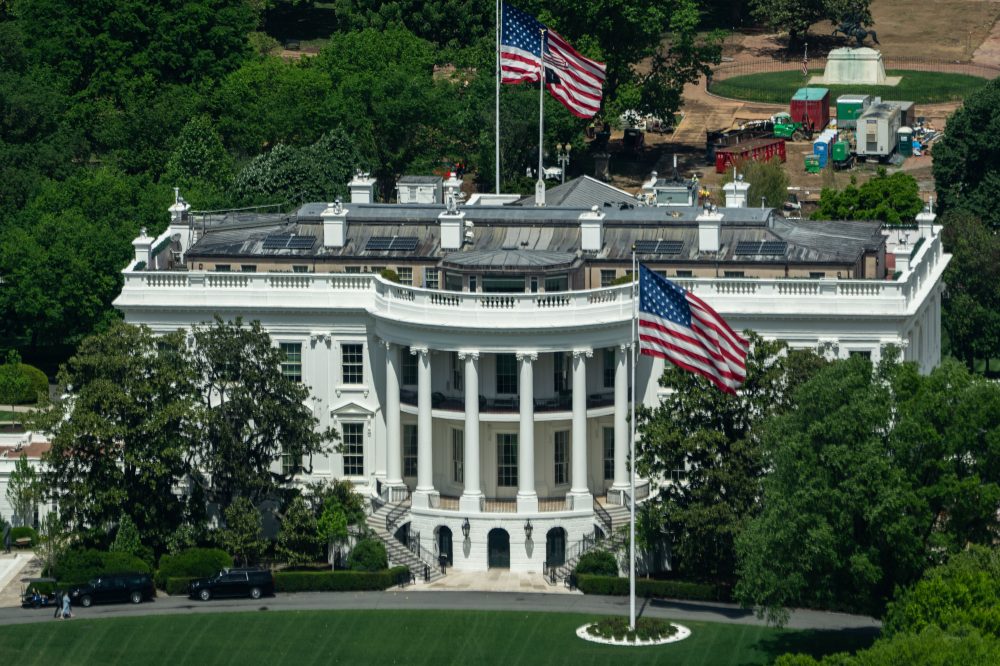
WASHINGTON — A contentious legal dispute over President Donald Trump’s massive $400 million ballroom construction project has unexpectedly revealed information about the White House’s secretive underground security facilities.
The legal battle involves the National Trust for Historic Preservation, which is fighting the enormous 90,000-square-foot ballroom planned for the location where the former East Wing once stood before its demolition last fall. Last week, a federal appeals court allowed Trump to proceed with construction while the case continues.
The appeals court decision suspended a lower court judge’s ban on above-ground building but allowed security-related work to move forward. Court documents from the Republican administration’s appeal detailed plans for what officials describe as a “heavily fortified” complex, featuring enhanced bomb shelters, military facilities, and medical installations below the ballroom.
The White House’s underground bunker system traces back to Franklin D. Roosevelt’s era, when the first bomb shelter was constructed in 1942 following America’s entry into World War II. Security concerns have kept most details about these facilities classified.
Historian and national security expert Garrett Graff explained that the Presidential Emergency Operations Center located under the East Wing was designed for temporary protection only.
“The whole point of the sort of presidential evacuation and continuity of the presidency is you want to get the president out of the place where everyone knows that he is and get him into a place where people don’t know where he is,” Graff said.
The bunker gained public attention during the September 11, 2001 attacks when Vice President Dick Cheney was forcibly taken there by Secret Service agents.
A Secret Service officer rushed into Cheney’s West Wing office, physically grabbed him by his belt and shoulder, and escorted him to the underground facility. “He didn’t say, ‘Shall we go?’” Cheney recalled to NBC News years afterward. “He wasn’t polite about it.”
Trump himself was moved to the White House bunker during 2020 when protesters gathered following George Floyd’s death. Demonstrators at Lafayette Park could be heard from inside the building as Secret Service and police worked to manage the crowds.
Secret Service Deputy Director Matthew Quinn emphasized in court papers that completing the ballroom project is essential for White House security operations.
“An above-ground slab and topping structure is needed to ensure that key underground structures with a security purpose are properly protected and strengthened,” Quinn stated in his filing.
Quinn further noted: “Leaving the project site unfinished imperils the ability of the Secret Service to meet its statutory mission to protect the President.”
Last month, Trump detailed various security improvements being implemented during the ballroom’s construction.
“The roof is droneproof. We have secure air-handling systems. You know, bad things happen in the air if you have bad people,” the president said. “We have biodefense all over. We have secure telecommunications and communications all over. We have bomb shelters that we’re building. We have a hospital and very major medical facilities that we’re building.”
Trump used social media to condemn the initial court ruling against his project, arguing that the underground components cannot function properly without the surface structure.
The National Trust for Historic Preservation contends that Trump exceeded his executive powers by advancing the project without obtaining required approvals from federal agencies and Congress.
U.S. District Judge Richard Leon sided with the preservation organization in late March but temporarily stayed his ruling while permitting underground construction to continue. The administration subsequently filed an appeal.
The U.S. Court of Appeals for the District of Columbia Circuit has scheduled a hearing for June 5 to examine the case.
While taxpayers will fund the security components of the project, Trump has stated that private donations from wealthy individuals and corporations will cover the ballroom expenses. He has characterized it as a necessary enhancement to the White House grounds that has been delayed too long.
“The underground portion is wedded to, and serves, the upper portion,” the president wrote on social media.
The practical implications of this connection remain uncertain and will likely depend on how the ongoing legal proceedings conclude.
A Michigan Republican congressman who successfully campaigned against rising fuel costs is now finding himself in the hot seat as gas prices climb once again, creating new political challenges ahead of the midterm elections.
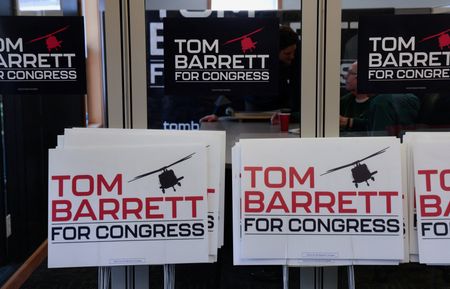
Tom Barrett leveraged voter anger over expensive gasoline during his winning 2024 congressional campaign in Michigan. However, the GOP lawmaker now faces criticism from Democrats who see an opportunity to reclaim his seat using the very same issue Barrett once wielded against them.
“Gas in Michigan is four bucks a gallon,” Barrett declared while recording himself at a gas pump in August 2023. “When I’m elected to Congress, we’ll produce our own energy. We’ll get gas under control so that this will be a lot more affordable for families like yours and families like mine.”
Almost three years later, Michigan’s average gas prices have returned to similar levels, briefly exceeding $4 in early April before settling around $3.80 this week – a 27% increase since the Iran conflict started on February 28.
This price surge has placed GOP members who criticized high fuel costs during Joe Biden’s presidency in a difficult position as they approach November’s midterm contests, with House control hanging in the balance and potential Senate implications.
Barrett faces particular vulnerability since he represents one of America’s most competitive congressional districts and is already encountering Democratic criticism on fuel prices.
During a Reuters interview, Barrett admitted that gasoline costs were straining his constituents financially but defended the war on national security grounds while expressing optimism that prices might decrease.
“Gas is an issue that affects people’s livelihoods, the affordability of things … I’m not dismissing any of that,” he stated following a new campaign office launch in Brighton, located 45 miles west of Detroit. “But that doesn’t mean gas is going to be the same price on Election Day as it is today.”
This hopeful outlook has been challenged by both President Donald Trump and Energy Secretary Chris Wright, who have admitted that gasoline prices might stay elevated through Election Day.
Republicans nationwide are struggling with campaign strategies amid high gas prices after using the issue as a political weapon during Biden’s term, when costs peaked above $5 per gallon in June 2022 due to Russia’s Ukraine invasion affecting global energy markets. The recent price increases have worsened GOP electoral prospects, with Americans already frustrated by expensive food, housing, and healthcare.
For numerous Republican candidates, rising gasoline costs have disrupted core campaign plans. While they intend to emphasize Trump’s comprehensive 2025 tax legislation during November elections, higher fuel expenses have complicated efforts to promote promised economic relief for cost-burdened Americans.
A strategist working with a GOP candidate in a competitive House race explained that nominees must support Trump and the war during primaries attracting conservative voters but might need to distance themselves during general elections.
“When the campaign focus becomes independent voters, soft Republicans, folks like that, then Republican candidates may be forced to be critical of the president,” said the strategist, speaking anonymously.
While gasoline wasn’t Barrett’s only 2024 campaign focus, he frequently addressed the topic as part of his anti-inflation platform under Biden. The 22-year Army veteran captured his district by nearly four points, exceeding Trump’s one-point presidential victory margin.
In late July 2024, Barrett shared X platform photos showing gas price displays from four stations, all around $4 per gallon.
Democrats now view fuel prices as a powerful tool for flipping Barrett’s predominantly white district, which centers on Lansing and extends through farmland and small communities toward Detroit’s outer metropolitan area.
On April 13, local Democrats, farmers, and activists assembled at a Lansing-area gas station to protest high fuel and fertilizer costs while demanding war’s end. Protesters carried signs reading “Tom Barrett + Iran War and We Pay” and “Got Gas Pains? Vote Democrat for Relief.”
Bridget Brink, the Democrat who has raised the most funds before her party’s August primary, said she would target Barrett’s war support and resulting gas price spikes if nominated.
Brink, who served as Biden’s Ukraine ambassador, argued that tax relief from Trump’s 2025 legislation covering tips, Social Security benefits, and overtime pay was being negated by rising gas costs.
“When Republicans say they’re cutting your taxes, all of that gets lost in bigger prices on gas, healthcare, groceries, and housing,” she explained. “We’ll be talking about gas prices every week, because we all see it and feel it.”
Earlier this month, Barrett criticized Trump’s threat to destroy Iran’s “whole civilization” as violating human dignity.
Nevertheless, Barrett opposed a congressional resolution limiting Trump’s war powers and supports preventing Iran from acquiring nuclear weapons, arguing current high gas prices result from justified foreign policy decisions, unlike Biden-era increases he attributes to domestic oil production restrictions.
When a Reuters reporter mentioned interviewing a constituent who could only afford $14 worth of gas, Barrett shifted discussion to national security, repeatedly questioning whether she had been asked about Iran’s nuclear program.
“Did you ask her if she thought Iran should develop a nuclear weapon?” Barrett inquired.
Reuters didn’t question the constituent, Danielle Lewis, about Iran’s nuclear capabilities but discussed the war’s gas price impact. Lewis, 39, said she supported Barrett and would probably vote for him in November.
Recent Reuters/Ipsos polling indicates only 36% of Americans support the Iran war.
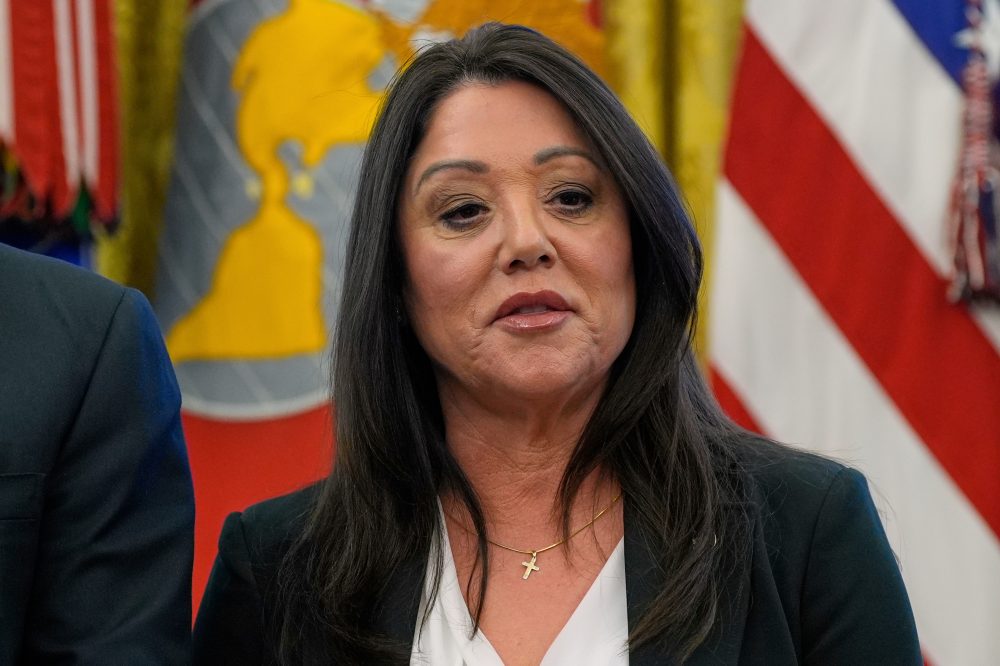
Beyond war issues, Barrett’s campaign office opening revealed Republicans’ midterm messaging. The congressman promoted the 2025 tax bill, highlighting expanded child tax credit benefits, while fellow House member Lisa McLain outlined attack strategies for attendees.
“I think we make this election a contrast election between normal and crazy, because they are crazy,” McLain said, characterizing Democratic positions on transgender rights and other cultural matters as political weaknesses.
Neither Barrett nor McLain addressed gas prices in their speeches.
Democrat Christine Waugh-Fleischmann, who spends up to $200 weekly on gas for grandchildren visits, believes the district could flip after discussing inflation with Republican friends.
“I do see a lot of people in my conservative neighborhood here who are very upset,” said the 70-year-old art teacher while fueling her SUV at the same Charlotte, Michigan Quality Dairy station where Barrett made his 2023 social media video.
Alexander Melton, 38, an HVAC technician, said he still planned supporting Barrett despite higher gas prices increasing his expenses, citing alignment with his conservative principles.
However, he recognizes a warning from the 2024 election for all politicians campaigning on high gas prices.
“We don’t dictate the price of gas. We’re getting it from overseas, and at this point now we’re at the mercy of everybody else,” Melton observed.
A new national survey suggests President Trump’s hardline immigration enforcement strategy may create challenges for Republican candidates in the upcoming midterm congressional elections.
The Reuters/Ipsos poll, conducted over six days and concluded Monday, revealed that 52% of American voters would be less inclined to back candidates supporting Trump’s deportation policies. In contrast, only 42% indicated they would be more likely to vote for such candidates.
Independent voters showed even stronger resistance to Trump’s immigration approach, with 57% saying they would favor candidates opposing the president’s deportation strategy, while just 32% preferred supporters of his policies.
The GOP faces potential difficulties maintaining control of both House and Senate chambers this November, already dealing with public frustration over rising fuel costs linked to the ongoing U.S.-Israeli conflict with Iran. Nearly all Republican legislators have endorsed Trump’s strict immigration stance, demonstrating the president’s increased influence within the party following his 2024 victory on promises to target undocumented immigrants.
Public opinion on Trump’s immigration policies has shifted significantly since he took office. Initial support stood at 50% in polling conducted shortly after his January 2025 swearing-in ceremony. However, following more than twelve months of intensive enforcement actions — including nationwide deployment of masked federal officers and two civilian deaths during operations — approval has dropped to 40% in the most recent survey.
The online poll captured responses from 4,557 adults across the United States, with a margin of error of 2 percentage points.
Sarah Pierce, who serves as director of social policy at the center-left Third Way organization, believes Trump’s enforcement campaign has left a significant mark on public consciousness.
“People were being pulled out of cars, a priest shot with pepper balls, and Americans killed before our eyes,” Pierce stated, referencing incidents from streets in Los Angeles, Chicago and Minneapolis during Trump’s initial year. “I don’t think those images are going to go away anytime soon.”
Recent weeks have seen the Trump administration apparently reduce its domestic immigration arrests. Immigration and Customs Enforcement detained slightly more than 1,000 individuals daily in early March, down from approximately 1,300 per day in December, though still more than twice the January 2025 daily arrest figures, based on ICE data obtained by the Deportation Data Project and reviewed by Reuters.
While only 25% of survey participants described current immigration detention efforts as less intensive than the previous month, 70% indicated that reducing enforcement aggression would represent a positive development.
Americans continue to support border security measures broadly, with 84% stating that maintaining secure borders holds at least some importance and 87% emphasizing the significance of immigration law enforcement.
However, the public also backs providing pathways to legal status for many undocumented residents. Approximately 76% of poll respondents believe unauthorized immigrants with employment and clean criminal records should have opportunities to obtain legal standing.
Several Congressional Republicans have advocated for more moderate deportation policies.
Representative Maria Elvira Salazar, a Republican from a South Florida district with substantial Hispanic populations including recent immigrant families, has recently promoted legislation offering legal status to certain undocumented immigrants. Despite criticism from Republican hardliners, Salazar maintains her bill “respects Trump’s agenda” through border security provisions.
“I’m very concerned about what’s happening within the party with immigration,” Salazar commented earlier this month during an appearance on Fox News’ “Brian Kilmeade Show,” addressing divisions among party hardliners.
California’s gubernatorial contest will reach a pivotal moment Wednesday evening when six candidates face off in their first major debate since former frontrunner Eric Swalwell suddenly withdrew from the race.
The debate begins at 7 p.m. Pacific Time and will feature four Democratic and two Republican candidates competing under California’s unique “jungle primary” system, where the top two vote-getters advance to November’s general election regardless of party affiliation.
Nexstar Media Group will air the debate across six major California markets, providing significantly broader coverage than February’s initial televised debate that only appeared on two Fox affiliates.
Recent polling data used to determine debate participation shows Republican Steve Hilton, a former Fox News personality, leading all candidates with 17 percent support. Republican Riverside County Sheriff Chad Bianco holds second place with 14 percent, while nearly a quarter of voters remain undecided.
The unconventional primary format could create interesting strategic dynamics, with candidates potentially targeting opponents both within their own party and across party lines.
Political observers expect Hilton, considered the most experienced debater, to face attacks from all directions. However, his response strategy toward Bianco could prove crucial, since advancing alongside another Republican might offer his best chance in the heavily Democratic state.
Republican strategist Rob Stutzman, who previously advised former Governor Arnold Schwarzenegger, offered his perspective on the Republican dynamic. “Strategically, Hilton should let Bianco beat him, I suppose, but the reality is these two don’t really like each other. I wouldn’t be surprised if they go at each other pretty hard,” Stutzman explained.
The Democratic candidates are now competing for supporters and financial backing previously committed to Swalwell, who left the race and resigned from Congress following sexual assault allegations, which he has denied.
Among Democrats, billionaire hedge fund manager Tom Steyer leads with 14 percent in the Nexstar-Emerson College survey. Former state attorney general and cabinet member Xavier Becerra and former U.S. Representative Katie Porter each garnered 10 percent support, while San Jose Mayor Matt Mahan received 5 percent.
A separate Independent Voter Project poll later showed Becerra moving into the overall lead with 23 percent, compared to Hilton’s 20 percent.
Mark Baldassare from the Public Policy Institute of California anticipates strong voter interest in the debate. “The voters have been telling us all along that they’d like to see more town halls and debates, and I think in the last few weeks that interest has become even stronger with a frontrunner dropping out,” Baldassare noted.
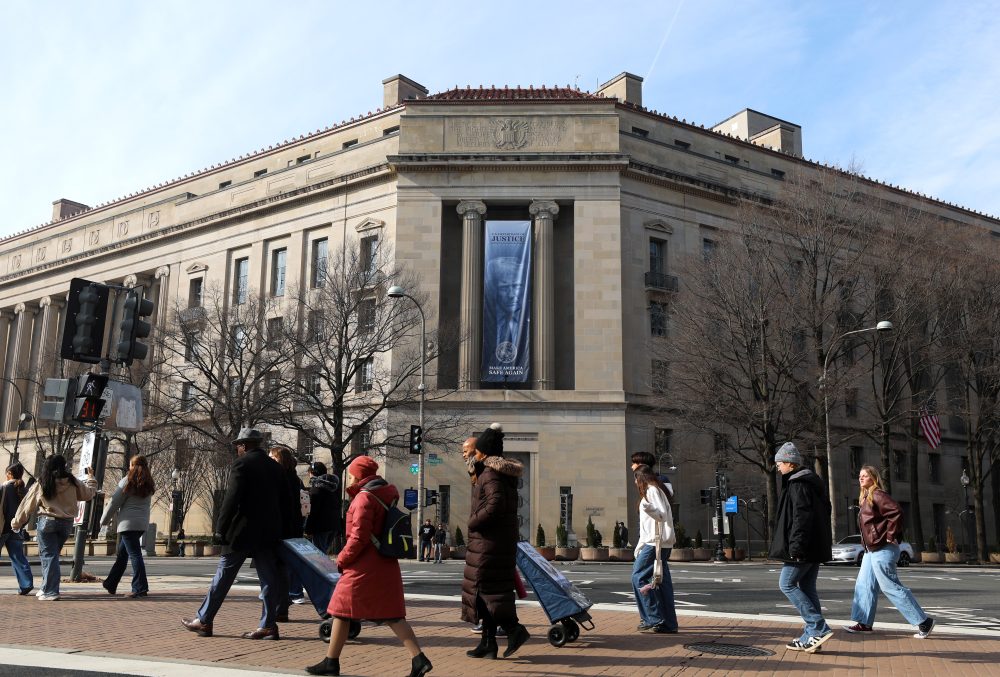
The federal government has extended the timeline for educational institutions to comply with new disability accessibility standards for their digital platforms and online materials.
The Justice Department announced the postponement of requirements that would have taken effect this week, mandating that schools, colleges, and other public educational facilities ensure their web-based content is accessible to students with disabilities.
The delay affects a wide range of educational institutions across the country that were preparing to meet the original compliance deadline. These organizations will now have additional time to implement the necessary changes to their online systems and digital learning materials.
The accessibility standards are designed to help students with various disabilities better navigate and utilize educational websites, online coursework, and digital resources that have become increasingly important in modern education.
No new timeline for compliance has been announced by the Justice Department, leaving schools and colleges uncertain about when they will be required to fully implement these accessibility measures.
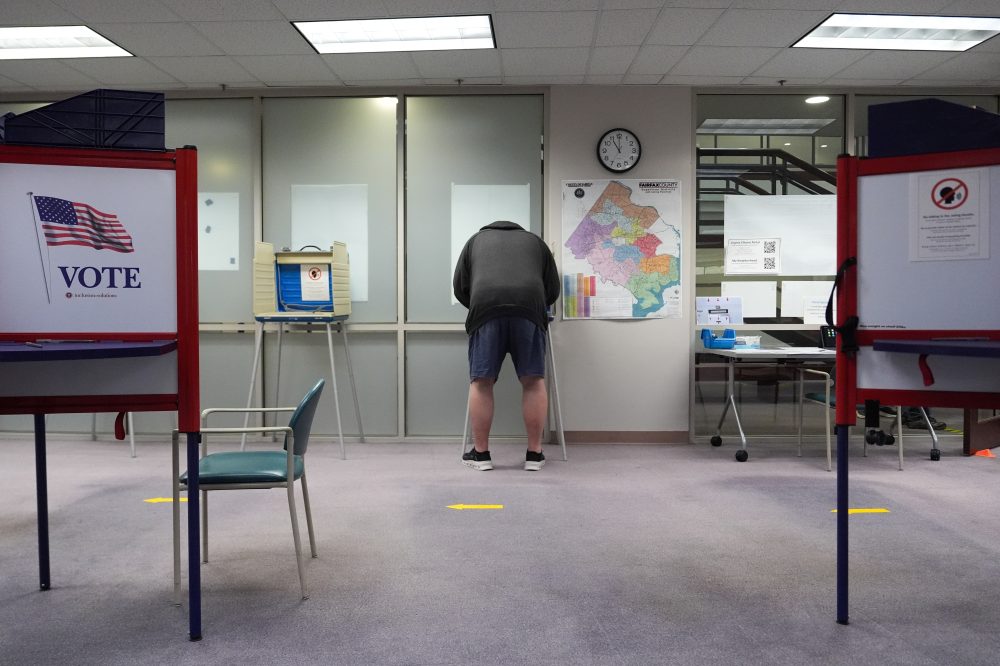
Tuesday’s redistricting referendum results in Virginia have shifted the balance of power in the national map-drawing battle, giving Democrats a significant advantage against President Trump’s redistricting strategy designed to boost Republican chances in the midterm elections.
The Virginia outcome has effectively neutralized and potentially exceeded the Republican Party’s redistricting gains that were part of Trump’s broader national effort to redraw congressional maps in favor of GOP candidates.
This development marks a crucial turning point in the ongoing redistricting battles across the country, as both parties fight to control the map-drawing process that will determine electoral boundaries for the next decade.
President Trump has announced an extension to the ceasefire deadline involving Iran, providing additional time for diplomatic negotiations. The decision comes as tensions continue in the region.
In Virginia, state officials have given their approval to a Democratic-backed initiative aimed at redrawing the commonwealth’s congressional district boundaries. The redistricting effort marks a significant political development for the state.
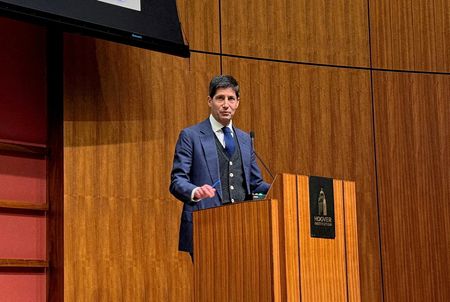
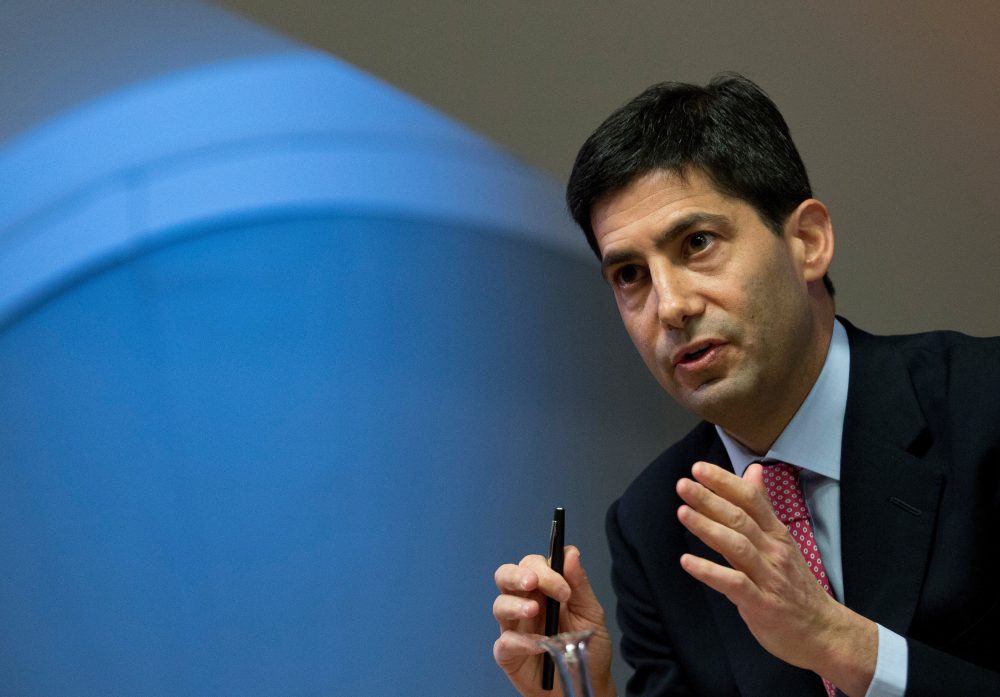
During confirmation proceedings on Capitol Hill, Federal Reserve chair nominee Kevin Warsh made a commitment to safeguard the central bank’s operational independence. Warsh addressed lawmakers’ concerns about maintaining the Fed’s autonomy during his testimony before the confirmation panel.
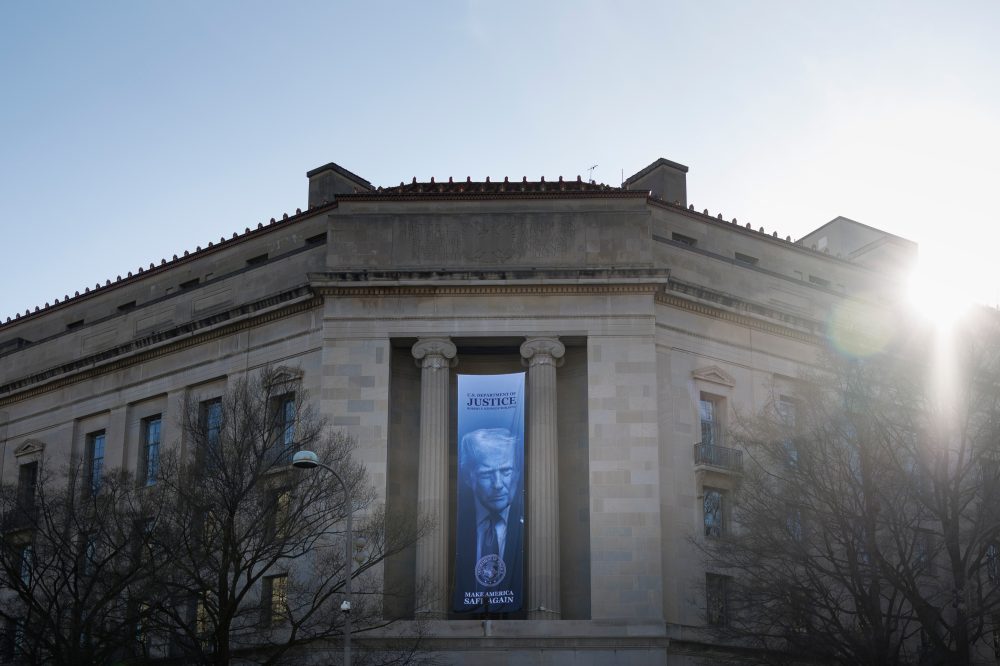
Federal authorities have brought fraud charges against the Southern Poverty Law Center, accusing the civil rights organization of illegally soliciting donations worth millions of dollars.
According to the Justice Department, the organization unlawfully collected these funds to compensate informants who were tasked with penetrating white supremacist organizations, including the Ku Klux Klan and similar extremist movements.
The charges represent a significant legal challenge for the Montgomery, Alabama-based organization, which has built its reputation on tracking hate groups and pursuing civil rights cases across the United States.
Federal prosecutors allege that the fundraising activities violated federal law, though specific details about the nature of the alleged violations have not been fully disclosed.
The case highlights questions about how civil rights organizations conduct their monitoring operations and the legal boundaries surrounding their fundraising practices for such activities.
Department of Transportation officials have provided new details about their nationwide effort to modernize America’s air traffic control systems, almost one year after the comprehensive initiative was first announced.
The ambitious modernization program aims to completely transform how the country manages air traffic infrastructure. Among the key developments revealed in the recent update is a proposed software system that would utilize artificial intelligence technology to enhance operations.
The comprehensive overhaul represents a significant federal investment in updating aging aviation infrastructure across the United States. Officials indicated that the AI-powered technology would be a central component of the upgraded system design.
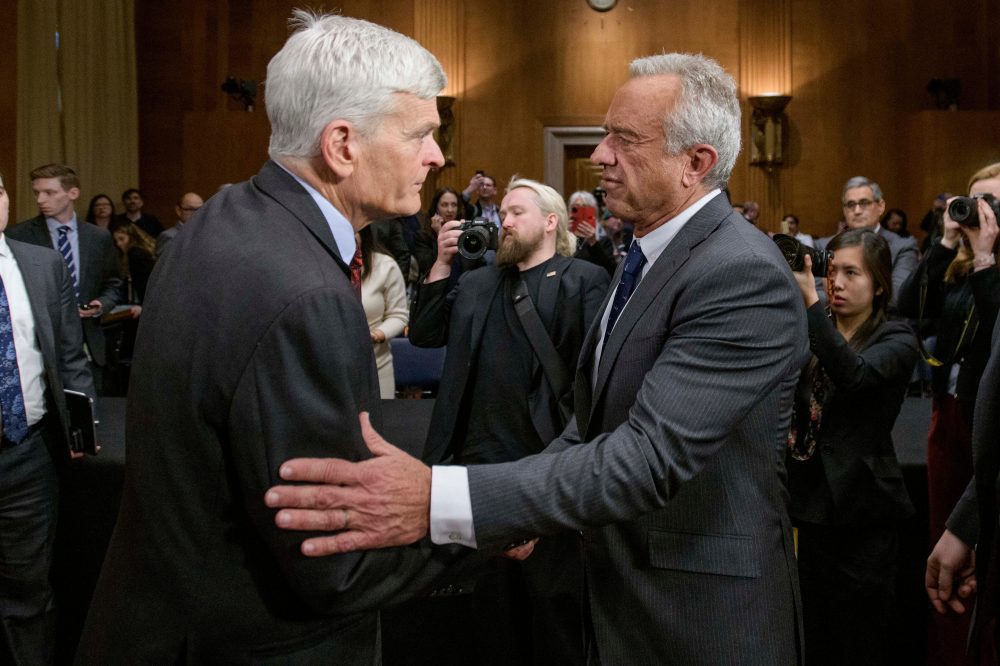
Louisiana Senator Bill Cassidy faces a critical political test Wednesday when he questions Health Secretary Robert F. Kennedy Jr. during two important Senate committee hearings.
The Republican lawmaker holds leadership positions on Senate committees overseeing Kennedy’s department, positioning him to challenge the secretary’s plans for the nation’s health programs and research initiatives. Cassidy’s medical background has put him at odds with Kennedy’s stance against vaccines, despite his earlier support for Kennedy’s confirmation.
Meanwhile, Cassidy battles for his political survival in an upcoming primary election, where President Donald Trump has backed one of his challengers in a rare move against a fellow Republican incumbent.
The senator’s approach during these hearings could significantly impact his reelection prospects and establish how Congress will monitor the country’s health policies amid widespread skepticism and false information.
Cassidy last confronted Kennedy publicly in September. Since then, Kennedy has pursued sweeping changes to vaccine guidelines that could weaken safeguards against illnesses including influenza, hepatitis B, and RSV, though legal challenges have stalled these efforts.
Following criticism, Kennedy has shifted focus toward discussing less divisive subjects such as nutrition, though he continues promoting questionable assertions about dietary cures for various health conditions.
Wednesday’s hearings will test whether Cassidy challenges Kennedy on vaccination issues that matter deeply to him professionally, or whether he sets aside their disagreements to demonstrate loyalty to the Trump administration.
“He’s taken a risk showing any sort of resistance to RFK,” said Claire Leavitt, an assistant professor at Smith College who studies congressional oversight. “He may pay an electoral price for that.”
Cassidy has maintained a delicate political balance for years. He remains among the few Republican senators who supported Trump’s conviction during impeachment proceedings following the January 6, 2021 Capitol attack.
His experience as a liver specialist led him to champion hepatitis B vaccinations for newborns, a measure that could have prevented the disease among his former patients. However, when Trump selected Kennedy, a prominent vaccine opponent, Cassidy backed the nomination after obtaining various assurances, including Kennedy’s commitment to work within existing vaccine approval processes and support childhood immunization schedules.
Supporting Kennedy’s confirmation didn’t earn Trump’s favor. The president has endorsed U.S. Representative Julia Letlow, one of Cassidy’s primary challengers.
Cassidy also confronts resistance from Kennedy supporters within the “Make America Healthy Again” movement, which encompasses vaccine critics and various health and environmental advocates. The MAHA PAC has committed $1 million to Letlow’s campaign, with some observers suggesting this support targets Cassidy for his criticism of Kennedy’s vaccine policies.
“I’m not really sure what MAHA’s beef is,” Cassidy told reporters earlier this month. “Let me point out that I am the reason that Robert F. Kennedy is now the secretary of HHS. He would not have gotten there otherwise.”
Cassidy maintains he has “strongly supported” the MAHA platform, particularly regarding ultraprocessed food concerns. The physician-turned-politician acknowledged disagreements with MAHA regarding vaccines.
“We’ve seen, frankly, that I am right,” Cassidy added, pointing to recent measles-related deaths of children who were not vaccinated.
During September hearings, he criticized Kennedy’s decision to reduce funding for mRNA vaccine research. He questioned Kennedy about replacing vaccine committee members, suggesting potential conflicts of interest among new appointees. He also expressed concern that Kennedy’s vaccine decisions were complicating COVID-19 vaccination access for Americans.
That same month, Cassidy organized a hearing featuring former U.S. Centers for Disease Control and Prevention Director Susan Monarez, whom Kennedy removed less than a month into her role after vaccine policy disputes, and former CDC Chief Medical Officer Debra Houry, who resigned in August citing scientific integrity concerns at the agency.
“I want to work with the president to fulfill his campaign promise to reform the CDC and Make America Healthy Again. The president says radical transparency is the way to do that,” Cassidy said at the time.
Political strategists anticipate Cassidy’s primary rivals, Letlow and Louisiana Treasurer John Fleming, will use any statements from Wednesday’s hearings to portray Cassidy as opposing the Trump administration.
However, Dorit Reiss, a vaccine law expert at UC Law San Francisco, believes the political risks of supporting vaccines among Republicans may be overstated.
“He’s probably not alienating voters by focusing on the issue and calling it out,” she said.
Louisiana political consultant Mary-Patricia Wray thinks committed MAHA supporters have already chosen their candidate, likely not Cassidy.
She suggests he could still attract Democrats who change party registration for the primary, plus undecided Republican voters concerned about healthcare affordability issues he champions in Congress.
“If I was advising Bill Cassidy, I would tell him your goal here is not to get out unscathed,” Wray said. “Your goal is to prove that your consistency on issues regarding public health is an asset in your campaign, not a detriment.”
Cassidy’s potential primary defeat would also affect oversight of the massive U.S. Department of Health and Human Services, given his role as chair of the Senate Health, Education, Labor and Pensions committee.
Leavitt, the Smith College professor, noted that seniority typically determines Senate committee leadership. She suggested another Republican in today’s polarized Congress might be less inclined than Cassidy to challenge Kennedy’s authority.
Reiss, the vaccine law expert, wishes Cassidy had conducted more hearings or proposed legislation to limit Kennedy’s influence. She holds the senator responsible for enabling Kennedy to introduce unsubstantiated vaccine concerns into government.
“His original sin, of course, was voting for Kennedy at all,” Reiss said.
LOS ANGELES (AP) — A pivotal televised debate is set for Wednesday featuring six frontrunners in California’s gubernatorial contest — each hoping to achieve a standout performance in a wide-open race lacking a definitive frontrunner.
Time is running out for candidates to establish themselves as contenders, with mail-in ballots set to reach voters in early May ahead of the June 2 primary contest. California’s electoral system allows only the two highest vote recipients to proceed to November’s general election, irrespective of party affiliation. For months, Democratic Party officials have expressed concern that the packed candidate field might allow two Republican nominees to advance to November — an outcome that would represent an unprecedented disaster for Democrats in this traditionally liberal state.
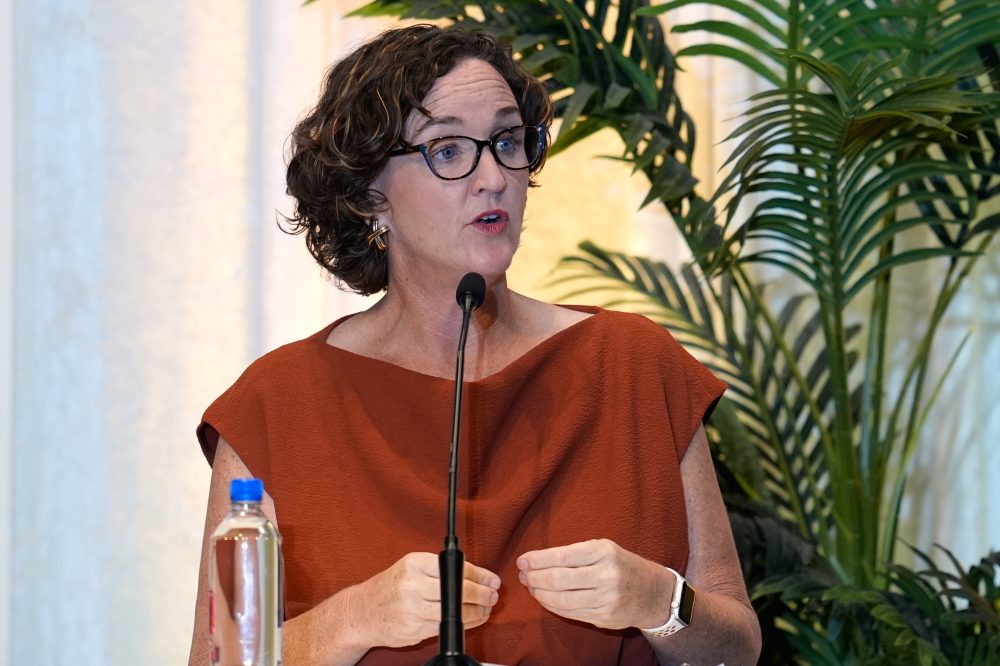
Wednesday’s debate will feature the two Republican frontrunners — political commentator Steve Hilton and Riverside County Sheriff Chad Bianco — alongside four Democratic contenders: former U.S. Representative Katie Porter, wealthy businessman Tom Steyer, ex-Biden administration health secretary Xavier Becerra, and San Jose Mayor Matt Mahan.
As candidates vie for advantage before a statewide television audience, the debate could potentially deteriorate into an hour and a half of heated exchanges, accusations, and personal attacks as participants fight for viewer attention.
The race has experienced significant turbulence recently, with U.S. Representative Eric Swalwell — a prominent Democratic candidate — withdrawing from both the gubernatorial race and Congress amid sexual assault accusations he disputes. Additionally, former state controller Betty Yee ended her campaign Monday following poor polling performance since launching her 2024 bid, subsequently backing Steyer. Concurrently, Becerra secured an endorsement from Democratic Assembly Speaker Robert Rivas.
Both Becerra and Mahan joined the debate roster after Swalwell’s departure from the race. Each candidate has gained renewed attention and endorsements in the reshuffled competition.
Rivas announced his support for Becerra on Tuesday. Mahan has simultaneously launched advertising efforts to boost his campaign visibility.
Democratic candidates largely share policy positions, including efforts to reduce living expenses and oppose President Donald Trump’s political agenda. Consequently, they’ll seek opportunities to differentiate themselves during the debate, either by highlighting their achievements or questioning their opponents’ records.
Porter, who gained internet fame by using whiteboards during congressional hearings while questioning corporate executives, could become California’s first female governor. Steyer, a former hedge fund executive turned progressive advocate who mounted an unsuccessful 2020 presidential campaign, is recognized for his environmental activism. Becerra brings the most extensive political background to the field, having served in the Biden administration, as state attorney general, congressman, and state legislator. Mahan has emphasized his progress addressing homelessness and criminal activity while governing Northern California’s most populous city.
California’s challenges will likely dominate the discussion.
Democrats have controlled government in America’s most populated state for years. Republicans haven’t secured a statewide victory in twenty years, so Hilton and Bianco will likely emphasize established campaign messages, including criticizing Sacramento’s one-party dominance for the state’s problems. These arguments include highlighting how billions in government spending has failed to address the persistent homelessness crisis; the state maintains some of America’s highest tax rates, utility costs, and gasoline prices; excessive government oversight is eliminating employment opportunities; and skyrocketing housing costs remain unaffordable for numerous families.
The competition remains completely unpredictable.
Surveys conducted in late March and early April by the nonpartisan Public Policy Institute of California revealed several candidates in tight competition: Democrats Steyer and Porter, Republicans Hilton and Bianco, and Swalwell. Other contenders were lagging behind. The polling occurred before Swalwell’s withdrawal.
A vivid family memory remains burned into Raul Valdes-Fauli’s mind from November 1960 — the moment an armed revolutionary agent arrived at his family’s Pedroso Bank in Havana with a machine gun and ordered them out.
The agent called his father and uncle “gusanos” — worms, Castro’s derogatory term for those fleeing Cuba — before seizing the financial institution and instantly stripping away property held by a family whose roots in Cuba traced back to 16th-century Spanish settlers.
“They told them this was now the people’s bank,” recalled Valdes-Fauli, a lawyer and former Coral Gables mayor. “They couldn’t even take family pictures off the walls of their office.”
Now, seven decades after such devastating seizures, these painful memories are gaining renewed relevance as President Trump’s military threats and naval blockade of fuel deliveries have crippled Cuba’s struggling economy and triggered talks between Washington and Havana. Numerous Cuban Americans believe 2026 might finally bring the end of communist rule on the island.
Yet this careful optimism among exile communities comes with significant worry about being excluded from any final agreement. Their worst fear centers on a repeat of recent events in Venezuela, where Trump removed Nicolás Maduro but then partnered with his former associates in arrangements that prioritize oil deals over democratic reforms.
“I hope that he doesn’t do what he did in Venezuela, which is keep the thieves in power,” said Valdes-Fauli, whose wife is Venezuelan.
Among the most emotionally charged and complex issues in ongoing discussions involves hundreds of thousands of potential legal claims from Cuban Americans whose properties, enterprises and land were confiscated following Castro’s 1959 takeover.
Nick Gutiérrez’s residence contains yellowing property deeds, vintage photographs and rare publications including a damaged book titled “The Owners of Cuba, 1958” that catalogs the 550 largest fortunes seized by revolutionary forces.
Serving as president of the National Association of Cuban Landowners in Exile, Gutiérrez counsels Cuban exile families on pursuing compensation for forced collectivization. For years this remained an isolated cause pushed to legal margins, since no realistic prospect existed for compelling Cuba to provide payment.
“A lot of it just fell on deaf ears,” Gutiérrez said.
However, with growing speculation about possible governmental change, genuine interest in this matter has surged among those who previously dismissed expensive litigation as futile, along with younger Cuban American business leaders eager to help reconstruct a nation they scarcely know but whose legacy they proudly embrace.
“Now we’re talking about the existential issue of whether the Cuban dictatorship will survive until next month,” said Gutiérrez, whose parents escaped the island two years before his birth.
Resolving property claims in Cuba resembles fighting a many-headed monster, according to Robert Muse, a Washington lawyer specializing in U.S. laws concerning Cuba.
Among property losses, those with strongest legal standing under American law include 5,913 claims certified by the Justice Department in 1972 totaling $1.9 billion. These encompass corporations like ExxonMobil and Marriott International whose holdings were confiscated during Castro’s nationalization campaign affecting everything from petroleum facilities and telecommunications to beauty shops and shoe-shine businesses.
Under American law, these claims — valued at $10 billion currently — must be settled for complete restoration of economic and diplomatic ties. In reality, the executive branch holds authority to take control of private losses through lump-sum payments and incorporate disputes into any Havana settlement.
Breaking from previous positions, Cuba has indicated willingness to address these claims — as part of broader discussions over its demands for compensation regarding damages from the U.S. trade embargo implemented in 1962.
A more complicated matter involves Title III of the 1996 Helms-Burton Act, which permits exiles to file lawsuits against any company considered to be “trafficking” in property seized by Cuba.
Previous U.S. presidents suspended Title III due to objections from American allies conducting Cuban business. Many exiles also viewed this legislation as hollow threats given slim chances of collecting from an insolvent government.
Trump ended the suspension in 2019, leading to approximately 50 filed lawsuits. Additional claims could emerge soon depending on two cases argued before the U.S. Supreme Court this year.
One case, initiated by Exxon, pursues $1 billion from Cuban state entities. The other was filed by Delaware-based Havana Docks against four cruise companies that paid Cuba’s government to dock nearly 1 million tourists at a port it previously operated after President Obama restored diplomatic relations.
Muse compared the legal risks of Cuban business to a “stalactite” built over decades, discouraging investment and political compromise.
“You can’t have a restitution remedy for hundreds of thousands of claimants,” Muse said. “It’s unworkable.”
Nevertheless, if Havana genuinely seeks to attract foreign investment, it has reasons to negotiate deals with Cuban Americans prepared to invest domestically, Gutiérrez noted. A template exists in former Communist Eastern European nations that provided property seizure compensation after the Cold War, helping their economies advance rapidly.
Trump, Muse suggested, may possess the right combination of business acumen, impatience with tradition and political independence as a second-term president to navigate this complicated situation. Evidence that he won’t be hindered by legal disputes, Muse added, came when he hosted oil executives at the White House following Maduro’s removal and instructed them to abandon unpaid claims from Venezuelan asset seizures.
Gutiérrez worries that Trump’s desire for an achievement that has escaped 12 previous Democratic and Republican presidents might overwhelm his judgment. But he finds reassurance in the president’s established relationships with Cuban Americans who rank among his strongest supporters.
“Trump doesn’t have moral qualms of doing business with bad guys,” Gutiérrez said. “But he knows how important this is to us, and that gives us some comfort he won’t sell us out.”
The spouse of an active-duty Army sergeant is currently being held at an immigration detention center in El Paso, Texas, highlighting the Trump administration’s reduced consideration for military families facing immigration issues.
Army Sergeant Jose Serrano, who completed three deployments to Afghanistan, reported that immigration officers took his wife into custody on April 14 during what was supposed to be a routine meeting with immigration officials to advance her permanent residency application.
“A person opened the door, escorted us through the hallway, and at the end of the hallway, my wife got arrested,” Serrano said. “Arrested without any order, any warrant … They took away my wife. They don’t tell me anything.”
Deisy Rivera Ortega, originally from El Salvador, has since filed a legal challenge in federal court to contest her detention and prevent deportation to Mexico, a country where she has no connections and where active military personnel face travel restrictions.
Her legal representative, Attorney Matthew James Kozik, noted that Rivera Ortega possessed valid employment authorization and had previously received protection from removal to El Salvador.
The Department of Homeland Security responded via email that Rivera Ortega crossed into the United States without authorization in 2016 and received a final removal order from a judge in December 2019.
“Work authorization does not confer any legal status to be in the country. Rivera-Ortega remains in ICE custody pending removal,” the department stated, without clarifying whether deportation to Mexico was being considered.
Rivera Ortega is currently housed at the El Paso Service Processing Center, where Serrano was permitted to visit on Sunday, speaking with his wife through a protective barrier.
The couple had sought relief under the “parole in place” program, which previously offered military spouses a potentially faster route to permanent legal status.
However, last April, DHS rescinded a 2022 directive that treated military service by immediate family members as a “significant mitigating factor” when making immigration enforcement decisions. The current policy declares that “military service alone does not exempt aliens from the consequences of violating U.S. immigration laws.”
Delaware State University served as the venue for the Delaware Legislative Black Caucus’s second annual ‘Unapologetically Black’ conference this week.
The event marked the return of the gathering to the Dover campus, bringing together state lawmakers and community participants for discussions and programming focused on Black legislative priorities and community engagement.
This year’s conference represents the continuation of an annual tradition established by the caucus to create space for dialogue around issues affecting Delaware’s Black communities and to strengthen connections between elected officials and constituents.
DOVER — Governor Matt Meyer revealed Monday that Delaware officials will challenge a federal court ruling that compels the state’s Department of Labor to hand over worker wage and identification information to U.S. Immigration and Customs Enforcement.
The Delaware Department of Justice will file the appeal on behalf of the state, Meyer announced from Dover. The contested court decision would force Delaware labor officials to share employee records with ICE agents.
“I will continue to go as far as the law allows to” protect Delaware workers, Meyer stated in his announcement.
The governor’s office did not immediately provide additional details about the timeline for the appeal or the specific legal arguments the state plans to present to higher courts.
The dispute centers on federal immigration authorities’ efforts to access state-maintained employment records, which contain personal and financial information about Delaware workers.
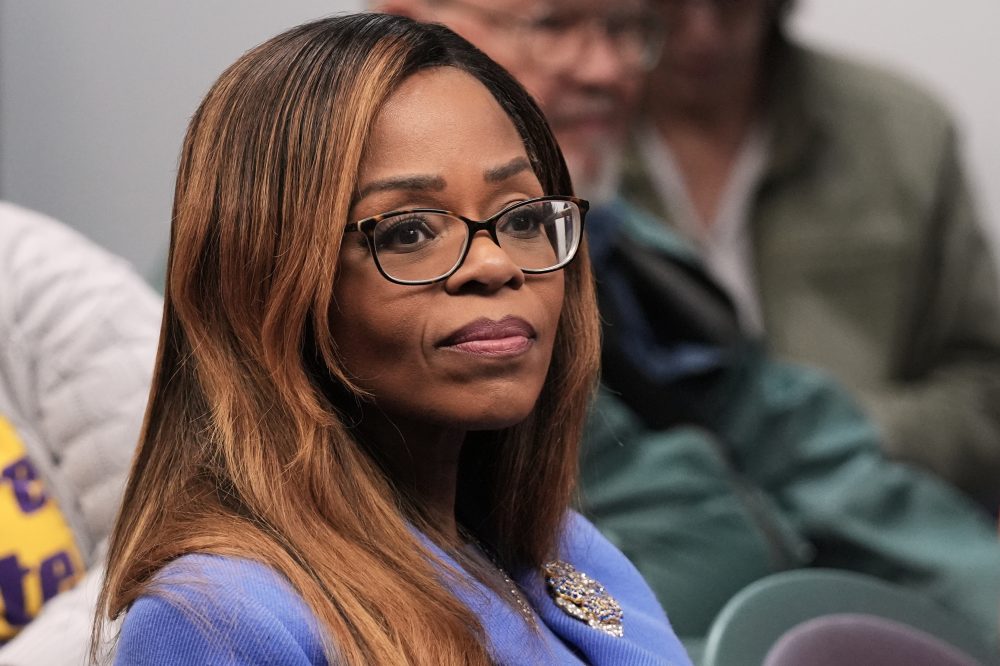
WASHINGTON — Florida Democratic Representative Sheila Cherfilus-McCormick finds herself at a pivotal crossroads Tuesday as House Ethics Committee members deliberate potential disciplinary measures following their determination that she violated House regulations and ethical guidelines on 25 separate occasions, including breaches of campaign finance legislation.
GOP members are already demanding Cherfilus-McCormick’s removal from office. The third-term congresswoman, who represents a district in southeastern Florida and is seeking reelection, also faces federal criminal accusations of misappropriating $5 million in pandemic disaster relief money for personal purchases, including a 3-carat yellow diamond ring.
The representative has entered a not guilty plea to the criminal accusations and maintains her innocence regarding the ethics infractions as well.
The charges against the congresswoman focus on her receipt of millions from her family’s healthcare company after Florida accidentally provided the business with approximately $5 million in excess COVID-19 relief funding. Prosecutors allege she channeled this money into her 2022 congressional race through various businesses and family connections.
During a prior Ethics Committee proceeding, Cherfilus-McCormick refused to provide testimony, invoking her constitutional protection against self-incrimination. Her legal counsel, William Barzee, engaged in heated exchanges with committee members and contended they should have permitted a complete ethics trial where he could have presented witnesses and evidence to challenge the House investigators’ findings.
Community advocates from Cherfilus-McCormick’s district have contacted Ethics Committee leadership on her behalf. They emphasized that the panel’s ruling might leave hundreds of thousands of constituents without congressional representation during a crucial period for their state, urging committee heads to exercise careful judgment.
“Our communities deserve stability. Our voices deserve to be heard. And our right to representation must be protected,” stated one correspondence to the committee bearing signatures from approximately a dozen local religious leaders, union representatives and other community figures.
The committee’s two-year inquiry resulted in 59 subpoenas being issued, 28 witness interviews conducted, and examination of over 33,000 document pages.
Florida Republican Representative Greg Steube has announced his intention to initiate expulsion proceedings against Cherfilus-McCormick following the Ethics Committee’s punishment recommendation.
Such action might trigger Democrats to pursue the removal of Representative Cory Mills, a Florida Republican currently under comprehensive Ethics Committee investigation for potential campaign finance violations, misuse of congressional resources, and allegations of sexual misconduct or dating violence. Mills’ investigation continues, and he has rejected all accusations.
This scrutiny of congressional misconduct follows last week’s resignations of two representatives amid ethics probes into alleged sexual impropriety. California Democrat Eric Swalwell and Texas Republican Tony Gonzales avoided potential expulsion votes by stepping down.
House Democratic leadership has refrained from criticizing Cherfilus-McCormick, stating their preference to allow the ethics process to conclude. Available sanctions include reprimands or censures, which constitute public rebukes. The committee might also impose financial penalties. Expulsion represents the harshest punishment, though the House traditionally hesitates to determine a member’s career fate, typically deferring such decisions to voters.
Just six House members have faced expulsion throughout history. Three served the Confederacy during the Civil War and were removed for disloyalty. Two others had criminal convictions. The most recent was George Santos, the controversy-ridden freshman subjected to a scathing ethics report and federal indictment. The New York Republican served prison time for defrauding campaign contributors before receiving clemency from President Donald Trump, and has since apologized to former constituents.
Constitutional requirements mandate at least two-thirds House approval for expulsion, establishing a demanding standard requiring substantial bipartisan backing.
House Speaker Mike Johnson, a Louisiana Republican, informed reporters last week of his belief that the House will vote to expel Cherfilus-McCormick.
“The facts are indisputable at this point, and so I believe it’ll be the consensus of this body that she should be expelled,” Johnson stated.
WASHINGTON — Florida Democratic Representative Sheila Cherfilus-McCormick faces a pivotal Tuesday as House Ethics Committee members deliberate potential penalties following their determination that she violated House regulations and ethical guidelines 25 times, including breaches of campaign finance law.
GOP members are already demanding Cherfilus-McCormick’s removal from office. The third-term congresswoman, who represents a district in southeastern Florida and seeks reelection, also confronts federal criminal allegations claiming she misappropriated $5 million in COVID-19 disaster relief money for personal purchases, including a 3-carat yellow diamond ring.
Cherfilus-McCormick has entered a not guilty plea to the criminal accusations and maintains her innocence regarding ethics violations as well.
The charges against the representative focus on how she obtained millions from her family’s healthcare company after Florida accidentally overpaid the business approximately $5 million in pandemic disaster relief money. Prosecutors claim she channeled those funds into her 2022 congressional campaign through a web of businesses and relatives.
During a prior Ethics Committee session, Cherfilus-McCormick refused to provide testimony, invoking her Fifth Amendment protection against self-incrimination. Her lawyer, William Barzee, clashed with committee members and contended they should have permitted a complete ethics trial where he could present witnesses and evidence challenging the House investigators’ findings.
Supporters from Cherfilus-McCormick’s congressional district have contacted Ethics Committee leadership on her behalf. They emphasized that the committee’s ruling could deprive hundreds of thousands of constituents of congressional representation during a crucial period for their state, urging committee leaders to exercise careful judgment.
“Our communities deserve stability. Our voices deserve to be heard. And our right to representation must be protected,” stated a letter to the committee signed by approximately twelve local religious leaders, union representatives and others.
The committee’s two-year probe resulted in 59 subpoenas being issued, 28 witness interviews conducted, and examination of over 33,000 document pages.
Florida Republican Representative Greg Steube has announced plans to initiate expulsion proceedings against Cherfilus-McCormick following the Ethics Committee’s punishment recommendation.
Such action might prompt Democrats to pursue the removal of Representative Cory Mills, a Florida Republican currently under extensive Ethics Committee investigation for potential campaign finance law violations, misuse of congressional resources, and alleged sexual misconduct or dating violence. Mills’ investigation continues, and he denies all allegations.
This attention on congressional misconduct follows last week’s resignation of two lawmakers amid ethics probes into alleged sexual impropriety. Democratic Representative Eric Swalwell of California and Republican Representative Tony Gonzales of Texas avoided potential expulsion votes by stepping down.
House Democratic leadership has refrained from criticizing Cherfilus-McCormick, stating they prefer to await the ethics process conclusion. Possible sanctions include reprimands or censures, which constitute public rebukes. The committee might also impose financial penalties. Expulsion represents the harshest punishment, though the House traditionally hesitates to determine a lawmaker’s fate, preferring to leave that decision to voters.
Just six House members have faced expulsion throughout history. Three fought for the Confederacy during the Civil War and were removed for disloyalty. Two others had criminal convictions. George Santos, the scandal-ridden freshman subject to a scathing ethics report and federal charges, was the most recent. The New York Republican served prison time for defrauding campaign contributors before receiving clemency from President Donald Trump, and has apologized to former constituents.
Constitutional requirements mandate at least two-thirds of House members vote for expulsion, establishing a demanding standard requiring substantial bipartisan agreement.
House Speaker Mike Johnson, R-La., informed reporters last week he expects the House will vote to expel Cherfilus-McCormick.
“The facts are indisputable at this point, and so I believe it’ll be the consensus of this body that she should be expelled,” Johnson stated.
WASHINGTON — A leading LGBTQ+ advocacy group is making a major financial push in upcoming midterm elections, committing $15 million to challenge Republican candidates in competitive congressional races following a string of recent political defeats.
The Human Rights Campaign, among the country’s most prominent organizations fighting for LGBTQ+ equality, plans to focus their resources on eight crucial House districts that could determine which party controls Congress. Additionally, the group will back Democratic Senate candidates across Georgia, Michigan, Minnesota, New Hampshire, Ohio and Texas through advertising campaigns, community events and door-to-door outreach efforts.
“I think that this is the election that’s going to be the sea change, not only for getting to a pro-equality majority but for changing the momentum on this fight for equality,” organization president Kelley Robinson told The Associated Press. “This movement is ready for its next wind, its second wind.”
The LGBTQ+ community has faced significant challenges in recent election cycles and court battles, leaving Democratic allies searching for effective strategies to reverse course.
Under President Donald Trump’s administration, Republicans eliminated various protections for transgender individuals, including military service restrictions and limitations on gender-affirming medical care for minors. Meanwhile, the Supreme Court’s conservative justices have supported GOP-led state restrictions while overturning prohibitions on conversion therapy practices in states controlled by Democrats.
“I believe that our movement made ourselves believe that we were closer to equality than we actually are,” Robinson explained. “The last few years, we’ve been doing an incredible amount of listening, of learning, also of repositioning this work.”
Following the 2024 presidential race, Democratic leaders debated how much LGBTQ+ issues contributed to their electoral losses. Trump’s campaign aired multiple advertisements criticizing Vice President Kamala Harris for backing medical gender transitions for prisoners and emphasizing concerns about transgender athletes in women’s sports.
“Kamala Harris is for they/them,” one nationwide advertisement declared. “President Trump is for you.”
Robinson contended the advertisement succeeded due to underlying economic messaging rather than its transgender policy criticism. However, conservative commentators and some centrist Democrats believe such positions alienate moderate voters.
“There’s a real disconnect between most voters and the party elite,” noted Leor Sapir, who works with the Manhattan Institute, a conservative research organization.
“If I’m a Democrat consultant, my advice would be: Do everything in your power to keep this issue off the public agenda,” he continued.
Robinson acknowledged her organization has been examining how to develop more effective messaging strategies around LGBTQ+ rights.
“Our job is to move away from the fireballs that our opposition wants to talk about and instead find a way to get back to the things that are impacting folks every day,” she stated.
This past January, the Human Rights Campaign released messaging recommendations for countering conservative criticism of LGBTQ+ policies, highlighting successful campaigns by Virginia Governor Abigail Spanberger and Kentucky Governor Andy Beshear.
While the guidance advises candidates to “lead with your values” and “address concerns directly,” it also suggests they should “go big” and rapidly shift conversations toward everyday issues like living costs.
“I think the number one way to shut out a voter is to try to make them believe that their fears are not real. So what we coach candidates on doing is listening,” Robinson said. “For folks who have questions about the issues, that’s OK. We’re in a moment where the stakes in front of us are too high to look away.”
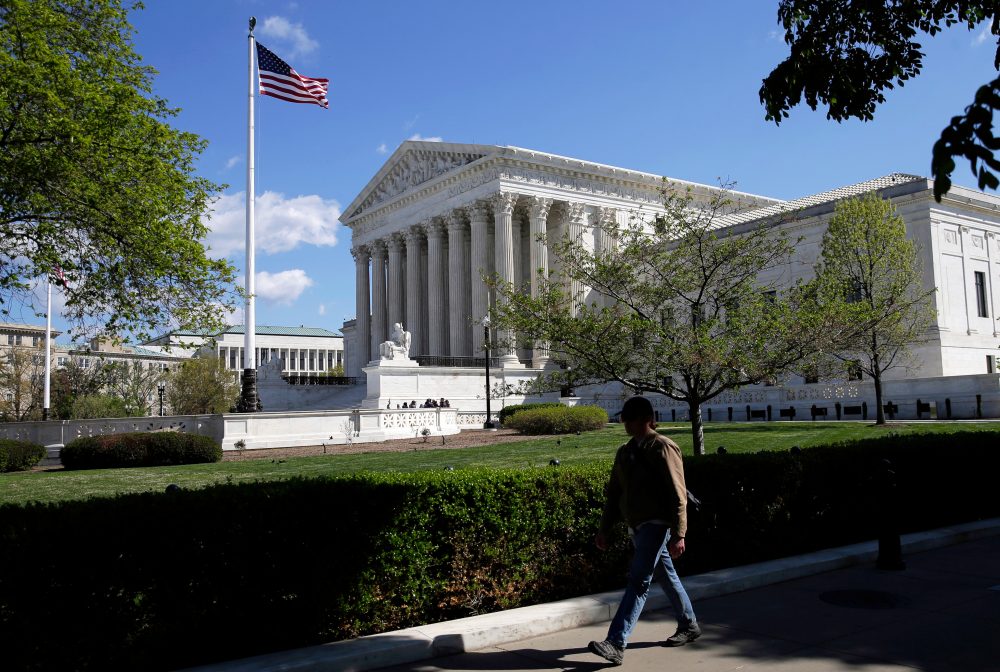
The nation’s highest court will examine on Tuesday whether federal telecommunications regulators violated constitutional protections when they levied massive financial penalties against major wireless companies before allowing them to contest the charges in court.
At the center of this legal battle is the question of whether the Federal Communications Commission overstepped its constitutional boundaries by imposing tens of millions of dollars in fines against telecommunications giants including Verizon Communications and AT&T without first providing the companies access to a jury trial.
The Trump administration is backing the FCC’s internal penalty enforcement system in this case.
This legal challenge represents another examination of whether federal agencies’ internal enforcement mechanisms violate constitutional guarantees of jury trial rights, following the Supreme Court’s 2024 decision that restricted the Securities and Exchange Commission’s in-house proceedings.
The telecommunications case originated from approximately $200 million in penalties that the FCC levied in 2024 against wireless companies after determining they illegally provided third-party access to customer location information without obtaining proper user authorization.
The financial penalties included $80 million assessed against T-Mobile, $12 million against Sprint (which T-Mobile purchased in 2020), $57 million against AT&T, and nearly $47 million against Verizon Communications.
Both Verizon and AT&T satisfied their penalty payments while simultaneously pursuing legal challenges that ultimately created disagreement among federal appeals courts regarding the constitutionality of the FCC’s internal penalty process, called forfeiture orders.
The 2nd U.S. Circuit Court of Appeals in New York sided with the FCC’s penalty against Verizon, determining that the Constitution allows the FCC to issue preliminary penalty assessments provided accused parties can challenge government collection actions in court. This decision led Verizon to petition the Supreme Court.
Regarding AT&T’s situation, the 5th U.S. Circuit Court of Appeals in New Orleans determined that the FCC’s preliminary finding of violations and penalty assessment violated the company’s constitutional jury trial rights. This ruling prompted the FCC to seek Supreme Court review.
Justice Department attorneys representing the Trump administration contend that the FCC’s assessments carry no binding force. They argue in legal documents that if the government pursued court enforcement action, it would provide companies the opportunity to present their defense to a jury.
The wireless companies counter that the FCC’s system inappropriately shifts court-based proceedings to internal agency processes, denying them jury trial rights. They further contend that the FCC’s preliminary assessments cause reputational damage before accused parties receive fair hearings.
The Supreme Court, which maintains a 6-3 conservative majority, has consistently limited federal agency authority through several significant recent decisions.
In its 2024 SEC decision, the court struck down as unconstitutional that agency’s internal enforcement of investor protection laws against securities fraud. The 6-3 decision, driven by the court’s conservative members, concluded that agency proceedings seeking fraud penalties handled by the SEC rather than federal courts violate the Constitution’s Seventh Amendment jury trial guarantee.
However, the Supreme Court delivered a favorable outcome for the FCC last year with a 6-3 decision supporting the agency’s funding mechanism for its multi-billion-dollar program aimed at expanding telephone and broadband internet access to low-income Americans and other recipients.
WASHINGTON – Former Federal Reserve Governor Kevin Warsh faces senators Tuesday in his bid to become the nation’s top central banker, though his confirmation path remains complicated by an ongoing criminal investigation into current Fed Chair Jerome Powell.
The Senate Banking Committee hearing begins at 10 a.m., where the 56-year-old financier nominated by President Trump will present his opening remarks before facing questions from lawmakers who will determine whether to advance his nomination to the full Senate.
In prepared remarks released Monday, Warsh committed to making interest rate decisions “strictly independent” of political pressure or commentary from elected officials. He also indicated the Fed should become more “reform-oriented” and promised to collaborate “with the administration and Congress on non-monetary matters that are part of the Fed’s remit.”
“Monetary policy independence is essential,” Warsh stated, despite Trump’s previous comments suggesting he wouldn’t select someone for the Fed leadership who wasn’t planning to reduce borrowing costs.
Warsh believes rate reductions are justified because artificial intelligence-driven technological advances will boost productivity. However, other central banking officials argue this may prove accurate long-term but doesn’t necessarily support immediate rate cuts while inflation continues exceeding the Fed’s 2% objective.
Senator Tim Scott, the Republican Banking Committee chairman, plans to “frame the hearing around affordability” according to his spokesperson, focusing on the Fed’s role in maintaining price stability at the central bank’s inflation target.
The Federal Reserve has fallen short of its 2% inflation goal for over five years, initially due to COVID-19 disruptions but recently because of Trump administration tariffs and elevated oil prices connected to Middle Eastern conflicts – potentially problematic for Republican legislators approaching November’s midterm elections.
The timing for committee and Senate floor votes remains unclear due to political complications.
Republican Senator Thom Tillis, a committee member, has pledged to obstruct Warsh’s nomination until the Justice Department abandons its Powell investigation, which Tillis considers baseless and part of Trump’s strategy to pressure the Fed into cutting rates or forcing Powell’s resignation.
With next week’s policy meeting potentially being Powell’s final one as Fed chief, this standoff creates the possibility he could continue serving beyond his May 15 tenure expiration.
U.S. Attorney for the District of Columbia Jeanine Pirro, a Trump supporter, shows no indication of ending the Powell investigation, and the president isn’t pressuring her to do so – meaning he might accept keeping the current central bank leader for additional months or risk another legal fight by attempting to name an interim replacement from the remaining six Fed governors.
When lacking a confirmed successor, the central bank has previously appointed its own “pro tem” Fed chair. Since Powell’s governor term runs until 2028, he could continue as an influential policymaker even with Warsh’s confirmation.
Trump has also suggested he might dismiss Powell if he doesn’t resign his governor position. Such action would likely trigger legal challenges, similar to the president’s unsuccessful attempt last summer to remove Fed Governor Lisa Cook.
This represents an extraordinary situation for the U.S. central bank, where leadership transitions have traditionally been cooperative, and senators will likely question Warsh extensively about this dynamic.
Warsh, who has significantly expanded his considerable family fortune during the 15 years since departing the central bank’s board, will have opportunities to explain how his extensive Fed criticism and leadership critiques will result in different monetary policy approaches or new organizational management methods.
The Federal Reserve encompasses a Washington-based board and staff plus twelve regional banks, tens of thousands of system employees, and responsibilities spanning national interest rate setting, payments system management, bank supervision and regulation, foreign central bank swap line administration, and research covering topics from digital currencies to rural healthcare.
Warsh has sharply criticized Powell’s leadership, and the hearing provides a platform to elaborate on his planned changes.
“The Fed must stay in its lane,” Warsh wrote in his committee statement, reflecting conservative arguments that the central bank’s climate change work, economic equity initiatives, or fiscal spending commentary exceed appropriate boundaries.
Republicans, including Tillis, have generally endorsed Warsh’s nomination.
Democrats indicate they have substantial concerns to address, ranging from Warsh’s Fed role during major bank bailouts in the 2007-2009 financial crisis to questions about his recent financial disclosures promising to sell portions of his over $100 million portfolio rather than providing detailed asset information.
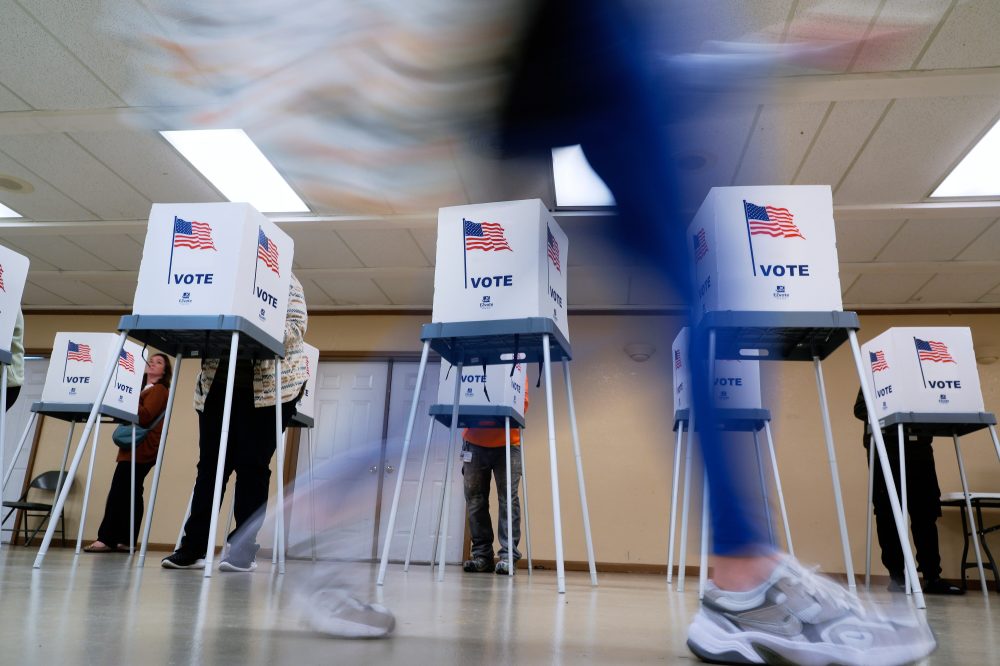
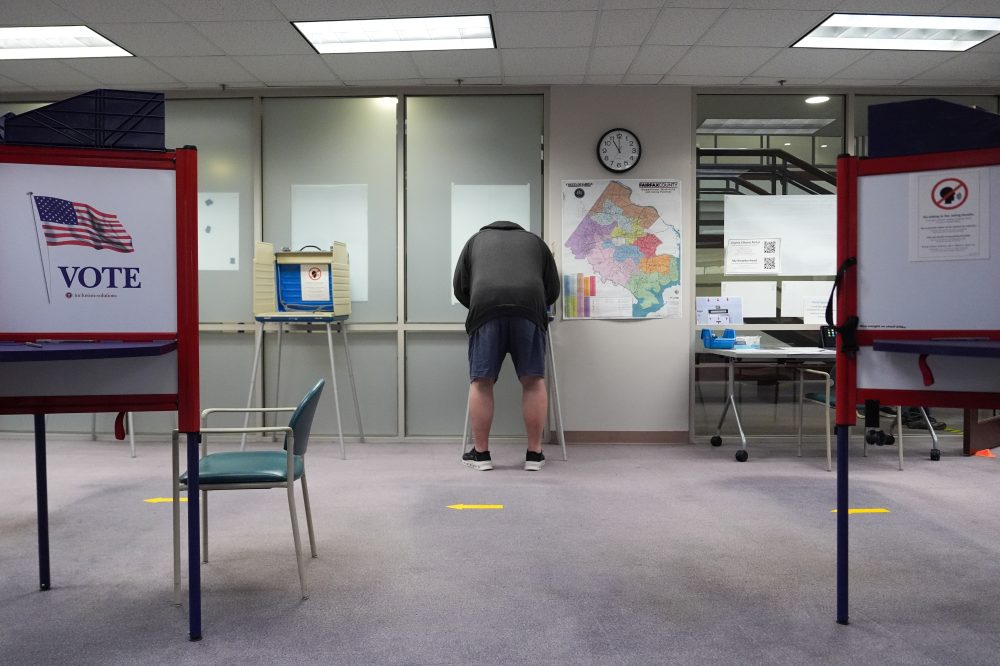
Virginia residents are casting their votes today on a newly designed congressional district map created by Democrats that has the potential to change control of four Republican-held seats in the U.S. House of Representatives during November’s midterm elections. The referendum comes after both political parties invested tens of millions of dollars in campaigns leading up to this vote.
This Virginia contest represents the most recent front in an extraordinary nationwide battle over redistricting that started last summer when former President Donald Trump successfully pushed Texas Republicans to adopt new congressional boundaries targeting five Democratic office holders.
Following that move, states under control of both major parties have initiated their own redistricting processes, resulting in what amounts to a stalemate so far. Control of just a handful of seats could be crucial: Democrats require only three additional Republican districts out of the 435 total House seats in November to gain majority control, which would enable the party to launch investigations into Trump’s presidency and halt his policy initiatives.
Currently, Democrats control six out of Virginia’s 11 House seats, but the proposed new boundaries would position them favorably in all districts except one.
The redistricting process normally takes place every ten years to account for demographic shifts documented in the U.S. Census. State legislators have traditionally utilized this opportunity to create districts more advantageous to their political party, a practice called partisan gerrymandering.
Given what’s at stake, both parties have invested heavily in the Virginia contest, with Democrats outspending their Republican counterparts significantly. The majority of funding has originated from so-called “dark money” political organizations that don’t have to reveal their financial backers.
The primary organization supporting the ballot measure, Virginians for Fair Elections, collected $64.1 million through April 13, based on campaign finance documentation. Over $38 million of that amount came from House Majority Forward, the main political nonprofit organization for House Democrats.
The top Republican opposition organization, the similarly titled Virginians for Fair Maps, had accumulated nearly $20 million as of April 13.
Republicans have additionally pursued legal action questioning the referendum’s validity. The state Supreme Court permitted the voting to continue while considering these legal challenges.
Most public opinion surveys indicate the Democrats’ “yes” campaign holds a slight advantage.
Virginia has shifted toward Democratic candidates in recent election cycles, with the party’s presidential nominee carrying the state in every election since 2008. Today’s special election occurs just five months following Democrat Abigail Spanberger’s gubernatorial victory by a 15-point margin.
“In a blue state, it’s still going to be spun as an up-or-down vote on Trump,” stated J. Miles Coleman, an analyst at the University of Virginia’s Center for Politics.
Democrats have contended the new district boundaries are essential to counteract Texas and other Republican-controlled states that have employed redistricting to target Democratic seats. Republicans have charged Democrats with inconsistency, highlighting their earlier opposition to partisan gerrymandering.
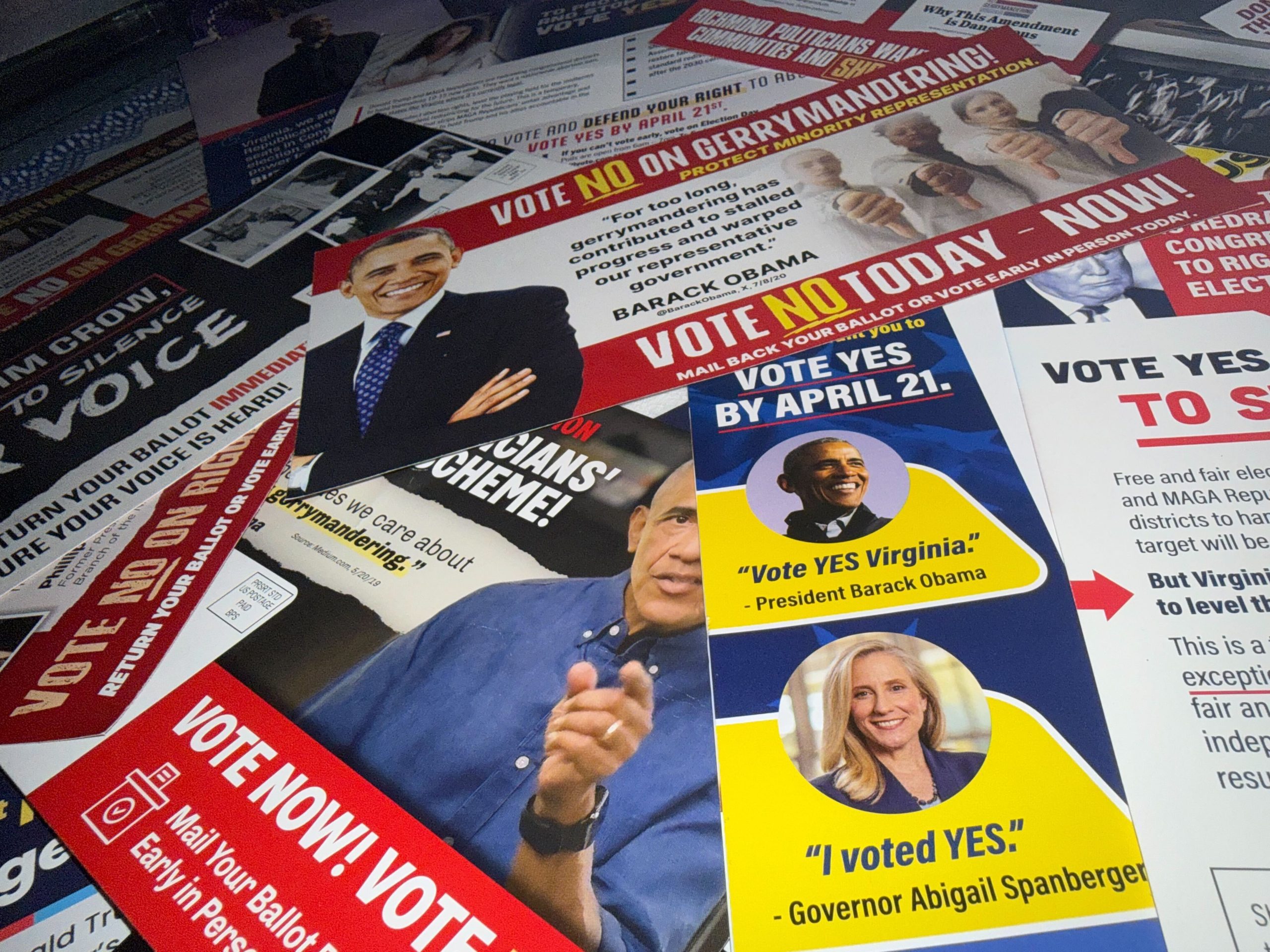
Demonstrating how Democratic messaging has evolved in reaction to Trump’s redistricting strategy, both Republicans and Democrats are incorporating former Democratic President Barack Obama’s words to support their positions.
Republicans have broadcast advertisements opposing the ballot initiative that include Obama’s past anti-gerrymandering remarks, while Obama has created videos encouraging voters to support the referendum to prevent a Republican “steal” of Congress.
Following Virginia’s decision, the national redistricting battle continues; Republican Florida Governor Ron DeSantis has scheduled a special legislative session for next week to examine redrawing that state’s districts.
Additionally, the U.S. Supreme Court is expected to release a ruling in the upcoming months that might allow Republicans in Southern states to pursue additional Democratic seats.
Several major political developments are unfolding in Washington as the week begins, with international relations and domestic leadership changes taking center stage.
A ceasefire agreement between the United States and Iran has reached its conclusion, though the future of diplomatic negotiations to extend the truce remains uncertain. Officials have not provided clear details about ongoing discussions between the two nations.
In domestic political news, the Trump administration’s labor secretary has announced their departure from the position. The resignation adds to ongoing changes within the executive branch leadership.
Additionally, the nominee for Federal Reserve chair is scheduled to appear before a Senate committee as part of the confirmation process. The hearing represents a crucial step in filling the key economic leadership position.
Voters in Virginia headed to the polls Tuesday to weigh in on a contentious redistricting proposal that could significantly improve Democratic prospects for gaining control of the narrowly split U.S. House of Representatives, marking Virginia as the newest battleground in a nationwide fight over congressional maps.
The constitutional amendment, supported by Democratic leaders, would circumvent Virginia’s nonpartisan redistricting commission and implement new congressional boundaries that state legislators approved during this year’s midterm cycle.
This ballot measure evaluates Democrats’ capacity to counter President Donald Trump, who initiated interstate competition over gerrymandering after successfully encouraging Texas Republicans to redraw their congressional maps favorably last year. Virginia represents the second state, following California this past fall, to present this question directly to voters.
The vote also examines voters’ acceptance of politically motivated district boundaries — occurring just six years after Virginians approved changes designed to reduce such partisan manipulation by removing redistricting authority from the legislature.
Should Democrats prevail Tuesday, the public decision may not represent the final outcome. The state Supreme Court is reviewing whether the redistricting proposal violates the law in a case that could nullify the referendum results.
Congressional map redrawing normally occurs once every ten years following each U.S. census. However, Trump encouraged Texas Republicans to redistrict before November elections, hoping to secure several additional seats and preserve the GOP’s slim House majority against political challenges that typically benefit the opposition party during midterm elections.
The Texas strategy sparked redistricting efforts across the nation. Republicans currently believe they can secure up to nine additional House seats through newly drawn districts in Texas, Missouri, North Carolina and Ohio.
Democrats anticipate winning up to five additional seats in California, where voters endorsed mid-decade redistricting last November, plus one more seat through new court-mandated districts in Utah. Democrats aim to close the remaining gap in Virginia, where they dramatically captured 13 state House seats and reclaimed the governor’s mansion last year.
Leadership from both major parties view Tuesday’s election as vital to their prospects for House control this fall. Former Virginia Gov. Glenn Youngkin, a Republican, joined opponents at a Monday night rally, describing the redistricting proposal as “dishonest” and “brazenly deceptive.” House Minority Leader Hakeem Jeffries told reporters at the Capitol earlier that day that approving the redraw “will serve as a check and balance on this out-of-control Trump administration.”
“He said he expected the election to be close,” Jeffries added.
The ongoing congressional district disputes are anticipated to extend to Florida, where the Republican-controlled legislature is set to meet April 28 for a special session that might produce a more advantageous map for Republicans.
Currently in Virginia, Democrats control six of 11 U.S. House seats under districts established by the state Supreme Court in 2021 after a bipartisan commission couldn’t reach agreement on a map using the most recent census information.
The proposed plan could enable Democrats to capture as many as 10 seats. Five would be centered in Democratic-stronghold northern Virginia, including one configured like a lobster that extends into Republican-favoring rural territories.
Changes to four additional districts spanning Richmond, southern Virginia and Hampton Roads would weaken conservative voting strength in those regions. A redesigned district covering portions of western Virginia combines three Democratic-leaning university towns to counterbalance other Republican voters.
The Virginia redistricting proposal is “pushing back against what other states have done in trying to stack the deck for Donald Trump in those congressional elections,” Democratic Gov. Abigail Spanberger stated during an online rally last week.
Television advertisements supporting the “yes to redistricting” campaign and featuring former President Barack Obama have saturated local media.
Opposition groups have circulated campaign literature highlighting previous statements from Obama and Spanberger condemning gerrymandering, though those comments preceded Trump’s push for Republican states to redraw congressional boundaries ahead of this year’s midterms.
Democrats “were all against gerrymandering before they were for it,” Virginia Republican Party Chairman Jeff Ryer stated.
Virginia legislators approved a constitutional amendment permitting their mid-decade redistricting last fall, then passed it again in January as part of a two-phase process requiring an intervening election before an amendment can appear on the ballot.
In February, they approved a new U.S. House map to become effective pending the redistricting referendum outcome. Republicans have filed numerous legal challenges against the initiative.
A Tazewell County judge determined that the redistricting effort was illegal for multiple reasons. Circuit Court Judge Jack Hurley Jr. stated lawmakers failed to follow their own procedures for adding the redistricting amendment to a special session.
He determined that their initial vote failed to occur before the public started casting ballots in last year’s general election and therefore didn’t count toward the two-phase process. He also concluded that the state failed to publish the amendment three months before that election, as legally required.
If the state Supreme Court upholds the lower court ruling, Tuesday’s vote results could become meaningless.
WASHINGTON — Kevin Warsh moves closer to his long-sought ambition of leading the Federal Reserve as he testifies before the Senate Banking Committee on Tuesday. However, the position he hopes to secure may present challenges far different from what he anticipated a decade ago when he first set his sights on the role.
Rising inflation driven by higher gas prices from the Iran conflict is complicating the Federal Reserve’s ability to deliver the interest rate reductions that President Donald Trump urgently wants. The ongoing war could also dampen economic growth and job creation. Should Warsh eventually become chair, he might find himself working alongside his predecessor Jerome Powell, who plans to remain on the Fed’s board — an awkward situation not seen since the 1940s.
The former Fed official and affluent investor is expected to encounter challenging questions during his appearance. Committee Democrats have already indicated they plan to grill him about what they view as insufficient transparency surrounding his extensive financial portfolio, which exceeds $100 million according to recent filings.
Senators will also likely focus on Trump’s persistent calls for lower short-term interest rates, raising concerns that Warsh was selected primarily to carry out the president’s wishes. Most current Fed officials favor maintaining the central bank’s benchmark rate at current levels as inflation shows signs of accelerating once more.
In prepared testimony released Monday, Warsh defended the Federal Reserve’s independence from political influence. He described such independence as “essential,” while noting it isn’t compromised when “elected officials — presidents, senators, or members of the House — state their views on interest rates.” Trump has consistently pushed Powell to reduce the Fed’s key rate from approximately 3.6%.
Warsh emphasized his dedication to the Fed’s inflation-fighting mandate in his written statement, though he didn’t reference the central bank’s employment goals. “Inflation is a choice, and the Fed must take responsibility for it,” he stated in his prepared remarks. This focus on price stability typically means officials prefer higher interest rates to restrain spending rather than cutting rates to stimulate growth, contrary to Trump’s preferences.
Although Tuesday’s hearing represents a crucial milestone for Warsh, the timing of a committee vote remains uncertain. A Justice Department investigation into Powell and the Fed regarding a building renovation has prompted Senator Thom Tillis, a North Carolina Republican, to threaten blocking Warsh’s nomination until the inquiry ends.
“Clearly there’s a majority of the committee that’s not going to move this nomination forward, especially while this sham of a criminal investigation is going on,” Minnesota Democrat Senator Tina Smith told reporters during a Monday conference call. “It feels a bit like we’re going through the motions when we really have not addressed the fundamental challenges that this nomination has.”
This uncertainty could create an unusually chaotic leadership transition at the world’s most influential central bank, which typically experiences seamless changes in command. A particularly disruptive handover might rattle financial markets and push up long-term borrowing costs.
Powell’s chairmanship expires May 15, and he has committed to continuing in the role until a replacement is confirmed. His separate position on the Fed’s governing board extends through January 2028. While Fed chairs traditionally step down from the board when their leadership terms conclude, Powell announced last month he would stay on the board even after a new chair takes over, at least until the Justice Department probe concludes.
When questioned about Powell’s intentions, Trump threatened to dismiss Powell if he attempts to remain at the Fed. However, Trump’s earlier effort to remove Fed Governor Lisa Cook remains tied up in litigation. During January oral arguments, most Supreme Court justices seemed inclined to allow Cook to retain her position.
WASHINGTON — Labor Secretary Lori Chavez-DeRemer has stepped down from President Donald Trump’s Cabinet, the White House announced Monday, following numerous accusations of misconduct including an inappropriate relationship with a staff member and consuming alcohol during work hours.
This marks the third departure from Trump’s Cabinet, coming after the president dismissed Homeland Security Secretary Kristi Noem in March and removed Attorney General Pam Bondi earlier this month.
In contrast to previous Cabinet exits, Chavez-DeRemer’s departure was revealed through a White House staff member rather than Trump’s own social media announcement.
“Labor Secretary Lori Chavez-DeRemer will be leaving the Administration to take a position in the private sector,” stated White House communications director Steven Cheung on X. “She has done a phenomenal job in her role by protecting American workers, enacting fair labor practices, and helping Americans gain additional skills to improve their lives.”
Cheung announced that Keith Sonderling, currently serving as deputy labor secretary, will step into the acting labor secretary role. NOTUS initially broke the story of Chavez-DeRemer’s resignation.
Her exit comes after investigations that began emerging in January regarding her conduct in office.
Last Wednesday, The New York Times disclosed that the Labor Department’s inspector general was examining evidence showing Chavez-DeRemer and her senior staff and relatives regularly sent personal communications and requests to junior employees.
According to the newspaper, both Chavez-DeRemer’s spouse and father had text exchanges with young female workers. Some employees received instructions from the secretary and her former deputy chief of staff to give special attention to her family members, sources familiar with the probe told the Times.
These communications came to light during a wider examination of Chavez-DeRemer’s management style that started after the New York Post reported in January about a complaint filed with the Labor Department’s inspector general alleging she had a relationship with a subordinate.
Additional accusations included drinking alcohol while on duty and directing staff to organize official travel primarily for personal purposes.
Initially, both the White House and Labor Department dismissed the misconduct reports as unfounded. However, official denials became less emphatic as additional allegations surfaced, making her potential departure a topic of speculation in Washington.
At least four Labor Department personnel have already been removed from their positions as the investigation continued, including Chavez-DeRemer’s former chief of staff and deputy chief of staff, plus a security team member with whom she allegedly had the affair, according to The New York Times.
“I think the secretary demonstrated a lot of wisdom in resigning,” commented Sen. John Kennedy, R-La., on Monday following the announcement of her departure.
The Senate confirmed Chavez-DeRemer to Trump’s Cabinet with a 67-32 vote in March 2025. She previously served as a House Republican representing a competitive Oregon district and had garnered uncommon union support for a Republican before losing her reelection bid in November 2024.
During her congressional term, Chavez-DeRemer supported measures that would simplify federal unionization processes and separate legislation designed to protect Social Security benefits for government workers.
Several major labor organizations, including the International Brotherhood of Teamsters, endorsed Chavez-DeRemer for Labor Secretary, noting she is the daughter of a Teamster member. Trump’s selection of her was seen by political analysts as an attempt to attract voters connected to labor organizations.
However, other influential labor leaders remained doubtful when she was chosen, questioning whether Chavez-DeRemer would pursue pro-union policies within a Republican administration. During her Senate confirmation process, some senators wondered if she could maintain her labor-friendly reputation in an administration that terminated thousands of federal workers.
Beyond the recent misconduct allegations, Chavez-DeRemer maintained a relatively low profile among Trump’s Cabinet selections but implemented significant measures supporting the administration’s deregulation goals.
The Labor Department moved to revise or eliminate over 60 workplace regulations deemed outdated during her time in office. These rollbacks affected minimum wage standards for home health care workers and individuals with disabilities, along with regulations covering exposure to dangerous materials and mining safety protocols. These changes faced criticism from union representatives and workplace safety advocates.
The proposed modifications also included removing requirements for employers to provide proper lighting at construction sites and seat belts for agricultural workers in most employer-supplied vehicles.
Under Chavez-DeRemer’s leadership, the Trump administration terminated millions of dollars in international funding that a Labor Department unit managed to fight child labor and forced labor globally, halting efforts that had contributed to reducing child laborers worldwide by 78 million over twenty years.
The Labor Department oversees extensive responsibilities regarding the American workforce, including publishing unemployment statistics, regulating workplace health and safety standards, investigating minimum wage, child labor and overtime violations, and enforcing laws related to union formation and wrongful terminations.
WASHINGTON — The White House announced Monday that Labor Secretary Lori Chavez-DeRemer has departed from President Donald Trump’s Cabinet amid mounting allegations that she misused her authority, including claims of an inappropriate relationship with a staff member and consuming alcohol during work hours.
This marks the third Cabinet official to exit Trump’s administration, following the president’s dismissal of Homeland Security Secretary Kristi Noem in March and the removal of Attorney General Pam Bondi earlier this month.
In a departure from typical protocol, Chavez-DeRemer’s resignation was not announced through Trump’s social media channels but rather by a White House spokesperson.
White House communications director Steven Cheung posted on X that “Labor Secretary Lori Chavez-DeRemer will be leaving the Administration to take a position in the private sector. She has done a phenomenal job in her role by protecting American workers, enacting fair labor practices, and helping Americans gain additional skills to improve their lives.”
Cheung announced that Keith Sonderling, who currently serves as deputy labor secretary, will step into the acting secretary role. The resignation was initially reported by NOTUS.
Her resignation comes after investigations that began emerging in January regarding her conduct in office.
Last Wednesday, The New York Times published findings that the Labor Department’s inspector general was examining evidence showing Chavez-DeRemer and her senior staff and family members regularly sent personal communications and requests to junior staff members.
According to the newspaper’s reporting, both Chavez-DeRemer’s spouse and father had text message exchanges with young female employees. Sources familiar with the investigation told the Times that some staff members received instructions from the secretary and her former deputy chief of staff to “pay attention” to her family members.
These communications came to light during a wider probe into Chavez-DeRemer’s management style that started after The New York Post reported in January about a complaint filed with the Labor Department’s inspector general alleging she had a relationship with a subordinate.
Additional accusations included claims that she consumed alcohol while on duty and directed staff to organize official travel that served primarily personal purposes.
Initially, both the White House and Labor Department dismissed the misconduct reports as unfounded. However, their denials became less emphatic as additional allegations surfaced, leading to speculation in Washington about her job security.
The New York Times reported that at least four Labor Department officials have already been removed from their positions as the investigation advanced, including Chavez-DeRemer’s former chief of staff and deputy chief of staff, plus a security detail member with whom she allegedly had the affair.
“I think the secretary demonstrated a lot of wisdom in resigning,” commented Sen. John Kennedy, R-La., on Monday following the announcement of her departure.
The Senate confirmed Chavez-DeRemer to Trump’s Cabinet with a 67-32 vote in March 2025. A former GOP House member, she previously represented a competitive district in Oregon and had garnered uncommon union support for a Republican before losing her reelection bid in November 2024.
During her congressional tenure, Chavez-DeRemer supported measures that would facilitate federal-level unionization efforts and backed separate legislation designed to protect Social Security benefits for public sector workers.
Several major labor organizations, including the International Brotherhood of Teamsters, endorsed Chavez-DeRemer for Labor Secretary, noting her background as a Teamster’s daughter. Political analysts viewed Trump’s selection of her as an attempt to court voters with labor union connections.
However, other influential labor leaders remained doubtful when she was nominated, questioning whether Chavez-DeRemer would pursue pro-union policies within a Republican administration. During her Senate confirmation proceedings, some senators expressed concerns about her ability to maintain that reputation in an administration that terminated thousands of federal workers.
Beyond the recent misconduct allegations, Chavez-DeRemer maintained a relatively low profile among Trump’s Cabinet appointments while implementing significant steps to advance the administration’s deregulation objectives.
The Labor Department under her leadership initiated efforts to revise or eliminate over 60 workplace regulations deemed outdated. These rollbacks affected minimum wage standards for home health care workers and individuals with disabilities, along with regulations covering exposure to dangerous materials and mining safety protocols. Union leaders and workplace safety advocates criticized these efforts.
The proposed modifications also included removing requirements for employers to provide sufficient lighting at construction sites and seat belts for agricultural workers in most employer-supplied vehicles.
Under Chavez-DeRemer’s leadership, the Trump administration terminated millions of dollars in international grants that a Labor Department division managed to fight child labor and forced labor globally, halting programs that had contributed to reducing the worldwide number of child laborers by 78 million over two decades.
The Labor Department oversees extensive responsibilities related to the American workforce, including publishing unemployment statistics, regulating workplace health and safety standards, investigating disputes over minimum wage, child labor and overtime compensation, and enforcing laws regarding union organization and wrongful terminations.
Federal authorities have requested that Wayne County, Michigan hand over all voting records from the 2024 election, marking an expansion of similar efforts previously focused on 2020 election materials in Georgia and Arizona.
While earlier federal requests targeted 2020 presidential election documents from the race former President Trump lost, this new demand centers on the most recent election cycle in a battleground state that Trump carried.
The April 14 correspondence from U.S. Assistant Attorney General Harmeet K. Dhillon seeks ballots and additional documentation from Wayne County, home to Detroit and its heavily Democratic voter base. The county recorded nearly 865,000 votes in 2024, according to state officials.
Michigan’s top Democratic leaders have united in opposition to the federal request. In a joint Sunday statement, Democratic Attorney General Dana Nessel accused the current administration of turning the Justice Department into a political weapon aimed at meddling in state-run elections.
“If this administration wants to bring this circus to our state, my office is prepared to protect the people’s right to vote,” Nessel stated.
The federal letter cites concerns about potential voting irregularities in the 2024 contest, pointing to three documented fraud cases from 2020 and a civil court challenge involving absentee ballot handling. However, Nessel’s office notes that Michigan authorities already identified and prosecuted those three incidents, while a judge threw out the civil case after determining that allegations of “sinister and fraudulent motives” were “incorrect and not credible.”
Governor Gretchen Whitmer joined the criticism in the coordinated response. “Michigan’s elections are safe and secure,” Whitmer said in the joint statement. “This demand is a poorly disguised attempt to justify more doubt and misinformation about our elections as well as direct federal interference.”
State officials have 14 days from receiving the request to provide the materials, or federal authorities could pursue a court mandate. However, Nessel appears unlikely to cooperate quickly, raising several procedural objections including the outdated nature of the cited fraud cases, their rarity, and jurisdictional issues since the request targets Wayne County Clerk Cathy Garrett while voting materials remain with 43 individual municipal clerks throughout the county.
Garrett has not yet responded to requests for comment on the matter.
This Michigan request follows successful federal efforts to obtain election documentation from other competitive states. FBI agents executed a court-approved search warrant in January at the election offices of Fulton County, Georgia, a Democratic stronghold that has faced numerous conspiracy theories related to Trump’s 2020 defeat. Fulton County authorities are currently fighting in court to recover their confiscated records.
In Arizona, federal prosecutors used a grand jury subpoena last month to compel the state Senate to surrender FBI records connected to a controversial 2020 election review in Maricopa County, which encompasses Phoenix. State Democrats criticized the Republican Senate leader for cooperating, emphasizing that numerous independent reviews, investigations and legal challenges have found no evidence supporting claims of widespread electoral fraud.
Labor Secretary Lori Chavez-DeRemer has stepped down from her cabinet position while facing an internal investigation into alleged misconduct.
Chavez-DeRemer’s departure represents the third cabinet official to exit during President Trump’s second administration.
The former secretary had been serving in the role when the internal probe began, though specific details about the nature of the misconduct allegations have not been disclosed.
Her resignation adds to the ongoing turnover within the Trump administration’s senior leadership positions.
LOS ANGELES — The competitive race for California’s governorship has lost another Democratic contender as former state controller Betty Yee withdrew her candidacy on Monday.
Yee’s departure comes just over a week following the exit of former U.S. Representative Eric Swalwell, who also dropped out amid sexual assault allegations he has disputed.
The former controller had hoped to make history as California’s first female governor but struggled with campaign fundraising and consistently ranked low in voter polls since launching her bid in 2024. Throughout her campaign, she marketed herself as a pragmatic leader “who focuses on solutions rather than soundbites” and embraced the nickname “boring Betty” to highlight her steady approach.
Despite these two departures, the race to succeed outgoing Democratic Governor Gavin Newsom remains highly competitive with no frontrunner emerging. Following Yee’s withdrawal, six prominent Democrats and two major Republican candidates remain among more than 50 names appearing on the ballot.
Voters will receive mail-in ballots in early May ahead of the June 2 primary election. Due to timing constraints, Yee’s name will still appear on ballots despite her campaign suspension.
While Swalwell’s departure significantly altered the race dynamics given his position among top Democratic contenders, Yee’s exit has less impact as she remained at the bottom of polling with minimal voter backing.
Democratic Party leaders worry that having too many candidates could result in being completely excluded from November’s general election. California’s primary system advances only the two highest vote recipients to the general election, regardless of their party affiliation.
Recent polling conducted in late March and early April by the nonpartisan Public Policy Institute of California showed several candidates in tight competition: Democrats Tom Steyer and former U.S. Representative Katie Porter, along with Republicans Steve Hilton and Chad Bianco, plus Swalwell. Other candidates trailed significantly behind. This polling data was gathered before Swalwell’s withdrawal from the race.
WASHINGTON – President Donald Trump publicly disagreed Monday with his Energy Secretary’s forecast regarding when Americans might see relief at gas pumps, stating fuel costs will decrease immediately once the Iranian conflict concludes.
Energy Secretary Chris Wright appeared on CNN Sunday, suggesting that while gasoline under $3 per gallon “could happen later this year, that might not happen until next year.”
“I think he’s wrong on that. Totally wrong,” Trump responded to a Hill reporter, insisting prices should decline “as soon as this ends.”
Wright acknowledged during his CNN appearance that “with the resolution of this conflict, you’ll see prices go down,” though the war’s conclusion remains uncertain. A temporary ceasefire is approaching its expiration date, and prospects for successful future negotiations remain questionable.
The disagreement comes as Trump and Republican lawmakers face mounting political pressure before November’s midterm elections, having promised to reduce living costs for Americans. Despite these commitments, fuel expenses continue climbing, inflation persists, and the president’s poll numbers have declined.
AAA reported Monday’s average regular gasoline price at $4.04 per gallon, a significant jump from $3.15 one year earlier. Global oil markets climbed 5% during Monday’s trading.
The ongoing military action, which began February 28 with American and Israeli strikes against Iran, has now lasted two months. Iran responded by blocking the Strait of Hormuz, a crucial maritime shipping route. Trump initially predicted the operation would conclude within four to six weeks.
Elevated fuel costs have created a ripple effect across the economy, driving up prices for airline travel, housing, agricultural fertilizers, and food products nationwide.
While Trump previously acknowledged gas prices might remain elevated through November, he has downplayed public concerns. Treasury Secretary Scott Bessent offered a more optimistic timeline last week, forecasting prices could return to approximately $3 per gallon during summer months.
A Pennsylvania appeals court delivered a groundbreaking ruling Monday, declaring that abortion access is constitutionally protected under state law while eliminating a longstanding prohibition on using state Medicaid dollars for abortion procedures.
The decision from a split seven-member panel of Pennsylvania’s Commonwealth Court represents a significant win for Planned Parenthood and reproductive health providers who challenged the state’s Medicaid funding restrictions through litigation filed in 2019.
Though the lawsuit originally focused on Medicaid coverage limitations, the case gained heightened importance following the U.S. Supreme Court’s 2022 decision to eliminate federal abortion protections by reversing Roe v. Wade after nearly fifty years.
Monday’s determination represents the first judicial recognition that Pennsylvania’s state constitution safeguards abortion rights, placing it among a small group of states where advocates have successfully secured reproductive access through state constitutional arguments.
The decision remains subject to potential review by Pennsylvania’s highest court.
“Today, our Commonwealth Court, looking at the Pennsylvania constitution, held that there is a right to reproductive autonomy, and it’s the highest possible level of a right,” said Susan Frietsche, executive director of the Women’s Law Project, which helped represent the clinics.
A representative for Republican Attorney General David Sunday indicated the office was examining the ruling but declined to specify whether an appeal would be pursued.
Democratic Gov. Josh Shapiro welcomed the court’s action.
“I’ve long opposed this unconstitutional ban, and as Governor, I did not defend it — because a woman’s ability to access reproductive care should never be determined by her income,” Shapiro said in a statement.
The original 2019 lawsuit sought to compel Pennsylvania’s Medicaid program to provide unrestricted abortion coverage, with plaintiffs contending that a 1982 state law limiting such funding violated equal protection guarantees for low-income women.
The litigation has experienced multiple developments, including a 2021 lower court decision dismissing the case for lack of standing while citing a 1985 state Supreme Court ruling that upheld the 1982 restrictions.
However, Pennsylvania’s Supreme Court reversed the lower court’s judgment in 2024 and found that earlier rulings had not adequately examined the full scope of state constitutional anti-discrimination protections beyond federal safeguards.
The seven-judge panel that reviewed the case Monday largely endorsed the plaintiffs’ position. The majority wrote that the state should invest in maternal and infant healthcare and related services if it wants women to continue pregnancies to term.
The attorney general’s office had maintained that the state possessed a legitimate interest in “protecting fetal life” and that excluding Medicaid coverage supported that objective.
“If the state believes certain medical procedures may psychologically harm women, the state can license, regulate, and educate around such care. That is less intrusive than taking an entire medical procedure off the table categorically for some women, some of whom may benefit from that procedure — a fact the Attorney General does not dispute,” the majority opinion said.
Anti-abortion groups swiftly condemned Monday’s ruling.
“By declaring a sweeping constitutional ‘right to reproductive autonomy’ and mandating taxpayer-funded abortion through Medicaid, the court has overstepped its authority, ignored the plain text of our state constitution, and forced millions of Pennsylvanians who believe life begins at conception to subsidize the killing of unborn children,” said Michael Geer, president of Pennsylvania Family Institute, which opposes abortion rights.
Current Pennsylvania law permits abortion procedures through the 23rd week of pregnancy.
DOVER — Delaware Governor Matt Meyer announced today his selection of Robert P. Storch for the state’s inaugural Inspector General position.
Meyer emphasized the need for independent monitoring of state operations, stating that Delaware’s government institutions have gone without proper oversight for an extended period.
“For far too long, Delaware’s institutions have lacked the independent oversight that Delawareans deserve,” Meyer commented during the announcement. “With a seasoned leader like Robert Storch at the helm, I am confident that the new Office of the Inspector General will ensure that the actions taken [by state government] meet the highest standards.”
The newly established Office of the Inspector General represents a significant step toward increased transparency and accountability in Delaware state government operations.
WASHINGTON — Federal prosecutors have issued subpoenas calling for multiple witnesses to appear before a grand jury in Washington as part of an ongoing criminal investigation targeting former CIA Director John Brennan, according to three sources with knowledge of the matter who spoke Monday.
The grand jury summons were delivered within recent days, showing the Justice Department’s determination to advance the investigation despite a Florida-based career prosecutor departing the case after questioning whether criminal charges could be successfully pursued.
A former Justice Department attorney who previously served as a senior prosecutor during the 1980s and later backed President Donald Trump’s legal challenges to the 2020 election results has now been appointed as special counselor to the attorney general and is anticipated to take on this investigation.
This multi-month investigation into Brennan represents one of multiple criminal inquiries the Justice Department has launched over the past year targeting individuals Trump views as political opponents. The probe focuses on one of the former Republican president’s primary complaints — the U.S. intelligence agencies’ conclusion that Russia worked to benefit his 2016 presidential campaign.
Sources familiar with the subpoenas shared details with The Associated Press under anonymity due to the sensitive nature of the active criminal investigation. At least three subpoenas have been delivered, according to two of these sources. CBS News first reported on the subpoena issuances.
Brennan held the CIA director position during Barack Obama’s presidency and was serving in that capacity when intelligence agencies released their January 2017 assessment documenting Russian interference designed to help Trump defeat Democratic candidate Hillary Clinton in 2016. Special counsel Robert Mueller’s subsequent investigation determined that Russia did interfere to assist Trump and that his campaign accepted this help, though insufficient evidence existed to establish a criminal conspiracy.
Last year, the Justice Department received a criminal referral from Rep. Jim Jordan, the Republican leader of the House Judiciary Committee, claiming that Brennan provided false testimony to the committee in 2023 regarding how the intelligence community assessment was prepared. Brennan and his legal team have strongly disputed any allegations of misconduct.
The investigation has been progressing for several months in Florida, where investigators have conducted interviews and requested documents through subpoenas. These newest subpoenas demanding grand jury testimony in Washington suggest prosecutors believe any potential criminal case would need to be filed in Washington, since that’s where Brennan’s congressional testimony occurred.
Last Friday, news emerged that Maria Medetis Long, a prominent national security prosecutor in Florida who had been overseeing the investigation, was removed from the case. According to another source familiar with the situation, she was taken off the case after voicing concerns about its strength.
The Justice Department has now brought in Joseph diGenova, an 81-year-old Trump supporter who served as U.S. Attorney in Washington during part of the 1980s, to work as special counselor to the attorney general. He took his oath Monday in Florida and is expected to handle the Brennan investigation.
DiGenova previously endorsed Trump’s unfounded assertions that the 2020 election was fraudulently taken from him. He drew controversy that year when he suggested Chris Krebs, a senior Trump administration cybersecurity official who stated the election was free from fraud, deserved to be executed. DiGenova subsequently issued an apology and a lawsuit brought against him by Krebs was later dropped.
FBI Director Kash Patel has initiated a $250 million defamation lawsuit against The Atlantic magazine on Monday, disputing claims made in a recent publication about his drinking habits and professional conduct.
The magazine responded by defending its journalism and stating it will “vigorously defend against the meritless lawsuit” while standing behind its reporting.
The controversial piece, published Friday on The Atlantic’s website, was written by Sarah Fitzpatrick, who suggested Patel fears for his position and noted that “he has good reasons to think so — including some having to do with what witnesses described to me as bouts of excessive drinking.”
According to the magazine’s reporting, Patel’s conduct, which includes “both conspicuous inebriation and unexplained absences,” has created concern among FBI and Department of Justice personnel. Fitzpatrick has also been named as a defendant in the legal action.
The lawsuit, filed in Washington’s district court, refutes these behavioral claims and takes issue with the publication’s use of unnamed sources. Fitzpatrick noted in her article that she spoke with over two dozen individuals, providing them anonymity to “discuss sensitive information and private conversations.”
“Defendants cannot evade responsibility for their malicious lies by hiding behind sham sources,” the legal filing states.
Kevin Warsh, the nominee to become the next chairman of the Federal Reserve, has committed to selling his stake in a foreign investment fund should he be confirmed for the position, according to recently filed financial documents.
In paperwork submitted April 17 that updated his original disclosure from April 10, Warsh informed the Federal Reserve’s ethics official that he would sell his holdings in the iShares S&P/TSX 60 Index (XIU) if approved to replace current Fed Chairman Jerome Powell. The nominee, who previously served as a Fed governor and works in finance, explained his decision by stating that “agency ethics officials have since advised me that the duties of my position will involve particular matters affecting the financial interests of the underlying holding” within the investment fund.
The investment vehicle Warsh plans to sell focuses on Canadian stock holdings. Federal Reserve regulations restrict what investments board members and their families can maintain, including limitations on foreign market exposure along with various other restrictions on investment types and portfolio management.
Financial disclosures made public last week revealed that Warsh, who is scheduled for a Senate Banking Committee confirmation hearing on Tuesday, possesses substantial wealth through diverse investments. Many of these holdings remain partially undisclosed, and he has indicated he would need to sell numerous assets if confirmed for the Fed’s top position.
His path to confirmation faces obstacles due to an ongoing legal inquiry involving the Federal Reserve and its current leadership. Several lawmakers have stated they will not support Warsh’s nomination until this investigation concludes, making it unlikely he could assume the role before Powell’s term expires on May 15.
In the updated filing, the Fed’s internal ethics official stated, “I continue to believe that Mr. Warsh is in compliance with applicable laws and regulations governing conflicts of interest.”
FBI Director Kash Patel has launched a defamation lawsuit against The Atlantic magazine and reporter Sarah Fitzpatrick over a published story that alleged he struggles with alcohol abuse and poses a national security risk.
The legal action, filed April 20 in U.S. District Court for the District of Columbia, seeks $250 million in damages following The Atlantic’s Friday publication of a story originally headlined “Kash Patel’s Erratic Behavior Could Cost Him His Job.”
The magazine’s report drew on statements from more than two dozen unnamed sources who raised concerns about Patel’s “conspicuous inebriation and unexplained absences” that reportedly “alarmed officials at the FBI and the Department of Justice.”
The Atlantic later changed the online headline to “The FBI Director Is MIA” and reported that the FBI has had to postpone early morning meetings “as a result of his alcohol-fueled nights.” The story also claimed Patel “is often away or unreachable, delaying time-sensitive decisions needed to advance investigations.”
The White House, Department of Justice, and Patel all rejected these claims when The Atlantic contacted them. The magazine included Patel’s response: “Print it, all false, I’ll see you in court—bring your checkbook.”
Speaking to Reuters, Patel called the article completely fabricated. “The Atlantic’s story is a lie,” he stated. “They were given the truth before they published, and they chose to print falsehoods anyway.”
Atlantic Editor-in-Chief Jeffrey Goldberg defended the publication’s work in a statement to CNBC after Patel announced his intention to sue during a Fox News appearance Sunday. “We stand by our reporting on Kash Patel,” Goldberg said.
Reuters was unable to verify the claims made in The Atlantic’s article or determine why the publication modified its headline. The Atlantic and Fitzpatrick did not respond to requests for comment.
According to the lawsuit, while The Atlantic has the right to critique FBI leadership, “they crossed the legal line” by publishing a story “replete with false and obviously fabricated allegations designed to destroy Director Patel’s reputation and drive him from office.”
The legal filing accuses The Atlantic of disregarding the FBI’s denials and failing to respond to a Friday letter from Patel’s attorney Jesse Binnall to senior editors and the magazine’s legal team requesting additional time to address 19 allegations the reporter planned to publish.
Court documents show the letter was sent shortly before 4 p.m. Friday, while the story went live at 6:20 p.m. Reuters could not confirm whether or how The Atlantic responded to Binnall’s request.
The lawsuit claims the publication demonstrated “actual malice,” the legal threshold requiring public figures like Patel to prove publishers knowingly distributed false information or recklessly disregarded questions about its truthfulness.
“Defendants’ conscious decision to ignore the detailed, specific, and substantive refutations in the Pre-Publication Letter, and their refusal to give a reasonable amount of time for the FBI and Director Patel to respond, is among the strongest possible evidence of actual malice,” the court filing states.
This lawsuit represents another case of a Trump administration official taking legal action against a news organization. Courts have dismissed Trump’s lawsuits against CNN, the New York Times, and Wall Street Journal, though Trump has refiled against the Times and may refile against the Journal.
However, some settlements have been reached. ABC News agreed to pay $15 million plus $1 million in legal fees, while Paramount Global paid $16 million over what the Trump administration described as “deceptive editing” of a CBS News interview with 2024 election opponent Kamala Harris.
The nation’s highest court on Monday refused to consider a legal challenge brought by Massachusetts parents who claimed their local school district violated their constitutional rights by accommodating their child’s gender identity without parental notification.
The justices dismissed an appeal from Stephen Foote and Marissa Silvestri, whose lawsuit was previously rejected by lower courts. The couple had sued after officials at Baird Middle School in Ludlow honored their 11-year-old’s request to use different names and pronouns at school while continuing to use the child’s birth name when speaking with parents.
The parents argued that school staff promoted what they called “gender ideology” among students without parental knowledge, leading their child, identified in court documents as “B.F.,” to begin questioning their gender identity and ultimately identify as genderqueer.
In their legal filing, Foote and Silvestri contended that school officials violated their 14th Amendment due process rights, which have historically protected parents’ fundamental authority to guide their children’s upbringing and care decisions.
The couple described their opposition to what they termed “so-called gender transition” as morally-based rather than religiously motivated. Their case was backed by Alliance Defending Freedom, a conservative Christian advocacy organization.
A federal district judge dismissed their lawsuit in 2022, and the 1st U.S. Circuit Court of Appeals in Boston confirmed that ruling in 2025. The appeals court determined the parents failed to demonstrate that their parental rights had been adequately compromised, particularly regarding medical care decisions for their child.
The appellate court stated it was “unconvinced that merely alleging Ludlow’s use of gender-affirming pronouns or a gender-affirming name suffices to state a claim that the school provided medical treatment to the student.”
According to the 1st Circuit’s decision, allowing students to control whether schools inform parents about their gender identity enables children to “express their identity without worrying about parental backlash.” The court emphasized that this approach doesn’t force students to hide information or restrict parents’ authority outside school grounds.
“Parents remain free to strive to mold their child according to the parents’ own beliefs,” the 1st Circuit concluded.
This decision follows the Supreme Court’s March 2 action blocking similar California policies that would restrict schools from sharing students’ gender identity information with parents without student consent.
Similar conflicts regarding transgender student privacy and support are occurring nationwide. The high court previously rejected comparable cases from Wisconsin and Maryland in 2024.
The Supreme Court, which maintains a 6-3 conservative majority, continues to address transgender rights issues amid increased restrictions from the Trump administration and Republican-controlled states. In June 2025, the court upheld Tennessee’s ban on gender-affirming medical treatment for transgender minors, and a decision remains pending on state laws prohibiting transgender athletes from competing on female sports teams.
Virginia voters headed to the polls Tuesday for a unique statewide election with no candidates but potentially major implications for congressional control nationwide.
The ballot features a single constitutional amendment that would grant Virginia’s Democratic-controlled General Assembly temporary authority to redraw the state’s congressional map. This proposal represents the newest development in a nationwide redistricting battle that started in July 2025 when Texas Republicans restructured their congressional boundaries to benefit the GOP at President Donald Trump’s request.
Currently, Democrats represent six of Virginia’s 11 House districts. However, if voters approve the measure and enact the redistricting plan that lawmakers passed in February and Democratic Governor Abigail Spanberger signed, Democrats could potentially control 10 districts—adding four seats to their current total.
These revised district lines would take effect before November’s midterm elections, where a small number of competitive races could determine which party leads the House during Trump’s final two years in office.
The amendment would allow state legislators to maintain redistricting authority through October 2030, after which control would return to Virginia’s independent redistricting commission.
Governor Spanberger and former President Barack Obama have both endorsed the referendum, arguing it provides a necessary counter to Republican-led mid-decade redistricting efforts in other states. However, opposition groups have highlighted past statements from both leaders criticizing gerrymandering practices. Former Republican Governors Glenn Youngkin and George Allen have voiced opposition to the proposal.
Campaign finance data from the nonpartisan Virginia Public Access Project shows groups supporting the amendment have significantly outspent their opponents.
While Democrats have carried Virginia in the last five presidential contests, state-level races often show different patterns, with the governor’s office switching between parties six times in the past 33 years.
If voting follows partisan lines, supporters can expect strong backing in traditional Democratic areas like Northern Virginia, Richmond, and Norfolk, while opponents should see substantial margins in smaller, rural counties that comprise most of the state’s geography.
Fairfax County, Virginia’s largest by population, typically votes heavily Democratic, though Republicans who reduce Democratic margins there can win statewide. In 2021, Republican candidates Youngkin and Jason Miyares captured approximately 35% of Fairfax votes and won their respective races. Trump’s best Fairfax performance was roughly 31% in 2024, while Republican Winsome Earle-Sears received about 26% during her unsuccessful 2025 gubernatorial campaign.
Critical areas to monitor include Chesterfield and Stafford counties, plus Virginia Beach and Chesapeake cities. Spanberger and Democratic presidential candidates Joe Biden and Kamala Harris won all four locations in their successful campaigns, but Youngkin carried each area in 2021. Strong “No” votes in these jurisdictions could signal a tight race.
The ballot question reads: “Should the Constitution of Virginia be amended to allow the General Assembly to temporarily adopt new congressional districts to restore fairness in the upcoming elections, while ensuring Virginia’s standard redistricting process resumes for all future redistricting after the 2030 census?”
A “yes” vote supports letting lawmakers redraw districts before the midterms, while a “no” vote maintains existing boundaries until regular redistricting follows the 2030 census.
Polling locations close at 7 p.m. Eastern Time. Virginia had 6,386,877 registered voters as of March 1, and residents can register on Election Day. Approximately 3.4 million people voted in the 2025 gubernatorial race, representing about 54% of registered voters. Early voting has been robust, with nearly 1.2 million ballots already cast by Friday—about 80% of total advance votes from the 2025 governor’s race.
Results reporting varies across Virginia’s counties and independent cities, with less than one-third releasing most early voting results in their initial updates, while nearly half report no early results initially. The midterm elections are scheduled for 196 days from Tuesday.
Fire survivors from the devastating 2025 Eaton Fire in Altadena, California, face an unexpected financial burden after choosing quick settlement payments from the utility company blamed for the disaster instead of pursuing lengthy court battles.
These victims now confront the possibility of paying income taxes on their compensation unless pending federal legislation becomes law, potentially reducing their payouts significantly and jeopardizing eligibility for government assistance programs.
“There was this terrifying disbelief,” Bree Jensen, communications director for the Eaton Fire Long-Term Recovery Group, said of informing fellow residents about the tax.
The tax threat extends beyond California, affecting fire victims in Colorado, Hawaii and Oregon after federal tax protections for wildfire compensation lapsed at year’s end 2025.
While Congress has previously provided tax shields for wildfire settlements, such protection has been temporary and challenging to enact, creating dangerous gaps that burden disaster survivors. A bipartisan House measure extending tax relief cleared committee last month, though floor vote timing and Senate consideration remain unclear, leaving victims in financial uncertainty.
“We have to assume we don’t have that money, so we’re making decisions, choosing cheaper materials, forgoing the solar,” said one Altadena homeowner, who spoke on the condition of anonymity because she fears compromising her expected settlement of about $700,000. If that money counts as income, she expects taxes would take 37%.
The homeowner hoped accepting a settlement would get her family home faster, after she, her husband and their four pets spent more than a year hopping between relatives’ houses and rentals.
“All we wanted was to rebuild a comfortable house and get out of the situation we were in,” she said, adding their construction costs alone are estimated to reach $1 million.
As survivors watch lawmakers lock horns over the Iran war and the record-long Department of Homeland Security shutdown, some worry extending disaster tax relief will be de-prioritized.
“People have low expectations of anything actually getting done,” said Jenn Kaaoush, a 2021 Marshall Fire survivor and town council member in Superior, Colorado.
Power company infrastructure has ignited some of America’s most catastrophic and deadly blazes in recent years. Multi-billion dollar legal settlements have become standard following these disasters, though resolution typically requires years.
With building expenses climbing and insurance growing costlier and harder to obtain, lawsuit compensation has emerged as essential for many families attempting to restart their lives.
“It’s the difference between towns getting rebuilt and not getting rebuilt, quite frankly,” said attorney Doug Boxer, who has represented more than 17,000 Californians in cases against utilities and is part of the LA Fire Justice coalition suing Southern California Edison and its parent company, Edison International, on behalf of more than 2,000 clients.
SCE and Edison International have acknowledged their power equipment may have sparked the Eaton Fire, which destroyed 9,000 structures and killed 19 people. The utility last year announced a compensation program for those impacted, promising fast payments based on the value of one’s losses, as well as an additional premium for not joining litigation against the utility.
More than 2,800 households have applied for the compensation program. Thousands more are joining lawsuits against the utility. An investigation into the Eaton Fire’s cause is ongoing.
Families cannot afford losing portions of their settlements to taxation, Jensen explained, noting her own home was destroyed. “It sounds like a lot of money, but not in regards to how expensive it is to actually build in the community.”
The House Ways and Means Committee unanimously approved legislation last month that would exempt payments from federally declared wildfire disasters between 2015 and 2026 from taxable income calculations. The provision would cover payouts received in 2026 and beyond.
The proposal would also extend expanded tax relief for property losses from federal disasters through this year, helping secure bipartisan backing from representatives of states prone to hurricanes and severe weather events.
Florida Rep. Greg Steube — a Republican who championed the 2024 tax relief bill and introduced its successor with fellow Republican Rep. Doug LaMalfa, now deceased, and with Democratic Reps. Mike Thompson and Jimmy Panetta of California — told The Associated Press he expects the legislation to ultimately pass, but he acknowledged “the exact timeline remains uncertain.”
Steube, whose southwest Florida constituents could benefit from the provision deducting personal casualty losses, has vowed to push the law forward.
Two similar bills were introduced in the Senate, but further action has not been taken.
After lobbying for the past and present bills as executive director of the survivor advocacy nonprofit After The Fire, Jennifer Gray Thompson said she believes lawmakers understand the bipartisan nature of disaster tax relief.
“As these disasters come in quick succession, we are going to have to adapt on all levels, and our tax code will have to adapt along with it,” she said.
Still, Gray Thompson said she can’t be sure when action will come.
Maui residents face similar challenges as they await payments from a $4 billion settlement with Hawaiian Electric. Only about 180 homes have been rebuilt in Lahaina among 2,200 structures destroyed.
What Lahaina survivors need most is “certainty,” Maui County Mayor Richard Bissen wrote to lawmakers in a letter supporting tax relief.
While the majority of destroyed homes in Superior have been rebuilt, Kaaoush, the town council member, said most survivors are still catching up financially after finding themselves underinsured.
She also worries that her constituents could be knocked off income-qualified government benefits for food, health care or veterans’ support if their wildfire payments count as income.
“This has second- and third-order impacts on their life that will do harm,” Kaaoush said.
Gray Thompson cautioned that while survivors waiting for relief can defer taxes or amend past returns, resolving issues with government programs, such as qualifying for college financial aid, is much harder. “There’s no way to undo that,” she said.
Meanwhile, many in Altadena feel they’re continually facing new obstacles to returning home, said another resident who also lost his home and insisted on anonymity because of ongoing litigation.
Being taxed “would just add more pain and suffering for us, really,” he said.
WASHINGTON — While cherry blossom season typically brings over a million tourists to the nation’s capital each spring, this year’s visitors to the Tidal Basin encountered an unusual sight: armed soldiers in military fatigues patrolling between iconic monuments.
More than 2,500 National Guard personnel continue operating throughout Washington D.C., eight months following President Donald Trump’s declaration of a crime emergency that activated the military deployment. The operation has become a fixture in the city with no definitive conclusion planned.
While similar military deployments in other metropolitan areas have concluded or faced court-ordered suspensions in states like California and Illinois, Washington’s National Guard presence persists. Soldiers continue patrolling subway systems, popular tourist destinations, residential areas, and public spaces throughout the district.
Despite approaching critical elections, the extended military presence receives minimal attention during city council sessions or from political candidates seeking mayoral and congressional positions. This silence may indicate both competing governmental priorities and local leaders’ limited authority to challenge the deployment. Without judicial intervention, military personnel will likely remain stationed through year’s end or beyond.
“Taxpayers are paying more than a million dollars a day to have them walk around,” said Phil Mendelson, chairman of the District of Columbia Council, in an emailed response to questions.
He added, “the presence of armed soldiers on American streets is not a good look.”
The Republican president issued his executive directive last August addressing what he characterized as a criminal crisis. This order activated National Guard units alongside hundreds of additional federal law enforcement personnel.
Throughout their deployment, military members have responded to medical situations, supported arrest operations, assisted local police with youth curfew enforcement, and participated in community improvement initiatives. D.C. Guard units also aided snow clearing efforts during January’s significant winter storm.
Although Guard personnel cannot conduct arrests independently, the Trump administration maintains their support contributes to reduced criminal activity. Administration officials report the task force has facilitated 12,000 arrests since beginning operations, including 62 identified gang members, while confiscating thousands of illegal weapons.
White House spokesperson Abigail Jackson said the president’s crime task force in the city has “yielded tremendous results for local communities.”
“Every local leader should want to mimic this success in their own locales,” Jackson said.
However, officials dispute the deployment’s actual impact in Washington, a predominantly Democratic city. Statistics indicate criminal activity was already decreasing beforehand, though these numbers face scrutiny amid allegations that local police may have manipulated crime data.
Legal challenges to the Guard deployment continue in court, and without judicial intervention, the operation could persist indefinitely at the administration’s discretion.
When questioned about the deployment’s duration, Jackson stated via email there were “no announcements to make.”
D.C. Attorney General Brian Schwalb’s office, currently contesting the deployment through litigation, refused comment regarding the pending lawsuit. The Pentagon’s National Guard Bureau did not respond to inquiries.
Mayor Muriel Bowser, who is not seeking reelection, has maintained a careful balance regarding the Guard’s presence and broader federal intervention. She has appeared cooperative with presidential initiatives while simultaneously resisting certain demands, such as local assistance with immigration enforcement.
Prominent candidates competing to succeed Bowser and the city’s 18-term non-voting congressional delegate Eleanor Holmes Norton have emphasized housing costs, statehood aspirations, and federal agency accountability regarding the security surge.
The District Council, including at least four mayoral or delegate candidates, unanimously passed legislation increasing federal law enforcement operation transparency. While the military deployment appears occasionally on campaign materials and advertisements, it remains secondary among current campaign priorities.
Additional city challenges, including unemployment and revenue losses from federal workforce reductions, have taken precedence. Municipal primaries are scheduled for June 16, alongside a special election for an at-large council position.
Some residents report decreased frustration with the Guard following an ambush attack on two West Virginia contingent members near the White House, which killed 20-year-old Specialist Sarah Beckstrom and critically wounded her partner.
Kevin Cataldo, a neighborhood commissioner who recently accompanied Metropolitan Police during community patrols, said he already treated Guard members respectfully, acknowledging them since they didn’t choose their assignment. The shooting incident intensified his sympathy for military personnel. “That was just horrible,” he said.
District Council member Brianne Nadeau noted constituents still question the Guard’s continued presence, though complaints have significantly decreased since deployment began.
“It would be great if the federal government would use its money and resources to help the District on the things we need help with and not act like an invading army,” Nadeau said in an email.
Council colleagues and mayoral candidates Janeese Lewis George and Kenyan McDuffie have expressed similar concerns, particularly regarding excessive costs.
Recent public opinion surveys specifically addressing attitudes toward uniformed military personnel in American cities remain limited.
Multiple organizations are organizing May 1 demonstrations opposing the federal surge, including continued National Guard presence, according to Keya Chatterjay, co-founder and executive director of Free DC, an advocacy organization promoting city autonomy. Their objectives include “an end to the military occupation of D.C. before the June election.”
Chatterjay argued normalizing the Guard’s presence facilitates dissent suppression and could “tilt the playing field” during elections.
Armed military personnel could create intimidating conditions during voting, Chatterjay suggested. Citizens must intervene and “number one, we have to help our neighbors feel safe voting.”
Scott Michelman, legal director at the American Civil Liberties Union of the District of Columbia, said the situation highlights the city’s self-governance limitations.
Washington operates as a federal district with restricted autonomy where Congress maintains authority over municipal laws and budget control, and where the president directly commands the D.C. Guard and can authorize unlimited military deployments with minimal local government resistance.
“We should have local control and local democratic accountability for the people who enforce our laws,” Michelman said. “D.C. is uniquely disempowered in our system in many ways.”
Kevin Warsh, President Donald Trump’s selection to replace Federal Reserve Chair Jerome Powell, has outlined sweeping reforms he wants to implement at the nation’s central bank. His agenda includes significant policy shifts: cutting interest rates, shrinking the Fed’s balance sheet, revising inflation strategy, ensuring Fed independence, limiting the bank’s scope, enhancing Treasury coordination, and reducing what he calls mixed messages from the Fed’s 19 policymakers.
San Francisco Fed President Mary Daly commented Friday on Warsh’s ambitious plans: “he’ll come in with an idea of what he would like to think about and do. And then the economy will deliver what we actually work on, and that will be the journey of every Fed chair and all the Fed policymakers and all the Fed employees.”
Congressional members are expected to grill Warsh extensively about his proposals during his Tuesday confirmation hearing.
Below are key statements Warsh has made regarding his vision:
OVERHAULING FED OPERATIONS
“The broad conduct of monetary policy has been broken for quite a long time. The central bank that sits there today is radically different than the central bank I joined in 2006. I don’t think we need policy continuity that brought about the greatest mistake in macro economic policy in 45 years, that divided the country, that caused a surge in inflation. I don’t think we need continuity when the central bank doesn’t have credibility… we need regime change at the Fed.” CNBC interview, July 17, 2025
REDUCING INTEREST RATES
“Interest rates should be lower.” Larry Kudlow interview on FOX Business Network, July 8, 2025
“The Fed’s bloated balance sheet, designed to support the biggest firms in a bygone crisis era, can be reduced significantly. That largesse can be redeployed in the form of lower interest rates to support households and small and medium-size businesses.” Wall Street Journal Op-Ed, November 16, 2025
ADDRESSING INFLATION
“The intellectual errors that contributed to the Great Inflation include some mix of the following: The central bank came to believe that its price stability objective was largely self-executing…that big, black-box DSGE (dynamic stochastic general equilibrium) models were anchored in reality…that monetary policy had nothing to do with money…that the central bank was a bystander to forces outside of its control…that the surge of Putin and the pandemic were blameworthy for inflation rather than the surge of government spending and printing.” International Monetary Fund lecture, April 25, 2025
“AI is going to make almost everything cost less… I think we are probably in the early innings of a structural decline in prices.” CNBC interview, July 17, 2025
REDUCING BALANCE SHEET
“My recommendation is a smaller balance sheet… interestingly if you have a smaller balance sheet, you can have lower interest rates… (The Fed’s balance sheet) is trillions larger than it needs to be.” Reagan National Economic Forum in Simi Valley, California, May 30, 2025
MAINTAINING FED INDEPENDENCE
“The Fed’s greatest asset is its institutional credibility. This institutional credibility is rooted in its inflation-fighting credibility, but it is broader still. It is tied up in the full range of Fed actions and balance sheet commitments. This credibility is essential. It increases the heft of our communications. It gives weight to our economic assessments. It amplifies the effect of announced changes in the short-term policy rate on longer-term rates. It is, in some sense, the real money multiplier in the conduct of policy….Fortunately, for the asset to be burnished and bestowed upon the current crop of central bankers, it did not demand perfect clairvoyance or infallible judgments. But it did require fierce independence from the whims of Washington and the wants of Wall Street, and from a pernicious short-termism that can undermine the proper conduct of policy.” Speech at the Shadow Open Market Committee in New York, March 26, 2010
LIMITING FED SCOPE
“The more the Fed opines on matters outside of its remit, the more it jeopardizes its ability to ensure stable prices and full employment. And the more vulnerable it becomes to the body politic. The Fed’s expansionist tendencies portend existential risks.” IMF Lecture, April 25, 2025
COORDINATING WITH TREASURY
“If we have a new accord, and … the Fed chair and the Treasury secretary can describe to the markets plainly and with deliberation this is our objective for the size of the Fed’s balance sheet, the Treasury can say this is our issuing calendar, and by the end of, let’s say, this administration we’ll be at an equilibrium rate on the balance sheet, so that markets will know what is coming…It would not be working in conjunction with the administration. It would be working with Treasury on goals that the Fed thinks are important to try and pursue and how would you present that to markets, as such, will be in conjunction.” CNBC interview, July 17, 2025
IMPROVING FED COMMUNICATION
“Under Chairman Greenspan’s leadership, the Federal Reserve took meaningful steps during the past decade to describe and explain its policies with greater transparency. As a result, market volatility is lower, and our capital markets are deeper, broader, and more dynamic than ever before.” Senate Banking Committee confirmation hearing, February 14, 2006
The Fed’s “‘forward guidance,’ promising low interest rates well into the future, offers ambiguity in the name of clarity. It licenses a cacophony of communications in the name of transparency.” Essay entitled “The Federal Reserve needs new thinking,” August 24, 2016.
“Fed leaders would be well-served to skip opportunities to share their latest musings. The swivel chair problem, rhetorically waxing and waning with the latest data release, is common and counter-productive.” Wall Street Journal Op-Ed, November 16, 2025
An investigative report published in the New York Post has revealed that California is offering hormone treatments and surgical procedures for gender transition to undocumented immigrants seeking to live as a different gender. Christopher Rufo, the journalist behind the investigation, found that the state’s expansive healthcare policies are attracting attention across Latin America.
According to Rufo’s findings, word of California’s comprehensive healthcare offerings has spread throughout Latin American communities, leading transgender individuals to travel to the United States specifically to access these medical services. The availability of such treatments has become a draw for those seeking gender-affirming care.
California state officials have defended the policy, stating their goal is to provide healthcare access to “marginalized communities.” The state’s approach reflects its broader commitment to extending medical services beyond traditional eligibility requirements.
WASHINGTON – Former Federal Reserve Governor Kevin Warsh will undergo intense Senate scrutiny Tuesday as lawmakers examine his vision for leading the nation’s central bank after years of criticizing its policies.
The 56-year-old financier will appear before the Senate Banking Committee as part of his confirmation process to become Fed chair. Current Fed Chair Jerome Powell’s term officially ends May 15, though Republican senators have pledged to block Warsh’s confirmation unless the Trump administration ends what they view as an inappropriate criminal investigation into Powell and the Federal Reserve.
This hearing comes at a pivotal time for the Fed, which is confronting its most significant challenges to independence since the post-World War II era.
President Trump has mounted an aggressive effort to expand his influence over the central bank, demanding substantial interest rate reductions and publicly criticizing officials when they don’t comply. Treasury Secretary Scott Bessent has also expressed criticism of the Fed while discussing potential operational overhauls or establishing a new agreement between the Treasury and central bank – a move that could spark concerns about efforts to finance the nation’s growing debt.
Deutsche Bank’s chief U.S. economist Matthew Luzzetti and his team questioned last week whether Warsh would “voice unconditional support for Fed independence and distance himself from the administration’s call for steep rate cuts.” They noted that “Warsh will have to earn market trust and credibility around his commitment to achieving the inflation target; bona fides that always need to be earned by an incoming chair. The requirement could be more acute in the current context.”
Senators will have numerous economic challenges to explore during the hearing.
Inflation continues hovering above the Fed’s 2% goal; oil prices surged due to the Iran conflict, though they declined recently; Trump believes the central bank should slash its policy rate to 1%; and emerging technologies like artificial intelligence and cryptocurrencies – areas where Warsh has investment experience – could fundamentally alter the economy.
Warsh’s reputation as a strict monetary policy advocate who opposes inflation has evolved into support for lower interest rates based on technology-driven productivity gains. Similarly, his longtime position that the Fed should reduce its $6.71 trillion balance sheet – developed during his previous tenure when the central bank’s bond purchases initially expanded – has also shifted.
LONGTIME FED CRITIC
While Trump considered Powell’s replacement over recent months, Warsh delivered harsh critiques of the Fed, demanding “regime change,” describing his potential role as “knocking some heads,” and characterizing Powell’s leadership as “broken” – though without specifying his planned reforms.
His nomination follows years of opinion pieces, academic presentations, and media appearances, many conducted through his role as the Shepard Family Distinguished Visiting Fellow in Economics at Stanford University’s Hoover Institution, a hub of Fed criticism among analysts who view recent policymaking as dangerously experimental. Warsh, who holds a public policy degree from Stanford and graduated from Harvard Law School, has acknowledged influence from prominent Hoover figures including monetarist Milton Friedman and economist John Taylor.
Both scholars advocated for restricted central banking approaches – Friedman focused on money supply growth, while Taylor developed the “Taylor Rule” connecting suggested interest rates to the Fed’s dual inflation and employment mandates. Warsh has praised rule-based policymaking as “aspirational” while avoiding commitment to implementing it, creating questions that supporters and opponents of such methods will want clarified.
Warsh’s current interest rate perspectives, and Trump’s potential influence on them, will likely dominate the upcoming hearing, which Senator Tim Scott will chair. Scott and fellow Republican lawmakers have praised Warsh’s nomination despite disagreements over confirmation conditions.
WARSH’S APPROACH
The nominee’s interest rate theories mirror arguments former Fed Chair Alan Greenspan presented during the 1990s regarding productivity’s impact on inflation, while aligning with Trump’s demands for lower rates. Trump stated he would only nominate someone he trusted to reduce borrowing costs.
The Fed’s enormous balance sheet presents another sensitive topic. Expanded dramatically during the 2007-2009 financial crisis, substantial Treasury and mortgage-backed securities holdings have become essential tools for controlling interest rates as the Fed pursues its 2% inflation target and maximum employment objectives.
Serving as a Fed governor during that crisis, Warsh opposed the balance sheet’s seemingly unlimited expansion alongside other conservative economists who believed it distorted financial markets. He chose to leave the central bank in 2011 rather than publicly oppose then-Fed Chair Ben Bernanke through dissenting votes during policy discussions still focused on economic recovery from post-crisis stagnation.
Tuesday’s hearing may revisit that period. Warsh joined the Fed in 2006 under President George W. Bush’s appointment and served as a key Bernanke advisor as subprime housing problems escalated into a comprehensive financial collapse that prompted not only Fed bond purchases but massive government Wall Street bailouts.
A lawyer like Powell, with family connections to Republican leadership that eventually included Trump, Warsh has received recognition for his Wall Street expertise and interpersonal abilities as much as his academic credentials. He helped oversee those contentious financial sector rescues before returning to Wall Street as an advisor to billionaire investor Stanley Druckenmiller, a role that enabled Warsh to accumulate personal wealth exceeding $100 million, based on financial disclosures submitted before this week’s hearing.
Senator Elizabeth Warren, the Senate Banking Committee’s ranking Democrat, wrote in an April 15 letter to Powell requesting documents about Warsh’s Fed role during the crisis: “In the lead-up to the crisis, Mr. Warsh failed to meaningfully identify or address the risks associated with subprime mortgages and derivatives.”
Warren continued: “Since 2008, it has been well-documented that Mr. Warsh, in his role as (a) Fed Governor, failed to take seriously the risks posed by the subprime mortgage market and played a central role in helping to arrange numerous multibillion-dollar, taxpayer-funded capital infusions to financial institutions involved in the crisis.”
Community opposition to the rapid expansion of data centers has evolved from local political skirmishes into a major factor influencing midterm election campaigns across the country.
Frustrated residents have successfully voted out local elected officials who backed data center development projects in their communities. This grassroots movement has gained enough momentum that candidates can no longer overlook the issue as they campaign for office.
The controversy surrounding these massive technology facilities has transformed from a purely municipal concern into a political force that could shape electoral outcomes at higher levels of government. Voters who once focused their anger on city councils and county commissioners are now directing their attention toward state and federal candidates.
As the midterm elections approach, the data center debate represents a growing divide between communities seeking to preserve their quality of life and the technology industry’s need for infrastructure expansion.
Virginia residents are voicing frustration over what they describe as deliberately confusing campaign tactics surrounding a redistricting ballot measure currently before voters.
Citizens report receiving contradictory campaign mailers and seeing conflicting television advertisements from opposing sides of the redistricting issue, creating widespread uncertainty about what the ballot question actually means.
The confusion stems from unclear language on the ballot itself, combined with campaign materials that voters say present misleading or contradictory information about the redistricting proposal’s potential effects.
Both sides of the redistricting debate have utilized images of prominent political figures, including former President Barack Obama and Democratic Governor Abigail Spanberger, in their promotional materials sent to households across Virginia.
The competing campaigns appear to be deliberately obscuring the details of the redistricting measure, according to voters who say they’re struggling to understand what a yes or no vote would actually accomplish.
The Trump administration is mounting a legal challenge against a federal statute that has governed presidential document preservation for nearly five decades, claiming the law violates constitutional principles.
The Presidential Records Act, established in the 1970s, mandates that all presidential communications and documents must be preserved for historical purposes and eventual public access. However, the current administration’s Justice Department is now arguing this requirement exceeds constitutional authority.
Historical preservation experts are expressing alarm over the potential consequences of this legal challenge. They warn that if the administration succeeds in overturning the law, crucial historical documents from presidential administrations could be permanently lost through destruction or private retention.
The dispute centers on fundamental questions about document ownership and preservation requirements for the nation’s highest office. The administration contends that presidents should have greater control over materials created during their tenure.
This legal battle emerges against the backdrop of previous controversies surrounding presidential document handling and storage. The outcome could significantly alter how future administrations manage and preserve official records.
Historians and government transparency advocates argue that presidential records belong to the American public and serve as vital historical resources for understanding government decision-making processes.
Federal Bureau of Investigation personnel have expressed apprehensions about the management style and conduct of Director Kash Patel, according to a recent report.
NPR correspondent Leila Fadel conducted an interview with Sarah Fitzpatrick, a staff writer for The Atlantic magazine, to discuss the workplace concerns that have emerged from within the FBI regarding Patel’s leadership approach.
The discussion focused on issues that FBI employees have reportedly brought forward about their director’s administrative methods and professional conduct since taking the helm of the federal law enforcement agency.
Michigan state officials are standing firm against a federal request for election materials from the Detroit metropolitan area, claiming the Trump administration is working to undermine public trust in electoral processes.
Last week, the Justice Department issued a formal demand to Wayne County’s clerk seeking ballots, ballot receipts, and ballot envelopes from the 2024 election cycle. Wayne County encompasses Detroit, a city with strong Democratic voter support.
Michigan Attorney General Dana Nessel’s office made public both the federal letter, written by Assistant Attorney General Harmeet Dhillon, and their response rejecting the demand.
“This request is as absurd as it is baseless,” Nessel stated alongside Michigan Governor Gretchen Whitmer and Secretary of State Jocelyn Benson in a unified response.
“If this administration wants to bring this circus to our state, my office is prepared to protect the people’s right to vote,” Nessel added.
All three Michigan officials are Democrats. President Trump, a Republican, has consistently promoted unsubstantiated claims that his 2020 loss to former Democratic President Joe Biden resulted from extensive voting irregularities. Dhillon’s correspondence centers on the 2024 elections, contending they also warrant investigation.
However, the 2020 election continues to be a major focus for numerous Trump administration officials. During an appearance on Fox News’ “Sunday Morning Futures,” FBI Director Kash Patel promised that arrests concerning alleged 2020 election matters are “coming soon.”
Appearing on the same television program, Dhillon highlighted the administration’s push to obtain state voter registration databases, revealing the department has filed lawsuits against 29 states and the District of Columbia for denying access to voter information.
Justice Department personnel have examined 60 million voter records so far and discovered they contained names of 350,000 deceased individuals, according to Dhillon, who heads the Justice Department’s civil rights division. She offered no evidence that ballots were submitted using those names.
Additionally, approximately 25,000 individuals lacking citizenship documentation were forwarded to the Department of Homeland Security “to dig into that further and see the extent to which people voted,” she stated.
The Justice Department has faced numerous court defeats in its efforts to obtain election-related documents, with judges ruling against requests in Rhode Island, California, Massachusetts, Michigan and Oregon.
On Friday, a federal judge denied the Justice Department’s attempt to compel Rhode Island to provide confidential information on nearly 750,000 registered voters for the Trump administration’s “election integrity” investigation in the Democratic-controlled state.
Energy Secretary Chris Wright announced Sunday that while he expects fuel costs have reached their highest point, motorists shouldn’t anticipate relief below $3 per gallon anytime soon.
Speaking during a television interview, Wright indicated the timeline for cheaper gas remains uncertain amid ongoing international tensions affecting global oil markets.
Current nationwide gasoline averages hit $4.05 per gallon this weekend, representing a significant jump from the $3.16 drivers paid twelve months ago, according to AAA data.
The elevated fuel costs stem from military conflicts involving the United States and Israel against Iran, along with Iranian strikes targeting regional allies. These developments present political challenges for President Trump’s administration as Republicans work to maintain their narrow congressional control heading into November’s midterm contests.
“Gas below $3 a gallon could happen later this year, that might not happen until next year. But prices have likely peaked, and they’ll start going down,” Wright explained during his CNN “State of the Union” appearance. “Certainly with the resolution of this conflict, you’ll see prices go down.”
Wright’s projection differs from other administration officials’ forecasts. Treasury Secretary Scott Bessent recently suggested prices would drop to around $3 per gallon during summer months, offering a more optimistic timeline than Wright’s assessment.
President Trump has separately indicated that elevated fuel costs may persist through November’s election period.
Despite varying timelines, all officials agree that gasoline will become more affordable once Middle Eastern hostilities conclude. Wright emphasized the historical value of sub-$3 pricing, stating: “Under $3 a gallon is pretty tremendous in inflation-adjusted terms. We’ll get back there for sure.”
Recent diplomatic efforts produced a temporary 10-day ceasefire agreement between the U.S. and Iran last Thursday. However, Trump accused Iranian forces of breaking that agreement through weekend attacks on vessels navigating the Strait of Hormuz.
American negotiators plan to continue discussions in Pakistan beginning Monday, as Trump outlined in social media posts. The president also renewed previous threats against Iranian infrastructure if diplomatic solutions fail.
“We’re offering a very fair and reasonable DEAL, and I hope they take it because, if they don’t, the United States is going to knock out every single Power Plant, and every single Bridge, in Iran,” Trump wrote online, echoing earlier warnings made before the ceasefire arrangement.
COLUMBUS, Ohio — Ohio Republican Senator Jon Husted continues to grapple with connections to a massive $60 million corruption case that has dominated state politics for over half a decade as he campaigns for reelection this fall.
The senator recently provided testimony as a defense witness in the criminal proceedings against two former energy company leaders, and he may need to testify again following a mistrial in March due to a deadlocked jury. An Akron judge has set the new trial date for September 28, potentially placing Husted back in court just one week before early voting commences for November’s election.
While the former lieutenant governor and Ohio secretary of state has never faced charges or accusations of criminal conduct, extensive court records from the corruption investigation have sparked questions about his interactions with key figures who were either indicted or incarcerated in connection with the scheme. The scandal centered on legislative passage of a $1 billion rescue package for Ohio’s two nuclear facilities.
Whether Husted’s connection to the proceedings will hurt him politically remains unclear as the first-term senator prepares to face Democrat Sherrod Brown, who lost his Senate seat in 2024.
Suggesting possible Republican anxiety, the Senate Leadership Fund — the party’s primary super PAC — recently declared its intention to invest $79 million supporting Husted’s campaign. This represents approximately 25% of the organization’s total planned expenditure across eight competitive Senate contests nationwide.
When questioned in 2022 about his involvement in the bailout measure, called House Bill 6, Husted responded, “None.” He has maintained this position repeatedly, despite emerging evidence that has prompted scrutiny of his participation.
Calendar records belonging to Husted that surfaced during the recent trial of FirstEnergy executives revealed numerous additional meetings and telephone conversations with former CEO Chuck Jones, Ohio’s deceased former chief utility regulator, and then-House Speaker Larry Householder. Federal prosecutors identified these three as forming the central power triangle in the corruption scheme. The Ohio Capital Journal obtained Husted’s schedules through public records requests, which The Associated Press subsequently examined.
Jones and former FirstEnergy lobbyist Michael Dowling face charges for their alleged participation in the bribery operation and will stand trial again this fall. Householder is currently serving a 20-year federal prison term after his 2023 conviction for orchestrating the scheme, which FirstEnergy has acknowledged funding.
The meetings documented in Husted’s calendars occurred during the period when lawmakers were crafting and approving the bailout legislation. Court evidence from multiple cases showed Jones and Dowling discussing Husted’s efforts to secure additional subsidies within the bill.
Husted has repeatedly denied participating in the legislation’s creation or having any awareness of criminal activities related to the measure.
During a January NBC4 interview, Husted stated, “My role was very clear. I wanted the nuclear power plants to remain operational.” He explained his position as “about keeping those plants open and keeping the lights on for millions of Ohioans.”
In June 2019, Jones sent Dowling text message screenshots of his conversation with Householder indicating that Husted was advocating for FirstEnergy to extend the nuclear plant subsidies from six to 10 years.
Jones pressed Householder to “negotiate hard” for the decade-long subsidies or face revisiting the matter before his speakership concluded. “Ugh, that adds $600M,” Householder responded regarding the additional cost, a figure not previously disclosed publicly. The legislation required Ohio customers to pay $150 million annually in nuclear subsidies.
“Husted called me 2 nights ago and was supposed to get it in the Senate version,” Jones texted back.
“He’s not a legislator,” Householder replied about Husted, who served as lieutenant governor at the time.
“I know but he said Senate leaders would listen,” Jones responded. “He didn’t deliver.”
These text exchanges formed part of the evidence in Householder’s criminal case. When previously asked about these communications, Husted has firmly denied they demonstrate his involvement in negotiations.
“I don’t know what you’re talking about. We weren’t involved,” Husted said when questioned about the messages during an unrelated 2024 press conference. “Texts to other people — texts to other people shared amongst themselves — have nothing to do with me. And I wasn’t involved in that conversation.”
A veteran Ohio lobbyist informed federal investigators that FirstEnergy and its subsidiary FirstEnergy Solutions, which owned the nuclear plants aided by the bailout, channeled undisclosed political money to nonprofit organizations that supported Husted and Republican Governor Mike DeWine.
Based on interview notes from his Department of Justice meeting obtained by The Associated Press and not previously made public, lobbyist Neil Clark named Freedom Frontier as one such organization. This same group received a $1 million donation in 2017 that FirstEnergy internally labeled as “Husted campaign.” The contribution came to light through FirstEnergy shareholder lawsuit documents and cleveland.com records requests. Husted was running for governor during this period.
Dark money describes political donations to specific nonprofit groups whose contributors can remain anonymous. Federal law typically prohibits coordination between these organizations and candidate campaigns.
FirstEnergy internal correspondence from 2017 and 2018, which serves as evidence in a Securities and Exchange Commission probe, includes discussions among Jones, Dowling and others about participating in Husted events dating to 2016. The communications also show Dowling’s worries about dark money donations becoming public knowledge.
Jones and Dowling additionally discussed methods to contribute using alternative names. In July 2018, while planning a DeWine-Husted fundraising event in Naples, Florida, they considered contributing under one identity while paying event expenses under another — ensuring “no cost billed to (the) campaign.”
Husted refused additional comment requests about the details emerging from the ongoing bribery scandal cases.
“Sen. Husted has commented extensively with the media and given testimony under oath and doesn’t have anything additional to add,” said Josh Eck, his spokesperson.
WASHINGTON — Federal law enforcement agencies are working urgently to address severe staffing shortages following widespread departures over the past year, implementing new hiring practices that some officials believe compromise traditional standards.
The Federal Bureau of Investigation has launched social media recruitment drives, shortened training periods for candidates transferring from other federal agencies, and loosened requirements for support personnel seeking agent positions, according to sources familiar with the changes and internal documents obtained by The Associated Press. Meanwhile, the Justice Department has begun recruiting prosecutors directly from law school to address vacancies in federal attorney offices nationwide.
Current and former agents report that the FBI is also advancing employees to leadership roles with less experience than typically required for such positions.
These actions represent a comprehensive attempt to stabilize an organization weakened by retirements and departures, many triggered by concerns about the Trump administration’s politicization of the department and the dismissal of personnel considered disloyal to the Republican president’s priorities. Opponents of these modifications argue they represent a decline in standards for a law enforcement organization that has traditionally emphasized professional excellence and handles responsibilities ranging from terrorism prevention to complex corruption cases.
“It’s a sign of, among other things, the difficulty the department is having right now in keeping and recruiting people,” said Greg Brower, a former U.S. attorney in Nevada who left the FBI in 2018 as its chief congressional liaison.
The FBI has justified these modifications as necessary updates to its recruitment process, stating it is improving rather than reducing standards and eliminating what it describes as unnecessary administrative barriers in the application procedure. The agency maintains that candidates continue to be evaluated using identical criteria.
“The Bureau holds high standards for potential and current employees, and there is a rigorous application and background process to join the FBI,” the FBI said in a statement.
The FBI has traditionally maintained its reputation as the country’s leading federal law enforcement organization, with a selection process built around physical fitness evaluations, written examinations, interviews and academy training at Quantico, Virginia.
Components of this system have been occasionally modified to meet the bureau’s requirements, including recent changes under FBI Director Kash Patel’s direction.
Promoting a philosophy to “let good cops be cops,” Patel announced last fall that personnel transferring from agencies like the Drug Enforcement Administration could complete a nine-week training program rather than the standard academy lasting over four months. This modification has frustrated some current and former officials who believe the FBI’s procedures, professional environment and variety of cases help distinguish it from other agencies.
For support personnel seeking to become agents, the bureau recently announced it would eliminate requirements for a written evaluation and an interview with a three-member FBI agent panel designed to assess life experience and judgment, according to sources familiar with the matter who requested anonymity and an internal document reviewed by the AP.
The FBI stated that current employees would still require endorsements from senior leadership and must complete Quantico training.
“We are not lowering standards or removing qualifications in any way. What we are doing is streamlining the process to remove duplicative, bureaucratic steps to the application system for onboard employees,” the FBI said in a statement, adding, “These are changes based on a wide variety of feedback from successful agents with over 20 years’ experience.”
Patel announced in January a 112% increase in applications, and the FBI reports having a “clear path” to add approximately 700 special agents this year with its current Quantico class being among its largest in years. However, some sources indicate that increased applications don’t necessarily translate to a surge in qualified candidates that can compensate for the bureau’s personnel losses.
At senior levels, the FBI also confronts turnover among leadership, including special agents in charge who lead most of the bureau’s 56 field offices. Some were dismissed by Patel over the past year while others retired. Many offices are now managed by individuals who have held their positions for less than a year.
Confronting what current and former officials describe as challenges filling certain positions, the FBI has rapidly advanced agents through the ranks, sources report. This includes promoting assistant special agents in charge to special agents in charge and allowing employees to be considered for leadership positions without the extensive headquarters experience the FBI historically considered essential for comprehensive understanding of bureau operations.
Before becoming director, Patel worked as a conservative podcast host and had discussed closing FBI headquarters to transform it into a “deep state” museum, telling colleagues on his first day he would relocate hundreds of employees from Washington to field offices.
“As a field agent, you have a field agent’s mentality, you have a field agent’s view,” said Chris Piehota, a retired FBI senior executive. Without sufficient headquarters experience, he noted, you don’t understand “the business side of the FBI, the logistical side of the FBI or the political jungle” that can accompany the position.
The Justice Department has similarly reduced hiring requirements for certain federal prosecutors.
Department leadership recently eliminated a policy requiring U.S. attorney offices to hire only prosecutors with a minimum of one year practicing law. The department provided no explanation but stated it is “proud to empower young and passionate prosecutors and offer attorneys at every level the opportunity to invest their talents into keeping their communities safe.”
This occurs as sections of the agency struggle with workload demands amid critical staffing gaps, with the department recently acknowledging the loss of nearly 1,000 assistant U.S. attorneys.
In Minnesota, the federal prosecutor’s office has been severely impacted by resignations amid frustration with the administration’s increased immigration enforcement and the department’s handling of fatal civilian shootings by federal agents.
Justice Department headquarters in Washington has also experienced significant staffing reductions.
Attorney numbers in the Criminal Division’s Violent Crime and Racketeering Section, which prosecutes organized crime and violent gangs, have dropped substantially, though the section seeks to hire additional lawyers. A National Security Division section handling espionage cases has reported a 40% decrease in prosecutors.
The department stated it has witnessed increased criminal complaints and indictments despite prosecutor losses, highlighting what it calls the “bloated, ineffective and weaponized” institution the administration inherited.
Officials have recruited military attorneys to serve as special prosecutors in some offices. The administration has also utilized social media for applicant recruitment. One recent post from the FBI’s Omaha, Nebraska office stated: “A calling bigger than yourself. A mission that matters. If you’re ready for the challenge, there’s a place for you on the FBI team.”
Chad Mizelle, who served as chief of staff to Trump’s first attorney general, Pam Bondi, recently encouraged lawyers to contact him on X if they wanted to become prosecutors “and support President Trump and anti-crime agenda.” Mizelle’s post drew attention not only because federal prosecutors haven’t typically been recruited through social media, but also because presidential support hasn’t been a requirement for career employees.
“We need good prosecutors,” wrote Mizelle, who departed the department in October. “And DOJ is hiring across the country. Now is your chance to join the mission and do good for our country.”
RIVERTON, Utah — At a suburban gathering outside Salt Lake City, a dozen Republican activists discussed typical conservative concerns including water shortages, immigration issues, and conspiracy theories. However, state representative Doug Fiefia, who’s seeking a Senate seat, prioritized a different topic: artificial intelligence regulation.
The former Google employee has centered his campaign around technology oversight, joining other tech industry veterans who’ve entered politics with similar goals.
“I know it sounds like ‘Doug, this is all you talk about,’” Fiefia explained. “That’s because it’s coming, it’s here and it’s going to be our biggest fight.”
This emphasis has created tension with President Trump’s administration, which blocked Fiefia’s state legislation mandating child safety measures for AI companies. The federal government advocates for unified national AI standards, contending that varied state regulations could weaken America’s competitive position against China.
With congressional inaction on the issue, state legislators nationwide are tackling AI concerns independently. Florida’s Republican Governor Ron DeSantis has added AI to an upcoming special legislative session, while Democratic-controlled New York mandated that major AI developers report dangerous incidents.
More than 1,000 state legislative proposals currently address artificial intelligence, demonstrating widespread public anxiety about the technology.
“None of us are really sure,” said Brett Young, a structural engineer attending Fiefia’s backyard event. “Is this something we should be scared about, or is it no so big a deal and it’ll enhance our lives?”
Trump has consistently opposed state-level AI policies, issuing executive orders with legal warnings and funding threats to discourage new regulations.
The White House recently unveiled a congressional framework that would override “too burdensome” state laws while permitting certain protections for children and copyrighted material.
These federal efforts haven’t reduced state legislative activity. Common proposals include requiring chatbots to disclose their non-human nature and prohibiting AI-generated nonconsensual pornography, including digitally altered clothing removal from online photos.
“There’s a lot of state lawmakers looking at what the federal government is doing and saying, ‘We want to take action because we’re not satisfied,’” explained Craig Albright, senior vice president for government relations at the Business Software Alliance, representing software companies.
Recent Quinnipiac polling shows approximately 80% of Americans express concern about AI, with three-quarters believing government regulation is insufficient. About 90% of Democrats and 60% of Republicans favor increased government oversight.
California and New York, both Democratic strongholds, have enacted the most comprehensive regulations, focusing on catastrophic risk disclosure, such as AI-controlled nuclear facility failures or AI systems ignoring human commands.
Republican-led states also face regulatory pressure. DeSantis supported legislation implementing parental controls for minors using AI and prohibiting unauthorized use of personal likenesses. The measure passed the state Senate overwhelmingly but failed in the House. Similar bills in Republican-controlled Louisiana and Missouri stalled due to Trump administration opposition.
Fiefia belongs to a network of former technology workers turned state legislators advocating stronger regulations. He co-chairs the Future Caucus AI task force alongside Vermont Democrat Monique Priestley, also a tech industry veteran.
Priestley described using video conferences and group chats to share legislative ideas and counter industry lobbyists opposing their bills. Last year, 166 of Vermont’s 482 registered lobbyists commented on her data privacy legislation, which the governor ultimately vetoed.
“It’s like you’re running around against an army of full-time lobbyists,” Priestley noted. Like many state lawmakers, she maintains separate full-time employment.
Alex Bores, a former Palantir data scientist who resigned after the company contracted with Trump’s first administration on immigration enforcement, also participates in the AI task force. The Democrat authored New York’s successful AI legislation last year.
Currently competing in a crowded Democratic primary to replace retiring U.S. Representative Jerrold Nadler in Manhattan, Queens, and Brooklyn, Bores faces industry retaliation. A pro-AI campaign committee has spent $2.3 million opposing his candidacy.
Bores believes tech companies are using him as an example to discourage further state and federal regulation.
“It’s one reasons it’s so important for me to win this race is because, if I don’t, that intimidation they’re trying on Congress will be successful,” he stated. His June 23 primary opponents include Jack Schlossberg, former President Kennedy’s grandson, and George Conway, a former Republican turned prominent Trump critic.
Fiefia hasn’t attracted similar attention while transitioning from House to Senate after one legislative session. His district encompasses subdivisions and shopping centers between Utah’s mountain ranges, with neighborhoods filled with children on bicycles and scooters.
The son of Tongan immigrants, Fiefia grew up in Utah before relocating to Silicon Valley for a Google sales position.
Rising to manage teams implementing Google’s early AI models, Fiefia became troubled by industry practices.
“What I realized is Big Tech cares about their bottom line, and they were worried about making money, not doing right for the human race,” said Fiefia, now employed at a Utah cloud computing and AI company.
His legislation passed a House committee unanimously this year before the Trump administration labeled it “unfixable” in a Senate letter. The measure subsequently failed.
Daniel McCay, the incumbent senator Fiefia challenges in the primary, considers this outcome positive.
“I’ve been around long enough to recognize the invention of fire, the wheel, cars and the internet did not ruin society and I’m very skeptical of anyone trying to scare society into regulations,” McCay stated.
He emphasized the bill extended beyond child safety, incorporating whistleblower protections for AI workers and public risk disclosure.
“It would have driven Utah out of the AI innovation business,” McCay argued.
At the cottage meeting — Utah’s term for small home gatherings discussing important issues — Fiefia addressed multiple technology-related questions.
When asked about opposing the Trump administration, Fiefia emphasized the importance of defending states’ rights, particularly when challenging fellow Republicans to demonstrate principled governance.
“The Trump administration is, ‘We want zero regulations on AI,’” Fiefia said. “I think that’s wrong. I agree with a lot of what Trump says on taxes. I disagree with him on this.”
LOS ANGELES — Wealthy businessman Tom Steyer is unleashing an unprecedented financial assault in California’s gubernatorial contest, flooding airwaves and digital platforms with his personal fortune.
The former hedge fund executive turned progressive advocate is deploying his massive wealth to dominate television screens and smartphone displays with campaign messages, prompting rivals to criticize him for attempting to purchase the state’s highest office through sheer financial power.
Throughout heavily Democratic Los Angeles, California’s most significant media hub, Steyer’s commercials — featuring pledges to reduce living expenses and criticism of federal immigration enforcement actions — have become virtually unavoidable. According to data from AdImpact, an advertising monitoring service, Steyer has invested or reserved more than $115 million for broadcast television, cable, and radio advertisements — approximately 30 times what his closest Democratic opponent has spent.
Should Steyer advance past the June 2 primary contest, he could surpass the 2010 spending record established by Republican candidate Meg Whitman, who invested $178.5 million of largely personal funds in an unsuccessful gubernatorial campaign that represented the nation’s most expensive statewide race at that time.
When combining advertising expenditures from all major candidates plus independent committee purchases supporting various contenders, Steyer’s financial outlay still exceeds the entire field by tens of millions.
“Billionaire money is flooding our state in an attempt to buy this election,” former U.S. Representative Katie Porter, among Steyer’s primary challengers, cautioned her supporters recently.
Voter mail-in ballots will be distributed next month. Steyer joins numerous candidates seeking prominence following former Democratic U.S. Representative Eric Swalwell’s sudden campaign withdrawal amid sexual assault accusations he disputes.
While Steyer’s poll numbers have improved during his advertising campaign, he hasn’t separated himself from competitors, causing observers to question his return on investment.
“If your first round of ads doesn’t move you dramatically (in the polls), the third, fourth, fifth, six, seventh and eighth rounds won’t either,” explained seasoned Democratic consultant Bill Carrick, longtime advisor to the late Democratic U.S. Senator Dianne Feinstein. “There is something inherently holding Steyer back.”
In previous gubernatorial campaigns at this point, a frontrunner typically emerged to dominate the race. This cycle, voters seem disengaged with a competition lacking a standout figure among seven prominent Democrats and two Republicans.
“Somehow the campaign is frozen,” Carrick observed.
Past elections demonstrate that financial resources don’t guarantee electoral victory.
Real estate mogul Rick Caruso invested over $100 million in 2022 pursuing the Los Angeles mayoral position, primarily using personal funds, yet suffered a decisive loss to Mayor Karen Bass, who spent considerably less. Former New York City Mayor Michael Bloomberg committed more than $1 billion of personal wealth to his 2020 presidential campaign before withdrawing. Steyer’s financial resources failed to elevate his standing in the 2020 presidential race, leading to his early exit following disappointing results in South Carolina’s primary.
Steyer has no prior elected office experience.
During a 2019 Associated Press interview, when asked about accusations of attempting to purchase the presidency, Steyer responded:
“I don’t think that’s possible,” before adding, “I’m never going to apologize for succeeding in business. That’s America, right?”
His campaign declined direct comment regarding similar criticism of his gubernatorial bid.
“Tom now stands as the only Democrat with the grassroots energy, institutional backing and resources to advance to the general election,” campaign spokesperson Kevin Liao stated.
Two recent developments reshaped the governor’s contest: Swalwell’s abrupt campaign suspension and congressional resignation following sexual assault allegations, and President Donald Trump’s endorsement of conservative broadcaster Steve Hilton.
No clear frontrunner has emerged.
Late March and early April polling by the nonpartisan Public Policy Institute of California revealed tight competition among several candidates: Democrats Steyer and Porter, Republicans Hilton and Chad Bianco, plus Swalwell. Other contenders lagged behind. This polling occurred before Swalwell’s withdrawal.
Democrats worry their numerous candidates could result in complete exclusion from November’s general election, since California’s primary system advances only the top two vote recipients regardless of party affiliation.
Prominent Democrats claim gaining support since Swalwell’s departure. Steyer secured a significant endorsement from the powerful California Teachers Association, which previously supported Swalwell.
Steyer’s advertisements promise to “abolish” U.S. Immigration and Customs Enforcement, currently conducting raids throughout California. Another commercial addresses the state’s crushing housing expenses: “Everybody needs an affordable place to live,” he declares.
WASHINGTON — A federal appeals court has temporarily lifted restrictions on President Donald Trump’s controversial $400 million White House ballroom project, overturning a lower court’s decision to halt above-ground construction work.
The three-judge panel from the U.S. Court of Appeals for the District of Columbia Circuit issued the temporary stay late Friday, reversing U.S. District Judge Richard Leon’s order that had stopped surface-level construction. The appeals court has set a hearing date of June 5 to examine the matter further.
Judge Leon’s Thursday decision had permitted only underground construction to proceed, specifically work on bunker facilities and other “national security installations” beneath the site. His order blocked all above-ground development of the proposed 90,000-square-foot ballroom expansion.
The President demolished the existing East Wing last fall to make way for the enormous ballroom facility. The National Trust for Historic Preservation subsequently filed a lawsuit challenging the construction, claiming Trump exceeded his executive powers by proceeding without proper authorization from essential federal departments and congressional approval.
Leon initially sided with the preservation organization in late March, though he temporarily suspended his ruling while permitting subterranean work to proceed. The Trump administration subsequently filed an appeal.
The President has defended the ballroom project as a necessary expansion to the White House facilities that has been needed for years. He maintains his authority to proceed with construction since private donations from wealthy donors and corporations will fund the project, although taxpayer money will cover security-related components.
The Justice Department is bringing aboard an attorney with ties to former President Donald Trump to handle the ongoing investigation of ex-CIA Director John Brennan, according to CNN reporting on Saturday.
Network sources indicate that Joseph diGenova, who previously served on Trump’s legal team for various matters, will be assigned to the Justice Department’s Southern District of Florida office to work on the Brennan investigation. Brennan, who now works as a television news commentator and has been a vocal Trump critic, has denounced any investigations targeting him as politically motivated and an abuse of the justice system.
Neither the Justice Department nor diGenova’s legal practice responded to Reuters’ requests for statements. Brennan’s legal representation has previously stated that no legitimate grounds exist for such an investigation.
News of diGenova’s assignment follows the recent departure of Maria Medetis Long, a senior career prosecutor with the Miami U.S. Attorney’s office, who informed lawyers connected to the case that she would no longer be involved.
Reuters previously reported that the FBI intends to conduct interviews with approximately six individuals, including former intelligence agency officials, over the coming weeks as the Brennan investigation continues.
A Justice Department official revealed to Reuters that internal dissatisfaction exists regarding how slowly the investigation has moved forward. Another source with knowledge of the matter indicated that some witness interviews may not occur until June.
Acting Attorney General Todd Blanche has encountered pressure to pursue prosecutions against individuals Trump views as political adversaries, following the removal of his predecessor Pam Bondi due to Trump’s displeasure with her approach to investigations he had requested.
DiGenova, a former federal prosecutor, served on Trump’s defense team during Robert Mueller’s investigation into Russian election interference in 2016. He later joined pro-Trump attorneys in efforts to challenge the 2020 election outcome, drawing attention when he suggested that a former Trump administration cybersecurity official should be “Taken out at dawn and shot.”
Former President Barack Obama made his inaugural visit with New York City Mayor Zohran Mamdani this past Saturday at a childcare facility, where the two political figures shared storytime with preschool children and participated in musical activities.
The visit took place just over a week following Mamdani’s completion of his first 100 days as mayor. The democratic socialist leader has been working to establish relationships across party lines, including efforts to collaborate with Republican President Donald Trump.
Following their reading of “Alone and Together” to the young audience and leading the children in singing “The Wheels on the Bus,” neither Obama nor Mamdani answered reporters’ questions.
The former two-term president and Democratic Party leader has extended his availability as an advisor to the 34-year-old Mamdani, whose youthful energy, celebrity appeal, and progressive platform have distinguished him within Democratic circles.
Mamdani assumed his mayoral role in January following a campaign focused on addressing New York City’s affordability crisis, with plans to redirect government resources toward supporting the city’s financially struggling working families.
This encounter with Obama follows Mamdani’s previous White House visits with Trump in November and February, where they discussed matters impacting New York City residents.
However, tensions have emerged in the Trump-Mamdani relationship recently, with Trump posting on Truth Social Thursday that Mamdani was “DESTROYING New York” through his tax policies and warning of potential federal funding cuts for the city.
President Donald Trump has issued an executive order directing federal agencies to accelerate their evaluation of psychedelic drugs as potential treatments for mental health disorders.
The directive, signed in the Oval Office on Saturday, specifically focuses on expediting reviews of psilocybin and ibogaine for therapeutic purposes. These substances have shown promise in treating various mental health conditions in recent research studies.
During the signing ceremony, Trump made a lighthearted comment about the substances, asking “Can I have some, please?” while endorsing the potential benefits of both psilocybin and ibogaine.
The executive order represents a significant shift in federal policy toward psychedelic research, potentially opening new avenues for mental health treatment options that have traditionally faced regulatory barriers.
This development could impact how quickly these alternative therapies become available to patients struggling with mental health disorders across the country.
WASHINGTON — President Donald Trump authorized a temporary extension of a disputed intelligence surveillance program on Saturday, keeping the controversial powers active until April 30th in a move that ensures continued congressional battles ahead.
The Senate approved the temporary measure on Friday during frantic last-minute negotiations to keep the surveillance authority from lapsing within days. Trump and fellow Republican leaders have advocated for the program’s continuation, arguing it serves essential national security purposes, while opponents raise concerns about potential violations of civil rights.
The legislative fight centers around Section 702 of the Foreign Intelligence Surveillance Act, which allows intelligence agencies including the CIA, National Security Agency, and FBI to gather and examine extensive overseas communications without obtaining warrants. This process can inadvertently capture communications involving U.S. citizens who communicate with foreign surveillance targets.
Renewing this surveillance authority has repeatedly sparked intense congressional disputes.
Trump and Republican leadership had sought a straightforward 18-month extension, while House Republicans proposed a five-year renewal with modifications designed to satisfy program critics on Thursday. When both proposals failed to gain sufficient support, congressional leaders shifted to the temporary solution.
Program opponents are demanding reforms, particularly requiring warrants before intelligence officials can examine emails, phone conversations, or text messages involving American citizens.
Trump approved the legislation on Saturday without issuing public statements. The surveillance authority was scheduled to lapse on Monday.
WASHINGTON — President Donald Trump issued an executive order Saturday instructing federal agencies to expedite evaluations of psychedelic substances for medical purposes, including ibogaine — a drug that has gained traction among military veterans and Republican legislators despite documented health hazards.
Currently classified under Schedule I — the federal government’s most severe category for prohibited substances with high abuse potential — ibogaine faces significant regulatory barriers. However, the new directive aims to streamline access to psychedelic compounds that federal authorities have already identified as potentially breakthrough treatments.
“Today’s order will ensure that people suffering from debilitating symptoms might finally have a chance to reclaim their lives and lead a happier life,” Trump declared during the signing ceremony. The president emphasized his order would help “dramatically accelerate” both research opportunities and treatment availability for psychedelic medications. “If these turn out to be as good as people are saying, it’s going to have a tremendous impact,” he added.
Military veteran advocacy groups and psychedelic researchers have persistently argued that ibogaine — derived from a West African shrub — shows significant therapeutic potential for challenging conditions including post-traumatic stress disorder and opioid dependency.
This presidential action fulfills commitments made by Health Secretary Robert F. Kennedy Jr. and other administration leaders to expand medical access to psychedelic treatments, an initiative that has garnered unusual cross-party political backing.
Present during the Oval Office ceremony were senior health department officials, popular podcaster Joe Rogan, and Marcus Luttrell, the former Navy SEAL whose Afghanistan combat memoir inspired the movie “Lone Survivor.” Rogan revealed he had texted Trump details about ibogaine, prompting the president to reply: “Sounds great. Do you want FDA approval? Let’s do it.”
“You’re going to save a lot of lives through it,” Luttrell told Trump during the event. “It absolutely changed my life for the better.”
The Food and Drug Administration plans to distribute national priority vouchers for three psychedelic substances next week, which agency commissioner Marty Makary explained will enable rapid approval for certain drugs “if they are in line with our national priorities.” This marks the first instance of the FDA extending such expedited processing to any psychedelic compounds.
Federal regulators are also establishing frameworks for the inaugural human testing of ibogaine on American soil.
Trump’s decision caught many veteran psychedelic advocates and scientists off guard, particularly given ibogaine’s documented association with potentially life-threatening cardiac complications. The National Institutes of Health supported brief research into the substance during the 1990s before halting investigations due to ibogaine’s “cardiovascular toxicity.”
“It’s been incredibly difficult to study ibogaine in the U.S. because of its known cardiotoxicity,” explained Frederick Barrett, who directs the Johns Hopkins Center for Psychedelic and Consciousness Research. “If the executive order can pave the way for doing objective, scientific research with this compound, it would help us understand whether it is truly a better psychedelic therapy than others.”
While no psychedelic substance has received U.S. approval, multiple compounds including psilocybin, MDMA, and LSD are undergoing extensive clinical trials for various psychiatric disorders. These substances remain federally prohibited under Schedule I classification, similar to heroin. Oregon and Colorado have authorized therapeutic psilocybin programs within their borders.
Members of the Bwiti religious tradition in African countries like Gabon originally incorporated ibogaine into their spiritual practices.
Recently, American veterans have documented positive outcomes after receiving ibogaine treatment at Mexican medical facilities.
Support from veteran organizations and former Texas Governor Rick Perry resulted in legislation last year allocating $50 million for ibogaine studies in Texas. Perry, who helped establish Americans for Ibogaine, recently advocated for reduced federal restrictions on Rogan’s podcast — his second appearance discussing ibogaine on the influential show within two years.
Medical literature documents ibogaine’s connection to abnormal heart rhythms and links the substance to over 30 fatalities, according to the Multidisciplinary Association for Psychedelic Studies, a nonprofit organization that conducted early international patient studies.
Ismail Lourido Ali, the organization’s co-executive director, suggested Trump’s directive might motivate additional states to adopt Texas-style approaches.
“The stigma around Schedule I drugs is significant,” Ali noted. “It feels like this would give pretty substantial cover for Republican governors and legislatures to step into the ring in terms of funding research programs at their universities.”
Operators of ibogaine treatment centers indicated the order’s effects won’t be immediate.
“There will be no insurance coverage, it will still be considered unapproved and non-covered care,” stated Tom Feegel from Beond Ibogaine, which runs a Cancun, Mexico facility. “But what it does mean is that ibogaine shifts from being fringe and underground to being federally acknowledged.”
Feegel reported his clinic provided ibogaine treatment to 2,000 patients last year, charging between $15,000 and $20,000 per individual. The facility also offered complimentary treatment to approximately 100 veterans.
Medical centers administering the drug routinely monitor patients’ cardiac activity and maintain emergency medical equipment nearby.
Among the few recent U.S.-led investigations, Stanford University researchers found veterans receiving ibogaine treatment demonstrated improvement in traumatic brain injury symptoms, including PTSD, depression, and anxiety. The study involved 30 veterans who obtained treatment in Mexico but lacked a placebo comparison group — a fundamental component of rigorous medical research. Study participants received ibogaine combined with magnesium designed to minimize cardiac risks.
WASHINGTON, D.C. – President Donald Trump signed an executive order Saturday directing federal agencies to fast-track the development and approval of psychedelic medications for medical treatment purposes.
The directive instructs the Food and Drug Administration to prioritize the review process for substances like ibogaine, which veterans’ organizations believe could provide effective treatment for post-traumatic stress disorder.
During a ceremony held in the Oval Office, federal administrators explained that these policy changes would create a pathway for hallucinogenic substances – currently classified as illegal drugs – to receive new regulatory status following successful medical trials. The president also committed $50 million in federal funding specifically for ibogaine research initiatives.
PHOENIX (AP) — Arizona faces several competitive congressional races this November, with Democrats defending key positions including governor, attorney general and secretary of state.
However, the biggest attention has focused on election operations in the state’s largest county, where significant controversy has emerged.
Justin Heap, a Republican who questions election integrity, is conducting his first major election as Maricopa County’s recorder. He’s locked in an intense legal battle with county supervisors regarding election protocols, implemented a disputed mail ballot signature verification system, and used federal databases to screen voter rolls for non-citizens despite accuracy concerns. Heap has also reached out to Trump administration officials seeking voter data and election information.
His decisions have sparked sharp criticism from board members who share election oversight responsibilities with his office, plus condemnation from both the attorney general and secretary of state. A recent court decision will expand Heap’s control over election management.
This conflict has generated uncertainty about midterm election administration in a county frequently targeted by election conspiracy advocates and crucial for determining statewide outcomes in this key political swing state.
Democratic State Sen. Lauren Kuby, who serves on a legislative elections panel and represents portions of Phoenix, expressed concern that the conflict between the recorder and county board creates confusion and erodes trust.
“We’re one of the biggest counties in the country, and we have all of our election administrators fighting right now,” she said. “So I imagine if you’re a voter, you’re pretty confused and worried.”
Despite repeated requests for comment, Heap’s office provided no response. However, Heap released a statement about the court decision, saying it “restores both the authority and the resources necessary for my office to do its job.”
After winning against the sitting officeholder in the 2024 Republican primary, Heap immediately began confronting the Republican-majority board of supervisors.
In June 2025, he filed suit against them with support from America First Legal, a conservative organization established by Stephen Miller, currently serving as White House deputy chief of staff. The legal action claimed the board negotiated arrangements with Heap’s predecessor to move funding, IT personnel and various election duties from his office, including drop box oversight, early ballot processing and early voting location management.
A Maricopa County Superior Court judge ruled mostly in Heap’s favor. Board chair Kate Brophy McGee indicated the board might appeal the decision.
Prior to the ruling, supervisors characterized Heap’s legal action as baseless and “full of falsehoods” in what they described as a power grab that has sometimes escalated dramatically. A January budget session deteriorated into angry exchanges, with Republican Supervisor Thomas Galvin stating Heap “continues to lie over and over again.” Heap later dismissed the confrontation as a “juvenile temper tantrum.”
The board offered a settlement proposal earlier this year but received no counter-proposal from Heap.
After assuming office, Heap modified the mail ballot signature verification process.
The updated system requires workers from both parties to examine signatures, with additional staff conducting extra reviews of questionable signatures, Heap explained to the board during a fall meeting.
However, some officials and observers worry the new approach might result in valid ballots being incorrectly rejected. Galvin described the November 2025 local election rejection rate as “huge” compared to previous elections.
He expressed concern that the revised signature verification represents a “looming disaster” and worried that many people “who legally and validly voted last November saw their ballots be rejected for arbitrary reasons.”
Heap maintains the new approach is both quicker and more secure. “In the end, the signatures either match or they don’t,” he told the board.
Heap has highlighted his office’s utilization of the Department of Homeland Security’s SAVE database to locate potential non-citizens on voter registration lists.
His office reported discovering “137 registered voters who are not U.S. citizens” with 60 of those having “voted in prior elections.” The Maricopa County attorney’s office confirmed receiving 207 names from the recorder for eligibility review.
Non-citizen voting occurs infrequently, and the SAVE database has faced criticism from election officials and specialists who argue it often incorrectly flags eligible voters as non-citizens. Arizona Secretary of State Adrian Fontes, a Democrat, called the system unreliable in an interview.
“The SAVE system is notoriously inaccurate,” he said. “You can’t depend on that to take somebody off the voter rolls or to start the removal proceeding.”
The recorder’s office announced SAVE system usage on the same day Heap attended a Phoenix-area press conference where then-DHS Secretary Kristi Noem promoted congressional legislation requiring documented citizenship proof for voter registration.
Fontes said his office hasn’t received additional details about the alleged non-citizen voters and the announcement’s timing suggests it’s “more of a headline grab than anything without more information.”
Heap’s appearance at Noem’s February press conference wasn’t his only connection to the Trump administration.
Public records from the recorder’s office reveal willingness to cooperate with the Justice Department. This year, the department confiscated ballots and other 2020 election materials from Georgia’s Fulton County, which encompasses Atlanta.
Meanwhile, the FBI subpoenaed similar Maricopa County documents from the state Senate president.
Harmeet Dhillon, who leads the department’s Civil Rights Division, contacted Fontes, Heap and county officials in September requesting preservation of county election materials. Heap responded the following day, emphasizing his office is “committed to full cooperation with the Department of Justice as it conducts its investigation,” adding: “We share your goal of safeguarding election integrity.”
Following similar actions in other states, the department later sued Arizona for non-compliance with requests for comprehensive voter data.
State Attorney General Kris Mayes, a Democrat, told local media that Heap is “trying to undermine Arizonans’ trust in our election system” and cautioned against providing voter lists to federal authorities.
With Arizona’s July primary approaching, some observers fear Heap’s conflicts with the board and other actions may damage public faith in elections.
“The voters need to have a sense that this county is well-run, that the recorder and the board of supervisors have the best interest of every voter,” said Pinny Sheoran, state advocacy chair with the League of Women Voters of Arizona. “And that is frayed with this discord.”
WASHINGTON — When 18-year-old Lauryn Muller came across a social media video showing President Donald Trump mocking California Governor Gavin Newsom’s dyslexia, painful memories from her childhood came flooding back. The incoming Auburn University student remembered her own reading struggles and moments when she questioned her abilities.
During recent remarks, Trump described Newsom as “stupid,” having a “low IQ,” being “mentally disabled,” and unsuitable for presidential office. While Muller understood this was political theater between a Republican president and a Democratic governor eyeing a 2028 White House bid, the words felt deeply personal.
“We’ve had to overcome so many deficits, and for someone to, on a national stage, say, yeah, they will never be like us — that definitely came as an emotional sting to me,” Muller explained, noting her dyslexia diagnosis came during childhood.
The president’s latest verbal attack adds to his pattern of questioning opponents’ intelligence and ridiculing people with disabilities. However, this instance targeted millions of Americans while contradicting decades of advocacy work aimed at reducing dyslexia-related stigma.
The response from the dyslexia community ranged from heartbreak to fury, transcending political boundaries and drawing criticism from both Trump supporters and opponents.
Marilyn Muller, Lauryn’s mother and a Florida-based literacy advocate, has supported Trump in three elections and continues backing his policies. Still, she felt wounded when the president connected dyslexia with reduced intelligence — an outdated misconception she fights daily.
“It works against everything I do on a daily basis,” Marilyn Muller stated. “It was probably one of the more ignorant comments I have ever heard come from his mouth.”
The president’s statements directly contradict extensive scientific evidence showing dyslexia has no relationship to intelligence levels. His remarks also stand in sharp contrast to proclamations he signed during his first presidency celebrating dyslexia awareness months, where he praised the “extraordinary contributions” of individuals with the condition and highlighted successful executives and innovators among their ranks.
Dyslexia, frequently misunderstood by the public, disrupts the connection between brain function and written text, creating reading challenges. The condition typically becomes apparent when children begin developing literacy skills and is believed to impact as much as 20% of the global population.
“All of a sudden, you’re not doing so well in school and then people will tell you, oh, you’re not trying, you’re not smart or whatever, and none of that’s accurate. You just have this difference in that bridge from language to print,” explained John Gabrieli, a Massachusetts Institute of Technology neuroscientist.
Newsom has openly shared his dyslexia experience for years, including in a 2021 children’s book and his recent memoir. During promotional events for his latest publication, he explained how he memorizes speeches since reading them aloud proves difficult. The governor characterizes his condition as both challenging and beneficial, crediting it with helping him develop alternative abilities.
Trump seized on portions of Newsom’s public statements about his learning difference. “He can’t read a speech, he can’t do almost anything,” Trump declared during a March Cabinet meeting. “He’s actually a very stupid person.”
The president added: “I think a president should not have learning disabilities.”
Trump recognized he was breaking protocol, calling his statement “highly controversial to say such a horrible thing.” Despite this acknowledgment, he repeated similar remarks at least four additional times.
Newsom’s representatives declined interview requests and directed inquiries to the governor’s social media responses. “Learning differences don’t define your limits, they shape your strengths,” Newsom posted online. “And no one, not even the President of the United States, gets to decide your worth.”
Utah resident Lia Beatty, 27, says she’s grown accustomed to Trump’s confrontational style, but she recognizes the potential harm in his recent statements. The university neurology lab director, who has dyslexia herself, worries that young people with the condition might internalize the president’s words and feel diminished.
“The harm isn’t necessarily in the headline. It’s what happens quietly,” Beatty observed. “It’s the student in the classroom who stops raising their hand, the college applicant who hides how they learn, the employee who doesn’t pursue a promotion that they’re more than qualified for.”
After encountering Trump’s comments online, Beatty decided to publicly announce her acceptance into Dartmouth College’s doctoral neurology program — news she had previously kept private. Her social media revelation aimed to counter the president’s narrative.
“I think it’s important to acknowledge that, yeah, the rooms — they weren’t made for us, but we’re still getting in them,” Beatty said.
Congress has traditionally shown bipartisan commitment to supporting individuals with dyslexia through a dedicated House caucus featuring advocates from both major parties. However, Republican lawmakers have largely remained silent regarding Trump’s recent comments.
The president’s statements weren’t addressed during Wednesday’s congressional dyslexia roundtable, hosted by Senator Bill Cassidy, a Louisiana Republican whose daughter has the condition and whose spouse operates a school for dyslexic children. Following the event, Cassidy avoided directly responding to Trump’s remarks.
“All I can say is that a child with dyslexia will grow to be, often times, a very talented adult,” Cassidy, who faces reelection without Trump’s endorsement, told The Associated Press. “There’s people who have self-identified as dyslexic who have become CEOs of hospitals and of great businesses.”
Arkansas Representative Bruce Westerman, who co-chairs the dyslexia caucus, has not issued any public response.
Historical experts point out that several former presidents likely experienced dyslexia themselves.
Woodrow Wilson documented his reading difficulties and became an early typewriter user as part of various coping strategies, according to presidential historian and Wilson biographer John M. Cooper.
Even within Trump’s inner circle, some figures have discussed their dyslexia challenges.
Gary Cohn, who designed Trump’s major first-term tax legislation, has spoken extensively about his childhood dyslexia struggles before becoming a business leader and Goldman Sachs president.
Advocacy groups warn that Trump’s rhetoric could undo years of progress in dismantling harmful stereotypes. His statements also raise concerns about his administration’s disability protection commitments, particularly as Trump plans to eliminate the Department of Education, which administers the Individuals with Disabilities Education Act.
Jacqueline Rodriguez, who leads the National Center for Learning Disabilities, said families will struggle to trust Trump’s education appointees “when their boss is making these really stigmatizing and really inaccurate statements.”
In Decatur, Georgia, Meagan Swingle felt physically ill upon hearing Trump’s comments. She discussed the situation with her 15-year-old son Enrique, who has dyslexia, anticipating he might encounter the remarks at school. While Enrique, who excels in mathematics and science, dismissed the president’s words, they continued troubling his mother.
“I don’t know that he remembers a time like I do when, whether you were a Democrat or a Republican or an independent, you could expect a higher standard from the president of the United States,” she reflected. “We build people up, we don’t tear them down.”
WEST LAFAYETTE, Ind. — Former President Donald Trump faces a crucial test of his Republican Party influence as Indiana voters prepare to decide the fate of state senators who refused his redistricting demands.
Julie Wise, a 48-year-old hospital employee from West Lafayette, represents the challenge Trump confronts. Despite describing herself as conservative and supporting Trump in the previous election, she won’t automatically vote against her state senator simply because he opposed the former president.
“I’m not going to say that ‘because this is what the president wants, this is how I’m going to vote,’” Wise explained while speaking from her doorstep on a bright spring day.
The May 5 Indiana primary has emerged as an unexpected measure of Trump’s Republican Party control. Following state senators’ resistance to White House pressure on redistricting, Trump backed seven primary opponents in contests that typically receive little national notice.
This unprecedented campaign involves national groups like Turning Point Action and Trump-supporting organizations that have invested over $4.2 million in advertisements. Republican Governor Mike Braun and U.S. Senator Jim Banks are also opposing sitting state senators, demonstrating their loyalty to Trump.
Among those being challenged is Spencer Deery, a freshman state senator who campaigned door-to-door through Wise’s West Lafayette community using an electric scooter.
“This is about one thing only,” Deery explained to The Associated Press. “And that’s control.”
Deery serves the 23rd Senate District, covering seven rural counties that extend from the Illinois border through West Lafayette and near Terre Haute’s outskirts.
When Deery first won his position four years ago, his campaign invested $142,000 in a contest with fewer than 11,000 voters. Among his defeated opponents was Paula Copenhaver, an experienced Republican organizer and local party leader.
Trump has now backed Copenhaver, who works as an aide to Lieutenant Governor Micah Beckwith, while Deery confronts nearly $1 million in opposition spending. Television commercials have claimed that “State Sen. Spencer Deary voted against President Trump’s agenda.”
“It’s about sending a message that any state that does not get in line or any lawmakers that do not get in line with the political forces in D.C. should be on the lookout,” Deery warned. “That should concern you in a constitutional democracy.”
Deery has invested $167,000 in his campaign without assistance from external organizations.
Copenhaver refused to respond to phone calls and messages from The Associated Press despite initially agreeing to discuss her campaign. Trump supported her in January, calling her a “MAGA Warrior” and “a terrific Candidate for Indiana’s 23rd State Senate District.”
On social media, he wrote that Copenhaver was “running against an incompetent and ineffective RINO incumbent named Spencer Deery who, for whatever reason, betrayed his voters by voting against Redistricting in Indiana.” The term RINO stands for “Republican in name only.”
The White House pressured Indiana legislators extensively last year to abandon tradition and implement new congressional boundaries, part of a broader national redistricting effort Trump believed would help Republicans maintain their narrow U.S. House control in November’s elections. Vice President JD Vance conducted meetings with Indiana officials in both Washington and Indianapolis, while Trump participated through conference calls.
Several proposal opponents received threats. Deery became the victim of a fraudulent police report designed to create a dangerous scenario by dispatching a SWAT team to his residence.
However, the Republican-majority state Senate rejected redistricting in December, delivering a setback to the president.
Trump later downplayed the defeat, telling Oval Office reporters that “I wasn’t working on it very hard.”
While Deery canvassed the well-maintained suburban neighborhood bordering a clover field in northwest West Lafayette, two motorcyclists on a Saturday ride paused to support him.
“I wanted to thank you for having the courage to vote against the redistricting,” one rider stated.
Annette and Curtis Williams conversed politely with Deery at their entrance. Curtis described Trump’s attempt to remove Deery as “inappropriate,” though neither he nor his spouse revealed their voting intentions.
Beckie Eikenberg, a quality assurance worker at an Indiana pharmaceutical facility, has observed the advertisements attacking Deery but remains skeptical of their claims. The 47-year-old, who identifies as “libertarian on the conservative side,” spoke with the state senator near her cul-de-sac’s end.
Though she supported Trump, Eikenberg questioned whether the president should influence Indiana’s congressional boundaries.
“He doesn’t necessarily know what’s going on within our state. He’s not here. He doesn’t see the day to day,” she observed.
The effort to remove incumbents also aims to eliminate Indiana Senate President Pro Tem Rodrick Bray, who helped prevent redistricting and faced Trump’s criticism.
While Bray isn’t seeking reelection this year, Braun reportedly demanded that primary challengers pledge to oppose him as Senate leader, according to three sources familiar with this requirement. These individuals requested anonymity because they weren’t authorized to discuss private conversations publicly.
Trump political advisors confirmed they were monitoring these campaigns. Representatives for Banks, the U.S. senator aligned with the White House, didn’t respond to requests for comment.
Governor Braun stated he’s supporting primary challengers not due to redistricting but because he requires assistance advancing his priorities. He previously disagreed with Bray regarding property taxes during his term.
Braun is contributing $500,000 from his political action committee to state senate contests.
“Whether you supported this or that, my goal is to get enterprising senators and representatives,” Braun explained Monday. “So when it comes to what you do to either support or not support certain legislators, for me, it’s going to mostly based on, ‘Are you willing to help me take Indiana into places that all states would want to be?’”
A former governor is opposing Braun in the primary. Ex-Governor Mitch Daniels, a Republican who withdrew from politics after leaving office in 2015, has quietly worked to defend incumbents targeted by Trump.
Daniels created a video and helped fundraise for Deery, who served as the former governor’s chief of staff when he became Purdue University president.
Deery emphasized that his redistricting vote wasn’t about opposing Trump or the president’s supporters.
“I don’t work for them,” Deery declared. “I work for my voters, my constituents.”
Fresh statistics indicate the previous year represented an unprecedented period of instability for people pursuing naturalized American citizenship, with shifting immigration policies and heightened government oversight significantly impacting eligible immigrants’ decisions to complete their journey to citizenship.
The turbulent environment created by evolving immigration regulations and increased administrative scrutiny appears to have influenced whether permanent residents and other eligible individuals chose to take the final step toward becoming full American citizens.
WASHINGTON — Both political parties in Virginia are invoking former President Barack Obama’s name as they battle over congressional redistricting ahead of Tuesday’s crucial statewide referendum.
The high-stakes campaign centers on whether Virginia should redraw its congressional boundaries before November’s midterm elections. The outcome could significantly impact which party gains control of the U.S. House of Representatives.
Obama, who previously opposed gerrymandering practices, now supports Virginia Democrats’ push to let the state legislature create new congressional districts. This move could potentially add four Democratic seats to Congress, countering similar Republican redistricting efforts in Texas and other states under President Trump’s direction.
His current stance demonstrates how dramatically Democrats have changed their approach to redistricting following extensive Republican-led efforts to redraw congressional maps nationwide. However, GOP groups are banking on Obama’s earlier statements to influence Virginia voters.
Two Republican organizations are running television and radio advertisements featuring 2017 video of Obama criticizing gerrymandering for creating political divisions that make it “harder and harder to find common ground.” These ads encourage Virginians to reject the redistricting proposal.
Virginia Democratic Senator Tim Kaine characterized the Republican use of Obama’s previous comments as a sign of desperation. “They wouldn’t be lying about Obama’s position if they weren’t desperate and worried,” Kaine stated.
Polling data indicates supporters of the redistricting measure hold a slight lead among likely voters. Virginia’s Department of Elections reports that over one million residents have already cast early ballots.
If approved, the new congressional boundaries would stay in effect through the 2030 census.
Obama has become a central figure in campaign materials from both sides, potentially creating voter confusion through competing messages from groups with similar-sounding names.
The former president has clearly endorsed the referendum in a television advertisement, saying: “Republicans want to steal enough seats in Congress to rig the next election and wield unchecked power for two more years, but you can stop them by voting yes by April 21.”
Opposition groups Virginians for Fair Maps, which has collected nearly $20 million, and Justice for Democracy PAC, backed by almost $9 million from conservative nonprofit Per Aspera Policy Incorporated, are featuring Obama’s 2017 University of Chicago remarks in their advertisements.
“Our president, Barack Obama, knows that partisan gerrymandering is wrong for our democracy. Listen to his words,” states a narrator in one Justice for Democracy radio spot.
Virginia Republican Representative Jen Kiggans defended the strategy of using Democrats’ previous statements, noting this is a tactic both parties would employ. “When you put those words in the public sphere, as a politician, they still exist,” she explained. “They don’t go away just because you’ve changed your viewpoint.”
Virginia’s current congressional delegation includes six Democrats and five Republicans. The proposed redistricting would create a 10-1 Democratic advantage in a state that leans Democratic at the federal level.
These four additional Virginia seats could be sufficient to give Democrats House control during Trump’s final two years in office, amid ongoing redistricting battles across multiple states.
The redistricting conflict began last year in Texas, where Republicans created new maps at Trump’s request designed to add up to five GOP congressional seats. California has responded with its own referendum that could yield similar Democratic gains.
Additional states including Ohio, Missouri, and North Carolina have modified their maps to benefit Republicans, while Florida may consider new boundaries next week.
“If this does not pass, Republicans could gerrymander in all the red states and hang on to the majority and continue to rubber-stamp President Trump,” warned Virginia Democratic Representative Suhas Subramanyam.
Virginia Republicans have condemned the proposed map as an unfair redistricting that would deny proper representation to half the state and limit constituents’ access to federal services. Democrats have raised similar concerns in states where redistricting has favored Republicans.
Republican Representative Ben Cline of Virginia avoided commenting on GOP use of Obama in advertisements but criticized Democrats for making the state election a national issue. “Enlisting national Democrats to try and push this egregious political hackery through next Tuesday is going to backfire,” Cline said. “Republicans and independents and moderate Democrats are voting no, and we’re going to defeat it on Tuesday.”
While Obama’s representatives did not respond to requests for comment, the former president has reinforced his current position through Democratic campaign materials. “We can’t afford two more years of unchecked power and zero accountability in Washington,” Obama states in a Virginians for Fair Elections radio advertisement. “Help us chart a better path forward, Virginia.”
College students in Kansas now have the legal right to take their universities to court over free speech violations, while Tennessee educators are being encouraged to teach about religion’s positive contributions to American history.
Both legislative changes share a common thread: they honor Charlie Kirk, the conservative activist who died in a violent attack at a Utah university last year.
These measures represent the initial wave of what may become numerous state-level tributes to Kirk. An Associated Press review using Plural bill-tracking software reveals that legislators across more than 20 states have introduced over 60 pieces of Kirk-related legislation aimed at advancing his political philosophy, creating memorial days, or naming public infrastructure after him.
Similar to Kirk’s reputation for stirring campus debates, these legislative efforts have sparked significant disagreement.
Kansas Republican legislators successfully overturned Democratic Governor Laura Kelly’s veto to pass their measure, despite her warning that it would “cause confusion for courts and schools.”
Tennessee Democrats criticized their state’s Kirk-related bills by highlighting what they characterized as his discriminatory comments regarding Black aviators and African American women serving in government roles.
“How many times have we sat here and endured this? The Charlie Kirk Saves America Act, whatever the heck it is? Come on guys. Ladies and gentlemen, let’s move on,” Democratic state Representative Sam McKenzie stated during a committee session where Republicans approved the “Charlie Kirk American Heritage Act.”
Tennessee lawmakers also passed a separate “Charlie Kirk Act” focused on campus speech protections, including restrictions on audience members deliberately disrupting speakers by walking out.
Matt Shupe, representing Turning Point USA, the organization Kirk established, said the range of proposed legislation “shows just how deeply his influence is being felt, especially in the fight to restore intellectual diversity and core American values in education.”
Republican Tennessee Governor Bill Lee recently signed Kirk-named legislation celebrating the historical “influence of Judeo-Christian values on the freedom and liberties ingrained in our culture.”
The new law authorizes public schools and universities to incorporate instruction about religion’s beneficial impact on American development. It provides 19 specific examples, starting with the Pilgrims’ church-based community structure and encompassing George Washington’s establishment of military chaplains, Benjamin Franklin’s call for prayer during constitutional deliberations, and evangelist Billy Graham’s cultural influence.
Tennessee joins several Republican-controlled states collaborating with Turning Point USA to establish high school chapters known as Club America. Numerous club representatives from Tennessee participated in a state Senate committee session last month supporting the religious history legislation.
Ben Mason, a junior student from Providence Academy in Johnson City, credited Kirk with helping him “to understand that America began with Judeo-Christian values.”
“This, of course, does not mean that you must be a Christian or even believe in God to be in America, but you will hear about our roots,” Mason addressed lawmakers.
However, Senate Democratic Leader Raumesh Akbari expressed reservations.
“Our public schools are really not the place to push one religion over another,” she stated. “I know that is not the stated intent of the bill, but I think that ends up being the result.”
Kansas legislators created an acronym from Kirk’s name for their “Kansas intellectual rights and knowledge” legislation, which designates outdoor campus areas as venues for free expression. The bill’s introduction honors Kirk and references a 2024 Kansas State University event where Kirk’s microphone was disconnected at his scheduled conclusion time, prompting him to move into the audience to continue responding to questions.
The legislation caps security costs for student group events and eliminates restricted “free speech zones” that limit where such activities can occur. The state attorney general or individuals claiming rights violations can pursue legal action against institutions, seeking minimum damages of $500 per violation plus $50 for each continuing day.
This bill mirrors the Campus Free Expression Act championed by the Foundation for Individual Rights and Expression. Approximately half of all states have already implemented campus free speech legislation, the foundation reports.
“Charlie Kirk was assassinated for exercising his right to free speech and introducing young people to conservative values,” Kansas Senate President Ty Masterson declared after Kelly’s veto was overturned. “His mission and legacy will live on and protect the free speech rights of all college students in Kansas for decades to come.”
While condemning Kirk’s assassination, Democrats unanimously opposed the legislation. Democratic state Representative Jerry Stogsdill argued lawmakers should not honor an activist whose public statements promoted “hate, bigotry, misogyny and racism.”
Louisiana Republicans have introduced the “Charlie Kirk Success Sequence Act,” mandating that public schools teach success principles including high school graduation, immediate entry into employment or higher education, and marriage before parenthood.
A Senate committee advanced this proposal this week despite facing objections.
“Why muddy this bill up by putting a controversial political figure’s name on it?” questioned Democratic Senator Katrina Jackson-Andrews, whose motion to remove Kirk’s name was defeated in the Republican-majority committee.
“In the last 20 years, I cannot think of anyone that’s had the type of impact on our students, on our campuses and in our cities as Charlie Kirk,” responded Republican Senator Rick Edmonds, the bill’s author.
WASHINGTON – After nearly two months of military engagement with Iran, President Donald Trump confronts a political challenge that extends far beyond the battlefield: rising domestic economic costs that threaten his party’s prospects in upcoming elections.
The conflict, which began February 28 when Trump joined Israeli forces in strikes against Iran citing urgent security concerns over Tehran’s nuclear activities, has failed to achieve its primary objectives of regime change or forcing Iran to meet all U.S. demands. However, it has exposed Trump’s vulnerability to economic pressures at home.
Despite Iran’s Friday announcement that it would reopen the Strait of Hormuz to commercial shipping, the Middle Eastern crisis has demonstrated the boundaries of Trump’s tolerance for domestic economic hardship.
While Iran has suffered significant military losses, the country has proven capable of inflicting economic damage that caught Trump’s team off guard, triggering what analysts describe as an unprecedented global energy crisis.
ECONOMIC STRAIN MOUNTS
Although Trump has frequently dismissed public concerns about war-related economic impacts, he cannot overlook the reality that soaring energy costs have affected American consumers, even though the U.S. doesn’t rely on the roughly 20% of global oil shipments that Iran effectively blocked through its control of the strategic waterway. The International Monetary Fund’s recent recession warnings have added to growing economic anxiety.
As November’s midterm elections approach, pressure has intensified on Trump to find an exit strategy from the increasingly unpopular conflict, with fellow Republicans defending slim congressional majorities.
Iranian leadership has recognized this dynamic, leveraging their control over the strait to force Trump’s administration into negotiations.
Foreign policy experts suggest that rival nations like China and Russia may be taking notes: while Trump has demonstrated willingness to use military force during his second term, he appears to seek diplomatic solutions once economic pressures mount domestically.
“Trump is feeling the economic pinch, which is his Achilles heel in this war of choice,” said Brett Bruen, a former foreign policy adviser in the Obama administration who heads the Global Situation Room strategic consultancy.
White House spokesman Kush Desai responded that while the administration works toward resolving what he called “temporary” energy market issues through negotiations with Iran, it “has never lost focus on implementing the president’s affordability and growth agenda.”
“President Trump can walk and chew gum at the same time,” he said.
SHIFTING STRATEGY
Trump’s sudden pivot from military strikes to diplomatic engagement on April 8 came after pressure from financial markets and segments of his political base.
The economic impact has hit key Trump supporters, including farmers affected by fertilizer supply disruptions, while higher jet fuel costs have driven up airfare prices.
With a two-week ceasefire set to expire April 21, uncertainty remains about whether the unpredictable president will secure an agreement that accomplishes his war objectives, extend the temporary truce, or resume bombing operations.
Financial markets, which Trump frequently views as a measure of his performance, responded positively Friday after Iran announced the strait would remain open during a separate U.S.-brokered 10-day Israel-Lebanon truce, causing oil prices to drop significantly.
Trump quickly proclaimed the waterway secure while promoting what he described as a nearly complete deal with Iran largely favorable to U.S. terms. However, Iranian sources indicated to Reuters that significant disagreements remain unresolved.
Policy experts warn that even if hostilities end soon, economic recovery could require months or years.
A critical consideration is whether any agreement achieves Trump’s stated goals, including preventing Iran from developing nuclear weapons – something Tehran has consistently denied pursuing.
Iran maintains a stockpile of highly enriched uranium reportedly damaged in U.S.-Israeli strikes last June. Trump told Reuters Friday that the developing agreement includes provisions for joint U.S.-Iranian efforts to recover the material and transport it to the United States. Iran has rejected any transfer outside its borders.
A senior administration official confirmed the U.S. maintains “several redlines” in ongoing Iranian negotiations.
Meanwhile, Trump’s early calls for Iranians to overthrow their government have gone unanswered.
INTERNATIONAL CONCERNS
Allied nations across Europe and Asia were initially shocked by Trump’s decision to initiate military action without consultation or apparent consideration of risks posed by Iran’s potential closure of the strait.
“The alarm bell ringing for allies right now is how the war has highlighted that the administration can act erratically, without much regard for consequences,” said Gregory Poling, an Asia expert at the Center for Strategic and International Studies in Washington.
The situation contrasts with former Democratic President Joe Biden’s cautious approach to sanctioning Russian energy following Moscow’s 2022 Ukraine invasion, driven by concerns about oil supply reductions and rising U.S. gas prices.
Trump, who campaigned for a second term promising affordable fuel and low inflation, has shown particular sensitivity to accusations that his policies increase consumer costs, as demonstrated when he reduced China tariffs last year following retaliatory measures.
STRATEGIC MISCALCULATIONS
Similar to his misjudgment of Beijing’s response during trade disputes, Trump appears to have underestimated Iran’s capacity for economic retaliation through attacks on Gulf state energy infrastructure and strategic waterway blockades.
U.S. officials privately acknowledge that Trump incorrectly anticipated the conflict would resemble limited operations like January 3’s lightning strike in Venezuela or June’s targeted Iranian nuclear facility attacks.
Instead, the consequences have proven far more extensive.
Asian allies including Japan, South Korea, and Taiwan may interpret these events as evidence that Trump, while seeking improved Chinese relations, will pursue regional objectives with diminished consideration for their geopolitical and economic security.
Analysts believe these governments will prepare for various scenarios, including potential Chinese moves against Taiwan, due to concerns about Trump’s reliability.
European nations, frustrated by bearing substantial economic costs from a conflict they didn’t support, are likely to question Trump’s commitment to continued Ukrainian assistance against Russia.
Gulf Arab states desire swift conflict resolution but worry about agreements lacking security guarantees for their protection.
“An end to this conflict should not also create a continuous instability in the region,” said Anwar Gargash, diplomatic adviser to the United Arab Emirates president.
While most Trump supporters remain loyal despite some prominent criticism, growing questions exist about his ability to help Republicans regain lost ground with independent voters before midterm elections.
“He’s aware that a significant portion of the country outside his MAGA base, and even some within the MAGA base, are vehemently opposed to what he’s done,” said Chuck Coughlin, an Arizona-based political strategist. “And I think the price is going to come due.”
WASHINGTON – A federal appeals court ruled Friday evening that work can resume on President Donald Trump’s controversial $400 million ballroom project at the White House, overturning a lower court decision that had brought construction to a halt.
The three-judge panel from the U.S. Court of Appeals for the District of Columbia Circuit temporarily suspended the preliminary injunction that had stopped the project, scheduling oral arguments for June 5 to determine whether construction should cease while the legal challenge proceeds.
The appeals court’s decision reverses a Thursday ruling by U.S. District Judge Richard Leon, who determined that the ballroom construction violated federal law because it lacked congressional authorization.
The ballroom is being built where the historic White House East Wing once stood before the Trump administration demolished it. The National Trust for Historic Preservation filed the lawsuit in December, contending that neither the president nor the National Park Service had proper authority to tear down the historically significant structure.
Neither the National Trust for Historic Preservation nor White House representatives provided immediate responses to requests for comment following the Friday evening court decision.
The Trump administration has defended the project as essential modernization that will enhance both infrastructure and security at the White House. President Trump has promoted the ballroom as a signature enhancement to the presidential residence and emphasized that private donations are covering the entire cost of construction.
The June hearing will focus solely on whether work should continue during the appeal process, with the court noting that Friday’s order does not address the fundamental legal questions raised in the historic preservation lawsuit.
Former President Donald Trump hinted at receiving positive developments concerning Iran on Friday, though he provided no specific details about the nature of the information.
Speaking to reporters while traveling on Air Force One, Trump referenced recent communications regarding the Middle Eastern nation. “We had some pretty good news 20 minutes ago, but it seems to be going very well in the Middle East with Iran,” the former president stated.
When journalists pressed for additional information about what constituted the encouraging development, Trump remained cryptic in his response. “You’ll hear about. I just think it’s something that should happen. It’s something that only makes sense to happen. And I think it will. We’ll see what happens, but I think it will,” he explained.
The former president did not provide any timeline or context for when more information might become available to the public.
The Trump administration announced Friday it will extend a controversial exemption permitting nations to purchase sanctioned Russian oil through May 16, drawing sharp criticism from Congress members who argue the policy weakens sanctions against Moscow during its ongoing conflict with Ukraine.
The Treasury Department’s latest exemption covers Russian oil and petroleum products that were loaded onto ships as of Friday, replacing a previous 30-day authorization that lapsed on April 11. The waiver specifically prohibits any transactions involving Iran, Cuba, or North Korea.
This decision represents part of the administration’s strategy to manage soaring global energy costs that have escalated during the current U.S.-Israeli conflict with Iran. Asian nations experiencing severe energy supply disruptions had lobbied Washington to permit alternative oil sources to enter international markets.
“As negotiations (with Iran) accelerate, Treasury wants to ensure oil is available to those who need it,” stated a Treasury Department representative.
The announcement marks a notable policy reversal. Treasury Secretary Scott Bessent had declared just 48 hours earlier that Washington would not extend the Russian oil waiver or a separate Iranian oil exemption scheduled to end Sunday.
Oil markets responded dramatically Friday, with global prices dropping 9% to approximately $90 per barrel after Iran temporarily reopened the Strait of Hormuz, a critical Gulf shipping route. However, the International Energy Agency has characterized the current crisis as the most severe global energy supply disruption on record.
The conflict, entering its eighth week Saturday, has already damaged over 80 oil and gas installations across the Middle East. Iranian officials have threatened to close the strait again if recent U.S. Navy blockades of Iranian ports continue.
Rising energy costs pose significant political risks for President Trump’s Republican allies ahead of November’s midterm elections.
International pressure has mounted on Trump regarding oil pricing. Sources indicate partner nations approached the U.S. during recent Group of 20, World Bank, and International Monetary Fund gatherings in Washington, requesting the waiver extension. Trump also discussed oil matters during a phone conversation this week with Indian Prime Minister Narendra Modi, whose country purchases substantial amounts of Russian crude.
According to Bessent’s previous statements, the Iranian oil waiver issued March 20 enabled roughly 140 million barrels to enter global markets, helping ease energy supply constraints.
Congressional leaders from both parties have condemned the sanctions exemptions, arguing they provide economic benefits to Iran during its war with the U.S. and to Russia amid its Ukrainian invasion.
These waivers could undermine Western efforts to cut off Russian war funding and create tensions with allies. European Commission President Ursula von der Leyen has stated this is not the appropriate time to ease Russian sanctions.
Russian presidential envoy Kirill Dmitriev responded to the waiver renewal on social media, writing: “US-Russian economic and energy cooperation will continue.” He previously claimed the initial Russian oil waiver would release 100 million barrels of crude, equivalent to nearly one day of global production.
Brett Erickson, a sanctions specialist at consulting firm Obsidian Risk Advisors, predicted Friday’s renewal likely won’t be the final waiver issued by Washington.
“The conflict has done lasting damage to global energy markets, and the tools available to stabilize them are nearly exhausted,” Erickson explained.
WASHINGTON — The Treasury Department announced Friday it would continue suspending penalties on Russian oil deliveries for another month, contradicting recent statements from Treasury Secretary Scott Bessent who had rejected such action.
The 30-day waiver protects Russian petroleum shipments already loaded onto vessels as of Friday from facing U.S. sanctions. This marks the second such exemption, following a similar temporary measure implemented in March that covered oil loaded by March 11. The decision highlights how ongoing conflict in Iran has strengthened Russia’s position in global energy markets, despite restrictions imposed following Moscow’s Ukraine invasion.
During a White House appearance Wednesday, Bessent had firmly dismissed the possibility of continuing the waiver program. “We will not be renewing the general license on Russian oil, and we will not be renewing the general license on Iranian oil,” he stated. Federal officials have not yet provided an explanation for changing course on this policy position.
Former President Donald Trump announced Friday that Chinese President Xi Jinping expressed satisfaction regarding the current situation at the Strait of Hormuz, while also discussing plans for an upcoming meeting between the two leaders.
In a post on his Truth Social platform, Trump stated that “President Xi is very happy that the Strait of Hormuz is open and/or rapidly opening.” The former president went on to describe their planned encounter, saying “Our meeting in China will be a special one and, potentially, Historic. I look forward to being with President Xi — Much will be accomplished!”
The announcement comes as tensions in the Middle East continue to affect global shipping routes, with the Strait of Hormuz serving as a critical waterway for international commerce and oil transport.
WASHINGTON — A senior federal prosecutor leading the investigation into former CIA Director John Brennan was taken off the case following her concerns about whether criminal charges could be successfully pursued, according to a source with knowledge of the situation who spoke Friday.
Maria Medetis Long informed defense attorneys working on the investigation that she would no longer be involved in the Brennan case. Her removal occurred after she raised questions about whether prosecutors had adequate evidence to build a criminal case against Brennan, the source told The Associated Press on condition of anonymity due to the sensitive nature of internal Justice Department discussions.
While the Justice Department confirmed that Medetis Long is no longer working on the investigation, officials declined to provide details about why she was removed. In a statement, the department explained that “as a matter of routine practice, attorneys are moved around on cases so offices can most effectively allocate resources. It is completely healthy and normal to change members of legal teams.”
CNN was first to report on Medetis Long’s removal from the case. She has not responded to requests for comment via email and phone.
Medetis Long heads the national security division at the U.S. Attorney’s office for the Southern District of Florida, which has been examining Brennan for months as part of one of President Donald Trump’s primary complaints — the federal government’s previous investigation into possible connections between Russia and Trump’s 2016 presidential campaign.
Brennan led the CIA under President Barack Obama and held that role when intelligence agencies released a comprehensive report on Russian meddling in the 2016 election. The Justice Department received a referral last year from Rep. Jim Jordan, the Republican leader of the House Judiciary Committee, claiming that Brennan provided false testimony regarding the creation of that intelligence assessment — allegations that Brennan and his legal team have strongly disputed.
Federal investigators have recently issued numerous subpoenas and are preparing for more witness interviews in the investigation, though it’s uncertain whether any criminal charges will result or how Medetis Long’s exit might affect the case or witness cooperation.
Trump recently replaced Pam Bondi as attorney general, expressing frustration over the slow pace of criminal investigations targeting political adversaries including Brennan.
Todd Blanche, Bondi’s deputy who is now serving as acting attorney general, has stated that Trump has both the authority and responsibility to pursue investigations of individuals he has had “issues with.”
In a previous incident last year, Trump effectively pushed out Erik Siebert, the acting U.S. attorney for the Eastern District of Virginia, after Siebert declined to pursue criminal charges against two other Trump critics — former FBI Director James Comey and New York Attorney General Letitia James. A replacement prosecutor loyal to Trump, Lindsey Halligan, was quickly installed and obtained indictments against both Comey and James, but the cases were dismissed when a judge ruled that Halligan’s appointment was illegal.
Immigration and Customs Enforcement facilities have documented a historic number of deaths in federal custody during the current fiscal year, according to newly released government statistics.
Since the fiscal year began in October, 29 individuals have lost their lives while detained by ICE, a figure that has already exceeded the previous high of 28 fatalities recorded in 2004.
The troubling milestone represents the highest annual death count in immigration detention facilities in more than two decades, based on official federal data tracking mortality rates in these facilities.
This sharp increase in fatalities comes as the Trump administration has expanded immigration enforcement operations across the country, leading to higher detention populations in ICE facilities nationwide.
PHOENIX (AP) — Former President Donald Trump made an appearance alongside Erika Kirk at Dream City Church in northern Phoenix during a Republican political event. The gathering was organized by Turning Point Action and dubbed the “Build the Red Wall” rally, aimed at generating support for GOP candidates in the upcoming 2026 midterm elections.
The event represents an early effort to mobilize Republican voters and candidates ahead of the next major election cycle.
This report is based on photographic coverage compiled by Associated Press photo editors.
NEW YORK (AP) — Mayor Zohran Mamdani of New York City announced his support Friday for Lindsey Boylan’s City Council campaign, backing the woman who became the first to publicly level sexual harassment allegations against former Governor Andrew Cuomo. The endorsement marks another move by the mayor to leverage his political influence in Democratic races across the city.
In his statement of support, Mamdani praised Boylan as someone who “represents the kind of fearless leadership this moment demands.”
“She has shown a willingness to tell hard truths, to challenge entrenched power, and to stand up for working people even when it isn’t easy. That courage matters,” the mayor stated.
During last year’s mayoral campaign, when Mamdani defeated Cuomo in both the Democratic primary and general election (where the former governor ran as a third-party candidate), Boylan frequently protested outside Cuomo’s campaign stops to highlight the harassment allegations that ultimately ended his governorship.
The backing represents part of Mamdani’s broader strategy to push New York politics in a more progressive direction, following his rapid rise from political newcomer to national progressive figure last year.
Shortly after his mayoral victory, Mamdani supported Brad Lander in his contest against U.S. Representative Dan Goldman, who enjoys backing from moderate Democrats including Governor Kathy Hochul, one of the mayor’s key supporters.
Earlier this month, the mayor entered another political contest by supporting Claire Valdez, a democratic socialist legislator, to replace retiring U.S. Representative Nydia Velázquez. This created tension with Velázquez, who had supported Mamdani’s mayoral bid but prefers a different successor for her Brooklyn and Queens district.
Mamdani’s choice to support Boylan puts him at odds with Council Speaker Julie Menin, who has backed a different candidate for the Manhattan seat, as the two leaders clash over the city’s financial challenges.
The mayor openly discussed his broader political strategy in announcing his support for Boylan.
“As we work to usher in a new era in our city’s politics, and advance our affordability agenda, I need partners in the work like Lindsey and that’s why I am proud to endorse her campaign for City Council,” Mamdani explained.
Boylan expressed gratitude for the mayor’s backing after previous unsuccessful campaigns for Congress and Manhattan borough president.
“I was proud to support the Mayor in his campaign to bring affordability and change to New York City,” she stated. The special City Council election is scheduled for April 28.
Boylan first came forward in 2020 with allegations that Cuomo sexually harassed her during her time as an economic development advisor in his administration. Her accusations included claims of an unwanted kiss and inappropriate remarks.
While Cuomo has consistently denied these allegations, he stepped down from office in 2021 following a state attorney general’s investigation that found he had sexually harassed 11 women, including Boylan.
When asked about Mamdani’s endorsement Friday, Cuomo’s spokesperson Rich Azzopardi maintained the former governor “never harassed anyone.” He also criticized Boylan as “a perennial candidate” who doesn’t deserve support.
“Mamdani endorsing her tells you everything you need to know about him and his new era,” Azzopardi commented.
WASHINGTON – President Donald Trump is preparing to direct federal agencies to reassess regulations surrounding ibogaine, a plant-based substance currently prohibited in the United States but utilized overseas for treating post-traumatic stress disorder and various mental health conditions, according to three sources with knowledge of the plan.
The substance, extracted from an African shrub, currently falls under Schedule I classification in America, which designates it as having “no currently accepted medical use and a high potential for abuse,” per Drug Enforcement Administration guidelines. This places ibogaine in the same category as heroin and ecstasy.
Internationally, the substance receives therapeutic use in countries with more lenient regulations for addressing mental health disorders. Mexico operates numerous ibogaine treatment facilities that frequently serve American military veterans seeking alternative treatments.
Sources speaking anonymously due to lack of authorization indicated the presidential directive could be issued as early as Saturday. However, they warned that details may still undergo modifications as the administration completes its proposal, and any reclassification would likely not dramatically change the substance’s current legal standing.
White House representatives declined to provide comment. CBS initially reported on the potential executive action.
Multiple veterans’ advocacy organizations, including one headed by former Energy Secretary Rick Perry from Trump’s first administration, have campaigned for expanded ibogaine availability within the United States.
Perry and W. Bryan Hubbard, serving as chairman and CEO respectively of Americans for Ibogaine, made an appearance on April 1 during the widely-followed “Joe Rogan Experience” podcast to advocate for the substance and expressed intentions to arrange a meeting with Trump regarding the issue.
“I certainly hope that this message reaches the president, and I will try to make sure that it does,” Rogan stated to the guests.
Research published in 2022 within the Journal of Substance Abuse Treatment examined multiple studies and determined that ibogaine decreased cravings and withdrawal effects in individuals struggling with substance abuse disorders while potentially offering benefits for depression and PTSD treatment.
When administered in elevated amounts, ibogaine may produce hallucinatory effects. The substance has also been associated with heart-related deaths, leading practitioners to sometimes provide magnesium supplements alongside ibogaine to reduce cardiovascular risks.
A 2025 research study published in Nature Mental Health by Stanford University scientists discovered that ibogaine combined with magnesium enhanced brain functions related to “cognitive flexibility” and decreased PTSD symptoms in affected individuals.
“From a psychological and physiological level, there’s very promising signals that make us want to learn more,” stated Kirsten Cherian, a clinical assistant professor and neuropsychologist at Stanford University who served as a principal investigator in the 2025 research. “There are people out there with neurological diseases that there’s no treatment for, or there’s no cure for. It’s like a one-way street.”
Supporters anticipate the directive will eliminate substantial obstacles to medical research and compassionate treatment applications.
Numerous possibilities exist for future therapeutic approaches, Cherian explained, but American medical professionals require authorization to conduct domestic studies of the substance to gather superior medical evidence, particularly regarding ibogaine’s safety profile.
In December, Trump authorized an order reducing restrictions on marijuana and CBD products, praising their potential practical therapeutic uses.
The December directive – portions of which remain unimplemented – would maintain controlled status for these substances while having the federal government acknowledge their “moderate-to-low potential for physical and psychological dependence,” according to DEA guidelines. This would increase accessibility for both patients and researchers.
The current administration established a pilot initiative that provides Medicare reimbursement for certain seniors receiving CBD treatments for various medical conditions.
Texas enacted legislation in 2025 to encourage Food and Drug Administration approval of ibogaine for PTSD treatment purposes. The state committed $50 million this year to finance independent clinical trials of the substance to meet FDA approval standards.
“This is just a huge sigh of relief in that our voices have finally been heard, and the veteran community could really stand to experience some significant shifts,” said Amber Capone, CEO and founder of Veterans Experiencing Treatment Solutions, an organization advocating for ibogaine access.
Capone’s spouse, a former Navy SEAL, utilized ibogaine during his struggle with PTSD, prompting the couple to establish an organization supporting such treatment approaches.
“There’s no doubt whatsoever in our minds that it works,” she explained. “But we just can’t say, ‘Believe us.’ The research has to corroborate what we know to be true, and it feels like we could finally, finally be making some impact.”
President Donald Trump and the Internal Revenue Service are currently negotiating a potential settlement for his massive $10 billion legal claim against the federal tax agency over unauthorized disclosure of his tax documents.
Legal representatives from both sides submitted a request to a Miami federal court on Friday, asking for a three-month suspension of proceedings “while the parties engage in discussions designed to resolve this matter and to avoid protracted litigation.” The attorneys indicated that this temporary halt “could narrow or resolve the issues efficiently.”
Neither the White House nor the Department of Justice, which is defending the IRS, provided immediate responses to requests for comment.
The lawsuit also names Trump’s sons Donald Jr. and Eric Trump, along with the Trump Organization, as additional plaintiffs in the case.
This pause would provide Justice Department attorneys additional time to navigate the complex conflict of interest issues inherent in a case where the president is taking legal action against his own administration. Department of Justice lawyers ultimately answer to the president, while both the IRS and Treasury Department fall under executive branch authority.
The legal dispute stems from actions by Charles Littlejohn, a former IRS contractor who illegally disclosed Trump’s tax documents to news organizations including the New York Times and ProPublica. The leaked information revealed that Trump paid minimal or zero federal income taxes across multiple years, according to 2020 Times reporting.
Trump and his co-plaintiffs claim the unauthorized releases resulted in monetary damages and public humiliation, while damaging their reputations and standing in the community.
Federal prosecutors brought charges against Littlejohn in 2023 for illegally sharing tax information belonging to Trump and thousands of other wealthy individuals to media organizations, stating he acted with political motivations. Littlejohn subsequently entered a guilty plea to charges of improper disclosure and received a five-year prison sentence.
Any financial settlement in Trump’s case would likely come from public funds. Trump has previously stated he plans to donate any money received from this litigation to charitable causes.
The current president has initiated numerous high-dollar lawsuits in his individual capacity since securing his second presidential term in 2024, many targeting media organizations over their coverage.
Trump is pursuing a $15 billion case against the New York Times and Penguin Random House regarding articles and a publication he claims were designed to damage his reelection campaign. He’s also seeking $10 billion from the BBC over how the network edited footage of his remarks before the January 6, 2021 Capitol incident.
Earlier this week, a judge dismissed Trump’s $10 billion claim against the Wall Street Journal concerning an article about an inappropriate birthday message for deceased sex offender Jeffrey Epstein. The court gave Trump until April 27 to refile the case, which he indicated he plans to do.
A federal court in Wisconsin has handed down a 20-month prison sentence to a former state resident who illegally channeled hundreds of thousands of dollars into U.S. political campaigns after giving up his American citizenship.
Roger Hoffman, 70, received his sentence Wednesday from U.S. District Judge James Peterson, who also imposed a $150,000 fine. Hoffman’s defense lawyer, Mark Maciolek, has not responded to requests for comment.
The self-employed investor, who originally lived in Madison, obtained citizenship in Saint Kitts and Nevis in January 2009, according to a 2021 grand jury indictment. Six months later, in July 2009, he formally gave up his U.S. citizenship.
Despite losing his American citizenship status, Hoffman continued directing more than $400,000 toward both state and federal elections across the United States for over ten years. He accomplished this by working through an assistant, referred to in court filings only as M.W., to get around federal laws that bar foreign citizens from participating in American electoral processes.
In September, Hoffman entered a guilty plea to one charge of making prohibited campaign donations as part of an agreement with federal prosecutors. Under the plea deal, he acknowledged that prosecutors could demonstrate he illegally contributed approximately $345,000 to federal campaigns from 2010 through 2020.
Legal filings indicate Hoffman’s donations went to both federal candidates and Wisconsin state politicians and political organizations, with the majority of funds going to federal recipients. However, the documents do not identify which specific candidates or parties received the money.
The U.S. attorney’s office in Madison has not yet responded to inquiries about the donation recipients.
According to a Friday press release from the prosecutor’s office, Judge Peterson criticized Hoffman during the sentencing proceeding for showing “a resolute pattern of dishonesty.”
WASHINGTON – The chief executive of artificial intelligence company Anthropic made a visit to the White House on Friday for discussions with administration officials.
Dario Amodei, who leads the AI startup, was spotted entering the executive mansion for the meeting. The visit occurred while his company remains embroiled in disagreements with the Department of Defense.
The nature of the White House discussions was not immediately disclosed, though the timing coincides with ongoing tensions between Anthropic and Pentagon officials.
A court decision in Arizona’s largest county has shifted more election oversight power to the county recorder following a legal battle with local supervisors who previously shared election responsibilities.
The ruling may significantly affect election procedures in Arizona, a crucial swing state preparing for several competitive races this fall. Maricopa County, home to Phoenix, has faced ongoing scrutiny from election conspiracy advocates since former President Donald Trump’s 2020 defeat to Democrat Joe Biden in the state.
Republican County Recorder Justin Heap initiated legal action against the mostly Republican board of supervisors last summer, arguing they had unlawfully assumed control over various election duties. Heap contended that the board had moved funding, information technology personnel, and essential responsibilities — including drop box oversight and early voting location setup — away from his department through a deal made with his predecessor, whom he had defeated in the Republican primary.
Maricopa County Superior Court Judge Scott Blaney largely supported Heap’s position in Thursday’s ruling, which became publicly available Friday. The supervisors “acted unlawfully and exceeded its statutory authority by seizing the Recorder’s personnel, systems and equipment and refusing to return them” to the recorder’s office, Blaney determined.
The judge also clarified that the recorder’s department must handle in-person early voting oversight along with other responsibilities, while the board maintains duties such as choosing Election Day polling sites, providing polling location supplies, and recruiting poll workers.
“The Board’s assertion of plenary authority over election administration through its general supervisory powers is inconsistent with Arizona law,” Blaney stated in his decision.
Board Chairwoman Kate Brophy McGee indicated the board may challenge the ruling.
“I disagree with other portions of the ruling, and I will explore all options with the Board of Supervisors, including an expeditious appeal,” McGee, a Republican, stated. “From day one, the Board of Supervisors has provided Recorder Heap the resources and staffing needed to fulfill his statutory duties. We will continue to do so because voters always come first.”
Heap, a former Republican state representative, won election in 2024 after defeating incumbent Stephen Richer in the GOP primary and a Democratic opponent in the general election. While Heap has avoided directly endorsing false assertions about stolen 2020 and 2022 elections, he has expressed concerns about voter confidence and management issues within the state’s electoral system.
Unfounded fraud allegations following the 2020 presidential race resulted in violent threats against Richer and other Maricopa County election personnel. Richer has accused Heap of fostering an environment of suspicion and hostility toward the election office.
“He catered to the really ugly stuff that the people in that office had to live through,” Richer commented about Heap in a recent interview. “And he allied with people who were very much in the eye of the storm in terms of creating it.”
After assuming office, Heap ended the previous arrangement between Richer and the board that had redistributed election responsibilities between the two offices. Heap pursued his lawsuit with support from America First Legal, a conservative advocacy organization established by Stephen Miller, currently serving as deputy chief of staff in the White House.
WASHINGTON — White House chief of staff Susie Wiles is scheduled to discuss Anthropic’s cutting-edge artificial intelligence technology with the company’s CEO Dario Amodei, as the federal government examines how the new Mythos model could impact national security and economic interests.
An unnamed White House official confirmed the Friday meeting, explaining that the administration is actively consulting with leading AI companies about their technological developments and software security measures. The official emphasized that any new technology being considered for government use would undergo thorough technical review.
This scheduled discussion occurs amid ongoing friction between the Trump administration and Anthropic, a company known for its cautious approach to AI development and efforts to establish protective measures that reduce potential dangers while enhancing economic and security advantages for the United States.
President Trump previously attempted to ban all federal agencies from utilizing Anthropic’s Claude chatbot following a contract disagreement with the Pentagon. In a February social media statement, Trump declared the administration “will not do business with them again!”
Defense Secretary Pete Hegseth additionally moved to classify Anthropic as a supply chain threat, marking an unusual action against an American company that Anthropic is now contesting in two federal courts. The company requested guarantees that the Pentagon wouldn’t employ its technology for completely autonomous weapons or domestic surveillance of Americans. Hegseth maintained that the company should permit any Pentagon uses considered legal.
U.S. District Judge Rita Lin issued a March decision that prevented enforcement of Trump’s social media order directing federal agencies to cease using Anthropic’s products.
Anthropic chose not to comment on the upcoming meeting.
The San Francisco-headquartered company announced its new Mythos model on April 7, describing it as remarkably advanced and restricting access to selected customers due to its ability to exceed human cybersecurity professionals in identifying and exploiting computer system weaknesses.
While some industry observers have questioned whether Anthropic’s assertions about overly powerful AI represent a marketing strategy, even company critics acknowledge that Mythos may signal significant AI progress.
David Sacks, a prominent Anthropic critic and former White House AI and crypto czar, urged taking the development seriously.
“Anytime Anthropic is scaring people, you have to ask, ‘Is this a tactic? Is this part of their Chicken Little routine? Or is it real?’” Sacks commented on the “All-In” podcast he co-hosts with fellow tech investors. “With cyber, I actually would give them credit in this case and say this is more on the real side.”
Sacks explained, “It just makes sense that as the coding models become more and more capable, they are more capable at finding bugs. That means they’re more capable at finding vulnerabilities. That means they’re more capable at stringing together multiple vulnerabilities and creating an exploit.”
The technology’s potential advantages and dangers have drawn international attention as well.
The United Kingdom’s AI Security Institute evaluated the new system and determined it represents a significant improvement over earlier models, which were already advancing quickly.
“Mythos Preview can exploit systems with weak security posture, and it is likely that more models with these capabilities will be developed,” the institute stated in its assessment.
Anthropic has engaged in discussions with the European Union regarding its AI systems, including advanced versions not yet available in Europe, according to European Commission spokesman Thomas Regnier on Friday.
Axios initially reported the planned meeting between Wiles and Amodei.
Alongside the Mythos announcement, Anthropic launched Project Glasswing, an initiative uniting technology leaders including Amazon, Apple, Google and Microsoft, plus companies like JPMorgan Chase, to protect global critical software from potential serious consequences the new model could create for public safety, national security and economic stability.
“We’re releasing it to a subset of some of the world’s most important companies and organizations so they can use this to find vulnerabilities,” explained Anthropic co-founder and policy chief Jack Clark during this week’s Semafor World Economy conference.
Clark noted that while Mythos leads current technology, it isn’t a unique development.
“There will be other systems just like this in a few months from other companies, and in a year to a year-and-a-half later, there will be open-weight models from China that have these capabilities,” he stated. “So the world is going to have to get ready for more powerful systems that are going to exist within it.”
PROVIDENCE, R.I. — A federal court has thrown out a Justice Department lawsuit that demanded comprehensive voter information from Rhode Island, marking another victory for states resisting federal data collection efforts.
U.S. District Court Judge Mary McElroy ruled in favor of Rhode Island’s election officials and civil rights groups on Friday, determining that federal law does not authorize the U.S. Department of Justice “to conduct the kind of fishing expedition it seeks here.”
The Justice Department declined to provide a statement about the ruling, citing ongoing legal proceedings in an email response.
McElroy’s ruling mirrors rejections issued by federal courts nationwide since the Justice Department launched efforts to collect comprehensive voter information from states. The requested data encompasses birth dates, home addresses, driver’s license numbers, and portions of Social Security numbers.
Federal authorities claim the voter information is necessary for maintaining election security, while Democratic and some Republican state leaders have pushed back against these demands, arguing they breach state and federal privacy protections.
“The executive branch seems to have no problem taking actions that are clear Constitutional overreaches, regularly meddling in responsibilities that are the rights of the states,” Rhode Island Secretary of State Gregg M. Amore said in a statement. “But the power of our democratic republic, built on three, coequal branches of government, is clearer than ever before.”
Election administrators have expressed worry that federal agencies might use the confidential information for additional purposes, including investigations into potential non-citizens. These fears intensified when DOJ lawyers revealed in the Rhode Island proceedings that the department wanted complete voter registration data to share with the Department of Homeland Security for citizenship verification purposes.
According to the Brennan Center, no fewer than 12 states have either delivered or agreed to deliver their comprehensive voter registration databases to the department: Alaska, Arkansas, Indiana, Louisiana, Mississippi, Nebraska, Ohio, Oklahoma, South Dakota, Tennessee, Texas and Wyoming.
The DOJ has initiated legal action against at least 30 states plus the District of Columbia in attempts to compel the release of this information. Beyond Rhode Island, federal judges have denied these efforts in California, Massachusetts, Michigan and Oregon. In Georgia, a judge threw out a DOJ case due to improper venue, leading the government to refile in a different jurisdiction.
In her Rhode Island decision, McElroy aligned with the federal judge’s ruling in Oregon. That decision determined the federal government lacked entitlement to complete voter registration databases containing private information and concluded the Justice Department had not established a legitimate basis or objective for requesting the voter files.
“Absent from the demand are any factual allegations suggesting that Rhode Island may be violating the list maintenance requirements,” McElroy wrote.
WASHINGTON — President Donald Trump’s legal representatives have requested a federal judge grant a 90-day suspension of his $10 billion legal action against the Internal Revenue Service while both parties attempt to negotiate a settlement.
The lawsuit centers on allegations that the IRS improperly disclosed the president’s confidential tax information to media organizations during a two-year period from 2018 to 2020.
According to court documents submitted Friday, Trump’s attorneys are seeking the temporary halt to facilitate productive discussions between the parties.
“This limited pause will neither prejudice the parties nor delay ultimate resolution,” the court filing states. “Rather, the extension will promote judicial economy and allow the Parties to explore avenues that could narrow or resolve the issues efficiently.”
Legal and ethics specialists have raised numerous concerns about the case, questioning whether it’s appropriate for the head of the executive branch to pursue aggressive litigation against a federal agency under his administration’s control.
The president initiated the legal action in a Florida federal courthouse earlier this year, claiming the unauthorized disclosure of his personal and Trump Organization tax documents resulted in “reputational and financial harm, public embarrassment, unfairly tarnished their business reputations, portrayed them in a false light, and negatively affected President Trump, and the other Plaintiffs’ public standing.”
Donald Trump Jr. and Eric Trump, the president’s sons, are also named as plaintiffs in the litigation.
The case traces back to Charles Edward Littlejohn, a former IRS contractor from Washington, D.C., who received a five-year prison sentence in 2024 after admitting guilt for disclosing tax information about Trump and other individuals to two media outlets.
While the news organizations weren’t identified in criminal charging documents, the timeline and details correspond with New York Times coverage of Trump’s tax returns and ProPublica’s reporting on wealthy Americans’ tax obligations. The Times investigation revealed Trump paid just $750 in federal income taxes during his first year as president and paid no income taxes in certain years due to massive reported losses.
When questioned in February about his plans for any potential monetary awards from the lawsuit, Trump indicated charitable intentions.
“I think what we’ll do is do something for charity,” he stated.
“We could make it a substantial amount,” he said at the time. “Nobody would care because it’s going to go to numerous very good charities.”
Multiple ethics oversight organizations have submitted friend-of-the-court briefs opposing the president’s legal action.
Democracy Forward, a watchdog organization, argued in their February submission that the situation is “extraordinary because the President controls both sides of the litigation, which raises the prospect of collusive litigation tactics,” and “the conflicts of interest make it uncertain whether the Department of Justice will zealously defend the public fisc in the same way that it has against other plaintiffs claiming damages for related events.”
President Donald Trump continues to assert that maritime drug smuggling into the United States has been virtually eliminated during his time in office.
In a recent Truth Social message, Trump declared that drug trafficking via ocean routes has declined by 98.2%, claiming these shipments have been “stopped.”
When the White House was asked to provide evidence for Trump’s figure, officials pointed The Associated Press toward Customs and Border Protection seizure statistics.
However, drug policy specialists argue that Trump is incorrectly interpreting the CBP information, noting that the actual scope of drug trafficking cannot be measured since authorities have no way to track narcotics that evade detection.
Let’s examine what the data actually reveals.
TRUMP’S CLAIM: “98.2% of Drugs coming into the U.S. by Ocean or Sea have STOPPED!”
THE REALITY: This statement distorts official government information. According to CBP records, drug confiscations in coastal and interior waters dropped 98.2% between July 2025 and November 2025. But this figure doesn’t represent total drug trafficking activity and only compares two individual months rather than showing a broader pattern. The amount of narcotics entering the country without being caught remains unknown.
“Drug seizure data measure interdiction activity, not actual trafficking volume,” explained Dessa Bergen-Cico, a Syracuse University public health professor who researches drug trafficking. “As drug policy researchers have noted, no one knows how much goes uncaught, and changes in seizure data are insufficient to make definitive claims about policy outcomes.”
Interdiction activity means stopping illegal drugs before they reach their intended destination.
During July 2025, CBP confiscated 223,923 pounds of cocaine, fentanyl, heroin, marijuana and methamphetamines from open waters and coastal areas. By November 2025, that figure dropped to 4,463 pounds, creating the 98.2% difference.
According to Bergen-Cico, variations in drug seizure amounts can indicate changes in smuggling pathways, law enforcement tactics, agency responsibilities, drug availability and market demand, or combinations of these elements.
Maritime drug seizures kept declining through December 2025, when authorities intercepted 2,268 pounds. The numbers started climbing again in early 2026. March data, the most recent available, shows 28,500 pounds were seized that month.
Yet none of these figures represent the complete picture of drug trafficking — only what gets confiscated. What remains unclear is what percentage of drugs are actually intercepted versus how many slip through undetected.
Jonathan Caulkins, who teaches operations research and public policy at Carnegie Mellon University and studies drug policy, said the “ignorance of what are the correct figures for either of these important concepts” leads to confusion and wrong conclusions.
Trump’s Monday Truth Social message also threatened to target Iran’s “fast attack ships” if they approached vessels enforcing a blockade of Iranian shipping near the Strait of Hormuz. Both Trump and Iranian Foreign Minister Abbas Araghchi announced Friday that the strait has reopened completely, though Trump stated the blockade would persist until Iran negotiates with the U.S. to end the conflict. Abbas indicated the strait would stay open during the remaining days of a 10-day ceasefire between Israel and Iran-supported Hezbollah forces.
Beginning in September, the Trump administration has launched a series of attacks on ships allegedly involved in drug smuggling throughout Latin American waters. At least 51 vessels have been targeted and 178 individuals have died, with the most recent reported attack occurring Wednesday in the eastern Pacific. More strikes took place Saturday, Monday and Tuesday.
Bergen-Cico noted that cocaine represents the most frequently seized substance in coastal and interior regions, pointing out minimal differences between quantities intercepted during the Biden and Trump presidencies. Cocaine seizures fell 79% from August 2025 to January 2026, a decrease she attributed “driven primarily” to the Trump administration’s naval strikes.
However, this still only measures enforcement activity rather than total trafficking amounts. Additionally, it reflects just one agency’s operations — CBP.
The reduction in coastal and interior drug seizures between fiscal years 2025 and 2026 “do not straightforwardly indicate reduced drug flow,” Bergen-Cico stated. “Rather, they reflect a jurisdictional and operational transition in which traditional CBP maritime interdiction has been partially displaced by U.S. military and Coast Guard operations.”
WASHINGTON — Energy companies scored a major legal victory Friday when the nation’s highest court unanimously decided their environmental damage cases should be heard in federal rather than state courts in Louisiana.
The procedural ruling allows oil and gas corporations to restart their legal battles in federal court after a Louisiana jury previously ordered Chevron to pay more than $740 million for coastal cleanup efforts. This represents just one of several similar legal challenges facing the industry.
The energy companies, supported by the previous Trump administration, contended these cases belonged in federal jurisdiction because their operations helped rapidly boost aviation fuel production for the U.S. military during World War II.
The Supreme Court accepted this argument. In an 8-0 decision authored by Justice Clarence Thomas, the court emphasized that Congress has historically permitted federal courts to handle lawsuits involving government contractors. Thomas explained that this particular case involves Chevron’s wartime contributions to increasing aviation fuel supplies.
According to U.S. Geological Survey data, Louisiana’s coastal regions have suffered the loss of over 2,000 square miles of land during the past 100 years, with oil and gas operations identified as a major contributing factor. State coastal protection officials project an additional 3,000 square miles could disappear in upcoming decades.
Interestingly, Republican Governor Jeff Landry supported these environmental lawsuits during his tenure as attorney general, despite his historical backing of the oil and gas sector. Legal representatives for Louisiana local officials claim the companies’ Supreme Court challenge was simply a delay strategy.
The corporations brought their appeal after Plaquemines Parish jurors determined that Texaco, which Chevron purchased in 2001, had spent decades breaking Louisiana’s coastal protection rules. The jury found the company failed to restore wetlands damaged by canal dredging, well drilling, and the disposal of billions of gallons of contaminated water into marshlands.
Friday’s Supreme Court decision reverses a 2024 ruling from the Fifth Circuit Court of Appeals that had kept the case in Louisiana state court.
Chevron praised the high court’s ruling, stating the allegations relate to work performed under federal oversight. “Chevron looks forward to litigating these cases in federal court, where they belong,” the company said in a statement.
The corporation disputes any responsibility for Louisiana’s land loss and maintains that legal action is inappropriate for activities that occurred before environmental regulations existed.
This case represents one among dozens of lawsuits filed in 2013 accusing major oil companies including Chevron and Exxon of violating state environmental laws for many years.
Justice Samuel Alito did not participate in the decision due to financial connections with ConocoPhillips. He has previously stepped aside from other cases because of his stock investments.
WASHINGTON – Former President Donald Trump announced Friday that America plans to collaborate with Iran in retrieving enriched uranium and transporting it to U.S. soil.
During a telephone conversation with Reuters, Trump outlined his vision for the recovery operation. “We’re going to get it together. We’re going to go in with Iran, at a nice leisurely pace, and go down and start excavating with big machinery… We’ll bring it back to the United States,” Trump explained.
The former president described the material as “nuclear dust” and indicated the retrieval would happen “very soon.”
Trump’s reference to “nuclear dust” appears to describe what he believes is left behind following bombing strikes on Iran’s nuclear facilities by American and Israeli forces in June of last year.
The chief executive of artificial intelligence company Anthropic, Dario Amodei, has a scheduled meeting with White House chief of staff Susie Wiles this Friday, according to a report from Axios. The meeting appears to signal possible progress in resolving an ongoing disagreement between the AI company and the Pentagon.
The Trump administration is reportedly recognizing the advanced features of Anthropic’s latest artificial intelligence system, called Mythos, particularly its sophisticated abilities to test cybersecurity defenses, the report indicates.
Neither the White House nor Anthropic provided immediate responses when asked for comment. Reuters was unable to confirm the report independently.
A source familiar with the discussions told Axios it would be “grossly irresponsible” for the United States government to deny the country access to the technological benefits this new system provides, warning that doing so could advantage China.
The Mythos system, which was unveiled on April 7, is currently being used through Anthropic’s “Project Glasswing,” a restricted program that allows certain organizations to test the unreleased Claude Mythos Preview system for protecting against cyber threats.
Bloomberg News reported Thursday that federal officials are planning to distribute a version of Anthropic’s Mythos technology to key government agencies.
Company co-founder Jack Clark confirmed Monday that Anthropic has been in discussions with the Trump administration about Mythos, despite the Pentagon ending its business relationship with the AI company following a contract disagreement.
Worcester County residents will have the chance to weigh in on their local government’s spending plans during a public hearing scheduled for May 5.
County officials announced the hearing will focus on the proposed operating budget for fiscal year 2027, giving community members an opportunity to review how their tax dollars will be allocated.
The public session represents a key step in the budget approval process, allowing residents to voice their opinions and ask questions about the county’s financial priorities for the upcoming fiscal year.
Details about the specific time and location of the May 5 hearing were not immediately available in the initial announcement.
WASHINGTON — Federal lawmakers are intensifying oversight of online prediction markets following revelations that people were placing bets on sensitive military operations and foreign policy developments.
The controversy erupted when Massachusetts Democratic Representative Seth Moulton discovered users on Polymarket, a major prediction betting platform, were wagering on the timing of a U.S. military rescue mission for a downed airman in Iran. Screenshots showed 15% of bettors predicted an April 3 rescue, while 63% wagered on April 4.
Moulton, a former Marine with four Iraq deployments, condemned what he called a “dystopian death market” on social media. The platform subsequently halted the betting, stating it failed to meet their integrity standards.
“This is war profiteering and Congress needs to step in and stop it,” Moulton declared. He criticized Polymarket as “completely unwilling to self-regulate when it comes to betting on the lives of our service members.”
The incident has sparked bipartisan concern in Congress about prediction markets — online platforms where users bet on outcomes ranging from sports events to religious prophecies. These concerns center on potential insider trading using classified government information.
“It’s a national conversation about what it means to have market integrity,” explained Kristin Johnson, former commissioner at the Commodity Futures Trading Commission, which oversees these markets.
Washington’s response has been notably rapid compared to past regulatory delays with tobacco, opioids, and social media platforms. The markets face criticism for potentially corrupting sports integrity and fueling gambling addiction among young men.
Polymarket operates primarily offshore, beyond direct U.S. regulatory reach, while its main competitor Kalshi functions under domestic oversight. Donald Trump Jr. serves on Polymarket’s advisory board and as a paid Kalshi adviser, with his venture capital firm 1789 Capital investing in Polymarket.
Recent Associated Press reporting revealed suspicious activity on Polymarket, where new accounts made precisely timed bets on U.S.-Iran ceasefire negotiations on April 7, generating hundreds of thousands in profits. The White House issued warnings against staff using private information for market trading the same day the report published.
Earlier concerns arose when an anonymous user earned over $400,000 betting on Venezuelan President Nicolás Maduro’s removal, raising insider trading suspicions.
Indiana Republican Senator Todd Young, also a former Marine, expressed growing alarm. “I became especially concerned about market distortions, improper decision making, and undermining of public trust through self-enrichment after the news broke about Venezuela,” he stated.
Young partnered with Michigan Democrat Elissa Slotkin on legislation prohibiting federal employees from using confidential information for prediction market betting. Their bill represents one of several bipartisan congressional efforts targeting these platforms.
Potential presidential candidate Rahm Emanuel proposed broader restrictions, suggesting bans on all federal employee and family member participation. He also recommended a 10% fee on prediction markets and online gambling to fund scientific and health research.
California Governor Gavin Newsom, another possible Democratic presidential contender, issued executive orders preventing his appointees from using nonpublic information for market trading.
While no legislation has clear passage prospects currently, the scrutiny highlights different market approaches. Polymarket officials remained silent for comment, operating mainly offshore with limited U.S. functions restored only after Trump’s return to office.
Kalshi promotes its regulated status and supports additional oversight. “We support Congress and regulators taking action to police insider trading, keep prediction markets onshore and under federal regulation,” spokesperson Elisabeth Diana said. “Not all prediction markets are the same.”
White House spokesman Davis Ingle confirmed Trump’s position that “members of Congress and other government officials should be prohibited from using nonpublic information for financial benefit.”
The Commodity Futures Trading Commission, responsible for overseeing prediction markets, faces capacity questions. Dennis Kelleher, president of Better Markets advocacy group, questioned whether the agency has “experience, expertise, budget, technology to actually in any way supervise, regulate or police gambling on everything from whether it’s Iran, Venezuela, whether it’s reality TV, whether Christ is going to come back before the end of the year.”
The commission currently operates with only one member, Michael Selig, a former CFTC attorney who represented cryptocurrency clients before Trump’s appointment. This staffing concerns congressional Democrats, with Illinois Senator Richard Durbin noting the Chicago office’s enforcement attorneys dropped from 20 to zero.
During Thursday’s House Agriculture Committee hearing, Selig defended agency operations, stating they were hiring staff and improving efficiency. He refused to delay new regulations pending board appointments but emphasized insider trading concerns.
“Nothing is more important than protecting market integrity,” Selig testified.
However, CFTC enforcement only extends to domestically regulated markets, primarily affecting Kalshi. Polymarket recently launched a U.S.-compliant platform with a waiting list, representing a small fraction of its offshore operations.
At a Vanderbilt University discussion, Selig blamed the previous Biden administration for creating regulatory conditions that discouraged domestic market operations.
Multiple states have attempted restricting prediction markets as unlicensed gambling, but the CFTC has asserted exclusive regulatory authority, filing lawsuits against Connecticut, Arizona, and Illinois this month.
This creates an unusual Washington situation with broad legislative agreement on addressing prediction market issues, but varying opinions on solution scope.
Young acknowledged his proposal as preliminary, noting lawmakers need greater prediction market understanding. “But I think we can all agree at this early stage, as usage of these platforms grows and real money is put at stake, that this is a measure that should be taken immediately,” he concluded.
Virginia’s Democratic Governor Abigail Spanberger has enacted new legislation establishing legal protections for access to birth control methods. The law creates enforceable rights for individuals seeking contraceptive medications and devices, with legal recourse available when access is denied.
The statute encompasses “any drug, device, or biological product intended for use in the prevention of pregnancy.” Critics from pro-life organizations emphasize that this broad definition includes emergency contraceptives such as Plan-B, which they argue are now classified as protected rights under Virginia law.
Arizona state legislators have voted down a controversial proposal that would have permitted terminally ill residents to seek physician assistance in ending their lives. The measure faced strong opposition from pro-life groups who argued that what begins as a personal choice could eventually become an expectation placed on vulnerable individuals.
Before ultimately defeating the proposal, state lawmakers voiced significant concerns regarding proper oversight mechanisms and the potential for at-risk populations to face coercion in making end-of-life decisions. The legislation would have granted doctors legal authority to help terminally diagnosed patients hasten their deaths.
EASTLAKE, Ohio – After nearly two decades crafting brass instruments, 62-year-old Keith Czika watched his workplace prepare to shut its doors forever, with production heading overseas to China. The longtime employee at the Conn Selmer facility thought he had found a potential lifeline through the plant’s billionaire owner, John Paulson, who happens to be a key supporter of President Donald Trump.
As a three-time Trump supporter, Czika pitched an idea to his union coworkers in January: publicly challenge Paulson by connecting the factory closure to Trump’s campaign promises about bringing manufacturing jobs back to America. Paulson had previously spoken out against companies that move operations offshore during the 2024 election cycle.
However, the United Auto Workers’ public pressure campaign – featuring a community rally where local leaders criticized Paulson, social media content, and a White House petition requesting Trump’s involvement – could not prevent the shutdown. The Eastlake facility will close its doors at the end of June, resulting in 150 lost positions.
According to CEO John Fulton’s January announcement to employees, Conn Selmer – America’s top band instrument manufacturer – plans to relocate production of tubas, sousaphones, and certain French horns to China, representing virtually the entire output of the Ohio location.
This unsuccessful campaign demonstrates the limited influence that blue-collar employees – a crucial segment of Trump’s voter base – possess, even when their concerns align with his populist America First platform.
The situation also reveals potential electoral challenges for Republicans approaching November’s midterm elections. Trump and his supporters face difficulties maintaining the voter coalition that secured his 2024 victory. The president’s approval numbers have declined due to elevated costs, an unpopular conflict in Iran, and public criticism of Pope Leo, who maintains support among many Catholic Trump voters.
“Why Paulson would make the decision to go to China is beyond me at this point. China, for one, is an economic enemy of the United States,” Czika stated.
Czika’s frustration with Paulson mirrors broader concerns among working-class Americans regarding economic trends and their role within them. Manufacturing jobs in the United States have decreased by approximately 100,000 positions since Trump took office in January 2025, based on Bureau of Labor Statistics information.
The White House has not provided a response to requests for comment.
During conversations with Reuters, twelve Conn Selmer employees expressed feelings of loss regarding positions they valued, creating and finishing instruments used by musicians ranging from school bands to professional performers. They worried about finding equally satisfying or well-compensated work.
Conn Selmer, which chose not to comment for this report, released a January statement indicating it would transfer professional French horn manufacturing from Eastlake to an existing Indiana facility while remaining “deeply committed to U.S. manufacturing.” The statement referenced moving remaining instrument production “offshore” without specifically mentioning China.
Republican Lake County Commissioner John Plecnik, whose district includes Eastlake, cautioned that his party could lose union worker support before November’s elections.
“MAGA equals put American jobs first,” Plecnik explained. “If we don’t keep the promise of protecting jobs, I wouldn’t blame them for going right back and voting Democrat.”
Among six workers who told Reuters they supported Trump in 2024, five indicated they would continue backing Republican candidates in November. Only one said her frustration over the closure would likely cause her to avoid voting in the upcoming election.
Paulson served a crucial role in Trump’s 2024 campaign, organizing a Palm Beach fundraiser in April that generated approximately $50.5 million. Months later, he publicly supported a central message of Trump’s populist campaign.
“We can’t have American producers closing American factories and offshoring. We need to protect American jobs and protect American manufacturing,” Paulson told CNBC in September 2024.
Paulson’s investment company controls Steinway Musical Instruments, which owns Conn Selmer. He has not responded to comment requests.
During campaign events, Trump promised that manufacturing growth would “happen fast and beautifully,” and when he implemented comprehensive tariffs on trading partners last April, he predicted they would cause factories to “come roaring back.”
Despite a 20.4% tariff on Chinese-manufactured brass instruments, Conn Selmer has not been discouraged from following competitors who relocated production to China years earlier to reduce labor expenses.
During the January meeting, CEO Fulton informed workers they needed to identify $13 million in cost reductions to preserve the facility.
By mid-March, employees gathered in a poorly lit American Legion hall to receive information about their severance benefits.
For Annette Dombrowski, who had celebrated her wedding in that same venue 43 years ago, the plant’s closure carried deep personal significance. Following the severance briefing, she struggled with tears while discussing her concerns about finding employment to supplement Social Security benefits strained by ongoing inflation.
“I think all of America is crap right now,” said the 64-year-old custodian. “I’m starting to regret my vote for Trump,” she added, noting she would probably abstain from November voting.
Czika maintains that tariffs could eventually help restore American manufacturing, which he believes can compete on quality even if not matching China’s labor costs. He emphasized that while his Trump support remains strong, it comes with conditions.
“If you keep your promises, that’ll be fine,” he said. “If you don’t, that’ll be a problem. America First. Bring manufacturing back.”
Former President Donald Trump has expressed anger over a federal court ruling that has once again halted his ambitious $400 million White House ballroom construction project.
The judicial decision prohibits any above-ground building activities for the massive ballroom complex, though it does permit continued underground construction of bunker facilities and other national security infrastructure at the Washington location.
Construction crews can only proceed with below-ground work on security bunkers and related “national security facilities” while the legal battle continues over the controversial project.
The ballroom construction site sits where the East Wing previously stood, representing a significant architectural change to the historic White House complex.
This latest court intervention marks another setback for the high-profile project, which has faced ongoing legal challenges since its inception.
The House of Representatives voted to temporarily extend federal surveillance authorities for a brief 10-day period after efforts to secure longer-term renewals fell short on Capitol Hill.
Republican leadership had originally attempted to pass more substantial extensions of the surveillance powers, seeking approval for either a five-year reauthorization or the 18-month extension that President Trump had requested. However, both of those proposals failed to gain the necessary votes during morning proceedings.
The short-term extension provides lawmakers with additional time to negotiate the terms of a longer reauthorization while preventing the surveillance programs from expiring immediately. The 10-day timeframe represents a compromise solution after the more ambitious renewal efforts collapsed.
House Speaker Mike Johnson and other GOP leaders had championed the longer extensions but were forced to settle for the temporary measure when it became clear they lacked sufficient support for their preferred options.
A recent Associated Press investigation has revealed concerning issues with the hiring practices of U.S. Immigration and Customs Enforcement, finding that several newly recruited officers began their duties before completing comprehensive background screenings and had histories of financial difficulties, legal troubles, and employment issues.
ICE announced this year that it successfully completed a massive recruitment drive, bringing on 12,000 additional officers and special agents to effectively double its workforce size. These personnel are tasked with supporting President Donald Trump’s large-scale deportation efforts, backed by $75 billion in congressional funding allocated to the agency.
However, the rapid pace at which these individuals were added to federal employment rolls for positions with significant authority and national security importance has sparked concerns both within and outside the organization.
ICE maintains strict confidentiality regarding employee identities, claiming this protection is essential to prevent harassment, unlike many local police departments. This secrecy prevents a complete assessment of the new personnel.
The Associated Press examined over 40 officers who voluntarily disclosed their new ICE positions on LinkedIn profiles, utilizing public records to investigate their backgrounds. The investigation yielded several notable findings:
One new hire identified is Carmine Gurliacci, 46, who left his position as a Richmond Hill, Georgia police officer to join ICE’s Atlanta office in December, based on resignation documents obtained through public records requests.
Court documents reveal he declared bankruptcy in 2022, claiming zero income and two years of unemployment following his relocation from New York to Georgia. He reported residing with a friend and performing household tasks for shelter, while listing significant unpaid debts including loans, bills, child support, and other obligations totaling tens of thousands of dollars.
Records also show he previously filed for bankruptcy in 2013 while in New York, reporting $95,000 in debts. Gurliacci, who worked at six different Georgia law enforcement agencies over three years, refused to provide comment.
The investigation identified two additional new ICE employees with recent bankruptcy filings, including one officer and one agency attorney. Multiple other recent hires faced previous lawsuits regarding unpaid debts.
Claire Trickler-McNulty, who held ICE positions during the Obama, first Trump, and Biden administrations, described financial problems as a “pretty big red flag” for applicants since such issues could make them vulnerable to bribery and extortion schemes.
However, she noted that ICE’s aggressive promotion of signing bonuses reaching $50,000 would naturally appeal to financially struggling candidates.
Andrew Penland, 29, represents another concerning hire, joining ICE after leaving his position as a Greenwood County, Kansas sheriff’s deputy in December.
Penland spent most of his law enforcement career with Bourbon County, Kansas, but departed last year while facing litigation alleging he arrested a woman on fabricated charges in 2022. Settlement documents show the county’s insurance company paid $75,000 to resolve the woman’s lawsuit.
June Bench, who filed the lawsuit, expressed outrage upon learning of Penland’s ICE employment. She had previously attempted unsuccessfully to convince Kansas authorities to examine all his arrests and pursue disciplinary measures.
“That’s scary to me. He abuses his power,” Bench said regarding Penland’s work with ICE.
Following contact from reporters, Penland removed his LinkedIn profile and notified ICE about the media inquiry but provided no response to the Associated Press.
The investigation uncovered two other new ICE staff members who faced lawsuits alleging improper force during previous law enforcement roles, though those cases were ultimately dismissed.
The Department of Homeland Security, which oversees ICE, declined to address questions about individual hiring choices. However, officials confirmed that some candidates received “tentative selection letters” and temporary work authorization before completing full background investigations.
“ICE is committed to ensuring its law enforcement personnel are held to the highest standards and rigorously vets them throughout the hiring process,” the department stated. “Vetting is an ongoing process, not a one-time occurrence.”
The screening process involves examining criminal records and credit ratings, plus conducting background investigations that include interviewing former employers and associates, which can require several weeks. The massive hiring surge has overwhelmed the agency, which promoted positions that didn’t require college education.
An internal document first disclosed by Reuters in February instructed ICE supervisors to forward any “derogatory information about a newly hired employee’s conduct” to internal affairs for investigation. Such information might include employee terminations or forced resignations, according to the memo.
During a February congressional hearing, ICE’s acting director Todd Lyons expressed pride in the recruitment effort, which generated over 220,000 applications.
“This expansion of a well-trained and well-vetted workforce will help further ICE’s ability to execute the president’s and secretary’s bold agenda,” he stated.
A massive federal hiring campaign has brought thousands of new immigration enforcement officers onto the job, but many arrived with troubling employment histories that might have disqualified them under normal circumstances.
Immigration and Customs Enforcement expanded its workforce by 12,000 officers and agents after receiving $75 billion from Congress to support President Trump’s deportation initiatives. The agency processed over 220,000 applications in what officials called an unprecedented recruitment drive.
However, an Associated Press review of more than 40 recent hires who publicized their new positions on professional networking sites uncovered concerning patterns. Among the new employees were individuals with multiple bankruptcies, rapid job turnover, and previous allegations of law enforcement misconduct.
One case involved an officer with two bankruptcy filings and employment at six different law enforcement agencies within three years. Another new hire faced accusations of falsifying a police report that led to an innocent woman’s arrest, resulting in a $75,000 legal settlement. A third candidate had previously failed to complete police academy training and worked just three weeks as a patrol officer before resigning.
Claire Trickler-McNulty, who worked for ICE across multiple administrations, warned about the risks of rushed hiring processes. “If vetting is not done well and it’s done too quickly, you have higher risk of increased liability to the agency because of bad actions, abuse of power and the lack of ability to properly carry out the mission because people don’t know what they are doing,” she explained.
Acting ICE Director Todd Lyons defended the hiring surge during February congressional testimony, stating he was proud of the recruitment effort. “This expansion of a well-trained and well-vetted workforce will help further ICE’s ability to execute the president’s and secretary’s bold agenda,” Lyons testified.
The Department of Homeland Security acknowledged that some candidates received preliminary job offers and began working temporarily before completing full background investigations. Officials emphasized that screening remains an ongoing process rather than a single evaluation.
Among the specific cases examined was Carmine Gurliacci, 46, who left his position with Richmond Hill, Georgia police to join ICE’s Atlanta office in December. Court records show Gurliacci declared bankruptcy twice – once in 2013 with $95,000 in debts, and again in 2022 when he reported no income and was living with friends while unemployed.
Financial difficulties represent significant warning signs for federal law enforcement positions, according to experts, as they may make officers vulnerable to corruption or bribery – issues that have previously plagued ICE operations.
Following his 2022 bankruptcy discharge, Gurliacci worked for six different Georgia law enforcement agencies over three years, consistently resigning before moving to his next position. At one campus security job, he cited “unforeseen personal issues that render me unable to fulfill my duties” in his resignation letter.
Another new ICE employee, Andrew Penland, 29, joined the agency after leaving his deputy sheriff position in Greenwood County, Kansas. Penland’s previous employer, Bourbon County, Kansas, paid $75,000 to settle a lawsuit alleging he arrested a woman on fabricated charges in 2022.
The incident involved June Bench, who was accused by a county official neighbor of nearly striking him with her vehicle. Body camera footage showed Penland encouraging the neighbor to press charges and promising the case would be resolved through plea negotiations without requiring testimony.
Despite Bench’s denials and claims the accusation stemmed from a personal dispute, Penland arrested her on felony assault charges and impounded her car. His report claimed surveillance video showed Bench’s vehicle speeding and forcing the neighbor to jump aside.
Bench spent a week in jail before being released, and prosecutors eventually dismissed the charges due to insufficient evidence. When she obtained the surveillance footage Penland referenced, it showed her making a routine turn with no near-collision occurring.
“That’s scary to me. He abuses his power,” Bench said upon learning of Penland’s ICE employment.
A third hire, Antonio Barrett, initially failed to complete a Colorado law enforcement academy in 2020, requiring special arrangements for a one-day makeup session to graduate. He worked only three weeks as a police officer in La Junta, Colorado, before resigning and never returning to local law enforcement.
Barrett previously faced an excessive force lawsuit while working as a corrections officer, accused of inflicting unnecessary pain on a handcuffed inmate during a 2017 incident. Courts ultimately dismissed the case, ruling the officers’ actions were not excessive.
Marshall Jones, a police recruitment expert at Florida Institute of Technology, suggested ICE likely hired candidates who met minimum qualifications but would normally be rejected during typical hiring processes. “If you’re hiring hundreds or thousands of people, even with the best of background processes, there are going to be outliers,” Jones noted.
Former ICE academy instructor Ryan Schwank testified in February that agency leadership reduced training time for use of force, firearms safety, and protester rights. He reported that some new recruits are as young as 18, lack college education, and have limited English proficiency.
“We’re not giving them the training to know when they’re being asked to do something that they’re not supposed to do, something illegal or wrong,” Schwank testified.
ICE maintains that new officers receive 56 days of formal training plus 28 days of supervised field experience, and that most new hires have completed previous law enforcement academies. The agency offered signing bonuses up to $50,000 and eliminated college degree requirements to attract candidates.
An internal memo obtained by Reuters instructed ICE supervisors to refer any “derogatory information about a newly hired employee’s conduct” to internal affairs investigators, including information about terminations or forced resignations from previous positions.
The Department of Homeland Security has confirmed that Todd Lyons, who serves as acting director of U.S. Immigration and Customs Enforcement, plans to step down from his role when May concludes.
Lyons has played a central role in carrying out President Donald Trump’s large-scale deportation initiatives throughout his time leading the federal immigration enforcement agency.
Federal officials made the announcement regarding Lyons’ departure, though no immediate replacement has been named for the position.
WASHINGTON — Congressional representatives worked through the night Thursday into Friday morning to address a contentious intelligence surveillance authority that faces imminent expiration, with leadership summoning members back for an emergency late-night voting session.
GOP leadership introduced a modified proposal extending the surveillance authority for a five-year period with amendments — a departure from the unmodified extension that President Donald Trump had requested and that Speaker Mike Johnson had initially supported.
Democratic lawmakers criticized the rushed legislative process as votes were scheduled for the early morning hours Friday.
“Does anybody actually know what the hell is in this thing?” Massachusetts Rep. Jim McGovern said after the proposal was unveiled.
The legislative battle centers on Section 702 of the Foreign Intelligence Surveillance Act, which authorizes intelligence agencies including the CIA, National Security Agency, and FBI to gather and examine extensive overseas communications data without obtaining warrants. This process can inadvertently capture communications involving U.S. citizens who communicate with foreign surveillance targets.
The legislation’s prospects have remained uncertain throughout the week as Congress grapples with the familiar tension between protecting civil liberties and addressing intelligence officials’ warnings about potential national security threats. The surveillance authority expires April 20 and requires Senate approval following House passage.
“There are a lot of opinions,” Johnson said earlier Thursday. “We want to make sure that we have this very important tool for national security, but we also do it in a way that jealously guards constitutional rights.”