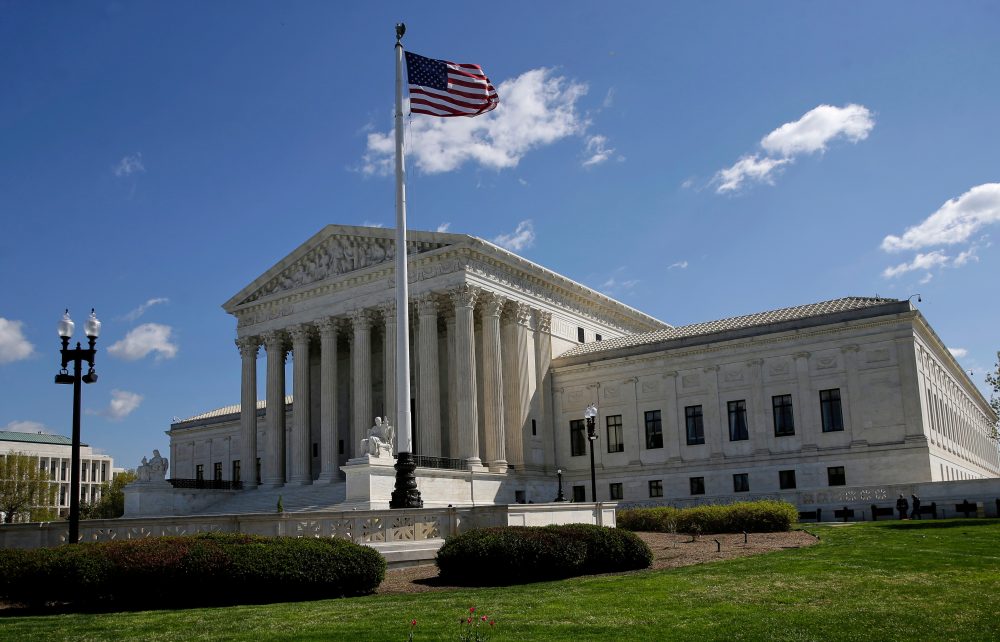

WASHINGTON — Supreme Court justices appeared split Monday during oral arguments over whether thousands of cancer-related lawsuits against Roundup’s manufacturer should be blocked from proceeding in state courts.
The high-stakes legal battle follows years of massive litigation resulting in billion-dollar jury awards against Bayer, the German conglomerate that acquired Monsanto, Roundup’s original producer.
Some justices appeared receptive to Bayer’s position that federal approval of Roundup’s labeling should shield the company from state-level legal challenges, given that EPA regulators have concluded the herbicide probably doesn’t cause cancer. However, other justices questioned whether such protection would inappropriately prevent states from adapting to new scientific findings.
The Trump administration is supporting Monsanto’s legal stance, creating tension with certain Make America Healthy Again advocates who favor stricter pesticide regulations.
At the center of Monday’s arguments was Missouri resident John Durnell’s lawsuit. Durnell claims he contracted non-Hodgkin’s lymphoma following two decades of applying Roundup as his neighborhood association’s designated “spray guy” for parks in his historic St. Louis area.
A jury determined the company had inadequately warned Durnell about potential cancer risks and granted him $1.25 million in damages. His case represents one among thousands of similar legal actions, some resulting in multibillion-dollar judgments.
Scientific opinion remains sharply divided regarding glyphosate, Roundup’s active component, and its cancer-causing potential. While the World Health Organization’s cancer research arm labeled the substance “probably carcinogenic” in 2015, the Environmental Protection Agency maintains it poses minimal cancer risk when properly used.
The EPA approved Roundup’s current labeling without cancer warnings, and Bayer contends it must comply with federal guidelines rather than varying state regulations that form the basis of Durnell’s and similar lawsuits.
Justice Ketanji Brown Jackson noted that EPA conducts labeling reviews every 15 years, potentially creating lengthy gaps given rapid scientific progress.
Chief Justice John Roberts questioned whether requiring companies to wait for EPA reviews would restrict state courts’ authority. “Throughout that long process, in response to information that suggests there is a risk that’s not on the label, the states cannot do anything?” he asked.
Attorneys representing Durnell maintain that federal regulations don’t prevent Bayer from adding cancer risk warnings to satisfy state legal requirements.
However, Justices Brett Kavanaugh and Elena Kagan expressed concerns that exposure to varying state legal standards could create corporate compliance challenges and weaken federal regulatory effectiveness. “Do you think it’s uniformity when each state can require different things?” Kavanaugh inquired.
While Bayer contests the cancer allegations, the company has allocated $16 billion for case settlements and proposed a comprehensive settlement this year. Simultaneously, it has lobbied state governments to enact legislation preventing new lawsuits, with several states agreeing.
Bayer has confronted over 100,000 Roundup-related claims, primarily from residential users. The company has eliminated glyphosate from Roundup products marketed to U.S. homeowners and gardeners. Bayer has indicated it may need to withdraw glyphosate from American agricultural markets if litigation continues.
The American Farm Bureau Federation warned in court filings that removing the herbicide would create “immediate, devastating risk to America’s food supply” during a period when agriculture already faces significant challenges.
Environmental advocacy groups argue Bayer seeks to avoid jury trials due to its poor performance in state courts.
The pesticide issue has created divisions between the current administration and supporters of Health Secretary Robert F. Kennedy’s MAHA movement, who also criticized an executive order promoting increased glyphosate production.
Kennedy has repeatedly stated his belief that glyphosate causes cancer, while acknowledging the executive order’s necessity for food security and national defense purposes.
Dozens of MAHA activists and supporters demonstrated outside the Supreme Court Monday during what they termed a “People vs. Poison” protest against Monsanto’s efforts to avoid legal accountability.
The Supreme Court is anticipated to issue its ruling before the end of June.