
A groundbreaking decision by the Trump administration to move state-licensed medical marijuana into a lower-risk drug category has generated both praise and disappointment among criminal justice reform advocates who say it doesn’t go far enough for those behind bars.
Acting Attorney General Todd Blanche signed the executive order on Thursday, but the directive doesn’t change existing penalties for marijuana possession and sales, nor does it help those currently serving lengthy prison terms for cannabis-related crimes.
“While this is a victory, the fight is far from over,” said Jason Ortiz, director of strategic initiatives for the Last Prisoner Project, a nonprofit focused on cannabis criminal justice reform.
Those pushing for marijuana legalization and prison reform argue this directive, which stops short of full decriminalization, primarily helps cannabis researchers, cultivators and large marijuana companies. Meanwhile, thousands of people — disproportionately people of color — continue serving severe sentences for marijuana offenses or struggle with the lasting effects of having convictions on their records.
Reform advocates are now urging Congress and state legislators to take meaningful action to ensure those with marijuana convictions receive equitable treatment or complete pardons.
The order moves state-licensed medical marijuana from its current classification as a highly dangerous substance to a less restrictive category. This significant policy change, previously considered by Presidents Barack Obama and Joe Biden, removes cannabis from the same classification as heroin.
However, the order doesn’t make marijuana legal for medical or recreational purposes. Instead, it transfers licensed medical marijuana from Schedule I — designated for substances with no medical value and high abuse potential — to the more lenient Schedule III classification. This change will likely provide licensed medical marijuana businesses and researchers with substantial tax relief and fewer regulatory hurdles for standard operations.
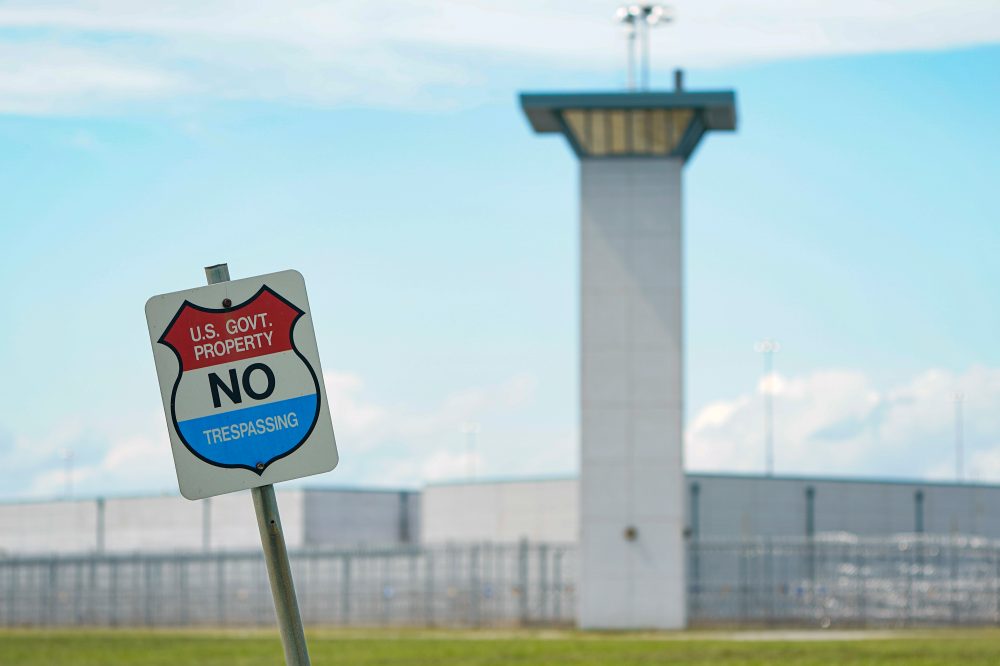
Almost no federal inmates are incarcerated solely for marijuana possession, but many serve time for large-scale possession, trafficking charges, or a combination of both.
Hector Ruben McGurk, 66, has been serving a life sentence without parole since 2007 for transporting thousands of pounds of marijuana and money laundering. He’s currently held in Beaumont, Texas, more than 800 miles from his son’s home in El Paso. His imprisonment has taken a toll on his son, according to McGurk’s daughter-in-law, Ferna Anguiano, and the distance creates logistical challenges for family visits.
While the family sees the order as potentially hopeful, given their belief that McGurk’s sentence far exceeds his crimes, Anguiano doesn’t know how to advocate for his release.
“His release date is death,” Anguiano said. “I mean, we see all this stuff on the news — bigger cases, fatal cases — and people are going in and out of prison and coming out to their families.”
The family maintains contact through phone calls and a prison messaging system, but they worry about McGurk’s health and diabetes care. Having him return home would be a miracle for them.
“He deserves a second chance,” Anguiano said. “Yes, it was a poor decision he did in his lifetime. He was younger. But he is not a bad person. I think it’s fair to say he has served enough time for it.”
Drug policy experts say it’s unclear whether sentences would differ if marijuana had always been classified differently.
“In addition to schedule-specific penalties, there are marijuana-specific penalties that have nothing to do with the schedule,” said Cat Packer, director of drug markets and legal regulation at the nonprofit Drug Policy Alliance. “Even if marijuana were to be moved to Schedule V, those criminal penalties would still exist and there are mandatory minimums for simple possession.”
Reducing marijuana stigma has been a bipartisan concern for years. Obama reduced sentences for approximately 1,900 federal inmates, nearly all imprisoned for nonviolent drug crimes. Biden pardoned 6,500 people convicted of marijuana use and simple possession on federal property and in Washington, D.C. President Donald Trump’s administration has granted far fewer drug-related clemencies and lacks a comprehensive policy directing such actions.
“What many people on the right and the left would like is to move marijuana from this ‘just as bad as heroin’ category and to just sort of de-schedule it entirely,” said Marta Nelson, director of sentencing reform at the Vera Institute of Justice. “Regulate it like you do alcohol or tobacco.”
Research indicates Black Americans face arrest for marijuana possession at rates 3.7 to 4 times higher than white Americans, despite similar usage patterns across racial groups. While federal marijuana cases are relatively rare today, those serving federal drug sentences are predominantly Hispanic and Black, according to Justice Department and Bureau of Justice Statistics information.
This racial disparity in drug convictions echoes 2010 legislation Obama signed that reduced sentencing differences between crack cocaine and powder cocaine. Trump made those changes apply retroactively in 2018.
Since state medical marijuana license holders are mostly white, the tax benefits from rescheduling will likely advantage predominantly white businesses, Packer noted. Many equity programs won’t apply to these benefits.
“This is going to, in my mind, widen the gap, the financial disparities, the business disparities that currently exist between Black and brown, Latino and white owners in the cannabis industry because licenses were not distributed equitably,” Packer said.
Theoretically, Trump could issue broad pardons similar to those for January 6 participants, but Nelson considers this extremely unlikely.
“Having marijuana convictions on the record for things like mass immigration enforcement is helpful to the administration,” Nelson said.
A meaningful next step would involve Congress creating comprehensive legislation addressing existing marijuana convictions, record expungements, and industry regulations, she added.
The Last Prisoner Project and other organizations plan to restart discussions with federal lawmakers, including the Congressional Cannabis Caucus, which includes Democratic Rep. Ilhan Omar and Republican Rep. David Joyce. They’ll also continue pushing Trump to grant large-scale commutations and clemency.
Advocates hope Trump’s order will encourage every state to reconsider their marijuana classifications and penalties.
“It is imperative that every state review their situation, as a lot of their controlled substances at the state level are tied to the federal government,” Ortiz said. “We’re gonna see other states that are going to need a little help from the public to remind them what the right thing to do is.”