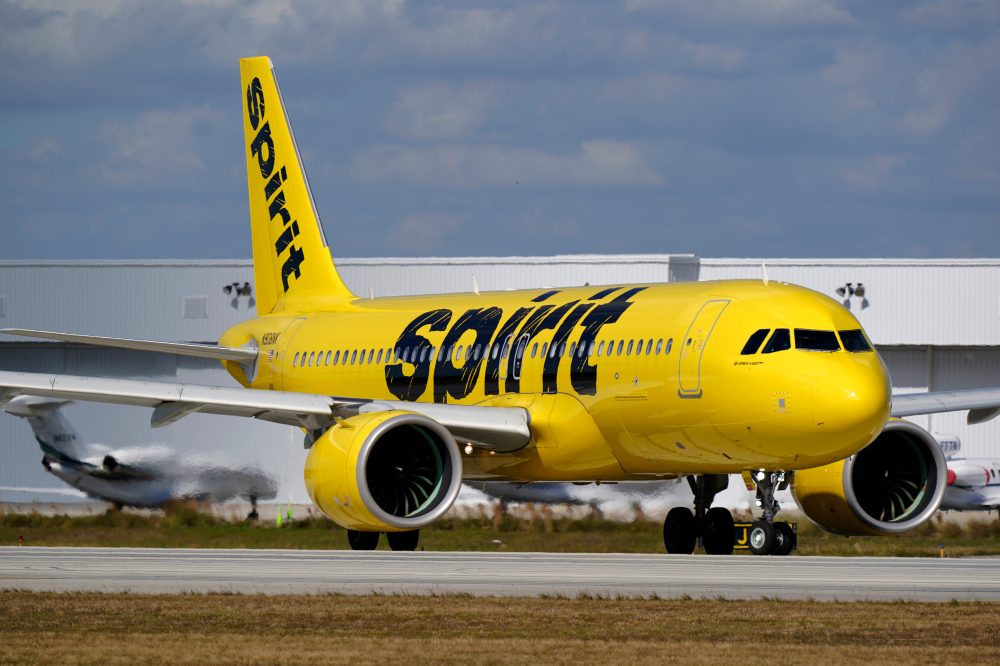
Budget-conscious travelers across the nation expressed grief Saturday following the sudden shutdown of Spirit Airlines, describing the ultra-low-cost carrier’s closure as a devastating blow to affordable air travel for working families.
The Florida-based airline unexpectedly grounded all flights Saturday morning, leaving passengers and crew members stranded across the United States, Caribbean, and Latin America. The carrier succumbed to mounting financial difficulties, including dramatically increased fuel expenses tied to the ongoing Iran conflict.
Social media users on platforms like Reddit and X shared stories of how the airline had served as a crucial resource for cost-conscious flyers seeking affordable transportation options.
“They truly were one of the last cheap — ‘get me there as fast and cheap as possible’ — options,” one Reddit user named AioliUpset7805 posted in a discussion about the airline’s demise. “I’ll miss them.”
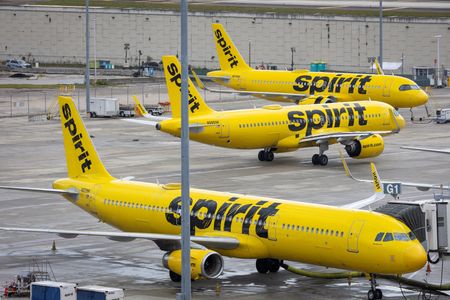
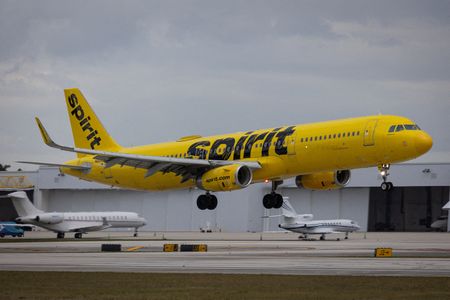
Since beginning commercial operations in the early 1990s, Spirit had built its reputation around offering rock-bottom fares while eliminating traditional airline perks. The carrier famously charged passengers for bottled water and featured non-reclining seats throughout its fleet.
Despite frequently becoming the subject of internet jokes due to its bare-bones service model, numerous passengers credited Spirit with making family vacations and visits to distant relatives financially possible for millions of Americans.
“I can only imagine how many millions of families (there are) out there where vacations are now out of reach,” another Reddit user called BigBubby305 commented, noting that ticket price differences between Spirit and major carriers like Delta and American Airlines sometimes exceeded $1,000 for family travel.
At Orlando International Airport overnight, electronic departure boards displayed rows of red cancellation notices for Spirit flights bound for destinations ranging from Nashville to San Juan, Puerto Rico.
In response to Spirit’s operational halt, several competing airlines including Frontier, JetBlue, and Southwest quickly announced discounted fare offerings and new summer route plans. Major carriers Delta and American Airlines also began providing temporary fare reductions for displaced Spirit customers.
The airline’s collapse occurs amid broader economic inflation throughout the United States, conditions worsened by the ongoing U.S.-Israeli conflict with Iran.
Industry analysts expect Spirit’s shutdown, combined with recent doubling of jet fuel prices, to significantly increase travel costs for American consumers. Aviation data firm Cirium reported that Spirit had over 4,000 domestic flights scheduled through May 15.
“I always took great pride in knowing we were saving people money and allowing those to travel who couldn’t afford to otherwise,” shared a Reddit user identifying as Coryntrevors, who claimed to have piloted Spirit’s distinctive bright yellow Airbus aircraft from Las Vegas for more than ten years.
“To shut down forever tonight has been one of the saddest experiences of my life.”
Economic concerns dominated American households’ attention this past week as families witnessed noticeably higher costs at grocery stores and gas pumps compared to the previous year.
The following economic developments and data releases offer insight into current financial trends affecting consumers nationwide.
March witnessed a significant spike in a critical inflation indicator closely watched by the Federal Reserve, driven primarily by escalating fuel costs linked to the ongoing Iran conflict. This surge signals potential delays in anticipated interest rate reductions.
The Fed’s preferred inflation measurement climbed 0.7% between February and March, representing a sharp acceleration from the prior month, according to Commerce Department data released Thursday. Year-over-year price increases reached 3.5%, marking the steepest rise in nearly three years.
When removing volatile food and energy sectors, core inflation advanced 0.3% monthly in March, with annual growth reaching 3.2% – exceeding February’s 3% rate.
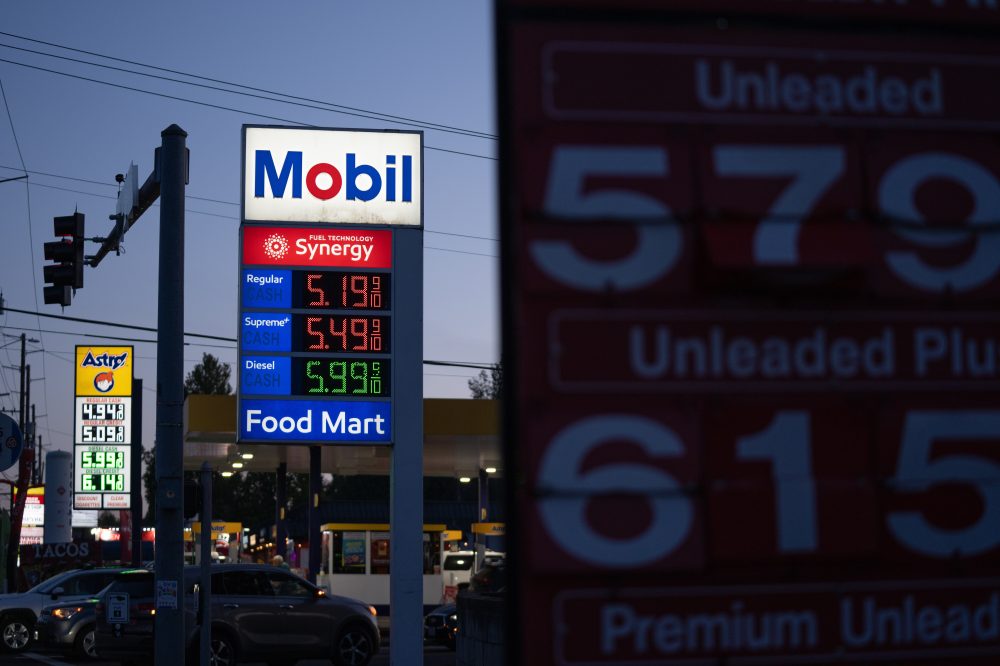
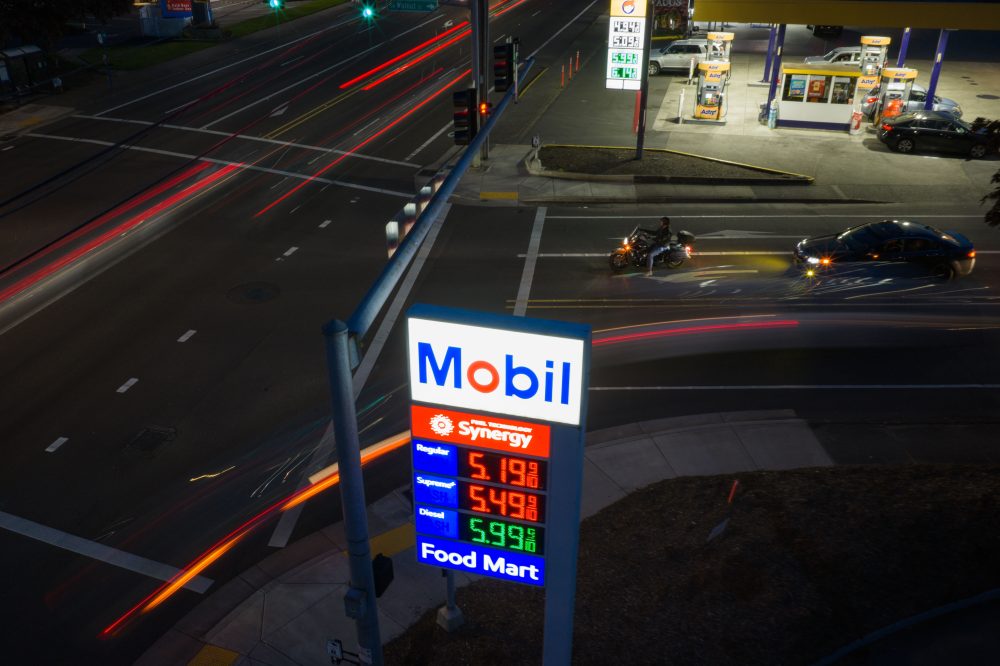
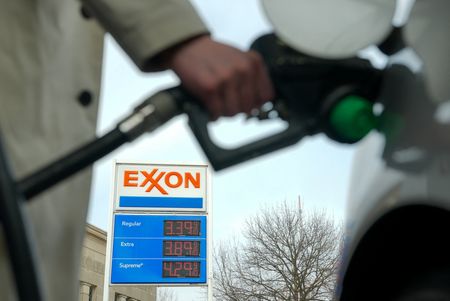
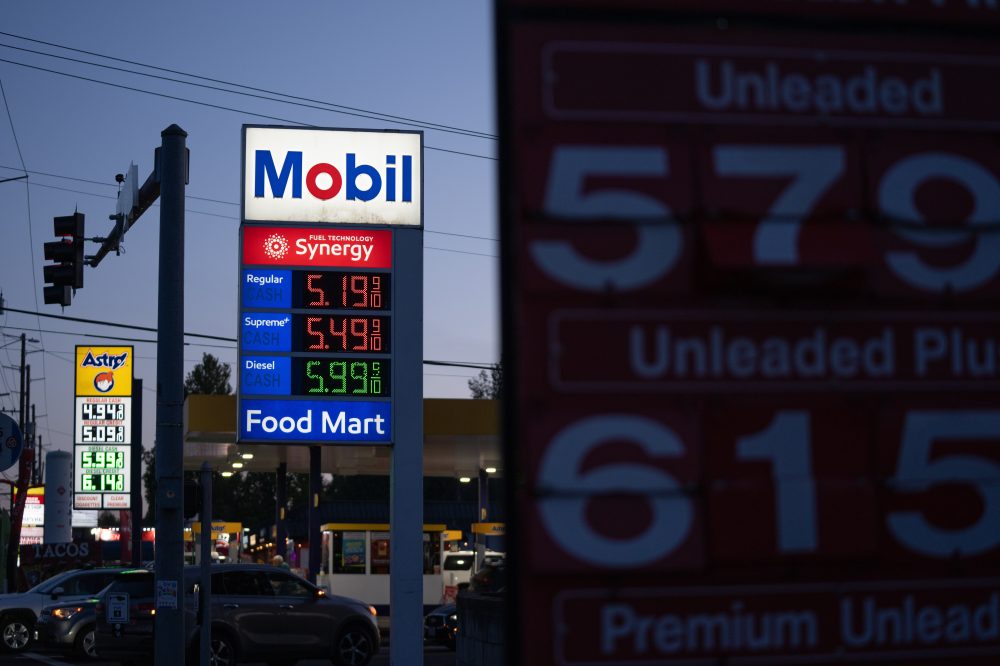
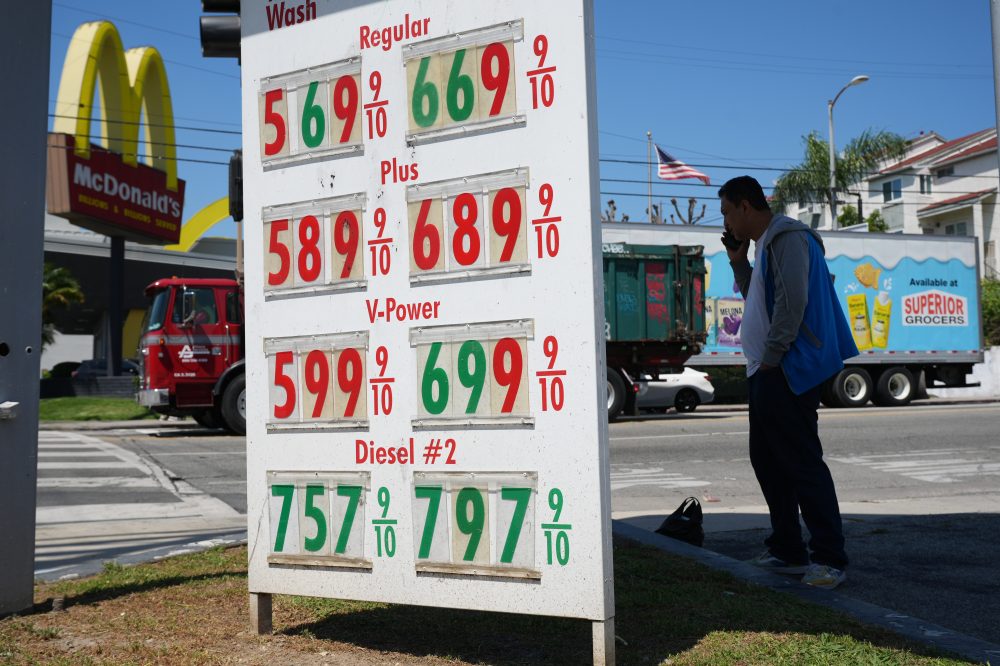
Fuel costs experienced dramatic increases, establishing new multi-year peaks across four straight days beginning Tuesday. Regular gasoline prices recorded their largest single-day jump since the conflict commenced Friday, reaching $4.39 per gallon, with continued increases through Saturday.
Economic growth gained momentum during early 2026, with the nation expanding at a moderate 2% rate throughout the first quarter following recovery from autumn’s 43-day federal government closure. However, the Iranian conflict creates uncertainty for future projections.
Thursday’s Commerce Department report showed gross domestic product – measuring national goods and services output – bounced back from the final quarter of 2025’s weak 0.5% growth. Federal spending and investment surged at a 9.3% annual pace during the first quarter, contributing over half a percentage point to overall growth after reducing fourth-quarter 2025 expansion by 1.16 percentage points.
American consumer sentiment experienced slight improvement in April despite mounting concerns over soaring energy costs resulting from the Iranian war.
Tuesday’s Conference Board report indicated their consumer confidence measurement edged upward to 92.8 in April from March’s 92.2 reading.
While the indicator has shown two consecutive monthly gains, current levels remain near pandemic-era lows experienced during COVID-19.
Survey participant feedback regarding prices, petroleum, gasoline, and warfare intensified during April as national average fuel costs jumped 30 cents within one week to reach $4.43 per gallon.
Home lending rates increased this week, elevating borrowing expenses for potential buyers during peak spring purchasing season.
The standard 30-year fixed mortgage rate climbed to 6.3% from the previous week’s 6.23%, mortgage purchaser Freddie Mac announced Thursday. This remains below last year’s 6.76% average.
The uptick concluded a three-week decline, returning average rates to levels seen two weeks prior.
Weekly unemployment benefit filings plummeted to their lowest point in more than five decades despite various economic challenges including the Iranian conflict.
Jobless assistance applications for the week concluding April 25 decreased by 26,000 to 189,000, down from the preceding week’s 215,000 total, Thursday’s Labor Department data revealed. This significantly undershot the 214,000 new filings predicted by FactSet-surveyed analysts.
Unemployment benefit requests serve as an indicator for American job losses and provide near real-time employment market health assessments.
High Frequency Economics noted this week’s new jobless aid applications represented the smallest figure since September 1969.
Wall Street established additional records to conclude the week following strong Apple performance and other major technology company earnings that drove market gains. Petroleum prices maintained upward momentum despite Friday’s moderation. Numerous global stock exchanges remained closed Friday observing May Day.
The S&P 500, Dow Jones Industrial Average, and Nasdaq composite all finished the week with gains.
The sudden closure of Spirit Airlines has brought an end to one of the nation’s most recognizable budget carriers, leaving countless passengers searching for alternatives and ways to recover their funds.
Travelers caught in the airline’s abrupt shutdown have several options for getting to their destinations, as competing carriers have stepped forward with assistance programs. Major airlines such as American, United, Delta, JetBlue, Frontier, and Southwest have implemented fare caps and price reductions specifically for displaced Spirit passengers.
These emergency booking opportunities come with time restrictions. Southwest’s assistance program requires travelers to visit airport ticket counters in person and expires on Wednesday, May 6, according to Airlines for America and the U.S. Department of Transportation. United’s program extends for two weeks and allows online bookings.
Carriers including American, Allegiant, Frontier, and Delta have announced discounted pricing on routes previously served by the budget airline. Several airlines have published route maps showing where their services overlap with Spirit’s former destinations to help passengers locate suitable alternatives.
“Spirit Airlines played an important role in expanding access to affordable travel and bringing more low fares to more people,” said Bobby Schroeter, Frontier’s chief commercial officer. “We recognize this is a difficult time for their customers and team members.”
Spirit has announced plans for an organized shutdown process and stated that automatic refunds will be issued for tickets purchased with credit or debit cards. Passengers who booked through third-party travel sites must contact those agencies directly for refund assistance.
Those who used vouchers, credits, or loyalty points for their reservations face uncertainty as their cases will be handled through the airline’s bankruptcy proceedings.
For travelers concerned about recovering their money, the Department of Transportation recommends contacting credit card companies to request chargebacks under the Fair Credit Billing Act for services that were not provided.
Travel insurance may offer another avenue for recovery if policies include coverage for airline insolvency or service interruption. Passengers should review their insurance benefits or contact their credit card companies about included travel protections.
Filing a bankruptcy claim represents a final option, though officials caution this process is lengthy, expensive, and typically results in only partial reimbursement.
The National Consumers League advises affected travelers to preserve all documentation related to their Spirit bookings, including receipts, confirmation emails, cancellation notices, and airline communications. The organization emphasizes the importance of immediate action due to strict deadlines imposed by credit card companies and insurers.
“Not all Spirit customers should assume a refund will automatically appear,” said John Breyault, the league’s vice president of public policy, telecommunications, and fraud. “When an airline shuts down this suddenly, it’s up to travelers to take proactive steps to have the best chance of getting their money back.”
American and United airlines are working to expand their capacity to accommodate stranded passengers. American is considering deploying larger aircraft on key routes, while United is exploring the addition of extra flights on paths previously served by Spirit.
“We are reviewing opportunities to add additional capacity, including utilizing larger aircraft on critical routes — to support as many affected passengers as possible,” American stated through Airlines for America.
Southwest has announced it will honor Spirit’s Silver and Gold elite status by matching those passengers to its A-List program.
Spirit employees stranded away from home will receive travel assistance, including access to available jump seats on most major carriers. American has committed to providing transportation for displaced Spirit team members who were traveling for work.
The Department of Transportation reports that other airlines are offering expedited hiring processes for former Spirit pilots, flight attendants, and ground crew members, with American planning dedicated recruitment events for displaced workers.
The budget airline that revolutionized air travel with ultra-low fares and controversial advertising has permanently grounded its fleet after more than three decades of operations.
Spirit Airlines, recognized by its distinctive yellow aircraft, completed its final journey Saturday when a plane departed Detroit and touched down in Dallas, marking the end of an era for the discount carrier that once held a stock market value of approximately $5.5 billion.
“For more than 30 years, Spirit Airlines has played a pioneering role in making travel more accessible and bringing people together while driving affordability across the industry,” CEO Dave Davis said in a statement.
The closure follows two bankruptcy proceedings within two years that enabled Spirit to settle debts with creditors. Recent months saw desperate cost-cutting measures including route eliminations, union contract renegotiations, and pursuit of potential government financing through the Trump administration that ultimately failed to materialize.
Rising jet fuel costs stemming from the Iran conflict ultimately depleted the company’s remaining cash reserves at an unsustainable rate, forcing management to cease operations.
“This is tremendously disappointing and not the outcome any of us wanted,” Davis said.
The carrier originated as Charter One Airlines in the early 1980s, operating vacation charter services before evolving into the no-frills operation that gained prominence in the 2000s with its “unbundled” pricing strategy. This approach allowed travelers to skip standard amenities like checked baggage, advance seat selection, and even printed boarding passes, or pay additional fees for these services.
Former CEO Ben Baldanza, known for his extreme cost-consciousness, exemplified the airline’s philosophy by ordering plain hamburgers to avoid paying for unwanted toppings and flying in the same cramped coach seats as passengers. He defended the company’s fee structure, arguing that customers were simply seeing itemized charges for services that other airlines bundled into higher base fares.
Despite frequent customer complaints, Spirit’s business model proved so successful that established airlines with decades of experience and international networks adopted similar strategies, introducing their own “basic economy” fare categories and reducing amenities.
During its final day of service, Spirit transported over 50,000 passengers safely to their destinations, according to company representatives. The airline also coordinated transportation for more than 1,300 crew members to return home. Approximately 17,000 employees, including some with over 25 years of service, discovered Friday they had lost their positions, with many learning about the shutdown through news coverage.
The Spirit flight attendants union issued a Saturday memo to members recognizing the airline’s closure and its impact on workers.
“While the country has had a blast making Spirit the butt of the joke, we’ve built a strength together that could withstand anything that anyone throws at us,” it said. “And that is no joke.”
Even as operations ended abruptly, Spirit maintained a memorable presence in the aviation industry.
Kendria Talton, who traveled Friday from Dallas to Atlanta with her daughter for a dance event, found herself stranded at the airport Saturday seeking alternative transportation home.
Talton explained she chose Spirit repeatedly due to pricing. “Other than that, I mean nobody even likes Spirit,” she said. “They’ve always talked about Spirit for years.”
Much of the airline’s notoriety stemmed from provocative marketing campaigns that critics condemned as inappropriate and sometimes created public relations problems.
Following the 2010 Deepwater Horizon oil spill, Spirit launched a “Check Out the Oil on Our Beaches” promotion, creating a double meaning between suntan lotion and crude oil.
The company later introduced a “Weiner Sale” during New York Congressman Anthony Weiner’s texting controversy, featuring the tagline “fares just too hard to resist.” Another notorious campaign promoted a “MILF Sale,” ostensibly meaning “Many Islands, Low Fares” while clearly referencing the popular internet acronym.
Paradoxically, Spirit’s downfall came partly from its own influence, as traditional carriers adopted similar low-cost strategies and began attracting Spirit’s price-conscious customers with competitive fares.
While Spirit had experienced financial difficulties for years, the shutdown announcement surprised many industry observers.
Earlier this year, company officials expressed confidence about emerging from their second bankruptcy during late spring or early summer following preliminary agreements with lenders.
However, U.S. and Israeli military actions against Iran four days later drove global oil prices above $100 per barrel. Gasoline costs increased accordingly, and jet fuel prices more than doubled in certain markets.
Spirit faced particular challenges during and following the COVID-19 pandemic, dealing with increased operational expenses and growing debt obligations. By filing for Chapter 11 protection in November 2024, Spirit had accumulated losses exceeding $2.5 billion since early 2020.
University of Houston student Angelina Deruelle, 23, waited at Fort Lauderdale–Hollywood International Airport Friday after her Texas-bound flight was cancelled on Spirit’s final operating day. She expressed concern about losing an affordable travel alternative.
“I feel like Spirit is just affordable, simple, nothing too fancy,” she said. “It’s just like home.”
During Berkshire Hathaway’s annual shareholder gathering in Omaha, Nebraska on Saturday, CEO Greg Abel expressed relief over a recent court ruling that could significantly reduce financial exposure for the company’s PacifiCorp utility division as it battles multiple wildfire-related lawsuits in Oregon and northern California.
Abel told shareholders that an April 8 ruling from Oregon’s state appeals court blocking a major wildfire case from moving forward as a class action has eased the burden on PacifiCorp while the company works to convince state regulators to allow sufficient rate increases to maintain profitable operations.
“We’re back to first base” regarding the legal challenges, Abel explained, indicating that the threat level has been substantially reduced.
The utility company has been fighting numerous lawsuits stemming from a series of devastating wildfires in Oregon and California, with several cases alleging that PacifiCorp failed to deactivate power lines during dangerous wind conditions over Labor Day weekend in 2020.
In the most significant case, an Oregon jury ruled in 2023 that PacifiCorp acted with gross negligence, potentially exposing the Portland-headquartered utility to tens of billions of dollars in damages through follow-up trials.
At one point, PacifiCorp estimated it could face up to $55 billion in total claims.
However, the Oregon appeals court determined that the original trial judge made an error by allowing the jury to presume that PacifiCorp’s alleged misconduct affected all fire victims uniformly.
Prior to this appeals court intervention, 171 plaintiffs had received approximately $1.1 billion through a series of smaller trials that started in January 2024 and were scheduled to continue through 2028.
“They said, back to ground zero, start over again,” Abel remarked.
PacifiCorp has been actively lobbying multiple western states to establish liability caps for wildfire damages and create state-managed compensation funds for victims, provided that utilities develop and follow approved safety protocols aimed at preventing future disasters.
Utility companies like PacifiCorp argue that such arrangements create necessary protection that allows them to make essential investments in system maintenance and grid improvements without worrying that unpredictable legal battles could threaten their financial stability or force bankruptcy.
Abel noted that PacifiCorp seeks a “regulatory compact” that would permit the company to charge customers rates sufficient to justify increased infrastructure spending while avoiding unreasonable risk, though they encounter opposition from regulators and elected officials concerned about rising utility costs.
California represents one state that has addressed utility wildfire liability issues, recently expanding its wildfire compensation fund by $18 billion following devastating fires that struck portions of the Los Angeles region in January 2025.
Abel has praised Utah’s protective measures, which allow major utilities to add surcharges to customer bills and limit liability exposure on certain claims, calling them the “gold standard.”
Oregon has not yet implemented similar protections.
PacifiCorp operates under Berkshire Hathaway Energy, which Berkshire owns completely. The investment giant acquired the utility company for $5.1 billion in 2006.
Transportation Secretary Sean Duffy announced Saturday that the federal government will not provide financial assistance to budget airlines requesting $2.5 billion in relief amid soaring jet fuel costs.
Speaking at a Newark airport news conference following Spirit Airlines’ recent collapse, Duffy explained his position on government intervention in the airline industry.
“I would say that at this point, I don’t think it’s necessary. They do have access to cash. If they want to come to the U.S. government, we would be a lender of last resort. If they can find dollars in the private markets — I think that’s better for them,” Duffy stated.
The Transportation Secretary suggested that Spirit’s financial troubles created an opening for other carriers to seek federal funds “not necessarily based on need, but based on opportunity.”
Earlier this week, multiple discount airlines including Frontier and Avelo submitted a proposal through the Association of Value Airlines requesting government assistance. Their plan would exchange warrants convertible to equity stakes for $2.5 billion in federal aid.
The association formally requested the Trump administration establish a $2.5 billion liquidity fund specifically designed to help offset increased fuel expenses “as a necessary and targeted measure to stabilize operations and keep airfares affordable during this period of volatility.”
Additionally, these carriers have petitioned Congress to temporarily eliminate the 7.5% federal tax on airline tickets and the $5.30 per-segment fee. Removing these charges would cover approximately one-third of the additional fuel expenses airlines are facing.
The funding request stems from an unexpected result of the U.S.-Israeli conflict with Iran: dramatically increased jet fuel prices that have roughly doubled operational costs, creating financial pressure that has pushed vulnerable airlines toward potential bankruptcy.
Last week in Washington, chief executives from multiple low-cost airlines met with Duffy and Federal Aviation Administration Administrator Bryan Bedford to present their assistance proposal.
The airlines calculated their $2.5 billion request by estimating how much additional fuel costs they anticipate paying this year compared to their original projections.
Airlines for America, representing major U.S. passenger carriers, voiced strong opposition to any bailout for budget airlines, arguing that “government intervention on behalf of those airlines would punish other airlines that have engaged in self-help in order to deal with increased costs and reward airlines who haven’t made those tough decisions. That’s not a level playing field.”
The organization further contended that long-term support for companies unable to cover their capital costs would ultimately harm both competition and consumers by creating obstacles for other airlines trying to compete and secure private investment.
SUNNYVALE, California — Centuries after Yemen first brought coffee to the world stage, the war-torn nation nestled between Saudi Arabia and Oman is now sharing another export with America: its distinctive coffeehouse traditions.
Establishments specializing in Yemeni-style beverages are expanding rapidly throughout the United States. Major chains operating these cultural cafes saw their locations jump 50% in the past year, reaching 136 outlets, according to restaurant consulting firm Technomic. This figure excludes numerous smaller operations and independent shops featuring imported Yemeni coffees and teas.
Several factors contribute to these coffeehouses’ rising popularity. They operate extended hours — often until after 3 a.m., particularly during Ramadan — creating gathering spaces for America’s increasing number of non-drinkers. Recent Gallup polling revealed only 54% of U.S. adults consume alcohol, marking a 90-year low.
“Generally in the Middle East, our nightlife is coffee, right? People hang out at coffee shops, they play cards, they talk. We wanted to bring that here,” explained Ahmad Badr, who operates an Arwa Yemeni Coffee franchise in Sunnyvale, California.
The cafes also benefit from America’s expanding Arab population. From 2010 to 2024, Arab Americans increased by 43%, far outpacing the overall U.S. population growth of approximately 10%, data from the Arab American Institute shows.
Though most Yemeni establishments cluster in areas with substantial Arab American communities like Michigan, California and Texas, they’re also appearing in unexpected markets including Alpharetta, Georgia; Overland Park, Kansas; and Portland, Maine.
Faris Almatrahi co-founded Texas-based Arwa Yemeni Coffee, which operates 11 locations nationwide with 30 additional sites planned. He explained that Yemen’s ongoing civil conflict, which started in 2014, has blocked Yemeni Americans from homeland visits, inspiring him to recreate Yemen’s atmosphere domestically.
Arwa establishments feature earth-toned desert colors, mosque-inspired archways, and lampshades resembling traditional Yemeni coffee farmer headwear.
“One of the ways to actually visit without traveling there was to bring that experience to the U.S., and that was a huge passion for us when we opened our first location,” Almatrahi stated. “It was extremely emotional for all of us due to the fact that it really transported us to Yemen.”
However, Almatrahi noted that most patrons aren’t Arab American. Market research firm Datassential reports that Americans increasingly seek authentic global flavors and experiences, with food trends spreading rapidly through social platforms.
While menus differ, Yemeni cafes typically feature specialties including Adeni tea, a spiced beverage resembling chai, and qishr, made from dried coffee cherry husks. Standard drinks like lattes incorporate unique spices or honey; Arwa’s lattes display camel designs created with spice stencils.
Display cases often showcase khaliat nahal (Yemeni honeycomb bread), a honey-drizzled cheese pastry, or basboosa, a syrup-soaked cake flavored with lemon or rose water. Many locations also offer conventional American coffeehouse items like matcha lattes or fruit refreshers.
Peter Giuliano, a Specialty Coffee Association researcher from the California-based nonprofit, identified culturally specific cafes as major U.S. coffee industry growth drivers recently. Beyond Yemeni establishments, he highlighted California’s Latin-style Tierra Mia chain and New York’s Nguyen Coffee Supply, which roasts Vietnamese beans.
First-time visitor Cindy Donovan discovered Badr’s Sunnyvale location through online searching on a recent weekday. The coffee enthusiast praised the Yemeni varieties she sampled.
“I think they’re much more refined and mellow, and much more full of flavor than a regular cup of dark roast, for instance,” Donovan observed. “The cardamom in the drinks is fantastic. Very, very flavorful, rich but not heavy.”
Most Yemeni coffee undergoes sun-drying, which intensifies flavor and reveals chocolate and fruit notes, Almatrahi explained. These cafes frequently blend coffee with special spice combinations called hawaij, potentially containing cardamom, ginger, cinnamon, cloves, coriander or nutmeg.
“Our coffee and teas are not just made through a fully automatic machine,” said Mohamed Nasser, operations director for Dearborn, Michigan-based Haraz Coffee House, which runs 50 U.S. locations with 50 more developing. “We have to manually blend and mix our coffee and tea, boil it with water and evaporated milk, make sure that it comes out (with the) perfect taste, perfect color.”
Coffee’s Yemeni roots run deep. Though the plant likely originated in Ethiopia, by the 1400s Yemen was cultivating it, with monks brewing coffee to maintain alertness during prayers, according to the National Coffee Association. Yemen controlled global coffee trade for roughly 200 years until Dutch traders smuggled seeds to Indonesia and established competing plantations.
Almatrahi credited a recent two-decade revival of Yemen’s coffee sector, driven by companies, foundations and young business leaders, with enabling the current American expansion. Coffee represents one of Yemen’s most promising economic development opportunities, particularly important since over 80% of the population lives in poverty, United Nations Food and Agriculture Organization data indicates.
“We are ambassadors for our culture and our people. So when we open these shops, we want to perform the outreach, to show the hospitality, to show what we have to offer,” Almatrahi concluded.
OMAHA, Neb. — Investment powerhouse Berkshire Hathaway announced first-quarter earnings that more than doubled compared to the same period last year, driven by strong investment performance and improved business operations across most of its holdings.
The Warren Buffett-founded company disclosed earnings of $10.1 billion, equivalent to $7,027 per Class A share, as thousands of investors arrived in Omaha, Nebraska, for Saturday’s annual shareholder meeting. This represents a substantial jump from the previous year’s first-quarter results of $4.6 billion, or $3,200 per Class A share.
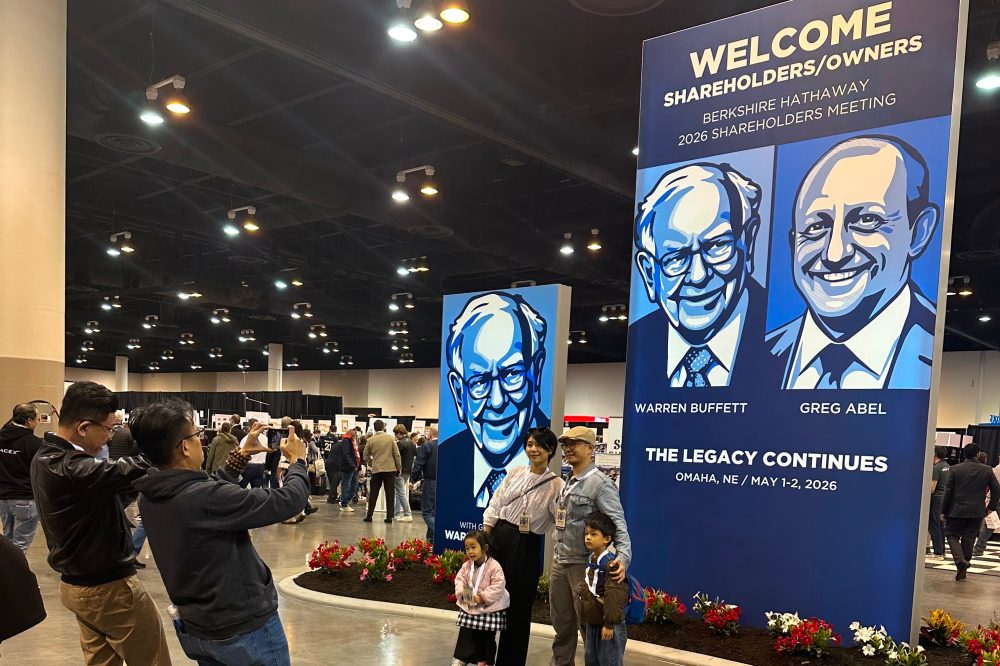
Saturday’s gathering marks a historic milestone as the first annual meeting where Buffett will not serve as chief executive from the podium, following Greg Abel’s promotion to CEO in January. Event organizers anticipate slightly lower attendance compared to previous years.
Investment gains significantly boosted the company’s financial performance, with Berkshire recording $5.8 billion in profits from stock sales during the three-month period. However, the overall value of its investment portfolio decreased slightly to approximately $288 billion.
The company’s substantial cash reserves continued their upward trend, reaching $397.4 billion by the end of March.
Operating earnings, which Buffett has consistently highlighted as a more accurate measure of business performance since they exclude investment fluctuations, climbed to $11.3 billion or $7,889.44 per Class A share. This compares favorably to last year’s operating earnings of $9.6 billion, or $6,703.41 per Class A share, and exceeded analyst expectations of $7,611.35 per share according to FactSet Research.
Currency exchange rates provided an additional $249 million benefit to the company’s results, a stark contrast to the $713 million foreign currency loss recorded in the same quarter last year.
Nearly all of Berkshire’s diverse business portfolio delivered improved operating performance. The insurance division, which encompasses Geico and several other carriers, generated underwriting profits of $1.7 billion, surpassing the previous year’s $1.34 billion. The BNSF railroad operation, along with the company’s utility and manufacturing divisions, also contributed modest profit increases.
Spirit Airlines has shut down all operations effective immediately, marking another casualty of skyrocketing aviation fuel costs tied to the ongoing conflict with Iran. The budget carrier’s closure comes as airlines on both sides of the Atlantic struggle with dramatically higher operating expenses.
Aviation fuel prices have climbed steadily since the Iran war began, forcing carriers throughout Europe and the United States to slash thousands of scheduled flights. The escalating fuel costs have created a domino effect across the airline industry, with Spirit becoming the latest victim of the economic pressures.
Greg Abel faces a monumental task this Saturday as he conducts his inaugural Berkshire Hathaway annual meeting as chief executive, with legendary investor Warren Buffett observing from the crowd in Omaha, Nebraska.
The 63-year-old Abel, who assumed the CEO role in January, must win over investors who have increasingly turned their attention to technology and artificial intelligence companies, a stark contrast to Berkshire’s portfolio of insurance firms, retail chains, and traditional businesses spanning energy, manufacturing, and industrial sectors.
Despite Berkshire’s reputation as a reflection of America’s broader economy, the company’s stock performance has disappointed investors. Since Buffett’s surprise announcement at last year’s meeting that he would step down as CEO while remaining chairman, Berkshire shares have trailed the S&P 500 by 39 percentage points.
Abel had been identified as Buffett’s chosen successor since 2021, though the timing of the transition caught many off guard. The 95-year-old Buffett will sit in the audience at the downtown Omaha arena while Abel and fellow executives field shareholder questions and discuss company operations.
Money manager Paul Lountzis, attending his 34th Berkshire meeting, acknowledged the magnitude of Abel’s position. “Greg has a formidable challenge, replacing the greatest investor who ever lived,” Lountzis said.
He continued, describing Berkshire’s current market position: “is not snazzy, it’s not exciting … It’s not a fast-growing technology stock. That’s what people are jumping on today.”
The Commerce Department’s preliminary data shows that AI-focused investments significantly contributed to the 2% increase in first-quarter U.S. economic growth, highlighting the market’s current preferences.
Questions remain about how rising inflation and declining consumer confidence may have affected demand for products and services from Berkshire’s various subsidiaries. More clarity may emerge when the company releases first-quarter earnings results, anticipated before the meeting begins.
Financial analysts expect Berkshire to announce billions in operating profits while revealing details about its substantial cash holdings, share buyback activities, and adjustments to its nearly $300 billion stock portfolio.
The annual meeting serves as the highlight of a weekend filled with shareholder activities throughout Omaha, featuring investment seminars, private gatherings, and a downtown exhibition hall showcasing products from Berkshire-owned companies.
Abel inherits several significant obstacles that also challenged Buffett, particularly the question of how to deploy Berkshire’s enormous $373 billion cash reserve accumulated by year-end.
Although the company resumed share repurchases in March after a nearly two-year pause, Berkshire hasn’t completed a major acquisition in ten years. Additionally, many business units have shown weak performance, with overall operating profits declining 6% in 2025 and revenue remaining flat.
Investors may question Abel’s ability to effectively oversee Berkshire’s investment portfolio. Unlike Buffett, Abel lacks professional experience in stock selection, yet by February he was managing 94% of Berkshire’s equity investments, rather than delegating more responsibility to investment manager Ted Weschler, who handles the remaining 6%.
Buffett’s perspective on the leadership transition evolved over time, particularly in 2024 when he expressed confidence that someone like Abel, who comprehends entire businesses, could also understand individual stocks.
This year’s meeting will feature a different format compared to previous gatherings. Abel plans to spend an hour discussing Berkshire’s operations before engaging in a 2.5-hour question-and-answer session.
Joining Abel in answering questions will be insurance division head Ajit Jain, along with first-time participants Katie Farmer, CEO of BNSF railroad, and Adam Johnson, a Berkshire president who oversees consumer, service, and retail operations.
Tom Russo, a money manager who began attending Berkshire meetings in 1985, described the significance of the moment: “It’s watching history unfold, a reset for the next generation.”
The meeting will likely concentrate more heavily on Berkshire’s business operations compared to previous sessions led by Buffett and the late Vice Chairman Charlie Munger, which frequently covered broader economic topics, market analysis, and life philosophy.
The engaging dialogue between Buffett and Munger was unmatched in corporate America and remains deeply missed by shareholders.
However, attendees at Friday’s annual shareholder shopping event, purchasing souvenirs including Squishmallows and spatulas featuring images of both Abel and Buffett, demonstrated confidence in the leadership change.
Lori Boyd, a retired special education teacher from Blue Springs, Missouri, expressed her trust in the transition: “Warren wouldn’t turn it over to somebody who wasn’t competent.”
Following the question session, shareholders will cast votes on several proposals, including non-binding approval of executive compensation, the frequency of future compensation votes, and whether Berkshire should produce a report addressing oversight of its more than 387,000 employees.
The company’s board endorses the executive compensation proposals while opposing the employee oversight report requirement.
A courtroom battle commencing Monday in New Mexico has the potential to fundamentally alter how Facebook, Instagram, and WhatsApp function — changes so significant that Meta Platforms has suggested it might cease operations in the state entirely.
The proceedings in Santa Fe represent the continuation of legal action initiated by New Mexico’s Attorney General Raúl Torrez, a Democrat, who alleges the tech giant deliberately engineered its services to create addiction among youth while inadequately safeguarding minors from sexual predators using the platforms.
The central question before the court is whether Meta’s social media services constitute a “public nuisance” according to New Mexico statutes. Such a determination would empower the presiding judge to mandate extensive reforms designed to reduce purported dangers to underage users. Legal experts nationwide are monitoring this case closely as numerous states, local governments, and educational institutions pursue comparable litigation aimed at industry-wide transformation.
This week’s proceedings represent the second stage of New Mexico’s legal challenge. Earlier in March, a jury determined that Meta had violated state consumer protection regulations by mischaracterizing the security of Facebook and Instagram for younger demographics. The jury assessed $375 million in financial penalties against the corporation.
Concerns regarding youth safety across social media platforms have intensified over recent years. This past Wednesday, Meta cautioned shareholders that regulatory and legal consequences in both the European Union and United States “could significantly impact our business and financial results.”
According to legal documents, Torrez’s legal team plans to pursue additional billions in monetary damages alongside court orders mandating substantial platform modifications for New Mexico residents.
Meta maintains it has already responded to numerous state concerns and implemented comprehensive protections for young users. Company attorneys argued in recent filings that many requested modifications are technically unfeasible and could compel complete withdrawal from the state.
“The New Mexico Attorney General’s focus on a single platform is a misguided strategy that ignores the hundreds of other apps teens use daily,” a Meta spokesperson said in a statement ahead of the trial. “Rather than providing comprehensive protections, the state’s proposed mandates infringe on parental rights and stifle free expression for all New Mexicans.”
Judge Bryan Biedscheid will determine whether Meta’s business practices satisfy legal criteria for public nuisance designation under state law, potentially enabling court-imposed corrective measures.
Public nuisance claims address conduct that unreasonably threatens community health and welfare. Traditional applications include road obstructions, water contamination, or toxic emissions. State authorities have expanded this legal framework in recent years to challenge various industries, including tobacco manufacturers, opioid distributors, climate change contributors, and vaping companies, according to USC Gould School of Law Professor Adam Zimmerman.
New Mexico’s lawsuit joins an expanding collection of cases alleging Meta and competing social media corporations deliberately craft addictive products targeting young people. While numerous families have filed individual injury claims, more than 40 additional states and over 1,300 school systems have initiated similar public nuisance litigation seeking court-mandated reforms and financial compensation.
State officials plan to request judicial orders requiring Meta to implement age verification systems, redesign algorithms promoting quality content for minors, and eliminate autoplay features and endless scrolling for underage users.
“It will be an opportunity for us to explore more deeply the size and scale and effectively the monetary value of the public nuisance harm that was a product of this business’s behavior for the last, you know, 10 or 15 years,” Torrez told reporters at a press conference on Thursday ahead of the trial.
Meta’s legal team contends the company cannot have generated a public nuisance because it has not disrupted public rights. The corporation also disputes scientific evidence linking social media usage to mental health issues, characterizing many state demands as “technologically impractical or completely impossible.”
Under public nuisance law, states may seek monetary compensation to address identified harms. Such amounts could prove substantial when alleged impacts affect broad population segments. Torrez’s office has not specified the exact financial recovery it will pursue.
Meta revealed in court documents that New Mexico intends to seek $3.7 billion in damages to finance a 15-year mental health initiative including new medical facilities and healthcare provider recruitment — a demand the company claims would require funding mental health services for all state teenagers regardless of underlying causes.
The budget airline Spirit Airlines has permanently shut down all operations following prolonged financial difficulties that ultimately proved insurmountable.
The ultra-low-cost carrier, which had been battling economic challenges for an extended period, made the announcement to halt all flights and services. Company officials had been pursuing emergency federal assistance totaling $500 million from White House administrators, but those discussions ultimately broke down without securing the needed funding.
The airline had previously filed for bankruptcy protection on two separate occasions since 2024 as it worked to restructure its mounting debts and operational costs.
Spirit’s closure marks the end of one of the nation’s most recognizable discount airlines, which built its business model around offering bare-bones flights at rock-bottom prices to cost-conscious travelers.
HARRISBURG, Pa. — Construction labor unions, traditionally representing working-class Americans, have formed powerful partnerships with some of the world’s wealthiest technology corporations as the nation builds its artificial intelligence infrastructure.
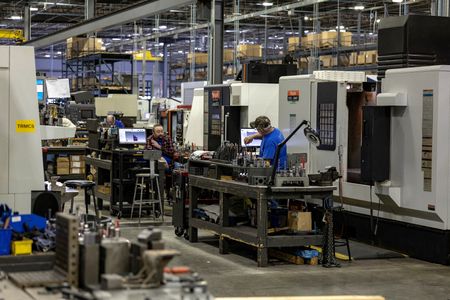
Union workers are handling construction on numerous large-scale data center developments while rushing to train new apprentices to meet surging demand.
These labor organizations have become advocates for technology companies and supportive government leaders, promoting the message that America faces a crucial national security competition with China over artificial intelligence dominance.
Labor groups serve as prominent supporters helping overcome strong community resistance and hostile congressional and state legislation, often joining forces with traditional Republican business interests and putting Democrats in difficult positions between unions and progressive activists seeking stricter regulations.
Union representatives have aggressively responded to data center criticisms in ways that technology executives and development companies typically avoid, boldly addressing concerns about power and water shortages, increasing utility costs, and noise or quality-of-life issues.
“When people say, you know, ‘data centers are the root of all evil,’ we’re just saying, ‘look, they do create a hell of a lot of construction jobs, which we live and work in your communities,’” said Rob Bair, president of the Pennsylvania Building and Construction Trades Council.
Rather than “being just a blunt ‘no,’” Bair said, communities should figure out what they need and ask the tech companies for it — such as improvements to the project’s plans or millions of dollars for local schools. “If you don’t ask, you’re never gonna get,” he said.
As data center development speeds up, unions are expanding training facilities and experiencing membership growth at rates many union leaders have never witnessed.
Labor organizations across multiple states report dramatically increasing work hours, apprentice programs doubling in enrollment, and training centers undergoing expansions expecting additional projects ahead.
Data centers account for at least 40% of work hours completed by Columbus-Central Ohio Building and Construction Trades Council members, estimated top official Dorsey Hager. The figure reaches at least 50% for International Brotherhood of Electrical Workers Local 26 in metropolitan Washington, D.C., according to spokesperson Don Slaiman.
North America’s Building Trades Unions announced reaching record membership and apprentice numbers in 2025.
Organization president Sean McGarvey compared current conditions to building trades expansion during the 1950s. He credits today’s growth to data centers, power plants, and former President Joe Biden’s legislation subsidizing semiconductor and electric vehicle battery plant construction, energy efficiency projects, and power grid improvements.
Data centers’ massive energy requirements are triggering power plant construction growth and providing renewed opportunities for unions whose members also construct and maintain boilers, ductwork, pipelines, and other power infrastructure.
Boilermakers Local 154, whose members witnessed power plant closures in southwestern Pennsylvania, shifted from recruiting zero apprentices over four years to assembling a class exceeding 200 — with needs for more, according to union official Shawn Steffee.
Technology companies say they must train hundreds of thousands additional skilled trade workers. They’re investing tens of millions in training programs, including partnerships with unions they employ for multibillion-dollar construction projects.
“Across the country, highly skilled union construction workers are laying the foundation for the AI economy,” Sam Altman, co-founder and CEO of OpenAI, said in a joint statement in March with McGarvey’s organization.
Google reported most labor building its data centers is unionized, highlighting a $10 million grant to a union-supported electricians training program expected to expand the electrician workforce pipeline by 70%.
Mark McManus, general president of the United Association of Union Plumbers and Pipefitters, whose members handle pipelines, data centers, and power plants, acknowledged criticism that organized labor is partnering with the world’s wealthiest, most powerful corporations.
However, he dismissed such criticism as impractical.
“If we chose as a union to have a moratorium on building the data centers because we didn’t believe it was right for America, the data centers would still be getting built,” McManus said. “They’re not stopping because of organized labor.”
His union maintains strong technology company relationships, achieves record membership levels, and based on internal surveys, has members working on over 90% of United States data center projects.
“That’s a market share that we don’t have in a lot of other industries,” McManus said. “So it’s pretty near and dear to us.”
Determining exact union involvement in data center projects remains challenging. An Associated General Contractors of America survey from late last year indicated data center construction labor composition likely matches commercial construction makeup, approximately one-third union, according to an AGC spokesperson.
National unions have secured labor agreements for major developments, including an Oracle and OpenAI Stargate campus in Michigan and the “Project Blue” data center campus in Arizona, with additional agreements under development.
When Gov. Josh Shapiro joined Amazon executives announcing the technology giant’s $20 billion investment in two eastern Pennsylvania data center projects, Bair appeared alongside them.
“This is really unique, what we’re building here in this commonwealth. People coming together with common purpose to get stuff done,” Shapiro said.
In state legislatures, unions have opposed Maine’s since-vetoed statewide data center moratorium proposal; standards proposed in Illinois, including requiring data centers to provide their own power; and ending Virginia’s sales tax exemption that helped establish it as the world’s largest data center hub.
Pennsylvania state Sen. Katie Muth said collecting fellow Democratic support for her data center regulation legislation has proven difficult when competing against union-supported legislation she considers insufficient.
“The unions don’t want to promote anything that would impede data center development,” Muth said.
Union representatives have attended crowded council meetings in municipal buildings from St. Louis to Spring City, Pennsylvania.
Sometimes their presence creates tension.
Addressing Joliet, Illinois City Council, Alicia Morales complained that union members — seated in front rows holding “vote yes for union jobs” signs — had been disrespectful and “bullied a lot of people” entering the meeting.
Sometimes union representatives are the only supporters speaking favorably about projects in packed municipal meeting rooms.
“I just want to commend you guys, thanks for being the adults in the room,” Chuck Curry, president of Ironworkers Local 395, told Hobart, Indiana City Council members at a January meeting regarding an Amazon data center. “Knowing the tax structure, knowing business, that most of the people here don’t know.”
The budget airline Spirit Airlines moved dangerously close to ceasing operations as Friday’s deadline passed without securing a crucial government rescue package.
President Trump announced Friday that his administration had presented the financially struggling carrier with a “final proposal” for a taxpayer-backed takeover designed to prevent the company’s collapse, though the lack of an agreement has cast serious uncertainty over the airline’s survival.
An individual with knowledge of the situation indicated that plans were underway for operations to halt on Saturday. The source requested anonymity as they lacked authorization to share private details. Neither Spirit Airlines nor the Trump administration provided immediate statements.
The bailout concept emerged last week after the carrier entered bankruptcy proceedings for its second time in under two years, amid skyrocketing jet fuel costs due to the Iran conflict. Spirit attorney Marshall Huebner noted that approximately 17,000 positions could be affected if operations cease.
The low-cost airline has faced severe financial challenges following the COVID-19 pandemic, burdened by increasing operational expenses and mounting debt obligations. When Spirit filed for Chapter 11 bankruptcy protection in November 2024, the company had accumulated losses exceeding $2.5 billion since early 2020.
The carrier returned to bankruptcy court in August 2025, reporting liabilities of $8.1 billion against assets valued at $8.6 billion, based on legal documents.
The financially troubled budget airline Spirit Airlines is expected to completely halt operations beginning at 3 a.m. Saturday morning, according to two individuals with knowledge of internal company discussions who spoke to Reuters on Friday evening.
The sources, who requested anonymity due to the confidential nature of the information, indicated that Spirit’s board of directors concluded their Friday meeting without successfully negotiating a plan to save the struggling carrier from its current bankruptcy situation.
The discount airline has been operating under bankruptcy protection as it attempts to restructure its finances and operations amid mounting financial pressures in the aviation industry.
A major cryptocurrency exchange announced Friday that federal lawmakers have successfully negotiated a compromise on contentious language within groundbreaking digital currency legislation, potentially paving the way for the bill’s advancement through the U.S. Senate.
The proposed legislation had hit a roadblock earlier this year when banking institutions raised objections to language that would permit stablecoin companies and cryptocurrency businesses to provide yield-generating products and customer rewards tied to digital coins. Banks argued these offerings could attract deposits away from traditional financial institutions, hampering their ability to finance loans.
Major cryptocurrency platforms like Coinbase argued that offering customer rewards remains essential for attracting new users, and that preventing such incentives would create unfair market conditions.
“In the end, the banks were able to get more restrictions on rewards, but we protected what matters – the ability for Americans to earn rewards, based on real usage of crypto platforms and networks,” stated Faryar Shirzad, Coinbase’s Chief Policy Officer, in a social media post.
According to Punchbowl News, which obtained details of the negotiated compromise crafted by Senators Thom Tillis and Angela Alsobrooks, the updated language establishes extensive limitations on rewards that function “in a manner that is economically or functionally equivalent to the payment of interest or yield on an interest-bearing bank deposit.”
The revised legislation also instructs federal regulators to develop comprehensive stablecoin oversight rules, including establishing new disclosure requirements and defining acceptable reward programs, Punchbowl News reported. Reuters was unable to independently confirm these details.
Digital currency businesses have faced challenges operating without clear regulatory guidelines, which industry leaders claim has hindered growth opportunities. The proposed Clarity Act seeks to establish definitive rules that could encourage broader cryptocurrency acceptance.
President Donald Trump, who actively sought cryptocurrency industry support during his campaign and whose family has benefited financially from their own digital token venture, has made cryptocurrency regulatory reform a priority during his second term in office.
The streaming giant Netflix announced Friday it will break new ground by giving director Greta Gerwig’s upcoming ‘Narnia: The Magician’s Nephew’ a full nationwide theater release lasting more than six weeks before the movie appears on its platform.
Gerwig both wrote and directed this first-ever film adaptation of C.S. Lewis’ 1955 novel, which tells the backstory of how the magical world of Narnia came to be. Movie theaters will show the film starting February 12, while Netflix subscribers will have access beginning April 2.
The decision represents a significant shift for Netflix, which has traditionally kept its movies exclusively on its streaming platform. The company has made limited exceptions, particularly for films with Oscar potential, since Academy Award eligibility requires a theatrical debut.
According to Netflix, the company chose this broader theater strategy for ‘Narnia’ due to the beloved series’ universal appeal spanning different age groups and countries worldwide.
Movie theater executives welcomed the announcement with enthusiasm.
‘This is welcome news,’ Cinema United President Michael O’Leary said in a statement, adding, ‘Greta Gerwig’s ‘Narnia: The Magician’s Nephew’ is a movie audiences will want to see on the big screen. Now they’ll have that opportunity.’
Netflix has demonstrated growing interest in theater partnerships, including last year’s theatrical release of a sing-along edition of its animated hit ‘KPop Demon Hunters.’ Netflix CEO Ted Sarandos has also committed to maintaining traditional 45-day theater exclusivity windows for Warner Bros. films during the company’s Warner Bros. Discovery acquisition discussions.
Originally, Netflix planned to show ‘Narnia’ only in IMAX theaters for two weeks beginning Thanksgiving weekend. Gerwig praised the company’s decision to expand the release.
‘I cannot wait for people to see the film in theaters on February 12 and on Netflix on April 2,’ Gerwig said.
AMC Entertainment’s chairman and CEO Adam Aron promised his theater chain, the country’s largest, would fully support Netflix’s efforts.
‘We are in their corner fully,’ Aron wrote on the social media platform X. ‘We are and will be all in.’
United Parcel Service’s chief executive believes the company’s expanding prescription medication delivery operations will provide financial protection during economic turbulence, as global conflicts threaten to impact business conditions.
CEO Carol Tome explained that the specialized healthcare delivery sector offers better stability than traditional industries during economic downturns. The business involves careful handling of temperature-controlled medications and radioactive treatments, commanding premium pricing.
“There have been lots of challenges over the past several years – high inflation, contractions in markets – but healthcare continues to grow,” Tome told Reuters this week. “I would argue that healthcare is pretty recession-proof.”
The pharmaceutical shipping segment has become a cornerstone of UPS’s multi-year restructuring effort as the company competes with FedEx while shifting toward fewer but more profitable deliveries.
Through strategic acquisitions, UPS now controls the largest share of the outsourced healthcare logistics industry, valued at over $80 billion. Industry experts predict this market could more than double within ten years, while competitors FedEx and Germany’s DHL Group also seek expansion in this area.
Tome emphasized that companies pursue complex healthcare logistics due to the substantial fees and strong profit margins these specialized services command.
She noted that shipping expensive medications generates profit margins in the mid-to-high teen percentages, while online retail delivery margins fall into very low single-digit ranges.
This strategy is already producing positive results as lightweight package deliveries for retailers like Amazon and Walmart continue pressuring company profits.
“We’ve just reported our first $3 billion healthcare revenue quarter in our company history and we’ve taken share in this space since 2021,” Tome said.
UPS generated $11.2 billion in healthcare revenue for 2025, representing nearly 13% of total company revenue. Healthcare comprised more than 14% of UPS’s consolidated revenue during the first quarter of 2026.
When asked about impacts from the Iran conflict, Tome indicated UPS’s core operations remain stable despite rising fuel costs affecting consumer and business spending due to Strait of Hormuz disruptions.
Industry observers are monitoring one healthcare business segment that could face recession vulnerability – home delivery of weight-loss medications that patients purchase directly rather than through insurance coverage.
UPS recruited Tome from retirement in June 2020, bringing the former Home Depot financial chief aboard as the company’s first external CEO in over a century of operations.
Her “better, not bigger” approach has transformed the world’s largest package delivery service, reducing Amazon’s portion of UPS business from over 13% to 8.8% in the most recent quarter while funding acquisitions to expand healthcare capabilities.
The Atlanta-headquartered company has been shuttering facilities and reducing staff, including unionized drivers earning over $100,000 annually, to offset the loss of millions of Amazon shipments.
UPS transferred its budget-priced Ground Saver service to the U.S. Postal Service as tariff policies reduced millions of low-value shipments from Chinese-connected retailers like Temu and Shein.
The company has also invested in hub upgrades featuring automation, package monitoring systems and efficiency tools designed to reduce delivery costs.
Most transformation work is approaching completion, generating billions in operational savings and positioning the company for improved profitability. Stifel analyst Bruce Chan described the progress in a research report titled: “Home Stretch: Heaviest Lift of Transformation Complete … Now for the Benefits to Materialize.”
Apple executives are expressing confidence about a potential follow-up to the blockbuster Brad Pitt Formula One racing film, while also revealing ambitious plans to expand their motorsports broadcasting reach beyond the United States.
Speaking at the Miami Grand Prix on Friday, Apple Senior Vice President of Services Eddy Cue indicated strong likelihood for another installment of the racing movie produced by Apple Original Films.
“I hope and expect there will be one,” Cue told Reuters when questioned about sequel possibilities for the production.
The original racing film required approximately $200 million in production costs and brought in $634 million at the box office worldwide, based on IMDb figures.
This season marked Apple TV’s takeover of exclusive U.S. Formula One broadcasting rights, replacing Walt Disney’s ESPN network. The streaming service now provides live coverage for all 24 racing events throughout the season.
Cue expressed satisfaction with viewer response to their coverage and emphasized Apple’s commitment to expanding the sport’s popularity.
“The sport doesn’t get licensed on a global basis,” he noted. “Do I hope that we are able to grow into other areas and markets? Yeah, I do.
“But starting in the U.S. which is a huge market for us, and being able to build from there, is definitely the right way to do it. And that’s what we are focused on right now. The easiest way for us to continue to grow is to make sure we make this a huge success.
“And then of course it would be great to expand it.”
The Apple executive also discussed how upcoming leadership changes at the company will benefit their Formula One partnerships. John Ternus, who will replace Tim Cook as Apple CEO, brings personal racing experience to the role.
“John actually drives a Porsche and does amateur racing,” Cue explained. “He would actually be here this weekend but he’s at Laguna Seca.
“So rest assured if anything he’s going to be at more races even than Tim. He’s a huge, huge fan of F1 and he’s known about this, he’s a huge supporter. So you’ll continue to see full support from him.
“When we do something, we don’t do things halfway. The things that we do we go all in. So we believe without a doubt that this is going to make a huge difference in what we can do to help motorsports.”
American producers of liquefied natural gas experienced a dramatic surge in Asian sales during April, as ongoing Middle Eastern conflicts disrupted regional supply chains and created new market opportunities for US exporters, according to shipping data released by financial analytics firm LSEG.
Asian destinations received approximately 25% of all American LNG shipments last month, representing a significant jump from levels seen before regional tensions escalated in late February. This increase highlights America’s expanding role as a flexible supplier during periods of global energy market stress.
The numbers tell a striking story of rapid growth. US deliveries to Asian markets climbed from roughly 970,000 metric tons in February to 1.99 million metric tons in March, then reached 2.71 million metric tons by April – an increase exceeding 175% since US and Israeli military actions against Iran began.
Energy pricing reflected the market tensions, with Asian spot LNG costs staying high throughout the period. The Japan Korea Marker benchmark reached an average of $17.92 per million British thermal units during April, declining slightly from March’s $18.27 but remaining about 17% higher than European prices. Europe’s TTF benchmark averaged $15.34 per mmBtu in April, dropping from $17.99 the previous month.
Despite the Asian export boom, America’s total LNG shipments actually decreased from March’s record levels, falling to 10.97 million metric tons in April compared to 11.7 million metric tons in March. This decline resulted primarily from April having fewer days than March, plus some cargo loading delays at terminals.
Natural gas flowing into US export facilities hit a new record of 18.8 billion cubic feet daily during April, surpassing February’s previous high of 18.7 billion cubic feet per day, LSEG reported.
April marked a milestone for the Golden Pass terminal, which shipped its inaugural LNG cargo to Belgium. The facility – operated jointly by QatarEnergy and Exxon Mobil – processed nearly 300 million cubic feet of gas daily but managed only one export shipment, potentially explaining the gap between record gas intake and lower overall export volumes.
European markets continued dominating US LNG destinations, receiving 6.14 million metric tons representing just under 56% of April’s total exports. Egypt emerged as another significant buyer, importing approximately 710,000 metric tons of American LNG – exceeding the combined 500,000 metric tons sent to all Latin American countries.
In an unusual development, one shipment reached South Africa, a rarely-served destination for US LNG. Ship tracking revealed nine LNG vessels that departed American ports in April were still searching for buyers, including two anchored near the Suez Canal awaiting purchase agreements.
The Delaware Division of Small Business is celebrating the significant impact of local entrepreneurs during National Small Business Month this May, recognizing the vital role these enterprises play in the First State’s economy.
According to state data, approximately 29,000 small businesses operate throughout Delaware, providing employment opportunities for more than 250,000 residents. This workforce represents over half of all workers in the state, demonstrating the crucial importance of small business to Delaware’s economic landscape.
May serves as an annual opportunity to honor small business owners for their determination, contributions to local communities, and dedication to their enterprises. The Delaware Division of Small Business is joining in this nationwide recognition of National Small Business Month to spotlight these achievements.
WASHINGTON — President Donald Trump announced Friday his intention to impose 25% tariffs on automobiles and trucks imported from European Union countries starting next week, a decision that could shake global markets during an already uncertain economic period.
In his announcement, Trump claimed the European Union has failed to honor the terms of their mutually agreed trade arrangement, though he provided no specific details about what violations occurred.
The trade agreement in question was negotiated between Trump and European Commission President Ursula von der Leyen last July, establishing a 15% tariff rate on most imported goods.
The trade framework, dubbed the Turnberry Agreement after Trump’s Scottish golf property, had previously received renewed support from both American and European officials who pledged to maintain the arrangement.
However, the 2025 agreement faced uncertainty earlier this year when the Supreme Court determined the Republican president did not have legal authority to declare an economic emergency and impose tariffs on European goods.
While the original deal established a 15% tariff cap on European imports, the Supreme Court decision lowered that rate to 10% as the Trump administration implemented new import taxes under different legal authorities. The administration is currently conducting studies on trade deficits and national security concerns to establish a new tariff system, which could potentially violate the European agreement.
European officials had projected the bilateral agreement would provide automakers with monthly savings between 500 million and 600 million euros ($585 million to $700 million).
Trade between the EU and United States reached 1.7 trillion euros ($2 trillion) in 2024, averaging 4.6 billion euros daily, based on data from Eurostat, the EU’s statistics office.
Following the Supreme Court ruling in February, the European Commission stated: “A deal is a deal. As the United States’ largest trading partner, the EU expects the U.S. to honor its commitments set out in the Joint Statement — just as the EU stands by its commitments. EU products must continue to benefit from the most competitive treatment, with no increases in tariffs beyond the clear and all-inclusive ceiling previously agreed.”
Federal antitrust regulators have given their approval to Intel’s financial backing of SambaNova Systems, an artificial intelligence chip company, according to regulatory documents released Friday.
The semiconductor giant invested $35 million in SambaNova during February, which combined with additional funding rounds increased Intel’s ownership portion in the AI startup from 6.8% to 8.2% compared to the previous year.
SambaNova Systems is led by a chairman who also serves as Intel’s chief executive officer, Lip-Bu Tan.
According to previous reports from April, Intel has outlined plans to provide an additional $15 million investment in the startup company.
The completion of the antitrust review clears the way for Intel’s continued partnership with the AI chip developer as both companies work in the competitive semiconductor market.
The low-cost airline Spirit is reportedly making preparations to shut down completely following the breakdown of negotiations for a federal rescue package, according to a Wall Street Journal report published Friday that cited sources with knowledge of the situation.
Neither Spirit Airlines nor the White House provided immediate responses when asked for comment about the potential closure.
A court hearing that had been set for Thursday, April 30th to discuss rescue options was canceled when discussions about a possible $500 million federal bailout package hit a deadlock between certain bondholders and government officials.
Insurance company AIG watched its stock price climb approximately 5% during early Friday trading after executives announced the firm has reduced its private credit investments in response to current market uncertainties.
The decision comes as rising default rates have intensified investor scrutiny of major asset management companies and their liquidity positions, particularly as more clients seek to withdraw funds across the sector. Market participants have become increasingly concerned about the private credit industry’s explosive growth and limited transparency.
Multiple alternative asset management firms with significant exposure to these credit markets have experienced stock declines during the first months of 2026.
“We’ve slowed our deployment in this asset class, given market conditions,” stated CFO Keith Walsh during an analyst call following the company’s earnings report.
AIG reported a significant increase in quarterly adjusted earnings on Thursday, boosted by solid underwriting performance and a dramatic reduction in catastrophe losses compared to the previous year when the insurance industry faced substantial claims from the Los Angeles wildfire disasters.
Walsh explained that AIG maintains all its direct lending investments on its balance sheet through business development companies. These BDCs serve as publicly traded lenders to private businesses and represent a crucial component of the private credit marketplace, offering investors enhanced returns alongside increased credit and liquidity risks.
Market participants are questioning whether current reported net asset values accurately capture the stress affecting portions of the private credit sector. Unlike publicly traded securities, BDC portfolios receive valuations through fair-value assessments and internal modeling systems that may not quickly reflect changing credit environments, creating doubt about whether asset values truly represent underlying investment worth.
“Our direct lending exposure is about $1.2 billion, less than 1.5% of the general insurance investment portfolio. It is a diversified portfolio of middle market loans with an average loan size of about $6 million,” Walsh explained.
The portfolio reassurance and deployment strategy helped boost the insurer’s struggling stock, which has dropped nearly 13% since the beginning of the year.
Regarding software sector exposure, Walsh noted during the call: “The software exposure is approximately $130 million, or just 16 basis points of the general insurance portfolio.”
Growing anxiety over software-sector investments and potential artificial intelligence disruption has led to increased examination of valuation methods, raising concerns that loans to small and medium-sized businesses could face pressure.
MetLife CEO Michel Khalaf told attendees at the Semafor World Economy Summit in Washington last month that while some weaknesses may exist in the private credit sector, these don’t indicate an impending bubble collapse.
Financial experts are sounding alarms that investors may be caught off-guard by a looming oil crisis that could see crude prices double from current levels, as the window for preparation rapidly narrows.
While markets have been buoyed by artificial intelligence sector gains that pushed the S&P 500 to new record highs on Thursday, analysts warn that the real energy crisis is developing in physical oil markets rather than electronic trading platforms.
The disconnect between perception and reality has become stark. Physical crude oil – actual barrels that change hands rather than paper contracts – now costs approximately $130 per barrel, marking a dramatic 70% increase from February levels across major grades including North Sea Forties, Angolan Cabinda, and Norwegian Troll.
This represents significantly higher energy costs than suggested by Brent crude futures, which trade around $110 per barrel – a 50% jump from late February. Future contracts for delivery in one year remain above $80 per barrel, up 20% from pre-conflict levels.
“The physical markets reflect the reality on the ground and the futures market reflects more perceptions and hopes,” explained Tamas Varga, an analyst with energy broker PVM Oil Associates.
“One might say that physical markets are the true reflection of actually what’s happening around the Strait of Hormuz,” Varga added.
The conflict has effectively blocked the Strait of Hormuz, a critical waterway that normally handles 20% of global energy shipments. Vitol, the world’s largest oil trading company, projects that 1 billion barrels of supply could vanish before markets stabilize.
Fatih Birol, who leads the International Energy Agency, stated in April that current oil prices fail to accurately represent the severity of the situation and warned that the world should brace for substantially higher costs.
According to Frederique Carrier, head of investment strategy at RBC Wealth Management, her firm’s chief economist uses a guideline that oil shocks must persist for three to six months to create lasting inflationary pressure.
“And we’re not quite there in that window – we (will be) soon,” Carrier noted, explaining that her firm maintains a neutral stance on equities while favoring commodity-related investments like shipping and warehousing.
The severity of potential scenarios has prompted oil traders to test their portfolios against crude prices reaching $200 to $300, according to Gunvor Group executive Jeff Webster, who spoke at the FT Global Commodities Summit in April.
“The idea that it’s definitely going to be stagflation, or it’s going to be fine. That’s the bit that we’re finding a little bit surprising,” said Andrew Chorlton, Chief Investment Officer for public fixed income at M&G, referencing the dangerous combination of high inflation and sluggish economic growth.
“That seems a little complacent,” Chorlton observed.
He described adopting a “more tactical” approach to fixed income investments, focusing on differences between countries and government bond yield patterns.
Inflation expectations among consumers are rising alongside market-based indicators such as inflation swaps, which suggest investors anticipate U.S. inflation around 3.53% within one year and approximately 2.75% over five years – both exceeding the Federal Reserve’s 2% goal.
These projections stood closer to 2.4% in February before the conflict began, according to LSEG data. Similar patterns are emerging across the eurozone and United Kingdom.
Laura Cooper, global investment strategist at Nuveen, said her firm continues holding AI technology positions due to their profitability while balancing exposure through “dividend growers,” infrastructure, and tangible assets including real estate and gold mining companies as protection against various risks.
Despite potential disruptions, markets typically adjust to associated risks over time as supply chains adapt, volatility decreases, and investors refocus on major long-term developments.
“You won’t know it’s a tipping point till the market reacts to it,” said Paras Gupta, who oversees discretionary portfolios for ultra-high-net-worth clients in Asia for UBP in Singapore.
“We just have to wait and see and be nimble. Everybody has one finger on the trigger,” Gupta added.
Analysts suggest the greatest risk from the Iran crisis involves potential shifts in fundamental long-term themes. Over the past 18 months, the Trump administration has disrupted global trade and international relationships, creating unprecedented uncertainty about America’s dependability as an economic and security ally.
“This is about much more than when the war will be over, but rather about how the ‘Rupture’ is playing out – shifting policy as well as public attitudes,” explained Tina Fordham, founder of political strategy consultancy Fordham Global.
“By the time geopolitical risks make landfall and hit financial markets, it is typically too late to mitigate them,” Fordham warned.
Beauty company Coty is facing legal trouble from DB Ventures, the business entity behind soccer legend David Beckham’s fragrance line, according to court filings reviewed by Reuters.
The lawsuit, filed April 23 in New York, accuses Coty of serious violations of their licensing contract and claims the company damaged the Beckham brand by allowing fragrances to be distributed through gas stations.
“How could this possibly have happened? Desperation and greed,” the legal filing states.
This legal challenge represents yet another blow to Coty’s fragrance division, which serves as the company’s primary source of income.
DB Ventures isn’t alone in its complaints against Coty. Nautica has also filed a similar lawsuit against the beauty company. Both DB Ventures and Nautica are owned by American conglomerate Authentic Brands.
Nautica’s legal action claims Coty’s “flagrant and persistent violation” of their licensing deal has caused permanent harm to the Nautica brand. Both lawsuits contend that Coty worked with unauthorized distributors.
When asked about the pending litigation, a Coty representative responded: “Coty does not comment on ongoing legal matters. The claims are without merit, and we will defend ourselves vigorously.”
Authentic Brands chose not to provide comment.
The troubles pile up for interim CEO Markus Strobel, who took over from Sue Nabi in January after her five-year tenure ended. Strobel, a former Procter & Gamble executive, now faces the challenge of reviving the CoverGirl parent company.
Coty’s stock price reached historic lows in early April and has plummeted 78% over the past year. The company has already cautioned investors about disappointing third-quarter results, scheduled for release next Tuesday.
In February, Coty pulled back its annual projections and warned that third-quarter adjusted EBITDA would likely fall between $100-$110 million, significantly below the $201.6 million analysts had predicted.
While fragrances generate most of Coty’s revenue, this business segment is contracting as the company prepares to lose important licenses. The most significant loss will be Gucci’s beauty business, which analysts expect to end in 2028 when it moves to competitor L’Oréal.
Adding to these challenges, Authentic Brands announced in January that it had decided to transfer the licensing rights for DB Ventures and Nautica fragrances to Interparfums when current Coty agreements end. The DB Ventures contract expires in April 2028, while the Nautica deal runs until January 2030.
Despite the legal disputes, both fragrance lines have shown strong sales growth. David Beckham fragrance sales jumped 71.9% between 2023 and 2025, reaching $22.9 million, according to Global Fusion data from Nielsen’s market intelligence platform. Nautica sales increased 34.2% to $29.1 million during the same period.
Interparfums declined to comment on the situation.
The pressure on Coty intensified last month when the chairman of French beauty giant L’Oréal publicly criticized the smaller company, claiming Coty lacks a viable business model.
Strobel is currently developing a new strategic direction, promising to invest more resources in key brands as the company attempts to boost sales. Coty has identified Kylie Cosmetics and its long-term partnerships with Burberry and Marc Jacobs as valuable assets moving forward.
The company initiated a comprehensive review of its consumer cosmetics division in September, exploring various options including partnerships, sales of brands, and potential spin-offs for products like Rimmel and Max Factor.
Major pharmaceutical companies are ramping up their buying spree of biotech firms this year, driven by the looming threat of losing exclusive rights to their most profitable medications.
Industry data reveals that biotech acquisition deals totaled $84 billion during the first three months of 2026, a significant jump from $44.4 billion during the same period last year. This marks the strongest opening quarter for pharmaceutical mergers and acquisitions since 2019.
The accelerated deal-making stems from what industry experts call the “patent cliff” – a period when pharmaceutical companies lose exclusive marketing rights to their top-selling drugs, opening the door for generic competition.
Among the companies facing this challenge is Merck, whose cancer treatment Keytruda accounts for more than half the company’s total revenue but will lose patent protection in 2028. Other pharmaceutical giants including Eli Lilly, Gilead, Bristol Myers Squibb, and Pfizer are also approaching patent expirations on major revenue-generating medications.
According to Eason Hahm, who directs biopharma investment banking at William Blair, the industry faces potential revenue losses exceeding $300 billion over the next five years due to patent expirations.
“The combination of strategic urgency, tighter private funding, and an uncertain IPO market has created the perfect environment for accelerated dealmaking,” explained Patrice Mesnier, founding partner at investment firm Oldenburg Capital Partners.
Bill Holodnak from advisory firm Occam Global described the situation as companies acting out of “anxiety” regarding their shrinking drug portfolios. “The pharmaceutical industry is always going to have to come to terms with drugs going generic … and if they can’t invent the drugs themselves, they’re going to have to acquire drug candidates on the outside,” Holodnak noted.
Strong financial positions are enabling these acquisition sprees. Eli Lilly, a leader in diabetes and weight-loss medications, finished 2025 with over $7.27 billion in cash reserves and has already spent more than $35 billion on acquisitions through late April.
“Big pharma … do not have the luxury of waiting eight, nine, 10 years to build internal pipelines,” Mesnier observed. “They are no longer buying optionality. They are buying time.”
Leadership changes at companies like GSK and Novo Nordisk have coincided with more aggressive acquisition strategies. Similar shifts in executive roles at Bristol Myers Squibb, Gilead, and AbbVie have also influenced deal negotiations and risk assessment approaches.
If current trends continue, total pharmaceutical merger and acquisition activity could surpass $250 billion for 2026, which would represent the second-highest annual total on record, trailing only 2019’s $328 billion.
Emily Oldshue, a partner at law firm Ropes & Gray who has advised on recent pharmaceutical deals, noted increased activity in mid-sized transactions. “Especially in the sub-$10 billion size range, we are seeing companies risk-on for M&A,” she said. “Companies are placing multiple bets and deploying a variety of structures to hedge and spread risks.”
Cancer treatment development remains the primary focus for acquisition targets, though companies are also showing strong interest in immunology, neurology, heart disease, and obesity treatments. These therapeutic areas offer potential for high-revenue drugs that could offset upcoming patent losses.
Artificial intelligence and machine learning companies focused on drug discovery are emerging as particularly attractive acquisition targets. Mark Kvamme, CEO of the O.H.I.O. Fund investment advisory, believes AI technology will significantly accelerate drug development timelines.
“Because of AI, you’re going to be able to develop these things much more quickly,” Kvamme explained.
Industry analysts from Bernstein noted that the revenue exposure to patent expiration over the next seven years is approximately 2.5 times higher than what the industry experienced over the past 16 years, creating sustained pressure for continued deal-making activity.
WASHINGTON – Manufacturing activity across the United States maintained stability during April, though companies faced mounting pressure from escalating input costs that reached their highest point in four years due to Middle East shipping disruptions.
The Institute for Supply Management released data Friday showing their manufacturing index held at 52.7 for the month, matching March’s figure and staying near a four-year peak. Any reading above 50 signals growth in the manufacturing sector, marking the fourth consecutive month of expansion.
Industry analysts surveyed by Reuters had anticipated the index would climb to 53. The steady performance was supported by rising new orders, which increased to 54.1 from March’s 53.5, as companies accelerated purchasing to prevent shortages and avoid higher prices related to the ongoing U.S.-Israel conflict with Iran.
Supply chain challenges intensified significantly, with the supplier deliveries measurement climbing to 60.6 from 58.9 the previous month. Readings above 50 indicate slower delivery times. These delays forced manufacturers to absorb higher costs, pushing the prices paid indicator up dramatically to 84.6 – the steepest level since April 2022 – compared to 78.3 in March. This surge reinforced economists’ predictions that inflation will continue accelerating throughout the year.
Government data released Thursday showed the U.S. personal consumption expenditures price index experienced its largest monthly gain in nearly four years during March, with annual PCE inflation posting its biggest increase since May 2023.
The Federal Reserve monitors the PCE price index as part of its 2% inflation goal. On Wednesday, the central bank maintained its key overnight interest rate between 3.50% and 3.75%, acknowledging mounting inflation concerns.
Financial markets anticipate the Fed will maintain current rates through 2027. Prior to the conflict, manufacturing faced challenges from President Donald Trump’s comprehensive import tariffs, which the U.S. Supreme Court overturned. The White House has implemented new duties, arguing tariffs are essential for revitalizing domestic industrial capacity.
While advance purchasing appears to be driving orders higher, backlogged orders continued declining last month, and export weakness persisted. Consequently, factory employment dropped for the 15th consecutive month. Manufacturing jobs have decreased by approximately 85,000 positions since January 2025.
Cosmetics powerhouse Estee Lauder revealed on Friday it will eliminate up to 3,000 additional positions worldwide while boosting its yearly earnings outlook, as the company accelerates a comprehensive restructuring initiative. The announcement sent company stock soaring approximately 11% during pre-market trading.
The beauty conglomerate behind Clinique and M.A.C brands, currently in discussions for a potential merger with Puig (owner of Jean Paul Gaultier), disclosed that total workforce reductions will now reach between 9,000 and 10,000 positions. This represents an increase from the previously announced target of up to 7,000 job cuts, with the company targeting cost savings of up to $1.2 billion.
The expanded reduction plan could affect roughly 17.5% of Estee Lauder’s global workforce of 57,000 employees as of June 30, 2025, based on the company’s most recent annual report.
“The increase in planned job cuts could be an indication that in light of merger plans, Estee Lauder will be able to shed more positions on its side while retaining Puig employees,” said eMarketer analyst Sky Canaves.
According to company officials, more than 70% of the new job eliminations will target department store personnel as the organization pivots toward rapidly expanding digital and specialty retail platforms including Ulta, Sephora, Amazon and TikTok Shop.
Under CEO Stephane de La Faverie’s “Beauty Reimagined” initiative, the company’s emphasis on premium product launches and supply chain optimization has generated improved quarterly revenue in luxury markets across China and Europe.
Management updated its full-year adjusted earnings projection to a range of $2.35 to $2.45 per share, surpassing the previous forecast of $2.05 to $2.25. The company also anticipates organic revenue growth at the upper portion of its earlier 1% to 3% projection.
However, Estee Lauder cautioned that current projections assume no worsening of global political tensions or related consequences, including potential tariffs and shifts in consumer confidence, along with business interruptions in Middle Eastern operations beyond May 2026.
The beauty manufacturer reported quarterly revenue of $3.71 billion, exceeding analyst predictions of $3.69 billion compiled by LSEG. Adjusted earnings of 88 cents per share also surpassed expectations of 65 cents per share.
The nation’s two largest oil corporations experienced significant earnings drops during the first three months of the year, even as crude oil and gasoline costs soared to new heights. However, industry analysts say the reduced profits are merely accounting setbacks caused by hedging strategies that went wrong following military strikes by the United States and Israel against Iran in late February.
Both Exxon Mobil and Chevron released their quarterly financial reports on Friday, with both companies exceeding Wall Street’s adjusted earnings forecasts. Stock prices for both firms rose in pre-market trading, building on gains made earlier this week.
At the beginning of the year when energy costs were lower, both Exxon Mobil and Chevron had established hedging arrangements to protect against price swings, which is common practice throughout the oil industry.
However, after the U.S. and Israeli strikes on Iran, oil shipments became nearly impossible as the Strait of Hormuz was effectively blocked. Both companies cannot record profits from their hedging positions until they can physically receive the crude oil deliveries.
The virtual shutdown of the Strait of Hormuz near Iran’s coastline has become a major conflict zone and is causing widespread economic disruption worldwide. Approximately 20% of global oil shipments typically move through this waterway daily, but the passage has been severely restricted since hostilities began in late February.
Exxon’s earnings reached $4.18 billion, equivalent to $1 per share, for the quarter ending March 31. This compares to $7.7 billion, or $1.76 per share, during the same period last year. The company suffered nearly $4 billion in losses during the quarter due to what it described as “unfavorable estimated timing effects” from its hedging activities.
When excluding these one-time impacts, Exxon’s earnings came to $1.16 per share, significantly surpassing the $1.07 per share forecast by analysts polled by Zacks Investment Research. The company does not modify its official earnings reports to account for one-time events like asset transactions.
During the first quarter, net production averaged 4.6 million oil-equivalent barrels daily, representing a decrease from the 5 million oil-equivalent barrels per day produced in the preceding quarter.
Chevron announced first-quarter earnings of $2.21 billion, or $1.11 per share, down from $3.5 billion, or $2 per share, in the previous year’s first quarter.
The company noted that its quarterly results included a $360 million net loss tied to a legal reserve, while foreign exchange rate fluctuations reduced earnings by $223 million.
Chevron’s adjusted earnings totaled $1.41 per share, significantly outperforming Wall Street’s expectation of 92 cents per share. Similar to Exxon, Chevron does not modify its official earnings reports for one-time events such as asset transactions.
The company generated $48.61 billion in revenue, which also exceeded expectations.
Both Exxon and Chevron join other major oil producers releasing earnings this week. BP announced on Tuesday that its first-quarter profits more than doubled compared to the previous year.
These oil company results emerge as U.S. gasoline prices reach their highest levels in several years, creating growing frustration among travelers, families, and businesses that are especially vulnerable to rising energy costs.
According to AAA, the national average gasoline price reached $4.39 on Friday, marking an increase of more than 8% for the week.
U.S. inflation accelerated significantly last month amid the largest monthly gasoline price surge in six decades, based on Labor Department statistics. The dramatic rise in fuel costs has strained household budgets for lower- and middle-income families, making it harder to afford basic necessities.
The situation is also affecting business operations, especially for companies sensitive to fuel cost increases. Airlines across the globe have started canceling flights as Middle East conflicts disrupt jet fuel availability and drive up airfare prices.
Chinese electric vehicle manufacturer BYD continues facing significant challenges as vehicle sales dropped for the eighth consecutive month in April, marking a 15.5% decline compared to the same period last year. This represents the company’s most extended period of declining sales as it grapples with sluggish domestic demand.
Despite domestic struggles, BYD’s international operations showed promising growth, with overseas passenger vehicle and pickup truck sales surging 35% to reach 130,000 units last month, according to calculations from a social media post by BYD executive Li Yunfei.
While the company hasn’t revealed its complete sales goals for this year, BYD has expressed confidence in achieving international sales of at least 1.5 million vehicles.
The Chinese automaker, which serves as Tesla’s primary competitor in China, reported its most significant profit decline since 2020 during the first quarter. The company faces intensifying competition in the budget vehicle market, particularly for models priced below 150,000 yuan ($21,936), with rivals Geely and Leapmotor applying pressure.
BYD’s current sales slump surpasses its previous record decline, which lasted six months during the elimination of government electric vehicle incentives that concluded in December 2019.
To address domestic market challenges, including reduced trade-in programs for entry-level electric and hybrid vehicles that are pushing consumers toward premium models, BYD is introducing vehicles equipped with faster-charging battery technology and developing a high-speed charging infrastructure to demonstrate its technological capabilities.
The company also announced it will increase pricing for its proprietary driving assistant system feature starting Friday, attributing the change to rising costs for memory hardware components worldwide.
A Federal Reserve official is warning that the ongoing conflict with Iran could force the central bank to raise interest rates multiple times to combat rising inflation.
Minneapolis Federal Reserve President Neel Kashkari explained his opposition to this week’s Fed policy decision, stating that oil price shocks from the Middle East conflict could significantly alter the inflation picture.
“With an extended closure of the Strait of Hormuz and potentially further damage to energy and commodity infrastructure in the Middle East…the price shock wave could be much larger than is currently expected,” Kashkari said in a statement released after Wednesday’s Fed meeting concluded. “We would likely have to follow through with a strong policy response…Federal funds rate increases, potentially a series of them, could be warranted even at the risk of further weakness to the labor market.”
Kashkari joined three other officials in dissenting from this week’s Federal Reserve decision, marking the most divided policy vote the central bank has seen since 1992.
The majority decision, approved 8-4, maintained language suggesting the Fed’s next move would likely be to lower rates rather than raise them. Kashkari opposed this messaging, along with two colleagues, while a fourth dissenter actually favored cutting rates immediately.
The Minneapolis Fed leader emphasized he supported keeping current interest rates unchanged, but believes geopolitical risks have grown too significant for the Fed to continue signaling future rate cuts.
Global oil markets have experienced dramatic price swings due to threats against the Strait of Hormuz shipping route and Middle Eastern energy facilities. Crude oil has climbed well above $100 per barrel in recent weeks, reaching $126 this week compared to $70 when the conflict began.
Kashkari argued that the Fed’s current policy language, while not a firm commitment to cut rates, creates expectations among market participants that reductions are coming next.
“Given recent economic developments and geopolitical developments and the high level of uncertainty,” he stated, the Fed “should offer a policy outlook that signals that the next rate change could be either a cut or a hike.”
Even under the most optimistic scenario where shipping lanes reopen quickly and commodity flows resume normally, Kashkari projects underlying U.S. inflation would remain around 3% for the year. That level sits well above the Federal Reserve’s 2% target and would justify maintaining current interest rate levels in his assessment.
WASHINGTON — Treasury Secretary Scott Bessent is troubled by Americans’ attraction to get-rich-quick schemes, from lottery tickets to cryptocurrency promises, cautioning that these approaches typically push people away from true financial security rather than toward it.
“There are a lot of young people, mostly young men, going to blue-collar construction jobs, playing the lottery. It drives me crazy,” Bessent said in an interview.
“The best thing you can do is not play the lottery,” he said — rather, people should invest and “then watch it grow.”
The Treasury Secretary discussed fundamental principles of creating budgets and building savings during a recent Associated Press interview, marking the conclusion of Financial Literacy Month. This educational campaign has become a central focus for the former billionaire hedge fund executive since he joined President Donald Trump’s team, motivated by his own impoverished childhood experiences.
While previous Treasury leaders like Hank Paulson and Tim Geithner gained recognition for steering America through the financial crisis, and Steven Mnuchin became known for crafting the 2017 Tax Cuts and Jobs Act, Bessent hopes his dedication to educating community bankers, seniors, and students about budgeting and debt management will help shape his professional legacy.
This financial education campaign unfolds as Americans struggle with rising costs for housing, food, energy, and daily necessities, while expressing doubt about the Republican administration’s economic handling. Recent AP-NORC polling reveals Trump’s economic approval ratings fell from 38% in March to 30% in April.
The country faces unprecedented debt levels, exceeding $39 trillion as of March, prompting questions about how Bessent can encourage personal savings while the federal government battles its own massive debt burden.
“The Trump administration in particular has a problematic record on cutting taxes without offsets and growing spending,” said Maya MacGuineas, president of the Committee for a Responsible Federal Budget.
The 63-year-old Bessent built his wealth through extensive hedge fund experience, including collaboration with George Soros, a financier and philanthropist frequently criticized by Trump and fellow Republicans. Bessent played a notable role in the Soros organization’s 1992 British pound speculation during Black Wednesday, generating enormous returns. He subsequently established his own investment firm, Key Square Group.
Despite his financial success, Bessent frequently references his modest origins in rural South Carolina near Myrtle Beach, where he began working at age 9 as a restaurant busboy and setting up beach equipment. His real estate developer father had squandered generations of family wealth through excessive borrowing.
Bessent’s 1979 Naval Academy aspirations were blocked due to his openly gay status, which also prevented foreign service opportunities.
He attended Yale University, where professor David Darst taught him about emerging financial market instruments. Darst characterized Bessent as a “guy who’s working at the highest levels, but he’s interested in people learning the ABCs of finance.”
In 2025, Bessent made history as America’s first openly gay treasury secretary. “I sit here knowing that President Trump chose me because he believes I’m the best candidate, not because of my sexual preference, not because treasury secretaries with green eyes do better,” Bessent said at his confirmation hearing.
Upon taking office, Bessent quickly revived the Treasury Department’s Financial Literacy Month program.
“Wall Street has grown wealthier than ever before, and it can continue to grow and do well,” Bessent has emphasized in multiple speeches, maintaining that his Trump administration efforts remain “focused on Main Street.”
During a Treasury Department roundtable with community financial institutions last month, Bessent heard bankers discuss rising sophisticated fraud targeting customers and challenges engaging high school students in saving programs.
“It could be as simple as a 14-year-old starting a savings account and watching interest compound at 4% a year,” said Thomas Fraser, CEO of First Mutual Holding Co. in Lakewood, Ohio, who participated in the discussion.
Financial education advocacy isn’t new territory for Bessent. Geoff Canada, president of Harlem Children’s Zone, has maintained a 30-year relationship with Bessent and reports the treasury secretary has guided one program scholar for over ten years. Canada credits Bessent with “deep understanding that financial literacy is essential for fostering real social and economic mobility for America’s children.”
Canada noted Bessent “has championed this issue long before joining the administration, and I know it remains a top priority.”
Financial literacy discussions with Bessent consistently lead to Trump Accounts — a proposed program providing $1,000 to babies born during the Trump presidency. Private companies would invest this money in stock markets, with children accessing funds at age 18.
Bessent believes this initiative will inspire young people to embrace investing by demonstrating “the power of compounding, because that money is locked up for 18 years.”
However, Bessent argues Americans across all age groups and income levels need better money management skills. “There’s a narrative that doctors are famously terrible at finance,” Bessent observed.
Critics challenge the treasury secretary’s strategy, arguing the core issue involves insufficient disposable income for investment rather than lack of financial knowledge, as living costs continue climbing and the Iran conflict drives energy prices higher.
“You cannot preach penny-pinching while making it harder for Americans to pay their grocery, utility and healthcare bills,” said Emily DiVito, senior adviser for economic policy at the left-leaning Groundwork Collaborative. “If Secretary Bessent is serious about advancing financial literacy, he should focus on lowering the cost of living for working families.”
Bessent’s investment advocacy occurs amid record-breaking U.S. debt levels, with the growth trajectory concerning budget specialists.
National debt reached $37 trillion in August, then $38 trillion just two months later. Currently at $39 trillion, it now exceeds the entire economy’s size.
Budget expert MacGuineas cautioned that continued borrowing and rising interest payments will force Americans to confront difficult fiscal choices ahead.
She commended Bessent’s goal of halving deficits and reducing them to 3% of gross domestic product but emphasized “it’s going to take a combination of spending reductions, revenue increases and economic growth” to achieve this target.
The Treasury Department maintains that federal deficits declined during Trump’s initial year back in office and that Republican tax cut provisions have returned money to Americans’ wallets.
“It’s hard to disagree with the fact that we need more financial literacy in this country,” MacGuineas said. “The bigger picture, of course, is that we should also probably give a financial literacy class to our lawmakers.”
Electric vehicle registrations for Tesla showed impressive growth across multiple European nations in April, though Chinese automotive manufacturers continued to gain market position against the American company.
The electric car manufacturer has demonstrated remarkable recovery throughout Europe this year following two years of declining sales, including a significant 27% drop in 2025.
European sales for the company increased by nearly 45% during the first three months of the year. The surge in both new and pre-owned electric vehicle interest across Europe has been attributed to rising fuel costs following the Iran conflict that started February 28.
Elon Musk’s automotive company received additional momentum in European markets last month when Dutch regulatory officials approved its driver-assistance technology. The Netherlands vehicle authority RDW has informed the European Commission about plans to pursue continent-wide authorization for the software, which Tesla offers through monthly subscriptions.
Vehicle registration data, which reflects actual sales figures, showed dramatic increases across several countries in April compared to the previous year. Denmark experienced a 102% jump according to bilstatistik.dk, while PFA data revealed France saw a 112% increase. The Netherlands automotive industry group BOVAG documented a 23% rise.
This recovery occurs even though Tesla maintains a limited vehicle portfolio with only two aging models available. The company hasn’t introduced a new mainstream vehicle since launching the Model Y in 2020.
The electric vehicle manufacturer continues confronting increased pressure from expanding Chinese competition and established automakers as additional electric models reach the marketplace.
Market performance data from April showed Chinese EV company Xpeng exceeded Tesla’s sales numbers in Denmark, while BYD surpassed Tesla’s performance in the Netherlands.
Energy giant Exxon Mobil Corporation exceeded Wall Street expectations for first-quarter profits on Friday, despite facing substantial losses from Middle East conflict disruptions and complex financial timing issues.
The oil company reported adjusted earnings of $1.16 per share for the January-March period, surpassing analyst predictions of $1.00 per share compiled by LSEG. However, the company’s overall net income fell to $4.2 billion, a significant drop from $7.7 billion during the same quarter last year, marking the weakest performance since early 2021.
The adjusted earnings figure excludes a substantial $700 million loss from oil shipments that couldn’t be delivered due to the ongoing U.S.-Israeli conflict with Iran. When also removing impacts from financial derivatives, earnings would have reached $2.09 per share.
Exxon’s operations were helped by rising oil prices and stronger output from key production sites in the Permian Basin and Guyana, which partially compensated for Middle East production setbacks.
Company CEO Darren Woods acknowledged the challenges in a statement, noting that while Exxon has grown stronger in recent years, “events in the Middle East tested that strength with the safety of our people remaining our top priority.”
The Middle Eastern crisis has pushed oil prices upward since late February, though the impact on major oil companies’ profits has varied significantly across the industry.
Exxon had previously revealed it expected multi-billion-dollar impacts from timing effects that should reverse in coming quarters. This contrasts with British oil giant BP, which reported improved profits this week thanks to successful oil trading activities.
The company employs financial derivatives to protect against price fluctuations during the time needed to deliver oil shipments to customers. Since the physical shipment value isn’t recorded in earnings until transactions complete, this creates timing gaps, according to company explanations.
“In general, it takes a few months for that to unwind,” Chief Financial Officer Neil Hansen explained during an interview. He noted the difficulty in forecasting future timing effects, which depend on commodity price movements.
Hansen emphasized that the core business showed resilience, with net income actually growing year-over-year when excluding timing impacts and undelivered shipments.
Approximately 20% of Exxon’s oil and gas production occurs in the Middle East, representing one of the highest regional exposure levels among major competitors. By comparison, Chevron, America’s second-largest oil producer, reported Friday that less than 5% of its production comes from the Middle East.
War-related disruptions reduced Exxon’s first-quarter production by 6% compared to the previous quarter, according to regulatory filings released earlier this month.
Company executives are expected to face questions during Friday’s analyst conference call about repair timelines for damaged Middle Eastern assets, which also represent a significant portion of Exxon’s liquefied natural gas operations.
The energy company maintains ownership stakes in two Qatar-based liquefied natural gas facilities that sustained damage from Iranian attacks.
Exxon’s primary upstream operations center on Permian Basin activities and offshore Guyana production. Hansen reported that Guyana achieved record production levels while Permian operations continue expanding.
The company generated $2.7 billion in free cash flow during the quarter, down from $8.8 billion in the comparable 2023 period. Exxon distributed $4.3 billion in dividends and bought back $4.9 billion worth of company shares during the three-month period.
Capital expenditures totaled $6.2 billion, aligning with the company’s full-year spending projections.
Dallas-based HF Sinclair Corporation delivered an unexpected financial win in the first quarter, reporting adjusted earnings that caught analysts off guard on Friday.
The energy company earned 69 cents per share for the three months ending March 31, a dramatic turnaround from analyst predictions of a 6-cent loss per share, according to LSEG data.
The company’s success stems from improved refining margins and stronger refined product sales volumes during a period of global energy market turbulence.
American refiners are currently experiencing some of their most profitable margins in recent years, driven by Middle Eastern supply disruptions linked to ongoing conflicts involving Iran that have increased demand for U.S. fuel exports.
Iran’s effective blockade of the Strait of Hormuz — a vital shipping lane handling approximately 20% of worldwide oil and gas transport — has created supply concerns, elevated crude oil prices, and triggered significant volatility throughout energy markets.
American refining companies, which rely less heavily on Middle Eastern crude oil sources, are positioned to capitalize on global fuel shortages by increasing international sales from Gulf Coast facilities.
“Looking forward, we remain focused on the execution of our strategic priorities and believe each of our business segments is well positioned to take advantage of the current favorable macroeconomic backdrop,” CEO Franklin Myers said in a statement.
Industry-wide refinery margins in the United States, tracked through the 3-2-1 crack spread measurement, jumped approximately 73% during the first quarter compared to the same period last year.
HF Sinclair’s adjusted refinery gross margin reached $9.95 per barrel during the quarter, an increase from $9.12 per barrel in the previous year’s first quarter.
The company’s refining division generated an adjusted core profit of $55 million for the quarter, a significant improvement from the $8 million loss recorded during the same period last year.
Meanwhile, HF Sinclair’s renewables division posted adjusted core earnings of $133 million, reversing a $17 million loss from the prior year.
The lubricants and specialties division also showed growth, with adjusted core profits climbing to $103 million from $85 million in the previous year.
Investment professionals are cautioning against automatically following the time-honored Wall Street saying ‘sell in May and go away’ as market participants debate whether to exit positions before what has historically been a challenging period for stocks.
The S&P 500 has mounted an impressive recovery, bouncing back from nearly a 10% drop in just 11 trading sessions following a sell-off caused by global oil supply disruptions. This quick rebound has market watchers questioning whether the difficult times are behind us or if seasonal headwinds lie ahead.
Historical data from CFRA shows that since 1945, the S&P 500’s average return during the May through October period has been a modest 2%, significantly trailing the roughly 7% average gain seen from November through April. However, the past decade tells a different story, with summer months delivering a stronger 7% average return, including a remarkable 22.1% surge last year.
‘You hate to say to ignore ‘sell in May, go away’ … but it hasn’t worked at all in the last decade,’ explained Ryan Detrick, chief market strategist at Carson Group.
‘Investors would really have hurt themselves if they blindly, truly sold in May, went to cash, or even if they went defensive,’ Detrick added, pointing to market performance over the past ten years.
A Reuters analysis reveals that since May 2016, maintaining a continuous $10,000 investment in the S&P 500 would have grown to approximately $34,000, nearly doubling what investors would have earned using a sell-in-May approach that moved to cash during summer months.
Market analysts point to several encouraging factors for equities this year that argue against becoming overly pessimistic based solely on calendar patterns. Stock prices have rebounded sharply from recent declines as concerns about major escalation in the U.S.-Iran conflict have diminished. Robust corporate earnings have lifted investor confidence, while the American economy has demonstrated strength despite energy market volatility from the Iran conflict.
‘If there were ever a year where you might want to throw seasonality out of the window, it might be this one,’ noted Jim Carroll, portfolio manager at Ballast Rock Private Wealth.
However, Sam Stovall, chief investment strategist at CFRA Research, highlighted one significant factor that suggests caution about abandoning the sell-in-May approach: 2026 is a midterm election year when Americans will vote for Congressional representatives.
Reuters analysis shows that in half of the last ten midterm election years, the S&P 500 fell during the May through October timeframe, posting average declines of roughly 1.5%.
Additional concerns include the ongoing U.S.-Iran situation and its potential impact on global economic growth. Market participants must also navigate leadership changes at the Federal Reserve, with Kevin Warsh anticipated to succeed Jerome Powell during a period when experts predict a more volatile interest rate environment.
‘There’s certainly an awful lot out there to worry about,’ Stovall observed.
Despite these challenges, analysts believe strong market momentum could help equities overcome potential obstacles. CFRA data indicates that since World War II, markets have typically gained more than 8% in the three months following complete recovery from pullbacks ranging from 5.5% to 9.9%.
‘Yes, it’s a midterm year. Yes, ‘sell in May’ is coming, but the trend going into this is very important,’ Detrick emphasized.
Tesla and SpaceX CEO Elon Musk spent more than seven hours on the witness stand across three days this week in an Oakland courtroom, defending his legal battle against OpenAI, the company behind ChatGPT. The world’s wealthiest individual framed his lawsuit as protecting charitable organizations everywhere.
Musk has filed suit against OpenAI CEO Sam Altman and President Greg Brockman, alleging they broke their commitment to him and society by departing from their original mission to serve as responsible guardians of artificial intelligence technology for all people.
Here are the major highlights from Musk’s court testimony:
DESCRIBING OPENAI AS A CHARITABLE ORGANIZATION
While the term ‘charity’ never appeared in OpenAI’s 2015 founding announcement as a nonprofit AI research organization, Musk consistently referred to it as such during his testimony. He stated that Altman and Brockman broke their original commitment to maintain the nonprofit structure.
“It was specifically meant to be for a charity that does not benefit any individual person. I could’ve started it as a for-profit and I specifically chose not to,” Musk stated under oath.
CLAIMING CREDIT FOR OPENAI’S CREATION
Developing an artificial intelligence research facility demands exceptional talent and substantial computational resources. According to Musk’s testimony, OpenAI depended on his professional network for both requirements.
“I came up with the idea, the name, recruited the key people, taught them everything I know, provided all of the initial funding,” Musk declared.
Musk testified that he successfully recruited top researcher Ilya Sutskever away from Google, despite persistent efforts by Google founders Larry Page and Sergei Brin to retain him.
“After I recruited Ilya to OpenAI, Larry Page refused to speak to me ever again,” Musk told the court.
Regarding computational resources, Musk claimed OpenAI benefited from his relationships with Microsoft CEO Satya Nadella and Nvidia CEO Jensen Huang. “The only one who could actually call Satya Nadella and have him pick up was me,” Musk testified. “The only reason he’s in this thing is because of me. Those are his words.”
Musk described learning through conversations with Larry Page that the Google co-founder showed little worry about AI safety risks.
“I said, ‘What if AI wipes out all humans?’ He said that would be fine so long as artificial intelligence survives. I said that was insane, that’s just crazy. And then he called me a ‘speciesist’ because I care about humans more than AI. … The reason OpenAI exists is because Larry Page called me a ‘speciesist.’ … What would be the opposite of Google? An open-source nonprofit.”
DESCRIBING AN ALLEGED BRIBERY ATTEMPT
Musk testified about questioning Altman in late 2022 regarding Microsoft’s $10 billion investment in OpenAI, which Musk characterized as a “bait and switch” in text messages presented to the jury.
Altman replied, “I agree this feels bad.” Following this exchange, Altman proposed giving Musk a chance to purchase OpenAI shares, which Musk characterized as follows: “frankly, it felt like a bribe.”
DEFENDING HIS OWN AI VENTURE
When questioned about using OpenAI to develop his xAI company while simultaneously calling OpenAI’s technology dangerous, Musk responded: “It is standard practice to use other AIs to validate your AI.” When asked why his company operates for profit rather than as a charity, Musk answered, “For profit companies can be socially beneficial.”
COURTROOM TENSIONS
The cross-examination conducted by William Savitt, representing OpenAI, became heated at several points. Musk criticized Savitt for using misleading and suggestive questions, which the judge ruled acceptable. The judge reprimanded Savitt for interrupting Musk’s responses. “Few answers are going to be complete especially when you cut me off all the time,” Musk complained.
Additional tension arose before trial when Musk’s legal team sought permission to question an expert witness about AI extinction risks, which OpenAI’s lawyers opposed. “Extinction risk is a real problem. This is a real risk. We all could die,” argued Musk’s attorney Steven Molo.
The judge restricted the expert’s testimony scope and noted the contradiction, saying “it’s ironic that your client, despite these risks, is creating a company that’s in the exact space.”
Wall Street investors are banking on upcoming corporate earnings reports and April employment figures to keep the current stock market surge alive next week, even as oil prices climb and Federal Reserve officials take a tougher stance on interest rates.
The major stock indexes reached record territory Thursday, capping off a remarkable recovery from earlier worries about economic damage from Middle East conflicts. Strong corporate profit reports have been boosting investor confidence and helping offset other market challenges.
Both the S&P 500 and the tech-focused Nasdaq finished April with their strongest monthly performance since 2020. The S&P 500 climbed more than 10% during April, while the Nasdaq soared over 15%.
“We have these fast-rising profits on one side, and then on the other, we have upward pressures on oil prices and bond yields,” said Angelo Kourkafas, senior global investment strategist at Edward Jones. “We’ve rallied a lot in April, so potentially we may enter some period of consolidation as this pull and push is playing out.”
This week, markets mostly ignored a fresh spike in oil costs, with Brent crude oil reaching above $120 per barrel and hitting a four-year peak before retreating. Energy markets remain volatile due to the ongoing two-month conflict between the U.S.-Israel alliance and Iran, which has disrupted major oil supplies. Although a ceasefire helped spark the stock market recovery, ongoing Middle East tensions continue to worry investors.
“With each passing day, the economic risk grows,” said Jeff Buchbinder, chief equity strategist for LPL Financial. “If we’re sitting here in a month or two, and Brent crude is still over $120, and we’ve still got a blockade and maybe bombs are still falling, that is a very different scenario than what we’re looking at right now.”
Over 100 S&P 500 companies are scheduled to release quarterly results next week, representing the peak of earnings season. Through Thursday, overall S&P 500 company profits were tracking to increase more than 20% in the first quarter compared to last year, according to Tajinder Dhillon, head of earnings and equity research at LSEG Data & Analytics.
This week brought mixed reactions to results from major technology companies investing heavily in artificial intelligence. Alphabet shares jumped Thursday after Google’s parent company delivered exceptional cloud computing growth, while Microsoft and Meta Platforms stocks declined following disappointing results.
High-profile companies reporting next week include data analytics firm Palantir, entertainment giant Walt Disney, and restaurant chain McDonald’s.
Semiconductor company Advanced Micro Devices will also draw attention, given recent spectacular gains for chip stocks, noted Michael O’Rourke, chief market strategist at JonesTrading. AMD shares have surged approximately 80% over the past month, while the Philadelphia SE Semiconductor index has risen over 45%.
“This is the group that is dominating the tape and dominating the market,” O’Rourke said. “Any datapoints you get are going to be really important.”
The April jobs report, scheduled for release May 8, is projected to show 73,000 new positions added, according to economists surveyed by Reuters. This would represent a decrease from March’s 178,000 jobs but an improvement from February’s sharp employment drop.
“It’s a slow job market, but the job market is still hanging in there,” Buchbinder said.
Thursday’s economic data revealed that U.S. growth accelerated during the first quarter, with artificial intelligence spending helping boost business equipment investments.
The upcoming employment data comes as prospects for stock-friendly interest rate reductions appear less likely this year. This week’s Federal Reserve meeting exposed unexpected divisions within the central bank, as three board members opposed policy statement language they believed inadequately addressed inflation risks that might necessitate rate increases.
This more aggressive Fed position, combined with rising oil prices, drove benchmark U.S. Treasury yields to one-month highs. The closely watched 10-year Treasury yield recently stood near 4.4%. Higher yields could create problems for stocks by increasing borrowing costs for consumers and businesses.
“The 10-year above 4.5% will certainly catch more investors’ attention,” Kourkafas said. “At that point, investors might start rethinking valuations and get a little more worried.”
Stock market futures showed gains Friday morning following Wall Street’s most impressive monthly performance in years, as strong corporate earnings helped offset worries about significant disruptions in global oil markets.
Technology giant Apple saw its shares climb 2.8% during pre-market trading after strong sales of its iPhone 17 and MacBook Neo devices led the company to project healthy revenue growth for its upcoming fiscal third quarter.
Fresh economic data revealed that U.S. growth picked up momentum during the opening quarter of the year while inflation rose in March, supporting arguments for maintaining higher interest rates, though these factors haven’t dampened the stock market surge.
The current buying enthusiasm might face challenges ahead. Household spending, which drives most economic activity, slowed during the quarter. Additionally, the rate at which Americans save money dropped, indicating people are drawing from their savings accounts to maintain their spending habits.
The economic figures only capture one month of disruption from the ongoing Middle East conflict. As this war continues with no clear resolution, rising fuel costs could place additional strain on family budgets, particularly as first-quarter tax refund benefits fade.
Oil prices for Brent crude have surged past $110 per barrel due to ongoing disruptions affecting the critical Strait of Hormuz shipping corridor.
“GDP expanded at a respectable-looking pace in Q1, but a glance under the hood suggests the economy’s underlying momentum already was anemic before the energy shock was felt in earnest,” said Samuel Tombs, chief U.S. economist at Pantheon Macroeconomics.
This situation arrives at a challenging time for investors as markets move into May, which historically marks the beginning of a six-month period of weaker stock performance.
Historical data from Fidelity shows that from 1945 through April 2026, the S&P 500 has averaged approximately 2% growth from May through October. This contrasts with roughly 7% average gains during the November through April period.
Early Friday morning at 5:12 a.m. ET, Dow E-minis had gained 44 points or 0.09%, while S&P 500 E-minis increased 4.5 points or 0.06%. Nasdaq 100 E-minis declined 40.25 points or 0.15%.
April concluded with the S&P 500 recording its largest monthly percentage increase since November 2020, while the Nasdaq Composite posted its strongest showing since April 2020. The Dow’s monthly advancement represented its best performance since November 2024.
Notable pre-market movements included gaming platform Roblox, which dropped 23.5% after reducing its annual bookings projections.
Social media platform Reddit jumped 16.1% following an optimistic quarterly revenue outlook.
Railway companies nationwide are witnessing dramatic increases in passenger traffic as Americans look for alternatives to driving amid soaring fuel costs.
The surge in train travel comes as gasoline prices have climbed to their highest levels since the Iranian conflict began, prompting more travelers to consider rail transportation as a cost-effective option.
Amtrak, the national passenger rail service, documented a 5% rise in ridership during March when compared to the same period last year. The increase reflects a broader trend of consumers seeking transportation alternatives as they feel the pinch at gas pumps across the country.
Meanwhile, Brightline, Florida’s privately-operated passenger rail system, achieved its most successful month on record in March. The company’s exceptional performance highlights how regional rail services are benefiting from the shift away from automobile travel.
The connection between rising fuel costs and increased rail usage demonstrates how economic pressures influence American travel habits, with many passengers choosing trains over cars for both short and long-distance journeys.
Japan’s currency experienced a dramatic surge Friday following stern warnings from Tokyo officials that they stand ready to take additional market action, just hours after the country conducted its first currency intervention in nearly two years.
The sharp rise in the yen’s value triggered widespread speculation among currency traders that Japan may be preparing another round of market intervention.
After remaining stable through the night, the dollar tumbled during London trading hours, declining as much as 0.66% to reach a session low of 155.60 from an earlier high of 157.12, fueling further intervention speculation among already anxious traders.
“Liquidity is thin and people are nervous after yesterday so there is a susceptibility to volatility in the dollar/yen,” explained Jeremy Stretch, head of G10 FX strategy at CIBC Capital Markets.
The escalated warnings from Tokyo come as Japan’s currency faces continued pressure from significant interest rate differences between the U.S. and Japan, with officials particularly concerned about potential speculative attacks during the upcoming holiday period.
When questioned about possible market intervention, Japan’s top foreign exchange diplomat Atsushi Mimura told reporters: “I won’t comment on what we’ll do ahead. But I will tell you that Japan’s Golden Week holidays have just started.”
Mimura’s statements followed Thursday’s warning from Japanese Finance Minister Satsuki Katayama that “decisive action” was approaching. Katayama also advised reporters to keep their smartphones readily available throughout the holidays, sending a clear message about Tokyo’s willingness to act against speculators who might exploit reduced trading volume to weaken the yen further.
Following those warnings, Japan entered the market to bolster the yen, marking its first official currency intervention since nearly two years ago, according to two sources familiar with the situation who spoke to Reuters. The action sent Japan’s currency soaring by as much as 3%.
When asked directly about Thursday’s market intervention, Mimura refused to comment. Regarding whether currency movements remained speculative in nature, he stated: “There’s no change to my view on markets.”
Mimura emphasized that Japan maintains “extremely close contact” with the United States, noting that both nations agree action may be necessary based on market conditions.
“Every time we see a substantial move in the yen there will be questioning about what is driving this given the warnings we have had,” Stretch from CIBC Capital Markets observed.
Following Thursday’s intervention that pushed the yen to 155.5 per dollar, the currency gave back some gains and traded at 156.99, still stronger than the 160 level that Japanese authorities reportedly view as their intervention threshold.
Market anxiety was evident in options trading, where the cost of hedging against major yen fluctuations over the next week approached its highest level in a month, according to LSEG data.
Prior to this latest action, Japan’s most recent currency market intervention occurred in July 2024, when officials purchased yen after it reached a 38-year low of 161.96 against the dollar.
Data from U.S. market regulators shows speculators currently hold their largest bearish yen position since July 2024, valued at approximately $7.5 billion.
Japanese financial markets will remain closed Monday through Wednesday for Golden Week celebrations, which analysts warn could trigger significant yen volatility due to reduced trading activity.
The Bank of Japan’s gradual approach to interest rate increases has contributed to yen weakness. Even the central bank’s more aggressive signals on Tuesday failed to provide sustained support, as the dollar strengthened on expectations that rising inflation will prevent the U.S. Federal Reserve from reducing rates.
“The yen will remain under downward pressure on inflation concerns from high oil prices, slow BOJ rate hikes and the hawkish tone of other central banks,” said Rinto Maruyama, FX and rates strategist at SMBC Nikko Securities.
Mimura has previously indicated Japan might intervene in crude oil futures markets due to concerns that oil market volatility could impact yen movements.
“We have conditions in place and are always ready to take action,” Mimura told reporters when asked about volatile crude oil futures trading.
Rail companies across America are reporting significant increases in passenger numbers as fuel costs have spiked following the outbreak of conflict in Iran. The rising cost of gasoline is driving more travelers to consider train travel as an alternative to driving.
Florida’s Brightline railroad, which operates as a private passenger service, achieved record-breaking ridership numbers during the month of March, marking the company’s strongest performance since beginning operations.
The trend reflects a broader shift in travel patterns as Americans seek more cost-effective transportation options amid the current fuel price surge linked to international tensions in the Middle East.
The iconic motorcycle manufacturer Harley-Davidson has issued a safety recall affecting 88,039 bikes across the United States, according to federal transportation safety officials who announced the action Friday.
The National Highway Traffic Safety Administration reports that the recalled motorcycles have a defective breathing port in the airbox backplate that can become obstructed. When this happens, dangerous pressure can accumulate within the engine’s crankcase, creating a potential safety hazard for riders.
The federal safety agency made the recall announcement on May 1, alerting motorcycle owners to the mechanical flaw that affects tens of thousands of Harley-Davidson vehicles nationwide.
TOKYO – Japan has finalized its initial $2.2 billion financing package to launch the first wave of projects under a massive $550 billion investment commitment to the United States, marking the beginning of funding connected to a trade agreement that reduced American tariffs on Japanese goods to 15%.
The state-owned Japan Bank for International Cooperation announced Friday that it will supply approximately one-third of the $2.2 billion in funding, while private banking institutions will cover the remaining portion.
According to sources with knowledge of the arrangement, the private sector financing will come from Mitsubishi UFJ Financial Group, Sumitomo Mitsui Financial Group, and Mizuho Financial Group, with backing from the government-owned Nippon Export and Investment Insurance.
The initial trio of projects carries a total value of $36 billion and encompasses an oil export terminal in Texas, a facility for manufacturing industrial diamonds in Georgia, and a natural gas power generation plant in Ohio.
The financial structure between Japan and the United States calls for splitting investment returns equally between both nations until reaching a predetermined threshold, at which point 90% of proceeds will flow to the United States.
Ford Motor Company announced a major safety recall affecting nearly 180,000 vehicles across the United States due to defective front seat components, federal transportation officials reported Friday.
The recall encompasses 179,698 Ford Ranger pickup trucks and Bronco SUVs from the 2024 through 2026 model years, according to the National Highway Traffic Safety Administration.
Safety investigators discovered that bolts securing the front seat frames can become loose or detach completely, creating a serious hazard for vehicle occupants during collisions.
Federal regulators warned that compromised seating systems may fail to adequately protect passengers in the event of a crash when the bolt becomes dislodged.
Ford dealerships will examine affected vehicles and install replacement pivot links and bolts where needed, with all repair work provided free of charge to owners, transportation safety officials confirmed.
LONDON – The Japanese yen experienced a sharp upward movement against the U.S. dollar on Friday, occurring one day following widespread speculation that Tokyo officials had stepped in to support their nation’s currency.
The U.S. dollar declined as much as 0.66% during trading, reaching a daily low of 155.60 yen compared to its earlier position of 157.12.
The specific factors driving this currency shift remained uncertain.
Financial markets across the globe are bracing for a turbulent period as multiple economic pressures converge, from escalating oil costs due to Middle East warfare to critical employment data and central bank policy decisions.
Market analysts from major financial centers are monitoring several key developments that could shape trading in the coming days.
Energy Crisis Deepens
Crude oil costs have surged once more, momentarily climbing past $120 per barrel this week to reach levels not seen since 2022, driven by the ongoing Iran conflict now in its third month.
The United States and Iran are under mounting pressure to resolve hostilities that have effectively blocked the Strait of Hormuz, creating what experts describe as the most significant energy supply disruption in recent history.
Each additional week of strait closure and sustained high oil prices amplifies economic dangers through increased inflation, sluggish growth, or potentially both scenarios simultaneously. Japan recently took action to support its yen, which has weakened due to the conflict’s impact.
Despite the turmoil, international stock markets continue showing resilience, supported by solid corporate earnings and artificial intelligence developments. However, market observers question whether this stability can persist if the war continues.
With a new month beginning, some investors are considering the traditional market wisdom: “sell in May and go away.”
Employment Report on the Horizon
While the American economy deals with consequences from Middle Eastern warfare, Wall Street’s attention shifts to Friday’s April employment statistics.
Economic forecasters surveyed by Reuters predict the creation of 73,000 new positions. March employment figures showed an increase of 178,000 jobs, marking the strongest performance since December 2024, though this followed February’s significant drop.
These employment numbers arrive as Federal Reserve officials display increasingly hawkish attitudes, with Donald Trump’s nominee Kevin Warsh preparing to assume the chairmanship while the president advocates for interest rate reductions.
The Federal Reserve maintained current rates on Wednesday as anticipated, but three policymakers objected because they believed language suggesting an “easing bias” was no longer suitable, suggesting the Fed may face obstacles in cutting rates this year.
Political Pressure in Britain
Thursday’s local elections across Britain, typically insignificant for investors, may significantly impact markets, with polling data suggesting a substantial loss for Prime Minister Keir Starmer’s Labour Party.
British government bonds have declined this year during periods threatening Starmer’s political standing.
The Prime Minister faces criticism for naming Peter Mandelson as Britain’s U.S. ambassador, despite Mandelson’s documented connections to deceased American sex offender Jeffrey Epstein.
A decisive electoral defeat could trigger broader calls for his removal among party legislators and increase expectations of a replacement more inclined toward relaxed fiscal policies, potentially harming British bonds further.
The 10-year government bond has already become the poorest performer among G7 nations since the Iran conflict began February 28, by a considerable margin.
European Corporate Results
European companies face a significant earnings week, with energy giants Shell and Equinor, banking institutions Commerzbank and HSBC, and defense contractors Rheinmetall, Leonardo and Renk scheduled to report.
Collectively, European corporate earnings are projected to demonstrate strong 3.2% growth for the first quarter, according to LSEG I/B/E/S data.
However, the underlying situation presents greater complexity.
This growth is anticipated to come from only three industries: financial services, technology, and energy. The energy sector stands to benefit most from the Iran conflict through elevated oil and gas prices.
Should the war and energy price increases continue, Europe’s overall earnings prospects could shift.
The current reporting period may be premature for companies to reflect these concerns in their guidance, but it warrants monitoring in upcoming months.
This uncertainty may explain why investors are redirecting focus toward climbing U.S. equities.
Australian Rate Decision
The Reserve Bank of Australia’s Tuesday decision regarding a possible third consecutive rate increase may be extremely close, as inflation concerns and Middle East conflict remain as unclear as during the previous meeting.
The RBA increased its benchmark rate by 25 basis points to 4.1% in March following a narrow 5-4 vote, the closest margin since detailed vote breakdowns began last year. Meeting records revealed that war duration concerns were paramount as officials balance inflation and economic risks.
Another increase would push the RBA’s rate to a post-pandemic peak and reverse all of last year’s rate reductions.
Governor Michele Bullock emphasized the division reflected timing rather than policy direction, with all board members agreeing additional tightening was needed. Markets expect an 80% probability of an increase, slightly reduced from before Wednesday’s lower-than-expected core inflation data.
The world’s largest automaker, Toyota Motor Corporation, is preparing to announce another quarterly profit decline next week, marking the fourth consecutive period of reduced earnings compared to the previous year.
Financial analysts predict Toyota will reveal operating profits of 813 billion yen (approximately $5.17 billion) for the January through March period, representing a 27% decrease from the same timeframe last year. Seven analysts surveyed by LSEG provided the median forecast.
This anticipated decline would push Toyota’s annual operating profit to its lowest point in three years, reaching approximately 4 trillion yen. The drop comes despite the company maintaining high production levels and strong sales figures worldwide.
Several factors are contributing to the profit squeeze, including increased wages throughout the supply chain, import tariffs imposed by the United States under President Donald Trump’s administration, and elevated raw material costs connected to ongoing Middle East tensions.
Toyota had previously projected operating profits of 3.8 trillion yen for the recently concluded financial year. The company continues to see strong performance in major markets like the United States, where higher-profit hybrid vehicles have helped maintain revenue streams.
The Middle East situation, which escalated on February 28, has particularly impacted aluminum pricing and other essential materials used in vehicle manufacturing. Car shipments to the Middle East region have also faced significant disruptions.
“If the current situation in the Middle East continues, higher aluminum prices would be quite tough to absorb,” stated Yuya Takahashi, who works as an analyst at Marusan Securities.
Toyota’s Middle East sales dropped by nearly one-third during March, contributing to two consecutive months of declining global sales figures, according to company data released last week. While the Middle East represents a smaller market for Toyota with roughly 34,000 vehicles sold monthly, the region typically purchases higher-profit vehicle models.
Industry watchers will be closely monitoring how newly appointed CEO Kenta Kon addresses the earnings announcement scheduled for May 8. Kon, who previously served as secretary to Chairman Akio Toyoda and is considered a close ally, assumed the chief executive role last month.
Kon played a significant role in the successful tender offer to privatize group company Toyota Industries, which concluded in March despite resistance from investors including activist fund Elliott Investment Management.
Takahashi noted that aluminum price increases typically affect automaker costs with approximately a six-month delay, suggesting Toyota and its suppliers may face greater financial impact during the current fiscal year that began April 1.
Despite Toyota’s investments in workforce development and supply chain strengthening over recent years, which have improved resilience against external disruptions, fully offsetting rising material costs may prove challenging, according to Takahashi.
Toyota’s stock performance has suffered significantly, declining more than 20% since late February when the United States and Israel conducted attacks on Iran. Year-to-date, shares have fallen approximately 10%.
On Tuesday, major Toyota suppliers including Aisin, Denso, and Toyoda Gosei issued warnings about increasing uncertainty in their business outlooks. Company executives highlighted potential profit reductions from rising aluminum and petroleum-based input costs.
Financial market observers will pay particular attention to how Toyota plans to address Middle East conflict impacts on vehicle sales volumes and the extent to which increasing material prices might affect profits throughout the current fiscal year.
“The question is to what extent those two factors will be reflected in the guidance,” Takahashi explained regarding investor expectations for the upcoming earnings report.
Global financial markets are experiencing a dramatic split as technology company earnings continue to fuel stock market gains while oil prices climb to concerning levels.
U.S. investors are aggressively purchasing stocks despite mounting concerns about rising energy costs, with technology earnings providing the primary driver for market optimism.
Industrial giant Caterpillar surprised analysts by incorporating artificial intelligence into its business strategy, reporting that data center demand for its power equipment helped the company exceed Wall Street expectations and boost its stock price by nearly 10%.
Apple also surpassed earnings projections, though by smaller margins than previous quarters, prompting analysts to describe the results as “solid.” The tech giant’s shares rose a modest 1.9% in after-hours trading.
However, Goldman Sachs analysts are raising red flags about the current market behavior, suggesting the situation has evolved beyond normal momentum trading into dangerous territory. “This is straying beyond momentum and into mania,” the investment firm warned.
The current Wall Street surge represents one of the most concentrated rallies in recent history, with earnings improvements limited almost exclusively to semiconductor, information technology, and communications companies.
Meanwhile, oil markets are experiencing unprecedented disruption. Brent crude has pulled back from its peak of $126.41, though this decline primarily reflects the transition from June to July contracts. July contracts have climbed approximately 1% to above $111.00, with no resolution in sight for the Strait of Hormuz situation as Iran and the United States continue exchanging threats.
Energy experts predict prices for gasoline, diesel, jet fuel, and other petroleum products will continue rising as supplies dwindle and demand must be forced downward to restore market balance.
Central banking officials are taking notice of these inflationary pressures. Four major central banks issued warnings this week about upcoming inflation risks, with both the European Central Bank and Bank of England suggesting interest rate increases could occur as early as June.
The oil price surge is also complicating Japan’s currency intervention efforts, as the country’s trade deficit is expected to expand dramatically in coming months. While initial intervention helped push the dollar down from 160.00 to 155.50 yen, the currency has since rebounded above 157.00 as markets test Tokyo’s resolve.
Looking ahead, key market-moving events include a presentation by Bank of England Chief Economist Huw Pill regarding the central bank’s latest interest rate decision and the release of April’s ISM manufacturing survey.
A Massachusetts-based pharmaceutical company exceeded its fundraising goals Thursday when it completed its debut on the stock market, collecting approximately $255 million from investors.
Seaport Therapeutics announced it had successfully sold 14.16 million shares at $18 per share in its initial public offering, surpassing the company’s original expectations.
The Boston pharmaceutical firm had initially projected raising up to $212.4 million through the sale of 11.8 million shares, with pricing anticipated between $16 and $18 per share. That original plan would have valued the company at roughly $912 million.
Seaport specializes in creating oral medications targeting depression, anxiety, and additional neuropsychiatric conditions. The company’s primary treatment candidate, known as GlyphAllo, is currently in development as a therapy for major depressive disorder.
The successful stock market launch reflects a broader trend of biotechnology companies returning to public markets following a prolonged period of limited activity through much of 2025. Industry analysts attribute this resurgence to recent interest rate reductions by central banks, which have helped restore investment capital flow, though potential rate increases driven by war-related inflation remain a concern for later this year.
Trading of Seaport shares is anticipated to begin on the Nasdaq exchange using the ticker symbol “SPTX.”
Major financial institutions including Goldman Sachs, J.P. Morgan, and Leerink Partners served as underwriters for the stock offering.
Financial markets across Asia posted positive results Friday, despite numerous exchanges being shuttered for May Day holiday observances.
Oil prices showed stability with Brent crude maintaining its position at $111.66 per barrel, while American benchmark crude increased by 46 cents to reach $105.53 per barrel.
Negotiations for establishing a three-week ceasefire in the Iran conflict face uncertainty after Iran’s supreme leader declared the country would safeguard its nuclear and missile programs as essential national resources.
Tokyo’s Nikkei 225 index climbed 0.7% to close at 59,687.65 as Japan’s currency strengthened against the American dollar. The dollar traded at 157.16 yen, rising from Thursday’s late session rate of 156.61 yen, though remaining significantly below Thursday’s peak of 160 yen.
Down under, Australia’s S&P/ASX 200 jumped 1% to finish at 8,750.40.
American market futures showed positive momentum following Thursday’s record-breaking performance driven by impressive earnings from Alphabet, Caterpillar, and other major corporations. These advances occurred despite volatile oil price movements that initially surged to near-record levels since the Iran war started before retreating.
The S&P 500 advanced 1% to surpass its previous record high, ending at 7,209.01 and capping off its strongest monthly performance in over five years. The Dow Jones Industrial Average jumped 1.6% to 49,652.14, while the Nasdaq composite rose 0.9% to a new record of 24,892.31.
Alphabet dominated the session with a 10% surge after Google and YouTube’s parent company reported quarterly earnings that nearly doubled analyst projections. “Investments in artificial intelligence are lighting up every part of the business,” stated CEO Sundar Pichai.
The company joins a growing list of businesses delivering stronger-than-expected profits for early 2026, despite elevated oil costs and economic uncertainties.
Friday witnessed some stabilization in oil markets after Thursday’s dramatic price swings driven by concerns about the conflict’s long-term effects on crude supply. Iran’s closure of the Strait of Hormuz has trapped oil tankers in the Persian Gulf, preventing deliveries to global customers, while a U.S. Navy blockade stops Iran from exporting its own petroleum.
Market participants actively traded contracts for various oil types extending months into the future. In the most liquid Brent crude segment for July delivery, prices peaked at $114.70 per barrel, dropped toward $107, and settled at $110.40 Thursday, showing minimal change from the previous session.
Throughout the war period, the highest price for the most actively traded Brent contract reached $119.50 last month.
In less liquid Brent trading, June delivery prices briefly exceeded $126 overnight before falling back to approximately $114.
Before the conflict began, Brent crude traded around $70 per barrel.
Corporate earnings drove significant stock movements, with Caterpillar surging 9.9%, Eli Lilly advancing 9.8%, and O’Reilly Automotive climbing 8.4% after all three exceeded quarterly profit forecasts. This trend matters significantly since stock valuations typically track corporate earnings over extended periods.
Meta Platforms dropped 8.7% despite the Facebook and Instagram owner posting better-than-expected quarterly profits. Investors concentrated on the company’s increased spending projections for data centers and other investments as it expands artificial intelligence capabilities.
Some investors remain skeptical about whether substantial AI investments will generate sufficient profits and productivity improvements to justify the costs.
Microsoft declined 3.9% after similarly raising its investment and capital spending forecasts.
Amazon gained 0.8% after fluctuating throughout the session, having significantly exceeded analyst earnings expectations for the latest quarter.
Treasury bond yields decreased as oil prices retreated. Economic data indicated the U.S. economy’s first-quarter growth rate fell short of economist predictions, while March inflation measures worsened roughly in line with expectations.
Additional employment data showed fewer Americans filed for unemployment benefits last week, suggesting reduced layoffs despite companies announcing substantial workforce reductions.
London’s FTSE 100 rose 1.6% following the Bank of England’s decision to maintain current interest rates. This action mirrored similar choices by the U.S. Federal Reserve Wednesday and the Bank of Japan Tuesday to keep rates unchanged.
A court-appointed overseer has identified serious management problems within the United Auto Workers union regarding how it handled investment funds following last year’s major strike against Detroit’s big three automakers.
Attorney Neil Barofsky, who serves as the federal monitor for the UAW, released findings Thursday showing “significant dysfunction, supervisory shortcomings, communication failures, and governance weaknesses” that left the union’s investment strategy misaligned with its own policies.
The controversy stems from the UAW’s decision to cash out approximately $340 million in investments during August 2023 to support striking workers and cover other costs during their six-week work stoppage against Ford, General Motors, and Stellantis. However, union leadership failed to reinvest those funds according to their established investment guidelines for more than twelve months following the strike’s conclusion.
While Barofsky’s investigation cleared Secretary-Treasurer Margaret Mock of any wrongdoing, it identified substantial problems with communication and oversight within her department. The monitor determined that UAW policies created confusion about who was responsible for investment decisions, and some key decision-makers lacked the necessary experience to properly manage the union’s financial portfolio.
The report also revealed that Mock’s office failed to adequately inform UAW leadership when investments fell out of compliance with union policy.
Union officials had initially estimated the delayed reinvestment cost them roughly $80 million in missed opportunities, but Barofsky disputed this calculation. In his report, he stated that the union’s loss estimate was “based on deeply flawed and inaccurate assumptions that significantly exaggerated any loss amount.”
The monitor explained that UAW staff calculated potential losses using specific target investment percentages rather than the policy’s allowable ranges. For instance, they used the 30% equity target for their calculations instead of considering the policy’s permitted range of 22% to 38% equity investments.
The UAW pushed back against portions of the monitor’s findings in an official statement, though they did not specify which aspects they disagreed with. Union representatives said they have been following their investment policy for nearly a year and committed to implementing Barofsky’s suggested improvements to their governance and investment oversight procedures.
Neither UAW President Shawn Fain nor Mock provided immediate responses to requests for comment.
The monitor’s report also highlighted ongoing tensions between Fain and Mock, noting that Fain’s office attempted to place blame for the investment delays on Mock. Barofsky characterized some of Fain’s actions toward Mock as “retaliatory.”
According to the findings, the union’s board unanimously approved the August 2023 decision to liquidate investments for strike funding, but the vote did not establish a clear timeline or strategy for reinvesting the money once the strike ended. The report indicated that union officers were unclear about their investment-related responsibilities.
Barofsky was installed as UAW monitor following a 2020 agreement between the union and the U.S. Department of Justice to address a corruption scandal within the organization.
The monitor confirmed that the UAW returned to compliance with its investment policy by late June 2024, achieving a 22% equity allocation. His recommendations include developing new policies to clarify investment roles and responsibilities, along with annual financial management training for the union’s investment committee and board members.
Memory storage company SanDisk delivered exceptional financial results Thursday, driven by surging demand for its products in the rapidly expanding artificial intelligence market.
The tech firm announced revenue that more than tripled to $5.95 billion for its third quarter ending April 3, far exceeding analyst projections of $4.70 billion. Adjusted earnings reached $23.41 per share, crushing expectations of $14.50 per share and marking a dramatic turnaround from a 30-cent loss during the same period last year.
SanDisk has emerged as a major winner in the AI revolution, as its NAND storage memory chips have become essential components for AI systems processing vast amounts of legal documents and software code. However, memory chip prices have historically experienced volatile swings based on market demand cycles.
To address this challenge, CEO David Goeckeler revealed the company has established five long-term supply deals with customers spanning one to five years. Three agreements finalized during the recent quarter total $42 billion in value, with two additional contracts signed in the current period.
“The bane of this industry has been the boom-bust cycle,” Goeckeler explained in a Reuters interview. “We want to get out of that. We want consistent, predictable economics.”
The executive acknowledged investor concerns about long-term memory industry contracts, noting previous attempts have failed when customers renegotiated during market downturns. SanDisk has structured these new agreements with protective measures including price limits, market-based adjustments, and binding financial commitments that prevent customers from abandoning contracts without payment.
“Consistency is very important to me,” Goeckeler stated. “We put a financial structure in place that says at the beginning of the contract, if you make a financial commitment to me as the customer, if you walk away from a contract, I get that money.”
Looking ahead, SanDisk projected current quarter sales between $7.75 billion and $8.25 billion, with adjusted earnings of $30 to $33 per share. Both forecasts significantly exceed analyst estimates of $6.49 billion in revenue and $22.70 per share in profits.
The company also announced a $6 billion stock repurchase program effective immediately with no expiration date. SanDisk shares have surged more than 360% this year, though they declined 6% in after-hours trading following the earnings announcement despite initial gains.
Federal securities regulators have given Nasdaq the go-ahead to launch a new type of investment product that works more like a casino bet than traditional stock trading.
The Securities and Exchange Commission approved Nasdaq’s request Thursday to offer binary options contracts tied to major stock market indexes, marking another step toward mainstream acceptance of prediction market investing.
These new financial instruments operate as simple yes-or-no wagers on whether stock indexes will finish above or below specific price points. Winners receive exactly $100 per contract, while losers get nothing.
Nasdaq MRX, the company’s electronic options platform, plans to initially offer these contracts based on the Nasdaq-100 index and its micro version. The Nasdaq-100 follows the performance of 100 major non-financial companies trading on the exchange, featuring tech giants like Apple, Nvidia and Intel. The micro version represents one-hundredth of the main index’s value.
The commission fast-tracked Nasdaq’s March application, determining the proposal met regulatory standards without raising fresh oversight issues.
“We welcome the SEC’s approval of Nasdaq MRX’s proposal to list and trade Outcome‑Related Options (OROs) tied to the Nasdaq-100 Index,” a company representative stated.
This approval reflects growing interest among financial companies in prediction markets, which allow participants to wager on real-world outcomes while potentially creating new profit opportunities and market intelligence.
Competitor Cboe Global Markets is also preparing to launch similar all-or-nothing contracts focused on financial and economic events, targeting a second-quarter rollout pending regulatory clearance.
Five additional states have entered a federal antitrust lawsuit opposing Nexstar Media Group’s $6.2 billion purchase of broadcasting competitor Tegna, following a federal judge’s decision to temporarily halt the merger’s implementation.
California Attorney General Rob Bonta announced Thursday that Massachusetts, Vermont, Indiana, Kansas, and Pennsylvania are now part of the legal challenge that his office and seven other states initially filed in March.
Federal District Judge Troy Nunley in Sacramento determined on April 17 that the state attorneys general have a strong likelihood of proving the merger will significantly reduce competition across numerous local television markets throughout the country.
While Nunley’s court order prevents Nexstar from merging its operations with Tegna during ongoing litigation, it does not reverse the completed transaction.
The acquisition received approval from both the Justice Department and Federal Communications Commission on March 19, allowing the deal to finalize rapidly. Nexstar referenced these federal approvals when announcing its intention to appeal Nunley’s ruling.
The combined entity would become America’s largest broadcast television station owner, with programming reaching 80% of households nationwide. State officials contend the consolidation will eliminate jobs, drive up cable television costs, and “significantly impact the delivery of news and other media content to Americans nationwide.”
Nexstar maintains that acquiring Tegna will enhance local broadcasting stations and boost funding for community journalism initiatives.
Drivers celebrating the 100th anniversary of the iconic Route 66 are facing sticker shock at California gas stations, where fuel prices have soared to $6 per gallon – the steepest cost in two years and an emerging political hot topic with elections approaching.
The ongoing Iran conflict has created unprecedented disruptions to worldwide oil distribution, pushing gasoline costs higher globally and creating specific challenges for California, America’s most populated state with the largest number of vehicles.
California faces some of the nation’s steepest fuel costs due to strict environmental regulations, elevated taxes, and dependence on foreign oil imports.
With California’s gubernatorial primary just one month out, political candidates clashed during this week’s debate over proposals to eliminate the state’s 61-cent per gallon fuel tax, which ranks as the country’s highest.
Nationally, elevated gas prices appear destined to become a significant campaign issue before November’s congressional midterm elections, as President Donald Trump’s Republican party fights to maintain power.
According to an April Reuters/Ipsos survey, three-quarters of Americans held the Trump administration accountable for recent gas price increases, while most respondents predicted fuel costs would continue rising over the next twelve months.
GasBuddy statistics revealed California’s average gas price reached $6.01 per gallon Thursday, topping all states and marking the highest amount state drivers have paid since October 2023. Meanwhile, the national average rose to $4.34 per gallon, the peak since July 2022.
The fuel cost spike has strained American consumers, contributing to March’s largest annual inflation increase in nearly three years.
Experts anticipate worsening conditions as the Iran situation – which has shut down the Strait of Hormuz and blocked nearly 20% of global oil movement – continues into America’s busy summer travel period, typically running from Memorial Day through Labor Day.
California depends significantly on Asian imports to satisfy domestic fuel needs, making it among the most vulnerable U.S. states to supply shortages caused by the Iran war. Asian refineries have reduced output and limited exports while searching for crude oil alternatives to Middle Eastern supplies, leaving less available for California shipments.
Supply shortages have prompted international buyers to purchase crude and fuel from the U.S. Gulf Coast, driving benchmark oil prices upward along with nationwide fuel costs.
March saw U.S. gasoline exports climb to 834,000 barrels daily, the highest since November, with at least two shipments heading to Asia, according to Kpler data.
California’s fuel reserves reached record lows in April. Gas imports to California plummeted after peaking at a record 195,000 barrels per day during the week beginning April 13, dropping to under 75,000 barrels per day last week, Kpler data indicated.
“California is arguably the state most impacted by the Strait of Hormuz in the United States, which has been largely insulated from the events,” stated Denton Cinquegrana, chief oil analyst at Dow Jones Energy.
Rising fuel costs are generating political disputes in California and across the nation.
California’s sitting Governor Gavin Newsom, among Trump’s harshest critics, has attributed his state’s soaring gas prices to the Iran war.
“Every American who fills up their tank this week, buys groceries, or books a flight is paying Donald Trump’s Iran war tax,” Newsom declared in Thursday’s press release.
Newsom has received criticism from Trump after energy policies he supported led to California refinery closures, increasing the state’s import dependency.
Last year, the California Energy Commission attempted to reassure drivers that Asian import capabilities would prevent potential price surges following the shutdown of two refineries that supplied roughly 20% of state motor fuel needs. However, this has proven to be a weakness rather than an advantage during the current energy crisis.
Miguel Angel Cruz, a landscaping business owner, explained that filling his truck previously cost $50 but now requires $80. While speaking, the gas station pump display in Carlsbad shot past $80 to reach $85.75 for slightly over 13 gallons.
“I cannot drive any less,” Cruz stated, referencing his business requirements. “Every time we get a new president in the White House, they say this year is gonna be better. But nothing’s changed. It’s the same story, except now it’s worse because of the war in Iran.”
The federal Route 66 Centennial Commission and individual drivers have organized multiple events celebrating the 100th anniversary of the 2,400-mile Route 66 – commonly known as “The Mother Road” – which spans eight states connecting Chicago to Los Angeles.
An AAA survey found that approximately 41% of Americans planned to visit Route 66 sections during the 2026 centennial celebration. The famous highway remains a popular summer vacation destination for road trip enthusiasts.
“I don’t believe gas in California should cost this much at all … I cannot afford this gas,” said Amanda Martinez, a video editor who recently relocated to California from Texas. She mentioned that further price increases would force her to reduce driving.
Martinez plans to request more remote work options or a gas allowance from her employer and is considering purchasing an electric vehicle since her office sits about 20 miles from home.
Asian stock markets experienced a welcome recovery Friday as technology sector strength and retreating oil prices boosted investor confidence, while Japan took unprecedented action to support its struggling currency.
Technology giant Apple led the charge by surpassing earnings expectations and offering positive sales projections, despite cautioning about potential semiconductor supply issues. Apple’s stock jumped 2.7% in after-hours trading, joining impressive gains from Caterpillar and Alphabet, both of which exceeded analyst predictions by 10%.
The technology rally helped drive remarkable April performance across major indices. The S&P 500 posted gains exceeding 10% for the month, while the Nasdaq soared 15% in its strongest showing since 2020. Friday’s futures trading showed continued momentum with S&P 500 contracts up 0.2% and Nasdaq futures gaining 0.1%.
Asian markets also celebrated an exceptional April, with Japan’s Nikkei climbing 16%, Taiwan advancing 23%, and South Korea surging nearly 31%.
Despite market holidays limiting Friday’s trading activity across Asia, the Nikkei managed a 0.4% increase while Australian markets added 0.7%. The MSCI Asia-Pacific index excluding Japan edged up 0.3%.
Energy concerns continue to weigh on Asian economies, which depend heavily on imported oil and gas. Current disruptions through the strategically important Strait of Hormuz remain a significant worry for the region.
Iran escalated tensions Thursday by threatening “long and painful strikes” against U.S. positions if Washington launches additional attacks, while reasserting its territorial claims over the strait.
Oil markets responded with Brent crude rising 1.2% to $111.70 per barrel, though this remains well below Thursday’s four-year high of $126.41. U.S. crude increased 0.5% to $105.64 per barrel.
Currency markets saw dramatic action after Japanese officials reportedly intervened Thursday by selling dollars to purchase yen, marking the country’s first such intervention since 2022. The move initially sent the dollar tumbling five yen to a two-month low of 155.50.
However, dollar buyers returned Friday, pushing the currency back up to 157.29 yen, suggesting Tokyo may need additional intervention to establish a firm barrier at the 160.00 yen level.
“The cost is likely to be in the tens of billions of dollars based on history,” commented Tim Baker, a macro strategist at Deutsche Bank, discussing the intervention’s scale.
“We’re not convinced USD/JPY will keep falling, or even stay here for long,” Baker explained. “The cross may well be high relative to rates, but it’s actually low relative to a simple model that includes rates, equities and oil.”
Japan’s complete dependence on oil imports means rising crude prices will significantly expand the nation’s trade deficit.
The dollar selling indirectly strengthened the euro to $1.1729, moving it away from a three-week low of $1.1655. The British pound gained to a 10-week high of $1.3612.
Both European currencies received support from aggressive central bank messaging.
The Bank of England cautioned that Iran conflict fallout could trigger “forceful” interest rate increases if energy costs continue climbing, with one board member already advocating for immediate rate hikes.
European Central Bank President Christine Lagarde indicated officials are considering rate increases, noting that upcoming six weeks of economic data will determine their decision.
“The messages conveyed during the press conference leave us with a distinct perception that the consensus among governors is that they will hike policy rates at the next meeting on June 11,” Citi analysts wrote in a research note.
“We find no reason to alter our expectation of back-to-back rate hikes in June and July.”
This follows the Federal Reserve’s hawkish stance Wednesday, which eliminated market expectations for any U.S. rate cuts this year.
The policy shift left U.S. 10-year Treasury yields up 8 basis points for the week at 4.390%, though below the recent peak of 4.436%.
In commodity trading, gold remained unchanged at $4,623 per ounce, continuing its narrow trading range that has persisted for over a month.
Chinese technology giant Huawei is forecasting a significant surge in its artificial intelligence chip business, with revenues expected to climb by more than 60% in 2024, according to a Financial Times report published Friday.
The telecommunications company anticipates its chip division will generate approximately $12 billion this year, representing a substantial increase from the $7.5 billion recorded in 2023, sources told the Financial Times. This projection is based on orders the company has already secured.
Much of the growth stems from strong interest in Huawei’s newest Ascend processor model, the 950PR, which began large-scale manufacturing in March. The majority of this year’s orders have been for this latest processor, according to the report. Additionally, Huawei plans to introduce an enhanced version called the 950DT during the final quarter of the year.
The surge in demand appears to be driven primarily by Chinese companies seeking domestic alternatives for their AI computing needs. Reuters noted it was unable to independently confirm the Financial Times report.
Wall Street celebrated the end of April with a powerful rally Thursday as technology sector earnings and artificial intelligence investment data reinforced expectations that the AI revolution still has significant room for growth. Simultaneously, the Japanese yen experienced its strongest performance since 2022 following Japan’s decision to step into foreign exchange markets.
Market analyst Jamie McGeever noted in his Thursday column that central bank disagreements are becoming more frequent, signaling increased uncertainty and potentially more volatile trading conditions ahead – developments that could challenge both investors and businesses.
The day’s major market developments included several key stories worth monitoring:
Japan made its move against currency weakness through market intervention, causing the yen to rally sharply. Artificial intelligence-focused investments and renewed government expenditures provided a boost to first-quarter U.S. economic performance. Google Cloud emerged as a leader while major technology companies’ AI investments reached a combined $700 billion. The European Central Bank maintained current interest rates while keeping June increases as a strong possibility.
Thursday’s Market Performance Summary:
Stock markets showed mixed results globally. Asian markets declined, with Japan’s Nikkei falling 1% and South Korea’s KOSPI dropping 1.4%. European trading was notably positive, with the STOXX 600 climbing 1.4% and London’s FTSE 100 gaining 1.6%. U.S. markets posted strong advances, led by the S&P 500’s 1% rise and the Russell 2000’s impressive 2% jump.
Sector performance varied significantly. Communications services reached record territory with a 4% surge, while most S&P 500 sectors advanced except technology. Notable individual stock movements included Qualcomm’s 15% gain, Alphabet’s 10% increase, and Eli Lilly’s 10% rise. However, Meta declined 9% and Nvidia fell 5%.
Currency markets saw dramatic action as the yen soared following Japanese intervention, marking its largest single-day advance since 2022. This movement pulled the dollar index down 1%, representing one of its steepest declines in twelve months.
Bond markets reflected the currency volatility. Japan’s 10-year government bond yield climbed above 2.5% for the first time since 1997, while European and U.S. yields finished lower. American yields dropped 5 basis points at shorter maturities as the yield curve steepened.
Commodity markets remained relatively calm, with oil prices slipping as July futures contracts replaced June as the primary benchmark.
Key Market Themes:
Japan’s currency intervention marked its first such action in nearly two years, according to market sources. Officials achieved significant impact, driving the dollar down from over 160 yen to 155 yen. The yen concluded Thursday 2.5% stronger in its best daily performance since 2022.
The intervention’s lasting effectiveness remains uncertain. Currency traders currently hold their largest net short yen positions since July 2024, when Japan last intervened, suggesting the rally could continue. Some analysts speculate dollar/yen could reach 150.00, though renewed Federal Reserve hawkishness compared to the Bank of Japan could eventually pressure the yen lower again.
Central banks worldwide demonstrated heightened vigilance this week. Both the European Central Bank and Bank of England maintained current rates Thursday while signaling readiness to increase them if conflict-related inflation pressures intensify. Similar positioning emerged from the Federal Reserve and Bank of Japan earlier in the week.
Inflation data from both the U.S. and eurozone Thursday, plus the Cleveland Fed’s latest inflation forecast showing annual PCE at 3.7%, support these hawkish tendencies. Tokyo’s consumer price index, due Friday, will provide additional insight.
April concluded as a remarkable month for global markets. South Korea’s KOSPI delivered a stunning 30% gain, its strongest monthly performance since 1998. The Nasdaq’s 15% advance marked its best showing since 2020, while Japan’s 10-year bond yield topped 2.5% for the first time since 1997. Interestingly, Brent crude oil actually declined during this period.
Looking ahead to May, several factors warrant attention. U.S. employment data arrives next week, and following Thursday’s jobless claims – the lowest since 1969 – along with strong first-quarter business investment figures, these reports could carry unusual significance. The following week brings President Trump’s China visit and Kevin Warsh’s replacement of Jerome Powell at the Federal Reserve. These developments unfold against ongoing Middle East conflicts, energy market disruptions, AI expansion, and Japan’s currency intervention.
Friday’s Potential Market Drivers:
Middle Eastern developments and energy market movements will be closely watched. Economic data includes Australia’s first-quarter producer price inflation, Japan’s April Tokyo consumer price index, and South Korea’s March trade figures. The UK releases April purchasing managers’ index data, while Bank of England chief economist Huw Pill is scheduled to speak.
U.S. markets will focus on April’s ISM manufacturing index and major corporate earnings from Berkshire Hathaway, Exxon Mobil, and Chevron.
Japan’s currency pulled back modestly against the U.S. dollar on Friday, though it remained positioned for its largest weekly increase in more than two months following government intervention that lifted it from nearly two-year lows.
Market watchers stayed vigilant for additional intervention from Japan’s Ministry of Finance, particularly as May 1 holidays reduced trading activity and Tokyo prepared for a three-day closure next week.
Ken Crompton, head of rates strategy at National Australia Bank, commented on Japan’s intervention efforts: “The difficulty is they are sort of fighting against some underlying fundamentals there.”
He continued: “The weak yen is probably there for a reason and how successful the MOF will be in fighting against the tide on a sustained basis is sort of hard to see at the moment.”
The Japanese currency retreated 0.25% versus the dollar to 156.99 per dollar, though Thursday’s rally positioned it for a 1.8% weekly increase, marking its strongest performance since mid-February.
The dollar index, tracking the greenback against multiple currencies, showed minimal movement at 98.14. The euro declined marginally by 0.03% to $1.1727.
Sources with knowledge of the situation confirmed to Reuters that authorities had intervened by purchasing yen after it reached its weakest position against the dollar since July 2024. The dramatic shift in the dollar-yen exchange rate happened during London trading hours and came after Japanese Finance Minister Satsuki Katayama indicated that the moment for “decisive” action was approaching.
Katayama also instructed reporters to keep their phones accessible throughout the upcoming holidays.
Kristina Clifton, senior currency strategist at Commonwealth Bank of Australia, noted in a research report: “Past intervention has had only a temporary effect on the yen if the underlying fundamentals haven’t shifted. Continued yen depreciation may prompt several rounds of intervention, which in turn would cause larger two-way swings in USD/JPY.”
In energy markets, oil prices stayed high amid Tehran’s threats of “long and painful strikes” against U.S. positions should Washington resume attacks on Iran, while President Donald Trump confronts a deadline to conclude the conflict.
Currencies from Japan and other energy-importing countries had weakened since late February, when the U.S. and Israel began air strikes against Iran, resulting in the shutdown of the Strait of Hormuz oil shipping route.
Trump is anticipated to inform Congress of either a 30-day operation extension or complete disregard of the 60-day legal requirement, with his administration claiming that the current ceasefire with Tehran represents the conflict’s conclusion.
The dollar index dropped 1.76% in April following March’s surge that highlighted the U.S. economy’s relatively reduced vulnerability to rising oil prices compared to the eurozone and Japan.
The European Central Bank and Bank of England maintained unchanged interest rates Thursday, as anticipated, matching earlier decisions by the Federal Reserve and Bank of Japan. However, the ECB and BOJ indicated willingness to raise rates as early as June to address imported energy inflation.
Sakura Koike, an analyst at Mitsubishi UFJ Bank, wrote in a note: “Combined with the Bank of Japan’s ‘hawkish hold,’ if the market starts to price in a rate hike at the next meeting in June, yen buying could gather momentum.”
In digital currencies, bitcoin dropped 0.17% to $76,330.16, while ether fell 0.27% to $2,257.53.
President Trump has authorized a significant cross-border oil infrastructure project that would transport petroleum from Canada into the United States.
The approved Bridger Pipeline Expansion would feature a 3-foot diameter conduit running from the Montana-Canada border southward through eastern portions of Montana and Wyoming. The pipeline would eventually connect to existing petroleum transport infrastructure in the region.
Despite receiving presidential approval, the project must still secure additional permits from state and federal regulatory agencies before construction can commence. These supplementary approvals represent standard requirements for major energy infrastructure developments that cross state boundaries and international borders.
The pipeline represents part of ongoing efforts to expand North American energy transport capacity and strengthen cross-border energy partnerships between the United States and Canada.
SANTA FE, N.M. — Meta is threatening to completely withdraw its social media platforms from New Mexico rather than comply with stringent child protection measures being sought by state officials in an ongoing legal battle.
The dramatic possibility has surfaced as part of legal maneuvering before next week’s bench trial addressing claims that Meta creates a public nuisance. This represents the second stage of litigation that previously led to $375 million in civil fines after a jury concluded Meta deliberately damaged children’s mental wellbeing while hiding knowledge about child sexual abuse on its networks.
State officials are requesting court-mandated modifications to youth accounts on social platforms designed to eliminate habit-forming elements, enhance age confirmation processes, and stop child exploitation through automatic privacy protections and increased monitoring.
Company leaders have stressed that Meta constantly enhances child protection measures and tackles compulsive social media behavior. The corporation claims it’s being unfairly targeted among countless applications teenagers utilize.
According to a court document made public Thursday, Meta declared it impossible to achieve a suggested mandate requiring 99% precision in confirming child users meet the minimum age of 13, along with additional stipulations.
“As a practical matter, this requirement effectively requires Meta to shut down its services — for all users in the state — or else comply with impossible obligations,” Meta stated in the document.
Such a complete withdrawal affecting New Mexico’s 2.1 million residents would eliminate personal communications on Meta’s widely-used platforms, including Facebook and WhatsApp, while also disrupting commercial advertising operations.
Through exiting New Mexico, Meta would address any worries about child harm, though this action might seem deliberately antagonistic and could trigger unexpected results, according to Eric Goldman, codirector of the High Tech Law Institute at Santa Clara University School of Law in California.
Goldman referenced how Canadian officials in 2023 criticized Facebook for prioritizing profits over public safety when the platform restricted local news during devastating wildfires and evacuations. Facebook’s action responded to new legislation requiring technology companies to compensate publishers for linking to or repurposing their online content.
A Los Angeles jury recently determined both Meta and YouTube were responsible for harming children using their services, confirming long-standing worries about social media dangers.
New Mexico’s lawsuit against Meta marks the first to proceed to trial among over 40 state attorneys general who have sued the company claiming it fuels a youth mental health emergency. Most are seeking solutions through U.S. federal courts.
“I highly doubt that they’re going to be willing and able to turn the lights off for their product all over the country,” New Mexico Attorney General Raúl Torrez stated during an online press briefing.
Torrez challenged Meta’s position that suggested modifications are unrealistic, referencing “before times” in the constantly changing social media environment when “we didn’t have infinite scroll and we didn’t have auto-play.” Torrez, a Democrat seeking reelection for a second term in November, declared he won’t be “turning a blind eye to exploited children in the state of New Mexico because people have an advertising contract.”
Outside the United States, other nations have enacted or are developing numerous restrictions on children’s internet activities, from social media prohibitions to mandating younger teenagers connect their accounts to parental oversight. New Mexico is also pursuing parent-child account connections in its Meta lawsuit, plus court-supervised child safety monitoring to track progress over time.
Goldman noted there are certain countries Facebook “doesn’t directly support in part because it’s just not worth it to provide that custom instance.”
“The cost of maintaining the separate service is greater than any value from that territory,” he explained. “And that could be the case with New Mexico as well.”
Tech giant Apple delivered impressive quarterly financial results Thursday, though Wall Street’s focus has shifted to the company’s pending leadership transition and artificial intelligence plans.
Earlier this month, CEO Tim Cook revealed his intention to step down, with hardware engineering chief John Ternus scheduled to assume leadership responsibilities later this year.
Thursday’s first-quarter findings demonstrate ongoing strength in iPhone sales performance. Cook described the period as the company’s strongest March quarter on record, featuring “double-digit growth across every geographic segment.”
The technology company generated $29.58 billion in profits, equivalent to $2.01 per share, during the three-month span ending in March, representing approximately 22% growth compared to the previous year’s corresponding period.
Total revenue climbed roughly 17% to reach $111.18 billion, up from $95.36 billion twelve months earlier. iPhone sales dominated revenue streams, contributing $56.99 billion to the total.
The California-based corporation exceeded Wall Street projections for the quarter. Financial analysts polled by FactSet Research had predicted earnings of $1.95 per share with revenue totaling $109.46 billion.
During the preceding December quarter, Apple reported record iPhone sales figures, despite ongoing delays in delivering promised Siri artificial intelligence enhancements. March quarter iPhone revenue reached new heights, driven by “such extraordinary demand” for the iPhone 17 series, Cook stated.
This past March saw Apple unveiling the iPhone 17e alongside the MacBook Neo, an entry-level laptop computer, marking the company’s boldest push into budget-friendly market segments.
Cook has led Apple for fifteen years after taking over from the late Steve Jobs. Under his leadership, the corporation’s market capitalization increased by over $3.6 trillion throughout an iPhone-driven period of growth.
Ternus will begin his CEO duties on September 1, while Cook transitions to executive chairman at the Cupertino headquarters.
Following Thursday’s earnings release, Ternus participated briefly in the analyst conference call, with Cook presenting his successor and expressing strong confidence in the upcoming transition. Cook emphasized their collaborative approach during the coming months to ensure seamless leadership handover.
“This is the most exciting time in my 25 year career at Apple to be building products and services,” Ternus commented. “There are so many opportunities before us, and I couldn’t be more optimistic about what’s to come.”
Medical device manufacturer Stryker Corporation failed to meet Wall Street projections for the first quarter on Thursday, as the company faced declining demand for surgical implants and equipment used in complicated medical procedures including spine and joint surgeries.
The Michigan-headquartered firm, known for producing joint replacement devices and bone repair implants, kept its yearly earnings forecast unchanged at $14.90 to $15.10 per share on an adjusted basis.
Following the earnings announcement, Stryker’s stock price dropped 1.8% during after-hours trading.
The company’s performance may have been impacted by a damaging cyber incident that occurred in March, when the Iranian-affiliated hacking collective Handala took credit for attacking Stryker’s computer systems. This breach reportedly disrupted company operations, restricted system access, and caused delays in some surgical procedures.
While company employees and contractors posted on social media claiming the hacking group’s logo appeared on their computer login screens, Reuters could not independently confirm these reports.
In the competitive orthopedic device market, Stryker faces rivalry from major players Zimmer Biomet and Johnson & Johnson, with all three companies vying for dominance in areas including hip and knee replacement surgery, trauma care, and sports medicine treatments.
Revenue from Stryker’s largest division, medical surgery and neurotechnology, climbed 5% to reach $3.21 billion during the quarter, though this fell below analyst projections of $3.83 billion.
The orthopedics division performed better, generating $2.81 billion in sales for a 6.3% increase that exceeded analyst forecasts of $2.51 billion.
For the quarter ending March 31, Stryker recorded overall revenue of $6.02 billion, which came in under the $6.35 billion that analysts had anticipated, based on LSEG data.
On an adjusted basis, the company posted earnings of $2.60 per share, missing the consensus estimate of $2.98 per share.
OAKLAND, Calif. — Tesla CEO Elon Musk engaged in heated exchanges with OpenAI’s legal team during his third day on the witness stand in a federal lawsuit challenging the artificial intelligence company’s transformation from nonprofit to for-profit status.
The legal battle focuses on OpenAI’s origins in 2015 when it launched as a charitable organization with Musk as its primary financial backer. The world’s wealthiest individual is now suing fellow co-founder Sam Altman, claiming he violated commitments to maintain the ChatGPT creator as a nonprofit organization serving humanity’s interests.
During Thursday’s proceedings, Musk repeatedly clashed with defense attorney William Savitt, claiming the lawyer was posing deceptive questions intended to mislead both him and jurors. When Savitt questioned Musk about previous testimony regarding investor profit limitations, tensions escalated.
“It depends on how high the cap is,” Musk responded. When Savitt suggested this wasn’t his complete answer from the previous day, Musk fired back: “few answers are going to be complete, especially if you cut me off all the time.” He explained that excessively high profit caps would make OpenAI “really a for-profit at that point.”
OpenAI’s legal team has dismissed Musk’s accusations, arguing no permanent nonprofit commitments were ever made. They contend Musk’s lawsuit aims to damage OpenAI’s explosive growth while promoting his competing venture, xAI, which he established in 2023.
Federal Judge Yvonne Gonzalez Rogers dismissed Musk from testimony Thursday but indicated he might return to the stand later. The Oakland trial is expected to run through late May.
Savitt also questioned Musk about his business empire, including Tesla, SpaceX, Neuralink and X, confirming they operate for profit while Musk maintains they provide social benefits. When asked why he hasn’t created his own nonprofit in the eight years since departing OpenAI, Musk delivered a sharp response.
“I thought I had started a nonprofit with OpenAI but they stole it,” Musk declared, calling this “the entire basis of this lawsuit.”
Texas’s top judicial authority is set to review an unusual acquisition proposal that would place the Infowars brand under the control of satirical news organization The Onion.
The arrangement under consideration would grant The Onion licensing privileges for the Infowars name and operations, effectively converting the conspiracy theory platform into a satirical version of its original format.
This legal proceeding represents the latest chapter in the ongoing saga surrounding the controversial media outlet, which has faced significant legal challenges in recent years.
The Texas Supreme Court’s involvement indicates the complexity of the proposed transaction and its potential implications for media ownership and brand licensing in the state.
Should the court approve the arrangement, it would mark a dramatic transformation for the platform, shifting from its original conspiracy-focused content to satirical commentary under new management.
Delaware families are experiencing financial strain as the Iran conflict continues to disrupt global energy markets, now entering its third month of warfare.
Local drivers are feeling the most immediate impact at gas stations across the state. Fuel costs have skyrocketed to their highest point since 2022, with the national average reaching $4.30 per gallon on Thursday. This represents a dramatic jump from $2.98 before hostilities began, marking a 44% spike since U.S. and Israeli forces launched their attack on Iran on February 28th, according to AAA data.
The conflict has effectively blocked oil shipments through the Strait of Hormuz, where Iran has prevented tanker traffic while U.S. naval forces maintain a blockade on Iranian oil exports. This disruption has trapped vessels in the Persian Gulf and created worldwide supply concerns that sent crude prices soaring.
Diesel fuel has been hit even harder, climbing to nearly $5.50 per gallon from its pre-war level of $3.76. This increase is particularly significant because it affects the transportation of goods that Delaware families depend on daily.
“Diesel’s the one that you want to watch out for for prices of consumer goods,” explained Peter Zaleski, an economics professor at Villanova University.
Shipping companies have responded by implementing additional fees to cover rising fuel expenses. The U.S. Postal Service has introduced a temporary 8% surcharge on services like Priority Mail to manage increased transportation costs. Amazon has also added a 3.5% fuel and logistics fee for third-party sellers using its platform.
Air travelers are facing their own set of challenges as jet fuel prices remain elevated. After spiking to $209 per barrel in early April, aviation fuel costs have settled around $179, still significantly above the approximately $99 price at February’s end.
Major airlines including Delta, United, American, and Southwest have all increased checked baggage fees in response. United is expanding its pay-per-service model to premium cabins, while American is introducing seat assignment fees for basic economy passengers, including elite loyalty program members.
International carriers have implemented even steeper fuel surcharges, sometimes adding hundreds of dollars to long-distance flights. The Lufthansa Group has announced plans to eliminate approximately 20,000 flights over the next six months.
Consumer goods manufacturers are warning of additional price increases ahead. Procter & Gamble, which produces Crest toothpaste, Tide detergent, and Charmin toilet paper, announced last week that the war would reduce profits by $1 billion in the coming fiscal year. Chief Financial Officer Andre Schulten told reporters on April 24th that many company products and packaging rely on petroleum-based materials, potentially forcing cost increases onto consumers.
Unilever, the London-based company behind Dove soap and Hellmann’s mayonnaise, plans to implement price increases of 2% to 3% in gradual increments, CFO Srinivas Phatak announced during Thursday’s earnings call.
While grocery prices haven’t yet reflected the energy crisis according to government data, experts anticipate food cost increases as fuel and fertilizer supplies tighten. The Independent Grocers Alliance, representing 7,500 supermarkets globally, estimates that fuel comprises 15% to 30% of total food costs. Additionally, roughly 30% of worldwide fertilizer shipments normally travel through the now-blocked Strait of Hormuz.
Ken Foster, who teaches agricultural economics at Purdue University, noted that energy price shocks typically take 3 to 6 months to impact retail food prices, with packaged goods potentially taking up to a year to reflect changes.
The global implications are severe, with the U.N. World Food Program projecting that 45 million additional people, primarily in Asia and Africa, could face hunger if the conflict continues past mid-year. This would bring the worldwide total of food-insecure individuals to a record 363 million.
“Delays and higher transport costs push up food prices, and families who spend 50% to 70% of their income on food are the first to go without,” stated Corinne Fleischer, the program’s supply chain director.
WASHINGTON — In a historic first for the Federal Reserve, outgoing Chair Jerome Powell has announced he will stay on the central bank’s board of governors even after Kevin Warsh, President Trump’s nominee, takes over leadership of the institution.
This unprecedented arrangement means that for the first time in nearly 50 years, a former Fed chair will serve alongside the new leadership on the board, potentially establishing competing power centers within the central bank. The situation comes as multiple Fed officials broke ranks Wednesday by dissenting from the bank’s policy statement, suggesting resistance to changes that Warsh, who has called for “regime change” at the Fed, may want to implement.
Powell, whose term as chair expires May 15, revealed he will stay on the board “for a period of time, to be determined” and has become increasingly vocal since the White House initiated what he calls an unprecedented legal investigation into a Fed building renovation project.
“Warsh is inheriting an institution that will fight for independent, consensus-driven decision-making, a potential obstacle to his vision of wholesale ‘regime change,’” explained Jon Hilsenrath, a senior advisor to StoneX and visiting scholar at Duke University.
This situation marks a dramatic departure from recent Fed leadership transitions involving Ben Bernanke, Janet Yellen, and Powell himself, all of whom moved smoothly from Fed governor positions to the chairmanship.
During Wednesday’s press conference, Powell acknowledged the unusual circumstances when questioned about how having both a current and former chair on the board might function. “I don’t know what the exact specifics of it will be,” he admitted.
While Powell indicated he would step back into a governor role, his continued presence could complicate Warsh’s ability to lower interest rates as Trump has repeatedly demanded. Although economists generally view Powell as favoring rate reductions, he recently stated that inflation is “misbehaving” and suggested rate cuts might not happen for several months.
“We no longer anticipate a rate cut in December,” stated Gregory Daco, chief economist at EY-Parthenon, predicting the Fed will remain “on hold through the remainder of the year.”
Powell emphasized Wednesday that his decision to remain stems from his desire to safeguard the Fed’s political independence rather than promote specific interest rate policies.
“These legal actions by the administration are unprecedented in our 113-year history,” Powell declared. “I worry that these attacks are battering the institution and putting at risk the thing that really matters to the public, which is the ability to conduct monetary policy without taking into consideration political factors.”
The White House has attempted to remove Fed Governor Lisa Cook over mortgage fraud allegations, which she denies, creating a legal test case about presidential authority to dismiss Fed governors. If Trump succeeds in ousting Cook, he could appoint a replacement and gain greater influence over interest rate decisions.
Trump has already appointed three of the Fed’s seven governors. Courts have so far protected Cook’s position, and the Supreme Court appeared to support her case during January hearings.
Powell’s decision to remain also blocks Trump from appointing another governor to replace him. While his chairmanship ends in May, Powell can continue as a governor until January 2028, preventing the president from filling that board seat.
Treasury Secretary Scott Bessent criticized Powell’s choice Wednesday on Fox Business, describing it as “highly unusual” and “a violation of all Federal Reserve norms.”
Powell pushed back against suggestions that his decision politicizes the Fed.
“I’m literally staying because of the actions that have been taken,” he said Wednesday. “I had long planned to be retiring and the things that have happened really in the last three months have left me no choice but to stay.”
Despite the potential for conflict, Powell promised to maintain a “low profile” and avoid becoming a “shadow chair.” “That’s just something I would never do. There is only ever one chair of the Federal Reserve board. When Kevin Warsh is confirmed and sworn in, he will be that chair.”
However, analysts worry about what some call a “two Popes” situation, where having both a chair and former chair on the board could deepen divisions if some policymakers choose to follow Powell’s guidance rather than Warsh’s direction.
The Senate is expected to confirm Warsh during the week of May 11 in what will likely be a narrow, party-line vote. This represents a stark contrast to Powell’s 2022 confirmation for his second term, which passed 80-19, highlighting the Fed’s increasing politicization.
Although Warsh promised congressional lawmakers last week that he would lead independently, Trump continues expressing expectations that his nominee will reduce the Fed’s benchmark rate.
Powell noted Wednesday that the committee’s “center” is shifting away from favoring rate cuts toward a more neutral position. Three policymakers dissented from Wednesday’s statement because they wanted this shift stated more clearly. A fourth official, Stephen Miran, voted for immediate rate cuts, but Warsh will replace him.
The four dissenting votes represented the highest number since October 1992.
“A 34-year high in dissents is not exactly the welcome mat Mr. Warsh was hoping to see upon his arrival,” Stephen Douglass, chief economist at NISA Investment Advisors, wrote to clients. “He might want to wear a hard hat at his first meeting, and not only because the (Fed building) is still under construction.”
Australia’s Woodside Energy is encountering significant challenges in securing buyers for its Louisiana-based liquefied natural gas export facility, with industry insiders pointing to the company’s above-market pricing demands as the primary obstacle.
According to two sources with knowledge of the negotiations, Woodside has been requesting processing fees that exceed current U.S. market standards for converting natural gas into liquid form for overseas shipping.
The energy company has managed to finalize just one major long-term contract for the project so far – an agreement with Germany’s Uniper that covers up to 2 million metric tons annually, representing roughly 25% of Woodside’s portion of the facility’s total production capacity.
Processing fees, which producers add to base energy costs for liquefaction services, have been climbing due to worker shortages, escalating construction expenses, and robust demand intensified by ongoing Middle East conflicts. However, the pushback Woodside is experiencing may indicate buyers have reached their limit on what they’re willing to pay for American LNG.
“The problem Woodside has is the price of its liquefaction fees, which are above what others in the U.S. are charging,” one source explained.
That same individual revealed Woodside originally demanded processing fees exceeding $2.80 per million British thermal units, while typical U.S. market rates hover between $2.40 and $2.50 per mmBtu. For comparison, Cheniere Energy – America’s top LNG producer – charges approximately $2.60, while Venture Global offers some of the most competitive rates at around $2.30.
A second source familiar with the pricing negotiations acknowledged that while Woodside’s proposal has appealing elements, including contract length, the cost structure remains problematic.
“Woodside is offering 10-year contracts, which are attractive in terms of duration, but the sticking point has been the price,” the source noted. “They wanted $2.80 per mmBtu but are now offering it at $2.60.”
Woodside chose not to provide comment for this story. During the company’s recent earnings presentation, however, CEO Liz Westcott expressed confidence in customer demand and the Louisiana project’s advancement.
“Many customers are seeing the benefit of being geographically diversified, and we are very comfortable with how the process is going in Louisiana LNG,” Westcott stated.
“We continue to be well priced in the market. We were in the next wave of LNG projects, and we are one of the lower-cost LNG suppliers,” she continued.
The Louisiana facility represents a key component of Woodside’s North American expansion plans, capitalizing on supportive U.S. energy policies and increasing worldwide gas consumption.
The project’s initial phase carries an estimated price tag of $17.5 billion. Woodside has transferred 40% ownership to U.S. investment company Stonepeak, while American energy infrastructure business Williams holds an additional 10% stake.
The first development stage involves constructing three processing trains with combined annual capacity of 16.5 million tons. With Woodside having divested half the plant, the company has slightly more than 8 million tons of LNG annually available for long-term sales agreements.
Under the Uniper arrangement, the German company will receive 1 million tons of Louisiana LNG yearly for 13 years, plus up to another 1 million tons from Woodside’s global operations. Shipments are scheduled to begin in 2030 when the Louisiana facility becomes operational.
WASHINGTON — While Americans feel the financial sting of the Iran conflict every time they fill up their tanks, certain economic factors are helping cushion the blow to the nation’s economy — at least temporarily — including substantial tax refunds and a surge in artificial intelligence investments.
Economic data released Thursday revealed that inflation climbed at its steepest rate in nearly three years last month, while U.S. economic expansion remained stable and unemployment claims dropped this week.
The Federal Reserve’s preferred inflation measurement — the Commerce Department’s Personal Consumption Expenditures price index — jumped 0.7% between February and March, with a 3.5% increase compared to the previous year. This annual increase marked the largest since May 2023.
The driving force behind this surge was clear: Gas prices skyrocketed 21% from February to March following Iran’s response to U.S. and Israeli military actions by shutting down the Strait of Hormuz, creating what experts call the most significant oil supply disruption in recorded history.
The data also revealed that price increases outpaced American earnings — including wages, business profits, and government assistance — for the consecutive second month in March.
Thursday’s Commerce Department report showed that U.S. gross domestic product — measuring the nation’s total goods and services output — maintained a steady 2% annual growth rate during the first quarter, falling short of economist predictions but improving from the disappointing 0.5% growth in the final quarter of 2025. The October-December period saw the 43-day federal government shutdown reduce growth by more than a full percentage point.
Corporate investment is experiencing a dramatic upswing due to the artificial intelligence revolution. Business investment, excluding housing, jumped 10.4% in the first quarter, marking the largest increase in almost three years.
Consumer spending, which represents 70% of American economic activity, grew at a 1.6% annual rate from January through March. Americans benefited from substantial tax refunds resulting from President Donald Trump’s 2025 tax legislation.
However, this economic support may be short-lived. Michael Pearce, Oxford Economics’ chief U.S. economist, explained the situation: “Rising tax refunds were outpacing the increased burden of gasoline spending two to one in March and most of April.” He added, “With tax refund season winding down and gas prices still climbing, the hit to consumer spending will become more evident from May.”
Regular gasoline prices increased by another 7 cents overnight, reaching $4.30 per gallon. This compares to $3.18 on the same date last year. Gasoline prices have reached new multi-year peaks for three consecutive days.
As consumers allocate more money toward fuel costs, they’re expected to reduce spending on other products and services. Economists anticipate this shift will negatively impact GDP. Joe Brusuelas, RSM’s chief economist at the tax and advisory company, has revised his U.S. economic growth projection for this year downward to 1.7% from his earlier estimate of 2.4%.
“A year that was set to benefit from tail winds associated with a large tax cut and boom in artificial intelligence-led investment has been partially derailed by the impact of what as of today is an adverse and growing supply shock caused by the war in Iran,” Brusuelas explained. “Unfortunately, war and the supply shock that ensued has altered the probable growth path this year.”
The combination of increasing prices and potential economic growth threats has created a challenging situation for the Federal Reserve and other central banks worldwide. They must decide whether to reduce interest rates to support their economies or maintain current rates — or even consider increases — to address inflation concerns.
Currently, they’re maintaining their positions. The Bank of England maintained its primary interest rate at 3.75% Thursday while suggesting potential future increases as officials evaluate the war’s economic consequences. Similarly, the Federal Reserve, Bank of Japan, and European Central Bank have all chosen to keep rates unchanged while monitoring the conflict’s economic effects.
Despite these challenges, American workers maintain strong job security. The Labor Department reported Thursday that unemployment benefit applications — an indicator of layoffs — dropped last week to their lowest point in over five decades.
While companies aren’t releasing workers, they’re also not actively hiring. Last year’s job growth was the weakest outside of a recession since 2002. This year has shown inconsistent patterns — strong performance in January (160,000 new positions) and March (178,000) but weakness in February when employers eliminated 133,000 jobs.
Economic experts describe a “no-hire, no-fire” environment that prevents young job seekers from entering the employment market. Simultaneously, concerns are mounting that artificial intelligence is eliminating entry-level positions.
Ocean City, Maryland is gearing up for what officials expect to be a bustling 2026 tourism season, with Memorial Day weekend marking the official start of the resort town’s busy summer period.
City officials announced on April 30, 2026, that May will feature a packed calendar of activities and events designed to draw visitors to the popular coastal destination. The month represents a crucial period for Ocean City’s yearly tourism industry, setting the stage for what the town hopes will be a successful season.
According to city representatives, May traditionally serves as the launching pad for Ocean City’s annual visitor season, with Memorial Day weekend historically drawing the first major wave of tourists to the area.
The announcement comes as part of Ocean City’s broader tourism promotion efforts, which include the introduction of a new “Weekday Smiles Campaign” designed to encourage mid-week visits to the resort community.
Home loan costs climbed higher this week, making it more expensive for potential buyers to finance purchases during the busy spring real estate season.
Mortgage giant Freddie Mac reported Thursday that the standard 30-year fixed-rate home loan increased to 6.3% from the previous week’s 6.23%. Despite this week’s jump, rates remain below last year’s average of 6.76% during the same period.
This week’s climb halts a three-week period of declining rates, returning borrowing costs to levels seen two weeks earlier.
Homeowners looking to refinance also face higher costs, as 15-year fixed-rate mortgages climbed to 5.64% from 5.58% the week before. Freddie Mac noted this rate stood at 5.92% one year ago.
Several economic forces drive home loan pricing, including Federal Reserve policy choices and bond market investor sentiment regarding economic growth and rising prices.
The weekly increase in 30-year loan costs mirrors movement in 10-year Treasury bond yields, which banks use as a benchmark for setting home loan prices.
Thursday’s midday bond trading showed the 10-year Treasury yield at 4.39%, climbing from 4.34% seven days earlier. This yield was just 3.97% in late February, before Middle East conflict erupted.
Just weeks ago in February, 30-year mortgage costs had dropped below 6% for the first time since late 2022. Rates haven’t returned to that level since regional tensions began, driving energy costs higher and sparking inflation concerns.
Ongoing conflict has kept both bond yields and mortgage costs unpredictable.
Rising oil prices influenced the Federal Reserve’s Wednesday announcement to maintain current interest rate levels rather than implementing cuts.
Though the central bank doesn’t directly control mortgage pricing, its short-term rate decisions closely influence bond investor behavior and ultimately impact 10-year Treasury yields.
Lower rates could stimulate economic activity, but they also risk accelerating inflation, which might push mortgage costs even higher.
Recent fluctuations in home loan costs have created uncertainty for the spring buying season.
America’s housing market has struggled since 2022, when mortgage rates began climbing from pandemic-era lows. Previously owned home sales remained essentially unchanged last year, hitting a 30-year bottom. Sales have continued to lag this year, with January, February and March showing declines compared to the same months last year.
Facebook’s parent company Meta Platforms is preparing to issue investment-grade bonds worth between $20 billion and $25 billion, according to a Bloomberg News report published Thursday that cited sources familiar with the deal.
This potential bond offering comes after Meta completed a record-breaking $30 billion debt sale in 2023, marking part of a broader trend among major technology companies to pursue debt financing rather than relying solely on their historically strong cash generation to fund business investments.
When contacted by Reuters for comment about the reported bond sale, Meta has not yet provided a response.
The Facebook and Instagram owner announced Wednesday that it was increasing its projected capital spending for 2026 by $10 billion, bringing the total forecast to a range between $125 billion and $145 billion.
Tyler Jones embodies a troubling trend affecting young Americans nationwide. Despite maintaining steady employment since finishing high school and carrying zero debt, the 21-year-old finds homeownership seemingly impossible to achieve.
“Every time I get a paycheck, it’s all already spoken for,” Jones explained. The Massachusetts resident juggles jobs at both a delicatessen and a nonprofit organization in Springfield, yet his dream of owning a home remains financially out of reach, causing significant frustration.
Jones’s struggle reflects a broader housing crisis. Research from Harvard’s Joint Center for Housing Studies reveals that two-thirds of working-age renters cannot meet their monthly obligations after covering housing expenses. Additionally, nearly half of all renters faced cost-burden situations in 2024, meaning they allocated more than one-third of their earnings to housing and utility bills, based on recent census information.
John Hankins, a certified financial therapist, warns that overwhelming anxiety about never achieving homeownership can cause people to abandon financial planning entirely. “Anxiety becomes kind of a self-perpetuating cycle,” Hankins explained.
For those aspiring to purchase homes despite feeling overwhelmed, financial experts recommend several strategies.
The foundation of any homeownership plan involves understanding your complete financial picture. This means calculating total income, tracking all expenses, and identifying areas where spending cuts could create savings opportunities.
Jones faces additional challenges beyond tight finances. The constant worry about potential eviction due to his paycheck-to-paycheck lifestyle prevents him from focusing on long-term homeownership planning.
“I’d want to come back to this anxiety, this sadness that stopping him from getting his arms around his finances,” Hankins observed.
Experts stress that avoiding financial realities only delays solutions and makes future problems more difficult to resolve.
Jones’s debt-free status, while admirable, creates another obstacle. After witnessing his parents struggle with significant debt burdens, he has avoided all borrowing, including student loans and credit cards. However, establishing credit history is essential for future mortgage approval.
Finding balance between building credit and avoiding debt traps requires careful strategy, according to Hankins. “Once you have a credit card, it’s a dangerous thing,” he cautioned. “So let’s be really understanding how you’re going to manage this so that it doesn’t get out of control.”
Jones frequently measures his progress against his parents’ achievements, noting they purchased their first home during their mid-twenties while working restaurant jobs. Hankins discourages such comparisons as counterproductive.
“It’s not a reflection on you that you haven’t been able to achieve what your parents achieved,” Hankins emphasized. “They were operating under a whole different set of rules.”
LONDON – A newly released government study shows that British companies continue to face significant cyber security challenges, with nearly half of all businesses experiencing digital attacks during the past year.
The official Cyber Security Breaches Survey revealed that 43% of UK companies fell victim to cyber incidents during 2025/26, representing roughly 612,000 businesses across the country. This figure matches the previous year’s statistics, indicating that cyber threats remain a persistent challenge for British enterprises.
Phishing schemes emerged as the primary method used by cybercriminals, targeting 38% of businesses – unchanged from the prior year’s data. These email-based attacks typically trick employees into revealing sensitive information or clicking malicious links.
While the current numbers remain concerning, they do represent an improvement from 2023/24, when half of all businesses reported experiencing cyber incidents. The seven percentage point decrease suggests some progress in corporate security measures.
Government officials are emphasizing the urgency of enhanced cyber defenses, particularly as artificial intelligence technology creates new vulnerabilities. Britain’s cyber security minister has called on company executives to strengthen their protective measures immediately, citing AI’s role in making digital threats more sophisticated.
Adding to these concerns, the director of Britain’s national cyber security organization recently warned about increasing attack risks from foreign adversaries. Government ministers have also issued formal correspondence to business leaders highlighting the emerging cyber risks associated with artificial intelligence technologies.
WASHINGTON — Weekly unemployment benefit applications dropped significantly below the 200,000 mark last week, even as economic challenges from the ongoing Iran conflict continue to impact markets.
New claims for jobless benefits during the week that concluded April 25 decreased by 26,000 to reach 189,000, a notable decline from the prior week’s total of 215,000, according to Thursday’s Labor Department data. The figure came in substantially lower than the 214,000 new claims that economists polled by FactSet had predicted.
Weekly unemployment benefit applications serve as a key indicator of layoff activity across the nation and provide nearly immediate insights into employment market conditions.
The conflict in Iran, which has now entered its ninth week, continues to create significant economic uncertainty regarding its potential impact on both domestic and international markets, despite an existing ceasefire agreement between Iran and the United States.
American financial markets have recovered to near-record territory while crude oil prices hover around $104 per barrel. Though this represents an improvement from earlier monthly highs of $112, current prices remain 50% above pre-war levels. Gasoline costs have also surged since hostilities began, with AAA reporting Thursday’s national average at $4.30 per gallon, creating additional financial strain for both businesses and consumers.
The steepest monthly gasoline price increase in six decades pushed consumer prices 3.3% higher in March compared to the same period last year, as recently announced by the Labor Department. This marks a sharp increase from February’s 2.4% rate and represents the largest annual jump since May 2024. Month-over-month, prices climbed 0.9% from February to March, the most significant monthly rise in nearly four years.
These developments occur while U.S. inflation already exceeds the Federal Reserve’s 2% benchmark. Wednesday saw Fed officials maintain current benchmark rates, pointing to Middle East instability and persistent inflation as key factors in their decision.
While reduced interest rates can stimulate economic growth and job creation, they also have the potential to accelerate inflation.
Federal Reserve policymakers implemented three rate cuts to conclude 2025, responding to concerns about weakening employment conditions.
Earlier this month, the Labor Department announced that U.S. employers surprisingly added 178,000 new positions in March, pushing the unemployment rate down to 4.3%. This followed an unexpected loss of 92,000 jobs in February. Additionally, revisions removed 69,000 jobs from December and January totals, indicating ongoing labor market pressures.
Several major corporations have recently announced workforce reductions, including Morgan Stanley, Block, UPS, Amazon, and multiple technology firms.
Since the economy’s recovery from pandemic-related recession, weekly unemployment claims have generally remained within a 200,000 to 250,000 range. Nevertheless, hiring activity began declining approximately two years ago and slowed further in 2025 due to President Donald Trump’s unpredictable tariff implementations, federal workforce reductions, and continued effects from elevated interest rates designed to combat inflation.
Last year, employers created fewer than 200,000 jobs, a significant decrease from approximately 1.5 million positions added in 2024, according to FactSet data.
Economic experts describe the current American employment landscape as a “low-hire, low-fire” environment that maintains historically low unemployment rates while making job searches challenging for those seeking work. The ongoing artificial intelligence expansion and associated investment requirements are also contributing to employer hiring hesitation.
Thursday’s Labor Department data revealed that the four-week moving average for jobless claims, which smooths weekly fluctuations, reached 207,500, approximately 3,500 lower than the previous week.
The overall count of Americans receiving unemployment benefits for the week ending April 18 dropped to 1.79 million, representing a 23,000 decrease.
WASHINGTON — America’s economy showed renewed strength during the opening months of 2026, posting a 2% growth rate between January and March as the nation bounced back from the effects of a 43-day government shutdown that occurred last autumn. Despite this positive development, economic forecasters are expressing concern about potential impacts from the ongoing Iran conflict.
Thursday’s data release from the Commerce Department revealed that the country’s gross domestic product — measuring total production of goods and services — improved significantly from the weak 0.5% growth recorded during the final quarter of 2025. Federal government expenditures and investments surged at a 9.3% annual rate during the first three months of this year, contributing more than half a percentage point to overall growth after reducing growth by 1.16 percentage points in the previous quarter.
Consumer purchases, representing roughly 70% of all economic activity in the United States, decreased to a 1.6% growth rate during the first quarter compared to 1.9% at 2025’s conclusion. Americans reduced their purchases of physical items like food and apparel, while also cutting back on service-related spending.
However, corporate investments showed strong performance, climbing at an 8.7% rate, potentially fueled by artificial intelligence-related expenditures. The housing sector remained a drag on economic performance, with residential investments declining at an 8% annual rate — marking the fifth consecutive quarterly decrease and the steepest drop since late 2022. When housing is removed from calculations, non-residential investments jumped 10.4%, representing the largest increase in almost three years.
Rising imports, which increased at a 21.4% annual rate during the January-March period, reduced first-quarter growth by more than 2.6 percentage points.
Iran’s blockade of the Strait of Hormuz, a critical waterway handling one-fifth of global oil and liquefied natural gas shipments, has pushed energy costs upward, intensifying inflation pressures and straining household budgets. The Federal Reserve acknowledged this challenge Wednesday when maintaining current interest rates, pointing to “a high level of uncertainty” stemming from the international crisis.
Carl Weinberg, chief economist at High Frequency Economics, chose not to issue any first-quarter GDP predictions. “The truth is that we do not have any defensible basis for trying to project how these indicators will print,” Weinberg stated in Monday commentary. President Donald “Trump’s war with Iran has led to a total blockade of the Strait of Hormuz. We do not know how to model the impact of that event, as we have never seen anything quite like it.”
The Commerce Department will release two additional revised estimates of Thursday’s economic data in coming months.
WASHINGTON — March witnessed a dramatic surge in a critical inflation indicator as fuel costs skyrocketed, marking the latest evidence that ongoing conflict with Iran is driving up household expenses and potentially postponing Federal Reserve interest rate reductions.
The Federal Reserve’s preferred inflation metric climbed 0.7% during March compared to February, representing a sharp acceleration from the prior month, according to Thursday’s Commerce Department data. Year-over-year price increases reached 3.5%, marking the steepest annual rise in nearly three years.
When removing volatile food and energy sectors, underlying inflation increased 0.3% month-over-month in March, with annual growth hitting 3.2% compared to the previous year. This yearly figure exceeded February’s 3% reading.
Rising fuel costs have driven inflation further from the Federal Reserve’s 2% objective. Fed Chair Jerome Powell indicated during Wednesday’s press briefing that the central bank would likely maintain current policy for several months while assessing the Iran conflict’s economic effects. The Fed has maintained its primary short-term rate steady following three reductions last year. Central banks typically maintain elevated rates — or increase them — when confronting rising inflation.
Gasoline prices surged nearly 21% in March versus the previous month, Thursday’s data revealed, while food costs actually declined 0.1%. Apparel expenses rose 1% during March alone.
National average gasoline prices reached $4.22 per gallon Thursday, according to AAA data, climbing from $2.98 before hostilities commenced. Domestic crude oil prices retreated slightly Thursday morning but remained above $105 per barrel, up from approximately $67 pre-conflict.
However, the Federal Reserve generally focuses more heavily on core pricing, and the extent to which elevated energy expenses influence core inflation during upcoming months will significantly impact the central bank’s future decisions.
“We’re very well aware that people are experiencing higher gas prices all over the country now,” Powell stated Wednesday. “And that hurts.”
Thursday’s data also revealed consumer spending jumped 0.9% last month, with the majority of that increase attributed to sharp price increases. Yet it also suggests Americans boosted their purchasing somewhat even when accounting for inflation, demonstrating consumer strength.
Economic growth reached a moderate 2% annual pace during the year’s first quarter, the Commerce Department reported Thursday, improving from just 0.5% expansion in last year’s fourth quarter, when the six-week government shutdown constrained growth.
European Union competition authorities announced sweeping changes Thursday to how corporate mergers will be evaluated, potentially making it easier for companies to complete major deals by emphasizing benefits beyond traditional market concerns.
The European Commission, which serves as the EU’s competition watchdog, introduced the revised guidelines following pressure from member nations and businesses, particularly telecommunications companies, who want more flexibility in creating larger European corporations capable of competing against American and Asian giants.
Under the new framework, companies will be permitted for the first time anywhere in the world to justify their mergers by demonstrating advantages in sustainability, resilience, investment, and innovation, rather than solely addressing regulators’ traditional concerns about consumer harm and reduced market competition.
Companies seeking approval will need to demonstrate that these advantages enhance their capacity or motivation to invest, develop new or better products and services, or improve their distribution and production methods.
Despite the changes, the bar for approval is expected to remain elevated, with officials continuing to prioritize concerns about potential price increases that could hurt consumers and negative effects on competing businesses.
The updated rules also introduce another worldwide first: a protection mechanism for deals involving startups or research and development initiatives that could enhance market competition.
This protection, however, excludes transactions where the purchasing company dominates the relevant market or has been designated as a gatekeeper under the Digital Markets Act, legislation designed to limit Big Tech’s influence.
The European Commission announced that stakeholders have until June 26 to submit comments before the new regulations take effect.
OMAHA, Neb. — Union Pacific has filed a revised application with federal regulators for its massive $85 billion takeover of Norfolk Southern railroad, hoping the second attempt will convince officials that the deal benefits the nation.
The U.S. Surface Transportation Board turned down Union Pacific’s first proposal, demanding additional information about how the merger would impact competition among the five remaining major freight rail companies and affect customers.
According to Union Pacific CEO Jim Vena, the updated application presents an even more compelling argument for the merger’s advantages. He believes the deal would reduce shipping times by one to two days for many deliveries since cargo wouldn’t need to transfer between different railroads in the nation’s center. The Omaha-based company estimates the merger could move 2.1 million truck loads from highways to rail transport.
However, the STB implemented strict standards for major railroad consolidations around 2000 after previous mergers created freight bottlenecks and extended disruptions as companies struggled to combine their operations. Union Pacific must now prove this transaction will boost competition rather than limit it.
The agreement contains a clause allowing Union Pacific to potentially abandon the deal if the STB demands concessions exceeding $750 million, though such requirements wouldn’t automatically kill the merger, according to documents filed Thursday along with their merger contract.
The current railroad landscape has Norfolk Southern and CSX operating in the eastern United States, while Union Pacific and BNSF handle western regions. Two major Canadian railways compete where possible, with tracks spanning Canada and extending into the U.S. and Mexico.
A combined Union Pacific would likely control approximately 40% of national freight, though the company notes that BNSF currently handles a similar portion. Railroad officials argue the deal would simply change which company leads the market without significantly altering competitive dynamics.
Rival railroads BNSF and CPKC formed a new coalition Wednesday, expressing concerns that the merger could harm shippers and ultimately consumers through higher rates for companies with limited alternatives to rail transportation. The coalition includes trade organizations representing chemical and agricultural shippers, plus unions for engineers and track maintenance crews.
“This did not begin with a customer asking for a UP-NS merger to happen,” BNSF CEO Katie Farmer said. “It’s driven by Wall Street on the promise of a big shareholder payout. It will eliminate competition, raise costs for consumers, and destabilize the supply chain that powers the American economy.”
Despite opposition, the largest rail union and hundreds of shipping companies support the deal, which would reduce America’s major freight railroads to five.
Union Pacific has guaranteed employment for life to every union worker employed by either company when the merger occurs, though workforce numbers could still decline through natural attrition if shipping volumes decrease. The company expressed optimism Thursday, forecasting more than 1,200 new positions by the third year following completion to manage increased freight volumes.
This represents an increase from the previously projected 900 new jobs. Updated traffic analysis from all major freight railroads convinced executives that greater job growth is probable.
Should the STB approve this new application, regulators will likely spend over a year examining every element of the proposed deal.
Heavy equipment manufacturer Caterpillar has increased its yearly revenue projections following a strong first quarter that surpassed profit expectations on April 30th. The company’s power equipment division saw substantial gains from the artificial intelligence infrastructure expansion, while construction equipment sales to dealers also showed impressive growth.
Widely regarded as an indicator of global industrial health, Caterpillar also reduced its estimated tariff impact to between $2.2 billion and $2.4 billion for the year, down from the previous $2.6 billion projection.
The company’s stock price climbed 5.3% during pre-market trading following the announcement.
Throughout the past year, Caterpillar’s power and energy division has experienced robust sales as data centers with high electricity demands invest significantly in power generation and backup systems to support artificial intelligence expansion.
Financial analysts had previously noted that the company’s earnings would likely benefit from dealers restocking construction equipment inventory and successful completion of outstanding AI-related orders.
Caterpillar now expects full-year revenue growth in the low double-digit percentage range, a significant increase from its earlier projection of approximately 7% compound annual revenue growth.
The company reported first-quarter adjusted earnings per share of $5.54 for the January through March period, up from $4.25 during the same period last year. This figure exceeded analyst predictions of $4.62 per share based on LSEG data.
Total revenue increased 22% to $17.42 billion, surpassing expectations of $16.61 billion.
The construction segment saw revenue jump 38%, while the power and energy division posted 22% growth. Both areas benefited from robust customer demand in North America, which represents Caterpillar’s largest market.
The company noted that gains from increased sales volume and improved pricing were partially reduced by unfavorable manufacturing costs totaling $710 million, primarily related to higher tariff expenses.
American industrial companies were significantly impacted by previous U.S. tariffs, which increased costs for imported raw materials and production equipment, while the broader economy experienced effects from delayed business activity and reduced corporate investment.
Laboratory Corporation of America announced Thursday it has increased its annual profit and revenue projections after delivering first-quarter financial results that surpassed analyst expectations, driven by consistent demand for medical testing services.
The company’s core diagnostic testing operations, including both routine and specialized laboratory work, have provided strong performance that helped balance out reduced spending from biotechnology companies using its drug development services division.
During the previous 12 months, both Labcorp and competitor Quest Diagnostics have secured valuable contracts to operate hospital laboratory facilities, allowing both companies to grow their market presence significantly.
The laboratory giant has revised its annual adjusted earnings projection upward to a range of $17.70-$18.35 per share, compared to its earlier estimate of $17.55-$18.25. Wall Street analysts had anticipated adjusted earnings of $17.87 per share for the full year, based on LSEG data.
For 2026 revenue, the company increased its forecast to between $14.65 billion and $14.80 billion, up from the previous range of $14.61 billion to $14.79 billion. Industry analysts had projected revenue of $14.66 billion.
“Labcorp delivered another quarter of strong results… driven by continued momentum across our Diagnostics and Central Laboratory businesses,” CEO Adam Schechter stated.
The company reported it has been broadening its specialty and companion diagnostic services while making significant investments in automation technology and artificial intelligence capabilities.
First-quarter revenue for Labcorp’s diagnostic laboratories division, which represents its primary business segment, climbed 5% to reach $2.76 billion, powered by internal growth and recent acquisitions.
The Biopharma Laboratory Services division, which offers contract research and central laboratory support to pharmaceutical companies, saw sales surge 8.2% to $780.6 million, primarily due to expansion in central laboratory services, according to company officials.
Overall company revenue grew 5.8% to $3.54 billion during the three-month period ending March 31, surpassing the analyst consensus estimate of $3.51 billion. The company’s adjusted quarterly earnings of $4.25 per share exceeded projections of $4.09.
Japan’s currency experienced its most dramatic single-day surge in more than three years on Thursday, climbing 3% after government officials issued stern warnings about possible intervention to support the struggling yen.
By 1250 GMT, the dollar had dropped to 155.94 yen as Japan’s currency made significant gains. The American dollar was heading toward its steepest daily decline since December 2022, when it plummeted 3.8% in one trading session.
Finance Minister Satsuki Katayama delivered her most forceful indication yet that currency intervention might be approaching, stating earlier Thursday that the moment for “decisive action” in financial markets was drawing near.
Market analysts noted that the sharp decline, which began around 1026 GMT, showed characteristics typical of government purchasing activity. However, previous instances of official intervention have typically resulted in even more rapid dollar-to-yen movements.
Societe Generale currency strategist Kenneth Broux weighed in on whether Bank of Japan intervention might be driving the yen’s movement, saying: “It certainly looks like it and short covering.”
“The ‘final warning’ comment has rattled a few accounts for sure,” he added.
Recent positioning data reveals that investors currently maintain their largest short position against the yen since July 2024, betting the currency will continue to weaken.
Officials at Japan’s finance ministry foreign exchange division were unavailable for immediate response.
The last time Tokyo stepped into currency markets was in July 2024, when the yen had weakened to nearly 162 against the dollar.
Market participants have remained cautious about intervention possibilities ever since the New York Federal Reserve reportedly conducted a rate check in January, which traders interpreted as at least implicit U.S. support for yen strengthening.
Bank of America senior FX strategist Kamal Sharma noted: “There’s been no confirmation from the BOJ but there is a heightened sense of urgency this morning on the willingness to intervene.”
“I suspect the market was poised for a move once we got over 160 yesterday and now we are back down near 157. In real terms the yen is trading near record lows,” Sharma explained.
The yen has weakened against the dollar amid ongoing Middle East tensions involving the U.S. and Israel’s conflict with Iran, with Prime Minister Sanae Takaichi’s government emphasizing the economic consequences.
Japan’s weakened currency has made imported fuel costs even more expensive for the nation.
The Bank of Japan maintained current interest rates this week, though three of its nine board members pushed for rate increases, reflecting concerns about inflation pressures stemming from the regional conflict.
WASHINGTON — Delaware families and businesses may be getting hit with excessive insurance costs as part of a nationwide overcharging pattern worth $150 billion annually, according to fresh research that calls for federal intervention to provide relief.
The Vanderbilt Policy Accelerator study, shared exclusively with The Associated Press, reveals that insurance companies are distributing far less money for claims following accidents, natural disasters, and other covered events compared to previous decades. In 2024, insurers returned just 62 cents in claim payments for every dollar collected through premiums, a significant drop from the 80-cent average during the 1980s and 1990s.
This research enters complex economic and political territory as insurance providers navigate climate change risks while consumers struggle with expensive groceries, fuel, and housing costs. Insurance companies defend their premium increases by pointing to rising home and vehicle values plus increased repair expenses.
“The fact that the loss ratios are so low means that the insurance industry is charging too much,” stated Brian Shearer, who directs competition and regulatory policy at the Vanderbilt University research center and previously served as a senior adviser at the Consumer Financial Protection Bureau.
Industry representatives counter that current payout ratios reflect recent financial challenges and necessary measures to maintain stable, solvent insurance operations.
“Current loss ratios reflect the impact of enormous financial losses over the last several years and the steps insurers have taken (to) maintain and restore financial strength so funds are available to pay future claims,” explained Don Griffin, vice president for policy and research at the American Property Casualty Insurance Association, in an email response. “Loss ratios in the 1990s were driven to nearly unsustainable levels by Hurricane Andrew in particular.”
Despite President Donald Trump’s second-term pledge to control inflation, he has also dismantled agencies like the CFPB that worked to identify consumer savings opportunities. Housing expenses remain especially burdensome, with average mortgage rates staying above 6%, and Trump’s executive order promoting new home construction will require years to impact housing affordability.
During Trump’s March signing of the housing regulation order, the Republican president stressed his elimination of enhanced standards designed to protect homes from natural disaster damage and improve energy efficiency, claiming these requirements inflated construction expenses.
“We will slash many of these pointless regulations that do nothing for safety and add lots of costs,” he declared during the ceremony.
Economic research conducted by Benjamin Keys and Philip Mulder discovered that homeowner insurance premiums jumped 28% after adjusting for inflation between 2017 and 2024, reaching an average annual expense of $2,750. Their findings identified contributing factors: approximately one-third stemmed from elevated construction costs, while another 20% resulted from increased disaster exposure. The research also highlighted rising expenses for financial products like reinsurance, which insurers buy to shield themselves from catastrophic losses.
The Vanderbilt study takes a different approach by examining the difference between insurance company collections and customer payouts. By returning to the historical 80-cent payout rate per dollar collected, researchers estimate households and businesses could have retained approximately $150 billion from the more than $1 trillion in premiums paid during 2024.
The research includes draft federal legislation language establishing higher mandatory loss ratios for insurers. While state governments currently oversee most insurance regulation, federal requirements would prove more difficult for companies to contest.
The study further contends that insurers are directing premium money toward “corporate perks, corporate jets, stock-buy backs, excessive executive compensation, excessive dividends, excessive advertising, and excessive agent commissions.”
“Companies are competing against each other, not based on price but just based on brand awareness,” argued Shearer, who authored the analysis, claiming excessive marketing spending drives up costs.
Tesla and SpaceX CEO Elon Musk will face additional questioning Thursday in an Oakland, California courtroom as his legal battle with artificial intelligence company OpenAI continues.
The billionaire entrepreneur has filed suit against OpenAI, claiming the organization and its leaders Sam Altman and Greg Brockman misled him when they secured his $38 million in contributions. Musk contends he was promised the funds would support a nonprofit dedicated to developing artificial intelligence safely for humanity’s benefit, but the company later shifted to a profit-driven model.
OpenAI’s defense team argues that Musk’s motivations stem from his desire to dominate the AI company and resentment over its achievements following his departure from the board in 2018. They also claim Musk showed little concern for safety protocols during his tenure and is now attempting to promote his competing AI venture, xAI, which trails OpenAI in market reach.
During Tuesday’s heated courtroom proceedings, OpenAI attorney William Savitt challenged Musk with communications evidence, including text messages and emails demonstrating Musk had previously shown interest in establishing a for-profit structure and had been informed about Microsoft’s financial backing.
On Wednesday, federal court jurors viewed a 2017 email where Musk called himself a “fool” for funding what he understood to be a nonprofit organization.
“I felt like they had not been honest with me,” Musk testified when questioned by his attorney Steven Molo. “What they really wanted to do was create a for-profit where they had as much shareholder ownership as possible.”
OpenAI maintains it established its for-profit division to secure private funding necessary for purchasing computational resources and compensating leading researchers.
Thursday’s proceedings will feature approximately one hour of additional questioning from Savitt, followed by examination from Microsoft’s legal representation.
The trial, which began Monday, is anticipated to continue for several weeks. Following Musk’s testimony, the court expects to hear from his senior advisor Jared Birchall, OpenAI’s Brockman, and artificial intelligence safety researcher Stuart Russell.
Health insurance company Cigna has increased its annual earnings projections following a first quarter that exceeded Wall Street expectations, the company announced Thursday. The improved outlook stems from robust performance in the company’s health services division and medical expenses that came in below anticipated levels.
Cigna has positioned itself differently from many competitors by exiting the Medicare Advantage market that serves seniors and disabled individuals, while also reducing its presence in Affordable Care Act marketplace plans. The insurer now focuses primarily on pharmacy benefit services and health plans provided through employers.
The company is transitioning some clients to a new pricing structure that eliminates after-market price reductions called rebates, though executives acknowledge this change will compress profit margins during the next two years.
Medical expenses as a percentage of premium income reached 79.8% during the quarter, falling short of the 81.56% that Wall Street analysts had predicted based on LSEG data.
Company officials attributed this favorable metric partly to their agreement with Health Care Service Corp involving the sale of Cigna’s Medicare operations.
Revenue at Evernorth, the company’s health services division, climbed almost 9% to reach $58.44 billion for the three-month period.
Cigna has revised its 2026 earnings projection upward to $30.35 per share, an increase from the previous forecast of at least $30.25 per share. This also surpasses the $30.33 per share that analysts had estimated.
The company reported adjusted quarterly earnings of $7.79 per share, beating analyst expectations of $7.61 per share.
Four major U.S. technology companies reported earnings this week that revealed an unprecedented surge in artificial intelligence spending, with their collective investments now projected to reach over $700 billion annually, marking a significant jump from the previous $600 billion estimate.
Alphabet’s impressive cloud performance has shifted investor expectations across the technology sector, as market watchers reassess which companies are generating the strongest returns on their AI investments.
Stock market reactions reflected this new reality: Alphabet’s shares soared more than 7% in after-hours trading, while Meta’s stock dropped 7%. Amazon saw a 2.7% increase, and Microsoft remained unchanged.
These market movements highlight an emerging gap among tech giants as they invest record amounts in AI infrastructure, with investors increasingly favoring companies that can demonstrate clear revenue growth from their spending.
While Amazon and Microsoft showed solid cloud revenue increases of 28% and 40% respectively during the March quarter, Google Cloud’s performance was exceptional with a 63% revenue jump – its strongest growth to date and well above analyst predictions of 50.1%.
Alphabet CEO Sundar Pichai revealed that artificial intelligence tools designed for large enterprises had become the primary growth engine for Google Cloud for the first time, validating the company’s strategy of converting extensive research capabilities into commercial success.
However, it’s important to note that Google’s cloud operations remain considerably smaller than Amazon’s and Microsoft’s, only beginning to make substantial contributions to Alphabet’s total revenue in recent quarters.
Meta also exceeded quarterly revenue projections but cautioned about potential financial impacts from worldwide concerns regarding children’s safety on social media platforms, compounding challenges from its expanding AI expenditures.
“Google’s really the shining star so far in tech earnings,” commented Ken Mahoney, CEO of Mahoney Asset Management.
Industry experts and investors believe Google is capturing a significant portion of new computing demand through its business-focused AI tools and specialized custom processors that have drawn clients like Anthropic. Pichai announced that Google had begun selling its AI chips, which rival Nvidia’s semiconductors, directly to certain customers.
“It is capturing new workloads for the most part – sometimes from companies new to cloud, often additional workloads from customers of other clouds who want to be less dependent on a single cloud provider or who like Google data, analytics and AI offerings,” explained Lee Sustar, principal analyst at Forrester.
Pichai indicated that cloud growth could have been even stronger if not for industry-wide limitations on computing capacity that have triggered the massive spending increases among major tech companies.
To address these shortages, Alphabet increased its annual capital spending projection by $5 billion to a range of $180 billion to $190 billion and announced plans for another substantial increase in 2027.
“The risk of sitting it out is bigger than the risk of leaning in,” stated Daniel Newman, CEO of tech research firm Futurum Group, discussing the substantial AI expenditures. “Every hyperscaler (large cloud company) understands that under-investing in this cycle is an extinction-level risk.”
Alphabet’s growing expenses will bring it closer to Amazon’s spending levels, as Amazon maintained its $200 billion annual investment forecast. This approach somewhat calmed investors who had sold Amazon shares in January when the projection was initially announced.
Consecutive partnerships strengthening Amazon’s relationships with OpenAI and Anthropic have also boosted shareholder confidence. Amazon’s stock has risen approximately 14% this year, ranking among the top performers in the “Magnificent Seven” group of technology giants.
Following initial investor concern about modest growth improvement in Microsoft’s Azure cloud service, the company restored confidence by forecasting revenue growth of 39% to 40% in constant currency terms for the current quarter, surpassing expectations of 36.7% growth.
However, this anticipated revenue acceleration would coincide with increased spending: Microsoft’s capital expenditures for calendar year 2026 are expected to reach $190 billion. Approximately $25 billion of this investment stems from rising component costs, including processors.
“Broad and growing customer demand continues to exceed supply,” CFO Amy Hood stated regarding Azure’s AI business during a post-earnings conference call.
Microsoft highlighted user growth for its Copilot AI assistant and reported that engagement levels among Copilot users matched those of Outlook. Nevertheless, overall adoption of Copilot has remained slow.
“Customers are going to Google because its AI is seen as more accurate and trustworthy than Copilot and because its full-stack approach is likely to drive greater economies of scale,” said Rebecca Wettemann, CEO of Valoir, an industry analyst firm, referring to Google’s comprehensive focus on all aspects of AI technology including processors, data centers, AI models and developer tools.
Pharmaceutical companies working on marijuana-derived treatments believe recent federal policy changes will open new avenues for investment and public stock market opportunities, potentially revitalizing a struggling industry sector.
Last week, the U.S. Department of Justice moved to reclassify FDA-approved cannabis medications and state-approved medical marijuana, creating easier access to banking services and tax benefits for companies in the space.
Leadership from three pharmaceutical companies developing cannabis treatments indicated that the federal reclassification will help reduce marijuana’s negative perception and may encourage traditional investors and financial institutions to participate after years of staying away.
Following the reclassification announcement, Ananda Pharma plans to seek between $10 million and $20 million in private investment over the next six months. The company is working on a cannabis-derived therapy for pain associated with endometriosis.
“We have calls lined up already with a VC investor interested in endometriosis and with a significant U.S.-based family office,” said Chief Executive Melissa Sturgess, referring to venture capital funding.
The organization plans to direct the investment toward accelerating regulatory discussions in the United States and producing their CBD-based medication, which excludes the psychoactive element THC.
Federal officials also intend to broadly reclassify marijuana soon, which could benefit recreational cannabis businesses that have struggled with reduced consumer spending and competition from illegal market operators.
“We have heard directly from VCs and other investors that rescheduling will get the capital flowing again,” stated Brett Schuman, who co-leads the cannabis legal practice at San Francisco-based Goodwin law firm.
IGC Pharma is currently conducting intermediate-phase trials for a low-concentration THC liquid designed to address agitation symptoms in Alzheimer’s patients, targeting what the company estimates as a $1 billion to $10 billion market opportunity.
According to IGC CEO Ram Mukunda, timing uncertainties and restricted banking access have prevented some institutional investors from participating, despite expressed interest. The company is considering a $50 million fundraising effort later this year.
Schuman explained that certain banks include provisions in lending agreements that prohibit clients from cannabis investments, with some restrictions specifically targeting Schedule I classified substances. This federal category, which encompasses heroin and LSD, designates drugs considered to lack accepted medical applications and carry high abuse potential.
The government’s reclassification moves cannabis to Schedule III status, grouping it with substances like codeine-containing Tylenol, ketamine, anabolic steroids, and testosterone.
Avicanna, developing a cannabis medication for uncommon seizure conditions, now envisions potential initial public offerings on major stock exchanges.
Avicanna CEO Aras Azadian explained that marijuana’s Schedule I classification made conducting U.S.-based clinical studies “quite difficult,” forcing the company to perform much of its initial research in Canada.
Despite reclassification benefits, companies planning significant U.S. investments still face uncertainty from the challenge of coordinating new federal cannabis policies with diverse state-level regulations.
“The major gating factor here has been the fact that there was no federal pathway to enter without a substantial amount of investment or red tape,” Azadian noted. The company can now approach U.S. markets more strategically and form partnerships with domestic companies, he added.
BRC Therapeutics CEO George Hodgin indicated that reclassification has diminished reputation-related obstacles among conventional life sciences investors.
Under the U.S. Controlled Substances Act, marijuana remains illegal except when used in FDA-approved medications. Jazz Pharmaceuticals, with its epilepsy drug Epidiolex, represents the only U.S. pharmaceutical company with an approved cannabis-derived treatment.
BRC reported that reclassification is already generating interest in their research, including development of a treatment for aromatase inhibitor-induced arthralgia, a side effect experienced by some breast cancer patients.
The scheduling change may also reduce development expenses.
Schedule I restrictions created logistical challenges for companies obtaining and transporting research drugs, sometimes requiring hemp cultivation to extract minimal THC amounts or conducting trials internationally. Relaxing these limitations could streamline research processes, trial planning, and reduce costs.
“A room full of marijuana plants could generate enough THC for thousands of patients,” IGC’s Mukunda observed. The company previously needed to cultivate “acres and acres” of more loosely regulated hemp to achieve equivalent results, he said.
The chief executive of Taiwan’s leading chip design firm MediaTek expressed unwavering confidence Thursday in the continuing artificial intelligence surge, stating that data center demand is picking up speed.
Taiwan-based technology companies including MediaTek and TSMC, the globe’s biggest contract semiconductor manufacturer, have seen business boom due to AI growth, even as some market observers worry that rapid tech industry investment may not produce adequate returns.
During Thursday’s earnings call, MediaTek CEO Rick Tsai highlighted particularly robust demand momentum for AI data centers.
“Everyone can see that demand for data centres continues to grow and if anything to accelerate,” he said. “There is no question that the AI megatrend continues.”
Tsai projected that MediaTek anticipates generating multiple billions of dollars in revenue from its AI accelerator ASIC chips by 2027.
The data center ASIC chip market is now projected to reach $70 billion to $80 billion by 2027, he noted, an increase from earlier projections of $50 billion to $70 billion.
MediaTek purchases from TSMC, which announced earlier this month that its first-quarter earnings climbed 58% to a new record, surpassing analyst predictions.
Tsai’s optimistic statements join similar positive commentary from other companies regarding artificial intelligence.
Alphabet exceeded Wall Street’s quarterly revenue expectations Wednesday, as business investment in AI produced the strongest reported growth quarter for its cloud division to date.
Samsung Electronics of South Korea, the world’s top memory chip producer, announced Thursday that first-quarter operating earnings jumped eight times to a record level, supported by increased chip pricing as AI growth created supply shortages.
MediaTek ranks as Taiwan’s third most valuable publicly traded company with a market value of $131 billion.
Thursday’s earnings showed MediaTek’s first-quarter revenue at T$149.15 billion ($4.71 billion), down 2.7% compared to the previous year, while net earnings declined 17.4% to T$24.38 billion.
The company attributed the revenue decrease to weakness in its mobile phone division, which counteracted revenue increases for Smart Edge Platforms, including AI server chips.
MediaTek stock has jumped 83% this year, significantly outpacing the benchmark index’s 34% gain. Shares finished 1.4% higher Thursday before earnings were announced.
Bangladesh’s national carrier is preparing to finalize a major aircraft purchase agreement with Boeing on Thursday, according to government aviation sources, representing a notable departure from previous plans to work with European rival Airbus.
Biman Bangladesh Airlines will acquire 14 planes from the American manufacturer in a deal that includes both smaller narrow-body jets and larger wide-body aircraft, though officials have not revealed the contract’s total value. The purchase is designed to update the airline’s aging fleet while increasing capacity to serve growing passenger demand.
Two government sources, speaking anonymously due to media restrictions, confirmed the signing ceremony will take place Thursday evening in Dhaka. The new aircraft will arrive gradually over time, though specific delivery schedules and financial terms remain undisclosed.
Boeing representatives were not available for immediate comment when contacted outside normal business hours.
This procurement decision concludes an extended competition between the two aviation giants for Bangladesh’s business, as both companies have been working to establish stronger footholds in South Asia’s expanding airline market.
The choice represents a policy reversal from the previous administration under Prime Minister Sheikh Hasina, which had greenlit purchasing 10 Airbus planes, though no final contract was ever executed. After that government collapsed during widespread protests in 2024, the new interim leadership pivoted toward the American option.
Government officials indicated the Boeing selection reflects both operational needs and broader economic strategy. Bangladesh is working to address an approximately $6 billion trade deficit with America while avoiding potential tariff increases that could damage its export-focused economy, especially the crucial textile manufacturing sector.
The fleet modernization aligns with wider improvements to Bangladesh’s aviation infrastructure, including construction of an additional terminal at Dhaka’s main airport, designed to accommodate increased passenger volume from the country’s expanding middle class and substantial overseas worker population.
Biman Bangladesh Airlines, established 54 years ago, currently operates more than 20 aircraft, with Boeing planes making up the majority of its fleet. More than half of these are wide-body jets, supplemented by several Dash-8 turboprop aircraft.
Auto manufacturing giant Stellantis experienced a dramatic stock decline Thursday despite announcing that first-quarter profits had nearly tripled, as investors reacted negatively to concerning cash flow performance from the Franco-Italian automaker.
The financial results highlight the ongoing difficulties facing CEO Antonio Filosa, who took the helm last year with a mission to revitalize the company following multiple quarters of declining sales.
Filosa previously announced over 22 billion euros in writedowns this past February as the company pulled back from its electric vehicle goals. He is scheduled to present the organization’s updated long-term strategy on May 21.
The company’s adjusted earnings before interest and taxes climbed to 960 million euros during the first three months of the year, a significant jump from 327 million euros recorded in the same period last year.
However, company officials revealed that a February U.S. Supreme Court decision overturning certain tariffs implemented during the Trump administration contributed approximately 400 million euros to the results through anticipated refund payments.
Other major automakers also benefited from the tariff ruling, with General Motors and Ford announcing expected refunds of $500 million and $1.3 billion respectively earlier this week. Stellantis has revised its full-year U.S. tariff impact estimate to 1.3 billion euros, down from a previous projection of 1.6 billion euros.
Financial analysts at Bernstein noted that without the tariff refunds, Stellantis would have posted negative adjusted earnings in North America, a crucial market for the company. The region generated 263 million euros in adjusted earnings for the quarter.
Performance in Europe, another major market for Stellantis, showed adjusted earnings near zero, marking a steep decline from 292 million euros achieved in the prior year period.
The company’s industrial free cash flow remained deeply negative at more than 1.9 billion euros for the quarter, though this represented an improvement from the previous year’s cash burn exceeding 3 billion euros.
Analyst Michael Foundoukidis from Oddo BHF described the cash flow performance as “more negative than expected,” pointing out that the results included only 700 million euros in charges from a total of 1 billion euros anticipated for the full year.
“We maintain a cautious stance on Stellantis ahead of the Capital Markets Day scheduled for May 21,” Foundoukidis stated.
Despite the tariff relief, company leadership reaffirmed their 2026 projections issued earlier this year, including expectations for mid-single-digit percentage growth in net revenues and low-single-digit adjusted operating income margins. While industrial free cash flow is projected to improve compared to last year, the company doesn’t anticipate positive cash flow until 2027.
Stellantis shares traded on the Milan exchange fell 7.2% by 0840 GMT after dropping more than 10% at market opening.
These quarterly results represent the first time Stellantis has provided quarterly profit reporting since the company formed in early 2021 through the combination of Fiat Chrysler and PSA Group, the maker of Peugeot vehicles. Previously, the automaker had reported financial results on a semi-annual basis.
German shipping and logistics company DHL announced Thursday that its quarterly profits exceeded Wall Street expectations, thanks to strategic cost controls and smart capacity management that helped the company navigate challenges from Middle East geopolitical tensions.
Financial experts had predicted that European shipping firms would see earnings boosts from increased freight rates and supply chain complications related to the ongoing U.S.-Israeli conflict with Iran. DHL was viewed as particularly well-positioned to benefit as cargo shifts from ocean to air transport.
However, company leadership is maintaining a cautious outlook given the unpredictable nature of how the regional conflict might impact operations, according to CEO Tobias Meyer during a media briefing.
Meyer noted that the war’s effect on first-quarter financial performance remained minimal, with increased fuel expenses successfully transferred to customers.
“Despite blocked sea routes and closed airspace, we keep cargo moving and our customers’ supply chains running,” Meyer stated in the company’s earnings announcement, which also reaffirmed DHL’s projections for the full year.
While European aviation companies have raised concerns about possible jet fuel shortages in the coming weeks due to supply disruptions through the Strait of Hormuz, DHL maintains an optimistic stance. Meyer explained during the media conference that the company has conducted “very good talks” to ensure fuel availability for upcoming months.
The logistics giant posted quarterly earnings before interest and taxes totaling 1.48 billion euros (equivalent to $1.73 billion), surpassing the analyst consensus estimate of 1.38 billion euros provided by the company. The operating margin improved to 7.3%, up from 6.6% during the corresponding quarter last year.
Revenue growth on an organic basis reached 2% for the quarter, slightly below the 2.4% expansion recorded a year earlier when the company experienced robust demand as customers stockpiled goods ahead of anticipated U.S. import tariffs.
Investment firm J.P. Morgan described the financial results as demonstrating exceptional performance despite challenging market conditions. DHL stock prices climbed 2% during the initial trading hour following the announcement.
The company initiated its most extensive cost-reduction initiative in twenty years approximately one year ago, aiming to safeguard profit margins against potential trade disruptions.
The tenure of Federal Reserve Chairman Jerome Powell has been defined by his leadership through unprecedented challenges, including the COVID-19 pandemic, conflicts in the Middle East, and legal challenges from the Justice Department.
NPR’s Michel Martin recently spoke with Alan Blinder, who previously served as Vice Chairman of the Federal Reserve, to discuss Powell’s impact on the central banking system and evaluate his time at the helm of the nation’s monetary policy.
Powell’s leadership has been tested by multiple crises that required swift and decisive action from the Federal Reserve during his chairmanship.
French luxury spirits producer Remy Cointreau ended a troubling streak of declining annual sales on Thursday, but the company’s modest recovery failed to meet investor expectations and sent shares tumbling.
The manufacturer behind Remy Martin cognac and Cointreau liqueur achieved a slim 0.2% increase in organic sales for the year, marking its first positive annual performance since 2023. However, this growth rate came in below what financial analysts had predicted.
Stock prices for Remy dropped 2.5% by mid-morning London trading, performing worse than the broader French market which fell approximately 1%.
The company’s flagship cognac division, which has struggled with weakening consumer demand in recent years, also delivered results that disappointed market watchers.
New Chief Executive Franck Marilly, who assumed leadership in June, had pledged to turn around the company’s fortunes and reduce its sensitivity to economic downturns. His strategy includes potentially lowering cognac prices to boost sales volume.
Marilly plans to unveil his comprehensive turnaround strategy in June. When presenting half-year results in November, he declared that 2026 would usher in a transformative period for Remy Cointreau.
The spirits company has faced significant headwinds from rising consumer costs and trade tariffs in its primary markets of the United States and China.
Additionally, ongoing conflict in Iran has disrupted duty-free airport sales of premium beverages and threatens to further weaken demand while driving up costs for bottles, grains and other production materials.
Fourth-quarter cognac sales showed improvement with a 15.5% increase, bolstered by strong Chinese market performance. The company attributed this to benefiting from what it called a “very favourable” comparison to weak results from the previous year.
In the Americas region, Remy reported a “slight decline” overall, though efforts to revitalize U.S. sales of lower-priced Remy Martin cognac helped improve performance compared to the third quarter.
Barclays analyst Laurence Whyatt noted that while Remy’s fourth quarter demonstrated momentum, much of this was due to timing factors rather than underlying strength.
“Overall, this was a weaker print than expected,” Whyatt stated. “The results do little to change the broader narrative of timing-driven volatility and still-challenging underlying demand conditions.”
Consumer products giant Unilever exceeded Wall Street sales projections for the first quarter of 2024, powered by renewed customer interest in flagship brands and increased sales volumes in developing markets.
The London-based company, valued at more than $120 billion, maintained its financial projections through 2026 despite what executives describe as mounting economic volatility worldwide.
Consumer product manufacturers face significant headwinds from rising raw material costs and shipping delays linked to ongoing conflicts in Iran, creating one of the most difficult operating environments in recent memory.
“We have started the year well with volume-led growth driven by our Power Brands and a positive performance across all Business Groups,” CEO Fernando Fernandez said in a statement.
Under Fernandez’s leadership, Unilever has restructured its operations to emphasize personal care and beauty products, selling off its ice cream division last year and recently announcing plans to separate its food business for a merger with American spice company McCormick.
The quarterly results showed stronger volume increases than analysts predicted, even though pricing remained below forecasts, signaling a return to growth through product sales rather than price hikes.
During the COVID-19 pandemic and following Russia’s 2022 invasion of Ukraine, the British corporation implemented significant price increases to offset rising commodity costs, but has recently focused on winning customers back through slower price growth and increased marketing investments.
Unilever reported quarterly sales growth of 3.8% through March, surpassing analyst expectations of 3.6% growth based on company-compiled forecasts.
The company’s largest brands, including Dove, Axe, and Dermalogica, led the volume increases with 5% underlying sales growth and 4% volume expansion.
Industry competitors from Nestle to Procter & Gamble have cautioned about increased costs from the Iran conflict, with Reckitt warning of profit margin pressure, while French competitor L’Oreal exceeded expectations as consumers purchased more high-end products.
Companies throughout the sector are also preparing for potential demand softening as household spending could face pressure if oil prices stay high and regional conflicts continue.
Intense appetite for artificial intelligence computing hardware in China has driven costs for Nvidia’s B300 servers to approximately $1 million per unit, according to industry insiders, as US export restrictions eliminate illegal supply channels.
The cost of Nvidia’s most sophisticated server technology, essential for AI operations, has climbed throughout this year but accelerated dramatically after underground markets faced increased enforcement pressure, four anonymous sources revealed.
Chinese technology firms continue driving strong demand for computing power, though many companies avoid directly owning Nvidia equipment on their financial records due to concerns about US sanctions exposure, the sources explained.
The sources requested anonymity given the sensitive nature of the topic. This marks the first reporting of the million-dollar price point.
When contacted by Reuters, Nvidia confirmed the B300 cannot be legally sold in China and emphasized that authorized partners must maintain strict regulatory compliance.
“As systems become increasingly large and complex, unlawful diversion is a recipe for failure,” the company stated.
“Nvidia does not provide any service or support for such systems, and the enforcement mechanisms are rigorous and effective.”
Within the United States, a B300 server containing eight B300 graphics processing units costs approximately $550,000, representing an increase from roughly $500,000 in late 2023, two sources indicated.
The near-doubling of Chinese prices from about 4 million yuan last year demonstrates how supply shortages created by stricter US export controls inflate costs.
This situation emerges as Chinese technology companies seek the most efficient hardware for generating tokens – the fundamental text units processed by AI systems – to profit from their models and computing infrastructure.
The supply shortage intensified after US prosecutors in March charged Yih-Shyan “Wally” Liaw, a co-founder of Nvidia partner Supermicro, sources noted.
Companies unable to afford outright purchases are exploring rental arrangements, with monthly costs reaching 190,000 yuan for one-year contracts.
Chinese AI models expanded their portion of worldwide token usage to 32% in March 2026 from 5% the previous year, boosted by improvements in coding and autonomous capabilities, according to Morgan Stanley research.
MiniMax, Zhipu and Alibaba’s Qwen each saw token usage increase six to seven times in February and March compared to December, the investment bank reported.
Nvidia’s B300, featuring 288 GB of high-bandwidth memory, provides 14 petaFLOPS of computing performance at FP4 precision, positioning it among the most capable chips for AI inference operations.
Nvidia and partners like Supermicro started delivering the chip last September.
Questions about H200 chip exports have also contributed to rising B300 prices.
Although both governments approved H200 exports, shipments to China remain stalled as officials disagree over sales conditions.
Technology giant Huawei and other Chinese AI chip manufacturers are capitalizing on this dispute while attempting to challenge Nvidia’s dominant 55% market share in China, where competitor AMD holds 4%.
Swiss commodities giant Glencore announced Thursday that its copper mining operations delivered a substantial 19% increase during the first three months of the year, with the company’s trading arm positioned to surpass annual profit projections.
The mining and trading company extracted 199,600 metric tons of copper between January and March, compared to 167,900 tons during the same period last year. This boost came from enhanced ore quality at African mining facilities and increased production at the Antamina operation in Peru.
However, cobalt extraction dropped by 39% during the quarter as the company focused resources on copper mining at facilities in the Democratic Republic of Congo due to government-imposed export limitations, according to company officials.
The surge in copper demand reflects the metal’s essential role in electric vehicle manufacturing, charging stations, and electrical grid infrastructure. Cobalt serves as a crucial component in the lithium-ion batteries that power electric cars and electronic devices.
Despite facing operational difficulties and shutting down two Australian mining facilities that had exhausted their profitable reserves, Glencore kept its 2026 production targets unchanged.
Company CEO Gary Nagle noted that conflicts in Iran had minimal effects on first-quarter operations, though rising costs for diesel fuel and sulphuric acid were creating financial pressure.
Nevertheless, Nagle explained that improved commodity prices would more than compensate for these increased expenses and help boost profit margins.
The company projects its trading division will generate earnings before interest and taxes between $2.3 billion and $3.5 billion annually.
The German athletic apparel company Puma announced Thursday that its first quarter operating earnings exceeded Wall Street forecasts, driven by successful inventory reduction efforts and decreased operational costs.
The company’s earnings before interest and taxes climbed 19.6% to reach 51.9 million euros ($60.53 million), surpassing the 43 million euro estimate from analysts surveyed by the company.
Stock levels dropped 8.6% to 1.9 billion euros compared to 2.1 billion euros during the same three-month period last year, according to company reports. This reduction resulted from decreased purchasing volumes as the company anticipates lower sales figures for the current year.
“We have managed to reduce our inventory levels faster than planned, streamlined our product portfolio and addressed operational inefficiencies,” CEO Arthur Hoeld said in a statement.
The sportswear manufacturer also revealed that Mark Langer will assume the role of chief financial officer starting Friday. This follows a mutual decision between the company and current CFO Markus Neubrand for him to resign from his position on Thursday.