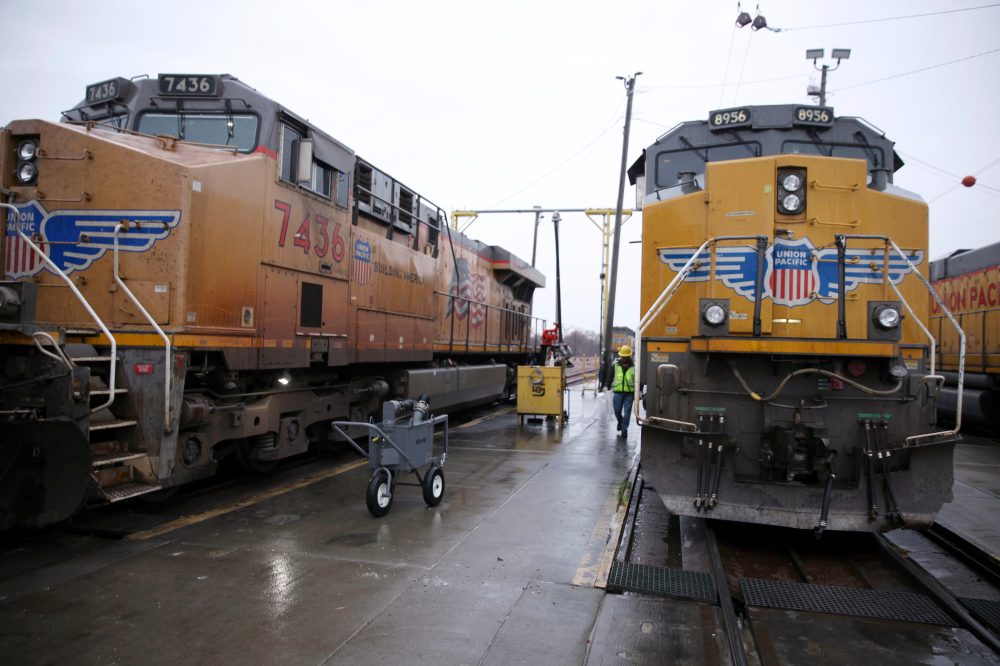

OMAHA, Neb. — Union Pacific has filed a revised application with federal regulators for its massive $85 billion takeover of Norfolk Southern railroad, hoping the second attempt will convince officials that the deal benefits the nation.
The U.S. Surface Transportation Board turned down Union Pacific’s first proposal, demanding additional information about how the merger would impact competition among the five remaining major freight rail companies and affect customers.
According to Union Pacific CEO Jim Vena, the updated application presents an even more compelling argument for the merger’s advantages. He believes the deal would reduce shipping times by one to two days for many deliveries since cargo wouldn’t need to transfer between different railroads in the nation’s center. The Omaha-based company estimates the merger could move 2.1 million truck loads from highways to rail transport.
However, the STB implemented strict standards for major railroad consolidations around 2000 after previous mergers created freight bottlenecks and extended disruptions as companies struggled to combine their operations. Union Pacific must now prove this transaction will boost competition rather than limit it.
The agreement contains a clause allowing Union Pacific to potentially abandon the deal if the STB demands concessions exceeding $750 million, though such requirements wouldn’t automatically kill the merger, according to documents filed Thursday along with their merger contract.
The current railroad landscape has Norfolk Southern and CSX operating in the eastern United States, while Union Pacific and BNSF handle western regions. Two major Canadian railways compete where possible, with tracks spanning Canada and extending into the U.S. and Mexico.
A combined Union Pacific would likely control approximately 40% of national freight, though the company notes that BNSF currently handles a similar portion. Railroad officials argue the deal would simply change which company leads the market without significantly altering competitive dynamics.
Rival railroads BNSF and CPKC formed a new coalition Wednesday, expressing concerns that the merger could harm shippers and ultimately consumers through higher rates for companies with limited alternatives to rail transportation. The coalition includes trade organizations representing chemical and agricultural shippers, plus unions for engineers and track maintenance crews.
“This did not begin with a customer asking for a UP-NS merger to happen,” BNSF CEO Katie Farmer said. “It’s driven by Wall Street on the promise of a big shareholder payout. It will eliminate competition, raise costs for consumers, and destabilize the supply chain that powers the American economy.”
Despite opposition, the largest rail union and hundreds of shipping companies support the deal, which would reduce America’s major freight railroads to five.
Union Pacific has guaranteed employment for life to every union worker employed by either company when the merger occurs, though workforce numbers could still decline through natural attrition if shipping volumes decrease. The company expressed optimism Thursday, forecasting more than 1,200 new positions by the third year following completion to manage increased freight volumes.
This represents an increase from the previously projected 900 new jobs. Updated traffic analysis from all major freight railroads convinced executives that greater job growth is probable.
Should the STB approve this new application, regulators will likely spend over a year examining every element of the proposed deal.