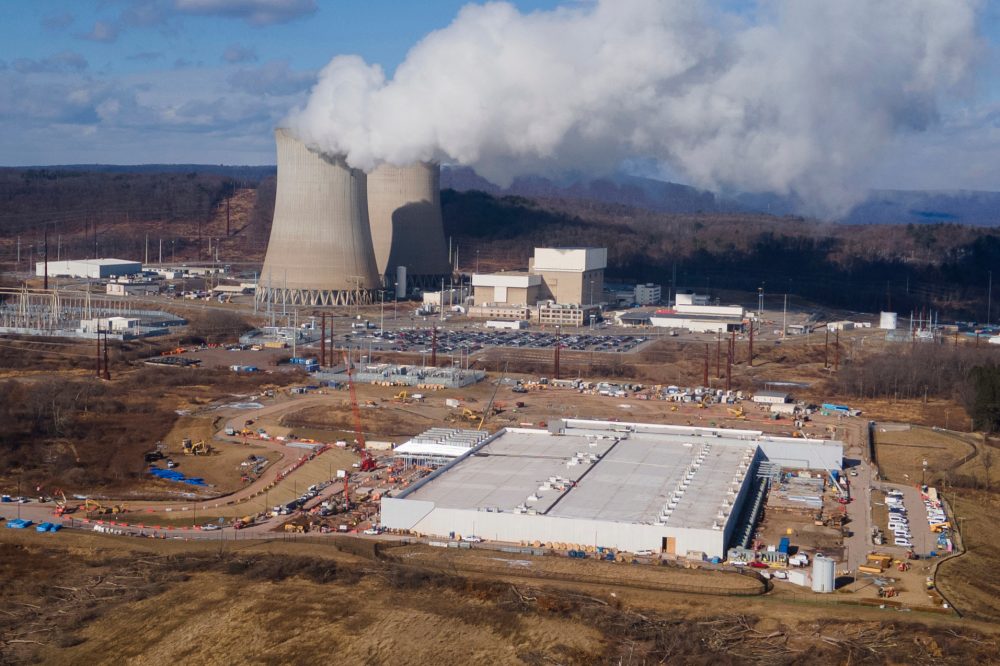

HARRISBURG, Pa. — Construction labor unions, traditionally representing working-class Americans, have formed powerful partnerships with some of the world’s wealthiest technology corporations as the nation builds its artificial intelligence infrastructure.
Union workers are handling construction on numerous large-scale data center developments while rushing to train new apprentices to meet surging demand.
These labor organizations have become advocates for technology companies and supportive government leaders, promoting the message that America faces a crucial national security competition with China over artificial intelligence dominance.
Labor groups serve as prominent supporters helping overcome strong community resistance and hostile congressional and state legislation, often joining forces with traditional Republican business interests and putting Democrats in difficult positions between unions and progressive activists seeking stricter regulations.
Union representatives have aggressively responded to data center criticisms in ways that technology executives and development companies typically avoid, boldly addressing concerns about power and water shortages, increasing utility costs, and noise or quality-of-life issues.
“When people say, you know, ‘data centers are the root of all evil,’ we’re just saying, ‘look, they do create a hell of a lot of construction jobs, which we live and work in your communities,’” said Rob Bair, president of the Pennsylvania Building and Construction Trades Council.
Rather than “being just a blunt ‘no,’” Bair said, communities should figure out what they need and ask the tech companies for it — such as improvements to the project’s plans or millions of dollars for local schools. “If you don’t ask, you’re never gonna get,” he said.
As data center development speeds up, unions are expanding training facilities and experiencing membership growth at rates many union leaders have never witnessed.
Labor organizations across multiple states report dramatically increasing work hours, apprentice programs doubling in enrollment, and training centers undergoing expansions expecting additional projects ahead.
Data centers account for at least 40% of work hours completed by Columbus-Central Ohio Building and Construction Trades Council members, estimated top official Dorsey Hager. The figure reaches at least 50% for International Brotherhood of Electrical Workers Local 26 in metropolitan Washington, D.C., according to spokesperson Don Slaiman.
North America’s Building Trades Unions announced reaching record membership and apprentice numbers in 2025.
Organization president Sean McGarvey compared current conditions to building trades expansion during the 1950s. He credits today’s growth to data centers, power plants, and former President Joe Biden’s legislation subsidizing semiconductor and electric vehicle battery plant construction, energy efficiency projects, and power grid improvements.
Data centers’ massive energy requirements are triggering power plant construction growth and providing renewed opportunities for unions whose members also construct and maintain boilers, ductwork, pipelines, and other power infrastructure.
Boilermakers Local 154, whose members witnessed power plant closures in southwestern Pennsylvania, shifted from recruiting zero apprentices over four years to assembling a class exceeding 200 — with needs for more, according to union official Shawn Steffee.
Technology companies say they must train hundreds of thousands additional skilled trade workers. They’re investing tens of millions in training programs, including partnerships with unions they employ for multibillion-dollar construction projects.
“Across the country, highly skilled union construction workers are laying the foundation for the AI economy,” Sam Altman, co-founder and CEO of OpenAI, said in a joint statement in March with McGarvey’s organization.
Google reported most labor building its data centers is unionized, highlighting a $10 million grant to a union-supported electricians training program expected to expand the electrician workforce pipeline by 70%.
Mark McManus, general president of the United Association of Union Plumbers and Pipefitters, whose members handle pipelines, data centers, and power plants, acknowledged criticism that organized labor is partnering with the world’s wealthiest, most powerful corporations.
However, he dismissed such criticism as impractical.
“If we chose as a union to have a moratorium on building the data centers because we didn’t believe it was right for America, the data centers would still be getting built,” McManus said. “They’re not stopping because of organized labor.”
His union maintains strong technology company relationships, achieves record membership levels, and based on internal surveys, has members working on over 90% of United States data center projects.
“That’s a market share that we don’t have in a lot of other industries,” McManus said. “So it’s pretty near and dear to us.”
Determining exact union involvement in data center projects remains challenging. An Associated General Contractors of America survey from late last year indicated data center construction labor composition likely matches commercial construction makeup, approximately one-third union, according to an AGC spokesperson.
National unions have secured labor agreements for major developments, including an Oracle and OpenAI Stargate campus in Michigan and the “Project Blue” data center campus in Arizona, with additional agreements under development.
When Gov. Josh Shapiro joined Amazon executives announcing the technology giant’s $20 billion investment in two eastern Pennsylvania data center projects, Bair appeared alongside them.
“This is really unique, what we’re building here in this commonwealth. People coming together with common purpose to get stuff done,” Shapiro said.
In state legislatures, unions have opposed Maine’s since-vetoed statewide data center moratorium proposal; standards proposed in Illinois, including requiring data centers to provide their own power; and ending Virginia’s sales tax exemption that helped establish it as the world’s largest data center hub.
Pennsylvania state Sen. Katie Muth said collecting fellow Democratic support for her data center regulation legislation has proven difficult when competing against union-supported legislation she considers insufficient.
“The unions don’t want to promote anything that would impede data center development,” Muth said.
Union representatives have attended crowded council meetings in municipal buildings from St. Louis to Spring City, Pennsylvania.
Sometimes their presence creates tension.
Addressing Joliet, Illinois City Council, Alicia Morales complained that union members — seated in front rows holding “vote yes for union jobs” signs — had been disrespectful and “bullied a lot of people” entering the meeting.
Sometimes union representatives are the only supporters speaking favorably about projects in packed municipal meeting rooms.
“I just want to commend you guys, thanks for being the adults in the room,” Chuck Curry, president of Ironworkers Local 395, told Hobart, Indiana City Council members at a January meeting regarding an Amazon data center. “Knowing the tax structure, knowing business, that most of the people here don’t know.”