
Financial experts are sounding alarms that investors may be caught off-guard by a looming oil crisis that could see crude prices double from current levels, as the window for preparation rapidly narrows.
While markets have been buoyed by artificial intelligence sector gains that pushed the S&P 500 to new record highs on Thursday, analysts warn that the real energy crisis is developing in physical oil markets rather than electronic trading platforms.
The disconnect between perception and reality has become stark. Physical crude oil – actual barrels that change hands rather than paper contracts – now costs approximately $130 per barrel, marking a dramatic 70% increase from February levels across major grades including North Sea Forties, Angolan Cabinda, and Norwegian Troll.
This represents significantly higher energy costs than suggested by Brent crude futures, which trade around $110 per barrel – a 50% jump from late February. Future contracts for delivery in one year remain above $80 per barrel, up 20% from pre-conflict levels.
“The physical markets reflect the reality on the ground and the futures market reflects more perceptions and hopes,” explained Tamas Varga, an analyst with energy broker PVM Oil Associates.
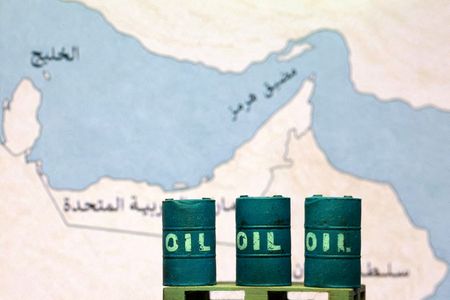
“One might say that physical markets are the true reflection of actually what’s happening around the Strait of Hormuz,” Varga added.
The conflict has effectively blocked the Strait of Hormuz, a critical waterway that normally handles 20% of global energy shipments. Vitol, the world’s largest oil trading company, projects that 1 billion barrels of supply could vanish before markets stabilize.
Fatih Birol, who leads the International Energy Agency, stated in April that current oil prices fail to accurately represent the severity of the situation and warned that the world should brace for substantially higher costs.
According to Frederique Carrier, head of investment strategy at RBC Wealth Management, her firm’s chief economist uses a guideline that oil shocks must persist for three to six months to create lasting inflationary pressure.
“And we’re not quite there in that window – we (will be) soon,” Carrier noted, explaining that her firm maintains a neutral stance on equities while favoring commodity-related investments like shipping and warehousing.
The severity of potential scenarios has prompted oil traders to test their portfolios against crude prices reaching $200 to $300, according to Gunvor Group executive Jeff Webster, who spoke at the FT Global Commodities Summit in April.
“The idea that it’s definitely going to be stagflation, or it’s going to be fine. That’s the bit that we’re finding a little bit surprising,” said Andrew Chorlton, Chief Investment Officer for public fixed income at M&G, referencing the dangerous combination of high inflation and sluggish economic growth.
“That seems a little complacent,” Chorlton observed.
He described adopting a “more tactical” approach to fixed income investments, focusing on differences between countries and government bond yield patterns.
Inflation expectations among consumers are rising alongside market-based indicators such as inflation swaps, which suggest investors anticipate U.S. inflation around 3.53% within one year and approximately 2.75% over five years – both exceeding the Federal Reserve’s 2% goal.
These projections stood closer to 2.4% in February before the conflict began, according to LSEG data. Similar patterns are emerging across the eurozone and United Kingdom.
Laura Cooper, global investment strategist at Nuveen, said her firm continues holding AI technology positions due to their profitability while balancing exposure through “dividend growers,” infrastructure, and tangible assets including real estate and gold mining companies as protection against various risks.
Despite potential disruptions, markets typically adjust to associated risks over time as supply chains adapt, volatility decreases, and investors refocus on major long-term developments.
“You won’t know it’s a tipping point till the market reacts to it,” said Paras Gupta, who oversees discretionary portfolios for ultra-high-net-worth clients in Asia for UBP in Singapore.
“We just have to wait and see and be nimble. Everybody has one finger on the trigger,” Gupta added.
Analysts suggest the greatest risk from the Iran crisis involves potential shifts in fundamental long-term themes. Over the past 18 months, the Trump administration has disrupted global trade and international relationships, creating unprecedented uncertainty about America’s dependability as an economic and security ally.
“This is about much more than when the war will be over, but rather about how the ‘Rupture’ is playing out – shifting policy as well as public attitudes,” explained Tina Fordham, founder of political strategy consultancy Fordham Global.
“By the time geopolitical risks make landfall and hit financial markets, it is typically too late to mitigate them,” Fordham warned.