Swiss commodities giant Glencore announced Thursday that its copper mining operations delivered a substantial 19% increase during the first three months of the year, with the company’s trading arm positioned to surpass annual profit projections.
The mining and trading company extracted 199,600 metric tons of copper between January and March, compared to 167,900 tons during the same period last year. This boost came from enhanced ore quality at African mining facilities and increased production at the Antamina operation in Peru.
However, cobalt extraction dropped by 39% during the quarter as the company focused resources on copper mining at facilities in the Democratic Republic of Congo due to government-imposed export limitations, according to company officials.
The surge in copper demand reflects the metal’s essential role in electric vehicle manufacturing, charging stations, and electrical grid infrastructure. Cobalt serves as a crucial component in the lithium-ion batteries that power electric cars and electronic devices.
Despite facing operational difficulties and shutting down two Australian mining facilities that had exhausted their profitable reserves, Glencore kept its 2026 production targets unchanged.
Company CEO Gary Nagle noted that conflicts in Iran had minimal effects on first-quarter operations, though rising costs for diesel fuel and sulphuric acid were creating financial pressure.
Nevertheless, Nagle explained that improved commodity prices would more than compensate for these increased expenses and help boost profit margins.
The company projects its trading division will generate earnings before interest and taxes between $2.3 billion and $3.5 billion annually.
The German athletic apparel company Puma announced Thursday that its first quarter operating earnings exceeded Wall Street forecasts, driven by successful inventory reduction efforts and decreased operational costs.
The company’s earnings before interest and taxes climbed 19.6% to reach 51.9 million euros ($60.53 million), surpassing the 43 million euro estimate from analysts surveyed by the company.
Stock levels dropped 8.6% to 1.9 billion euros compared to 2.1 billion euros during the same three-month period last year, according to company reports. This reduction resulted from decreased purchasing volumes as the company anticipates lower sales figures for the current year.
“We have managed to reduce our inventory levels faster than planned, streamlined our product portfolio and addressed operational inefficiencies,” CEO Arthur Hoeld said in a statement.
The sportswear manufacturer also revealed that Mark Langer will assume the role of chief financial officer starting Friday. This follows a mutual decision between the company and current CFO Markus Neubrand for him to resign from his position on Thursday.
Investment giants are placing massive bets on a sustained rally in mining and metals, pouring money into the sector at the fastest rate seen in years, according to new data from London.
Fund managers say the surge is fueled by artificial intelligence infrastructure demands, increased defense spending, and investors moving away from overvalued technology stocks.
The numbers tell a dramatic story: Assets managed in mining exchange-traded funds skyrocketed to $87.4 billion by March 31, more than doubling from $37 billion just one year prior, according to research firm ETFGI data compiled for Reuters.
Energy, oil, gas and agriculture sectors have similarly drawn substantial investment flows, representing what analysts call one of the most dramatic shifts toward physical assets in recent memory.
During the first quarter alone, investors pumped $8.24 billion into mining investments, marking a stunning $10.8 billion reversal from the same period in 2025 when President Donald Trump’s sweeping tariff announcements sparked $2.52 billion in outflows.
BlackRock portfolio manager Evy Hambro described the trend as “the early stages of a commodity supercycle,” telling Reuters that capital is beginning to rotate from high-priced tech stocks into hard assets.
The tech sector’s struggles are evident: Morningstar’s U.S. Technology Index dropped 9% in the first quarter, while shares of mining giants BHP and Rio Tinto both reached all-time highs this year.
“The material intensity of GDP is rising,” Hambro explained, citing massive capital investments in electrical grid infrastructure, data centers, electric vehicles and charging networks.
This cycle differs significantly from China’s urbanization boom of the 2000s, Hambro noted, because current demand is “much more robust and resilient” due to global diversification across artificial intelligence, electrification and defense sectors.
However, the dramatic shift brings heightened risks of volatile price swings, as metals markets remain relatively small compared to global stocks and bonds, making them more susceptible to supply chain disruptions in mining, refining and transportation.
Fidelity’s Taosha Wang echoed the supercycle assessment, stating that a mining and energy-focused boom has already begun as the Iran conflict pushes governments to prioritize supply chain security.
Investment flows reveal a clear preference for industrial metals over traditional safe havens. Copper funds attracted $198 million in March, while gold’s recent rally gave way to profit-taking. The VanEck Gold Miners ETF alone shed $710 million last month, though it remains up nearly $1 billion year-to-date.
The gold pullback during active geopolitical tensions is particularly noteworthy, investors observe. Rather than seeking refuge in traditional safe assets, markets appear to be wagering that the Iran crisis will trigger real-economy responses, with energy security and infrastructure investments requiring copper, steel, and rare earth elements.
Oil and gas funds received nearly $6 billion in net flows during the first quarter, according to ETFGI data, reinforcing the theory that investors are positioning for infrastructure spending increases.
Some portfolio managers favor diversified mining companies like BHP and Rio Tinto, positioned to benefit from multiple demand drivers.
“Copper is very much in demand, aluminum very much in demand, even more so now, as the Iran crisis unfolds,” said Anix Vyas, portfolio manager at Harding Loevner, noting that Rio Tinto’s holdings in both metals position it to benefit from surging demand from data centers and industrial applications.
Vyas characterized the shift as investors abandoning software companies vulnerable to AI disruption in favor of companies with more sustainable competitive advantages, particularly miners controlling critical mineral resources.
The relatively modest size of metals futures markets means heavy investment inflows can amplify volatility even while broader upward trends continue.
Trading volumes for metals futures including copper and aluminum on the London Metal Exchange totaled $21 trillion last year, while CME gold futures exceeded $25 trillion. These figures pale compared to $85 trillion in Nasdaq-100 futures and over $135 trillion in S&P 500 futures.
The dramatic year-over-year swing in ETF mining flows illustrates how rapidly sentiment can change and how vulnerable these markets remain to sudden reversals.
Mining represents only a small fraction of global stock markets, with the top five mining companies comprising just 0.4% of the MSCI ACWI Index versus 16.8% for the leading five technology companies. Metals and mining products account for merely 0.57% of total equity ETF market share.
Major mining companies’ shares currently trade at 7 to 8 times EV/EBITDA, well below the 14 times multiples seen during the 2008-2010 boom, suggesting substantial upside potential if the supercycle materializes.
“Copper is at the intersection of everything and critically undersupplied. There is no doubt in my mind that copper prices could double or triple over the next decade and owning copper producers will deliver multiples of the spot price growth,” said Charlie Aitken, group investment director at Australia’s Regal Partners, which maintains overweight positions in mining and metals and managed A$21 billion ($15.05 billion) at the end of March.
While sector investments offer inflation protection, they could also accelerate price increases, potentially compounding inflation pressures from the Iran war’s impact on energy markets and posing risks to global economic growth, investors warned.
The world’s second-largest steel producer, ArcelorMittal, exceeded financial expectations in its first-quarter results released Thursday, driven by rising steel prices and strengthened operations in North America.
The Luxembourg-headquartered corporation announced core earnings of $1.68 billion for the quarter, surpassing the $1.65 billion forecast by financial analysts, according to LSEG data.
“The fundamentals of the business have improved over the past three months, driven in particular by the favourable structural reset in the European policy environment,” CEO Aditya Mittal said in the earnings statement.
Mittal noted that first-quarter results remained strong despite the “unsettled backdrop” in the Middle East.
The steel industry appears poised for recovery as European Union pricing has climbed more rapidly than anticipated in recent months, thanks to policy shifts and rising energy costs.
Following years of depressed pricing, new European Commission measures including a carbon tax on high-emission products and trade policies designed to cut imports by half starting in July have contributed to a 22% increase in European hot rolled coil prices over the past six months.
Reduced import competition will boost capacity utilization rates, returning profitability and capital returns to sustainable levels, ArcelorMittal stated. The company is preparing to reactivate dormant blast furnaces in France and Poland.
The company indicated that first-quarter results did not yet capture the full benefit of the improved pricing environment, with those advantages expected to materialize beginning in the second quarter of 2026.
Industry analysts anticipate that European steel manufacturers have successfully transferred higher energy costs to their customers. Companies are also benefiting as clients increasingly source from domestic suppliers to avoid supply chain disruptions linked to Middle East conflicts.
Oil prices experienced a dramatic surge Thursday morning, with Brent crude climbing above $125 per barrel as concerns mount over the prolonged Iran conflict and its impact on global energy supplies.
June delivery Brent crude spiked 6.2% to reach $125.36, while July contracts increased 3.1% to $113.85. Meanwhile, U.S. benchmark crude gained 2.3% to $109.38 per barrel.
The dramatic price increase represents a significant jump from pre-conflict levels, when Brent crude was trading near $70 per barrel before hostilities began in late February.
Now in its ninth week, the Iran conflict continues without any clear resolution in sight. The ongoing U.S. blockade of Iranian ports and the closure of the Strait of Hormuz have contributed to supply concerns that are driving prices upward. Thursday’s reports of potential escalation by U.S. President Donald Trump further dampened hopes for a swift resolution.
“The breakdown of talks between the U.S. and Iran, along with President Trump reportedly rejecting Iran’s proposal for a reopening of the Strait of Hormuz, has the market losing hope for any quick resumption in oil flows,” ING Bank strategists Warren Patterson and Ewa Manthey wrote in a research note.
Global financial markets also felt the impact, with Asian stock exchanges declining following lackluster trading on Wall Street Wednesday.
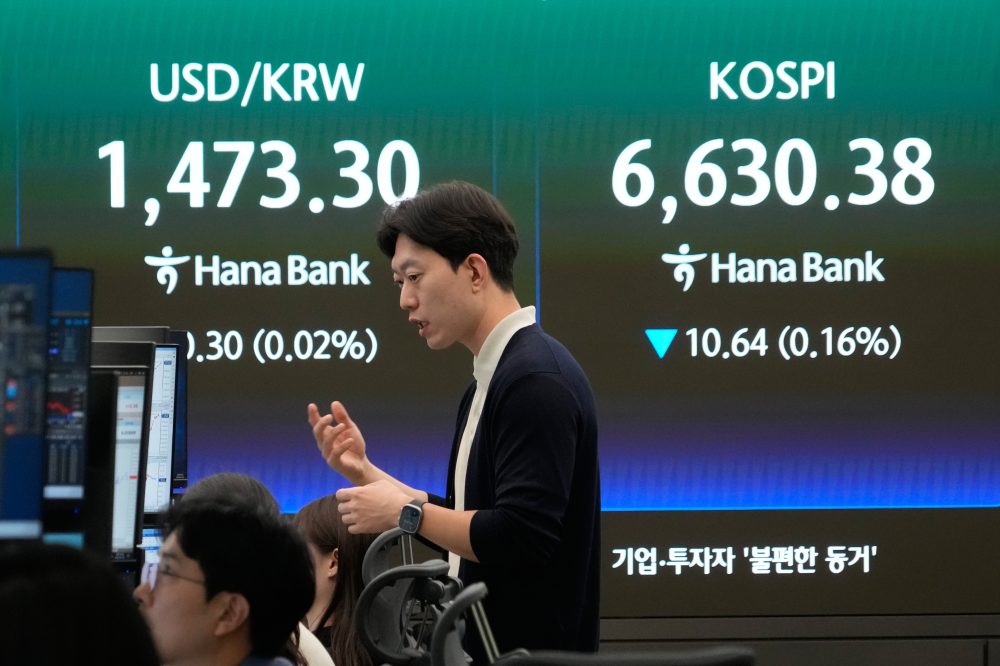
Japan’s Nikkei 225 dropped 1.6% to close at 58,967.07, while South Korea’s Kospi fell 1.1% to 6,615.51.
Hong Kong’s Hang Seng declined 1.3% to 25,772.50, though China’s Shanghai Composite managed a slight 0.1% gain to 4,109.99. Despite global energy market volatility caused by the Iran conflict, official data showed China’s manufacturing activity slowed modestly in April but remained in growth territory for the second consecutive month.
Australia’s S&P/ASX 200 fell 0.3% to 8,665.50.
Taiwan’s Taiex slipped 0.1% while India’s Sensex dropped 1.2%.
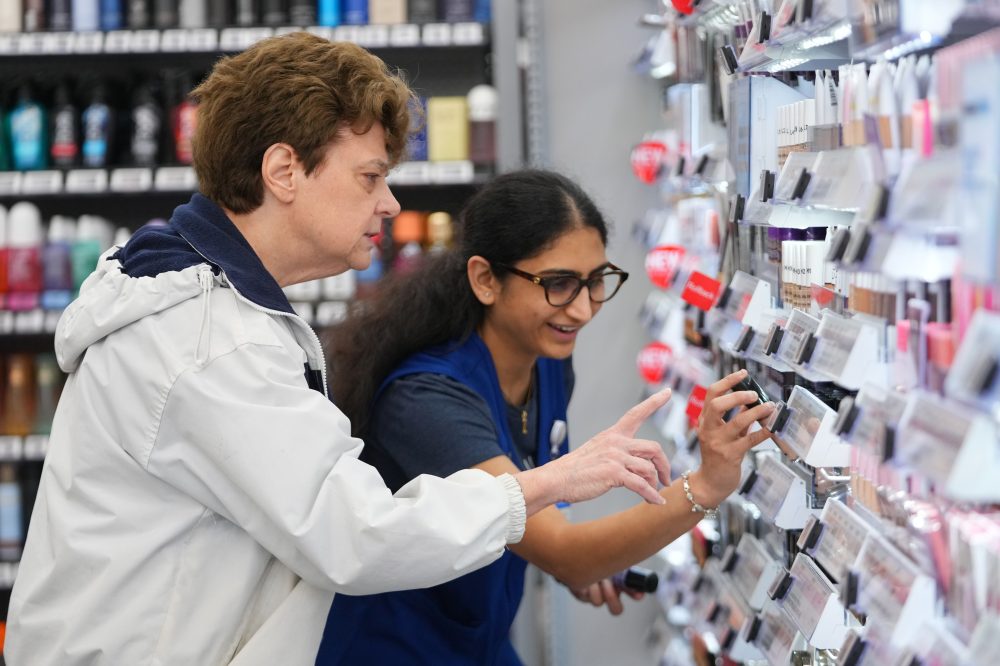
Shoppers at Walmart stores across the country are discovering a fresh approach to beauty shopping: dedicated specialists ready to provide personalized guidance on cosmetics and skincare products.
The retail giant is shifting away from its traditional self-service approach by placing knowledgeable beauty consultants throughout its cosmetics sections. These specialists can help customers find the perfect foundation match for their complexion or share insights about popular skincare products gaining traction on social media platforms like TikTok.
This initiative launched in 22 locations across Arkansas and Texas over recent months, with plans to expand to more than 400 of Walmart’s 4,600 U.S. locations before the year concludes.
The introduction of these “beauty experts” reflects Walmart’s strategy to capture more of the $129 billion American beauty and personal care industry. The company is competing directly with Target, Sephora, and traditional department stores by providing personalized service and engaging retail environments that encourage both in-person and digital shopping.
Last year, Walmart launched interactive sampling areas in 40 locations where customers could try products and consult with beauty advisors. This pilot “beauty bar” program has since expanded to hundreds of stores, according to Vinima Shekhar, who oversees beauty merchandising for Walmart’s domestic operations. The company’s plan to renovate 650 stores by year-end includes relocating beauty sections to store entrances and creating displays featuring social media-trending products.
“We’re not trying to be an Ulta or Sephora,” Shekhar explained to The Associated Press. “We have the breadth of assortment that no one else has. We have convenience that no one else has. What we also then want to do is layer on a level of service for both our associates and our customers: ‘Here’s what trending. Here’s what’s new.’”
While department stores and specialized beauty retailers have long employed cosmetics consultants, pharmacy chains like CVS and Walgreens introduced beauty specialists to many locations over the past ten years. Walmart’s entry into this space demonstrates how brick-and-mortar retailers are emphasizing personal service to differentiate themselves from online shopping sites and artificial intelligence chatbots.
The retailer has expanded its beauty inventory over the past year to include upscale brands such as French pharmacy skincare line La Roche Posay, Australian natural cosmetics brand Nude by Nature, and FHI Heat styling tools. These premium products carry higher price points, with some La Roche Posay sunscreens priced just below $40 for a 1.7-ounce bottle.
This beauty department overhaul supports Walmart’s broader effort to enhance its product selection and store atmosphere while attracting customers with higher disposable incomes. According to Shekhar, shoppers interested in premium products beyond basic skincare and hair essentials seek inspiration during their shopping experience.
Target revealed in early March its intention to broaden its luxury beauty offerings and deploy specially trained staff members this fall across 600 stores. These locations will feature a new Target Beauty Studio section that will partially replace existing in-store Ulta shops. The Target-Ulta partnership, which included Ulta beauty consultants in Target stores, concludes in August.
Enhanced customer service specialists may expand to other retail departments beyond beauty. Whitney Hunt, vice president of Walmart’s domestic operations, indicated the company is exploring the addition of electronics experts.
Target recently introduced a “baby boutique” experience in nearly 200 stores last month, featuring concierge services to help shoppers locate products from expectant parents’ registries.
Despite artificial intelligence’s potential impact on employment across various sectors, job postings for beauty experts and advisors have remained relatively steady from February 2020 through this month, according to Cory Stahle, an economist with Indeed’s research division. During the same timeframe, online postings for marketing and software development positions dropped by more than 20%, Indeed reported.
Beauty expert positions offered a median hourly wage of $19.54 in March, approximately $2 above the hourly rate for other retail positions, based on Indeed’s data. Walmart’s beauty experts can earn between $14 and $35 per hour depending on store location, which aligns closely with the $14 to $37 hourly range for all of Walmart’s hourly employees.
Walmart’s beauty consultants complete a full day of training at a company academy and receive continuous education on products, seasonal trends, and customer interaction. Unlike employees at department stores and specialty beauty chains, these advisors do not apply makeup on customers or provide makeover services.
The company provides digital resources to help advisors track their sales objectives, identify their beauty department’s bestselling brands, and compare their store’s performance with other Walmart locations, Hunt explained.
Helena Bacon, a 21-year-old University of Arkansas junior studying biology, described how last fall’s training enhanced her ability to assist customers. Previously, she worked in the pharmacy, health, and personal care section covering basic items like shampoos and toothpaste at a Fayetteville store, occasionally helping customers locate beauty products.
Bacon now comprehends product ingredients, can recommend flattering lipstick shades for different customers, and stays current with TikTok trends.
“I was kind of everywhere before,” she explained. “But now that I’m just in my section, if someone does come up to me and asks for a recommendation for something, … I could go over with them into that section and say, ‘This what I know is good for the problem you’re trying to fix.’”
WASHINGTON – The nation’s economy probably gained speed during the first three months of the year as government spending rebounded following a damaging federal shutdown, though experts predict this improvement may be temporary as Middle East conflicts drive up fuel costs and strain family budgets.
The expected boost in the nation’s gross domestic product during this period would also stem from strong business investment in equipment, driven by artificial intelligence spending surges and data center construction supporting new technology.
However, the Commerce Department’s initial first-quarter GDP report scheduled for Thursday is anticipated to reveal that consumer spending continued to weaken even before the U.S.-Israeli conflict with Iran pushed average American gasoline prices above $4 per gallon.
“We remain in relatively slow growth mode, nothing exciting,” explained Brian Bethune, an economics professor at Boston College. “There’s nothing really to get a good fire going. There are some warm embers, but there is no fire out there.”
Economists surveyed by Reuters predict GDP expanded at a 2.3% annual rate during the quarter, with projections ranging from a 0.2% decline to 3.9% growth.
The survey concluded before Wednesday’s data revealed that non-defense capital goods orders excluding aircraft – a key indicator of business spending – surged 3.3% in March. This increase was somewhat offset by a significant expansion in the goods trade deficit due to imports, though some products were stored in business warehouses.
Economic expansion decelerated to just 0.5% during the October-December period. Reduced federal government spending cut 1.16 percentage points from growth, the largest such reduction since early 1994.
Economists anticipated a partial recovery, estimating that overall government spending contributed at least one full percentage point to GDP growth last quarter. They believe this moderate expansion rate would allow the Federal Reserve to maintain current interest rates, potentially through 2027, assuming no labor market deterioration.
The central bank on Wednesday maintained its key overnight interest rate between 3.50%-3.75%, citing growing inflation concerns.
“In the current environment they don’t need to do anything right now to support the labor market,” stated Gus Faucher, chief economist at PNC Financial. “They can keep rates where they are through the rest of 2026 and into 2027 until we get a better picture of what happens with the situation in Iran and energy prices and what’s happening with the labor market.”
Job creation averaged 68,000 positions monthly in the first quarter compared to 20,000 during the same period last year. The employment market has cooled considerably from 2023 and 2024, with some economists attributing this to President Donald Trump’s trade and immigration policies, which they say reduced both labor demand and worker supply.
The softer job market has slowed wage increases. Import taxes have raised prices on certain goods, though the impact on official inflation measurements has been relatively modest. Economists note that consumers have drawn on savings or reduced their saving rates to maintain spending levels, a pattern they say cannot persist indefinitely. The savings rate stood at 4.0% in February.
Consumer spending, representing over two-thirds of economic activity, is expected to have slowed further from the fourth quarter’s 1.9% growth rate. A Reuters survey projected the Personal Consumption Expenditures Price Index rose at a 3.8% rate last quarter after increasing 2.9% in the fourth quarter. This index serves as one of the Federal Reserve’s key inflation measures for its 2% target.
Higher inflation could diminish some expected benefits from tax reductions, economists cautioned. The boost from larger tax refunds is expected to disappear soon, leading to what they predict will be weaker spending this year.
“The saving rate went down to support consumer spending and I don’t think it’s going to go down any further,” said Boston College’s Bethune. “With the increase in inflation, real wages are pretty much flat… There’s nothing here that is going to propel consumer spending meaningfully.”
Double-digit growth is expected for business equipment spending, compensating for reduced consumer activity. However, beyond AI-related investments, business spending was likely less impressive due to continued weakness in non-residential construction like factories.
The AI investment surge is increasing imports, expanding the trade deficit that probably reduced GDP growth last quarter. With some imports accumulating in warehouses due to slower consumer spending, the negative impact was likely reduced by inventory buildup.
Housing investment is expected to have declined for a fifth consecutive quarter as elevated mortgage rates continue hampering the real estate market. Economists predict Middle East conflicts will burden economic growth starting in the second quarter.
“We see the conflict’s drag on the economy peaking in the second quarter, with consumer discretionary spending among the most adversely impacted,” said Oren Klachkin, financial market economist at Nationwide. “There is a risk the damage could spill over into the second half of the year.”
Samsung Electronics announced Thursday that the company anticipates securing additional contracts for manufacturing advanced logic chips through its cutting-edge 2 nanometer production process, revealing ongoing discussions with major technology firms about potential foundry agreements.
The South Korean technology giant, which faces competition from TSMC and Intel in the contract semiconductor manufacturing sector, disclosed it is conducting an initial assessment for constructing a second manufacturing facility in Taylor, Texas, as part of ongoing customer discussions about possible future orders.
According to Samsung, the company remains on schedule to begin full-scale production at its initial Taylor facility in 2027, following the start of operations later this year.
The announcement comes after Samsung landed a significant $16.5 billion contract from Tesla last year to manufacture logic chips. Reports from Korean media outlets in January indicated Samsung was engaged in discussions with Qualcomm and additional clients concerning the 2 nanometer manufacturing process.
Defense contractor L3Harris announced Wednesday that it has quietly filed preliminary paperwork with federal regulators for a potential public stock offering of its missile solutions division.
The company has not yet disclosed how many shares would be sold or what price range investors might expect for the proposed stock offering.
This development follows L3Harris’s January announcement outlining plans to spin off its expanding rocket motor operations into a standalone company, supported by $1 billion in convertible securities from the U.S. government.
According to the defense contractor’s earlier statements, those government securities would automatically transform into regular stock ownership when the new company launches its public trading in 2026.
The federal government’s financial backing is designed to ensure the Pentagon maintains reliable access to essential motors used in various missile systems, including Tomahawk cruise missiles and Patriot defense interceptors.
During a January briefing with reporters, L3Harris Chief Executive Chris Kubasik projected that the standalone missile business would experience annual revenue increases in the mid-to-high teen percentage range.
Global oil prices have retreated from unprecedented peaks as refineries worldwide adjust to supply disruptions by reducing production and utilizing stockpiled reserves, according to industry experts and traders.
The conflict between the U.S.-Israel coalition and Iran, which started February 28, has resulted in the virtual shutdown of the Strait of Hormuz shipping lane. Citi analysts report this has eliminated access to 500 million barrels of crude oil and processed petroleum products from global markets, initially triggering panic purchases and price spikes.
Oil companies worldwide scrambled to find alternative supplies, driving up costs for crude from Africa, the United States, and Brazil to unprecedented levels exceeding $30 per barrel above benchmark prices earlier this month.
Now, those premiums are declining as refineries choose to decrease production while focusing on previously restricted oil sources. Major Chinese energy companies Sinopec and PetroChina are accessing commercial stockpiles and offering crude on the open market.
“Asian demand is starting to ease as refiners cut runs, shifting the market away from panic buying and toward more selective procurement, with Russian barrels dominating incremental demand,” Kpler analysts said in a note.
“This is feeding through into the Atlantic Basin, where weaker Asian pull and rising supply are putting pressure on medium sour and light sweet differentials.”
Although strategic reserve releases and inventory reductions provide some relief, they cannot compensate for the 15-million-barrel daily shortfall from Middle Eastern crude sources. Extended disruption from the Hormuz closure will maintain upward pressure on pricing.
June Goh, a senior analyst at Sparta Commodities, said the correction brings prices back to “affordable” levels.
“The physical crude shortage in the market is still there, so premiums would remain elevated versus pre-crisis level. However, it should not reach the panicked record levels that we saw previously,” she said.
Sources familiar with the situation indicate Sinopec will obtain approximately 1 million barrels daily from reserves between April and June, enabling its trading division Unipec to market some West African, Brazilian and Canadian shipments this month.
CNOOC and PetroChina have also marketed Canadian crude shipped through the Trans Mountain pipeline system during this period.
Canada’s Access Western Blend transported via Trans Mountain commanded a record $8 per barrel premium to ICE Brent for July Asian deliveries earlier this month, but that margin decreased to roughly $4 last week, trading sources reported.
European and West African crude premiums have similarly weakened, with North Sea Ekofisk offered at under $10 per barrel above dated Brent Tuesday, representing a 50% decline from two weeks prior. African varieties including Forcados, Bonny Light and Qua Iboe dropped to $7.75 per barrel premiums from over $10 in mid-April.
Brazilian crude premiums have also fallen after reaching beyond $30 per barrel earlier this month, market traders confirmed.
Taiwan’s Formosa Petrochemical purchased 2 million barrels of Brazilian crude at $8-$9 per barrel premiums to dated Brent on a delivered basis, while Indian refineries acquired Brazilian crude at nearly $5 premiums to dated Brent.
Middle Eastern crude premiums that reached records in March have declined significantly this month and may lead Saudi Aramco to reduce contract prices for June.
U.S. WTI Midland crude premiums for Asian delivery have moderated from record levels near $40 per barrel above Dubai pricing, with recent Japanese transactions at $20-$22 for August delivery, matching levels from a month ago.
In European markets, WTI traded at $7.40 above dated Brent Tuesday, compared to over $22 per barrel two weeks earlier.
Price premiums are also declining as consumers reduce consumption across various petroleum products including petrochemical naphtha, cooking gas, trucking diesel, and marine fuel oil.
Morgan Stanley projects demand reduction could reach 4.3 million barrels daily in the second quarter, potentially causing an 800,000 barrel daily decrease in total 2026 oil consumption, marking the first demand decline since the COVID-19 pandemic.
Technology stocks performed strongly across Asian markets Thursday following a wave of encouraging corporate earnings, though climbing oil costs and increasingly aggressive central bank stances on inflation sent bond values plummeting.
Market participants expressed concern that both the European Central Bank and Bank of England would signal higher interest rates later Thursday, following a Federal Reserve decision where three members voted to abandon the central bank’s accommodative stance in what marked the most split vote since 1992.
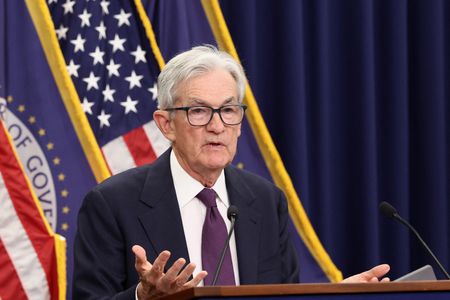
Departing Fed Chair Jerome Powell announced his intention to remain as a board governor temporarily to protect the institution’s autonomy while his replacement Kevin Warsh, selected by President Donald Trump who favors reduced rates, advances through the confirmation process.
Financial markets quickly eliminated expectations for Fed rate reductions this year, with approximately equal odds now placed on a rate increase by next spring. Treasury yields climbed to their highest point in a month while the dollar strengthened across the board, surpassing 160 yen.
The recent oil price surge raised additional alarm, with Brent crude futures soaring 6% overnight to reach a four-year peak of $122.53 per barrel amid concerns over potential prolonged closure of the Strait of Hormuz.
“Macroeconomic risks are significant at this juncture, but stock market bulls hope a rosy path for artificial intelligence can continue to offset cyclical weakness,” said Jose Torres, senior economist at Interactive Brokers.
“If earnings, capital expenditures and outlooks are buoyant, investors could remain sanguine even as the threat of a slowdown in overall activity, loftier borrowing costs and widening credit spreads raise eyebrows,” Torres added.
Nasdaq futures advanced 1% in Asian trading after Google’s parent company Alphabet exceeded earnings expectations, driving its stock price up 7% in after-hours trading. Strong performance from Microsoft and Amazon also boosted optimism ahead of Apple’s upcoming results.
Meta Platforms faced disappointment as the company increased its annual capital spending projections to invest additional billions in artificial intelligence infrastructure, causing its stock to decline 7%.
The MSCI Asia-Pacific index excluding Japan remained unchanged Thursday but maintained course for an impressive 16% monthly gain. Japan’s Nikkei dropped 1% while still posting a comparable 16% April increase.
South Korea’s KOSPI reached a new record high after Samsung Electronics reported an eight-fold jump in operating profit driven by strong AI demand, before encountering profit-taking activity.
Chinese blue-chip stocks edged higher by 0.2% while Hong Kong’s Hang Seng index declined 0.3%.
Global bond markets suffered significant losses Thursday as oil price increases and Fed hawkishness triggered a Treasury selloff. Benchmark U.S. Treasury yields rose 1 basis point to 4.4237%, after jumping 6 basis points overnight to 4.434%, marking the highest level since late March.
Japanese 10-year government bond yields increased 4 basis points to 2.500%, reaching their highest point since June 1997. Australian 10-year government bond yields surged 6 basis points to 5.066%.
The dollar strengthened alongside rising yields, hovering near its highest level in over two weeks. It remained at 160.26 yen after climbing 0.4% overnight to 160.48 yen, approaching levels that have historically prompted intervention.
The Japanese currency has declined more than 2% since conflict began February 28, with investors establishing their largest short yen position in nearly two years, betting that neither rate increases nor intervention threats will support the currency.
The US dollar maintained strength near two-week highs on Friday following a more aggressive stance from Federal Reserve officials regarding inflation concerns, while the Japanese yen’s decline past the 160 mark against the dollar has heightened speculation about possible intervention.
Federal Reserve Chair Jerome Powell concluded his tenure with interest rates remaining unchanged amid growing worries about rising prices. The central bank’s 8-4 vote to maintain current rates marked the most contentious decision since 1992, with three officials dissenting who believe the Fed should abandon its accommodative messaging.
This more aggressive approach drove bond yields significantly upward. The two-year Treasury note yield, which generally reflects interest rate expectations, jumped to 3.928%, while the 10-year yield reached 4.421% — marking the highest levels for both since March 27.
Market participants have completely eliminated expectations for Fed rate cuts this year, with a 55% probability now assigned to a rate increase by April 2027, a dramatic jump from approximately 20% prior to the Fed’s announcement.
“The change in tone… the divisions within the Fed make it interesting. We are now starting to see some are getting worried about the inflationary impact that the Iran conflict has on the economy, and that obviously has consequences on easing bias that the Fed still technically has,” explained Rodrigo Catril, currency strategist at National Australia Bank in Sydney.
Rising oil prices have also contributed to market anxiety, with the dollar receiving support from both risk-averse sentiment and elevated US Treasury yields, Catril noted.
The dollar index remained stable at 98.852 after Wednesday’s 0.3% increase, staying close to its strongest position since April 13.
The euro was trading at $1.1689 while the British pound stood at $1.34877, with both currencies gaining roughly 0.1% during Asian trading sessions.
Both the Bank of England and European Central Bank are scheduled to meet later today, with investors closely monitoring their policy guidance as expectations mount that both institutions may be compelled to implement rate increases soon.
Meanwhile, stalled diplomatic efforts to address the Iran conflict have kept markets unsettled, with President Donald Trump consulting oil companies about potential strategies to minimize the impact of a possible extended US blockade of Iranian ports.
Energy prices have surged on concerns about sustained supply interruptions from the Middle East conflict, with Brent crude futures approaching their highest levels since June 2022.
The Australian dollar was valued at $0.71285, while the New Zealand dollar traded at $0.58394, both showing gains of approximately 0.2%.
Regarding Japan, the yen declined 0.1% to 160.16 per dollar, moving closer to levels that have historically prompted government intervention, despite the Bank of Japan indicating after Tuesday’s policy meeting that rate increases could occur in the coming months.
Japan’s currency has dropped more than 2% since the conflict began on February 28, with investors establishing the largest short yen positions in nearly two years, betting that neither rate hikes nor intervention threats will support the currency.
“While this brings the pair closer to intervention territory, the Ministry of Finance will be wary of firing its intervention bullets too early given Japan’s vulnerability as a large energy importer and the current stalemate in the Middle East,” analysts at IG noted.
Crude oil markets saw continued price increases Thursday as diplomatic negotiations to resolve the ongoing Middle East conflict between the United States, Israel and Iran have reached an impasse.
Brent crude futures for June delivery climbed $1.91 per barrel, representing a 1.62% increase to $119.94 as of early Thursday morning. This marked the ninth consecutive day of gains for the June contract, which was set to expire Thursday. The July contract reached $111.38, up 94 cents or 0.85%.
Meanwhile, U.S. West Texas Intermediate futures for June rose 63 cents to $107.51 per barrel, a 0.59% increase. This followed Wednesday’s 7% surge and represented gains in eight of the past nine trading sessions.
President Donald Trump held discussions Wednesday with representatives from oil companies regarding strategies to address the potential impact of a prolonged U.S. naval blockade of Iranian ports, according to a White House spokesperson. This development heightened market concerns about extended interruptions to global oil supplies.
“Prospects for any near-term resolution to the Iran conflict or a reopening of the Strait of Hormuz remain dim,” market analyst Tony Sycamore from IG stated in his analysis.
The presidential meeting with energy sector leaders occurred following the breakdown of diplomatic efforts to end the conflict, which has resulted in thousands of casualties and created what industry experts describe as an unprecedented global energy supply crisis.
Iran has effectively shut down nearly all maritime traffic except its own vessels through the Strait of Hormuz, a critical passage for Middle Eastern energy exports, since U.S. and Israeli military operations against Iran commenced on February 28. The United States responded this month by implementing its own blockade of Iranian shipping.
Looking at production decisions, the OPEC+ alliance of oil-producing nations and their partners appears poised to approve a modest production increase of approximately 188,000 barrels daily during Sunday’s scheduled meeting, according to industry sources.
This gathering follows the United Arab Emirates’ departure from OPEC, which takes effect May 1 and is anticipated to weaken the organization’s influence over global oil pricing. While the UAE’s exit could potentially allow increased production once exports resume, market analysts believe this won’t significantly impact supply fundamentals this year given the Hormuz closure and other war-related production interruptions.
“Gulf countries, including the UAE, will take months to return to pre-war production volumes,” analysts from Wood Mackenzie explained in their market assessment.
The Australian Securities Exchange announced Thursday that it has selected internal executive Darren Yip to serve as temporary chief executive officer beginning May 29.
Yip, who became part of the ASX team in 2023 and currently oversees the company’s markets and listings division, will step into the role previously held by Managing Director and CEO Helen Lofthouse, who revealed her resignation plans in February.
The company indicated that Yip will guide ASX operations temporarily starting at the end of May while board members continue their search for a long-term chief executive.
“This appointment supports a planned process with ample time for handover activities in the coming month,” ASX said.
Following the announcement, the exchange operator’s stock value jumped by as much as 3.9% to reach A$60.080 in early trading, marking the highest level since September 24, 2025. The stock appeared headed for its best performance since April 9, based on current trading patterns.
Lofthouse stepped down in February following more than a decade with the exchange company. The organization did not provide specific reasons for her exit when it was announced.
The Australian stock exchange has encountered regulatory challenges in recent years due to various operational problems, including a corporate name confusion incident in August 2025 and a system failure affecting its announcements platform in early December.
Brazilian labor officials filed a significant legal action Wednesday targeting JBS, the world’s biggest meatpacking corporation, alleging the company purchased livestock from ranches operating under slavery-like working conditions.
The civil lawsuit, filed in a labor tribunal in Para state in northern Brazil, demands compensation of nearly 119 million reais (approximately $24 million), representing the complete value of business dealings between JBS and the problematic suppliers, according to prosecutors.
Court documents reveal that 53 workers were freed from ranches owned by seven cattle suppliers who conducted business with the meat processing giant from 2014 to 2025. These ranch owners appeared on Brazil’s government database of employers found guilty of subjecting employees to slavery-like working environments, prosecutors stated.
The legal filing accused JBS of displaying “a systematic pattern of negligence.” Company representatives have not yet provided a response to requests for comment.
Brazil leads global beef production, responsible for approximately 20% of worldwide output. The South American country has recently overtaken the United States, which now produces roughly 19% of the world’s beef supply, based on U.S. Department of Agriculture data.
Brazilian labor prosecutors emphasized in their statement that cattle ranching generates the largest number of worker rescues across the country and serves as a significant factor in Amazon rainforest destruction. Para state falls within the Amazon basin.
In March, the Office of the United States Trade Representative placed Brazil among 60 nations being examined for forced labor practices.
JBS holds the position as the globe’s largest meat processing corporation, valued at roughly $17 billion in market worth. The company runs facilities throughout the United States, including operations in Colorado, where employees conducted a three-week work stoppage earlier this year.
Woolworths, Australia’s largest grocery retailer, announced Thursday that its quarterly sales jumped 4.5%, surpassing what financial analysts had predicted for the company.
The retail giant generated A$18.10 billion (equivalent to $12.89 billion USD) in total sales during the 13-week period that concluded on April 5. This represents a significant increase from the A$17.31 billion recorded during the same timeframe last year.
Financial experts had anticipated the company would reach approximately A$17.98 billion in sales, according to Visible Alpha consensus estimates, making the actual results a pleasant surprise for investors.
Company officials attributed the strong performance to sustained positive trading patterns, particularly within Woolworths’ primary Australian Food division, which experienced accelerated growth throughout the quarter.
Microsoft’s latest quarterly earnings show the technology company’s substantial investments in artificial intelligence are beginning to deliver expected returns, as its cloud computing division posted growth figures that aligned with Wall Street forecasts.
The tech giant’s Azure cloud platform generated revenue increases of 40% during the first quarter of the year, meeting analyst projections compiled by research firm Visible Alpha.
These results may help calm investor concerns about whether Microsoft’s early advantage in artificial intelligence could be eroding due to slow business adoption of its Copilot 365 workplace assistant and its heavy dependence on OpenAI technology.
The performance figures could also support the company’s rationale for massive data center investments that have put pressure on cash flow, as major cloud computing companies are projected to invest over $600 billion in AI infrastructure during 2024.
Microsoft has been working to strengthen its market position by incorporating Anthropic’s technology into its cloud platform and Copilot products, responding to growing customer interest in Claude AI models.
This strategy led to a major business win this week when Microsoft announced its largest Copilot deployment ever, serving approximately 743,000 Accenture workers across most of the consulting firm’s global operations.
The company also restructured its partnership with OpenAI earlier this week, securing its 20% revenue share from the AI startup through 2030, regardless of future technological developments.
However, the updated agreement removes Microsoft’s exclusive rights to distribute OpenAI’s products through its cloud platform, as competition increases from Google parent company Alphabet and Amazon.
Amazon has already begun providing OpenAI’s newest models and programming tools through its own cloud services.
This change may actually benefit Microsoft by freeing up cloud computing capacity, which the company has cited as a constraint on revenue growth and used to justify its extensive infrastructure spending.
The substantial costs of these investments have prompted companies to seek expense reductions. Microsoft launched its first voluntary employee buyout program in over 50 years this month.
Similar cost-cutting measures have been implemented by Amazon and Meta, which have eliminated thousands of positions.
Meta Platforms, the company behind Facebook and Instagram, delivered first-quarter financial results on Wednesday that surpassed Wall Street projections, though the tech giant simultaneously raised its capital investment outlook for the coming year.
During the first three months of 2024, the social media company generated profits of $26.77 billion, translating to $10.44 per share – a substantial 61% increase from the $16.64 billion, or $6.43 per share, recorded during the corresponding period in 2023. Total revenue climbed 33% year-over-year to reach $56.31 billion. Wall Street analysts had anticipated earnings of $6.67 per share with revenues of $55.6 billion, according to FactSet Research data.
“We had a milestone quarter with strong momentum across our apps and the release of our first model from Meta Superintelligence Labs,” CEO Mark Zuckerberg said in a statement. “We’re on track to deliver personal superintelligence to billions of people.”
Looking ahead to the second quarter, Meta projects revenues will fall between $58 billion and $61 billion, which aligns closely with analyst predictions averaging $59.48 billion.
The company has revised its annual capital expenditure projections upward to a range of $125 billion to $145 billion, marking an increase from its earlier forecast of $115 billion to $135 billion. Meta attributed this adjustment to anticipated higher component costs and additional expenses related to data center operations.
During Meta’s previous spending forecast announcement at year-end, the company explained that increased investments in Meta Superintelligence Labs initiatives were driving the year-over-year growth. The company has since announced plans to eliminate approximately 10% of its staff – roughly 8,000 positions – while simultaneously expanding investments in artificial intelligence infrastructure and recruiting high-compensation AI specialists.
As of March’s conclusion, Meta employed nearly 78,000 people, representing a modest 1% increase from the previous year.
Following the earnings announcement, Meta’s share price declined by more than 6% during after-hours trading.
Align Technology surpassed financial analysts’ expectations for first-quarter earnings on April 29, driven by robust sales of its dental alignment products, while simultaneously unveiling a $200 million stock repurchase initiative that pushed shares higher by up to 4% during extended trading hours.
Industry experts anticipate the dental market will find stability by 2026, though they maintain a reserved outlook regarding complete recovery following last year’s turbulent period characterized by inconsistent patient appointments that has made investors wary.
The company behind Invisalign reported minimal effects from Middle Eastern conflicts during the first quarter, although healthcare providers in that region have observed some reduction in patient visits and treatment acceptance rates.
“Overall, we think this is a much better than expected print and like that many of the underlying longer-term growth drivers are beginning to bear fruit,” said Evercore ISI analyst Elizabeth Anderson.
The manufacturer of dental retainers, oral scanning equipment, and laboratory software projects second-quarter revenues between $1.04 billion and $1.06 billion, closely matching analyst projections of $1.06 billion based on LSEG data compilation.
Company leadership also maintained their annual forecast of 3% to 4% revenue expansion and mid-single digit volume increases for their primary Clear Aligner product line.
For the quarter concluding March 31, Align reported adjusted earnings of $2.58 per share with revenues reaching $1.04 billion, surpassing analyst predictions of $2.28 per share profit and $1.02 billion in sales.
Financial markets are shifting their expectations about Federal Reserve policy, with traders now wagering that interest rates will climb in the first half of 2027 rather than fall this year. This change comes after the central bank maintained its current borrowing costs unchanged during its April 28-29 meeting, marking the third consecutive session without a rate adjustment.
According to CME Group data tracking futures contracts tied to Fed policy decisions, market participants now see approximately a 55% probability of a rate increase by April 2027. This represents a significant jump from the roughly 20% chance traders were pricing in before the Fed’s latest announcement.
The central bank maintained its benchmark rate within the 3.50%-3.75% range during the recent two-day meeting. However, the decision faced opposition from three regional Fed presidents who disagreed with the institution’s current policy direction.
Cleveland Fed President Beth Hammack, Minneapolis Fed President Neel Kashkari, and Dallas Fed President Lorie Logan all voted against maintaining what’s known as an “easing bias” in the Fed’s official communications. These officials believe the central bank should stop indicating that rate reductions are the most likely next policy move.
Despite keeping the dovish language in its post-meeting statement, Fed Chair Jerome Powell indicated that modifications to this messaging could potentially occur as early as the June meeting.
Market sentiment shifted dramatically on Wednesday when oil prices surged amid concerns about potential extended U.S. restrictions on Iranian shipping routes. This development led traders to nearly eliminate expectations for rate cuts this year while simultaneously introducing small wagers on rate increases.
Wednesday’s meeting marked Powell’s final session as Fed chair, concluding his tenure amid regular criticism from President Donald Trump regarding his reluctance to lower borrowing costs. Trump has consistently advocated for reduced interest rates throughout Powell’s leadership.
The president has nominated Kevin Warsh to replace Powell beginning May 15, with expectations that Warsh will implement rate reductions. However, Warsh has publicly stated he made no commitments to Trump regarding future policy decisions.
Meanwhile, Fed Governor Stephen Miran, Trump’s other appointee during his current term, voted in favor of a rate cut at Wednesday’s meeting. This continues Miran’s consistent pattern of supporting lower rates at every meeting since he assumed his position in September.
Alphabet Inc., the parent company of Google, delivered exceptional financial results for the first quarter, demonstrating that its massive investments in artificial intelligence technology are generating significant returns.
The tech giant reported earnings of $62.6 billion, equivalent to $5.11 per share, for the three-month period ending in March. This represents a remarkable 81% jump compared to the same quarter last year. Total revenue increased by 22% year-over-year, reaching $109.9 billion and surpassing Wall Street expectations.
Following the earnings announcement on Wednesday, Alphabet’s stock price jumped more than 6% in after-hours trading, positioning the shares to reach a new record high during Thursday’s regular trading session. The company’s market capitalization now stands at $4.2 trillion, more than doubling from $1.9 trillion just one year ago.
The strong quarterly performance led Alphabet CEO Sundar Pichai to highlight the company’s strategic AI investments over the past three years. According to Pichai, these investments “are lighting up every part of the business.”
Google’s core advertising business, powered by its leading search engine, continued to drive growth with revenue increasing 16% compared to the first quarter of last year. This marks the fourth consecutive quarter where Google’s advertising sales have grown by more than 10% year-over-year.
The company’s Cloud division emerged as the fastest-growing segment, benefiting significantly from the AI revolution as it expands its offerings to business clients and government entities, including a recent contract with the U.S. military. Google Cloud revenue skyrocketed 63% from the previous year, reaching $20 billion.
This robust growth demonstrates that Alphabet’s substantial AI spending is yielding positive results, though some investors remain concerned about the massive capital requirements for this emerging technology across the tech industry.
Alphabet maintains its strategy of aggressive AI investment rather than risking falling behind competitors in this critical technology race.
In its February quarterly report, Alphabet revealed plans to allocate between $175 billion and $185 billion for capital expenditures this year, primarily focused on constructing AI data centers and related infrastructure. This spending plan builds upon the $91 billion in capital expenditures from the previous year.
“It’s really exciting to see how our AI investments are delivering value,” Pichai commented on Wednesday.
Amazon delivered impressive financial results for its first quarter on Wednesday, with the Seattle-based tech giant crediting much of its success to booming demand for cloud computing services.
The company’s Amazon Web Services division experienced a remarkable 28% surge in revenue during the January through March timeframe, marking the strongest quarterly performance for the cloud unit in nearly four years. This represents a significant acceleration from the 24% growth AWS posted in the previous quarter and the 20% increase recorded in the third quarter.
Despite beating analyst expectations, Amazon’s stock price dropped nearly 2% in extended trading following the earnings announcement.
Wall Street has been keeping a close eye on Amazon’s financial performance, particularly given the company’s ambitious plan to spend $200 billion this year on artificial intelligence infrastructure, robotics technology, computer chips, and satellite systems. This massive investment represents a 60% jump from the $128 billion Amazon allocated for capital expenditures in the previous year, causing investor concern when first announced in February and triggering an 11% after-hours stock decline.
During the company’s previous earnings discussion, CEO Andy Jassy stood by the substantial spending strategy, emphasizing Amazon’s expectation of strong long-term returns on these investments.
The latest quarterly performance demonstrates continued strong appetite for Amazon’s technological offerings and services.
“We’re in the middle of some of the biggest inflections of our lifetime, we’re well positioned to lead, and I’m very optimistic about what’s ahead for our customers and Amazon,” Jassy stated in Wednesday’s earnings release.
Amazon released its quarterly results alongside three other major technology companies – Microsoft, Meta, and Alphabet – providing market observers with comprehensive insights into artificial intelligence investments and cloud computing expansion across the sector.
Several major partnership agreements Amazon secured this month with OpenAI, Anthropic, and Meta have strengthened the company’s market position.
On Tuesday, Amazon unveiled what it described as a “major expansion” of its collaboration with ChatGPT creator OpenAI, coming just one day after the AI company announced it was reducing its dependence on long-standing partner Microsoft.
In a separate development last week, Anthropic committed to investing more than $100 billion in Amazon’s AWS cloud infrastructure over the coming decade to develop and operate the AI firm’s Claude chatbot system. This arrangement will provide Anthropic with access to up to 5 gigawatts of Amazon’s specialized Trainium processors for training and running their artificial intelligence applications, according to Amazon.
Additionally, Amazon announced that Meta – the parent company of Instagram, WhatsApp, and Facebook – has signed a deal to utilize AWS’ Graviton chips for powering advanced AI capabilities.
However, Amazon faces some headwinds similar to other retail companies, including increased tariff expenses resulting from President Trump’s trade policies. The company also confronts rising shipping expenses as Middle East conflicts impact oil and fuel pricing, potentially affecting e-commerce profitability.
Earlier this month, Amazon implemented a 3.5% fuel and logistics fee for certain third-party merchants using its marketplace. This temporary surcharge took effect April 17 for many sellers utilizing Amazon’s fulfillment network, the company verified to The Associated Press.
At the same time, Amazon continues advancing delivery speed through enhanced robotics, artificial intelligence applications, and improved warehouse operations.
The company’s new Amazon Now service promises delivery of selected items within 30 minutes or less from thousands of available products. This ultra-rapid service currently operates in multiple cities across India, Mexico, and the United Arab Emirates, with pilot programs underway in several U.S. and UK locations, Amazon reported in February.
For the quarter ending March 31, Amazon posted earnings of $30.3 billion, equivalent to $2.78 per share, substantially higher than the $17.1 billion, or $1.59 per share, recorded in the corresponding period last year.
Total revenue climbed 17% to $181.5 billion during the quarter, compared to $155.7 billion in the prior year period.
Financial analysts had projected earnings of $1.63 per share on revenue of $177.28 billion, based on FactSet polling data.
Amazon Web Services generated $37.58 billion in revenue, exceeding analyst forecasts of $36.6 billion according to FactSet.
Looking ahead to the current quarter, Amazon projected net sales ranging from $194 billion to $199 billion.
This forecast suggests growth of 16% to 19% compared to the same quarter last year. Analysts had anticipated $188.96 billion for the current period, according to FactSet research.
Chipotle Mexican Grill delivered unexpected financial results Wednesday, beating Wall Street predictions with first-quarter sales growth fueled by customer appetite for high-protein menu additions and snacks.
The burrito chain’s stock price jumped approximately 7% during after-hours trading following the announcement.
Despite economic headwinds that have squeezed spending power for many lower-income families, Chipotle has benefited from a consumer trend favoring protein-heavy meals and minimally processed food choices. The chain’s signature burrito bowls and salad offerings align well with these dietary preferences.
Same-store sales climbed 0.5% for the quarter, defying analyst forecasts that predicted a 0.8% drop, based on LSEG data compilation.
Total quarterly revenue grew 7.4% to reach $3.09 billion, surpassing the analyst consensus estimate of $3.07 billion compiled by LSEG.
The Mexican food chain, which revealed plans in February to implement menu price increases of 1% to 2% this year due to rising ingredient costs, has maintained momentum through creative menu updates, competitively priced Tex-Mex items, and strengthened promotional campaigns. The brand’s higher-income customer segment has demonstrated continued spending power and brand loyalty.
Chipotle’s strategic initiative called “Recipe for Growth” focuses on reversing weak customer demand through operational improvements, expanded marketing reach, and menu revitalization. This approach has successfully increased customer visits, with overall foot traffic growing 5.8% according to Placer.ai analytics.
The research company also identified the Chicken al Pastor entrée, which Chipotle brought back to menus earlier this year, as the primary factor driving increased customer traffic to locations nationwide.
Facebook’s parent company Meta Platforms announced Wednesday it will increase spending on artificial intelligence infrastructure, raising its projected capital expenditure for 2026 despite ongoing plans for employee layoffs.
The social media giant now anticipates spending between $125 billion and $145 billion in 2026, marking an increase from its previous estimate of $115 billion to $135 billion.
This announcement follows recent reports about Meta’s upcoming workforce reductions, as CEO Mark Zuckerberg works to weave artificial intelligence technology throughout the company’s operations and restructure staffing around these new capabilities.
The company behind Instagram, WhatsApp and Threads has been investing heavily in AI systems and offering competitive salaries to attract talent, particularly for its Meta Superintelligence Labs division, which unveiled its inaugural AI model named Muse Spark this month.
Meta’s advertising platform continues to drive revenue growth, enabling the company to fund these substantial AI investments. The platform helps businesses automate and customize their marketing campaigns effectively.
The company’s Advantage+ advertising automation system operates using several AI technologies, including the Andromeda ad-retrieval system, Lattice ranking framework, and GEM generative recommendation engine. These tools have helped Meta draw more advertisers despite global economic uncertainties stemming from Middle East tensions.
Meta introduced advertising capabilities to WhatsApp messaging and Threads microblogging services last year, creating increased rivalry with platforms such as Elon Musk’s X. At the same time, Instagram’s Reels feature competes directly with TikTok and YouTube Shorts for dominance in the profitable short-form video space.
Research firm Emarketer projects Meta will surpass Alphabet as the world’s largest online advertising company for the first time, anticipating $243.46 billion in global net advertising revenue this year, excluding traffic acquisition expenses. The forecast places Google and YouTube’s parent company at $239.54 billion in annual advertising income.
The company recently expanded access to its Meta AI business assistant tool, created to help advertisers improve campaign results and address technical problems through immediate support.
Meta has begun installing monitoring software on employee computers in the United States to record mouse activity, clicks and keyboard inputs for AI model training purposes, according to recent reports. This initiative represents part of a broader effort to develop AI systems capable of completing workplace tasks independently.
Chinese authorities mandated Monday that Meta dissolve its acquisition of AI startup Manus, valued at over $2 billion, as Beijing increases oversight of American investments in domestic companies developing advanced technologies.
Amazon’s cloud computing division delivered stronger-than-expected financial results on Wednesday, surpassing analyst predictions as businesses increased their spending on artificial intelligence technology.
The company’s Amazon Web Services division reported first-quarter revenue of $37.6 billion, representing a 28% increase from the previous year. Financial analysts had projected a smaller growth rate of 25.08%, with revenue expectations of $36.61 billion, according to LSEG data.
These positive results come as Amazon, the leading global provider of cloud services, has strengthened investor confidence through recent strategic alliances with two prominent AI companies, OpenAI and Anthropic.
Just this week, Amazon announced the availability of OpenAI’s newest models and its programming tool, Codex, through AWS. This move capitalized on the weakening relationship between the ChatGPT developer and competing cloud provider Microsoft.
Additionally, Amazon recently finalized an agreement to invest as much as $25 billion in Anthropic, while the Claude AI developer pledged to spend over $100 billion on AWS services during the next decade.
These strategic moves, combined with Amazon’s earlier announcement that AWS AI services are producing more than $15 billion in yearly revenue, have contributed to a 14% stock price increase this year. This performance places Amazon among the top-performing companies in the elite “Magnificent 7” technology group.
The Seattle-based company has allocated approximately $200 billion for capital expenditures this year and continues working to convince investors that its AI infrastructure investments will yield quick returns.
In his recent shareholder communication, CEO Andy Jassy indicated that investments made in 2026 would likely generate revenue during 2027 and 2028.
However, the technology industry’s collective $600 billion AI spending plan for this year has strained company cash flows, creating some investor concern despite companies arguing the investments are essential to meet overwhelming AI demand that currently exceeds available computing resources.
Beyond cloud services, Amazon continues expanding its retail operations by extending same-day delivery to additional smaller communities and focusing more heavily on grocery delivery services to compete with retail giants like Walmart and Kroger.
Chip manufacturer Qualcomm disappointed Wall Street investors Wednesday when it projected third-quarter earnings and revenue below analyst expectations, citing continued challenges from memory chip shortages that are dampening consumer electronics demand.
The San Francisco-based company’s stock dropped approximately 4% in after-hours trading following the announcement.
Despite the lackluster projections, Qualcomm CEO Cristiano Amon expressed optimism during a Reuters interview, stating he believes the smartphone industry has reached its lowest point and will begin recovering following the company’s third fiscal quarter.
“We can now call the bottom,” Amon stated, noting that insights from the company’s licensing division, which exceeded Wall Street projections, provide visibility into smartphone manufacturers’ upcoming plans.
The semiconductor giant anticipates third-quarter revenue ranging from $9.2 billion to $10 billion, falling short of analyst estimates of $10.27 billion compiled by LSEG.
As one of the world’s leading smartphone chip suppliers, Qualcomm serves major clients including Apple, Samsung, and prominent Chinese smartphone brands.
Throughout this year, the company has navigated significant uncertainty as rising memory chip costs have driven up smartphone and PC prices, leading consumers to reduce their purchasing.
Adjusted earnings per share for the third quarter are projected between $2.10 and $2.30, below analyst expectations of $2.45 per share.
The company announced second-quarter revenue of $10.6 billion, meeting market expectations.
According to Counterpoint Research, worldwide smartphone shipments dropped 6% during the first quarter due to the memory shortage crisis, with the supply constraints potentially continuing through late next year.
Given Qualcomm’s extensive involvement in consumer electronics through chips for wireless audio devices and automotive computing systems beyond smartphones, industry analysts view the company’s performance as a key indicator of market conditions and supply-demand trends.
Chinese smartphone manufacturers are expected to present additional challenges for Qualcomm as domestic brands experience declining sales amid the memory chip shortage. Budget and mid-range devices are anticipated to face greater impact compared to premium smartphone producers.
Qualcomm shares have declined roughly 10% year-to-date after gaining more than 11% in 2025, as investors assess the effects of tight memory supplies driven by artificial intelligence data center demand.
Last month, the company announced a $20 billion share repurchase program aimed at reassuring investors during the demand slowdown.
Beyond smartphones, Qualcomm is pursuing entry into the expanding data center chip sector, with product shipments scheduled to begin before year-end.
During Wednesday’s announcement, Amon revealed the company is collaborating with clients on three chip categories: central processing units, inference accelerators, and application-specific integrated circuits (ASICs), a growing market where competitors like Broadcom and Marvell are active.
“We have engagement on a custom ASIC, which is what we wanted to do when we bought AlphaWave,” Amon explained, “and now we have a lot of connectivity (intellectual property) that enables us to do that. We’re executing on all three” chip categories.
Industry analysts suggest that increased chip usage in smartphones and computers driven by premium and AI-enhanced devices should benefit companies like Qualcomm through higher chip revenues.
Second-quarter chip segment revenue reached $9.08 billion, falling short of $9.21 billion estimates.
The company projected third-quarter chip revenue between $7.9 billion and $8.5 billion, below analyst estimates of $8.93 billion.
WASHINGTON, April 29 – Federal Reserve Chairman Jerome Powell announced he will extend his tenure at the nation’s central bank beyond his original timeline, expressing deep concerns about ongoing legal challenges that could compromise the institution’s independence.
Speaking at a press conference following his final policy meeting as chair, Powell stated he will depart when “I think it’s appropriate to do so,” emphasizing his worries about sustained legal pressure on the Federal Reserve.
“I worry that these attacks are battering the institution and putting at risk the thing that really matters to the public, which is the ability to conduct monetary policy without taking into consideration political factors,” Powell explained during the news conference.
The Fed chairman stressed the critical importance of maintaining a central banking system that operates independently from political pressures, describing it as essential for American economic stability.
“It’s part of the absolute foundation of this amazing economy that we have. It’s just one of the many reasons why the U.S. economy is the envy of the world,” Powell remarked, clarifying that his concerns extend beyond typical verbal criticism from political leaders.
International oil giants are turning their attention back to Canada’s energy sector as ongoing Middle East conflicts make the North American nation appear increasingly attractive for major investments, with Shell’s massive $16.4 billion acquisition of ARC Resources serving as the most prominent example of this strategic shift.
Major corporations including TotalEnergies and ConocoPhillips are reportedly examining potential Canadian acquisition opportunities, joined by Equinor and BP in reassessing the market. Investment banking sources indicate these companies have recently requested detailed analyses of viable takeover candidates, according to discussions with twelve industry insiders.
This renewed attention marks a dramatic reversal from the past ten years, during which international firms systematically reduced or eliminated their Canadian fossil fuel investments. Canada’s political landscape has become more favorable to oil and gas development since Prime Minister Mark Carney assumed leadership amid the Iran conflict, as investors increasingly prioritize stable operating environments. The nation has also established new export infrastructure for both crude oil and natural gas that could accelerate additional development, while maintaining extensive untapped resources to fuel expanding export operations.
Shell’s ARC acquisition represents the first tangible evidence of this broader strategic reassessment. The European energy major announced Monday its intention to acquire ARC, Canada’s leading natural gas producer concentrated exclusively in the Montney shale formation, in what would rank among the largest foreign acquisitions of a Canadian energy company in history.
“The fact they (Shell) are buying in Canada is an indication that we have tremendous, world quality resources,” stated Mike Verney, executive vice president at Calgary-based energy consultancy McDaniel & Associates, describing the foreign attention as “validating.”
However, industry sources caution that recent market instability means Total and other companies may not immediately pursue similar acquisitions. Most individuals who spoke with reporters requested anonymity due to the confidential nature of ongoing discussions.
TotalEnergies and Equinor have not responded to comment requests, while BP and ConocoPhillips declined to provide statements.
DEPARTURE AND COMEBACK
Canada’s constrained pipeline infrastructure and export limitations previously made it less attractive compared to U.S. shale developments, renewable energy projects, and other growth sectors. The world’s largest energy corporations particularly avoided Alberta’s oil sands – the country’s primary oil-producing area – due to investor concerns about the environmental consequences of extracting heavy, viscous crude.
This exodus concentrated Canada’s energy industry under domestic control, with Canadian ownership of oil sands operations increasing to roughly 89% in 2025 from 69% in 2016, based on Bank of Montreal research.
Current domestic policies and international conflicts have now shifted in Canada’s favor. Disruptions around the closed Strait of Hormuz have enhanced the appeal of the world’s fourth-largest oil producer as a more secure option for international energy companies. Carney has also adopted a more supportive approach toward oil and gas development compared to predecessor Justin Trudeau, promising industry growth assistance and reversing certain climate regulations.
“When you want energy and you look at the world and what could go wrong, Canada has a lot of things going for it,” observed Jose Valera, a partner at law firm Mayer Brown.
ACQUISITION TARGETS
Canada’s developing liquefied natural gas export capabilities from Pacific coast facilities, providing direct shipping routes to Asian markets, represent a major attraction for investors.
Total purchased an ownership stake last year in the proposed Ksi Lisims LNG project along British Columbia’s northwest coastline, which could become Canada’s second-largest LNG export facility if approved. Shell and its partners initiated production from LNG Canada last June, with a decision on the project’s second phase anticipated shortly.
Participation in these projects is driving investors to examine upstream assets that supply these facilities, particularly opportunities within the Montney formation – a vast shale region covering northeast British Columbia and northwest Alberta, according to two sources. While the area is currently controlled by ARC, Tourmaline Oil, and other domestic producers, it remains significantly less developed than U.S. formations like the Permian Basin.
As the world’s fifth-largest natural gas producer, Canada’s Montney formation generates approximately 10 billion cubic feet daily, representing roughly 50% of the nation’s total production. The Permian Basin produces about 25 billion cubic feet per day by comparison, according to U.S. government data.
Rising crude oil prices are providing major companies with enhanced financial resources for acquisitions, though available takeover targets remain limited with ARC no longer available.
Canada’s largest natural gas producer Tourmaline Oil emerges as a potential acquisition target, three sources indicated. The C$18 billion ($13.2 billion) company’s stock price has remained stagnant over the past year, and is managed by 68-year-old Chief Executive Mike Rose. A potential sale could address succession planning concerns, some sources noted.
Tourmaline declined to provide comment.
Major companies could also consolidate smaller producers, including those backed by private equity firms.
Federal Reserve Chairman Jerome Powell announced Wednesday that he plans to remain on the central bank’s board of governors once his tenure as chair concludes next month.
During a press conference that followed the most recent Federal Open Market Committee meeting, Powell revealed his intentions to continue in a different capacity. “After my term as chair ends on May 15, I will continue to serve as a governor for a period of time to be determined. I plan to keep a low profile as a governor,” Powell stated.
The announcement clarifies Powell’s future role within the Federal Reserve system as the leadership transition approaches in mid-May.
The Federal Reserve decided Wednesday to maintain current interest rates while acknowledging growing inflation worries in what became the central bank’s most contentious decision in over three decades.
The 8-4 vote marked the most split decision since October 1992, highlighting deep disagreements among policymakers about the direction of monetary policy. Three Federal Reserve officials opposed language in the policy statement that suggested a willingness to cut rates in the future, while a fourth member voted in favor of immediately reducing rates by a quarter percentage point.
“Inflation is elevated, in part reflecting the recent increase in global energy prices,” the Federal Reserve stated in its policy announcement, removing previous language that described inflation as only “somewhat” elevated. “Developments in the Middle East are contributing to a high level of uncertainty about the economic outlook.”
Cleveland Federal Reserve President Beth Hammack, Minneapolis Fed President Neel Kashkari, and Dallas Fed President Lorie Logan all supported keeping rates in the current 3.50%-3.75% range but “did not support inclusion of an easing bias in the statement at this time” and voted against the new statement.
The division comes as incoming Fed Chair Kevin Warsh prepares to take over leadership of the central bank. The Republican-controlled Senate Banking Committee advanced Warsh’s nomination Wednesday on a 13-11 party-line vote, with full Senate confirmation expected next month. Current Chair Jerome Powell’s term concludes May 15.
Oil prices remaining above $100 per barrel due to the U.S.-backed conflict with Iran have complicated the Fed’s decision-making process. Policymakers are struggling to determine whether higher energy costs will primarily impact economic growth or fuel additional inflation.
The policy statement noted that “the unemployment rate has been little changed in recent months” while economic expansion continues “at a solid pace” alongside the elevated inflation concerns.
Fed Governor Stephen Miran continued his pattern of dissenting in favor of a quarter-point rate cut, as he has done at every meeting since joining the central bank from his previous role as one of President Trump’s economic advisers.
Minutes from the Fed’s March meeting revealed that more policymakers were considering the possibility that the next policy move might be a rate increase rather than a decrease. The growing number of officials opposing rate cuts may lead investors to increase expectations for higher borrowing costs this year.
Powell is scheduled to conduct a press conference at 2:30 p.m. Eastern time to discuss the meeting results and economic outlook. He may also address whether he plans to remain at the Fed as a governor, a separate position that extends through January 2028.
The nation’s leading broadcasting industry organization is expressing alarm over a Federal Communications Commission move to conduct an early examination of Disney’s eight ABC television station licenses, describing the action as virtually unheard of in regulatory history.
On Wednesday, the National Association of Broadcasters warned that this regulatory decision “creates significant uncertainty for all broadcasters” across the United States. The organization emphasized concerns about potential ripple effects throughout the industry.
The broadcasting group cautioned that “FCC must be careful to avoid actions that create further instability for the local stations viewers and listeners depend on,” highlighting worries about how such regulatory moves might affect communities that rely on these television outlets for news and information.
Wall Street heavyweight Bill Ackman made his highly anticipated debut on the New York Stock Exchange Wednesday, launching his Pershing Square USA closed-end fund that brings his exclusive investment strategies to everyday investors for the first time.
The billionaire hedge fund manager successfully raised $5 billion through the public offering, with shares available at $50 each under the ticker symbol PSUS. His management company, Pershing Square, also began trading under the symbol PS. According to Dealogic, this ranks among the ten largest public offerings of the past decade.
Accompanied by his wife Neri Oxman and chief investment officer Ryan Israel, Ackman received enthusiastic applause from traders on the Manhattan exchange floor as trading commenced Wednesday morning.
Speaking with reporters, Ackman explained that his new fund aims to “democratize investing” by providing access to the substantial double-digit returns his investments have produced over two decades. Previously, hedge funds remained exclusive to ultra-wealthy investors who met strict regulatory standards proving they could handle significant financial risks.
However, Ackman warned that initial trading might experience volatility as some investors could seek quick profits from his hedge fund company or rapidly exit the closed-end fund. To increase appeal, he offered complimentary Pershing Square Inc shares to IPO buyers of Pershing Square USA – a strategy he credits to his wife’s suggestion.
The NYSE listing provides the only avenue for American investors to benefit from Ackman’s performance, since his London-listed Pershing Square Holdings fund cannot be directly marketed to U.S. residents due to regulatory restrictions.
Ackman’s track record shows impressive annual returns of approximately 25% over the past eight years, significantly outperforming the typical closed-end fund’s 7% return during the same period.
“This is something people will want to own,” Ackman stated, highlighting his ability to work closely with companies and manage fund risks while maintaining tax efficiency. “This is not going to be your grandmother’s closed-end fund.”
Wednesday’s successful launch represents a comeback for Ackman, who attempted a similar New York listing nearly two years ago but withdrew due to lukewarm investor response.
Major institutional investors who committed $2.8 billion of the total $5 billion and agreed to hold their investments for six months will receive 1.5 Pershing Square shares for every five Pershing Square USA shares purchased.
Ackman built his reputation and estimated $9 billion wealth through aggressive activist investing campaigns targeting companies like Canadian Pacific and Chipotle. He has become one of Wall Street’s most monitored investors, recently expanding his influence through social media platform X, where he shares opinions on topics ranging from health concerns about sugary beverages to presidential politics with his 2.1 million followers.
While Ackman initially expected his social media presence would help attract funding two years ago, he revealed that institutional investors – including family offices, pension funds, insurance companies, and wealthy individuals – provided more than 80% of this offering’s capital.
The new fund targets retail investors and will largely mirror Ackman’s existing investment strategies, focusing on holdings such as Alphabet (Google’s parent company), Universal Music Group, and Uber Technologies.
This launch occurs as the IPO market shows signs of recovery following increased volatility from Middle East conflicts and investor hesitation regarding AI-related software companies.
The offering will test market interest in closed-end funds, which frequently trade below the value of their underlying assets. These funds cannot be redeemed directly and only trade on secondary markets after initial allocation, making them susceptible to significant price fluctuations that can diverge from their actual net asset value.
“I would expect decent demand, but the structure with shares of the managing company as a sweetener suggests that the closed-end fund alone may not be enough to secure the desired level of investor interest,” commented IPOX Research Associate Lukas Muehlbauer.
Seven nations within the OPEC+ alliance are expected to approve higher oil production targets during their upcoming Sunday meeting, according to three sources familiar with the discussions who spoke to Reuters on Wednesday.
The planned production increase will be adjusted downward to compensate for the United Arab Emirates’ departure from the oil producer coalition.
Despite the planned increases, most member countries face challenges in actually ramping up production due to shipping disruptions in the Strait of Hormuz caused by the ongoing U.S.-Israeli conflict with Iran.
Prior to the UAE’s unexpected Tuesday announcement that it would withdraw from both OPEC and OPEC+ effective May 1, eight coalition members had been preparing to implement a 206,000 barrel-per-day increase to their production quotas for June. This would have mirrored similar production bumps implemented in April and May, according to sources within OPEC+.
The group now plans to move forward with a comparable increase while subtracting the UAE’s 18,000 barrel-per-day allocation, sources indicated. All individuals providing information requested anonymity, with one noting that no final decision has been reached ahead of the scheduled meeting.
OPEC officials did not provide an immediate response to requests for comment made after regular business hours on Wednesday.
OAKLAND, Calif. — Tesla CEO Elon Musk continued his courtroom testimony Wednesday for the second consecutive day in a high-profile federal lawsuit against OpenAI co-founder Sam Altman, whom he claims violated agreements to maintain the artificial intelligence company as a nonprofit organization.
The legal battle focuses on how the company behind ChatGPT transformed from its 2015 launch as a nonprofit startup — largely bankrolled by Musk — into a for-profit enterprise now worth $852 billion. The trial began Monday and is anticipated to continue for approximately three weeks.
During his testimony, Musk detailed his version of OpenAI’s formation, explaining how he contributed roughly $38 million to the venture between December 2015 and May 2017. The billionaire described losing faith in Altman’s commitment to maintaining the nonprofit structure. Under questioning from his attorney Steven Molo, Musk testified that by the end of 2022, he suspected Altman was attempting to “steal the charity.”
“It turned out to be true,” Musk declared from the witness stand, dressed in his typical courtroom uniform of a black suit and tie.
Altman, who serves as OpenAI’s chief executive, attended the proceedings at the Oakland federal courthouse but was not expected to provide testimony Wednesday.
OpenAI’s legal team has dismissed the accusations in Musk’s civil case, asserting that no binding commitments were ever made to maintain nonprofit status indefinitely. The company contends that Musk’s lawsuit represents an attempt to hamper OpenAI’s explosive expansion while promoting his own competing artificial intelligence venture, xAI, which he established in 2023.
Universal Music Group announced Wednesday its intention to divest half of its ownership position in Spotify while expanding its share repurchase program, following a first quarter where revenue was dampened by unfavorable U.S. dollar exchange rates.
The music company stated that funds generated from reducing its Spotify holdings will fund the buyback initiative and be distributed to recording artists.
This announcement follows by three weeks an unexpected $64 billion acquisition offer from activist investor Bill Ackman, who contended that the market was undervaluing UMG’s 2.7-billion-euro investment in Spotify. Ackman’s proposal included liquidating this investment and allocating 1.5 billion euros from the sale toward financing the acquisition.
UMG’s leadership has now acted on its own initiative, authorizing the divestiture under its own conditions instead of directly distributing the funds to shareholders as Ackman had recommended.
This strategy enables UMG to fulfill its “Taylor Swift clause” — a 2018 agreement made when the superstar renewed her contract with the label, stipulating that revenues from any Spotify stake sale would be distributed among all artists without recoupment requirements.
The company also announced plans to initiate an additional 500-million-euro share repurchase program, pending shareholder authorization at the upcoming annual meeting, which would double its current buyback capacity.
Company leadership indicated they believe the stock is trading below its actual worth given the firm’s operational results and future outlook.
Revenue for the first quarter totaled 2.9 billion euros ($3.4 billion), remaining unchanged from the previous year when reported in euros but showing 8.1% growth when calculated in constant currency terms.
Adjusted EBITDA decreased 3.8% to 636 million euros, though it increased 3.9% when measured in constant currency.
Leading performers during the quarter included BTS, Taylor Swift, Olivia Dean, Morgan Wallen and the K-Pop Demon Hunters soundtrack, according to the company.
California state regulators have issued a formal apology to SpaceX CEO Elon Musk this week following the resolution of a federal lawsuit that accused the agency of political discrimination against the aerospace company and its leader.
Under terms of the settlement agreement, the California Coastal Commission admitted that its members made “improper” comments regarding Musk’s political positions during a 2024 hearing about SpaceX’s Falcon 9 rocket operations.
“The commission agrees that it may not consider irrelevant factors in performing its function and specifically agrees that it will not take into account the perceived political beliefs, political speech or labor practices of SpaceX or its officers in considering any regulatory action concerning SpaceX,” the commission stated in federal court documents filed Tuesday.
The legal dispute centered on SpaceX’s challenge to the commission’s resistance to increasing Falcon 9 launch frequency at Vandenberg Space Force Base, located along the Southern California coastline near Santa Barbara.
In its federal complaint, the rocket manufacturer claimed the coastal agency engaged in political retaliation by blocking a U.S. Air Force proposal to increase launch operations at the federally-owned military installation.
SpaceX’s legal team argued that commissioners rejected the expansion plans due to their opposition to Musk’s public political statements, which they said violated constitutional protections for free speech and due process rights.
Under the settlement terms, the lawsuit will be permanently dropped, with both sides agreeing the resolution does not represent an admission “of any liability or unlawful conduct.”
The coastal agency also committed to not requiring a coastal development permit for SpaceX’s state launch operations moving forward.
SpaceX representatives have not yet provided comment on the settlement agreement.
In a Wednesday statement, the coastal commission confirmed it had apologized for “irrelevant” remarks from its members while maintaining ongoing environmental concerns about increased rocket activity at Vandenberg.
“These impacts include restrictions on public coastal access, harm to sensitive species and coastal habitat, as well as the frequency and intensity of sonic booms,” the statement said. “Federal law requires the federal government to provide information to and coordinate with the Coastal Commission on such issues. The federal government has yet to provide sufficient information to the Coastal Commission about these activities and their impact on the California coast.”
The settlement resolution occurred as Musk testified this week in an unrelated legal battle with OpenAI co-founder Sam Altman that could influence artificial intelligence development.
America reached a remarkable energy milestone this week, transforming into a net oil exporter for the first time on a weekly basis since World War II, according to federal data released Wednesday by the Energy Information Administration.
The nation’s crude oil reserves dropped sharply by 6.2 million barrels during the week ending April 24, falling to 459.5 million barrels total. This massive decline far exceeded industry predictions, which had anticipated only a modest 231,000-barrel decrease. The strategic storage facility in Cushing, Oklahoma also saw significant reductions, losing 796,000 barrels during the same period.
America’s crude oil shipments abroad reached an unprecedented 6.44 million barrels daily, representing a substantial jump of 1.64 million barrels per day compared to the previous week. The balance between what the country imports versus exports shifted dramatically, dropping by 1.97 million barrels per day into negative numbers – the lowest figure recorded since weekly tracking began in 2001.
While the U.S. hasn’t been a net crude exporter on an annual basis since 1943, this weekly achievement marks a significant shift in global energy dynamics, driven partly by increased international demand during current Middle East conflicts.
“Refineries didn’t change. Domestic production was unchanged. It was all about the export numbers. Those barrels are going overseas rather than into storage,” explained Bob Yawger, who oversees energy futures at Mizuho.
Oil markets responded positively to the news, with international Brent crude climbing $5.85 to reach $117.11 per barrel by late morning, while domestic West Texas Intermediate prices jumped $5.21 to $105.14 per barrel.
Domestic refinery operations increased modestly, processing an additional 84,000 barrels daily while operating at 89.6% capacity – up half a percentage point from the prior week.
Gasoline inventories also declined substantially, dropping 6.1 million barrels to 222.3 million barrels total, significantly exceeding analyst projections of a 2.1 million-barrel reduction. Diesel and heating oil supplies fell by 4.5 million barrels to 103.6 million barrels, also surpassing the expected 2.2 million-barrel decrease.
“With refinery runs still in check, solid draws were seen to both gasoline and distillate inventories,” noted Matt Smith, an energy analyst with maritime tracking company Kpler.
Overall petroleum product exports reached 14.18 million barrels daily, climbing 1.298 million barrels from the previous week. Total domestic fuel consumption, measured through product supplied data, increased by 1.4 million barrels daily to 21.13 million barrels.
The ride-sharing giant is venturing into new territory by adding hotel reservations to its platform.
Uber announced Wednesday that customers can now reserve hotel accommodations directly through its application. The company has partnered with Expedia Group’s booking platform, which provides access to approximately 700,000 hotels and lodging properties worldwide. The ride-hailing service plans to incorporate over one million vacation rental options from Vrbo, Expedia’s subsidiary based in Seattle, before the year ends.
According to Sachin Kansal, Uber’s chief product officer, the addition of hotel reservations represents a significant milestone in the San Francisco company’s vision to create a comprehensive service platform. The company, established in 2009, introduced Uber Eats for food delivery in 2015 and added grocery delivery services in 2020.
“Consumers are spending too much time coordinating their life, using multiple apps. AI is in the air and they’re all trying to figure out, how does AI help me or does it not help me?” Kansal told The Associated Press. “Our goal with these announcements is to bring everything into one app, to help them save time, and to also help them save money.”
All Uber application users will have access to hotel booking capabilities. However, Uber One subscribers, who pay a monthly fee of $9.99 for benefits like free delivery, will receive special pricing advantages. These premium members can access 20% discounts on a rotating selection of 10,000 hotels and earn 10% back in Uber credits for future ride bookings, Kansal explained.
Kansal revealed that Uber considered several potential collaborators before selecting Expedia as their partner. The integration process required several months of technical work to incorporate Expedia’s systems into Uber’s platform. The executive declined to reveal the financial details of their partnership agreement.
“They’re very excited because Uber brings a certain user base that is very travel-friendly,” Kansal said. “So I would say it’s going to mutually beneficial for both the parties.”
Travel plays a significant role in how people use Uber’s services, according to Kansal. The platform transports over 100 million passengers annually to and from airports. Additionally, more than 1.5 billion Uber trips in the previous year occurred outside riders’ home cities.
The hotel booking capability was among multiple travel-focused features unveiled during Uber’s annual product showcase Wednesday. The company also introduced an enhanced travel mode designed to help users discover dining establishments and attractions in destinations they visit.
Uber revealed plans to offer restaurant suggestions and table reservation services through OpenTable integration within its app. Competitor DoorDash has recently added similar restaurant booking features after acquiring hospitality technology company SevenRooms.
The company also announced a premium service allowing customers to pre-order beverages or snacks that will be ready when their Uber Black vehicle arrives. This service will debut in the coming weeks across multiple cities including Atlanta, Philadelphia, and Los Angeles.
Ride-sharing giant Uber Technologies announced Wednesday it has joined forces with Expedia Group to launch hotel booking capabilities within its mobile application, continuing the company’s strategy to transform into a comprehensive travel and lifestyle platform.
The collaboration represents Uber’s ongoing effort to increase customer interaction and develop additional income sources by incorporating travel services into its existing app, as the company vies for a larger portion of consumers’ complete mobility and lifestyle expenditures.
Revealed during Uber’s yearly GO-GET conference, the new service will enable users across the United States to browse and reserve accommodations from over 700,000 hotels globally through the Uber application, utilizing Expedia’s extensive lodging inventory. Vacation rental options from Vrbo, which Expedia owns, are planned for inclusion later in 2024.
The collaboration has notable leadership connections, as Uber’s current CEO Dara Khosrowshahi previously served as Expedia’s chief executive before moving to Uber in 2017.
According to Uber’s announcement, subscribers to its Uber One loyalty program will receive discounts of at least 20% on a curated selection of 10,000 properties and earn 10% back in Uber Credits for their hotel reservations.
Customers can find the new hotel booking option through a dedicated tab on the app’s main screen, sort results by cost, customer ratings and available amenities, and finalize purchases using their established Uber payment methods.
The ride-sharing company is simultaneously broadening its travel-related services. Beginning in June, Uber One membership perks will extend to international locations, while a new travel mode feature will offer destination-specific transportation advice and handpicked suggestions for restaurants and tourist attractions.
Additional new capabilities include a service called “eats for the way,” which lets passengers in certain U.S. metropolitan areas order snacks or beverages along with premium ride services, and “shop for me,” giving users the ability to request items from retailers not currently available through Uber Eats.
Uber is simultaneously introducing artificial intelligence-powered voice ordering and a comprehensive search tool that covers transportation, food delivery and retail services, as the company works toward establishing itself as a “super app” that combines multiple services on one platform.
The company reported that Uber One subscription membership reached 46 million users during the fourth quarter of 2024, representing a 55% increase compared to the previous year.
The chief executive of Latin American e-commerce powerhouse MercadoLibre announced the company may divest portions of its rapidly expanding loan portfolio as a strategy to better finance its growing financial technology division.
During a Tuesday interview in Buenos Aires, CEO Ariel Szarfsztejn told Reuters that “We could sell part of the loan book … in order to find the right funding tools.” He emphasized that the company has no intentions of divesting its core operations or dismantling Mercado Pago, its financial services arm.
The 44-year-old executive, who assumed leadership in January after taking over from company co-founder Marcos Galperin, addressed investor concerns about credit risks as the company prepares to release first-quarter financial results.
MercadoLibre’s stock price declined earlier this year as investors expressed growing concerns about the aggressive expansion of credit card services through Mercado Pago and increasing operational expenditures. The company fell short of quarterly profit projections in February following substantial investments in logistics infrastructure, complimentary shipping services, and credit card programs.
“The toughest challenge for a credit portfolio that is growing so fast is having the right funding mechanisms in order to scale,” Szarfsztejn explained.
The CEO revealed that MercadoLibre is implementing generative artificial intelligence technology to enhance its credit assessment processes, enabling more accurate customer evaluations and more efficient lending practices.
Regarding the company’s recently established warehouse facility in China, Szarfsztejn minimized expectations, describing it as a “test and learn” initiative that “doesn’t move the needle” on capital expenditures.
Addressing questions about Venezuela operations, Szarfsztejn provided the company’s most definitive statement yet following recent political developments that have prompted investors to reconsider the country’s business environment.
“We have a small operation there. It’s operating normally,” he stated, clarifying that MercadoLibre maintains only an e-commerce marketplace in Venezuela without actively providing financial technology services in that market.
Various industries, from energy to banking sectors, are reevaluating their Venezuelan operations following the U.S. removal of President Nicolas Maduro and Washington’s decision to relax certain financial sanctions.
Szarfsztejn noted that MercadoLibre, which has maintained Venezuelan operations for more than twenty years but excluded the country from primary financial reporting in 2017 due to capital control restrictions, has not observed significant changes that would alter its current approach.
“The moment in which we see changes in the environment, that will allow us to do something different from what we are doing, we will try to capture that,” Szarfsztejn said.
The executive confirmed that the company has not initiated discussions with U.S. officials regarding Venezuela, reiterating that Brazil and Mexico remain strategic priorities.
Operating across 18 countries, MercadoLibre confronts intensifying competition from international competitors including Amazon, Temu, and Sea Ltd’s Shopee platform, especially in Brazil, which represents its largest market.
Despite competitive pressures, the company maintains its current strategic direction. Szarfsztejn indicated that logistics investments reflect the substantial opportunities available in Latin America rather than responses to competitive threats.
Following recent stock price declines, Wall Street analysts maintain generally positive outlooks. Most financial experts recommend purchasing the stock, with average projections suggesting potential gains exceeding 35% over the coming twelve months.
Investors will receive updated performance data when MercadoLibre releases its first-quarter earnings report in early May.
Starbucks stock surged 5% Wednesday following the coffee giant’s decision to increase its yearly projections, suggesting that Chief Executive Brian Niccol’s revival efforts are gaining momentum.
Since assuming leadership in September 2024, Niccol has worked to reinvigorate the coffee company through his ‘Back to Starbucks’ initiative. His approach has centered on streamlining menu options, reducing customer wait periods, boosting employee numbers, and implementing new store technology to better organize order processing.
Niccol reported that foot traffic grew among customers from every income bracket. He noted that economic concerns haven’t impacted shopping patterns, with strong sales performance extending into April.
Data from Placer.ai showed that typical visits to Starbucks stores jumped 5.9% during the first quarter of the year.
Stifel analysts commented that ‘The recovery is notable for its breadth, indicating the turnaround is structurally sound rather than dependent on a specific group.’
Following the second-quarter earnings report, no fewer than five investment firms increased their stock price predictions.
Morningstar analysts observed that ‘Starbucks drove U.S. spending growth across all income and age cohorts, which points to consumers’ appetite for on-trend innovation, even against a hazy macro backdrop.’
TD Cowen analysts highlighted that the company’s March overhaul of its loyalty program contributed to more frequent membership registrations, particularly among Generation Z and Millennial customers.
Despite revenue growth, North American profit margins dropped to 9.9% from the previous year’s 11.6%, reflecting higher workforce investments.
UBS analysts stated they are ‘increasingly focused on North America margins over the coming quarters,’ while noting that operational enhancements should begin yielding benefits, including improved service speed and cost reduction initiatives from the past year.
Starbucks stock has climbed approximately 15.5% year-to-date and currently trades at a forward price-to-earnings multiple of 36.08 times projected 12-month earnings.
Two iconic American muscle cars face off in a battle that’s been brewing since the 1960s, as automotive experts compare the latest Ford Mustang against Dodge’s completely redesigned Charger. While both vehicles honor their high-performance heritage, each takes a different path to deliver thrills behind the wheel.
Ford’s current Mustang has evolved toward sports car performance, featuring precise handling and the track-focused Dark Horse variant. Meanwhile, Dodge has transformed the Charger into a more practical machine, launching it as an electric vehicle under the Daytona name in 2024 before adding turbocharged six-cylinder options in the R/T and Scat Pack versions. Automotive reviewers examined four specific models: the Mustang GT, Mustang Dark Horse, Charger R/T, and Charger Scat Pack.
Dodge’s new two-door Charger serves as the spiritual successor to the discontinued Challenger, though it’s considerably larger and heavier than its predecessor. The extra weight comes partly from standard all-wheel-drive across the Charger lineup, which enhances traction in poor weather and improves launch performance.
Under the hood, both Charger variants feature Dodge’s new turbocharged six-cylinder engine. The R/T generates 420 horsepower while the Scat Pack’s enhanced version delivers 550 horsepower. This power enables the Scat Pack to sprint from zero to 60 mph in just 4.2 seconds, outpacing both the 480-horsepower Mustang GT and 500-horsepower Dark Horse in testing. However, testers found the Charger’s stopping distances disappointing, and its vague steering provides little feedback when pushing through corners.
Ford’s Mustang continues its transformation from traditional muscle car to sports car, particularly evident in the Dark Horse model designed for road course performance rather than straight-line acceleration. Both GT and Dark Horse variants offer agile handling, quick acceleration, and impressive braking capability. The Mustang’s V8 engine also produces a more appealing sound and can be paired with a manual transmission for enhanced driving involvement.
In the performance category, reviewers declared the Mustang the winner.
Without adjustable suspension options, the six-cylinder Charger models achieve a reasonable compromise between comfort and handling. Combined with well-tuned throttle response, a smooth eight-speed automatic transmission, and a hatchback-style rear opening for easier cargo loading, the Charger excels at daily driving tasks and highway cruising.
Technology represents the Charger’s strongest advantage. The interior features abundant USB ports, wireless phone charging, and a crisp 12.3-inch touchscreen with quick response times and comprehensive features. Dodge also maintains separate physical controls for climate functions, earning praise from reviewers.
Mustang comfort varies significantly based on equipment choices. Both GT and Dark Horse models offer performance-oriented adaptive suspension systems with adjustable firmness settings. However, the Mustang’s compact dimensions create cramped rear seating and limited storage space regardless of options.
The Mustang’s large 13.2-inch display modernizes the cabin compared to previous generations, but relocating all climate controls to the touchscreen creates more complicated and distracting adjustments while driving.
For comfort and technology, reviewers favored the Charger.
Starting at $48,645 including delivery fees, the Mustang GT costs several thousand dollars less than the base Charger R/T at $51,990. However, upgrading to the Dark Horse requires a significant jump to $66,075, with options easily pushing the total above $70,000.
The Charger Scat Pack begins at $56,990, representing strong value for buyers prioritizing acceleration and luxury features. Like the Mustang, extensive options can quickly inflate the final price.
Reviewers called the value comparison a tie.
Dodge’s reimagined Charger delivers turbocharged performance, generous interior space, and modern technology that its predecessor lacked. However, it trails the Mustang GT and Dark Horse in several performance measures, and its six-cylinder engine cannot match the character and appeal of the Mustang’s V8. While the Charger offers distinct advantages, the Mustang emerges as the overall winner in this comparison.
Yum Brands, the corporation behind popular restaurant chains Taco Bell and KFC, exceeded Wall Street’s financial projections for the first quarter on Wednesday, driven by budget-conscious meal promotions that attracted customers during ongoing economic challenges.
The fast-food industry has intensified its promotional strategies in recent months, launching various discount programs to entice consumers who have reduced restaurant spending due to financial pressures.
Similar to competitors McDonald’s and Burger King, Yum Brands introduced attractive pricing options including Taco Bell’s Luxe value menu with items beginning at $3, successfully increasing sales and expanding market presence throughout the United States.
KFC enhanced its appeal to younger customers by expanding and improving its drink selection, including the introduction of the KWENCH beverage line.
Taco Bell, representing 38% of the company’s total 2025 revenue, experienced an 8% increase in quarterly same-store sales, while KFC saw a 2% uptick.
The company’s global same-store sales climbed 3%, surpassing analyst predictions of a 2.51% increase, based on LSEG data compilation.
Technology investments, particularly the artificial intelligence-powered “Byte by Yum” system, have enabled the company to reduce customer wait times and accelerate delivery services.
For the quarter ending March 31, Yum Brands reported adjusted earnings of $1.50 per share, exceeding analyst expectations of $1.38 per share.
Pizza Hut continued facing difficulties, experiencing a 6% decrease in comparable U.S. sales, marking its tenth straight quarter of decline. The company announced last year it was considering strategic alternatives for the Pizza Hut brand.
Competitor Domino’s Pizza similarly reported disappointing quarterly performance earlier this week, projecting modest growth for fiscal 2026 due to intense market competition and challenging consumer conditions.
The Federal Reserve is anticipated to maintain current interest rates during Wednesday’s meeting, as central bank officials consider whether to address growing inflation concerns in their policy statement following what could be Jerome Powell’s final session as chairman.
Policymakers entering the Fed’s two-day gathering expressed mounting worries that elevated energy costs from the ongoing U.S.-Iran conflict could shift from a temporary disruption to sustained inflationary pressure. This scenario might require interest rates to remain unchanged longer than anticipated, or potentially increase in extreme circumstances.
Ongoing diplomatic deadlock and the persistent blockade of the crucial Strait of Hormuz have driven global oil prices back over $110 per barrel, up from approximately $70 before the U.S.-Israeli military operations against Iran began February 28. The Federal Reserve’s favored inflation gauge currently sits roughly one percentage point above the bank’s 2% goal, with March data expected to show further increases when released this week.
Market analysts see minimal probability of rate cuts before mid-next year, essentially betting against incoming Fed chairman Kevin Warsh’s potential to persuade colleagues that improved U.S. productivity will reduce inflation and permit more accommodative monetary policy.
“The developments since the March meeting — improved employment figures but persistently elevated inflation data — may push the conversation somewhat more hawkish,” though not enough for the Fed to suggest possible rate increases in its statement, explained Michael Feroli, JPMorgan’s chief U.S. economist. Unexpectedly robust job creation in March drove unemployment down to 4.3%.
The central bank will announce its interest rate decision and release its updated policy statement at 2 p.m. Eastern time. Powell plans to conduct a media briefing thirty minutes afterward.
Beyond discussing meeting outcomes and addressing economic forecasts, Powell may elaborate on his future plans as Warsh awaits Senate confirmation as Fed chief before the June 16-17 meeting.
Warsh’s nomination gained momentum last week following the Justice Department’s decision to end a criminal probe into a Fed construction project that key Republican senators viewed as an unfounded assault on Powell and the central bank’s autonomy. The Senate Banking Committee is set to vote Wednesday on recommending Warsh’s confirmation by the Republican-majority Senate.
While Powell’s chairmanship concludes May 15, his separate appointment to the central bank’s Washington-based Board of Governors continues through January 2028.
During March’s media conference, Powell stated he wouldn’t depart the board “until the investigation is well and truly over,” while leaving uncertain whether he might remain as a governor following the probe’s conclusion.
“I have not made that decision yet. And I will make that decision based on what I think is best for the institution and for the people we serve,” Powell said previously.
Jerome Powell’s leadership of the Federal Reserve comes to an end Wednesday, concluding an eight-year period defined by clashes with President Trump and unprecedented economic challenges.
Powell’s journey to the Fed’s top position began in 2017 when he was serving as a Fed governor, appointed by President Obama in 2011. During a foggy spring evening that year, he traveled six hours round-trip to West Virginia University to discuss Federal Reserve history with students – topics that would soon become central to national monetary policy debates.
Trump nominated Powell for the Fed’s leadership role eight months later, but their relationship quickly soured over disagreements about central bank independence – a conflict that continues today.
ROCKY START WITH PRESIDENTIAL CRITICISM
Taking over from Janet Yellen in February 2018, Powell inherited an economy with unemployment at 4.1%, inflation below the Fed’s 2% goal, and growing economic momentum. He maintained Yellen’s approach of gradual interest rate increases while Trump’s tax cuts stimulated the economy and tariffs threatened price increases.
Trump publicly criticized Powell’s decisions, telling CNBC five months into Powell’s leadership: “I don’t like all of this work that we’re putting into the economy and then I see rates going up.”
Powell continued his policies despite the pressure, though he caused market turbulence with comments about rate hikes being “a long way” from neutral and describing balance sheet reductions as being “on automatic pilot.” These remarks conflicted with investor expectations and led Trump to consider removing him. The experience taught Powell about the weight of his words as Fed leader.
PANDEMIC RESPONSE AND BOUNDARY CROSSING
The COVID-19 pandemic became the defining challenge of Powell’s leadership. The Fed’s response starting in early 2020 was both groundbreaking and controversial, potentially preventing another Great Depression while taking unprecedented risks.
Powell embraced bold action during the crisis, supporting massive government spending programs, cutting the Fed’s key interest rate to near zero, authorizing trillions in bond purchases, and launching lending programs that stretched traditional central banking limits.
“We crossed a lot of red lines,” Powell acknowledged during a Princeton University event in May 2020. “This is that situation in which you do that, and you figure it out afterward.”
Kevin Warsh, Trump’s nominee to replace Powell, has criticized these expansive policies as contributing to subsequent inflation and representing political overreach.
INFLATION SURGE AND POLICY REVERSALS
During the pandemic’s peak, Powell restructured Fed strategy based on lessons from the previous decade, believing low unemployment could boost worker wages without triggering inflation. “A robust job market can be sustained without causing an outbreak of inflation,” Powell declared in August 2020, announcing the Fed would not preemptively fight inflation solely due to tight job markets.
When inflation accelerated in 2021, Powell initially labeled it “transitory” – a characterization he later regretted. As inflation reached 40-year highs, the Fed aggressively raised rates in 2022.
Powell’s rate increases came with stark warnings. At the Fed’s Jackson Hole research conference in 2022, he cautioned that rate hikes would “bring some pain” through economic slowdown and job losses.
Economists remain divided on this period’s lessons. While the Fed eventually abandoned its 2020 strategy changes, debate continues over their role in inflation. The modified framework delayed the Fed’s inflation response, but Powell’s subsequent aggressive rate hikes echoed Paul Volcker’s 1980s approach of risking recession to combat persistent inflation.
Powell successfully avoided economic downturn, achieving the lowest average monthly unemployment rate among recent Fed chairs at 4.6%. However, inflation averaged 3.09% during his tenure, exceeding the Fed’s target by more than a percentage point.
Compared to Alan Greenspan’s era, Powell delivered one percentage point lower unemployment but roughly six-tenths of a percentage point higher inflation.
SECOND TRUMP CONFRONTATION
President Biden renominated Powell in late 2021, but his tenure ends again under Trump’s criticism. This time, Trump has attempted to remove Fed Governor Lisa Cook and initiated a criminal investigation of Powell through the Justice Department, which concluded last week.
The investigation focused on costs associated with renovating the Fed’s Washington headquarters. In January, Powell responded with a video statement calling the probe “a consequence of the Federal Reserve setting interest rates based on our best assessment of what will serve the public, rather than following the preferences of the President.”
Powell’s response generated Congressional support, allowing him to conclude his central bank leadership on his own terms.
Spirit Airlines once revolutionized air travel by introducing an ultra-low-cost model that made flying accessible to budget-conscious travelers nationwide. The airline’s bare-bones approach and rock-bottom ticket prices initially allowed it to flourish in the competitive aviation market.
However, the discount carrier’s innovative strategy eventually became its downfall when established airlines began adopting similar cost-cutting measures. These legacy carriers managed to offer competitive pricing while maintaining the customer loyalty programs and premium services that Spirit couldn’t match.
The economic landscape also shifted against Spirit’s primary customer demographic, creating additional challenges for the budget airline. As larger airlines refined their own versions of low-cost flying, they effectively outplayed Spirit using the very playbook the discount carrier had created.
This strategic copying by major airlines demonstrates how quickly the aviation industry can adapt and respond to successful business models, often leaving the original innovators struggling to maintain their market position.
Elon Musk’s space exploration company is preparing for what could become the biggest initial public offering in history, with a potential valuation reaching $1.75 trillion when it goes public later this year.
The ambitious timeline for SpaceX began more than two decades ago during a celebration in Las Vegas following PayPal’s 2002 public debut. While other executives enjoyed poolside festivities at the casino, Musk was already buried in Soviet rocket manuals, plotting his next business venture.
“He’d come off what was an unequivocally big win, he was one of the largest shareholders, and yet he was focused on this next thing,” Kevin Hartz, an early PayPal investor who was at the party, told Reuters. “Now it’s a multi-trillion-dollar business.”
Over the past twenty years under Musk’s leadership, SpaceX has evolved into the planet’s most significant space enterprise, deploying thousands of Starlink internet satellites and developing reusable rocket technology that has revolutionized space economics. Musk compares this innovation to creating aircraft that don’t need to be destroyed after each flight.
The upcoming public offering could position Musk to become the world’s first trillionaire, validating years of bold risk-taking that defied conventional wisdom in the aerospace industry.
However, the company’s future ambitions may prove even more challenging than developing reusable rockets or creating the first mainstream electric vehicle, according to a Reuters analysis of over 100 pages from SpaceX’s confidential pre-IPO documents.
“I always thought he was crazy,” said Walter Isaacson, who spent two years shadowing Musk while writing a biography of the billionaire. “But the danger of betting against him is that he ends up being crazy like a fox and gets things done.”
The company’s prospectus reads like science fiction, repositioning SpaceX beyond rocket and satellite manufacturing toward becoming a dominant force in artificial intelligence, featuring space-based data centers and lunar and Martian industries.
SpaceX pledges to capture solar energy for virtually unlimited power to drive the AI revolution and states it will “make life multi-planetary, to understand the true nature of the universe and to extend the light of consciousness to the stars.”
“You want to wake up in the morning and think the future is going to be great,” reads an opening quote from Musk at the top of the document, known as an S-1, “and that’s what being a space-faring civilization is all about.”
SpaceX declined to provide additional comments regarding the filing.
These extraordinary claims are generating skepticism from market watchers and critics. Nevertheless, major institutional investors and Musk supporters including Fidelity Investments, Founders Fund and Valor Equity Partners have maintained their commitment despite years of rocket explosions, financial losses, government litigation, workplace accidents and international complications.
Musk’s investor credibility stems from SpaceX’s track record of transforming questionable concepts into functioning businesses, particularly through the reusable Falcon 9 rocket and the Starlink broadband network it made possible.
“Twenty-five years ago, people thought we were insane, including me,” said Jim Cantrell, one of SpaceX’s earliest employees, who later left to start his own company. Now, “the idea of having products made on Mars and sold on Earth is not so insane.”
However, the filing reveals SpaceX recorded losses last year, invests significantly less in AI development than major technology competitors, and cautions investors that projects from lunar and Martian settlements to orbital data centers depend on unproven technologies that may lack commercial viability.
These sobering financial details have prompted some analysts to characterize Musk’s vision as promotional hype intended to boost SpaceX’s valuation. Unlike the early development of reusable rockets or electric vehicles, artificial intelligence represents a crowded marketplace where SpaceX will face competition from global giants including OpenAI, Microsoft and Google parent company Alphabet.
The filing claims SpaceX is targeting a total addressable market worth $28.5 trillion, exceeding the entire United States GDP. “A very swing for the fences number,” said Eric Talley, a Columbia Law School professor who focuses on corporate governance, adding that Musk’s “calling card is swinging big and hoping to cash in.”
Ross Gerber, CEO of Gerber Kawasaki, an investment firm that owns SpaceX and Tesla shares, said investors are “willing to suspend fundamental analysis to not be left out.”
“There’s the perception that Elon did it once with Tesla and built a trillion-dollar company,” he said, “and that he’ll be able to do this again and again.”
Musk’s space forecasts haven’t always materialized as predicted. Development schedules for Starship, the completely reusable rocket central to SpaceX’s future plans, have consistently delayed due to explosive test failures, regulatory obstacles and engineering challenges.
This matters significantly because Starship forms the foundation for much of what SpaceX has promised investors, from expanding Starlink into additional markets to launching AI infrastructure into orbit and transporting astronauts for NASA missions beyond Earth. The prospectus clearly outlines these risks.
“Any failure or delay in the development of Starship at scale … would delay or limit our ability to execute our growth strategy,” the S-1 said.
Among the most significant risks highlighted in SpaceX’s pre-IPO filing is the company’s dependence on Musk personally. He maintains four executive positions, controls the board of directors, and operates under an unusual compensation structure linked to valuation targets reaching $7.5 trillion and achievements such as establishing a million-person settlement on Mars.
The filing describes Musk as “one of the great visionaries of our generation” and warns that operating without him could present an existential threat to the company, noting that choosing a replacement may not occur in a “timely manner or at all.”
“He’s the only person reliably getting satellites into orbit, and astronauts down from the space station,” Isaacson, Musk’s biographer, said.
“He’s been able to turn science fiction into just science.”
Shareholders of pharmaceutical company Eli Lilly will be looking for information that won’t appear in Thursday’s quarterly financial report: early performance data on their new weight-loss medication Foundayo.
The highly anticipated obesity treatment, which competes with Novo Nordisk’s oral Wegovy medication, started selling in the United States in early April. Since the launch occurred after the first quarter ended, Foundayo revenue won’t appear in Lilly’s latest financial results. Investment professionals say several additional weeks of prescription information will be necessary to assess the drug’s initial market performance.
Despite the limited data availability, the medication remains a primary concern for investors, particularly after preliminary information has led some market analysts to suggest Foundayo’s debut is trailing behind Novo Nordisk’s oral Wegovy, which became available in January.
“We’re two weeks into the launch, so it is really too early in my view to make a concrete call on the strength of the launch,” said BMO Capital Markets analyst Evan Seigerman. “You’re really going to want to listen to how CEO Dave Ricks frames how the launch is going.”
The early prescription data might not include direct consumer purchases, and investment professionals typically require five to six weeks of information for an accurate assessment, according to Lilly investor Terence McManus of Bellevue Asset Management in Zurich.
Lilly’s stock value has dropped 19% this year as investors evaluate whether the Indianapolis-based company can meet high expectations for its obesity drug portfolio, which includes injectable Zepbound in America and Mounjaro, prescribed for both diabetes and weight management internationally.
Robust global demand for the drugmaker’s diabetes and obesity treatments is projected to support a 26% revenue increase predicted by analysts, based on LSEG information.
In the previous year, both Novo and Lilly introduced their obesity medications to the Indian market.
Lilly’s Mounjaro sales increased twofold following its launch, becoming the top-selling medication in the world’s most populous country.
Nevertheless, demand may face challenges after Indian pharmaceutical companies began offering less expensive generic alternatives to Novo’s injectable Wegovy last month.
This Tuesday, Canada authorized the first generic alternative to Novo’s Ozempic, an injectable diabetes medication frequently prescribed off-label for weight reduction. Novo plans to release quarterly earnings on May 6.
Investment professionals will also monitor the balance between pricing and demand for the popular GLP-1 medications in both American and international markets.
“It’s possible that over time people are underestimating the ex-U.S. component” for these products, Bellevue’s McManus said.
McManus anticipates drug prices outside America will increase due to White House initiatives linking American medication costs to those in other developed nations and a growing movement toward cash-payment markets.
Beyond specific pricing agreements made with the Trump administration, Americans generally pay three times more for prescription drugs than patients in other parts of the world.
However, Lilly can reduce pricing differences in cash-payment markets like the Middle East, Brazil and China, according to BMO’s Seigerman.
Lilly increased Mounjaro’s UK list price by as much as 170% last year as pharmaceutical companies adapt to policy shifts in the United States, which remains the most profitable market.
In America, worries about uncertain federal coverage for obesity medications continue to be one of the “sources of angst” for investors, said Kevin Gade, chief operating officer at Bahl & Gaynor, which owns Lilly stock.
The federal government has postponed a Medicare pilot program covering such medications after major health insurance companies including UnitedHealth and CVS Health’s Aetna expressed hesitation about participating.
A temporary program scheduled from July 2026 through December 2027, designed as a transition to the pilot program, will maintain coverage at prices negotiated in the previous year.
MILAN (AP) — High-end Italian fashion house Ferragamo announced it has successfully tracked the country of origin for the majority of leather materials used in creating its luxury shoes and handbags, marking an important milestone in supply chain transparency according to industry specialists.
This development arrives as European Union environmental regulations create mounting demands for fashion companies to monitor and account for materials throughout their supply chains.
The family-owned, publicly-traded luxury company has published environmental impact reports for more than ten years, but their 2025 report issued on March 31 marks the first time they’ve included specific data on material tracking — particularly for leather, which specialists note presents greater tracking challenges compared to textile materials like cotton.
“We have been using leather in a more sustainable way,” James Ferragamo, the brand’s chief transformation and sustainability officer and grandson of founder Salvatore Ferragamo, said in a recent interview. “I think it is one of the more sustainable materials in my point of view.”
The majority of tanneries partnering with the company “control their water, have fair treatment of the workforce, monitor their supply chain ensuring that they’re buying leather from those who are not deforesting, and taking the right approach also in terms of breeding and animal welfare,” he said.
Material tracking represents a fundamental and essential step for the fashion sector, which now confronts new European Union requirements that will mandate brands and suppliers guarantee their products meet environmental standards from initial design through final disposal. Specific implementation details are still under development, with compliance being rolled out gradually over the next several years.
“Traceability is an essential factor, but it’s not sufficient, I would say,” said Francesca Rinaldi, a sustainability expert at Milan’s Bocconi University and director of the Monitor for Circular Fashion. “It enables the implementation of sustainability and circularity.”
She noted that any business failing to track their materials “doesn’t know their supply chain” and “could be also criticized for greenwashing.”
Future EU regulations and policies are advancing toward complete material circularity, incorporating strategies to extend product lifespans for clothing, accessories and shoes through repairs and end-of-life management, including recycling and upcycling, she explained.
The European Union is also implementing gradual restrictions on destroying unsold clothing, accessories and footwear for companies employing more than 250 people and generating over 40 million euros ($46.8 million) in yearly revenue.
The family business was established in 1927 by Salvatore Ferragamo in Florence, following his time in Hollywood where he had built a reputation as a celebrity shoemaker serving clients including Marilyn Monroe and Judy Garland. Material shortages during World War II led Ferragamo to explore alternative materials, replacing leather with wicker and utilizing cork for shoe soles, the younger Ferragamo explained.
Staying true to its heritage, Ferragamo continues focusing primarily on footwear and leather accessories. Combined, these categories represented 86% of 2025 sales totaling 976.5 million euros ($1.1 billion).
Ferragamo began its leather tracking program with the calf leather used for the signature Fiamma bag, following it from livestock breeding through final assembly, the company revealed in its 2024 annual report.
During 2025, Ferragamo engaged key tanneries representing 80% of its hide purchases in an effort to identify raw material countries of origin through supplier documentation. When including textiles like cotton, silk and nylon, the company reports 81% of its materials carry third-party sustainability certifications.
“Today there is not one single solution, one single technological solution to trace the leather to the birth farm of the cows,” said Davide Triacca, Ferragamo’s sustainability director. “We got to that result through a very dedicated and consistent approach and today we are able to trace more than 80% of the entire leather that we supply and the vast majority of which comes from Europe.”
European Union regulations do not mandate leather tracking. Environmental specialists emphasize that methods based on country-level mapping and supplier documentation do not establish complete custody chains and instead represent an initial phase of traceability.
Ferragamo’s environmental efforts have included a limited collection featuring silk-like textiles created from orange fibers in 2017, among its earliest research investments, and more recently the Nova men’s tote constructed with nylon derived from castor oil rather than petroleum, plus the Back to Earth collection showcasing the brand’s signature Hug handbag treated with plant-based dyes.
“Research keeps on going. It’s something that we’re doing all the time,” Ferragamo said. “We’re trying to find different ways of creating different materials. And sometimes the materials that we produce are not ready for market. But it doesn’t mean that we don’t experiment.”
Central bank officials are anticipated to keep borrowing costs unchanged during Wednesday’s Federal Reserve meeting. The gathering may represent Jerome Powell’s final opportunity to guide monetary policy as the Fed’s chair.
European Union regulators on Wednesday formally charged Meta with inadequately safeguarding children on its social media platforms, alleging the tech giant allows users under age 13 to access Facebook and Instagram despite company policies prohibiting such accounts.
According to the European Commission, Meta Platforms has insufficient safeguards to block children under 13 from creating accounts and lacks proper systems to identify and delete underage profiles once they’re established.
Both Facebook and Instagram require users to be at least 13 years old to create accounts on their platforms.
Beyond account creation issues, EU officials said Meta fails to properly evaluate risks that could expose children under 13 to content and experiences unsuitable for their age group on both social networks.
The social media company pushed back against the allegations, stating it maintains systems designed to identify and eliminate accounts belonging to users under 13.
“Understanding age is an industry-wide challenge, which requires an industry-wide solution, and we will continue to engage constructively with the European Commission on this important issue,” Meta said in a statement, noting it would announce additional protective measures next week.
European officials are using the Digital Services Act to pursue the case against Meta — comprehensive legislation requiring technology companies operating across the 27-member union to better monitor their platforms and safeguard users online.
Meta can now present its defense regarding these preliminary conclusions before regulators issue their final ruling. Companies found in violation face substantial penalties reaching 6% of their total global annual revenue.
European Commission Executive Vice President Henna Virkkunen said the investigation that began in 2024 determined Instagram and Facebook “are doing very little” to block children’s access, even though their own policies state “their services are not intended for minors under 13.”
“The DSA requires platforms to enforce their own rules: terms and conditions should not be mere written statements, but rather the basis for concrete action to protect users – including children,” Virkkunen stated.
An Indian pharmaceutical company announced impressive financial results Wednesday, with fourth-quarter earnings climbing more than 32% compared to the same period last year.
Granules India attributed the strong performance to increased demand for paracetamol and methocarbamol medications across its primary markets, along with recent additions to its product lineup.
The company’s consolidated earnings reached 2.02 billion rupees (approximately $21.3 million) for the quarter ending March 31, up from 1.52 billion rupees in the previous year.
“We delivered a strong performance in Q4 FY26, driven by continued portfolio expansion, disciplined execution, and steady progress across regulatory, compliance, and sustainability initiatives,” stated Managing Director and Chairman Krishna Chigurupati.
Operating revenue increased approximately 23% to 14.71 billion rupees, with North American sales contributing significantly to this growth with a 12% boost. The North American market represents roughly two-thirds of the company’s total sales.
“North America continued to anchor the business as the core growth engine, (while) Europe emerged as a high-momentum market with near doubling performance,” the company reported.
Following the earnings announcement, company shares gained 2% during afternoon trading sessions.
The pharmaceutical manufacturer holds approximately 30% of the worldwide paracetamol market and maintains 10 production facilities across the globe, including seven locations in India, two in the United States, and one in Europe.
The company distributes its medications internationally, reaching customers in the United States, Canada, Latin America, Europe, the Asia-Pacific region, and India.
Financial analysts from Emkay Global predict that growth in fiscal 2027 will likely stem from the expansion of recently launched products, while new controlled drug products expected to launch from fiscal 2028 should provide sustained long-term growth.
The analysts noted that the company has shown better-than-anticipated profit margin stability over the last six quarters, despite facing regulatory challenges at its primary Gagillapur manufacturing site.
Granules has enhanced supervision at its production facilities following U.S. Food and Drug Administration citations for violations at its largest plant, including inadequate record-keeping practices and contamination control problems.
European Union officials announced Wednesday that Meta Platforms faces formal charges for failing to adequately safeguard children under 13 from accessing Facebook and Instagram, marking a significant enforcement action under the bloc’s digital protection laws.
The accusations stem from a comprehensive two-year investigation conducted by the European Commission under the Digital Services Act, legislation designed to force major technology companies to better address harmful and illegal material on their platforms.
According to EU investigators, Meta’s current safeguards are insufficient to prevent underage users from creating accounts, and the company’s methods for identifying and removing children who do gain access fall short of regulatory standards.
The investigation revealed that between 10 and 12 percent of European children under the age of 13 are currently using Facebook and Instagram services.
“Our preliminary findings show that Instagram and Facebook are doing very little to prevent children below this age from accessing their services,” stated EU technology chief Henna Virkkunen.
“Terms and conditions should not be mere written statements, but rather the basis for concrete action to protect users – including children,” Virkkunen added in her official statement.
European regulators are demanding that Meta overhaul its risk evaluation processes and implement stronger protective measures to prevent, identify, and remove underage users from both social media platforms.
Meta now has the opportunity to address these allegations and implement corrective actions before the Commission reaches a final determination. Companies found in violation of the Digital Services Act face potential financial penalties reaching up to 6 percent of their worldwide annual revenue.
Chinese technology giants are rushing to place orders for Huawei’s Ascend 950 artificial intelligence processors after the launch of DeepSeek’s V4 AI model, which operates on the domestic chipmaker’s hardware, according to three industry sources familiar with the situation.
Major internet companies including ByteDance, Tencent, and Alibaba have contacted Huawei regarding new processor orders, the sources revealed. These individuals have direct knowledge of the purchasing negotiations currently taking place.
Businesses focused on cloud computing services and graphics processing unit rental operations are also hurrying to submit orders, two additional sources confirmed, though they declined to identify specific companies involved.
The 950PR processor delivers substantially better performance than Nvidia’s H20 chip, which was the most powerful semiconductor Nvidia could legally export to China before Beijing banned its importation last year. However, it remains less capable than Nvidia’s H200, a more sophisticated processor currently stuck in regulatory uncertainty.
Although both U.S. and Chinese officials have approved H200 exports, no shipments have reached China as Beijing and Washington continue disagreeing over sale conditions, creating market space for Huawei’s semiconductor business.
This represents a significant milestone for Huawei following years of difficulty securing substantial orders from China’s technology industry. Earlier chip testing went smoothly this year, with companies like ByteDance and Alibaba planning purchases after receiving samples in January, Reuters previously reported in March.
Huawei, ByteDance, Alibaba, and Tencent did not provide responses to requests for comment.
The intense competition for Huawei’s processors demonstrates how DeepSeek’s V4 release last week has dramatically increased demand for Chinese-made AI hardware while U.S. export controls continue blocking access to Nvidia’s most advanced chips. This also validates the effectiveness of Huawei’s processors thus far.
DeepSeek’s choice to customize its V4 specifically for Huawei’s hardware signals a strategic move away from American semiconductor reliance toward China’s domestically produced AI equipment, which Beijing considers essential for achieving technological leadership.
Last week, Huawei announced its Ascend supernode infrastructure, powered by Ascend 950 series processors, would completely support DeepSeek V4 models and that the entire Ascend SuperNode product lineup had been modified for V4 inference, the process of using trained AI models to respond to questions and perform tasks.
Among Chinese semiconductor manufacturers, Huawei’s Ascend 950 series, particularly the 950PR model, stands as the only domestic processor supporting technology that handles AI calculations in compressed numerical formats, enabling more computations per second at reduced costs.
Demonstrating the urgent demand, Alibaba Cloud’s Bailian platform offered DeepSeek V4 access immediately upon release, providing both V4-Pro and V4-Flash options at prices matching DeepSeek’s official rates.
Tencent Cloud introduced V4 preview services through its TokenHub platform the same day, implementing the model on domestic servers and its Singapore international gateway for worldwide users.
The quick implementation by major cloud services means millions of users and developers can now utilize V4, dramatically increasing AI query volumes requiring processing and consequently boosting demand for underlying processors.
DeepSeek, which is providing developers a 75% discount on its new model through May 5, indicated V4-Pro pricing could drop significantly in late 2026 once Huawei’s Ascend 950 supernodes “ship at scale.”
Nevertheless, the company recognized that limitations would continue until production increases, reflecting the restricted supply of high-performance domestically manufactured AI chips.
DeepSeek’s V4 offers two variants: V4-Pro containing 1.6 trillion total parameters and V4-Flash with 284 billion parameters, both supporting one-million-token context windows. The models are distributed as open-source releases under the MIT open-source license, permitting companies to freely use, modify, and commercialize the technology.
However, 950 production is anticipated to fall below demand because of U.S. export restrictions on advanced manufacturing equipment that prevent China from obtaining state-of-the-art production tools.
Huawei intended to deliver approximately 750,000 units of the 950PR this year, with mass production launching in April and full-scale deliveries beginning in the second half of 2026, according to individuals familiar with the plans.
The US dollar strengthened Wednesday as financial markets prepared for the Federal Reserve’s anticipated interest rate announcement, with ongoing Middle East warfare creating additional uncertainty for investors worldwide.
Trading activity remained subdued across Asian markets, with Japan observing a national holiday and multiple central bank meetings scheduled throughout the week. Currency movements stayed within narrow ranges during the lighter trading session.
The euro fell 0.07% against the dollar to $1.1705, while the British pound declined 0.05% to $1.3513. Both currencies have retreated from peaks reached earlier this month.
Market attention centers on the Federal Reserve’s policy announcement expected later Wednesday, where officials are anticipated to maintain current interest rates. Investors will closely examine the central bank’s evaluation of how Middle East conflicts might affect the US economy, along with signals about Fed Chair Jerome Powell’s plans.
“The question is what Powell is going to do, because he still holds the governor seat until 2028, so whether he chooses to resign after the expiry of the Chair term or if he stays on as a governor and as sort of a shadow Chair,” explained Carol Kong, a currency strategist at Commonwealth Bank of Australia.
“Powell has previously said that he will stay on if he thinks that Fed independence is under threat, so I think his decision … will depend on his perception of Fed independence,” Kong added.
The dollar index, measuring the currency against a collection of international currencies, held steady at 98.68. Canada’s dollar showed little movement at C$1.3685 ahead of the Bank of Canada’s rate decision also scheduled for Wednesday.
Diplomatic efforts to resolve the Iran conflict have stalled, with US President Donald Trump expressing dissatisfaction with Tehran’s latest proposals due to his insistence on addressing nuclear concerns immediately. This geopolitical tension continues supporting the dollar as investors seek safe-haven assets.
The Japanese yen hovered near the critical 160-per-dollar level despite the Bank of Japan’s hawkish stance Tuesday, which suggested potential rate increases in upcoming months. The yen traded at 159.63 against the dollar, receiving modest support following the Japanese central bank’s decision.
Bank of Japan Governor Kazuo Ueda emphasized the institution’s willingness to increase rates to prevent energy price shocks from driving widespread inflation, provided any economic downturn from Middle East tensions remains limited.
“If you look at the broader picture here, yes there’s a bit of a hawkish hint coming through, (the BOJ) may have hiked if not for the war… but the broader picture here is that, it’s still one in which the rate hike that is likely to come is going to be gradual in nature,” said Sim Moh Siong, a strategist at OCBC.
“The story for the yen is one in which the downside is capped because we’re near to intervention levels, but it’s very difficult to get excited about the upside,” Siong noted.
Currency traders remain watchful for possible intervention by Japanese officials to support their currency, as the 160 level is widely viewed as a potential threshold for such action.
The Australian dollar dropped 0.26% to $0.7164 following domestic inflation data that revealed continuing price pressures, though the core inflation measure came in slightly below expectations. New Zealand’s dollar fell 0.4% to $0.5862.
New Zealand’s central bank chief stated Wednesday that core inflation measurements for the first quarter remained stable within the target range of 1% to 3%, noting the bank’s continued focus on managing inflation while supporting economic recovery.
A Finnish elevator manufacturer announced Wednesday it will purchase a German competitor in a massive $34.4 billion acquisition that will establish the world’s largest elevator company.
Kone revealed it has reached an agreement to acquire TK Elevator from Germany for 29.4 billion euros, representing one of Europe’s most significant corporate acquisitions in 2024 and the largest company purchase in Finland’s corporate history.
The acquisition involves purchasing TK Elevator from private equity companies Advent International and Cinven. According to Kone, the merged companies expect to generate approximately 700 million euros in annual operational efficiencies.
Philippe Delorme, Kone’s chief executive officer, explained the strategic reasoning behind the purchase. “This combination would meaningfully enhance our ability to meet customers’ growing demand for reliable and sustainable solutions and services,” Delorme stated.
The transaction positions the combined entity to dominate the global elevator and escalator market, bringing together two major European manufacturers under one corporate umbrella.
German athletic wear giant Adidas announced Wednesday that its first-quarter earnings surpassed analyst predictions, driven by robust consumer demand even as the company navigates what Chief Executive Bjorn Gulden characterized as a “very volatile and heavily discounted” marketplace, particularly in the sneaker segment.
The company’s total revenue climbed 14% when adjusted for currency fluctuations, reaching 6.6 billion euros (equivalent to $7.7 billion) during the three-month period. This growth occurred despite declining sales in multiple Middle Eastern markets affected by ongoing regional conflicts, according to the athletic apparel manufacturer.
The sportswear company emphasized its strategic approach of maintaining careful control over product distribution to retailers, preventing the need for steep price reductions on footwear. This contrasts sharply with competitor Nike’s recent announcement that it would pursue “aggressive” markdown strategies to eliminate excess inventory.
Operating earnings for the initial quarter of 2026 increased 16% to 705 million euros, surpassing the 647 million euro forecast compiled from analyst predictions and representing growth from the previous year’s 610 million euros.
Revenue received a boost from heightened interest in soccer merchandise as anticipation builds for the FIFA World Cup 2026 tournament scheduled to begin in June, the company noted.
Asian financial markets displayed mixed performance Wednesday following the United Arab Emirates’ announcement that it will withdraw from OPEC, a decision that sent crude oil prices tumbling despite broader geopolitical concerns.
Futures contracts for U.S. markets pointed to a higher opening.
Japanese markets remained shuttered for a national holiday.
Across other Asian trading centers, South Korea’s Kospi index climbed 0.3% to reach 6,657.40, while Hong Kong’s Hang Seng surged 1.4% to 26,029.02. China’s Shanghai Composite index posted a 0.3% increase to 4,091.01.
However, Australia’s S&P/ASX 200 declined 0.3% to 8,689.50.
Taiwan’s Taiex dropped 0.6%, while India’s Sensex managed a 0.4% gain.
Crude oil prices retreated following the UAE’s OPEC withdrawal announcement. June delivery Brent crude fell 0.5% to $110.71 per barrel in early Wednesday trading, while July Brent dropped 0.6% to $103.74. For perspective, Brent crude traded around $70 per barrel before the Iran conflict escalated in late February.
U.S. benchmark crude oil declined 0.6% to $99.32 per barrel.
The UAE’s scheduled Friday exit from OPEC has drawn significant attention from energy markets. The organization controls approximately 40% of worldwide oil production, with the UAE ranking among OPEC’s top producers. The nation has increasingly challenged OPEC’s production limits in recent years, seeking to expand its oil sales globally.
“The UAE’s exit will increase (oil) output,” ING Bank strategists Warren Patterson and Ewa Manthey wrote in a research note on Wednesday. “The UAE has been increasingly frustrated over recent years by its output being constrained by OPEC production quotas, which have kept it well below its potential.”
However, with U.S.-Iran diplomatic efforts for a lasting resolution to the Iran conflict remaining stalled and the Strait of Hormuz – through which approximately one-fifth of global oil previously flowed – still largely blocked, analysts suggest near-term oil price movements will primarily depend on prospects for reopening this crucial shipping route.
Before the Iran conflict began, the UAE held the position of OPEC’s third-largest oil producer. ING analysts noted that its withdrawal “will reduce OPEC’s effectiveness in managing and influencing the global oil market through supply measures.”
Market participants continue monitoring developments in U.S.-Iran diplomatic discussions, though meaningful advancement remains limited. Iran has proposed reopening the Strait of Hormuz in exchange for the United States ending its port blockade. However, the U.S. appears unwilling to consider any agreement that doesn’t address the Islamic Republic’s nuclear activities.
The Federal Reserve is scheduled to announce its interest rate decision later Wednesday.
Tuesday saw Wall Street pull back from recent peak levels. The S&P 500 benchmark index dropped 0.5% from its latest record to close at 7,138.80. The Dow Jones Industrial Average slipped 0.1% to 49,141.93, while the tech-focused Nasdaq composite fell 0.9% to 24,663.80.
Technology and artificial intelligence stocks drove the decline. Broadcom shares tumbled 4.4%, Nvidia decreased 1.6%, and Micron Technology lost 3.9%. Major tech companies including Alphabet, Amazon, Microsoft, and Meta Platforms are scheduled to release quarterly earnings Wednesday.
In early Wednesday currency trading, the U.S. dollar strengthened slightly to 159.63 Japanese yen from 159.62 yen. The euro weakened to $1.1708 from $1.1712.
The yield on 10-year U.S. Treasury bonds held steady at 4.35%.
WASHINGTON — A pivotal moment for the Federal Reserve arrives Wednesday as Chairman Jerome Powell prepares to lead what could be his final policy meeting while the Senate moves forward with confirming his successor.
During Wednesday’s session, Powell will oversee the central bank’s deliberations and conduct an afternoon press conference where he might reveal whether he plans to remain on the Fed’s board of governors after his chairmanship concludes on May 15 — an uncommon move in Fed history.
Meanwhile, the Senate Banking Committee is set to vote on Kevin Warsh’s nomination to take over as Fed chair. The confirmation vote is anticipated to pass along party lines before advancing to the full Senate next month. Trump selected Warsh, who previously served as a senior Fed official, for the role in January. Warsh supported Trump’s push for interest rate reductions last year, prompting Democratic lawmakers to raise concerns about his potential independence as Fed leader.
Financial experts broadly predict the Fed will maintain its benchmark rate at 3.6% for the third consecutive meeting on Wednesday. Most central bank officials view this level as effective for managing inflation by moderating lending and consumer spending without severely impacting employment or triggering job losses.
A significant focus during Wednesday’s press conference will be any remarks Powell makes regarding his plans beyond the chairmanship. Powell’s term as a board member extends through January 2028. While Fed chairs traditionally step down from the board when their leadership roles end, Powell has indicated he might break with this tradition. Such a decision would mark the first time a chair has remained on the board since 1948.
Should Powell decide to stay, he would prevent Trump from selecting another appointee to fill that position on the seven-member Fed board, where three current governors are already Trump nominees. This choice could help preserve Fed independence, which Powell has championed throughout his tenure.
However, remaining on the board could intensify conflicts with the Trump administration and establish what some experts describe as a “two Popes” situation, featuring both a current and former chair serving together. This arrangement might deepen disagreements among policymakers if some choose to align with Powell’s approach instead of following Warsh’s direction.
Although Warsh advocated for rate reductions last year, he’s unlikely to implement lower borrowing costs immediately, as most officials prefer to assess the economic effects of the ongoing Iran conflict before making changes.
This leadership transition occurs during a period of economic uncertainty that presents challenges for the Fed. Inflation has climbed to 3.3%, reaching a two-year peak as the war has driven up gasoline prices significantly. This inflationary pressure makes rate cuts more difficult, since the Fed typically maintains or increases rates when inflation worsens.
Simultaneously, job creation has nearly stalled, frustrating unemployed individuals who struggle to find new positions. The Fed usually reduces rates during periods of employment weakness to encourage spending and job growth.
Nevertheless, layoffs remain minimal as employers appear to adopt a “low-hire, low-fire” approach. Many Fed officials suggest that with unemployment staying low, the central bank doesn’t need to cut rates to stimulate economic activity and hiring. The unemployment rate dropped to 4.3% in March from the previous month’s 4.4%.
Economists will closely examine whether the Fed modifies its post-meeting statement Wednesday to indicate that future rate adjustments could involve either increases or decreases. Currently, the statement suggests any rate change would be a reduction. According to minutes from the March meeting, numerous members of the 19-person rate-setting committee support considering a rate increase, though this likely falls short of majority support.
The world’s leading contract semiconductor manufacturer has completely withdrawn from its investment in chip designer Arm Holdings, according to regulatory documents filed Wednesday.
Taiwan Semiconductor Manufacturing Company disclosed that its subsidiary TSMC Partners divested 1.11 million shares of Arm stock over two days, April 28-29, at a price of $207.65 per share. The transaction generated approximately $231 million in proceeds.
The stock sale created a $174 million impact on the company’s retained earnings, the filing revealed.
With this latest divestment completed, TSMC has completely eliminated its position in Arm Holdings.
Company documents described the move as part of disposing an equity investment.
TSMC had initially purchased approximately $100 million worth of Arm stock at $51 per share when the chip design company went public in 2023, joining other strategic investors in the offering.
The Taiwanese manufacturer had been systematically reducing its holdings throughout the year, previously selling 850,000 shares in 2024 at $119.47 each, generating roughly $102 million according to earlier regulatory filings.
Arm’s stock price declined 7.98% during Tuesday’s trading session.
Crude oil prices continued their upward climb Wednesday after reports emerged that President Trump may extend the United States blockade of Iranian ports, potentially worsening supply chain disruptions in the Middle East.
According to a Wall Street Journal report published Tuesday evening, Trump has directed his staff to prepare for a prolonged blockade of Iran. The strategy aims to maintain economic pressure on Iran while restricting oil exports by blocking maritime traffic to and from Iranian ports, according to U.S. officials cited in the report.
June Brent crude futures climbed 52 cents to reach $111.78 per barrel by early Wednesday, marking an eighth consecutive day of gains. The contract is set to expire Thursday, while the more actively traded July contract increased 0.4% to $104.84.
U.S. West Texas Intermediate crude for June delivery rose 57 cents to $100.50 per barrel, building on the previous session’s 3.7% increase and extending gains for seven of the past eight trading days.
“The recent rise in oil prices has been driven by the Strait blockade. If Trump is prepared to extend the blockade, supply disruptions would worsen further and continue to push oil prices higher,” said Yang An, an analyst at Haitong Futures.
While a ceasefire exists in the U.S.-Israeli conflict with Iran, negotiations for a permanent resolution remain stalled. Iran has closed shipping lanes through the Strait of Hormuz, a critical waterway that handles approximately 20% of worldwide oil and liquefied natural gas transportation, while the U.S. maintains its port blockade.
Washington seeks an end to what it characterizes as Iran’s nuclear weapons development program, while Tehran demands compensation for recent hostilities, relief from economic sanctions, and some degree of authority over Strait of Hormuz operations.
The Hormuz closure continues to drain global oil reserves, with industry sources reporting Tuesday that the American Petroleum Institute documented another weekly decline in U.S. crude inventories.
Crude stockpiles decreased by 1.79 million barrels during the week ending April 24, according to the sources. Gasoline reserves dropped by 8.47 million barrels, while distillate stocks fell by 2.60 million barrels.
Financial markets displayed mixed performance during Wednesday’s Asian trading session as investors grappled with stalled Iran peace negotiations and emerging doubts about the artificial intelligence industry ahead of the Federal Reserve’s policy announcement and major technology earnings.
The MSCI Asia-Pacific index excluding Japan dropped 0.2%, marking its second consecutive day of losses after reaching record peaks on Monday. Taiwanese semiconductor companies led the decline, while Japanese markets remained closed for a holiday observance.
S&P 500 electronic mini futures climbed slightly by 0.1%, and Brent crude oil prices increased 0.4% to reach $111.71 per barrel as diplomatic efforts to resolve the Iran situation reached a deadlock.
Westpac analysts noted in their research commentary: “Markets remained cautious overnight as peace talks continued to stall, with Iran seeking the lifting of the U.S. naval blockade of the Strait of Hormuz and mediators expecting a revised Iranian proposal in coming days.”
According to a U.S. official, President Donald Trump expressed dissatisfaction with Tehran’s most recent proposal, insisting that nuclear matters must be addressed from the beginning of any agreement.
The Wall Street Journal reported Tuesday that Trump has directed his staff to prepare for a prolonged blockade of Iran, citing U.S. officials familiar with the matter.
Tuesday’s Wall Street session ended poorly, with the S&P 500 declining 0.5% and the Nasdaq Composite dropping 0.9% as market participants evaluated the Iranian diplomatic standstill.
Technology stocks faced additional pressure following a Wall Street Journal report indicating that artificial intelligence leader OpenAI failed to meet internal benchmarks for weekly user engagement and revenue generation. This development sparked worries about ChatGPT’s parent company’s capacity to justify its substantial data center investments, negatively impacting Oracle and CoreWeave stock prices.
Wednesday’s earnings announcements from technology powerhouses Microsoft, Alphabet, Amazon, and Meta Platforms will provide another crucial test for the AI-fueled market surge.
Despite the Iran conflict challenges, American corporations have demonstrated strength: among the roughly one-third of S&P 500 companies that have already announced quarterly results, 81% exceeded analyst projections.
Investor focus will shift to the Federal Reserve’s April policy meeting conclusion on Wednesday, marking Jerome Powell’s final session as Fed chair.
Market participants consider a rate hold virtually guaranteed. Federal funds futures indicate a 100% probability that the central bank will maintain current rates, with no policy adjustments anticipated until late 2027, based on CME Group’s FedWatch analysis.
ING analysts wrote in their research publication: “Given the challenging war-impacted inflation environment, it won’t cost much for the Fed to adopt a hawkish tilt; while remaining in a wait-and-see mode. There will also be questions on the incoming Kevin Warsh and Powell’s intention to stay or go.”
The 10-year U.S. Treasury yield rose 0.6 basis points to 4.346%, while the dollar index, measuring the greenback against six major currencies, gained 0.1% to 98.67, extending its second straight day of increases.
Markets also processed news of the United Arab Emirates’ unexpected departure from OPEC, though analysts expect the remaining oil-producing alliance members will likely maintain unity.
Chris Weston, Pepperstone Group Ltd’s head of research in Melbourne, explained: “On any other given day, this news may have seen the Brent price move down $5 to $6 off the bat, given the UAE accounts for around 10% of OPEC output.”
He added: “However, with the UAE’s production facilities currently close to capacity, it is perhaps no surprise that Brent front-month futures quickly erased the initial drop.”
Gold prices fell 0.3% to $4,581.40. In digital currency trading, bitcoin remained unchanged at $76,471.21 while ethereum decreased 0.3% to $2,289.16.
Negotiations for a potential half-billion-dollar federal bailout of Spirit Airlines have reached a deadlock, according to a Tuesday report from Bloomberg News citing industry sources.
The breakdown centers on disagreements with a consortium of lenders, spearheaded by hedge fund Citadel, who are resisting proposed conditions they believe would substantially diminish the worth of their investments and restrict potential returns.
Bloomberg News reports that the lending group submitted an alternative proposal in recent days, but has not received a response from negotiators.
Reuters was unable to independently confirm these developments. Both Spirit Airlines and Citadel declined to provide immediate comment when contacted by Reuters.
Economic analysts anticipate that Chinese manufacturing expansion will decelerate in April as escalating expenses related to Middle Eastern conflicts challenge Beijing’s strategy of using industrial production to support economic development.
Economists surveyed by Reuters predict the official manufacturing purchasing managers’ index will fall to 50.1 in April, down from March’s reading of 50.4, based on responses from 27 financial experts.
Thursday’s anticipated PMI release, compiled from National Bureau of Statistics company surveys, will provide updated insights into how the globe’s second-biggest economy is managing amid U.S.-Israeli military actions against Iran that have disrupted energy markets and supply networks.
First-quarter economic indicators showed that warfare impacts remained relatively limited, supported by substantial strategic petroleum stockpiles, varied energy sources, and strong international appetite for Chinese-manufactured electronics.
Economic output increased 5% during the initial three months, reaching the higher end of Beijing’s yearly growth expectations, even as goods shipments abroad declined in March. Chinese industrial company earnings rose in March at the fastest rate seen in six months.
This series of positive economic indicators has reduced urgency for officials to implement major economic stimulus measures, despite ongoing weakness in consumer spending and employment markets.
Credit rating firm Moody’s supported this assessment Monday by upgrading China’s outlook to “stable” from “negative,” pointing to durable economic and financial resilience.
China’s central banking authority maintained key lending rates unchanged last week for the eleventh straight month, as early-year economic momentum and rising inflation decreased requirements for additional monetary support.
However, as Iranian conflicts drive up production expenses and threaten worldwide economic prospects, China’s industrial sector may struggle to remain protected.
Chinese producer prices ended a 41-month period of decline in March, with costs jumping in energy-dependent sectors including non-ferrous metal extraction. Nevertheless, cost-driven inflation rather than demand-based price increases creates economic risks, which ANZ analysts describe as “not friendly to the economy.”
During recent leadership discussions, China’s senior officials acknowledged the nation’s economy demonstrated robust early 2024 performance while also confronting obstacles and difficulties. They committed to enhancing energy independence while advancing technological progress and increased self-reliance.
Investment banking giant Goldman Sachs has prohibited its Hong Kong-based employees from accessing artificial intelligence tools developed by Anthropic, according to a Financial Times report published Tuesday.
Banking staff in the region lost access to Anthropic’s Claude AI models several weeks ago, according to four sources familiar with the situation cited by the newspaper.
The restriction represents an unusual move in Hong Kong, where American-developed AI technologies like ChatGPT and Claude typically remain accessible. While mainland China blocks these AI platforms, Hong Kong generally stays outside such restrictions, with access limitations usually determined by the U.S. companies themselves.
An Anthropic representative informed the Financial Times that Claude models were never officially “supported” in Hong Kong, though the company refused to provide additional details.
According to the report, Goldman Sachs implemented the ban after conducting a thorough review of its agreement with Anthropic in consultation with the AI company. This analysis led the bank to conclude that Hong Kong-based staff should be completely barred from using any Anthropic services.
The prohibition does not affect Goldman Sachs’ relationships with other artificial intelligence providers, including OpenAI, the Financial Times noted.
Neither Goldman Sachs nor Anthropic provided immediate responses to requests for comment from Reuters.
The development comes months after Goldman Sachs’ chief information officer Marco Argenti announced in February that the financial institution was collaborating with Anthropic to create AI-powered systems designed to automate various internal operations.
Hedge fund manager Bill Ackman achieved a significant milestone Tuesday when his investment firm Pershing Square successfully secured $5 billion through a new publicly-traded fund launch on Wall Street.
The public offering represents the fulfillment of Ackman’s longtime ambition to establish a flagship investment vehicle trading on the New York Stock Exchange. This new fund, called Pershing Square USA, differs from his previous offerings by eliminating performance fees and targeting both institutional and individual investors.
Ackman had previously attempted to launch this same fund in 2024, but withdrew the public offering just days before its scheduled debut when investor interest fell short of expectations.
Trading for both Pershing Square USA and Pershing Square commenced Wednesday on the NYSE, with the ticker symbols “PSUS” and “PS” respectively.
Major investors including family investment offices, pension funds, insurance companies, and wealthy individuals competed for access to Ackman’s investment expertise, more than two decades after he established Pershing Square Capital Management in New York.
Reuters previously reported Monday that the offering attracted more demand than available shares, with institutional investors accounting for over 85% of purchase orders.
The timing coincides with SpaceX, owned by Elon Musk, preparing what could become the largest initial public offering ever, with the space company expected to begin investor presentations in early June.
The newly launched fund will follow Ackman’s established investment approach, focusing on 12 to 15 large-capitalization companies listed in North America.
Ackman built his reputation as a skilled Wall Street investor through activist campaigns that pushed major corporations including Canadian Pacific Railway and Chipotle Mexican Grill to implement strategic changes.
The market for closed-end fund public offerings has remained quiet in recent years, as these investment vehicles typically trade below the value of their underlying holdings, making them less attractive to investors.
To enhance the appeal of this offering, Ackman provided additional incentives by including bonus shares in his management company, giving investors one Pershing Square share for every five PSUS shares they purchased.
Ackman has indicated that a successful launch of PSUS could lead to additional closed-end investment funds from Pershing Square in the future.
The combined public offering was managed by several major financial institutions serving as global coordinators and bookrunners: Citigroup, UBS Investment Bank, BofA Securities, Jefferies, and Wells Fargo Securities.
Economic experts worldwide are raising inflation projections for this year as energy market disruptions continue to push oil prices higher, according to a comprehensive survey of approximately 500 economists released Tuesday.
The research, conducted between March 27 and April 27, examined the top 50 global economies and found that 44 nations are now expected to experience higher inflation in 2026 than previously anticipated. This shift comes as ongoing Middle East tensions have significantly impacted global oil supplies.
Iran’s control over the Strait of Hormuz has created uncertainty around one-fifth of the world’s oil supply, with crude prices climbing back above $110 per barrel this week. Despite these pressures, most countries outside of Turkey and Argentina – which already face double-digit inflation – saw only moderate forecast adjustments.
Seth Carpenter, Morgan Stanley’s global chief economist, noted the unprecedented nature of current conditions. “The outright closure of the Strait of Hormuz is essentially ahistorical, and so we don’t have a great model for this in the past,” Carpenter explained.
“People need to entertain the idea we just have higher oil prices for the foreseeable future because of the extra risk premium built in,” he added.
Central banking officials remain cautious about immediate policy responses, still mindful of their earlier miscalculations during the COVID-19 pandemic when they initially dismissed rising prices as temporary. The Bank of Japan maintained steady interest rates Tuesday, following predictions from financial analysts.
Most major central banks are expected to take similar wait-and-see approaches while monitoring how Middle Eastern conflicts develop. The focus centers on whether current price increases will trigger broader economic effects requiring immediate interest rate adjustments.
Current projections suggest the Federal Reserve will reduce rates only once this year, likely in the fourth quarter. Meanwhile, the Bank of England and Bank of Canada are anticipated to maintain current rates through 2026, while the European Central Bank may implement a single rate increase, possibly in June.
Douglas Porter, chief economist at BMO Capital Markets, expressed concerns about market reactions to ongoing developments. “There is a tendency in financial markets, which we think will be super rational, to ignore bad news until it’s right on their doorstep,” Porter observed.
“While I do take some comfort in how strong financial markets have been, I don’t think that gives us an all-clear signal by any means,” he continued.
Despite energy sector challenges, global economic growth projections remain remarkably stable at 2.9% for this year – virtually unchanged from previous forecasts over the past twelve months. This consistency comes even amid significant trade disruptions from tariffs and what the International Energy Agency has called the worst energy crisis on record.
The International Monetary Fund recently projected slightly stronger global growth at 3.1% for this year, though some economists maintain more conservative outlooks.
Porter described his forecasts as “probably a little bit more cautious,” citing particular concerns about Gulf region activity. “A lot of that is just due to a much weaker outlook for activity in the Gulf region. But we’ve also shaved our view on Europe and North America as well as parts of Asia,” he explained.
Gulf economies face the most significant downward revisions due to their proximity to ongoing conflicts, with three of six regional economies expected to contract this year before recovering in 2027. These projections assume the current war will end soon and energy market disruptions will stabilize.
Other regions show more stable economic outlooks. Taiwan’s growth estimates received boosts from artificial intelligence technology demand, even as the broader Asian region faces mild impacts from energy market shocks.
Brazil’s competition authority has launched a formal investigation into two major airlines over allegations they may have been coordinating their ticket prices on domestic flights.
The Administrative Council for Economic Defense, known as CADE, announced Tuesday it has opened administrative proceedings against LATAM and Gol airlines following concerns about potential price coordination in Brazil’s domestic passenger aviation market.
The formal investigation stems from an initial inquiry that CADE’s general superintendence launched in 2023. Regulators used sophisticated data analysis techniques and discovered what they describe as a consistent pattern showing the two airlines’ pricing decisions appeared to be linked on major flight routes.
Both airlines will receive official notification and have the opportunity to mount their legal defense. CADE emphasized that launching this investigation does not constitute a final ruling on the matter.
Gol, which is owned by Abra Group, issued a statement denying any wrongdoing. The airline said it has “always championed free competition and pricing freedom.”
Chile-based LATAM similarly disputed CADE’s allegations, stating that competitive markets represent a “non-negotiable value” for their operations.
A two-year legal battle between San Francisco and Oakland has come to an end with a settlement that permits Oakland to incorporate ‘San Francisco’ into its airport’s official name, though with strict limitations on how those words can be displayed.
Under the agreement revealed Tuesday, Oakland’s airport may operate under the name ‘Oakland San Francisco Bay Airport,’ but the city cannot emphasize ‘San Francisco’ or ‘San Francisco Bay’ through special fonts, highlighting, color variations, or other visual techniques. The settlement also mandates that Oakland must place the word ‘bay’ immediately following ‘San Francisco’ and prohibits the use of ‘International’ in the airport’s title, despite the facility serving international routes.
The conflict started in 2024 when Oakland, a multicultural port community frequently viewed as overshadowed by its wealthier western neighbor, renamed its airport to ‘San Francisco-Oakland Bay Airport.’ This move triggered a lawsuit from San Francisco officials who claimed trademark infringement.
The two aviation facilities sit on opposite sides of San Francisco Bay, separated by approximately 30 miles of driving distance.
Oakland authorities explained that the name change was essential to help unfamiliar travelers identify the city’s location within the Bay Area. They noted that visitors frequently choose San Francisco’s airport even when their final destination is nearer to Oakland’s facility. The airport’s three-letter identifier OAK remained unchanged.
‘We’re proud Oakland fought for, and preserved the right to retain our airport’s full name that puts Oakland first and recognizes OAK’s location on the San Francisco Bay,’ stated Mary Richardson, legal counsel for the Port of Oakland, which operates the airport.
San Francisco had contended that including ‘San Francisco’ in Oakland’s airport designation would mislead passengers, particularly international travelers and those unfamiliar with the Bay Area. However, city officials adopted a more conciliatory stance Tuesday.
‘We are grateful to have reached a resolution in this matter,’ commented San Francisco International Airport Director Mike Nakornkhet. ‘This agreement provides clarity for travelers to make informed decisions about travel through our respective airports.’
The resolution involved no admission of wrongdoing from either party and included no financial compensation.
San Francisco International Airport, commonly referred to as SFO, belongs to the city despite being technically situated south of its boundaries.
NEW YORK – A historic milestone for gambling in the Big Apple was celebrated Tuesday as Queens welcomed the city’s first complete casino operation featuring live dealer table games.
The expanded Resorts World facility officially launched its new gaming floor, which houses over 200 live dealer tables offering blackjack, craps, baccarat, and roulette, alongside more than 2,500 slot machines. The venue had previously operated only as a slots-only establishment.
Additional gaming tables and slot machines are scheduled to come online throughout the year. Future development plans call for constructing a hotel, dining establishments, a 7,000-capacity entertainment complex, and over 12 acres of public green space across the 72-acre property.
“With our planned $5.5 billion expansion, this is only the beginning of something much bigger for Resorts World and for New York,” stated Robert DeSalvio, president of Genting Americas East, a division of the Malaysia-based Genting Group that operates the casino in Queens.
The Queens location has operated for over ten years adjacent to Aqueduct Racetrack, situated near John F. Kennedy International Airport.
Tuesday’s grand opening celebration included company leadership, government officials, and community members who participated in a ceremonial dice roll. Rapper Nas, who holds a partnership stake in the development, joined the festivities.
This facility represents one of three developments that recently secured state gaming licenses to operate comprehensive casinos within New York City limits.
Mets owner and billionaire Steve Cohen has unveiled plans for an $8.1 billion Hard Rock casino complex adjacent to Citi Field in Queens, which would feature entertainment venues, hotel accommodations, and retail shopping.
Bally’s has outlined approximately $4 billion in development at Ferry Point golf course in the Bronx, incorporating hotel facilities, event spaces, conference rooms, dining options, and additional amenities.
However, these two competing projects remain several years from completion.
The three approved developments emerged victorious from intense competition for coveted New York City area gaming licenses, defeating multiple rival proposals including three potential Manhattan casino locations.
Currently, four complete casinos offering table games operate upstate, while the state manages nine additional gaming facilities without live dealer options, most located far from Manhattan.
A 74-year-old businessman from upstate New York has admitted his role in a massive financial fraud that bilked hundreds of investors out of more than $50 million, state prosecutors announced Tuesday.
Miles “Burt” Marshall entered guilty pleas to second-degree grand larceny, securities fraud, and first-degree scheme to defraud. The charges could land him behind bars for four to 12 years when he appears for sentencing on June 11 in Madison County Court.
Operating from the small village of Hamilton near Colgate University, Marshall built his reputation as a tax preparer and insurance agent. But for years, he also ran what he called the “8% Fund,” promising investors that exact annual return on their money. His client base grew through personal recommendations, drawing investments from local residents, religious congregations, and community groups.
Court records reveal that by 2011, Marshall was operating a classic Ponzi scheme, using fresh investor funds to pay returns to earlier participants. A bankruptcy trustee’s investigation found that Marshall ultimately owed nearly 1,000 individuals and organizations approximately $95 million in principal and promised interest.
State Attorney General Letitia James revealed that Marshall diverted investor funds for personal luxuries including shopping sprees, vacation trips, and dining expenses.
“Miles Burton Marshall scammed his clients out of their life savings and used their hard-earned money to fuel a classic Ponzi scheme,” James stated in an official announcement.
The scheme unraveled in 2023 when Marshall sought Chapter 11 bankruptcy protection following a heart-related hospitalization. The medical emergency triggered a surge of withdrawal requests from investors, exposing the fraud. Marshall’s bankruptcy filing showed more than $90 million in debts against just $21.5 million in actual assets.
Victim Dennis Sullivan, who lost approximately $40,000, expressed frustration with the plea agreement. “I am shocked and a little upset that he didn’t get more time. I don’t feel justice was served,” Sullivan wrote in a text message following Tuesday’s court proceedings. “He has ruined so many of our lives.”
Marshall’s legal team has not yet responded to requests for comment regarding the guilty plea.
Italian energy company Eni has finalized a partnership agreement with Venezuelan officials to restart operations at a significant heavy crude oil venture located in the Orinoco Belt region.
The deal was completed Tuesday in Venezuela’s capital with high-ranking government representatives and company executives in attendance, according to statements from both Eni and Venezuelan authorities.
This agreement represents part of Venezuela’s ongoing comprehensive evaluation of energy sector contracts as the nation implements broader oil industry reforms. The state-owned petroleum company PDVSA has been securing preliminary partnerships with various international energy firms during this restructuring process.
Several major energy corporations including U.S.-based Chevron, British company Shell, and Spain’s Repsol have completed similar partnership agreements in recent weeks to either maintain or expand their Venezuelan operations.
The ceremony took place in Caracas with Venezuela’s interim President Delcy Rodriguez, Eni CEO Claudio Descalzi, PDVSA leader Hector Obregon, and Venezuelan Oil Minister Paula Henao all participating. State television broadcast the proceedings.
Descalzi indicated that the company’s investment strategy for Venezuela is currently under development and should reach completion before the year ends.
“This is one of the most important bets on our country in recent times,” Rodriguez stated during the ceremony.
The Italian energy firm and PDVSA maintain joint operations in the Junin 5 venture within the Orinoco region, which contains approximately 35 billion barrels of verified oil reserves. They also collaborate on the Petrosucre venture, producing crude oil in shallow water areas.
Additionally, Eni maintains a partnership with Repsol for the substantial Cardon IV offshore natural gas development, which recently resumed operations to boost Venezuela’s gas supply capacity. The companies also work together on methanol production within the South American nation.
Eni has maintained operations in Venezuela since 1998. During 2025, the company’s Venezuelan production reached 64,000 barrels of oil equivalent daily, according to company records.
The coffee chain announced Tuesday that its efforts to improve customer experience are paying off, with quarterly sales figures exceeding Wall Street predictions during the January through March period.
The company based in Seattle reported worldwide same-store sales growth of 6.2% during their fiscal second quarter. This performance surpassed analyst expectations of 4% growth, based on FactSet polling data. Domestic same-store sales performed even better, climbing 7% during the same timeframe.
The coffee retailer has spent the past year implementing strategic changes including boosting staffing levels during peak hours and deploying new technology to better coordinate in-store and mobile order fulfillment. The company has also emphasized more welcoming customer interactions and is renovating locations to create a warmer, traditional coffee shop atmosphere.
As part of its restructuring efforts, the company has streamlined operations and committed to reinvesting those cost savings into its recovery plan. The previous year saw the closure of hundreds of locations across the United States, Canada and Europe, along with workforce reductions affecting at least 2,000 corporate positions.
During a Tuesday video address to staff members, Chairman and CEO Brian Niccol described the quarter as “the turn in our turnaround.”
“Put simply, more customers are getting back to Starbucks as we deliver the best of Starbucks more consistently,” Niccol said.
The company reported second-quarter revenue increased 9% to reach $9.5 billion, surpassing analyst projections of $9.2 billion.
When accounting for one-time expenses, earnings reached 50 cents per share, beating the analyst consensus estimate of 43 cents.
International mining companies plan to maintain their operations in Mali, a mineral-rich African nation, despite weekend violence that claimed the life of the country’s defense minister and heightened security worries, according to industry leaders and analysts.
The West African country ranks among the continent’s leading gold producers, with the precious metal reaching unprecedented prices on global markets. Mali also possesses substantial deposits of lithium, uranium, and copper.
However, the nation has faced decades of conflict with insurgent forces, and the resulting instability has enabled military leaders to repeatedly seize power through coups.
During Saturday’s violence, an unusual alliance between al Qaeda-affiliated militants and separatist fighters demonstrated extraordinary cooperation, killing Mali’s defense minister, attacking the capital city’s airport, and forcing Russian troops to withdraw from a remote desert community more than 1,000 kilometers away.
Malian officials have stated that military operations against the rebels continue, while asserting that authorities have the situation under control.
The country’s mines ministry has not yet responded to requests for comment.
Three mining company executives, speaking anonymously, along with two industry analysts, indicated that the unrest has heightened worries about transportation routes and facility protection, as insurgents occasionally prevent the delivery of fuel and essential materials.
Control Risks analyst Vincent Rouget warned that “security and terrorism risks on supply routes will prevail.”
Signal Risk senior analyst Daniel van Dalen noted that the possibility of another military coup has increased, and any resulting chaos could impact commercial mining activities.
“There is a credible risk that such reactions could extend to foreign interests, particularly Western-linked assets,” van Dalen stated.
Mali had already become less appealing to international mining companies after the military government, which relies heavily on mining revenue since taking power in 2021, modified the country’s mining regulations.
These changes increased tax burdens and expanded state ownership while reducing international companies’ stakes in mining operations.
Barrick successfully regained operational authority over its primary Loulo-Gounkoto facility earlier this year following nearly two years of disputes with government officials.
Despite these tense relationships, numerous mining companies have maintained their investments, particularly since industrial mining activities are concentrated in southern regions that have remained relatively protected from the violence.
Australian company Resolute announced Tuesday that its Syama gold operation in southern Mali continues running at full capacity, with the recent surge in violence having no effect on worker safety, transportation, or production levels.
One mining executive operating throughout the Sahel region of central Mali explained that the potential profits from elevated gold prices and high-grade ore justify the security risks.
Chinese mining companies have shown greater confidence, sometimes acquiring properties after other operators chose to reduce their involvement in the region.
In January, Canadian company Allied reached an agreement to transfer its Malian assets to China’s Zijin Mining.
A representative from Zijin confirmed the company employs professional armed security services, while a senior executive at Ganfeng Lithium, which controls 65% of Mali’s Goulamina lithium operation, emphasized that their facility is located far from conflict zones and the company has prepared for various contingencies.
Major American corporations are expressing confidence to investors about their ability to handle economic pressures stemming from the Iran conflict, despite facing increased costs for fuel and materials that are squeezing profit margins.
Fuel prices have risen significantly since hostilities began, creating higher expenses across multiple industries already dealing with pressure from U.S. tariffs. These increased costs are pushing businesses to consider raising prices during a period when consumers are showing signs of financial stress.
An analysis of corporate communications since the conflict started reveals that 24 firms have reduced or eliminated their financial projections, 35 have indicated they will raise prices, and another 35 have cautioned about financial impacts.
Despite these challenges, numerous corporate leaders maintained an upbeat outlook on Tuesday, citing protective strategies like hedging, existing purchase agreements, strong consumer demand, or their capacity to reduce expenses in other areas.
Coca-Cola emerged as one of the prominent companies expressing optimism, counting on continued strong demand for its beverages. Chief Financial Officer John Murphy noted that the company, similar to PepsiCo, had secured lower pricing agreements before the current disruption began.
However, the beverage company still faces increased expenses for plastic and aluminum packaging materials for certain products. Murphy explained the company is “working hard with our bottling partners to deal with the implications of the situation … in the Middle East.”
This positive outlook has influenced Wall Street sentiment. Financial analysts increased their projections for first-quarter S&P 500 earnings growth to 16.1% as of April 24, up from 14.3% on February 27 before the war started, though this improvement was primarily driven by strong predictions from technology and energy sectors, according to LSEG information.
“It’s been an extraordinarily strong earnings season,” commented David Morrison, senior market analyst at Trade Nation, emphasizing that optimistic messaging from financial officers and chief executives was essential.
“If they don’t sound as bullish and start citing higher energy costs or, the war with Iran or anything, the market is in a mood and it’s at a level where, these stocks could get punished quite badly,” Morrison explained.
United Parcel Service took a more cautious approach, maintaining its annual revenue projections while warning that escalating fuel costs could eventually reduce customer demand.
“It is early in the year and there is a war in the Middle East. High gasoline prices could potentially impact demand towards the end of the year,” stated UPS CEO Carol Tome.
General Motors, the Detroit-based automaker, suggested they have experience handling similar challenges and are prepared to manage current difficulties.
“We are clearly operating in a very dynamic environment, which isn’t unusual for this industry,” said GM CEO Mary Barra.
The automaker anticipates inflation affecting raw materials, computer chips, and transportation will reduce annual profits by $1.5 billion to $2 billion, approximately $500 million higher than their late-year estimate, but still increased their annual earnings projection, pointing to a strong U.S. market and an anticipated tariff refund.
Procter & Gamble stood out as an exception, particularly outside the airline industry, when the major consumer products company warned last week of approximately $1 billion in losses to its fiscal 2027 earnings due to surging oil prices.
Airlines face the greatest exposure, with jet fuel costs nearly doubling since late February, putting carriers in a difficult position between rising expenses and tickets already sold at lower prices.
JetBlue Airways intends to reduce hiring pace, decrease capacity, and increase ticket prices to minimize damage after reporting larger first-quarter losses that could threaten its recovery efforts.
Nevertheless, the potential for deeper profit margin damage and limitations on passing costs to consumers remains a significant concern.
“If energy prices continue to move higher, basically, every sector of the economy is affected. The cost to manufacture goods goes up, and that means higher inflation which is passed on to the consumer, and that means, a less robust consumer,” explained Peter Cardillo, chief market economist at Spartan Capital Securities in New York.
“In other words, (consumers) pull back on their spending,” Cardillo added.
FRANKFURT, Germany — The United Arab Emirates has withdrawn from the OPEC oil alliance, disrupting a partnership that has lasted more than six decades and controls roughly 40% of global crude oil production while wielding significant power over worldwide energy costs.
After completing its departure in May, the UAE announced Tuesday its intention to pursue its established objective of boosting crude oil output “in a gradual and measured manner, aligned with demand and market conditions.”
Currently, this move has limited immediate impact on energy prices because Iran continues to obstruct the Strait of Hormuz, preventing Persian Gulf nations like the UAE from shipping much of their oil to international markets. However, the withdrawal could create lasting consequences for global oil pricing.
Here’s what the UAE’s OPEC departure means:
The Organization of the Petroleum Exporting Countries began in Baghdad during September 1960, established by Iran, Iraq, Kuwait, Saudi Arabia and Venezuela. The alliance now includes 12 nations — including the UAE until recently — that control over 80% of global proven oil reserves. Additional members include Algeria, Equatorial Guinea, Gabon, Libya, Nigeria and the Republic of the Congo.
Based in Vienna, the organization works to manage oil prices through coordinated production adjustments among member states.
The strategy involves maintaining prices at levels sufficient for member nations to fund government operations and profit from their natural resources — while avoiding prices so elevated they trigger economic downturns in oil-consuming nations or reduce energy demand significantly.
This strategy has occasionally sparked criticism from American officials, where gasoline costs carry major political implications. Former President Donald Trump once claimed OPEC was “ripping off the rest of the world,” while his successor Joe Biden also pressured the organization to boost oil production.
According to OPEC, its mission is “to coordinate and unify petroleum policies among member countries, in order to secure fair and stable prices for petroleum producers; an efficient, economic and regular supply of petroleum to consuming nations; and a fair return on capital to those investing in the industry.”
OPEC’s establishment marked a transition from Western corporate dominance of oil markets toward greater control by resource-rich nations over their petroleum assets and revenues.
The organization’s production decisions have occasionally created major global economic impacts. During 1973, Arab member states launched an oil embargo against the United States and other nations supporting Israel in the Yom Kippur War. Energy prices increased fourfold, creating lengthy queues at gas stations across America.
During 2016, OPEC partnered with ten additional oil-producing nations, led by Russia, creating the OPEC+ alliance.
The UAE wants greater autonomy over its oil sales volume. While cartels maintain higher prices, they limit member earnings and market position compared to non-cartel competitors. Tensions have persisted between the UAE and Saudi Arabia, OPEC’s largest producer and unofficial cartel leader.
One motivation for increased production now: Industry analysts believe oil demand will reach its peak in coming years as global energy systems shift toward renewable sources that don’t produce carbon dioxide, the greenhouse gas driving climate change.
This means current underground oil reserves may hold greater value today than in the future when petroleum consumption drops, making production restrictions potentially costly in terms of lost revenue.
The UAE’s exit eliminates one of OPEC’s limited members capable of rapidly expanding production — the primary tool the cartel uses to influence oil prices, according to Jorge Leon, head of geopolitical analysis at Rystad Energy.
“A structurally weaker OPEC, with less spare capacity concentrated within the group, will find it increasingly difficult to calibrate supply and stabilize prices,” Leon said. “The net effect points to a more fragmented supply landscape and a potentially more volatile oil market over time as OPEC’s capacity to smooth imbalances diminishes.”
Iran’s blockade of the Strait of Hormuz prevents tanker traffic carrying one-fifth of global oil and gas supplies. This obstruction stops much petroleum from Persian Gulf producers like Saudi Arabia and the UAE from reaching buyers. Currently, this represents the primary factor influencing oil prices, which have increased dramatically consequently.
Should the UAE succeed in expanding oil production following the conflict, this could accelerate price returns to pre-war levels, according to Michael Brown, research strategist at Pepperstone foreign exchange brokerage.
“As for crude in the here and now, all that really matters is whether the Strait of Hormuz is open or closed,” he said. “At present, it’s essentially shut, tightening supply conditions day by day and probably seeing benchmarks continue to grind higher on a daily basis as well.”
SAN FRANCISCO (AP) — In a significant business development, Amazon revealed Tuesday it was dramatically expanding its collaboration with OpenAI, the company behind ChatGPT, coming just 24 hours after OpenAI announced it would reduce its dependency on Microsoft.
The partnership between Amazon’s cloud computing arm, Amazon Web Services, and OpenAI will focus on jointly creating a new platform designed for AI agents capable of performing computer tasks for users, according to OpenAI CEO Sam Altman.
Altman delivered his remarks through a pre-recorded video to attendees at an Amazon conference in San Francisco, while simultaneously attending a federal court hearing in Oakland for a lawsuit filed by Tesla CEO Elon Musk, who co-founded OpenAI.
On Monday, Microsoft revealed it would end its revenue-sharing arrangement with OpenAI, marking another step in distancing itself from a partnership that sparked the current artificial intelligence revolution.
Initially, OpenAI depended entirely on Microsoft’s cloud infrastructure investments to develop the technology that made ChatGPT widely recognized. Microsoft leveraged OpenAI’s innovations to create its own AI tool, Copilot.
However, the relationship has transformed as OpenAI, originally established as a nonprofit organization in San Francisco, has moved toward becoming a profit-driven company preparing for a stock market debut. The AI firm has also diversified its cloud partnerships beyond Microsoft to include Amazon, Google, and Oracle.
While OpenAI announced Monday it would maintain revenue sharing with Microsoft until 2030, the payments will now have limits. OpenAI has been aggressively pursuing corporate clients to increase sales of its artificial intelligence solutions. The company’s chief revenue officer, Denise Dresser, also participated in the Amazon conference.
Microsoft will continue as OpenAI’s main cloud provider, and OpenAI’s products will debut first on Microsoft’s Azure platform, “unless Microsoft cannot and chooses not to support the necessary capabilities,” according to statements from both companies.
During his Tuesday presentation, Altman indicated that Amazon possessed the required technical capabilities.
“These systems need to run reliably and robustly,” Altman stated. “They need to be secure, they need to scale, and they need to fit in the environments where companies already run their businesses. And they need infrastructure that customers already trust for their most important workloads. That’s what makes this partnership with AWS so important.”
Technology stocks led a market decline Tuesday as fresh doubts about artificial intelligence growth momentum sent major indexes retreating from recent record highs, just days before major tech companies release their quarterly earnings.
The tech-heavy Nasdaq suffered the steepest losses, pulled down primarily by semiconductor companies that have climbed more than 40% this year. Meanwhile, the Dow Jones managed to hold onto small gains.
Market sentiment shifted after reports emerged that OpenAI failed to meet internal projections for weekly users and revenue, sparking questions about whether the AI company can justify its enormous investments in data center infrastructure, according to Wall Street Journal reporting.
Oracle stock dropped 3.7% as investors questioned the company’s cloud computing strategy, which heavily depends on its OpenAI partnership.
Major chip manufacturers also took significant hits, with Nvidia, AMD and Broadcom posting declines ranging from 2.2% to 4.7%. Nvidia-backed CoreWeave fell 4.8%.
“OpenAI missed their internal targets, but there’s lots of other players in the field,” explained Oliver Pursche, senior vice president at Wealthspire Advisors in New York. “It would be a mistake to simply look at a single security or a single earnings event and try to extrapolate that into a broad market.”
The market faces a critical test this week as five members of the so-called “Magnificent Seven” AI-focused mega-cap companies prepare to announce results. Wednesday brings reports from Alphabet, Amazon, Meta Platforms and Microsoft, while Apple follows Thursday.
These companies represent approximately 44% of the S&P 500’s entire market value, according to Raymond James analysis.
In individual company news, General Motors exceeded profit expectations and raised its annual earnings outlook, benefiting from strong U.S. auto sales and an anticipated tariff refund. GM shares climbed 1.1%.
United Parcel Service stock fell 2.4% after the shipping company maintained its yearly revenue projections as rising fuel expenses counteracted operational improvements.
Coca-Cola surged 5.0% following stronger-than-expected quarterly results. The beverage company minimized concerns about elevated oil prices and increased its annual profit forecast.
Visa and Starbucks were scheduled to release earnings after market close.
By the closing bell, the Dow Jones Industrial Average remained essentially unchanged at 49,166.25, while the S&P 500 dropped 41.87 points, or 0.58%, to 7,132.04. The Nasdaq Composite fell 265.39 points, or 1.07%, to 24,621.71.
Among the S&P 500’s 11 major sectors, technology posted the largest decline while energy stocks recorded the biggest percentage gains.
The Federal Reserve began its monetary policy meeting, likely Federal Reserve Chair Jerome Powell’s final session in that role. Although officials are expected to maintain current interest rates Wednesday, investors will closely examine the policy statement and Powell’s press conference for insights on inflation risks tied to war-related energy price increases.
“We know that the Fed is effectively on hold,” Pursche noted. “If oil prices remain elevated, does that create an environment where energy-related inflation is not being viewed as transitory any longer, but rather as something that has a very much longer-term impact and might therefore force the Fed to raise rates?”
President Donald Trump expressed dissatisfaction with Iran’s latest peace proposal, citing delays in nuclear negotiations, which reduced hopes for a quick resolution to the conflict that has disrupted global markets and driven energy costs higher.
Adding pressure to oil-producing nations, the United Arab Emirates announced Tuesday its departure from OPEC.
Oil prices have jumped 53% above pre-war levels as disruptions continue through the vital Strait of Hormuz shipping lane. Brent crude futures exceeded $110 per barrel for the first time in three weeks.
Crude prices climbing above $100 per barrel have reignited inflation concerns and contributed to cautious market sentiment.
On the New York Stock Exchange, declining stocks outnumbered gainers by a 1.63-to-1 margin, with 136 stocks hitting new highs and 39 reaching new lows.
Nasdaq trading showed 1,686 advancing stocks versus 2,946 declining, with losers leading by a 1.75-to-1 ratio.
The S&P 500 recorded three new 52-week highs and 14 new lows, while the Nasdaq Composite saw 89 new highs and 85 new lows.
American motorists are facing gasoline costs not seen in nearly four years, with the national average reaching $4.18 per gallon following escalating tensions in the Middle East, according to American Automobile Association data released Tuesday.
The price jump represents a sharp 7-cent increase in a single day – the steepest daily climb in over a month. Since late February, when U.S. and Israeli forces launched attacks against Iran, fuel costs have surged by $1.19 per gallon, marking more than a 40% increase.
Drivers nationwide are experiencing significant financial strain as energy expenses climb amid Middle Eastern warfare that has severely restricted shipping through the Strait of Hormuz. This crucial maritime passage handles approximately one-fifth of global oil and gas transportation.
“There has been no progress there at all and crude oil prices are increasing because of it,” said Rystad Energy analyst Susan Bell.
Industry experts warn that gasoline costs may continue climbing if crude oil prices maintain their upward trajectory. Recent energy price spikes have particularly squeezed profit margins for fuel retailers across the nation.
Tom Kloza, chief energy advisor to Gulf Oil, explained that retail fuel margins have faced severe compression. While retailers traditionally maintain margins around 40 cents per gallon over the past five years, those margins have shrunk by approximately 30 cents as of last week.
“We had an abnormal situation where a lot of the recent increases in April never made it to the street,” Kloza noted. “The retailers have essentially been taking one for the team.” He emphasized that retail prices must increase or individual gas station operators will face losses on motor fuel sales.
Oil markets showed dramatic gains last week, with Brent crude futures jumping roughly 16% and U.S. West Texas Intermediate climbing nearly 13% as supply concerns intensified due to stalled peace negotiations regarding the Iran conflict. Earlier this month, oil prices had temporarily stabilized on hopes the Strait of Hormuz might reopen.
Refinery complications have compounded the supply shortage, particularly affecting the U.S. Midwest region, according to GasBuddy analyst Patrick De Haan. He predicted that Great Lakes area retailers might implement additional price increases as early as today.
Several major refineries are currently experiencing operational challenges. Phillips 66’s Wood River facility in Illinois, which processes 356,000 barrels daily, shut down its crude oil unit and additional sections in late February for a 45-day maintenance program.
Marathon Petroleum’s Robinson refinery in Illinois, handling 253,000 barrels per day, entered scheduled maintenance in mid-March with units expected to remain offline through mid-May.
Additionally, BP’s massive Whiting, Indiana refinery experienced a weekend power failure that forced the shutdown of one processing unit. The facility typically processes 440,000 barrels daily.
Rystad Energy data indicates that April has seen approximately 150,000 barrels per day of unexpected outages nationwide, combined with roughly 670,000 barrels daily of planned maintenance shutdowns.
OAKLAND, Calif. — Two of technology’s biggest names, Elon Musk and Sam Altman, were present in federal court Tuesday as their explosive legal battle kicked off with opening arguments that could dramatically alter artificial intelligence development.
The former business partners arrived early at the Oakland courthouse for what promises to be a three-week courtroom spectacle filled with allegations of broken promises and corporate greed between the feuding tech titans.
A jury was selected Monday to hear the case that will unfold over the next several weeks.
Following initial arguments from attorneys, witnesses will begin sharing Musk’s version of events in a story packed with claims of backstabbing, dishonesty and corporate ambition that allegedly transformed OpenAI from its original charitable mission into a profit-focused company now worth $852 billion.
Musk, whose wealth is estimated at $778 billion making him the planet’s wealthiest individual, will serve as one of the key witnesses in the proceedings. His Tuesday appearance suggests he may be called to testify early in the trial.
OpenAI chief executive Altman is also slated to take the witness stand, alongside Microsoft’s CEO Satya Nadella, who played a crucial role in financing ChatGPT’s debut in late 2022. That chatbot launch sparked the ongoing artificial intelligence revolution that has driven stock markets to unprecedented levels.
The e-commerce giant Amazon has unveiled innovative artificial intelligence technology designed to eliminate traditional face-to-face job interviews from its massive seasonal hiring operations.
During a Tuesday announcement in San Francisco, the Seattle-headquartered company revealed its new Connect Talent software, which can automatically conduct job interviews and screen candidates without any human participation. This development comes as Amazon regularly brings on hundreds of thousands of temporary employees each holiday season.
The company also presented its newly developed AI design approach termed “humorphism,” which Amazon describes as making artificial intelligence more human-like and ensuring technology “adapts to how humans work, not the other way around.”
Amazon Web Services CEO Matt Garman and representatives from OpenAI participated in the announcement event. The timing follows Amazon’s February commitment to invest as much as $50 billion in OpenAI, while Microsoft recently announced it would lose exclusive rights to certain OpenAI technologies, opening doors for the ChatGPT developer to expand its customer base.
The event centered on autonomous AI software known as “agents” that can operate processes independently with minimal human oversight. These systems are designed to plan, make decisions, and take action without assistance, representing a rapidly expanding technology sector that has raised questions about safety and supervision.
Google’s parent company Alphabet recently indicated its own push into enterprise software using AI agents, joining competitors like OpenAI and Anthropic in this space.
The Connect Talent platform will assist companies in locating, evaluating, and recruiting workers for large-scale hiring initiatives, particularly benefiting retailers during busy holiday periods. Through artificial intelligence capabilities, the system can perform AI-driven interviews continuously and generate recruiter notes without human involvement. Amazon brought on approximately 250,000 seasonal employees for last year’s holiday period.
AWS Senior Vice President of Applied AI Solutions Colleen Aubrey confirmed that job applicants would be informed about AI screening and noted ongoing improvements to make the technology sound more naturally human.
“The experience continues to get better and better each iteration we go through,” Aubrey explained during a Reuters briefing prior to the announcement. “There’s some art around making that voice interaction natural and human.”
Aubrey described Amazon’s “humorphism” concept as an effort to humanize artificial intelligence, despite widespread concerns that AI adoption could result in job displacement. The company has attributed some of the roughly 30,000 corporate positions eliminated since October to AI-driven efficiency improvements.
“How do we translate the human behaviors of working together into a product?” she asked, referring to AI development. “That’s what we’re going after and hopefully you’ll see that.”
Amazon also launched Connect Decisions on Tuesday, a new tool that can examine and organize data for supply chain planning and procurement activities. Aubrey noted that Amazon’s own supply chain operations, including materials for its warehouse network, contributed to developing this software.
Through Connect Decisions, businesses will be “able to have AI do that work behind the scenes and be able to equip a planner with the data that they need,” she explained.
Major hotel chain Hilton Worldwide Holdings has upgraded its revenue growth predictions for 2026, banking on strengthening domestic travel patterns to drive business across its hotel portfolio.
The hospitality sector is emerging from a challenging period marked by economic uncertainty and rising inflation that caused consumers to cut back on travel spending, particularly affecting mid-tier and budget accommodations.
Hilton’s budget and mid-market properties showed improvement during the first quarter, with room revenue and guest occupancy climbing steadily. The company’s Tapestry Collection brand led the way with a 9.2% jump in revenue per available room (revPAR).
Wealthy travelers have continued booking luxury accommodations despite economic pressures. Hilton’s premium LXR Hotels brand recorded the strongest performance among upscale properties, posting a 20.2% year-over-year revPAR increase for the quarter.
The Virginia-based hospitality company now projects revPAR growth of 2% to 3% for fiscal 2026, up from previous estimates of 1% to 2% growth. RevPAR is a crucial industry measurement combining average room rates with occupancy levels.
Looking ahead, uncertainty remains for the latter half of the year as trade tensions and ongoing conflicts could drive up consumer costs, potentially reducing global travel spending and undermining recent gains in U.S. market demand.
Hilton acknowledged that current quarter earnings may suffer due to decreased travel activity in the Middle East region, which represents approximately 3% of company operations, following conflict escalation that began in late February. Company stock dropped 2% following the announcement.
Middle East and North Africa room revenues declined 1.7% compared to the previous year’s first quarter, while occupancy rates fell 4.1%.
“Expectations, momentum and valuation were high ahead of the print, and Hilton’s overall update came up a bit short, in our opinion, and HLT shares are likely to be weaker over the near term,” Baird analysts said.
The company increased its annual adjusted earnings forecast to $8.79-$8.91 per share, up from the previous range of $8.65-$8.77. Wall Street analysts had anticipated $9.05 per share on average, according to LSEG data.
Hilton reported quarterly adjusted earnings of $2.01 per share, surpassing analyst expectations of $1.97.
Financial watchdogs around the world are falling dangerously behind banks when it comes to understanding and regulating artificial intelligence, according to new research that raises serious questions about oversight capabilities.
A comprehensive study released Tuesday by the Cambridge Centre for Alternative Finance reveals that banks and financial companies are embracing AI technology more than twice as fast as the regulators who supervise them. The research shows only 20% of regulatory agencies report having “advanced AI adoption” compared to their counterparts in the private sector.
Perhaps more troubling, the survey found that just 24% of financial authorities gather information about how the industry is implementing AI systems, while 43% have no intention of beginning such data collection over the next two years.
“This empirical blind spot may undermine the prevailing optimism [on AI]. Authorities cannot successfully harness or oversee AI if they are navigating its adoption and risks without hard data,” researchers concluded in their report.
The extensive study was conducted in partnership with the Bank for International Settlements, International Monetary Fund, and other international organizations. Researchers gathered responses from 350 traditional banks and financial technology companies, over 140 AI suppliers, and 130 central banks and regulatory bodies across 151 nations.
The timing of these findings coincides with growing alarm over new AI developments. Earlier this month, technology company Anthropic unveiled Mythos, an advanced AI system that cybersecurity specialists warn could present major challenges to banking institutions and their existing computer infrastructure.
Banking supervisors worldwide have been engaging with financial institutions about whether their current systems can handle sophisticated AI models that continue to emerge.
The study specifically points to Mythos as representing the next wave of AI technology that may soon possess the ability to identify and exploit computer security weaknesses on a massive scale, potentially making current human-based oversight methods inadequate.
“Regulators generally maintain the principle that financial firms should remain accountable for harms, including cyberattacks, whether AI is built in-house or supplied by third parties, but that position becomes harder to apply in the context of more autonomous systems that are provided and managed by third-party vendors,” the study authors explained.
The research suggests that conventional regulatory approaches may no longer be effective. According to the report, supervisory agencies must develop their own autonomous AI systems—technology capable of operating independently without human intervention—to properly oversee the advanced systems they’re meant to regulate.
WASHINGTON — American consumers demonstrated resilience in April as confidence levels ticked upward even while concerns mounted over escalating fuel costs tied to international conflict. According to The Conference Board’s latest report released Tuesday, the consumer confidence measurement climbed to 92.8 last month, up from the previous month’s reading of 92.2. Survey participants increasingly voiced concerns about energy costs, petroleum prices, and ongoing military conflict during April, coinciding with the national gasoline average reaching $4.18 per gallon this week.
Fast-food restaurants are expanding their drink menus as they search for new revenue opportunities and ways to attract customers.
On Tuesday, McDonald’s announced plans to introduce six specialty beverages across its U.S. locations starting May 6. The chain is following the lead of competitors including KFC, Wendy’s, and Taco Bell, which have all upgraded their drink selections to compete with coffee chains such as Starbucks and Dutch Bros.
The new McDonald’s lineup will feature three refresher drinks, including a mango pineapple variety topped with strawberry boba and a blackberry passion fruit option garnished with freeze-dried dragon fruit. Additionally, three specialty sodas will debut, including a vanilla-enhanced dirty Dr Pepper crowned with cold foam.
According to McDonald’s, customers increasingly value drinks that are visually striking — featuring vibrant colors and foam toppings — and view beverages as a way to express their personality.
“Our fans have an obsession with beverages – to them, drinks are more than just drinks. And soon, our beverages won’t just be a reason you come to McDonald’s, they’ll be THE reason,” stated Alyssa Buetikofer, chief marketing officer for McDonald’s USA.
These premium beverages generate higher profits for fast-food companies compared to traditional fountain sodas or basic coffee. For example, a small Pineapple Citrus Sparkling Energy drink was priced at $3.29 on Tuesday at a Michigan Wendy’s location, while a small beverage from the restaurant’s Coca-Cola Freestyle machine cost $1 less.
McDonald’s also plans to create a “beverage specialist” position at its 14,000 U.S. locations. These workers will have designated areas behind the counter specifically for drink preparation. Initially, top-performing staff members will fill these roles, but eventually all employees will be trained to rotate through beverage duties.
The beverage enhancement initiative has been in development at McDonald’s for several years. In late 2023, the company unveiled plans for smaller outlets called CosMc’s, designed to serve customizable drinks and snacks targeting afternoon customers. McDonald’s identified afternoon hours between meals as a period when sales typically decline and sought to address this gap.
“This is a $100 billion category that’s growing faster than the rest of (casual dining) and with superior margins. And it’s a space that we believe we have the right to win,” explained McDonald’s Chairman and CEO Chris Kempczinski at that time.
The CosMc’s concept featured innovative menu items like turmeric spiced lattes and prickly pear slushies topped with popping candy. However, McDonald’s shuttered all eight CosMc’s locations last spring. Kempczinski noted that many beverages proved too complicated for standard McDonald’s operations, though he confirmed the company would test selected drinks at regular U.S. stores going forward.
Rival chains have also embraced the beverage trend. KFC’s Kwench drink collection performed so successfully during testing in Manchester, England, last year that it’s expanding to 3,000 locations across the U.K., Australia, and Canada in 2024. The selection includes milkshakes such as Strawberry Shortcake Krunch, plus boba refreshers and iced coffee varieties.
Taco Bell, which shares the same parent company Yum Brands with KFC, operates a distinct beverage concept called Live Mas Café. At kiosks inside U.S. Taco Bell restaurants, workers known as Bellristas prepare beverages including Churro Chillers milkshakes, iced coffees, and carbonated energy drinks. Taco Bell launched its inaugural Live Mas Café at the end of 2024 and expanded to 30 additional locations last year.
During a November investor conference call, Yum Brands CEO Chris Turner indicated that strong sales performance at those 30 sites could make Live Mas Café a cornerstone of Taco Bell’s future expansion strategy.
“Through Live Mas Café, (we) add a new consumer use case, which is the destination beverage visit,” he stated.
Wendy’s introduced customizable cold foam iced coffees and two sparkling energy beverages to its U.S. menu last fall. Burger King has similarly enhanced its drink offerings, beginning with a Frozen Cotton Candy beverage featuring optional foam topping that launched in 2024 and returned last summer.
Wilmington-based pharmaceutical giant Incyte Corporation exceeded Wall Street expectations for its first-quarter financial results on Tuesday, powered by increased sales of its cancer treatment medications.
The Delaware company reported adjusted earnings of $1.81 per share, significantly higher than the $1.37 per share that analysts had predicted, according to LSEG data. Quarterly revenue reached $1.27 billion, surpassing the anticipated $1.21 billion.
Sales of Jakafi, one of Incyte’s flagship cancer drugs, climbed 7 percent to $757.8 million during the quarter, exceeding projections thanks to increased usage across all approved medical conditions.
However, Opzelura, the company’s skin condition treatment for eczema and vitiligo, generated $143 million in sales – a 20 percent increase from the previous year but below the $161.9 million that Wall Street had expected.
Despite the strong quarterly performance, Incyte maintained its previously announced full-year revenue projection of $4.77 billion to $4.94 billion, which some industry observers interpreted as a cautious approach that might indicate potential challenges ahead.
Analysts at RBC Capital Markets predicted a muted stock market response, pointing to concerns about Opzelura’s growth trajectory, upcoming patent expiration issues for Jakafi, and questions surrounding the company’s research pipeline competitiveness.
In leadership news, Incyte announced that Suketu Upadhyay will join as chief financial officer beginning May 4. Upadhyay previously served as executive vice president and CFO at Zimmer Biomet and held senior financial positions at Bristol-Myers Squibb.
T-Mobile announced Tuesday it has entered into agreements for two major joint ventures worth a combined $2.7 billion, marking a significant expansion of the wireless carrier’s fiber internet operations to support its growing broadband customer base.
The first partnership involves Oak Hill Capital, where T-Mobile will acquire a 50% ownership stake in a venture that merges two fiber companies already owned by the private equity firm – GoNetspeed and Greenlight. T-Mobile plans to invest approximately $2 billion in this joint venture, which is expected to finalize during the first six months of 2027.
The second collaboration pairs T-Mobile with Wren House, a global infrastructure investment firm, and includes the purchase of i3 Broadband, a regional fiber provider that delivers internet services across portions of Illinois, Missouri and Rhode Island. This venture will require an investment of roughly $700 million for T-Mobile’s 50% share, with completion anticipated in the latter half of 2026.
These strategic partnerships will expand T-Mobile’s fiber network reach to more than one million additional households across the United States. The expansion supports the company’s ambitious goal of serving between 18 million and 19 million broadband subscribers by 2030, with fiber customers accounting for 3 million to 4 million of that total.
The moves represent T-Mobile’s continued effort to diversify beyond traditional wireless services and compete more directly in the home internet market alongside its rapidly expanding broadband offerings.
British energy giant BP reported first-quarter earnings that increased by more than 100% as ongoing conflict in Iran disrupts global oil markets and American drivers face the steepest fuel costs seen this year.
Global energy markets have experienced significant disruption since warfare began in Iran during February. Weeks of conflict have centered around the strategically vital Strait of Hormuz, a critical waterway in the Persian Gulf through which much of the world’s oil supply travels.
Regional officials reported Monday that Iran has proposed ending its control over the strait in exchange for the United States removing its blockade and ceasing military action, with nuclear program negotiations to be delayed. However, President Donald Trump’s administration appeared hesitant to accept the proposal by Tuesday. White House officials confirmed Trump’s security advisors reviewed the offer and that the president would respond at a later time.
The London-headquartered energy company reported quarterly earnings of $3.84 billion, equivalent to $1.47 per share. This represents a dramatic increase from the same period last year when BP posted $687 million in profits, or 26 cents per share.
When accounting adjustments are excluded, the company earned $1.24 per share, significantly exceeding the 91 cents per share that financial analysts surveyed by Zacks Investment Research had predicted.
As BP’s financial performance strengthens, American consumers are experiencing escalating fuel costs.
According to AAA motor club data, the national average gasoline price climbed to $4.18 on Tuesday. This surpassed the previous 2024 peak recorded on April 9, which marked the highest level since August 2022. Seven days earlier, drivers paid an average of $4.02 per gallon, compared to $3.98 one month prior.
Social media platforms reflected widespread consumer frustration as people shared their experiences with rising pump prices and expressed concerns about household budget impacts.
“Mortgage/Rent/Light bill and gas are so high it takes at least 2 families living in one house to afford to live nowadays,” Teresa Velasquez wrote in a Facebook post.
“Gas prices started coming back down then went right back up…..what happened?” Henry T. Bishop III posted on Facebook.
March inflation data revealed a sharp increase, with fuel price jumps reaching levels not seen in sixty years. Rising energy costs particularly burden lower and middle-income families by reducing their purchasing power for essential items including food and housing.
Industry observers have expressed concern about the situation.
“These astronomical profits are a startling reminder that when conflict drives up the price of oil and gas, energy companies profit and households pay. That is not a coincidence, it is a consequence of the way our energy system is structured,” Simon Francis, End Fuel Poverty Coalition coordinator, said in a statement.
“Families are being pushed to the brink by spiraling energy bills, while fossil fuel companies turn a war into a windfall. This is not just unjust, it’s unacceptable,” Clémence Dubois, global campaigns director at 350.org, said in a statement.
BP PLC stock has gained 32% year-to-date and increased 57% over the past twelve months. Shares rose more than 2% in pre-market trading Tuesday.
Athletic wear company Lululemon Athletica has selected a marketing veteran to join its board of directors as the yoga pants manufacturer faces mounting pressure from its founder to reinvigorate the brand, according to sources familiar with the matter.
Esi Eggleston Bracey, who served as chief growth and marketing officer at Unilever until early this year and previously worked in senior roles at Procter & Gamble, will join the board effective immediately, sources revealed.
During her tenure at Unilever, the company behind Dove personal care items, Eggleston Bracey spearheaded marketing transformation efforts spanning more than 400 brands worldwide. Her experience also includes work at beauty company Coty, where she played a key role in repositioning the CoverGirl brand.
Eggleston Bracey has served on Williams-Sonoma’s board since 2021, where she participates on the audit and finance committee for the home goods retailer.
The new director will seek election at Lululemon’s annual shareholder meeting set for June 25. Meanwhile, current director Shane Grant, who holds the position of chief operating officer for the Americas at Colgate-Palmolive, announced he will not pursue re-election, sources confirmed.
This latest board addition marks the second new director appointment in two months for Lululemon, following recent leadership changes including the naming of a new chief executive. The company continues to navigate tensions with founder Chip Wilson, who has criticized the brand for losing its “cool” factor.
Heidi O’Neill is set to assume the CEO role in September once her non-compete clause with Nike expires. The company also welcomed former Levi Strauss & Co CEO Chip Bergh to its board in March.
Wilson, who established Lululemon in 1998 before departing the board in 2015, is pushing for investors to support three director candidates of his choosing. He has argued that CEO selection should have occurred only after more comprehensive board changes.
Company representatives declined to provide comment on the matter.
The decision to bring Eggleston Bracey aboard demonstrates that board members and executives are actively working to revitalize a brand that coined the athleisure trend, with customers wearing its signature yoga pants from fitness studios to home offices and beyond, particularly during the pandemic.
The company went public in 2007 and reached a stock price peak of $511 in late 2023. Shares closed at $146.94 on Monday following a 45% decline over the past year, resulting in a current market value of $17 billion as the company confronts growing competition from emerging brands like Alo Yoga and Vuori in the domestic market.
However, some investors have highlighted strong international sales figures and product innovations such as enhanced stretch fabrics, pointing to emerging signs of recovery.
The potential proxy battle with Wilson, who holds approximately 4.3% of company shares, remains a significant concern. Documents reviewed by Reuters indicate ongoing discussions between both parties, though no settlement has been finalized.
Activist investment firm Starboard Value announced Tuesday that it has acquired a major stake in software monitoring company Dynatrace, positioning itself among the company’s five largest shareholders while arguing the firm is trading below its true worth.
The investment news sent Dynatrace stock climbing more than 5% during pre-market hours on Tuesday.
In correspondence directed to Dynatrace’s executive team and board members, Starboard outlined its belief that the company possesses considerable strategic worth. The investment firm called on Dynatrace leadership to speed up profit margin improvements and increase capital distributions to investors.
Starboard representatives have been conducting private discussions with Dynatrace management over recent months as they built their position in the company.
According to Starboard’s analysis, Dynatrace could enhance its adjusted operating margins by a minimum of 500 basis points through fiscal year 2029. The firm believes this improvement would come through more effective sales and marketing strategies, better allocation of research and development resources, and enhanced operational efficiency.
The hedge fund also projected that Dynatrace has the capacity to buy back over $2.5 billion worth of its own shares during the next three years, representing approximately 25% of its present market value.
Starboard argued in its letter that investors have mistakenly categorized Dynatrace as vulnerable to artificial intelligence-related threats, when in reality AI development should boost demand for the company’s services.
“Enterprise adoption of AI should ultimately result in accelerating revenue growth for Dynatrace,” the investment firm stated, pointing to increasingly complex cloud, application and AI systems that need comprehensive monitoring capabilities.
The investment firm noted that Dynatrace shares have underperformed both the general market and other software companies over the past five years. Starboard highlighted that the stock currently trades at roughly half the valuation of similar infrastructure and cybersecurity firms, despite achieving comparable revenue growth rates.
Dynatrace shares have declined approximately 18% since the beginning of this year.
Technology glass manufacturer Corning experienced a significant stock decline Tuesday after announcing revenue projections for the upcoming quarter that fell short of Wall Street expectations, despite robust performance in its data center operations.
The company’s stock price dropped more than 10% during premarket trading following the announcement on April 28.
Economic uncertainty has led consumers to hold onto their electronic devices longer and spend more cautiously, creating headwinds for Corning’s business even as its fiber-optic communications division sees strong growth.
The manufacturer projects core revenue of approximately $4.6 billion for the quarter ending June 30, which falls below the analyst consensus estimate of $4.63 billion compiled by LSEG.
As a major supplier to Apple, Corning has experienced challenges from declining global smartphone sales, which has reduced demand for its specialized glass products used in display technology.
The company’s glass innovations division, encompassing display and specialty materials, saw net revenue increase 1% to $1.42 billion during the first quarter that concluded March 31.
However, Corning continues to see strong performance from growing data center investments, which has increased demand for its fiber-optic offerings.
The optical communications business unit, covering fiber-optic cables, hardware and connection equipment, generated net revenue of $1.85 billion in the first quarter, surpassing analyst projections of $1.7 billion.
The company announced it has secured long-term contracts with two major cloud computing providers. These partnerships follow a similar pattern to the $6 billion agreement with Meta announced in January, designed to support connectivity requirements for high-capacity data centers.
First-quarter core revenue totaled $4.35 billion, exceeding analyst estimates of $4.26 billion. The company reported adjusted earnings of 70 cents per share, slightly above the 69-cent estimate.
Financial data provider S&P Global announced Tuesday that first-quarter earnings climbed as clients increasingly turned to the company’s analytical services during a period marked by global tensions and market instability.
The earnings boost sent the company’s stock price up approximately 1.3% during premarket trading sessions.
Market turbulence, concerns about private lending, and international conflicts have driven investors to seek out sophisticated risk evaluation and market analysis tools, benefiting companies like S&P Global that specialize in these services.
The Manhattan-headquartered firm delivers credit evaluations, market benchmarks, analytical services, and workflow systems across global capital markets, commodities trading, and automotive sectors.
Fellow ratings company Moody’s similarly announced profit gains earlier in April, also citing increased client interest in research and analytical products.
S&P Global’s ratings division, which delivers credit evaluations, research, and analytics to investment clients, saw revenues surge 13% to reach $1.3 billion during the January-March period.
The company’s market intelligence division, serving investment professionals, corporations, and government entities with data and analytical tools, recorded an 8% revenue increase to $1.3 billion.
Overall company revenues grew 10% to $4.17 billion for the quarter.
Earnings per share reached $4.69 for the three-month period, marking an increase from the previous year’s $3.54 per share.
Despite the positive quarterly results, S&P Global stock has declined more than 15% year-to-date as investors express concerns about artificial intelligence potentially disrupting the software and services industry.
United Parcel Service exceeded Wall Street expectations for quarterly earnings on Tuesday while maintaining its annual revenue projections, as the shipping giant continues repositioning itself away from Amazon deliveries toward more profitable business partnerships.
The Atlanta-based delivery company has been strategically reducing its dependence on Amazon while pursuing lucrative contracts with healthcare providers and data centers that require specialized logistics services and generate higher profit margins.
Throughout the past year, UPS has eliminated thousands of positions while implementing automated systems at its sorting facilities to reduce operational expenses.
This business transformation occurs as American shipping companies, including competitor FedEx, face challenges from evolving trade regulations, particularly the elimination of duty-free status for low-value packages from Chinese-connected retailers like Shein and Temu.
Chief Executive Carol Tome stated the company anticipates returning to revenue and profit increases beginning in the second quarter, driven by its focus on premium shipping services and recent cost-reduction measures.
UPS confirmed its projection of 1.2% revenue growth reaching $89.7 billion by 2026, with an adjusted operating margin of approximately 9.6%. Despite the positive earnings report, company stock declined 4.7% during pre-market trading.
Evercore ISI analyst Jonathan Chappell noted that investors may react negatively to the absence of detailed second-quarter guidance and disappointing margins in the company’s primary U.S. Domestic division.
Jefferies analysts also expressed concern that the domestic segment’s 4% adjusted operating margin fell at the bottom of their projected 4% to 5% range.
For the quarter ending March 31, UPS reported adjusted earnings of $1.07 per share, down from $1.49 the previous year but exceeding analyst predictions of $1.02 according to LSEG data.
Quarterly revenue at the world’s largest package delivery service decreased 1.6% to $21.2 billion. However, revenue per package in its primary U.S. Domestic operation increased 6.5%.
Technology stocks took a hit during Tuesday’s pre-market session after the Wall Street Journal published a report indicating that OpenAI has failed to meet its targets for both new user acquisition and revenue generation in recent months, sparking questions about the artificial intelligence company’s future growth trajectory.
According to sources familiar with the situation cited in the report, OpenAI’s Chief Financial Officer Sarah Friar has voiced worries about whether the company will generate sufficient revenue to cover upcoming computing service agreements.
Oracle experienced the steepest decline, with shares falling 7.7% to $159.80 in pre-market activity. The database giant reportedly entered into one of the largest cloud computing agreements with OpenAI, valued at $300 billion for computing services spanning five years.
CoreWeave, an AI startup supported by Nvidia, saw its stock price decrease 7.4% to $104. The company recently finalized an $11.9 billion deal with OpenAI last month to supply artificial intelligence infrastructure services.
International markets also felt the impact, with Japan’s SoftBank Group, a significant OpenAI investor, ending Tokyo trading nearly 10% lower, while Arm Holdings dropped 8.1%.
SoftBank has committed to providing $22.5 billion in funding to OpenAI before the end of the year through various fundraising methods, which could include utilizing unused margin loans secured against its stake in Arm Holdings, according to sources who spoke with Reuters in December.
Federal Reserve nominee Kevin Warsh has expressed his desire for robust debate among policymakers once he assumes leadership of the nation’s central bank, describing his preference for what he calls a “good family fight” at decision-making meetings.
However, Warsh may encounter significant pushback if he attempts to implement the dramatic interest rate reductions that President Donald Trump anticipates from his Fed chair pick when Jerome Powell’s term concludes on May 15.
Among the 19 Federal Reserve officials responsible for setting interest rates, who are scheduled to meet Tuesday for what will likely be their last two-day policy session under Powell’s guidance, approximately half maintain hawkish positions. These officials prioritize concerns about potential inflation increases over employment market deterioration, making them reluctant to support rate reductions.
Roughly one-third of the officials hold centrist views, while only three have advocated for immediate cuts to borrowing costs. Fed Governor Stephen Miran, who belongs to this dovish group, is preparing to resign to allow Warsh to join the Federal Reserve’s Board of Governors.
The Senate Banking Committee is anticipated to move forward with Warsh’s nomination on Wednesday for full Senate consideration, improving prospects that the 56-year-old attorney and financial expert will be positioned to lead the Fed’s June 16-17 meeting.
Regarding employment conditions, Warsh shared his perspective with legislators during his confirmation hearing last week: “I think broadly speaking, the economy is running about close to full employment … if Americans that want a job can find a job, by the Fed’s metric we’re at full employment.”
This assessment may find agreement among his future colleagues. While monthly job growth has declined significantly over the past year, the number of people seeking employment has also decreased, primarily due to reduced immigration levels and the ongoing retirement of aging U.S.-born workers. These factors have maintained relatively low unemployment, which dropped to 4.3% in March.
Nevertheless, some Fed officials express concern about employment market vulnerability, particularly those with more dovish leanings.
“I continue to see weakness in the labor market that leaves it vulnerable, starting with data showing low numbers of both hires and people losing their jobs,” Fed Governor Christopher Waller stated earlier this month.
Currently, most Fed policymakers view the employment situation as stable and are examining inflation data to guide monetary policy decisions.
On inflation matters, Warsh testified during his confirmation that he believes inflation “has improved somewhat in the last year,” a perspective that differs from many Fed officials who cite the Trump administration’s new import tariffs as contributing to stagnant inflation progress. They also express concerns that the Iran conflict and substantially higher oil prices could drive inflation upward again.
Core inflation, measured by the year-over-year change in the core Personal Consumption Expenditures Price Index, reached 3% in February, with economists projecting an increase to 3.2% in March. The 12-month PCE Price Index change, which the Fed aims to keep at 2%, is estimated to have reached 3.5% in March.
During his testimony, Warsh indicated his preference for trimmed-mean measurements, which exclude the most rapidly rising and falling prices to provide a clearer picture of overall price trends. The Dallas Fed’s trimmed mean reading was 2.3% in March.
If these remarks suggested Warsh’s interest in reconsidering the Fed’s 2% inflation target, he may find limited support. Nearly all current central bank policymakers have indicated no interest in revising this goal, particularly given the Fed’s failure to meet it for five consecutive years.
However, most central bankers already examine various inflation indicators. Dallas Fed President Lorie Logan, whose regional bank produces the most recognized trimmed-mean measure, ranks among the central bank’s most hawkish policymakers.
Powell has characterized the Fed’s monetary policy as “well-positioned,” language adopted by many colleagues that indicates satisfaction with maintaining the current 3.50%-3.75% policy rate range, which the central bank is expected to preserve at this week’s meeting.
Some hawkish-leaning officials have even suggested modifying the Fed’s policy statement to show equal consideration for rate increases and decreases as potential next steps. Others argue that inflation pressures warrant postponing any rate cuts, possibly until next year. Financial markets currently expect no rate reductions this year.
At his confirmation hearing, Warsh did not repeat his earlier support for immediate rate cuts that he had expressed while Trump was considering his Fed chair selection. His silence on this topic may reflect his belief that Fed policymakers should avoid providing “forward guidance” about upcoming decisions or rate projections.
Warsh did not object when questioned about Trump’s suggestion that the Fed should reduce its policy rate to 1% by year’s end, a dramatic decrease typically associated with recessions and crises rather than economic growth.
Concerning the Fed’s balance sheet, Warsh told lawmakers that interest rate discussions should include balance sheet considerations because “those tools should be working in concert, not at cross purposes.” He contends that reducing the balance sheet would provide room for lowering short-term rates, a viewpoint that has gained public support from only one Fed policymaker so far.
Most of Warsh’s prospective colleagues view balance sheet discussions as separate from interest rate policy, except during crises. Warsh advocates shrinking the balance sheet while most Fed officials expect modest expansion aligned with economic growth and currency demand. They do appear to agree with Warsh that balance sheet changes should occur gradually.
Warsh’s belief that artificial intelligence will likely boost long-term economic productivity finds receptive listeners among policymakers. Enhanced productivity growth could potentially justify rate cuts by allowing faster economic expansion without inflation risks.
However, timing remains crucial. Several Fed officials have cautioned that artificial intelligence investment may currently contribute to price pressures. The long-term rate implications remain uncertain as AI will also impact employment in ways Fed policymakers are just beginning to understand.
SpaceX directors have given the green light to an extraordinary pay structure for company founder Elon Musk that connects his earnings to some of the most ambitious goals ever set by a corporation: establishing a human settlement on Mars and creating orbital data facilities.
Information about Musk’s unprecedented compensation arrangement, which had not received broad media coverage previously, emerged from SpaceX’s private filing documents submitted to federal securities regulators in recent weeks and examined by Reuters.
The ambitious incentives offered to Musk by SpaceX illustrate the difficulty of maintaining the focus of the multi-venture business leader as the rocket company moves toward going public. Corporate governance specialists warn this could also create friction between SpaceX stakeholders and Tesla investors, where Musk serves as chief executive.
Blending science fiction aspirations with financial obligations, SpaceX’s board gave approval in January to a compensation structure for the world’s wealthiest individual that would grant him 200 million super-voting restricted shares if the company achieves a $7.5 trillion market valuation and creates a sustainable human settlement on Mars housing no fewer than 1 million residents, based on portions of the company’s regulatory filing examined by Reuters.
His space-focused performance package additionally provides up to 60.4 million restricted shares granted on March 23 if SpaceX achieves distinct valuation benchmarks and runs orbital data facilities delivering no less than 100 terawatts of computing power – an enormous energy requirement equivalent to 100,000 gigawatts, or roughly 100,000 one-gigawatt nuclear facilities operating simultaneously. Both compensation awards include super-voting Class B restricted stock, providing 10 votes for each Class A share, and become available in portions as company value increases.
Nevertheless, Musk will receive no shares whatsoever if the company cannot meet the board’s ambitious valuation benchmarks, which lack specific deadlines beyond his ongoing employment. Since 2019, he has earned a basic annual salary of $54,080 from SpaceX.
Determining the compensation package’s worth remains impossible since SpaceX operates as a private company. The rocket manufacturer plans an initial public offering around Musk’s June 28 birthday, potentially valuing the enterprise at approximately $1.75 trillion, according to Reuters reporting.
By December 31, Musk possessed 68.8 million previously granted Class B stock options with an exercise price near $42 that expire in 2031, enabling him to capture any gains beyond that threshold if he uses the options before expiration.
Forbes estimates Musk’s current wealth at $776 billion. Beyond SpaceX, he could potentially more than double that figure by meeting separate, demanding performance objectives at Tesla, the electric vehicle manufacturer he also leads. According to the registration documents, he controlled roughly 20% of Tesla’s shares as of November.
Neither SpaceX nor Tesla provided responses to comment requests. Both The Information and Reuters have previously covered SpaceX compensation targets for Musk connected to Mars colonization and orbital data centers.
Executive pay specialist Eric Hoffmann, who serves as chief data officer for corporate governance consulting company Farient Advisors, stated he was unaware of anything even remotely similar in other companies’ compensation arrangements.
“I’m not a physicist or astronomer and I wouldn’t know where to start,” Hoffmann explained. “The measuring stick is, has it been done in human history? These haven’t. So that’s hard.”
Currently, SpaceX and Tesla are essentially competing for Musk’s attention, according to Hoffmann. He pointed out how Tesla’s board argued just last fall that it required generous compensation to maintain Musk’s focus on the automotive company. Tesla previously revealed that Musk actually threatened to depart if shareholders rejected the proposal.
“What’s interesting about this situation is now, SpaceX and Tesla, both effectively controlled by Elon Musk, are now bidding against each other for his attention,” Hoffmann observed.
Equilar Director of Research Courtney Yu also noted the Mars colonization and space data center objectives were remarkable because he could not recall any other corporation – except Tesla – employing metrics beyond traditional financial measures like earnings or revenue to establish CEO compensation.
The responsibility lies with the respective company boards, SpaceX and Tesla, to decide how to best allocate Musk’s time, Yu explained. Although a $7.5 trillion market value for SpaceX might appear extraordinary, Yu said in a phone conversation, “it does help with setting expectations for investors as to what the goals of the company really are.”
Countless households across America are living without home insurance protection, largely due to dramatically rising premium costs in recent years. National Public Radio is now seeking personal stories from homeowners about the difficult insurance decisions they’re facing as costs continue to climb.
The situation has become particularly urgent as recent disasters, like the January 2025 Eaton Fire that devastated parts of Altadena, California, highlight the risks of being unprotected. Aerial photographs show the stark contrast between cleared residential lots where homes were completely destroyed and neighboring properties that survived the blaze.
Rising insurance premiums have forced many homeowners nationwide to make tough financial choices about their coverage levels or whether to maintain insurance at all. NPR is encouraging affected homeowners to share their experiences navigating these challenging decisions in today’s insurance market.
State Farm Insurance is facing multiple legal challenges alleging the company has engaged in covert practices to reduce claim payments for hail damage to homeowners.
The legal action emerges during a period when property owners across the nation are grappling with dramatically increasing insurance premiums, with climate change-driven severe weather contributing to the cost surge.
According to data from the Insurance Information Institute, an organization supported by the insurance industry, severe weather events resulted in $51 billion in covered losses during the previous year, with hail damage representing a significant portion of those claims.
The lawsuits contend that State Farm has systematically worked to avoid paying the full amounts owed to policyholders who have suffered hail-related property damage, though specific details of the alleged practices were not disclosed in the available court documents.
Investment professionals are reevaluating their long-term market strategies as concerns mount over artificial intelligence’s potential to disrupt established business models, according to new analysis from Goldman Sachs released Thursday.
The financial services giant reports that expected earnings beyond the next decade – known in investment circles as terminal value – currently represent approximately 75% of the S&P 500’s total worth, marking a 25-year peak for this metric.
“Today’s share of value in the terminal value is elevated versus history and mirrors other periods where investor long-term growth expectations were increasingly optimistic, including the dotcom boom,” Goldman stated in their research note.
Market anxiety surrounding AI disruption has intensified following Anthropic’s introduction of advanced automation tools designed for marketing and data analysis functions, sparking questions about competitive pressures facing established software companies.
Technology stocks have felt the impact, with the S&P 500 software and services sector declining roughly 17% year-to-date as investors worry about potential revenue and profit margin erosion from emerging AI capabilities.
Goldman’s calculations suggest significant vulnerability in current market valuations, estimating that each percentage point reduction in projected long-term growth could slash S&P 500 companies’ combined enterprise values by approximately 15%.
High-growth companies face particularly steep risks, with potential valuation drops of around 29%, while slower-growth stocks might see declines of about 10%.
“The value of a high-growth company is especially sensitive to changes in its long-term growth outlook,” Goldman’s analysts noted.
The investment bank anticipates that AI disruption debates will continue creating market uncertainty for multiple quarters ahead.
“The threat of disruption will likely represent a persistent overhang until later stages of AI adoption,” the firm’s researchers added.
Goldman highlighted a communication gap between corporate leadership and investors, noting that only 5% of S&P 500 companies addressed financial projections beyond five years during recent quarterly earnings presentations.
“We think more managements should prioritize discussions of the long-term outlook (to investors),” Goldman recommended.
Stock prices for chemical manufacturer Bayer dropped sharply Tuesday morning following uncertainty from the U.S. Supreme Court regarding the company’s legal battle over its popular Roundup herbicide.
The German-based company’s shares plummeted as much as 6.5% during early trading, settling at a 3.2% decline by 7:31 GMT.
During Monday’s Supreme Court session, justices seemed uncertain about Bayer’s request to dismiss thousands of legal claims alleging the corporation failed to properly alert consumers that Roundup’s main chemical component may lead to cancer development.
The chemical giant’s stock performance has struggled throughout April, losing nearly 7% of its market value this month and heading toward its third straight month of declining prices.