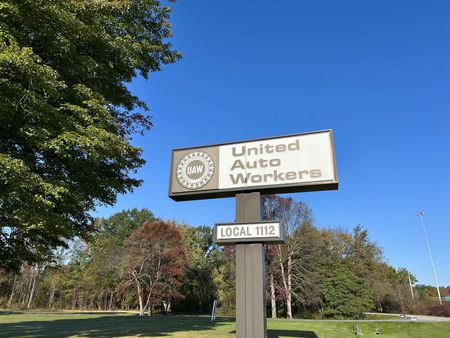

A court-appointed overseer has identified serious management problems within the United Auto Workers union regarding how it handled investment funds following last year’s major strike against Detroit’s big three automakers.
Attorney Neil Barofsky, who serves as the federal monitor for the UAW, released findings Thursday showing “significant dysfunction, supervisory shortcomings, communication failures, and governance weaknesses” that left the union’s investment strategy misaligned with its own policies.
The controversy stems from the UAW’s decision to cash out approximately $340 million in investments during August 2023 to support striking workers and cover other costs during their six-week work stoppage against Ford, General Motors, and Stellantis. However, union leadership failed to reinvest those funds according to their established investment guidelines for more than twelve months following the strike’s conclusion.
While Barofsky’s investigation cleared Secretary-Treasurer Margaret Mock of any wrongdoing, it identified substantial problems with communication and oversight within her department. The monitor determined that UAW policies created confusion about who was responsible for investment decisions, and some key decision-makers lacked the necessary experience to properly manage the union’s financial portfolio.
The report also revealed that Mock’s office failed to adequately inform UAW leadership when investments fell out of compliance with union policy.
Union officials had initially estimated the delayed reinvestment cost them roughly $80 million in missed opportunities, but Barofsky disputed this calculation. In his report, he stated that the union’s loss estimate was “based on deeply flawed and inaccurate assumptions that significantly exaggerated any loss amount.”
The monitor explained that UAW staff calculated potential losses using specific target investment percentages rather than the policy’s allowable ranges. For instance, they used the 30% equity target for their calculations instead of considering the policy’s permitted range of 22% to 38% equity investments.
The UAW pushed back against portions of the monitor’s findings in an official statement, though they did not specify which aspects they disagreed with. Union representatives said they have been following their investment policy for nearly a year and committed to implementing Barofsky’s suggested improvements to their governance and investment oversight procedures.
Neither UAW President Shawn Fain nor Mock provided immediate responses to requests for comment.
The monitor’s report also highlighted ongoing tensions between Fain and Mock, noting that Fain’s office attempted to place blame for the investment delays on Mock. Barofsky characterized some of Fain’s actions toward Mock as “retaliatory.”
According to the findings, the union’s board unanimously approved the August 2023 decision to liquidate investments for strike funding, but the vote did not establish a clear timeline or strategy for reinvesting the money once the strike ended. The report indicated that union officers were unclear about their investment-related responsibilities.
Barofsky was installed as UAW monitor following a 2020 agreement between the union and the U.S. Department of Justice to address a corruption scandal within the organization.
The monitor confirmed that the UAW returned to compliance with its investment policy by late June 2024, achieving a 22% equity allocation. His recommendations include developing new policies to clarify investment roles and responsibilities, along with annual financial management training for the union’s investment committee and board members.