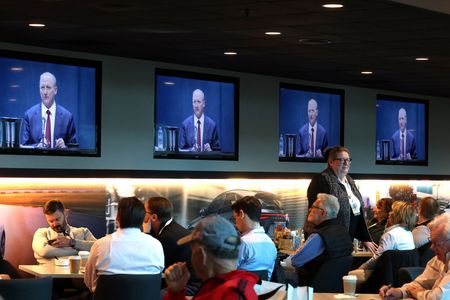

During Berkshire Hathaway’s annual shareholder gathering in Omaha, Nebraska on Saturday, CEO Greg Abel expressed relief over a recent court ruling that could significantly reduce financial exposure for the company’s PacifiCorp utility division as it battles multiple wildfire-related lawsuits in Oregon and northern California.
Abel told shareholders that an April 8 ruling from Oregon’s state appeals court blocking a major wildfire case from moving forward as a class action has eased the burden on PacifiCorp while the company works to convince state regulators to allow sufficient rate increases to maintain profitable operations.
“We’re back to first base” regarding the legal challenges, Abel explained, indicating that the threat level has been substantially reduced.
The utility company has been fighting numerous lawsuits stemming from a series of devastating wildfires in Oregon and California, with several cases alleging that PacifiCorp failed to deactivate power lines during dangerous wind conditions over Labor Day weekend in 2020.
In the most significant case, an Oregon jury ruled in 2023 that PacifiCorp acted with gross negligence, potentially exposing the Portland-headquartered utility to tens of billions of dollars in damages through follow-up trials.
At one point, PacifiCorp estimated it could face up to $55 billion in total claims.
However, the Oregon appeals court determined that the original trial judge made an error by allowing the jury to presume that PacifiCorp’s alleged misconduct affected all fire victims uniformly.
Prior to this appeals court intervention, 171 plaintiffs had received approximately $1.1 billion through a series of smaller trials that started in January 2024 and were scheduled to continue through 2028.
“They said, back to ground zero, start over again,” Abel remarked.
PacifiCorp has been actively lobbying multiple western states to establish liability caps for wildfire damages and create state-managed compensation funds for victims, provided that utilities develop and follow approved safety protocols aimed at preventing future disasters.
Utility companies like PacifiCorp argue that such arrangements create necessary protection that allows them to make essential investments in system maintenance and grid improvements without worrying that unpredictable legal battles could threaten their financial stability or force bankruptcy.
Abel noted that PacifiCorp seeks a “regulatory compact” that would permit the company to charge customers rates sufficient to justify increased infrastructure spending while avoiding unreasonable risk, though they encounter opposition from regulators and elected officials concerned about rising utility costs.
California represents one state that has addressed utility wildfire liability issues, recently expanding its wildfire compensation fund by $18 billion following devastating fires that struck portions of the Los Angeles region in January 2025.
Abel has praised Utah’s protective measures, which allow major utilities to add surcharges to customer bills and limit liability exposure on certain claims, calling them the “gold standard.”
Oregon has not yet implemented similar protections.
PacifiCorp operates under Berkshire Hathaway Energy, which Berkshire owns completely. The investment giant acquired the utility company for $5.1 billion in 2006.