
Consumer products giant Unilever exceeded Wall Street sales projections for the first quarter of 2024, powered by renewed customer interest in flagship brands and increased sales volumes in developing markets.
The London-based company, valued at more than $120 billion, maintained its financial projections through 2026 despite what executives describe as mounting economic volatility worldwide.
Consumer product manufacturers face significant headwinds from rising raw material costs and shipping delays linked to ongoing conflicts in Iran, creating one of the most difficult operating environments in recent memory.
“We have started the year well with volume-led growth driven by our Power Brands and a positive performance across all Business Groups,” CEO Fernando Fernandez said in a statement.
Under Fernandez’s leadership, Unilever has restructured its operations to emphasize personal care and beauty products, selling off its ice cream division last year and recently announcing plans to separate its food business for a merger with American spice company McCormick.
The quarterly results showed stronger volume increases than analysts predicted, even though pricing remained below forecasts, signaling a return to growth through product sales rather than price hikes.
During the COVID-19 pandemic and following Russia’s 2022 invasion of Ukraine, the British corporation implemented significant price increases to offset rising commodity costs, but has recently focused on winning customers back through slower price growth and increased marketing investments.
Unilever reported quarterly sales growth of 3.8% through March, surpassing analyst expectations of 3.6% growth based on company-compiled forecasts.
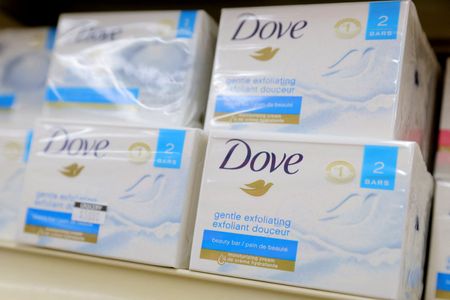
The company’s largest brands, including Dove, Axe, and Dermalogica, led the volume increases with 5% underlying sales growth and 4% volume expansion.
Industry competitors from Nestle to Procter & Gamble have cautioned about increased costs from the Iran conflict, with Reckitt warning of profit margin pressure, while French competitor L’Oreal exceeded expectations as consumers purchased more high-end products.
Companies throughout the sector are also preparing for potential demand softening as household spending could face pressure if oil prices stay high and regional conflicts continue.