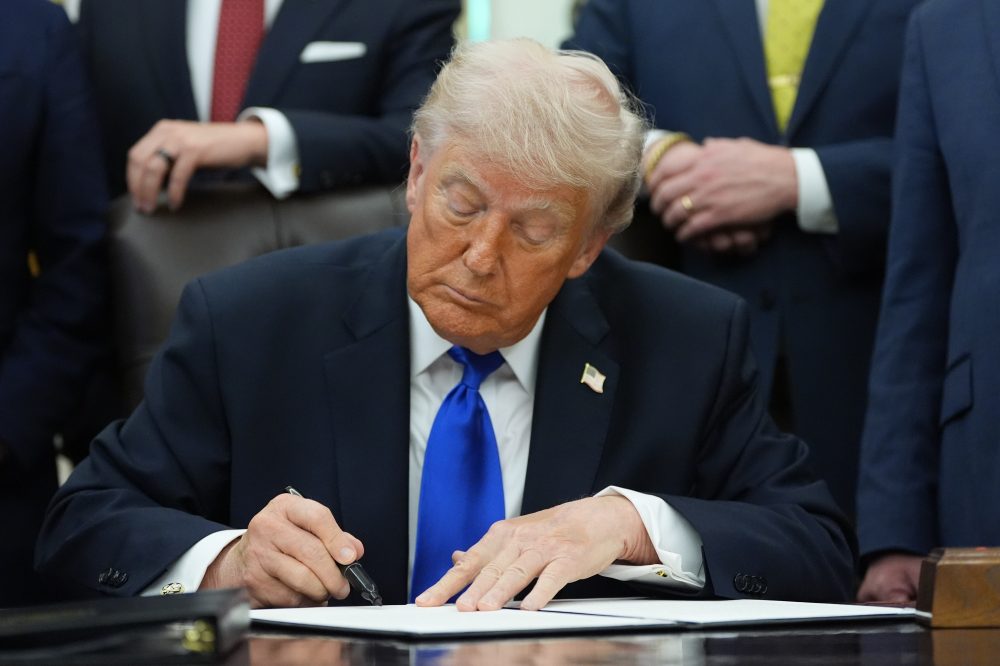

WASHINGTON — President Donald Trump announced Friday his intention to impose 25% tariffs on automobiles and trucks imported from European Union countries starting next week, a decision that could shake global markets during an already uncertain economic period.
In his announcement, Trump claimed the European Union has failed to honor the terms of their mutually agreed trade arrangement, though he provided no specific details about what violations occurred.
The trade agreement in question was negotiated between Trump and European Commission President Ursula von der Leyen last July, establishing a 15% tariff rate on most imported goods.
The trade framework, dubbed the Turnberry Agreement after Trump’s Scottish golf property, had previously received renewed support from both American and European officials who pledged to maintain the arrangement.
However, the 2025 agreement faced uncertainty earlier this year when the Supreme Court determined the Republican president did not have legal authority to declare an economic emergency and impose tariffs on European goods.
While the original deal established a 15% tariff cap on European imports, the Supreme Court decision lowered that rate to 10% as the Trump administration implemented new import taxes under different legal authorities. The administration is currently conducting studies on trade deficits and national security concerns to establish a new tariff system, which could potentially violate the European agreement.
European officials had projected the bilateral agreement would provide automakers with monthly savings between 500 million and 600 million euros ($585 million to $700 million).
Trade between the EU and United States reached 1.7 trillion euros ($2 trillion) in 2024, averaging 4.6 billion euros daily, based on data from Eurostat, the EU’s statistics office.
Following the Supreme Court ruling in February, the European Commission stated: “A deal is a deal. As the United States’ largest trading partner, the EU expects the U.S. to honor its commitments set out in the Joint Statement — just as the EU stands by its commitments. EU products must continue to benefit from the most competitive treatment, with no increases in tariffs beyond the clear and all-inclusive ceiling previously agreed.”