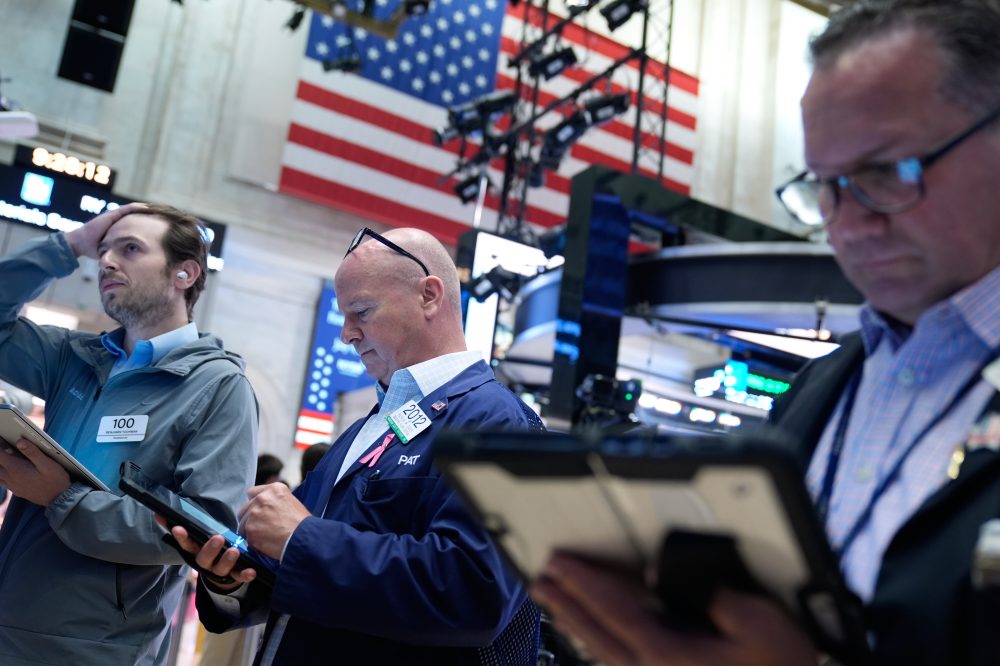

Wall Street celebrated the end of April with a powerful rally Thursday as technology sector earnings and artificial intelligence investment data reinforced expectations that the AI revolution still has significant room for growth. Simultaneously, the Japanese yen experienced its strongest performance since 2022 following Japan’s decision to step into foreign exchange markets.
Market analyst Jamie McGeever noted in his Thursday column that central bank disagreements are becoming more frequent, signaling increased uncertainty and potentially more volatile trading conditions ahead – developments that could challenge both investors and businesses.
The day’s major market developments included several key stories worth monitoring:
Japan made its move against currency weakness through market intervention, causing the yen to rally sharply. Artificial intelligence-focused investments and renewed government expenditures provided a boost to first-quarter U.S. economic performance. Google Cloud emerged as a leader while major technology companies’ AI investments reached a combined $700 billion. The European Central Bank maintained current interest rates while keeping June increases as a strong possibility.
Thursday’s Market Performance Summary:
Stock markets showed mixed results globally. Asian markets declined, with Japan’s Nikkei falling 1% and South Korea’s KOSPI dropping 1.4%. European trading was notably positive, with the STOXX 600 climbing 1.4% and London’s FTSE 100 gaining 1.6%. U.S. markets posted strong advances, led by the S&P 500’s 1% rise and the Russell 2000’s impressive 2% jump.
Sector performance varied significantly. Communications services reached record territory with a 4% surge, while most S&P 500 sectors advanced except technology. Notable individual stock movements included Qualcomm’s 15% gain, Alphabet’s 10% increase, and Eli Lilly’s 10% rise. However, Meta declined 9% and Nvidia fell 5%.
Currency markets saw dramatic action as the yen soared following Japanese intervention, marking its largest single-day advance since 2022. This movement pulled the dollar index down 1%, representing one of its steepest declines in twelve months.
Bond markets reflected the currency volatility. Japan’s 10-year government bond yield climbed above 2.5% for the first time since 1997, while European and U.S. yields finished lower. American yields dropped 5 basis points at shorter maturities as the yield curve steepened.
Commodity markets remained relatively calm, with oil prices slipping as July futures contracts replaced June as the primary benchmark.
Key Market Themes:
Japan’s currency intervention marked its first such action in nearly two years, according to market sources. Officials achieved significant impact, driving the dollar down from over 160 yen to 155 yen. The yen concluded Thursday 2.5% stronger in its best daily performance since 2022.
The intervention’s lasting effectiveness remains uncertain. Currency traders currently hold their largest net short yen positions since July 2024, when Japan last intervened, suggesting the rally could continue. Some analysts speculate dollar/yen could reach 150.00, though renewed Federal Reserve hawkishness compared to the Bank of Japan could eventually pressure the yen lower again.
Central banks worldwide demonstrated heightened vigilance this week. Both the European Central Bank and Bank of England maintained current rates Thursday while signaling readiness to increase them if conflict-related inflation pressures intensify. Similar positioning emerged from the Federal Reserve and Bank of Japan earlier in the week.
Inflation data from both the U.S. and eurozone Thursday, plus the Cleveland Fed’s latest inflation forecast showing annual PCE at 3.7%, support these hawkish tendencies. Tokyo’s consumer price index, due Friday, will provide additional insight.
April concluded as a remarkable month for global markets. South Korea’s KOSPI delivered a stunning 30% gain, its strongest monthly performance since 1998. The Nasdaq’s 15% advance marked its best showing since 2020, while Japan’s 10-year bond yield topped 2.5% for the first time since 1997. Interestingly, Brent crude oil actually declined during this period.
Looking ahead to May, several factors warrant attention. U.S. employment data arrives next week, and following Thursday’s jobless claims – the lowest since 1969 – along with strong first-quarter business investment figures, these reports could carry unusual significance. The following week brings President Trump’s China visit and Kevin Warsh’s replacement of Jerome Powell at the Federal Reserve. These developments unfold against ongoing Middle East conflicts, energy market disruptions, AI expansion, and Japan’s currency intervention.
Friday’s Potential Market Drivers:
Middle Eastern developments and energy market movements will be closely watched. Economic data includes Australia’s first-quarter producer price inflation, Japan’s April Tokyo consumer price index, and South Korea’s March trade figures. The UK releases April purchasing managers’ index data, while Bank of England chief economist Huw Pill is scheduled to speak.
U.S. markets will focus on April’s ISM manufacturing index and major corporate earnings from Berkshire Hathaway, Exxon Mobil, and Chevron.