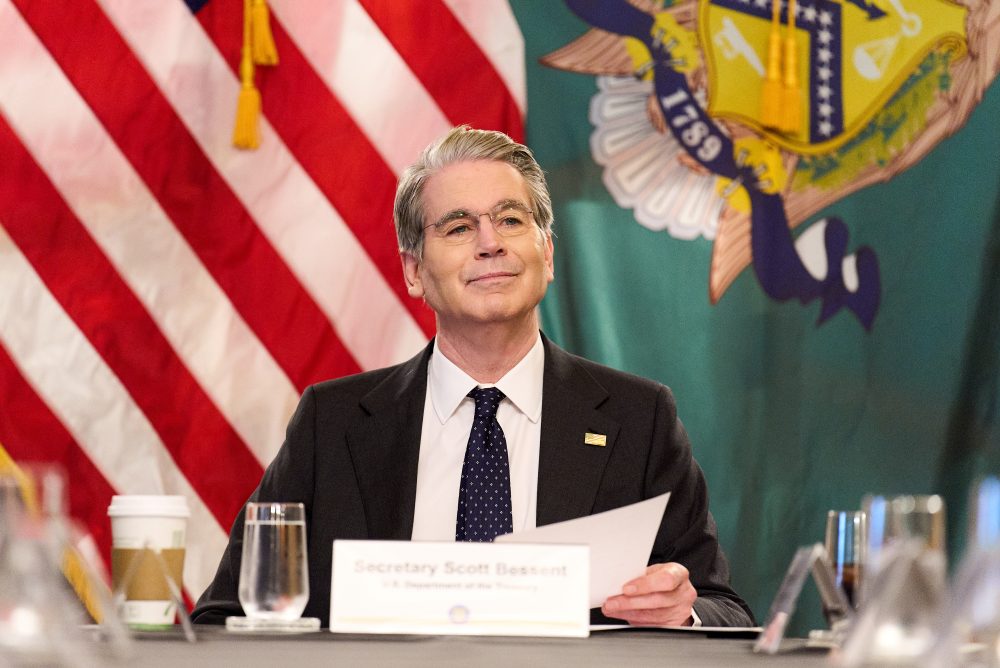

WASHINGTON — Treasury Secretary Scott Bessent is troubled by Americans’ attraction to get-rich-quick schemes, from lottery tickets to cryptocurrency promises, cautioning that these approaches typically push people away from true financial security rather than toward it.
“There are a lot of young people, mostly young men, going to blue-collar construction jobs, playing the lottery. It drives me crazy,” Bessent said in an interview.
“The best thing you can do is not play the lottery,” he said — rather, people should invest and “then watch it grow.”
The Treasury Secretary discussed fundamental principles of creating budgets and building savings during a recent Associated Press interview, marking the conclusion of Financial Literacy Month. This educational campaign has become a central focus for the former billionaire hedge fund executive since he joined President Donald Trump’s team, motivated by his own impoverished childhood experiences.
While previous Treasury leaders like Hank Paulson and Tim Geithner gained recognition for steering America through the financial crisis, and Steven Mnuchin became known for crafting the 2017 Tax Cuts and Jobs Act, Bessent hopes his dedication to educating community bankers, seniors, and students about budgeting and debt management will help shape his professional legacy.
This financial education campaign unfolds as Americans struggle with rising costs for housing, food, energy, and daily necessities, while expressing doubt about the Republican administration’s economic handling. Recent AP-NORC polling reveals Trump’s economic approval ratings fell from 38% in March to 30% in April.
The country faces unprecedented debt levels, exceeding $39 trillion as of March, prompting questions about how Bessent can encourage personal savings while the federal government battles its own massive debt burden.
“The Trump administration in particular has a problematic record on cutting taxes without offsets and growing spending,” said Maya MacGuineas, president of the Committee for a Responsible Federal Budget.
The 63-year-old Bessent built his wealth through extensive hedge fund experience, including collaboration with George Soros, a financier and philanthropist frequently criticized by Trump and fellow Republicans. Bessent played a notable role in the Soros organization’s 1992 British pound speculation during Black Wednesday, generating enormous returns. He subsequently established his own investment firm, Key Square Group.
Despite his financial success, Bessent frequently references his modest origins in rural South Carolina near Myrtle Beach, where he began working at age 9 as a restaurant busboy and setting up beach equipment. His real estate developer father had squandered generations of family wealth through excessive borrowing.
Bessent’s 1979 Naval Academy aspirations were blocked due to his openly gay status, which also prevented foreign service opportunities.
He attended Yale University, where professor David Darst taught him about emerging financial market instruments. Darst characterized Bessent as a “guy who’s working at the highest levels, but he’s interested in people learning the ABCs of finance.”
In 2025, Bessent made history as America’s first openly gay treasury secretary. “I sit here knowing that President Trump chose me because he believes I’m the best candidate, not because of my sexual preference, not because treasury secretaries with green eyes do better,” Bessent said at his confirmation hearing.
Upon taking office, Bessent quickly revived the Treasury Department’s Financial Literacy Month program.
“Wall Street has grown wealthier than ever before, and it can continue to grow and do well,” Bessent has emphasized in multiple speeches, maintaining that his Trump administration efforts remain “focused on Main Street.”
During a Treasury Department roundtable with community financial institutions last month, Bessent heard bankers discuss rising sophisticated fraud targeting customers and challenges engaging high school students in saving programs.
“It could be as simple as a 14-year-old starting a savings account and watching interest compound at 4% a year,” said Thomas Fraser, CEO of First Mutual Holding Co. in Lakewood, Ohio, who participated in the discussion.
Financial education advocacy isn’t new territory for Bessent. Geoff Canada, president of Harlem Children’s Zone, has maintained a 30-year relationship with Bessent and reports the treasury secretary has guided one program scholar for over ten years. Canada credits Bessent with “deep understanding that financial literacy is essential for fostering real social and economic mobility for America’s children.”
Canada noted Bessent “has championed this issue long before joining the administration, and I know it remains a top priority.”
Financial literacy discussions with Bessent consistently lead to Trump Accounts — a proposed program providing $1,000 to babies born during the Trump presidency. Private companies would invest this money in stock markets, with children accessing funds at age 18.
Bessent believes this initiative will inspire young people to embrace investing by demonstrating “the power of compounding, because that money is locked up for 18 years.”
However, Bessent argues Americans across all age groups and income levels need better money management skills. “There’s a narrative that doctors are famously terrible at finance,” Bessent observed.
Critics challenge the treasury secretary’s strategy, arguing the core issue involves insufficient disposable income for investment rather than lack of financial knowledge, as living costs continue climbing and the Iran conflict drives energy prices higher.
“You cannot preach penny-pinching while making it harder for Americans to pay their grocery, utility and healthcare bills,” said Emily DiVito, senior adviser for economic policy at the left-leaning Groundwork Collaborative. “If Secretary Bessent is serious about advancing financial literacy, he should focus on lowering the cost of living for working families.”
Bessent’s investment advocacy occurs amid record-breaking U.S. debt levels, with the growth trajectory concerning budget specialists.
National debt reached $37 trillion in August, then $38 trillion just two months later. Currently at $39 trillion, it now exceeds the entire economy’s size.
Budget expert MacGuineas cautioned that continued borrowing and rising interest payments will force Americans to confront difficult fiscal choices ahead.
She commended Bessent’s goal of halving deficits and reducing them to 3% of gross domestic product but emphasized “it’s going to take a combination of spending reductions, revenue increases and economic growth” to achieve this target.
The Treasury Department maintains that federal deficits declined during Trump’s initial year back in office and that Republican tax cut provisions have returned money to Americans’ wallets.
“It’s hard to disagree with the fact that we need more financial literacy in this country,” MacGuineas said. “The bigger picture, of course, is that we should also probably give a financial literacy class to our lawmakers.”