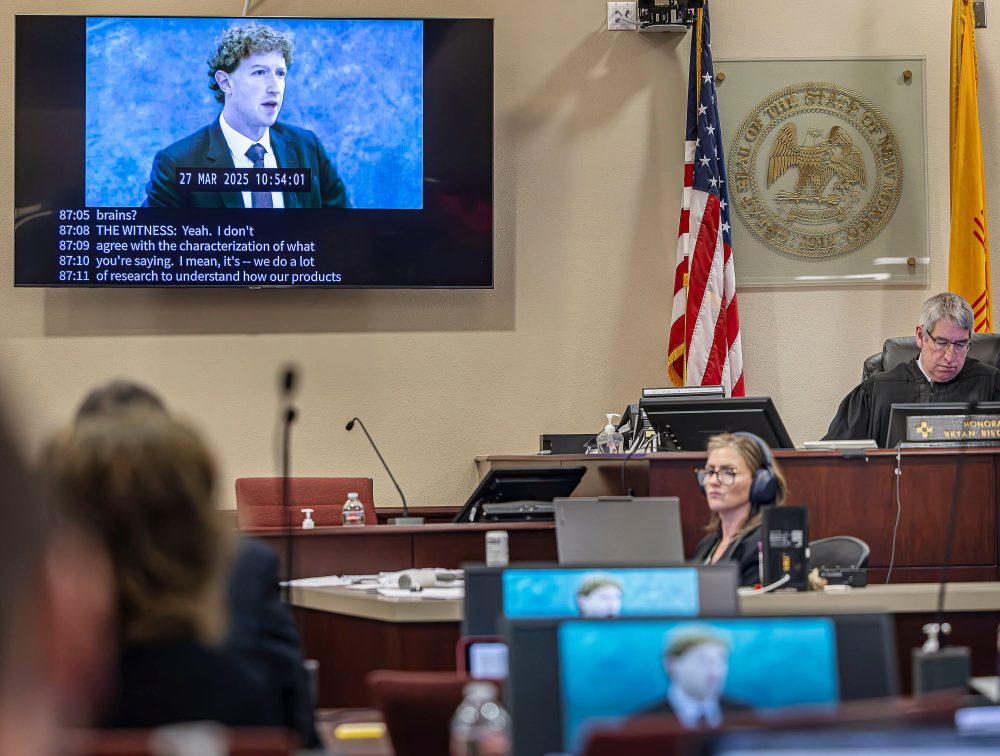
NEW YORK (AP) — A federal lawsuit filed Tuesday in Manhattan targets Meta and its CEO Mark Zuckerberg, with five major publishers and author Scott Turow claiming the social media giant unlawfully utilized millions of protected literary works to develop its artificial intelligence language model called Llama.
The class action case, brought before a federal court in Manhattan, charges the technology company with violating copyright protections and represents another chapter in the growing legal conflict between the publishing industry and artificial intelligence developers.
According to the legal filing, Zuckerberg and his company operated under their famous philosophy of “move fast and break things” while unlawfully accessing an enormous collection of books and academic publications to build Llama.
“Defendants reproduced and distributed millions of copyrighted works without permission, without providing any compensation to authors or publishers, and with full knowledge that their conduct violated copyright law,” the complaint reads in part. “Zuckerberg himself personally authorized and actively encouraged the infringement.”
The five publishing entities bringing the lawsuit — Elsevier, Cengage, Hachette Book Group, Macmillan and McGraw Hill — represent notable writers including Turow, James Patterson, Donna Tartt, former President Joe Biden and at least two recent Pulitzer Prize recipients announced Monday, Yiyun Li and Amanda Vaill.
Meta issued a statement Monday declaring its intention to “fight this lawsuit aggressively.”
“AI is powering transformative innovations, productivity and creativity for individuals and companies, and courts have rightly found that training AI on copyrighted material can qualify as fair use,” the statement reads in part.
During recent years, many writers have initiated legal proceedings related to artificial intelligence. In 2025, Anthropic reached an agreement to pay $1.5 billion to resolve a class action lawsuit brought by thriller author Andrea Bartz and nonfiction writers Charles Graeber and Kirk Wallace Johnson. A final approval hearing is set for next week.
Air travelers across the country are feeling the financial impact of the U.S. military conflict with Iran as aviation fuel costs continue to climb dramatically.
The escalating fuel expenses represent the second-biggest cost burden for airline companies, prompting carriers to search for new revenue streams to offset these mounting expenses. Their primary solution has been implementing higher fees for checked luggage across most fare categories.
Industry analysts note that the geopolitical tensions and resulting fuel price volatility are creating significant operational challenges for airlines, who must balance rising costs with passenger demand for affordable travel options.
For travelers, this means considering packing strategies that prioritize carry-on luggage to avoid the increased baggage charges that airlines are rolling out in response to the fuel crisis.
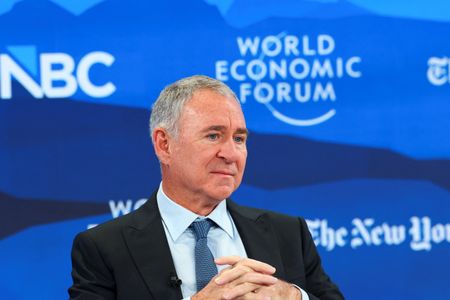
The CEO of major hedge fund Citadel announced plans to expand the company’s Miami operations during a financial industry conference this week, following what he described as inappropriate behavior by New York City’s mayor.
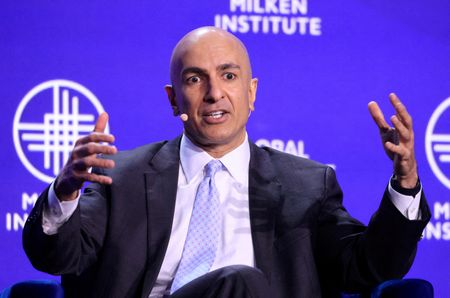
Ken Griffin told attendees at Tuesday’s 2026 Milken Institute Conference that his firm is expanding its Miami office building plans, stating they are “doubling down” on their Florida presence.
The announcement came as Griffin addressed questions about an incident involving New York City Mayor Zohran Mamdani, a democratic socialist politician who recorded a video outside Griffin’s residential building in April. The mayor’s video, which carried the message “Happy Tax Day, New York. We’re taxing the rich,” was filmed directly in front of Griffin’s penthouse property.
Griffin characterized Mamdani’s video recording at his residence as “creepy and weird” during his conference appearance.
Belgium’s Flanders region may soon become the second European area to authorize Tesla’s supervised autonomous driving technology, following the Netherlands’ groundbreaking approval last month.
Transport Minister Annick De Ridder announced Tuesday that she has requested documentation from Tesla to potentially expedite approval of the company’s “full self-driving” software in her region. The Flanders area, which shares a border with the Netherlands and is primarily Dutch-speaking, could make a determination about fast-track authorization by week’s end.
“Because you shouldn’t slow down innovation, but make it possible in a thoughtful and safe way. This way, we keep Flanders at the forefront as a forward-thinking region,” De Ridder wrote on social media platform X.
The Netherlands became the European Union’s first nation to grant provisional authorization for the technology on its roadways last month. The software can operate a vehicle independently but mandates that drivers remain alert and ready to intervene.
Tesla Chief Executive Elon Musk has expressed optimism about broader EU acceptance of the full self-driving technology, though regulatory authorities in several Nordic countries including Sweden, Finland, Denmark, and Norway have expressed doubts about the system and its purported safety advantages.
Belgium’s federal transport ministry confirmed that regional authorities handle such approvals rather than the central government. Tesla has submitted similar requests to Wallonia, Belgium’s predominantly French-speaking region, according to ministry officials. Representatives from Brussels, which operates as a separate administrative region, have not yet responded to inquiries about Tesla’s application there.
MONTREAL, May 5 – Malaysian carrier AirAsia is preparing to unveil a substantial aircraft purchase Wednesday, with sources indicating the airline will order roughly 150 Airbus A220 jets, providing much-needed momentum for the European manufacturer’s compact airliner program.
The A220 aircraft are manufactured at facilities in Mirabel, Quebec, just outside Montreal, as well as at an additional production facility located in Mobile, Alabama. Quebec maintains a partial ownership interest in the A220 program, with international customers receiving planes built at the Canadian location.
According to anonymous sources familiar with the private negotiations, Canadian Prime Minister Mark Carney is scheduled to be present for the Montreal-area announcement. Representatives from Airbus Canada and Carney’s office refused to provide statements regarding either the aircraft order or the planned event, noting that arrangements could still be modified or postponed.
AirAsia representatives were unavailable for immediate comment during off-business hours.
Earlier reports about this significant A220 purchase appeared Tuesday in French publication La Presse and Monday in Bloomberg. Reuters previously indicated in February that AirAsia was considering a substantial A220 order, with sources suggesting the agreement might encompass 150 confirmed aircraft purchases for the 110-to-130-passenger jets.
This announcement represents welcome developments for the A220 program, which has faced recent challenges as competitor Embraer’s E2 aircraft secured a contract with Finnair in March and achieved sales figures three times higher than the A220 last year.
Airbus continues efforts to increase A220 manufacturing rates to achieve profitability on the program, which the company acquired from Canadian manufacturer Bombardier in 2018 essentially without cost. The global aviation giant has established goals to produce 12 A220 aircraft monthly by 2026, reducing previous projections of 14 units due to supply chain issues and airlines awaiting improved engine technology.
Canada’s aviation sector has experienced less disruption compared to industries like automotive manufacturing during trade tensions with the United States, as Washington excludes aerospace products from tariff policies.
AirAsia has spearheaded the expansion of budget airline services across the region over the past twenty years as regional prosperity has increased. The carrier represents one of Airbus’s largest clients, maintaining orders for over 350 of the manufacturer’s larger A320-series aircraft.
AirAsia Co-founder Tony Fernandes previously indicated to Reuters that the company was prepared to diversify its aircraft fleet by selecting smaller planes to serve additional routes.
This development occurs as aviation industry turbulence from elevated fuel costs related to the U.S.-Israeli conflict with Iran has prompted airlines to reduce flight schedules.
This week’s upcoming employment report will determine whether America’s economy stays strong enough for the Federal Reserve to maintain current interest rates, or if weakening job numbers might bring back discussions of rate reductions that international conflict has largely eliminated.
Robust economic performance and worries about conflict-related inflation have led financial markets to anticipate no interest rate adjustments throughout this year. This represents a dramatic shift from January, when traders in federal funds futures markets were anticipating two quarter-point reductions by 2026.
“The economic backdrop and the data have been quite resilient through the conflict,” said Jonathan Cohn, head of U.S. rates desk strategy at Nomura. “Even without the uncertainty from Iran, one could make the case that the economy doesn’t require meaningful easing at this point.”
Financial experts suggest that obvious deterioration in employment numbers might encourage Federal Reserve officials to consider reduced rates. However, even substantially weak employment data would be unlikely alone to change the central bank’s overall position, given last month’s strong job numbers, other positive economic indicators, and persistently elevated inflation. Market participants have been counting on reduced rates to maintain this year’s gains in stock prices and other investment values.
Robust economic data has strengthened arguments against rate reductions, even if the current conflict reaches a quick resolution, according to analysts. March saw the addition of 178,000 jobs, almost triple the 60,000 that economists predicted in a Reuters survey, while unemployment decreased slightly to 4.3%.
Ten-year Treasury benchmark yields have increased to 4.43% from 3.94% before the conflict started on February 28, while two-year yields sensitive to rate changes have climbed to 3.94% from 3.38%. This widespread repricing shows markets adjusting to expectations of extended higher interest rates.
Central bank officials show limited indication that rate reductions are their primary concern. During the Fed’s latest meeting, rates remained unchanged, but three policymakers opposed language suggesting a preference toward rate cuts.
“Over the inter-meeting period, there was growing support for a more neutral stance on the future path of interest rates,” said Vail Hartman, U.S. rates strategist at BMO Capital Markets.
Fed Chair Jerome Powell indicated during last week’s post-meeting press conference that the central bank might abandon its easing preference as early as the June 16-17 meeting.
Financial analysts noted that circumstances supporting a reduction in the federal funds rate from its current 3.50%-3.75% range have become significantly more limited.
First-quarter economic expansion accelerated as companies increased artificial intelligence investments and government expenditures recovered following a damaging shutdown.
Consumer spending has also maintained strength, despite higher gasoline costs for consumers.
“If the Fed cuts, it’s not going to be because we got good news on inflation data,” Hartman said. “It’s going to be because we got bad news on the labor side.”
Such employment market deterioration would require evidence across multiple reports and would most likely involve a sustained unemployment rate increase, he explained.
Reuters-surveyed economists anticipate Friday’s Labor Department report will show 62,000 jobs added last month, with unemployment holding steady at 4.3%.
Even if energy prices stabilized following a ceasefire, analysts warned that inflation was already following a concerning path before the conflict started. This means resolving Middle Eastern tensions would eliminate one barrier without completely opening the route to reduced rates.
“Inflation was already increasing before the oil shock even hit,” Hartman said, noting there would be “some reluctance to conclude that we shouldn’t be all that worried about inflation just because the oil issue has diminished in relevance.”
Cohn identified several elements preventing markets from consistently pricing in Fed tightening, including pending Senate confirmation of former Fed Governor Kevin Warsh to replace Powell as central bank head, still-stable long-term inflation expectations, and what he described as the Fed policy committee’s “implicit dovish bias.”
However, Cohn warned that preference alone wouldn’t be sufficient to restore aggressive rate-cut expectations without economic data deterioration.
An unusually large wave of tax refunds may have hidden underlying economic weakness by helping consumers manage increased energy costs, according to Michael Lorizio, head of U.S. rates and mortgage trading at Manulife Investment Management.
The speed of that cushion’s disappearance and whether higher oil price effects appear in consumption or other economic indicators will be crucial for markets evaluating the Fed’s direction, he explained.
Currently, standards remain elevated on both sides. Without employment market problems, building a case for rate cuts proves difficult. With inflation still high, maintaining current rates is easily justified.
“If you see the labor market data begin to crack, then cut expectations can reemerge in a more meaningful way,” Cohn said. “Absent that, I think the market will struggle to get back all the way to what we were pricing pre-war.”
NEW YORK, May 5 – An artificial intelligence company is making significant strides in the financial sector by introducing new automated tools designed to streamline operations for banking and insurance firms.
Anthropic unveiled 10 specialized AI programs on Tuesday during a company event in New York. These automated systems can handle various financial tasks including creating presentation materials, reviewing audit documents, and preparing credit memorandums with minimal human supervision, according to the company.
The AI firm also expanded the information sources available to its Claude AI system, enhancing its ability to handle financial work.
Since announcing its financial sector ambitions less than a year ago, Anthropic has quickly gained traction with major institutions. Goldman Sachs, Visa, Citi, and AIG are among the companies now using its services. Financial institutions have particularly embraced the Claude Mythos model for strengthening their cybersecurity measures. Tuesday’s event featured Anthropic CEO Dario Amodei appearing alongside JPMorgan Chase CEO Jamie Dimon.
The company’s push to automate corporate tasks has created concerns in financial, legal, and software markets, with investors worried about potential business disruption. However, the San Francisco-based AI laboratory maintains its goal is enhancing customer outcomes rather than replacing workers.
Nicholas Lin, who oversees Anthropic’s financial services development, explained in an interview that Claude will gain “vertical-specific intelligence” in sectors like finance while remaining versatile across different industries.
Lin attributed the rapid growth in Anthropic’s financial services division to improved AI capabilities, dedicated customer assistance, and integration with essential office software.
“I’ve honestly seen a dramatic change, especially in the past six months,” Lin said.
The company announced that its 10 new AI programs integrate seamlessly with Claude Code and Cowork platforms and can be tailored to match individual company policies and communication styles.
The nation’s service industry continued to lose momentum in April, marking the second month in a row of declining growth as businesses faced sharply reduced new orders and mounting cost pressures, according to a new industry report released Tuesday.
Data from the Institute for Supply Management revealed that its nonmanufacturing purchasing managers index fell to 53.6 in April, down from 54.0 the previous month. While economists had predicted a reading of 53.7, any figure above 50 still signals growth in the services industry, which represents more than two-thirds of the nation’s economic output.
Though the survey showed business activity improved by 2 points to reach 55.9, other key indicators painted a more concerning picture.
New orders experienced a dramatic decline, dropping to 53.5 from March’s three-year peak of 60.6. The 7.1-point decrease represents the steepest fall since March 2023. Meanwhile, businesses continue to grapple with elevated costs, as the prices paid index remained steady at 70.7, matching levels not seen since October 2022 during the early stages of post-pandemic inflation recovery.
The ongoing conflict with Iran has intensified financial pressures on businesses through multiple channels. Energy costs have surged, with motor vehicle fuel prices reaching their highest point since summer 2022 according to AAA data. Additionally, supply chain complications have extended delivery schedules for essential business materials. The ISM supplier delivery index climbed to 56.8, its highest reading since July 2022, up from 56.2 in March.
The employment picture remained troubling, with the jobs index staying below the 50-point threshold for the second consecutive month. April’s reading of 48.0 showed improvement from March’s 45.2, but still indicates contraction in service sector hiring.
WASHINGTON — March employment figures released by federal officials show available positions remained flat at 6.9 million, signaling continued weakness in the nation’s workforce even as broader economic challenges loom.
Employment trends have fluctuated throughout this year following disappointing performance in 2025. Ongoing conflict in Iran has added uncertainty to economic forecasts and employment prospects.
Federal labor statistics from the Job Openings and Labor Turnover Survey revealed workforce reductions increased during March. However, companies expanded their hiring efforts, while voluntary resignations climbed — indicating workers feel more optimistic about economic conditions.
Available positions have declined consistently since reaching an all-time high of 12.3 million in March 2022 during the nation’s recovery from pandemic restrictions. Elevated borrowing costs implemented to combat 2021-2022 price increases, questions surrounding President Donald Trump’s policy agenda, and possible disruption from artificial intelligence advances have limited aggressive hiring practices.
During the previous year, businesses created less than 10,000 positions monthly, marking the slowest job growth outside of economic downturns since 2002. This year’s employment figures have shown volatility — robust gains in January with 160,000 new positions and March with 178,000, contrasted by February’s decline of 133,000 eliminated jobs.
The Labor Department will release April employment statistics on Friday. Economic analysts surveyed by FactSet predict employers across private companies, nonprofit organizations and government entities will report adding 57,000 net positions last month, while joblessness is forecast to hold at 4.3%.
A massive $56 billion takeover proposal from GameStop targeting eBay has sparked widespread discussion across social media platforms, with retail investors expressing both enthusiasm and serious concerns about the ambitious deal announced May 5.
Online discussion forums like Reddit showed divided reactions, with some users excited about the potential e-commerce powerhouse such a combination could create, while others questioned how the smaller company could possibly fund such an enormous acquisition.
Several supporters highlighted the potential benefits of merging GameStop’s dedicated customer following with eBay’s extensive online marketplace presence, suggesting this partnership could establish a major force in digital retail.
The gaming retailer, currently valued at $10.7 billion in market capitalization, faces the challenge of acquiring a significantly larger corporation. Company officials have indicated they secured access to $20 billion in possible debt funding through TD Securities to support the transaction.
GameStop CEO Ryan Cohen’s heated television appearance on CNBC Monday drew additional online attention, with viewers turning his defensive responses about the deal’s financing into internet jokes and memes.
Social media users also expressed surprise over Michael Burry’s decision to sell his GameStop holdings on Monday, particularly notable since he had recently compared Cohen to renowned investor Warren Buffett just months earlier.
Trading discussion platform Stocktwits.com reported eBay among its most actively discussed securities, with their sentiment tracking system indicating “extremely bullish” investor mood over the previous 24-hour period.
These retail investor communities often provide early insights into how speculative market segments respond to significant corporate announcements and developments.
Major U.S. stock markets posted gains during Tuesday morning trading sessions as crude oil values decreased, even with continuing tensions across the Middle East following military confrontations between the United States and Iran in Gulf waters.
During Tuesday’s opening bell, the Dow Jones Industrial Average climbed 95.2 points, representing a 0.19% increase to reach 49,037.12. The S&P 500 index gained 32.9 points, up 0.46% to 7,233.62, while the technology-heavy Nasdaq Composite jumped 191.1 points, posting a 0.76% rise to 25,258.882.
The market advances occurred as petroleum prices fell despite escalating regional conflicts that could potentially disrupt a delicate ceasefire arrangement in the volatile region.
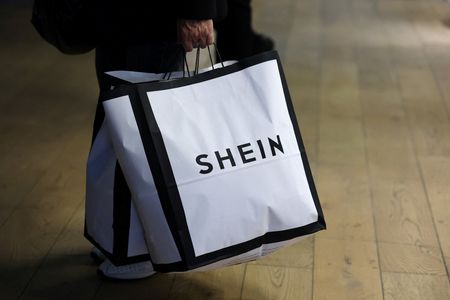
The popular Chinese e-commerce company Shein is facing scrutiny from Irish authorities over how it handles European customer information, prompting the retailer to defend its data protection practices on Tuesday.
Ireland’s data protection regulator has launched an investigation into how Shein transfers personal information belonging to European users to China, raising questions about the company’s compliance with regional privacy laws.
In response to the regulatory probe, Shein stated that it takes its data protection obligations “extremely seriously” and remains committed to following all relevant legal requirements.
The investigation highlights ongoing concerns about how international companies, particularly those based in China, manage sensitive customer data from European consumers who shop on their platforms.
Meta Platforms defended itself Tuesday before European Union antitrust officials, hoping to prevent a regulatory order that would force the company to open WhatsApp to competing artificial intelligence chatbots.
The closed-door hearing in Brussels came after the European Commission issued Meta an additional charge sheet last month detailing its enforcement plans. This represents part of temporary measures while EU investigators examine whether Meta misuses its dominant market position, potentially leading to significant financial penalties. A final decision on the order is expected within months.
On January 15, Meta implemented a new policy restricting WhatsApp to only its own Meta AI assistant. The company later modified this approach in March, announcing that competitor AI services could access the messaging platform for a fee.
This policy change prompted EU regulators to file a second charge against Meta, building on an initial February complaint regarding potential emergency actions to prevent the company from shutting out AI competitors.
Meta attorney Tim Lamb and additional legal counsel attended the Brussels proceedings, while company executives in the United States participated virtually in the four-hour session.
The social media giant restated its earlier position, claiming EU antitrust authorities are misusing their regulatory power to help major global corporations access WhatsApp Business services without payment.
“This means that a small bakery in France paying to use the service to take croissant orders will be picking up the tab for OpenAI. Small European businesses shouldn’t foot OpenAI’s bill,” a Meta spokesperson said.
European Commission Deputy Director-General for Antitrust Linsey McCallum and director Carlota Reyners Fontana refused to provide statements as they entered the hearing.
The Interaction Company of California, which created the Poke.com AI assistant and filed the original complaint, also participated in Tuesday’s proceedings.
“Meta is seeking to monopolize the use of WhatsApp for AI services by reserving it to its own offerings and excluding competitors like us,” Felix Schlegel, co-founder and CTO of The Interaction Company of California, said ahead of the hearing.
“We welcome the Commission’s action and its consideration of interim measures. At the hearing, we will make clear that these measures are necessary and should be adopted without delay,” he said.
According to sources familiar with the matter, OpenAI and French artificial intelligence startup Simone were also listed as hearing participants.
WASHINGTON – America’s trade deficit expanded in March as a surge in artificial intelligence investments drove up imports faster than rising exports could offset them, federal data released Tuesday shows.
The trade gap grew 4.4% to reach $60.3 billion, according to new figures from the Commerce Department’s Bureau of Economic Analysis and Census Bureau. Economic forecasters had predicted the deficit would climb to $60.9 billion for the month.
The trade imbalance reduced first-quarter economic growth by 1.30 percentage points, while the overall economy expanded at a 2.2% annual pace during that period.
March imports climbed 2.3% to $381.2 billion. Goods coming into the country jumped 3.6% to $302.2 billion, driven by capital goods purchases that hit a record $120.7 billion.
Meanwhile, exports grew 2.0% to reach an all-time peak of $320.9 billion. Goods leaving the country surged 3.1% to a record $213.5 billion, helped by increased petroleum shipments. Ongoing conflict between Israel and Iran has disrupted global oil supplies and pushed up crude prices, positioning the United States to likely see continued strong petroleum export growth in coming months. The nation currently exports more oil than it imports.
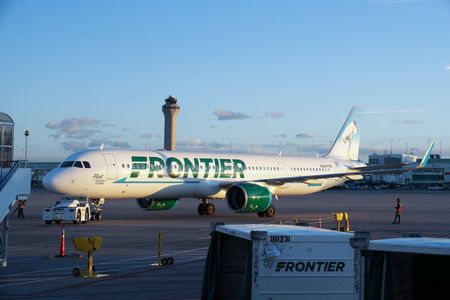
Budget airline Frontier Group announced Tuesday that it anticipates a larger second-quarter financial loss than Wall Street analysts had projected, citing escalating jet fuel costs driven by the ongoing conflict in Iran.
The company’s stock price fell 3.6% during pre-market trading following the announcement.
Aviation companies worldwide have been forced to reduce flight schedules and implement additional fees for luggage and fuel surcharges as they grapple with dramatically increased fuel expenses. These costs have surged after Iran closed the Strait of Hormuz, significantly reducing global oil supplies.
Budget airlines face particular challenges compared to traditional full-service carriers, as they have limited options for generating additional revenue streams to offset rising fuel costs, which typically account for roughly 25% of their operational expenses.
The aviation industry suffered its first major casualty from Iran war-related fuel price increases last week when Spirit Airlines, Frontier’s primary competitor, ceased operations after elevated fuel costs derailed its bankruptcy recovery efforts.
Spirit’s closure eliminates Frontier’s main pricing rival on numerous vacation destinations, potentially allowing Frontier to increase ticket prices and gain additional market share in the near term.
Budget airlines across the United States have requested $2.5 billion in federal assistance to manage the fuel cost surge, but Transportation Secretary Sean Duffy indicated the government likely won’t provide bailout funds, stating the airlines “have access to cash.”
Frontier reported maintaining approximately $974 million in available funds during the first quarter and projects having between $900 million and $950 million in liquidity for the second quarter.
The Denver-headquartered airline predicts second-quarter losses between 45 and 60 cents per share, exceeding analysts’ forecasted 43-cent loss according to LSEG data.
During the first quarter ending March 31, Frontier’s adjusted per-share loss increased to 30 cents from 19 cents the previous year, though this performed better than the 36-cent loss analysts had anticipated.
The airline paid an average of $2.88 per gallon for fuel in the first quarter, higher than the $2.50 it had budgeted before the Iran conflict began. For the upcoming second quarter, Frontier expects fuel costs to reach $4.25 per gallon.
A specialized semiconductor manufacturer exceeded Wall Street revenue projections for the upcoming quarter on Tuesday, May 5th, citing increased worldwide data center construction as the primary driver.
GlobalFoundries’ stock price jumped 6% during pre-market trading following the announcement.
The semiconductor company has positioned itself advantageously by concentrating on specialized market segments including radio-frequency semiconductors and silicon photonics technology, which is experiencing rapid growth in artificial intelligence data centers and quantum computing applications.
For the quarter ending in June, GlobalFoundries anticipates generating approximately $1.76 billion in revenue, with a margin of error of $25 million. This projection surpasses analyst predictions of $1.74 billion, based on LSEG data compilation.
The Malta, New York-headquartered chip producer recorded $1.63 billion in first-quarter revenue, meeting market expectations.
“GF made significant traction in secular growth end markets where our differentiated technology drives share growth and outsized value creation,” stated CEO Tim Breen.
Previously, the company had indicated that data center-related demand represents one of the most constrained areas within the semiconductor industry, with strong market visibility extending far beyond normal business cycles.
Regarding adjusted earnings projections, GlobalFoundries estimates 43 cents per share, with a 5-cent variance, while industry analysts predicted 40 cents per share.
Technology giant Alphabet announced Tuesday it is issuing bonds denominated in euros through six separate offerings, just months following a massive debt fundraising effort that brought in approximately $32 billion from dollar, British pound, and Swiss franc markets.
According to Bloomberg News, the parent company of Google is offering a minimum of 3 billion euros, equivalent to roughly $3.5 billion, in bond sales, based on information from a source familiar with the transaction.
Google representatives did not provide an immediate response when contacted for comment by Reuters.
The technology company’s nearly $32 billion fundraising effort in February featured an unusual 100-year bond offering, marking the first such century-long bond issued by a tech company since Motorola’s similar offering in 1997, based on LSEG information.
Major technology companies are turning more frequently to debt financing to support their artificial intelligence initiatives, moving away from their traditional approach of using robust cash generation to finance expansion into emerging technologies.
Digital payment company PayPal delivered better-than-expected financial results for the first quarter on Tuesday, fueled by steady consumer spending that boosted transaction volumes across the platform.
Despite ongoing challenges from inflation and economic uncertainties tied to Middle East tensions, affluent consumers have continued to maintain their spending habits, providing stability for the payment processor.
Other major payment companies including Visa, Mastercard, and American Express also posted solid quarterly earnings last month, indicating that spending patterns remain robust even amid economic headwinds.
PayPal’s quarterly revenue climbed 7% to reach $8.35 billion, surpassing the $8.05 billion projected by Wall Street analysts, based on LSEG data. When accounting for currency fluctuations, the company’s total payment volume increased 8% year-over-year to approximately $464 billion.
The company posted adjusted earnings of $1.34 per share for the quarter ending March 31, which also exceeded analyst predictions of $1.27 per share.
Transaction volume for PayPal’s more profitable online branded checkout service – which includes purchases where customers specifically select PayPal or Venmo payment options – increased 2% during the first quarter.
NEW LEADERSHIP TAKES CHARGE
The digital payments company faces heightened competition as major technology companies like Apple and Google have entered the payments market.
While PayPal benefited from a significant boost in digital transactions during the pandemic, that growth momentum has slowed considerably. The company’s stock price has dropped more than 80% from its peak in mid-2021.
Under the leadership of newly appointed CEO Enrique Lores, who will conduct his inaugural earnings conference call on Tuesday, PayPal is working to establish stronger market positioning.
Following Lores’ appointment in March, the company announced plans to restructure operations into three distinct business units, including a dedicated division focused on its Venmo service.
The payment company has outlined cost-cutting initiatives aimed at reducing expenses by approximately $1.5 billion over the coming two to three years through operational improvements and implementing artificial intelligence technologies to boost efficiency.
A major cross-border oil pipeline project is on the verge of securing enough industry backing to proceed with construction, according to four industry sources with knowledge of the development.
The pipeline, which would stretch from Alberta, Canada to Wyoming, represents a collaboration between Canadian firm South Bow Corp and American partner Bridger Pipeline. If completed, the infrastructure project would boost Canadian crude oil exports to the United States by more than 12%, providing crucial transportation capacity that Canada has long needed.
President Donald Trump provided a significant boost to the project last Thursday when he signed an executive order approving a cross-border permit. This development comes after President Joe Biden canceled the permit for the Keystone XL oil pipeline in 2021, which had been the most recent major cross-border pipeline proposal.
Though the new pipeline follows a different path through the United States compared to the scrapped Keystone XL project, South Bow’s section would utilize approximately 93 miles of already-constructed Canadian pipeline infrastructure that remains unused. This existing pipeline would then link to Bridger’s planned Montana pipeline, which would stretch roughly 645 miles to reach Guernsey, Wyoming.
Industry sources indicate that oil companies have already pledged to transport at least 400,000 barrels daily, representing approximately 72% of the pipeline’s planned initial capacity of 550,000 barrels per day. According to regulatory documents filed by Bridger, the project could eventually handle up to 1.13 million barrels daily.
Canada currently ranks as the world’s fourth-largest oil producer, generating about 5.5 million barrels per day as of late January, according to the nation’s energy regulatory agency. Production could reach 6.1 million barrels daily by 2030.
The pipeline developers are working to secure long-term shipping agreements for approximately 450,000 barrels per day, according to two sources. This would meet the typical industry standard of 80% initial capacity commitments that pipeline operators generally require before beginning construction.
Major oil companies that have committed to using the pipeline include Cenovus Energy and Canadian Natural Resources Ltd, according to one source. Additional participants include Tamarack Valley, Whitecap Resources, and Strathcona Resources.
The sources requested anonymity because shipping commitment details remain confidential.
South Bow declined to discuss specific capacity commitments, stating that the project remains in preliminary phases and depends on continued commercial negotiations, stakeholder discussions, regulatory approval processes, and ongoing evaluation.
Bridger also declined to provide comment. However, in March regulatory filings, the company indicated the project was being developed based on identified market demand and that commercial negotiations were continuing.
Cenovus, Canadian Natural Resources, Tamarack, and Strathcona all declined to discuss their commitment levels.
Whitecap CEO Grant Fagerheim noted that oil industry participation in the pipeline discussions has been positive and appears to have sufficient support to meet minimum project requirements. He emphasized that support from the U.S. administration was extremely beneficial, though the company provided no additional details about commitments.
The commitment levels demonstrate Canadian oil producers’ strong desire for additional transportation capacity for the country’s oil production, which has been constrained for years by insufficient pipeline infrastructure.
Competing pipeline companies are also pursuing capacity expansions on existing systems.
Enbridge approved expansions last fall for its Mainline and Flanagan South pipelines, which will enable an additional 150,000 barrels per day of Canadian heavy crude to reach the U.S. Midwest and Gulf Coast.
This additional capacity should become operational in 2027, and Enbridge is also evaluating commercial interest in a second Mainline expansion phase, which could begin service in 2028 and add another 250,000 barrels per day of capacity.
The Trans Mountain pipeline, which runs from Alberta to Canada’s Pacific coast for shipment to the U.S. West Coast and Asian markets, is also planning multiple improvements that could increase capacity by 360,000 barrels per day.
Bridger’s current plan involves constructing a pipeline from Montana to Guernsey, Wyoming, following routes alongside existing pipeline infrastructure, which could simplify the permitting process.
However, analysts note that Guernsey does not serve as a final destination for crude oil, meaning additional connections would be necessary to reach major refining centers like Cushing, Oklahoma, Patoka, Illinois, and the U.S. Gulf Coast.
AJ O’Donnell, an analyst with Tudor Pickering, Holt & Co., described the project as offering one of the most cost-effective options for shippers seeking to increase oil transportation from Western Canada by decade’s end.
“While uncertainty remains around the final economics, we believe this represents the most logical approach to adding incremental oil egress capacity through the end of the decade,” O’Donnell stated in a research note.
“Our view is that additional egress is needed regardless of the geopolitical backdrop.”
Citigroup plans to reveal updated financial performance goals during its investor presentation on Thursday, as the banking giant highlights improvements from its extensive corporate restructuring, Chief Executive Jane Fraser announced in a recent interview.
The financial institution has wrapped up a significant organizational transformation that streamlined operations, concentrated on core business areas, and eliminated multiple management tiers.
“We will be laying out new [return] targets … and the growth path for each of the businesses,” Fraser explained to Reuters, though she declined to provide specific details about the updated guidance. She indicated the bank intends to set higher benchmarks beyond its current 2026 objectives. Citigroup’s current annual target calls for a return over tangible common equity ranging from 10% to 11%.
Since assuming leadership in 2021, Fraser has aggressively divested unprofitable international retail operations and addressed regulatory sanctions as part of efforts to strengthen risk management and control systems. During her initial investor day presentation in 2022, financial analysts responded with doubt to Fraser’s promises of improved returns.
“We have credibility behind us now,” Fraser stated from the bank’s Manhattan headquarters. “It has just become clearer, as we sold the consumer franchises and reorganized the company, that we changed.”
Bank leadership will also address capital allocation strategies and establish specific objectives for its five core divisions: Services, Banking, Markets, U.S. Consumer Cards and Wealth Management.
Financial experts including Wells Fargo’s Mike Mayo and Piper Sandler’s Scott Siefers anticipate new return on tangible common equity targets reaching 15% by decade’s end. Citigroup has previously only provided earnings projections through 2026.
In a client research note, Siefers described the bank’s recent changes as its most significant strategic overhaul in decades. “It has been an extraordinary several years for a company that had otherwise spent the better part of two decades lacking clear direction,” he wrote.
Market observers are also monitoring potential removal of regulatory consent orders issued by the Federal Reserve and Office of the Comptroller of the Currency in 2020, following the bank’s accidental transfer of $900 million to Revlon creditors when attempting to make a $7.8 million interest payment.
Mayo from Wells Fargo anticipates the consent orders will be lifted this year. While Fraser avoided discussing specific timelines, she recently indicated the bank has finished 90% of required work involving compliance, risk management, technology and data systems.
Beyond new return and capital guidance, Citigroup expects to outline strategic plans for its five business segments. “We’ll lay out the growth path ahead for each of them,” Fraser said.
A primary focus involves improving the wealth management division’s performance, which generated a 10.8% return during the first quarter while overseeing $1.3 trillion in client assets. In contrast, Morgan Stanley, managing $7.35 trillion, achieved a 30.4% profit margin in the same timeframe.
During the most recent earnings conference call, Fraser rejected merger and acquisition speculation to bridge the performance gap, emphasizing the bank’s commitment to organic expansion.
Fraser told Reuters that artificial intelligence technology could enhance wealth division results in the near term. “We feel very confident in the path to get to more peer-like return levels in wealth,” she said, highlighting the rollout of Sky, the bank’s AI program designed to boost productivity.
“I wouldn’t want to buy something right now in wealth, even if I thought it was the right thing to do, because we have to see how much of this is going to be more heavily AI-driven, with humans still very much involved,” she added.
Industry experts expect expanded product lines from Citigroup’s Services division, which serves multinational corporations, including enhanced instant international payment capabilities. The unit serves 5,000 large multinational clients plus 12,000 medium-sized companies. Fraser calls it the “crown jewel” after it delivered 27% return on tangible common equity in the first quarter.
The banking division plans to identify growth opportunities after gaining market position under Vis Raghavan, who joined to head the unit two years ago. Banking and Markets achieved approximately 15% return on tangible common equity during the first quarter.
Throughout the organization, Citigroup will detail artificial intelligence’s impact. Fraser explained the new technologies extend beyond automating standard procedures. “Agentic commerce is much more revolutionary,” she noted. “It will help us grow revenue too.”
The booming popularity of weight-loss medications is creating an unprecedented surge in demand for whey protein, prompting dairy companies and food manufacturers around the world to dramatically increase their investments in production capabilities.
Whey, which has traditionally been used primarily as animal feed after being separated during cheese production, has become a critical ingredient in foods designed for consumers trying to maintain muscle mass while losing weight.
According to StoneX consultancy data, the cost of whey protein concentrate containing 80% protein has skyrocketed nearly 90% over the past 12 months, reaching 20,000 euros ($23,410) per metric ton. This dramatic increase far surpasses price jumps seen in other dairy products like powdered milk and cheese.
While factors such as increased health consciousness and aging demographics have contributed to rising whey costs, industry experts say the GLP-1 medication trend represents the primary driver behind this explosive demand. Interviews with twelve companies and professionals in the dairy and food industries confirmed this assessment.
“The ongoing strong demand for whey proteins, being fuelled even further by GLP (-1) in recent years, is what the industry needs to figure out,” Luis Cubel, managing director of Arla Foods Ingredients, told Reuters. “Are there any more untapped volumes you can tap into?”
Major dairy operations, including Arla Foods (known for Lurpak butter) and Netherlands-based FrieslandCampina, have ramped up their whey manufacturing capabilities. Meanwhile, food companies are broadening their high-protein product lines, including Danone’s Oikos yogurt and Bel Group’s Babybel Protein offerings.
MEDICATION USERS SEEK PROTEIN SOLUTIONS
Kristen Coady, chief innovation and brand officer at Dairy Farmers of America, explained that individuals taking weight-loss medications are actively pursuing protein sources, spurring fresh innovations across the industry.
DFA, America’s largest dairy farm cooperative, introduced MULU last month – a cottage cheese enhanced with additional whey that delivers 18 grams of complete protein per half-cup portion, significantly exceeding the standard 12 to 13 grams found in regular products.
“What we’ve been seeing is almost a run on dairy proteins,” Coady said.
The cottage cheese trend has prompted DFA to boost investments in its cultured production capabilities, converting manufacturing facilities in Pennsylvania and New Mexico from fluid milk operations, according to Coady.
Health and wellness retailer iHerb has experienced tremendous growth in products related to GLP-1 medications, particularly across the United States.
“Customers are starting to really look for ways to fight the downside or the side effects of GLP-1,” said iHerb’s Chief Revenue Officer Hyeyoung Moon.
She observed increased searches containing ‘GLP-1’ terms and noted more female customers seeking supplements to combat muscle loss, expanding beyond the traditional demographic of gym enthusiasts who typically used whey proteins.
INFRASTRUCTURE STRUGGLES WITH HIGH-GRADE WHEY DEMAND
John Lancaster, head of EMEA dairy and food consulting at StoneX, indicated that the food industry currently lacks sufficient infrastructure to meet the growing appetite for high-protein whey concentrates and isolates.
“There’s a shortage of the capacity to turn (whey) into what is required by the market at the moment,” he said.
FrieslandCampina Global Director for Marketing and Product Strategy Guus Aerts explained that the protein surge has motivated the Dutch Lady and Yazoo manufacturer to make substantial investments in premium whey processing operations.
The company completed its acquisition of Wisconsin Whey Protein, an American producer of whey protein isolates, this past January and has expanded capacity at its Borculo facility in the Netherlands by 100%.
Enhancing whey quality has become essential for dairy companies as food manufacturers create more protein-enhanced versions of yogurt, cottage cheese, beverages, and savory snacks.
FrieslandCampina announced Tuesday its commitment to invest over 90 million euros to accelerate expansion in high-value whey protein markets.
Marion Bucas, marketing director at Lactalis Ingredients, a division of the world’s largest dairy corporation, described protein as representing enormous potential.
“Dairy proteins are still the best quality proteins on the market, but there will be lots of work to try to find substitutes to answer the demand,” Bucas said.
EXPLORING ALTERNATIVE PROTEIN SOURCES
Growing demand for protein-rich legumes like peas and lentils is providing struggling American farmers with an important new income source. Additionally, biotechnology firms producing alternative proteins through precision fermentation methods are drawing significant investment interest.
French startup Verley, which uses fungi fermentation to create proteins targeting muscle recovery, described the GLP-1 impact on the traditionally slow-changing food industry as “insane.”
“In the U.S., in just two to three years, everything changed,” said Verley co-founder and CEO Stephane Mac Millan, adding: “And that puts the whole food industry under pressure to reformulate (products).”
Standing Ovation, another French startup that has secured investments from Danone and Bel Group, produces casein proteins and anticipates launching its products commercially this year.
Co-founder Romain Chayot revealed that 80% of their product development focuses on high-protein applications.
“With GLP-1, developing high-protein yoghurt or cheese or beverage is booming today,” he said.
While analysts believe precision fermentation remains too costly to achieve widespread adoption currently, elevated whey prices are creating new market opportunities.
However, consumer acceptance presents challenges regarding taste preferences.
“Dairy protein is delicious,” said Bel Group’s North America CEO Peter McGuinness, adding: “In this protein race, we’ve lost deliciousness.”
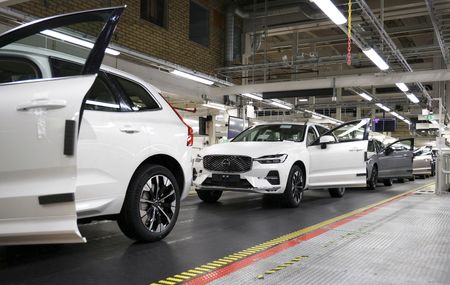
Swedish automaker Volvo Cars announced Tuesday that global vehicle deliveries dropped 10% during the February through April timeframe compared to the same three-month period last year, totaling 162,864 units sold worldwide.
The company faced headwinds in major markets, with Chinese sales continuing to struggle due to intense competition and broader economic challenges. Meanwhile, American market deliveries were impacted by declining consumer confidence, reduced interest in electric vehicles, and pricing pressures on sport utility vehicles.
Despite overall declining sales, Volvo’s electrified vehicle segment showed mixed results. Electric and hybrid models combined represented 48% of all vehicles delivered during the period. Pure electric vehicle sales climbed 14% to reach 39,235 units, comprising 24% of total deliveries, while plug-in hybrid sales decreased by 12%.
“The automotive industry continues to face challenging market conditions which are reflected in the sales performance for the three-month period ending April 2026,” the company stated in its announcement.
Europe, which serves as Volvo’s primary market region, demonstrated stronger performance with steady order volumes, particularly for fully electric models. The automaker noted that electric vehicle deliveries have increased for seven straight months, with the EX30 and EX40 models leading the growth.
German luxury fashion company Hugo Boss delivered first-quarter operating profits that exceeded Wall Street expectations on Tuesday, even as global tensions created headwinds for the business.
The fashion retailer announced earnings before interest and taxes of 35 million euros for the quarter, falling short of last year’s 61 million euros but beating analyst projections of 30 million euros according to company surveys.
Sales figures also outperformed expectations, with Hugo Boss recording 905 million euros in revenue compared to analyst estimates of 887 million euros.
“Following our successful finish to 2025, we entered the year with a clear roadmap. However, the market environment has become more challenging over the course of the first quarter, caused by recent developments in the Middle East,” CEO Daniel Grieder said in a statement.
Ongoing warfare in the Middle East has created turbulence across international markets, pushing oil costs upward and reigniting worries about worldwide inflation and economic expansion, with the critical Strait of Hormuz remaining blocked.
Hugo Boss noted that regional conflicts resulted in a significant drop in customer visits to Middle Eastern stores beginning in March, while worldwide consumer confidence remained subdued during the entire quarter, creating approximately a 1% negative effect on company-wide sales for the period.
Despite geopolitical challenges, Grieder indicated the company had advanced its efforts to streamline product offerings and optimize its worldwide retail presence.
“Against an increasingly challenging external backdrop, we remain firmly focused on executing our strategy, actively managing the business with flexibility and discipline,” he added.
The fashion house has worked to enhance brand recognition through targeted advertising spending while boosting profitability by controlling expenses, even as customer spending weakens.
Hugo Boss maintained its annual projections for 2026.
The German luxury vehicle manufacturer Audi announced it will proceed with introducing its high-end Q9 SUV to American consumers this summer, even as potential trade policy changes could affect import costs.
Finance executive Juergen Rittersberger stated Tuesday that while proposed tariff increases to 25% on European Union vehicle imports would create substantial financial challenges for the company, no final decisions have been made on these trade measures.
The Volkswagen-owned brand faces particular vulnerability to trade restrictions since it operates no manufacturing facilities within the United States, instead shipping vehicles from European and Mexican production sites to meet American demand.
The Q9 luxury SUV, representing Audi’s most premium offering in the category, is manufactured at the company’s facility in Bratislava.
For several years, Audi has considered establishing domestic manufacturing operations in America.
Rittersberger explained that the automaker is currently evaluating different strategies in partnership with parent company Volkswagen. “Without political support in the form of subsidies, tariff reductions, or similar measures, it will be difficult,” he said.
Danish pharmaceutical company Novo Nordisk is experiencing strong initial sales for its new weight-loss pill, but the company must prove that robust prescription numbers can withstand an aggressive pricing battle in the obesity medication sector.
The company is scheduled to release first-quarter financial results on Wednesday, with investors closely watching whether the pill can help recover market share in the weight-loss drug industry. Declining prices in the United States and increased competition have raised questions about previous projections that global sales could hit $150 billion annually in the early 2030s.
The pressure is mounting for Novo Nordisk, which has faced significant challenges over the past year. The company has dealt with disappointing clinical trial results for its next-generation obesity medication, reduced financial outlooks, executive changes, and a dramatic stock price decline that eliminated over $400 billion from its market capitalization since reaching its 2024 high.
“We are in the middle of the exam period, let’s put it that way,” stated Mikael Bak, who leads the Danish Shareholders’ Association representing 17,000 members, most of whom hold Novo investments.
“What I will be looking for is whether they are increasingly able to go from being rather defensive to being more offensive,” Bak added.
Early prescription data for Novo’s oral Wegovy pill has surpassed projections. Research firm IQVIA tracked approximately 721,000 U.S. prescriptions during the first quarter, according to BMO Capital Markets analyst Evan Seigerman.
However, Novo’s exclusive position as the sole oral obesity pill available in the U.S. market ended in early April when Eli Lilly received regulatory clearance for its competing pill Foundayo, creating direct competition between the two companies.
In encouraging news for both pharmaceutical companies, Lilly reported stronger-than-anticipated first-quarter earnings last week, which boosted share prices for both firms. The positive results were driven by robust sales volume for Lilly’s weight-loss and diabetes medications Zepbound and Mounjaro.
Seigerman advised caution in making definitive assessments so early after the product launch, explaining that IQVIA’s data doesn’t capture prescriptions dispensed through certain approved telehealth services, suggesting actual patient numbers might be higher.
Industry experts also note that impressive prescription volumes might be concealing weaker revenue performance. Approximately 450,000 prescriptions were for the lowest-priced 1.5 mg starting dose, which costs $149 monthly. BMO Capital Markets projects that first-quarter pill revenue could fall roughly 12% short of the analyst consensus estimate of about $1 billion.
“The initial launch has gone better than people thought,” explained Barclays analyst James Gordon. “But are some people just starting on the cheap low dose and staying on it because it’s cheaper and they don’t need the higher efficacy and cost delivered by higher doses? There are still quite a lot of moving parts, even before Lilly’s competing oral product makes an impact.”
Patients generally begin with lower doses and gradually increase to higher amounts over several months as their bodies adapt. A slower-than-anticipated progression would impact revenue even if overall prescription growth remains strong.
Novo Nordisk declined to provide comments during the regulatory quiet period before earnings announcement.
Gordon noted that prescriptions for the starting dose had leveled off, while higher-dose prescriptions had increased more gradually than expected if patients were advancing after one month.
The most probable explanation combines patients remaining on the less expensive dose longer and others discontinuing treatment entirely, according to Gordon.
Novo shareholder Lukas Leu commended the pill’s successful launch but highlighted concerns about escalating price competition as rivalry increases and U.S. President Donald Trump advocates for reduced drug costs.
“The launch is definitely strong – I think no one wants to debate about that,” Leu commented. “What we don’t know yet is whether it will compensate Novo for the price decline, which is faster.”
Several investors anticipate Novo will maintain its full-year financial guidance while awaiting clearer data on how the pill compares to Lilly’s alternative. Two investors predicted Novo would raise the lower end of its guidance range.
The competitive comparison with Lilly significantly influences investor sentiment toward Novo, with some observers suggesting the American pharmaceutical company has acted more aggressively in both product development and business acquisitions.
“We see early but preliminary signs of progress. But it is still early stage – the future will show whether it is actually enough,” Anders Schelde from Novo shareholder AkademikerPension told Reuters.
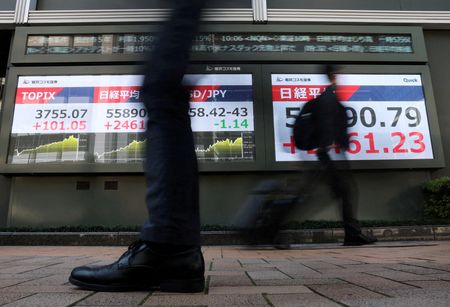
HONG KONG — Markets across Asia dropped Tuesday, following the lead of Wall Street where stocks pulled back from their recent record-setting levels.
Energy prices retreated after climbing earlier due to growing conflicts between the United States and Iran.
Futures for U.S. markets showed a modest 0.1% increase.
Trading activity remained light across the region, as markets in Japan, South Korea and mainland China remained shuttered for holiday observances.
The Hang Seng index in Hong Kong dropped 1.1% to close at 25,805.98. In Australia, the S&P/ASX 200 declined 0.5% to finish at 8,649.80, while Taiwan’s Taiex ended 0.2% lower at 40,626.22.
Monday brought new challenges to the delicate ceasefire agreement between Washington and Tehran when U.S. military forces reported destroying six small Iranian vessels that were threatening commercial shipping. Meanwhile, two American-flagged ships successfully navigated through the Strait of Hormuz.
This crucial passage for global oil and gas shipments continues to face significant restrictions, despite ongoing U.S. demands for Iran to allow normal transit. The United States has established a naval blockade around Iranian ports while launching President Donald Trump’s “Project Freedom” initiative Monday, designed to escort stranded vessels through the strategic waterway.
International benchmark Brent crude dropped $1.22 to $113.22 per barrel after Monday’s surge above $114, which represented nearly a 6% gain. Prior to the conflict’s start in late February, the commodity was valued around $70.
U.S. benchmark crude fell $2.08 to $104.34 per barrel.
Diplomatic efforts to establish a lasting peace agreement have reached an impasse. The situation worsened when the United Arab Emirates, a key U.S. partner, reported coming under Iranian attack for the first time since last month’s ceasefire took effect.
“We are seeing the first signs of the ceasefire between the U.S. and Iran breaking down amid a re-escalation in the Persian Gulf,” ING Bank analysts Warren Patterson and Ewa Manthey wrote in a note Tuesday.
“Continuation of ‘Project Freedom’ risks further escalation,” they wrote. “Any relief from stranded vessels making their way through the Strait will be temporary, with very few inbound vessels moving into the Persian Gulf.”
Monday’s session on Wall Street ended in negative territory, with the S&P 500 benchmark declining 0.4% from its latest peak to close at 7,200.75. The Dow Jones Industrial Average tumbled 1.1% to 48,941.90, while the tech-focused Nasdaq composite fell 0.2% to 25,067.80.
GameStop shares plummeted 10.1% following the company’s announcement of its intention to purchase eBay, despite eBay’s market capitalization being approximately four times larger than GameStop’s.
Currency markets saw the U.S. dollar strengthen to 157.27 Japanese yen from 157.25 yen. The euro weakened to $1.1687 from $1.1689.
According to a Bloomberg News report published Monday, Apple Inc. has begun preliminary conversations with Intel and Samsung Electronics regarding the potential manufacturing of processors for Apple’s electronic devices, sources with knowledge of the discussions revealed.
The report suggests the technology giant is exploring options for chip production partnerships with these major manufacturers. However, Reuters was unable to independently confirm the accuracy of these claims.
The discussions appear to be in early stages, with no concrete agreements or commitments announced by any of the companies involved.
Facebook’s parent company Meta Platforms has enlisted Morgan Stanley and JPMorgan Chase to arrange approximately $13 billion in financing for an artificial intelligence data center project in El Paso, Texas, according to a source with knowledge of the deal who spoke to Reuters on Monday.
The financing package will primarily consist of debt, with the remainder coming from equity investments, Bloomberg News initially reported.
Technology giants are investing massive amounts of capital into data center infrastructure as demand for AI technology surges, marking a shift from their traditional approach of avoiding debt financing as they compete in the artificial intelligence sector.
Representatives from Meta, Morgan Stanley, and JPMorgan Chase have not yet responded to requests for comment made outside of normal business hours.
In March, Meta dramatically increased its financial commitment to the planned El Paso artificial intelligence facility, expanding the investment more than six times to reach $10 billion. The company is targeting 1 gigawatt of capacity before the facility’s scheduled 2028 launch.
Meta joins competitors Amazon, Alphabet, and Microsoft in what analysts predict will be more than $630 billion in AI infrastructure spending this year across the industry.
Switzerland’s biotechnology companies have pivoted dramatically toward private investment sources during 2025, according to a new industry analysis released Tuesday. The shift comes as traditional capital market funding has become increasingly difficult to secure.
The Swiss Biotech Report 2026 reveals that while overall sector funding grew modestly by 2.1% to reach 2.6 billion Swiss francs (equivalent to $3.32 billion), privately-funded companies saw their investment jump by 38% compared to 2024. Private funding now represents almost half of all biotechnology investment in the country.
Drug manufacturers are increasingly choosing research and development partnerships, licensing deals, and other collaborative arrangements that provide financial support to their biotech partners, according to the report’s findings.
Michael Altorfer, who leads the Swiss Biotech Association as chief executive, indicated during a presentation that this pattern is likely to persist, while traditional merger and acquisition activity has slowed considerably.
Frederik Schmachtenberg, an EY partner who serves as global life sciences lead for Financial Accounting Advisory Services and helped author the report, explained the reasoning behind this trend. “It’s a global trend that pharma companies are trying to de-risk these structures,” Schmachtenberg said during an interview.
Schmachtenberg noted that capital markets continue to face difficulties following what he described as the “sugar high” period during the COVID-19 pandemic years.
According to Altorfer’s statement, foreign sources continue to provide the majority of investment funding.
The Swiss biotech industry achieved record-breaking revenue of 7.5 billion francs during 2025, the report indicated. This growth was fueled by an increasing number of companies reaching commercial operations and rising demand for specialized contract manufacturing and development services.
While product approvals decreased somewhat in the United States, Europe and Switzerland, this decline was partially balanced by increases in other important markets, particularly China and Canada, the report noted.
Global financial markets experienced turbulence Tuesday as tensions between the United States and Iran continued to escalate, keeping oil prices elevated above $100 per barrel despite recent declines.
Asian stock markets posted losses during Tuesday trading, with the MSCI Asia-Pacific index excluding Japan dropping 0.3%. Australian shares fell 0.4% in lighter trading volumes, while both Japanese and South Korean markets remained closed for holiday observances.
Futures markets in the United States and Europe also showed weakness, with Nasdaq and S&P 500 futures each declining approximately 0.1%. European markets faced steeper losses, with EUROSTOXX 50 futures down 0.2% and FTSE futures falling 0.75%.
The market volatility stems from ongoing confrontations between Washington and Tehran in Gulf waters, where both nations have implemented competing maritime blockades around the strategically important Strait of Hormuz. These clashes occurred shortly after President Donald Trump initiated a new initiative aimed at helping stranded vessels navigate through this crucial energy shipping corridor.
Shipping giant Maersk confirmed that the Alliance Fairfax, an American-flagged vehicle carrier operated through its Farrell Lines division, successfully passed through the Strait of Hormuz on Monday with US military escort.
However, the continuing confrontations have unsettled financial markets and underscored the persistent nature of Middle Eastern conflicts.
“We started yesterday with high hopes that operation ‘Project Freedom’ would be, I guess, a success on the ground, that it was being pitched as more of a humanitarian effort,” said Tony Sycamore, a market analyst at IG.
“But as we saw, the Iranians weren’t taking that bait at all… It really signifies that the stalemate remains in place, it’s been a very shaky start.”
Energy markets reflected these geopolitical concerns, with Brent crude futures declining 0.5% to $113.85 per barrel and US crude dropping 1.3% to $105.03. Both benchmarks had surged in the previous session due to heightened supply disruption fears.
Beyond geopolitical developments, market participants are preparing for a busy earnings week, with major companies including Advanced Micro Devices and Pfizer scheduled to report results Tuesday.
According to S&P Global Market Intelligence data, 83% of S&P 500 companies that have already reported quarterly results have exceeded earnings per share projections, while 78.2% have surpassed revenue expectations.
“With no signs of slowing down, AI-driven spending will likely continue to do the heavy lifting for S&P 500 earnings growth, led by the technology sector,” said Jeff Buchbinder, chief equity strategist at LPL Financial.
Currency markets remained focused on the Japanese yen, which held steady at 157.22 against the dollar following Monday’s brief rally that pushed the currency to an intraday peak of 155.69.
Japanese Finance Minister Satsuki Katayama issued statements Monday criticizing speculative foreign exchange trading, keeping market participants alert for potential government intervention after sources indicated Tokyo had acted to support its weakening currency last Thursday.
Abbas Keshvani, Asia Macro Strategist at RBC Capital Markets, suggested authorities might intervene again if the dollar-yen exchange rate approaches 160, a level they have historically defended. He noted that in 2022, Tokyo “fired three volleys of intervention in a few weeks.”
“We suspect intervention will merely act as a lid on USD/JPY, not a catalyst for protracted yen strength,” he said.
The Australian dollar weakened slightly by 0.06% to $0.7163 ahead of the Reserve Bank of Australia’s interest rate decision, where analysts widely anticipate a rate increase.
Meanwhile, the US dollar strengthened on safe-haven demand amid global uncertainties.
Federal Reserve policy expectations could shift based on upcoming economic data, including Friday’s April nonfarm payrolls report. Economists forecast the US economy added 62,000 jobs following March’s robust gain of 178,000, though seasonal adjustment challenges create significant uncertainty.
Current market expectations suggest the Fed will maintain its policy interest rate at current levels throughout the year due to inflationary pressures from global energy market disruptions.
Gold prices rose 0.2% to $4,529.19 per ounce, remaining within recent trading ranges.
Currency markets showed mixed signals Tuesday as the Japanese yen maintained stability following what experts believe was government intervention last week, while the U.S. dollar strengthened as investors flocked to safer assets amid growing Middle East tensions.
The yen traded at 157.22 against the dollar, remaining near its strongest position in two months after experiencing several sharp rallies since Thursday. Market sources indicated Japanese authorities spent approximately $35 billion to support their currency, though experts question whether this will provide lasting relief for the struggling yen.
Meanwhile, the dollar index, which tracks the U.S. currency against six major currencies, held steady at 98.452 after climbing 0.3% Monday. The euro remained weak at $1.1693, while the British pound traded at $1.353.
“While we have seen a clear shift toward risk aversion, we are yet to see the kind of outsized moves that would likely accompany a full escalation in hostilities,” said Nick Twidale, chief market strategist at ATFX Global in Sydney.
The currency movements come as fresh military strikes between U.S. and Iranian forces in the Gulf Monday renewed market anxiety, testing an already fragile ceasefire and dampening investor appetite for riskier assets.
Energy markets continue driving much of the uncertainty, with the closure of the Strait of Hormuz – a critical pathway for roughly 20% of global oil shipments – creating supply disruptions that have kept crude prices elevated since the conflict began in late February. Brent crude futures traded at $113.8 per barrel Tuesday, down 0.6% after surging 6% the previous day.
Australia’s currency held relatively stable at $0.7168 as traders awaited the Reserve Bank of Australia’s policy announcement, where officials are expected to implement their third consecutive rate increase to combat inflation running above the central bank’s 2%-3% target since mid-2025.
Currency analysts remain watchful of the yen’s movements, particularly as it approaches the politically sensitive 160 level against the dollar. Japan’s currency has faced years of pressure from the country’s ultra-low interest rates and growing differences with higher-yielding markets elsewhere.
Deepali Bhargava from ING’s Asia-Pacific research team noted that the suspected intervention has only temporarily adjusted trading ranges without addressing the fundamental pressures weighing on the yen.
Charu Chanana, chief investment strategist at Saxo, expects continued volatility in a 155-160 range, with Japanese authorities likely preventing any decisive break above 160 rather than engineering a complete reversal.
“Near term, USDJPY may stay volatile in a wider 155–160 range, with authorities likely leaning against a clean break above 160 rather than engineering a durable yen reversal,” Chanana explained.
The yen’s future performance remains closely linked to oil price movements and the resolution of Middle East hostilities, according to market watchers.
“A lot hinges on oil price,” said Vasu Menon, managing director of investment strategy at OCBC. “If it rises or remains elevated, then the yen could come under pressure once again.”
Crude oil markets retreated Tuesday following a successful U.S. naval operation that helped break Iran’s blockade of the strategically vital Strait of Hormuz waterway. The development came after oil prices had surged as much as 6% in Monday’s trading session.
The United States initiated a new military mission Monday focused on restoring shipping access through Hormuz. Shortly afterward, shipping giant Maersk announced that its U.S.-flagged vessel Alliance Fairfax successfully navigated through the strait while under protection from American military forces, providing relief from immediate supply shortage concerns.
July Brent crude contracts dropped 68 cents, or 0.6%, to $113.76 per barrel at 0100 GMT, following Monday’s 5.8% gain. U.S. West Texas Intermediate crude declined $1.59, or 1.5%, to $104.83, after Monday’s 4.4% increase.
“The successful escorted exit of the Maersk-operated vessel has helped ease some immediate supply disruption fears,” said Tim Waterer, chief market analyst at KCM Trade.
“It shows that limited safe passage is possible under current conditions and helps chip away at some of the worst-case supply disruption fears. However, it’s still very much a one-off event rather than a full reopening,” he said in an email.
However, Iran responded to the American initiative with military strikes throughout the Gulf region Monday as both nations compete for control of the Strait of Hormuz, the narrow passage linking the Persian Gulf to international markets. The waterway normally transports oil and natural gas equivalent to roughly 20% of worldwide daily consumption.
Multiple commercial ships reportedly sustained damage in the region, while Iranian forces targeted a major oil facility in the United Arab Emirates, causing significant fires. This naval intervention marks the most serious escalation in the conflict since a truce was established four weeks earlier.
Washington is working to restore Hormuz shipping operations to address severe disruptions to international energy markets that began when Iran largely sealed the waterway following the start of U.S.-Israeli military action on February 28.
Chevron Chairman and CEO Mike Wirth warned Monday that physical oil shortages will soon emerge globally due to the Hormuz blockade.
Goldman Sachs reported Monday that worldwide oil inventories are nearing eight-year lows because of the supply interruptions, with analysts expressing concern about the rapid depletion rate while access remains limited.
“With the world rapidly burning through commercial stockpiles, strategic reserves, and crude held in floating storage, the underlying supply squeeze remains a potent tailwind for oil prices,” IG market analyst Tony Sycamore said in a note.
A Chinese pharmaceutical company focused on developing cancer treatments is preparing to go public on the Hong Kong stock exchange, with plans to raise as much as $117 million, according to financial documents obtained by Reuters.
Impact Therapeutics plans to sell 41.98 million shares with prices ranging from HK$19.75 to HK$21.75 per share, which translates to approximately $2.52 to $2.78 in U.S. dollars.
The fundraising total could potentially reach $134 million if investment banks exercise their option to purchase additional shares beyond the initial offering.
Several major investors have already committed to purchasing shares, including technology giant Tencent and five other cornerstone investors, who together plan to buy approximately $35.7 million worth of stock.
The company has scheduled May 11 as the date to finalize share pricing, with trading expected to commence on May 13 on the Hong Kong exchange.
Warren Buffett’s investment giant Berkshire Hathaway has reportedly identified General Re Chairman Charlie Shamieh to take the reins of its massive insurance operations, according to a Wall Street Journal report published Monday.
Sources familiar with the succession planning told the Journal that Shamieh is being positioned to lead Berkshire’s extensive insurance division once current head Ajit Jain chooses to step down from his role. Jain, who is 74 years old, has been a key figure in the company’s insurance business for decades.
The Wall Street Journal’s reporting cited unnamed individuals with knowledge of the internal discussions. Reuters was unable to independently confirm the succession plan, and Berkshire Hathaway has not yet provided a response to requests for comment about the reported leadership transition.
The potential change would mark a significant shift in leadership for one of Berkshire Hathaway’s most important business segments under Buffett’s corporate umbrella.
A major Australian scientific testing company announced Tuesday that cybercriminals breached portions of their computer network, leading to brief operational interruptions before security teams successfully contained the attack.
The company, ALS, which conducts scientific analysis for commodities, food products, and pharmaceutical industries, described the incident as causing a ‘temporary disruption’ to certain business functions. Quick response efforts by their security personnel helped bring most systems back online.
ALS has notified Australia’s Cyber Security Centre about the breach and is collaborating with customers, government officials, and regulatory agencies to determine whether any sensitive information was accessed or stolen during the attack.
Company officials declined to specify when the security breach occurred or provide additional details about the timeline of events.
According to ALS, their information technology and cybersecurity personnel immediately responded to what they characterized as malicious digital intrusion, receiving assistance from outside incident response experts during the containment process.
This cyber attack comes just one week after Australia’s banking oversight agency issued warnings that financial institutions are falling behind in keeping pace with rapidly advancing artificial intelligence technologies.
The regulatory body expressed concerns that new AI systems, including Anthropic’s Mythos platform, could potentially make cyberattacks more frequent and sophisticated.
Greg Brockman, co-founder and president of OpenAI, revealed extensive financial connections to CEO Sam Altman during court testimony Monday, including a personal stake in the artificial intelligence company valued at nearly $30 billion.
The disclosure came as part of ongoing legal proceedings in a California courtroom, where Tesla CEO Elon Musk is pursuing a lawsuit against the ChatGPT creator. Musk claims the organization violated its original mission by transforming from a charitable nonprofit into a profit-driven enterprise.
During his testimony, Brockman confirmed his ownership interest in OpenAI approaches $30 billion in value – a figure that had not been publicly revealed before. Legal representatives for Musk argued these financial arrangements may have influenced Brockman’s decision-making and compromised his ability to act independently from Altman.
The court learned that in 2017, Altman provided Brockman with an ownership percentage in Altman’s family investment office, valued at $10 million during that period. This same year marked discussions among OpenAI leadership, including Musk and Brockman, about restructuring the organization as a for-profit entity to fund expensive computational resources needed for artificial intelligence development.
Email correspondence presented in court showed communication between Altman and Jared Birchall, who manages Musk’s family office operations. Birchall informed Musk about the compensation arrangement in writing.
“One thing worth mentioning now is that he compensated Greg on the side by giving him a percentage ownership of Sam’s personal family office,” Birchall stated in the message, suggesting the agreement might mean “Greg is going to have a greater allegiance to Sam as a result of this arrangement.” Musk responded by forwarding the message to Brockman with two question marks.
When questioned about his loyalty to Altman, Brockman responded, “I don’t know I would say it quite like that.”
Additional financial entanglements emerged during Monday’s proceedings. Brockman acknowledged owning shares in Cerebras, an artificial intelligence chip manufacturer, including periods when OpenAI considered acquiring the company. OpenAI announced plans this year to purchase substantial quantities of Cerebras processors.
Brockman also confirmed investment in Helion Energy, a nuclear fusion startup where Altman has committed hundreds of millions in funding. Altman recently resigned from Helion’s board of directors in March as the companies explored potential collaboration opportunities.
The legal battle, now in its second week, centers on Musk’s allegations that OpenAI leadership secured his $38 million in contributions and assistance by promising to maintain a nonprofit structure focused on safe artificial intelligence development. Musk contends they subsequently abandoned this commitment to pursue personal financial gain through for-profit operations.
The lawsuit seeks $150 billion in damages and demands the removal of both Altman and Brockman from their executive positions. Musk’s legal claims include breach of charitable trust and unjust enrichment.
OpenAI has countered that Musk’s motivations stem from his desire to control the organization and resentment over the company’s achievements following his departure from the board in 2018. The company maintains that Musk showed little concern for safety protocols during his involvement and is now attempting to benefit his competing venture, xAI, which has struggled to match OpenAI’s market penetration.
The trial’s outcome could significantly impact OpenAI’s future direction. The company triggered widespread interest in generative artificial intelligence following ChatGPT’s debut in late 2022, subsequently raising more than $100 billion from investors to fund research staff, computing infrastructure, and expansion plans ahead of a potential public offering that could reach trillion-dollar valuations.
Australia’s Westpac Banking Corp delivered disappointing financial results on Tuesday, falling short of analyst projections while pointing to Middle East tensions as a factor affecting customer finances through elevated energy costs.
The country’s second-biggest home loan provider posted first-half net earnings of A$3.41 billion ($2.44 billion), which came in below the A$3.47 billion consensus forecast from Visible Alpha. The weaker performance stemmed from increased credit loss provisions and reduced Treasury earnings.
Credit impairment expenses climbed to A$443 million from A$250 million in the previous year, as the bank adopted a more conservative economic perspective, implemented additional portfolio protections, and saw a rise in problem loans.
Bank CEO Anthony Miller indicated the institution maintains strong positioning to handle Middle East conflict effects, though while customer stress has decreased, the bank chose a “prudent approach” in boosting its reserves.
“The war in the Middle East is presenting challenges for some customers and the economic impact of the conflict will continue through the year,” the bank stated.
“The disruption to energy supply chains has driven a rise in prices and we’re seeing this flow through to businesses and households.”
Nevertheless, the bank’s broader credit health stayed steady, with troubled loans dropping to 1.16% of total exposure, down 20 basis points year-over-year, while home loan payments delayed beyond 90 days decreased 19 basis points to 0.64%.
Australian residential lending, not including Westpac’s RAMS division, expanded 7% in the first six months, while commercial lending surged 16%, boosted by property, infrastructure and industrial activity.
The bank’s net interest margin, a crucial profitability indicator, declined three basis points to 1.89% from 1.92% the prior year, pressured by competitive lending markets, higher credit provisions and reduced Treasury revenue.
Westpac’s common equity tier 1 ratio, which measures financial cushion, reached 12.42% at period-end versus 12.24% twelve months earlier.
The financial institution announced an interim dividend payment of 77 Australian cents per share, up from 76 Australian cents in the comparable period.
Tesla CEO Elon Musk has reached an agreement with federal securities regulators to pay a $1.5 million penalty, bringing to a close allegations that he delayed reporting his initial Twitter stock acquisitions in 2022.
The resolution was announced Monday in Washington D.C. federal court, with a trust established in Musk’s name responsible for paying the civil penalty. Under the terms, Musk does not acknowledge any wrongdoing and will retain the estimated $150 million he allegedly gained from the delayed disclosure.
The agreement must receive approval from U.S. District Judge Sparkle Sooknanan, who previously denied Musk’s attempt to have the case thrown out in February.
This settlement marks the end of a contentious seven-year period of legal confrontations between Musk and the Securities and Exchange Commission, which began in September 2018 when regulators accused him of securities fraud for posting on social media that he had “secured” financing to take Tesla private.
That earlier dispute resulted in Musk paying a $20 million penalty, agreeing to have Tesla attorneys review certain social media posts beforehand, and stepping down from his position as Tesla’s chairman.
“Mr. Musk has now been cleared of all issues related to the late filing of forms in the Twitter acquisition, as we said from the outset he would be,” stated his attorney Alex Spiro.
The SEC chose not to provide comment on the settlement.
According to the agency’s January 2025 legal filing, Musk’s 11-day postponement in announcing his initial 5% ownership in Twitter during late March and early April 2022 allowed him to purchase more than $500 million worth of additional shares at below-market prices before ultimately revealing a 9.2% stake.
Federal regulators had sought both a financial penalty and repayment of the $150 million they claimed he improperly gained at other investors’ expense.
Musk maintained the delay was unintentional and claimed the SEC was infringing on his constitutional rights to free expression by pursuing the case.
The lawsuit was filed just six days before former President Joe Biden’s term ended and Donald Trump took office. Current SEC Chairman Paul Atkins has been shifting the agency’s enforcement approach.
“It’s an embarrassing day for the SEC,” commented Amanda Fischer, who previously served as chief of staff to Gary Gensler during his tenure as SEC chairman under the Biden administration. She suggested the settlement “should cause the public to question whether the SEC is protecting White House insiders at the expense of ordinary investors.”
Musk previously headed the Trump administration’s Department of Government Efficiency, focusing on reducing federal spending, before departing the role last May.
Robert Frenchman, an attorney with the Dynamis law firm in New York, characterized the $1.5 million fine as a “modest sum for the richest person on the planet” but noted it could discourage similar violations by other executives.
“That is a statement to the market that the rules apply to everyone, even to Elon Musk,” he explained.
Musk finalized his $44 billion acquisition of Twitter in October 2022. He subsequently merged Twitter into his artificial intelligence venture xAI, which was then incorporated into his space exploration company SpaceX. Forbes currently estimates Musk’s net worth at $789.9 billion.
Both parties announced settlement discussions on March 17, just one day after SEC enforcement director Margaret Ryan unexpectedly resigned after serving slightly more than six months in the position.
Ryan’s resignation reportedly followed internal disagreements with other agency officials regarding enforcement strategies, according to sources familiar with the situation.
A representative for Ryan did not respond to requests for comment Monday.
According to someone knowledgeable about the settlement terms, Musk’s penalty represents the highest amount ever imposed by the SEC for this category of violation.
This matter is distinct from another civil lawsuit where a San Francisco jury determined on March 20 that Musk had misled Twitter shareholders following his buyout announcement.
In that class action suit, investors alleged that Musk deliberately raised concerns about Twitter being flooded with fake accounts and automated bots as a strategy to force renegotiation of the purchase price or abandon the deal entirely.
The shareholders contended that Musk’s public statements drove down Twitter’s stock value, causing them financial harm when they sold shares at reduced prices. They estimate potential damages could reach $2.5 billion.
Musk’s legal team, including Spiro, is seeking dismissal of that case or requesting a new trial, arguing the verdict was “the result of bias and prejudice toward a polarizing defendant.”
The leader of American Airlines’ pilot union has commended United Airlines CEO Scott Kirby for displaying the type of forward-thinking leadership that American desperately needs, following Kirby’s recent merger proposal between the two carriers.
Allied Pilots Association President Nick Silva sent a message to union members on Monday expressing that Kirby’s approach demonstrated “bold vision” and could prove “transformative” for travelers, local communities, and American Airlines flight crews.
Though Silva’s communication fell short of formally supporting a potential merger between United and American, he leveraged the discussion to voice ongoing concerns about American’s current management team. The airline’s leadership has faced mounting criticism from labor groups regarding the company’s disappointing financial results.
American Airlines has not yet provided a response to requests for comment regarding Silva’s statements.
United announced last month that it had abandoned efforts to pursue a combination with American after the competing airline refused to participate in discussions following United’s initial overture. American has maintained that joining forces with United would harm market competition and negatively impact consumers.
The image-sharing social media company Pinterest saw its stock price climb 15% in after-hours trading Monday after announcing revenue projections for the upcoming quarter that surpassed analyst expectations.
The platform’s positive outlook stems from continued advertiser investment and recent technological improvements, including enhanced artificial intelligence features in its Performance+ advertising platform that streamline ad creation and improve audience targeting precision.
These technological advances, combined with efforts to court smaller businesses, are helping offset reduced spending from major advertisers who have cut back due to increased expenses from trade disputes and global tensions.
“Large advertisers remain important for stability but are not the primary growth driver,” stated Lenny Zéphirin, principal and analyst at The Zéphirin Group.
While demand from smaller businesses shows improvement for Pinterest, Zéphirin noted it continues to fluctuate with trade policy changes and broader economic conditions.
The earnings announcement follows Elliott’s recent disclosure of a $1 billion investment in Pinterest, supporting the company’s advertising strategy and backing a new $3.5 billion stock buyback initiative.
Pinterest faces ongoing competition from well-funded rivals including Meta’s Instagram and Facebook platforms, as major brands reduce platform spending amid rapid AI transformation in digital advertising and tariff-related cost pressures affecting profit margins.
Other social platforms are similarly investing in AI for growth acceleration. Reddit recently projected strong revenue increases powered by AI-enhanced advertising technology.
In February, Pinterest finalized its purchase of tvScientific, expanding advertiser reach from social media into connected television and accessing additional advertising budgets.
The company projects second-quarter revenue ranging from $1.13 billion to $1.15 billion, exceeding the $1.11 billion analyst consensus compiled by LSEG.
Pinterest reported 631 million global monthly active users at the end of the first quarter, representing growth from 570 million users during the same period last year.
First-quarter revenue increased 18% to $1.01 billion, surpassing analyst estimates of $966.25 million.
OAKLAND, Calif. — During court proceedings on Monday, OpenAI president Greg Brockman revealed that his ownership interest in the artificial intelligence company has reached a value of approximately $30 billion.
Brockman, who serves as the chief deputy to CEO Sam Altman, made the revelation while providing testimony in a legal battle focused on how the company transformed from its 2015 origins as a nonprofit organization largely backed by Elon Musk into today’s profit-driven enterprise valued at $852 billion. The executive also stated he never put his own money into the company initially.
The massive valuation of Brockman’s holdings would place him among the world’s wealthiest individuals according to Forbes rankings, with riches similar to those of Melinda French Gates.
Musk’s legal challenge claims that Altman and Brockman betrayed him by abandoning the San Francisco-based company’s original purpose of serving as a responsible guardian of groundbreaking technology. The complaint argues they secretly pivoted toward profit generation without Musk’s knowledge.
Just before the trial commenced, OpenAI’s legal team attempted to introduce text messages Musk sent to Brockman two days prior to proceedings. Court documents indicate Musk initially reached out about potential settlement discussions.
However, when Brockman responded suggesting both parties should withdraw their legal claims, Musk reportedly replied with a threatening message: “By the end of this week, you and Sam will be the most hated men in America. If you insist, so it will be.”
Judge Yvonne Gonzalez Rogers, who is presiding over the case, rejected the text message exchange as admissible evidence.
Doris Fisher, the retail pioneer who helped launch the Gap clothing empire more than five decades ago, has passed away at age 94.
Fisher passed away Saturday while surrounded by loved ones, according to a Gap company representative who made the announcement Monday. No details were provided regarding the cause of her passing.
The retail journey began in 1969 when Fisher and her husband Don launched their business following Don’s difficulty finding properly fitting jeans during a shopping trip, the company reports. Their first location opened as a modest storefront on Ocean Avenue in San Francisco, selling exclusively men’s Levi’s denim and music records.
From those humble beginnings, the Fisher brand grew into a worldwide retail powerhouse that transformed casual American style, popularizing everything from khaki pants and denim to basic tees and coordinated knitwear collections.
Today’s Gap empire includes additional brands Banana Republic and Old Navy, with combined annual revenue exceeding $15 billion across international markets.
Well-known investor Michael Burry has completely divested from his GameStop holdings after the company’s CEO Ryan Cohen announced an acquisition deal involving eBay, according to a Monday report from the Wall Street Journal.
The financial news outlet confirmed that Burry has liquidated his entire stake in the video game retailer following Cohen’s business transaction announcement.
LOS ANGELES — Board members of the Screen Actors Guild-American Federation of Television and Radio Artists are preparing to examine a preliminary contract agreement reached with major studios and streaming platforms this week.
The tentative agreement, revealed on Saturday, requires approval from SAG-AFTRA’s board followed by ratification through a membership vote. Should both steps proceed as anticipated, Hollywood will sidestep a recurrence of last year’s devastating strikes by actors and writers that severely disrupted the entertainment business. This round of contract talks proceeded smoothly without significant conflict, making work stoppages unlikely from the start.
Both SAG-AFTRA and the Alliance of Motion Picture and Television Producers issued a combined announcement regarding the preliminary agreement. The Alliance serves as the bargaining representative for Hollywood’s leading studios, streaming companies, and production firms.
According to their joint announcement, contract specifics will remain confidential until union board members complete their evaluation.
A source with knowledge of the discussions revealed to The Associated Press that negotiators agreed to a four-year contract term rather than the traditional three-year standard. The individual requested anonymity as they lacked authorization to discuss the matter publicly.
Key union objectives during negotiations centered on strengthening safeguards against artificial intelligence technology that could generate digital performers or replicate actual actors’ appearances. The performers also sought enhanced long-term compensation for program reruns, commonly called residuals within the industry.
During a pre-negotiation interview with the AP, SAG-AFTRA President Sean Astin emphasized the union’s commitment to maintaining previous strike victories.
“There is no going back,” he said.
Astin noted that studio executives were “sending signals of wanting stability, of wanting to work as partners.”
Studio representatives similarly expressed measured confidence about achieving an equitable agreement.
Approximately six weeks of discussions led to the final deal. Talks commenced on February 9 but paused temporarily while studios focused on writer negotiations, which also resulted in a four-year contract extension beyond their typical three-year terms.
The existing SAG-AFTRA agreement expires on June 30. Contract discussions frequently approach or exceed deadlines, even during years without labor disputes.
With actor negotiations concluded, AMPTP representatives can now turn their attention to upcoming Directors Guild contract talks. These discussions, scheduled to begin May 11, will mark the first negotiations under new guild president Christopher Nolan.
Crude oil costs soared beyond the $100 per barrel threshold Monday as Iran maintains its grip on the crucial Strait of Hormuz waterway, even as the United States works to restore normal shipping operations. The energy crisis sent Treasury bond yields climbing while pulling stock markets into negative territory.
Market analyst Jamie McGeever warns that consumers, businesses and investors should prepare for inflation to hit 4%. With price increases already running above the Federal Reserve’s 2% goal for an extended period, the current energy crisis will likely push inflation even higher in coming months.
Monday’s market activity showed significant regional variations. Asian markets outside Japan posted their strongest performance in a month with a 2.8% gain, led by South Korea’s KOSPI index which surged 5% to record highs. European markets moved in the opposite direction, falling 1% in their worst session in a month. U.S. markets also declined, with the Dow Jones dropping 1%.
Within the S&P 500, energy was the sole sector posting gains with a 0.9% increase, while all other ten sectors fell. Materials led the decline at -1.6%, followed by industrials at -1.2%. Individual stock movements included GameStop falling 8.5%, eBay rising 5%, UPS dropping 10%, FedEx declining 9%, Micron Technology gaining 6%, and Oracle up 5%.
Currency markets saw the Japanese yen weaken back to 157 against the dollar, with the U.S.-Iran conflict supporting dollar strength. India’s rupee hit a new low, while Bitcoin temporarily reclaimed the $80,000 level for the first time since late January.
Bond markets experienced significant moves as U.S. yields jumped approximately 6 basis points across all maturities. Two-year and ten-year yields reached their highest levels since late March, while the 30-year yield climbed above 5% for the first time since July.
Commodity markets reflected the geopolitical tensions, with Brent crude spiking 5% and West Texas Intermediate up 3%. Gold moved lower by 2%.
Artificial intelligence spending forecasts continue reaching new heights, according to major Wall Street firms. Morgan Stanley analysts now project the five largest U.S. technology companies will spend over $800 billion on AI infrastructure this year, rising to $1.1 trillion next year. Goldman Sachs expects total AI infrastructure investment to reach $7.6 trillion by 2031.
Corporate earnings expectations are also climbing dramatically. First quarter earnings are projected to grow 27.8% compared to the same period last year, according to LSEG Data & Analytics. The full-year 2026 growth forecast stands at 22.6%. These projections have nearly doubled from 14.4% on April 1, representing the highest growth expectations since late 2021.
In merger and acquisition news, GameStop has proposed a surprising $56 billion cash and stock offer for eBay. The former meme stock favorite, which gained fame during trading frenzies five years ago, is attempting to acquire the online retailer that is nearly four times its size, raising questions about financing and whether eBay might attract other suitors.
Looking ahead, markets will focus on Middle East developments, energy price movements, Australia’s interest rate decision, and economic data from Indonesia and Hong Kong. Key U.S. data releases include job openings, trade figures, and service sector activity. Federal Reserve officials and European Central Bank leaders are scheduled to speak, while major companies including AMD, Pfizer, and KKR report earnings.
Tesla CEO Elon Musk has reached an agreement with federal regulators to pay $1.5 million in penalties over allegations he delayed reporting his early Twitter stock purchases in 2022.
The Securities and Exchange Commission filed the civil case in January, claiming Musk violated disclosure rules by waiting 11 days beyond the legal deadline to report his initial 5% stake in the social media company, now called X. According to the lawsuit, this delay occurred in late March and early April 2022.
Federal regulators alleged the billionaire’s failure to promptly announce his investment allowed him to purchase more than $500 million worth of additional Twitter shares at lower prices before the market knew of his involvement.
Under the settlement terms announced Monday in Washington D.C. federal court, a trust associated with Musk will pay the penalty without acknowledging any wrongdoing. The agreement does not require him to return the estimated $150 million he allegedly saved through the delayed disclosure.
Musk previously defended himself by claiming the delay was unintentional and argued that the SEC was infringing on his constitutional right to free speech by pursuing the case.
The billionaire entrepreneur ultimately acquired Twitter for $44 billion in October 2022.
According to sources familiar with the agreement, Musk’s penalty represents the highest fine ever imposed by the SEC for this particular type of violation.
Legal experts suggested that proving the SEC’s demand for the $150 million in alleged savings would have been challenging in court proceedings.
This settlement marks the latest chapter in Musk’s ongoing disputes with securities regulators, which began in September 2018 when he was charged with fraud for tweeting that he had “secured” financing to take Tesla private.
That earlier case resulted in a $20 million fine, requirements for Tesla attorneys to review certain social media posts, and Musk stepping down as Tesla’s board chairman.
The resolution came three months after U.S. District Judge Sparkle Sooknanan denied Musk’s attempt to have the case dismissed. Court records show both parties began settlement discussions on March 17.
The SEC initiated this lawsuit just six days before former President Joe Biden’s term ended and Donald Trump returned to office. The agency’s current leadership under Chairman Paul Atkins has been adjusting enforcement strategies and priorities.
Data analytics firm Palantir Technologies announced Monday it has increased its yearly revenue projections after surpassing quarterly financial expectations, reflecting heightened interest in its software solutions from both federal agencies and private sector clients.
The increased adoption of artificial intelligence technology in military operations has created greater demand for software systems like those created by Palantir, which assist defense organizations in processing information and making rapid tactical decisions.
The company has adjusted its fiscal 2026 revenue expectations upward to a range of $7.65 billion to $7.66 billion, a significant increase from previous projections of $7.18 billion to $7.20 billion.
Additionally, Palantir has boosted its yearly projections for domestic commercial revenue to exceed $3.22 billion, up from earlier estimates of $3.14 billion.
The company operates two main divisions: its government segment provides data analysis and artificial intelligence software to military and intelligence organizations, while its commercial arm offers enterprise AI solutions that help businesses integrate information and streamline operational processes.
“The United States remains the center, the constant core, of our business. And that business is erupting,” Chief Executive Alex Karp stated in a shareholder communication released Monday.
First-quarter revenue totaled $1.63 billion for the period ending March 31, surpassing the $1.54 billion average projection compiled by LSEG analysts.
The firm reported that income from domestic commercial clients surged 133% to $595 million, while government customer revenue climbed 84% to $687 million.
Adjusted earnings per share reached 33 cents during the first quarter, exceeding analyst predictions of 28 cents. Company stock prices rose nearly 1% during after-hours trading.
Reuters previously reported in March that Palantir’s Maven AI platform will receive official Pentagon program status, securing long-term deployment of the company’s targeting technology throughout U.S. military branches.
The company also recently obtained a $300 million agreement with the U.S. Department of Agriculture last month.
Management projects second-quarter revenue between $1.797 billion and $1.801 billion, exceeding analyst estimates of $1.68 billion.
Lattice Semiconductor Corporation announced Monday its intention to purchase AMI, a company specializing in artificial intelligence cloud services and platform management, in a transaction valued at $1.65 billion.
The acquisition marks a major move by the semiconductor company to expand its presence in the artificial intelligence software sector. The deal was disclosed as part of the company’s strategic growth initiatives.
Vertex Pharmaceuticals delivered stronger-than-anticipated first-quarter earnings on Monday, powered by explosive growth in revenue from its newest cystic fibrosis medication.
The genetic condition affects the body’s ability to regulate salt and water movement within cells, resulting in serious breathing difficulties and digestive complications including chronic coughing, breathing troubles, and nutritional deficiencies.
Sales of the company’s latest cystic fibrosis treatment, Alyftrek, skyrocketed to $424.4 million during the first three months of the year, representing a dramatic 687% jump from the $53.9 million recorded in the same quarter last year. The once-daily triple-drug combination received regulatory approval in December 2024.
While maintaining its leadership position in cystic fibrosis treatments, the Boston-headquartered pharmaceutical company continues exploring new therapeutic areas. The firm is focusing expansion efforts on Casgevy, its gene therapy targeting sickle cell disease and a blood disorder called transfusion-dependent beta-thalassemia, alongside Journavx, an innovative pain medication that doesn’t contain opioids.
However, revenue from the company’s established CF treatment Trikafta fell short of Wall Street projections, generating $2.35 billion versus analyst forecasts of $2.64 billion, based on LSEG data.
Company executives maintained their full-year revenue projections between $12.95 billion and $13.1 billion.
Since Journavx entered the market in March of last year, pharmacies have dispensed over 1 million prescriptions. During the first quarter of 2026, prescription volume surpassed 350,000, producing $29 million in revenue, according to company officials.
Total quarterly revenue climbed 8% to reach $2.99 billion, slightly below the $3.02 billion analysts had projected.
Adjusted earnings per share came in at $4.47, surpassing Wall Street expectations of $4.31 per share.
Media conglomerate Paramount Skydance announced Monday that its pre-tax profits increased during the first quarter, driven by operational efficiency measures and stronger performance from its streaming and film studio divisions, which helped counterbalance weaker television results.
The entertainment company warned that second-quarter revenue will likely fall short of Wall Street projections, pointing to the absence of major blockbuster releases such as “Mission: Impossible — The Final Reckoning” and NCAA Final Four basketball coverage.
The company’s adjusted earnings before interest, taxes, depreciation, and amortization reached $1.16 billion for the quarter, representing a 59% jump compared to the same period last year, boosted by the Paramount-Skydance combination. Total revenue grew modestly by 2% to $7.35 billion.
The profit gains stemmed from expense reductions following the corporate merger and an 11% surge in streaming revenue.
These financial results mark the first reporting period since Paramount completed its $110 billion acquisition of Warner Bros Discovery, a strategic move designed to enhance the company’s scale in entertainment production by leveraging Warner’s extensive content library.
Management projects second-quarter revenue will range between $6.75 billion and $6.95 billion, falling below analyst forecasts of $7.07 billion based on LSEG data.
In an effort to strengthen its streaming platform, Paramount began airing Ultimate Fighting Championship events in January, contributing to Paramount+ reaching 79.6 million total subscribers during the first quarter.
The company indicated that subscriber growth for the streaming service will remain relatively flat in the upcoming quarter as it phases out approximately 2 million international bundled accounts.
Paramount reported adjusted earnings of 23 cents per share for the first quarter, surpassing analyst estimates of 15 cents per share.
Language-learning app Duolingo delivered solid first-quarter financial results but indicated it’s taking a more cautious approach to future growth, choosing to emphasize user satisfaction and platform enhancements rather than quick revenue gains.
The company’s approach represents a strategic pivot toward improving the user experience and maintaining long-term customer loyalty instead of pursuing immediate financial returns, as it channels resources into platform quality and user interaction to expand its subscriber base.
“We are making long-term bets, and the returns on the investments we’re making are going to be 2027 and beyond,” CFO Gillian Munson told Reuters.
Market analysts are closely watching whether Duolingo can maintain its successful track record of converting free users into paying customers through its freemium business model, especially as booking growth shows signs of deceleration.
The educational technology company generated $292.0 million in revenue during the first quarter, surpassing analyst projections of $288.5 million according to LSEG data, with subscription services continuing to fuel the majority of its income.
The platform saw its daily active user count climb 21% to reach 56.5 million, while paying subscribers grew by the same percentage to 12.5 million, demonstrating sustained user involvement worldwide.
Overall bookings increased 14% to $308.5 million in the first quarter, exceeding Visible Alpha’s estimates of $301.7 million.
The company kept its annual revenue projection largely unchanged, estimating approximately $1.21 billion for the full year, which aligns with analyst forecasts and represents roughly 16% growth. For the upcoming second quarter, Duolingo anticipates revenue of about $295.5 million, slightly above the $294 million estimate.
Management expects booking growth of approximately 10.5% for the year, with a more gradual pace anticipated in the second quarter before gaining momentum in 2026.
The company’s strategic plan focuses on growing its user community and increasing user involvement, targeting 100 million daily active users by 2028. Duolingo has been allocating significant resources toward platform enhancements, especially in speech recognition capabilities and artificial intelligence-driven features including its premium Duolingo Max subscription tier.
Although these investments are anticipated to fuel long-term expansion, they involve short-term compromises. The company indicated that profit margins may decrease later this year as artificial intelligence feature usage grows.
California’s insurance department is pursuing millions of dollars in fines against State Farm following an investigation that uncovered widespread violations in the company’s handling of wildfire victim claims.
Ricardo Lara, the state’s Insurance Commissioner, announced Monday that investigators discovered hundreds of legal violations by the insurance giant while processing claims from last year’s devastating Los Angeles-area fires.
The probe began in June after survivors of the deadly Palisades and Eaton fires complained that California’s biggest home insurance provider was stalling payments and mismanaging claims related to property damage and smoke contamination.
“Our investigation found that State Farm delayed, underpaid, and buried policyholders in red tape at the worst moment of their lives. That is unacceptable, and we are taking decisive action to hold them accountable,” Lara said in a statement.
The twin blazes proved catastrophic, claiming 31 lives and wiping out more than 16,000 buildings across the region.
Investigators examined 220 randomly selected State Farm claims and discovered nearly 400 violations, including insufficient payments and sluggish claim processing. State Farm handled over 11,000 wildfire claims, representing approximately one-third of all filed claims, according to state data. Officials estimate thousands of policyholders may have been impacted by these illegal practices.
An administrative judge will determine the final penalty amount before Lara gives final approval.
State Farm represents the second insurance company facing state enforcement action over wildfire claim handling. Regulators are also pursuing remedies against the FAIR Plan for rejecting smoke damage claims. This insurance pool, funded by major private insurers, provides coverage to property owners unable to secure private insurance due to high-risk locations.
State Farm has not yet responded to requests for comment on the allegations.
Investment banking firm Goldman Sachs issued a warning Monday that worldwide petroleum reserves are nearing their lowest point in nearly eight years, with the rapid pace of inventory decline raising red flags as Middle East conflicts continue disrupting key shipping lanes.
Crude oil values surged approximately 6% Monday following Iranian attacks on multiple vessels in the Strait of Hormuz that also ignited a United Arab Emirates petroleum facility. The escalation marked the most serious incident since a truce was established four weeks prior, as President Donald Trump’s efforts to deploy U.S. naval forces to clear shipping lanes triggered heightened tensions.
According to Goldman Sachs analysts, current worldwide petroleum inventories equal roughly 101 days worth of global consumption and may drop to 98 days by month’s end.
The financial institution noted that while total international reserves are “unlikely to hit minimum operational levels this summer, the speed of depletion and supply losses in some regions and products is concerning.”
Goldman’s assessment indicates that international commercial refined petroleum product stockpiles have decreased from 50 days of demand prior to the U.S.-Israeli conflict with Iran to the current level of 45 days. The bank emphasized that readily available refined product reserves are rapidly approaching critically low thresholds.
Fertilizer manufacturers focused on nitrogen production are poised to deliver improved quarterly financial results as Middle Eastern natural gas supply disruptions drive up pricing and boost profit margins, though the full impact may not appear until future reporting periods.
Industry watchers anticipate that nitrogen-centered companies like CF Industries and Nutrien, which produce fertilizers from natural gas including urea and urea-ammonium nitrate, will outshine competitors with greater reliance on potash and phosphate products, such as Mosaic.
Global nitrogen availability has tightened due to interrupted natural gas supply chains, driving prices higher, while Mosaic’s product mix provides less exposure to this price increase.
Financial data from LSEG shows CF Industries and Nutrien together are projected to report approximately $619 million in first-quarter net income, representing a significant jump from $388 million during the same period last year.
The ongoing U.S.-Israeli conflict with Iran has disrupted natural gas flows from the Middle East, causing nitrogen prices to climb. Although this region doesn’t produce substantial amounts of nitrogen fertilizer directly, it serves as a crucial natural gas supplier for fertilizer manufacturing operations across Europe and Asia, constraining worldwide supply.
This situation has positioned North American manufacturers favorably, as they enjoy access to more stable and cost-effective gas supplies. Morningstar analysts note that as the conflict limits Gulf region exports, North American fertilizer companies could capitalize on the increasingly tight global nitrogen market.
Josh Linville, who serves as vice president for fertilizer at financial services company StoneX, reports that urea barge pricing at New Orleans has jumped more than 46% since the U.S.-Israeli conflict with Iran began on February 28.
During the first quarter, urea pricing averaged approximately $490 per short ton, marking an increase from around $375 during the previous year’s comparable period, based on StoneX information. “We’ve never seen anything like this before,” Linville stated, pointing to massive global nitrogen supply disruptions that are pushing prices upward while keeping U.S. producers’ input expenses relatively steady.
American purchasers are also taking advantage of arbitrage opportunities with urea imports at New Orleans, redirecting certain shipments to international markets to capitalize on elevated global pricing, which further tightens domestic availability.
Nitrogen-based fertilizers, commonly distributed as urea or urea-ammonium nitrate during spring planting seasons, typically experience intense but limited demand surges, which magnify price increases during supply disruptions.
RBC Capital Markets analyst Andrew Wong noted, “We see nitrogen pure plays as most benefiting from higher prices, but valuations are already pricing in the cash windfall,” while suggesting that more significant earnings effects will likely emerge in the second quarter.
Nutrien and CF are scheduled to announce their results on Wednesday, with Mosaic following on May 11.
Mosaic, which operates without nitrogen production capabilities, confronts a more uncertain situation.
Although phosphate pricing has strengthened, profit margins are anticipated to face continued pressure from increased sulfur and ammonia expenses.
Potash markets remain relatively quiet and represent one of the more economical fertilizer categories.
Mizuho analyst Edlain Rodriguez warned that if prices climb too rapidly and excessively, affordability issues will emerge again, potentially reducing sales volumes. Rodriguez explained that farmers might decrease phosphate application amounts, noting that these challenges are reflected in Mosaic’s recent stock performance.
A federal judge has granted final approval for a substantial $700 million settlement with tech giant Google, concluding a major antitrust case that Delaware Attorney General Kathy Jennings helped lead.
The multistate legal action was initially launched in 2021 when 52 attorneys general from across the country joined forces in a bipartisan effort to challenge Google’s monopolistic practices. The lawsuit specifically targeted the company’s dominance in controlling how Android applications are distributed and how in-app purchases are processed.
With the court’s approval of this settlement agreement, the lengthy legal battle against Google’s app store monopoly has reached its conclusion. The case represents one of the largest antitrust settlements involving a major technology company in recent years.
A major European semiconductor manufacturer is projecting massive growth in its space technology division, anticipating more than $3 billion in combined revenue over the next three years as satellite internet services explode in popularity.
STMicroelectronics announced Monday that it expects cumulative earnings from its space chip business to exceed $3 billion between 2026 and 2028, fueled by booming demand for semiconductors powering low-Earth orbit satellite systems.
The Franco-Italian company’s stock price surged as much as 7% following the announcement before closing 2.2% higher at 1536 GMT.
The semiconductor giant revealed dramatic growth figures, with space-related revenue climbing from approximately $175 million in 2021 to roughly $600 million in 2025, and projections showing nearly $1 billion by 2026.
“We are just in the early innings of this market,” STMicro executive Remi El-Ouazzane explained during an analyst conference call.
Major companies including Starlink, AST SpaceMobile, and Amazon Leo are transforming low-Earth orbit satellite communications from specialized applications into mainstream broadband internet and direct-to-cell phone services, with potential expansion into space-based data centers.
STMicroelectronics believes its decade-long supply partnership with Starlink for both satellites and user equipment positions the company to maintain its commanding market position, holding nearly 90% market share even as competition intensifies in the rapidly expanding sector.
The European chipmaker identified China as a significant opportunity for user terminal sales but acknowledged export restrictions prevent satellite technology business in that market.
“We are unapologetically European. So we end up being actually U.S. and China compatible,” El-Ouazzane stated.
“The China compatibility, though, starts and finishes at user terminal. Because of export control, we cannot have any satellite technology happening in China,” he elaborated.
While the company recognizes orbital data centers as a potential future revenue stream, it has not incorporated any related income projections into its current three-year financial targets.
“My wild guess as to when we could start to see, a relevant amount of orbital data centres in the sky, I would say three years from now would be maybe an interesting guess,” El-Ouazzane told reporters.
NEW YORK, May 4 – Corporate payment services firm WEX announced Monday it has struck an agreement with activist investor Impactive Capital that resolves a contentious boardroom dispute just hours before shareholders were set to vote.
The agreement was finalized late Monday night, preventing what industry observers called one of this season’s most acrimonious corporate battles from going to a shareholder vote that was scheduled for Tuesday. Several experts in the field had predicted Impactive was likely to prevail in the contest.
Under the terms of the settlement, all three board candidates proposed by Impactive will receive seats on WEX’s board of directors, including hedge fund co-founder Lauren Taylor Wolfe. Additionally, WEX has agreed to separate the positions of board chairman and chief executive officer.
The arrangement permits current CEO Melissa Smith to retain her board position, while director Stephen Smith, who has no family relation to the CEO, will also remain. Director Nancy Altobello will step down from her position as part of the restructuring.
WEX has delayed its annual shareholder meeting by one week due to the settlement.
Major U.S. stock markets opened with losses on Monday, May 4th, as investor concerns about escalating Middle East conflicts dampened the positive sentiment that had emerged from strong corporate earnings reports last week.
At the opening bell, the Dow Jones Industrial Average declined by 82.6 points, representing a 0.17% decrease to reach 49,416.66. Meanwhile, the S&P 500 index dropped 1.7 points or 0.02% to settle at 7,228.38 at market open. The technology-heavy Nasdaq Composite also experienced a slight decline, falling 2.3 points or 0.01% to 25,112.18.
The market downturn reflects growing unease among investors as geopolitical tensions in the Middle East continue to create uncertainty, overshadowing what had been encouraging corporate earnings results from the previous week.
Biopharmaceutical firm Odyssey Therapeutics announced Monday its plans to go public with a stock offering that could value the company at nearly $810 million.
The drug development company plans to sell 13.2 million shares at a price range of $16 to $18 per share, which would generate up to $238.3 million in funding.
This announcement comes as the market for initial public offerings shows signs of recovery. Investment research firm Renaissance Capital reports that April saw the highest number of new IPO filings in more than four years, suggesting increased activity in public stock debuts may be ahead.
Odyssey Therapeutics plans to trade its shares on the Nasdaq Capital Market using the ticker symbol “ODTX.”
Major financial institutions including J.P. Morgan, TD Cowen and Cantor will serve as the lead underwriters managing the stock offering.
Stock prices for eBay climbed significantly in early Monday trading following news that GameStop has launched a massive takeover attempt valued at approximately $56 billion, with company leadership viewing the acquisition as a pathway to challenge Amazon’s retail dominance.
The gaming retailer’s strategy involves converting its roughly 1,600 locations across the United States into shipping and pickup centers. Plans also include broadcasting live product demonstrations of eBay merchandise directly from GameStop stores.
“EBay has the second largest commerce franchise and there’s a big opportunity to do something much larger,” Cohen said in a CNBC interview Monday.
The acquisition offer stands at $125 per share through a combination of cash and stock options. The total equity valuation reaches $55 billion according to current market calculations.
Beginning in February, GameStop started purchasing eBay stock and now holds a 5% ownership position in the online marketplace.
GameStop executives are targeting significant expense reductions at eBay, pointing to the company’s $2.4 billion expenditure on sales and marketing during fiscal 2025 that resulted in only 1 million additional active customers. The gaming retailer projects annual savings of $2 billion within twelve months following deal completion.
Cohen, who controls approximately 9% of GameStop, would lead the merged organization as chief executive. His compensation would depend entirely on the combined entity’s financial performance.
Taking the helm at GameStop in 2023, Cohen inherited a company struggling with leadership instability as digital gaming transformed the industry landscape. GameStop gained widespread attention as a prominent meme stock that captivated individual investors on Wall Street. The company’s stock price skyrocketed by 1,000% over a two-week period in 2021 when smaller investors collectively drove up share values.
While GameStop’s stock has declined from those peaks, it maintains gains exceeding 30% for the current year.
Pre-market trading showed eBay shares climbing more than 8%, while GameStop stock dropped over 3%.
Stock prices for JetBlue Airways and Frontier Airlines climbed during early Monday trading after competitor Spirit Airlines ceased all operations, creating new opportunities for the remaining carriers to expand their market presence and attract displaced travelers.
JetBlue’s stock value increased approximately 5% while Frontier saw gains of 4% in premarket activity.
The budget airline Spirit ended its operations Saturday following bankruptcy proceedings, marking the first major airline failure connected to ongoing international conflicts. The carrier was unable to secure creditor support for a proposed government rescue package.
Spirit cancelled its entire flight schedule and initiated an orderly closure process, bringing to an end more than three decades of operations based on a stripped-down service model that became less attractive to passengers seeking enhanced comfort following the pandemic.
The departure of Spirit from the marketplace may allow remaining airlines to expand their customer base while reducing the intense price competition that has pressured profit margins throughout the domestic aviation sector, especially in vacation-focused destinations like Florida.
According to aviation data company Cirium, Spirit had planned 4,119 domestic flights from May 1 through May 15, providing 809,638 passenger seats.
Both JetBlue and Frontier had previously attempted to acquire Spirit, with Frontier initially proposing a combination cash and stock transaction in early 2022.
JetBlue subsequently topped Frontier’s offer in a competitive bidding process that concluded with a $3.8 billion purchase agreement, though a federal judge prevented the merger on competition concerns in January 2024.
Frontier, which operates the most similar ultra-low-cost business model to Spirit, had already been expanding in Spirit’s key markets as the troubled airline reduced its flight schedule during bankruptcy proceedings, attracting budget-conscious travelers.
JetBlue has similarly been strengthening its position on competing routes and among customers seeking upgraded service from basic offerings, as the airline works to establish Fort Lauderdale as its third primary operational center alongside New York’s John F. Kennedy Airport and Boston Logan Airport.
TD Cowen analyst Tom Fitzgerald noted in his research report: “We would view the Blue Sky partnership between United and JetBlue as best positioned to capture the (Spirit’s) revenue over time.”
Fitzgerald added that while Frontier Airlines operates the most comparable business model to Spirit with significant route overlap, he believes JetBlue’s Blue Sky loyalty program offers superior value propositions in markets including Fort Lauderdale, Orlando and Newark.
JetBlue responded rapidly to Spirit’s closure, introducing $99 emergency fares for passengers left without transportation and announcing significant expansion plans at Fort Lauderdale-Hollywood International Airport in Florida, Spirit’s primary hub, including new service to 11 additional cities.
The airline plans to operate almost 130 daily departures from Fort Lauderdale during the summer travel season, representing its largest-ever operation at the airport with more than 75% additional daily flights compared to 2025.
The retail giant Amazon is now making its massive logistics infrastructure available to outside companies, creating a direct challenge to established shipping leaders UPS and FedEx.
Through its new “Amazon Supply Chain Services,” the Seattle-based company will provide businesses in sectors including retail, healthcare, and manufacturing with access to its distribution network for moving, storing, and delivering goods ranging from raw materials to finished products.
This expansion represents Amazon’s strategy to create additional revenue streams for its e-commerce division by leveraging the same infrastructure that has supported thousands of independent sellers on its platform for years.
With a transportation fleet exceeding 100 cargo aircraft plus an extensive network of distribution centers and sorting facilities, Amazon could emerge as a major competitor in a sector traditionally controlled by FedEx and UPS, potentially driving changes in both pricing and delivery speed.
Stock prices for both FedEx and UPS dropped in early trading, falling 1.8% and 1.5% respectively following the announcement.
The service encompasses distribution, order fulfillment, and package delivery capabilities, enabling businesses to benefit from Amazon’s rapid two-to-five-day shipping windows along with its warehousing and demand forecasting technology.
According to Amazon, businesses can integrate these services across multiple sales platforms, including their own websites, social media presence, and brick-and-mortar locations.
Several major corporations have already committed to using the supply chain services, including consumer products leader Procter & Gamble, industrial manufacturer 3M, and clothing retailer American Eagle Outfitters.
This business strategy mirrors Amazon’s approach with its cloud computing division – Amazon Web Services began in 2006 as an internal IT infrastructure upgrade before becoming the global leader in cloud services.
The United Arab Emirates is currently in negotiations with the United States regarding a potential currency swap agreement, the nation’s trade minister announced Monday.
Speaking at the “Make It In The Emirates” conference in Abu Dhabi, Trade Minister Thani Al Zeyoudi revealed that his country is pursuing inclusion in an exclusive group of nations that maintain such financial arrangements with America.
“We have this discussion and conversation with many, it’s part of an elite group that the U.S. is having this swap policy with. They are only having it with five countries,” Al Zeyoudi stated during the event.
The minister emphasized that joining this select group would reflect the significant economic relationship between the two nations. “Being part of that group means that transactions… trade, investments between both nations reach a level where that swap is highly needed … so it is an elite matter, (it) is not about bailing out,” he explained.
These financial mechanisms enable central banks to directly exchange their respective currencies without using traditional foreign exchange markets, which helps lower transaction fees and minimizes currency fluctuation risks for international business activities.
Currently, the Federal Reserve maintains permanent currency swap agreements with five major financial institutions: Canada’s central bank, Japan’s central bank, the European Central Bank, England’s central bank, and Switzerland’s central bank.
Last month, Treasury Secretary Scott Bessent revealed that multiple allies from Gulf and Asian regions have requested similar currency swap arrangements with the United States to help manage energy market disruptions and other consequences stemming from ongoing Middle Eastern conflicts.
The regional conflict, which began with American and Israeli military actions against Iran on February 28, has effectively blocked the Strait of Hormuz, a crucial shipping route that handles approximately 20% of worldwide oil and natural gas transport, causing petroleum prices to rise.
Al Zeyoudi did not elaborate on specific details regarding the scope, value, or expected timeline for completing a currency swap agreement with the United States.
A Texas-based emergency medical services company announced Monday its plans to go public, seeking a market valuation of as much as $5 billion.
Global Medical Response, headquartered in Lewisville, Texas, plans to raise as much as $797.9 million through its stock market debut by selling 31.9 million shares at a proposed price range of $22 to $25 per share.
Investment firms including KKR, Ares, and HPS have committed to purchasing $350 million worth of private placement warrants as part of the offering.
The company has selected J.P. Morgan, KKR, and BofA Securities to serve as lead underwriters for the public offering. Once trading begins, Global Medical Response shares will be available on the New York Stock Exchange under the ticker symbol “GMRS.”
Over two dozen investment funds designed to let ordinary investors wager on elections, economic downturns, technology job cuts, and other real-world outcomes remain stuck in federal regulatory review as companies rush to transform the growing prediction-market industry into products that trade like regular stocks.
Three investment firms – Roundhill Investments, GraniteShares, and Bitwise – submitted applications in February to the Securities and Exchange Commission seeking approval for products that would tap into surging interest in prediction markets.
The product launches, initially scheduled for this week, have been postponed while the SEC requests additional details from the companies regarding how the products work and what information must be disclosed to investors, according to two sources familiar with the situation. These individuals, who requested anonymity when discussing confidential regulatory proceedings, indicated the postponement is likely temporary.
According to SEC regulations, exchange-traded funds become automatically approved 75 days following submission unless the commission intervenes. That 75-day deadline was set to expire this week.
An SEC representative, whose agency has adopted a more permissive approach toward approving innovative ETFs under the Trump administration, refused to provide comment. Roundhill CEO Dave Mazza and a GraniteShares representative also declined to comment.
“It’s an area that is maturing rapidly and regulations and oversight are maturing rapidly as well,” stated Matt Hougan, chief investment officer at Bitwise, pointing to other groundbreaking products like bitcoin ETFs that underwent extensive reviews before successful launches. He declined to discuss the regulatory conversations or anticipated approval schedule for this story.
COMBINING ETF AND PREDICTION MARKET GROWTH
Prediction market wagering has exploded since early platforms Kalshi and Polymarket correctly predicted Donald Trump’s victory in the 2024 presidential race and Trump’s Commodity Futures Trading Commission announced it would oversee the market instead of prohibiting it. Interactive Brokers, Robinhood, and other platforms have also joined the market, anticipating additional growth from this year’s midterm elections.
However, notably successful bets on the Iran conflict and other military situations have attracted criticism from legislators who argue prediction markets create incentives for promoting violence, while also drawing insider trading investigation from federal prosecutors.
Nevertheless, ETF companies continuously seek methods to convert every popular trend into new investment products, according to Dave Nadig, research director at ETF Trends.
“Everyone in the ETF market is looking for something that’s new or different they can bring to the table, and this is just the latest example,” Nadig explained. He noted that these ETF products might appeal to individual investors because ETFs are simpler to trade than the actual event contracts.
RISK ALERTS
Together, the three companies have submitted applications for over two dozen prediction-market-connected ETFs, with initial offerings focusing on this year’s Senate and House midterm contests and the 2028 presidential election, based on SEC records. Additional products target events like technology sector layoffs and whether America will experience a recession this year. Bitwise submitted an application Friday for an ETF allowing investors to bet on crude oil prices exceeding $120 per barrel this year.
While specific features vary, the ETFs typically employ derivatives to follow the probability of binary “yes/no” results in underlying contracts traded on CFTC-regulated exchanges like Kalshi. These contracts – with many investors purchasing hundreds of contracts – distribute $1 if an event occurs but nothing if it doesn’t. Similar to how other instruments like options and futures track assets over specific timeframes, these ETFs provide investors opportunities to transfer their positions into comparable outcomes for subsequent elections, calendar years, or other periods.
The SEC applications contain numerous warnings about potential impacts from new regulations, lawsuits, and what Roundhill characterizes as “heightened risks” connected to insider trading in event contracts.
Investors also face the possibility of “catastrophic” losses, the filings caution.
Additionally, even if an outcome like technology industry layoffs or election results faces disputes or later revisions, investor losses remain permanent. In such situations, investors will have “no recourse,” Roundhill cautions.
Edward Ridgely, co-founder of Strand, a trading platform that combines prediction market order books, said certain clients utilize event-driven contracts to protect their investments in everything from bonds to crude oil.
“The prospect of adding prediction-market ETFs to the mix is tantalizing,” he stated.
A New Mexico courtroom will become the battleground Monday for a high-stakes legal fight that could force Meta to dramatically overhaul how Facebook, Instagram and WhatsApp operate for young users.
The bench trial in Santa Fe represents the second chapter of a lawsuit brought by Democratic Attorney General Raúl Torrez, who alleges Meta deliberately created addictive platform features while failing to shield children from sexual predators.
This legal proceeding follows New Mexico’s major victory in March, when a jury determined Meta violated state consumer protection laws by misleading the public about youth safety on Facebook and Instagram. That verdict resulted in a $375 million penalty against the tech giant.
The current phase will determine whether a judge finds Meta’s platforms constitute a “public nuisance” under state law — a designation that would empower the court to mandate sweeping platform modifications.
Court documents reveal Torrez plans to pursue additional damages worth billions while requesting mandatory platform changes for New Mexico users. These proposed modifications include implementing age verification systems, restructuring algorithms to prioritize quality content for minors, and eliminating autoplay features and endless scrolling for young users.
Meta maintains it has implemented comprehensive safety measures to protect its younger user base.
This legal challenge represents just one of thousands of similar lawsuits targeting Meta and rival social media companies, with plaintiffs alleging these platforms deliberately engineer addictive products that contribute to widespread youth mental health problems.
Last week, Meta cautioned investors that mounting legal and regulatory pressure across the European Union and United States “could significantly impact our business and financial results,” acknowledging years of intensifying scrutiny over children’s online safety.
Speaking to media representatives before the trial’s start, Torrez expressed optimism that this case would “set a new standard, not only in the state of New Mexico but nationally and potentially globally, for a new set of expectations for how social media companies are expected to conduct themselves.”
In pre-trial court submissions, Meta argued that scientific evidence fails to establish social media as a cause of mental health issues. The company contends many requested changes would prove impossible to execute and might force them to cease operations in New Mexico entirely.
A Meta representative stated ahead of the proceedings: “The New Mexico Attorney General’s focus on a single platform is a misguided strategy that ignores the hundreds of other apps teens use daily.”
Major restaurant chains across the nation are feeling the pinch as escalating fuel costs force customers to tighten their spending on dining out.
Companies like Wingstop and Domino’s have posted disappointing quarterly results, with executives pointing to skyrocketing gas prices stemming from the ongoing U.S.-Israeli conflict with Iran as a primary factor hurting their bottom line.
The military action, which started in February, has created unprecedented disruptions in global oil markets. According to GasBuddy.com, nationwide gas prices have climbed to an average of $4.43 per gallon – marking a nearly 40% surge compared to the same period last year.
California, a crucial market for restaurant businesses, has seen pump prices exceed $6 per gallon in some areas.
Wingstop, known for marketing itself as an affordable dining option, experienced an 8.7% drop in same-store sales during the quarter. Company CEO Michael Skipworth acknowledged the challenging economic climate, telling investors Wednesday that while it was “extremely difficult for anyone to predict this macro environment,” the company anticipates continued sales declines throughout the year due to expectations that fuel costs will stay elevated.
Even restaurants that performed better are taking a cautious approach. Chipotle managed to exceed expectations with 0.5% same-store sales growth but maintained conservative projections for the remainder of the year. Chief Financial Officer Adam Rymer cited ongoing uncertainty surrounding the conflict and gas prices as key factors in their restrained outlook.
Market analysts are reflecting this pessimistic sentiment in their forecasts. LSEG data shows that in April, restaurant industry analysts were twice as likely to lower profit predictions for the upcoming quarter rather than raise them.
The restaurant sector’s stock performance tells a similar story. Since the conflict began, the LSEG U.S. restaurant index has fallen 5%, wiping out more than $40 billion in market capitalization.
Research from Revenue Management Solutions reveals that $4 per gallon represents a critical threshold for consumer behavior. Sebastien Fernandez, the consulting firm’s chief analyst, explained that his company examined 14.6 billion restaurant transactions spanning four years and discovered that while restaurant visits decline gradually as gas prices rise, the impact intensifies dramatically once the $4 mark is reached.
Their analysis suggests that when gas averages $4.20 per gallon, restaurants can expect roughly 1.5% fewer customer visits. If prices climb to $5.10 or higher, fast-food establishments could see traffic drop by 3%.
For a typical drive-through location serving 300 customers daily, each $1 increase in gas prices translates to losing approximately six customers per day, resulting in $22,000 in lost revenue annually.
Restaurant operators were already dealing with reduced consumer spending before the latest fuel price surge, leading many to introduce expensive promotional campaigns to attract customers. Yum Brands’ Taco Bell launched value meals starting at $3 in January and reported 8% quarterly same-store sales growth at its U.S. locations on Wednesday.
“We’re seeing a record level of value menus right now,” observed Mark Wasilefsky, who oversees restaurant finance at TD Bank.
Domino’s CEO Russell Weiner told investors Tuesday that rival chains had adopted promotions “out of our playbook,” which partially explained his company’s modest 0.9% U.S. same-store sales growth that fell short of projections. Despite Weiner’s assertion that Domino’s was better equipped to handle ongoing discount wars, the company still reduced its annual sales forecasts.
Starbucks appears to be bucking the trend, reporting 7.1% quarterly same-store sales growth in North America on Tuesday. CEO Brian Niccol suggested the coffee giant may have actually benefited from the economic uncertainty, as lower-income customers increasingly view the chain’s beverages as “a little bit of indulgence.”
This trend toward affordable treats – choosing specialty drinks over expensive vacations – has helped boost certain restaurant chains during these challenging times.
Industry watchers will be closely monitoring McDonald’s upcoming earnings report on May 7, as the fast-food giant previously posted strong sales results while emphasizing value meal offerings.
Disruption in the private lending sector is driving companies toward traditional bank-led loan arrangements, as borrowers discover significant savings even while banks demand debt reduction from highly leveraged firms.
Companies seeking risky financing are finding bank-led syndicated loans approximately 200 basis points less expensive than direct lending options offered by non-bank institutions, according to two banking professionals who spoke with Reuters about below-investment-grade loan markets. This substantial cost difference makes switching markets worthwhile, senior loan officers confirmed, noting that several borrowers have already made or are contemplating such moves.
This shift toward syndicated lending suggests banks may be gaining advantage amid private credit market instability, where fundraising has decreased and investor withdrawals have increased.
“If public markets are open, and your credit profile is strong, there’s a real case for tapping the BLS (broadly syndicated loan) market,” said Marc Pinto, global head of private credit for Moody’s Ratings. “You get liquidity, price discovery, and the ability to refinance down the road.”
Interest rate spreads started expanding in late 2023 due to concerns about artificial intelligence disrupting software-focused investment portfolios and mounting pressure on medium-sized borrowers. This pushed direct lending loan spreads to 550-600 basis points above the Secured Overnight Financing Rate (SOFR), while junk loan spreads in public markets averaged 350-400 basis points over SOFR, banking sources reported.
Four transactions totaling $4.3 billion have already shifted from direct lending to syndicated markets this year, with many more discussions underway, according to one source sharing internal industry information who declined to elaborate on specifics.
Another banker reported ongoing negotiations with sponsors seeking to refinance portfolio companies that previously used direct lending through broadly syndicated markets instead.
This borrower migration from private credit to broadly syndicated markets remains in preliminary phases. Although syndicated loans typically cost less than direct loans on average, the pricing gap has been especially notable this year, according to banking professionals and industry statistics.
Syndicated loan market data has not yet reflected any trend changes, with the broadly syndicated loan sector maintaining approximately $1.55 trillion in size through the first quarter, PitchBook data indicates.
While recent direct lending deal values were not immediately accessible, the quantity of direct lending transactions dropped sharply compared to last year. First quarter direct lending deals fell to 104 from 216 in the same 2024 period, according to Preqin data from BlackRock.
Alternative investment fundraising, including direct lending, reached approximately $15.0 billion in March 2024, declining 5% from February and 18% below previous year levels, Robert A. Stanger & Co reported. The firm attributed much of this decrease to continued slowdown in Business Development Company (BDC) fundraising. BDCs are investment vehicles that provide direct loans to numerous mid-sized companies.
Companies will likely continue evaluating both markets based on their specific requirements.
“While some borrowers may be drawn to the syndicated market because of pricing differentials, the decision is rarely driven by rate alone,” said Sheel Patel, head of New York Private Credit at Mayer Brown.
“Borrowers are also weighing execution risk, timing, flexibility, certainty of capital and the ability to work through downside scenarios.”
These conversations remain preliminary since the first major wave of loan maturities for software and technology companies from BDCs will not arrive until 2028, PitchBook data shows. BDCs include both publicly traded and private funds that provide loans to private companies.
Approximately $6.15 billion in BDC software company loans mature next year, representing roughly 5% of BDC software debt, the data reveals. This amount increases to $20.6 billion, or 18% of BDC software debt, coming due in 2028.
Borrowers working with banks face the challenge that certain sectors carry higher leverage than others, prompting bankers to encourage companies to strengthen their debt profiles before entering new refinancing cycles, banking sources explained.
Some banks are requesting companies raise capital through preferred equity to strengthen balance sheets without causing the dilution associated with common stock offerings, one banker noted.
As borrowers move from direct lenders to banks, remaining opportunities for private credit lenders have become significantly more competitive, according to Angela Hagerman, a debt finance partner at Reed Smith law firm.
“They’re willing to drop the pricing down (and) loosen some of the covenants…In general, they’re willing to be more flexible and truly compete with the traditional bank lender market,” Hagerman explained.
Banking professionals described the private credit market as experiencing dislocation due to increasing redemption pressure and declining share values of alternative asset management companies, causing more cautious capital deployment.
During the recent $5.75 billion loan sale by banks to finance Electronic Arts’ leveraged buyout, several private credit funds either withdrew orders or reduced them, according to one unnamed source. Private credit funds typically invest excess capital in syndicated loan transactions, bankers noted. Electronic Arts declined comment.
“Private credit lenders, particularly the BDCs managers, are becoming more choosy,” said Moody’s Pinto. “With respect to high yield spreads, if it is too tight, then it’s not right. That might not sit well with borrowers that have options.”
Cerebras Systems, an artificial intelligence chip manufacturer that competes with industry giant Nvidia, is preparing to launch its initial public offering roadshow beginning Monday, according to a source with knowledge of the plans. The company has set an anticipated share price range of $115 to $125 per share.
This represents the second time Cerebras has pursued a public stock offering, following the withdrawal of its previous IPO application in October of last year.
The company has not yet provided a response to requests for comment regarding the upcoming offering.
Cerebras plans to trade on the Nasdaq stock exchange using the ticker symbol “CBRS.” Recent reports indicate the company could potentially raise as much as $4 billion through the offering, with an estimated company valuation reaching approximately $40 billion.
Based in Sunnyvale, California, Cerebras has built its reputation around wafer-scale engine chips specifically engineered to accelerate the training and processing of large artificial intelligence models. This technology puts the company in direct rivalry with Nvidia and other major AI hardware manufacturers.
Financial results show the company’s revenue climbed to $510 million for the year ending December 31, representing a significant increase from the previous year’s $290.3 million. The company also achieved profitability with earnings of $1.38 per share, a dramatic improvement from the $9.90 per share loss recorded the year before.
Major financial institutions Morgan Stanley, Citigroup, Barclays and UBS are serving as the primary underwriters for the stock offering.
A Chinese company that manufactures tiny ceramic parts for smartphones, automobiles, and telecommunications equipment is planning to raise as much as $1 billion through a stock offering in Hong Kong, according to two people familiar with the plans.
Chaozhou Three-Circle Group, which is already traded on the Shenzhen stock exchange, is currently waiting for the China Securities Regulatory Commission to approve the listing. Sources anticipate the offering could begin soon after receiving regulatory clearance, possibly by the end of June.
The individuals with knowledge of the plans requested anonymity because the information has not been made public.
Neither Three-Circle nor China Galaxy International, which is serving as the exclusive sponsor for the deal, provided responses to requests for comment Monday.
If successful at the $1 billion level, this offering would contribute to what has been a robust year for Hong Kong stock listings. The financial hub retained its status as the world’s leading destination for initial public offerings by funds raised during the first quarter of 2026, with 40 companies going public and raising HK$110.4 billion ($14.1 billion), according to a Hong Kong Exchange statement released Thursday.
The stock offering would provide the Guangdong province-based manufacturer with additional funding as it pursues international expansion and seeks to attract more global clients in sectors including renewable energy, data centers, telecommunications infrastructure, consumer electronics, and automotive industries.
The company specializes in producing ceramic components that manage heat, facilitate signal transmission, and store electrical charge for applications in smartphones, vehicles, fiber-optic networks, and data processing facilities.
In a preliminary prospectus document submitted in December 2025, Three-Circle referenced research from Frost & Sullivan identifying the company as a worldwide leader in sophisticated electronic ceramic materials and components.
According to the filing, the company intends to allocate the raised funds toward international construction projects, facility expansion, and automation initiatives in Thailand and Germany, along with research and development activities and general operating expenses.
Three-Circle’s Shenzhen-traded stock has climbed 87% so far this year, bringing the company’s market value to approximately $24 billion, based on LSEG information.
The manufacturer announced impressive first-quarter financial results on April 23, showing net earnings increased 48.5% to 790.9 million yuan ($115.8 million), while total sales grew 46.3% to 2.68 billion yuan.
These results followed a successful 2025, during which net earnings increased 19.5% to 2.62 billion yuan and total revenue expanded 22.1% to 9.01 billion yuan, according to company documents.
A major British investment firm has become the latest Wall Street player to abandon hopes for Federal Reserve interest rate reductions in 2026, pointing to sustained high energy costs from Middle East conflicts that continue pushing inflation upward.
Barclays announced Monday it no longer expects any monetary policy loosening from the central bank this year. The firm had previously anticipated a quarter-point rate decrease in September 2026, while maintaining its projection for a similar cut in March 2027.
Investment firms across the globe have increasingly walked back their early-year predictions of two U.S. rate reductions in 2026. Current forecasts now range between modest easing and zero cuts for the year, as war-driven inflation concerns make Federal Reserve officials more cautious about policy changes.
The Federal Reserve maintained current interest rates last week in what marked its most contentious policy decision since 1992, reflecting growing worries about elevated energy costs spreading throughout the economy.
American inflation continues running significantly higher than the Fed’s 2% goal, as the continuing Middle East crisis disrupts worldwide oil distribution networks.
“We expect the higher and more prolonged oil price trajectory to boost both headline and core PCE inflation measures, and to weigh somewhat on growth,” analysts at Barclays said in a note.
“Conversely, if the unemployment rate were to rise suddenly…we would expect the FOMC to cut more rapidly and aggressively.”
The investment house also noted that elevated energy costs will dampen consumer purchases, though this impact should be partially balanced by increased business investments in energy exploration and artificial intelligence technologies.
Financial markets currently assign approximately 78.7% odds to unchanged interest rates through year’s end, based on CME Fedwatch tool calculations.
Remote work has become standard for millions across Britain, and one cricket organization has found a creative way to boost game attendance at their London venue.
Surrey County Cricket Club, among England’s top-performing teams, is inviting people who work hybrid schedules to bring their laptops to The Kia Oval, a historic 180-year-old stadium located south of the Thames River.
During the off-season, the club enhanced their wireless internet service and designated workspace zones complete with tables, electrical outlets, and unobstructed game views. They’ve branded the initiative “Work From Oval.”
The club has marketed itself as potentially the “best home office in the country” and playfully promises “we won’t tell your boss.”
Throughout the three four-day County Championship home games held this season, hundreds of people have embraced the opportunity to work from the stadium.
England’s top cricket league has faced criticism for years due to sparse crowds — often described as drawing only “one man and his dog,” though this characterization may be harsh.
This stereotype certainly didn’t apply at The Kia Oval on Friday during Surrey’s match against Sussex on opening day. More than 6,000 people attended, with numbers boosted by beautiful weather and the promise of a complete day of cricket lasting over seven hours.
While the venue can accommodate approximately 27,500 spectators, drawing 6,000 on a weekday represents solid attendance. The Oval regularly sells out for international England matches and Surrey’s shorter-format contests.
Harry Ashton, who leads Elite Finance Solutions, typically operates from a shared workspace in nearby Wimbledon. He eagerly took advantage of the chance to work at the Oval for only 15 pounds ($20).
“It’s not quite as good as Lytham Cricket Club,” he joked, referring to his hometown club in northwestern England.
Ashton was later joined by friends, and after completing several hours of work, they shared some drinks. The timing was perfect for a Friday, especially with a three-day weekend ahead due to Monday’s public holiday in Britain.
In recent years, particularly following the COVID-19 outbreak, many Oval attendees have been spotted with laptops nearby. The movement toward hybrid employment arrangements has arguably become the pandemic’s most lasting impact.
While increasing numbers of companies are requiring employees to return to physical offices, more than 25% of working adults in Britain continue to work remotely at least part-time, based on Office for National Statistics data. Some critics contend that hybrid work arrangements harm productivity, individual work habits, and the broader economic picture.
Evidence from this particular Friday showed that the dozens working from the stadium were genuinely focused on their tasks. People analyzed data and participated in video conferences.
“I have great belief in life generally, if you treat someone like an adult, they will behave like an adult,” said Neil Munro, owner of Munron Consulting Ltd. “I don’t see any downside provided everyone treats it with respect.”
Matthew Balch, an avid club cricket player himself, shares this view.
“I think all of the counties should lean into the remote worker-freelancer market to grow attendances,” he said.
Some employees were more cautious about their participation.
One 46-year-old woman employed by an international corporation requested anonymity, expressing worry about potential workplace perception issues.
A social stigma still persists around the practice.
SANTA FE, N.M. — State prosecutors in New Mexico are demanding sweeping modifications to Meta’s social media platforms and recommendation systems to protect young users as the second portion of a groundbreaking legal case begins.
A three-week bench trial is set to start Monday with opening arguments, where a judge will determine if Meta’s platforms — including Instagram, Facebook, and WhatsApp — constitute a public nuisance according to state regulations.
During the initial phase of proceedings, a jury imposed $375 million in civil fines on Meta after finding the company deliberately damaged children’s mental wellbeing while hiding information about sexual exploitation of minors on its services.
State attorneys are now requesting a judge mandate comprehensive reforms targeting habit-forming design elements, enhanced age verification processes, and stronger protections against child exploitation through automatic privacy controls and increased monitoring.
Meta has pledged to challenge the jury’s decision and cautioned it might discontinue Instagram and Facebook operations in New Mexico if required to follow unrealistic requirements.
“The fact that we’re having a trial on nuisance is itself a remarkable outcome,” said Eric Goldman, co-director of the High Tech Law Institute at Santa Clara University School of Law in California. “That theory is not well accepted as applied to the internet, and that theory doesn’t really fit the internet.”
New Mexico Attorney General Raúl Torrez stated the jury’s ruling broke through the shield of immunity that has protected technology companies from responsibility for platform content under Section 230, a three-decade-old component of the U.S. Communications Decency Act.
A separate Los Angeles jury also held both Meta and YouTube responsible for harm to children, confirming longstanding worries about social media risks.
New Mexico officials are insisting Meta assist in addressing a youth mental health emergency through various protective measures and modifications, including restructuring recommendation algorithms so they no longer focus primarily on maintaining user engagement.
Prosecutors are also challenging additional features connected to compulsive behavior, such as “infinite scroll” that continuously displays new content, push alerts, and standard settings that display counts for “likes” and shares. Their legal action additionally seeks enhanced age verification and other measures designed to reduce child sexual exploitation.
New Mexico also wants youth accounts on Meta’s services to require an associated parent or guardian, plus a court-appointed child safety supervisor to monitor progress over time.
Company leadership has stated Meta constantly enhances child protection and tackles compulsive usage, arguing many prosecutor demands are unnecessary.
Meta intends to present numerous technical specialists as witnesses while contending the requirements are unworkable if not impossible and would compel the company to “disregard the realities of the internet.”
The corporation also maintains its platforms are being unfairly targeted among hundreds of applications teenagers utilize, potentially leaving young people exposed on services with weaker safeguards.
The company is citing free speech protections that have defended social media platforms for decades.
“The state’s proposed mandates infringe on parental rights and stifle free expression for all New Mexicans,” Meta said last week in a statement.
This case represents the first to proceed to trial among lawsuits initiated by over 40 state attorneys general alleging Meta contributes to a youth mental health crisis. Most others are pursuing solutions in federal court.
Torrez, the state attorney general, explained this positions the case uniquely not only “to try and change the paradigm of how this company does business, but also how Big Tech generally is expected to do business going forward.”
Goldman suggested prosecutors might be entering uncharted legal territory simply by pursuing age verification requirements.
“In practice a court order saying that Facebook had to impose age authentication would have no Supreme Court textual support,” he said. “The Supreme Court might bless it. We don’t know.”
The trial’s first phase included six weeks of testimony from witnesses such as educators, mental health professionals, state investigators, senior Meta executives, and former company employees who became whistleblowers.
Video game retailer GameStop announced Sunday its intention to acquire online marketplace eBay in a massive $56 billion transaction, with Chief Executive Ryan Cohen stating he’s willing to bypass the company’s board of directors if they reject the proposal.
The Texas-based gaming company, which gained worldwide attention during the 2021 meme stock surge, has presented an offer of $125 per share using equal parts cash and stock, according to Cohen’s correspondence with eBay’s leadership team. This proposal represents approximately a 20% increase over eBay’s closing price on Friday.
The acquisition attempt is particularly noteworthy given eBay’s market value is roughly four times greater than GameStop’s, making this an unusually aggressive corporate maneuver.
Cohen revealed in his letter, obtained by Reuters, that GameStop has already secured a 5% ownership position in eBay through direct shares and financial derivatives.
The unsolicited takeover bid was initially disclosed by the Wall Street Journal through an exclusive interview with Cohen, who also serves as GameStop’s primary shareholder.
According to Cohen’s statements to the Journal, merging the two companies would generate significant opportunities for enhanced profitability and operational savings. He believes the combination could position the merged entity as a serious rival to Amazon.
“It could be a legit competitor to Amazon,” Cohen told the Journal regarding eBay’s potential.
In his formal letter, Cohen outlined plans to eliminate $2 billion in eBay’s annual operating expenses within one year of completing the deal, which would boost the combined company’s per-share earnings.
Cohen emphasized that GameStop’s network of 1,600 physical stores across the United States would provide eBay with nationwide infrastructure for product verification, inventory management, order fulfillment, and interactive commerce experiences.
When speaking with the Wall Street Journal, Cohen indicated his readiness to initiate a shareholder proxy battle should eBay’s board refuse to consider the acquisition proposal.
eBay has not yet provided any response to media inquiries about GameStop’s takeover offer.
“EBay should be worth – and will be worth – a lot more money,” Cohen stated during the interview. “I’m thinking about turning eBay into something worth hundreds of billions of dollars.”
Cohen, often called the “meme king” by individual investors for his central role in the 2021 retail trading phenomenon and his significant social media influence, has established himself as someone willing to make unconventional market moves that can shift investor sentiment.
A successful merger between GameStop and eBay would represent a dramatic departure from typical corporate acquisition strategies, as companies rarely attempt to purchase competitors nearly four times their size. Such transactions usually require significant borrowing, new stock issuance, or both approaches, relying on projected future earnings to validate the investment.
According to the Wall Street Journal report, Cohen has already secured financial backing commitments, including approximately $20 billion in debt financing from TD Bank, and may pursue additional funding from international investors, including Middle Eastern sovereign wealth funds.
Cohen announced that he would assume the chief executive role of the combined organization following the transaction’s completion.
Cohen became a GameStop board member in January 2021 as the company faced challenges from the industry’s transition toward online shopping and digital game downloads. He subsequently took over as CEO, implementing significant cost-reduction measures that helped restore the company’s profitability.
The physical retail chain, once a popular destination for in-person gaming enthusiasts, suffered major setbacks during the pandemic as consumers shifted to online platforms. GameStop achieved international recognition in 2021 when numerous retail investors purchased the stock amid pressure from hedge fund short positions, causing share prices to surge over 1,700%.
Despite Cohen’s transformation efforts, the Grapevine, Texas-headquartered company continues facing challenges from fundamental changes in the gaming marketplace. GameStop announced a 14% decline in fourth-quarter sales last month.
Meanwhile, eBay, which evolved from entrepreneur Pierre Omidyar’s 1995 side project, recently projected second-quarter revenues exceeding Wall Street expectations, driven by strong demand for collectible items and automotive parts, plus live-streamed auction events.
As of Friday’s market close, GameStop held a market capitalization of nearly $12 billion, while eBay was valued at approximately $46 billion. Both companies’ stock prices have risen 32.1% and 19.5% respectively during this year.
A major South Korean pharmaceutical contract manufacturer is facing significant financial losses as a worker strike enters its second week over wage disputes.
Samsung Biologics reports that the ongoing labor action, which began April 28, has resulted in estimated damages of approximately 150 billion won, equivalent to $101.90 million.
Company officials told Reuters via email that the financial toll stems from “partial disruption to overall line production.” However, they noted that “the precise financial impact cannot be quantified at this time, as the company is continuously applying all applicable measures to minimise impact.”
According to union records, 2,861 workers – representing roughly half of Samsung Biologics’ total staff – are participating in the work stoppage that centers on compensation disagreements.
Company management has proposed a 6.2% salary increase, according to Samsung Biologics representatives. Yonhap News Agency reports that both parties are scheduled to return to the bargaining table on Monday.
Reuters was unable to obtain immediate comment from union representatives.
Financial analysts at Shinyoung Securities warn that the extended labor conflict could hamper Samsung’s ability to secure new contracts and may delay decisions about constructing a sixth manufacturing facility.
The brokerage firm noted that customers who have historically chosen Samsung for its reliable, cost-effective delivery schedules might shift their business to competitors in Europe and the United States if the disruption continues.
Taiwan-based semiconductor company MediaTek has brought aboard Douglas Yu, a veteran executive from Taiwan Semiconductor Manufacturing Company (TSMC), to serve as a part-time consultant as the firm accelerates its artificial intelligence chip initiatives.
The appointment comes as MediaTek intensifies efforts to expand its presence in the rapidly growing AI processor market through enhanced packaging capabilities.
Yu brings more than three decades of experience from TSMC, where he began working in 1994 before retiring in 2025. Throughout his career, he held various positions in backend research and development and was instrumental in creating TSMC’s cutting-edge packaging solutions, particularly the CoWoS (Chip on Wafer on Substrate) technology.
This CoWoS packaging method has become essential for artificial intelligence processors and is extensively utilized in Nvidia’s chip products.
In a Saturday statement, MediaTek expressed enthusiasm about the hiring, saying: “We look forward to leveraging his extensive industry experience and technical expertise to support the company’s exploration and roadmap planning for future advanced packaging technologies, as well as to guide our R&D and investment strategy in advanced packaging-related products and technologies associated with TSMC.”
The demand for TSMC’s CoWoS packaging capabilities has surged, with major clients including Nvidia and various cloud computing companies competing to secure production capacity.
MediaTek recently announced projections that its AI accelerator ASIC chip business will generate revenue in the multiple billions of dollars by 2027.
Trading across Asian markets displayed varied results Monday following another record-setting session on Wall Street, where robust corporate earnings drove major indices to new heights.
Petroleum prices remained relatively unchanged after President Donald Trump announced the United States would assist vessels in navigating through the Strait of Hormuz beginning Monday. While Iran has dismissed this proposal, Trump indicated that diplomatic discussions with Iran might yield favorable results.
U.S. benchmark crude oil dropped 21 cents to reach $101.74 per barrel, while Brent crude, which serves as the global benchmark, increased by 5 cents to $108.19 per barrel.
Future developments largely depend on progress in resolving the Iranian conflict and clearing the shipping bottleneck in the Strait of Hormuz.
According to Stephen Innes from SPI Asset Management, the petroleum market “remains the fulcrum, with hundreds of tankers, bulk carriers, and cargo ships still stranded across the Gulf, idling as storage constraints force producers to shut … production simply because there is nowhere left to store it.”
Trump announced what he termed “Project Freedom” would commence Monday morning in the Middle East region. The U.S. Central Command confirmed the operation would deploy guided-missile destroyers, over 100 aircraft, and 15,000 military personnel, though the Pentagon has not yet responded to inquiries about specific deployment strategies.
Among Asian equity markets, Hong Kong’s Hang Seng index climbed 1.4% to reach 26,135.47.
Both mainland Chinese and Japanese markets remained closed due to “Golden Week” holiday observances.
Australia’s S&P/ASX 200 declined 0.3% to finish at 8,704.70.
Technology stocks experienced heavy purchasing in South Korea, propelling the Kospi index up 3.8%. Taiwan’s Taiex index soared 4.2%.
Last Friday, the S&P 500 advanced 0.3% to establish another record high at 7,230.12, completing its fifth consecutive week of gains.
The Dow Jones Industrial Average fell 0.3% to 49,499.27, while the Nasdaq composite rose 0.9% to achieve a record closing level of 25,114.44.
Apple spearheaded the advance after reporting earnings that surpassed analyst projections. Given its substantial market capitalization on Wall Street, Apple’s 3.3% rally provided the strongest upward momentum for the S&P 500.
Equity valuations typically track corporate earnings trends over extended periods, and American companies have been surpassing profit expectations during the initial quarter of 2026. This performance continues despite the Iranian conflict and elevated oil costs dampening consumer sentiment across many U.S. households.
Approximately one-quarter of S&P 500 companies have already released quarterly results, with 84% exceeding analyst forecasts, according to FactSet data. The index appears positioned to achieve roughly 15% profit growth compared to the previous year.
The primary uncertainty facing the worldwide economy involves future oil price movements due to the Iranian war. Petroleum costs jumped last week amid concerns that the conflict might permanently close the Strait of Hormuz, leaving oil tankers stranded in the Persian Gulf rather than delivering crude to global customers.
Before the war commenced, Brent crude traded slightly above $70 per barrel, and rising prices enabled America’s two largest oil corporations to exceed analyst profit expectations for the recent quarter. However, share prices declined for both Exxon Mobil by 1% and Chevron by 1.4%, as oil prices retreated Friday and both companies reported decreased net income compared to the prior year.
In Monday’s early currency trading, the dollar strengthened to 157.18 Japanese yen from 156.80 yen. The euro weakened to $1.1724 from $1.1746.
Artificial intelligence company Anthropic is approaching the completion of a major $1.5 billion partnership with several prominent Wall Street investment firms, according to a Sunday report from the Wall Street Journal. Sources with knowledge of the negotiations say the joint venture will focus on marketing AI technology solutions to businesses that receive private equity backing.
The partnership will be led by Anthropic, investment giant Blackstone, and Hellman & Friedman, with each of these three companies planning to contribute approximately $300 million to the venture, according to the report. Goldman Sachs is also expected to join as a founding partner, with plans to invest roughly $150 million in the initiative.
Reuters has not been able to independently confirm the details of this reported deal.
The world’s leading television manufacturer, Samsung Electronics, has installed new leadership at the helm of its TV operations as the South Korean giant confronts escalating challenges from Chinese competitors worldwide.
The company announced Monday that Lee Won-jin, formerly director of the Global Marketing Office, will take charge of the Visual Display Business division. He replaces Yong Seok-woo, who transitions into an advisory role.
This marks the first leadership transition for Samsung’s television unit in over two years. The timing is unusual, as Samsung typically conducts its executive reshuffling in December. Company officials have not provided specific reasons for the mid-year change.
A Samsung Electronics representative explained to Reuters that the incoming executive is anticipated to deliver new insights and implement necessary changes for the television division, which confronts growing market pressures.
Recent developments have heightened competitive tensions in the industry. In March, China’s TCL Electronics formed a strategic alliance with Japan’s Sony for home entertainment products, creating additional challenges for other manufacturers.
Reports from the Nikkei newspaper suggest Samsung is weighing the possibility of ending its television and home appliance sales in China by year’s end, citing intense competition from local Chinese manufacturers offering lower-priced alternatives.
The company reported decreased television profits during the first quarter, attributing the decline to weak consumer demand and increased costs for raw materials. Lee previously held positions at Google before joining Samsung in 2014.
Asian financial markets showed cautious optimism Monday morning as investors monitored developments in the Middle East conflict while preparing for a busy week of corporate earnings reports and economic data releases.
Stock indices across the region posted modest increases despite concerns about shipping disruptions in critical oil transit routes. Trading volumes remained light due to a Japanese holiday, with the Nikkei futures climbing marginally to 59,630 from the previous close of 59,513.
President Trump announced Monday that the United States would launch an operation to assist vessels stuck in the Strait of Hormuz, though specific details of the mission were not provided. Military officials confirmed the deployment would involve guided-missile destroyers, more than 100 aircraft operating from land and sea bases, and approximately 15,000 military personnel.
Tehran previously submitted a 14-point diplomatic proposal through Pakistani intermediaries, and Iranian officials indicated they were examining the U.S. response. However, Trump expressed skepticism that the proposal would prove acceptable.
Oil markets showed mixed signals throughout the session. Brent crude remained unchanged at $108.30 per barrel after initially falling more than 2%, while U.S. crude held steady at $102.01. Market participants noted reports of a bulk carrier coming under attack from multiple small vessels near Iran’s Sirik region on Sunday, raising questions about shipping safety even with naval escorts.
Regional stock performance varied, with South Korea’s markets rebounding strongly with a 2.6% surge after returning from holiday. The broader MSCI Asia-Pacific index excluding Japan gained 0.6%. European futures showed mixed results, with EUROSTOXX 50 and DAX contracts each adding 0.1%, while FTSE futures declined 0.4%.
U.S. market futures remained relatively flat as investors prepared for more than 100 earnings announcements this week. Major companies scheduled to report include Advanced Micro Devices, Super Micro Computer Inc, Palantir, Walt Disney and McDonald’s.
Goldman Sachs analysts noted strong corporate performance, with S&P 500 earnings per share growth running at 25%, or 16% when excluding one-time gains. “Despite elevated energy prices and geopolitical uncertainty, corporate guidance and analyst estimate revisions have remained strong so far this quarter,” they stated. “However, the reward for EPS beats has been unusually small.”
Concerns mounted over artificial intelligence capital expenditure investments, which have reached $751 billion projected for 2026 – $80 billion higher than estimates from the beginning of earnings season and 83% above 2025 spending levels.
Rising oil prices have sparked inflation worries, pushing bond yields higher and challenging stock valuations. Several major central banks have adopted more restrictive monetary policy stances in response.
Federal Reserve easing expectations have diminished significantly, with markets now pricing in just 2 basis points of rate cuts by year-end, down from 11 basis points a week earlier. The European Central Bank is expected to implement 76 basis points of rate increases, while the Bank of England faces expectations for 63 basis points of tightening.
Australia’s central bank meets Tuesday and is widely anticipated to raise its benchmark rate for the third consecutive time as it continues fighting persistent inflation pressures.
This week’s U.S. economic data could influence Federal Reserve policy decisions, particularly Friday’s April employment report. Economists forecast 60,000 new jobs following March’s robust 178,000 increase, though seasonal adjustment challenges create significant uncertainty. Citi analysts predict a 15,000 job decline and unemployment rising to 4.3%.
Currency markets saw the dollar weaken slightly as traders awaited Middle East developments and potential Strait of Hormuz reopening. The dollar fell 0.1% against the yen to 156.94, still affected by last week’s Japanese intervention estimated at approximately $35 billion.
The euro remained flat at $1.1723, while the British pound held at $1.3575 ahead of UK local elections that could result in significant losses for the governing Labour Party. Gold prices dropped 0.2% to $4,603 per ounce, staying within recent trading ranges.
SEOUL – Samsung Electronics announced Monday it has installed new leadership for its television division, marking the first such change in more than two years as the South Korean technology giant grapples with intensifying pressure from Chinese competitors both domestically and internationally.
The company revealed that Lee Won-jin, formerly leading the Global Marketing Office, will now oversee the Visual Display Business division. He takes over from Yong Seok-woo, who transitions into an advisory role within the organization.
The timing of this leadership transition stands out, as Samsung typically conducts its yearly executive reorganization in December. Company officials have not provided specific reasons behind this mid-year personnel change.
A Chinese robotics company that specializes in creating advanced robotic hands for humanoid robots is planning to seek a $6 billion valuation in its upcoming funding round, representing twice its current worth, according to company officials.
Linkerbot, headquartered in Beijing, just finished what it described as a “series B+” funding round last week that placed the company’s value at $3 billion. Company representatives did not specify when the next investment round would begin or clarify whether the $6 billion target would come through private investment or a public stock offering.
The two-year-old startup has attracted backing from major investors including Alibaba’s Ant Group and Sequoia spin-off HongShan Group. The most recent funding round included participation from government-supported Zhongguancun Science Park Fund, Bank of China Asset Management, and Fosun Capital, according to a company announcement released Thursday.
The company currently commands more than 80% of the worldwide market for high-degree-of-freedom robotic hands and intends to increase manufacturing capacity “soon” to 10,000 units monthly from its current production of nearly 5,000, CEO Alex Zhou explained in an interview with Reuters.
Financial backing for China’s humanoid robotics sector has increased dramatically this year following impressive demonstrations by industry leaders like Unitree, whose products showcased remarkable technological progress during a televised performance and Beijing’s humanoid robot half-marathon event last month. Unitree submitted paperwork for a Shanghai stock exchange listing in March, pursuing a valuation as high as $7 billion.
While rival humanoid manufacturers such as X Square Robot concentrate on developing robotic hands for domestic tasks, Linkerbot focuses on replicating high-skill human craftsmanship.
“We aren’t just making hands. Our goal is to replicate the entire library of human dexterous skills within our hardware,” Zhou explained, discussing the company’s LinkerSkillNet platform, which he describes as the world’s most comprehensive real-world dexterous manipulation database.
The platform functions as a multimodal data collection system that transforms human abilities into standardized, transferable capabilities for robotic hands, currently housing more than 500 different skills.
“The hand is the most complex part of the whole humanoid robot. Elon Musk described on several occasions that the part was taking more than half of their whole engineering effort for Tesla’s Optimus,” noted Georg Stieler, who leads robotics and automation at technology consulting firm Stieler.
Musk has promised that Tesla’s newest Optimus version, scheduled for release this spring, will possess “the manual dexterity of a human.”
Drawing inspiration from his childhood appreciation for Doraemon, the Japanese animated robotic cat character who carries countless gadgets in his pocket, CEO Zhou imagines his robots performing piano music, providing massage therapy, or even conducting dental procedures – capabilities he describes as offering “value-add that is at least triple that of basic labour.”
Linkerbot’s robotic hands can already quickly turn screws, handle flexible soft materials, thread needles, and perform high-precision manufacturing tasks. The company provides products to several of China’s top humanoid robot manufacturers as well as international industrial corporations, though specific client names remain confidential due to non-disclosure agreements.
The company’s basic O6 lightweight model can handle a 50-kilogram load while weighing just 370 grams, performance Zhou identified as a crucial benefit for industrial uses requiring both compact size and strength.
Linkerbot produces essential components including joint modules, motors, and reducers internally, utilizing specialized polymers that provide self-lubrication and resist corrosion, Zhou noted.
Beyond industrial applications, research institutions and prominent international universities use Linkerbot’s robotic hands. The company employs more than 400 people across five manufacturing facilities in Beijing and Shenzhen, and is creating automated production lines where robotic hands assemble other robotic hands.
A significant barrier to widespread industrial adoption of humanoid robots remains their expense, with leading industrial models from Unitree, AgiBot, and UBTech costing between $100,000 and $150,000 per unit, according to industry analysts. However, Linkerbot claims its hands offer easier implementation.
“Chinese factory owners are extremely pragmatic. They’ve realised that for most factory work, two arms and a pair of dexterous hands are enough,” Zhou said.
“Currently, many of our customers simply mount our hands onto existing robotic arms rather than buying a full humanoid,” he explained.
Australia’s National Australia Bank delivered disappointing financial results on Monday, with first-half earnings coming in significantly below what analysts had predicted, as the institution grappled with special charges and expressed concerns about ongoing Middle Eastern warfare.
The bank’s leadership warned that geopolitical tensions pose significant threats to their operations, stating: “While underlying asset quality outcomes have generally improved in 1H26, the outlook is more uncertain as a result of the Middle East conflict which presents a key source of downside risk.”
Australia’s leading commercial lender announced cash earnings of A$2.64 billion ($1.91 billion) for the period ending March 31, which missed analyst projections of A$2.93 billion and represented a decline from the previous year’s A$3.58 billion.
The financial institution took a substantial pre-tax hit of A$1.35 billion, equivalent to A$949 million after taxes, due to revised accounting practices for software investments. Additionally, the bank set aside A$706 million for potential credit losses, pointing to tensions stemming from the Iran-U.S. military confrontation.
When excluding major one-time items, cash earnings showed modest improvement to A$3.59 billion during the first half, primarily supported by strong growth in commercial lending activity.
Commercial loan volumes surged by more than 10%, driving the business and private banking division’s six-month cash earnings up 12.3% to A$1.85 billion.
The bank’s net interest margin, a key indicator of how profitable its lending operations are, improved by three basis points compared to the prior six-month period, reaching 1.81% for the March quarter.
However, the institution’s financial cushion, measured by its common equity tier 1 ratio, dropped to 11.65% in the first half from 12.01% the previous year, reflecting the effects of market turbulence.
The military conflict between the United States and Iran, which began in late February, has created significant disruption across global financial markets, with oil supply concerns and increased geopolitical uncertainty driving energy costs substantially higher.
The bank maintained its interim shareholder payment at 85 Australian cents per share, matching the previous year’s distribution.
Video game retailer GameStop has launched an unexpected takeover attempt of online marketplace eBay, proposing a $56 billion acquisition deal according to a Wall Street Journal report published Sunday.
GameStop Chief Executive Ryan Cohen revealed in an interview that his company has accumulated approximately 5% ownership in eBay and is proposing $125 per share through a combination of cash and stock. This proposal represents roughly a 20% increase over eBay’s Friday closing stock price.
Should eBay reject the acquisition proposal, Cohen indicated he’s willing to launch a proxy battle and present the offer directly to eBay shareholders.
“EBay should be worth – and will be worth – a lot more money,” Cohen stated during his Wall Street Journal interview. “I’m thinking about turning eBay into something worth hundreds of billions of dollars.”
The gaming retailer’s chief executive revealed he has obtained a commitment letter from TD Bank providing approximately $20 billion in debt financing for the potential transaction.
According to sources familiar with the situation, GameStop may pursue additional funding from external investors, potentially including Middle Eastern sovereign wealth funds, to complete the acquisition.
The proposed deal presents an unusual corporate acquisition scenario, with GameStop’s current market valuation at nearly $12 billion attempting to purchase eBay, which holds a market capitalization of roughly $46 billion.
Representatives from TD Bank, GameStop, and eBay have not yet provided responses to requests for comment regarding the proposed transaction.
Such an acquisition would represent an uncommon merger and acquisition strategy, as public companies rarely attempt to acquire targets nearly four times their size. These transactions typically require substantial debt financing, stock offerings, or both, relying on projected future earnings from the combined entity to validate the investment.
The Texas-based GameStop corporation is anticipated to reveal additional details about its acquisition proposal later Sunday, according to the Wall Street Journal report.
Global petroleum markets saw substantial declines Monday following President Donald Trump’s announcement that America would launch operations to assist vessels stuck in the critical Strait of Hormuz waterway.
Brent crude futures tumbled $1.83 per barrel, representing a 1.69% decline to reach $106.34 by 2203 GMT. Meanwhile, U.S. West Texas Intermediate crude also fell 1.69%, dropping $1.72 to trade at $100.22 per barrel.
The president indicated that American efforts to help the stranded ships would commence Monday morning, prompting the market reaction as traders assessed the potential impact on global energy supplies.
Drivers across the United States experienced a significant shock at the pump last week as fuel costs surged by more than 30 cents per gallon, marking one of the steepest weekly increases in recent memory.
The dramatic price jump has left many Americans wondering how much higher costs could climb as geopolitical tensions continue to impact global energy markets.
Before the current conflict in Iran began, average gasoline prices nationwide hovered near $3 per gallon. The recent escalation in Middle Eastern tensions has created uncertainty in oil markets, contributing to the rapid price increases consumers are now experiencing.
Energy analysts are closely monitoring the situation, particularly focusing on potential disruptions to oil supply routes through the strategically important Strait of Hormuz, a critical chokepoint for global petroleum shipments.
The price volatility has renewed concerns about the impact of international conflicts on American consumers’ daily expenses, with many households already struggling with inflation pressures across various sectors of the economy.
Spirit Airlines announced Sunday that the budget carrier has nearly wrapped up the process of issuing refunds to passengers and moving crew members back to their home locations after the airline halted all flights over the weekend.
The company reported that the vast majority of travelers who purchased tickets using credit or debit cards had received their refunds by Saturday night, though a small number of transactions are still being completed.
Additionally, Spirit successfully relocated approximately 1,500 crew members to their assigned home bases during the weekend period.
Meanwhile, competing airlines have stepped in to help affected passengers by providing discounted emergency fares for those left without transportation options.
Minneapolis Federal Reserve President Neel Kashkari warned Sunday that the extended conflict with Iran is creating significant economic uncertainty that prevents the central bank from offering clear guidance on future interest rate decisions.
During his appearance on CBS’s “Face the Nation,” Kashkari expressed deep concern about how the war is affecting inflation and economic demand, particularly with the continued blockade of the Strait of Hormuz, which handles one-fifth of the world’s oil and gas shipments.
The conflict started when President Donald Trump and Israel conducted air attacks against Iran on February 28, triggering dramatic increases in energy costs worldwide and worsening America’s already challenging inflation situation.
Due to the unpredictable nature of the war’s economic impact, Kashkari indicated the Fed might need to increase interest rates rather than lower them.
“I don’t feel comfortable signaling that a rate cut is in the cards. You know, we might be in worse scenarios, we might have to go the other direction,” he stated.
Kashkari joined an unusually large group of Fed officials who opposed the central bank’s recent policy statement language at the latest Federal Open Market Committee gathering.
Last Wednesday, the Fed maintained its benchmark interest rate between 3.5% and 3.75% while keeping language suggesting officials still expect the next policy move to be a rate reduction.
Kashkari’s dissent was supported by the heads of the Cleveland and Dallas Fed branches, while Governor Stephen Miran opposed the decision from the opposite direction, favoring an immediate rate cut.
The three regional Fed presidents who dissented supported maintaining current rates, later explaining that interest rates might need adjustment in either direction based on the war’s economic effects.
While the Fed typically overlooks temporary energy price spikes, some officials note the current crisis compounds years of inflation exceeding the central bank’s goals.
This situation could require rate increases to control inflation. However, higher energy costs also reduce consumer spending power, potentially prompting the Fed to maintain steady rates or even cut them to protect employment.
Chicago Fed President Austan Goolsbee described recent U.S. inflation figures as “bad news” during a Saturday television interview. The personal consumption expenditures price index showed headline inflation running at 3.5% annually through March, well above the Fed’s 2% objective.
Leadership changes at the Fed add another layer of uncertainty, with Kevin Warsh expected to replace current Chairman Jerome Powell when his term expires this month. While Warsh suggested support for lower rates during his confirmation process, current events and Fed official sentiment may complicate those plans.
The U.S. and Israel halted their bombing operations against Iran a month ago, but negotiations to end the conflict remain stalled, raising concerns about broader global economic consequences.
Kashkari expressed pessimism about a quick resolution, noting that even the most favorable outcome would mean prolonged disruptions.
“I talked to the CEO of a global company headquartered in Minnesota that has supply chains all around the world just last week, and they have estimated that even if the strait reopened today, it probably takes six months for their supply chains to return to something like normal,” Kashkari explained.
Treasury Secretary Scott Bessent offered a more optimistic perspective on Fox News’ “Sunday Morning Futures,” predicting energy prices would decline once the conflict ends.
Bessent said the war and other oil market developments “gives me a lot of optimism that oil prices on the other side of this conflict are going to be much lower than they were going in, or at the beginning of the year, or at any point in 2020-2025.”
Bessent noted that futures markets anticipate lower energy costs later this year and that Iran has struggled to effectively charge tolls on ships passing through the Strait of Hormuz, largely due to the U.S. naval presence blocking Iranian operations.
He characterized the U.S. as a “big winner” in the energy crisis due to its oil export capabilities, limited only by shipping infrastructure capacity.
Barclays analysts warned Friday that while energy price increases have been relatively moderate so far, this could change rapidly. Additional supply disruptions could push fuel inventories to dangerously low levels, they noted, stating “when such tipping points are reached, prices could jump further.”
A major pharmaceutical acquisition was announced Sunday as Belgium-based UCB revealed plans to purchase Candid Therapeutics, a privately-owned biotechnology company, in a transaction that could reach $2.2 billion total.
The deal structure includes an immediate payment of $2 billion to acquire the California-headquartered company, with an additional $200 million possible through future milestone achievements. Candid Therapeutics specializes in developing therapeutic treatments for autoimmune conditions.
Both companies confirmed the acquisition agreement in statements released Sunday from Paris.
Two decades following the beloved original film, the follow-up to ‘The Devil Wears Prada’ dominated movie theaters during its opening weekend. Female moviegoers primarily fueled the success of ‘The Devil Wears Prada 2,’ which collected $77 million domestically and $156.6 million worldwide, based on studio projections released Sunday. The sequel claimed the number one position and pushed ‘Michael’ into second place, although the musical biography maintained strong performance in its sophomore weekend with just a 44% decline.
Disney’s 20th Century Studios launched ‘The Devil Wears Prada 2’ across 4,150 theaters throughout North America. Exit polling from PostTrak revealed that approximately 76% of audiences were women, with 74% indicating they would ‘definitely recommend’ the film to others. Movie critics offered mixed reactions to the continuation, which features Anne Hathaway’s Andy Sachs character returning to work under Meryl Streep’s Miranda Priestly at the imaginary ‘Runway’ magazine within today’s struggling media industry.
Production expenses reportedly reached $100 million — a substantial increase from the original film’s $35 million budget. However, director David Frankel recently explained to The Associated Press, ‘As it turns out, you know, by the time you finish paying all the biggest movie stars in the world, you still end up with basically the same budget for making the movie as we did the first one.’
Leading actors Streep, Hathaway, Emily Blunt and Stanley Tucci conducted an elaborate worldwide promotional campaign spanning several weeks, making stylish appearances in Tokyo, London and New York. This time around, even Anna Wintour, who inspired the fashion-obsessed antagonist, participated by joining Hathaway at the Academy Awards ceremony and appearing alongside Streep on ‘Vogue’ magazine’s cover.
The original movie debuted in June 2006 and eventually generated more than $326 million globally, without inflation adjustments. More significantly, it established itself as a cultural phenomenon through memorable quotations including ‘gird your loins,’ ‘groundbreaking,’ and ‘that’s all.’ While follow-up films to beloved classics don’t always succeed, expectations ran high this time: Nielsen data showed that streaming viewership for ‘The Devil Wears Prada’ surged 428% between March 2026 and April 2026.
Lionsgate’s Michael Jackson biographical film ‘Michael’ secured second position, generating $54 million during its second North American weekend across 3,955 theaters. The movie’s global earnings have already reached $423.9 million, with Universal Pictures managing international distribution.
This weekend launches Hollywood’s summer blockbuster period, an essential 18-week timeframe extending through Labor Day that typically represents approximately 40% of yearly box office revenue. Marvel superhero films usually inaugurate the season, but the combined strength of ‘The Devil Wears Prada 2’ and ‘Michael’ provided an effective alternative.
‘This is a really solid weekend,’ commented Paul Dergarabedian, Comscore’s head of marketplace trends. ‘It’s this irresistible combination that more than makes up for the fact that there’s not a Marvel movie to kick off the summer movie season.’
‘Prada’ alone surpassed last year’s summer-opening Marvel film ‘Thunderbolts’ in ticket sales. Additional new releases this weekend included Adam Scott’s horror feature ‘Hokum,’ Andy Serkis’s animated version of ‘Animal Farm,’ and the survival thriller ‘Deep Water’ featuring Aaron Eckhart and Ben Kingsley.
These newcomers all finished behind ‘The Super Mario Galaxy Movie,’ which earned $12.1 million in its fifth weekend, and ‘Project Hail Mary,’ which collected $8.6 million in its seventh weekend.
Examining the top four performers, Dergarabedian identified a pattern: ‘Over the past couple of months, moviegoers have really embraced pure, escapist entertainment,’ he observed.
A top Federal Reserve official has issued a warning about potential ripple effects from problems in the private credit sector, according to a Bloomberg News report published Sunday.
Federal Reserve Governor Michael Barr cautioned that difficulties in private lending markets could trigger what he called “psychological contagion,” potentially resulting in widespread credit restrictions across the financial system.
Although Barr noted that current connections between traditional banks and private credit firms don’t appear “super worrisome” at this time, he highlighted other concerning areas, particularly where insurance companies intersect with private lending operations.
The Fed governor explained how market psychology could amplify problems beyond their original scope. “People might look at private credit, and instead of saying, ‘This is an idiosyncratic problem, these were high-risk loans, the rest of the corporate sector is different,’ they might say, ‘Wow, there seem to be cracks in our corporate sector. Maybe over here in the corporate bond market, there are also cracks,’” Barr stated during his Bloomberg interview.
He further warned that “then you could have a credit pullback, and that could lead to more financial strain.”
The private credit industry has faced mounting pressure amid recent market turbulence, with some investors pulling back from these investment vehicles due to concerns about asset valuations and lending practices. Several prominent bankruptcies have heightened these worries.
Federal Reserve Chairman Jerome Powell previously addressed the sector in March, indicating that central bank officials are monitoring private credit developments for potential warning signs. However, Powell noted that regulators don’t currently view issues in this area as posing a systemic threat to the broader financial system.
Property owners across the nation are pursuing compensation for massive financial losses they say resulted from the federal government’s pandemic-era ban on evictions.
Matthew Haines, a 57-year-old Texas property manager, discovered early in the pandemic that federal rules prohibited him from removing tenants who stopped paying rent. The CDC’s eviction prohibition, which remained in effect for nearly 12 months, resulted in losses exceeding $1 million for Haines and his investment partners.
Haines has joined over 1,500 other property owners in a federal court case challenging the moratorium as a violation of Fifth Amendment protections against government seizure without compensation. The financial damages among plaintiffs vary widely, from thousands of dollars to more than $14.5 million for a single property owner.
Following an initial defeat in the Court of Federal Claims in 2022, the property owners prevailed on appeal and are currently negotiating a settlement with the Justice Department. The landlords seek to recover up to $1.5 billion, though this represents only a small portion of the industry’s total pandemic losses.
“It’s important for us to stand up when a group like the CDC unilaterally, functionally, decides that they have a right to oversee our business,” said Haines, who owns three rental communities with 240 units in Arlington and Irving, Texas.
“What I hope that we will accomplish and, to some extent, we already have, is vindication for ourselves,” he said. “But what’s more important to me is that hopefully my investors will recover some of that money that they should have had coming in over the last six years.”
The nationwide eviction prohibition remained active from September 2020 through July 2021 and became one of the pandemic’s most controversial government responses. The Supreme Court ultimately terminated the ban, ruling that the CDC exceeded its authority without explicit congressional approval.
The Justice Department declined to discuss the ongoing legal proceedings when contacted by the Associated Press.
Beyond the federal restrictions, 43 states and numerous municipalities implemented their own eviction bans, many extending beyond the federal timeline due to broader local regulatory authority compared to federal agencies.
Property owners describe devastating impacts on their operations. Without rental income, many accumulated debt, reduced staff, postponed maintenance work, and in some instances sold properties entirely. They argue these effects persist today through extended eviction procedures, stricter tenant screening processes, and increasing numbers of landlords exiting the rental market.
Housing advocates present a different perspective, arguing the eviction bans provided essential protection. They maintain these policies housed millions of tenants throughout the pandemic while helping contain coronavirus transmission. Advocates also point to tens of billions in federal rental assistance as compensation for property owners.
Haines recognized the crisis immediately when the pandemic began, as numerous tenants lost employment. He initially avoided requiring new lease agreements and showed flexibility with payment-struggling renters.
However, the moratorium represented the most serious challenge in his three-decade real estate career.
“It was terrifying,” Haines said. “We knew almost immediately that we were going to a massive deficit in cash flow that we probably weren’t going to be able to cover.”
Research by the National Rental Home Council conducted shortly after the federal ban ended revealed that half of small-scale landlords experienced missed rent payments, with one-third selling or planning to sell properties. The lawsuit claims the moratorium and resulting eviction case backlog cost property owners $57 billion, affecting more than 10 million delinquent renters during just the first four months.
“Public health measures like this, they may be well intentioned,” said Creighton Magid, a lawyer for the plaintiffs. “But when the government imposes this type of moratorium, the financial burden should be borne by the government, not individual property owners.”
Las Vegas property owner Liz Leone, who manages 52 apartments and joined the lawsuit, said the moratorium nearly destroyed her business. She lost over $250,000 and borrowed $60,000 through the federal Small Business Administration “just to keep my nose above water.” She continues paying off that debt.
“I was definitely questioning whether I would survive,” said Leone, who has operated in the industry for 35 years. “You delay all the expenses you can, but we still had to pay our property taxes. We still have to pay our utilities. … So that’s what you did: I borrowed.”
Housing advocates maintain the policy successfully kept families housed, noting substantial increases in evictions once the moratorium concluded.
Eviction bans “were a powerful intervention to keep people in their homes,” said Kathryn Leifheit, assistant professor at the UCLA Fielding School of Public Health and lead author of a study published in April in the medical journal JAMA Network Open that found homelessness rose 11% in a typical state in 2022, and would have increased 20% without state eviction moratoriums.
Miami resident Dulcee Barnes experienced this protection firsthand. The 28-year-old and her two roommates lost restaurant jobs during the pandemic. Falling two months behind on rent, they faced certain eviction without the moratorium’s protection.
“It gave us breathing room. It took away the fear of having to possibly pack up within 24 hours and live in somebody’s car or couch surfing,” she said.
Eric Dunn, litigation director at the National Housing Law Project, a tenant advocacy organization, disputes claims of significant landlord losses, arguing property owners maintained rent collection abilities and could sell properties during the moratorium.
Property owners also received $46.5 billion in federal emergency rental assistance, which Princeton University’s Eviction Lab determined in April was primarily directed toward areas where landlords historically filed the most evictions before the pandemic.
Landlords argue rental assistance programs failed to fully compensate their losses, describing initiatives plagued by bureaucratic obstacles and poor administration. States delayed spending allocated funds, struggled establishing programs, and in Arkansas and Nebraska’s cases, declined all federal assistance.
Property owners also claim some tenants exploited the moratorium to avoid rent payments. “They were doing things like buying cars,” Leone said. “They didn’t have to pay rent, and here I was driving a car that was 18 years old.”
Despite the moratorium ending five years ago, landlords report ongoing consequences from the policy. They describe more cautious approaches and increased reluctance to rent to applicants with problematic rental histories.
Rick Jones, vice chairman of Management Services Corporation, which operates 4,000 apartment units in Virginia and participates in the lawsuit, attributes this partly to rising fraud. Applicants falsify employment documentation and payroll records, he said, adding: “There are companies that just advertise really creating a whole new identity for you.”
“Most property owners and managers realize that it’s more important to keep that unit vacant than to put a bad resident in. That’s probably what the eviction moratorium reinforced,” said Jones, whose company lost more than $230,000 in unpaid rent during the pandemic.
“When you have somebody that’s bad and you can’t get them out, you’re helpless.”
Haines said he has strengthened tenant screening procedures and now rejects some low-income applicants he might have previously accepted. This stems partly from eviction processes now requiring months longer than pre-pandemic timelines, he explained.
“It’s done more harm,” he said, to low-income people “that we might have considered leasing an apartment to that now we simply can’t take the risk.”
NEW YORK — An invisible economic factor is steadily increasing expenses for Delaware families, from vacation costs to weekly shopping trips: the declining value of the U.S. dollar.
Since the beginning of 2025, the dollar has decreased roughly 10% compared to other major global currencies, creating a potential contributor to Americans’ growing worries about the cost of living.
“It’s kind of a hidden tax,” says economist Thomas Savidge of the conservative-leaning American Institute for Economic Research. “What your dollar is going to be able to buy is going to shrink.”
The U.S. Dollar Index, which tracks the greenback’s performance against other significant currencies, experienced its most dramatic six-month decline in over five decades during the first half of 2025. While the drop has stabilized, the index remains approximately 10% below where it stood at the beginning of President Trump’s current term.
When the dollar is strong, foreign goods become less expensive and inflation can be controlled more effectively. However, a weakened dollar tends to raise prices on international products while making American exports more competitive globally.
American presidents have traditionally expressed support for a robust dollar, even while implementing policies that sometimes weakened the currency. Trump has indicated that a strong dollar disadvantages the United States and that a weaker currency benefits American manufacturing. Consistent with his communication style, Trump has been direct about this position.
“You make a hell of a lot more money with a weaker dollar,” he said last year, one of a number of public statements showing his preference for seeing the dollar decline.
Trump’s perspective on a weaker dollar’s advantages is shared by others in the business community.
Corporate earnings discussions in recent months have frequently highlighted how currency weakness has benefited companies ranging from Philip Morris to Coca-Cola, with executives using terms like “favorable currency impact” to describe how the decline provided international advantages that improved their financial results.
“In many cases, we’ve got a weaker dollar, which is not unhelpful,” Elie Maalouf, the CEO of InterContinental Hotels, said on a February call as the company announced higher profits and revenues.
Large international corporations conducting overseas business can benefit from a weaker dollar as their products become more affordable in foreign markets. However, most American businesses operate domestically. For companies serving local customers, the situation differs significantly, especially when they depend on imported materials.
Travis Madeira, a fourth-generation lobsterman who founded the lobster-shipping business LobsterBoys with his brother, generates approximately 80% of his revenue from American customers, unlike competitors who focus primarily on exports.
“The exporters are gonna have the advantage when it comes to the dollar weakening,” says Madeira, who is paying more to import bait and buy Canadian lobsters. “These guys are gonna have a little bit of a lever on us.”
Even companies with international operations feel the currency’s impact. While large corporations often use currency hedging strategies for protection or increase overseas sales, smaller enterprises typically face greater vulnerability to these fluctuations.
David Navazio, CEO of Pennsylvania-based Gentell, which manufactures bandages and other medical supplies, runs facilities in Brazil, Paraguay, Canada, New Zealand and the United Kingdom. The dollar’s decline in each location has increased Gentell’s operational expenses.
Gentell has been forced to increase certain prices to account for currency changes, adding to other difficulties including tariffs and war-related fuel cost increases.
“A year ago, none of these were concerns,” he says. “And it always hurts the consumer.”
American consumers most directly experience the dollar’s weakness when traveling internationally or purchasing items directly from foreign vendors.
Traveling to Mexico, Americans’ preferred international destination, means your dollar has lost about 16% of its value against the peso since early 2025. Similar decreases of roughly 10% to 17% have occurred against the Swiss franc, South African rand, Danish krone, Swedish krona and the Euro.
Regarding products imported into the United States, there is an effect, though it’s more difficult to measure precisely. Economic experts estimate that in developed nations like the U.S., only approximately 5% to 10% of currency depreciation affects consumer prices directly.
However, these currency effects add pressure when prices are already influenced by other economic factors.
Consider coffee, among the grocery products experiencing the largest price increases over the past year. Brazil supplies the majority of America’s coffee, and the dollar has weakened around 13% against the Brazilian real. Currency shifts can have greater impact in developing economies, and while only a portion of this change may contribute to coffee’s rising costs, every factor accumulates. Government statistics show coffee prices have increased nearly 19% in the United States over the past year.
Currency valuations fluctuate continuously, and although the dollar’s recent decline is significant, it has reached lower points during the presidencies of each of Trump’s predecessors, dating back to the Dollar Index’s creation in 1973 during Richard Nixon’s administration.
Kenneth Rogoff, a Harvard University economist and former chief economist at the International Monetary Fund, says while “a lot of policies that Trump is doing are something of a cancer for the dollar,” he believes that it was destined to fall no matter who was in charge.
“The dollar had been on a 15-year bull run,” he said. “I would argue the dollar is still wildly overvalued, and over the next maybe five or six years, it might fall 15%.”
What does this mean for American families? Rogoff predicts commodity prices will likely increase, particularly considering the impact of Middle Eastern conflicts on fuel costs.
“They’re just going to go up,” he says, “no matter what the dollar’s at.”
OMAHA, Nebraska – Greg Abel received strong approval from investors for his leadership capabilities at Berkshire Hathaway, though the magnetic appeal that his predecessor Warren Buffett brought to the company appears to be diminishing.
Vacant chairs and smaller crowds were evident during Berkshire’s annual investor gathering in Omaha this past weekend – the first meeting since Abel took over as CEO from Buffett in January.
Abel led the company’s yearly meeting at a downtown venue without Buffett sharing the stage, although the 95-year-old billionaire observed from the crowd and made brief remarks.
Investors left feeling confident about Abel’s understanding of Berkshire’s vast business empire, which spans insurance, railways, energy, manufacturing and retail sectors.
However, he doesn’t possess the same magnetic appeal as the Oracle of Omaha or the late Vice Chairman Charlie Munger, who passed away in 2023. Both men saw themselves as educators during their decades of previous shareholder gatherings.
“I was a little bit disappointed,” said Xiao Zhang, a private investor from Boston. “In previous years, Warren Buffett and Charlie Munger sat on the stage, sharing their investing experiences and also life experiences and philosophies. This year, I didn’t hear something like that.”
Other attendees noted that Buffett and Munger established a foundation for Abel, teaching him to value the company’s established culture. These investors believe Berkshire will thrive under new leadership.
“They built something to outlast them,” said John Wichita, a utility systems analyst from Omaha, speaking about Buffett and Munger. “And I think it will. And the ideas they presented are much more powerful than their physical presence, in a way.”
REDUCED DEMAND
“Picture with the Gecko! There’s no line!” called out a worker on Friday afternoon at the Geico booth during Berkshire’s annual investor shopping experience featuring company-owned businesses, referencing the insurance company’s mascot.
Queues were noticeably shorter and less frequent. When sales ended on Saturday, See’s Candies had hundreds of unsold commemorative chocolate boxes. Dairy Queen had remaining ice cream bars. Fechheimer Brothers still had numerous Andy Warhol-style shirts featuring Buffett and Abel.
Previously, these items typically sold much better or completely sold out.
The main meeting also drew fewer people. While Buffett historically attracted full capacity, reporters estimated approximately 12,000 of the arena’s 18,000 seats were filled when Abel began this year’s gathering.
Berkshire has not yet responded to inquiries about attendance figures and merchandise sales.
Entry lines before the 7 a.m. opening were also shorter, though some investors still arrived early.
“I’ve watched it online, but flying here and communicating with people face to face is a better way to learn the meaning of value investing,” said Chandler Thien, a freelance writer from Beijing. “It was worth it to pay money for this trip.”
Many attendees who remained for the complete meeting left impressed.
“Greg did a good job,” said Alexandra Cook, an accounting and finance professor at Palm Beach Atlantic University in Florida, who brought four students. “He had a job to do to reassure shareholders, and he did that. It was clear he knew the operations intimately, and it wasn’t just Warren’s opinion that that was the case.”
Others had different reactions.
“Most people are here for investing knowledge and life philosophies. It was one of the reasons I was drawn to Berkshire,” said Sophia Deng, who runs an artificial intelligence startup in San Francisco. “With Greg Abel, the emphasis was very, very different. It (became) more of an operational excellence conference, and it’s not what I’m interested in as much.”
Deng intends to maintain her Berkshire holdings but won’t purchase additional shares.
OPTIMISM AND FORWARD FOCUS
Some suggested that travel expenses or reluctance to visit the United States from abroad may have reduced attendance.
Others view Berkshire – both as an investment and for its corporate culture – as a refuge from global uncertainties, and appreciated how Abel and fellow executives emphasized the company’s future direction.
“In light of everything that’s going on in the world, there doesn’t seem to be a lot of hope and positivity,” said Julie Vargas, a healthcare logistics manager from Omaha. “Having someone tell us what’s going to possibly happen and where we can look forward is a positive step in the right direction.”
Cindy Chin, CEO and chief space officer of Planetary Systems AI, said maintaining consistency is part of Berkshire’s attraction.
“We have a lot of volatility in geopolitics, but Berkshire’s investing philosophy has always been staying true to value investors and shareholders, and I don’t think that’s going to change,” she said. “This is Warren and Charlie’s legacy, and being here is still someplace special.”
Abel is 63 years old and has indicated his desire to lead Berkshire for an extended period, potentially for decades.
He has earned investor confidence. He may require additional qualities to ensure shareholders continue viewing Berkshire and the annual weekend as extraordinary.
“The throngs of shareholders may abandon the meeting with the lack of the unique homespun feel of Warren’s wit,” said Richard Callahan, a retail banker at BMO in Omaha. “Abel may grow into it. But he’s no Warren Buffett.”
Workers paid by the hour in multiple sectors are facing increasingly unpredictable work schedules and reduced income as companies deploy automated systems designed to minimize labor expenses and boost operational efficiency.
The scheduling technology has become a source of frustration for employees who say the computer-driven approach to workforce management has made their financial situations more precarious.
Among those affected are interpreters at LanguageLine, where workers have seen significant reductions in available hours. The company attributes the cuts to decreased client demand and the implementation of new scheduling technology.
At a press conference held outside New York City Hall in April, interpreter Yves Valerus joined colleagues in speaking out about the impact of these changes. Some LanguageLine employees are now exploring union organization as a potential solution to their workplace concerns.
The trend reflects a broader shift in how companies manage their workforce, with many businesses turning to algorithmic solutions to optimize staffing levels and control labor costs, often at the expense of worker stability and earnings.
President Donald Trump announced plans to impose a 25% tariff on European Union automobiles beginning next week, claiming the EU has failed to honor trade agreement terms. The move has drawn sharp criticism from European officials and could significantly impact global economic markets.
Bernd Lange, who chairs the European Parliament’s trade committee, condemned Trump’s automotive tariff increase as “unacceptable.” Lange accused the Trump administration of “keeps breaking its commitments,” pointing to previous disputes over steel and aluminum import taxes. While Trump claims the EU isn’t following through on a previously negotiated trade agreement, he has not provided specific details about his concerns. The original deal, negotiated between Trump and European Commission President Ursula von der Leyen last July, established a 15% tariff rate on most imported goods.
In separate defense news, the Pentagon announced Friday it has secured agreements with seven technology firms to integrate their artificial intelligence systems into classified military networks. Google, Microsoft, Amazon Web Services, Nvidia, OpenAI, Reflection and SpaceX will provide resources to “augment warfighter decision-making in complex operational environments,” according to defense officials. Anthropic was notably excluded from the partnerships following legal disputes with the Trump administration regarding AI ethics in warfare applications. While the Defense Department continues expanding AI integration, concerns persist about potential privacy violations and autonomous targeting capabilities.
Trump also indicated his administration remains open to a government bailout of struggling Spirit Airlines, though he emphasized any deal must benefit taxpayers. The president suggested an announcement could come as early as Friday or Saturday, though he provided no specifics. Critics from both political parties and within the administration have opposed using public funds to rescue the budget carrier. Spirit Airlines declined to comment, stating only that operations continue normally, while competing airlines have offered to assist stranded passengers if the carrier fails.
Wall Street continued its record-setting streak Friday, with the S&P 500 gaining 0.3% to reach another all-time high and completing its fifth consecutive winning week. Apple drove much of the gains after reporting stronger-than-expected quarterly profits, with CEO Tim Cook calling it the company’s best March quarter ever. The tech giant earned $29.58 billion, or $2.01 per share, representing a 22% increase from the previous year. Revenue climbed approximately 17% to $111.18 billion, surpassing analyst projections. Cook’s upcoming departure and replacement by John Ternus later this year has also captured investor attention.
For travelers affected by Spirit Airlines’ potential collapse, industry experts recommend seeking “rescue fares” from competitors including American, United, Delta, JetBlue, Frontier and Southwest airlines. Passengers should preserve all documentation and request refunds immediately, while Spirit employees are being offered travel assistance and preferential job interviews with other carriers.
At the Federal Reserve, Trump’s nominee Kevin Warsh faces an unusual situation if confirmed as chair, with current chair Jerome Powell remaining on the board – creating a potential dual power structure unprecedented in nearly 50 years. Recent dissenting votes from multiple Fed officials suggest Warsh may encounter resistance to policy changes.
China has expanded its tariff-free trade program to include Africa’s 20 largest economies, including South Africa and Nigeria, for the next two years. This move contrasts sharply with Trump’s protectionist trade policies and builds on China’s existing tariff elimination for 33 smaller African nations. However, analysts note that most African raw materials like oil and minerals already entered China duty-free, and China’s trade surplus with Africa continued growing last year.
Berkshire Hathaway’s Chief Executive Greg Abel warned investors during the company’s annual shareholder meeting that the insurance industry is facing mounting competitive pressures that are making it difficult to price policies appropriately.
Speaking to shareholders gathered in Omaha, Nebraska on Saturday, Abel explained the challenges facing the conglomerate’s insurance operations. “The reality is that … as our insurance business softens, we cannot realize the value we should for the related risk,” he stated.
The Warren Buffett-led company saw its first-quarter revenue climb to $81.1 billion, up from $77.6 billion in the same period last year. Abel attributed this increase to what he described as a “pretty benign period” for insurance claims, noting the absence of major disasters like hurricanes or wildfires.
However, Abel pointed out that fresh capital flowing into the insurance market is creating pricing pressures. In response, Berkshire’s insurance operations “will be much more cautious, specifically across the primary and reinsurance businesses” as they navigate the challenging environment between competitive premiums and underwriting risks.
The company’s auto insurance subsidiary, Geico, exemplifies these market challenges. Abel noted that finding the proper balance has been a key priority for the brand.
“We’ve seen unprecedented shopping activity across the auto space” as drivers search for lower-cost coverage, Abel observed. He added that Geico has “worked hard to segment” its customer base to maintain retention despite rising premium costs.
“It’s not going to be easy to just restart the growth engine,” Abel acknowledged regarding Geico’s future prospects.
Geico previously held the number two position in auto insurance market share behind State Farm, but Progressive moved ahead after making earlier investments in technology for better driver assessment and pricing accuracy, industry analysts note.
Under former CEO Todd Combs’ leadership in recent years, Geico regained traction by strengthening its underwriting practices and reducing operational costs, including cutting nearly one-third of its staff to 29,541 employees by the end of 2025.
Berkshire’s Vice Chairman of Insurance Operations Ajit Jain reported in 2025 that Geico had matched competitors in telematics technology, which uses vehicle-installed devices to track driving behaviors like speed, braking patterns, mileage, and distracted driving. This system rewards safe drivers with lower rates while charging higher premiums to riskier drivers.
During the first quarter, Geico’s pre-tax underwriting profits dropped 35% as the company increased advertising spending while facing higher accident claim costs.
Combs departed Geico in December to join JPMorgan Chase, with Nancy Pierce taking over as his replacement. Pierce, who previously served as the insurer’s chief operating officer, has been with Geico since 1986.
OMAHA, Nebraska – During Saturday’s annual meeting, Berkshire Hathaway investors decisively voted against a shareholder proposal that would have required the investment giant to create a public report detailing how it manages its massive workforce spanning nearly 200 companies and more than 387,000 workers.
The same shareholders gave their blessing to board-supported measures regarding executive compensation, including a non-binding endorsement of how the company pays its top leadership and establishing a three-year cycle for advisory votes on executive pay packages.
Investors also returned all 13 board members to their positions, including Chairman Warren Buffett and CEO Greg Abel.
Shareholder Myra Young, who put forward the workforce oversight proposal, argued that Berkshire’s hands-off management style has created “inconsistent approaches to human capital management” across its various businesses.
Young pointed to specific examples including safety and training complaints from pilots at NetJets, the company’s private aviation subsidiary, and a devastating 2021 blaze at a Lubrizol chemical facility in Illinois that resulted in $380 million in property losses.
Company leadership defended their decentralized approach, stating that this management philosophy reflects Berkshire’s core values and allows individual subsidiary companies to make workforce decisions that best suit their specific operations. They argued this structure makes a comprehensive oversight report both unnecessary and counterproductive.
A top Federal Reserve official cautioned Saturday that recent inflation figures represent troubling developments for the central bank, requiring careful consideration before implementing any interest rate reductions.
Chicago Federal Reserve President Austan Goolsbee told Fox News’ “The Journal Editorial Report” that policymakers must receive clear confirmation they’re moving toward their inflation goal. “We have got to get some assurance that we are going back to the 2% inflation target,” Goolsbee stated, referencing last week’s data showing the Personal Consumption Expenditures price index climbed to a 3.5% annual rate in March.
The Fed official expressed particular concern about price increases spreading beyond sectors typically affected by trade policies and energy costs related to the ongoing U.S.-supported conflict with Iran. Goolsbee observed that inflation was accelerating even in service sectors generally protected from such external pressures.
The current makeup of rising prices “doesn’t look good,” Goolsbee remarked. While he doesn’t vote on interest rate decisions this year, he previously opposed a December rate reduction due to concerns about mounting inflation pressures, which have grown more intense recently as oil prices have climbed.
During their most recent gathering, Fed officials maintained the benchmark interest rate within the 3.5% to 3.75% range through an 8-4 vote marking the most significant division since 1992. Three dissenting votes challenged language suggesting the central bank’s next action would likely involve lowering rates.
Goolsbee explained that the divided outcome demonstrated the challenges of providing “forward guidance” regarding future monetary policy directions, particularly when it generates opposition from officials who otherwise supported the actual rate decision.
When questioned about current Fed Chair Jerome Powell’s plan to continue serving as a Fed governor following incoming Chair Kevin Warsh’s expected Senate confirmation, Goolsbee expressed positive sentiments about both leaders. “I like (Powell) quite a lot. I will be happy he is going to switch to a governor’s seat but still be there. He has been judicious and he has insights,” Goolsbee commented. Regarding Warsh, he added he was “excited to see him come in and see what mark he is going to make.”