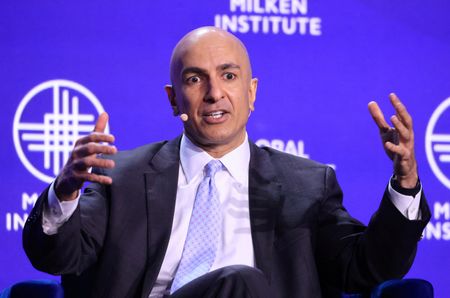

A Federal Reserve official is warning that the ongoing conflict with Iran could force the central bank to raise interest rates multiple times to combat rising inflation.
Minneapolis Federal Reserve President Neel Kashkari explained his opposition to this week’s Fed policy decision, stating that oil price shocks from the Middle East conflict could significantly alter the inflation picture.
“With an extended closure of the Strait of Hormuz and potentially further damage to energy and commodity infrastructure in the Middle East…the price shock wave could be much larger than is currently expected,” Kashkari said in a statement released after Wednesday’s Fed meeting concluded. “We would likely have to follow through with a strong policy response…Federal funds rate increases, potentially a series of them, could be warranted even at the risk of further weakness to the labor market.”
Kashkari joined three other officials in dissenting from this week’s Federal Reserve decision, marking the most divided policy vote the central bank has seen since 1992.
The majority decision, approved 8-4, maintained language suggesting the Fed’s next move would likely be to lower rates rather than raise them. Kashkari opposed this messaging, along with two colleagues, while a fourth dissenter actually favored cutting rates immediately.
The Minneapolis Fed leader emphasized he supported keeping current interest rates unchanged, but believes geopolitical risks have grown too significant for the Fed to continue signaling future rate cuts.
Global oil markets have experienced dramatic price swings due to threats against the Strait of Hormuz shipping route and Middle Eastern energy facilities. Crude oil has climbed well above $100 per barrel in recent weeks, reaching $126 this week compared to $70 when the conflict began.
Kashkari argued that the Fed’s current policy language, while not a firm commitment to cut rates, creates expectations among market participants that reductions are coming next.
“Given recent economic developments and geopolitical developments and the high level of uncertainty,” he stated, the Fed “should offer a policy outlook that signals that the next rate change could be either a cut or a hike.”
Even under the most optimistic scenario where shipping lanes reopen quickly and commodity flows resume normally, Kashkari projects underlying U.S. inflation would remain around 3% for the year. That level sits well above the Federal Reserve’s 2% target and would justify maintaining current interest rate levels in his assessment.