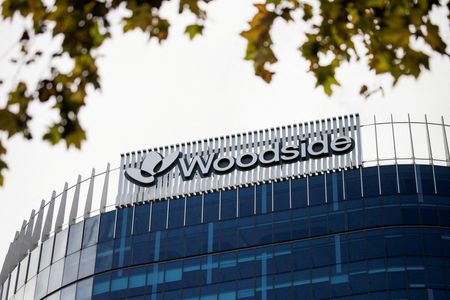

Australia’s Woodside Energy is encountering significant challenges in securing buyers for its Louisiana-based liquefied natural gas export facility, with industry insiders pointing to the company’s above-market pricing demands as the primary obstacle.
According to two sources with knowledge of the negotiations, Woodside has been requesting processing fees that exceed current U.S. market standards for converting natural gas into liquid form for overseas shipping.
The energy company has managed to finalize just one major long-term contract for the project so far – an agreement with Germany’s Uniper that covers up to 2 million metric tons annually, representing roughly 25% of Woodside’s portion of the facility’s total production capacity.
Processing fees, which producers add to base energy costs for liquefaction services, have been climbing due to worker shortages, escalating construction expenses, and robust demand intensified by ongoing Middle East conflicts. However, the pushback Woodside is experiencing may indicate buyers have reached their limit on what they’re willing to pay for American LNG.
“The problem Woodside has is the price of its liquefaction fees, which are above what others in the U.S. are charging,” one source explained.
That same individual revealed Woodside originally demanded processing fees exceeding $2.80 per million British thermal units, while typical U.S. market rates hover between $2.40 and $2.50 per mmBtu. For comparison, Cheniere Energy – America’s top LNG producer – charges approximately $2.60, while Venture Global offers some of the most competitive rates at around $2.30.
A second source familiar with the pricing negotiations acknowledged that while Woodside’s proposal has appealing elements, including contract length, the cost structure remains problematic.
“Woodside is offering 10-year contracts, which are attractive in terms of duration, but the sticking point has been the price,” the source noted. “They wanted $2.80 per mmBtu but are now offering it at $2.60.”
Woodside chose not to provide comment for this story. During the company’s recent earnings presentation, however, CEO Liz Westcott expressed confidence in customer demand and the Louisiana project’s advancement.
“Many customers are seeing the benefit of being geographically diversified, and we are very comfortable with how the process is going in Louisiana LNG,” Westcott stated.
“We continue to be well priced in the market. We were in the next wave of LNG projects, and we are one of the lower-cost LNG suppliers,” she continued.
The Louisiana facility represents a key component of Woodside’s North American expansion plans, capitalizing on supportive U.S. energy policies and increasing worldwide gas consumption.
The project’s initial phase carries an estimated price tag of $17.5 billion. Woodside has transferred 40% ownership to U.S. investment company Stonepeak, while American energy infrastructure business Williams holds an additional 10% stake.
The first development stage involves constructing three processing trains with combined annual capacity of 16.5 million tons. With Woodside having divested half the plant, the company has slightly more than 8 million tons of LNG annually available for long-term sales agreements.
Under the Uniper arrangement, the German company will receive 1 million tons of Louisiana LNG yearly for 13 years, plus up to another 1 million tons from Woodside’s global operations. Shipments are scheduled to begin in 2030 when the Louisiana facility becomes operational.