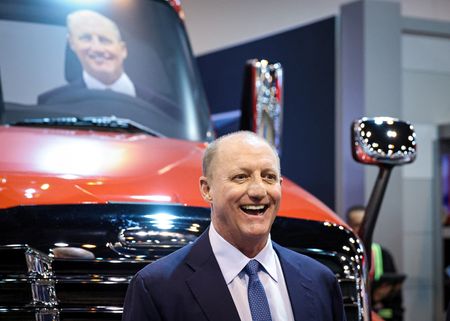

Greg Abel faces a monumental task this Saturday as he conducts his inaugural Berkshire Hathaway annual meeting as chief executive, with legendary investor Warren Buffett observing from the crowd in Omaha, Nebraska.
The 63-year-old Abel, who assumed the CEO role in January, must win over investors who have increasingly turned their attention to technology and artificial intelligence companies, a stark contrast to Berkshire’s portfolio of insurance firms, retail chains, and traditional businesses spanning energy, manufacturing, and industrial sectors.
Despite Berkshire’s reputation as a reflection of America’s broader economy, the company’s stock performance has disappointed investors. Since Buffett’s surprise announcement at last year’s meeting that he would step down as CEO while remaining chairman, Berkshire shares have trailed the S&P 500 by 39 percentage points.
Abel had been identified as Buffett’s chosen successor since 2021, though the timing of the transition caught many off guard. The 95-year-old Buffett will sit in the audience at the downtown Omaha arena while Abel and fellow executives field shareholder questions and discuss company operations.
Money manager Paul Lountzis, attending his 34th Berkshire meeting, acknowledged the magnitude of Abel’s position. “Greg has a formidable challenge, replacing the greatest investor who ever lived,” Lountzis said.
He continued, describing Berkshire’s current market position: “is not snazzy, it’s not exciting … It’s not a fast-growing technology stock. That’s what people are jumping on today.”
The Commerce Department’s preliminary data shows that AI-focused investments significantly contributed to the 2% increase in first-quarter U.S. economic growth, highlighting the market’s current preferences.
Questions remain about how rising inflation and declining consumer confidence may have affected demand for products and services from Berkshire’s various subsidiaries. More clarity may emerge when the company releases first-quarter earnings results, anticipated before the meeting begins.
Financial analysts expect Berkshire to announce billions in operating profits while revealing details about its substantial cash holdings, share buyback activities, and adjustments to its nearly $300 billion stock portfolio.
The annual meeting serves as the highlight of a weekend filled with shareholder activities throughout Omaha, featuring investment seminars, private gatherings, and a downtown exhibition hall showcasing products from Berkshire-owned companies.
Abel inherits several significant obstacles that also challenged Buffett, particularly the question of how to deploy Berkshire’s enormous $373 billion cash reserve accumulated by year-end.
Although the company resumed share repurchases in March after a nearly two-year pause, Berkshire hasn’t completed a major acquisition in ten years. Additionally, many business units have shown weak performance, with overall operating profits declining 6% in 2025 and revenue remaining flat.
Investors may question Abel’s ability to effectively oversee Berkshire’s investment portfolio. Unlike Buffett, Abel lacks professional experience in stock selection, yet by February he was managing 94% of Berkshire’s equity investments, rather than delegating more responsibility to investment manager Ted Weschler, who handles the remaining 6%.
Buffett’s perspective on the leadership transition evolved over time, particularly in 2024 when he expressed confidence that someone like Abel, who comprehends entire businesses, could also understand individual stocks.
This year’s meeting will feature a different format compared to previous gatherings. Abel plans to spend an hour discussing Berkshire’s operations before engaging in a 2.5-hour question-and-answer session.
Joining Abel in answering questions will be insurance division head Ajit Jain, along with first-time participants Katie Farmer, CEO of BNSF railroad, and Adam Johnson, a Berkshire president who oversees consumer, service, and retail operations.
Tom Russo, a money manager who began attending Berkshire meetings in 1985, described the significance of the moment: “It’s watching history unfold, a reset for the next generation.”
The meeting will likely concentrate more heavily on Berkshire’s business operations compared to previous sessions led by Buffett and the late Vice Chairman Charlie Munger, which frequently covered broader economic topics, market analysis, and life philosophy.
The engaging dialogue between Buffett and Munger was unmatched in corporate America and remains deeply missed by shareholders.
However, attendees at Friday’s annual shareholder shopping event, purchasing souvenirs including Squishmallows and spatulas featuring images of both Abel and Buffett, demonstrated confidence in the leadership change.
Lori Boyd, a retired special education teacher from Blue Springs, Missouri, expressed her trust in the transition: “Warren wouldn’t turn it over to somebody who wasn’t competent.”
Following the question session, shareholders will cast votes on several proposals, including non-binding approval of executive compensation, the frequency of future compensation votes, and whether Berkshire should produce a report addressing oversight of its more than 387,000 employees.
The company’s board endorses the executive compensation proposals while opposing the employee oversight report requirement.