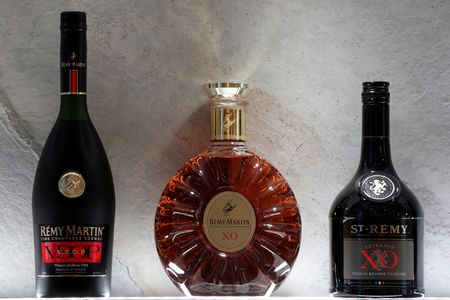

French luxury spirits producer Remy Cointreau ended a troubling streak of declining annual sales on Thursday, but the company’s modest recovery failed to meet investor expectations and sent shares tumbling.
The manufacturer behind Remy Martin cognac and Cointreau liqueur achieved a slim 0.2% increase in organic sales for the year, marking its first positive annual performance since 2023. However, this growth rate came in below what financial analysts had predicted.
Stock prices for Remy dropped 2.5% by mid-morning London trading, performing worse than the broader French market which fell approximately 1%.
The company’s flagship cognac division, which has struggled with weakening consumer demand in recent years, also delivered results that disappointed market watchers.
New Chief Executive Franck Marilly, who assumed leadership in June, had pledged to turn around the company’s fortunes and reduce its sensitivity to economic downturns. His strategy includes potentially lowering cognac prices to boost sales volume.
Marilly plans to unveil his comprehensive turnaround strategy in June. When presenting half-year results in November, he declared that 2026 would usher in a transformative period for Remy Cointreau.
The spirits company has faced significant headwinds from rising consumer costs and trade tariffs in its primary markets of the United States and China.
Additionally, ongoing conflict in Iran has disrupted duty-free airport sales of premium beverages and threatens to further weaken demand while driving up costs for bottles, grains and other production materials.
Fourth-quarter cognac sales showed improvement with a 15.5% increase, bolstered by strong Chinese market performance. The company attributed this to benefiting from what it called a “very favourable” comparison to weak results from the previous year.
In the Americas region, Remy reported a “slight decline” overall, though efforts to revitalize U.S. sales of lower-priced Remy Martin cognac helped improve performance compared to the third quarter.
Barclays analyst Laurence Whyatt noted that while Remy’s fourth quarter demonstrated momentum, much of this was due to timing factors rather than underlying strength.
“Overall, this was a weaker print than expected,” Whyatt stated. “The results do little to change the broader narrative of timing-driven volatility and still-challenging underlying demand conditions.”