
WASHINGTON — America’s economy showed renewed strength during the opening months of 2026, posting a 2% growth rate between January and March as the nation bounced back from the effects of a 43-day government shutdown that occurred last autumn. Despite this positive development, economic forecasters are expressing concern about potential impacts from the ongoing Iran conflict.
Thursday’s data release from the Commerce Department revealed that the country’s gross domestic product — measuring total production of goods and services — improved significantly from the weak 0.5% growth recorded during the final quarter of 2025. Federal government expenditures and investments surged at a 9.3% annual rate during the first three months of this year, contributing more than half a percentage point to overall growth after reducing growth by 1.16 percentage points in the previous quarter.
Consumer purchases, representing roughly 70% of all economic activity in the United States, decreased to a 1.6% growth rate during the first quarter compared to 1.9% at 2025’s conclusion. Americans reduced their purchases of physical items like food and apparel, while also cutting back on service-related spending.
However, corporate investments showed strong performance, climbing at an 8.7% rate, potentially fueled by artificial intelligence-related expenditures. The housing sector remained a drag on economic performance, with residential investments declining at an 8% annual rate — marking the fifth consecutive quarterly decrease and the steepest drop since late 2022. When housing is removed from calculations, non-residential investments jumped 10.4%, representing the largest increase in almost three years.
Rising imports, which increased at a 21.4% annual rate during the January-March period, reduced first-quarter growth by more than 2.6 percentage points.
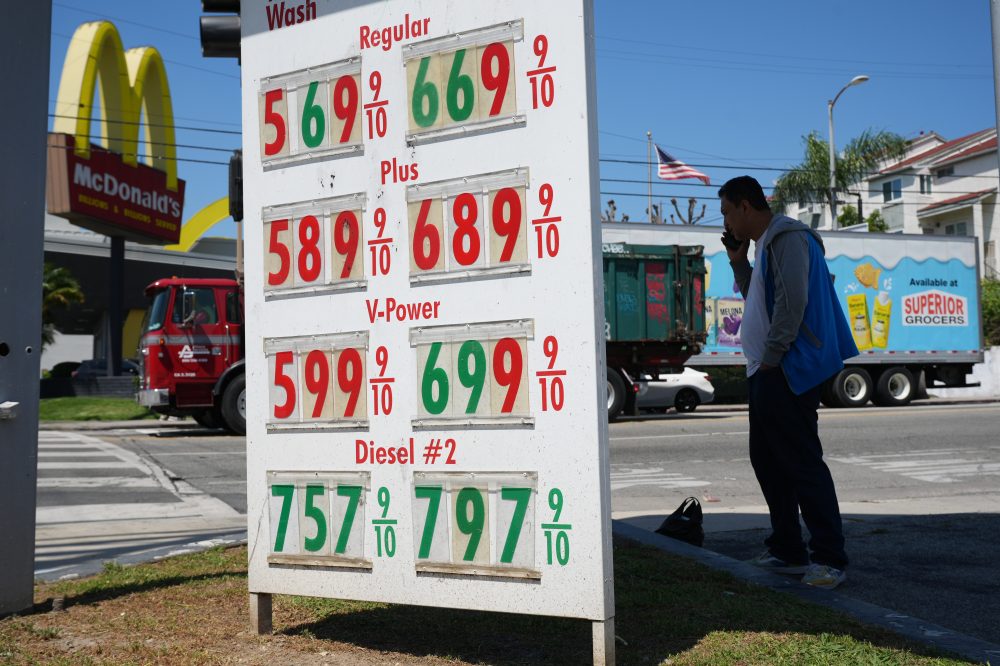
Iran’s blockade of the Strait of Hormuz, a critical waterway handling one-fifth of global oil and liquefied natural gas shipments, has pushed energy costs upward, intensifying inflation pressures and straining household budgets. The Federal Reserve acknowledged this challenge Wednesday when maintaining current interest rates, pointing to “a high level of uncertainty” stemming from the international crisis.
Carl Weinberg, chief economist at High Frequency Economics, chose not to issue any first-quarter GDP predictions. “The truth is that we do not have any defensible basis for trying to project how these indicators will print,” Weinberg stated in Monday commentary. President Donald “Trump’s war with Iran has led to a total blockade of the Strait of Hormuz. We do not know how to model the impact of that event, as we have never seen anything quite like it.”
The Commerce Department will release two additional revised estimates of Thursday’s economic data in coming months.