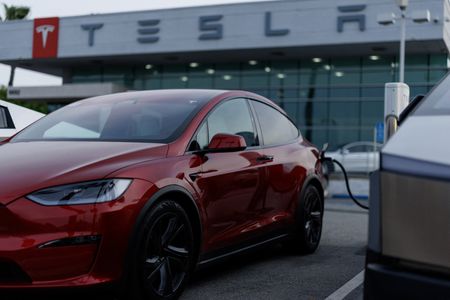
Federal highway safety regulators have concluded their investigation into more than 120,000 Tesla Model Y vehicles on Tuesday, determining no recall or manufacturer action was necessary.
The National Highway Traffic Safety Administration launched its preliminary investigation in early 2023 following two separate incidents where steering wheels completely separated from the steering column because of a missing bolt designed to keep them attached.
Tesla acknowledged that both affected vehicles had been shipped to customers without the crucial retaining bolt and subsequently repaired both cars at no cost to the owners under warranty coverage.
According to NHTSA, both problematic vehicles rolled off production lines during the opening week of January 2023 from Tesla’s manufacturing facilities in Austin, Texas, and Fremont, California. The agency noted that both cars had received final assembly repairs before customer delivery that required technicians to remove and reinstall the steering wheels.
Safety investigators discovered no further cases of the same problem and determined that both steering wheel failures happened within the vehicles’ first 400 miles of operation, suggesting any other potentially affected cars would have likely already shown the same defect by now.
NHTSA emphasized that ending this investigation does not mean officials have determined no safety defect exists, and the agency reserves the right to reopen the matter if additional information comes to light.
The Food Safety and Inspection Service has released updated financial thresholds that determine when retail establishments must comply with federal inspection regulations.
Under the new guidelines, retail outlets can continue operating without federal inspection requirements as long as their sales of meat and poultry products to restaurants, hotels, and similar commercial establishments stay below specified dollar amounts.
The adjusted monetary limits serve as a benchmark for determining which businesses qualify for exemptions from federal oversight. Stores that exceed these sales thresholds to institutional buyers would lose their exempt status and become subject to federal inspection protocols.
These revised financial parameters affect how retail meat and poultry vendors structure their business relationships with commercial food service operations while maintaining compliance with federal regulations.
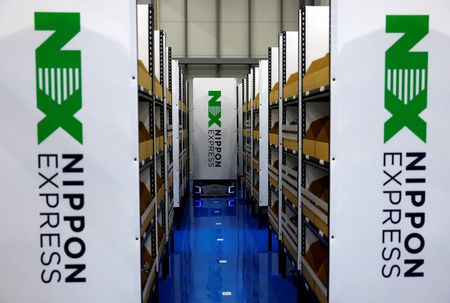
TOKYO – Stock values for Nippon Express Holdings, a major Japanese shipping and logistics company, climbed as high as 15% on Tuesday after American investment firm Elliott Investment Management revealed it had acquired a 5.04% ownership stake in the business.
This investment marks another addition to Elliott’s growing portfolio of Japanese company holdings as the activist investor increases its presence in Japan during a period of widespread corporate transformation across the nation.
Stock prices for Nippon Express later pulled back from their peak gains, settling at approximately 8% higher at 4,186 yen per share during afternoon market activity.
Under Japanese financial law, investors must publicly report their holdings once they exceed a 5% ownership threshold. Elliott has not yet provided any public statements explaining their rationale for purchasing the stake.
In recent months, Elliott has become increasingly active in Japanese markets. The firm previously pushed for higher pricing in Toyota group companies’ acquisition of supplier Toyota Industries last year, and in 2026 revealed investments in shipping company Mitsui O.S.K. Lines and air conditioning manufacturer Daikin, advocating for these companies to concentrate more on their primary operations and deliver better returns to shareholders.
TOKYO — Asian stock markets declined Tuesday while crude oil costs surged as diplomatic attempts to resolve the Iran conflict appeared to hit another roadblock.
Although a fragile ceasefire remains in place, the Strait of Hormuz continues to be effectively blocked. Many Asian nations, particularly resource-dependent Japan, depend on this shipping lane for their petroleum imports.
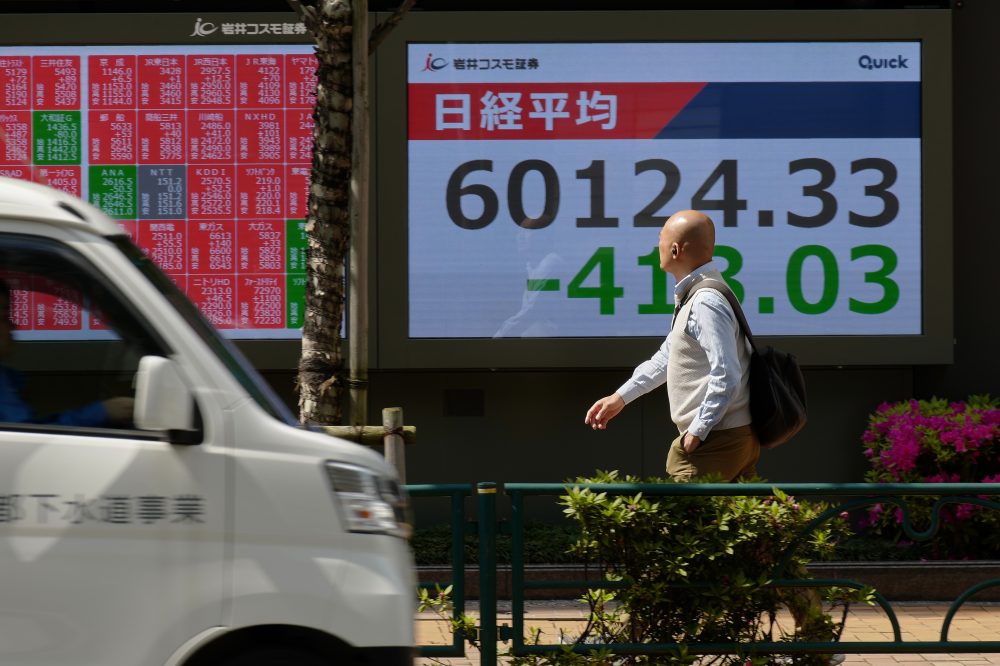
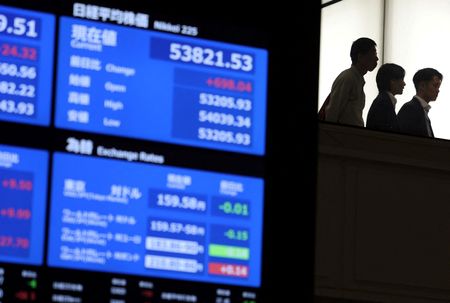
Japan’s primary Nikkei 225 index dropped 1.1% to 59,884.12 following the central bank’s decision to maintain its benchmark interest rate at 0.75%.
The Bank of Japan indicated that although the nation’s economy continues to expand at a moderate pace, growth is anticipated to decelerate as the conflict drives up costs for petroleum and other commodities. The monetary policy board’s decision was split 6-3, showing division among members. Mounting pressure exists for Japan to incrementally increase interest rates after maintaining them at or below zero for years to fight deflation.
“There are various risks to the outlook,” the bank stated. “For the time being it is necessary to pay particular attention to the impact of the future course of the situation in the Middle East.”
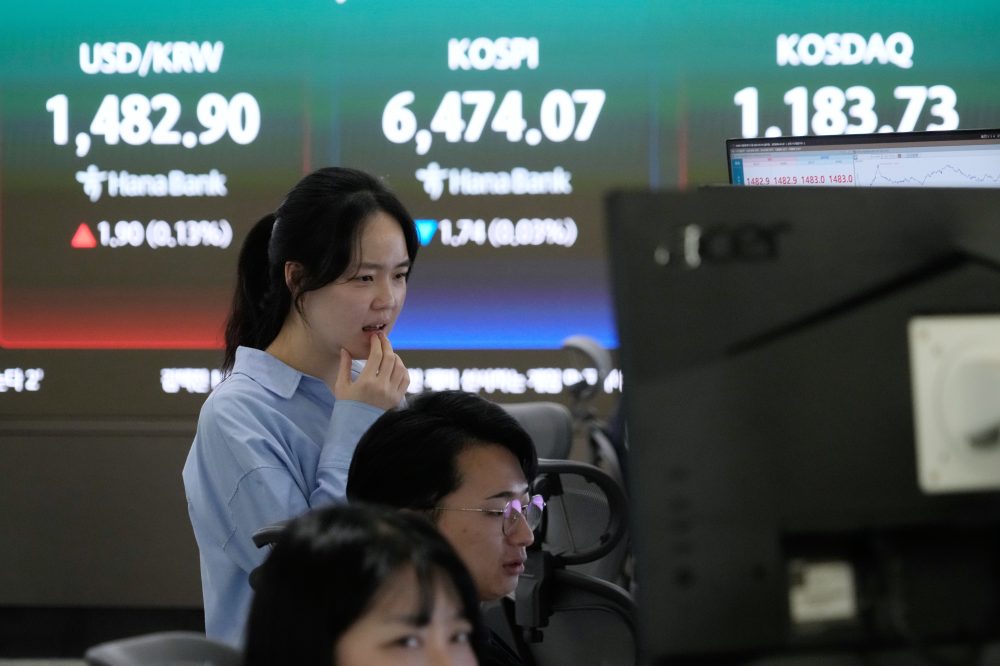
Other Asian markets showed mixed results, with South Korea’s Kospi climbing 1% to 6,683.10.
Hong Kong’s Hang Seng index fell 0.7% to 25,751.04, while Shanghai’s Composite index declined 0.2% to 4,078.77.
Australia’s S&P/ASX 200 dropped 0.6% to 8,717.80.
June delivery Brent crude oil increased $1.11 to $109.34 per barrel. July Brent contracts, where most current trading activity occurs, gained $1.08 to $102.77 per barrel.
Brent crude was trading around $70 per barrel before the conflict began and has temporarily spiked near $120. U.S. benchmark crude rose 96 cents to $97.33 per barrel.
The Federal Reserve, European Central Bank, and Bank of England are all scheduled to announce interest rate decisions this week.
Monday saw the S&P 500 edge up 0.1% to a new record high of 7,137.91, marking a slowdown after weeks of substantial gains fueled by robust corporate earnings and optimism that the economy might sidestep severe consequences despite the ongoing conflict.
The Dow Jones Industrial Average slipped 0.1% to 49,167.79, while the Nasdaq composite gained 0.2%.
Market watchers are anticipating earnings announcements from major technology companies including Alphabet, Amazon, Meta Platforms, Microsoft and Apple.
Bond market activity showed Treasury yields rising alongside oil prices. The 10-year Treasury note yield increased to 4.33% from Friday’s close of 4.31%.
Currency markets early Tuesday showed the dollar declining slightly to 159.04 Japanese yen from 159.42 yen. The euro traded at $1.1716, down from $1.1720.
WASHINGTON — The Federal Reserve faces a crucial week as uncertainty swirls around an upcoming leadership change, with Wednesday’s press conference expected to provide much-needed clarity on the transition.
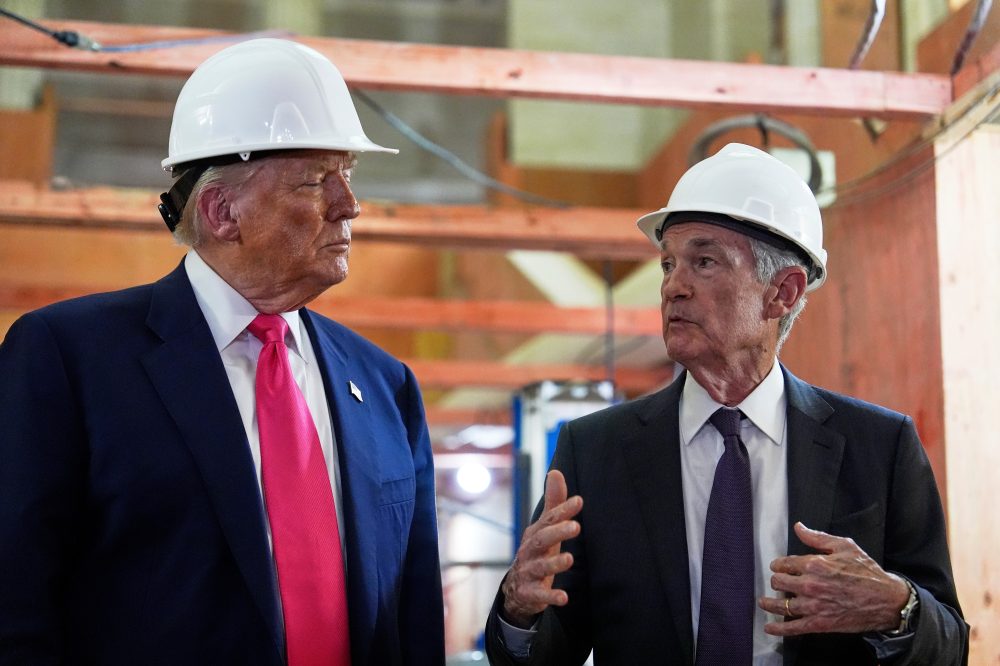
On the same day, the Senate Banking Committee is scheduled to vote on confirming Kevin Warsh, President Trump’s choice to replace current Fed Chair Jerome Powell. Warsh’s confirmation is anticipated to move forward to a full Senate vote.
During Wednesday’s afternoon press conference, Powell may announce his decision about staying on the Fed’s governing board once his chairmanship concludes on May 15. While Powell holds a separate governor position extending through January 2028, departing chairs traditionally leave the board entirely. However, Powell has hinted he might break with this tradition, which would mark the first instance of a former chair remaining as a governor since 1948.
Should Powell choose to remain, it would prevent Trump from selecting a replacement and filling another position on the Fed’s seven-member governing board. Currently, three of the seven governors were appointed by Trump. However, this decision could create friction with the Trump administration and establish what some experts call a “two Popes” situation, potentially causing internal conflicts with both current and former chairs serving together.
The choice may have limited impact on interest rate policies. Powell has consistently favored rate reductions and would likely support similar moves once current inflation pressures from the Iran conflict’s effect on gas prices subside.
While Warsh advocated for rate cuts previously, he’s unlikely to implement immediate reductions, as most Fed officials prefer waiting to assess the war’s economic consequences.
Warsh’s confirmation path became clear Sunday when Senator Thom Tillis of North Carolina announced his support. Tillis had previously threatened to block the nomination until a Justice Department probe into Powell concluded. On Friday, U.S. Attorney Jeanine Pirro announced the investigation’s closure.
Powell stated in March he wouldn’t resign from the board until the Trump administration’s investigation ended “with transparency and finality.” Pirro indicated her office could reopen the probe “if the facts warrant doing so.” Additionally, the Justice Department plans to appeal a court decision that dismissed subpoenas from its Fed investigation.
Sunday on NBC’s “Meet the Press,” Tillis explained he received assurances that the appeal challenges the ruling’s principle rather than continuing the investigation. Justice Department officials confirmed the probe would only resume if the Fed’s inspector general discovers evidence of criminal behavior.
“We worked a lot over the weekend to make sure that we were very clear that we had the assurances from the DOJ that I needed to feel like they were not using the DOJ as a weapon to threaten the independence of the Fed,” Tillis stated.
Tillis also suggested Powell might delay his departure beyond May 15, saying: “I suspect Mr. Powell wants to see what happens with the appeal and to make sure that it is fully settled.”
When asked Monday if Trump would oppose Powell remaining on the board, White House press secretary Karoline Leavitt responded, “I think the president will be satisfied once Kevin Warsh is confirmed as the Fed chair,” indicating Trump may not pursue his previous threats to dismiss Powell.
Powell mentioned last month that even with the investigation’s conclusion, he wouldn’t automatically leave the board.
“I will make that decision based on what I think is best for the institution and for the people we serve,” Powell explained.
This leadership uncertainty occurs during a particularly challenging economic period for the Fed. Inflation has risen to 3.3%, reaching a two-year peak as the Iran conflict drives up fuel costs. This complicates the central bank’s ability to lower rates, as the Fed typically maintains or increases rates during inflationary periods. Officials are virtually certain to keep their benchmark rate steady at approximately 3.6% Wednesday.
Meanwhile, March unemployment figures declined and jobless benefit claims remain minimal, suggesting the employment market may be recovering from earlier weakness this year. Steady job growth reduces pressure for rate cuts, which the Fed typically uses to stimulate borrowing, spending, and employment.
In a significant development this month, Christopher Waller, an influential Fed board member, expressed concern that rising inflation might require maintaining current rates. He also noted that with unemployment at a relatively low 4.3%, rate reductions might not be needed soon. Waller had previously dissented in favor of a January rate cut.
Economists will closely examine whether the Fed modifies its post-meeting statement to indicate their next action could be either a rate decrease or increase. Currently, the statement suggests any rate change would be a reduction. According to March meeting minutes, many of the 19 rate-setting committee members support considering an increase, though this likely doesn’t represent a majority position.
Global financial markets showed little movement Tuesday as investors assessed ongoing Middle East tensions, while Japan’s currency gained strength following the Bank of Japan’s decision to maintain current interest rates despite internal pressure for increases.
Japan’s central bank kept short-term interest rates unchanged at 0.75% in a widely anticipated decision, though three of the nine board members voted to raise borrowing costs, highlighting growing concerns about inflation stemming from the Middle East war.
Market participants are now watching for guidance from Bank of Japan Governor Kazuo Ueda regarding how the extended Iran conflict might influence future rate decisions.
The Japanese yen gained slightly against the U.S. dollar, trading at 159.21, though it remains close to the 160 threshold that has concerned traders who fear Tokyo might intervene to bolster its currency. The yen has hovered around 159 since mid-March, while Japan’s Nikkei index fell 0.5% after reaching new highs in Monday’s session.
“A close call for the BOJ,” said Fred Neumann, chief Asia economist at HSBC, noting the three dissenting votes highlight the tensions monetary officials face, with Japan not alone in facing the dilemma whether to tighten policy into an energy price shock.
“Still, today’s message from the Bank of Japan is that it remains poised to tighten policy sooner than later.”
On the geopolitical front, Washington continues evaluating Tehran’s most recent proposal to end the Middle East war, though a U.S. official indicated President Donald Trump expressed dissatisfaction with the offer since it fails to address Iran’s nuclear program.
This ongoing impasse leaves the two-month conflict unresolved, with energy and other shipments through the vital Strait of Hormuz completely halted, maintaining oil prices well above $100 per barrel.
Asian stock markets showed mixed performance, with MSCI’s Asia-Pacific index excluding Japan declining 0.22% while remaining near Monday’s record high. The index is tracking toward a 17% April increase after falling 13.5% in March.
The S&P 500 managed small gains Monday and appears headed for roughly a 10% monthly increase. U.S. futures remained flat during Asian trading hours Tuesday, while European futures indicated a positive opening.
Central bank decisions from multiple major economies will dominate this week’s financial calendar, with the Federal Reserve, Bank of England, and European Central Bank all scheduled to announce policy decisions following Japan’s move. All are expected to maintain current rates, though investors will closely watch policymaker commentary on inflation pressures.
The euro held steady at $1.1716, while the dollar index measuring the U.S. currency against six major counterparts stood at 98.498.
The dollar gained in March from safe-haven demand as Middle East warfare began but lost most of those gains on peace deal optimism this month. It has stabilized recently after U.S.-Iran negotiations stalled.
The conflict has driven oil prices higher, increased inflation, and created uncertainty about global economic growth, with the Strait of Hormuz closure eliminating a fifth of worldwide oil and gas shipments and representing a major risk factor.
Brent crude futures rose to $109.19 per barrel, approaching a three-week peak. U.S. West Texas Intermediate traded at $97.22. Oil prices remain well above pre-war levels though have retreated from peaks on peace deal hopes.
Investors are also concentrating this week on earnings reports from technology leaders Microsoft, Alphabet, Amazon, Meta Platforms, and Apple, which will test the AI-driven market surge in April.
Anthony Saglimbene, chief market strategist at Ameriprise, noted the earnings will give markets real-time insight into whether artificial intelligence investments are producing commercial returns.
“The divergence between equity market optimism and the more cautious signals from bond and oil markets, however, reinforces the view that geopolitical developments remain an active and important variable in risk management,” Saglimbene said.
China’s top automotive exporter is drawing lessons from two automotive giants as it sets its sights on international markets, according to company leadership.
Chery’s chairman Yin Tongyue revealed during a Monday interview that the automaker is exploring expanded manufacturing capabilities in Barcelona, Spain, through its existing joint venture operations. The company is also actively pursuing opportunities to collaborate with European car manufacturers on shared production facilities.
Established in 1996 along the Yangtze River, the automaker produced its inaugural vehicle in 1999. Initially marketed as “Cheery” with a focus on affordability and positivity, the brand has since evolved its vision to mirror the reliability associated with Toyota and the technological advancement characteristic of Tesla.
“Our strategy, we call it ‘double T,’” Yin explained from Chery’s worldwide headquarters in Wuhu. “Toyota plus Tesla.”
This approach involves manufacturing vehicles that combine dependable quality for long-term customer satisfaction with cutting-edge technology designed to appeal to younger consumers, according to Yin.
Chery joins fellow Chinese manufacturers BYD and Geely in revolutionizing the international automotive landscape through advanced electric vehicles offered at competitive pricing that established automakers struggle to match. China’s automotive exhibition, taking place in Beijing this year and opening to public attendance this week, has become the world’s premier event of its kind.
Sales figures show Chery moved 2.8 million vehicles in the previous year, representing an almost 8% increase compared to the prior year, based on industry statistics. The company manufactures its Ebro vehicle line in Spain through a local partnership at a Barcelona facility previously operated by Nissan.
“Right now it’s very good,” Yin commented regarding the Spanish operations, noting that Chery aims to “enlarge this capacity in Barcelona” while potentially distributing vehicles to additional markets.
Nevertheless, shipping automobiles internationally in high volumes lacks sustainability, he noted. Rather than relying on exports, Chery prefers establishing local manufacturing and is actively seeking European automotive partnerships for facility sharing, though Yin declined to specify target countries.
“We can share profits, we can share models,” he stated regarding potential collaborative arrangements.
Chery’s international sales have experienced dramatic growth recently, increasing nearly four times from 2020 to 2025. Despite this progress, the manufacturer still trails domestic competitor BYD, which achieved 4.6 million vehicle sales in 2025, securing the fifth position globally by volume.
The company introduced two international brands, Omoda and Jaecoo, during 2023. Combined sales of these brands reached 380,000 units last year, with company officials announcing to dealers and employees over the weekend in Wuhu that they’re pursuing combined sales of 1 million vehicles by 2027.
Chery organized an “international business summit” in Wuhu recently, with company representatives reporting approximately 4,000 attendees, including international dealers and suppliers.
The Jaecoo 7 SUV has achieved notable success in certain markets, becoming Britain’s best-selling vehicle during March.
Sport utility vehicles dominate Chery’s portfolio, accounting for 2.3 million of the 2.8 million vehicles sold globally last year. The company is currently developing smaller models to diversify its offerings.
This shift toward compact vehicles reflects Chery’s global aspirations, as Chinese buyers typically favor larger automobiles unlike European consumers, Yin observed.
Similar to other domestic competitors, Chery faces intense pricing competition domestically, where over 100 automotive brands compete. However, Yin expressed confidence that a long-anticipated industry consolidation is approaching.
“In a couple of years, maybe a very few can survive and be healthy,” he predicted. “Right now, it’s coming.”
Japan’s central bank maintained its current interest rate policy on Tuesday, though a significant portion of its leadership pushed for higher borrowing costs amid growing concerns about inflation stemming from Middle East tensions.
The Bank of Japan concluded its two-day policy meeting by keeping its short-term rate unchanged at 0.75%, as most market observers had anticipated. However, three board members – Hajime Takata, Naoki Tamura, and Junko Nakagawa – broke ranks to advocate for an increase to 1.0%.
The ongoing conflict involving the U.S., Israel and Iran has created complications for Japanese monetary officials as they attempt to slowly move rates toward what economists consider a neutral level of approximately 1.5%. This geopolitical uncertainty has made policymakers more cautious about timing rate adjustments.
Financial markets are now closely watching for signals from Bank of Japan Governor Kazuo Ueda’s upcoming press conference to understand how the prolonged Middle East situation might influence future rate decisions.
Market analysts offered varied perspectives on the central bank’s action and its implications:
Singapore-based strategist Sim Moh Siong from OCBC characterized the decision as a “hawkish hold,” noting that the three dissenting votes suggest rate increases might have occurred without the war’s influence. “It looks like June could be the next live date in terms of rate hikes, but we’ll need to see what Ueda says this afternoon,” Sim explained. He also warned about potential yen intervention risks if the governor’s comments appear too dovish.
Kieran Williams from InTouch Capital Markets in London highlighted the significance of the 6-3 voting split compared to March’s 8-1 outcome. “The dissent from Nakagawa, who surprised markets given her reputation as one of the more dovish board members, suggests the hawkish shift could run deeper than the headline split implies,” Williams observed. He noted that Nakagawa’s term expires June 29, with her replacement expected to be more dovish.
Tokyo economist Kanako Nakamura from Daiwa Institute of Research expressed surprise at both the number of dissenters and upward revisions to fiscal 2026 inflation forecasts. “I expect the next rate hike to come as early as June,” she predicted, citing wage negotiations and the wage-price cycle as factors supporting higher inflation expectations.
Stock market strategist Kazuaki Shimada from IwaiCosmo Securities noted that while the decision was “a bit hawkish,” the day’s market decline was primarily driven by specific companies like Advantest and SoftBank Group rather than monetary policy concerns.
Several other financial experts weighed in on the implications:
Maybank’s Saktiandi Supaat emphasized the importance of Governor Ueda’s upcoming comments, suggesting they could trigger significant yen movements depending on their tone.
Olivier D’Assier from SimCorp stressed that investors want to see commitment to policy normalization and controlled withdrawal from bond yield suppression, warning that continued bond-buying could damage the central bank’s credibility.
Saxo’s Charu Chanana noted that while the headline decision wasn’t surprising, “the statement and vote split were more hawkish than the market would have liked.” She pointed out that the Bank of Japan is no longer simply waiting for sustainable inflation but is actively acknowledging building price pressures.
Ben Bennett from L&G Asset Management highlighted the central bank’s balancing act between inflation and growth risks, suggesting the hawkish bias should support the yen, which has been trading near the critical 160 level against the dollar.
Tokyo-based economist Masato Koike from Sompo Institute Plus found the hawkish tone somewhat unexpected given ongoing Middle East tensions. He emphasized that the upcoming press conference will be crucial for determining whether rate hikes might come as early as June.
ANZ’s Khoon Goh stressed that the three dissenters highlight the central bank’s challenging balancing act, with ongoing yen weakness serving as an additional policy consideration beyond inflation concerns.
Former Bank of Japan official Tohru Sasaki attributed immediate yen appreciation to the three dissenting votes and upward inflation forecast revisions, calling the overall decision “hawkish.”
The consensus among analysts appears to be that while geopolitical uncertainty has delayed immediate action, the central bank remains positioned to raise rates in the coming months, with June emerging as a likely timeframe for the next policy adjustment.
Social media giant Meta is moving forward with plans to reverse its purchase of artificial intelligence startup Manus following intervention by Chinese authorities, according to a Wall Street Journal report published Monday.
Sources with knowledge of the situation told the newspaper that China’s government prevented the transaction from proceeding, raising national security objections to the deal.
The development represents a setback for Meta Platforms, the parent company of Facebook and Instagram, as it seeks to expand its artificial intelligence capabilities through strategic acquisitions.
A striking price comparison has emerged from China’s automotive market that highlights just how affordable electric vehicles have become in the world’s largest car marketplace.
Data from the Beijing Auto Show, which welcomed public visitors this week, reveals an extraordinary pricing gap between Chinese and American vehicle markets. While March statistics from Kelley Blue Book show the typical new vehicle in the United States carries a $51,456 price tag, Chinese consumers have access to more than 200 battery-powered vehicles priced below $25,000, according to automotive platform DCar.
The price difference becomes even more dramatic when examining China’s most popular budget electric models. Research compiled using DCar information identifies five top-selling Chinese electric vehicles that start under $12,000 – collectively costing less than one average American car.
Leading this affordable lineup is the Geely EX2, starting at $10,060. This compact electric vehicle claimed the title of China’s best-selling car of any type in 2025. Despite its budget price, the EX2 includes advanced features like front trunk storage, multiple cabin compartments, and a 14.6-inch touchscreen powered by Geely’s proprietary software. The highest-end version delivers approximately 255 miles of driving range under Chinese testing protocols.
Marketed in China as the “Star Wish,” the EX2 launched in 2024 and quickly expanded to international markets including Brazil, Indonesia, and Thailand. Auto analyst Felipe Munoz praised the vehicle’s interior experience, stating: “When you get in, you don’t feel like you are in a small car. It feels better in terms of quality and bigger in terms of size.”
At the budget end sits the Wuling Hongguang MiniEV, priced from just $6,560. This micro-vehicle embraces a deliberately simple, cheerful design philosophy reminiscent of earlier economy cars. For 2026, Wuling expanded the MiniEV to include four doors and improved rear passenger space, though it remains extremely compact by American standards – two previous-generation MiniEVs could fit in the parking space required for a Ford F-150.
The basic MiniEV reaches maximum speeds of 62 mph with a 127-mile battery range according to Chinese standards. Wuling also produces the retro-styled Bingo Pro, a larger subcompact starting just above $8,000 with highway capabilities and 250-mile range.
Chinese automotive giant BYD dominates the affordable electric segment with three models under $12,000: the Seagull at $10,200, Yuan UP at $10,945, and Qin Plus DM at $11,675. These three vehicles alone generated 700,000 sales in China over the past year.
The Seagull particularly impressed industry observers when it debuted three years ago, surprising analysts with its combination of performance, design, and pricing. The 2026 Seagull includes optional lidar technology for driving assistance and automated lane changes, plus fast-charging capabilities and up to 314 miles of range on premium versions.
BYD initially equipped the Seagull with a single “monoblade” windshield wiper as a cost-saving measure – a decision that drew mixed reactions from analysts who praised the innovation and drivers who complained about poor heavy-rain performance. The 2026 model returns to conventional dual wipers.
These ultra-affordable Chinese electric vehicles remain unavailable in American dealerships and may never reach U.S. shores, highlighting the vast differences in automotive markets shaped by local competition and consumer preferences.
International automobile manufacturers have reportedly issued warnings to the Trump administration about potentially discontinuing their most affordable vehicle offerings in the United States market, according to a Wall Street Journal report published Monday.
According to the report, these overseas car companies have informed Trump’s economic advisers that they may be unable to continue manufacturing and selling budget-friendly vehicles in America if the U.S.-Mexico-Canada Agreement faces elimination or significant changes that don’t substantially lower tariffs on automobiles and automotive components produced in North America.
The communications were made to administration officials by sources familiar with the ongoing discussions, the Wall Street Journal indicated.
Reuters has not been able to independently confirm these reported discussions at this time.
Star Entertainment, the troubled Australian casino company, announced Tuesday that it successfully reduced its quarterly financial losses through expense reductions and increased revenue from operator fees.
The gaming corporation’s losses before interest, taxes, depreciation and amortization dropped to A$1 million (approximately $718,600) for the quarter ending March 31, a significant improvement from the A$24 million loss recorded during the same three-month period in the previous year.
The financial turnaround comes as the embattled casino operator works to stabilize its operations amid ongoing challenges in the gaming industry.
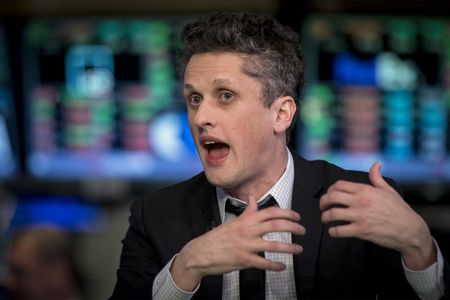
Cloud storage company Box Inc. is introducing an artificial intelligence-powered tool designed to streamline routine corporate tasks such as invoice processing and document data extraction, according to company CEO Aaron Levie.
Speaking at Reuters’ Momentum AI summit in New York on Monday, Levie announced that Box would roll out the new service, dubbed Box Automate, within a day of his announcement. The platform represents an expansion of the company’s existing AI capabilities aimed at helping businesses organize and utilize their extensive data collections.
The new service allows companies to deploy AI agents – automated programs requiring minimal oversight – to handle unstructured business documents and integrate with existing workflows. According to Levie, the technology can process massive volumes of invoices and extract essential information from “every one of those invoices,” potentially handling up to 10 million documents.
Box hopes the new automation service will encourage customers to upgrade to the company’s Enterprise Advanced subscription tier, which provides the necessary tools for building the AI agents that power these automated processes.
Transportation Secretary Sean Duffy indicated Monday that budget airlines seeking $2.5 billion in federal assistance to combat soaring jet fuel expenses would require Congressional authorization for any potential aid package.
Speaking to reporters during a Baltimore event on Monday, Duffy emphasized the significant financial scope of the airlines’ funding request and the legislative hurdles involved.
“I don’t have that money – can’t just pull it out of the couch cushions. There would have to be a lot of government engagement and a bipartisan effort to find the funds for them,” Duffy explained to media members. He added that “Congress would have to get involved as well with that kind of number.”
The Transportation Secretary stressed that any such requests would require thorough examination before moving forward with the substantial funding proposal from the nation’s low-cost carriers.
NEW YORK — The King of Pop’s music catalog experienced a dramatic surge in popularity following the debut of the new biographical film about his life. Data shows Michael Jackson’s streaming numbers jumped nearly 95% across the United States during the movie’s opening weekend compared to the week before.
Industry analytics firm Luminate tracked the significant increase in listening activity tied directly to the release of the big-budget biographical picture.
The film “Michael” exceeded all expectations at theaters, bringing in $97 million across U.S. and Canadian box offices during its first weekend. Industry projections had initially estimated around $50 million in ticket sales, later revised to $70 million before the actual numbers came in much higher.
The movie’s success translated directly into music consumption. Jackson’s songs were streamed 31.7 million times on Friday and Saturday, April 24-25, compared to just 16.3 million plays during the same days the previous week. This represents the 95% spike in listening activity.
The Jackson 5, where the future superstar began his career as the youngest member, also benefited from renewed interest. The legendary group saw their streaming numbers climb 85%, going from 1.3 million plays to 2.4 million during the same weekend comparison period.
Apple Music reported that Jackson dominated their charts following the film’s release. By Monday, eight of his songs appeared on the platform’s Daily Top 100 Global Chart, with “Billie Jean” reaching the 11th position.
Music identification app Shazam recorded an even larger increase, with Jackson-related searches climbing 140% when comparing the April 24-26 weekend to the previous week. Seven Jackson tracks currently appear on Shazam’s worldwide top 200 list.
Despite the commercial success, “Michael” received poor reviews from film critics. The Associated Press reviewer Jake Coyle gave the movie just one-and-a-half stars out of four, calling it “a kind of fantasy film, one that relives the extraordinary highs of Michael Jackson while turning a blind eye to the lows.”
Accomack County, Virginia has scheduled a public auction of properties with outstanding real estate tax bills for a two-week period in the summer of 2026.
County Treasurer James A. Lilliston, Sr. will oversee the tax sale running from July 1 through July 15, 2026, according to an official notice posted by the county.
The auction is being held under special court authorization and follows Virginia state law Section 58.1-3975, which allows counties to sell properties when owners fail to pay their real estate taxes.
Property owners with delinquent tax bills still have time to settle their accounts before the scheduled sale date. The county has posted official notice of the upcoming auction on its website for public review.
Tax sales are a standard tool used by Virginia localities to collect overdue property taxes and clear unpaid debts from county rolls.
Media icon Oprah Winfrey has signed a major partnership agreement with Amazon that will bring her podcast exclusively to the tech giant’s platforms.
The multi-year contract between Winfrey’s Harpo Entertainment and Amazon-owned Wondery grants the streaming service exclusive distribution and advertising control over “The Oprah Podcast,” both companies revealed on Monday. Beginning this summer, the show will double its frequency to twice-weekly episodes, with Wondery handling distribution of both audio and video content throughout Amazon’s ecosystem.
The partnership extends beyond just the podcast, as Amazon has secured access to the complete archive of “The Oprah Winfrey Show,” the legendary daytime program that aired for 25 years from 1986 through 2011. The deal also includes Winfrey’s popular book club and “Favorite Things” content franchises.
Company officials did not reveal the financial details of the arrangement.
This acquisition adds Winfrey to Amazon’s growing roster of high-profile podcast personalities. Last year, Wondery signed a similar exclusive agreement for “New Heights,” the popular show hosted by NFL stars Travis Kelce of the Kansas City Chiefs and his brother Jason Kelce, formerly of the Philadelphia Eagles.
Winfrey debuted “The Oprah Podcast” just last month in December 2024. In Monday’s announcement, she expressed her enthusiasm for the expanded platform, stating the podcast “allows me to continue the work I feel called to do – opening the door for conversations that matter.” She described the broader distribution opportunity as one “I embrace.”
Starting in July, Wondery will make “The Oprah Podcast” available across Amazon’s various services, including Prime Video, Amazon Music, Fire TV Channels, and Audible. Despite the exclusive Amazon deal, the podcast will remain accessible on YouTube and other major streaming platforms.
A major Wall Street hedge fund is making a dramatic business change, sources familiar with the situation revealed Monday.
Jain Global, the investment firm led by Bobby Jain, plans to give back all investor funds and will exclusively handle money for Millennium Management through a new partnership arrangement, according to people with knowledge of the deal.
Jain previously served as co-chief investment officer at Millennium before departing to establish his own firm, Jain Global, in 2024. His new venture attracted $5.3 billion in investor backing at launch.
However, performance numbers tell a challenging story. Jain Global delivered a 3.7% return in 2025, its first complete year of operations, following a modest 0.5% gain during its initial six months of trading in 2024, Business Insider reported.
Meanwhile, Millennium posted significantly stronger results with a 10.5% gain in 2025, according to earlier Reuters coverage.
Millennium Management, established in 1989 by billionaire Israel Englander, oversees more than $79 billion across various investment categories including stocks, bonds, and commodities.
This restructuring occurs as hedge funds navigate challenging market conditions sparked by increased volatility from the ongoing U.S.-Israeli conflict with Iran. Industry-wide, hedge funds experienced their steepest monthly losses in March since January 2022, multiple major Wall Street prime brokerages reported.
Both Jain Global and Millennium Management chose not to provide statements when contacted for comment.
The head of United Airlines defended his vision for merging with American Airlines on Monday, arguing the combination would serve travelers better even though American has firmly rejected any talks.
Scott Kirby, United’s chief executive, released a statement explaining his belief that joining forces would focus on expansion rather than cuts, forming an exceptional carrier that passengers would embrace and regulators would approve. “I was hoping to pitch that story to American, but they declined to engage and instead responded by publicly closing the door,” Kirby stated in his announcement.
Stock prices for both carriers jumped significantly two weeks earlier when news broke that Kirby had discussed merging two of America’s largest airlines during a White House visit. On Monday, Kirby revealed he had directly contacted American about the potential partnership, though the timing relative to his Washington meeting remains unclear.
Following the White House discussions, American quickly dismissed any merger possibilities. The Texas-based carrier stated in an April 17 announcement that it had no interest in merger talks with United. “American Airlines is not engaged with or interested in any discussions regarding a merger with United Airlines,” the company declared, adding that such a combination would harm competition and consumers while potentially triggering antitrust issues.
American Airlines itself resulted from a 2013 combination with US Airways Group.
Former President Donald Trump also expressed opposition to the airline merger proposal last week.
In Monday’s statement, Kirby maintained that uniting the two well-known airlines would broaden flight options, establish a globally competitive carrier, and strengthen America’s economy through job creation and enhanced aircraft manufacturing.
United’s stock price dropped 1.4% Monday to $91.72, reflecting a roughly 20% decline since conflicts in Iran escalated in late February, driving fuel costs higher. American’s shares fell 2% during morning trading to $11.84, down approximately 15% since the conflict began.
Media giant Paramount Skydance has submitted paperwork to federal regulators requesting approval for international funding that would support its planned purchase of Warner Bros Discovery, according to documents released Monday.
The filing with the Federal Communications Commission represents a routine step for deals involving foreign investment, a company representative explained. The spokesperson emphasized that this regulatory approval is not required before the Warner Bros acquisition can be completed.
Under federal broadcasting regulations, the FCC must review foreign ownership stakes in American television companies. In this case, international investors would hold just under 50% of Paramount’s ownership following the investment, while the Ellison family would retain control through voting shares, the filing indicates.
The entertainment company announced last year that three major Middle Eastern sovereign wealth funds have committed to financing the proposed Warner Bros takeover. These include Saudi Arabia’s Public Investment Fund, Abu Dhabi’s L’imad Holding Company, and the Qatar Investment Authority.
The regulatory filing represents another step forward in what has become one of the entertainment industry’s most closely watched merger attempts in recent years.
Salesforce and its workplace communication platform Slack have initiated legal proceedings against Microsoft in London’s High Court, alleging the technology company engaged in unfair competitive practices with its Teams application.
The lawsuit was filed on April 23 by Slack Technologies LLC and associated entities. A company representative explained the legal action stemmed from Microsoft’s business approach, stating the practices “harmed competition, using tying and bundling of Teams to limit customer choice.”
Microsoft has not yet provided a response to requests for comment regarding the litigation.
This legal challenge follows a 2020 complaint Slack submitted to the European Commission, where the company accused Microsoft of packaging Teams alongside its Office suite to create an unfair competitive edge over other companies in the market.
The technology corporation from the United States managed to sidestep what could have been substantial financial penalties by agreeing to offer lower-priced Office packages without Teams included, as part of a settlement reached with the European Commission in the previous year.
The timing of this lawsuit coincides with another legal development in London, where the Competition Appeal Tribunal approved a collective action lawsuit during the same week. That separate case alleges Microsoft imposed excessive charges on British companies using Windows Server software through competing cloud computing platforms.
Microsoft has denied the claims presented in that additional case.
Microsoft announced Monday that it will end its revenue-sharing arrangement with OpenAI, the company behind ChatGPT, in another sign that their once-inseparable partnership is loosening.
The collaboration originally saw OpenAI depend entirely on Microsoft’s cloud computing infrastructure to develop the technology that made ChatGPT a worldwide phenomenon. Microsoft used OpenAI’s innovations to power its own artificial intelligence tool, Copilot.
However, the relationship has changed as OpenAI has transformed from its original nonprofit structure into a profit-driven company preparing for a potential stock market debut. The San Francisco company has also diversified its cloud partnerships to include Amazon, Google, and Oracle alongside Microsoft.
OpenAI announced Monday that it will maintain its revenue-sharing payments to Microsoft until 2030.
Both companies confirmed that Microsoft will remain OpenAI’s main cloud computing provider, with OpenAI products launching first on Microsoft’s Azure platform “unless Microsoft cannot and chooses not to support the necessary capabilities.”
Investment analyst Dan Ives from Wedbush Securities told investors Monday that this revised agreement “puts OpenAI on a strong path forward to going public through IPO given its clearer opportunity in the cloud environment while reducing significant barriers from its original partnership with Microsoft.”
Ives noted the arrangement also benefits Microsoft as it “looks to develop tech independence from OpenAI” while enhancing Copilot and forming partnerships with other AI companies like Anthropic, which creates the Claude chatbot.
Investment giant Bridgewater Associates is sounding the alarm about artificial intelligence potentially wiping out established software companies, drawing comparisons to how online retail giant Amazon transformed the book industry in the 1990s.
The firm’s top investment leaders issued a warning Monday that traditional software businesses face the same kind of survival threat that brick-and-mortar bookstores like Barnes & Noble encountered when Amazon launched its online book sales.
“With the latest release of Claude Code, an upstart competitor has created existential risk for major businesses, much as Amazon posed to Barnes & Noble,” the client note said on Monday.
These concerns about new AI technology disrupting established software firms have already shaken investor confidence, leading to significant stock market losses. Software company shares have dropped dramatically, with the S&P 500 Software and Services Index falling 16.6% since the beginning of the year.
The AI revolution has also triggered widespread job cuts across multiple industries, as companies from technology giants to financial services firms eliminate thousands of positions while citing cost reductions from implementing artificial intelligence systems.
“Markets have started pricing in the risk to application software companies, and companies will either co-evolve with AI or face disruption,” the investment firm’s co-CIOs Bob Prince, Greg Jensen and Karen Karniol-Tambour wrote.
The investment managers noted that during the 1990s bookstore upheaval, while some physical retailers closed their doors, many successfully transformed by building online platforms and enhancing their in-store customer experiences with specialized book selections.
Beyond the technology sector concerns, Bridgewater also cautioned that ongoing international conflicts will continue creating market instability and commodity disruptions.
The firm’s leadership pointed to U.S. actions regarding Venezuela, Greenland and Iran as potentially weakening international partnerships and accelerating global competition for military resources and raw materials.
Maritime traffic through the Strait of Hormuz, which handles approximately 20% of worldwide energy shipments, remains significantly reduced as diplomatic efforts with Iran have stalled.
These international tensions have created widespread market volatility, caused shortages of essential commodities, and raised concerns about increasing inflation rates.
“How the war in Iran plays out from here remains highly uncertain, but enough disruption has occurred, and the process of resuming shipments will be slow enough, that the commodity shock will persist for some time,” the note said.
Health insurance company Humana revealed Monday that it has formed a new alliance with billionaire entrepreneur Mark Cuban’s online pharmacy venture, Cost Plus Drugs, focusing on technology integration and prescription distribution services.
Under the agreement, Humana’s CenterWell pharmacy division will act as a distribution partner for Cuban’s platform while adopting the SwiftyRx digital system to handle prescription processing. The collaboration will enable Humana to provide mail-order prescription services to eligible workers who participate in the company’s employee health benefit programs.
According to Humana, the digital alliance is designed to cut expenses through enhanced operational efficiency, including automated verification of patient health plan coverage. The SwiftyRx platform employs artificial intelligence technology to automatically validate prescriptions, confirm insurance benefits, and facilitate prescription transfers between different pharmacies.
Cuban’s Cost Plus Drugs operates by applying a standard markup to medications sold through its online pharmacy service. “Everyone should be able to get safe, affordable medication,” Cuban stated in the announcement.
The partnership comes as Humana continues to focus primarily on government-sponsored insurance programs, which represent approximately 85% of its business operations. The company announced in 2023 its intention to mostly withdraw from employer-based health plans.
Despite this shift, Humana indicated it plans to work with Cost Plus Drugs to create an innovative framework for employer-sponsored health coverage moving forward.
Stock markets began Monday’s trading session with declines as diplomatic efforts between the United States and Iran reached an impasse, creating uncertainty for investors who are also preparing for a busy week of corporate earnings reports and Federal Reserve policy discussions.
At the opening bell, the Dow Jones Industrial Average declined by 118.5 points, representing a 0.24% decrease to reach 49,112.2. The broader S&P 500 index dropped 12.4 points or 0.17% to settle at 7,152.72, while the technology-heavy Nasdaq Composite fell 37.0 points or 0.15% to 24,799.637.
Market analysts are closely monitoring both the geopolitical developments and the upcoming wave of quarterly earnings reports from major corporations, along with anticipated commentary from this week’s Federal Reserve meeting that could influence future monetary policy decisions.
British energy giant Shell announced Monday it has reached an agreement to acquire Canadian oil and gas company ARC Resources in a massive $16.4 billion transaction that includes existing debt obligations.
The London-based oil major said the purchase will increase its daily production capacity by 370,000 barrels of oil equivalent, addressing a critical need for expanded output as the company faces potential production gaps.
Industry experts and Shell executives had previously identified the need for major acquisitions or significant exploration successes to counter anticipated production shortfalls ranging from 350,000 to 800,000 barrels of oil equivalent daily by the mid-2030s, as existing oil fields mature and struggle to meet production goals.
Under the transaction terms, ARC shareholders will receive C$8.20 in cash plus 0.40247 Shell shares for each share they own, representing roughly 25% cash and 75% stock at a 20% premium above ARC’s 30-day average trading price.
“Shell will take on approximately $2.8 billion in net debt and leases resulting in an enterprise value of approximately $16.4 billion. The equity value of $13.6 billion will be funded via $3.4 billion in cash and $10.2 billion in Shell shares,” the company stated in its announcement.
The acquisition will provide Shell with 2 billion barrels in additional reserves and is projected to deliver double-digit returns while enhancing free cash flow per share beginning in 2027, all without impacting the company’s planned investment spending of $20 billion to $22 billion through 2028.
Shell’s reserve life indicator, which measures how long proven reserves can support current production rates, dropped to less than eight years as of 2025, down from nine years previously and marking the company’s lowest level since 2021.
A U.S.-based mining company announced Monday it will purchase European Lithium in a transaction valued at approximately $835 million, securing complete control of a rare earth mining operation in Greenland.
Critical Metals revealed plans to buy all remaining shares of European Lithium, which will give the company total ownership of the Tanbreez rare earth project. The American miner currently controls 92.5% of the operation, while European Lithium holds the remaining 7.5% stake.
Following the announcement, Critical Metals stock surged over 6% during pre-market trading hours.
The agreement calls for European Lithium investors to receive 0.035 Critical Metals shares in exchange for each share they currently own.
Company officials anticipate finalizing the acquisition during the latter half of 2024.
Telecommunications giant Verizon Communications boosted its yearly earnings outlook on Monday following an unexpected surge in wireless customer additions during the first three months of 2024.
The telecommunications company’s stock price jumped 3% during pre-market trading sessions.
Through strategic promotional campaigns, including enhanced incentives for customers switching from competitors such as AT&T and T-Mobile, Verizon successfully attracted new paying subscribers as part of its comprehensive effort to restore wireless division growth.
The company gained 55,000 new monthly postpaid wireless customers during the quarter, marking the first time in over ten years that Verizon posted net subscriber increases for a March-ending period.
Wall Street analysts surveyed by Visible Alpha had predicted the company would lose 81,809 wireless customers instead.
“We are beginning to reclaim our market leadership by putting the customer at the center of everything we do, reducing friction to increase loyalty and create genuine value,” Verizon CEO Dan Schulman said.
The telecommunications provider now anticipates its annual retail postpaid phone customer additions will fall within the higher range of its projected 750,000 to 1 million target.
Following a similar approach to AT&T, Verizon has emphasized promotional packages that combine high-speed internet services with wireless plans, designed to improve customer retention rates.
The company’s quarterly financial results include contributions from Frontier Communications following the completion of that acquisition on January 20.
Verizon reported total quarterly revenue of $34.4 billion, falling short of analyst projections of $34.84 billion according to LSEG data.
Wireless service revenue growth during the quarter was reduced by customer account credits related to a January network outage that persisted for approximately 10 hours, prompting Verizon to provide $20 credits to hundreds of thousands of affected customers.
The company has revised its adjusted earnings forecast for 2026 to between $4.95 and $4.99 per share, up from the previous projection of $4.90 to $4.95 per share.
First-quarter adjusted earnings reached $1.28 per share, exceeding analyst estimates of $1.20 per share.
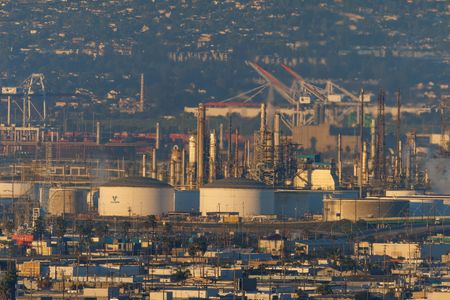
Major American oil refineries are poised to announce dramatically improved first-quarter financial results compared to the same period last year, driven by supply chain disruptions from ongoing Middle East conflicts that have pushed fuel profit margins to their highest levels in years.
The oil refining sector emerged from the first three months of the year with diesel and jet fuel profit margins significantly elevated from January levels. This surge followed the February 28 commencement of U.S.-Israeli military operations against Iran, which resulted in the blockade of the Strait of Hormuz – a critical waterway that handles approximately 20% of global oil shipments and a substantial portion of worldwide fuel exports. Industry experts predict much of the financial benefit will be reflected in later quarterly reports.
Stock prices for leading American refineries including Valero Energy, Phillips 66, and Marathon Petroleum have surged over 20% year-to-date.
“Refiners had a whirlwind Q1’26, as the escalation of the Iran conflict led to global supply restrictions that sent product cracks (margins) soaring,” said Matthew Blair, an analyst at Tudor, Pickering, Holt & Co, noting that distillates is where the strongest margin uplift was coming through.
Diesel profit margins strengthened significantly as oil shipments normally transported from the Middle East through the strait faced severe restrictions. Already depleted inventory levels prior to the global supply disruption amplified the price increases, according to market analysts. Unlike gasoline markets, diesel had limited excess production capacity to absorb the supply shock, positioning refineries outside the Middle East region favorably to meet additional demand.
The ultra-low sulfur diesel futures crack spread, which indicates refinery profit margins, skyrocketed 105% to reach a record peak of $86.25 per barrel on March 20.
Jet fuel profit margins have similarly increased since the conflict began, especially benefiting coastal and export-focused refineries, analysts reported. The Middle East serves as a major jet fuel supplier, and transportation disruptions rapidly affected aviation fuel markets across Asia and Europe.
GASOLINE COSTS SURGE
Gasoline profit margins also received support from supply disruptions, though less dramatically, as earnings were limited earlier in the quarter due to refineries operating at high capacity with adequate supplies available.
The U.S. gasoline futures crack spread climbed to $37.62 per barrel on March 27, marking its highest point in over two years. National average pump prices exceeded $4 per gallon by the end of March for the first time in more than three years, completing the steepest monthly increase in decades.
Phillips 66 will begin the refinery earnings season on Wednesday, with analysts projecting the company will announce a loss of $0.27 per share, an improvement from the $0.90 per share loss reported one year earlier, based on LSEG forecasts.
The Houston, Texas-headquartered refiner previously cautioned that first-quarter performance would be negatively impacted by dramatic commodity price increases, leading to approximately $900 million in pre-tax mark-to-market hedging losses – an issue affecting other refiners as well when crude oil prices rose, counteracting benefits from improved margins.
Refineries utilize hedging strategies to mitigate oil price volatility. Industry analysts indicate these losses are primarily accounting-related and may reverse in future periods, though they still affected first-quarter performance.
Despite short-term challenges, Phillips 66 maintains strong long-term positioning due to its high distillate production capacity, which ranks among the sector’s best, according to Allen Good, a Morningstar analyst.
Market analysts anticipate Valero, America’s second-largest refinery by capacity, will announce earnings of $3.15 per share, increasing from $0.89 per share in the previous year, according to LSEG information. The San Antonio, Texas-based company’s results benefited from strong Gulf Coast margins, though gains were constrained by its California refinery closure and a fire at a diesel processing unit in Port Arthur, Texas.
Marathon Petroleum, the nation’s largest refiner by volume, is projected to report per-share earnings of $0.86, up from a $0.24 per share loss one year ago, LSEG estimated. Marathon is optimally positioned to capitalize on current market conditions given its operations in U.S. midcontinent and West Coast regions, some analysts observed, expecting most surplus cash flow will fund share repurchases.
Investors will closely monitor company guidance for upcoming months as elevated fuel margins begin translating more directly into earnings. Analysts anticipate U.S. refineries will continue benefiting from favorable margin conditions over the next several quarters.
“The market will likely focus more on rest-of-year earnings,” said Jason Gabelman, an analyst at TD Cowen, noting that margin strength materialized only late in the quarter.
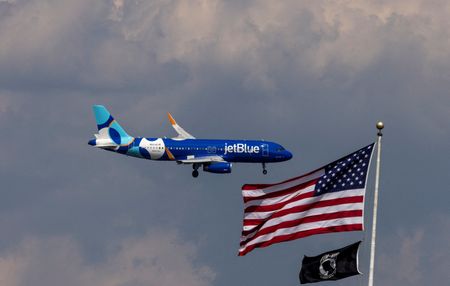
JetBlue Airways finds itself confronting mounting financial challenges just as the carrier appeared positioned for its first profitable year since COVID-19 devastated the aviation industry. Rising fuel costs have cast doubt on the airline’s recovery strategy, compelling management to secure additional financing while addressing concerns about potential bankruptcy.
The New York-headquartered budget airline began 2024 with optimism about its comprehensive restructuring program launched that year, citing reduced operational expenses and sustained passenger demand. However, jet fuel prices have climbed dramatically following Middle Eastern conflicts, while a possible federal rescue of Spirit Airlines threatens to complicate JetBlue’s delicate financial turnaround.
Industry analysts question whether the carrier can weather what has become the aviation sector’s most severe fuel supply disruption, an unexpected result of ongoing international tensions. Although passenger demand remains robust across U.S. airlines, escalating fuel expenses are devastating profit margins.
FINANCIAL PERFORMANCE UNDER SCRUTINY
The airline will release its quarterly earnings report Tuesday, with investors closely examining how dramatically increased jet fuel expenses have impacted the company’s already negative profit margins. JetBlue has posted yearly losses consistently since 2019 and had committed to achieving break-even status on a net income basis this year.
The company’s recovery initiative, called Jet Forward, generated approximately $300 million in earnings before interest and taxes in 2025, with similar projections for 2026 based on fuel costs averaging $2.27 per gallon. However, the airline recently updated its first-quarter fuel cost projection to between $3.01 and $3.06 per gallon.
Reuters analysis indicates that if JetBlue uses 826 million gallons of fuel in 2026, matching 2025 consumption, at the revised price of $3.04 per gallon, the company would spend approximately $2.5 billion. This represents roughly $450 million, or 21%, above 2025 expenditures. Such increases would eliminate savings from reduced fuel consumption that the company had highlighted previously, which would have assisted in reducing its approximately $9.5 billion in debt and lease commitments.
Seaport Research equity analyst Daniel McKenzie anticipates JetBlue’s fuel expenses will increase 40% compared to last year, reaching $2.9 billion. His analysis suggests JetBlue will offset roughly 30% of these additional costs through increased revenue, but still face a pre-tax loss of approximately $1.1 billion in 2026.
JetBlue representatives declined to provide comments for this report.
CASH FLOW REMAINS STABLE FOR NOW
Beyond fuel price pressures, JetBlue faces additional competitive threats. A government intervention to save Spirit Airlines could intensify competition on overlapping budget routes targeting leisure passengers, who represent JetBlue’s core customer base.
Nevertheless, the budget carrier is implementing corrective measures.
JetBlue CEO Joanna Geraghty informed staff last week that the company was not exploring bankruptcy options this year, following the airline’s successful arrangement of $500 million in debt financing secured by up to 22 aircraft. Despite carrying substantial debt relative to its size, JetBlue concluded the year with $2.3 billion in available cash.
The airline also possesses considerable assets available for collateral, and Fitch’s North American airlines analyst Joseph Rohlena indicated that immediate liquidity concerns were not pressing for JetBlue. Earlier this month, Fitch reduced the airline’s credit rating to CCC+, citing concerns about the company’s capacity to cover fixed costs through operational earnings.
“If either fuel stays very high or if demand starts to falter, and (they) start burning more cash, they may have to go back to the markets,” Rohlena said, referring to raising capital.
Compared to larger competitors, JetBlue operates fewer international routes and offers limited premium seating options that attract high-spending travelers.
Even major carriers have acknowledged significant strain from rising fuel costs.
Delta reported expecting to recover only 40 to 50 cents for every additional dollar spent on fuel this quarter, with United experiencing similar challenges before anticipated improvement later in the year. Alaska Airlines is recovering approximately one-third of the increase, prompting the company to withdraw its financial forecast.
A high-stakes legal battle between Tesla CEO Elon Musk and artificial intelligence company OpenAI is set to unfold in federal court this week, with jury selection beginning Monday in Oakland, California.
Musk, who helped establish OpenAI, is pursuing $150 billion in damages from the AI firm and Microsoft, claiming they abandoned the organization’s founding principles as a nonprofit dedicated to benefiting humanity.
Internal company records released during litigation proceedings include revealing diary entries from OpenAI President Greg Brockman, who wrote in fall 2017: “This is the only chance we have to get out from Elon. Is he the ‘glorious leader’ that I would pick?”
These private documents provide unprecedented insight into the personalities and conflicts that shaped OpenAI’s transformation from a small research operation in Brockman’s residence to a technology powerhouse valued at over $850 billion.
The lawsuit alleges that OpenAI executives, including CEO Sam Altman, concealed their intentions to create a profit-generating business structure in March 2019, more than a year after Musk stepped down from the company’s board.
According to Musk’s legal team, the defendants used his reputation and financial backing to build what they describe as a “wealth machine” while keeping him uninformed about their commercial plans.
Musk is demanding that OpenAI return to its nonprofit status and seeking the removal of both Altman and Brockman from their leadership positions.
OpenAI’s defense attorneys argue that Musk’s true motivation stems from his desire to dominate the company and advance his competing AI venture xAI, which he established in 2023 following ChatGPT’s successful launch.
The company maintains that Musk participated in conversations about restructuring and sought the chief executive role for himself. Microsoft, also named in the suit, denies any wrongdoing and states its partnership with OpenAI began only after Musk’s departure.
Several prominent technology leaders are expected to provide testimony, including Musk, Altman, and Microsoft CEO Satya Nadella. Shivon Zilis, a former OpenAI board member who is also the mother of four of Musk’s children, may serve as a crucial witness, with OpenAI alleging she shared confidential company information with Musk.
The timing proves challenging for both parties, as OpenAI confronts intense competition from companies like Anthropic while investing heavily in computing infrastructure. The firm is also considering a potential public stock offering that could reach a $1 trillion valuation.
Meanwhile, Musk’s businesses face similar pressures. His xAI operation, now integrated into SpaceX, significantly lags behind OpenAI in user adoption. SpaceX is also planning what could become the largest initial public offering in history.
Court records indicate Musk contributed approximately $38 million in startup funding to OpenAI between 2016 and 2020, primarily before his board departure.
In 2019, OpenAI reorganized as a for-profit subsidiary under nonprofit oversight, allowing external investment while maintaining accountability to its original humanitarian goals.
Last year, the company restructured again as a public benefit corporation, with the nonprofit retaining a 26% ownership stake plus additional warrants tied to valuation milestones.
Musk’s legal team calculated their damage claim by analyzing OpenAI’s current worth and determining what portion of the nonprofit’s ownership could be traced to Musk’s early contributions, estimating between 50% and 75% of the nonprofit’s stake.
The partnership began when Altman contacted Musk in May 2015 about creating what he called the “Manhattan Project for AI,” designed to develop artificial intelligence for humanity’s benefit while competing against companies like Google.
Musk’s participation helped OpenAI recruit leading researchers, including former chief scientist Ilya Sutskever.
However, by mid-2017, Musk began questioning the organization’s future prospects, at times withholding promised funding during disputes with Altman, Brockman, and Sutskever. Email evidence suggests tension arose partly because Musk wanted to serve as CEO, making other founders uncomfortable.
During this period, Brockman’s diary entries revealed his frustration with Musk’s position and his consideration of profit-making possibilities.
“Financially, what will take me to $1B?” Brockman wrote. “Accepting Elon’s terms nukes two things: our ability to choose (though maybe we could overrule him) and the economics.”
Musk’s attorneys point to these writings as evidence that OpenAI leadership prioritized financial gain over their stated mission.
By January 2018, Musk appeared to lose confidence entirely, writing in an email: “OpenAI is on a path of certain failure relative to Google.”
OpenAI launched ChatGPT in late 2022, sparking the current artificial intelligence revolution.
Stock market futures displayed minimal activity Monday morning as diplomatic efforts between the United States and Iran reached a standstill, leaving investors to focus on upcoming corporate earnings and this week’s Federal Reserve meeting.
Despite the lack of progress in reaching a diplomatic solution, market participants have found comfort in strong corporate earnings performance thus far.
According to LSEG data, among the 139 S&P 500 companies that released earnings through Friday, 81.3% exceeded profit forecasts, outperforming the previous four-quarter average of 78.1%.
Nevertheless, some analysts question the reliability of these earnings as future performance indicators, given they only capture the initial month of Middle East-related market disruption.
As of 5:44 a.m. Eastern Time, Dow E-minis declined 65 points or 0.13%, while U.S. S&P 500 E-minis dropped 5.75 points or 0.08%, and Nasdaq 100 E-minis fell 13.75 points or 0.05%.
Richard de Chazal, a macro analyst at William Blair, noted the current market uncertainty. “We are suffering from a distinct lack of clarity at the moment. There is also a growing divergence among financial market participants,” de Chazal explained.
He added, “Equity market investors seem to have moved on from the war and are back on the AI technology trade. Meanwhile, commentary from participants in the commodity markets continues to signal that the shock is being completely underestimated.”
Brent crude futures climbed 2.7% during Monday trading and remain 49% above pre-conflict levels.
In pre-market trading, Qualcomm shares surged 10.6%, while Intel gained 2.7% following a substantial 23.6% jump in the previous session.
HONG KONG (AP) — Chinese regulators have halted Meta’s planned purchase of an artificial intelligence company called Manus, dealing a blow to the social media giant’s AI expansion plans.
China’s National Development and Reform Commission announced Monday that it was stopping the foreign takeover of Manus, a Singapore-based AI startup with Chinese origins. The planning agency ordered all parties involved to abandon the transaction, though it didn’t mention Meta by name in its brief announcement.
The ruling came from the commission’s foreign investment security review office, which operates under Chinese legal guidelines. Chinese officials had previously indicated they were examining the proposed deal earlier this year.
Officials provided no detailed explanation for why they rejected the acquisition.
Meta had revealed its plans to buy Manus last December, marking an unusual instance of a major American technology company acquiring an AI firm with significant Chinese connections. The deal was designed to strengthen Meta’s artificial intelligence capabilities across Facebook, Instagram and its other platforms, utilizing Manus’ advanced AI technology that can independently handle complex, multi-step tasks.
The Facebook parent company had promised that Chinese ownership would be completely eliminated from Manus and that the startup would cease all operations within China. However, Chinese authorities announced in January they would examine whether the purchase aligned with their national regulations.
At that time, China’s commerce ministry emphasized that any companies involved in overseas investments, technology exports, data transfers or international acquisitions must follow Chinese legal requirements. Meta had stated that most Manus workers were located in Singapore.
In response to Monday’s decision, the California-based Meta maintained that their transaction “complied fully with applicable law.” The company added in a statement: “We anticipate an appropriate resolution to the inquiry.”
NEW TAIPEI CITY, Taiwan — A Taiwan court delivered a 10-year prison sentence Monday to a former Tokyo Electron worker in a significant case involving stolen trade secrets from Taiwan’s premier semiconductor manufacturer TSMC.
The Japanese equipment company also received a hefty fine of 150 million new Taiwan dollars (approximately $5 million), while four additional defendants were given prison terms of up to six years.
The severe penalties handed down under Taiwan’s national security legislation highlight the island nation’s determination to safeguard its cutting-edge technology and semiconductor manufacturing capabilities, which serve as cornerstones of its export-driven economy during the current artificial intelligence surge.
Taiwan Semiconductor Manufacturing Corp., commonly known as TSMC, ranks among the globe’s most valuable corporations and serves major clients including Nvidia and Apple.
Judge Chang Ming-huang of Taiwan’s Intellectual Property and Commercial Court explained that defendant Chen Li-ming, who previously worked at TSMC before joining Tokyo Electron’s Taiwan division, allegedly exploited his connections with former TSMC coworkers to unlawfully obtain and gather the semiconductor company’s proprietary information.
According to court findings, Chen captured photographs, made copies, and distributed these materials to assist Tokyo Electron in enhancing its technology and strengthening its proposals as a TSMC vendor.
While Chen’s primary goal was to “improve his personal work performance,” Judge Chang noted, his actions threatened Taiwan’s competitive edge and the economic stability of its semiconductor sector.
TSMC has not yet responded to Monday’s court decision.
Taiwanese prosecutors brought charges against Chen and his co-defendants in August for allegedly stealing trade secrets. Tokyo Electron acknowledged at that time that it had terminated an employee connected to the investigation, though the company stated its internal review had not verified evidence of confidential information being compromised.
In a Monday statement, the Japanese corporation said it regards “the court’s finding with the utmost seriousness” and plans to enhance its “information management systems and other relevant measures.” However, the company emphasized that neither the court nor its own investigation discovered any institutional participation by Tokyo Electron in the alleged misconduct.
SINGAPORE – Financial institutions in Singapore are collaborating with their industry trade group to track cybersecurity risks emerging from advanced artificial intelligence systems, according to a statement released Monday by the Association of Banks in Singapore.
The organization’s director, Ong-Ang Ai Boon, explained that the ABS is partnering with its member institutions to track developing threats, exchange intelligence information, and work together on creating strategies to reduce risks.
Singapore’s banking sector has also strengthened its surveillance and emergency response systems to allow quicker identification, isolation, and resolution of security threats, according to the statement provided to Reuters.
The initiative follows global concerns among financial companies about cybersecurity vulnerabilities created by Anthropic’s advanced AI system called Mythos, which represents the company’s most sophisticated artificial intelligence technology yet developed.
Anthropic introduced Mythos earlier this month as a tool specifically built for defensive cybersecurity operations, but the company has restricted its availability due to worries about how it might be misused.
Financial oversight agencies across Asia announced last week they were implementing protective measures to handle possible risks and are closely watching these technological developments.
The Association of Banks in Singapore operates as a nonprofit organization representing Singapore’s commercial and investment banking sector, with membership including more than 100 domestic and international banks, financial institutions, and representative offices based in the country.
Stock prices for One 97 Communications, the Indian company behind popular digital payment platform Paytm, recovered Monday afternoon following an initial steep decline after regulators stripped its banking partner of its operating license.
The shares dropped as much as 8.4% during early trading in the company’s steepest single-day decline in over three months, but rallied back to close just 1.5% down by midday as investor confidence returned.
India’s central banking authority announced Friday it was revoking the operating license for Paytm Payments Bank, stating that “the general character of the management of the bank is prejudicial to the interest of depositors as also the public interest.”
One 97 Communications owns a 49% share in the payments bank, while Paytm founder Vijay Shekhar Sharma controls the remaining 51% stake.
Payment banking licenses permit companies to accept small customer deposits and process money transfers, though they cannot issue loans like traditional banks.
Financial experts at Emkay Capital downplayed concerns about the license revocation’s impact on Paytm’s main business operations. “We do not see any financial or operational impact on Paytm, as all commercial agreements with PPBL were terminated and the equity investment was fully impaired by March 2024,” the analysts stated.
“While the tone of the order is severe, Paytm is legally ring-fenced,” they added.
Banking regulators had previously restricted Paytm Payments Bank’s activities in January 2024, prohibiting the institution from taking new deposits after citing violations of compliance standards related to customer verification procedures, fund management, and technology systems.
The banking unit’s operations have significantly decreased since those restrictions took effect.
However, analysts at BofA Global Research cautioned about potential future complications. “While the current business of Paytm isn’t impacted by the ban, we see risks that in the future it may become harder for Paytm to obtain any potential licenses from RBI,” they noted.
On Saturday, One 97’s board of directors voted to dissolve the payments bank entirely, stating they anticipate no negative financial consequences from the license cancellation since the two companies have operated independently for the past two years.
The parent company has already written off its investment in the banking subsidiary.
One MobiKwik Systems announced Monday that the MobiKwik Group has secured regulatory approval from India’s Reserve Bank for a non-banking financial company license.
The announcement came from the company’s Bengaluru headquarters on April 27, marking a significant regulatory milestone for the Indian digital payment platform.
Shipyards across South Korea and China are experiencing a surge in new contracts for liquefied natural gas tankers, marking a significant recovery following last year’s downturn in orders, according to industry experts and market analysts.
This upward trend in vessel construction comes even as the ongoing conflict with Iran creates uncertainty about shipping routes and demand in the near term.
Maritime consulting firms Poten & Partners and Drewry report that 35 new liquefied natural gas carrier contracts were signed during the first three months of this year. This represents a dramatic improvement compared to the entire previous year, when only 37 such vessels were ordered globally. The peak year was 2022, which saw a record 171 orders placed.
Each of these specialized tankers carries a price tag between $250 million and $260 million, with construction timelines extending beyond three years.
Pratiksha Negi, who leads LNG shipping analysis at Drewry, points to several factors driving this demand surge. “Upcoming LNG production in the U.S., Africa, Canada and Argentina will generate tanker demand, along with a push towards fuel efficiency and accelerated vessel demolitions,” she explained, noting that older steam turbine and diesel-electric carriers are being retired.
The worldwide fleet of LNG carriers currently includes more than 700 vessels, which transport over 400 million tons of liquefied natural gas annually.
Fraser Carson, a principal analyst specializing in global LNG at Wood Mackenzie, highlighted the scale of upcoming production increases. Last year saw approval for 72 million tons per year of new LNG capacity globally, while more than 120 million tons per year of additional U.S. supply is expected to enter the market within the next three to four years.
“The growth of U.S. LNG and flexible LNG supply creates trading patterns that require more shipping,” Carson noted. American LNG typically sells on terms that allow buyers flexibility in destinations, enabling route changes during voyages that can keep vessels occupied for extended periods.
Jotaro Tamura, chief executive of Japan’s Mitsui O.S.K. Lines, which operates the world’s largest LNG carrier fleet with 107 vessels, anticipates that expanding U.S. production will continue driving tanker orders. His company aims to expand its fleet to approximately 150 vessels by 2035.
The retirement of older, steam-powered carriers has accelerated significantly since 2022, reaching a record 15 vessels last year due to poor operating economics and stricter environmental regulations, Drewry’s data indicates.
Uma Dutt, vice president for LNG operations at Anglo-Eastern ship management, explains that proposed emission reduction standards from the International Maritime Organization are also spurring demand for new construction. “The industry is switching to dual-fuel vessels that can run on LNG,” she said.
However, the Iran conflict presents conflicting implications for LNG shipping markets. While supply disruptions are pushing Asian buyers toward Atlantic basin suppliers, increasing voyage distances, the war has also disrupted flows through the Strait of Hormuz and taken 12.8 million tons per year of Qatari capacity offline for three to five years.
This could reduce shipping demand and pressure freight rates at a time when Carson describes an “avalanche” of new vessel supply approaching the market.
Qatar, which operates more than 100 LNG carriers, plans to add 70-80 new vessels over the next three to four years, while the UAE’s ADNOC expects to double its fleet to 18 ships within 36 months.
“Most of these new build vessels were earmarked to serve under-construction LNG projects that are now facing delays,” Carson explained. “The longer those delays persist, the more likely it is that these ships are offered to the market on sublet arrangements – softening rates considerably.”
Industry forecasts from Poten & Partners and Drewry anticipate a record 90-100 LNG carrier deliveries this year, up from 79 in the previous year.
Drewry’s Negi noted that seven of nine carriers originally scheduled for delivery this year but now postponed to 2027-28 are connected to QatarEnergy projects.
Irwin Yeo, a senior LNG analyst at Poten & Partners, suggests some companies may postpone major new construction orders due to war-related uncertainties. “Market uncertainty and rising shipbuilding costs, including labour and raw materials amid the current Middle East crisis could deter some from placing orders,” he said.
Stock prices for the German athletic footwear company Adidas increased by 1.2% on Monday following a historic achievement at the London Marathon. Kenyan runner Sabastian Sawe made sports history by becoming the first male athlete to complete an official marathon race in less than two hours while wearing Adidas running shoes.
The remarkable athletic accomplishment appears to have positively impacted investor confidence in the sportswear brand, with shares experiencing an uptick in Monday trading.
When Josephine Timperman started college two years ago, she was confident about her academic path. The 20-year-old Miami University student chose business analytics as her major, believing the specialized technical skills would give her a competitive advantage when entering the workforce.
However, the rapid advancement of artificial intelligence technology has forced her to reconsider that strategy. The fundamental abilities she was developing in areas like statistical analysis and programming are increasingly being handled by automated systems. “Everyone has a fear that entry-level jobs will be taken by AI,” said the Ohio university student.
Just weeks ago, Timperman made the decision to change her major to marketing. Her revised approach focuses on developing critical thinking abilities and people skills — capabilities where humans maintain a competitive advantage over machines.
“You don’t just want to be able to code. You want to be able to have a conversation, form relationships and be able to think critically, because at the end of the day, that’s the thing that AI can’t replace,” Timperman explained. She plans to keep analytics as a secondary focus and pursue advanced study in the field through a master’s program.
Current university students describe choosing an “AI-proof” academic concentration as aiming at a constantly shifting target, as they prepare for employment opportunities that may look completely different upon graduation.
This uncertainty is driving widespread academic changes. The Institute of Politics at Harvard Kennedy School found in a 2025 survey that approximately 70% of college students view artificial intelligence as a danger to their career prospects. Recent Gallup research shows American workers are growing more worried about technological displacement.
The anxiety appears strongest among students in technology and technical training programs, where learners must balance gaining AI expertise while fearing replacement by these same systems. A Quinnipiac survey revealed most Americans believe AI education is “very” or “somewhat” essential for college students, while Gallup workplace data shows technology sectors are adopting AI at accelerated rates. Students in healthcare and natural sciences may face less disruption from AI changes, according to Gallup findings.
“We see students all the time change majors. That’s not new or different. But it’s usually for a ton of different reasons,” explained Courtney Brown, a vice president at education nonprofit Lumina, which works to expand post-secondary education access. “The fact that so many students say it’s because of AI — that is startling.”
Recent Gallup polling of Generation Z individuals aged 14 to 29 reveals growing doubt and anxiety about artificial intelligence. While half of Gen Z adults use AI at least weekly and teenagers report even higher usage rates, many in this demographic recognize negative aspects of the technology and express concern about AI’s effects on mental capabilities and employment prospects. Nearly half — 48% — of Gen Z workers believe AI workplace risks exceed potential advantages.
A significant challenge for college students is the lack of guidance from traditional sources. Academic advisors, faculty members, and parents cannot provide clear direction in this unprecedented situation. “Students are having to navigate this on their own, without a GPS,” Brown noted.
This confusion was apparent during a recent Stanford University gathering where leaders from major universities discussed higher education’s future. Participants addressed concerns about the AI transformation affecting student learning and forcing educational methodology changes.
“We need to think really hard about what students need to learn to be successful in the job market in 10, 20, 30 years,” stated Brown University President Christina Paxson.
“And none of us know. We don’t know the answer to that,” Paxson continued. “I think it’s communication, it’s critical thought. The fundamentals of a liberal education are probably more important than learning how to code in Java right now.”
Computer science graduate Ben Aybar, 22, completed his University of Chicago degree last spring and submitted applications for approximately 50 positions, primarily in software development, without receiving any interviews. He shifted to pursuing a master’s degree in computer science while taking on part-time AI consulting work for businesses.
“People who know how to use AI will be very valuable,” Aybar observed, noting emerging positions requiring AI expertise, especially for individuals who can communicate technical complexities in accessible language. “Being able to talk to people and interact with people in a very human way I think is more valuable than ever.”
At the University of Virginia, data science student Ava Lawless questions whether her chosen field remains viable but struggles to find definitive guidance. While some advisors suggest data scientists will remain secure because they develop AI systems, she continues encountering discouraging employment reports suggesting otherwise.
“It makes me feel a bit hopeless for the future,” Lawless shared. “What if by the time I graduate there’s not even a job market for this anymore?”
She is contemplating switching to studio art, currently her minor field of study.
“I’m at a point where I’m thinking if I can’t get a job being a data scientist, I might as well pursue art,” she said. “Because if I’m going to be unemployed, I might as well do something I love.”
NEW YORK — Federal investigators are examining a troubling pattern of potentially illegal betting activity on prediction markets, including cases where military personnel wagered on classified operations and elected officials bet on their own campaigns.
Recent arrests highlight growing concerns about whether these online betting platforms serve as legitimate venues for political and news-related wagering, or have become havens for insider trading schemes.
State regulators are threatening strict oversight or outright prohibition of what they consider unlawful gambling enterprises. The controversy could affect the Trump family’s business interests, as they plan to launch their own prediction marketplace.
The fairness of these betting platforms varies significantly depending on which service users choose. Each operates under different internal guidelines and regulations, though recent scandals indicate the entire sector is experiencing significant challenges that have caught regulators’ attention.
A major concern is the anonymity surrounding successful bettors, making it impossible for outsiders to determine whether winners are using privileged information. This opacity has sparked calls for federal intervention.
“There has been very much a laissez-faire” approach to overseeing this sector, explained Richard Warr, a finance professor at NC State University. “Regulation always takes time to catch up.”
Two major companies dominate this market but employ vastly different business models.
Polymarket conducts most operations outside American borders and projects an unrestrained image. The Biden administration previously prohibited the company from operating domestically due to regulatory non-compliance.
The platform accepts cryptocurrency payments and permits users to maintain pseudonymous accounts. While critics argue this setup attracts individuals with insider knowledge, industry analysts point out that Polymarket should still identify such users through account verification procedures.
Kalshi has operated as a federally regulated exchange since 2020. The company mandates customer identification and maintains complete records of user identities, though it protects this information from other participants. Operating within U.S. borders means following “Know Your Customer” protocols to prevent money laundering and other criminal activities.
In competing for market share, Kalshi positions itself as the ethical alternative.
“Not all prediction markets are the same,” stated Kalshi spokesperson Elisabeth Diana when criticism intensified following suspicious ceasefire-related betting. She continued, “We support Congress and regulators taking action to police insider trading.”
The most recent insider trading allegations emerged this week following the detention of an army special operations member accused of exploiting classified information for Polymarket bets regarding former Venezuelan leader Nicolas Maduro’s potential capture.
Polymarket stressed that it had notified federal investigators about suspicious activity on the soldier’s account, though customer reactions to this disclosure remain unclear. “We flagged this, referred it, and cooperated throughout the process,” Polymarket CEO Shayne Coplan wrote on X. “This happens constantly behind the scenes, despite what many are led to believe.”
Kalshi responded differently, revealing that the same soldier — Gannon Ken Van Dyke, who earned $400,000 from his trades — had previously attempted similar betting on their platform but was rejected during screening.
“Unlike competitors whose trading activity is mostly offshore and unregulated, we ban and police insider trading and don’t allow war markets,” a Kalshi representative told the AP.
Earlier this year, Israeli officials detained two soldiers for allegedly using classified information about their nation’s operations against Iran for betting purposes.
On Wednesday, Kalshi disclosed that three federal candidates had wagered on their own electoral contests. The politicians, including one Senate candidate from Virginia and two House hopefuls from Texas and Minnesota, received fines and five-year platform bans.
The sector is working rapidly to address these issues.
Last month, Kalshi announced prohibitions preventing political candidates from betting on their campaigns and preemptively blocking sports professionals from wagering on contracts related to their athletic involvement.
Polymarket recently updated its terms to explicitly forbid users from trading on contracts where they might possess confidential information or could affect event outcomes.
Federal officials maintain that the Commodity Futures Trading Commission holds oversight authority, arguing prediction markets fall outside state gambling regulations. They contend the CFTC already supervises financial derivatives that banks sell to corporations for risk management, making these betting contracts similar instruments.
Several states strongly reject this reasoning.
“Gambling by another name is still gambling,” declared New York Attorney General Letitia James after filing lawsuits against newcomers Coinbase and Gemini for allegedly running illegal gambling operations. “It is not exempt from regulation.”
In large states like California and Texas, where users circumvent sports betting prohibitions through these markets, opposition to CFTC support has been particularly intense.
“I don’t remember the CFTC having authority over the ‘derivative market’ of LeBron James rebounds,” Utah’s Republican Governor Spencer Cox responded to a social media post from CFTC chairman Michael Selig in February. Cox promised to utilize “every resource” to block these markets from his state.
Congressional leaders are also demanding stricter oversight.
Bipartisan lawmakers are pushing for enhanced supervision of betting on warfare, assassinations, terrorist incidents, and death-related events. While federal law already empowers the CFTC to prohibit certain event contracts, some legislators want complete bans.
“There is no justification for gambling on lives,” Democratic Senator Adam Schiff stated last month, noting that war-related betting could alert American adversaries and create national security vulnerabilities.
The Trump family’s financial interests could benefit from industry expansion, creating another potential conflict during this administration.
Donald Trump Jr. holds a stake in Polymarket through his venture capital partnership and serves as an advisor to both Polymarket and Kalshi. The Trump organization behind Truth Social is developing its own prediction platform called Truth Predict.
Regarding the president’s own position, his regulatory intentions remain unclear, though he has expressed growing skepticism.
“I was never much in favor, and I don’t like it conceptually, but it is what it is,” he commented Thursday about online betting. “Now, I think that I’m not happy with any of that stuff.”
South Korean automaker Kia has implemented significant price reductions across European markets this year as the company works to stay competitive against increasingly aggressive Chinese vehicle manufacturers, according to company leadership.
Kia CEO Song Ho-sung revealed during the company’s recent Investor Day presentation that the automaker has successfully narrowed the pricing difference between its vehicles and Chinese competitors in Europe. The gap has shrunk from a previous 20-25% to the current 15-20%, varying by specific markets.
This pricing strategy has helped Kia, which ranks third globally in vehicle sales alongside partner Hyundai Motor, maintain revenue growth even as the broader automotive market experiences declining sales, Song explained.
European markets have emerged as a critical competitive arena where established automakers face mounting pressure from Chinese electric vehicle companies like BYD, which are aggressively expanding internationally as domestic Chinese sales weaken and U.S. market access remains limited.
The impact of Chinese expansion is evident in recent sales figures. BYD registered nearly 150% growth in European car registrations during March, significantly outpacing the overall market’s 11% increase and the 6% growth achieved by Kia and Hyundai combined.
This surge in Chinese vehicle sales has compelled competing manufacturers to implement discount programs and develop more budget-friendly vehicle options to maintain market position.
Song indicated that Kia’s strong financial position would enable the company to sustain its competitive pricing approach against Chinese rivals. However, the strategy has come at a cost – Kia reported decreased quarterly profits on Friday, partially attributed to the European sales incentives implemented to counter Chinese competition.
During an earnings conference call, company representatives acknowledged the challenge: “Chinese companies launched an aggressive push with low-priced EV models, and in some European countries their market share has been rising much faster than we had anticipated.”
Looking ahead, Song predicts that China’s automotive industry restructuring will occur sooner than many expect, as Beijing redirects its strategic priorities from automotive manufacturing toward emerging sectors like artificial intelligence and robotics.
The Chinese government signaled in October its intention to reduce electric vehicle subsidies after years of support that created a boom resulting in significant oversupply in the world’s largest automotive market – a key factor driving Chinese manufacturers’ international expansion efforts.
“Since they would no longer be able to receive support from the Chinese government, Chinese automakers lack the firepower needed to push forward further,” Song told investors. “It appears the time for restructuring may be approaching. Until then, we should continue pursuing a growth strategy, leveraging our … war chest.”
Hyundai Motor CEO Jose Munoz echoed similar sentiments about Chinese competitors last week, emphasizing his company’s capacity for profitable growth.
“We are not able to grow at the same pace as they’ve been growing all together, but we’ve been able to grow to be very profitable,” Munoz stated. “We do it all by ourselves. So we only get our own support.”
Supporting Song’s predictions about Chinese market challenges, automotive sales in China dropped 18% during the first quarter compared to the previous year, with forecasts suggesting continued flat or declining performance in the near future.
A major Japanese semiconductor equipment manufacturer has severed its relationship with a senior executive following revelations about his financial connections to Chinese rival companies, according to a Monday report from the Financial Times.
Tokyo Electron ended its association with longtime executive Jay Chen after the company learned of his involvement with investment funds that support emerging Chinese competitors in the chip equipment industry, sources familiar with the situation told the Financial Times.
The development highlights growing tensions in the global semiconductor industry as companies navigate complex relationships amid increasing competition between Japanese and Chinese firms in the critical chip manufacturing sector.
Reuters has not been able to independently confirm the Financial Times report at this time.
An Indian pharmaceutical company announced Sunday it will purchase a major American drug manufacturer in a massive cash transaction worth nearly $12 billion.
Sun Pharmaceutical Industries revealed plans to buy Organon & Co for approximately $11.75 billion in an all-cash acquisition, according to a joint announcement from both companies released over the weekend.
The transaction represents one of the largest pharmaceutical industry deals in recent months, with the Indian company set to take complete ownership of the U.S.-based drugmaker through the cash purchase.
Global crude oil markets experienced significant gains on Monday following setbacks in diplomatic negotiations between the United States and Iran, while transportation through the critical Strait of Hormuz corridor continues to face restrictions, maintaining pressure on worldwide petroleum availability.
Brent crude futures climbed $2.22 per barrel, representing a 2.11% increase to reach $107.55 by 2202 GMT. Meanwhile, U.S. West Texas Intermediate crude advanced $2.02 per barrel, marking a 2.14% gain to $96.42.
The price increases reflect market concerns over ongoing geopolitical tensions and supply chain disruptions in one of the world’s most strategically important oil shipping routes.
BEIJING – A content creator from North Carolina is offering international tourists an exclusive glimpse into China’s advanced automotive technology that remains unavailable to American consumers.
Ethan Robertson, 34, led a group of visitors from Australia, New Zealand, the United Arab Emirates and other countries through the Beijing Auto Show, which kicked off Friday. The tour showcased expansive exhibition floors filled with electric SUVs, pickup trucks and cutting-edge concept vehicles that highlight China’s growing influence in the global automotive market.
Robertson co-founded Wheelsboy, a YouTube channel focused on Chinese automotive content for English-speaking viewers. Tour participants were immediately struck by three key features: affordable pricing, sophisticated technology, and extensive vehicle options.
During a stop at one display, Robertson demonstrated a premium electric SUV from Leapmotor, backed by Stellantis, featuring expansive screens and a rear-seat refrigerator.
“You’re looking at a car that’s maybe $30,000 and that car is fully equipped,” he explained. “Whereas $30,000 barely gets you into any electric vehicle or hybrid” in the United States.
The dramatic price gap explains why Robertson’s predominantly American viewership responds with both amazement and disappointment.
“Our comment section is full of people saying things like, ‘I can’t believe the government won’t allow them to sell this car in my country,’” Robertson shared with Reuters.
John Cordell, a 77-year-old retired heating and ventilation engineer from New Zealand, was particularly drawn to a bright yellow Deepal S07 midsize crossover during the tour.
“First of all, I was attracted to the color,” Cordell noted. However, the vehicle’s appeal extended beyond aesthetics. He highlighted the cabin design, heads-up display technology, screen interfaces, and comprehensive camera systems.
Cordell participated in the two-day experience, priced at $399 per person, alongside his brother-in-law and son. He currently drives a Chinese-made BYD Atto 3 electric vehicle in New Zealand and emphasized technology as a key attraction. “Everything is very well engineered,” he observed.
Andrew Pertsoulis, a 62-year-old former performance coach from Sydney, was most impressed by the futuristic cabin environments. “It’s what separates them,” he said, describing how the large displays and technology-rich interiors made him feel like he had “stepped into a new generation of vehicle.”
Robertson, who currently resides in China, noted that American viewers’ attitudes toward Chinese automobiles have evolved significantly during his six years covering the sector. Initial perceptions of poor quality and imitation designs have shifted toward recognition that many manufacturers are now leading innovation in battery technology, software development, and charging capabilities.
Robertson, who began learning Chinese during his undergraduate studies, occasionally faces accusations of corporate or government sponsorship due to his channel’s positive coverage. His YouTube platform has attracted 210,000 subscribers, though he maintains independence from both commercial and political interests.
Growing numbers of Americans are developing interest in China’s automotive sector. Lei Xing, American co-host of the China EVs & More podcast, acknowledges the industry’s complexity with over 100 manufacturers. “I get lost,” Lei admitted.
While Lei doesn’t anticipate rapid entry of Chinese brands into the U.S. market due to current political tensions, he believes these vehicles will eventually reach American consumers. “It’s a matter of time,” Lei predicted. “I know in my life I’m going to be able to buy a Chinese EV.”
The nation’s highest court began hearing arguments Monday in a pivotal case that could reshape the legal landscape for thousands of people suing Bayer over claims that Roundup weedkiller caused their cancer.
The Supreme Court is reviewing Bayer’s challenge to a Missouri appeals court decision that upheld a $1.25 million jury award to John Durnell, who developed non-Hodgkin lymphoma after years of using the popular herbicide.
The central question before the justices involves whether federal pesticide labeling regulations supersede state warning requirements. Bayer contends that plaintiffs cannot successfully argue the company violated state disclosure laws since the Environmental Protection Agency has determined Roundup poses no cancer risk and doesn’t mandate warning labels about such dangers.
The Trump administration has backed Bayer’s position in this legal battle.
Currently, the German pharmaceutical giant faces litigation from roughly 65,000 individuals across state and federal courts nationwide. These lawsuits, which began filing in 2015, involve plaintiffs who claim they developed non-Hodgkin lymphoma and other cancers following residential or occupational exposure to the widely-used herbicide.
Bayer maintains that extensive research spanning decades demonstrates both Roundup and its primary component, glyphosate, are safe for human contact.
Should the Supreme Court rule in Bayer’s favor, it would significantly undermine the majority of pending cases by eliminating plaintiffs’ ability to argue the company violated state warning laws. However, such a decision wouldn’t automatically dismiss all remaining litigation, as many lawsuits include additional allegations of negligence, misleading marketing practices, and product defects.
The company could still attempt to use a favorable Supreme Court ruling to challenge these remaining claims and potentially overturn several trial losses on appeal.
Earlier this year, Bayer announced a massive $7.25 billion class-action settlement designed to resolve most existing cases and cover potential future claims from individuals already exposed to Roundup who may develop cancer later. A Missouri state judge provided preliminary approval in March, though final authorization remains pending with a July hearing scheduled.
The Supreme Court’s eventual ruling won’t affect settlement terms for those choosing to participate. However, individuals who reject the settlement to pursue individual litigation could face restricted legal options if Bayer prevails.
Plaintiffs have until June 4 to decide whether to accept the settlement or continue their court cases. This deadline may occur before the Supreme Court announces its decision, forcing some to make critical choices without knowing the final outcome.
The justices are expected to issue their ruling by the end of June.
BEIJING (AP) — Leading Chinese car manufacturers displayed their newest automotive innovations at the Beijing auto show, showcasing breakthroughs in smart driving technology, rapid charging systems, and electric vehicle development.
The exhibition featured over 1,450 vehicles on display, with 181 models making their worldwide debut.
This represents a curated photo collection assembled by Associated Press photo editors.
WASHINGTON — While President Donald Trump anticipates his Federal Reserve chair nominee will rapidly slash interest rates upon taking office, Delaware residents and other Americans shouldn’t expect immediate relief on mortgage, car loan, or business loan costs.
Kevin Warsh’s chances of becoming Fed chair before Jerome Powell’s term expires on May 15 improved significantly Friday when Washington D.C. U.S. Attorney Jeanine Pirro announced she would abandon her investigation into Powell regarding his testimony about expensive Fed building renovations last summer.
However, even if confirmed, Warsh would encounter multiple obstacles preventing rate reductions, including climbing gasoline prices that fuel inflation concerns, doubts about his political independence, and 11 fellow Fed policymakers with voting power who largely oppose cuts.
During Tuesday’s Senate confirmation hearing, Warsh committed to maintaining independence from White House influence but offered minimal details about his intended rate policy direction. While economists suggest he was exercising prudence, he failed to present a compelling case for rate reductions.
“Warsh’s stated outlook is much more consistent with an extended hold than additional cuts,” wrote Aditya Bhave, head of U.S. economics at BofA Securities, in a client note.
Trump has maintained his pressure campaign. During a recent Fox Business interview about whether he still anticipates declining interest rates, Trump responded, “when Kevin gets in, I do … interest rates should be much lower.”
Here’s what Delaware residents should understand about Warsh and the challenges awaiting the prospective Fed chair:
Warsh, who served on the Fed’s governing board between 2006 and 2011, consistently advocated for rate reductions throughout last year while pursuing Trump’s nomination to succeed Powell. Since his late January appointment, however, he has remained silent and made no public statements since the Iran conflict began February 28.
The conflict has driven up petroleum and gasoline costs, causing inflation to jump to a two-year peak of 3.3% in March, exceeding the Fed’s 2% goal. The Fed traditionally maintains its short-term rate — currently around 3.6% — at elevated levels to fight inflation, or even increases it.
The Fed lowers its rate to encourage increased spending and employment, and earlier this year multiple Fed officials expressed concern that declining job growth indicated the rate was excessive. However, recent weeks have shown signs of job market stabilization, potentially reducing the justification for rate cuts.
Christopher Waller, a Fed governor who supported a January rate cut, recently voiced worries that rising inflation might force the Fed to maintain current levels. He also noted that with unemployment remaining low at 4.3%, rate reductions might be unnecessary.
Treasury Secretary Scott Bessent stated last week that if the Fed chose “to wait for some clarity” before implementing cuts, “I understand that,” a comment widely interpreted as giving Warsh flexibility to keep rates steady for several months.
Currently, Wall Street investors anticipate minimal chances for rate cuts until October 2027, based on futures market pricing.
Certainly, if inflation decreases in upcoming months and unemployment deteriorates, additional Fed officials might support rate reductions. The economy has experienced significant volatility over the past year, alternating between appearing robust and weak.
Another obstacle for Warsh involves being merely one of 12 voters on the Fed’s rate-setting committee, which convenes eight times annually to determine overnight interest rate levels. Most members have signaled through recent speeches or votes their reluctance to reduce borrowing costs given current inflation levels. The committee voted 11-1 to maintain rates in March.
At next week’s meeting, likely Powell’s final session, the committee is broadly expected to keep rates unchanged.
Stephen Miran, a governor Trump appointed last September, cast the sole vote for rate cuts in March and has consistently voted for reductions at every meeting he’s attended. However, Warsh will replace Miran. Another Trump-appointed governor from his first term, Michelle Bowman, has also occasionally dissented in favor of cuts.
Nevertheless, a larger committee faction wants the Fed to consider potential rate increases rather than cuts at future meetings, according to their March meeting minutes.
Fed board members typically support the chair, former Fed officials note. However, chairs rarely can single-handedly and quickly influence entire committees toward their preferred direction.
Jon Faust, a Johns Hopkins economist and former Powell adviser, explained that the last time a chair achieved something similar occurred in the late 1990s, when then-chair Alan Greenspan successfully convinced the committee that Internet-driven productivity gains would prevent inflation surges, eliminating the need for rate increases.
Yet that occurred after Greenspan had chaired for several years and cultivated committee support, Faust noted.
“Warsh comes in with essentially none of the gravitas that Greenspan had,” Faust explained. “Instead, Warsh comes in with the baggage that Trump has really loaded on him. It’s not Warsh’s fault, but Trump has led to legitimate questions about whether he’ll act independently.”
One method to demonstrate independence would involve Warsh avoiding immediate rate cuts, economists have suggested.
In Tuesday’s hearing remarks, Warsh acknowledged that “we have a short window to try to bring inflation back down to where it should be,” which some economists interpreted as favoring rate increases rather than cuts.
Warsh also stated that the job market essentially represents what the Fed considers “maximum employment,” or the lowest unemployment rate possible before triggering inflation increases. This also suggests the Fed doesn’t need cuts to stimulate hiring.
Before his nomination, Warsh frequently argued that artificial intelligence would accelerate growth and improve economic efficiency. Similar to the Internet, he often claimed, it would enable the Fed to reduce interest rates without inflation concerns.
At his hearing, Warsh reiterated his AI claims but added, “we don’t know that, we can’t bank on that,” which many economists viewed as retreating from his previous position.
Warsh’s views “didn’t have a lot of clarity going in,” said Claudia Sahm, chief economist at New Century Advisers and former Fed economist. “And then he muddied the waters. There were so few specifics.”
A Chinese company specializing in autonomous vehicle technology announced Saturday that its advanced driver assistance system is currently installed in more than 300,000 vehicles throughout China.
DeepRoute.ai, the Beijing-based technology developer, revealed the milestone figure as automotive industry leaders gathered for the Beijing auto show. Company CEO Maxwell Zhou spoke with reporters at the event, sharing ambitious projections for the company’s continued expansion.
Zhou told reporters that the company anticipates adding another 1 million vehicles equipped with their system before the year ends, which would significantly expand their presence in China’s growing autonomous driving market.
The announcement highlights the rapid adoption of advanced driver assistance technology in China’s automotive sector, as companies race to develop and deploy self-driving capabilities across the country’s roadways.
The ongoing conflict in Iran is creating significant financial strain for textile manufacturers across Asia, with rising oil costs threatening to increase prices for major fashion retailers including Zara and H&M.
Madhu Sudhan Bhageria, managing director of Filatex, a major Indian polyester yarn manufacturer, reports his company now faces costs nearly 30% higher for essential oil-based materials like purified terephthalic acid and monoethylene glycol. These increases stem from Chinese suppliers raising their rates and supply chain disruptions throughout the Middle East.
The textile industry’s supply chain, centered primarily in Asia, is experiencing widespread impact from the energy crisis. Avichal Arya, who leads Bindal Silk Mills and provides dyed polyester fabrics to retailers such as H&M, Inditex (Zara’s parent company), Target, Walmart and IKEA, describes how energy costs have “drastically” increased expenses for essential chemicals and dyes.
Arya faces additional challenges as cooking gas shortages related to the war have prompted many migrant workers to abandon Surat, a key textile center in Gujarat, India’s western region. “We are not able to actually meet the demands of the global orders very fruitfully these days,” he explained.
Polyester, manufactured from petroleum byproducts, represents the dominant material in global textile manufacturing, comprising 59% of worldwide fiber production and appearing in garments ranging from athletic wear to formal dresses. The material faces direct exposure to petroleum product shortages caused by the Strait of Hormuz closure.
While retailers may eventually face increased costs from Asia’s polyester-dependent supply networks, advance purchasing agreements currently provide some protection from immediate price impacts.
Primark, the British retail chain, indicates its spring and summer inventory, plus a substantial portion of fall and winter stock, remains unaffected by current price fluctuations. George Weston, CEO of parent company Associated British Foods, told reporters: “If we were buying energy-related raw materials today we would be seeing significant inflation, it’s just that we’re not.”
“It may be that when we do have to go back into the market the prices have reduced, but we don’t know,” Weston added.
Industry sources indicate H&M anticipates price increases from Bangladeshi suppliers in upcoming weeks but intends to absorb these additional costs internally.
H&M released a statement saying the company “does not see major disruptions to production in Bangladesh and has not observed any noticeable number of requests from suppliers to adjust orders in connection with energy costs.”
Inditex, Zara’s parent company, declined to provide comments regarding polyester supply arrangements. Target, Walmart, and IKEA did not respond to requests for comment.
Some major retailers including Zara and H&M have transitioned toward recycled polyester made from plastic bottle waste, which may provide some protection against oil-related cost increases. However, recycled polyester represents only 12% of global polyester manufacturing.
In Surat, textile manufacturer Radheshyam Textile has idled half of its 200 industrial looms since the conflict began in late February.
Owner Kaushik Dudhat reports daily production has dropped dramatically: “Our daily production was 10,000 metres per day before the war started, but it has fallen to 3,500 to 4,000 metres per day.” He has ceased purchasing new polyester yarn, explaining that dramatic price increases would require him to raise his rates by approximately 15% — an increase his customers, primarily clothing traders, would reject.
Kailash Hakim, president of the Federation of Surat Textile Traders Association, notes that escalating costs have forced textile dyeing and printing facilities in Surat to close two days weekly, up from one day previously. “If the situation persists, raw material shortages will start taking place and factories will need to shut down,” he cautioned.
Wood Mackenzie data reveals polyester staple fiber prices in India rose from 100 rupees per kilogram at February’s end to 126.5 rupees one month later. Prices decreased slightly after the Indian government reduced import duties on petrochemical raw materials but remained elevated at 120 rupees as of April 9.
China, the world’s largest polyester manufacturer, has experienced similar price increases.
In Bangladesh, despite factories primarily producing cotton-based clothing, manufacturers face higher costs for polyester sewing thread and increased logistics expenses from elevated fuel prices.
Coats Bangladesh, a subsidiary of UK-listed Coats, announced a 15.5% price increase effective April 15 in an April 5 letter, citing “rapid escalation in oil-derived feedstock costs” and higher transportation expenses.
Mohammad Hatem, president of the Bangladesh Knitwear Manufacturers and Exporters Association, observes changing buyer behavior: “Buyers are becoming more cautious and carefully calculating risks before placing orders, which could affect order volumes.”
Bruna Angel, principal analyst for fibers at Wood Mackenzie, warns of broader consequences: “If this goes on for one more month, forget it — we will have lower clothing production and what we call demand destruction, because retailers will have to raise their prices and consumers will cut their purchases.”
The footwear industry also faces challenges as petrochemical-derived materials like ethylene-vinyl acetate are essential components in sneaker manufacturing, prompting concerns from U.S. retailers.
Matt Priest, president of Footwear Distributors and Retailers of America, explains the widespread impact: “There’s broad-based impact across the board no matter where you source your shoes from.” His organization identified 25 petrochemical-based shoe components — from synthetic rubber soles to polyurethane foam and adhesives — in a recent analysis.
Increased costs may drive retail prices higher and complicate demand forecasting for brands.
A Nike spokesperson acknowledged the connection, stating: “Materials related to oil do have an impact on product costs.”
Canadian mining company Teck Resources delivered first-quarter financial results that exceeded Wall Street expectations on Thursday, powered by climbing copper prices and unprecedented sales volumes as the firm continues pursuing its major merger with Anglo American.
The mining corporation warned that ongoing Middle Eastern conflicts could drive up transportation and explosive material costs during the second quarter, especially affecting its Chilean mining sites that depend on imported diesel fuel.
Industry analysts project that Teck and similar mining companies will capitalize on an anticipated 50% increase in worldwide copper demand through 2040, fueled by growing energy requirements from data centers supporting artificial intelligence development and defense sector expansion.
The sustained demand for copper-heavy electrical infrastructure, power grids, and electronic systems is expected to maintain elevated pricing and sales volumes over the long term.
Copper market prices climbed approximately 36.7% during the first quarter compared to the previous year, reaching record highs in late January due to supply limitations, reduced stockpiles, and robust market demand.
The company reported average copper pricing of $5.83 per pound during the quarter ending March 31, representing an increase from $4.24 in the same period last year.
Mining output for copper rose 32% to reach 140,000 tons.
Operations at the Quebrada Blanca facility in Chile saw production climb 31.2% to 55,500 tons as the site continues expanding its operational capacity.
Total copper sales volumes increased 46% to 155,000 tons.
The mining company announced adjusted quarterly earnings of C$1.75 per share, substantially higher than the C$1.15 per share that analysts had predicted, based on LSEG data compilation.
Both Teck and Anglo American shareholders approved the $53 billion merger agreement in December, setting the stage for creating a major copper industry player pending regulatory clearance.
Anglo American, which trades on the London exchange, announced last month that final regulatory approval for the combination is expected between September of this year and March 2027.
A major data center development company announced Friday that it has obtained the necessary funding for a massive $16 billion technology campus being constructed in Michigan for Oracle Corporation.
Related Digital revealed that the financial backing comes from multiple sources, including equity investments from the company itself and funds connected to Blackstone, along with long-term, fixed-rate debt financing led by funds and accounts managed by PIMCO.
The massive technology facility was first unveiled in October when OpenAI, Oracle, and Related Digital jointly announced plans for the sprawling data center campus in Saline Township, Michigan. The facility is designed to generate more than 1 gigawatt of power and represents a significant component of efforts to boost artificial intelligence infrastructure capabilities throughout the United States.
A federal judge in California has thrown out fraud allegations that Elon Musk brought against artificial intelligence company OpenAI, following the billionaire’s own request to drop those particular claims.
U.S. District Judge Yvonne Gonzalez Rogers made the decision Friday from her Oakland courthouse, clearing the way for the remaining portions of Musk’s lawsuit to move forward to trial.
The legal battle will continue Monday with jury selection, followed by opening statements scheduled for Tuesday. Musk’s remaining allegations focus on breach of charitable trust and unjust enrichment.
According to court documents, Musk requested the dismissal of his fraud allegations to simplify the proceedings and help jurors concentrate on his primary objective: ensuring OpenAI serves humanity instead of becoming a “wealth machine.”
The lawsuit alleges that OpenAI, its co-founder Sam Altman, and major investor Microsoft deceived Musk and the public when they established a for-profit division in 2019, following Musk’s departure from OpenAI’s board of directors.
Reports indicate that OpenAI is considering a public stock offering that could reach a valuation of $1 trillion.
Sources close to the litigation reveal that Musk is pursuing $150 billion in damages, with any awarded funds intended for OpenAI’s charitable division.
LOS ANGELES — Hollywood writers have voted decisively to accept a new four-year contract with major studios and streaming companies, union officials announced Friday. The approval process moved remarkably smoothly compared to the lengthy work stoppage that disrupted the entertainment industry just last year.
The Writers Guild of America reported that nine out of ten members voted in favor of the agreement negotiated between the WGA West, WGA East, and the Alliance of Motion Picture and Television Producers. With writers now settled, studios will turn their attention to ongoing talks with actors and directors.
Union officials highlighted significant improvements to healthcare benefits as a major victory in the negotiations.
“In the face of industry contraction and runaway health care cost inflation, writers were able to secure a contract that returns our Health Fund to a sustainable path and builds on gains from the 2023 strike,” WGA West President Michele Mulroney said in a statement.
The new contract also delivers increased minimum compensation rates, particularly benefiting comedy and variety show writers, along with enhanced residual payments when their work is rebroadcast.
The Alliance of Motion Picture and Television Producers issued congratulations to the union following the vote.
“This deal reflects a collaborative approach that supports both writers and the industry’s long-term stability,” the organization stated.
Negotiators reached their preliminary agreement on April 4, roughly three weeks after discussions commenced. This timeline stands in sharp contrast to the bitter contract dispute that, combined with an actors’ walkout, paralyzed Hollywood throughout much of 2023.
The Writers Guild has faced its own internal labor challenges recently, as a strike by guild staff members forced the cancellation of their March awards ceremony.
Meanwhile, actors represented by SAG-AFTRA continue working toward their own new agreement. Those negotiations have been underway for approximately one month, with talks scheduled to restart Monday following a recess.
In a February conversation with The Associated Press, SAG-AFTRA President Sean Astin noted encouraging signals that studios are ready “to work as partners again.”
The Directors Guild will begin their contract discussions on May 11.
The Trump administration is exploring the possibility of utilizing wartime emergency legislation to provide financial assistance to Spirit Airlines as the budget carrier struggles through bankruptcy proceedings, according to a source familiar with the matter.
Officials are examining whether Title 3 of the Defense Production Act could serve as the legal framework for government intervention, the source revealed. This provision enables federal investment in industrial infrastructure to maintain supply chains critical to national security.
White House spokesperson Kush Desai confirmed the administration “continues exploring possible options to ensure the airline remains in operation for its passengers and employees.” However, he cautioned that reports regarding specific financing mechanisms should be considered speculative.
The Defense Production Act grants the federal government emergency powers to direct private companies to prioritize government contracts and increase production of essential goods. The legislation also authorizes loans to private businesses for national defense objectives, which could potentially benefit the struggling airline.
During remarks to reporters at the White House on Thursday, Trump indicated his administration was evaluating the possibility of purchasing the troubled carrier at the “right price.” He added, “When the price of oil goes down, we would sell it for a profit.”
Time is running out for the Florida-headquartered discount airline. A Spirit representative stated Thursday that the company requires new financing or access to existing cash reserves by the conclusion of next week. A court session is scheduled for the coming week as attorneys representing the airline and its creditors work toward finalizing a bankruptcy exit strategy.
The administration has presented a financing proposal to assist Spirit’s emergence from bankruptcy, which major creditors are currently evaluating, according to an external attorney representing the airline.
An attorney representing Spirit’s creditors confirmed Thursday that they had examined a term sheet outlining the government’s proposal. Sources indicate the offer includes $500 million in financing, with the condition that the government would receive warrants equivalent to 90% of Spirit’s ownership stake.
The senior debtor-in-possession funding would facilitate Spirit’s exit from its second bankruptcy restructuring since 2025.
Lincoln International, a Chicago-based investment banking firm, submitted paperwork on Friday to become a publicly traded company through an initial public offering.
The timing comes as the market for new stock offerings has gained momentum in recent days, with diminished worries about ongoing Middle East tensions encouraging more companies to pursue public listings. Other major companies including Madison Air Solutions, Arxis, and X-Energy have also recently entered the public markets.
Established in 1996, Lincoln International operates as an investment banking advisory company that specializes in serving private capital markets.
The company has selected Goldman Sachs and Morgan Stanley to serve as the primary underwriters managing the stock offering.
When trading begins, Lincoln International shares will be available on the New York Stock Exchange using the ticker symbol “LCLN.”
The European Central Bank is anticipated to keep its deposit rate unchanged at its April 30 meeting before implementing an increase in June, according to a majority of economists surveyed by Reuters. The move would aim to combat inflation pressures stemming from energy price spikes related to ongoing Middle East warfare.
While most analysts agree on the June timing, there’s significant disagreement about subsequent policy moves, with the quarter-point increase viewed primarily as a precautionary measure given uncertainty around broader inflationary impacts from elevated fuel costs.
Nearly two months of Middle East conflict have driven oil prices higher, pushing inflation significantly above the ECB’s 2% goal and prompting financial markets to anticipate multiple rate hikes this year while weakening business and consumer confidence.
Although ECB officials have expressed stronger anti-inflation resolve compared to other central banks, they’ve downplayed prospects for immediate rate action, stating insufficient evidence that energy price increases—beyond their direct control—are spreading to other sectors.
The institution remains influenced by its delayed response to 2022’s rapid inflation surge, while also seeking to avoid repeating its 2011 error when two rate increases over four months during rising commodity prices worsened the eurozone debt crisis.
Nearly all 85 economists polled between April 17-23 predicted the ECB would maintain its 2% deposit rate next week. Of those surveyed, 44 forecasted a June bump to 2.25%, while 40 expected no adjustment. Most economists had previously anticipated unchanged rates throughout this year until recent weeks.
“The ECB will try to avoid a repeat of 2011. They need to have some clarity that whenever they hike, they’re not going to have to undo that quickly. And that’s a reason to move in June rather than in April,” said Ruben Segura-Cayuela, Bank of America’s head of European economics research.
“There’s still a scenario in which the ECB looks through the shock… The risk is the activity will react a bit more negatively than we are expecting. That might create additional incentives to delay hikes. And once you delay hikes, at some point, you might decide not to hike at all,” he added.
Economists showed no agreement on policy direction after June, with 34 of 85 expecting at least one additional increase before year-end.
“The ECB doesn’t have the luxury to wait for the second-round effects to show up in the data. If they do see it in the data, it’s already too late. And that’s why we think they will deliver two interest rate hikes in June and September out of precautionary and forward-looking considerations,” stated Anna Titareva, UBS European economist.
More than 40% of respondents—35 of 85—still anticipate no rate modifications this year.
“I think right now, if oil stays around the $100 mark, it will give the ECB cover to just sort of sit back and watch inflation expectations… as long as they’re not getting out of control, that’s valid reason enough for the ECB to stay on the sidelines,” explained Jennifer Lee, BMO Capital Markets senior economist.
Brent crude has maintained an average near $100 per barrel this month, surpassing the ECB’s March baseline projection of a $90 peak, though remaining below the $119 worst-case scenario.
Inflation, which rose to 2.6% last month from February’s 1.9%, is now projected to average slightly above 3% over the coming three quarters and 2.7% annually, aligning closely with ECB forecasts.
Quarterly economic expansion is expected to hover around 0.2% throughout the year, producing 0.9% growth in 2026, down from the 1.2% predicted in early March.
The region’s two largest economies, Germany and France, are projected to grow 0.7% and 0.9% respectively this year, representing modest downgrades from January survey results.
A major technology infrastructure company announced Friday that it has taken the first step toward becoming a publicly traded corporation, submitting private documentation to federal securities regulators for a potential stock market launch.
Csquare, which specializes in providing computing infrastructure services, made the announcement as market conditions for new public offerings show signs of improvement, with investor confidence rising due to reduced concerns about prolonged Middle Eastern military tensions.
The timing appears favorable for companies seeking to go public, as several other businesses have recently submitted similar private filings this month, including clothing retailer Tailored Brands and the Jersey Mike’s sandwich franchise.
Based in Dallas, Csquare specializes in delivering essential infrastructure including physical space, electrical power, and network connectivity to both enterprise clients and large-scale technology companies. According to company information, the firm manages over 80 facilities spanning 30 metropolitan areas throughout North America and Europe.
The company has established partnerships with several technology service distribution firms, working alongside Bridgepoint, Intelisys, Telarus, Avant, and Sandler Partners.
Company officials indicated that funds raised through the potential stock offering would serve dual purposes: eliminating existing company debt and supporting broader business operations and growth initiatives.
Specific details regarding the quantity of shares that would be made available to investors and the anticipated pricing structure remain undisclosed at this time.
The private filing process enables corporations to develop their public offering strategies without immediate exposure to public market analysis and media attention.
The chairman of Switzerland’s central bank pushed back Friday against activists demanding the institution sell off its massive investment in technology firm Palantir Technologies, worth $1.1 billion.
Martin Schlegel, who leads the Swiss National Bank, told reporters in Bern that while he wouldn’t discuss specific stock holdings, the bank’s enormous foreign currency investments are structured to support monetary policy objectives.
According to Schlegel, the institution’s investment strategy requires holdings that remain liquid and maintain value over extended periods. For stock investments, the central bank follows what he described as a market-neutral strategy.
“We weight companies according to their market weight or market capitalization, in order to cover the market as broadly as possible and also to diversify risks,” Schlegel explained.
The bank chairman noted that the institution does maintain ethical standards, avoiding companies that systematically harm the environment, breach basic human rights, or manufacture prohibited weapons.
“Naturally, we work with external specialists who carry out the screening for us and also make the corresponding assessments,” Schlegel stated.
“I believe this process is very robust,” he continued, though he acknowledged that evaluating companies isn’t always straightforward.
“There are shades of grey, and there are even other colours as well,” Schlegel remarked.
The comments came after campaigners from Minneapolis urged the Swiss central bank to divest from Palantir Technologies.
Canada’s central bank is expected to maintain its current interest rate policy throughout the remainder of this year, according to a new Reuters survey of economic experts conducted this week.
The overwhelming majority of 41 economists surveyed between April 21-24 anticipate the Bank of Canada will keep its benchmark overnight rate unchanged at 2.25% when officials meet on April 29. More than 80% of those polled believe rates will remain steady for the entire year.
This consensus persists despite recent spikes in energy costs and ongoing geopolitical tensions involving the U.S.-Israeli conflict with Iran. Financial markets have been pricing in potential rate increases during the final quarter of the year, but economists argue such moves would only be necessary if energy price jumps create lasting inflationary pressures.
“Because of softening core inflation, it does give the Bank of Canada a lot more room to be flexible and patient,” explained Claire Fan, a senior economist at RBC. “They can wait for actual concrete signs of risk of inflation climbing higher, broadening and persisting…as opposed to rushing to make a decision.”
Current economic data supports this patient approach. March inflation registered at 2.4%, falling comfortably within the central bank’s target zone of 1% to 3%. Bank of Canada Governor Tiff Macklem indicated last week that temporary increases in short-term inflation expectations shouldn’t cause alarm for policymakers.
While rising fuel costs have impacted Canadian consumers similarly to other nations, the country’s status as a net energy exporter provides some economic protection against these price shocks.
Economic forecasts show inflation averaging 2.9%, 2.7%, and 2.5% across the next three quarters – roughly 50 basis points higher than January predictions. These upward revisions have led a notable minority of economists (14 out of 34) to anticipate at least one rate hike by the end of March 2025.
Beyond monetary policy, trade concerns loom large for Canada’s economic outlook. The nation’s free trade agreement with the United States and Mexico faces renegotiation this summer, creating additional uncertainty.
“After energy prices settle down the focus is going to turn entirely to…where the USMCA is headed. And frankly, I’m a bit concerned on that front. I am concerned trade is going to continue to be a drag on the Canadian economy,” stated Douglas Porter, chief economist at BMO Capital Markets.
Janice Charette, Canada’s chief trade negotiator with the U.S., acknowledged that resolving all outstanding issues before the July 1 deadline appears unlikely, though she emphasized this wouldn’t necessarily mean the USMCA agreement would collapse.
Economic growth projections reflect these challenges, with Canadian GDP expected to expand 1.2% in 2026, down from 1.7% anticipated for 2025. Porter noted this combination of weaker growth and rising inflation creates concerning conditions, though it doesn’t quite reach the threshold for stagflation.
Labor market forecasts show mixed signals, with unemployment projected at 6.6% for 2026, slightly improved from the 6.7% predicted in January surveys.
“We expected the labour market improvement to be very choppy,” Fan observed, linking job losses to slowdowns in sectors dependent on U.S. demand. “As domestic demand picks up later this year, it’s going to continue to support that improvement, balancing the trade weakness.”
German luxury automaker Porsche announced Friday it will divest its ownership stake in high-end sports car manufacturer Bugatti as part of efforts to concentrate on its primary operations following significant financial setbacks.
The Stuttgart-based company will transfer its 45% holding in Bugatti Rimac — a partnership established in 2021 that controls French luxury brand Bugatti and holds a 20.6% interest in Croatian electric vehicle company Rimac — to an investment group headed by HOF Capital, a U.S.-based fund.
This strategic shift occurs as Porsche reevaluates its business approach after experiencing a devastating 93% decline in operating profits during the previous year, intensifying challenges for the German manufacturer that is majority-controlled by Volkswagen.
While the financial details of the transaction remain confidential, sources familiar with the agreement indicated that Bugatti Rimac carries a valuation exceeding $1 billion. Both Porsche and Bugatti Rimac representatives declined to provide commentary on the pricing.
“In setting up the joint venture Bugatti Rimac together with Rimac Group, we successfully laid the foundation for Bugatti’s future,” Leiters said in the companies’ joint statement.
“Now, with the sale of our stake, we are focusing Porsche on the core business.”
The luxury automaker faces mounting pressure to reduce expenses and generate additional capital as its performance has severely impacted parent company Volkswagen. Profit margins collapsed to just 1.1% in the past year, down dramatically from 14.1% in 2024, hurt by U.S. trade tariffs and declining sales in the Chinese market.
Leiters, who assumed the chief executive position at the start of this year, now confronts the challenge of implementing cost-cutting measures and capital optimization strategies.
When the original partnership was formed, former CEO Oliver Blume characterized it as merging Bugatti’s ultra-luxury vehicle manufacturing capabilities with Rimac’s technological expertise in electric transportation solutions.
Rimac had previously indicated in November that discussions were underway with Porsche regarding potential changes to their joint venture arrangement.
BlueFive Capital, which oversees $15 billion in managed assets, confirmed Friday its participation in the HOF Capital-led consortium, though it specified its investment targets only Bugatti Rimac operations, excluding Rimac’s independent activities.
The investment firm, established in November 2024 and headquartered in Abu Dhabi’s financial district, maintains offices throughout the Gulf region as well as London and Beijing, providing private equity, real estate, infrastructure and financial services.
Once the transaction concludes, Rimac Group will assume control of Bugatti Rimac and establish strategic partnerships with both BlueFive Capital and HOF Capital to facilitate future expansion, according to BlueFive Capital’s announcement.
Norfolk Southern Corporation experienced a sharp decline in first-quarter earnings, with profits dropping 27% as the railroad company failed to receive substantial insurance reimbursements connected to the East Palestine, Ohio train disaster and faced mounting expenses from its proposed Union Pacific merger.
The Atlanta-headquartered company announced Friday it generated $547 million in profits, equivalent to $2.43 per share. This represents a significant decrease from the previous year’s $750 million, or $3.31 per share. The catastrophic train accident in the small community along the Ohio-Pennsylvania state line had previously provided earnings boosts through insurance claim collections, but no such payments materialized this quarter. Combined with merger preparation expenses, the derailment situation reduced earnings per share by 22 cents.
Excluding these extraordinary expenses, the company would have exceeded Wall Street projections. Financial analysts polled by FactSet Research had anticipated earnings of $2.51 per share.
Chief Executive Mark George noted the company also confronted economic uncertainty that decreased cargo shipments by 1%, alongside harsh weather conditions and rapidly escalating fuel expenses.
George stated: “Despite these challenges, our employees safely delivered a solid service product, managed costs effectively, and earned the continued trust of our customers. As conditions improved, we captured momentum exiting the quarter, reinforcing the strength of our operating foundation and the dedication of the entire Norfolk Southern team.”
Company revenues remained essentially unchanged at approximately $3 billion. However, operating costs surged 15% compared to the prior year, when derailment-related insurance payments contributed $185 million to Norfolk Southern’s financial results.
Norfolk Southern is collaborating with Union Pacific to revise their merger application, scheduled for submission next Thursday. The U.S. Surface Transportation Board previously rejected the railroads’ initial proposal for the $85 billion combination, requesting additional information. The STB continues deliberating whether this deal, which would reduce major freight railroad companies to five, would improve market competition.
Norfolk Southern maintains railway operations throughout the eastern United States. A merger with Union Pacific’s western network beyond the Mississippi River would establish America’s first coast-to-coast railroad system.
Two major oilfield service companies announced Friday they anticipate increased investment in oil exploration and production activities as ongoing Middle East conflicts create supply chain disruptions and highlight the importance of energy security.
SLB and Baker Hughes, both industry leaders in providing equipment and services to oil and gas companies, reported their expectations during earnings calls as global markets grapple with supply shortages caused by regional warfare.
The ongoing conflict involving the U.S., Israel, and Iran has blocked approximately 20% of global oil flows through the now-shuttered Strait of Hormuz, eliminating 9 million barrels per day from production. This disruption has forced Asian and European nations to seek alternative supply sources while raising concerns about energy independence.
“There is a growing need for increased upstream investment to expand global production capacity and ensure we can meet rising demand,” stated Lorenzo Simonelli, Baker Hughes’ chief executive, during the company’s earnings discussion. Simonelli indicated he anticipates faster decision-making on liquefied natural gas projects across North America.
SLB’s chief executive Olivier Le Peuch predicted that numerous nations will focus on supply diversification once hostilities end, with increased funding for exploration projects throughout North America and Latin America, including deepwater offshore developments.
Le Peuch also forecasted that oil prices will remain elevated compared to pre-conflict levels even after the war concludes.
Both companies experienced substantial revenue decreases in their Middle East and Asia operations during the first quarter. SLB’s regional revenue fell 10% to $2.69 billion, affected by Qatar’s force majeure declaration on gas exports, production limitations, and security issues in Iraq and regional offshore operations.
The company projects the conflict will reduce second-quarter earnings by 6 to 8 cents per share, though revenue from other international markets may partially offset these losses.
Baker Hughes saw its regional revenue drop 19% to $1.15 billion during the quarter. The Middle East represents the largest market for both companies, generating more than one-third of their quarterly revenue.
Market response was positive, with Baker Hughes shares reaching $68.61, their highest point since 2007, while SLB shares climbed to $56.55, the highest since 2023.
Halliburton, another major player that released results earlier this week, reported a 12.7% decline in Middle East revenue due to reduced Saudi Arabian activity and decreased drilling services in Qatar. The company warned that disruptions from the conflict and strait closure could decrease current-quarter earnings by 7 to 9 cents per share, citing increased logistics expenses and raw material costs from supply rerouting.
Industry analysts anticipate that post-conflict infrastructure repairs will create significant demand for the sector. Rystad Energy estimates reconstruction costs could reach $58 billion.
“We anticipate seasonal recoveries around the world and a resurgence of activity in the Middle East as the conflict winds down. 2027 and 2028 are expected to be strong years of growth given the change in oil market fundamentals due to the Middle East conflict,” commented James West, an analyst with Melius Research.
Financial results showed SLB’s net income decreased 5.6% to $752 million for the quarter, while Baker Hughes’ adjusted net income rose 12% to $573 million.
Dramatic stock market fluctuations at car rental company Avis Budget have sent shockwaves through one of America’s oldest financial benchmarks this month.
The rental car company’s stock experienced a catastrophic 70% drop across Wednesday and Thursday, marking the steepest two-day fall in the company’s history. This crash followed an extraordinary surge that saw shares increase more than four times their value, typical of so-called “meme stock” trading patterns where social media drives investment decisions rather than company fundamentals.
“Avis is a mature company – it’s not in the AI business, it’s not going to cure cancer,” explained Matthew Maley, chief market strategist at Miller Tabak. “So it’s just chasing a short squeeze and it’s kind of ridiculous. It shows there’s money sloshing around the system looking for places to go.”
The wild price swings created unexpected consequences for the Dow Jones Transportation Average, a financial benchmark dating back to 1896 that many consider an indicator of economic health. This transportation index climbed as much as 33% before tumbling back down alongside Avis’s decline, recording its steepest single-day drop since March 2020.
The situation illustrates fundamental flaws in how price-weighted indexes operate, according to market experts. Despite Avis’s current $8 billion valuation being dwarfed by transportation giants like Uber, United Parcel Service, Norfolk Southern and Delta Air Lines worth tens of billions more, the rental car company’s stock price movements dominated the entire index.
Price-weighted calculations add up individual share prices rather than using total company values like more common market-capitalization-weighted indexes such as the S&P 500. This methodology allows smaller companies to have outsized influence on the benchmark’s performance.
“If you look at Avis, it highlights the sorts of issues with weighting schemes,” noted James St. Aubin, chief investment officer at Ocean Park Asset Management. “On a market capitalization basis, I think it constitutes maybe 1% of the index. But if you look at the price index, it’s closer to 20% because the share prices are higher.”
By contrast, the S&P Transportation Select Industry FMC Capped Index, which tracks the same sector using market-capitalization weighting, showed minimal movement. That index rose just 1.8% Thursday after declining 2.4% Wednesday. S&P Global, which maintains both the Dow Jones and S&P indexes, declined to provide comment.
The Avis stock surge resulted from what traders call a short squeeze, where investors purchasing heavily shorted stocks drive prices upward, forcing pessimistic investors to buy back shares at increasingly higher prices to cover their positions. Short selling involves borrowing shares to sell them, hoping to repurchase them later at lower prices for profit.
According to LSEG data, two hedge funds – SRS Investment Management and Pentwater Capital Management – control approximately 70% of Avis Budget’s available shares. Pentwater Capital’s recent stake increase reduced the number of shares available for trading. Individual retail traders then jumped in, creating meme-stock momentum that generated billions in losses for short sellers during April, data analytics firm Ortex reported.
The Roundhill Meme Stock ETF, an actively managed fund targeting stocks driven by social media buzz rather than business fundamentals, listed Avis Budget as its top holding with a 6.44% weighting.
These dramatic price movements have prompted analysts to question whether the Dow transportation index provides meaningful insights about the sector or broader U.S. economy, especially amid oil price spikes from Middle East conflicts.
Unlike the S&P transportation index, which supports several funds including the $1.8 billion iShares Transportation Average ETF, no exchange-traded fund tracks the Dow transport benchmark, St. Aubin observed. “I think most investors aren’t looking to invest based on a price per share weighting scheme,” he said.
The Dow transportation index stems from Dow Theory, a century-old investment framework suggesting that coordinated movements in transportation stocks and the Dow Industrial Average can confirm or contradict trends in industrial activity. However, some experts question this theory’s modern relevance.
“I don’t really think the Dow Theory is that operative, so I would just say God bless you if you follow it,” stated Jay Hatfield, chief executive and chief investment officer at Infrastructure Capital Advisors. “I think it’s anachronistic.”
A Maryland nuclear technology company made an impressive entrance into the stock market Friday, with shares climbing more than 30% on opening day and pushing the firm’s total worth to nearly $12 billion.
X-Energy, headquartered in Rockville, Maryland, completed its initial stock offering Thursday by raising $1.02 billion after selling 44.3 million shares at $23 each in an expanded offering. When trading began Friday, the stock immediately jumped to $30.11 per share.
This successful market launch represents a crucial funding achievement for X-Energy as the company works to bring its “Xe-100” small modular reactors to market. Industry experts consider these compact nuclear systems essential technology that could deliver the first commercial small reactor power to American electrical grids before 2030.
The strong investor response reflects growing enthusiasm for clean energy technologies, particularly those capable of supporting the massive power demands of artificial intelligence development.
Alphabet, the parent company of Google, is preparing to make a massive financial commitment to artificial intelligence startup Anthropic, according to a Bloomberg News report released Friday.
The investment plan calls for an initial $10 billion injection into the AI company, with the potential for an additional $30 billion in future funding, bringing the total possible investment to $40 billion.
This significant financial backing represents one of the largest investments in the rapidly expanding artificial intelligence sector as major tech companies compete to advance their AI capabilities and market position.
Leading Chinese automobile manufacturers unveiled revolutionary electric vehicle technologies and advanced automotive innovations at Beijing’s biennial auto show, demonstrating their growing dominance in the global automotive market.
The exhibition, which opened to media Friday and continues through May 3, features over 1,450 vehicles including 181 worldwide premieres. Industry experts note that the event highlights China’s position at the forefront of automotive innovation, particularly in electric vehicles and battery technology, surpassing many international brands that previously led the market.
XPeng, a prominent Chinese electric vehicle company, presented its newest GX model – a six-passenger SUV featuring fully reclining third-row seating along with other advanced technologies. Company founder and CEO He Xiaopeng drew large audiences as he explained the vehicle’s sophisticated features.
“When you’re driving on the highway, you fall asleep, or if you feel unwell and can no longer control the vehicle, the system can detect the situation, pull over automatically and alert emergency services,” He said. “Many people who have tried it say it’s amazing.”
Electric vehicle manufacturer BYD presented its newest generation of rapid-charging “blade” battery technology, initially revealed last month, capable of reaching nearly full power in just nine minutes. The company also demonstrated charging capabilities in extreme cold conditions of minus 30 degrees Celsius.
Yijing, a collaborative venture between Chinese manufacturer Dongfeng Motor Corp. and tech company Huawei, displayed their premium X9 six-seat SUV. According to Chairman Wang Junjun, this flagship model incorporates cutting-edge automotive technology, featuring an advanced Qiankun intelligent driving system and Huawei’s latest HarmonyOS cockpit and operating platform.
Prior to the exhibition, Chinese battery manufacturer CATL announced Tuesday a new iteration of its “Shenxing” battery technology, capable of charging from 10% to 98% capacity in approximately six-and-a-half minutes.
Tu Le, managing director of consultancy Sino Auto Insights, described the auto show as demonstrating the “speed and aggressiveness of advancement” among Chinese manufacturers. “It just reinforces that the Chinese — whether in EVs, batteries, intelligent driving — are setting the pace for all these important sectors,” he said.
“China has become one of the fastest-moving markets for deploying and iterating new vehicle technologies, giving consumers early access to some of the most advanced features,” said Chris Liu, a senior analyst at research and advisory group Omdia.
China has emerged as the world’s largest automotive exporter, leveraging massive production scale advantages, substantial government subsidies, and support systems that enabled manufacturers to expand rapidly and introduce new models and technologies faster than international competitors.
However, Chinese automakers face significant challenges from intense pricing competition in recent months. This year, government subsidies encouraging electric and plug-in hybrid vehicle adoption have been reduced, affecting domestic sales.
Passenger vehicle sales in China declined 23% during the January-March period compared to the previous year, totaling approximately 4 million vehicles, according to the China Association of Automobile Manufacturers. Meanwhile, exports surged 63% to nearly 2 million vehicles as Chinese automobiles gained market share in Europe, Southeast Asia, and Latin America.
Omdia projects China’s passenger vehicle exports will increase approximately 14% year-over-year by 2026.
The intensely competitive Chinese market has driven vehicle prices down by one-fifth over the past two years, according to a recent AlixPartners consultancy report.
Liu noted that many new technologies displayed at the auto show may not reach international markets immediately due to regulatory and safety requirements, but they indicate “capabilities that can be refined and adapted for global markets over time.”
Despite foreign automakers losing market position in China recently, some are attempting comebacks. Volkswagen Group announced Tuesday plans to integrate “agentic” artificial intelligence into vehicles for the Chinese market and revealed new electric vehicle models, including the UNYX 09 electric sedan developed in partnership with XPeng.
While foreign automotive brands may attempt to “stabilize” their Chinese market presence, “gaining back a significant market share they had before is, to my perspective, not realistic,” said Andreas Radics, managing director at Berylls by AlixPartners, specializing in automotive industry analysis.
With increasing demand and improved profitability in international markets, Chinese automakers are transitioning from exporting China-manufactured vehicles to establishing overseas production facilities, including operations in Hungary and Turkey, to boost international supply and reduce trade tensions.
Chinese manufacturers are expected to nearly triple overseas production by 2030, reaching 3.4 million vehicles from 1.2 million last year, according to AlixPartners projections.
Norfolk Southern Corporation announced Friday that its first-quarter earnings declined compared to the previous year, as the railroad company grappled with mounting operational expenses and surging fuel costs.
The transportation industry has faced significant pressure as fuel expenses have soared following the U.S.-Israeli conflict with Iran, creating challenges for energy-dependent sectors like shipping and logistics operations.
Gas prices across the United States exceeded $4 per gallon during March, representing the first time this threshold was crossed in over three years and marking one of the most significant monthly price jumps in recent decades.
Company CEO Mark George acknowledged the company successfully managed through the challenging period but pointed to the impact of a “dramatic rise” in fuel costs during March, along with harsh winter conditions and an unstable economic landscape.
Railroad companies nationwide have encountered rising operational expenses due to elevated labor costs, maintenance requirements, increased safety investments, and weather-related network disruptions.
The company’s railway income remained unchanged at $3 billion during the first quarter when compared to the same period last year, while shipping volumes decreased by 1% year-over-year.
The Atlanta-headquartered Norfolk Southern posted adjusted earnings of $2.65 per share for the quarter, down from $2.69 per share during the corresponding period in 2023.
The company’s adjusted operating ratio, a critical efficiency metric, deteriorated by 80 basis points to 68.7% compared to the previous year.
Union Pacific, which completed an $85 billion acquisition of Norfolk Southern last year, indicated Thursday that it anticipates fuel price increases stemming from Middle Eastern conflicts will continue to strain the railroad operator’s profit margins.
Facebook’s parent company Meta Platforms announced Friday a significant partnership with Amazon Web Services that will see the social media giant utilize Amazon’s custom-designed Graviton5 processor chips in a deal worth billions of dollars over multiple years.
The arrangement will involve Meta using “tens of millions of cores” from Amazon’s Graviton processors. Each individual chip contains 192 cores that can be allocated to various computing tasks, according to the companies.
Although graphics processing units from companies like Nvidia continue to be crucial for developing artificial intelligence models, central processing units like Amazon’s Graviton chips are often used to run these AI systems once they’re completed and operational.
The processor market is experiencing renewed growth driven by artificial intelligence demand, with Intel reporting this week that CPU prices are climbing as orders increase significantly.
Amazon Web Services has been creating its proprietary processors internally since 2018 and is currently manufacturing its fifth-generation chip through Taiwan Semiconductor Manufacturing Co.
“We pass that savings on to the customers,” said Nafea Bshara, vice president and distinguished engineer at Amazon Web Services, confirming the Meta partnership would extend across multiple years with a value reaching billions of dollars.
This latest agreement adds to Meta’s portfolio of major processor partnerships, which includes previous contracts with Nvidia and Advanced Micro Devices, plus collaborative work with Arm Holdings on their latest CPU technology.
“As we scale the infrastructure behind Meta’s AI ambitions, diversifying our compute sources is a strategic imperative,” stated Santosh Janardhan, head of infrastructure at Meta.
Charter Communications experienced a sharper drop in internet subscribers during the first quarter than Wall Street analysts had predicted, as wireless companies launched aggressive marketing campaigns to lure customers away from traditional cable internet services.
The telecommunications giant saw its stock price fall approximately 3% in early Friday trading following the earnings announcement.
During the three-month period, Charter lost 120,000 broadband subscribers, exceeding analyst projections of roughly 100,000 customer departures, based on data from Visible Alpha.
However, the company performed better than expected in retaining television subscribers, losing 60,000 video customers compared to forecasted losses of nearly 86,000. Charter attributed this improvement to streamlined pricing structures and package offerings. The company maintained 12.5 million total television subscribers by the end of March.
Industry experts point to intensified competition from major wireless carriers who are heavily promoting fixed-wireless home internet services as an alternative to cable broadband, creating significant pressure on traditional cable companies.
Despite subscriber losses, Charter’s financial performance exceeded expectations, generating $13.60 billion in quarterly revenue compared to analyst estimates of $13.55 billion, according to LSEG data.
The company’s mobile division added 368,000 new lines during the quarter, though this fell short of the anticipated growth of approximately 432,000 new subscribers.
In related corporate news, the Federal Communications Commission granted approval in February for Charter’s massive $34.5 billion acquisition of Cox Communications.
China’s leading electric vehicle manufacturer BYD is betting on ultra-rapid charging technology to win over drivers who remain committed to gasoline-powered vehicles, as the company works to maintain its competitive advantage in the global automotive market.
Despite achieving remarkable growth to become the world’s top EV producer, BYD has experienced declining sales in its home market for seven consecutive months due to aggressive pricing competition and increased pressure from domestic competitors.
The automaker is now introducing additional vehicle models featuring ultra-fast charging capabilities, aiming to convert drivers who have resisted electric vehicles because of worries about limited range and lengthy charging periods, according to executive vice president Stella Li, who spoke with Reuters during the Beijing Auto Show on Friday.
“Flash charging is so important for BYD because this solves the last barrier for EV adoption,” Li stated. “This means we now can compete with the gas market.”
According to BYD, their newest battery technology can power up from 20% to 97% capacity in less than 12 minutes, maintaining this performance even in extreme cold conditions of minus 20 degrees Celsius, while providing a maximum driving distance of 777 kilometers.
Li explained that this technological advancement could establish a strong competitive advantage against rivals. To support this initiative, the company intends to construct approximately 20,000 rapid-charging facilities throughout China and an additional 6,000 internationally within the coming year.
The recent domestic market challenges for BYD highlight the intense competitive environment within China’s automotive industry, where the company previously seemed to hold an unshakeable position.
Vehicle sales jumped dramatically from 420,000 units in 2020 to 4.6 million in 2025, propelling BYD to become the world’s fifth-largest automaker by sales volume.
BYD, which produces both fully electric vehicles and plug-in hybrid models, displaced Volkswagen as China’s leading automaker in 2024, breaking the German manufacturer’s 25-year dominance. The company also surpassed Tesla to claim the title of world’s largest electric vehicle producer last year.
However, since reaching its peak in late May of last year, BYD’s stock price has dropped 25%, and the company recently reported its first annual profit decrease in four years.
Domestic market performance has suffered due to competition from rivals such as Geely and Leapmotor, leading BYD to introduce its first significant battery technology update in six years.
“It’s not that BYD is necessarily doing badly,” commented Gartner analyst Pedro Pacheco. “But they were growing so fast, where they are now seems bad.”
Geely achieved the highest new vehicle sales in China during January and February, temporarily dropping BYD to fourth position. A company insider revealed that Geely plans to establish itself as China’s leading automaker on a long-term basis within 12 to 18 months.
“It’s not that they are misjudging consumers in China,” observed automotive analyst Felipe Munoz. “BYD knows very well what consumers want, but there is just more competition.”
Although domestic sales have decelerated, BYD continues aggressive international expansion. European sales increased 270% in 2025, while first-quarter sales rose 156%.
In March, the company expressed strong confidence to analysts about achieving its 2026 international sales goal of 1.5 million vehicles or higher, following overseas sales of 1 million vehicles in 2025.
BYD has set an ambitious target for half of its new vehicle sales to originate from international markets by 2030.
Major hospital chain HCA Healthcare reported first-quarter earnings that exceeded Wall Street expectations on Friday, powered by increased patient demand for healthcare services.
The healthcare giant posted adjusted earnings of $7.15 per share for the quarter, narrowly surpassing analyst predictions of $7.14 per share based on data from LSEG.
The stronger-than-expected financial performance reflects continued high utilization of the company’s medical facilities and services during the opening months of 2024.
Consumer products giant Procter & Gamble exceeded Wall Street expectations Friday despite warning that ongoing Middle East conflicts will slash $150 million from annual profits due to rising production costs.
The company behind household brands like Tide detergent and Pantene shampoo reported stronger-than-expected quarterly results, driven by robust sales of premium hair care and skincare products. However, P&G cautioned that fiscal 2026 earnings per share will likely fall at the bottom of its projected range of flat to 4% growth.
According to company officials, the financial strain stems from multiple factors including commodity price inflation, raw material exposure, and shipping disruptions tied to Middle East tensions. Oil prices have surged from $60 per barrel before the conflict began to approximately $100 currently, driving up costs for plastic and paper packaging materials as well as transportation fees.
A P&G representative indicated the financial impact could intensify starting in the first quarter of fiscal 2027 if regional conflicts persist. The company has not yet released its fiscal 2027 projections.
Other major consumer brands including Nestle have similarly flagged increased expenses due to shipping blockades in the Strait of Hormuz, which have contributed to oil price spikes.
Despite cost pressures, P&G saw volume growth across three of its five business divisions during the March quarter, bolstered by new product launches including updated Pantene formulations and Olay skincare lines priced at premium levels in North American and European markets.
Market trends show affluent shoppers continue purchasing higher-end items while budget-conscious consumers shift toward cheaper alternatives amid persistent cost-of-living pressures.
“We’re increasing investments to accelerate momentum with consumers despite the challenging geopolitical and economic environment,” stated Shailesh Jejurikar, who assumed the CEO role at the beginning of this year.
The company’s gross profit margins declined 100 basis points on a currency-neutral basis, marking the sixth consecutive quarterly drop, partially attributed to tariff expenses and continued product development investments.
P&G maintained its forecast of nearly $400 million in tariff-related losses for fiscal 2026. Roughly half of this impact resulted from tariffs enacted under the International Emergency Economic Powers Act, which the U.S. Supreme Court struck down in February.
Company officials plan to pursue refund applications through a process initiated this week, though they noted uncertainty regarding when any refunds might be processed.
Overall organic sales volume increased 2%, with the beauty division leading growth at 5%, while total pricing rose 1% during the third quarter.
French competitor L’Oreal similarly reported strong performance for luxury hair care products and fragrances across North America and Europe, achieving its fastest quarterly expansion in two years.
Meanwhile, Beiersdorf, which produces Nivea products, indicated it may implement price increases during the year’s second half if raw material costs continue climbing.
P&G’s quarterly revenue jumped 7% year-over-year to $21.24 billion, surpassing analyst projections of $20.50 billion according to LSEG data.
Investors who purchased Nvidia stock in 2017 have watched their holdings skyrocket by more than 3,400%, yet a group of shareholders continues pursuing a securities fraud lawsuit against the technology company that has stretched on for nearly eight years.
The legal battle stems from a brief downturn in Nvidia’s stock value during the cryptocurrency market chaos of 2018. Now, the plaintiffs appear closer to a significant legal win as their case advances through the 9th U.S. Circuit Court of Appeals in San Francisco following a federal judge’s decision last month to approve class certification.
The California-based chipmaker has petitioned the appeals court to take the rare action of stepping in before lower court proceedings conclude. Nvidia seeks to have the 9th Circuit reverse U.S. District Judge Haywood Gilliam Jr.’s ruling that certified a group of investors claiming the company understated its reliance on unpredictable cryptocurrency mining revenues during 2017 and 2018.
Nvidia declined to provide a statement. However, the company’s legal representatives from Milbank and Cooley contend in legal filings that the 9th Circuit must urgently address what they describe as two persistently unclear legal issues within the circuit.
The attorneys argue that Gilliam incorrectly interpreted Supreme Court precedent when evaluating whether alleged false statements by company executives actually influenced Nvidia’s share price. Additionally, they claim the judge made an error by approving the class without demanding plaintiffs present a comprehensive damages calculation model – a position that has recently gained support in other federal circuits.
Major players in securities defense law have rallied behind Nvidia’s appeal, including the U.S. Chamber of Commerce, the Securities Industry and Financial Markets Association, and the National Association of Manufacturers.
According to Sullivan & Cromwell co-chair Robert Giuffra Jr., who submitted a supporting brief on behalf of seven former Securities and Exchange Commission officials and legal scholars backing Nvidia, the case involves what may be the two most frequently disputed matters during class certification in securities litigation.
Legal representatives for the plaintiffs from Kessler Topaz Meltzer and Bernstein Litowitz Berger and Grossmann have not responded to inquiries. In their court documents, they maintain the case meets all necessary criteria for class certification and resembles other recent securities lawsuits in the Northern District of California that received approval.
A group of Nvidia stockholders spearheaded by Stockholm-based investment firm E. Ohman J:or Fonder AB initiated the lawsuit in December 2018 following the company’s failure to meet revenue expectations.
Judge Gilliam threw out the case in 2021, but the 9th Circuit later reinstated it, determining that plaintiffs had sufficiently demonstrated that Nvidia and CEO Jensen Huang made statements that were misleading or false, doing so either intentionally or with reckless disregard for the truth.
The Supreme Court accepted the case for review in 2024 but ultimately dismissed it after oral arguments, determining it had been inappropriately granted. The matter then returned to Judge Gilliam’s court.
In his comprehensive 50-page ruling on March 25 approving class certification, Gilliam examined statements made by Nvidia and Huang to investors during 2017 and 2018 regarding the company’s cryptocurrency operations. Huang had stated that cryptocurrency was a minor part of their business, saying the company’s primary focus lay in other areas.
The plaintiffs contend these reassurances concealed reality – that cryptocurrency generated more revenue for Nvidia than the company disclosed. Starting in 2017, as certain cryptocurrency values climbed, Nvidia’s processors became highly sought after for crypto mining, which requires solving intricate mathematical problems to validate cryptocurrency transactions. However, when crypto values dropped, chip demand declined accordingly.
The consequences became apparent in November 2018 when Nvidia announced it had fallen short of its third-quarter revenue goals by 2% due to what it termed a dramatic cryptocurrency decline. The company’s stock value dropped 28.5% across two trading days.
For a securities fraud claim to succeed, plaintiffs must demonstrate they depended on false statements and, importantly, that these alleged misstatements affected stock prices. The challenge lies in establishing whether Nvidia’s earlier general remarks about cryptocurrency actually artificially boosted its stock value.
Nvidia maintains that its November disclosures did not rectify any previous misrepresentations. Referencing the Supreme Court’s 2021 Goldman Sachs Group Inc. v. Arkansas Teacher Retirement System ruling, the company argues there was a crucial disconnect between earlier broad statements minimizing cryptocurrency’s significance and subsequent specific disclosures about quarterly revenue.
While recognizing some disconnect existed, Gilliam remained unconvinced that the initial comments had no market impact. He referenced analyst observations, who found the November revelations contradicted Nvidia’s previous assurances downplaying cryptocurrency exposure.
Gilliam also dismissed Nvidia’s objections to the plaintiffs’ damages calculation approach. The judge determined that the plaintiffs’ expert had suggested a workable methodology for calculating class-wide damages, even though specifics would be developed later – a conclusion Nvidia claims conflicts with the Supreme Court’s 2013 Comcast Corp. v. Behrend decision.
Comparable disputes are emerging in other jurisdictions. The 4th U.S. Circuit Court of Appeals is considering the issue in a securities fraud case involving Boeing, while the 6th Circuit last year revoked class certification in a lawsuit against Ohio utility FirstEnergy partly due to problems with the plaintiffs’ damages model.
Either the price-impact question or the damages issue could provide sufficient grounds for the 9th Circuit to consider Nvidia’s appeal – potentially offering the company a crucial opportunity.
During an April 21 status hearing before Judge Gilliam, Nvidia’s attorneys provided little indication about whether the company would be willing to proceed to trial if class certification stands.
Meanwhile, Gilliam directed both parties to provide their best projections for trial duration.
The judge noted that while both sides claim it’s too early to estimate trial length, such planning is necessary for court scheduling purposes.
While Elon Musk promotes SpaceX as humanity’s pathway to Mars, internal documents reveal the company’s true focus lies in artificial intelligence development, according to IPO registration materials reviewed by Reuters.
The space exploration firm is using a unique funding strategy compared to tech giants like Google and Microsoft. Instead of relying on established cash flows from existing operations, SpaceX depends on income from rocket launches and satellite services to finance its ambitious AI projects.
Starlink, the company’s satellite internet service, generated $4.42 billion in operating income last year – double the previous year’s figure. These earnings successfully offset losses in SpaceX’s space operations division, which continues heavy investment in advanced satellite-carrying rockets.
This financial success has encouraged Musk to transform SpaceX into an AI-centered enterprise, fundamentally changing how the company allocates resources. During 2025, the AI segment – which houses xAI – consumed 61% of the company’s total $20.74 billion in capital expenditures. Despite this massive investment, the AI unit recorded a $6.4 billion operating loss due to escalating expenses.
Plans for space-based data center networks suggest spending will continue at high levels. “What investors will be looking for is clear visibility on how the business model evolves with this financing and whether it can make the economics of compute work at scale,” explained Melissa Otto, head of research at S&P Global Visible Alpha. “In many ways, SpaceX looks like a super-sized startup.”
SpaceX’s spending, while substantial, remains smaller than Silicon Valley competitors. Technology leaders including Alphabet, Microsoft, Meta, Amazon, and Oracle plan to invest over $600 billion collectively in AI development this year.
These established tech companies benefit from diverse revenue streams through digital advertising, cloud services, and business software, providing greater financial flexibility and protection against AI market fluctuations.
This distinction becomes crucial as SpaceX prepares its potentially record-breaking public offering, targeting a $28.5 trillion addressable market largely connected to business AI applications. The company seeks to raise $75 billion at a $1.75 trillion valuation but may need additional funding if capital spending continues exceeding revenue growth.
Last year, SpaceX’s capital expenditures more than doubled, surpassing revenue by approximately $2 billion. Industry analysts estimate that launching one million data-center satellites could cost trillions of dollars, potentially widening this financial gap.
“The (financial) overhang matters but it is manageable if the AI revenue ramp arrives on the timeline management is implying,” noted Shay Boloor, chief market strategist at Futurum Equities. “It becomes much riskier once (Starlink) subscriber growth matures or if AI spend keeps scaling faster than monetization.”
Adding complexity is a recently disclosed agreement with AI coding startup Cursor. SpaceX holds an option to acquire Cursor for approximately $60 billion or abandon the purchase while paying $10 billion for a partnership arrangement.
This structure permits SpaceX to postpone the decision until after its IPO, though the financial consequences vary significantly. Choosing the smaller partnership payment would likely cost access to Cursor’s valuable client base but would impact the company’s cash reserves for months rather than years.
Under this scenario, Cursor could enhance SpaceX’s AI operational efficiency without dramatically affecting balance sheet risk, supporting theories that AI investments can become more cost-effective over time.
Neither company has disclosed financing details for the potential deal. A stock-only transaction would preserve SpaceX’s cash position, but any cash component could accelerate the need for additional capital or require significant spending reductions.
SpaceX did not respond to requests for comment. According to Boloor, the company’s current financial profile reflects its rocket and satellite origins rather than the AI infrastructure company it aspires to become.
“That doesn’t make the story broken but it does mean IPO buyers would be paying upfront for a transformation that still needs to show up more clearly in the numbers,” Boloor concluded.
Investment money flowing into worldwide stock funds reached its highest weekly level in more than 17 months during the period ending April 22, driven by enthusiasm for artificial intelligence developments and strong quarterly results from major U.S. banking institutions.
Data from LSEG Lipper shows that international equity funds received $48.72 billion in net weekly investments, representing the largest weekly total since November 13, 2024.
Stock prices for TSMC, the globe’s largest contract producer of sophisticated AI semiconductors, and SK Hynix, a supplier of high-bandwidth memory chips, reached all-time highs this week following positive earnings reports.
American stock funds captured $27.98 billion, their strongest performance in four weeks, while European and Asian funds recorded net investments of $18.41 billion and $157 million respectively.
Industry-specific funds pulled in $8.22 billion net, achieving their biggest weekly gains in three months. Technology sectors led the way with $6.21 billion, followed by industrial funds at $1.82 billion, and metals and mining investments totaling $1.02 billion.
Fixed-income fund investments climbed nearly one-third to $12.85 billion, up from the previous week’s $9.78 billion.
Hard currency bond funds attracted $3.13 billion in net investments, marking their largest weekly intake since March 18. At the same time, money leaving short-term bond funds decreased to $2.21 billion from the prior week’s $7.08 billion.
Money market funds experienced their second consecutive week of outflows, losing $20.26 billion after the previous week’s $173.09 billion in net withdrawals.
Gold and precious metals funds continued their recent popularity streak for a fourth straight week, drawing $841 million in net investments.
Developing market funds maintained their appeal for three consecutive weeks, with equity funds gaining $4.34 billion and bond funds receiving $3.64 billion, according to data covering 28,853 combined funds.
Financial markets showed uncertain direction Friday morning as the ongoing diplomatic crisis between the United States and Iran continued to create anxiety among investors, bringing a turbulent week of trading to a close.
Expected negotiations between Washington and Tehran failed to materialize despite widespread anticipation of a second round of diplomatic discussions, leaving the timeline for future talks completely unclear.
President Donald Trump chose to unilaterally extend the current ceasefire agreement with Iran while keeping the naval blockade of Iranian ports in place. Meanwhile, Iran has been intercepting vessels trying to navigate through the Strait of Hormuz.
Market watchers are also experiencing signs of exhaustion from the prolonged uncertainty. While Trump successfully facilitated a three-week extension of the ceasefire between Israel and Lebanon, investors remain cautious and want to see more concrete evidence of sustainable diplomatic progress.
Positive quarterly reports from multiple major companies provided some relief to nervous investors. However, since these financial results only reflect one month of war-related disruptions, some market analysts are questioning whether they accurately predict future performance.
Early morning trading showed the Dow E-minis declining 177 points or 0.36% at 5:19 a.m. ET, while S&P 500 E-minis remained unchanged and Nasdaq 100 E-minis gained 162.25 points or 0.60%.
Energy prices continue to be the primary concern for market stability, with Brent crude futures maintaining levels approximately 47% higher than before the conflict began due to shipping disruptions in the vital Strait of Hormuz passage.
However, some analysts view the current market decline as a potential investment opportunity, suggesting that stock valuations have become more attractive.
Both the S&P 500 and Nasdaq Composite recently reached new record peaks as investors maintain confidence that underlying economic conditions remain strong despite ongoing international conflicts.
“Optimal market entry points rarely emerge during periods of comfort or clarity. Rather, the most appealing investment opportunities typically occur during times of market uncertainty,” explained Jeff Schulze, who serves as head of economic and market strategy at ClearBridge Investments.
Individual companies drawing attention in pre-market trading included Intel, which surged 23.3% following predictions of second-quarter revenue exceeding analyst expectations. Competitor AMD also gained 7.3%.
Educational technology company Coursera dropped 10.2% following disappointing first-quarter financial results.
Chinese artificial intelligence company DeepSeek, whose affordable AI model created significant industry disruption last year, unveiled a preview of its anticipated new system designed specifically for Huawei processor technology.
However, American technology stocks that were negatively impacted by the previous model showed resilience in current trading. Microsoft, which backs ChatGPT, increased 0.7%, while semiconductor company Marvell Technology climbed 3.5%.
German luxury automaker Porsche has completed the sale of its ownership interests in high-end car manufacturers Bugatti and Rimac to an investment consortium headed by a United States-based fund, according to a Friday announcement from one of the purchasing investors.
The transaction involves Porsche selling off a 45% ownership share in Bugatti Rimac, the partnership that houses the legendary Italian brand, along with a 20.6% interest in Rimac Group, according to BlueFive Capital, which participated in the acquisition.
Although BlueFive Capital chose not to reveal the transaction’s dollar amount, Reuters previously reported that Croatia-based Rimac carried a valuation exceeding 2 billion euros, equivalent to approximately $2.34 billion.
“In setting up the joint venture Bugatti Rimac together with Rimac Group, we successfully laid the foundation for Bugatti’s future,” Porsche CEO Michael Leiters stated in the announcement. “Now, with the sale of our stake, we are focusing Porsche on the core business.”
The divestiture comes as Porsche faces mounting financial pressures and the need to reduce expenses while freeing up investment capital.
Porsche AG established the partnership with Rimac during 2021, when the German manufacturer’s former chief executive Oliver Blume promoted the arrangement as combining Bugatti’s hypercar manufacturing excellence with Rimac’s cutting-edge electric vehicle technology.
However, Porsche has since become a financial challenge for its parent company Volkswagen, experiencing a dramatic decline in profit margins that plummeted to just 1.1% in the previous year, compared to 14.1% in 2024. The company has struggled with U.S. trade tariffs and declining sales in the Chinese market.
Leiters, who assumed the chief executive role at the start of this year, now faces significant pressure to implement cost reductions and generate additional capital.
Rimac announced in November that discussions were underway with Porsche regarding the joint venture’s organizational structure.
BlueFive Capital, which manages $15 billion in assets, confirmed Friday that it joined the investment group led by HOF Capital, a U.S.-based fund co-established by Onsi Sawiris.
BlueFive Capital began operations in November 2024 and maintains offices throughout the Gulf region, London, and Beijing, providing private equity, real estate, infrastructure, and financial services to wealthy individuals, institutions, and retail investors.
Following the transaction’s completion, Rimac Group will assume control of Bugatti Rimac and establish a strategic alliance with BlueFive Capital and HOF Capital to facilitate ongoing expansion, according to BlueFive Capital’s statement.
Japan’s biggest investment banking firm Nomura Holdings delivered consecutive record-breaking annual earnings and stated that Middle East conflicts involving the U.S., Israel and Iran haven’t caused lasting disruption to fundamental growth drivers in Japan’s domestic market.
The Tokyo-based financial services company has spent several years shifting its strategy toward steady fee-generating revenue streams that remain more stable during volatile market periods.
“Markets have been favourable up to now, but there are various risk factors at present,” Chief Financial Officer Hiroyuki Moriuchi said at a briefing.
“For M&A and equity capital markets, some decision making may be held up, but looking at the mid- to long-term, the structural challenges facing Japanese companies, such as a declining population and overseas expansion aims, are unaffected by the situation in the Middle East,” Moriuchi explained.
The investment bank’s quarterly earnings from January through March increased 3% compared to the previous year, reaching 73.9 billion yen, equivalent to $462.60 million. Annual profits climbed to 362.1 billion yen from the prior year’s 340.7 billion yen.
Nomura holds a leading position in Japan’s wealth management sector, supported by a solid foundation of consistent fee income. The company also gained from transaction fees created by market fluctuations during the quarter.
The firm’s wholesale operations, encompassing investment banking and trading activities, achieved its strongest annual revenue performance since launching in April 2010.
Activists from Minneapolis made their case directly to Swiss banking officials Friday, demanding the country’s central bank divest from a controversial tech company worth over $1 billion in their portfolio.
Representatives from the Minnesota city addressed the Swiss National Bank’s shareholders meeting in Bern, calling for the institution to sell off its substantial holdings in Palantir Technologies due to the firm’s contracts with federal immigration authorities.
The Swiss bank currently owns 6.24 million shares of Palantir, valued at approximately $1.1 billion, as part of its massive $922 billion foreign investment portfolio, recent SEC documents show.
Palantir, the data surveillance company co-created by tech mogul Peter Thiel, secured a government contract in recent months to build monitoring systems for U.S. Immigration and Customs Enforcement.
The company’s government work has faced increased criticism after two fatal incidents in Minneapolis this January where immigration officers shot and killed American citizens during separate encounters.
Minneapolis city council members made the journey to Switzerland specifically to deliver their municipality’s formal request that the bank cut financial ties with Palantir over its ICE partnerships and surveillance operations.
“Palantir is a threat to our democracy, not just in the United States, but around the world,” stated Janette Corcelius, who represented the Minneapolis delegation at the Swiss meeting after receiving an invitation from advocacy organization BreakFree Suisse.
Palantir officials did not provide a response to requests for comment on the matter.
Company CEO Alex Karp has previously defended the firm’s monitoring technology earlier this year, arguing the systems include protective measures to prevent government abuse of power.
In correspondence with investors, Karp wrote that Palantir’s systems guarantee the “state and its agents can see only what ought to be seen.”
Swiss National Bank representatives refused to discuss specific investments, noting they conduct routine evaluations of all portfolio holdings.
The central bank has accumulated extensive international stock holdings as part of managing currency reserves, purchasing shares based on global market weightings rather than selecting individual corporations.
According to bank policies, the institution avoids investing in companies that severely violate Swiss principles, commit serious human rights violations, or cause systematic environmental harm.
Several major investment firms, including Nordic financial company Storebrand Asset Management, have already divested their Palantir positions over ethical concerns regarding the company’s operations.
“Palantir clearly breaches the SNB’s guidelines,” argued Guillaume Durin from BreakFree Suisse. “The SNB investment gives a halo of respectability to companies like Palantir.”
French automotive parts manufacturer Forvia announced Friday that its first-quarter earnings took a hit due to declining sales in the Chinese market, resulting in a 2.2% revenue decrease when currency fluctuations are excluded.
The company’s quarterly earnings dropped to 5.14 billion euros ($6.00 billion), primarily attributed to a steep 23.5% decline in China, the globe’s second-largest economy. This downturn stemmed from an unfavorable customer portfolio and a substantial reduction in manufacturing at electric vehicle maker BYD.
Following the earnings announcement, Forvia’s stock price declined 2% during morning trading in Paris.
“Recently, BYD’s growth rate has changed, so we have been driven by them, particularly in the last few years. However, there is now increased competition from other customers, so this is having an impact,” Finance Chief Olivier Durand explained during a media conference call.
Despite the Chinese market challenges, the company managed to exceed the global automotive manufacturing decline of 3.4%, as forecasted by S&P Global Mobility this month, by achieving positive results in all other geographic markets.
The firm also posted 2.2% revenue increases in its Clean Mobility division, which handles emission reduction systems for non-electric automobiles, with growth fueled by partnerships with Stellantis and General Motors throughout North America.
“At the same time, we have continued to make progress on the planned divestiture of our Interiors business, which we expect to materialize in the near term,” Chief Executive Martin Fischer stated in an official announcement.
When asked about a Bloomberg News report suggesting private equity company Apollo was close to acquiring the interiors division for approximately 1.4 billion euros, Durand refused to provide commentary.
Durand verified that after Stellantis exited the Symbio joint venture, Forvia and Michelin would transition to equal ownership at 50-50.
“The execution of the plan will be swift, as we now have the Commercial Court’s homologation decision,” Durand noted.
The company indicated it has experienced minimal effects from Middle Eastern conflicts and maintained its projections through 2026.
A major Chinese transportation company revealed ambitious plans to launch self-driving taxi services on a global scale, with initial deployments scheduled for next year.
Caocao Inc, which operates ride-sharing services for automotive giant Geely Holding Group, intends to roll out thousands of specially designed autonomous vehicles across international markets in 2025, according to company leadership speaking at this week’s Beijing auto show.
The timeline for the robotaxi program calls for widespread distribution and operation beginning in 2028, with plans to grow the autonomous vehicle fleet to 100,000 units by the end of the decade, Caocao Chief Executive Gong Xin told Reuters on Friday.
The vehicles will be manufactured by Geely specifically for autonomous ride-sharing operations, rather than being converted from traditional passenger cars.
A major British technology services company announced Friday that it anticipates annual financial results will significantly surpass market projections, fueled by robust quarterly performance driven by surging artificial intelligence and data center demand across North America and Britain.
Computacenter, which specializes in helping large organizations acquire, construct and operate IT infrastructure ranging from laptops to massive data centers, reported the positive outlook on April 24th.
The announcement comes as European semiconductor and electrical equipment manufacturers have experienced significant stock gains in recent weeks, with investors flocking to companies positioned to benefit from the ongoing artificial intelligence infrastructure expansion that’s boosting demand for computer chips and related systems.
According to the company, their committed product order backlog continues to show strength, with some clients placing hardware orders well ahead of schedule to guarantee supply amid ongoing component shortages affecting the industry.
Financial analysts have compiled consensus projections for Computacenter’s 2026 adjusted pre-tax profits at 291.3 million pounds (equivalent to $392.24 million), with estimates ranging between 284.5 million and 297.1 million pounds.
Major automaker Stellantis plans to channel most of its investment dollars into four primary brands – Jeep, Ram, Peugeot and Fiat – as part of CEO Antonio Filosa’s turnaround strategy scheduled for announcement in May, according to five industry sources.
The global car manufacturer, ranked fourth worldwide in sales, will reveal its long-range plan in Detroit, emphasizing brands with the strongest international appeal and profitability. Sources indicate these four brands will see a “material increase” in their funding allocation.
The remaining 10 brands in Stellantis’ portfolio – the industry’s largest collection including Citroen, Opel and Alfa Romeo – will receive investment to develop vehicles using shared technology from the primary four brands, insiders revealed.
These smaller-volume brands, which previously received more balanced internal funding, will transition to regional or national focus in markets where they already show strength or growth potential, sources told reporters.
The automotive giant faces challenges regaining market position in both U.S. and European markets while confronting increased competition from Chinese manufacturers in Europe and developing markets. Earlier this year in February, the company recorded a 22.2 billion euro ($26.1 billion) writedown after scaling back electric vehicle initiatives.
This strategic overhaul at Stellantis, created in 2021 when Fiat Chrysler merged with PSA Peugeot, has support from major investors including primary shareholder Exor, three sources confirmed.
When contacted, Stellantis highlighted that its brands represent its strength and emphasized its combination of “global scale with deep local roots,” while declining to address the planned reorganization directly.
The company’s market value has dropped significantly to approximately 21 billion euros, barely exceeding electric vehicle startup Rivian’s $21 billion valuation and representing less than half of Volkswagen’s worth.
Industry experts and investors have suggested Stellantis should eliminate certain brands, particularly those with overlapping European presence, to reduce costs and improve efficiency. Brands like Lancia, DS, Citroen and Opel have been mentioned as potential candidates for closure.
However, Filosa, who assumed the CEO role last year with instructions to reverse the company’s declining performance, opposes this approach, viewing these brands as valuable for specific regions or major national markets, four sources indicated.
“Some of those brands could prove useful to the group in the future, should market conditions evolve,” said Marco Santino, a partner at consultancy Oliver Wyman, adding that once a brand had been closed it was “very hard to bring it back to life.”
Previous CEO Carlos Tavares, who oversaw the merger, publicly rejected closing any brands. Following his departure in December 2024, chairman John Elkann concentrated heavily on determining which brands possessed viable futures.
Filosa’s strategy will prioritize investment in Jeep, Ram, Peugeot and Fiat as the brands that “really matter” due to their superior sales numbers and profitability, one source explained. His predecessor had maintained that all brands should receive more equal investment distribution, the source added.
The new approach will deploy brands like Citroen, Opel and Alfa Romeo strategically in particular countries and market segments, four sources confirmed.
Regional brands may utilize platforms and technologies created by the core brands while incorporating unique internal and external design elements and performance characteristics to maintain distinctive identity, a fourth source explained. Rebranding certain models for specific local markets represents another option under consideration, two sources noted.
Earlier this month, reports emerged that Stellantis was conducting advanced discussions with Chinese partner Leapmotor to jointly create an Opel-branded electric SUV, potentially demonstrating how regional brands could share underlying technology while preserving individual brand characteristics.
A senior Stellantis executive stated the plan’s long-term success would depend more on strategic brand deployment across different markets to gain share rather than reducing the portfolio size.
Stellantis has maintained plans for most models to utilize a limited number of shared “multi-energy” platforms supporting both fully electric and hybrid or gasoline powertrains. However, this approach was designed for a rapid electric vehicle transition that never materialized, according to a former top executive.
While Stellantis might eventually discontinue some brands, analysts noted that automakers historically resist such moves unless absolutely necessary, as General Motors demonstrated with Saturn and Pontiac during its 2008 bankruptcy proceedings.
“At some point Stellantis may have to sunset some brands. But they’re going to have to make that decision based on the forward performance of the core brands,” said Larry Dominique, a consultant and former head of the Alfa Romeo brand in North America. In the immediate term, executives “have to focus on the brands that matter,” he added.
PANAMA CITY (AP) — Shipping companies are paying unprecedented fees reaching $4 million to expedite passage through the Panama Canal as ongoing Middle East tensions have effectively shut down the Strait of Hormuz, creating a dramatic transformation in worldwide shipping patterns, according to Panama Canal Authority officials.
The canal typically operates on a reservation system with standard pricing, but companies without advance bookings can secure passage through an auction process where slots go to the highest bidders instead of waiting for days in waters off Panama City.
These auction prices have surged dramatically in recent weeks as conflicts between Iran and the United States have created a bottleneck at the crucial Strait of Hormuz shipping lane. Vessels are increasingly choosing the Panama Canal route as cargo gets redirected and buyers seek suppliers from different regions to bypass the dangerous Middle Eastern passage.
“With all the bombings, the missiles, the drones … companies are saying it’s safer and less expensive to cross through the Panama Canal,” said Rodrigo Noriega, said lawyer and analyst in Panama City. “All of this is affecting global supply chains.”
Noriega added that Panama’s government is “maximizing what it can earn from the Panama Canal.”
Standard canal crossing fees typically run between $300,000 and $400,000 based on vessel size. Previously, companies seeking faster passage would pay an extra $250,000 to $300,000. In recent weeks, those additional costs have climbed to approximately $425,000 on average.
Canal administrator Ricaurte Vásquez revealed that one unnamed company paid an additional $4 million when its fuel tanker had to alter its route due to continuing geopolitical conflicts.
“It was a ship carrying fuel to Europe, and they redirected it to Singapore, and it needed to get there because Singapore is running out of fuel,” he said.
Additional oil companies have paid more than $3 million above regular crossing charges to speed their transit amid climbing oil prices.
Vásquez explained that vessels aren’t backing up at the canal, but rather the elevated costs stem from sudden route changes and increased urgency as ships need faster transit times amid broader trade disruptions.
Vásquez stressed that these elevated fees aren’t standard market rates, but temporary expenses companies are choosing to absorb.
“They decide how high a price to go,” Vásquez said.
While Panama benefits from increased canal revenue, the country has also faced consequences from the geopolitical crisis.
On Wednesday, Panama’s foreign ministry condemned Iran for illegally capturing a Panama-registered vessel belonging to Italian company MSC Francesca in the Strait of Hormuz.
Panama, which maintains one of the world’s largest ship registries, stated the vessel was “forcibly taken” by Iran. The ship’s current custody status remains unclear.
“This represents a serious attack on maritime security and constitute an unnecessary escalation at a time when the international community is advocating for the Strait of Hormuz to remain open to international navigation without threats or coercion of any kind,” it said.
Analyst Noriega predicted that Panama Canal crossing fees could continue climbing if the conflict persists, especially as oil prices continue their sharp increase. Brent crude oil prices briefly exceeded $107 per barrel this week, jumping from approximately $66 per barrel one year ago.
“No one really foresaw the potential effects (the war) would have on global trade,” Noriega said.
Middle East conflicts are creating jet fuel shortages and driving up costs, prompting airlines across the globe to cancel thousands of flights — creating headaches for travelers who must navigate complex passenger protection rules that differ dramatically by destination.
The timing couldn’t be worse for the travel industry.
“These pressures are arriving at a time when summer travel demand is ramping up, with major events such as the World Cup expected to put additional strain on airports,” said Eric Napoli, chief legal officer at AirHelp, a company that helps travelers secure compensation for flight disruptions and advocates for passenger rights.
Here’s what passengers should understand when facing flight cancellations.
Will I get last-minute notice?
Probably not. Currently, fuel-related cancellations are typically announced days or weeks ahead of time. Lufthansa Group, for instance, announced this week it’s eliminating 20,000 short-haul flights across its network through October.
This advance notice provides travelers more time to make alternate arrangements compared to weather-related cancellations, which usually happen at the last minute.
How should I handle rebooking?
Immediately check your airline’s mobile app or website for rebooking opportunities. For U.S. carriers, this digital approach is typically the quickest and most efficient way to secure alternate seating, according to Tyler Hosford, security director at International SOS, a global risk management and travel security company.
International carriers often have less sophisticated digital platforms, Hosford noted, so passengers should try multiple approaches, including calling customer service or visiting airport counters.
Am I guaranteed a refund or new flight?
Generally, yes. Airlines usually provide either full refunds or rebooking on their next available flight. While specific regulations differ by country, these represent the standard minimum options passengers can expect.
In the United States, airlines must provide full refunds when flights are canceled and passengers choose not to travel, regardless of the cancellation cause. While airlines may offer travel vouchers as alternatives, passengers are legally entitled to complete refunds for airfare and unused add-ons like baggage fees or seat upgrades.
Are compensation rules the same everywhere?
Absolutely not. Passenger protections vary dramatically by region — from the Montreal Convention governing airline liability across more than 140 nations to specific consumer protection legislation in the United States, Canada, the European Union, the United Kingdom, Turkey and Brazil.
European regulations provide some of the strongest passenger protections, including monetary compensation in certain situations. These rules apply to any flight departing from EU airports regardless of the airline, plus passengers flying EU-based carriers into Europe — even when trips originate outside the continent. The United Kingdom maintains similar standards.
The United States and Canada provide more limited protections. Asian policies vary significantly, and travelers may need to depend more on individual airline policies rather than formal government regulations.
Travel experts suggest researching the departure country’s name plus “passenger rights” before traveling to understand available protections.
Will I receive compensation for fuel-related cancellations?
It varies based on local laws and whether the disruption is considered within airline control.
Airlines may blame fuel shortages or rising fuel costs for cancellations. However, compensation eligibility often depends on whether local regulations consider the disruption within the carrier’s control.
Even when cancellations occur, Napoli explained, European Union airlines maintain a “duty of care,” requiring them to provide “necessary support” to travelers, including rebooking services.
“While airlines are citing fuel shortages as a reason for upcoming cancellations, travelers need to know that this does not automatically waive their rights” under EU laws, Napoli said.
How can I prepare for potential disruptions?
Several strategies can minimize disruption impacts.
Register for flight notifications to stay updated, and purchase tickets directly from airlines when possible — resolving problems directly with carriers is much simpler than working through third-party booking websites.
Understanding your options beforehand and developing contingency plans can significantly help when travel plans change.
Maintaining detailed records is essential. Keep everything: boarding passes, receipts, cancellation notifications and all airline communications.
Capture screenshots of app or website updates and online conversations, and write down important details from phone conversations.
Napoli also suggests requesting written confirmation of flight disruptions from airlines, including their stated reasoning.
Should I accept the first rebooking offer?
Not always.
Travel experts say passengers commonly make the mistake of accepting initial offers without exploring alternatives. Research other flights, routes or nearby airports because you might discover faster or more convenient ways to reach your destination.
Can I book my own replacement flight?
Yes, but exercise caution.
When airline rebooking options don’t meet your requirements — particularly if replacement flights aren’t available for several days — you can seek alternatives and request refunds instead.
However, you may need to pay fare differences upfront, and reimbursement isn’t guaranteed later.
Expert tips for smoother travel:
— Schedule flights earlier in the day to have more rebooking alternatives if problems arise.
— Activate flight notifications through tracking applications like Flighty for early cancellation or delay warnings. Sometimes, Hosford noted, these notifications arrive before official airline announcements.
— Research nearby airports as backup alternatives.
— Maintain courteous interactions. Airline representatives may be more helpful when conversations remain calm and respectful.
“Ultimately, the shortage is squeezing the entire system, from travelers to airlines, and is something to watch as the industry looks for any relief ahead of the summer travel season,” Napoli said.
HONG KONG (AP) — Markets across Asia declined Friday morning, mirroring Wall Street’s retreat from record highs, while crude oil prices continued climbing as diplomatic efforts to resolve the U.S.-Iran conflict showed little progress.
American market futures dropped following Thursday’s pullback on Wall Street from historic peaks.
Japan’s Nikkei 225 bucked the trend, rising 0.6% to close at 59,504.22, driven by strong technology sector purchases. The index had reached a record intraday peak above 60,000 on Thursday.
Hong Kong’s Hang Seng index dropped 0.8% to 25,714.99, while Shanghai’s Composite index declined 0.5% to 4,071.52.
South Korea’s Kospi fell 0.4% to 6,452.33.
Australia’s S&P/ASX 200 decreased 0.6% to 8,745.00.
Taiwan’s Taiex surged 2.5% as semiconductor giant TSMC, a major component of the index, climbed more than 4%.
Diplomatic efforts to broker another round of peace negotiations between Washington and Tehran showed minimal advancement, despite President Donald Trump announcing Tuesday that America would indefinitely extend a two-week ceasefire with Iran, just one day before its scheduled expiration.
The Strait of Hormuz, a crucial corridor for international energy transport where approximately one-fifth of global oil and natural gas typically flows before the conflict began, continues to remain mostly blocked, with American naval forces maintaining a blockade of Iranian ports. Following last week’s U.S. port blockade, Iranian forces attacked three vessels in the waterway Wednesday, capturing two of them.
On Thursday, Trump announced that American military forces were expanding mine-clearing operations in the strait and directed troops to “shoot and kill” small Iranian vessels deploying mines in the region.
Crude oil prices have stayed high since the Iran conflict started on February 28.
June delivery Brent crude jumped 3.1% Thursday to close at $105.07 per barrel, reaching above $107 at one point. July Brent delivery, the more actively traded contract, settled at $99.35 after hitting $101.
In early Friday trading, Brent crude gained 0.4% to $99.70 per barrel. U.S. benchmark crude increased 0.6% to $96.62 per barrel.
The worldwide energy crisis triggered by the Iran war threatens to accelerate inflation across numerous nations and has rattled international markets. However, Wall Street continues reaching record levels, supported by robust corporate earnings and some hope for a swift conflict resolution.
“With the S&P 500 still hugging record highs, markets are still at ease to give the negotiations more time,” ING Bank analysts Michiel Tukker and Padhraic Garvey wrote in a research note.
Thursday saw Wall Street’s benchmark S&P 500 fall 0.4% to 7,108.40, ending a multi-week surge that pushed it to new record highs. The Dow Jones Industrial Average similarly dropped 0.4% to 49,310.32, while the tech-heavy Nasdaq composite slipped 0.9% to 24,438.50.
Tesla stock tumbled 3.6%, weighing on the broader market despite better-than-anticipated quarterly earnings, as investors worried about significant increases in capital spending as the automaker shifts focus toward artificial intelligence and robotics.
Paramount Skydance shares declined 4.5% after Warner Bros. Discovery shareholders approved its merger with Paramount. Warner Bros. Discovery stock dropped 1.6%.
In early Friday trading, precious metals prices declined. Gold fell 0.7% to $4,689.60 per ounce. Silver decreased 0.8% to $74.92 per ounce.
The U.S. dollar strengthened to 159.83 Japanese yen from 159.71 yen. The euro traded at $1.1677, down from $1.1683.
Former chemical industry sites across northeastern England are experiencing an unexpected renaissance as property owners position their land for the artificial intelligence revolution sweeping through Britain’s real estate market.
The Wilton International site in Teesside exemplifies this transformation. Once home to a thriving petrochemical industry, the location now boasts the essential ingredients for modern AI infrastructure: existing power plants, water access, and electrical grid connectivity.
Sembcorp UK, the site’s primary owner, is collaborating with data center developer Digital Reef to attract major technology companies to establish operations at the location, which sits in one of Britain’s most economically challenged regions.
“We’re trying to develop something quite quickly, and bring jobs and industry and investment back,” explained Mike Patrick, CEO of Sembcorp UK, a division of Singapore-based Sembcorp Industries.
This transformation reflects a nationwide trend. Property owners, speculative investors, developers, and even agricultural landowners are repositioning their holdings to benefit from the massive investments technology giants are making in AI infrastructure.
Construction analytics firm Barbour ABI reports that 119 data center proposals have been filed across diverse locations, including abandoned automotive plants, former paint manufacturing facilities, closed hotels, and shopping centers near Heathrow Airport.
The momentum accelerated following a high-profile banquet where King Charles hosted Donald Trump and technology executives during the U.S. president’s visit. Companies including Google, Microsoft, and Nvidia subsequently announced multi-billion-dollar commitments to Britain’s digital infrastructure development.
“The demand that’s come through in the last couple of years – really because of AI – has exploded,” observed Andrew Groves from real estate consultancy Bidwells. “Speculators and promoters have obviously seen it as an opportunity to make greater returns.”
Unlike financial services data centers that require proximity to urban centers for speed, AI facilities primarily need processing power, allowing them to operate from more remote and affordable locations away from London’s premium property markets.
This geographic flexibility has created opportunities for industrial sites far from the capital and sparked interest among rural property owners seeking alternatives to traditional farming income.
The Wilton site represents what industry professionals call “powered land” – property equipped with either independent power generation capabilities or existing high-voltage grid connections, or both.
“Wilton is almost uniquely placed in that it already has a large grid connection and on-site power assets,” noted Peter Ireton, Sembcorp UK’s Business Development Director. “We think we can attract a large off-taker.”
However, many properties aspiring to host data centers lack adequate power infrastructure, creating an unprecedented surge in grid connection applications. Combined with necessary transmission system upgrades, this demand has extended waiting periods for new connections to 12-15 years.
Britain’s energy department reported a 460% increase in connection requests during the first half of 2025. Applications for high-voltage network access reached 96 gigawatts of capacity, with an additional 29 GW requested for local network connections.
To put this in perspective, Britain’s total generation capacity is approximately 72 GW, while peak demand last year was just under 46 GW.
The National Energy System Operator identified 140 data centers in the primary queue in March, representing roughly 50 GW of capacity. Officials indicated that speculative activity is driving demand far beyond network capabilities, delaying legitimate projects and hampering the energy transition.
Some applications come from landowners lacking power infrastructure, planning approval, or identified end users. These “zombie projects” are creating bottlenecks in the system.
“You’ve been seeing an awful lot of people speculating, spending time trying to get power onto a site,” said Tom Glover, head of data centers for EMEA at U.S. real estate company JLL.
Recognizing these challenges, NESO introduced reforms in March to filter out speculative applications and prioritize strategic sectors, including data centers. A similar initiative last year targeting clean energy projects reduced those applications by half.
Real estate brokers report that land with suitable power supply for data centers has always commanded premium prices, but AI demand and grid congestion have driven values even higher recently.
According to British real estate firm Savills, London industrial land typically sells for between 4.5 and 6 million pounds per acre. For data center-suitable properties, prices jump to 8-15 million pounds per acre, according to Savills and other industry sources.
Similar trends are occurring in the United States. A March report by real estate adviser Colliers found powered land selling for up to 2.5 times more than other industrial property, with multiples exceeding three times in northern Virginia and northern California.
Some developers have employed creative solutions to secure power access in Britain. The developer behind a site north of London purchased by U.S. data center operator Equinix partnered with a group holding an allocated connection for battery storage, then converted it to a demand connection suitable for data center use.
“Acquiring a development that has outline planning and a confirmed grid connection just effectively removes the risk,” explained James Tyler, UK managing director at Equinix.
The company plans to invest 3.9 billion pounds ($5.3 billion) in the development – its largest investment outside the United States. Construction is scheduled to begin in early 2027, with operations starting in 2031.
Even guaranteed connection dates don’t always provide certainty. Dawn Childs, president of data center developer Pure DC, described how their London project’s connection offer was delayed approximately two years ago, with about one-third of the promised power pushed back more than a decade.
Data compiled by DC Byte for Reuters reveals Britain is lagging behind competing data center markets. Of 61 British projects tracked since late 2022, only 7% are under construction or completed.
In contrast, 46% of German projects monitored by DC Byte are under construction or finished, compared to 40% in France and 24% in the United States.
This performance gap poses challenges for the government, businesses, and major technology companies, all viewing large-scale data centers as crucial for economic modernization and establishing Britain as an AI superpower.
Grid connection delays aren’t the only obstacle. Britain also maintains some of the world’s highest industrial electricity rates.
OpenAI, creator of ChatGPT, recently suspended plans for a large data center in northeastern England, approximately 50 miles from Wilton, citing concerns about elevated energy costs and regulatory issues.
Despite these challenges, industry consensus maintains that AI demand remains genuine, creating substantial opportunities for sites offering power, planning approval, and suitable land.
This outlook could benefit Wilton, which maintains an existing 240 MW grid connection and on-site generation assets including gas, biomass, and waste-to-energy facilities.
Sembcorp anticipates integrating nearby solar and wind power into Wilton’s energy mix as data center development progresses, ultimately reaching 1 GW capacity. Digital Reef founder Piers Slater estimates achieving this goal would require approximately 15 billion pounds invested over eight to ten years.
The partners describe discussions with potential data center operators as encouraging.
“Obviously there’s a lot of talk, is it a dot com? Is it a bubble?” Slater reflected. “But what we’re seeing is the adoption of AI – and it’s happening.”
Financial markets worldwide continue to grapple with disrupted trading patterns months after the Middle East conflict began, leaving investors without their usual roadmap for making investment decisions.
Wall Street has reached record highs despite ongoing concerns about geopolitical tensions, potential energy supply interruptions, and lasting economic consequences from the war.
Mark McCormick, BMO’s chief foreign exchange strategist, believes market conditions will remain unstable for the foreseeable future, departing significantly from what he calls the “pre-conflict normal.”
“The growth factor is recovering, but remains below late-2025 levels, the rates (monetary policy) factor remains elevated, correlations are shifting, and drawdown risk is rising. Something new is forming,” McCormick explained in his analysis.
The conflict has fundamentally altered how traditional investment categories interact with each other, disrupting long-established patterns that financial professionals have historically used to gauge economic direction.
BOND MARKETS FACE UNPRECEDENTED CHALLENGES
Typically, stock prices and bond yields follow similar trajectories, as investors often protect themselves against economic uncertainty by purchasing bonds when equity markets decline, which drives yields down and creates the opposite effect.
This standard relationship has become increasingly unpredictable since the pandemic began, as rising inflation and expanding government debt have weakened bonds’ effectiveness as protection against stock market volatility.
Before the war erupted, the International Monetary Fund issued a February warning that both investors and government officials needed to reconsider their risk management approaches for “a new era” where conventional protective strategies might prove ineffective.
Short-term bonds, particularly sensitive to inflation trends and interest rate projections, have experienced the most dramatic shifts.
The correlation between two-year Treasury yields and S&P 500 performance over one-month periods has plummeted to approximately -0.8, compared to a five-year average of 0.23. Since hostilities began, this measurement stands at -0.63. European markets show nearly identical disruption between German yields and continental stock performance.
Michael Metcalfe, State Street’s head of macro strategy, noted the absence of expected investor behavior during March market turbulence.
“There definitely wasn’t a move into sovereign fixed income in March, which, at least at the front end, you might have expected,” Metcalfe observed.
“This was a hard test for fixed income, because it was an inflation shock and also potentially a growth shock, which doesn’t help the long-term fiscal concerns,” he added.
GOLD ABANDONS TRADITIONAL SAFE-HAVEN ROLE
Gold has abandoned its historically reliable position as a crisis refuge since warfare commenced, instead moving in unusual alignment with both stock markets and volatile cryptocurrency investments. The precious metal remains approximately 10% below its pre-war valuation.
Historically, gold maintains a strong negative relationship with dollar strength. During periods of increased market volatility that drive investors away from stocks and bonds, the dollar typically benefits significantly, as has occurred throughout this conflict.
Since late February, the connection between gold and dollar performance has weakened to roughly -0.19 from its typical -0.4 average, while gold’s correlation with stock performance has strengthened to about 0.55, up from a five-year average of 0.22.
This shift likely reflects the dollar’s relationship with equity markets, which reached a record -0.94 correlation this week, demonstrating an almost perfect inverse connection compared to the five-year average of -0.28.
Simultaneously, bitcoin’s correlation with stock performance has hit a record 0.96, up from a pre-war average of 0.4, undermining cryptocurrency’s appeal as a portfolio diversification tool.
CURRENCY RELATIONSHIPS BREAK DOWN
Expectations of inflation-driven interest rate increases have led traders to anticipate rate hikes, particularly in European markets, while lowering expectations for rate reductions in America.
Normally, higher interest rates in one region compared to another would strengthen that area’s currency, but even this fundamental relationship has deteriorated.
The European Central Bank is anticipated to raise rates twice this year, while the Federal Reserve appears inclined toward cuts. Despite this, the euro, trading around $1.17, has barely recovered from its war-related declines.
UniCredit analysts noted the unusual nature of current market conditions, stating: “Extraordinary events can have unusual effects on financial markets, often altering traditional relationships between financial variables.” They identified the euro-dollar relationship with rate differentials as one casualty of this disruption.
Using two-year swap rate differences between the U.S. and eurozone, the correlation between rate differentials and euro performance stands at 0.5, up from near zero at year’s beginning and contrasting with a -0.3 average over the past two years.
“We do not think that rate differentials are likely to return to being the key driver for euro/dollar until the war-driven risk premium has dissipated,” UniCredit concluded.
FUNDAMENTAL ECONOMIC INDICATORS DISCONNECT
Rising petroleum prices would normally increase inflation expectations, yet these projections have actually declined since the conflict began.
The five-year-five-year forward U.S. inflation swap, which measures long-term inflation expectations among investors, currently sits around 2.4%, down from approximately 2.45%. Meanwhile, oil prices remain roughly 40% higher than pre-war levels.
The correlation between these two indicators stands at about -0.7, above the five-year average of 0.2. During 2022’s energy crisis following Russia’s Ukraine invasion, this correlation peaked at 0.7.
Deutsche Bank suggests this reversal might partially result from anticipated increases in U.S. fiscal deficits as Washington finances the ongoing conflict.
“But another possibility is that forward inflation compensation has become increasingly divorced from fundamentals,” the bank concluded.
Stock prices for Indian technology giant Infosys dropped significantly on Friday following the company’s announcement of disappointing revenue growth projections extending through fiscal year 2027.
The tech firm’s shares declined by up to 3.3% during trading, with concerns mounting over the company’s ability to navigate current market challenges. By mid-morning, the stock remained down 1.9% and ranked as the second-worst performer on India’s Nifty IT index.
Industry analysts point to cautious spending patterns related to artificial intelligence investments, combined with broader economic uncertainties, as key factors contributing to slower demand recovery across the technology services sector.
Growing concerns about energy security are fueling increased demand for lithium, according to the chief executive of Australia’s leading independent lithium mining company, PLS.
CEO Dale Henderson announced Friday that his company achieved remarkable success in the third quarter, nearly doubling lithium production while surpassing analyst projections. The mining operation reported an impressive 86% jump in spodumene concentrate production.
“In aggregate, what we’re seeing in the sector is deepening and broadening demand and strong tailwinds for lithium operators,” Henderson told Reuters.
The executive’s optimistic outlook stems from recent discussions with customers and industry leaders during a trip to China, which confirmed data indicating a rebound in electric vehicle sales.
Henderson highlighted robust interest from the stationary battery market and emerging electric mobility sectors, including electric trucks, as additional drivers of demand growth.
Investors responded positively to the news, with PLS shares climbing as much as 6.2% to A$6.030 before settling at A$5.890 as of 0225 GMT.
The company achieved record-breaking results in the quarter ending March 31, producing 232,436 dry metric tons of spodumene concentrate. This figure significantly exceeded the Visible Alpha consensus forecast of 215,000 dmt and nearly doubled the previous year’s output of 124,978 dmt.
The exceptional performance was largely attributed to strong recovery operations at the Pilgangoora facility in Western Australia, where lithium recovery rates averaged approximately 75%.
Spodumene shipments also showed substantial growth, reaching 195,691 dmt during the quarter compared to 125,468 dmt in the same period last year.
Looking ahead, PLS announced intentions to increase production at its Ngungaju plant in Western Australia to steady-state levels during the September quarter, while planning major maintenance work for the current quarter.
Henderson revealed that the company is engaged in discussions with major chemical manufacturers regarding supply contracts and is working to secure additional offtake agreements similar to its benchmark deal with China’s Canmax announced in February.
Operating costs showed improvement, declining 11% sequentially to A$520 per metric ton, though the company expects costs to rise in the current quarter due to restart expenses at the Ngungaju facility.
RBC Capital analyst Kaan Peker praised the results in a research note, calling it “a clear beat, driven by stronger-than-expected production and a meaningful cost outperformance.”
The Perth-based mining company maintained its 2026 production target of 820,000 to 870,000 tonnes.
In additional news, PLS secured a funding grant worth up to A$38.1 million ($27.17 million) from the Australian Renewable Energy Agency (ARENA), which will help offset operating expenses during the validation phase of its Mid-Stream Demonstration Plant.
BEIJING, April 24 – South Korean automaker Hyundai Motor announced Friday its plans to introduce 20 new vehicle models across China during the next five years, marking an aggressive strategy to regain its position in the world’s biggest automotive marketplace.
The automaker has faced significant challenges in China, battling declining market share and fierce rivalry from local electric vehicle manufacturers that have dominated the competitive landscape.
Hyundai, which ranks as the globe’s third-largest automotive manufacturer alongside its partner Kia Corp based on sales figures, unveiled its renewed Chinese market strategy during the Beijing auto show.
The company introduced its China-exclusive electric SUV, the IONIQ V, which incorporates technology developed by Chinese autonomous driving company Momenta. Additionally, Hyundai announced plans to debut another SUV model during the first six months of next year.
According to the company, this five-year plan to debut 20 new models through its partnership with Beijing Automotive Group represents Hyundai’s “most ambitious product expansion” effort in the Chinese market.
The automaker confirmed its goal of reaching 500,000 annual vehicle sales in China, which would more than double its present sales volume in the country.
To strengthen its local market presence, Hyundai revealed expanded partnerships with autonomous driving firm Momenta and battery manufacturer CATL, following similar strategies employed by other international automotive brands competing in China’s intensely competitive market.
BEIJING – The luxury German automaker Mercedes-Benz is preparing to showcase its strategy for surviving China’s brutal automotive marketplace at this year’s Beijing auto show, as CEO Ola Kaellenius declares the company won’t engage in aggressive price cutting despite mounting competitive pressures.
The Stuttgart-headquartered manufacturer, along with other established European brands like BMW, is working to regain its footing in the globe’s biggest automotive market as aggressive local competitors offering cheaper alternatives continue gaining ground, leading to declining sales for traditional foreign brands.
“I wouldn’t count on the intensity of competition suddenly disappearing – and that’s not our plan,” Kaellenius told reporters on the eve of the show.
The company’s approach centers on technological advancement and building stronger local partnerships with suppliers and development teams rather than competing solely on price.
Kaellenius emphasized that Mercedes will resist entering into price battles with Chinese manufacturers, stating the company would rather sacrifice certain sales numbers in lower-tier markets if competing there makes “less economic sense.”
Chinese automotive companies such as BYD have successfully challenged foreign manufacturers’ historical control over budget vehicle segments using affordable electric models, and are now targeting luxury markets, creating additional challenges for Mercedes, which saw regional sales plummet 27% during the first quarter.
The German automaker’s China strategy includes launching seven fresh models through 2027 and introducing sophisticated driver assistance technology developed alongside Chinese technology partner Momenta. The Beijing show will feature the premiere of an updated electric GLC model with two configurations designed specifically for Chinese buyers.
“It would be completely wrong to believe that pedigree does not matter. It does matter,” Kaellenius said when asked whether Mercedes’ heritage carried the same weight in a tech-driven market.
However, he acknowledged that younger Chinese customers show greater willingness to explore different automotive brands, describing the situation by saying, “It’s a complete roller coaster market.”
Financial markets across Asia displayed inconsistent performance Friday as crude oil costs continued climbing, driven by persistent tensions between the United States and Iran that have left investors uncertain about regional stability.
The MSCI Asia-Pacific stock index excluding Japan climbed 0.3% and appeared headed for a weekly increase of 0.8%, while Japan’s Nikkei gained 0.45%. However, markets in South Korea, China and Hong Kong posted declines.
U.S. market futures showed Nasdaq advancing 0.6% and S&P 500 rising 0.1% after Thursday’s cash session closed lower, while European futures pointed to losses with EUROSTOXX 50 down 0.65% and FTSE falling 0.9%.
The inconsistent market performance highlighted investor anxiety as trading this week has alternated between optimism for conflict resolution and concerns about prolonged instability.
“The thing is, a ceasefire is a funny term to use in conjunction with a blockade and rolling tensions and animosities,” explained Vishnu Varathan, who serves as Mizuho’s head of macro strategy for APAC.
Tehran demonstrated its control over the crucial Strait of Hormuz Thursday by releasing footage showing commandos boarding a large cargo vessel from speedboats. Meanwhile, President Donald Trump announced he had directed the Navy to “shoot and kill” Iranian vessels placing mines in the waterway while increasing mine-clearing operations.
These aggressive statements followed Trump’s recent decision to extend indefinitely what was originally planned as a two-week ceasefire with Iran to permit additional diplomatic discussions.
“It’s not going to be a linear de-escalation of violence and oil prices and volatility around the entire supply shock,” Varathan noted.
“(Investors) have just been looking for excuses to put on optimistic trades opportunistically. I don’t think anybody in the market truly believes that this will be over in a week or two.”
Energy markets saw prices increase as the Strait of Hormuz standoff continued. Brent crude futures surged more than 1% to reach $106.21 per barrel, while U.S. crude advanced 1% to $96.77 per barrel.
Investors showed little reaction to news that Lebanon and Israel had agreed to extend their ceasefire for three additional weeks following high-level discussions at the White House.
Currency movements remained relatively subdued Friday, though the dollar was positioned for weekly gains due to renewed demand for safe-haven assets.
The euro traded at $1.1684 and was tracking toward a nearly 0.7% weekly loss, while the British pound held steady at $1.3469 but faced a modest weekly decline.
Multiple central banks including the Federal Reserve, European Central Bank and Bank of England will announce policy decisions next week, with market participants watching closely for commentary on how the conflict might affect inflation and economic growth.
“In view of the demand destruction implied by higher energy prices, there may be an understandable reluctance by many G10 policymakers to push ahead with rate hikes over the coming months,” said Jane Foley, who leads FX strategy at Rabobank.
The Bank of Japan will also convene next week, with expectations that the central bank will maintain current interest rates.
Currency traders focused attention on the yen, which approached the critical 160-per-dollar threshold that many analysts view as likely to trigger government intervention.
The Japanese currency weakened slightly to 159.78 per dollar and was positioned for a 0.7% weekly decline.
Japanese Finance Minister Satsuki Katayama issued fresh intervention warnings Friday, emphasizing “decisive action” in coordination with the United States.
“Lower market liquidity during Golden Week, which comes directly after the BOJ meeting, may provide an opportunity for FX intervention and a knee-jerk appreciation in the yen within the 150–160 range,” explained Carl Ang, a fixed income research analyst at MFS Investment Management.
Japanese markets will close for several days during the annual Golden Week holiday period extending into early May.
Gold prices remained unchanged at $4,691.60 per ounce.
Chinese technology company Xiaomi announced Friday that it has shipped 26,000 units of its new SU7 electric sedan series since the vehicle’s March debut.
Speaking to reporters at the Beijing Autoshow, Xiaomi Chief Executive Officer Lei Jun revealed that the company had secured 60,000 confirmed orders for the next-generation SU7 sedans through April 23. Jun also announced plans to unveil the company’s YU7 GT series by the end of May.
The Chinese electronics manufacturer, which has built a massive consumer base in China, is now directly competing with Tesla as it pursues a high-end approach in the electric vehicle sector. The company has set its sights on expanding into the European market next year, marking its initial international expansion effort.
Crude oil markets surged Friday morning as investors reacted to heightened military activity in the Middle East, with Iran demonstrating its control over a critical shipping route that handles a fifth of the world’s oil and gas traffic.
Brent crude climbed $1.23 to reach $106.30 per barrel, marking a 1.17% increase by early morning trading, while West Texas Intermediate gained $1.07 to $96.92, up 1.12%.
Thursday’s trading session saw both oil benchmarks close with gains exceeding 3%, surging $5 per barrel following reports of air defense systems activating over Tehran and internal political tensions between Iran’s hardline and moderate factions.
President Donald Trump commented that Iran might have enhanced its military capabilities “a little bit” during a recent two-week ceasefire period, while asserting that American forces could neutralize such weaponry within 24 hours.
According to analysis from Haitong Futures, the current ceasefire appears to be serving as preparation for potential warfare. The firm warned that if diplomatic discussions between the United States and Iran don’t achieve significant breakthroughs by month’s end and hostilities resume, oil markets could reach new annual peaks.
Following the breakdown of peace negotiations Thursday, Iran broadcast footage showing special forces in speedboats taking control of a massive cargo vessel, demonstrating Tehran’s dominance over the Strait of Hormuz waterway.
While global leaders and investors seek lasting peace, Trump indicated he wouldn’t establish a specific timeline for resolving the Iranian conflict, expressing his desire to negotiate “a great deal.”
“Don’t rush me,” Trump responded when questioned about his patience for achieving a comprehensive peace agreement with Iran.
Energy analyst Mingyu Gao from China Futures warned that extended disruptions to Strait of Hormuz shipping could drive worldwide crude oil and refined product stockpiles below typical five-year seasonal minimums by late May or early June, potentially adding supply shortage premiums to oil pricing.
In a Thursday social media announcement, Trump revealed that Israel and Lebanon had agreed to a three-week ceasefire extension following high-level discussions between both nations’ representatives at the White House.
Prior to this development, Israeli officials had indicated readiness to resume military operations against Iran.
An Australian mining company announced on Friday its commitment to expand green energy investments as part of a strategy to reduce vulnerability to volatile oil markets while maintaining steady production forecasts for the year.
Fortescue, ranked as the globe’s fourth-biggest iron ore producer, is pursuing an aggressive timeline to eliminate fossil fuels from its operations ahead of competitors, positioning itself advantageously as mining companies worldwide grapple with inflation pressures stemming from Middle Eastern conflicts.
“We’re getting on with decarbonising our operations and we’re already seeing the benefits,” said Fortescue Metals and Operations Chief Executive Officer Dino Otranto.
“We’re fundamentally reshaping how we power our operations by cutting our reliance on fossil fuels, at a time when energy supply is increasingly uncertain,” Otranto added.
The mining company revealed plans to allocate $680 million toward developing new sustainable energy infrastructure in the Pilbara region, expanding upon earlier commitments to accelerate deployment of an independent green energy network designed to phase out fossil fuel dependency.
During the quarter ending March 31, Fortescue delivered 48.4 million metric tons of iron ore, falling slightly short of analyst projections of 48.6 million tons but exceeding the previous year’s figure of 46.1 million tons.
The Perth-based company maintained its fiscal 2026 projection of 195 million to 205 million tons but revised downward its Iron Bridge shipment expectations to 9 million to 10 million tons on a full basis, compared to previous estimates of 10 million to 12 million tons.
Output from Fortescue’s Iron Bridge facility in Western Australia increased 33.3% to 2 million tons during the third quarter, though operations faced setbacks from severe weather conditions caused by Tropical Cyclones Mitchell and Narelle.
The company also highlighted increasing operational expenses. Hematite operations delivered 46.4 million tons during the quarter compared to 44.6 million tons the previous year, with C1 unit costs climbing over 4% to $18.29 per wet metric ton.
Fortescue cautioned that a $10 fluctuation in Brent crude oil prices per barrel could impact its hematite iron ore C1 unit costs by approximately $0.20 per wet metric ton, assuming other variables remain stable.
Elon Musk’s space exploration company is relying on Texas corporate regulations to shield itself from unwanted takeover attempts and aggressive investors seeking company changes, according to regulatory documents obtained by Reuters.
The rocket manufacturer is gearing up for what industry experts believe could become the biggest initial public offering ever recorded, potentially transforming space ventures from high-risk speculation into standard investment opportunities.
In its S-1 regulatory submission, SpaceX outlined how Texas statutes and corporate governance rules will create barriers against unwelcome advances. “Some provisions of Texas law, and our charter and our bylaws contain provisions that could make the following transactions more difficult: acquisitions of us by means of a tender offer, a proxy contest or otherwise, or removal of our incumbent officers and directors,” the company stated in the filing.
The document explained that Texas anti-takeover regulations are “expected to discourage coercive takeover practices and inadequate takeover bids.” Any entity attempting to acquire SpaceX would be required to “first negotiate with us,” according to the filing.
These protective measures may reassure investors during a period when corporations increasingly face pressure from activist shareholders who frequently threaten board member removal through proxy battles to force organizational changes.
Data from Barclays shows activist investors initiated 41 campaigns targeting U.S. corporations during the first quarter of 2026, representing a 3% rise compared to the same period the previous year. Technology and industrial sectors experienced the heaviest activist attention.
Legal experts and industry analysts note that SpaceX’s decision to incorporate in Texas makes geographical sense, given that the company builds its Starship vehicles at its Starbase facility in the Lone Star State, rather than choosing Delaware where most Fortune 500 corporations establish their legal headquarters.
However, Musk’s choice also stems from personal motivations. Tesla, his electric vehicle company, relocated its incorporation to Texas two years ago following a Delaware court ruling that invalidated his $56 billion compensation agreement. Though the Delaware Supreme Court subsequently overturned that decision and restored the pay package, the experience influenced Musk’s corporate strategy.
Legal professionals and business analysts suggest that by choosing Texas, SpaceX aims to concentrate authority within its board while diminishing shareholder influence.
They point out that Texas regulations enable companies to prohibit numerous types of lawsuits and limit shareholder proposal submissions. Corporate governance specialists have cautioned that restricting shareholder proposals might reduce the appeal of U.S. company investments.
Proxy advisory organizations such as Institutional Shareholder Services and Glass Lewis, whose guidance typically influences investor decisions on board compositions and merger approvals, may face requirements to publicly reveal when their recommendations consider “nonfinancial factors,” including environmental, social, or governance considerations.
A nuclear technology company based in Rockville, Maryland has successfully completed a major stock market debut, securing more than $1 billion from investors on Thursday.
X-Energy, which has financial backing from tech giant Amazon, announced it generated $1.02 billion through its initial public stock offering in the United States market.
The Maryland firm sold approximately 44.3 million shares at $23 each, exceeding its original projected price range of $16 to $19 per share in an expanded offering.
This stock market launch arrives as investment activity rebounds following a temporary March slowdown, when Middle Eastern conflicts and technology sector declines caused several companies to postpone their public offerings. As financial markets approach record levels and investor confidence grows, businesses are rapidly seeking to capitalize on strong demand.
The nuclear energy sector is experiencing renewed attention as power consumption increases dramatically, especially from large technology companies operating power-hungry artificial intelligence systems and cloud computing facilities.
Established in 2009, X-Energy specializes in creating small modular reactor technology and producing fuel for next-generation nuclear power systems.
These smaller modular reactors are designed to be more economical and efficient compared to conventional large nuclear facilities, which typically require many years to construct. The company is currently developing its Xe-100 reactor design, which utilizes helium rather than water for cooling purposes.
In 2024, Amazon provided approximately $500 million in funding to X-Energy to advance its small reactor technology development, as the e-commerce and cloud computing company searches for dependable, emissions-free energy sources for its expanding AI-powered data center operations.
The company had initially intended to become publicly traded in 2023 through a combination with a special purpose acquisition company supported by Ares Management, but abandoned those arrangements due to poor market conditions at the time.
Major financial institutions J.P. Morgan, Morgan Stanley, Jefferies, and Moelis served as the primary underwriters for the offering. X-Energy shares will start trading on the Nasdaq exchange under the ticker symbol “XE” beginning Friday.