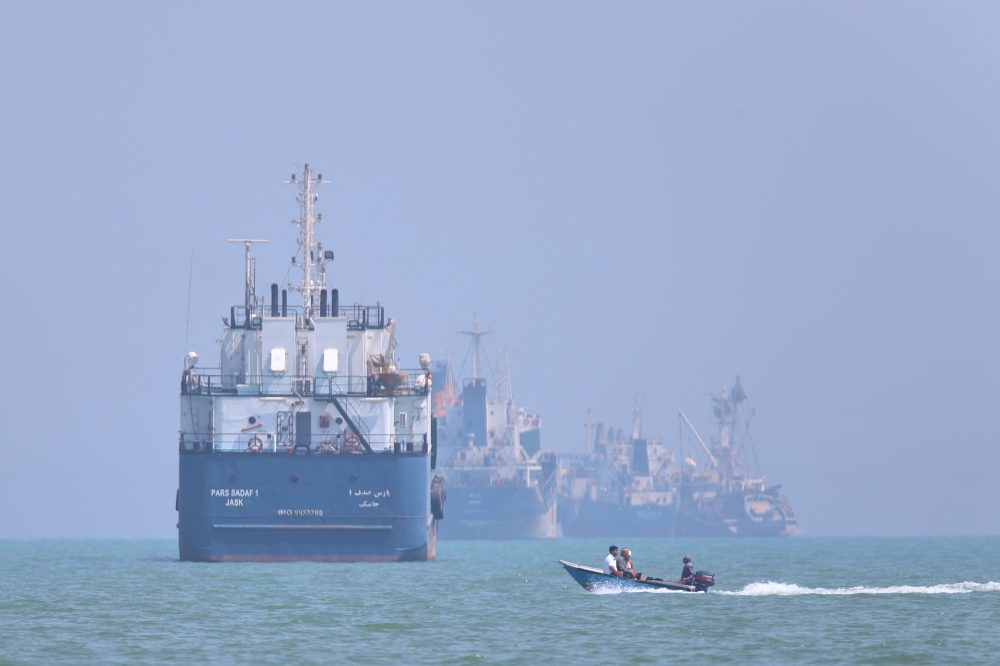

A strategic Iranian island that serves as the nation’s primary oil export facility has become a central battleground in the conflict that began in late February between Iran and a coalition of the United States and Israel.
Any military action against the oil facilities on Kharg Island — whether through airstrikes or ground operations — would dramatically reduce Iran’s ability to export oil, cutting off a crucial revenue stream for the Islamic Republic. Such an attack would represent a significant escalation that might trigger more extensive retaliatory strikes against Gulf Arab energy infrastructure and push global oil costs even higher. Rising fuel expenses are already posing threats to the global economy.
U.S. President Donald Trump reported that mid-March strikes completely destroyed the island’s military facilities while leaving the oil infrastructure untouched. He cautioned that continued Iranian interference with shipping through the Strait of Hormuz might lead him to reconsider protecting the island’s energy facilities.
On Thursday, Trump announced through social media that America would take complete control of Iran’s petroleum and natural gas sectors, including the Kharg Island facility, in the near future.
The president’s statement came as intensifying hostilities between the nations brought the Middle East nearer to renewed full-scale warfare. His recent warnings surfaced while diplomatic efforts to end the conflict appear stalled.
Located across the Persian Gulf from American military installations in Kuwait and Saudi Arabia, the island sits just 33 kilometers (21 miles) from Iran’s mainland. Any U.S. occupation would place American forces in a fixed location easily reached by Iranian missiles and drones, assuming the Islamic Republic would accept damaging its own land.
This small coral formation holds particular significance because Iran’s shoreline lacks the depth needed for large tanker vessels to approach. American naval forces have established a blockade of Iranian harbors, hampering the country’s oil shipments primarily destined for China through the Strait of Hormuz, while Iranian military actions have shut down the critical waterway to most maritime traffic.
Losing control of or destroying the island would eliminate a major government income source while simultaneously removing additional oil supplies from global markets during a period of rising prices. Destroying the terminal would further harm Iran’s already struggling economy and complicate any future reconstruction efforts.
Iran maintains its grip on the strait, previously handling one-fifth of global oil trade before the conflict began. The United States has deployed thousands of military personnel to the region in response.
The island features large storage facilities and accommodations for thousands of employees. Wildlife including gazelles wander near the industrial facilities and storage areas. Historical sites include a medieval Portuguese fort and remnants of an ancient Christian monastery among the Persian Gulf’s oldest.