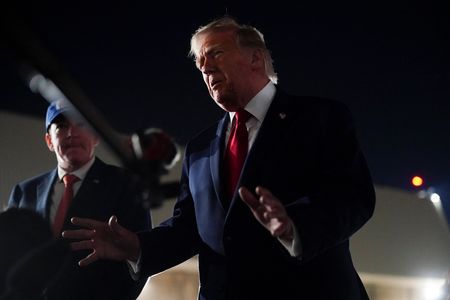
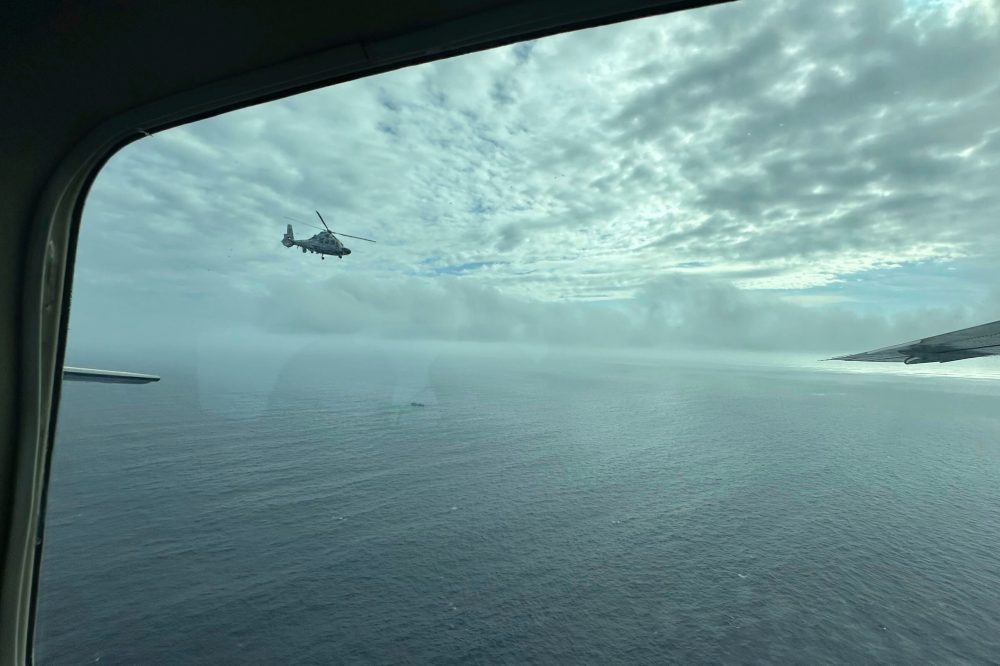
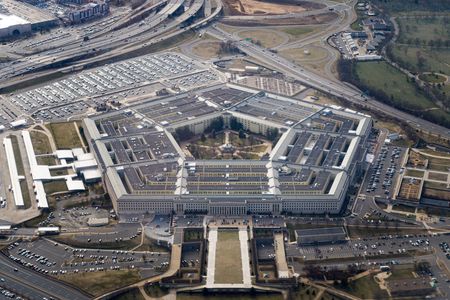
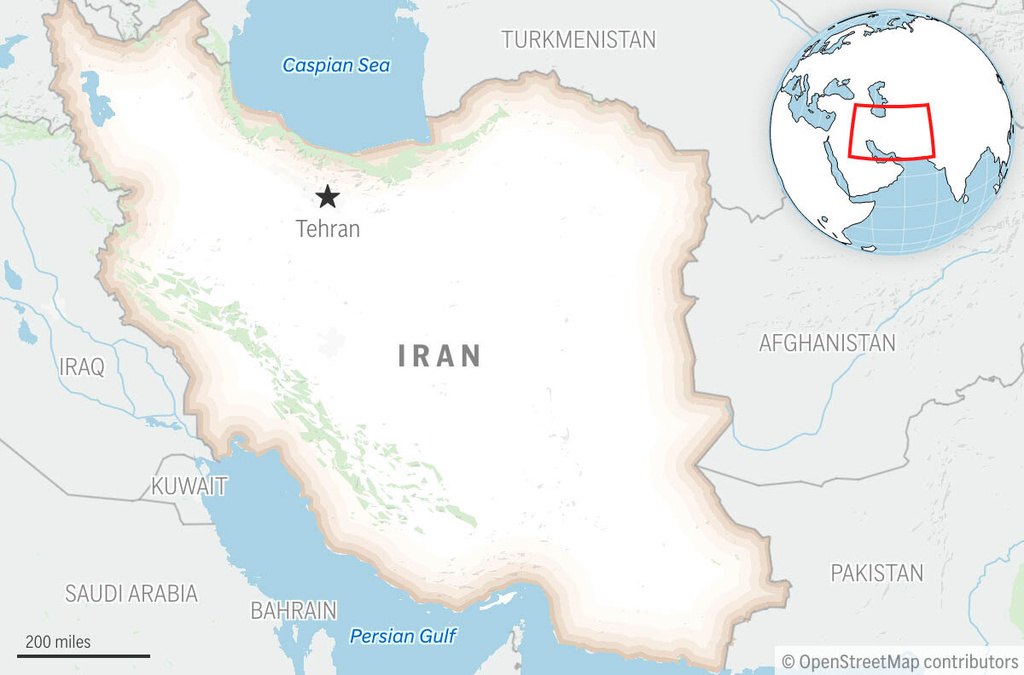
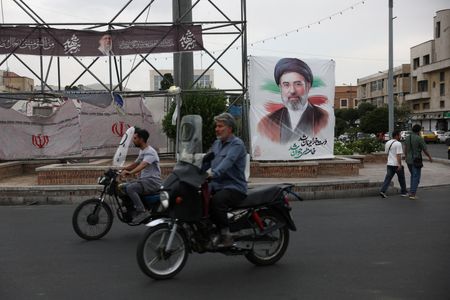
President Donald Trump declared Tuesday evening that America must take action following an investigation that found Iran responsible for shooting down a US Apache helicopter in the vicinity of the Strait of Hormuz.
Through a Truth Social message, President Trump revealed military leadership had briefed him on the investigation’s results.
“I have just been informed by our Great Military that last night the Iranians shot down one of our highly sophisticated Apache Helicopters while patrolling over the Strait of Hormuz,” President Trump wrote.
The president confirmed that both crew members on board the aircraft made it through the incident safely.
“There were two pilots involved, both are safe and uninjured. Nevertheless, the United States must, of necessity, respond to this attack.”
The aircraft crashed Monday evening in the area near the Strait of Hormuz. Two sources speaking to The New York Times confirmed both crew members were recovered without harm.
When the incident first occurred, it remained unclear if enemy fire caused the helicopter’s downing or if mechanical failure was to blame. President Trump had publicly commented on the crash when it first happened, but the investigation later determined Iran had attacked the aircraft.
The aircraft went down during a time when fighting between Iran and Israel had paused after recent tensions had increased.
Officials did not reveal what specific operation the Apache was conducting when the incident happened. The US Central Command website states Apache helicopters perform precision strikes, close air support and aerial reconnaissance.
President Trump provided no details about what military, diplomatic or other actions the United States might pursue in retaliation.
His statements contrasted sharply with comments he delivered Monday evening about negotiations with Iran. While speaking at JFK Airport, President Trump characterized current discussions as being in their “final throes” and suggested a diplomatic deal could reopen the Strait of Hormuz within “two or three days.”
“We are very close to having a very, very good strong, powerful deal,” President Trump said at the time, adding that there were no major unresolved issues preventing an agreement.
The Wall Street Journal previously reported that President Trump had indicated he would consider ending the Iran ceasefire if Iranian attacks resulted in the deaths of American troops.
TORONTO — Canadian authorities have filed charges against a former Air Canada captain who allegedly operated commercial flights for over a decade and a half without holding the appropriate licensing credentials, law enforcement officials announced Tuesday.
Geoffrey Wall, a 59-year-old resident of Barrie, Ontario, stands accused of serving as an airline captain from 2009 through 2025 while lacking the required airline transport pilot license, Peel Regional Police reported.
Authorities say Wall commanded more than 900 domestic and international flights without possessing the necessary licensing credentials. The airline has acknowledged that the pilot maintained a valid commercial pilot license but received a captain promotion despite not holding the mandatory airline transport pilot license.
Deputy police chief Nick Milinovich accused Wall of “flying for years misrepresenting himself and his credentials to his employer and regulatory officials using fraudulent licensing documents.”
“This is similar to a doctor that is licensed to practice family medicine but is doing brain surgery in their office,” Milinovich added.
The carrier stated that the pilot was suspended from flight duties after the licensing discrepancy came to light, with the matter voluntarily disclosed to Transport Canada, the aviation regulator. The individual no longer works for the airline.
Law enforcement officials said irregularities surfaced during a documentation review. Transport Canada reached out to police earlier this year.
Air Canada maintained that flight safety remained intact and a comprehensive review of its pilot roster revealed no additional compliance violations.
“Safety was not compromised by this incident because all pilots at Air Canada undergo mandatory recurrent training every six months to validate their flying competency, including a flight check with a certified Transport Canada check-pilot every 12 months,” the airline said in a statement.
“However, appropriate licensing is an essential layer of the airline industry’s multilayered approach to safety, so Air Canada takes this matter with utmost seriousness.”
The company refused additional comment citing privacy regulations and the ongoing criminal probe.
The airline, which withheld the pilot’s identity, confirmed he received fines from Transport Canada for lacking the proper captain’s license.
Investigators also allege the defendant submitted a fraudulent police report claiming pilot documentation had been stolen.
Wall collected approximately $2.9 million Canadian ($2.1 million) while serving as captain, according to police.
Legal representation for Wall was not immediately available for comment.
Transport Minister Steve MacKinnon indicated the federal government plans to examine the case and implement improvements “if there are any.” Despite the extended alleged deception, he expressed confidence that detection systems functioned properly.
“I am gratified that we were able to detect this issue and get it dealt with,” he said.
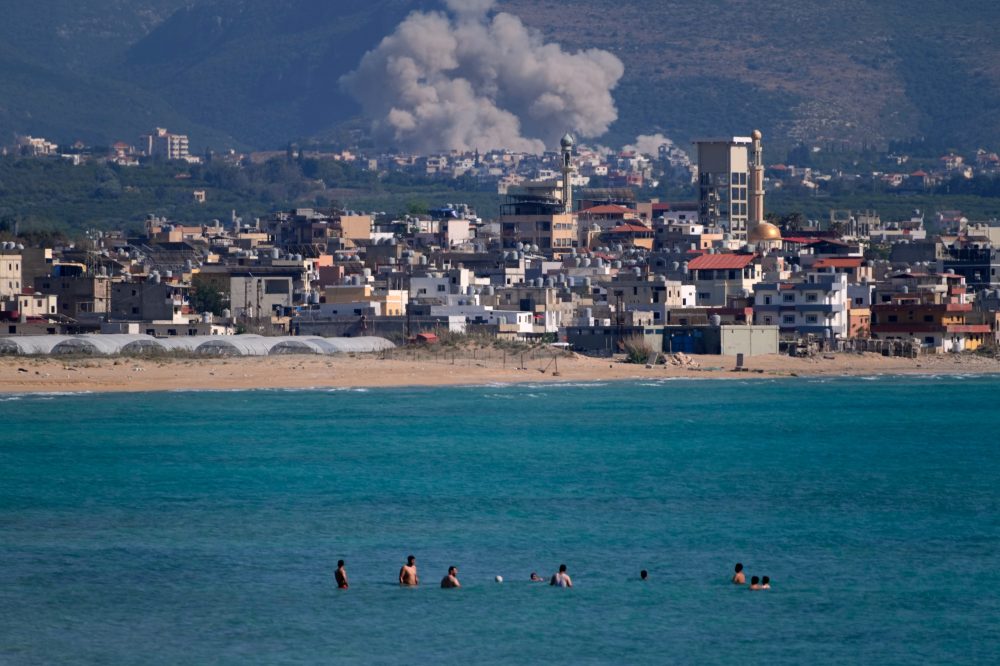
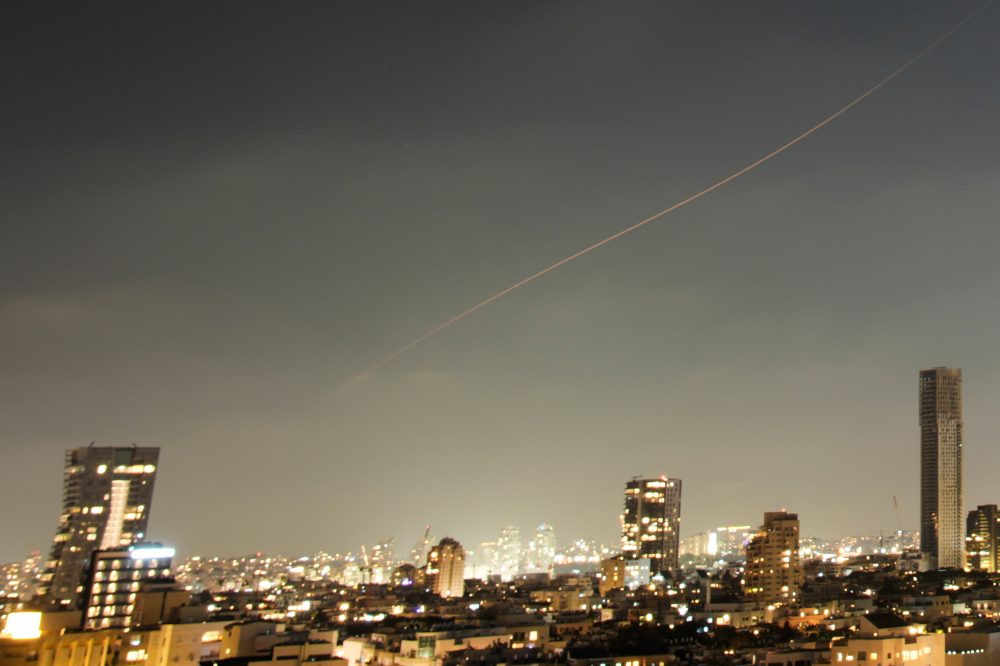
During several hours spanning from Sunday evening into Monday, Iran launched multiple missile attacks against Israel following its warning of retaliation for Israeli operations in Beirut’s Dahiyeh district, disrupting a delicate ceasefire structure that had failed to resolve the fundamental conflict.
Israel subsequently attacked targets within Iran, hitting military and economic facilities, and reported intercepting missiles directed at its air bases. President Donald Trump publicly urged both nations to cease hostilities, stated that final discussions on what he termed “peace” were ongoing, and demanded an immediate end to the fighting.
Brig. Gen. (res.) Yossi Kuperwasser, director of the Jerusalem Institute for Strategy and Security and former head of the research division in Israel Defense Forces (IDF) Military Intelligence, explained to The Media Line that while the operation concluding with the April 8 ceasefire had ended, the war persisted due to the absence of a formal agreement to terminate it.
He described the renewed hostilities as reflecting mutual dissatisfaction rather than a random breakdown of arrangements. Iran faces pressure from US sanctions, economic difficulties, and weakened proxy forces. Israel remains unwilling to accept a situation where Hezbollah can rebuild or operate from Southern Lebanon while Iran attempts to deter Israeli actions there.
“Mostly the Iranians are worried because the situation is putting a lot of pressure on them. Their proxies are suffering heavily,” Kuperwasser observed. He added that Israel is also not satisfied because “we want the threat from Hezbollah to be much lower and better dealt with.”
The immediate catalyst involved Lebanon. Israel’s operation in Dahiyeh was limited, targeting two buildings following recent Hezbollah attacks. However, Iran had previously warned that any Israeli action in Dahiyeh would prompt direct retaliation. When Iranian missiles arrived, they seemed to confirm Tehran’s effort to connect two theaters that Israel and the United States have attempted to treat separately: Lebanon and the direct Israel-Iran confrontation.
Dr. Raz Zimmt, director of the Iran Program at the Institute for National Security Studies, explained to The Media Line that Tehran has spent weeks emphasizing connections between developments in Lebanon and those in Iran. He said Iran had made clear it would not accept a lasting arrangement with Washington while the Lebanese theater remained excluded from any deal.
Zimmt said the move reflected Iran’s ideological and strategic commitment to Hezbollah. “Iran, from both its ideological point of view, but also on the strategic level, finds it very important to make sure that everyone realizes that it doesn’t want to leave its allies in the region alone.”
That represents precisely the equation Israel says it cannot accept. Kuperwasser said Iran’s threat could not become an “immunity card” for Hezbollah. “We made it clear that we are not going to let Hezbollah deploy in the south. If they operate from the south, there’s going to be a price for that,” he said. “The Iranians were trying to prevent us from doing that by their threat.”
For Kuperwasser, the central issue is not whether Israel should launch another round or delay another day. It concerns whether Iran will be permitted to make itself a direct veto player over Israeli operations in Lebanon. “The most important thing is, of course, that our ability to take action in Lebanon is not limited and compromised,” he said. “We should not accept Iran becoming a player in Lebanon. That’s unacceptable.”
Prime Minister Benjamin Netanyahu framed the escalation in similar terms following the Israeli strikes. According to Israeli press reports, he said Iran and Hezbollah had attempted to impose an “equation” on Israel, where Hezbollah could fire from Lebanon, and Iran could respond directly, while Israel’s freedom of action was constrained. “This equation is intolerable and unacceptable to me,” he said.
Netanyahu said Hezbollah fire into Israeli territory led him to order strikes in Beirut, and that after Iran attacked Israel, he instructed the IDF to strike military and economic targets across Iran.
By Monday afternoon, Israeli press reports indicated Israel had agreed, at Trump’s request, to halt its strikes inside Iran, while continuing operations in Southern Lebanon “at full force.”
“At the moment, the fire on this front is halted,” Netanyahu confirmed, while warning that Israel would respond forcefully if Iran attacked again.
The distinction proved important. Israel was prepared to pause direct attacks on Iran, but not to accept any limit on its campaign against Hezbollah, including future strikes in Dahiyeh if attacks on northern Israeli communities continued. Defense Minister Israel Katz warned that Israel would not accept any Iranian attempt to link the Lebanon front to the direct Israel-Iran arena. “The fate of Dahiyeh in Beirut is the fate of the northern communities,” Katz said, according to Israeli press reports.
Within Israel, the renewed exchanges were felt not only through missile alerts but also through the rapid return of wartime procedures. Israel elevated its national alert status to orange, restricted press access on security grounds, and canceled nearly all committee meetings. The exceptions were politically telling: a discussion on establishing a government-backed political inquiry, rather than a state commission of inquiry, into the October 7 failures, and a committee session dealing with immunity for Likud MK Tally Gotliv, who faces charges over allegations that she disclosed the identity of a Shin Bet officer married to protest activist Shikma Bresler.
That contrast, national emergency on one side, domestic political business on the other, sharpened criticism from the opposition. During his Yesh Atid faction meeting at the Knesset on Monday, opposition leader Yair Lapid said the war itself had been justified and had proven Israel’s military power. But he argued that the government had failed to translate battlefield achievements into a strategic or diplomatic result.
Lapid said that after the announcement of the ceasefire in April, it became clear that the government “did not know how to turn victory into achievement,” did not define objectives for the diplomatic phase, did not advance the nuclear issue, did not address the ballistic missile threat or the Lebanon front, and did not coordinate adequately with the Americans or with regional allies.
“The government sent civilians back to shelters, schools are closed, the economy is paralyzed, without all this having any strategic goal that someone can understand, including inside the security establishment,” Lapid said at the faction meeting. He warned that Israeli citizens could bear almost anything if they knew there was a serious and defined objective. “But we are not given a clear and secure goal of any kind,” he said.
Former Prime Minister Naftali Bennett, by contrast, framed the moment before Israel’s retaliation as a test of sovereignty and deterrence. In a post written the night of June 7, before Israel struck Iran, Bennett said Israel faced “a moment of truth” over whether it was a sovereign state capable of defending itself. “A weak or symbolic response will signal to our enemies that the blood of our citizens has been spilled with impunity,” he wrote, adding that Israel had to act “with strength and effectiveness.”
The two opposition figures were not saying the same thing. Bennett’s message was that Israel had to hit back hard enough to prevent a dangerous precedent. Lapid’s was that military power without a political end state produces recurring rounds of escalation. Together, they captured the two competing pressures now confronting the government: the demand to preserve deterrence and the demand to explain where the fighting is supposed to lead.
Dr. Michael Milshtein, head of the Palestinian Studies Forum at the Moshe Dayan Center for Middle Eastern and African Studies at Tel Aviv University, offered a pointed criticism of Israel’s current course. He said the latest escalation has produced “frustration and disappointment” because, unlike earlier stages of the war, many Israelis struggle to understand the immediate purpose.
“In the past, for example, during the last war with Iran, you could find most Israelis explaining that it was a kind of existential war and we knew, we understood what was the reason and what was the cause was,” Milshtein told The Media Line. “Right now, I think that even right-wing supporters, it is hard for them to really explain, okay, what are we doing exactly?”
Milshtein said Iran appeared more confident after the latest clash than many in Israel expected. “They are not deterred. They are full of influence. They are full of confidence,” he said of Iran. He argued that Tehran had managed to show it was prepared to take risks for Hezbollah and Lebanon without triggering the full-scale war Israel might have hoped would restore a clearer deterrence balance.
“I assess that the Iranians have much more achievements from the last clash than Israel,” Milshtein said. He described the Israeli strike in Dahiyeh as largely symbolic and questioned whether it provided real security benefits to residents of northern Israel or to soldiers operating in Lebanon. He noted that Israelis are looking for strategic explanations when the real answer is political.
Milshtein’s broader critique was that Israel’s military achievements have repeatedly outpaced its political planning. “Actually, there is no strategy for Israel,” he said. “There were fantastic military achievements, but because of the fact that no one wanted to speak about the end strategy, calculating the moves, we find ourselves in a situation that we are being forced by Trump to accept a settlement, a kind of political settlement.”
The question of President Trump’s role now sits at the center of the crisis. The American president has urged restraint, pressed Iran to return to negotiations, and signaled that a broader deal remains possible. President Trump said Monday that both sides were looking for an immediate ceasefire and that final negotiations on “peace” were proceeding. But Israel’s initial response showed that Jerusalem was still prepared to act militarily when it believed deterrence was at risk. The later decision to halt strikes in Iran at President Trump’s request showed the other side of the equation: Israel may insist on operational freedom, but Washington still has influence over the boundaries of escalation.
Marc Zell, chairman of Republicans Overseas Israel and vice president of Republicans Overseas, told The Media Line that he does not see the latest events as evidence of a serious rupture between Washington and Jerusalem. “I don’t believe the war ended,” he said. “The war continues, but it’s in a different form.”
Zell said President Trump is trying to manage several tracks at once—the battlefield, the American public, global energy markets, and the possibility, however slim, of a diplomatic arrangement. In Zell’s view, the American president must show voters that he is trying to end the fighting, while also maintaining pressure on Iran through military and economic means.
“He’s got to send a message to the American public and to the electorate about his efforts to put an end to the war,” Zell said. “… He’s also got to send, and he has been sending, messages to markets, domestic and global markets, with respect to oil and stock markets, capital markets generally.”
Zell rejected the idea that President Trump and Netanyahu are fundamentally at odds. “Of course, we can talk about disagreements. These are two vibrant, robust democracies,” he said. “I happen to believe that there are no real, substantive, material disagreements between the United States and Israel.” He added that Washington and Jerusalem may not agree “eye-to-eye on all the objectives of the fighting,” but said they agree on the essentials: Iran’s nuclear program, its ballistic missiles, and its proxy network.
Kuperwasser drew a similar distinction, saying that the disagreements visible this week are tactical rather than strategic. “At the end of the day, we want the same thing, and we operate together, and we fight together shoulder to shoulder in a very impressive way,” he said. “We exchange intelligence, and we are working very closely together. They take part in our defense. It’s very impressive. I don’t think that there is a strategic disagreement.”
But Kuperwasser also suggested that Trump may believe a deal is closer than Israeli officials do. “It seems that President Trump is under the impression that he’s close to having a long-sought deal,” he said. “I’m not sure that we are under the same impression …”
That gap may be exactly what Tehran is trying to exploit. Zimmt said Iran’s current leadership believes Trump does not want to return to full-scale war and that he may pressure Netanyahu to avoid a broader escalation. “The Iranian leadership really thinks, and I think they’re right, that President Trump doesn’t want to go to a full-scale war with Iran,” he said. “They look for any opportunity to put more pressure on Trump, assuming that when and if he reaches the conclusion that the status quo is unsustainable and unstable, he might be more willing to accept the Iranian conditions.”
From that perspective, Iran has become “a very self-confident player” since the war and especially since the closure of the Strait of Hormuz. Tehran believes it can survive confrontation with the United States and Israel, Zimmt said, while using its leverage over energy routes, regional proxies, and missile capabilities to force recognition of its position.
Zimmt said it was increasingly clear that Iranian leaders believed they could not only survive a confrontation with the United States and Israel but also turn it to their advantage.
“It became more and more evident that the Iranian leadership has reached the conclusion that not only can it survive this confrontation with the US and Israel, but can actually use that in order to create a better situation and perhaps even some kind of regional architecture which would recognize Iran’s leverage and Iran’s ability to inflict major pain, not just to its regional neighbors, but also to the global economy,” he said.
For Zimmt, the only stable way out would be a memorandum of understanding (MoU) between the United States and Iran. But he warned that any such arrangement would still face major unresolved issues, including the nuclear issue, frozen Iranian assets, and the broader question of security guarantees. “If there is no MOU, then both the developments in Lebanon and the ongoing sporadic incidents between the US and Iran in the Persian Gulf can certainly escalate again and again,” he said.
Milshtein said Israelis should focus above all on the nuclear question, not on slogans about regime change or claims of total victory. “The Israelis should ask themselves only one question, and this is what is going to happen to the nuclear threat. All the rest are not so important ….”
Kuperwasser also said the goals of the war must be understood precisely. He rejected the idea that Israel had formally declared regime change as the goal. “We never said that the goal of this war is to change the regime,” he said. “We said that we would like to create the conditions that would enable the Iranian people to change the regime.”
He said Israel and the United States achieved tangible military results, including damage to Iran’s nuclear facilities, ballistic missile production infrastructure, leadership, and military assets. But he acknowledged the limits of air power. “We cannot put an end to their ability to launch missiles. We cannot take away their highly enriched uranium [with] the use of air power. We cannot change the regime by the use of air power,” he said.
Israel, Iran, and the US are left in an unfinished phase. The ceasefire remains a framework, not a settlement. Lebanon remains outside the core arrangement, Iran is trying to link Hezbollah’s fate to its confrontation with Israel and Washington, and Israel is trying to preserve freedom of action in Lebanon while avoiding a broader direct war with Iran as Trump presses for a deal.
For Israelis, the return to shelters, the orange alert level, the cancellation of school and other educational activities, the restrictions on access to the Knesset, and the sudden halt to most normal legislative work made the stakes less abstract. President Trump is trying to keep negotiations alive. Iran has shown it can still impose costs. Israel is trying to preserve deterrence without losing Washington’s diplomatic framework. The ceasefire appears to have survived the latest exchange, but what it restrains is still being tested.
A record-breaking crowd of 60,000 people participated in Toronto’s annual pro-Israel demonstration, making it the biggest gathering in the event’s nearly six-decade history.
According to the UJA Federation, which coordinated and backed the demonstration, this year’s attendance surpassed all previous years since the march began 57 years ago.
The crowd assembled at Temple Sinai Congregation before walking down Bathurst Street. Those taking part displayed Israeli flags alongside Lion-and-Sun Iranian flags throughout the demonstration. Event coordinators reported that donation drives brought in over $670,000 Canadian dollars, though this amount didn’t reach their target of $780,000 that was set to commemorate 78 years since Israel’s independence.
Heavy security surrounded the demonstration, with Toronto police deploying officers on foot, bicycles, and horseback throughout the march route and surrounding areas. Toronto Police Service Deputy Chief Frank Barredo had detailed these security plans during a Friday briefing.
Nate Leipciger, a 98-year-old Holocaust survivor, took part in the opening ceremony and performed the ribbon-cutting that officially began the walk.
Toronto-St. Paul’s Member of Parliament Leslie Church shared her thoughts about the event on X, stating that the large attendance showed “resilience, solidarity, and joy in the face of resurgent antisemitism.”
Meanwhile, opponents of Israel assembled at Earl Bales Park for their own demonstration called the Walk Against Israel.
Law enforcement made six arrests throughout the day. Officials reported that some protesters departed from their assigned demonstration zone, resulting in at least one clash with police.
Police identified one arrestee as 35-year-old John Eusebio, who reportedly spat at an officer during the confrontation.
The nation of Azerbaijan finds itself at the center of heated allegations regarding the ongoing conflict between Israel and Iran, with officials in Baku categorically denying claims about their involvement in military activities.
The country has dismissed recent media coverage suggesting that Israel positioned specialized military and intelligence personnel within Azerbaijan’s borders as part of a covert network targeting Iran. Officials characterized these allegations as “entirely baseless” and emphasized that their territory has never been made available for military operations, intelligence work, or hostile actions directed at any nation.
This controversy carries significant weight because Azerbaijan borders Iran while maintaining extensive security and energy partnerships with Israel, supplies natural gas to Europe, collaborates closely with Turkey, maintains communication with Russia, and has worked for years to prevent a complete breakdown in relations with Tehran. In this volatile region where location can serve as either an advantage or a burden, Baku seeks to transform its proximity to conflict zones into diplomatic influence while avoiding entanglement in surrounding wars.
The core challenge facing Azerbaijan stems from its openly acknowledged cooperation with Israel, while disputed claims about territorial use for military or intelligence purposes against Iran remain officially rejected. This debate has intensified examination of a nation whose strategic importance has expanded due to Russia’s conflict in Ukraine, tensions around the Strait of Hormuz, and the confrontation between the US, Israel, and Iran.
Fuad Shahbazov, an independent researcher and political analyst based in Baku, firmly challenged the media report regarding alleged Israeli activities in Azerbaijan, arguing it depended on unnamed sources and provided no concrete evidence.
“The network failed to cite any serious or credible source, just reframing it to anonymous sources familiar with the situation,” he stated. “The satellite imagery failed to provide any physical evidence of Israelis in Azerbaijan’s side,” he continued.
John Roberts, a UK-based energy, security, and geopolitical analyst specializing in Caspian, Middle Eastern, and Russian energy matters, adopted a more measured stance. He indicated Azerbaijan would be deeply troubled if such information had become public, though he didn’t completely dismiss the reports.
“There were reports concerning just what use Israel may have made of observation points. In order to see how things were developing in Iran,” Roberts explained. “I think the Azerbaijanis would be very upset that the information came out, but I have no reason to doubt the information,” he continued.
The comprehensive Israel-Azerbaijan partnership extends far beyond petroleum trade. Shahbazov characterized Israel as among Azerbaijan’s most crucial strategic allies, while emphasizing that Baku rejects any notion that cooperation with Israel implies antagonism toward Iran.
“Azerbaijan pursues quite a pragmatic multivector diplomacy, because the country has long sought to maintain productive relations with competing powers simultaneously, rather than joining geopolitical blocs,” Shahbazov explained. “Baku consistently argues that cooperation with Israel does not mean hostility towards Iran or Turkey or another Muslim country, because it’s mostly energy and security cooperation,” he continued.
Israel regards Azerbaijan as an uncommon Muslim-majority ally with strong political, economic, and security connections to the Jewish state, Shahbazov noted. Azerbaijan’s frontier with Iran and its position linking the Middle East, the Caucasus, and the Caspian Basin make it strategically important to Israel.
Roberts indicated that Israel and Turkey were two crucial external forces that aided Azerbaijan’s military victory in Nagorno-Karabakh.
“Turkey, which taught them how to use, operate, and manufacture drones for them. Nagorno-Karabakh was an early use of drones in warfare. And Israel, because it taught some of the elite Azerbaijani troops,” Roberts stated.
Shahbazov spoke more directly about the defense partnership. “We do not refute those allegations that we have a very, very deep security partnership with Israel,” he said. “This includes intelligence sharing, this includes military technical, defense industry, procurement, weapons supply, even experience exchange with military officers,” he added.
For Israel, Azerbaijan doesn’t serve as a direct gas provider, but functions as a major oil partner and an increasingly vital energy and security associate. Shahbazov said Azerbaijan continues as Israel’s second primary oil supplier and has maintained deliveries throughout the war.
“Azerbaijan contributes to Israel’s energy security through oil exports,” he explained. “Azerbaijan is the second main oil supplier of Israel, even despite the war since 2003. Azerbaijan still systematically and consistently supplies Israel with oil with no interference or with any interruptions,” he added.
Roberts characterized the oil relationship in business rather than strategic terms. Once Azerbaijani crude arrives at Ceyhan in Turkey, he explained, it becomes part of the open market, with Israel serving as one of the closest buyers.
The Israeli connection also creates sensitivity regarding the Iranian dimension. Azerbaijan shares a frontier with Iran and maintains significant ethnic, historical, and cultural connections with the Azerbaijani population within Iran. Roberts said Baku has been cautious to avoid territorial claims or provoking Tehran.
“Azerbaijan is very careful not to make claims over Iranian territory,” he noted. “It tried to have good trade relations. It tried to work with the Iranian government over issues like the Caspian. It tried to improve road and rail links with Iran. In no way does Azerbaijan want to upset Iran.”
Both experts indicated that Iran-linked security threats have complicated Azerbaijan’s position. In March 2026, Azerbaijan reported thwarting Iran-connected schemes against the Baku-Tbilisi-Ceyhan oil pipeline, the Israeli Embassy, an Ashkenazi synagogue, and a Mountain Jewish community leader. One day prior, Azerbaijan accused Iran of launching four drones at Nakhchivan, wounding four civilians and damaging airport infrastructure; Tehran rejected responsibility.
Shahbazov noted that Azerbaijan also confronts the challenge of Iranian sympathizers and potential sleeper cells within the country.
“It’s quite a complicated question, because there is no specific guideline on how the government will be handling this sleeper cells or Iranian sympathizers issue,” he stated. “Since Azerbaijan is a Shia-majority Muslim country, and we have quite a number of Iranian sympathizers, who are not exactly members of Iranian cells, but personally they do sympathize for the regime,” he added.
He also cautioned that the war had not eliminated the Iranian regime but had strengthened the Islamic Revolutionary Guard Corps.
“IRGC became more powerful and more authoritarian than it was before the war,” Shahbazov observed. “So I expect that the IRGC will take control over the country in all spheres, including civilian, diplomatic, and military spheres. So IRGC will be quite a serious problem, even a greater problem than it was one or two years ago,” he added.
Roberts also viewed Iran as a revolutionary force prepared to employ measured escalation throughout the region.
“It would appear that Iran has a governmental structure that really is quite genuinely revolutionary,” he said. “That fervor is still there.”
Iranian attacks beyond its frontiers can serve a deterrent purpose, Roberts explained, but sustained escalation against Azerbaijan would carry risks for Tehran because Azerbaijan has recently prevailed in war and possesses capable military forces.
Shahbazov highlighted Azerbaijan’s border security capabilities, noting it has received assistance from the United States and Israel. “Azerbaijan is one of those regional states that has a quite effective border security service.”
He said infiltration attempts from the Iranian side persist, but mainly involve smuggling. “There are still some attempts of infiltration from the Iranian side, but mostly those are smugglers, drug smugglers, or the people who are carrying some guns,” he explained. “None of them successfully managed to infiltrate into Azerbaijan.”
The disagreement over alleged Israeli activity represents just one element of a broader Azerbaijani strategy: remaining valuable to competing powers without becoming dependent on any of them. Baku’s worth has increased because it can communicate with Israel, Turkey, the European Union, the US, Russia, and Iran, even as many of these actors grow increasingly antagonistic toward each other.
This diplomatic flexibility appears in Azerbaijan’s approach to Moscow. Roberts said Baku’s policy toward Russia relies on caution, distance, and realism.
“The point about their relationship with Russia is keeping Russia at a distance, being polite, not being unnecessarily inimical, but no full trust in Russia,” Roberts told The Media Line. “Azerbaijan will not go to try to deliberately upset Russia, but it will do things in its own interest that Russia may not be happy with,” he added.
Energy has enhanced that caution’s value. Following Russia’s invasion of Ukraine in 2022, Europe accelerated its search for alternatives to Russian gas. Azerbaijan had already been providing Europe through the Southern Gas Corridor, a 3,500-kilometer route transporting gas from the Shah Deniz field through the South Caucasus Pipeline, the Trans-Anatolian Natural Gas Pipeline across Turkey, and the Trans-Adriatic Pipeline through Greece, Albania, and the Adriatic Sea to Italy.
The European Commission reports that Azerbaijani gas deliveries to the EU through the corridor rose by more than 40% between 2021 and 2024. It also states that the State Oil Company of the Republic of Azerbaijan provided gas to 14 countries in 2025, while media reported that Azerbaijan commenced gas deliveries to Germany and Austria in January 2026.
Shahbazov characterized the war in Ukraine as the pivotal moment that enhanced Azerbaijan’s importance in European considerations.
“Russia’s invasion of Ukraine elevated Azerbaijan’s importance in European energy security calculations,” Shahbazov told The Media Line. “Because before 2022, Azerbaijan was already supplying gas to Europe through the Southern Gas Corridor. But after the war, the EU began actively seeking reliable non-Russian suppliers as a part of isolating Russia from and trying to diminish its role in the global energy market,” he added.
Nevertheless, both experts cautioned against exaggerating Azerbaijan’s capacity. Shahbazov said Azerbaijani gas can assist Europe in diversifying but cannot completely substitute Russian volumes.
“But still, Azerbaijani gas cannot fully replace Russian gas, because it’s technically impossible, given also the size of gas reserves that Russia has,” he explained. “Russia simultaneously supplies Asia and the European markets, which Azerbaijan cannot do, of course. But Azerbaijan can be quite an important contributor in terms of global uncertainty,” he added.
Roberts indicated that Azerbaijan has already accomplished much of what it can without major new upstream investment. Additional European exports would require pipeline improvements, increased compression capacity, and long-term commercial certainty for companies such as BP.
The same geography that makes Azerbaijan valuable as an energy supplier also reinforces its role as a corridor state. Turkey plays a central role in that position. The partnership encompasses strategic, military, cultural, and infrastructural elements, providing Azerbaijan energy access to Europe through the Trans-Anatolian Natural Gas Pipeline. In June 2026, Turkey’s energy minister indicated that Ankara and Baku were exploring opportunities beyond oil and gas toward electricity transmission and green energy corridors with Georgia, Bulgaria, and southeastern European states.
Azerbaijan’s connections to Turkey, Israel, Europe, Russia, and Iran have made ambiguity a strategic instrument. Shahbazov described this as an intentional “multivector” foreign policy, while Roberts argued that Azerbaijan is unlikely to abandon this approach.
“I would be absolutely astonished if Azerbaijan at any point showed all its cards and took a definite side,” Roberts said. “It enjoys very good commercial relations with the West, with Europe, and with the United States. Look at the development of its oil and its gas and the markets it serves. It is well aware of how important those commercial ties are,” he added.
Beyond energy, Azerbaijan is also positioning itself at the center of the Middle Corridor, which connects China and Central Asia to Europe through the Caspian and the South Caucasus while bypassing Russia and Iran. Roberts said Azerbaijan is essential to this geography.
“Azerbaijan is absolutely essential because it is the country between Iran and Russia that constitutes the gateway at the Caspian through to Europe,” he explained.
A final peace treaty with Armenia, Roberts added, could open additional routes into Turkey and Europe while reducing dependence on the Black Sea during the Russia-Ukraine war.
Shahbazov framed Azerbaijan’s future in even broader terms, saying its importance is no longer connected only to hydrocarbons. “Azerbaijan increasingly sees itself as a connectivity state linking multiple regions.”
He described the country as becoming “the hub of both energy and transportation at the same time,” combining geography with political flexibility.
“What makes Azerbaijan particularly significant is that it combines geography with political flexibility, so it’s not simply an energy exporter,” Shahbazov said. “It’s becoming a regional platform for diplomacy, for strategic cooperation.”
This stability is becoming a strategic asset. Azerbaijan sits near the Iran-Israel front, north of the Persian Gulf crisis, west of Central Asia, south of Russia, and east of Turkey. It has emerged from its own war with Armenia stronger, while neighboring Georgia and Armenia face political uncertainty, and the Black Sea remains affected by the Russia-Ukraine war.
Roberts warned against assuming there is a single coherent regional plan behind these shifts. “I would be very careful about using words like a ‘bigger plan or picture.’ I think an enormous amount of what happens in the Middle East is unplanned. It’s accidental, it’s coincidental, it’s mistaken, and it’s not planned.”
This uncertainty may be precisely why Azerbaijan’s position matters. It is not large enough to replace Russia in Europe’s energy market or powerful enough to dictate the outcome of the Iran-Israel confrontation. But it is geographically positioned at the intersection of several crises and politically agile enough to communicate with actors that are increasingly unable or unwilling to communicate with one another.
For Europe, Azerbaijan serves as a tool for diversification. For Israel, it represents a rare Muslim-majority security and energy partner. For Turkey, it functions as a strategic brother-state and corridor partner. For the US, it serves as a useful Caspian actor at Iran’s northern edge. For Russia, it represents a neighbor that must be managed but no longer fully constrained. For Iran, it is both a sensitive border state and a potential source of suspicion.
Baku’s challenge is that the same geography that provides it influence also exposes it. Its future role will depend on whether it can continue to transform proximity to conflict into diplomatic and economic leverage without being drawn into the wars surrounding it.
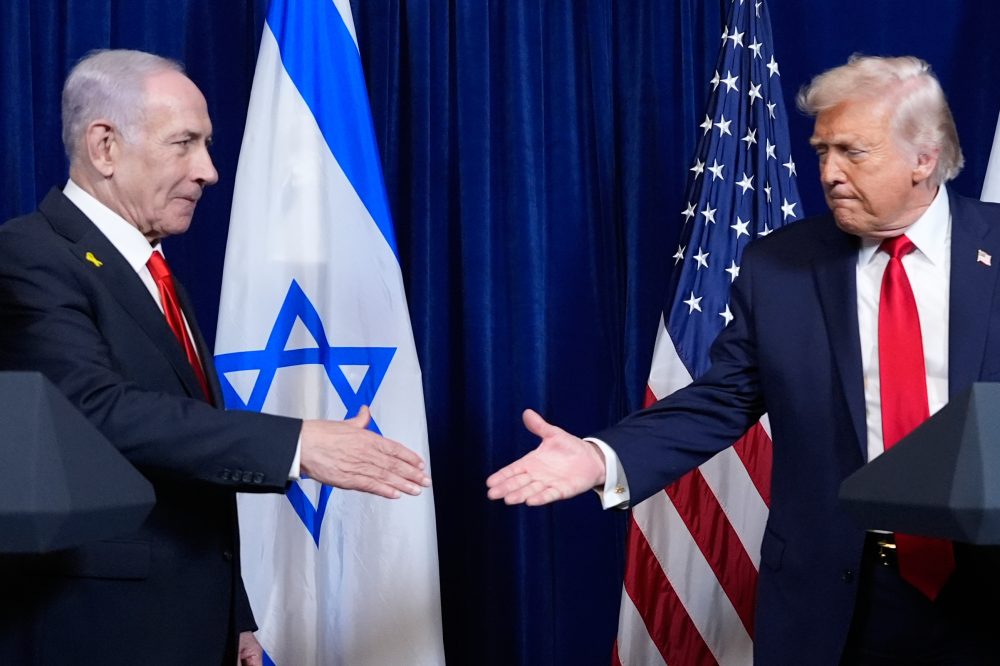
Israeli Prime Minister Benjamin Netanyahu declared Monday that his nation will maintain its military response policy against Iran and Hezbollah attacks, even as President Donald Trump works to prevent additional escalation and maintain current ceasefire arrangements.
During a recorded address, Netanyahu affirmed Israel’s defensive actions against both enemies following recent assaults and maintained the country’s right to future responses. “Israel has the full right to self-defense, and we exercise it whenever necessary,” he stated.
Netanyahu explained that Hezbollah’s rocket attacks into Israeli areas led him to direct the Israel Defense Forces to target terrorist positions and Hezbollah personnel in Beirut. He noted that Iranian assaults on Israel resulted in Israeli counterstrikes against military and economic facilities throughout Iran.
Discussing the recent conflicts, Netanyahu dismissed what he characterized as Tehran and Hezbollah’s effort to create new deterrence rules. “Over the past 24 hours, Iran and Hezbollah tried to impose a new equation on us. That equation is intolerable and completely unacceptable to me,” he declared.
“They thought they could fire from Lebanon and Iran at Israel and that we would not act. That did not happen, and it will not happen. Not on my watch!” Netanyahu emphasized.
Netanyahu said the existing ceasefire resulted from Iran’s choice to stop ballistic missile launches against Israel. “At the moment, the fire has ceased because after we struck the terrorist regime in Tehran, it stopped attacking us,” he explained. “If the terrorist regime in Iran makes the mistake of attacking us again, we will respond with force.”
Netanyahu’s comments followed President Trump’s Sunday evening announcement that he planned to encourage the Israeli leader against launching more strikes after an Iranian assault involving 11 missile barrages.
“I am going to call Bibi right now and tell him not to retaliate. Each of them had their fun. Israel had its strike and Iran had its strike. We don’t need another one,” Trump stated. “I don’t want to see an additional attack tonight.”
Barak Ravid of N12 reported that Washington received no advance notice of Israel’s planned Sunday night Iran operation. President Trump informed the network that Israel only notified the United States once the mission had already begun.
Monday saw Israel’s air force target the Karoun petrochemical facility in Mahshahr, Iran, along with additional sites. Iran retaliated by firing more missiles toward Israel.
Channel 12 reported that Netanyahu initially authorized a larger Monday afternoon strike but called it off following President Trump’s personal appeal to cease further military operations. The network indicated the two leaders conducted multiple discussions after the Beirut attacks, Iran’s ballistic missile strikes on Israel, and Israel’s follow-up Iran operations. The report stated Netanyahu contended that Iran had breached Israeli sovereignty and warranted a response before ultimately agreeing to cancel the planned mission.
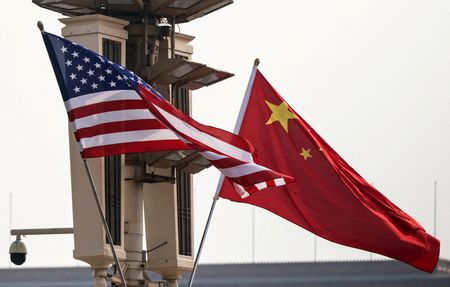
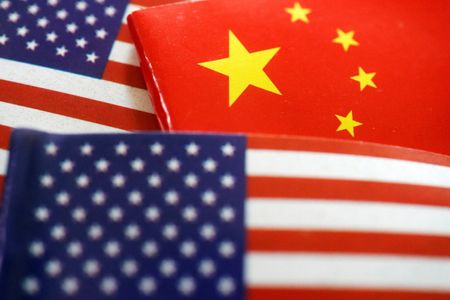
A recent survey conducted by the Asia New Zealand Foundation reveals a significant shift in how New Zealanders view global powers, marking the first time in ten years that the United States is perceived as a greater threat than China.
The foundation’s yearly study examining attitudes toward Asia and Asian populations, which has been running for 29 years, surveyed 2,300 individuals during January and February. The results showed 39% of participants considered the United States a friend to New Zealand, while 35% labeled it a threat. In contrast, 43% viewed China as friendly and only 23% saw it as threatening.
The data indicates a notable decline in favorable opinions toward America over the past year, while perceptions of China have become more positive.
The research also revealed that 81% of New Zealanders believe strengthening connections with Asia holds significant importance for their country.
“There is a growing recognition that prosperity, resilience and security will depend on the depth and quality of our relationships across Asia,” stated Asia New Zealand Foundation Chief Executive Suzannah Jessep in the report.
Despite this shifting public sentiment, New Zealand and America have expanded their collaboration in defense, security, and technology sectors recently. Wellington views Washington as essential for maintaining Indo-Pacific stability and serving as a balance against China’s expanding influence in the region.
However, New Zealand’s export businesses have suffered from American tariffs, and the nation’s economy has experienced strain from elevated oil costs connected to the U.S.-Israeli war on Iran.
“New Zealanders also still understand their sense of security largely through an economic lens, and so tariffs and disruption to global trade weigh heavily on those calculations,” explained David Capie, professor of international relations at Victoria University of Wellington.
According to Capie, the declining American sentiment reflects a wider trend seen throughout Western liberal democracies.
Supporting this pattern, a University of Sydney survey published in December revealed that most Australians, Japanese, and Indians believe U.S. President Donald Trump’s second term has negatively impacted their nations.
A United Nations investigation released Tuesday reveals that Hamas fighters and security forces carried out brutal acts against their own people in Gaza, including public executions and torture that constitute war crimes.
The UN Office of the High Commissioner for Human Rights documented hundreds of instances of extrajudicial punishment throughout the war-torn region, many of which were made public to terrorize the population.
“These cases involved executions, kneecapping, bone-breaking with metal pipes or cement bricks and beatings and were framed by the perpetrators as punishments for alleged collaboration with Israel, looting humanitarian aid, theft, drug-related offenses or affiliations with internal rivals,” the report stated.
Investigators determined that Hamas-linked fighters and law enforcement participated in nearly 25% of the 249 documented incidents — which resulted in 108 fatalities — occurring between August 2024 and January 2026. While the investigation focused on Hamas-connected forces, it also recorded cases involving other militant organizations.
Hamas officials did not provide responses when asked about the report’s findings.
For almost twenty years, Hamas has maintained control over Gaza after taking the territory from the internationally recognized Palestinian Authority. Following an October ceasefire that ended more than two years of intense fighting with Israel, Hamas has been working to restore its authority in the parts of Gaza it continues to control.
The Tuesday report indicates that instead of using proper legal proceedings with courts and judges, the punishments were administered by Hamas’ armed forces and law enforcement divisions.
Srinivasan Muralidhar, who chairs the UN commission, stated that the documented abuses in Gaza occurred in an “environment engineered by Israel,” where “Hamas-affiliated forces have exploited the vacuum created by relentless Israeli attacks and widespread destruction.
Victims included opposition activists and members of Israeli-supported clans and armed factions that gained influence in areas where Hamas’ authority diminished during the conflict, which has resulted in nearly 73,000 Palestinian deaths according to the territory’s Health Ministry.
The UN investigation references filmed executions, including footage of three men with covered eyes who were killed by masked gunmen outside Shifa Hospital in September 2025 while onlookers watched. The document describes another public killing one month afterward, when eight individuals were pulled into a Gaza City plaza and shot. Both incidents involved people labeled as spies, traitors and collaborators, the report noted.
These events, the commission determined, “amount to the war crime of murder and to a violation of international humanitarian law and international human rights law, including the right to life, the right to liberty and security and the right to a fair trial.”
Additional targets of physical violence and public humiliation — including minors — faced accusations of stealing, narcotics trafficking or unauthorized tobacco sales.
Testimony from witnesses informed the commission that punishments occurred within medical facilities, including the Nasser Medical Complex in Khan Younis. Nevertheless, it determined that the documented activities — which don’t target Israel — don’t eliminate hospitals’ protection under international law. Israel has consistently claimed that Hamas operates from schools, hospitals and religious buildings.
This report represents the most recent from the international organization, which previously accused Israel of genocide, weaponizing starvation in Gaza and ethnic cleansing in the West Bank — charges that Israel firmly rejects. Israel has consistently claimed the UN rights office demonstrates anti-Israel prejudice.
The UN document also condemned increasing violence by Israeli settlers in the occupied West Bank, describing it as functioning “as a means of implementing Israeli state policy, with both the state and violent settler groups working toward the same strategic objectives: entrenchment of Israeli settlements, annexation of Palestinian territory and displacement of Palestinians from their land.”
Israel’s Foreign Ministry did not provide responses regarding these accusations.
Since the Israel-Hamas conflict began, 1,098 Palestinians — including no fewer than 240 children — have died at the hands of Israeli forces or settlers in the occupied West Bank, based on UN statistics. During this violence, Bedouin communities in remote regions have been forced from their homes as new Israeli settlements have emerged and the government has worked to authorize additional ones.
A court in Tunisia has handed down a four-year prison sentence to journalist Khaoula Boukrim while she remains in exile, according to the reporter’s announcement on Tuesday. Critics view this decision as evidence of an escalating campaign against media freedom and dissenting opinions under President Kais Saied’s leadership.
This sentence against Boukrim follows a pattern of legal action targeting media professionals, with several journalists including Zied Heni, Mourad Zghidi and Borhen Bsaies being imprisoned earlier this year.
The founder of news website TUMEDIA, who escaped to Paris last December, learned that courts had issued two separate verdicts against her under Decree-Law 54. This cybercrime legislation, passed in 2022, carries harsh punishments for digital publishing violations.
While human rights organizations claim the statute has become a tool for silencing government opponents and restricting media freedom, officials defend it as essential for fighting false information and digital harassment.
“I was forced to leave to Paris when I learned that legal cases were being prepared against me because of my critical positions toward the president and those around him,” Boukrim told Reuters.
“The ruling is a continuation of the targeting of free journalism and critical voices,” she added.
Government representatives were not available to provide immediate response to the sentencing.
Human rights advocates express concern about increasing efforts to silence remaining independent media voices following Saied’s dissolution of the democratically elected parliament in 2021 and his subsequent governance through executive orders.
Press freedom had initially expanded after the 2011 revolution that removed dictator Zine El Abidine Ben Ali and sparked the “Arab Spring” movement.
Opposition voices argue that Saied’s consolidation of authority in 2021 and his subsequent executive actions have eliminated democratic protections and given authorities the ability to target numerous journalists.
Over the past three years, leadership from Tunisia’s primary opposition movements have been imprisoned alongside dozens of political figures, advocates and business leaders on accusations including plotting against national security, financial crimes and corruption.
Saied maintains he will not become an authoritarian leader and insists that civil liberties remain protected in Tunisia.
LIMA, Peru — Peru’s presidential election remains extremely tight as the vote difference between the two contenders has shrunk to fewer than 20,000 ballots with officials having tallied 96% of Sunday’s runoff election returns.
The victor will assume the presidency as the South American nation’s ninth leader within a 10-year span.
Current tallies reveal nationalist legislator Roberto Sánchez holding 50.055% of the vote, with conservative candidate Keiko Fujimori capturing 49.945%. Election officials have processed over 17.8 million ballots so far.
Both Fujimori, whose father served as a former president later disgraced, and Sánchez, who maintains ties to a jailed former president, emerged victorious from a field of 35 contenders during April’s initial voting round, though each secured less than 20% support. It took election officials over a month to certify their advancement to the runoff.
Roberto Burneo, the nation’s top election official, indicated final results from Sunday’s voting will be announced within 30 days. He urged citizens and political groups to “act with democratic responsibility” during the ongoing count.
The extended timeline stems from legal requirements mandating each individual ballot and summary sheet from polling locations be transported to over 100 counting facilities. Furthermore, ballots and tally documents must be shipped to Lima from 63 nations for processing.
Peruvian citizens between ages 18 and 70 face mandatory voting requirements. Those who fail to participate receive fines reaching $32.
Registration records show more than 27 million eligible voters. Approximately 1.2 million were anticipated to vote from overseas, primarily from the United States and Argentina.
Rising criminal activity, especially extortion schemes, dominated voter concerns. Analysts connect organized crime’s expanding influence to increased profits from unauthorized gold extraction operations in the Andes and Amazon regions.
The successful candidate will take the oath of office for a five-year term beginning July 28.
Both contenders faced popularity challenges, with many citizens connecting each to problematic former Peruvian leaders.
Fujimori carries associations with her deceased father Alberto Fujimori’s authoritarian and corrupt administration during the 1990s. She assumed first lady duties in 1994 following her parents’ marital split.
Sánchez maintains close connections to jailed ex-President Pedro Castillo, whom numerous citizens view as corrupt and disorganized. Castillo’s 16-month presidency featured more than 70 Cabinet personnel changes.
WASHINGTON, June 9 – President Donald Trump announced Tuesday that Iranian forces destroyed an American Apache helicopter conducting patrol operations in the Strait of Hormuz during overnight hours, and declared the United States will take action in response.
“I have just been informed by our Great Military that last night the Iranians shot down one of our highly sophisticated Apache Helicopters while patrolling over the Strait of Hormuz,” Trump wrote in a social media post.
“Nevertheless, the United States must, of necessity, respond to this attack,” he added.
The President did not provide additional information about the incident or specify what form of response the administration might pursue.
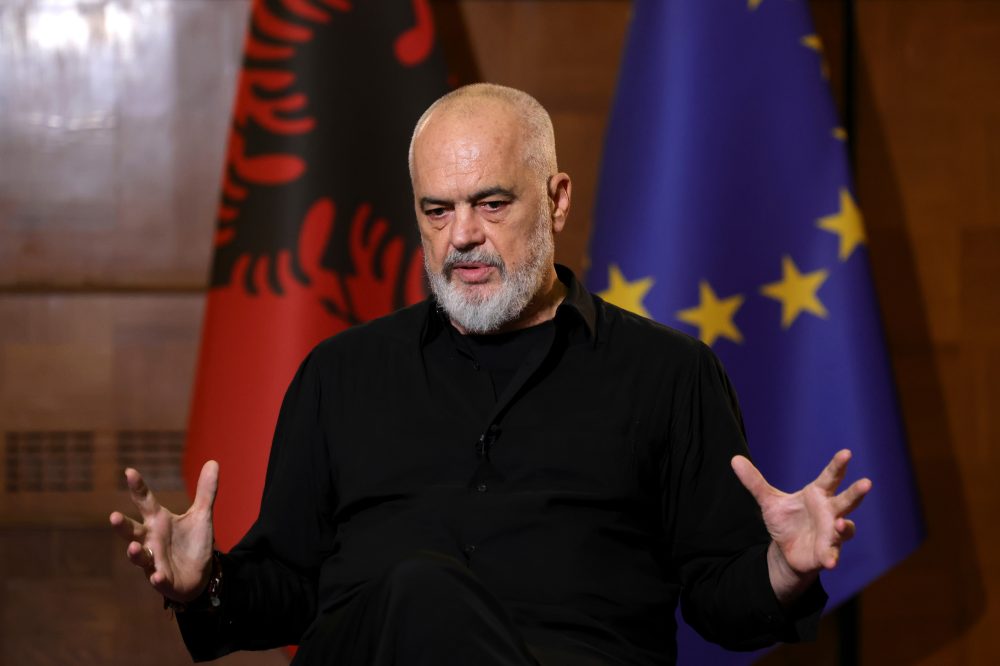
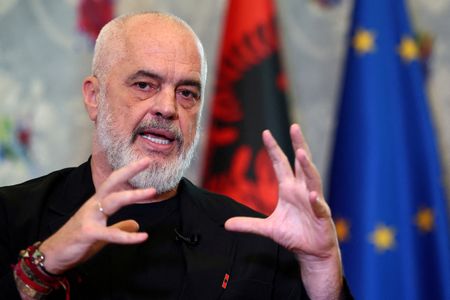
Albania’s Prime Minister Edi Rama remains committed to moving forward with a high-end tourism project tied to Jared Kushner, the son-in-law of U.S. President Donald Trump, even as widespread demonstrations continue to grow against the proposal.
During a Tuesday conversation with The Associated Press, Rama brushed off environmental concerns as stemming from false information and stated the project was transforming Albania from a nation previously overlooked by investors into one “where the big capital wants to come and the big investors want to come.”
Officials say the development would revolutionize the former communist country as it attempts to break into luxury tourism while pursuing European Union membership.
However, thousands of protesters have gathered each day outside Rama’s office in Tirana, the capital city, opposing the proposed project that would feature hotels, residential units, luxury homes and a yacht marina.
The prime minister acknowledged that an official environmental impact study has yet to begin, despite ongoing land clearing activities within a protected nature area.
When questioned about potentially abandoning the project, Rama declined, responding, “Step back from what?”
The nation’s anti-corruption watchdog has launched a probe connected to the development. While the government maintains the property is privately held, competing ownership claims regarding its privatization have surfaced.
Rama explained that Kushner’s interest originated unexpectedly. He described a meal in southern Albania with Kushner, his spouse Ivanka Trump, and companions who had docked in Durres port to refuel their vessel while traveling to Montenegro.
Several months afterward, Kushner contacted him during a world leaders and business executives meeting in Davos, Switzerland, expressing investment interest in Albania, according to Rama.
“Your country’s absolutely stunning, and we would like to look for a chance to invest,” Rama remembered Kushner saying to him.
Albanian officials have awarded special investor designation to an investment company connected to Kushner.
The upscale development encompasses two sections: a waterfront project in the Narta Lagoon region, which serves as a wildlife sanctuary, and a smaller vacation resort on the nearby unpopulated Sazan island, formerly a communist military installation.
Land clearing operations have already commenced within a nature preserve utilized by migrating birds, leading environmental organizations to caution about destroying long-protected ecosystems. Albania possesses 450 kilometers (280 miles) of coastline that stayed mostly undeveloped throughout decades of strict communist governance.
Rama stated that an official environmental impact evaluation has not commenced because the development blueprint remains incomplete. He noted that global architects and environmental experts continue working on the proposal.
“When it comes to the environment, there is no project yet, there is no environmental impact assessment yet, because this is still a planning process,” he stated.
He contended that Albania maintains an excellent conservation track record, highlighting prohibitions on hunting and timber harvesting that he claimed helped flamingo numbers rebound.
“We have fantastic documentation of how the wildlife in Albania came back thanks to the 10 years moratorium of hunting,” Rama stated.
Beginning in late May, construction equipment and heavy machinery have accessed the proposed development site, creating entry paths, excavating sand, removing vegetation among pine forests and erecting barriers.
The prime minister indicated that some opposition to the project was being magnified by external meddling, referencing what he characterized as an ongoing Iranian cyber offensive against Albania.
Albania has consistently blamed Iran for supporting hackers who target the nation’s digital systems, following Albania’s decision to provide refuge to members of an Iranian opposition organization. Tehran has rejected these claims.
“There is a lot of manipulation. There is a lot of half-truths that become bigger and bigger lies by the hour,” he stated.
He stressed that he was not suggesting individual demonstrators were operating as foreign operatives.
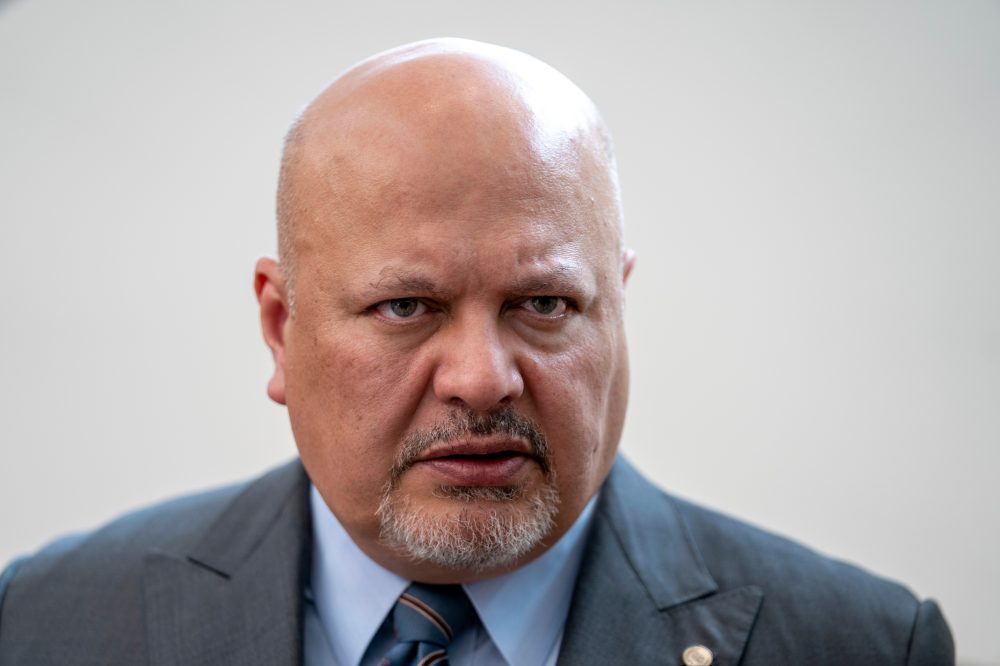
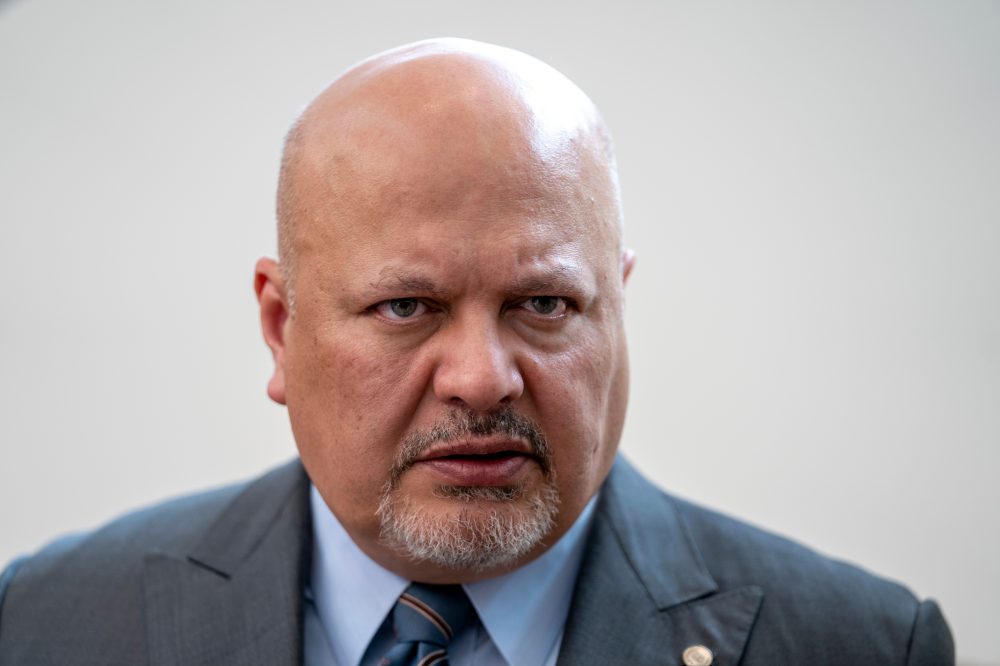
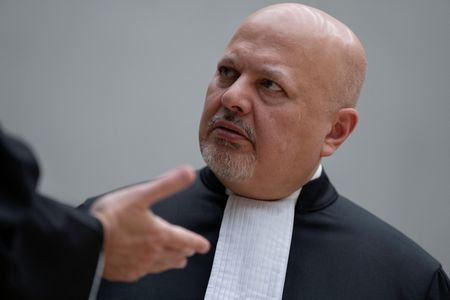
THE HAGUE, Netherlands — Documents obtained by The Associated Press reveal that an inquiry into sexual misconduct claims against the International Criminal Court’s top prosecutor determined he committed “serious misconduct” and a “serious breach of duty.”
On Monday, the 21-member executive committee of the Bureau of the Assembly of States Parties voted to suspend British barrister Karim Khan and send his case forward for additional disciplinary action.
The 56-year-old prosecutor is accused of sexual misconduct involving a female staff member in a controversy that has persisted for over two years. Khan has consistently maintained his innocence throughout the ordeal.
Khan’s legal representatives rejected Monday’s ruling, describing it as “unlawful, procedurally unfair and unsupported by evidence.” His attorneys promised to “take all necessary steps to challenge the decision, protect his rights, and ensure that due process is upheld.”
A U.N. investigation completed in April discovered evidence of “nonconsensual sexual contact” between Khan and his aide “in his office, at his private residence” and during an official mission, according to the report previously reviewed by the AP.
Nevertheless, a three-judge panel chosen by the executive committee to evaluate the investigation’s legal implications determined the U.N. findings lacked sufficient conclusiveness. The ICC functions separately from the United Nations.
Khan had already stepped aside temporarily in May 2025 while awaiting the investigation’s outcome. This marks the first time the court has faced such proceedings, requiring the creation of new policies to handle the situation.
Monday’s statement made no reference to Khan’s alleged victim, who has also been absent from the court on leave.
Danya Chaikel from the International Federation for Human Rights told the AP that excluding the victim’s name demonstrates “the wider problem: the woman at the center of this process is almost invisible, as she has too often been throughout this process.”
The ICC prosecution office stated it remains “acutely aware of the duty of care” owed to all employees and will “continue to place critical importance on ensuring a safe working environment and respectful workplace culture for all personnel.”
The Assembly of States Parties, which provides oversight for the ICC, will make the ultimate determination regarding Khan’s future. The assembly plans to convene a special session to decide whether Khan may continue serving at the international court, though officials have not announced a date for the meeting.
ICC President Judge Tomoko Akane urged the assembly to complete the proceedings “with the highest priority.”
Khan has served as the court’s chief prosecutor since 2021. His duties have been complicated by sanctions imposed on him and other court personnel by the Trump administration due to ICC investigations involving U.S. ally Israel.
MOSCOW, June 9 – Officials from Russia’s digital ministry announced Tuesday they have petitioned law enforcement agencies to reverse a prohibition on the American gaming platform Roblox, following commitments from the company to strengthen protections for minors and adhere to Russian regulations.
The communications oversight agency Roskomnadzor implemented the restriction last December, citing concerns over child protection. The decision frustrated Russian gamers and even triggered an unusual demonstration in the Siberian community of Tomsk.
“In connection with the guarantees of responsible conduct in the Russian market provided by Roblox, the Ministry of Digital Development, together with Roskomnadzor, has appealed to the relevant law enforcement authorities with a request to support the lifting of restrictions,” the ministry said in a statement.
According to ministry officials, Roblox has agreed to establish age-appropriate access controls for specific games and put in place additional safeguards to block harmful material from reaching users.
Following the initial prohibition, Roblox indicated its willingness to modify certain platform features specifically for the Russian market.
European Union officials issued a stern warning to Albania on Tuesday, demanding the country follow environmental regulations if it hopes to join the bloc, amid controversy over a high-profile resort development.
The warning from a European Commission spokesperson comes as Albania’s Prime Minister Edi Rama announced his government would continue supporting a luxury resort project backed by Jared Kushner and Ivanka Trump, despite growing environmental opposition.
The development, planned for a remote coastal area in the Balkans, has triggered demonstrations known as the “Flamingo Revolution” – named for the migratory birds that use the coastline as a stopping point during their journeys. These protests have expanded into wider criticism of Rama’s 13-year leadership.
The European Union, which includes 27 member nations, has indicated it might accept new countries like Montenegro, Albania and Ukraine by 2030, contingent on their compliance with EU regulations, particularly environmental standards.
“Albania should refrain from action that could undermine the fulfilment of the closing benchmark, and we expect the Albanian authorities to act without delay,” stated spokesman Guillaume Mercier.
He further noted, “We are in contact with the Albanian authorities on this issue.”
Despite facing a week of demonstrations both in the capital Tirana and along the southern coastline where the resort is proposed, Rama dismissed environmental worries and promised an environmental impact study would be conducted.
“We are very proud of what we have done for the wildlife in Albania. The European Commission has no reason to doubt our firm will to protect whatever has to be protected when it comes to wildlife and nature,” he stated.
Kushner’s Affinity Partners company, which plans to construct the resort, has not responded to requests for comment from Reuters.
Survivors of brutal violence during Sudan’s civil war turned to Kenyan authorities Tuesday, requesting an investigation into torture and sexual assault allegations against members of a feared paramilitary organization.
This marks the initial effort to pursue legal action against the Rapid Support Forces, known as RSF, beyond Sudan’s borders. The paramilitary unit has battled the Sudanese military for more than three years.
Human rights organizations have labeled the RSF’s actions as war crimes and crimes against humanity. The group maintains connections with Kenya’s administration, and Kenyan President William Ruto previously welcomed RSF commander Gen. Mohamed Hamdan Dagalo for discussions he described as promoting Sudanese peace initiatives, creating diplomatic friction.
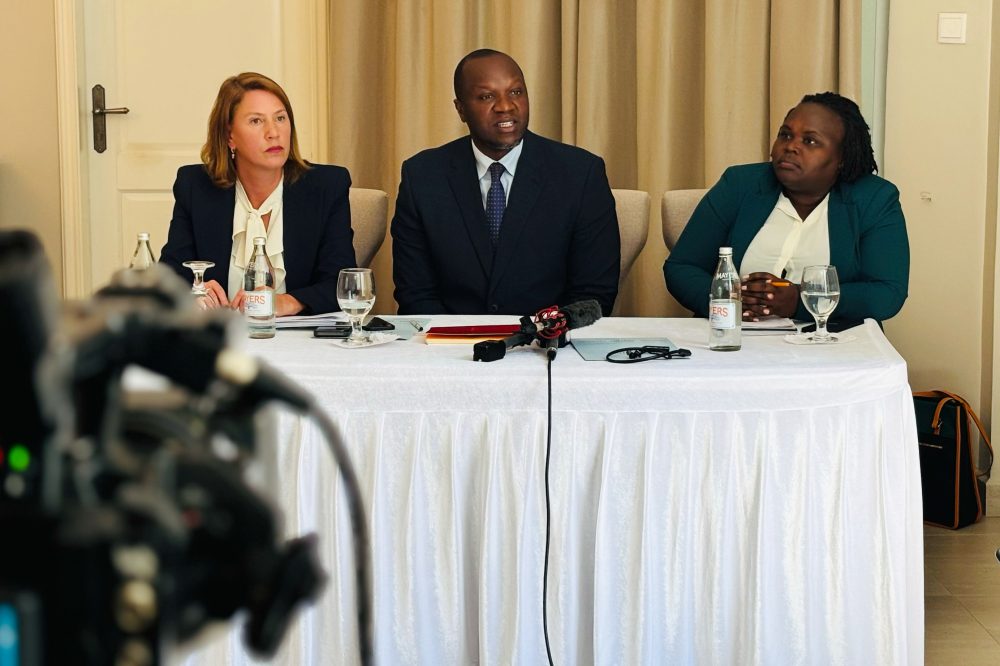
Legal Action Worldwide, a Switzerland-based international legal organization, submitted the formal complaint describing torture and sexual assault by RSF personnel across multiple sites in and around Khartoum during the period from April 2023 to March 2025, when paramilitaries controlled Sudan’s capital.
Twelve survivors are requesting Kenya’s Director of Public Prosecutions to authorize criminal charges against 10 RSF members, with several suspected of currently living in Kenya.
The Associated Press has contacted the RSF for a comment.
The latest complaint describes victims confined under deplorable conditions with minimal food, restricted water access, and poor sanitation. They claim they endured beatings, burning, suffocation, electric shock treatment, and sexual assault including rape. Some were allegedly compelled to move corpses from detention centers.
Antonia Mulvey, who founded Legal Action Worldwide, stated Kenya should pursue prosecution of the alleged offenses under the nation’s International Crimes Act of 2008.
“For Kenya, despite the sensitivity of the matter, it is an opportunity to lead in the fight against impunity. Authorities can now demonstrate the strength of the country’s investigative, prosecutorial, and judicial institutions in addressing the most serious international crimes, regardless of where they are committed,” she said.
The RSF began fighting the Sudanese military in April 2023, after disagreements between both factions exploded into armed confrontation in Khartoum and additional areas nationwide.
The organization developed from the infamous Arab Janjaweed militias, blamed for extensive brutalities in the early 2000s targeting communities with East or Central African heritage in Sudan’s western Darfur area.
Human rights groups and the United Nations have charged the RSF with committing violence during the current war that could constitute war crimes and crimes against humanity, especially in Darfur where the organization maintains significant control.
Mulvey contended that victims have little chance of receiving justice within Sudan since the nation’s legal system remains “inaccessible, unavailable, and ineffective.”
She noted the International Criminal Court’s authority covers only Darfur and excludes offenses occurring in or near Khartoum.
Willis Otieno, a Kenyan attorney who submitted the local complaint, indicated evidence suggests some individuals of interest have Kenyan connections and that the nation has adequate legal structures to investigate and prosecute these offenses.
Otieno characterized Kenya’s Office of the Director of Public Prosecutions as capable, stating: “We have faith that the office will act. For now, let’s treat them with that goodwill.”
The RSF has previously faced accusations of mass executions, gang rape, and ethnically-motivated violence, including during an October attack on the Darfur city of el-Fasher that killed over 6,000 people in three days. U.N.-commissioned experts characterized the operation as displaying “hallmarks of genocide.”
Among its final actions, the Biden administration charged the organization with genocide and sanctioned its leaders, including Dagalo.
The conflict has claimed at least 59,000 lives during three years, according to the Armed Conflict Location & Event Data Project, a U.S.-based monitoring organization that noted the figure likely underestimates actual casualties due to reporting challenges.
The fighting has generated the globe’s most severe humanitarian emergency, with approximately 34 million people — nearly two-thirds of all Sudanese — requiring aid, the U.N. reports.
LONDON (AP) — British Prime Minister Keir Starmer’s administration urged restraint Tuesday following law enforcement’s announcement that they had detained a Sudanese individual in connection with a knife attack in a Belfast neighborhood that gained widespread attention due to disturbing footage circulating on social media.
Authorities reported that the injured party, a male in his 40s, was transported to a medical facility with severe wounds to his eyes, face and back during Monday evening hours. The detained individual, described as being in his 30s, faces charges of attempted murder and remains held by police. Investigators recovered a kitchen knife from the location.
Law enforcement officials are working to establish what motivated the attack, though no evidence points to terrorist connections, according to Ryan Henderson, assistant chief constable of the Police Service of Northern Ireland. He noted that investigators are not looking for additional suspects in the case.
“This brutal attack will have sent shock waves through the community, causing real concern,” he said.
Gavin Robinson, the leader of the Democratic Unionist Party, told Parliament that the perpetrator was living in the U.K. under a five-year visa and urged authorities to curb “uncontrolled immigration.”
Authorities believe the detained person had received authorization to stay in the nation and resided close to where the incident occurred, Henderson explained. He refused to share additional information while the investigation continues.
When questioned in Parliament, Northern Ireland Secretary Hilary Benn said he could not confirm whether the alleged attacker came to the U.K. illegally.
Starmer condemned the attack as “sickening” and said that he had “no tolerance for abhorrent scenes of violence like this on our streets.”
His office said “it is time for calm,” adding “it’s important that police have the time and space to investigate appropriately.”
Law enforcement and government leaders asked the public to avoid sharing disturbing footage of the incident found on internet platforms and to refrain from spreading false information about the circumstances.
Last week a separate case of a university student who was stabbed to death in Southampton, England in December was seized on by activists and U.S. Vice President JD Vance who blamed immigration for the violence.
Henry Nowak, who was white, was killed by Vickrum Digwa, a Sikh who falsely claimed to police that he was the victim of a racist assault by Nowak. When police officers arrived, they initially treated the wounded Nowak as a suspect before noticing his injury and trying to resuscitate him.
Digwa was convicted of murder for stabbing Nowak with a Sikh dagger and sentenced last week to life in prison with a minimum 21-year term. But the case has spurred heated debates about policing and race, and a protest over Nowak’s death turned violent with some attacking police with chairs and rocks. Several people were charged with violent disorder over the protest.
The Trump administration has informed Belarus’s exiled opposition leadership about setbacks in diplomatic efforts to secure additional prisoner releases from President Alexander Lukashenko, according to opposition leader Sviatlana Tsikhanouskaya in an exclusive interview.
This represents the first time officials have publicly acknowledged that momentum has slowed in negotiations spearheaded by President Donald Trump’s envoy John Coale, which have successfully secured freedom for over 400 detainees to date. Human rights organization Viasna reports that close to 870 individuals remain imprisoned, with at least 170 considered “particularly vulnerable” because of their age, medical conditions, or severe detention circumstances.
During her conversation with Reuters, Tsikhanouskaya revealed that American officials informed her that “the next releases were postponed for a while,” though she declined to reveal the specific reasoning behind the delay.
“Knowing the reason, it doesn’t worry me. Of course, we want more people to be released as soon as possible, and any delay, it ruins health for many of them,” she explained in English. “But it’s not the end of the process.”
She referenced encouraging statements from Coale, who wrote on X on June 3: “We are not finished. Keep hope alive!”
Neither Coale nor Lukashenko’s office provided responses when contacted for comment.
The Trump administration’s decision to engage directly with Lukashenko – who maintains close ties with Russian President Vladimir Putin – marked a dramatic shift from earlier Western approaches. Previously, he faced isolation and extensive U.S. and EU sanctions due to his human rights violations and support for Moscow’s military actions in Ukraine.
Tsikhanouskaya – whom Western nations view as the legitimate victor of the contested 2020 election that Lukashenko claimed – has endorsed the U.S. diplomatic initiative as a crucial humanitarian effort, while cautioning against legitimizing the long-serving authoritarian leader.
She has openly expressed discomfort with Trump’s public praise of Lukashenko, whom he has termed “the Highly Respected President of Belarus,” but recognizes the strategy’s effectiveness.
“Neither President Trump nor those around him are naive, they understand who they are dealing with, and they can make some tactical moves to free people,” she stated.
As part of a significant policy change, the U.S. announced in December that it was removing sanctions on Belarusian potash fertilizer – a major global export – to reward the prisoner releases.
However, this hasn’t generated substantial revenue increases for Lukashenko because EU sanctions persist, forcing Belarus to route exports through Russia rather than the more efficient path via Lithuania’s port of Klaipeda.
Lithuania announced last month that the U.S. was urging restoration of Belarusian access to Klaipeda, but Vilnius stated it wouldn’t consider this while EU sanctions remain active until February 2027.
Pavel Slunkin, a former Belarusian diplomat currently working as an independent political analyst in Warsaw, suggested that Lukashenko’s disappointment with America’s inability to persuade European allies likely explains the negotiation delays.
“Probably the Americans delivered a promise (to Lukashenko) that they could not fulfil,” he said during a phone interview.
“The American sanctions have never been the biggest problem for the regime in Minsk. The toughest sanctions are the European ones.”
Coale, age 79, received his appointment from Trump last year to lead discussions with Lukashenko. He has built rapport with the former collective farm administrator through extended negotiations and vodka-drinking meetings, quietly disposing of his alcohol on the floor to remain alert.
Notable figures among the hundreds of freed prisoners include Nobel Peace Prize recipient Ales Bialiatski and prominent opposition members such as Tsikhanouskaya’s husband Siarhei Tsikhanouski.
On April 28, Coale told Reuters he anticipated securing more prisoner releases within the following month. However, six weeks have passed without such developments.
On June 4, Coale disputed claims made on X by Valery Tsepkalo, a Belarusian opposition politician and former ambassador to the U.S., who alleged that Lukashenko had declined to meet with him in May.
The negotiation standstill occurs amid escalating tensions between Lukashenko and Western nations in recent weeks.
Belarus has participated in joint nuclear training exercises with Russia, and Ukrainian President Volodymyr Zelenskiy has expressed belief that Moscow seeks to involve Belarus more deeply in the conflict.
New arrests of Lukashenko’s critics have persisted, despite Coale’s statement that the U.S. had demanded an end to such actions.
Tsikhanouskaya reported that arrests occur “every day” but precise numbers remain unclear because families fear government retaliation.
Rights organization Viasna has documented at least 50 prison sentences since December that it considers politically motivated. In the previous month alone, it added 32 individuals to its political prisoner registry.
Tsikhanouskaya described Lukashenko as operating a “revolving door” system, replacing released prisoners with new detainees to preserve his negotiating leverage.
While commending Coale for doing a “fantastic job,” she said she had expressed concerns that Lukashenko was attempting deceptive tactics.
“He wants to get a Lamborghini for the price of a bicycle. Take a lot while giving a little,” she explained.
“And now if the Americans and the Europeans don’t maintain a principled position, we will repeat the same cycle again: Lukashenko will deceive, the sanctions will be removed, and the regime will still be there, without systemic changes.”
SIDON, Lebanon (AP) — Three Christian religious leaders from the historic Lebanese port city of Tyre issued an urgent appeal Tuesday, asking world leaders and Lebanese government officials to take swift action to protect the city’s Christian quarter from potential Israeli military strikes. Their plea came as aerial bombardments in surrounding areas resulted in eight deaths and dozens of injuries.
Israeli forces have issued evacuation orders for the entire port city, including the Christian neighborhood that had previously been untouched by the conflict.
The appeal came from George Iskandar, the metropolitan archbishop of Tyre for the Melkite Greek Catholic Church; Elias Kfoury, the Greek Orthodox metropolitan of Tyre, Sidon and Dependencies; and Charbel Abdullah, the archeparch of the Maronite Catholic Archeparchy of Tyre.
Following Israel’s military warning, hundreds of residents began evacuating the Christian area along the Mediterranean coastline, with Civil Defense teams helping elderly residents reach secure locations, according to Lebanon’s state-run National News Agency.
Long lines of vehicles loaded with mattresses, suitcases and household items stretched for kilometers on Lebanon’s coastal roadway as Tyre residents responded to the newest Israeli evacuation order. Traffic came to a standstill as families stuffed whatever belongings they could into their cars, with rugs hanging from rooftops and trunks left open to fit furniture and personal items.
“After the warnings in Tyre, we left. We picked up and left,” said Ali Bahar, who was traveling with his wife and three children in a car loaded with possessions.
“Where should we go? There is nowhere to go,” Bahar said. “We will end up in the streets. We are heading to Sidon.”
Not far away, Hussein Darwish sat in the traffic jam after loading his car with whatever he could take.
“We left to be reassured and safe,” he said.
A separate Israeli airstrike Tuesday in another Tyre neighborhood resulted in eight fatalities and left 32 people injured, the Health Ministry reported.
The three religious leaders urged the international community and Lebanese authorities to “take immediate and serious action to spare the old quarter of Tyre from destruction and human tragedies.”
Israel’s warning to Tyre followed an exchange of attacks between Israel and Iran after Israel struck Hezbollah targets in Beirut on Sunday, escalating Middle East tensions and raising concerns about the conflict’s potential expansion.
During recent weeks, Israeli air attacks have caused extensive damage throughout Tyre, Lebanon’s fourth-largest urban center.
Recognized as among the world’s most ancient cities, Tyre contains numerous archaeological locations, including some underwater sites. UNESCO designated the city as a World Heritage Site in 1984.
“The old city is not merely a residential area,” the clergy stated. “It is the historical and human heart of Tyre, home to thousands of civilians, including families, children, and the elderly.”
They emphasized that the historic district contains valuable cultural, religious and civilizational heritage spanning centuries.
“Any targeting or destruction of this neighborhood would constitute a humanitarian and national catastrophe with irreversible consequences,” they warned.
Kfoury stated that the current conflict extends beyond just targeting Hezbollah.
“The war is against all of Lebanon, not just one particular group within Lebanon,” he said.
“They are destroying Lebanon. Period,” Kfoury said about the ongoing Israel-Hezbollah war that broke out on March 2, when Hezbollah fired rockets at northern Israel, two days after the U.S. and Iran began attacking Iran on Feb. 28.
He called for an end to the fighting, describing it as a “destructive war.”
Last week, Israel alerted Christian neighborhoods in Tyre that Hezbollah members were operating among them. Many Lebanese Shiite Muslims had sought refuge in those areas during the past two weeks, as they had been spared from coastal aerial bombardments.
Following last week’s warning, Lebanese military forces moved into Tyre’s Christian district to try preventing Israeli attacks and demonstrate that Hezbollah maintains no armed presence there.
On Tuesday, the Israeli military’s Arabic-language spokesperson, Avichay Adraee, wrote on X that since the military had warned days earlier about Hezbollah members operating within the Christian district, Israeli forces “will have to act against their terrorist activities in the neighborhood soon.”
Adraee stated that any structure used by Hezbollah for military operations “may be subject to targeting.”
The current Israel-Hezbollah conflict in Lebanon has resulted in approximately 3,500 deaths and forced more than 1.2 million people from their homes.
European officials are sounding the alarm about changing patterns in illegal drug markets, with synthetic opioids becoming an escalating threat across the continent, according to a new annual assessment from the European Union Drugs Agency.
The Lisbon-headquartered organization, which compiled information from all 27 EU nations plus Norway and Turkey, documented the discovery of at least 50 previously unknown psychoactive substances appearing in Europe for the first time during 2025.
Officials specifically pointed to dangerous substances like nitazenes, which have been discovered mixed into fake benzodiazepines and common street drugs including cocaine, heroin and ketamine.
The deadly impact of nitazenes became evident in England and Wales, where these substances caused 195 fatalities in 2024 – representing nearly a four-fold increase from the previous year. Meanwhile, Bulgaria experienced more than 100 fentanyl-related deaths spanning 2024 and 2025, with the crisis expanding from Sofia to additional urban areas throughout the country.
Drug trafficking patterns are also shifting significantly, according to the assessment. Cocaine shipments are increasingly arriving through smaller ports that receive less monitoring attention, while cannabis is now being imported from Canada and the United States, potentially driven by regulatory changes and surplus production creating lower prices in North America.
Enforcement agencies across EU nations conducted approximately 1 million drug seizures during 2024, with cannabis representing 68% of all confiscations. The organization estimates Europe’s illegal cannabis market is worth €12 billion, even as Germany, Luxembourg, Malta and Czechia have implemented experimental laws permitting limited legal purchases or cultivation.
Cannabis continues to dominate usage statistics, with 24.9 million adults between ages 15 and 64 reporting consumption within the past year. Drug trafficking operations have adopted increasingly sophisticated methods, including drones and speedboats, creating new challenges for law enforcement officials.
Cocaine maintains its position as the second most commonly used illegal substance, with 4.3 million adults reporting usage in 2024.
The agency’s data reveals an estimated 7,600 fatal overdoses occurred throughout the EU in 2024, translating to a mortality rate of 25 deaths per million people in the 15-64 age group.
LONDON, June 9 (Reuters) – Technology companies operating in Britain must now develop emergency protocols to address dramatic increases in harmful online material during public safety emergencies like the 2024 Southport riots, according to new requirements announced by the regulator on Tuesday.
Widespread violence erupted two years ago after a stabbing incident in Southport, a city in northern England, that killed three young girls during a Taylor Swift-themed dance class. Officials determined that false and inflammatory material spreading rapidly across the internet helped spark the widespread disorder.
The new requirements from regulator Ofcom mandate that social media companies and other online platforms establish emergency response procedures to manage sudden surges in prohibited content.
“Given the speed at which online harms can escalate during a crisis, and the serious risks this can pose to public safety, we have decided to accelerate our work on these crisis response measures to ensure that services can begin to take appropriate steps,” the regulator stated in its published protocol.
The oversight agency indicated that companies should prepare to activate emergency response teams, increase content monitoring capabilities, and conduct evaluations following crises. Major platforms would additionally need to establish direct communication lines with police during emergencies.
The Online Safety Act, considered among the world’s most comprehensive internet regulations, defines prohibited content as material related to approximately 140 criminal offenses involving terrorism, hate speech, harassment, and threats, rather than encompassing all unlawful material.
Individual companies bear responsibility for determining their response to such risks, following the regulator’s guidelines.
Violence broke out in Afghanistan on Tuesday when authorities used force to disperse demonstrators protesting the detention of more than a dozen women accused of violating dress code requirements, leaving at least three people wounded according to reports.
Witnesses reported that armed officers fired weapons during the demonstration involving more than 100 participants in Herat.
Such public demonstrations are uncommon in Afghanistan, where the Taliban has maintained control since 2021 following the turbulent departure of U.S.-led military forces. The current government has established regulations based on their rigid understanding of Islamic law, including severe limitations on women and girls such as prohibiting education past elementary levels and dictating acceptable public attire. Opposition is forbidden, and demonstrations challenging official policies are banned.
Current official requirements mandate that women may appear publicly only while wearing complete hijab — including head covering and full-length garments — plus facial covering that exposes only the eyes. These standards are enforced by the Ministry for the Propagation of Virtue and the Prevention of Vice.
Kakar, who observed the confrontation, described driving past the demonstration site when he noticed police vehicles arriving and officers discharging weapons into the air.
“After several shots, we got scared and got out of the car, to not be injured,” said Kakar, who requested only his single name be published due to concerns about retaliation for media contact. He continued that police subsequently confronted the demonstrators “and the police opened fire again, and some people were injured. I saw blood on the road.” Kakar indicated he could not determine the precise number of casualties.
A second witness, who requested anonymity for safety concerns, reported observing three wounded individuals.
Richard Bennett, the United Nations’ investigator on human rights in Afghanistan, expressed being “alarmed by excessive use of force against seemingly peaceful protesters in Herat today.”
Writing on X, he stated that individuals responsible for the violence should face consequences. “It’s time to defuse the tension, respect citizens’ freedom of expression, especially women and girls, and avoid further harm,” Bennett said.
This past Sunday, the U.N.’s Assistance Mission in Afghanistan posted on X that detaining women in Herat for alleged dress code infractions created “serious human rights concerns.” The organization had voiced similar worries regarding comparable arrests in the Afghan capital, Kabul, during the previous year.
A human rights observer, speaking anonymously due to lack of authorization to share information with media, confirmed Monday that monitors had documented no fewer than 16 arrests and detentions in Herat since Friday for suspected dress code non-compliance, including one expectant mother.
Afghanistan’s vice and virtue ministry rejected claims regarding women’s arrests and detentions.
“The issues being spread about women being arrested in Herat are all rumors,” the ministry declared, stating that wearing “hijab is a divine command, a law that we are obliged to implement.”
During the previous week’s Friday prayers, religious leaders at Herat mosques made proclamations for the vice and virtue ministry declaring women could not leave their residences without proper hijab. The human rights observer noted that arrests and detentions commenced soon thereafter.
MANILA, Philippines — Philippine officials announced Tuesday they have formally objected to China’s placement of a floating platform staffed with personnel on a contested shoal in the South China Sea, expressing concerns it may represent Beijing’s initial step toward constructing another artificial island military outpost.
According to the Department of Foreign Affairs, Manila filed an official complaint regarding China’s recent actions at Scarborough Shoal, which Philippine coast guard and military forces observed, though officials provided no additional specifics.
Beijing rejected the Philippines’ concerns and restated its position of having “indisputable sovereignty” over the shoal and surrounding waters, while declining to provide details about the situation to Philippine authorities.
Ministry of Foreign Affairs spokesperson Lin Jian stated from Beijing: “Any activities China conducts on Huangyan Island, including scientific research, are the legitimate rights of a sovereign state.”
“China urges the Philippine side to cease maritime infringements and provocations and stop hyping up the issue,” he added.
Following weeks of intense confrontation with Philippine vessels in 2012, China positioned ships to control the uninhabited Scarborough area, leading Manila to pursue international arbitration against Beijing’s territorial claims, which the Philippines substantially won.
The 2016 arbitration decision, based on the 1982 U.N. Convention on the Law of the Sea, struck down China’s assertions over nearly the entire South China Sea.
However, China declined to take part in the Philippines-initiated arbitration process and rejected the decision as fraudulent, alleging it was orchestrated by the United States working with the Philippines.
Over ten years ago, China began converting contested and uninhabited reefs into what are now missile-defended island installations — including three equipped with military-grade airstrips — throughout the Spratlys archipelago, a heavily contested South China Sea region.
During the mid-1990s, Chinese military forces took control of one of seven locations, Mischief Reef, by constructing small elevated huts and claiming they would function as fishermen’s refuges in international waters.
The Philippines vigorously objected to China’s takeover of Mischief, asserting the location falls within its internationally acknowledged exclusive economic zone.
Gen. Romeo Brawner, chief of staff of the Armed Forces of the Philippines, stated the Philippine military will prevent China from converting Scarborough into another island installation.
“We will not allow an incident before to happen again, where a small structure was built and later on, it grew into an artificial island,” Brawner said.
Vietnam, Malaysia, Brunei and Taiwan also assert territorial rights in the South China Sea, though confrontations have especially intensified between Chinese and Philippine coast guard and naval units in recent years.
The U.S. has consistently stated it is bound to protect the Philippines, its longest-standing treaty partner in Asia, if Filipino military personnel, vessels and aircraft face armed assault, including in disputed maritime areas.
MUZAFFARABAD, Pakistan (AP) — Commerce came to a standstill and transportation ground to a halt throughout Pakistan-controlled Kashmir on Tuesday following a strike organized by a recently outlawed organization with a history of violent demonstrations.
The shutdown was initiated by the Joint Awami Action Committee in response to deadly confrontations on Sunday in Rawalakot between the organization’s followers and law enforcement that resulted in seven fatalities. The deadly violence began after Pakistan-administered Kashmir’s Supreme Court determined that 12 legislative positions designated for Kashmiri refugees residing in Pakistan have constitutional protection and cannot be eliminated without amending the constitution.
The JAAC, established in 2003, advocates for expanded political representation for Kashmir’s population and elimination of the refugee positions.
Local residents from the regional capital, Muzaffarabad, and surrounding communities reported to The Associated Press that commercial areas were mostly vacant and transportation hubs were abandoned on Tuesday. Nevertheless, it remained uncertain whether citizens were participating in the organized strike or staying away from public areas due to concerns about additional violence.
The organization had announced Tuesday’s “long march” from Rawalakot to Muzaffarabad and the strike prior to the recent bloodshed. Eyewitnesses reported that thousands of followers assembled in the eastern community of Mirpur to journey to Rawalakot, where JAAC leadership was anticipated to launch the march toward Muzaffarabad.
Officials have positioned extra law enforcement and security forces throughout the area and cut internet access in major urban centers to discourage participation in the march.
Law enforcement and regional authorities alleged that armed JAAC followers fired weapons at officers during Sunday’s violence, marking the region’s most lethal unrest in recent years. During comparable disturbances last year, multiple officers were kidnapped and subjected to torture while in captivity.
The territorial administration prohibited the JAAC last week, expressing concerns regarding public safety and security, and arrested numerous supporters.
Regional Prime Minister Faisal Mumtaz Rathore stated Monday he continued to welcome discussions with the organization’s representatives. He indicated the administration had agreed to most JAAC demands during previous year’s negotiations, with the exception of eliminating refugee positions and ending benefits provided to government officials and ministers, which must be handled by the Legislative Assembly due to constitutional limitations.
The refugee positions are maintained for individuals who relocated to Pakistan from Indian-controlled Kashmir decades earlier and are designed to represent communities displaced by the ongoing dispute over the Himalayan territory. The JAAC contends that these seats provide excessive power to people residing outside the region.
The Himalayan territory of Kashmir remains split between Pakistan and India, with both nations claiming complete control and having engaged in two military conflicts over the area since achieving independence from British control in 1947.
Political tensions have been escalating for weeks in advance of elections planned for next month.
The existing Legislative Assembly has finished its term, and political discussions have intensified regarding the future of refugee seats following the judicial decision.
PARIS — French entertainer Patrick Bruel remains detained by authorities as prosecutors examine accusations from at least 13 women alleging rape, attempted rape and sexual assault, according to the Nanterre prosecutor’s office on Tuesday.
The 67-year-old performer, who has been held since Monday, maintains his innocence regarding all accusations.
Bruel rose to prominence throughout French-speaking nations during the 1980s and 1990s through numerous chart-topping recordings that became cultural staples. His career also includes roles in over 40 film and television projects.
According to a statement from the Nanterre prosecutor’s office, the probe started when three women came forward alleging sexual assault and attempted rape that supposedly occurred in 1997, 2000 and 2001.
As the probe continued, investigators identified and spoke with more women. These additional accusers reported claims of rape or attempted rape, sexual assault and harassment, the statement indicated.
In a separate matter, prosecutors in western France had opened an inquiry regarding an alleged 2012 rape in Dinard, located in the Brittany region, which has now been moved to the Nanterre prosecutor’s office.
Belgian officials also formally informed French prosecutors this month about accusations from a woman claiming Bruel committed rape and sexual assault in Brussels during 2010, the statement revealed.
Legal representatives for Bruel, Christophe Ingrain, Céline Lasek and Fanny Colin, released a statement saying their client has signaled for weeks “he was available to the judicial authorities so that he could finally respond through the proper legal proceedings.”
French court officials may either bring preliminary charges against Bruel or release him without charges before day’s end.
Recent media coverage, particularly by French investigative publication Mediapart, has highlighted claims from multiple women spanning decades against Bruel, resulting in additional formal complaints being submitted.
MONTERREY, Mexico – Where dozens of children now kick soccer balls in a peaceful park, a deadly cartel battle once claimed 49 lives in one of Mexico’s most violent correctional facilities.
The dramatic transformation of this northern Mexican city illustrates how Monterrey has evolved from a battleground of drug violence into one of the nation’s safest metropolitan areas, just as it prepares to welcome international soccer fans for four World Cup matches.
Liberty Park now occupies the former grounds of the infamous Topo Chico prison, where inmates were brutally killed with knives and beaten with chairs during a savage clash between rival cartels a decade ago. The bloodshed represented some of the worst violence that plagued the Monterrey area during the early 2010s.
While drug-related violence continues to plague other regions of Mexico – including Guadalajara, another World Cup host city where cartel members recently burned vehicles and blocked roads after a major drug lord’s arrest – Monterrey residents worry more about traffic congestion and air pollution than personal safety.
Significant investments in law enforcement and broader economic growth have helped transform Monterrey into one of Mexico’s most secure major urban centers over the past decade and a half.
The tree-lined Liberty Park, featuring playing fields and recreational areas, opened initially in 2021 on the former prison site. City officials have continued expanding the facility with additional playground equipment and athletic fields in preparation for the World Cup.
Francisco Rodriguez Castillo, a 66-year-old retired accountant who has resided near the location for many years, vividly remembers the chaos that once defined the area.
“We could hear the riots, the explosions, the helicopters, and the soldiers’ patrols all over this area,” Rodriguez recalled.
Today, Rodriguez participates in morning running groups at the park and watches in amazement as youngsters play safely well into the evening hours.
“It’s an enormous change,” he said.
When officials demolished the 76-year-old correctional facility in 2019, workers conducted thorough searches of the prison’s soccer field and other areas looking for hidden burial sites, though none were discovered.
For neighborhood residents like 30-year-old attorney Gala Jazmín Rojas Cruz, converting the prison into a park represented a significant opportunity, particularly for local children.
“When I was a child, I had nowhere to play,” Rojas Cruz explained.
She remembered how dangerous it was to play outdoors and how families would seek shelter when gunfire erupted, signaling another prison uprising.
“(We knew) that at that very moment people were being killed,” she said.
In 2023, city leaders announced plans to construct a pediatric medical facility on the former prison property.
However, the proposal met strong opposition from community members, including Rojas and Rodriguez, who organized demonstrations and pursued legal action that successfully protected Liberty Park.
To prevent future development attempts, the activist group then lobbied officials to designate Liberty Park as a protected natural area. State authorities are currently completing the process to grant the park this special conservation status.
Afghan security forces shut down a demonstration supporting women’s rights in Herat province on Tuesday, following reports that morality police had detained women for alleged violations of required dress codes.
According to eyewitnesses, the confrontation resulted in one fatality, multiple injuries, and the arrest of dozens of participants, including women and girls. Taliban officials have not verified these casualty reports or arrest numbers.
The police spokesperson for Herat, Sayed Masoud Hosseini, informed the government-controlled Bakhtar News Agency that the demonstration in the Jebrail district had “created tensions” and disrupted public peace while opposing the Islamic hijab under false pretenses, calling it a religious duty.
Eyewitness accounts indicate the demonstration began after officials from the Ministry for the Promotion of Virtue and Prevention of Vice tried to detain women who opposed the compulsory dress regulations.
Local residents reported that authorities even targeted women who were already following the mandated dress standards, which require complete coverage of the face and body.
Footage from Herat captured armed officials dispersing the crowd, which included completely veiled women among those protesting. One video showed people seeking shelter as gunfire could be heard nearby.
Following their takeover of power in Kabul during 2021, the Taliban has established extensive limitations on women and girls throughout the conflict-torn nation, including restrictions on educational access, work opportunities, and athletic participation, prompting widespread condemnation from the international community.
Herat, historically known as one of Afghanistan’s most culturally and socially dynamic cities, has experienced substantial transformations.
The U.N. Assistance Mission in Afghanistan expressed concern on Monday regarding reports of women being detained in western Afghanistan for purportedly not meeting dress code standards. The mission called on Taliban leadership to honor freedom of movement and equal treatment under the law.
Taliban officials maintain they honor women’s rights according to their understanding of Islamic law.
State media from China and North Korea published extensive coverage this week about the meeting between Xi Jinping and Kim Jong Un, yet completely omitted discussion of a critical concern for Washington: North Korea’s continued development of nuclear weapons capable of threatening the United States and regional allies.
This notable omission reveals more than volumes of carefully crafted state propaganda could convey.
Before diplomatic negotiations collapsed in 2019, Washington and Beijing had maintained a years-long partnership aimed at convincing North Korea to give up its nuclear program in exchange for essential aid and international legitimacy.
China consistently advocated for “denuclearization” — diplomatic language for nuclear disarmament — and officials in Washington, Seoul, and Tokyo held hopes that Beijing would leverage its position as North Korea’s key diplomatic and economic ally to pressure Pyongyang regarding the nuclear crisis.
Xi’s trip to Pyongyang on Monday and Tuesday — marking his first journey there in seven years — may represent the conclusion of such expectations and indicate a major change in his approach to North Korea’s nuclear capabilities.
From China’s viewpoint, Xi’s refusal to address the nuclear issue might reflect recognition of how advanced North Korea’s nuclear development has become since Kim Jong Un assumed leadership in 2011 — and acknowledgment of how improbable it is that negotiations could convince the North to surrender weapons it considers its primary defense against external threats.
The Chinese leader’s previous North Korean visit in 2019 presented a dramatically different message — Xi was reported in Chinese outlets as stating his country would contribute constructively to Korean Peninsula denuclearization efforts.
China’s primary objective remains maintaining stability in North Korea and the broader region. A governmental collapse in Pyongyang could result in millions of refugees crossing their extensive shared border.
With this goal in mind, China has frequently refrained from directly demanding an end to North Korea’s nuclear activities, according to research by Jiyong Zheng, dean of the Institute of Regional Studies at Tianjin Foreign Studies University in China.
Rather than targeting North Korea specifically, Beijing advocated for denuclearization across the entire Korean Peninsula — strategic language that enabled China to simultaneously call for ending U.S. nuclear protection commitments to South Korea and halting deployments of American nuclear-capable aircraft near the Korean Peninsula.
Recent months have seen Beijing indicate its preference for prioritizing regional stability over denuclearization goals, Zheng noted in his analysis.
“China is increasingly concluding that a rigid denuclearization-first approach is impractical and may worsen the regional security environment,” he said.
For Kim Jong Un, the absence of any public discussion or condemnation of his nuclear arsenal represents a victory. He has consistently sought international acknowledgment of his nation’s nuclear weapons status, which could result in lifting U.N. sanctions.
When questioned Tuesday about whether Seoul should reduce its expectations of Beijing following Xi’s apparent avoidance of nuclear topics in Pyongyang, South Korean Foreign Ministry spokesperson Park Il maintained that China continues supporting nuclear disarmament objectives.
Likewise, following last month’s meeting between U.S. President Donald Trump and Xi, the White House stated both leaders reaffirmed their mutual commitment to North Korean denuclearization.
China, however, merely reported that the American and Chinese leaders discussed Korean Peninsula nuclear matters.
On Sunday, Kim’s sister and senior official, Kim Yo Jong, rejected the U.S. account of the Xi-Trump discussion as “false information.”
Last week, Kim Jong Un revealed a new facility for producing nuclear materials and promised to strengthen nuclear capabilities “at an exponential rate.” His sister also characterized any American efforts toward North Korean denuclearization as an “anachronistic dream.”
China may prefer preventing North Korea and the United States from developing closer ties, suggested Park Won Gon, a professor at Seoul’s Ewha Womans University, noting that Beijing might want to maintain North Korea within its influence sphere and utilize that connection as bargaining power with the U.S.
South Korean President Lee Jae Myung informed reporters Monday that North Korea produces sufficient nuclear material yearly for approximately 10 to 20 weapons and approaches completion of intercontinental ballistic missile capabilities that could deliver nuclear warheads to the American mainland.
Kim, meanwhile, has emphasized that nuclear weapons form a fundamental component of North Korea’s national character. He has incorporated North Korea’s nuclear status into the constitution and allocated increasing resources, industry, and government infrastructure toward maintaining it.
Several analysts interpret China’s avoidance of “denuclearization” terminology during Xi’s current visit as a clear shift in Beijing’s position and implicit recognition of North Korea’s nuclear status.
This transformation could mean that deterrence efforts by the United States, Japan, and South Korea will become ongoing rather than temporary measures, according to Seong-Hyon Lee, a senior fellow at the George H.W. Bush Foundation for U.S.-China Relations.
“Beijing’s silence should not be viewed as a bureaucratic oversight but as a deliberate strategic signal,” Lee said. “By tacitly accepting North Korea’s nuclear status, Beijing strengthens its position as an indispensable stakeholder in any future negotiations.”
Nevertheless, China’s tolerance for North Korea’s military objectives may have boundaries.
While Xi’s visit demonstrates a “strategic embrace of Kim,” it does “not a blank check for North Korea,” said Leif-Eric Easley, also a professor at Ewha Womans University.
Beijing seeks stability and recognition of its regional goals, Easley explained. “North Korea’s persistent expansion of military capabilities is pushing the limits of what its larger neighbor will tolerate.”
TOKYO (AP) — Authorities in a Japanese city located north of Tokyo successfully tranquilized a roaming bear on Tuesday, ending several days of widespread fear that forced the closure of educational institutions throughout the area.
The animal was initially observed on Saturday close to a park in Utsunomiya, which houses approximately 500,000 residents north of Tokyo.
Local authorities reported receiving numerous bear sighting calls over the subsequent days, with the creature appearing near educational facilities, a library, and a community center. These incidents prompted officials to shut down all municipal schools on both Monday and Tuesday.
Through social media platforms and mobile announcement vehicles, the municipality issued safety advisories instructing residents to seek refuge in buildings and cars when encountering bears, while emphasizing the importance of securing doors and windows and avoiding nighttime garbage disposal.
“On Tuesday afternoon, the bear was found on a private property and shot by a veterinarian with a tranquilizer gun,” city official Ryuhei Irie said. “Nobody was injured.”
Municipal workers deployed drone technology on Tuesday to locate the animal after it appeared earlier that day on a university campus, resulting in the cancellation of all academic sessions.
“Officials believe there was only one bear but that they are investigating to be safe,” Irie said.
This incident in Utsunomiya represents another instance of Japan’s expanding bear population moving into regions experiencing demographic decline and aging.
Just last week, a separate bear incident in Fukushima, located in northeastern Japan, resulted in four people sustaining moderate injuries during an attack in a residential neighborhood.
Government estimates from March place Japan’s total bear population at approximately 57,800. Authorities have implemented a management strategy that includes organized culling programs.
SEOUL, South Korea (AP) — Chinese President Xi Jinping concluded his journey back to China on Tuesday after completing a significant diplomatic visit to North Korea that featured high-level discussions and public events with leader Kim Jong Un, highlighting both nations’ efforts to strengthen their partnership.
The Chinese leader arrived in the capital Pyongyang on Monday for his first visit to the country in seven years. During their high-level discussions that day, Xi indicated China’s readiness to broaden collaboration across multiple sectors such as trade, agriculture, construction and technology, while Kim described maintaining their nations’ friendship as “the most important top-priority strategic work,” based on reports from Chinese and North Korean state media.
On Tuesday, Xi and Kim made a visit to a North Korea-China friendship tower that pays tribute to Chinese soldiers who served alongside North Korea during the 1950-53 Korean War. The leaders emphasized the significance of continuing their nations’ longstanding friendship and spirit of opposition to the United States, according to Chinese state media coverage.
The two leaders, whose previous meeting took place in Beijing in September, also visited a ruling Workers’ Party training school and planted a fir tree as a symbol of their bilateral relationship. Xi subsequently participated in a luncheon and farewell ceremony before departing for Beijing, Chinese state media reported.
Analysts believe Xi probably sought to rebuild his nation’s unique influence over North Korea, which has recently prioritized its foreign policy relationship with Russia. They evaluate that Kim requires certain economic and political advantages in exchange.
Coverage from both nations’ state media organizations regarding Monday’s summit highlighted Xi and Kim’s dedication to expanding cooperation and featured Kim’s continued backing of China’s “one-China” policy concerning the Taiwan matter.
However, the coverage failed to indicate whether the leaders addressed North Korea’s nuclear program, a delicate security matter in the region. During his 2019 visit to Pyongyang, Xi stated Beijing was prepared to play a constructive role in the denuclearization of the Korean Peninsula.
This situation could represent a diplomatic victory for Kim, who seeks international acknowledgment as a nuclear weapons state, a position that analysts say he would leverage to demand the removal of international economic sanctions.
By avoiding mention of the denuclearization matter, China creates space for the understanding that it seems to acknowledge North Korea’s potential nuclear state status, going beyond simply ignoring it, according to analysis by Ban Kil Joo, assistant professor at the Korea National Diplomatic Academy in Seoul.
In a strategic exchange, North Korea confirmed its backing of China regarding the Taiwan matter, Ban noted.
Kim Gyubeom, an analyst at the Institute for National Security Strategy in Seoul, indicated China seems to be following a “managerial approach” that neither completely endorses nor heavily pressures Pyongyang, while keeping strategic dialogue with North Korea and emphasizing regional stability.
Rebuilding unique influence over North Korea would provide Xi with advantages in negotiations with U.S. President Donald Trump, who has consistently voiced his interest in resuming diplomacy with Kim.
Concerns have emerged about China’s influence over North Korea in recent years, as the North has concentrated on supporting Russia’s war efforts through troop and weapon deployments in return for economic and other aid.
MOSCOW, June 9 – Russian officials announced Tuesday that no phone conversation is currently scheduled between Russian President Vladimir Putin and U.S. President Donald Trump, according to Kremlin spokesman Dmitry Peskov. He noted that American negotiators Steve Witkoff and Jared Kushner are continuing their diplomatic communications with both Russian and Ukrainian officials.
The two American mediators had been working on diplomatic efforts between the warring nations, but those initiatives came to a halt in February when the United States and Israel launched military operations against Iran.
“The mediation process on Ukraine is currently on hold. That said, U.S. negotiators are maintaining contacts — discussions are continuing with us through existing channels and with the Ukrainians. There is no exact date for their visit yet, but we would be delighted to welcome them in Russia at any time,” Peskov stated.
Ukrainian President Volodymyr Zelenskiy described his Monday discussion with Witkoff and Kushner as “positive” and commended their willingness to pursue a resolution to the Ukraine conflict in the upcoming weeks.
The Kremlin spokesman confirmed that Russian officials had not received notification about that conversation from American representatives.
When questioned about possible European involvement in mediation, Peskov characterized such participation as “unacceptable” from Russia’s perspective.
“First of all, starting mediation efforts by putting forward certain conditions to Russia is likely illogical and wrong… But the main thing is that, as far as we can see, the Europeans are far more inclined to focus on continuing the war rather than on peace talks,” he explained.
Authorities in Northern Ireland announced Tuesday that they have taken into custody a suspect connected to a violent stabbing that left one individual hospitalized in critical condition and prompted widespread concern after video of the assault spread across social media platforms.
The incident unfolded in north Belfast during the late evening hours on Monday. Prime Minister Keir Starmer condemned the assault as “sickening” following the widespread circulation of video footage online.
Northern Ireland’s Deputy First Minister Emma Little-Pengelly called for public calm in the aftermath. “My thoughts and prayers are first and foremost with the victim of this savage and barbaric attack,” she wrote in a social media post on X.
According to police statements released Tuesday, the detained individual is a man in his 30s who authorities believe is of Somali origin. The victim, described as a man in his 40s, remains hospitalized in serious condition.
Social media posts circulating on Facebook and WhatsApp have called for demonstrations to take place Monday evening in response to the incident.
Assistant Chief Constable Ryan Henderson addressed the severity of the situation, stating: “This is a deeply concerning assault and I have declared this a critical incident. We have commenced an investigation to establish a motive.”
Henderson also issued a strong appeal regarding the video footage: “We are also aware of footage circulating online and we would strongly urge members of the public not to share or repost these images. Doing so risks causing further trauma to the injured man’s loved ones and may impact the ongoing investigation.”
Ukrainian President Volodymyr Zelenskyy touched down in Estonia Tuesday for a gathering of Nordic and Baltic nation leaders and a meeting with Estonian President Alar Karis, according to Estonian public broadcaster ERR.
The summit took place in Tallinn, Estonia’s capital city. Estonia currently leads the rotating presidency of the NB8, which brings together five Nordic nations and three Baltic states. The meeting included prime ministers from the bloc alongside Zelenskyy.
First lady Olena Zelenska joined the Ukrainian leader on the trip, with Estonia’s Foreign Ministry posting a welcome message on social platform X.
The diplomatic visit occurs during rising tensions over Ukrainian drones that have repeatedly entered the area in recent months as Kyiv increases attacks on Baltic Sea ports used by Russia for oil exports, attempting to impose economic consequences on Moscow for its war against Ukraine.
Russian forces continued their bombardment across Ukraine. In the northeastern Kharkiv region, attacks in the last day killed three people and injured 25 others, including three children, according to regional administration head Oleh Syniehubov.
Three people sustained injuries in the Dnipropetrovsk region when multiple districts faced overnight attacks, regional administration head Oleksandr Hanzha reported.
Ukraine’s air force reported that Russia launched 166 long-range attack drones and two guided missiles at Ukraine during the night. Ukrainian air defenses successfully intercepted 146 of those drones, officials said.
Russia’s Defense Ministry claimed its air defenses destroyed 140 Ukrainian drones overnight. Regional emergency officials reported that a woman died when a Ukrainian drone struck an apartment building in the Belgorod region.
Ukrainian Foreign Minister Andrii Sybiha also made the trip to Tallinn, meeting with his Estonian counterpart, Margus Tsahkna. Their discussions covered Ukraine’s security situation, pressure on Russia, and Kyiv’s efforts to join the European Union, Tsahkna said.
“Estonia will continue to stand by Ukraine for as long as it takes,” Tsahkna wrote on X. “As Putin intensifies his attacks and shows no sign of abandoning his imperial ambitions, our responsibility is to increase pressure, not offer concessions.”
In May, Foreign Minister Margus Tsahkna said Estonia supports Ukraine’s bid to join the European Union and wants the bloc to keep advancing the process.
In related news, Zelenskyy reported Monday that he conducted productive discussions with U.S. representatives Steve Witkoff and Jared Kushner during an airport meeting in Moldova’s capital, characterizing the talks as focused on war resolution. He posted on social media that both sides explored diplomatic possibilities before this month’s Group of Seven summit, and that he updated the U.S. delegation on Ukraine’s analysis of Russia’s intentions.
ABUJA, Nigeria — Armed criminals seized 39 individuals in Nigeria’s northwest region during what was supposed to be a peace negotiation meeting, authorities reported Monday.
The mass kidnapping occurred Sunday when 47 people had gathered to meet with relatives of a suspected criminal leader known for orchestrating abductions in the area, according to police spokesperson Yazid Abubakar. The group was attempting to arrange “reconciliation and peace engagement” when the bandit leader showed up with his armed followers and captured 39 attendees, Abubakar explained in an official statement.
The incident unfolded in the Magamin Diddi community within the Maradun area of Zamfara, located in Nigeria’s northwestern region. Such community-led negotiations are common occurrences, as local residents often feel compelled to bargain directly with criminal organizations when military forces fail to shield them from ongoing violence.
The West African nation continues to grapple with widespread security troubles, particularly in northern territories where more than ten years of insurgent activity and criminal organizations conducting ransom kidnappings and unauthorized mining operations have intensified safety concerns nationwide.
This long-running insurgency began in the northeast and has expanded throughout the nation, resulting in thousands of deaths and forcing millions to flee their homes, the United Nations reports. Criminal gang violence also occurs frequently across Nigeria.
This recent mass abduction follows Sunday’s announcement by Nigeria’s military that they had rescued 360 individuals who had been captured by the extremist organization Boko Haram in southern Borno, which is also situated in the country’s northeastern area.
Military officials stated that rescue mission occurred in the Mandara mountains, a known stronghold for the extremist organization. Boko Haram along with its splinter group — an affiliate of the Islamic State known as Islamic State West Africa Province — represent the most significant Islamic extremist organizations operating in the region.
The previous month, the West African nation announced that a combined operation with the United States had eliminated 175 members of the Islamic State affiliate.
Security experts argue that the government is not taking sufficient action to safeguard its population, despite ongoing commitments from President Bola Tinubu to address the security emergency.
A United Nations investigation released Tuesday concluded that Israeli military personnel actively protect settlers during violent confrontations with Palestinians in the occupied West Bank, with Israeli authorities providing direct support for these attacks.
The Commission of Inquiry on the Occupied Palestinian Territory determined that Israeli officials have facilitated settler violence through economic backing and military assistance, creating an environment where perpetrators face no consequences due to weak judicial oversight and law enforcement.
According to the investigation, violent incidents targeting Palestinian communities and farmland have dramatically increased since 2023, climbing 130% and often involving groups of masked attackers. Israeli military personnel regularly escort settlers and serve as protection during these violent encounters, the commission reported.
Neither the Israeli Prime Minister Office nor military officials provided immediate responses when asked for comment.
Israel denies allegations that its forces protect settlers during West Bank attacks on Palestinians, characterizing such incidents as unauthorized actions that breach military guidelines and undergo investigation. Both Israeli and Palestinian advocacy organizations report that these investigations seldom result in disciplinary action.
Hundreds of thousands of Israeli settlers reside alongside millions of Palestinians in territory Israel seized during the 1967 conflict, where Palestinians aspire to establish their own nation. The majority of nations and the U.N.’s highest court view these settlements as violations of international law, though Israel contests this interpretation, pointing to historical and biblical connections to the region.
United Nations data shows at least seven Palestinians died and 832 sustained injuries last year, with violence persisting into 2026 through almost daily assaults.
“The increasing participation of Israeli security forces in settler attacks amounts to a de facto collapse of the distinction between settlers and soldiers,” the investigation concluded.
The commission determined that such violence serves to advance government objectives, including the illegal occupation, forced removal of Palestinians, and territorial annexation of Palestinian land.
Investigators documented instances of physical attacks, kidnappings, and mistreatment of Palestinian minors by settlers. One case from April 19, 2025, involved a 12-year-old girl and her 3-year-old brother being kidnapped at knifepoint, taken to an olive grove, and restrained to a tree with plastic ties until family members rescued them.
Last July, the International Court of Justice issued a non-binding legal opinion declaring Israel’s occupation of Palestinian territories and settlement construction illegal, recommending immediate withdrawal in its most definitive ruling on the dispute to date.
The investigation also found that settlers engaged in or threatened sexual violence to create fear and intimidated Palestinian women.
“The relentless, daily assaults by Israeli settlers against Palestinians are intolerable — and must end,” stated commission leader S. Muralidhar, an Indian former senior judge. He called on the international community to pressure Israel to eliminate settlements and outposts while stopping the violence.
The investigation found that despite occasional criticism and removal of some unauthorized outposts, Israeli officials have failed to implement lasting measures to halt the attacks.
HAMAS VIOLATIONS
The commission also expressed serious concern about severe violations it documented in the Gaza Strip, another Palestinian territory, committed by the militant organization Hamas that governs the area.
Hamas officials did not provide immediate responses regarding the investigation’s conclusions.
The commission discovered that Hamas-connected forces participated in at least 60 of 249 documented cases of executions and brutal physical violence from 2024 to 2025, including beatings with metal pipes and deliberate bone-breaking as punishment for suspected cooperation with Israel or stealing aid supplies.
Two incidents involved the public execution of 11 men. The Commission classified these actions as war crimes and breaches of international law.
The investigation determined that the October 7, 2023 attacks on Israel by Hamas and other armed organizations, which resulted in 1,200 deaths and included hostage-taking and property destruction, constituted war crimes. These attacks triggered an Israeli military campaign in Gaza that has resulted in tens of thousands of Palestinian deaths and widespread territorial destruction.
An earlier commission report concluded that Israel had committed genocide during its Gaza military operation, with senior Israeli leaders, including Prime Minister Benjamin Netanyahu, encouraging these actions. Israel dismissed these claims as “scandalous.”
Law enforcement officers in Kenya used tear gas Tuesday to break up demonstrations in the central community of Nanyuki, where residents are opposing an American-built quarantine facility for Ebola exposure cases.
The planned 50-bed medical unit, located on an air force base, has sparked outrage among many Kenyan citizens who believe the United States is transferring the health risks associated with treating individuals exposed to the Ebola crisis in eastern Democratic Republic of Congo and Uganda.
Last week’s demonstrations in Nanyuki turned deadly, claiming two lives, as local frustration has intensified while Kenyan and American officials continue to publicly support the project despite existing court injunctions.
Officers deployed tear gas to break up small gatherings of demonstrators who assembled early Tuesday morning. Among the protesters, one individual held a white cross bearing the red-lettered message “Respect Ebola.”
The administration of U.S. President Donald Trump has stated it “cannot and will not allow” any cases to enter the U.S., marking a departure from the 2014-2016 West African Ebola crisis when several infected American citizens received treatment within the United States.
The Nanyuki medical facility is intended for Americans who have encountered the virus but remain without symptoms. Those who develop symptoms would be transferred to other nations for treatment, according to U.S. officials.
Military aircraft from the United States have continued delivering personnel and supplies despite judicial orders stopping the project, based on information from U.S. and diplomatic sources along with flight tracking records, with additional aircraft scheduled to arrive this week.
Satellite images reviewed by Reuters reveal a growing collection of white tents positioned in the center of approximately 0.046 square kilometers (11 acres) of cleared land within the Laikipia Air Base since May 27.
American officials have acknowledged awareness of the legal challenge and stated they are “working with the Kenyan government to resolve any objections.”
Kenyan authorities have indicated the facility would accommodate Kenyan citizens and other foreign nationals alongside American citizens, though U.S. officials have not verified this arrangement.
A United Nations refugee official says Thailand’s decision to allow Myanmar refugees to work legally has created opportunities for thousands and could serve as a blueprint for other Southeast Asian countries.
Since Thailand relaxed employment restrictions last year, more than 5,500 Myanmar refugees residing in border camps have secured jobs, according to Raouf Mazou, UNHCR assistant high commissioner for operations.
The policy shift responded to declining global humanitarian funding, partly due to foreign aid cuts by U.S. President Donald Trump, and Thailand’s growing labor shortages exacerbated by armed conflicts with Cambodia.
Thailand now permits approximately 80,000 Myanmar refugees to work legally – a major change for a community that has depended on humanitarian assistance for decades while living in nine border facilities.
Mazou believes Thailand’s initiative could provide a framework for other regional nations like Bangladesh and Malaysia that accommodate large refugee populations, demonstrating how displaced people can contribute economically while maintaining legal protections and government supervision.
“If it works here, it will have an impact on the region,” Mazou stated during an interview.
Since the program began in October, Thai officials have collaborated with employers to guarantee refugee workers receive legal safeguards, medical benefits, and minimum wage compensation, according to Mazou.
The initiative includes providing refugees with special identification documents that enable them to establish bank accounts, acquire mobile phone service, and confirm their legal standing – measures Mazou described as essential for incorporating them into Thailand’s official economy.
UN projections suggest that current patterns indicate between 10,000 and 20,000 refugees may obtain employment within the coming year, though growth depends on bureaucratic procedures and practical job availability.
Mazou noted that refugees continue facing obstacles including movement limitations and adjusting to life beyond the aid-dependent camp environment they’ve known for decades.
“Self-reliance prepares people to be part of the country they’re from… helps them if they are resettled elsewhere, or helps them integrate where they are,” he explained.
Taiwan’s maritime authorities are accusing Chinese coast guard vessels of intimidating commercial shipping in waters off the island nation, according to an announcement made Tuesday.
Officials say Chinese ships have been demanding information from merchant vessels about where they originated and where they’re headed, while asserting authority over the area. Taiwan’s coast guard characterized these actions as harassment of legitimate maritime traffic.
The confrontations began Sunday and stem from China’s displeasure over last month’s announcement that Japan and the Philippines would start official discussions about their sea boundaries. China considers Taiwan part of its territory and was upset by talks it viewed as affecting waters near the island.
Chinese state media reported Saturday that vessels had been deployed for what they called a “special maritime traffic law-enforcement operation” in waters east of Taiwan, responding to the Japanese and Philippine declaration.
Taiwan’s coast guard detailed how Chinese ships contacted three commercial vessels since Sunday, requesting details about their departure points and destinations through radio broadcasts.
Taiwanese vessels responded by announcing over radio that the area constituted Taiwanese territorial waters where China lacked any legal authority, telling the Chinese ships to stop bothering passing vessels, according to the coast guard statement.
The coast guard also advised merchant ships traveling through the region to ignore any requests from the Chinese vessels.
Despite the confrontations, Taiwan’s coast guard noted that commercial traffic continued moving normally through the area, with Chinese government ships not attempting to board, examine, or physically interfere with any vessels.
A spokesperson for the U.S. State Department addressed the increased Chinese coast guard presence, stating America expects any disagreements between China and Taiwan to be settled through peaceful methods without pressure tactics.
“We urge Beijing to cease its military, diplomatic, and economic pressure against Taiwan and instead engage in meaningful dialogue with the elected leadership,” the spokesperson stated.
Taiwan’s leadership disputes China’s territorial claims over the island. China refuses diplomatic contact with Taiwan’s president, labeling him a “separatist.”
China’s Taiwan Affairs Office had not provided a response to requests for comment, and Beijing does not acknowledge Taiwan’s government as having any sovereign authority.
IMBERSAGO, Italy — A unique watercraft drifts smoothly across northern Italy’s Adda River, powered only by flowing water and guided by cables, providing stressed travelers with five peaceful minutes and an alternative path around traffic delays caused by a closed bridge.
Known as “Leonardo’s Ferry,” this reaction ferry system was conceived five hundred years ago and captured forever in a sketch by the Renaissance master, now housed in the Royal Collection at Windsor Castle near London.
This vessel represents the final surviving example of its type operating on the Adda River, which flows from the Alps down to the Po River through the Lombardy region.
“This transportation method has served this location for 500 years, consistently linking both sides of the Adda,” explained Massimo Zoia, a volunteer operator of the watercraft. “Now it has resumed its fundamental function: bringing together communities separated by the river.”
While the ferry bears Leonardo’s name, questions remain about whether the Renaissance genius actually created the design. However, records confirm he documented it in 1513 during his extensive research of waterways, including Milan’s canal network. Leonardo was among history’s most versatile intellectuals, documenting inventions across numerous fields, including aircraft concepts that wouldn’t become reality for hundreds of years.
The vessel operates on a remarkably straightforward yet brilliant concept that produces zero environmental impact.
“The current pushes us downstream. A cable secures us, and through force distribution following the parallelogram principle we learn in secondary school, the energy splits with one portion creating resistance while the other generates sideways motion,” Zoia explained.
“We adjust the rudder to change the ferry’s angle, allowing it to better capture the water flow that strikes us and creates our movement,” he added.
The town of Imbersago operates the ferry service, carrying passengers to Villa d’Adda across the water. The operation nearly ended in 2023 when its previous operator abandoned the contract. Determined to preserve the service, Imbersago Mayor Fabio Vergani earned his own ferryman certification and worked with the local tourism group to recruit volunteer operators.
Starting in 2024, they mainly served weekend tourists traveling between the river’s banks.
However, they expanded to include daily commuter runs this spring when a local bridge closed for repairs, helping reduce road congestion. Current operations run 7 a.m. to 7 p.m. with a two-hour midday break. Foot passengers pay 1.50 euros (approximately $1.75), bicycle riders pay 2 euros ($2.30), motorcycle users pay 2.50 euros ($2.88), and cars cost 3.50 euros (roughly $4).
Gianpaolo Graffagnino resides in Villa d’Adda while working across the river. He now cycles to his job, utilizing the ferry as a convenient route.
“Currently this represents the quickest option, but more importantly the most pleasant since you experience three minutes of tranquility,” he stated.
Mauro Carnati transported his daughter to school by driving his Maserati aboard the ferry, bypassing lengthy alternate routes created by the bridge shutdown.
“We do spend some money, and it’s not feasible daily, but the charm and special quality of the Adda and this ferry are genuinely remarkable. It creates a more pleasant beginning to the day,” he commented.
Sweden, a nation previously recognized for its progressive adoption of digital technology in educational settings, will implement a prohibition on mobile phones in schools when the upcoming academic year commences this fall.
The Nordic country’s decision marks a significant shift away from its historically tech-embracing educational policies, as officials prepare to restrict student access to cellular devices during school hours.
This policy change represents a notable departure for a nation that has long been viewed as a pioneer in integrating modern technology into classroom environments.
In the small community of Guangopolo, located east of Ecuador’s capital city, 76-year-old Ligia Ipiales sits in her humble dwelling, meticulously pulling apart horsehair strands from a tail. She’s creating a delicate mesh resembling fine cloth for a “cedazo” — a time-honored strainer that’s barely hanging onto existence.
This age-old skill that once brought recognition to the community is slowly disappearing. Just nine “cedacero” craftspeople are left. The group’s youngest member is 51-year-old Guido Paucar, who stands as the sole male practitioner, while Ipiales represents the eldest at 76 years old.
“This is our village’s identity. If it disappears, Guangopolo loses a part of who it is,” said Paucar. “We are the last generation making these sieves.”
Five decades ago, Paucar remembered, approximately 500 Indigenous households earned their livelihood creating and marketing these strainers, distributing as many as 600 pieces monthly at costs between $6 and $30 based on size. However, the introduction of less expensive plastic strainers and man-made materials transformed these sieves into decorative items with no practical household use. “Now we only sell up to 10 each week,” he added.
Community documentation reveals that 1,500 Guangopolo inhabitants have been creating sieves for two centuries. Constructed similar to a percussion instrument, each strainer includes a slender wooden border measuring 15 centimeters (6 inches) in height that holds the customary horsehair material in place. Through the end of the previous century, these implements were essential in Ecuadorian cooking areas, where cooks mainly employed them for filtering flour.
Manufacturing expansion and ecological changes have created growing challenges in obtaining horsehair and timber from the indigenous Pumamaqui tree.
Previously, horses served as essential partners for farm labor throughout the Andean highlands. Currently, though, agricultural workers choose motorcycles and farm machinery instead. This transformation has compelled craftspeople to search other areas, making southern Colombia and central Ecuador the main suppliers of horsehair. Yet the raw material carries a significant cost, with 100 pounds (approximately 45 kilograms) priced at roughly $1,000.
Following cleaning and air-drying, horsehair gets organized by strand length and mounted on a basic wooden structure called a guanga. Sitting with legs folded on the ground, the craftspeople operate with remarkable velocity that makes their hands appear to move in a blur, choosing, extending and tying single strands into a complex pattern.
Creating cedazos previously gave women additional earnings and occasionally covered their children’s schooling costs.
At the El Cedacero workshop facility, where Guangopolo’s surviving weavers gather, attempts to educate younger people through training sessions and instruction have consistently failed to succeed.
“From the age of 6 or 7 our mothers taught us how to weave sieves,” said Leonor Cuje, 57, gesturing toward a table lined with sieves, bracelets and brushes made from horsehair. “Now they are professionals and they don’t want to do this anymore.”
A U.S. Army Apache attack helicopter went down near the Strait of Hormuz, though President Donald Trump confirmed both crew members aboard are safe following the incident in the strategically important waterway that remains under Iranian influence.
The cause of the Tuesday morning crash in the Middle East was not immediately determined, occurring as the region continues dealing with fallout from the previous day’s exchange of fire between Iran and Israel – marking the most significant escalation yet in the fragile ceasefire during the Iran conflict. Iranian state media reported on the helicopter incident through foreign news sources but provided no additional details.
The ongoing conflict that started when the U.S. and Israel launched strikes against Iran on Feb. 28 has disrupted the global economy, increased energy costs worldwide, and raised prices on essential items including food. Government officials have struggled to transform the April ceasefire into a lasting peace agreement.
Speaking with reporters at John F. Kennedy International Airport in New York following Monday night’s NBA Finals viewing, the president confirmed the aircraft incident.
“The pilots are fine. Yeah,” Trump said. “Nobody injured. We are going to issue a report tomorrow. But the pilots are fine.”
The New York Times initially broke the story about the U.S. Army Apache attack helicopter going down near the strait under unknown conditions. Neither the U.S. military’s Central Command nor the Defense Department immediately provided comment to The Associated Press when contacted.
Apache helicopters serve as crucial equipment for American military operations enforcing restrictions on Iranian oil shipments and tankers as part of efforts to pressure Tehran toward diplomatic agreement. The United Arab Emirates has also deployed these helicopters to intercept Iranian drones throughout the Iran conflict.
The president also shared renewed hope regarding diplomatic talks with Iran.
“We have a good chance” of reaching agreement within “two or three days,” Trump stated, though he offered no specifics about the basis for this optimism.
“We’re very close to having a very, very good, strong, powerful deal,” the president explained. “If we go and bomb — which we could do very easily if we want, and we spend another two or three weeks bombing — they’ll have nothing left whatsoever. But you won’t have the strait open for months.”
He continued: “If we do the bombing, you know, a lot of people are going to be killed. Who wants to do that? I don’t.”
Diplomatic mediators, primarily from Pakistan, have spent weeks attempting to finalize an agreement. Both Iran and the U.S. have maintained inflexible stances throughout negotiations.
American demands include Iran surrendering its highly enriched uranium reserves, believed to remain buried within the country following U.S. airstrikes during the 12-day 2025 conflict. Iran has rejected this requirement while seeking sanctions relief and unfrozen assets before any final agreement, which Trump has refused.
President Donald Trump confirmed Tuesday that two American helicopter pilots are safe following a crash near the Strait of Hormuz, according to reports that the Apache gunship crew was successfully rescued after their aircraft went down close to the Iran-controlled waterway.
The cause behind the Apache’s crash remains unknown, with uncertainty over whether Iranian forces shot down the helicopter, if it suffered mechanical problems, or encountered different issues entirely.
Reuters reached out to the White House, U.S. Department of State, and U.S. Central Command for comment but received no immediate response.
When reporters asked Trump about what caused the helicopter to go down, he indicated officials would release a report later Tuesday.
“The pilots are fine,” Trump stated while speaking to media on the tarmac at John F. Kennedy International Airport before his return trip to Washington, D.C. “Nobody injured.”
This helicopter incident occurred one day after Iran and Israel announced they had stopped attacking each other following Trump’s appeal, although Tehran issued warnings that hostilities would restart if Israel kept striking Hezbollah in Lebanon.
The renewed fragile ceasefire develops as Washington attempts to negotiate an agreement with Tehran to conclude their conflict that has lasted over three months.
Trump also mentioned to reporters he might have “an idea” for an Iran deal in the coming days, though he provided no details. The Republican president, facing historically low approval numbers before November midterm elections, has frequently suggested an approaching deal with Tehran, but none has materialized.
The weekend brought the most direct confrontation between Iran and Israel since their April ceasefire.
Tehran launched missiles toward Israeli territory late Sunday, describing the attacks as payback for strikes against the Iranian-supported Hezbollah militia near Beirut.
Israel responded by targeting Iranian air defense systems and a petrochemical facility that officials claimed was being used for ballistic missile production. Iran’s Islamic Revolutionary Guard Corps reported it struck back at a comparable Israeli facility in Haifa.
Authorities from both sides reported no fatalities.
U.S. and Israeli officials confirmed Trump and Israeli Prime Minister Benjamin Netanyahu had a phone conversation Monday.
During an Axios interview, Trump revealed he cautioned Netanyahu that resuming war with Iran could leave the Israeli leader fighting without support. “I said, ‘Bibi, you better be careful, or you will be on your own very soon,’” Trump stated.
An Israeli military official indicated Israel was ready to maintain operations for “as long as it takes,” while Iranian officials expressed similarly defiant positions.
A military source cited by the semi-official Tasnim news agency stated Tehran was prepared for extended conflict and could restart attacks against U.S. interests throughout the region.
Iranian Foreign Ministry spokesperson Esmaeil Baghaei described Tehran’s message exchanges with Washington as occurring in an atmosphere of “extreme suspicion.”
Tehran has maintained that any peace agreement with the U.S. partially depends on ending the fighting in Lebanon, which Israel entered in March while pursuing Hezbollah fighters who had launched cross-border attacks.
Israel has not stopped its Lebanon campaign, which has resulted in thousands of deaths, arguing the conflict should remain separate from any U.S.-Iranian ceasefire. Hezbollah has maintained its attacks as well.
Tehran continues blocking most shipping through the Strait of Hormuz, which transported one-fifth of global crude oil and liquefied natural gas before the war began. Washington has established its own blockade of Iranian ports.
Trump has stated any peace agreement must prevent Iran from developing nuclear weapons. Iran’s conditions include removing international sanctions, releasing billions in frozen assets, and acknowledging its control over the strait.
The Philippines has launched formal diplomatic protests against China after discovering what officials call an unauthorized floating installation in contested South China Sea waters, according to the country’s maritime task force announcement on Tuesday.
Officials confirmed finding a 6-by-6 meter floating platform equipped with what looks like an antenna system at the disputed Scarborough Shoal, a key flashpoint between the two nations.
“The Philippine government will continue to take appropriate actions consistent with international law and in defense of the country’s national interests,” the task force declared in an official statement, emphasizing that safeguarding Manila’s sovereignty and jurisdiction “remains a paramount consideration.”
Military imagery revealed the installation was first detected at the shoal’s entrance before moving into the interior lagoon area, with evidence suggesting the platform was occupied by personnel, the task force reported.
While the task force didn’t specify when the photographs were captured, Defence Secretary Gilberto Teodoro mentioned during the Shangri-La Dialogue in Singapore on May 30 that he had obtained preliminary intelligence about the structure’s presence at the shoal.
Officials said they are continuously tracking the situation and evaluating the installation’s characteristics, objectives and possible consequences, maintaining that Scarborough “is part of the Philippines and within its maritime zones as recognised by international law.”
Reuters satellite imagery from June 5 verified the structure’s existence at the lagoon entrance, though subsequent images indicated it had been removed from that location.
The shoal serves as an important fishing area situated 200 km (124 miles) from the country’s western shoreline, while being 874 km distant from China’s closest territory, Hainan.
Chinese coastguard vessels and maritime militia have maintained a continuous presence in these waters since 2012.
While ownership of Scarborough, known to China as Huangyan Island, remains unresolved, a 2016 international arbitration panel ruled predominantly in the Philippines’ favor, determining that China’s blockade of the area breached international law and recognizing it as traditional fishing waters for multiple nations.
Indonesian lawmakers unanimously approved changes to the nation’s police law Tuesday, enabling active police officers to take positions within civilian government agencies without stepping down from their law enforcement roles.
The legislative changes follow similar revisions to military law passed one year earlier, which opened additional civilian positions to soldiers.
Since assuming the presidency in 2024, Prabowo Subianto has broadened the military’s involvement in civilian matters, utilizing armed forces to support his wide-reaching free meal programs and food independence initiatives, which have also included police participation.
The former special forces commander has placed high-ranking police and military personnel in key administrative roles throughout his government.
Parliamentary members approved the legislation during a full session without opposition.
The revised law permits active police officers to accept appointments to other government institutions or ministries beyond the National Police, including civilian roles, provided these positions align with police duties and responsibilities, according to the bill text reviewed by Reuters.
These roles encompass responsibilities tied to public safety and order, law enforcement, protection, community care and public services within ministries or government agencies.
Active officers may also accept positions outside their organization when requested by the president, ministries or government agencies, provided their specialized skills are required.
Sarifuddin Sudding, who serves on the parliamentary committee that reviewed the legislation, explained to Reuters that officers won’t need to resign because the administration requires their specialized knowledge.
“A more responsive and adaptable legal framework is urgent to ensure that National Police can perform their duties effectively,” law minister Supratman Andi Agtas stated during the parliamentary session.
The changes also increase the mandatory retirement age for police officers, including the national chief, by one year.
“The government seems to replicate what they have done with Military Law,” commented Haeril Halim from Amnesty International Indonesia, describing it as “a sign of authoritarianism where defence and security forces are used to back those in power.”
The new law conflicts with a Constitutional Court decision from last year requiring police officers to resign when accepting positions outside the force.
Muhammad Isnur from Indonesia’s Legal Aid Foundation argued that positioning active police officers in ministries and government agencies violates constitutional principles and will damage police professionalism while disrupting career advancement and merit-based systems for civil servants.
TEL AVIV, Israel (AP) — Across Gaza and Lebanon, hundreds of thousands of residents have spent over two years anxiously watching for the next social media update from Avichay Adraee.
The colonel serves as Israel’s military spokesman for Arabic-speaking audiences and has become the energetic public face of the nation’s military campaigns, delivering advance notices before strikes and major operations. This role has transformed him into one of Israel’s most well-known figures throughout the Arab world, generating both intense anger and curious attention.
Through social media videos distributed to his 2.5 million followers on various platforms, the military officer appears in uniform, using animated gestures while delivering official announcements and taunting Israel’s adversaries, frequently incorporating humor or references to popular culture, all delivered in perfect Arabic.
During the conflicts that began after Hamas’ Oct. 7, 2023, assault, his online platforms have broadcast alerts for residents to evacuate — sometimes with very little advance warning — regions marked in red on maps showing Gaza and Lebanon. Millions have followed these instructions, with hundreds of thousands taking shelter in overcrowded temporary camps.
The retiring colonel expresses satisfaction with his contributions. When asked about being linked with death and forced relocation by many people, he responded that he has assisted Arabs in gaining better insight into Israel’s military actions.
“Because of these evacuation orders, many millions were saved,” he told The Associated Press. “There’s no other army in the world that acts this way.”
Israel’s military campaign in Gaza resulted in tens of thousands of Palestinian deaths and forced most of the approximately 2 million residents to relocate, often repeatedly, before a tentative ceasefire began in October. The recent conflict with the Iran-supported Hezbollah in Lebanon has caused roughly 3,500 deaths and displaced more than 1.2 million people.
Both military operations have faced accusations of war crimes and crimes against humanity, charges that Israel has firmly rejected, frequently through representatives like Adraee.
These ominous alerts have also transformed him into somewhat of a public figure. In Lebanon, a delivery worker who resembles him creates comedic videos and surprises unsuspecting citizens, demonstrating the anxiety that Adraee creates.
“Avichay Adraee is the face of evil, to me and to the people of Gaza,” said Ayman Ahmad, a resident of Khan Younis in southern Gaza who has been displaced twice during the war. Few people in Gaza had heard of Adraee before the war, he said, but now everyone closely monitors his social media accounts.
“Once we see a new post from him, we know that a disaster is about to happen,” he said.
The 43-year-old Adraee was raised in Haifa, a northern Israeli city where Jewish and Arab populations coexist.
His paternal family belongs to the Jewish community that had resided in the region for generations prior to Israel’s founding in 1948. His maternal relatives relocated to Israel from Iraq, joining hundreds of thousands of Jews from ancient Middle Eastern communities who moved to Israel to escape violence and persecution.
The colonel recalls enjoying Egyptian television dramas on Israeli broadcasts during his childhood and describes his introduction to Arabic studies as “love at first sight.” He acquired some Arabic knowledge at home before formally studying the language in school and during his service in military intelligence.
“My ability to speak and absorb Arabic is connected to my roots,” he said. “My grandmother and father were very proud when they saw me on TV speaking in Arabic.”
In 2005, Adraee became the military’s inaugural Arabic-speaking spokesperson, conducting interviews with television networks, including frequent appearances on the increasingly powerful Al Jazeera.
He identifies 2011 as a pivotal moment with the emergence of social media, which played a significant role during that year’s Arab Spring movements.
“People know me, we’ve been through so many wars,” he said. “But the revolution of social networks in 2011 allowed us to lean on the persona of Avichay.”
The colonel aims for his videos to become widely shared, utilizing social media’s informal atmosphere to communicate his messages.
The military’s assertion about discovering Hamas infrastructure beneath a luxury hotel in Gaza received little attention, but Adraee noted that his humorous video featuring a Hamas leader writing a Trip Advisor review for the tunnels gained widespread circulation. He has sent birthday wishes to performers and holiday messages to Arab social media personalities, even engaging in public conversations with Lebanese reporters who work for Hezbollah-affiliated media.
“We want people to be exposed to the really important and serious messages, the information we’re trying to convince them of, but if you want them to remember you, you have to be more creative,” he said, adding that social media allowed him to “talk directly to the people, above the heads of the government.”
Fawaz Gerges, a professor of Middle East studies at the London School of Economics who was born in Lebanon, said Adraee’s posts are “dreaded and feared because they really carry life and death implications for hundreds of thousands of people.”
However, “you have some people basically who are fascinated by his personality because he’s now almost an official influencer for Israel,” he said, adding that Israel’s military has spokespeople in several languages, but only Adraee is famous enough to be known by his first name.
The professor explained this represents part of a broader pattern where official spokespersons attempt to make their communications go viral.
The Hamas spokesman Abu Obeida gained recognition for delivering passionate speeches, sometimes combined with footage of attacks or Israeli hostages, before his death in an Israeli airstrike. Hamas and Hezbollah have produced videos showcasing their attacks, enhanced with music and visual effects.
Iranian government supporters have created AI-generated music videos featuring Lego characters ridiculing U.S. President Donald Trump. The White House has produced its own videos celebrating strikes on Iran, incorporating video game images and movie scenes.
While adversarial yet professional relationships between military spokespersons and reporters are common, Adraee has faced accusations of defending the deaths of certain journalists.
The Committee to Protect Journalists reports a “repeated pattern” in which Adraee “publicly labels Palestinian and Lebanese journalists as militants or terrorists — often without presenting verifiable evidence — before or after they are killed in Israeli strikes.”
Following a March strike that killed three journalists in Lebanon, Adraee’s account shared a photograph of one victim, Ali Shoeib, wearing military clothing. The image was subsequently identified as computer-generated.
The colonel acknowledged it was an error not to mark the photo as “illustrative,” but maintained that Shoeib was a recognized Hezbollah operative who gathered intelligence on Israeli positions while serving as a reporter for a Hezbollah-connected outlet. Adraee provided no proof of combat involvement. Israel maintains it does not target journalists.
According to the Committee to Protect Journalists, at least 207 journalists have died in Gaza and 16 in Lebanon since 2023.
Following two decades in his position, Adraee is stepping down and will be succeeded by Lt. Col. Ella Waweya, the military’s highest-ranking Muslim woman.
Last month, the colonel received one of the most unusual communications of his extended career.
A teenager from a Beirut suburb contacted him through Instagram, claiming her school was concealing weapons. Since Israel routinely targets buildings allegedly used by militants, the message caused alarm, strong denials from school administrators, and a Lebanese military inspection that found nothing.
It was subsequently discovered that the girl was pranking a friend and probably wanted to skip classes.
Adraee viewed the entire incident as a success.
“The fact that the (Israeli military) spokesperson is someone you can write to on Instagram, that’s the whole story,” he said.
MALMÖ, Sweden — Once recognized as a pioneer in educational technology adoption, Sweden will prohibit mobile phones in schools starting this fall as part of a growing worldwide movement away from classroom screens.
The Scandinavian nation’s center-right coalition government has implemented policies since 2023 that emphasize increased reading instruction and reduced screen exposure, especially for preschool children, by promoting books and conventional educational materials.
Joar Forsell, chairperson of the Swedish parliament’s education committee, explained that officials have observed declining literacy skills throughout Sweden, particularly among younger pupils.
“We’re rolling the screens back because we believe that books and more traditional ways of learning are better for kids,” Forsell said.
Sweden’s initiative reflects a wider international reassessment of smartphone use in educational settings, following years of schools investing heavily in laptops, tablets and educational applications. Educational environments have become overwhelmed with digital devices, prompting increasing numbers of parents, educators and school systems to advocate for reducing technology use.
Within the Nordic region, Denmark appears ready to enact similar restrictions to Sweden, while Finland implemented legislation limiting mobile device usage in schools last August. Additional nations spanning from Spain to South Korea have introduced various measures ranging from classroom phone prohibitions to restrictions on digital homework assignments.
The Los Angeles Unified School District, America’s second-largest school system, has announced plans to eliminate screens through second grade, establish daily screen time limits by grade level, prohibit YouTube access and mandate reviews of all educational technology agreements.
Technology-forward Sweden, headquarters to music streaming service Spotify and telecommunications corporation Ericsson, operates one of the world’s most digitally sophisticated educational systems. However, the mobile phone prohibition seeks to create learning spaces with reduced interruptions by expanding upon phone restrictions many schools throughout the nation of more than 10 million have already independently adopted.
Accompanying the prohibition, the government allocated 555 million Swedish krona ($59 million) this year through a new funding program for acquiring textbooks and teaching materials.
The return-to-print-materials strategy resulted from declining literacy performance. According to the 2022 Program for International Student Assessment, the most recent study conducted by the Organization for Economic Cooperation and Development, 24.3% of Swedish ninth graders failed to achieve basic reading comprehension levels. This percentage represents only a marginal improvement over the European Union average of 26.2%.
Magnus Haake, an associate professor of cognitive science at Lund University in southern Sweden, explained that education using physical materials activates the motor sensory areas of children’s brains and “boosts the whole system.”
Sweden is also implementing measures beyond educational settings: Its public health agency has offered guidance to parents about modeling better screen usage behaviors, such as establishing identical “screen-free zones” at home that their children experience.
At Malmö Borgarskola high school in southern Sweden, mobile devices are currently prohibited during instruction. Students deposit their phones in a container — called a “Mobile Hotel” — and retrieve them when class concludes.
“When you have a phone, there’s always something to look at,” student Melina Sallahi, 17, said. “It’s less of a distraction.”
Fellow student Vasilije Stjepanovic, also 17, noted that applications such as games or social media platforms are “more fun than learning,” explaining that students achieve better educational outcomes when phones are removed.
Simultaneously, each student receives a laptop computer. However, Deputy Headmaster Patrik Sander indicated that students are now discouraged from utilizing them during class periods, unless instructors specifically authorize their use.
“Nowadays, we see the push going in the other direction,” Sander said. “We have pushed back, learning that writing with your hands and a pencil helps you remember.”
Beginning last summer, Swedish children younger than 2 years old may only access non-digital materials such as books, while preschoolers generally face no mandate to utilize digital educational tools. A revised curriculum emphasizing book-centered learning is anticipated by 2028.
Not all citizens in the Nordic country endorse the transition away from digital education.
Trade association Swedish Edtech Industry stated in a report that 90% of future employment opportunities are projected to demand digital competencies. Insufficient knowledge in this area could result in skills gaps among young Swedes, reduced innovation within the public sector and potentially higher unemployment rates, according to the report’s warnings.
Peter Carlsson, CEO of Malmö-based startup Imvi Labs, which employs virtual reality headsets to develop brain-eye coordination in children and adults, argued that not all screens interfere with education and certain software is “critical” for assisting children with learning or reading challenges.
“By having good tools, the teaching can become more efficient,” he said.
However, at Malmö Borgarskola, concerns about acquiring digital competencies remain minimal. During one May morning, students held textbooks while discussing Russian history as they prepared for final examinations.
“Everyone uses digital devices during their free time, so I don’t think that’s something that should be taught in school,” student Melina Sallahi said. “It’s nothing I’m worried about.”
Classmate Aslan Özhan Kilicasan added, “We learn much more easily when we use books.”
GENERAL SANTOS, Philippines — Search and rescue teams combed through damaged structures across the southern Philippines Tuesday, working to confirm no survivors remained trapped following a powerful earthquake that claimed at least 37 lives and forced over 20,000 people from their homes.
Official records show only four individuals remain unaccounted for in the southern provinces where the 7.8 magnitude tremor hit Monday morning, though the Office of Civil Defense noted that numerous collapsed and severely damaged structures require complete examination for potential survivors or victims.
The seismic event, which originated near Mindanao, the nation’s second-largest island by population, left nearly 500 people wounded and drove more than 20,000 residents to seek refuge in emergency housing facilities.
Tsunami concerns prompted many residents to evacuate their homes. Ocean waves reaching up to 1.4 meters (4.6 feet) above normal tide levels were recorded in the Philippines, though tsunami-related damage was limited to six stilt houses in a shoreline community. Lesser waves reached the coasts of Indonesia and Palau, extending as far as southern Japan.
The seismic disaster created widespread devastation, particularly affecting General Santos, a bustling port city home to more than 700,000 residents and recognized as the nation’s tuna fishing hub, where falling structures and debris claimed at least 13 lives.
Sarangani province recorded at least 18 fatalities, primarily from a mountainside collapse that buried homes in the highland community of Glan, reported Rafaelito Alejandro from the Office of Civil Defense.
Additional casualties occurred in the southern provinces of South Cotabato and Davao Occidental, as well as on Balut Island, emergency response coordinators confirmed.
Preliminary government damage reports indicate approximately 2,000 residential structures and 117 public buildings and facilities sustained damage across multiple provinces. The main airport in General Santos suspended operations, leading to the cancellation of 63 domestic flights, with exceptions made only for relief missions.
Roughly 6,000 educational facilities in earthquake-affected areas require structural evaluation before students can return to classes. The tremor occurred on the opening day of the academic year following a two-month summer recess, and many injured victims were young pupils who had assembled enthusiastically for morning flag ceremonies.
Officials have cautioned that structures showing crack damage could fail due to continuing aftershocks, some registering at dangerous intensity levels.
“We cannot force the immediate reopening of schools because we have to ensure the integrity of the buildings,” Alejandro said.
Monday’s earthquake originated beneath the ocean at a depth of 33 kilometers (20 miles), positioned roughly 32 kilometers (20 miles) southwest of Maasim town in Sarangani province.
The tremor resulted from activity within the Cotabato Trench and marked the most powerful since the same underwater geological feature generated an 8.1-magnitude earthquake that created tsunami waves on Aug. 17, 1976, explained Teresito Bacolcol, director of the Philippine Institute of Volcanology and Seismology.
That earlier disaster and resulting tsunami waves measuring 8 to 10 meters (26 to 33 feet) that overwhelmed numerous communities and provinces killed approximately 8,000 people, Bacolcol noted.
The Philippine seismological institute had planned to mark the anniversary of the 1976 earthquake and tsunami in August by placing commemorative markers to remind at-risk communities of the importance of maintaining constant preparedness, Bacolcol informed The Associated Press.
A 1990 earthquake of similar 7.8 magnitude resulted in over 1,000 deaths, injured thousands more, and caused widespread destruction across northern provinces and urban areas.
President Ferdinand Marcos Jr. dispatched senior defense and disaster management officials from Manila to coordinate search and rescue operations, oversee distribution of tens of thousands of food packages and building supplies to earthquake victims, and evaluate damage to transportation infrastructure.
The United States, maintaining a defense treaty with the Philippines, announced it was coordinating with Manila and stood prepared to assist Philippine response efforts. France, Japan and New Zealand also offered their support.
The Philippines experiences frequent earthquakes and volcanic activity due to its position along the Pacific “Ring of Fire,” a chain of seismic fault lines encircling the ocean.
The island nation also endures approximately 20 typhoons and tropical storms annually, ranking it among the world’s most disaster-vulnerable countries.
Chinese customs officials announced Tuesday that the nation’s overseas sales accelerated in May, climbing 19.4% compared to the same period last year, even as the Iran war continued to impact global trade.
The May performance exceeded forecasts and marked an acceleration from the 14.1% annual growth recorded in April.
International sales have maintained their strength throughout the conflict, bolstered by strong shipments of vehicles and technology products, including artificial intelligence-related items like semiconductors.
Meanwhile, purchases from abroad surged 27.4% in May, representing a faster pace than April’s 25.3% annual growth.
Commercial relations with the United States continued to weaken, extending a pattern that started after U.S. President Donald Trump returned to office and implemented extensive tariffs on China and other key trading nations last year.
Sales to the U.S. declined 2.7% during the January-May period compared to the same timeframe last year, while purchases from America fell 5.5%.
An Army Apache helicopter gunship crashed Monday in waters near the Strait of Hormuz, though both crew members aboard were successfully rescued, according to a New York Times report citing two sources familiar with the incident.
Officials remain uncertain about what caused the crash, with possibilities including Iranian gunfire, equipment malfunction, or other unknown factors, the report stated.
Reuters was unable to independently confirm the details of the incident.
Vietnamese authorities have instructed their nation’s leading air carriers to expedite the execution of massive aircraft procurement contracts with American manufacturers, as the Southeast Asian country works to bolster its position amid escalating trade disputes with Washington.
The order, released by the Ministry of Construction on June 5 and examined by Reuters on Tuesday, came at the request of the Ministry of Industry and Trade, which is spearheading Vietnam’s campaign to show Washington that trade agreements between the two nations are being fulfilled.
This action comes as three distinct Trump administration investigations examine Vietnam for allegedly manipulating trade through overcapacity, intellectual property theft, and utilizing products manufactured with forced labor.
According to the government document, officials instructed the national carrier Vietnam Airlines, low-cost operator Vietjet Air, and recently established Sun Phu Quoc Airways to report on advancement in executing and fulfilling contracts with American business partners, while proposing methods to increase purchases of U.S. advanced technology materials and machinery.
Vietnam Airlines and Vietjet Air collectively agreed to acquire 250 Boeing 737 MAX planes. Sun Phu Quoc Airways, the airline division of the Sun Group conglomerate, independently arranged to purchase 40 Boeing 787-9 Dreamliner wide-body aircraft, the directive indicated.
Vietjet also maintains an agreement with Pratt & Whitney, a division of RTX Group, for powerplants for its Airbus fleet, the document stated.
Vietnam’s shipments to the United States have increased dramatically. The U.S. trade imbalance with Vietnam hit $54.8 billion during the year’s first quarter, ranking second behind only Taiwan and exceeding the gaps with leading exporters China and Mexico, according to U.S. statistics.
The Trump administration has consistently stated its goal of cutting trade imbalances.
Taiwan’s armed forces conducted a major coastal defense exercise on Tuesday, practicing tactics to repel a simulated Chinese amphibious invasion along the island’s western shoreline.
The military exercise took place at eight different locations spanning a 12-mile coastal area near Taichung in central Taiwan, with forces deploying rockets and artillery to create what officials termed a “kill zone” against potential amphibious attackers.
Beijing considers the democratically-ruled island part of its territory and has not ruled out military action to gain control of Taiwan. Chinese military aircraft and naval vessels conduct operations near the island on an almost daily basis.
Military strategists consider Taiwan’s western beaches and tidal flats, which directly face mainland China across the Taiwan Strait, as the most probable sites for any attempted Chinese military landing.
Taiwan’s defense forces are undergoing modernization efforts, incorporating new mobile weaponry while making their exercises less predictable and more closely aligned with actual combat conditions.
Artillery commander Ong Yih-ming explained to media that the training approach has evolved significantly.
“What is different about this training compared with the past is that we are no longer conducting heavy artillery firing in a fixed, routine formation as before,” he said.
“The timing for entering positions this time was based on realistic combat conditions. So I believe this training posed a considerable level of difficulty for our troops.”
The exercise utilized Taiwan-made Thunderbolt-2000 rocket systems mounted on trucks, American-manufactured Paladin howitzers, anti-tank missiles, artillery pieces, and mortars to establish defensive positions.
Military officials noted this marked the first operational live-fire exercise for the Thunderbolt-2000 system in seven years. The weapon was designed for long-distance suppression capabilities and rapid deployment.
Rocket commander Liao Neng-cheng highlighted another key change in training protocols.
“What was different this time compared with the past is that previously, we would usually enter the position one week in advance and complete firing preparations,” said Liao.
“This time, however, we arrived at the position only one day before and carried out the relevant position preparations. So our preparation time was relatively tight.”
Taiwan’s leadership disputes Beijing’s territorial claims over the island, maintaining that only Taiwan’s citizens have the authority to determine their political future.
Authorities in a Japanese city continued their search Tuesday for a large black bear that has prompted officials to keep all 94 elementary and middle schools closed for the second day in a row.
The fully-grown bear, weighing approximately 100 kilograms (220 pounds), was most recently observed early Tuesday morning roughly 700 meters (765 yards) away from a university campus, city officials reported. Authorities believe this is the same animal first spotted Saturday evening, marking the initial bear sighting ever documented in the city located about 100 kilometers (60 miles) north of Tokyo.
Japan has experienced a rise in bear encounters, including incidents within urban environments, leading the government to establish a task force this year focused on reducing casualties. During the 2025 fiscal year, the nation documented a record-breaking 238 victims, with 13 fatalities, the environment ministry reported.
While Asiatic black bears hold vulnerable species status worldwide, their population in Japan has reportedly grown threefold since 2012, aided by decreased hunting activities.
A city official from Utsunomiya explained that search teams comprising municipal and prefectural personnel, fire department members, and hunters’ association representatives are actively tracking the animal. The official noted that once located, teams will determine whether to use tranquilizers, lethal force, or capture methods for relocation based on the bear’s location.
Researchers attribute the increase in bear encounters to climate change, which has diminished natural food sources such as acorns and beechnuts. Additionally, rural population decline and the growth of abandoned agricultural land have encouraged bears to venture closer to populated areas in search of sustenance.
China’s overseas sales accelerated significantly last month, driven by international companies rushing to secure shipments before potential supply chain disruptions and sustained demand for technology products.
May exports jumped 19.4% compared to the same period last year when measured in U.S. dollar terms, according to customs officials who released the data Tuesday. This growth exceeded both April’s 14.1% increase and economist predictions of 15%.
Incoming shipments also demonstrated robust performance, rising 27.4% compared to the previous month’s 25.3% gain. Analysts had anticipated 25% growth.
While the Middle East conflict hasn’t yet impacted China’s overseas sales – a key driver policymakers rely on for economic growth – experts warn this protection is short-lived as stockpiling reaches its limit, expenses increase, and purchasers start depleting their reserves while awaiting a ceasefire.
Manufacturing activity reports for May revealed a sharp decline in new overseas orders from April’s two-year high, when facility managers described “booming” conditions during a rush by international manufacturers to secure supplies, indicating the advance purchasing trend may be weakening.
Robust overseas sales helped China’s $20 trillion economy exceed predictions during the first quarter, though growth has since decelerated, highlighting worries that weak domestic spending leaves the nation vulnerable to declining global conditions and raises the probability of additional policy measures.
International pressure is mounting on the government to boost domestic consumer spending, as critics caution that heavy dependence on imported materials and re-exported goods is warping trade patterns and pushing other developing nations out of higher-value production.
Last week, a report from the Organisation for Economic Cooperation and Development highlighted this concern, stating that almost 60% of Chinese companies’ “market share gains can be explained by subsidies received.”
Research from the U.S. Federal Reserve revealed that China’s trade surplus – when compared to global GDP – has exceeded 1%, surpassing the peaks reached by Japan and Germany in the late 20th century, with little indication of shrinking. This points to ongoing Chinese industrial excess capacity that will transform global manufacturing for years ahead.
A closely monitored meeting last month between the U.S. President and China’s leader helped reduce tensions but yielded no significant progress on tariff disagreements or collaboration to resolve the Iran conflict.
China’s trade surplus reached $105.43 billion in May, increasing from the previous month’s $84.8 billion and surpassing the predicted $92.1 billion.
SEOUL, June 9 – South Korea’s government ministers gave final approval Tuesday to a presidential order that advances a massive $350 billion investment commitment in American industries, fulfilling terms of a bilateral trade agreement reached last year.
The approved order establishes specific guidelines for the investment package, particularly defining what constitutes “commercial reasonableness” – a key standard that will guide $200 billion worth of direct investments in strategic American sectors.
Additionally, South Korea committed to providing $150 billion toward shipbuilding partnerships in exchange for better tariff treatment from the United States.
Under Seoul’s framework, a commercially viable project must be capable of producing sufficient revenue to cover both the original investment amount and interest expenses throughout the project’s anticipated duration.
Project timelines will be determined through discussions with Washington, according to the government statement.
The South Korean government will establish a state-sponsored investment entity designed to operate for two decades.
This investment package represents South Korea’s commitment under the trade agreement with Washington, which provides reduced American tariffs on South Korean exports, including vehicles.
Earlier this year in January, U.S. President Donald Trump warned of potential tariff increases to 25% on South Korean products, citing Seoul’s delay in implementing the trade framework that had limited American duties to 15%.
South Korea’s National Assembly successfully passed enabling legislation for the investment plan with support from both major parties during a full session in March.
The Philippines experiences frequent seismic activity due to its position along the Pacific Ring of Fire, a zone of geological fault lines surrounding the ocean where the majority of global earthquakes take place. Below is a chronological review of significant recent earthquakes that have impacted the island nation:
On June 8, 2026, a magnitude 7.8 earthquake occurred offshore near Mindanao, resulting in the deaths of no fewer than 35 individuals. The seismic event generated tsunami waves that reached coastal areas.
October 10, 2025 brought two major offshore earthquakes to Davao Oriental province within hours of each other. The initial 7.4 magnitude earthquake claimed the lives of at least seven people. A second 6.8 magnitude tremor followed, also triggering local tsunami alerts.
A magnitude 6.9 earthquake struck Bogo City in Cebu province on September 30, 2025. The event surprised the area completely since the nearby Bogo Bay fault line had remained inactive for more than four centuries, as reported by the Philippine Institute of Volcanology and Seismology. The uncommon tremor occurred at shallow depth during nighttime hours while people were sleeping, resulting in no fewer than 72 fatalities, hundreds of injuries, and extensive property damage.
On December 2, 2023, a magnitude 7.6 earthquake hit near Mindanao around midnight, causing numerous residents to evacuate their homes in fear. The event resulted in at least three deaths.
November 17, 2023 saw a magnitude 6.7 earthquake off Mindanao’s coast that killed nine individuals, as confirmed by the National Disaster Risk Reduction and Management Council. Shopping center ceilings gave way, while landslides and building damage were documented throughout impacted regions.
A magnitude 7.0 earthquake affected Luzon island in the northern Philippines on July 27, 2022, causing 11 deaths.
December 15, 2019 brought a magnitude 6.8 earthquake to Davao del Sur in Mindanao, killing 13 people. This marked the fourth earthquake exceeding magnitude 6 to impact Mindanao since October of that year.
Authorities in Iraq are working Monday to determine the identities of those killed in a devastating bus accident that claimed 21 lives, according to a provincial official.
The passenger vehicle crashed and caught fire on Sunday in Iraq’s southern region, marking another tragic incident on the nation’s deteriorating roadways.
Ahmad Saleem, spokesperson for the Thi Qar provincial council, reported that fourteen victims were so severely burned they cannot be recognized or identified. He noted that officials suspect two Iranian citizens may be among those who perished, though their remains have yet to be confirmed.
According to Saleem, the bus was making its way from Najaf — a sacred city for Shiite Muslims that draws many religious visitors — toward the southern coastal city of Basra when the accident happened around 3 p.m. on Sunday. The crash took place in Thi Qar province, positioned between Thi Qar and Diwaniyah.
Beyond the fatalities, 20 additional passengers sustained injuries in the wreck. Among the wounded were two Iranian citizens who were transported back to Iran on Monday morning with assistance from the Iranian Consulate in Basra, the official reported.
Saleem blamed the accident on deteriorating road conditions, explaining that local officials had previously identified the roadway as dangerous. He also mentioned that a critical shortage of emergency vehicles in the province made it difficult to respond effectively to the disaster.
Such traffic accidents occur frequently throughout Iraq, where years of war, government corruption and insufficient funding have left the nation’s basic infrastructure crumbling. The country’s roadways lack proper upkeep, many cars and buses are old and unsafe, and traffic laws are rarely enforced.
Last year, another bus filled with religious pilgrims heading to the Iraqi city of Karbala crashed in an area north of Baghdad, resulting in 18 deaths.
LA PAZ, Bolivia — Violence broke out between demonstrators and law enforcement in Bolivia on Monday after conservative President Rodrigo Paz enacted legislation that could facilitate a more aggressive government response to ongoing protests calling for his removal from office.
In the central city of Cochabamba, protesters threw explosives, rocks and wooden objects at officers, who retaliated with tear gas, resulting in numerous detentions as roadway blockades continue to bring the Andean country to a standstill.
The fresh violence occurred following Paz’s approval of a law that streamlines the process for implementing tough governmental measures against demonstrations that have disrupted Bolivia for five weeks, creating transportation chaos and shortages of essential goods including food, gasoline and medical items.
Labor unions, rural farming communities and mountain Indigenous populations — angered by Paz’s elimination of fuel subsidies and dissatisfied with his inability over seven months to address Bolivia’s ongoing economic challenges — have established 90 roadblocks on major highways across the country, cutting off major urban areas, particularly La Paz, the governmental center, and nearby El Alto. Struggling with increasing prices and minimal pay, many demonstrators claim Paz has abandoned them despite their electoral support.
An independent public ombudsman’s weekend report indicated that between May 1 and June 2, the civil unrest caused 10 fatalities, 37 wounded individuals and 365 detentions. Officials state that seven deaths resulted from inadequate medical care, though all cases remain under investigation.
While Paz has attempted negotiations with demonstrators and called for limited police force, protesters have mostly declined meetings with the president and maintain their demand for his complete removal just seven months into his term. His victory last year concluded almost two decades of continuous governance by Bolivia’s Movement Toward Socialism, or MAS, the organization established by former President Evo Morales.
Growing pressure exists for Paz to take stronger action against the disorder. Monday’s signed legislation simplifies the government’s capacity to declare an emergency status that would halt constitutional protections and authorize military intervention to restore stability and eliminate blockades. However, Paz must issue an additional decree for emergency status to take effect. Whether he will choose this path remains uncertain, given that violent military suppression of demonstrations has previously removed Bolivian leaders from power.
“This law is to protect the majority of the country from the narco-terrorism that is instigating the protests,” Paz said in a national address after signing the law. “I extend my hand to the social organizations that have legitimate demands and reiterate my willingness to engage in dialogue.”
Following his remarks, groups attacked a public transportation union facility in El Alto amid rising tensions over fuel scarcity, resulting in at least 28 detentions, according to police. Violence spread through Cochabamba, where protesting agricultural workers tried to block a bridge linking the area to the country’s western region. Officers arrested 23 individuals while using tear gas to scatter demonstrators hurling rocks and explosives.
Crude oil markets saw modest increases during early Tuesday trading as tensions between Iran and Israel kept investors cautious about the durability of a temporary ceasefire between the two nations.
Brent crude futures climbed 13 cents to reach $94.38 per barrel, marking a 0.14% increase at 0001 GMT. Meanwhile, U.S. West Texas Intermediate crude gained 11 cents to $91.41 per barrel, representing a 0.12% rise.
The energy markets had experienced significant volatility during the prior trading session, with prices jumping as much as 5% following fresh Israeli military action against Iran and operations in Lebanon that dampened expectations for a swift end to the broader conflict. However, those gains were reduced after Iran’s military forces declared an end to their operations targeting Israel.
“While there is some relief from the latest pause in direct strikes, investors are not convinced the truce will hold,” said Tim Waterer, chief market analyst at KCM Trade.
According to Waterer, the market continues to factor in ongoing uncertainty instead of expecting a permanent solution.
Both Iran and Israel announced they had suspended their mutual attacks following an intervention by U.S. President Donald Trump, who urged them to immediately “stop ‘shooting’.” However, Tehran indicated it would restart military strikes if Israel persisted in targeting Hezbollah forces in Lebanon.
“While this helped stop the situation snowballing, the geopolitical backdrop remains tense, and a lasting peace deal remains elusive,” said Tony Sycamore, market analyst at IG.
In a video message broadcast on Israeli television, Israeli Prime Minister Benjamin Netanyahu declared that Israel would respond forcefully should Iran launch another attack.
During an interview with Axios published Monday, Trump revealed he had cautioned Netanyahu that he could end up fighting without support if he returned to warfare with Iran.
“The key question is whether current de-escalation efforts can finally translate into a longer-lasting resolution, or if we’re simply in another temporary lull,” Waterer said.
Among the primary issues Washington is pursuing with Tehran during peace negotiations is the reopening of the Strait of Hormuz, a waterway that carried approximately one-fifth of global oil supplies before U.S. and Israeli airstrikes targeted Iran in late February.
U.S. military forces intercepted an empty oil tanker in the Gulf of Oman on Monday after the vessel tried to reach an Iranian port despite the current blockade restrictions against Iran, according to military officials.
Regional authorities in Ukraine’s Kharkiv region confirmed Tuesday that three civilians lost their lives during Russian strikes on the northeastern area, with emergency responders working to control resulting fires.
Regional governor Oleh Syniehubov announced on the Telegram messaging platform that the fatalities occurred in the town of Chuhuiv and included two men aged 70 and 50, along with a 70-year-old woman.
Meanwhile, the regional capital near the Russian border, also named Kharkiv, saw six people wounded from the bombardment, according to Mayor Ihor Terekhov’s Telegram post. The mayor reported damage to a utility facility and multiple fires erupting throughout the city.
The military strikes occurred while Ukrainian President Volodymyr Zelenskiy was traveling back to Kyiv following discussions in London with officials from Britain, France and Germany regarding potential paths forward for resolving the four-year conflict.
Peace negotiations led by the United States between Ukraine and Russia have reached an impasse as Washington concentrates on addressing the Iran war situation.
On Monday, Zelenskiy described his meeting with U.S. envoys Steve Witkoff and Jared Kushner as “positive,” commending their willingness to pursue a Ukraine war resolution in the upcoming weeks.
THE HAGUE, Netherlands — The top prosecutor at the International Criminal Court has been removed from his duties in a historic first for the international tribunal, as oversight officials moved forward with disciplinary action against Karim Khan following sexual misconduct accusations.
The 56-year-old British attorney faces claims of inappropriate sexual behavior involving a female staff member, a controversy that has persisted for over two years. Khan has consistently maintained his innocence throughout the proceedings.
The Assembly of States Parties, which serves as the ICC’s governing authority, will now determine Khan’s future through a special meeting to assess whether he should continue leading the international court.
Officials from the Bureau of the Assembly of States parties explained their choice was informed by multiple sources of information, stating it was “based on the report of an investigation undertaken by the United Nations Office of Internal Oversight Services (OIOS), the underlying evidence, the advice of an ad hoc Panel of judicial experts, and written submissions.”
The bureau emphasized that Khan’s temporary removal while awaiting the assembly’s decision “is not an indication of the final outcome.”
United Nations investigators discovered proof that Khan engaged in “nonconsensual sexual contact with (the aide) in his office, at his private residence, and whilst on mission,” based on their report obtained by The Associated Press. Despite these findings, a three-member judicial panel reviewing the evidence determined the investigation lacked sufficient conclusiveness.
Khan’s attorneys indicated they would release a public response on Tuesday when approached for their reaction.
Khan had previously stepped aside voluntarily in May 2025 while the investigation continued. This situation marks the first of its kind for the ICC, forcing the Assembly of States Parties to develop new procedures to handle the unprecedented circumstances.
The accusations against Khan were initially brought to the court’s independent oversight office more than two years ago. An Associated Press review uncovered claims that Khan spotted the woman in a different ICC division and transferred her to his office. Documents from whistleblowers indicate she subsequently became a frequent companion on official travel.
During one international trip, Khan reportedly invited her to lie down with him on a hotel bed before “sexually touched her,” according to the documentation. Additional alleged inappropriate actions described in the records included securing his office door and placing his hand in her pocket. He also reportedly made multiple requests for her to join him on personal vacation trips.
The Assembly of States Parties holds exclusive power to dismiss Khan from his position, which would require majority approval through confidential voting among its 125 member nations. Removing him would need support from sixty-three countries.
While no specific date has been announced for the assembly meeting, officials confirmed it will take place at the earliest opportunity.
THE HAGUE, June 8 – The chief prosecutor of the International Criminal Court, Karim Khan, has been suspended from his duties while member nations prepare to vote on his future, according to an announcement Monday from the court’s governing body. This action follows an investigation into sexual harassment allegations against him.
According to a diplomatic source familiar with the matter, the governing body’s executive bureau determined that Khan engaged in serious misconduct after completing an 18-month investigation. The probe examined claims that Khan had non-consensual sexual encounters with an attorney working in his office.
Khan has consistently rejected these allegations. The governing body will now forward their findings to all 125 countries that are members of the ICC, who are anticipated to hold a vote on potentially removing Khan from his position at a future date.
Leaders from North Korea and China met in Pyongyang on Monday, with both nations pledging to strengthen their partnership across multiple areas, according to reports from North Korean state media KCNA released Tuesday.
Kim Jong Un and Xi Jinping held discussions during the summit, with both sides committing to take their bilateral relationship to the next level, KCNA reported.
A powerful earthquake with a magnitude of 6.1 rattled Cuba’s northwest coastline Monday, creating the most significant seismic event the region has experienced in almost 150 years, according to official sources.
The U.S. Geological Survey (USGS) recorded the tremor at a relatively shallow depth of 26 kilometers (16 miles), with its center located 104 kilometers west-northwest of Mantua, Cuba – roughly two to four hours by vehicle from Havana.
This seismic activity was particularly uncommon for this Caribbean region, explained Paul Earle, a seismologist with the USGS. He noted the earthquake happened within a tectonic plate, where such events typically occur less frequently and are more dispersed compared to those along plate boundaries.
The last earthquake of comparable strength within 322 kilometers (200 miles) of Monday’s event occurred in 1880, when a 6.0 magnitude tremor struck near San Cristobal, Cuba, Earle stated.
While officials have not documented significant damage or injuries, the earthquake raised alarm in Cuba, where years of economic hardship have left many structures in poor condition. Widespread power outages throughout the area have complicated communication efforts.
“It felt strong. I had never felt anything like that,” said Yusmila Hernandez, 44, at her home in Pinar del Rio, in western Cuba.
“People ran outside, everyone scared. I can’t even explain it. It felt like no earthquake has ever felt here before,” Hernandez said.
The USGS confirmed that tremors reached Florida as well. In Mexico, the earthquake was experienced in popular tourist destinations including Cancun, Playa del Carmen and Tulum on the Yucatan peninsula. Residents and employees in Cancun’s downtown area, unaccustomed to significant seismic activity, fled from buildings.
Officials in Mexico’s Yucatan and Quintana Roo states implemented emergency procedures, though both governors reported via social media that no damage had been documented yet.
The U.S. National Weather Service did not issue any tsunami warnings or advisories following the earthquake.
JERUSALEM (AP) — Recent military actions by Israel against Lebanon and Iran have revealed a growing rift between U.S. President Donald Trump and Israeli Prime Minister Benjamin Netanyahu, two leaders who began this conflict as unified partners but now pursue different objectives.
Trump had openly cautioned Israel against attacking Beirut during its conflict with Iran-supported Hezbollah forces. Despite this warning, Israel launched strikes on Sunday, prompting Iran to retaliate with ballistic missiles targeting Israel for the first time since April’s ceasefire. Israel subsequently attacked Iran, even as Trump was conducting sensitive diplomatic talks with Iranian officials.
While the military exchanges have calmed, the strategic disagreements between the two leaders appear set to continue.
Trump, whose political party confronts upcoming elections, aims to conclude an increasingly unpopular military campaign and reopen the Strait of Hormuz to reduce fuel costs. Iranian officials have indicated that achieving a complete ceasefire in Lebanon remains essential for any comprehensive agreement.
Netanyahu, who similarly faces electoral pressure this year, must demonstrate success in stopping Hezbollah’s offensive operations while showing he can defeat Iran and its regional partners. He also must balance his relationship with Israel’s key ally without appearing subordinate.
The Feb. 28 joint American-Israeli assault on Iran initially displayed strong alliance unity.
Netanyahu declared the mission would weaken the Islamic Republic’s armed forces, eliminate its nuclear and missile capabilities, and overthrow its leadership. Trump confirmed the death of Iran’s supreme leader during the initial bombardment and encouraged Iranian citizens to reclaim their nation.
However, divergent goals quickly emerged: Trump sought rapid victory similar to his success in Venezuela, while Netanyahu pursued complete defeat of Iran and its allies regardless of timeline.
As Iran endured sustained attacks while keeping the Strait of Hormuz blocked, frustration mounted in both countries for different reasons.
American gas prices and consumer costs skyrocketed, leading former Trump supporters to accuse him of abandoning campaign pledges and entangling America in another Middle Eastern conflict. He has defended against these criticisms as growing public anger threatens Republican chances in November’s congressional races.
Israeli citizens expressed anger over Netanyahu’s inability to achieve decisive wins in conflicts triggered by Hamas’ Oct. 7, 2023, assault during his leadership. More than two years later, Hamas maintains control over Gaza sections, Hezbollah continues rocket attacks, and Iran’s government and nuclear infrastructure survive despite significant casualties.
The disagreement centers on Lebanon, where Israeli-Hezbollah combat continues despite ceasefire declarations.
Iran insists Lebanon must be part of any broader regional peace agreement, a condition Trump appears willing to accept for diplomatic progress. Iran has warned of renewed attacks on Israel if Lebanese strikes continue.
Israel remains committed to separating the conflicts and pursuing its Lebanese operations, having seized substantial southern territory, until the Hezbollah threat ends completely.
Public tensions emerged last week when Trump confirmed a heated phone conversation with Netanyahu regarding Lebanon. He acknowledged using profanity and calling the Israeli leader “crazy,” expressing frustration that Israel’s Hezbollah campaign jeopardized Iranian negotiations.
Through multiple interviews, Trump clearly expressed displeasure with Israel’s Sunday Beirut attack, which occurred without advance notice and struck civilian housing, killing two people and injuring 20 according to Lebanese officials.
He subsequently called for Israeli restraint following Iran’s missile barrage that same day. “I call all the shots,” not Netanyahu, Trump declared to the Financial Times.
Israel bombed Iran within hours.
Trump initially advocated restraint to stabilize markets and preserve ongoing negotiations, according to someone familiar with U.S.-Israeli discussions who requested anonymity due to the sensitive nature of these conversations.
Israeli representatives argued that America would not accept attacks without immediate retaliation. The source noted both sides understood that failing to respond to Iranian strikes would create political difficulties for Netanyahu domestically.
Netanyahu has minimized any apparent disagreements.
Following recent strikes, he addressed reporters in Hebrew, stating “Israel has a full right to self-defense, and we are exercising it to the extent necessary.”
“I say this to you, just as I say this, with appreciation and respect, in my good conversations with my friend, President Trump,” he continued.
This marks another instance of Trump publicly disagreeing with Netanyahu regarding military operations.
In March, barely three weeks into the conflict, Trump criticized Netanyahu’s choice to target a crucial Iranian energy facility, which led Iran to strike Gulf region energy infrastructure.
“I told him, ‘Don’t do that,’” Trump recalled. “We get along great. It’s coordinated, but on occasion he’ll do something.”
Despite Trump’s public criticism, two sources familiar with the situation who lacked authorization for public comment revealed the U.S. received advance notification of Israel’s attack plans.
The lasting impact of this recent disagreement remains uncertain.
“It’s not so uncommon for the U.S.-Israel relationship to have these kinds of tensions. What’s so different right now is how publicly it’s playing out,” observed Michael Singh, managing director at the Washington Institute for Near East Policy.
He pointed out that Trump has engaged in similar public disputes with other world leaders, including close allies.
Eytan Gilboa, a specialist in U.S.-Israel relations at Israel’s Bar-Ilan and Reichman universities, expressed doubt that the disagreement seriously endangers the alliance. He noted Netanyahu’s caution in avoiding excessive confrontation.
“If there was a big threat, like if Israel were to continue the war in Iran and drag the U.S. into it, that would have been a different situation,” he explained. “But that is not happening.”
He acknowledged, however, that “basic disagreements between Netanyahu and Trump on Iran, Lebanon and Gaza” remain unresolved.
Criminal gangs operating in Nigeria’s northwestern region have captured dozens of community members who attended what they believed would be peace discussions, according to law enforcement and local sources who spoke Monday. The incident underscores the deteriorating safety conditions plaguing the area.
Law enforcement officials report that 39 individuals were taken captive on Sunday during a forest gathering close to Magamin Diddi village within Maradun municipality in northwestern Zamfara State. Local community members and government representatives suggest the actual number of victims may reach 50.
The Zamfara State Police Command issued a statement explaining that those captured had been meeting with family members of a criminal leader, hoping to establish peace agreements and lift movement restrictions that had been placed on their community.
Zamfara sits at the heart of an ongoing security emergency where criminal organizations, known locally as bandits, conduct large-scale abductions, murders and attacks on villages. This violence has interrupted agricultural activities and forced thousands from their homes.
The police statement confirmed that law enforcement agencies have sent officers and intelligence resources to find the missing individuals.
Community members report that several people were freed to deliver the criminals’ financial demands to the village.
Bashar Aliyu, who lives in Magamin Diddi, stated that the criminal organization is seeking 125 million naira ($91,880) to free those who were taken.
Across numerous communities, locals have begun conducting direct negotiations with criminal groups to access their farmland or free kidnapping victims, despite official discouragement of such practices that authorities find difficult to stop.
TEL AVIV, Israel (AP) — Following Monday’s missile exchange between Israel and Iran that marked the most significant escalation since their fragile ceasefire in April, exhausted Israeli citizens returned to practiced wartime behaviors with feelings of resignation and detachment. Citizens sought shelter during morning alarm warnings, then some remained at home while others continued daily activities like shopping or bringing children to playgrounds in efforts to preserve everyday life.
Throughout Tel Aviv, the nation’s business and cultural center, typically busy roads showed less activity than usual, with shops and establishments seeing reduced foot traffic compared to typical weekdays. This quieter environment contrasted sharply with the vibrant, multicolored Pride celebration decorations displayed throughout the city in preparation for the June 12 annual parade.
Earlier that day, projectiles were fired from Yemen and Iran targeting Israel. These attacks followed Israel’s weekend strikes on southern Beirut neighborhoods, where Israeli officials claimed Hezbollah, Tehran’s regional partner, maintained military facilities.
“We’re not normalizing it,” said Liron Eldad, a mother of two children, referring to the ongoing conflict while accompanying other parents at a Tel Aviv playground located beside a community bomb shelter. However, she added, “we can’t just sit there and be bitter.”
This response has become a predictable cycle following the Hamas assault on Oct. 7, 2023, which sparked conflicts across Gaza, Lebanon and Iran. The continuous fighting, emergency warnings and daily life interruptions have created widespread exhaustion and despair among Israeli residents.
Eldad expressed her disappointment with national leadership and anticipation for political transformation through October elections. “It’s clearly not working, what we’re doing, and instead we’re getting deeper and deeper into wars,” she stated.
Throughout Israel on Monday, educational institutions remained shuttered and medical facilities suspended non-emergency services, relocating certain patients to lower levels while Israeli defense systems neutralized incoming missiles.
Following Iran’s announcement that it would cease offensive actions against Israel, these limitations were removed and classes were scheduled to restart Tuesday. By Monday night, Israeli Prime Minister Benjamin Netanyahu also indicated that Israel’s military operations had concluded, though he warned the nation would react “with force” to any subsequent Iranian aggression.
Nevertheless, the temporary return to conflict left Israelis anxious. “I feel like I’m stuck in a place where you have no control over your life,” expressed Rana Raslan, a physician and mother who was also present at the Tel Aviv playground.
Numerous residents also criticized Netanyahu and his government coalition for rekindling the hostilities. Following Israel’s weekend Beirut strikes, Iran threatened retaliation for the assault, which Israel conducted despite Washington’s appeals to avoid major operations near the Lebanese capital.
“The behavior of the government and the prime minister, and the way he’s brought us into unending wars and his constant lies to his infantile base, don’t help me sleep well at night,” commented Moshe Regev, 63, a retired economist visiting Tel Aviv’s beachfront.
The conflict started on Oct. 7, 2023, when Hamas-led forces attacked southern Israel, resulting in 1,200 deaths and 251 kidnappings. Since that time, over 72,700 people have died in Israel’s Gaza campaign, according to the Gaza Health Ministry, which operates under Hamas administration and whose statistics are typically accepted as credible by international organizations.
A few streets inland from the coastline, 75-year-old Shlomi Yakobi, who sells fresh produce, commended Netanyahu’s leadership during the previous three years. He described this as a chaotic time that would have overwhelmed a weaker leader, noting his five decades operating a stand in Tel Aviv’s Carmel marketplace.
“People are hiding at home instead of going out,” he observed while serving apricots to several visitors. Yakobi explained that the conflict has hurt his business, though he believes the country had limited alternatives. He sometimes finds himself with excess inventory, which he gives to the neighboring synagogue.
“For two years now, you never know what’s going to happen in the next five minutes,” he said.
Lebanon’s President Joseph Aoun issued an uncommon direct message to Israeli leadership and citizens during a CNN interview that broadcast Monday, urging them to choose diplomatic negotiations over continued warfare and cautioning that military approaches “will never provide you with security and safety.”
“We are ready, we are willing, we are committed. Are you? If you are, let’s sit and talk,” Aoun stated.
Despite resistance from the armed organization Hezbollah, which continues battling Israeli forces in Lebanon’s southern region, the Lebanese administration is engaging in direct discussions with Israel through Washington’s mediation to achieve a complete halt to fighting.
Aoun indicated he would refuse to meet with Israeli Prime Minister Benjamin Netanyahu until a war-ending agreement is secured. He clarified that such an arrangement would constitute a non-aggression agreement rather than a comprehensive peace treaty.
“We need to end the state of hostility between Lebanon and Israel. Forever. And this (pact) could be a path forward for a just and lasting peace,” Aoun explained.
The Lebanese leader said his country would align with the 2002 Arab Peace Initiative, which proposes Arab world normalization with Israel in return for Palestinian statehood and Israeli withdrawal from occupied lands.
“But we cannot jump from A to B directly. We have to go through different steps,” Aoun noted.
The conflict began March 2 when Hezbollah launched attacks against Israel to support its Tehran ally. Israel countered with aerial bombardments and ground operations that have resulted in Israeli occupation of large portions of southern Lebanon.
Israeli attacks on Lebanon have resulted in over 3,600 deaths and displaced more than one million Lebanese citizens. Although the U.S. announced a ceasefire April 16, combat has persisted, with Lebanon reporting nearly 3,500 Israeli strikes following the truce declaration.
Sunday saw Israel target Beirut’s southern neighborhoods in response to Hezbollah attacks on northern Israel, sparking a 24-hour period of direct fire exchange between Iran and Israel that risked undermining Washington’s diplomatic efforts to broker an agreement with Tehran regarding their conflict spanning more than three months.
During his CNN appearance, Aoun expressed Lebanon’s desire for positive relations with Iran built on mutual respect and non-interference, while asserting that Lebanese citizens were dying to advance Iran’s agenda.
In interview segments that aired Friday, Aoun criticized Iran for treating Lebanon as a negotiating tool in discussions with the United States, representing some of his harshest public comments about Tehran to date.
The Pentagon on Monday published a revised roster of prominent Chinese corporations that Washington believes are supporting Beijing’s armed forces, adding e-commerce giant Alibaba, search engine company Baidu, and electric vehicle manufacturer BYD to the designation.
This long-anticipated revision replaces a previous roster from early 2025 and arrives less than four weeks following President Donald Trump’s meeting with China’s Xi Jinping during a Beijing visit, where both leaders preserved a fragile trade war ceasefire.
In February, as Trump’s China visit was still being planned, the Pentagon temporarily published an updated roster, called the 1260H or CMC list, but swiftly retracted it without providing detailed reasoning.
Monday’s release matches the retracted February roster except for adding China’s leading memory chip manufacturers CXMT and YMTC, two firms that had been dropped from the brief February index, disappointing Washington’s China hardliners.
Additional companies now included are biotechnology firm WuXi AppTec, artificial intelligence robotics company RoboSense Technology Co Ltd, and Unitree, a prominent Chinese manufacturer of humanoid and four-legged robots. On June 1, U.S. artificial intelligence chip producer Nvidia announced plans to collaborate with Unitree on building robots for research purposes.
China’s embassy in Washington has not yet provided a response to requests for comment.
Several companies, including two subsidiaries of Chinese state-controlled oil giant China National Offshore Oil Corporation (CNOOC) — CNOOC China Ltd and CNOOC International Trading — were dropped from the list. Nevertheless, CNOOC subsidiary China BlueChemical Limited was added, and the department’s documentation emphasized that CNOOC operates under direct Chinese government control.
Firms may sometimes be removed not because the U.S. concludes they lack military connections to China, but because they have ceased American operations or changed their corporate names.
Alibaba, Baidu, CXMT, YMTC, Unitree and CNOOC have not yet responded to comment requests.
The designated companies “qualify for designation as ‘Chinese military companies,’” and maintain operations within the United States, according to the Pentagon’s documentation, which federal law mandates at least yearly. The companies may request removal, the filing stated.
The roster now encompasses a wide range of China’s leading technology corporations essential to strengthening Beijing’s military and industrial capabilities, and its release may heighten tensions between the competing nations, which remain engaged in economic and geopolitical rivalry.
While the Pentagon roster doesn’t directly impose sanctions on Chinese corporations, under new legislation, the department will be barred in future years from contracting and purchasing from listed companies.
Inclusion on the roster also signals Pentagon suppliers and other federal agencies about the U.S. military’s assessment of these firms, several of which have filed lawsuits against the United States challenging their designation.
RAMALLAH, West Bank (AP) — A fragile peace agreement in the Middle East has managed to survive, though just barely, despite being tested by multiple outbreaks of violence during the last two months. However, the ceasefire now faces its greatest threat of complete collapse, potentially plunging the region back into widespread warfare — with Lebanon serving as the potential trigger.
Weekend Israeli attacks targeting Hezbollah fighters in Beirut prompted retaliation from their primary backer, Iran, which conducted its initial strikes against Israel since the peace agreement took effect April 7. Israel countered with attacks on Iranian locations, while Iran’s allied forces in Yemen and Iraq made threats to expand the conflict. The U.S. and other peace brokers scrambled to keep the violence from escalating beyond control.
Should calm be restored, the underlying factors that sparked this violent episode remain unchanged.
Israel and the U.S. continue their confrontation with Iran and Hezbollah over determining the region’s future power structure, with all parties believing they operate from positions of advantage. U.S. President Donald Trump and Israeli Prime Minister Benjamin Netanyahu, both confronting important elections, have conflicting priorities.
Here’s how each party evaluates the dangers, benefits and way forward:
Israel approaches its initial nationwide elections following Hamas’ Oct. 7, 2023, assault on Israel that sparked the region’s conflicts. Netanyahu faces demands to demonstrate power after making repeated promises to eliminate Hezbollah. Through multiple wars and combat cycles, Israel has failed to permanently stop Hezbollah attacks into northern Israel.
Netanyahu also remains cautious about seeming subordinate to Trump, facing domestic criticism that yielding to the U.S. prevents the nation from achieving its military objectives. Trump has urged Netanyahu to prevent Lebanese fighting from undermining U.S. efforts to negotiate region-wide peace, and has declared that he, not Netanyahu, is the one who “calls the shots.”
Therefore, while Israel has begun direct talks with Lebanon’s government and achieved multiple ceasefire deals with it recently, Netanyahu has continued operations in southern Lebanon, capturing significant territory and advancing further north beyond Lebanon’s Litani River. It has maintained raids in the south targeting what it claims are Hezbollah’s rocket and drone stockpiles.
Netanyahu sought a display of strength following Hezbollah’s rocket attacks on northern Israel Sunday — an action Israeli officials had warned would prompt Israeli attacks on Beirut.
Hezbollah has dismissed the ceasefires accepted by Israel and the Lebanese government and declared it will not stop fighting while Israel maintains its attacks and keeps forces in southern Lebanon. The militant organization has sustained attacks on Israeli soldiers in southern Lebanon along with barrages into northern Israel.
Iran mostly abandoned Hezbollah to fight alone during much of an earlier 2024 conflict. Following that war, Hezbollah ended its missile attacks on Israel — although Israel maintained regular strikes on what it identified as Hezbollah positions in Lebanon. However, when Israel participated with the U.S. in attacking Iran on Feb. 28, Hezbollah launched attacks on northern Israel supporting its partner.
Iran’s response to Israel regarding the Beirut attacks demonstrated its readiness to risk renewed regional warfare for its Lebanese interests and most significant regional partner.
Hezbollah faces mounting pressure as Israeli forces advance north of the Litani, approaching the city of Nabatiyeh, a regional center where Hezbollah maintains broad support. The organization also confronts growing tensions with the Lebanese government, where the prime minister and president have criticized Hezbollah for resuming conflict with Israel.
Hezbollah has resisted giving up its weapons, something Lebanese officials have promised will occur. The organization has stated it would only consider abandoning its weapons as part of a broader governmental “defense strategy,” possibly one incorporating Hezbollah into the Lebanese military.
Iran’s strike against Israel for Hezbollah’s sake involves significant dangers. Should full-scale warfare resume, Iran would face additional economic damage plus attacks on its military and top leadership.
However, Iran’s leaders have attempted to display confidence that the Islamic Republic and its economy can survive the impact. They have repeatedly risked the ceasefire’s failure over the past two months by maintaining a rigid position in U.S. negotiations.
Iran is wagering that its massive disruption of Strait of Hormuz traffic provides leverage to resist U.S. and Israeli objectives in negotiations – and that Trump’s hesitation to return to war will ensure the U.S. controls Israel.
Iran has demanded Lebanon’s inclusion in any regional settlement, and seeks to prevent a pattern allowing Israel to attack Lebanese and Iranian targets without facing retaliation.
The United States and Israel coordinated the Iranian strikes that initiated the war. However, public disputes between Trump and Netanyahu have recently become visible.
The war presents risks for Trump’s Republican Party, with midterm elections in November. Trump has claimed the elections — and economic concerns — don’t influence his war decisions. However, his party and advisers likely worry about potential voter damage from an ongoing conflict that increases gas prices and other costs. The president also wants to avoid voters seeing him as pulling the United States into another expensive Middle East conflict.
Similar to Lebanon, the U.S. and Israel increasingly express different positions on Iran.
In negotiations, the U.S. has prioritized resolving Iran’s nuclear program and ensuring free shipping through the Strait of Hormuz. Israel, historically worried about Iran’s nuclear program, also recognizes a unique chance to weaken Iran’s ballistic missile capabilities and its support for regional armed groups.
Despite extensive discussions, there’s minimal indication Iran is ready to compromise on its enriched materials and nuclear program’s future.
Gulf Arab nations want the conflict ended as rapidly as possible. Before the April ceasefire stopped most fighting, Iranian air attacks damaged regional infrastructure. Airports, desalination facilities, aluminum plants and oil installations were all hit.
Renewed broader warfare would expose those targets to additional attacks. An Iranian drone attack on Kuwait’s airport last week reminded everyone of the danger.
Meanwhile, Iran’s control of the Strait of Hormuz has affected oil and gas exports for Gulf nations dependent on sending tankers through the passage between the Persian Gulf and Arabian Sea.
U.S.-allied Gulf states have historically hosted American naval, air and military installations because they view the partnership as protection from Iran. Yet when war erupted, they remained vulnerable to attacks, challenging their confidence in an alliance meant to ensure security.
The Gulf states have little to benefit from extended warfare and much to lose if instability becomes the region’s standard condition.
ISTANBUL (AP) — Venezuelan acting President Delcy Rodríguez conducted meetings with Turkish President Recep Tayyip Erdogan in Istanbul on Monday, focusing on expanding bilateral partnerships in trade, energy, and mining sectors, according to an announcement from the Turkish president’s office.
Rodríguez, who took office following the capture of former president Nicolás Maduro by U.S. forces in January, traveled to Turkey after completing a visit to India where she worked on strengthening energy partnerships.
“President Erdogan expressed that our country always stands by the friendly people of Venezuela. He emphasized Turkey’s determination to further advance cooperation with Venezuela in many fields, particularly trade, energy, and mining,” the statement from the Turkish presidential communications directorate said.
The oil-wealthy South American nation and Turkey have developed strong diplomatic relationships during the past ten years, which were reinforced when Maduro supported Erdogan following the unsuccessful coup attempt in 2016. Turkey has consistently provided diplomatic backing for Maduro, and both nations have established agreements for energy and gold trade cooperation despite facing international sanctions.
During the discussions at Istanbul’s Dolmabahce Palace, Rodríguez and Erdogan also explored strategies to increase bilateral trade from its current level of $448 million in 2025 to an ambitious goal of $3 billion.
The leaders also discussed international developments during their meeting, according to the official statement.
Israeli leadership declared Monday it would cease military strikes against Iran following a security cabinet session, with an Israeli official stating the halt came after President Trump made the request during a phone call with Israeli Prime Minister Benjamin Netanyahu.
“At Trump’s request, we’re stopping the strikes on Iran,” the official stated.
The official clarified that military operations would persist if Hezbollah launches attacks on northern Israeli communities, saying: “We’re continuing in Lebanon with full force according to the equation that if they fire at the communities-we’ll strike in Dahieh.”
The decision follows Israeli military actions in the Beirut suburb of Dahieh that preceded Iran’s Sunday missile attack, during which the Islamic Republic fired 11 missiles toward Israel.
Despite recent tensions, the Israeli official characterized Monday’s phone conversation between President Trump and Israeli Prime Minister Benjamin Netanyahu as constructive.
“Good overall. The two countries see eye to eye, despite the fact that twice we acted contrary to his public position in the last day-both in the strike in Beirut and in the response in Iran,” the official explained.
The official emphasized that Israel maintained its stance while preserving diplomatic ties with Washington: “Israel has proven its ability to stand its ground on its right to self-defense even against the president, but without breaking the rope and while maintaining the strategic partnership. The feeling is that the current escalation is behind us.”
Earlier Monday, Iranian news agency Fars reported that “Iran’s armed forces announced the end of military operations against Israel,” while issuing a warning that “if Israel attacks Lebanon again, we will respond more severely.”
Prior to Iran’s statement, President Trump posted on Truth Social that “Israel and Iran want an immediate ceasefire.”
Trump further stated that “final discussions on ‘peace’ are ongoing, but are being affected by ignorant fools who are interfering with them. The siege will continue at full force until a ‘final deal’ is reached.”
In a separate earlier post, President Trump declared that “Israel and Iran must immediately stop the ‘firing.’”
Chile has ended a diplomatic standoff lasting nearly three years by naming a new ambassador to Israel, marking one of President José Antonio Kast’s most significant foreign policy moves since taking office.
The South American nation had been without diplomatic representation in Israel for 947 days, a gap that started when former President Gabriel Boric recalled the previous ambassador in October 2023, less than a month after the Hamas attack on October 7.
Gabriel Zaliasnik, a prominent attorney and former leader of Chile’s Jewish community, will fill the vacant post. His selection represents more than just a routine diplomatic assignment – it signals a fundamental shift in how Chile approaches its relationship with Israel.
Following the announcement by Chile’s Foreign Ministry, Zaliasnik expressed gratitude on social media platform X, thanking Kast for “the trust placed in me by appointing me ambassador to the State of Israel.” He pledged that Chile would “take care of the strategic bilateral relationship of more than 70 years” and said he would assume the role “with strength and hope.”
The Foreign Ministry highlighted Zaliasnik’s credentials as a University of Chile-educated attorney, founder of the Albagli Zaliasnik law firm, and former Justice Ministry adviser on criminal procedure reform. However, his political significance extends beyond his legal background – he previously served as president of the Jewish Community of Chile and has been a vocal advocate on Israel-related issues.
The diplomatic post became vacant on October 31, 2023, when Boric ordered Ambassador Jorge Carvajal back to Santiago for consultations following the October 7 attack and Israel’s subsequent military response in Gaza. Carvajal never returned to Tel Aviv and was later reassigned to the Netherlands.
Under Boric’s administration, Chile-Israel relations deteriorated significantly. The former president initially refused to receive Israeli Ambassador Gil Artzyeli’s credentials in 2022, citing the death of a Palestinian teenager during an Israeli military operation. After October 7, Chile joined Mexico in referring Gaza’s situation to the International Criminal Court and later supported South Africa’s genocide case against Israel at the International Court of Justice.
The breakdown in relations particularly affected the more than 10,000 Chileans living in Israel. Five Chilean citizens were killed in the October 7 attack, and others were taken hostage. Community members criticized Boric for failing to provide adequate public recognition of their losses while simultaneously distancing Chile from Israel diplomatically.
The Chilean Community of Israel released a statement calling the appointment “a great day for Chilean democracy” and describing it as “an act of repair.” The organization’s president, Hernán López, and vice president, Sivan Gobrin, accused Boric of having “instrumentalized the figure of the ambassador as a weapon against the government of Israel.”
In an interview, López described the recall of the previous ambassador as making him “basically a hostage of the president to punish Israel.” He argued that this policy also punished “the Chilean community in Israel and the 10,000 Chileans who live here.”
Gabriel Silber, a former member of Chile’s Chamber of Deputies and Jewish community member, characterized the Boric years as marked by “an absolutely ideologized bilateral agenda.” He argued that previous Chilean governments, regardless of political orientation, had viewed Israel through the lens of national interest, focusing on technology, security, water management, mining, agriculture, and innovation.
“Chile, under governments of the left and the right, saw Israel as a relevant ally,” Silber explained. “What mattered was Chile’s own agenda.” He contended that this changed under Boric, who “moved toward an agenda centered on anti-Israel sentiment.”
The Jewish Community of Chile also welcomed Zaliasnik’s appointment, emphasizing the restoration of normal diplomatic ties. The organization expressed hope for “new opportunities for cooperation in areas of great relevance” and “a new stage of encounter and bridge-building between Chile and Israel.”
Dafne Englander, executive director of the Jewish Community of Chile, said the appointment fulfilled promises Kast made during his campaign. She noted that he had avoided making public statements about Israel during the election to prevent controversy, instead telling Jewish leaders he would “act” once in power.
“It is a very powerful signal,” Englander said. “It means putting Israel back in a relevant place as a strategic partner for Chile.” She emphasized that Kast chose someone who would inevitably draw criticism, demonstrating his commitment to the relationship.
The appointment has drawn criticism from Palestinian organizations in Chile. The Palestinian Community of Chile called the decision “a very serious decision,” “contrary to the national interest,” and “deeply offensive” to Chileans of Palestinian origin. The group asked the government to reverse the appointment.
Antonia Orellana, a former minister for women and gender equality under Boric, also criticized the decision, calling it “a terrible signal for Chile’s interests” and arguing that Zaliasnik had defended positions “contrary to Chile’s historical position.”
The controversy reflects deeper tensions within Chile, which hosts one of the largest Palestinian diasporas outside the Middle East. In April 2025, Maurice Khamis, president of the Palestinian Community of Chile, and Marcela Sabat, its director of public affairs, became the first Chilean-Palestinian representatives to join the PLO Central Committee.
Khamis has been a controversial figure, stating in a 2021 interview: “I absolutely support Hamas, because Hamas is a resistance movement.” After October 7, he said the Palestinian Community condemned attacks against Israeli civilians and rejected violence as a political method.
Englander suggested that the Palestinian community leadership has little interest in separating local coexistence from the Middle East conflict. “Their objective is to keep the conflict permanently in the public arena,” she said.
The appointment ends the diplomatic vacancy but faces significant challenges. The embassy requires staffing, budget allocation, and political support to function effectively. Agreements that stalled under political pressure will need revival, and defense and technology partnerships must be carefully managed.
López expressed cautious optimism about the opening created by Zaliasnik’s appointment while acknowledging the difficulties ahead. He noted that the new ambassador arrives at “a Foreign Ministry that does not have great resources” and an embassy that is “semi-dismantled in terms of staff and budget.”
Despite these challenges, López sees an opportunity to move beyond the defensive posture of recent years. “We do not have to continue being the opposition to an antisemitic government,” he said. “We can be a normal, constructive civil organization.”
The appointment represents Kast’s first major step in repairing Chile-Israel relations. The more challenging task will be demonstrating that Zaliasnik’s selection marks not just a reversal of Boric’s policies, but the foundation for lasting strategic cooperation between the two nations.
Middle Eastern tensions reached a dangerous new level Monday as Israel and Iran launched direct military strikes against each other for the first time since a ceasefire in April, creating a widening rift between President Trump and Israeli Prime Minister Benjamin Netanyahu over military strategy.
The escalation unfolded after Israel conducted airstrikes against Hezbollah positions in Beirut’s southern neighborhoods on Sunday, responding to what officials described as missile attacks from the militant group targeting northern Israel. Iran, which had previously warned against further Israeli operations in Beirut, retaliated by launching ballistic missiles toward Israeli territory. Israel then responded with its own airstrikes targeting Iranian petrochemical, missile, and military installations, despite urgent appeals from the US president to avoid further military action.
Israeli defense officials reported successfully intercepting Iranian missiles aimed at Israeli territory, while Iranian authorities claimed their strikes focused on Israeli air installations, including the Nevatim and Tel Nof bases. While no significant Israeli casualties were immediately confirmed, missile debris caused damage to several residential structures in a West Bank settlement, according to Israeli media reports.
Various sources provided conflicting estimates of the Iranian missile barrage, with some reports indicating approximately 30 missiles were fired toward Israel since Sunday evening, while others suggested the initial wave involved 10 or 11 projectiles. Israeli forces also intercepted a missile launched from Yemen, marking what appeared to be the first Houthi attack on Israel since the April truce.
Missile debris from the Israel-Iran exchange landed in Syria’s Daraa province, where Syrian Civil Defense teams conducted inspections on June 7. Syrian state media also reported that an Iranian missile fell near Quneitra in southwestern Syria after Israeli interception efforts.
The Iran-supported Houthi movement, which has consistently targeted Israel and maritime routes throughout the broader conflict, announced what it termed a complete blockade of Red Sea shipping for vessels connected to Israel. “We declare a complete and total ban on Israeli maritime navigation in the Red Sea,” the Houthis’ military wing stated, warning that Israel-linked shipping would be considered legitimate military targets.
Monday’s sudden escalation threatens to undermine American-led diplomatic initiatives aimed at extending the fragile Iranian ceasefire and advancing toward a comprehensive agreement addressing Tehran’s nuclear program, sanctions relief, maritime passage through the Strait of Hormuz, and the status of Iran-backed militant groups throughout the region.
President Trump, who has consistently indicated that Washington and Tehran are approaching an agreement, pressed Netanyahu to avoid additional strikes. According to reports from American and Israeli officials, the US president contacted the Israeli prime minister by telephone from Bedminster, New Jersey, warning that continued Israeli attacks could jeopardize negotiation progress.
Subsequently, President Trump maintained that the recent military exchange would not disrupt ongoing talks. In comments to the Financial Times, he declared, “It’s not going to have any impact on the deal. I call the shots. I call all the shots. He doesn’t call the shots.”
The statement was remarkably direct even by President Trump’s standards and highlighted a growing division between Washington and Jerusalem. Netanyahu has consistently portrayed himself to Israeli voters as uniquely skilled at managing relations with the US president. However, recent days have challenged that image through reports of a contentious phone conversation in which the American president criticized the Israeli prime minister regarding Israeli military operations in Lebanon and Iran.
Washington has encouraged Israeli restraint, particularly regarding Lebanon, to maintain diplomatic channels with Tehran. Netanyahu, facing pressure from Israeli security officials and political supporters, has maintained that Israel cannot permit Hezbollah to attack northern Israel or reconstruct its military capabilities in Lebanon while using ceasefire negotiations as protection.
In a video statement last week, Netanyahu declared, “There will be no situation in which Hezbollah attacks our cities and our citizens, and its terrorist headquarters in Beirut, in Dahiyeh, will remain out of bounds.”
The tension between the two leaders reflects a fundamental strategic disagreement. The US administration seeks a regional arrangement that would reopen the Strait of Hormuz, extend the ceasefire, constrain Iran’s nuclear program, and reduce attacks on American and allied targets. Israel focuses on degrading Iran’s missile capabilities and striking Hezbollah, which it considers Tehran’s most threatening proxy along its northern border.
Lebanon served as the immediate catalyst. Israel attacked Beirut’s Dahiyeh district, a Hezbollah stronghold in the capital’s southern areas, following what Netanyahu described as Hezbollah fire toward northern Israel. Lebanese state media reported at least two fatalities and approximately twelve injuries from the strike. Israeli officials identified the target as a Hezbollah command facility.
The attack followed days of uncertainty regarding American-mediated efforts to stabilize the Lebanese front. Last week, Israel and Lebanon accepted elements of a ceasefire proposal discussed in Washington, but Hezbollah rejected the arrangement and insisted on complete Israeli withdrawal from southern Lebanon. Israel continued operations in southern Lebanon and stated it would not cease activities while Hezbollah maintained armed positions near the border.
Iran has consistently argued that any broader ceasefire with the United States must encompass Lebanon. Tehran and Hezbollah have accused Israel of attempting to separate the Lebanese front from the wider conflict, allowing Washington and Tehran to negotiate while Israel continues targeting Hezbollah.
Tehran officials responded sharply following the Beirut strike. Mohammad Bagher Ghalibaf, Iran’s parliamentary speaker and chief peace negotiator, stated that American bases and Israeli assets in the region had become legitimate targets due to hostile actions, including what he termed the “violation of agreements over Lebanon.” Iranian lawmakers also threatened a “decisive and painful” response.
By early Monday, Iran had fulfilled that threat, launching ballistic missiles at Israel for the first time in two months. Iran’s Islamic Revolutionary Guard Corps described the attack as retaliation for Israeli strikes and claimed Israeli military installations were targeted.
From Tehran’s perspective, the attack served as both retaliation and warning. “The operation was carried out in response to a missile attack launched by the Zionist regime … against several radar sites in three different places” in Iran, the Revolutionary Guards stated in comments reported by AFP.
Israel then conducted retaliatory strikes inside Iran. The Israeli military reported hitting multiple targets at the Mahshahr petrochemical complex, marking the first Israeli attack on an Iranian energy-related facility since the April ceasefire, along with additional military targets. Iranian media confirmed damage to portions of the facility, though the full extent remained unclear.
Explosions were reported in Tehran, Isfahan, Tabriz, Karaj, and Kermanshah, while Iranian and regional sources also indicated strikes near security-related positions elsewhere in the country. Iranian media reported attacks on security installations, including in the Madan district, and separate accounts pointed to strikes around Shiraz airport. Iranian opposition sources claimed that Basij members abandoned some positions due to targeting fears, though those reports could not be independently confirmed.
The Israeli strikes were significant not only for directly targeting Iran but because they occurred after the US president had requested restraint. For Washington, the timing could not have been worse. American and Iranian negotiators have been attempting to preserve a tentative framework that would extend the ceasefire for 60 days, reopen or stabilize transit through the Strait of Hormuz, and initiate a new phase of nuclear discussions.
Negotiations remain delicate. Iran demands sanctions relief, access to frozen assets, and recognition of its role in regulating Strait of Hormuz passage. The United States seeks stronger guarantees that Iran will not develop nuclear weapons and wants stricter terms than the 2015 nuclear agreement, which President Trump abandoned during his first term.
Iranian media indicated that all flights at Tehran’s Mehrabad Airport and Mashhad International Airport were canceled indefinitely. Additional reports suggested operations at Tehran’s main international airport and portions of Iran’s western airspace were temporarily suspended following the Israeli strikes.
Foreign governments began warning their citizens about deteriorating regional security and travel conditions. The Indian Embassy in Tehran urged Indian nationals to leave Iran immediately using available commercial options and advised against travel to the country. Canada also warned its citizens to avoid all travel to Iran and recommended that those already present should depart if safely possible. Other governments have cautioned about sudden airport closures, flight cancellations, and rapidly changing security conditions across the region.
Throughout the Gulf, the situation has remained unstable. Over the weekend, Iran fired missiles and drones toward Bahrain and Kuwait, claiming to target American military assets following US strikes on Iranian coastal surveillance facilities. Bahrain and Kuwait reported intercepting the attacks. US Central Command confirmed American forces shot down Iranian drones over the Strait of Hormuz and reported no American casualties.
Markets responded immediately. Oil prices increased more than 3% Monday, with benchmark Brent crude rising above $96 per barrel as traders evaluated the risk of renewed fighting near the Strait of Hormuz and Bab el-Mandeb, crucial routes for global oil, liquefied natural gas, and commercial shipping.
Houthi officials also indicated that maritime attacks could intensify. “We consider all enemy movements to be legitimate military targets for our armed forces,” the group stated after pledging to halt Israeli maritime navigation in the Red Sea.
In Israel, renewed missile fire prompted tightened Home Front Command restrictions nationwide. Schools and educational activities were closed throughout the country Monday, examinations were canceled, and gatherings were limited to 200 people outdoors and 500 indoors. Israelis were also instructed to ensure safe rooms and shelters remained accessible.
The escalation also created new pressure on Ben Gurion Airport. As of Monday morning, Israeli officials indicated no decision had been made to close the country’s airspace or halt Ben Gurion Airport operations, but professional discussions were underway after Home Front Command requested limiting the number of people in the airport area to 2,500 at any given time.
The Transportation Ministry argued there was no reason to close Ben Gurion Airport as long as takeoffs and landings remained feasible. Transport officials sought a broader limit, with Israeli media reporting the ministry preferred an initial cap of up to 5,000 passengers and workers rather than the 2,500-person threshold requested by Home Front Command.
The Israel Airports Authority announced that, following an assessment led by the transportation minister, Ben Gurion Airport was operating normally. The authority stated it was conducting ongoing evaluations and maintaining continuous contact with the Transportation Ministry, the Civil Aviation Authority, and other relevant bodies to preserve operational continuity and passenger service. Travelers were advised to verify with their airlines and follow official information channels.
Foreign airlines nevertheless began adjusting schedules. Wizz Air announced canceling all flights to Israel for the next 24 hours, adding to renewed uncertainty for passengers and airlines after months of disruption related to the Iran conflict.
For Israel, the challenge lies in the interconnected but distinct nature of each front. Hezbollah in Lebanon, the Houthis in Yemen, Iranian forces, and pro-Iranian armed groups in Iraq and Syria all operate within Tehran’s regional network, but each maintains its own priorities and battlefield calculations. A strike in Beirut can provoke fire from Iran. An American strike in the Gulf can trigger attacks on Kuwait or Bahrain. A Houthi missile can force Israel to respond far from its borders.
This interconnectedness explains why the American president advocates for a comprehensive agreement. However, it also explains why Israel’s prime minister hesitates to reduce military pressure. Israeli officials argue that ceasefire diplomacy cannot become protection behind which Iran and Hezbollah rebuild military capabilities. They maintain that Hezbollah fire on northern Israel and Iranian missile launches require direct military responses.
Domestic politics have intensified the dilemma. Israeli opposition figures who criticized Netanyahu’s handling of the April ceasefire claim the government has failed to convert military gains into a lasting strategic outcome. Opposition Leader Yair Lapid stated after the April pause that “It will take us years to repair the political and strategic damage that Netanyahu caused due to arrogance, negligence, and lack of strategic planning.”
Yair Golan, head of the left-wing Democrats party, characterized the ceasefire as a “strategic failure” by Netanyahu. “He promised a historic victory and security for generations, and in practice, we got one of the most severe strategic failures Israel has ever known,” Golan stated.
Former Prime Minister Naftali Bennett also accused Netanyahu’s government of failing to transform the conflict into a decisive strategic victory. “Unfortunately, as every child can see, Hamas, Hezbollah, and Iran are still standing. This is because a government that is tearing Israel apart from within cannot defeat the enemy from without,” Bennett declared.
Consequently, the region is now trapped in a volatile triangle: Washington seeks leverage for an agreement, Tehran wants concessions without appearing weak, and Jerusalem wants freedom of action against Iran and its proxies. Each side attempts to influence the ceasefire without being perceived as the party that violated it.
Currently, President Trump appears committed to maintaining negotiations despite the missiles and airstrikes. Netanyahu appears equally determined to preserve Israel’s capability to strike Hezbollah and Iran when Israeli officials believe deterrence is threatened.
This tension may characterize the next phase of the crisis. If the United States and Iran can still achieve a ceasefire extension, Israel will face pressure to limit Lebanese operations and avoid further strikes inside Iran. If the talks fail, Monday’s exchange may be remembered not as a contained flare-up but as the opening phase of a renewed regional conflict.
Regardless, the past 24 hours have demonstrated that the April ceasefire no longer functions as an effective brake on escalation. Iran has again fired directly at Israel. Israel has again struck inside Iran. Hezbollah remains a trigger point in Lebanon. The Houthis have returned to the missile equation. Civilian life and aviation in Israel and Iran are again being restricted by missile fire threats. And the US president and Netanyahu, once publicly aligned on confronting Iran, are now openly divided over how to end the conflict without allowing Tehran or its proxies to claim victory.
Israeli military leadership announced Monday that American forces assisted in defending against Iranian missile strikes, while Israeli warplanes carried out extensive attacks on Iranian military targets and prepared for potential extended combat operations.
In a military briefing, Israel Defense Forces (IDF) Spokesperson Brigadier General Effii Defrin discussed recent tensions with Iran and claimed Tehran broke the ceasefire agreement.
“Iran allegedly connects the IDF strike in Dahieh to its attack, it violated the two-month ceasefire yesterday with its fire toward Israel. This may indicate the Iranians’ inability to sign an agreement with the Americans, and to buy time they violated the ceasefire,” Defrin stated.
Regarding collaboration with Washington, Defrin explained: “We coordinated with CENTCOM [US Central Command] also in defense. They took part in the interceptions yesterday.”
Military sources reported that IDF Chief of Staff Lt. Gen. Eyal Zamir has held three separate conversations with CENTCOM commander Adm. Brad Cooper.
The armed forces revealed that numerous Israeli Air Force aircraft carried out an extensive mission against Iran’s key air defense infrastructure. Military officials said Iran had recently positioned defense equipment at various sites to rebuild detection and protection capabilities that were previously compromised. The attacks eliminated these installations and, the military stated, enhanced the Israeli Air Force’s ability to operate within Iranian airspace.
During nighttime operations, multiple Israeli Air Force jets attacked nine Iranian air defense installations across western and central Iran. On Monday morning, Israeli aircraft also hit three manufacturing facilities at a petrochemical site in southwest Iran.
The IDF indicated it is readying for several additional days of combat and has prepared for the potential of an extended confrontation.
By Monday midday, Iran had fired no fewer than 20 ballistic missiles toward Israel, the military reported. The IDF stated these missiles were either stopped by defenses or struck unpopulated regions.
The IDF additionally noted that Iran-backed Houthis in Yemen launched two ballistic missiles at Israel on Monday morning. Military officials said one projectile was intercepted while the other failed to reach Israeli territory.
US Ambassador to Israel Mike Huckabee shared social media updates from a Jerusalem bomb shelter Monday while Iranian missiles targeted Israeli territory, expressing strong support for Israel and harsh criticism of Iran during the attack.
Writing on X during the missile barrage, Huckabee stated: “Iran fired missiles at Israel last night & early today. The missile alerts sounded at 6am in Jerusalem. They were intercepted thank God! Iran & its proxy agents of evil want to incinerate America & Israel. Mothership of Satan is in Tehran.”
Approximately one hour afterward, the ambassador shared another update indicating he had moved to a shelter as more warning sirens activated.
“In the shelter now. Hearing loud booms overhead. Hopefully it’s the interception. Another day we live under threat of crazed Iranian regime,” he posted.
These social media messages occurred during ongoing military conflict between Israel and Iran that extended into Monday. Iranian forces launched eleven separate missile volleys at Israel the night before, forcing Israeli citizens to take cover in shelters. The Home Front Command shuttered educational institutions and limited large public events, while major medical centers relocated their operations to basement levels.
Huckabee’s statements backed Israel’s defensive measures and held Iran responsible for escalating tensions.
Meanwhile, President Trump revealed he had advised Israeli Prime Minister Benjamin Netanyahu against launching counter-strikes following Iran’s assault.
During a conversation with Channel 12’s Barak Ravid on Sunday evening, President Trump commented: “The Iranian strikes didn’t hurt anybody. Hopefully Israel is not going to retaliate. If Bibi strikes them back, it’s just gonna keep going like the last 47 years, or the last 3000 years.”
President Trump additionally stated: “We are very close to a final deal with Iran. It is going to be a good deal. I don’t want it to blow up because of what is happening now.”
“I am going to call Bibi right now and tell him not to retaliate. Each of them had their fun. Israel had its strike and Iran had its strike. We don’t need another one,” he added. “I don’t want to see an additional attack tonight.”
In a separate Financial Times interview, President Trump declared: “Netanyahu will have no choice but to accept a deal with Iran. He doesn’t decide, I decide.”
He further noted that “the (Iranian) attack did not change my desire to complete the negotiations with Iran.”
Israeli military officials announced Monday they successfully intercepted all Iranian missiles launched toward their air bases, while acknowledging their forces struck a petrochemical facility in Iran during the latest exchange between the two nations.
The Israel Defense Forces (IDF) stated they shot down all missiles fired from Iran on Monday morning, contradicting Tehran’s assertions that Iranian projectiles successfully hit the Nevatim and Tel Nof air bases.
An Israeli official verified that their Air Force targeted a petrochemical plant in Iran. The governor of Iran’s Khuzestan province informed the Iranian news agency Fars that Israeli forces attacked the Karoun petrochemical plant in Mahshahr, resulting in partial damage to the facility.
Iran’s Revolutionary Guards issued a statement explaining their actions: “The operation was carried out in response to a missile attack launched by the Zionist regime… against several radar sites in three different places” in Iran.
Emergency sirens echoed throughout Israel, forcing citizens into protective shelters. The Home Front Command maintained active restrictions, including limitations on school activities and gatherings exceeding 200 people.
The Health Ministry’s director-general ordered hospitals to move operations to underground areas and prepare staff for emergency protocols. The IDF simultaneously mobilized to support hospital operations.
Rescue services reported damage to multiple homes in a West Bank settlement from debris believed to be from an Iranian missile. No casualties were recorded, with the IDF determining the damage likely resulted from fragments of an intercepted projectile.
Alerts extended beyond Israeli borders. Saudi Arabia’s Ministry of Defense confirmed sirens in Al-Kharj province and near the Prince Sultan US base. Early Monday, the US Department of Defense noted “there are indications of missiles or drones in Jordanian airspace,” prompting the US Embassy in Jordan to advise residents to stay near protected locations.
Israeli Ambassador to the United States Yechiel Leiter posted on X late Sunday: “Iran launched 11 ballistic missiles toward Israel today. Each of these missiles can destroy an entire neighborhood and kill hundreds. No self-respecting nation in the world would tolerate such an attack, and neither will Israel. Israel is now targeting Iranian surface-to-surface missile launch sites, as well as infrastructure facilities unrelated to the energy sector.”
These comments followed President Trump’s statement that he encouraged Israeli Prime Minister Benjamin Netanyahu to avoid responding to Sunday’s Iranian strikes. In an interview with Channel 12’s Barak Ravid, President Trump stated: “The Iranian strikes didn’t hurt anybody. Hopefully Israel is not going to retaliate. If Bibi strikes them back, it’s just gonna keep going like the last 47 years, or the last 3000 years.”
President Trump continued: “We are very close to a final deal with Iran. It is going to be a good deal. I don’t want it to blow up because of what is happening now.”
“I am going to call Bibi right now and tell him not to retaliate. Each of them had their fun. Israel had its strike and Iran had its strike. We don’t need another one,” he added. “I don’t want to see an additional attack tonight.”
In remarks to the Financial Times, President Trump also declared that “Netanyahu will have no choice but to accept a deal with Iran. He doesn’t decide, I decide.” He emphasized that “the (Iranian) attack did not change my desire to complete the negotiations with Iran.”
WASHINGTON — The United States imposed travel restrictions on over 100 Nicaraguan government officials and their relatives Monday, escalating pressure on the Central American nation’s leadership over human rights violations.
The new penalties were announced by Secretary of State Marco Rubio, who cited the recent death of imprisoned activist Brooklyn Rivera as a key factor in the decision. Rivera had been a vocal critic of Nicaraguan President Daniel Ortega and his wife and co-president Rosario Murillo before his death last month while in custody.
“The United States stands with the Nicaraguan people who, like Rivera, aspire to see a free Nicaragua,” Rubio stated.
Nicaraguan government representatives have not yet provided a response to the sanctions announcement.
These latest restrictions bring the total number of Nicaraguan officials and family members barred from U.S. entry to more than 2,350. Officials did not disclose the names of those targeted in this most recent action.
The U.S. Bureau of Western Hemisphere Affairs posted on X expressing concern about six of Rivera’s relatives and associates who have disappeared, condemning their vanishing.
Earlier this year in April, the current administration imposed penalties on two sons of Nicaragua’s co-ruling couple.
Rivera was a prominent Indigenous rights advocate who dedicated years to championing his community’s causes before authorities detained him in September 2023. His imprisonment occurred amid an extended government campaign against civil society groups and opposition voices that started after widespread demonstrations in 2018, which officials violently suppressed.
According to Nicaragua’s government, Rivera’s death resulted from a bacterial infection that developed after his health deteriorated following a COVID-19 diagnosis, causing both physical and neurological decline.
International human rights advocates and organizations condemned Rivera’s death, and U.S. officials had demanded his freedom after the government released images showing him hospitalized in serious condition.
Nicaragua’s administration has detained political opponents, religious figures, journalists and others before forcing them into exile, removing citizenship and seizing property from hundreds of individuals. The government has closed over 5,000 organizations since 2018, mostly religious groups, while compelling thousands of citizens to leave the country.
LIMA, Peru — Peru’s presidential runoff election has left the nation without a clear leader as counting continues in an extremely tight race between conservative Keiko Fujimori and nationalist congressman Roberto Sánchez.
Current tallies from 93% of counted ballots show Fujimori leading with 8.75 million votes representing 50.095%, while Sánchez trails closely with 8.73 million votes at 49.905%.
The eventual victor will become Peru’s ninth president within a decade. Both candidates — Fujimori, whose father was a disgraced former president, and Sánchez, who supports an incarcerated ex-president — advanced to this runoff after defeating 33 other contenders in April’s initial election, though neither secured even 20% support in that contest. Election officials required over a month to confirm their advancement.
Roberto Burneo, the nation’s top election official, urged voters and political groups to “act with democratic responsibility” during the ongoing count. He indicated final results would be announced within 30 days.
Voter participation in Lima, the capital, seemed reduced compared to the earlier election, with minimal waiting lines at most polling locations despite mandatory voting requirements. The extended counting timeline stems from regulations requiring every ballot and summary sheet from each polling station to be transported to over 100 counting facilities. Ballots and tally sheets must also be shipped to Lima from 63 countries for inclusion in the count.
Criminal activity, especially extortion, dominated voter concerns. A 2025 survey by the state’s National Institute of Statistics and Informatics revealed 84% of urban respondents feared becoming crime victims within the next year.
Analysts connect Peru’s growing organized crime influence to profits that established criminal organizations generate from unauthorized gold mining operations in the Andes and Amazon regions.
Neither candidate’s anti-crime platforms resonated strongly with voters, many of whom connect both potential presidents to problematic Peruvian political figures.
Fujimori carries associations with her deceased father Alberto Fujimori’s authoritarian and corrupt administration from the 1990s. She assumed Peru’s first lady role in 1994 following her parents’ divorce.
Sánchez maintains close ties to jailed former President Pedro Castillo, widely viewed as corrupt and disorganized. Castillo’s 16-month presidency featured over 70 Cabinet personnel changes.
April’s official election results showed Fujimori capturing 17% of votes while Sánchez earned 12%. An Ipsos poll conducted one week before the election found comparable support levels for both candidates, with approximately 30% of voters remaining undecided.
Food vendor Magali Quiquia chose to submit a blank ballot, explaining she found neither candidate appealing.
“Five years ago, I was disappointed by Castillo with his corruption, and … Roberto Sánchez is the same,” said Quiquia, 44. She continued that she believes “Fujimori hasn’t done anything either” despite her party holding multiple Congressional seats.
Peruvians between ages 18 and 70 must vote or face fines reaching $32.
Over 27 million citizens are registered voters. Approximately 1.2 million were projected to vote internationally, primarily from the United States and Argentina.
Throughout her fourth presidential bid, the 51-year-old Fujimori focused on crime reduction promises. Her platform included deploying tracking technology against extortion, militarizing national borders, and expanding police and military presence in dangerous zones. She also proposed requiring prisoners to work and “repay society” under her leadership.
During the sole pre-runoff debate, Fujimori supported her father’s administration and vowed to eliminate crime as effectively as he defeated the Shining Path extremist organization. Sunday evening, she counseled supporters to stay patient.
“So far, there is no winner in this race,” Fujimori stated from a Lima hotel.
Sánchez, a 57-year-old former minister with strong rural support, committed to fighting police corruption and advancing reforms allowing military assistance in security operations. The wide-brimmed peasant hat wearer, a gift from Castillo, told debate audiences he would welcome “all options to generate jobs and progress” while emphasizing support for Chinese investments.
Sunday evening, he appeared on a Lima hotel balcony, thanking Indigenous communities, farmers and other supporters “who have decided to come and reclaim the government for the people.”
The runoff winner will begin a five-year term on July 28.
TORONTO (AP) — Former Supreme Court Justice Louise Arbour officially assumed her duties as Canada’s governor general following Monday’s installation ceremony.
In her new role, the governor general serves as the official representative of Britain’s King Charles III. Canada remains part of the Commonwealth, with the British monarch serving as the nation’s head of state.
At 79 years old, Arbour takes over from Mary Simon, who made history in 2021 as Canada’s first Indigenous person to hold the position. While the governor general carries significant constitutional responsibilities, the role functions primarily in a ceremonial and symbolic capacity. Prime Minister Mark Carney selected a Francophone candidate for the position.
The installation was marked by the Central Band of the Canadian Armed Forces performing “God Save the King” while the Governor General’s Flag was hoisted above Parliament Hill.
Arbour brings extensive credentials as an internationally recognized legal expert, judicial leader, and champion of human rights and justice. Her judicial career included appointments to the Supreme Court of Ontario, Ontario’s Court of Appeal, and Canada’s Supreme Court.
The United Nations appointed her in 1996 to serve as Chief Prosecutor for the International Criminal Tribunals addressing crimes in the former Yugoslavia and Rwanda. Under her leadership, these efforts achieved the first genocide conviction since the 1948 Genocide Convention and marked the first time war crimes charges were brought against a serving head of state.
From 2017 to 2018, she held the position of U.N. Special Representative for International Migration.
During her inaugural address as the monarch’s Canadian representative, she emphasized that peaceful coexistence amid differences remains essential for preserving a society governed by law and established rules.
Arbour addressed concerns about artificial intelligence’s expanding influence, warning against excessive dependence on such technology. She pointed out that immediate access to enormous volumes of information creates a strong temptation to ignore the credibility of information sources.
“The lines between knowledge and belief, between truth and falsehood, between facts and assumptions are increasingly blurred,” Arbour said. “AI could be threatening not only the way we live and work, but also the control we exercise over our own destiny.”
She highlighted Canada’s significant global resources, noting the country encompasses nearly 7% of the world’s land area and contains 20% of global freshwater reserves, while representing just half of 1% of the world’s population.
She said the world “looks at us with justifiable envy.”
Last week, Arbour held a meeting with King Charles at Buckingham Palace.
While the United States broke away from British rule, Canada maintained its colonial status until 1867 and continues operating as a constitutional monarchy featuring a British-modeled parliamentary government.
(Note: This article contains offensive language in a later section)
JERUSALEM, June 8 – Israel carried out fresh attacks against Iran on Monday, openly ignoring Donald Trump’s public demands for restraint, in what appears to be an effort to secure influence in peace negotiations where the U.S. president has sidelined Israeli participation.
Although Trump had openly urged Israel to cease hostilities, Israeli forces targeted Iranian sites for the first time since an April ceasefire, following Iranian missile attacks on Israel that Tehran described as payback for Israeli operations against Lebanon’s capital.
Both Israel and Iran ended their exchange Monday after Trump instructed them to cease fire, though each nation indicated fighting could potentially resume.
However, by conducting these operations, Israel delivered a clear signal to Washington that any final Iran agreement must consider Israeli concerns, according to Danny Orbach, a military historian at Israel’s Hebrew University.
“Because if it tramples too heavily on Israeli interests, Israel can overturn the table.”
TRUMP EXCLUDES ISRAEL FROM NEGOTIATIONS
Trump, who initiated the conflict alongside Israel in February, has been pursuing a negotiated resolution with Iran while keeping Israel out of those discussions.
The president has openly pressured Israeli Prime Minister Benjamin Netanyahu to avoid actions that might derail negotiations, including maintaining restraint in Lebanon, which Israel entered in March while pursuing the Iran-backed Hezbollah movement.
Iran maintains it will reject any peace agreement with Washington unless Lebanon also observes a ceasefire.
Netanyahu canceled planned Beirut airstrikes last week following a Trump phone call. Trump later acknowledged calling the Israeli leader “fucking crazy” during their heated conversation, though he maintained their relationship remains positive.
Netanyahu’s domestic opponents criticized him for essentially giving up sovereignty by limiting Israeli military operations to preserve U.S. diplomatic efforts, despite having no negotiating role.
ISRAEL SEEKS TO RETAIN ABILITY TO ATTACK IN LEBANON
Following Israel’s Lebanon operation Sunday and Iran’s retaliatory strikes on Israel, Trump indicated he considered the matter settled.
“Each of them had their fun,” he told the Axios website. “Israel had its strike and Iran had its strike. We don’t need another one,” Trump said.
However, Israel determined that only by targeting Iran directly could it demonstrate that Iran should not gain future authority over Israeli operations in Lebanon.
Israel could not tolerate a situation where Iranian attacks on Israel were viewed as legitimate “tit-for-tat response” to Israeli operations in Lebanon, a senior Israeli defence official told Reuters.
Prior to authorizing Iran strikes, Netanyahu assembled top security and defence officials to evaluate objectives of potential short-term escalation, according to the senior defence official and two other Israeli officials with knowledge of the discussions.
One objective involved establishing that any future U.S.-Iran agreement would preserve Israel’s authority to target Hezbollah in southern Lebanon and maintain troop deployments there, the senior defence official explained.
Netanyahu had discussed this concern during weekend conversations with Trump, the senior defence official noted.
Netanyahu has remained silent publicly since resuming Iran operations early Monday. His office did not immediately respond to comment requests.
ISRAEL CANNOT SUSTAIN LONG IRAN AIR CAMPAIGN ALONE, ANALYSTS SAY
The short-lived renewal of Israel-Iran hostilities and Netanyahu’s defiance of Trump’s instructions represent the latest incident highlighting tensions that have periodically surfaced between the two conservative leaders.
Privately, Netanyahu has admitted difficulty swaying Trump’s Iran policy, telling staff he has “no manoeuvre” to influence the president’s choices.
While Israel possesses capabilities to attack Iran independently, it would still require Washington’s approval and assistance to maintain extended air operations beyond several weeks, military experts indicate.
“There’s no doubt that Israel (cannot) go alone in this war for a long, long time, because (the) ammunition is consumable,” said Yehoshua Kalisky, a senior researcher at Israel’s Institute for National Security Studies.
Kenya’s former top judicial official David Maraga reported being taken into custody Monday during demonstrations opposing proposed development within Nairobi National Park.
The former Chief Justice was detained and subsequently freed while participating in a road blockade near the park’s primary entrance. He donned a green shirt matching those of fellow demonstrators.
Authorities have not yet provided an explanation for the detention.
In a social media post, Maraga stated he was apprehended while attempting to deliver a formal complaint to the Kenya Wildlife Service.
“Our national heritage and environment must be safeguarded from greed and unnecessary destruction without public participation,” he said.
Hundreds of environmental advocates participated in demonstrations opposing the proposed park development and orphanage relocation, describing the plans as an effort to seize public property.
The nation has a history of illegal land seizures, with conservation groups frequently objecting when parks and environmental areas face encroachment.
Kenya’s Amnesty International chapter voiced support for the demonstrators and demanded public involvement in choices affecting the nation’s environmental legacy.
“We want to categorically state that Nairobi National Park is not for sale; our public spaces, our environment, and our rights cannot be traded away behind closed doors,” the rights group said.
On Sunday, the Kenya Wildlife Service justified the development as part of orphanage expansion and visitor enhancement efforts, rejecting accusations of land seizure.
BERLIN — A temporary contemporary art exhibition featuring modern installations, video and audio works, photography, and classic oil paintings will debut this week at Bellevue Palace, Germany’s presidential residence, before the building undergoes extensive renovations.
During a media preview Monday, German President Frank-Walter Steinmeier expressed his enthusiasm for opening the largely vacant Berlin residence to artists and the general public.
“We need art,” Steinmeier stated. “A democracy without free art loses its capacity for self-criticism, and art without freedom loses its social relevance.”
The historic structure, originally constructed as a Prussian royal palace during the 1700s, will undergo comprehensive restoration work including roof repairs, installation of modern air conditioning, and office upgrades. The renovation timeline spans eight years, which means Steinmeier will not return to live there, as his second and final presidential term concludes next year.
The temporary exhibition called Freiraum Kunst, meaning roughly “free art space,” has been coordinated by the city’s Academy of Arts.
Academy president Manos Tsangaris expressed gratitude to Steinmeier for allowing the use of “these wonderful spaces.”
“An opportunity like this to truly bring art to life is something we greatly appreciate,” he stated.
The exhibition opens Friday for public viewing and continues through June 28. The presidential residence, typically closed to visitors, will welcome anyone who secures complimentary tickets through online reservations.
Public enthusiasm for touring the official presidential home was overwhelming, causing the reservation website to crash within hours of launching last month.
The art showcase is expected to draw significant attention, featuring pieces by renowned artists Katharina Grosse, Wolfgang Tillmans and Monica Bonvicini, among others.
Visitors entering the palace will first encounter two works by artist El Bocho. One piece displays an enlarged portrait of a young woman with vibrant orange hair titled “Die Bundespräsidentin,” meaning The Female President.
Opposite hangs a painting depicting three anonymous men in business attire called “Die Alten” or “The Old Ones.” Curator Anh-Linh Ngo explained the artist aims to question why Germany has not yet elected a female president.
Exhibition organizers noted that all participating artists received complete creative freedom regarding their messages to viewers, with many choosing to engage with the building’s political significance.
Artist Karin Sander crafted a small-scale sculpture of Steinmeier and positioned it within the “political speeches room” — the sole area artists were instructed not to modify, as it must remain available for potential presidential addresses.
The 36-centimeter (14-inch) plaster figure now stands on a pedestal at the room’s center, surrounded by elaborate chandeliers and light-blue silk drapery. It will remain there until the actual Steinmeier, whose duties are primarily ceremonial, requires the space for speeches or formally inaugurates his temporary residence near Berlin’s main railway station.
The presidential relocation, already underway, should conclude by summer’s end.
Before completing their visit, guests will pass through the former entrance hall, which will host film presentations, dance and musical performances, and literary readings. Visitors will also have opportunities to interact directly with participating artists.
The director of the United Nations nuclear monitoring agency urged Iran on Monday to restart cooperation so that inspections can begin again at nuclear facilities bombed by the United States and Israel one year ago, while Western nations pushed for a formal demand at the agency’s governing board meeting.
Rafael Grossi, who leads the International Atomic Energy Agency, made his appeal as Iran continues to withhold information about what occurred at the bombed nuclear locations or the fate of nuclear materials, including uranium enriched close to weapons-grade levels, that were housed at those facilities.
Although the bombing attacks destroyed or severely damaged uranium-enrichment equipment, officials believe much of the highly enriched uranium survived, including material enriched up to 60% – dangerously close to the approximately 90% level needed for weapons production.
Speaking to the IAEA’s 35-member Board of Governors during their quarterly session, Grossi emphasized the urgency of renewed dialogue.
“It’s very important that we re-engage,” Grossi stated during his board address.
In his written remarks to board members, he elaborated: “I call on Iran to engage the Agency constructively in order to facilitate the full and effective implementation of safeguards in Iran.”
While the IAEA has managed to conduct some inspections at facilities that escaped bombing, these activities stopped in February due to safety concerns from additional military action. Since then, inspectors have only been permitted to monitor Iran’s operational nuclear power facility at Bushehr.
During a news conference following his board presentation, Grossi described the communication breakdown with Iranian officials.
“I have sporadic contacts with the foreign minister and others, but basically the channel of communication is broken,” he explained.
Meanwhile, the United States spearheaded an effort, with formal support from Britain, France and Germany, to have the board approve a resolution this week demanding Iran provide “precise information” about the bombed locations and enriched uranium “without delay.”
Diplomatic sources indicated the resolution would likely gain approval by a substantial margin, similar to a comparable measure passed in November. However, they warned it could complicate ongoing discussions between Washington and Tehran focused on extending their current ceasefire and establishing groundwork for broader negotiations covering Iran’s nuclear program.
Iran’s diplomatic mission to the IAEA responded sharply on social media, criticizing the proposed resolution and defending their position.
“Responsibility for an internationally wrongful act rests with the perpetrator and cannot be transferred to the victim. The Board must not be instrumentalized to relieve those who carried out these attacks of their responsibility,” the mission posted, referencing the U.S. bombing of Iranian nuclear installations.
Iranian officials have historically reacted to critical board resolutions by expanding nuclear activities or reducing cooperation with the IAEA.
“The Board should be cautious on the path forward. Coercion and confrontation do not lead to cooperation. It undermines prospects of a diplomatic solution,” the mission added.
The diplomatic tensions occurred as Israel and Iran conducted military strikes over the weekend and Monday, prompting President Donald Trump to demand they “immediately stop ‘shooting.’”
In comments to the Financial Times following Iran’s missile attacks on Israel Sunday, Trump indicated the military escalation would not affect potential negotiations.
“It’s not going to have any impact on the deal (with Iran),” Trump said.
The United Nations mission operating in Afghanistan has voiced objections to reported detentions of women in the country’s western region for allegedly failing to follow dress code regulations.
In a statement posted on X Sunday evening, the U.N. Assistance Mission in Afghanistan said the reported arrests and detentions in Herat city create “serious human rights concerns.”
The statement lacked specific details. Officials from Afghanistan’s Ministry for the Propagation of Virtue and the Prevention of Vice rejected the detention reports, labeling them as “rumors.”
“We remind the de facto authorities that all people have the right to freedom of movement and that all persons, both women and men, are entitled to equality before the law,” the U.N. mission stated on X. The organization had voiced similar objections regarding comparable detentions in the Afghan capital, Kabul, during the previous year.
An anonymous human rights monitor, speaking without authorization to share information with media outlets, confirmed Monday that observers had documented no fewer than 16 arrests and detentions in Herat starting Friday, including one pregnant woman, for alleged failure to meet dress code standards.
During Friday prayers, religious leaders at Herat mosques made announcements on behalf of the vice and virtue ministry declaring that women could not leave their residences without wearing hijab. The human rights monitor reported that the arrests and detentions commenced soon afterward.
“The issues being spread about women being arrested in Herat are all rumors,” stated the vice and virtue ministry’s information office. The statement continued that “hijab is a divine command, a law that we are obliged to implement.” The required covering includes headscarves and loose garments that cover the complete body.
Since the Taliban regained control of the nation in 2021 following the disorganized departure of U.S.-led military forces, Afghan leadership has established severe limitations on women and girls. These measures encompass prohibitions on schooling past elementary level and employment restrictions to only a handful of occupations, along with stringent rules governing women’s public attire.
Current government rules require women to appear in public only while wearing complete hijab plus facial coverings that expose solely the eyes. Numerous Afghan women utilize face masks similar to those used during the COVID pandemic to meet these requirements.
ISLAMABAD (AP) — Deadly violence between security forces and members of a prohibited political organization in Pakistan-administered Kashmir resulted in seven fatalities, including four security personnel, according to officials who spoke Monday. The bloodshed happened just one day ahead of a scheduled demonstration concerning political representation and legislative rights.
The fighting that broke out Sunday left dozens of additional people injured, including both law enforcement officers and civilians. The violence followed a ruling by the Supreme Court of Pakistan-administered Kashmir declaring that 12 legislative positions designated for Kashmiri refugees residing in Pakistan have constitutional protection and cannot be eliminated without amending the constitution.
This significant court decision preceded a demonstration scheduled for Tuesday by the prohibited Joint Awami Action Committee, known as JAAC. The organization has consistently called for expanded political representation for regional residents and elimination of the refugee positions, arguing that refugees wield excessive political power. The group has staged major demonstrations in recent years, with some becoming violent.
Law enforcement reported that the casualties included four security personnel and three JAAC supporters.
Regional police stated that armed members of the organization fired upon security forces in Rawalakot, a municipality in Pakistan-administered Kashmir, and subsequently encircled the Combined Military Hospital, interfering with medical operations. Officials said security forces ultimately scattered the crowd and reestablished control.
Authorities accused demonstrators of starting fires and destroying both government and private facilities.
Officials reported that standard hospital functions had returned and that primary roadways, shopping areas and business districts were operating normally by Monday. Authorities indicated that legal proceedings were in progress against those participating in the disturbances.
Regional tensions have been mounting for weeks but intensified following the court’s decision issued in response to a presidential inquiry requesting constitutional guidance regarding the refugee positions and forthcoming elections for the 45-member Legislative Assembly.
In Sunday’s decision, the court determined that the 12 refugee positions could not be eliminated through administrative action and that modifications would require a constitutional amendment by the Legislative Assembly. The court additionally stated that public safety could not be compromised under the pretense of political demonstration and that elections must occur within constitutionally mandated timeframes.
The present assembly has finished its term, with elections set for next month.
Regional authorities recently prohibited the JAAC, referencing public safety concerns, and law enforcement detained numerous supporters last week. The disputed refugee positions are designated for individuals who relocated to Pakistan from Indian-controlled Kashmir decades earlier and are designed to represent communities displaced by the ongoing conflict over the Himalayan territory.
Regional officials say they approved 36 of JAAC’s 38 requests during discussions last year involving the organization, regional leadership and Pakistan’s federal government. Two outstanding requests involved constitutional issues that could only be resolved by the Legislative Assembly.
Kashmir remains split between Pakistan and India, with both nations claiming complete control over the territory and having engaged in two conflicts over the region since gaining independence from British control in 1947. Last year, confrontations between demonstrators and security forces in Pakistan-administered Kashmir resulted in multiple deaths, including police officers.
Poland’s prime minister urged for unity and direct discussions between Warsaw and Kyiv on Monday following a diplomatic crisis sparked by Ukraine’s decision to name a military unit after World War Two nationalist fighters responsible for killing Polish civilians.
The controversy began last month when Ukrainian President Volodymyr Zelenskiy renamed an army unit to honor the Ukrainian Insurgent Army (UPA), which was active during the 1939-45 conflict.
This disagreement has pushed relations between Ukraine and one of its most reliable allies since Russia’s 2022 invasion to a troubling point, coming as Kyiv works to strengthen backing for its European Union membership aspirations.
On Monday, a Polish advisory committee convened to consider a recommendation from Polish President Karol Nawrocki to revoke Zelenskiy’s Order of the White Eagle, Poland’s most prestigious honor.
Tusk advocated for face-to-face discussions between Nawrocki and Zelenskiy.
“Since diplomacy has yielded no results, I publicly appeal to Presidents @NawrockiKn and @ZelenskyyUa for a direct and honest conversation,” Tusk, a political opponent of Nawrocki, wrote on X.
“Before emotions destroy our solidarity, which was born in the face of the Russian threat. Cooperation is in the interest of both our states and nations, and conflict is in the interest of Moscow.”
Should Nawrocki choose to remove Zelenskiy’s honor, Tusk’s approval would probably be required for the action to take place, though legal scholars disagree on this point.
Polish public opinion regarding Ukraine has grown increasingly critical due to exhaustion from hosting large numbers of war refugees, disagreements over grain trade, and the historical memory of World War Two killings of Poles by Ukrainian nationalists.
Former President Andrzej Duda presented Zelenskiy with the Order of the White Eagle in 2023, but Nawrocki announced in May that an advisory panel should consider removing the honor because of the unit renaming decision.
Certain Ukrainians view the UPA as freedom fighters for their opposition to both the Soviet Union and Nazi Germany.
However, the UPA participated in the Volhynia massacres, a sequence of attacks between 1943 and 1945 during which Poland reports approximately 100,000 Poles were murdered by Ukrainian nationalists. Thousands of Ukrainians also perished in revenge attacks.
Ukrainian Foreign Minister Andrii Sybiha has stated the designation was selected by soldiers wanting to honor the UPA’s resistance against Moscow and who had no desire to insult Poland.
Yemen’s Iran-backed Houthis declared Monday they will prohibit vessels connected to Israel from using the Red Sea following Israel’s renewed military operations against Iran, heightening worries about worldwide shipping routes and energy supplies.
The announcement carries significant implications for ongoing regional conflicts and the global energy crisis.
GLOBAL ENERGY MARKET IMPLICATIONS
Since Israel and the United States launched attacks on Iran February 28, Iran has blocked the Strait of Hormuz, cutting off most oil and energy shipments from the Gulf region. This action has driven up prices and created a substantial energy crisis worldwide.
In response, Saudi Arabia has rerouted over 70% of its typical daily oil shipments through the Red Sea port of Yanbu.
This alternative route has provided crucial support for energy markets, helping maintain manageable global oil prices.
Any prolonged Houthi interference with Red Sea shipping, including possible strikes on vessels or port facilities, could create serious complications.
A Houthi source informed Reuters that blocking Israeli ships from Red Sea passage represents “a first step” but warned that continued escalation would prompt the group to halt any Israel-bound vessels along with additional actions.
During previous Gaza conflict operations, the group’s stated focus on Israel-connected ships encompassed any vessel owned by companies utilizing Israeli ports, and their attacks effectively deterred most shipping firms from using the waterway.
HOUTHI BACKGROUND
The Houthis developed as a military, political and religious organization in northern Yemen during the 1990s, conducting guerrilla campaigns against the Sanaa government.
They follow the Zaydi branch of Shi’a Islam, and following the 2011 Arab Spring, they built stronger connections with Iran and exploited regional instability to take the capital in 2014, disrupting a Gulf-supported political transition process.
Saudi Arabia and Arab coalition partners initiated military intervention months afterward to reinstate the displaced government and remove a group they viewed as an Iranian proxy, given Riyadh’s primary regional rivalry with Tehran.
As Yemen’s internal conflict reached a deadlock, the Houthis struck oil facilities and other critical infrastructure in Saudi Arabia and the United Arab Emirates using missiles and drones.
Nevertheless, a 2022 ceasefire agreement between Yemen’s opposing factions has remained mostly intact.
IRANIAN PROXY RELATIONSHIP
Iran supports the Houthis as part of its regional “Axis of Resistance,” which encompasses Lebanon’s Hezbollah and Iraqi Shi’ite militias, although its connections with the Yemeni organization are less defined than with other affiliated groups.
The Houthis do not acknowledge Iran’s supreme leader as their ultimate religious guide in the manner that Hezbollah and Iraqi factions do. Their primary motivations remain domestic, despite ideological alignment with Iran.
The U.S. maintains that Iran has provided weapons, funding and training to the Houthis with Hezbollah assistance. The Houthis reject claims of being an Iranian proxy and assert they produce their own armaments.
PREVIOUS RED SEA ATTACKS
Following Hamas’s October 7, 2023, assault on Israel and Israel’s extensive Gaza campaign, the Houthis commenced attacks on Israel and international Red Sea shipping, claiming solidarity with Palestinians.
The Houthi Red Sea operations severely interrupted global shipping, forcing Maersk, Hapag-Lloyd and other major carriers to redirect routes around Africa — a considerably longer and costlier alternative.
A U.S.-coordinated effort to restore Red Sea navigation freedom included repeated strikes against Houthi positions and defensive operations that intercepted hundreds of drones and missiles.
However, some Houthi attacks persisted through last summer, concluding entirely only with the Gaza ceasefire in October.
CURRENT CONFLICT INVOLVEMENT
While Hezbollah and Iraqi groups entered the war early with rocket and drone attacks following initial U.S. and Israeli strikes on Iran, the Houthis have remained relatively inactive.
The group’s leader Abdul Malik al-Houthi stated on March 5: “Our fingers are on the trigger at any moment should developments warrant it.”
Iranian military leadership has consistently warned that the Houthis might enter the conflict, with Revolutionary Guards Quds Force commander Esmaeil Qaani declaring on June 1 they could block the Red Sea.
Prior to this week, the group’s sole participation involved limited missile and drone strikes on Israel during late March and early April.
The reasons for the Houthis’ comparative restraint remain unclear.
They and Iran may have intended to use the possibility of another major energy route blockade to discourage further escalation by Israel and the United States.
The Houthis may also feel less obligation to Iran’s security compared to Tehran’s other regional partners.
Additionally, the group may wish to avoid provoking its powerful, affluent neighbor Saudi Arabia and risking renewed domestic conflict.
Yemen’s Iran-aligned Houthis announced Monday they will completely prohibit Israeli vessels from navigating through Red Sea waters, creating additional obstacles for worldwide maritime commerce in the Middle East amid the current Iran conflict.
The militant organization issued a declaration stating they had conducted an assault against Israel and implemented a comprehensive prohibition on Israeli maritime traffic in the Red Sea, cautioning of potential intensification.
Maritime attacks by Houthis in Red Sea waters could create greater concern for energy markets, occurring more than three months after Iran blocked the Strait of Hormuz, with hostilities resuming during the night.
A source within the Houthi organization informed Reuters that blocking Israeli vessels from Red Sea passage represents an initial action, with potential escalation possibly leading to halting any Israel-bound ships along with additional actions.
Maritime assaults by Houthis in Red Sea waters throughout the two-year Gaza conflict starting in October 2023 caused major corporations like Maersk and Hapag-Lloyd to reroute vessels around Africa — creating significantly longer and costlier journeys.
Throughout this timeframe, Houthi strikes on vessels the organization described as Israeli-connected expanded to encompass any maritime companies utilizing Israeli ports.
The consequences of any persistent Red Sea shipping threats could prove more substantial currently, considering the Strait of Hormuz closure.
The majority of Gulf energy output has remained unable to exit the area since hostilities commenced on February 28. Nevertheless, substantial amounts of Saudi petroleum have moved through pipeline systems to the Red Sea export facility at Yanbu.
The United Arab Emirates has additionally succeeded in exporting petroleum from Fujairah, positioned beyond the Strait of Hormuz, although Iranian strikes have also targeted this facility.
PARIS, June 8 – France’s Justice Minister Gerald Darmanin announced Monday that he has directed public prosecutors to examine 70,000 pending allegations of violence against children, following widespread anger over the killing of an 11-year-old girl.
The child’s death sparked public fury after officials revealed they had failed to take action on earlier child sexual assault accusations against the primary suspect in the case.
Darmanin characterized the situation as a “terrible failure from the state, and of the justice system.”
He instructed prosecutors to examine all formal complaints submitted to authorities nationwide by July 14, calling it “an absolute priority.”
When questioned about potential resignation, Darmanin stated: “If any shortcomings are identified, I will take responsibility and propose disciplinary actions ranging from a reprimand to dismissal.”
Politicians from various parties indicated the incident demonstrates how the justice system has failed to safeguard women and children from sexual violence.
ZAPORIZHZHIA, Ukraine — Expectant mothers across Ukraine are facing dramatically increased rates of early deliveries, emergency surgical births, and other serious pregnancy-related medical issues.
Regions closest to active combat zones have experienced premature birth rates that have nearly doubled following Russia’s 2022 invasion, based on United Nations statistics. Medical professionals point to multiple factors behind this alarming trend, with the intense mental and physical strain of wartime conditions on expectant mothers playing a significant role.
“We’re seeing this real link between acute stress and birthing and pregnancy-related complications,” said Isaac Hurskin, a spokesperson for the U.N. Population Fund.
This report accompanies a photo collection assembled by Associated Press photography staff.
Ukrainian military forces conducted overnight drone operations targeting petroleum infrastructure across Russia and Russian-controlled territory, officials from both nations reported Monday, continuing Ukraine’s strategy of inflicting economic damage on Moscow through the conflict.
Moscow’s defense ministry reported intercepting 310 Ukrainian drones during the nighttime hours leading into Monday, with interceptions occurring across the Moscow area, western and southwestern Russian territories, Russian-held Crimea, and waters of the Black and Azov Seas.
In return, Russian forces launched 155 drones toward Ukraine, with Ukrainian air defense systems successfully downing or neutralizing 124 of those aircraft, Ukraine’s Air Force reported.
According to Ukraine’s General Staff, their forces successfully targeted Russia’s Krasnodar Krai region during the overnight operation. The military said they hit the Grushovaya oil transshipment base located near Novorossiysk. This facility represents one of southern Russia’s most significant hubs for transferring oil and petroleum products.
Local Russian authorities acknowledged that a Ukrainian drone ignited a blaze at the installation, though they reported no fatalities. Officials did not detail the scope of destruction but noted that 130 emergency responders and 39 pieces of equipment were deployed to extinguish the flames.
Ukrainian forces also targeted the Krasny Yar “linear production and dispatching station” in the Volgograd region, the General Staff reported. The strike caused a fire at the location, according to their statement. Russian Gov. Andrei Bocharov confirmed the incident without specifying the facility’s production activities, but noted no injuries occurred.
The overnight operations extended to the Semykolodezkaya oil base located in Russian-controlled Crimean Peninsula on Sunday evening, igniting fires at that installation as well.
This facility serves as storage for fuel supplies that support Russian military operations, according to information shared on Telegram.
Ukrainian military forces additionally targeted a petroleum depot located near Feodosia in Crimea, the General Staff confirmed.
In a separate incident, a Ukrainian drone struck a passenger train traveling from Moscow to Simferopol in occupied Crimean territory overnight, resulting in injuries to the operator and the death of the operator’s assistant, according to Kremlin-appointed regional leader Sergei Aksyonov’s early Monday report.
Aksyonov noted that passengers remained unharmed in the incident.
However, the attack prompted authorities to suspend all passenger rail operations throughout Crimea, with travelers being evacuated and substitute bus transportation arranged, Russian operator Grand Service Express announced on Telegram that morning.
DUBAI, United Arab Emirates — The Middle East teetered on the brink of renewed warfare Monday as Israel and Iran exchanged military strikes for the first time since a ceasefire took effect two months ago, raising fears of a return to full-scale regional conflict.
The ongoing conflict, which began when the U.S. and Israel launched coordinated attacks against Iran on February 29, has disrupted global markets, sent energy costs soaring worldwide, and increased prices for essential goods including food. Despite a ceasefire agreement reached on April 8, diplomatic efforts to transform the temporary truce into a lasting peace settlement have failed to make progress.
Throughout the ceasefire period, Iran has continued controlling the Strait of Hormuz, a vital shipping route for global oil and natural gas supplies that has been the primary driver of worldwide fuel price increases. Meanwhile, Israel has maintained its military operations against Hezbollah, Iran’s Lebanese ally, advancing further into Lebanese territory. Yemen’s Houthi rebels, another Iranian proxy, launched attacks on Israel Monday and threatened to resume targeting Israeli-linked vessels in the Red Sea.
With peace negotiations stalled, renewed fighting between Israel and Iran, and Houthis re-entering the conflict, the danger of full war resumption appeared greater than at any time since the ceasefire began.
Following Monday’s military exchanges, U.S. President Donald Trump issued his first public statement on the escalation, posting online: “Israel and Iran must immediately stop ‘shooting.’”
Emergency Diplomatic Push Underway
Two regional officials confirmed that urgent diplomatic initiatives were launched Monday to preserve the fragile ceasefire between Iran and the United States.
Representatives from Egypt, Saudi Arabia, Turkey, Pakistan and Qatar have pressed the Trump administration to compel Israel to halt its attacks on Iran and Beirut. These same nations have also appealed to Iranian leadership to cease strikes against Israel, according to the officials, who requested anonymity as they lacked authorization to speak publicly.
One official involved in mediation between Iran and the U.S. revealed that Pakistan-led negotiators were incensed by Israel’s Sunday attack on Beirut’s southern districts, which occurred while Pakistan’s interior minister was in Tehran attempting to advance U.S.-Iranian diplomatic talks.
Military Exchanges Resume
Iran conducted multiple waves of attacks against Israel on Monday, while Israel responded with strikes targeting central and western Iranian territory, marking their first direct combat since the ceasefire implementation.
Iranian state media reported explosion sounds in Isfahan, Karaj, Tabriz and Tehran, though details were not immediately provided. Iranian authorities shut down airspace surrounding Tehran’s Imam Khomeini International Airport following the Israeli assault.
The semiofficial Fars and Mehr news outlets reported that Israeli forces struck a petrochemical facility in Mahshahr city within Khuzestan province, though damage assessments were not provided. Israeli military officials later acknowledged the petrochemical plant attack and indicated they also targeted mobile missile launching systems.
Israeli officials characterized their strikes as retaliation for Iranian missile attacks. Tehran had warned Sunday of retaliation following Israel’s unannounced strike on Beirut’s southern areas. After Israel’s counterattack, Iran launched additional missiles.
Iran’s paramilitary Revolutionary Guard announced it had struck two Israeli military installations, calling the operation “Operation Nasr” or “Victory.” The Guard stated it fired missiles after Israel attacked radar installations across three Iranian regions.
Air defense systems activated across central Israel as explosions echoed from attempts to intercept incoming Iranian projectiles. Warning sirens also activated throughout neighboring Jordan.
Iranian officials blamed the United States for the escalating violence.
“No one believes that the Israeli regime would take any action without coordination with the United States,” Iranian Foreign Ministry spokesman Esmail Baghaei told reporters in Tehran. “The United States bears responsibility for the Israeli regime’s aggression.”
Growing Strain Between Trump and Netanyahu
Trump and Israeli Prime Minister Benjamin Netanyahu initiated the war through closely coordinated military action, with Israeli officials celebrating unprecedented “shoulder to shoulder” collaboration throughout the 100-day conflict that reached that milestone Monday.
However, since the initial strikes, the two leaders have pursued divergent paths, with disagreements occasionally becoming public. Netanyahu appears to have directly defied Trump through Sunday’s Beirut strike and subsequent Iranian attacks, while Trump has expressed frustration with Israel, sometimes using harsh language or diminishing Netanyahu by telling the Financial Times that “I call all the shots.”
The White House did not respond to inquiries about Monday’s Israeli strikes or whether they were coordinated with U.S. officials.
The leadership divide appears rooted in each leader’s domestic political pressures. Netanyahu confronts elections this fall and faces intense public demands to respond to continued Hezbollah attacks on northern Israel. He also seeks to avoid appearing overly submissive to Trump.
The U.S. president, meanwhile, faces congressional elections in November and wants to conclude a war that has disrupted global economics and increased consumer costs.
Houthis Claim Israeli Attack
Yemen’s Iran-supported Houthi rebels announced an attack on Israel Monday and declared that Israeli-affiliated ships would again become targets in the Red Sea, endangering that waterway along with the Gulf of Aden and the narrow Bab el-Mandeb Strait that connects them. Brig. Gen. Yahya Saree made the announcement on the Houthis’ al-Masirah satellite television network.
This threat could further increase oil prices since Saudi Arabia utilizes its East-West Pipeline to transport oil through the Red Sea as an alternative to the Strait of Hormuz.
The Houthis issued similar warnings during the Israel-Hamas conflict in Gaza, killing at least nine sailors and destroying four vessels across more than 100 attacks, frequently targeting ships with minimal or no Israeli connections.
These attacks disrupted Red Sea shipping routes, through which approximately $1 trillion in goods traveled annually before the conflict began.
Indian shipping officials confirmed Monday that a blaze broke out aboard an oil tanker carrying 24 Indian crew members, but reported that all personnel are safe.
Television news outlets in India indicated the burning vessel was positioned in waters near Oman’s coastline.
Iran’s Foreign Ministry spokesperson Esmaeil Baghaei pointed blame at the United States on Monday following nighttime military confrontations between Iranian and Israeli forces, describing the situation as worsening an already “chaotic diplomatic process” between Tehran and Washington. Baghaei indicated that Iran and the US are currently communicating through messages in an atmosphere marked by “extreme suspicion.”
According to Baghaei, Israeli military operations in Lebanon are designed to undermine diplomatic efforts, regardless of whether the US has prior knowledge or approval of such actions. He emphasized that Washington holds direct accountability for ceasefire violations as a participant in the April 8 agreement, including strikes linked to Israel, warning that the international community should worry about escalating regional warfare.
“The United States bears direct responsibility for any action the Zionist regime (Israel) takes in relation to violating regional peace and security against Iran,” Baghaei stated.
The spokesperson noted that Pakistan’s interior minister traveled to Tehran on Sunday as part of ongoing efforts to maintain indirect communication channels with Washington.
In a separate matter, Baghaei announced that Iran would counter any resolution targeting the country during this week’s U.N. nuclear watchdog Board of Governors meeting.
He criticized International Atomic Energy Agency chief Rafael Grossi for ignoring conflict realities and maintaining biased political positions that undermine the organization’s credibility.
LONDON – Britain’s Prime Minister is pressuring major technology companies to implement protective measures on children’s devices that would stop minors from sharing explicit images, threatening legislative action if they refuse to comply.
The proposed initiative would require companies such as Apple and Google to develop or enable technological features on mobile devices and tablets that can identify and prevent nude images from being transmitted by underage users, according to government officials. Adult users would maintain access to such content through age confirmation systems.
Speaking at London Tech Week on Monday, Prime Minister Keir Starmer addressed technology companies directly: “Today I’m calling on tech companies operating in this country to introduce device controls that prevent children from sending and receiving sexually explicit images. This is not an impossible challenge.”
Government officials announced that technology firms have a three-month window to implement these protective measures voluntarily before facing mandatory legislation.
“This will include fines for companies. Nothing is off the table, and as a last resort the government is exploring whether this could extend criminal liability for tech bosses who fail to comply,” according to the official government announcement.
In December, Australia made history as the first nation worldwide to prohibit social media access for youth under 16, preventing them from using platforms such as TikTok, Alphabet’s YouTube, and Meta’s Instagram and Facebook.
Here’s an overview of actions countries and companies are taking to control social media access as worries grow about its effects on young people’s wellbeing and security.
AUSTRALIA
Groundbreaking legislation requires major social media companies to prevent access for minors under 16 starting December 10, 2025, representing some of the strictest rules targeting big tech companies globally.
Platforms that don’t comply risk fines up to A$49.5 million ($34.9 million).
BRITAIN
British Prime Minister Keir Starmer plans to announce restrictions on “harmful” online platforms for youth under 16 while allowing access to certain safer social media options, according to a Times report from June 8.
Starmer reportedly chose to move forward with these limitations after meeting with grieving parents and reviewing evidence from Australia.
CHINA
The nation’s cyberspace regulator has established a “minor mode” system requiring device-level limitations and app-specific guidelines to limit screen time based on age.
DENMARK
In November, Denmark announced plans to prohibit social media for youth under 15, though parents could grant access to specific platforms for children as young as 13.
FRANCE
The National Assembly approved legislation in January to prohibit children under 15 from using social media due to increasing concerns about cyberbullying and mental health dangers. The proposal must pass the Senate before a final lower house vote.
GERMANY
Youth between 13 and 16 may only access social media with parental permission. Child advocacy groups argue these protections are inadequate.
GREECE
The country is “very close” to declaring a social media prohibition for children under 15, a senior government source informed Reuters on February 3.
INDIA
The nation’s chief economic adviser advocated for age limits on social media platforms in January, calling them “predatory” in their user engagement tactics, just two days after tourist destination Goa announced it was considering restrictions similar to Australia’s.
ITALY
Youth under 14 must have parental approval to create social media accounts, while those above that age need no consent.
MALAYSIA
The country started preventing those under 16 from creating social media platform accounts, according to its communications regulator on June 1.
NORWAY
In 2024, the Norwegian government suggested increasing the consent age for social media terms from 13 to 15, though parents could still approve access for younger children.
Officials have also started developing legislation for an absolute minimum age of 15 for social media access.
POLAND
The ruling party is developing new legislation to ban social media for children under 15 and make platforms responsible for age verification, announced on February 27.
SLOVENIA
The country is creating legislation that would prevent children under 15 from using social media, Deputy Prime Minister Matej Arcon stated on February 6.
SPAIN
The nation will advance new regulations to make social networks and AI safer despite heavy tech industry lobbying, Digital Transformation Minister Oscar Lopez told Reuters in May.
Prime Minister Pedro Sanchez announced in February that Spain would prohibit social media access for minors under 16, requiring platforms to implement age verification systems.
SWEDEN
A government-appointed commission recommended on June 2 that the country should establish a minimum age of 15 for social media use.
A prohibition could be structured so platforms handle age verification, investigator Lisa Englund Krafft explained at a news conference with Social Affairs and Public Health Minister Jakob Forssmed.
UNITED STATES
Legislation designed to force social media companies to better protect children and teens passed a significant political milestone after Republican Senator Ted Cruz announced his support on May 12.
Cruz stated at a Washington event that he would support the Kids Online Safety Act, which would require social media companies to “exercise reasonable care” when designing features that could harm minors, according to the bill.
This legislation is distinct from the existing Children’s Online Privacy Protection Act, which stops companies from gathering personal information from children under 13 without parental permission. Multiple states have enacted laws requiring parental consent for minors’ social media access, but these have faced legal challenges on free speech grounds.
EU LEGISLATION
On May 12, European Commission President Ursula von der Leyen announced the European Union would pursue stronger protections for children from harmful social media features.
Von der Leyen said the Commission would address “addictive and harmful design practices” in its Digital Fairness Act, planned legislation set for proposal later this year, while an expert panel develops guidance on implementation.
In November, the European Parliament approved a resolution demanding an EU-wide prohibition on platform access for children under 16 without parental consent, and complete bans for those under 13.
TECH INDUSTRY
Social media platforms like TikTok, Facebook and Snapchat require users to be at least 13 to register.
Child protection advocates argue these measures are insufficient, and government data from several European nations reveals vast numbers of children under 13 maintain social media accounts.
Military fighter jets from NATO successfully intercepted and destroyed an unmanned aircraft that violated Latvian airspace on Monday after crossing from Russian territory, according to the Baltic country’s military forces.
Officials have not yet determined where the drone originated from.
In recent months, Ukraine has increased its long-distance drone operations targeting Russia, including missions in the Baltic Sea region, where multiple Ukrainian military drones have accidentally entered the airspace of Finland, Latvia, Lithuania and Estonia.
“Allied fighter jets successfully shoot down a drone flying into Latvian airspace!,” Latvia’s army said in a post on social media X.
Earlier Monday, officials issued warnings to residents in Latvia’s eastern areas, advising them to take cover inside their homes because of the potential danger. Military officials said the alert was lifted after the drone was destroyed.
The increasing frequency of military drones accidentally crossing into airspace belonging to Russia’s neighboring countries has raised worries that Ukraine’s conflict is expanding beyond its borders into NATO’s northern territories.
In the previous month, a NATO military aircraft destroyed what was believed to be a Ukrainian drone flying over Estonia.
YEREVAN, Armenia — Armenia’s Prime Minister Nikol Pashinyan declared victory in his nation’s general election during the early morning hours Monday, with initial vote counts showing his Civil Contract party secured first place by capturing 49.81% of ballots cast.
The prime minister and his Civil Contract party are seeking a robust public endorsement for Armenia’s shifting foreign policy direction, which includes moving away from ties with Moscow while pursuing membership in the European Union.
Pashinyan’s primary challenger was Samvel Karapetyan, a wealthy businessman who built his fortune in Russia and currently faces house arrest on charges of promoting government overthrow. Karapetyan’s Strong Armenia bloc finished second with 23.29% of votes, though he maintains the accusations against him are politically driven.
The nation’s Central Election Commission reported that four political parties exceeded the required 4% vote threshold to gain parliamentary seats following Sunday’s voting, with some holding strong pro-Russian positions.
The Strong Armenia party led by Karapetyan advocates for strengthening commercial relationships with Russia and has criticized Pashinyan for potentially provoking conflict with the Kremlin.
Two additional parties earned legislative representation: Armenia secured 9.94% of votes while Blossoming Armenia reached exactly 4%. Election officials recorded voter participation at 59.97%.
Speaking with reporters at his campaign headquarters before official results were announced, Pashinyan stated his party achieved an unprecedented electoral success and would establish a government independently.
Senior European Union leaders offered congratulations to Pashinyan after the closely fought contest, which European observers viewed as a measure of Russian sway over the former Soviet nation.
“The spirit of the Velvet Revolution you led in 2018 is alive and well,” European Commission President Ursula von der Leyen wrote Monday on social media, referencing the widespread demonstrations initiated by Pashinyan’s advocacy that removed Armenia’s previous Prime Minister Serzh Sargsyan from power.
“We deeply value our partnership with a democratic Armenia that is drawing ever closer to Europe. Armenia can count on us,” von der Leyen stated.
European Council President António Costa similarly congratulated Pashinyan through a post on X, discussing expanded EU involvement in Armenia and the wider South Caucasus area, which connects Europe’s energy-seeking markets with Central Asian natural gas resources.
“Together, the EU and Armenia are building stronger links between people and creating new opportunities in energy, trade, and digitalization. Our strong partnership is an investment in a more peaceful and prosperous future for the region as a whole,” he wrote.
CHISINAU, June 8 – An unmanned aircraft entered Moldovan airspace during the early hours of Monday, with explosive debris later discovered in farmland close to the Ukrainian border near the eastern community of Lopatna, according to Moldova’s defense ministry.
The country’s monitoring systems tracked the aircraft entering Moldovan territory at 12:20 a.m. local time (2120 GMT) Monday, coming from the Mihailovca-Lopatna area, ministry officials reported.
“It was confirmed that fragments from an unmanned aerial vehicle were found on an agricultural field near the Lopatna locality,” the ministry stated in their announcement.
Evidence at the location showed “the previous occurrence of an explosion,” officials added.
The defense ministry referenced a Russian nighttime assault on nearby Ukraine and indicated the aircraft debris would undergo analysis to determine its source and the circumstances surrounding the incident.
“What happened underscores the risks and consequences that the Russian Federation’s war of aggression against Ukraine poses to regional security and neighbouring states,” Moldova’s foreign ministry declared in their statement.
The country has experienced multiple instances of Russian unmanned aircraft entering its airspace or wreckage falling in border regions.
On Sunday, President Maia Sandu stated that the Ukrainian conflict demonstrated her nation’s urgent need for advanced interceptor drone technology, noting that new laws would be necessary to enable their production.